


 购物车
购物车 个人中心
个人中心
Спогади
¥24.53
Dvadeset godina nakon epohalne promjene 1989., koja je na postjugoslavenski prostor djelovala na posve druk?iji na?in nego na druge prija?nje realsocijalisti?ke europske zemlje, ova studija predstavlja poku?aj analiti?kog osvrta na dva desetlje?a razvoja civilnog dru?tva na zapadnom Balkanu. Njen autor Sr?an Dvornik iz Hrvatske, u to je dobro upu?en. Nije slu?ajno ?to se kroz cijeli sadr?aj i u strukturi ove knjige ispreple?u teorija i praksa te odnosi unutar i izvan “civilnodru?tvenog” razvoja. (...) Ova je studija va?an doprinos, dosad nedostatnim, razmatranjima o mogu?nostima i ograni?enjima akter? civilnog dru?tva u (post)autoritarnim dru?tvima. Istovremeno ona donosi i pouku da instrumenti zapadne politike demokratizacije imaju pred sobom jo? dug put razvoja do to?ke na kojoj ?e posve iscrpsti svoje dosada?nje organizacijske i politi?ke potencijale, da bi potom na nove me?unarodne izazove, koje nam novi svjetski (ne)red postavlja posljednja dva desetlje?a, mogli primjerenije reagirati. dr. Azra D?aji?-Weber
Sea Rovers
¥23.30
Diego Rodríguez de Silva y Velázquez (June 6, 1599 – August 6, 1660) was a Spanish painter who was the leading artist in the court of King Philip IV and one of the most important painters of the Spanish Golden Age. He was an individualistic artist of the contemporary Baroque period, important as a portrait artist. In addition to numerous renditions of scenes of historical and cultural significance, he painted scores of portraits of the Spanish royal family, other notable European figures, and commoners, culminating in the production of his masterpiece Las Meninas (1656). From the first quarter of the nineteenth century, Velázquez's artwork was a model for the realist and impressionist painters, in particular ?douard Manet. Since that time, famous modern artists, including Pablo Picasso, Salvador Dalí and Francis Bacon, have paid tribute to Velázquez by recreating several of his most famous works. Early lifeBorn in Seville, Andalusia, Spain, Diego, the first child of Jo?o Rodrigues da Silva and Jerónima Velázquez, was baptized at the church of St Peter in Seville on Sunday, June 6, 1599. This christening must have followed the baby's birth by no more than a few weeks, or perhaps only a few days. Velázquez's paternal grandparents, Diego da Silva and Maria Rodrigues, had moved to Seville from their native Porto, Portugal decades earlier. As for Jo?o Rodrigues da Silva and his wife, both were born in Seville, and were married, also at the church of St Peter, on December 28, 1597. They came from the lesser nobility and were accorded the privileges generally enjoyed by the gentry. Velázquez was educated by his parents to fear God and, intended for a learned profession, received good training in languages and philosophy. Influenced by many artists he showed an early gift for art; consequently, he began to study under Francisco de Herrera, a vigorous painter who disregarded the Italian influence of the early Seville school. Velázquez remained with him for one year. It was probably from Herrera that he learned to use brushes with long bristles. After leaving Herrera's studio when he was 12 years old, Velázquez began to serve as an apprentice under Francisco Pacheco, an artist and teacher in Seville. Though considered a generally dull, undistinguished painter, Pacheco sometimes expressed a simple, direct realism in contradiction to the style of Raphael that he was taught. Velázquez remained in Pacheco's school for five years, studying proportion and perspective and witnessing the trends in the literary and artistic circles of Seville.To Madrid (early period) By the early 1620s, his position and reputation were assured in Seville. On April 23, 1618, Velázquez married Juana Pacheco (June 1, 1602 – August 10, 1660), the daughter of his teacher. She bore him two daughters—his only known family. The elder, Francisca de Silva Velázquez y Pacheco (1619–1658), married painter Juan Bautista Martínez del Mazo at the Church of Santiago in Madrid on August 21, 1633; the younger, Ignacia de Silva Velázquez y Pacheco, born in 1621, died in infancy. Velázquez produced notable works during this time. Known for his compositions of amusing genre scenes (also called bodegones), such as Old Woman Frying Eggs, his sacred subjects include Adoración de los Reyes (1619, The Adoration of the Magi), and Jesús y los peregrinos de Emaús (1626, Christ and the Pilgrims of Emmaus), both of which begin to express his more pointed and careful realism.
The Home
¥18.74
What is the magic of pastoral Greece? What is it that gives to you a sensation of being gently released from the cares of life and the boredom of modern civilization, with its often unmeaning complications, its unnecessary luxuries, its noisy self-satisfactions? This is not the tremendous, the spectacular release of the desert, an almost savage tearing away of bonds. Nothing in the Greece I saw is savage; scarcely anything is spectacular. But, oh, the bright simplicity of the life and the country along the way to Marathon! It was like an early world. One looked, and longed to live in those happy woods like the Turkish Gipsies. Could life offer anything better? The pines are small, exquisitely shaped, with foliage that looks almost as if it had been deftly arranged by a consummate artist. They curl over the slopes with a lightness almost of foam cresting a wave. Their color is quite lovely. The ancient Egyptians had a love color: well, the little pine-trees of Greece are the color of happiness. You smile involuntarily when you see them. And when, descending among them, you are greeted by the shining of the brilliant-blue sea, which stretches along the edge of the plain of Marathon, you know radiance purged of fierceness.? The road winds down among the pines till, at right angles to it, appears another road, or rough track just wide enough for a carriage. This leads to a large mound which bars the way. Upon this mound a habitation was perched. It was raised high above the ground upon a sort of tripod of poles. It had yellow walls of wheat, and a roof and floor of brushwood and maize. A ladder gave access to it, and from it there was a wide outlook over the whole crescent-shaped plain of Marathon. This dwelling belonged to a guardian of the vineyards, and the mound is the tomb of those who died in the great battle. PICTURESQUE DALMATIA ? Chapter I: PICTURESQUE DALMATIA IN AND NEAR ATHENS ? Chapter II: IN AND NEAR ATHENS THE ENVIRONS OF ATHENS ? Chapter III: THE ENVIRONS OF ATHENS DELPHI AND OLYMPIA ? Chapter IV: DELPHI AND OLYMPIA IN CONSTANTINOPLE ? Chapter V: IN CONSTANTINOPLE STAMBOUL, THE CITY OF MOSQUES ? Chapter VI: STAMBOUL, THE CITY OF MOSQUE
The House That Jack Built: "Illustrated"
¥9.24
Books of instruction in the practice of painting have rarely been successful. Chiefly because they have been too narrow in their point of view, and have dealt more with recipes than with principles. It is not possible to give any one manner of painting that shall be right for all men and all subjects. To say "do thus and so" will not teach any one to paint. But there are certain principles which underlie all painting, and all schools of painting; and to state clearly the most important of these will surely be helpful, and may accomplish something. It is the purpose of this book to deal practically with the problems which are the study of the painter, and to make clear, as far as may be, the principles which are involved in them. I believe that this is the only way in which written instruc-tion on painting can be of any use. It is impossible to understand principles without some statement of theory; and a book in order to be practical must therefore be to some extent theoretical. I have been as concise and brief in the theoretical parts as clearness would permit of, and I trust they are not out of proportion to the practical parts. Either to paint well, or to judge well of a painting, requires an understanding of the same things: namely, the theoretical standpoint of the painter; the technical problems of color, composition, etc.; and the practical means, processes, and materials through which and with which these are worked out. It is obvious that one cannot become a good painter without the ability to know what is good painting, and to prefer it to bad painting. Therefore, I have taken space to cover, in some sort, the whole ground, as the best way to help the student towards becoming a good painter. If, also, the student of pictures should find in this book what will help him to appreciate more truly and more critically, I shall be gratified. There is a false implication in the saying that "a poor workman blames his tools." It is not true that a good workman can do good work with bad tools. On the contrary, the good workman sees to it that he has good tools, and makes it a part of his good workmanship that they are in good condition. In painting there is nothing that will cause you more trouble than bad materi-als. You can get along with few materials, but you cannot get along with bad ones. That is not the place to economize. To do good work is difficult at best. Econo-mize where it will not be a hindrance to you. Your tools can make your work harder or easier according to your selection of them. The relative cost of good and bad materials is of slight importance compared with the relative effect on your work.The way to economize is not to get anything which you do not need. Save on the non-essentials, and get as good a quality as you can of the essentials. Save on the number of things you get, not on the quantity you use. You must feel free in your use of material. There is nothing which hampers you more than parsimony in the use of things needful to your painting. If it is worth your while to paint at all, it is worth your while to be generous enough with yourself to insure ordinary freedom of use of material.The essentials of painting are few, but these cannot be dispensed with. Put it out of your mind that any one of these five things can be got along without:—You must have something to paint on, canvas or panel. Have plenty of these.

POW Escape And Evasion: Essential Military Skills To Avoid Being Caught By the E
¥65.32
POW Escape and Evasion covers everything you need to know about making a successful return to friendly territory. Beginning from the point where a combatant finds himself or herself trapped in enemy territory, the book offers useful tips and solid advice on how to evade capture and, if that fails, how to escape. Key topics include the will to survive; handling stress in captivity; escape techniques; survival in a variety of environments, including urban, rural, jungle and desert; how to forage for food; tracking and how to cover your tracks; navigation, with or without a map; and seeking recovery by friendly forces. The book also includes a number of real life accounts of POW escape from World War II (including The Great Escape story and Colditz), the Vietnam War (Dieter Dengler, with others, escaping from Laos), the Balkans, Iraq (Thomas Hamill in 2004) and Afghanistan. With more than 120 black-&-white artworks and with easy-to-follow text, POW Escape and Evasion is for anyone who wants to know how to survive in the most stressful of circumstances and emerge a winner. Presented in a handy, pocket-size format, this is a book you could take with you into the field. And it could save your life.
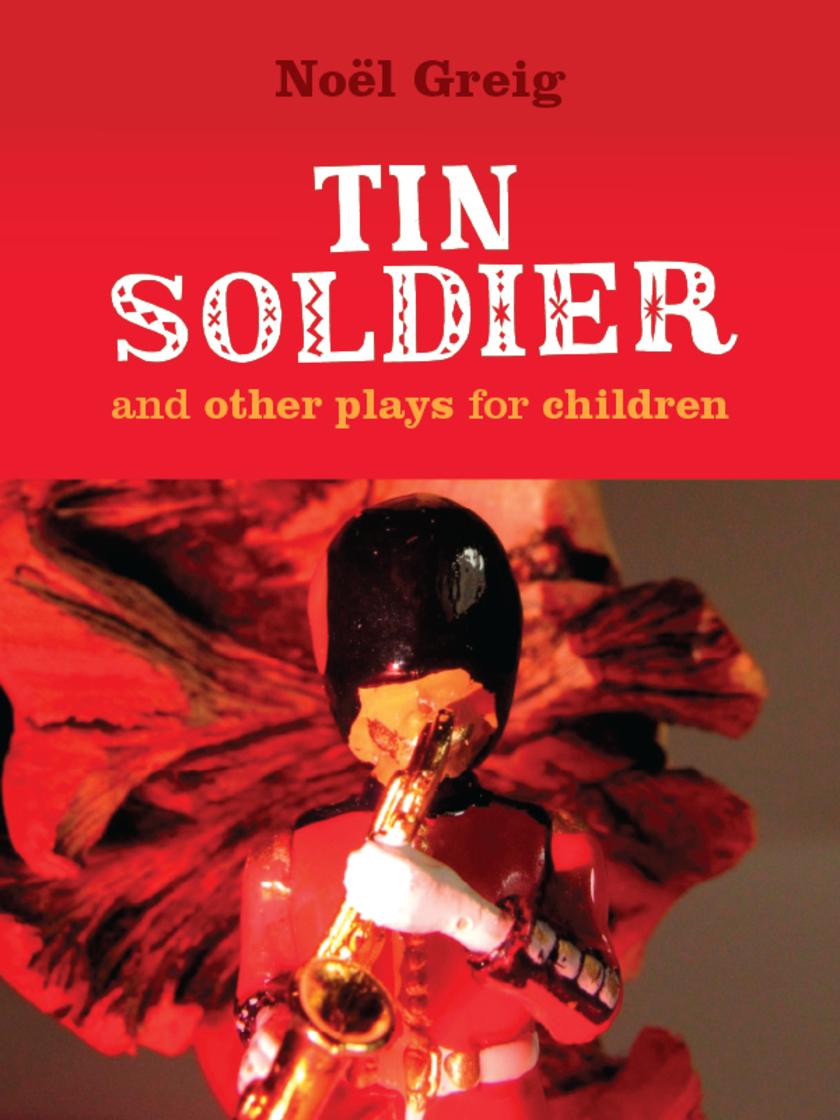
Tin Soldier and Other Plays for Children
¥40.79
A collection of three enchanting plays adapted from popular fairy tales and suitable for family audiences:?Tin Soldier (adapted from The Steadfast Tin Soldier by Hans Christian Andersen), A Tasty Tale (Hansel and Gretel), Hood in the Wood (Little Red Riding Hood). Acclaimed playwright Noel Greig, has recreated these well-known tales for the stage with wit and imagination. All three plays have been performed throughout the UK by Tangere Arts, winning a? Time Out Critics' Choice Award . Teachers, youth theatres and amateur groups working with young performers will use this collection time and again for productions, drama classes and workshops - whether for one performer or many. Suitable for children aged 7+ The simple form and language of the plays belie their theatrical and psychological sophistication. Tin Soldier ' a powerful poetic drama, an epic fable for our times.' **** ?Independent A Tasty Tale (Hansel and Gretel) ' Delicious moments... fashioned into a rhyming feast.' ****?Time Out Hood in the Wood (Little Red Riding Hood) ' a first-rate piece of storytelling that will make children squeal with terrified delight and parents shiver with recognition. ' **** ?Guardian
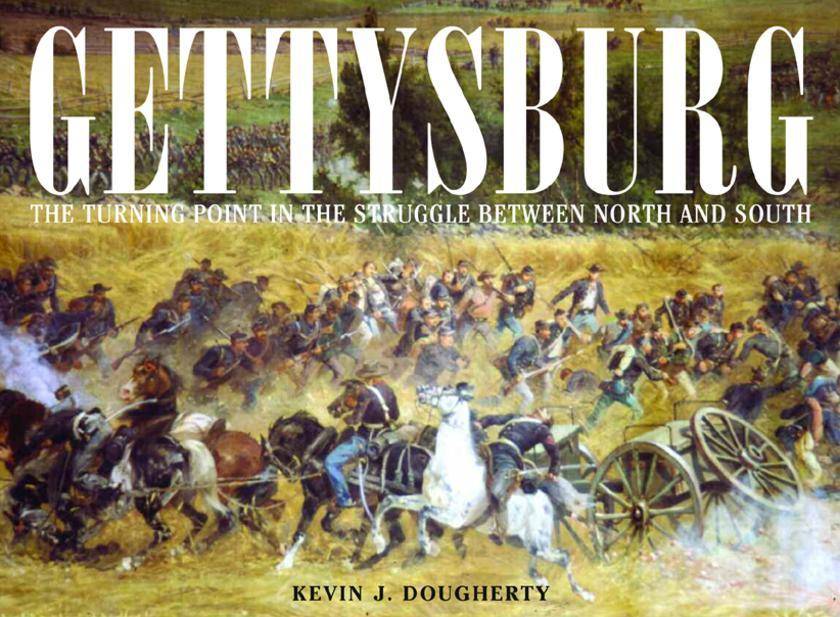
Gettysburg: The Turning Point in the Struggle between North and South
¥65.32
In June 1863, General Robert E. Lee and the 75,000-strong Army of Northern Virginia launched a second invasion of the North, crossing into Maryland and Pennsylvania to try to win a decisive victory over Federal forces. On July 1, Lee’s army encountered Major General Meade’s 90,000 strong Army of the Potamac at the small town of Gettysburg. After some initial success in dispersing the Federal advance guard, Lee launched attack after attack against the main army, but everywhere the Union line held. On July 3, Lee ordered a final assault of 12,500 Confederates at the center of the Union line on Cemetery Ridge, known as Pickett’s Charge. The charge was repulsed with huge loss of life, bringing the battle to an end. Today, Gettysburg is recognized as the turning point in the Civil War and one of the iconic battles of the great struggle between North and South. Lee’s gamble didn’t pay off, leaving the Army of Northern Virginia fatally weakened and unable to continue its invasion of the North. Gettysburg is divided into five chapters, outlining the campaign, the fighting on July 1, July 2, and July 3, as well as a chapter dealing with the aftermath; an extended appendices provides biographical background of the main Federal and Confederate leaders who fought in the battle. Through letters, journal entries, and official reports, the book includes numerous first-hand accounts from those who survived. Color maps show the battle as it unfolded over three days of fighting in places that have a place in Civil War legend: Seminary Ridge, Little Round Top, Cemetery Hill, Devil’s Den, the Wheat Field, Culp’s Hill, the Peach Orchard. Including more than 200 archival photographs, illustrations, paintings, and maps, Gettysburg is a colorful, accessible guide to the great battle that marked the turning point in the Civil War.
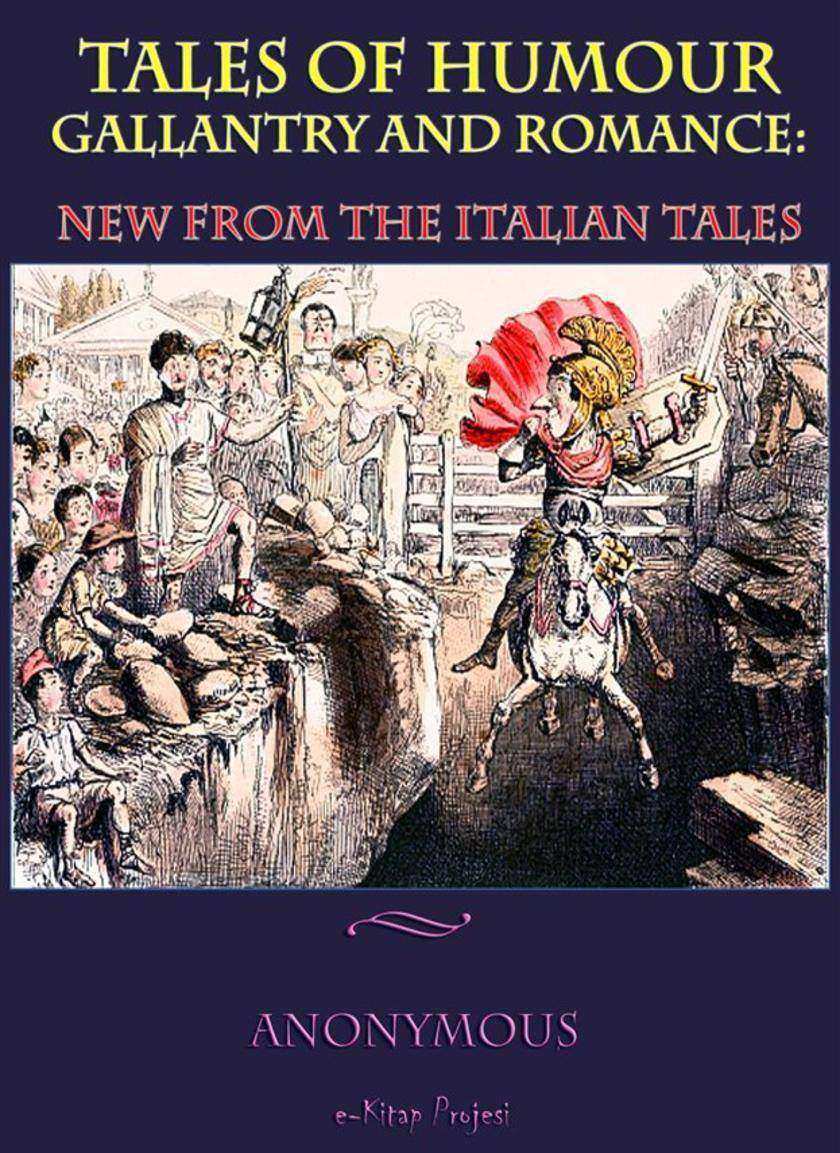
Tales Of Humour, Gallantry and Romance: New from the Italian Tales (Illustrated)
¥9.24
THE history, the features, and the most famous examples of European architecture, during a period extending from the rise of the Gothic, or pointed, style in the twelfth century to the general depression which overtook the Renaissance style at the close of the eighteenth, form the subject of this little volume. I have endeavoured to adopt as free and simple a mode of treatment as is compatible with the accurate statement of at least the outlines of so very technical a subject. Though it is to be hoped that many professional students of architecture will find this hand-book serviceable to them in their elementary studies, it has been my principal endeavour to adapt it to the requirements of those who are preparing for the professional pursuit of the sister arts, and of that large and happily increasing number of students who pursue the fine arts as a necessary part of a complete liberal education, and who know that a solid and comprehensive acquaintance with art, especially if joined to some skill in the use of the pencil, the brush, the modelling tool, or the etching needle, will open sources of pleasure and interest of the most refined description. The broad facts of all art history; the principles which underlie each of the fine arts; and the most precious or most noteworthy examples of each, ought to be familiar to every art student, whatever special branch he may follow. Beyond these limits I have not attempted to carry this account of Gothic and Renaissance architecture; within them I have endeavoured to make the work as complete as the space at my disposal permitted. THE architecture generally known as Gothic, but often described as Christian Pointed, prevailed throughout Europe to the exclusion of every rival for upwards of three centuries; and it is to be met with, more or less, during two others. Speaking broadly, it may be said that its origin took place in the twelfth century, that the thirteenth was the period of its development, the fourteenth that of its perfection, and the fifteenth that of its decline; while many examples of its employment occur in the sixteenth. In the following chapters the principal changes in the features of buildings which occurred during the progress of the style in England will be described. Subsequently, the manner in which the different stages of development were reached in different countries will be given; for architecture passed through very nearly the same phases in all European nations, though not quite simultaneously. It must be understood that through the whole Gothic period, growth or at least change was going on; the transitions from one stage to another were only periods of more rapid change than usual. The whole process may be illustrated by the progress of a language. If, for instance, we compare round-arched architecture in the eleventh century to the Anglo-Saxon form of speech of the time of Alfred the Great, and the architecture of the twelfth century to the English of Chaucer, that of the thirteenth will correspond to the richer language of Shakespeare, that of the fourteenth to the highly polished language of Addison and Pope, and that of the fifteenth to the English of our own day. We can thus obtain an apt parallel to the gradual change and growth which went on in architecture; and we shall find that the oneness of the language in the former case, and of the architecture in the latter, was maintained throughout. For an account of the Christian round-arched architecture which preceded Gothic, the reader is referred to the companion volume in this series. Here it will be only necessary briefly to review the circumstances which went before the appearance of the pointed styles.
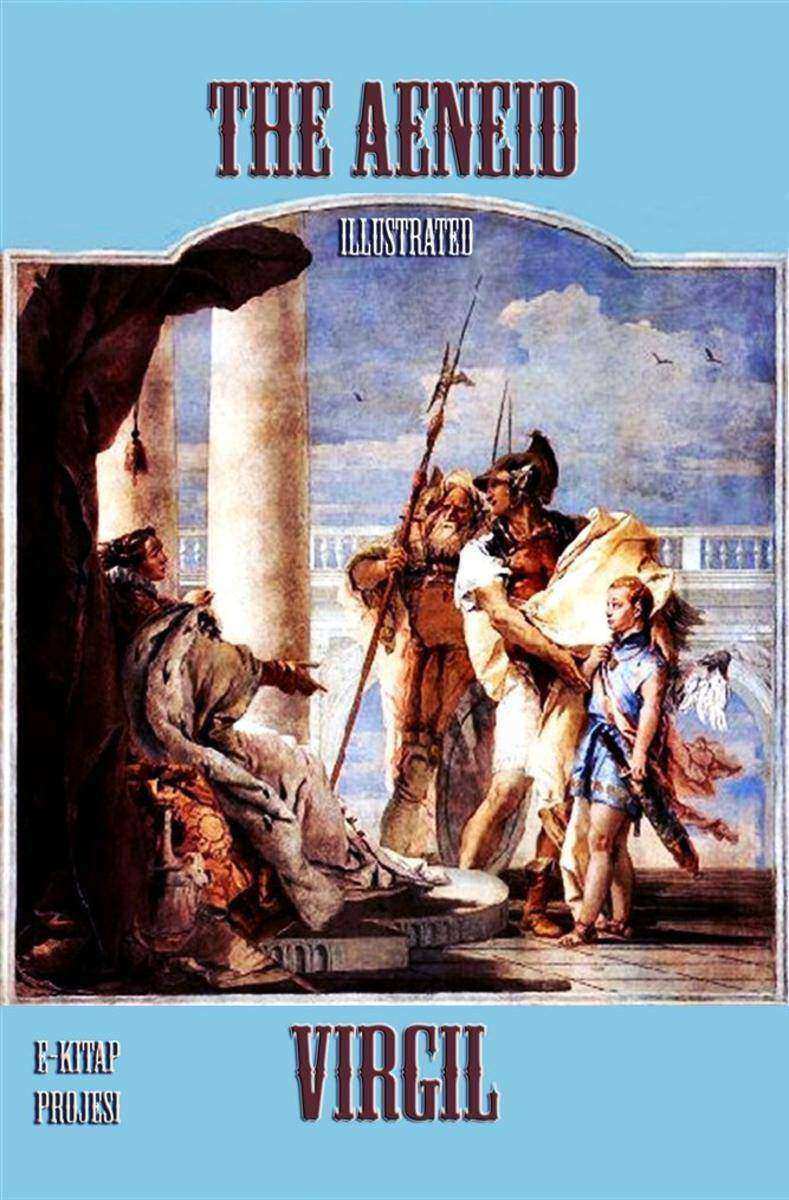
The Aeneid: "Illustrated"
¥18.74
"Where ocean bathes earth's footstool these sea-bowersBedeck its solid wavelets: wise was heWho blended shore with deep, with seaweed flowers,And Naiads' rivulets with Nereids' sea." Strictly speaking the peninsula on which the city stands is of the form of a trapezium. It juts out into the sea, beating back as it were the fierce waves of the Bosphorus, and forcing them to turn aside from their straight course and widen into the Sea of Marmora, which the ancients called the Propontis, narrowing again as it forces its way between the near banks of the Hellespont, which rise abrupt and arid from the European side, and slope gently away in Asia to the foot of Mount Ida. Northwards there is the little bay of the Golden Horn, an arm as it were of the Bosphorus, into which run the streams which the Turks call the Sweet Waters of Europe. The mouth of the harbour is no more than five hundred yards across. The Greeks of the Empire spanned it by a chain, supported here and there on wooden piles, fragments of which still remain in the Armoury that was once the church of S. Irene. Within is safe anchorage in one of the finest harbours of the world. South of the Golden Horn, on the narrow tongue of land—narrow it seems as seen from the hills of the northern shore—is the city of Constantine and his successors in empire, seated, like the old Rome, on seven hills, and surrounded on three sides by sea, on the fourth by the still splendid, though shattered, medi?val walls. Northwards are the two towns, now linked together, of Pera and Galata, that look back only to the trading settlements of the Middle Ages.The single spot united, as Gibbon puts it, the prospects of beauty, of safety, and of wealth: and in a masterly description that great historian has collected the features which made the position, "formed by Nature for the centre and capital of a great monarchy," attractive to the first colonists, and evident to Constantine as the centre where he could best combine and command the power of the Eastern half of his mighty Empire. Byzantium Before Constantine.It is impossible to approach Constantinople without seeing the beauty and the wonder of its site. Whether you pass rapidly down the Bosphorus, between banks crowned with towers and houses and mosques, that stretch away hither and thither to distant hills, now bleak, now crowned with dark cypress groves; or up from the Sea of Marmora, watching the dome of S. Sophia that glitters above the closely packed houses, till you turn the point which brings you to the Golden Horn, crowded with shipping and bright with the flags of many nations; or even if you come overland by the sandy wastes along the shore, looking across the deep blue of the sea to the islands and the snow-crowned mountains of Asia, till you break through the crumbling wall within sight of the Golden Gate, and find yourself at a step deep in the relics of the middle ages; you cannot fail to wonder at the splendour of the view which meets your eyes. Sea, sunlight, the quaint houses that stand close upon the water's edge, the white palaces, the crowded quays, and the crowning glory of the Eastern domes and the medi?val walls—these are the elements that combine to impress, and the impression is never lost. Often as you may see again the approach to the imperial city, its splendour and dignity and the exquisite beauty of colour and light will exert their old charm, and as you put foot in the New Rome you will feel all the glamour of the days that are gone by.
The Lost World
¥18.74
Leonardo's views of aesthetic are all important in his philosophy of life and art. The worker's thoughts on his craft are always of interest. They are doubly so when there is in them no trace of literary self-consciousness to blemish their expression. He recorded these thoughts at the instant of their birth, for a constant habit of observation and analysis had early developed with him into a second nature. His ideas were penned in the same fragmentary way as they presented themselves to his mind, perhaps with no intention of publishing them to the world. But his ideal of art depended intimately, none the less, on the system he had thrown out seemingly in so haphazard a manner. The long obscurity of the Dark Ages lifted over Italy, awakening to a national though a divided consciousness. Already two distinct tendencies were apparent. The practical and rational, on the one hand, was soon to be outwardly reflected in the burgher-life of Florence and the Lombard cities, while at Rome it had even then created the civil organization of the curia. The novella was its literary triumph. In art it expressed itself simply, directly and with vigour. Opposed to this was the other great undercurrent in Italian life, mystical, religious and speculative, which had run through the nation from the earliest times, and received fresh volume from mediaeval Christianity, encouraging ecstatic mysticism to drive to frenzy the population of its mountain cities. Umbrian painting is inspired by it, and the glowing words of Jacopone da Todi expressed in poetry the same religious fervour which the life of Florence and Perugia bore witness to in action. Italy developed out of the relation and conflict of these two forces the rational with the mystical. Their later union in the greater men was to form the art temperament of the Renaissance. The practical side gave it the firm foundation of rationalism and reality on which it rested; the mystical guided its endeavour to picture the unreal in terms of ideal beauty.The first offspring of this union was Leonardo. Since the decay of ancient art no painter had been able to fully express the human form, for imperfect mastery of technique still proved the barrier. Leonardo was the first completely to disengage his personality from its constraint, and make line express thought as none before him could do. Nor was this his only triumph, but rather the foundation on which further achievement rested. Remarkable as a thinker alone, he preferred to enlist thought in the service of art, and make art the handmaid of beauty. Leonardo saw the world not as it is, but as he himself was. He viewed it through the atmosphere of beauty which filled his mind, and tinged its shadows with the mystery of his nature. From his earliest years, the elements of greatness were present in Leonardo. But the maturity of his genius came unaffected from without. He barely noticed the great forces of the age which in life he encountered. After the first promise of his boyhood in the Tuscan hills, his youth at Florence had been spent under Verrocchio as a master, in company with those whose names were later to brighten the pages of Italian art. At one time he contemplated entering the service of an Oriental prince. Instead, he entered that of Caesar Borgia, as military engineer, and the greatest painter of the age became inspector of a despot's strongholds. But his restless nature did not leave him long at this. Returning to Florence he competed with Michelangelo; yet the service of even his native city could not retain him. His fame had attracted the attention of a new patron of the arts, prince of the state which had conquered his first master. In this his last venture, he forsook Italy, only to die three years later at Amboise, in the castle of the French king.

Tatjána
¥58.04
Vajon van esélye Hanna és Olivér szerelmének?Túlélheti a fiatal lány a végzetesnek hitt balesetet? ?s ha túl is éli, visszaállhat-e az élete a normális kerékvágásba?Mire képes a szerelem, mit bír el a szív? Elfogadni, megbocsátani, elengedni, újrakezdeni. A másik oldalról els? részében megismert szerepl?ké mellett új kapcsolatok alakulását is nyomon k?vethetjük. Együtt sírhatunk és nevethetünk a hétk?znapi h?s?kkel, akikkel végtelen természetességük miatt igazán k?nny? azonosulni. A korábbi k?tethez hasonlóan ezúttal is számtalan komoly téma vet?dik fel, a bonyodalmakkal dúsított, meglep?, néhol megd?bbent? fordulatokban gazdag t?rténet mégis k?nnyed, szórakoztató kikapcsolódást ígér. Papp Csilla legújabb k?nyvében, mely ott kezd?dik, ahol az els? regény véget ér, újra és újra rácsodálkozhatunk a szerelem erejére, mik?zben minden kétséget kizáróan el fogjuk hinni, hogy biztosan nincsenek véletlenek.
Világfa
¥28.53
A budapesti Lánchíd pesti hídf?jénél álló Gresham-palotát mindannyian jól ismerjük – legalábbis kívülr?l. De tudjuk-e, miféle titkokat rejtett egykor az impozáns épület? Szelke László izgalmas és olvasmányos nyomozása, A Gresham a nácik ellen a 19. századtól a második világháborúig kíséri nyomon a mai luxusszálloda fordulatos t?rténetét. A százarcú épület a kezdetekt?l a t?rténelem f?sodrában állt. El?dje, a Nákó-palota magánházként olyan hírességek lakhelye volt, mint a Lánchíd tervein dolgozó Clark ?dám vagy a Széchenyi István életnagyságú portréját fest? Barabás Miklós, a század végén pedig a Gresham életbiztosító társaság székhelyéül szolgált. Miután a 20. század elején szecessziós stílusban újjáépítették, a pezsg? kávéházi élet meghatározó színterévé, haladó értelmiségiek találkahelyévé avanzsált. Ahogy a Horthy-rendszer idején egyre fogyott a leveg?, úgy vált a Gresham-palota az ellenzéki politika, a szellemi ellenállás, a mind rendszerkritikusabb kabarék otthonává ? a második világháború idején pedig a titkos diplomácia és az embermentés megkerülhetetlen k?zpontjává. Náciellenes m?vészek, újságírók, tudósítók, attasék, hírszerz?k, kémelhárítók, kett?s, s?t hármas ügyn?k?k fordultak meg a falai k?zt, és itt m?k?d?tt t?bbek k?zt a liberális párt pesti klubja, illetve a szabadelv? Esti Kurir cím? napilap szerkeszt?sége. A k?nyv lapjain a kor olyan meghatározó figurái t?nnek fel, mint Szent-Gy?rgyi Albert és Herczeg Ferenc, Szekf? Gyula és Raoul Wallenberg, de megismerkedhetünk a budapesti k?nyvhét alapítójával, a bátor emberment? Supka Gézával, a zsidót?rvények kíméletlen kritikusával, Rassay Károllyal vagy a Pódium Kabarét vezet? Békeffi Lászlóval, aki az angol titkosszolgálattal is kapcsolatban állt. Tények és legendák, t?rvénytisztel?k és provokátorok, h?s?k és áldozatok – A Gresham a nácik ellen a t?rténelem legrejtettebb kulisszái m?gé kalauzolja olvasóját. Szelke László 1975-ben született. Egyetemi adjunktus, 2013-ban szerzett doktori fokozatot, jelenleg a piliscsabai M?vel?dési Információs K?zpont és K?nyvtár igazgatója. 19?20. századi magyar és egyetemes t?rténelmet tanít a Pázmány Péter Katolikus Egyetemen.

Union J Quiz Book
¥24.43
Are you a fan of Union J? If so, you will probably be able to name the band members but how much else do you know about the four boys? Whether you are fully familiar with the lads from Union J, or would like to find out more about them, this quiz book is for you. With what record company did Union J sign after their time on The X Factor in 2012? Where did Union J first perform their single 'Carry You'? During what month in 2013 did Union J take over the Daybreak sofa at 7.50 am each morning for a week? The answers to these questions and more can all be found inside this new book. Packed with fun facts about all aspects of Union J, including many personal details, The Union J Quiz Book documents the boys' journey from four unknown artists into successful X Factor boy band and beyond. With 100 questions about your favourite group, this is a book Union J fans of all ages just won't want to be without.

101 Interesting Facts on The Wanted
¥24.43
Do you like British boy band The Wanted? Have you followed their career from when they first formed in 2009 through to the current day? Would you like to find out more about Max, Siva, Jay, Tom and Nathan? If you answered yes to any of these questions, 101 Interesting Facts on The Wanted is certain to appeal to you. Do you know who is the oldest member of the group? Which artist did The Wanted support on tour in Brazil? What member of the band originally came up with the name, The Wanted? The answers can all be found inside this book, together with many more fascinating facts about your favourite band. Fun and informative, this book includes many personal details about the individual band members as well as up-to-date information about The Wanted's projects, past and present. Gen up on The Wanted so that you can impress your friends with your knowledge. If you are a fan of The Wanted, you won't want to be without this book.

101 Interesting Facts on One Direction
¥24.43
Are you a fan of One Direction? Have you followed the popular boyband from their very first performance on The X Factor to international stardom? Would you like to find out more about the 1D boys? If so, you there is no better way to get to know your favourite band than with 101 Interesting Facts About One Direction. Which member of One Direction was the first to suggest the name for the band? When and where was the premiere of 1D's 2013 film This Is Us held? What new product did One Direction launch in September 2013? Find out the answers inside this book, full of up to the minute information all about 1D. The book includes many personal details about each of the band members as well as facts about their past and current projects.Make sure that you are up to date on all the latest 1D news with this new book. If you love One Direction, you won't want to be without it.

Ronnie Biggs Quiz Book
¥24.43
Ronnie Biggs is widely known for his part in the Great Train Robbery of 1963, his subsequent escape from prison, and notoriety as he lived as a fugitive around the globe with his family. Biggs' story has been well documented over the years but how much do you really know about the man behind the headlines? The Ronnie Biggs Quiz Book is your chance to gen up on all the facts. How old was Ronnie when he first appeared in court? On what date did Ronnie receive a 30 year sentence? Who was Ronnie's famous cellmate in Brazil? The answers to these questions and more can all be found in this fascinating new book. The 50th anniversary of the Great Train Robbery in 2013 has renewed interest in the gang who pulled of this audacious heist, and Ronnie Biggs in particular. Packed with information, this book will tell you everything you want to know about Ronnie Biggs, his life on the run and his part in one of the most talked about crimes of all time.
On The Buses
¥68.57
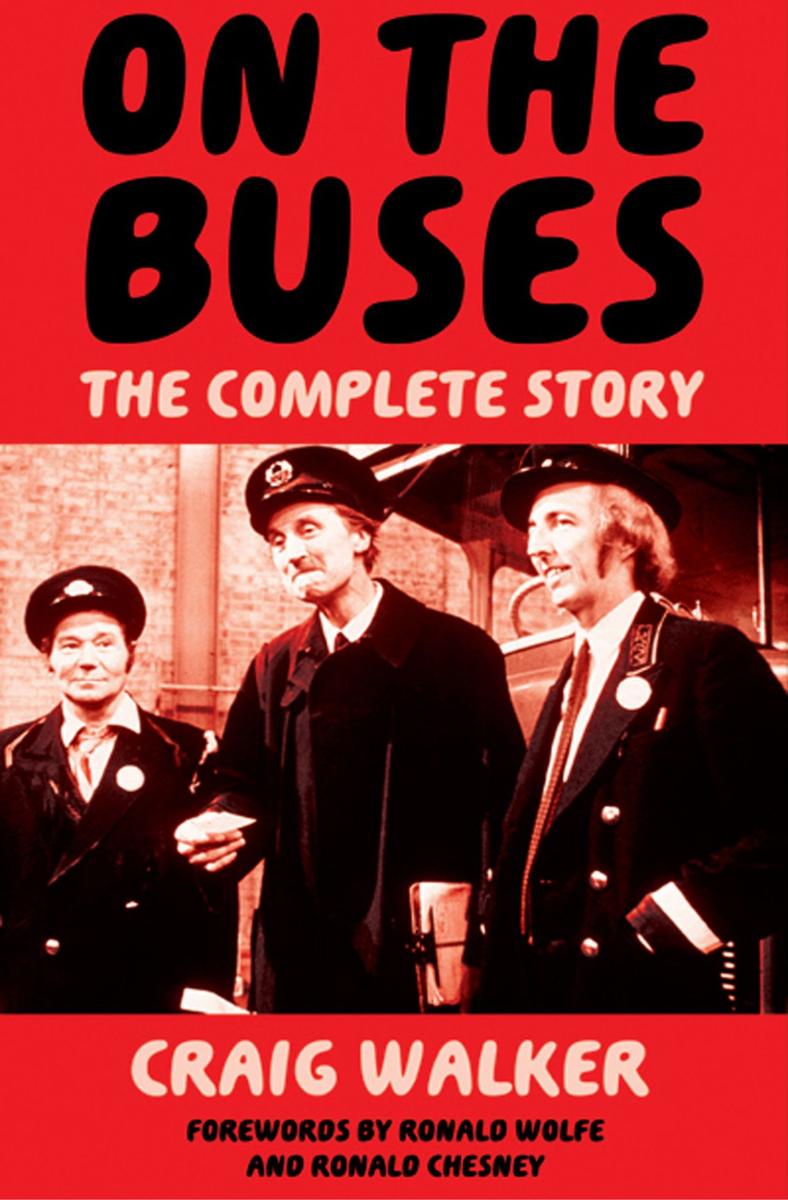
On The Buses was a classic British situation comedy, created by Ronald Wolfe and Ronald Chesney, which ran for seven series from 1969 to 1973, and introduced a host of much-loved memorable characters. The series followed the ups and downs of life on the buses as portrayed by two work shy-busmen, Stan Butler (played by Reg Varney) and his mate Jack Harper (Bob Grant) as they invented new scams to wind up their long suffering boss, inspector Cyril Blakey Blake (Stephen Lewis). This book tells the whole 'On The Buses' story from its inception through to the three spin-off feature films it spawned. It includes details of cast, crew, locations and the many famous faces and catch phrases which made-up one of the most popular sitcoms ever to appear on our TV screens. On The Buses aired in an era where entertainment was unrestrained by politically correct rules but hilarious scripts and quality acting guaranteed the series a legion of loyal fans around the globe. This book is a must have for anyone interested in learning more about On The Buses an example of British sitcom at its best.
Straight From The Force's Mouth
¥88.19
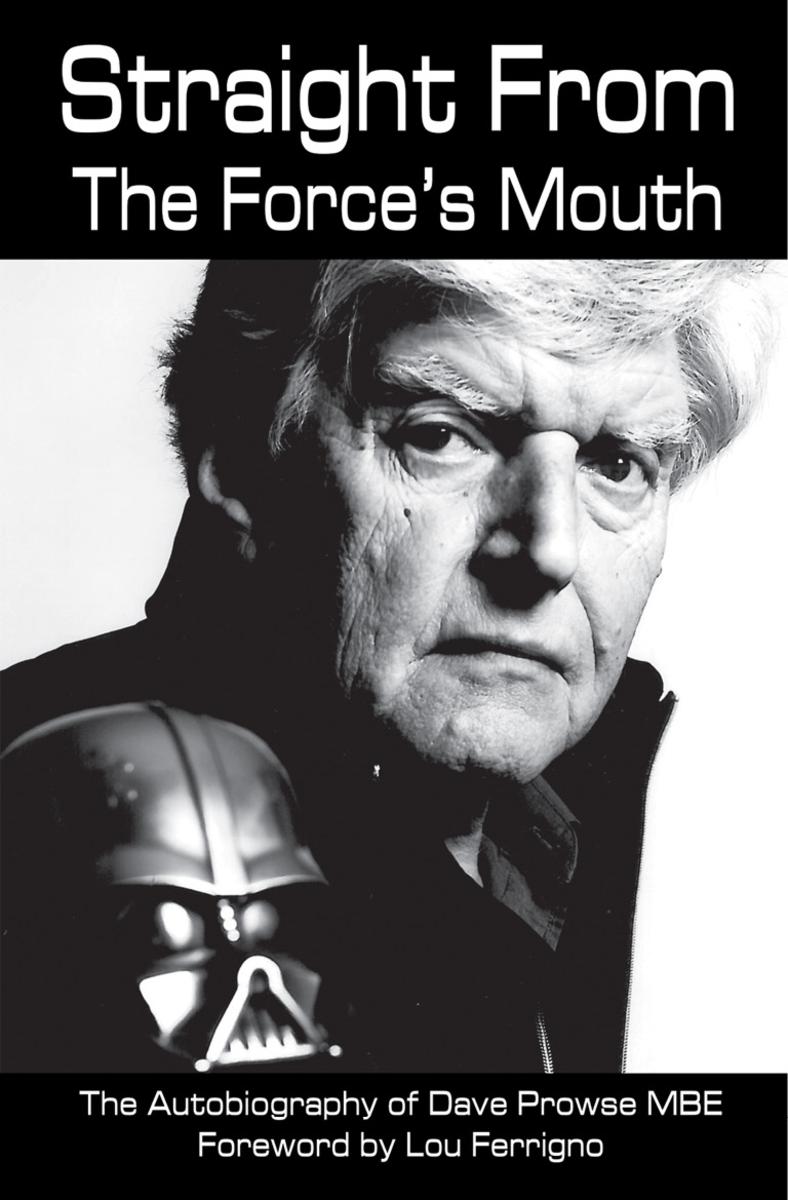
Everyone has heard of Darth Vader, the infamous Star Wars villain we all love to fear, created by George Lucas and brought to life by Dave Prowse MBE, but people may not be so familiar with the story of the multi-talented man behind the mask. It required someone exceptional to turn a helmeted costume into the principal character in the highest grossing film series in cinema history - that someone was Dave Prowse. The towering, physical presence of the 6ft 7"e; bodybuilder was ideally suited to personify the intimidating Darth Vader. Straight from the Force's Mouth takes us behind the scenes of Star Wars and documents how this extraordinary man took on the role of the menacing central character to creating one of the most iconic villains in cinema history. In this book of memoirs, Dave shares his journey from disadvantaged child and poor student to champion weightlifter and international film star. The Dave Prowse story is one of determination and hard work and in this honest account he explains how he overcame the many setbacks in his life to achieve success and global recognition. This book is a must have for Star Wars fans of all ages and will appeal to anyone who enjoys a truly inspirational and motivating real life story.
Great Train Robbery Quiz Book
¥19.52
The Great Train Robbery is one of the most well documented crimes of all time but how much do you really know about what happened on that fateful day in 1963 and in the years beyond? This new quiz book will tell you everything you ever wanted to know about the Great Train Robbery and the people involved.How many train robbers escaped from prison? What was the robbers' hideout called? Who was the first '30-year sentence' train robber to be released? The answers to these brain teasers and more can all be found inside The Great Train Robbery Quiz Book.With 100 questions all about the people involved in the robbery, where they are now, the detectives, Judge, books, films and TV programmes, this is a comprehensive guide to the most talked about UK heist in history.With 2013 marking the 50th anniversary, there is still a great deal of interest in the Great Train Robbery and if you would like to know more, this book is all you need.
Brilliant General Knowledge Quiz Book 3
¥24.43
In what year did Concorde 001 first take off from Toulouse? What did the African country of Zaire change its name to in 1997? What popular sweet was invented by Frank Fleer in 1906? If you would like to know the answers to these brain-teasers and more like them take a look at The Brilliant General Knowledge Quiz Book.Find out how much you know about everyday things and the world we live in with the 100 testing questions in this book. Full of interesting facts and covering a range of topics including sport, history, geography, science, films and celebrities, this book provides a fun and easy way to learn. Whether you want to help the kids with their homework, challenge your friends or set the questions for the next pub quiz, this book is just all you need to improve your general knowledge. So if you have always wanted to know who invented the World Wide Web or the number of players in a water polo team this is the book for you.
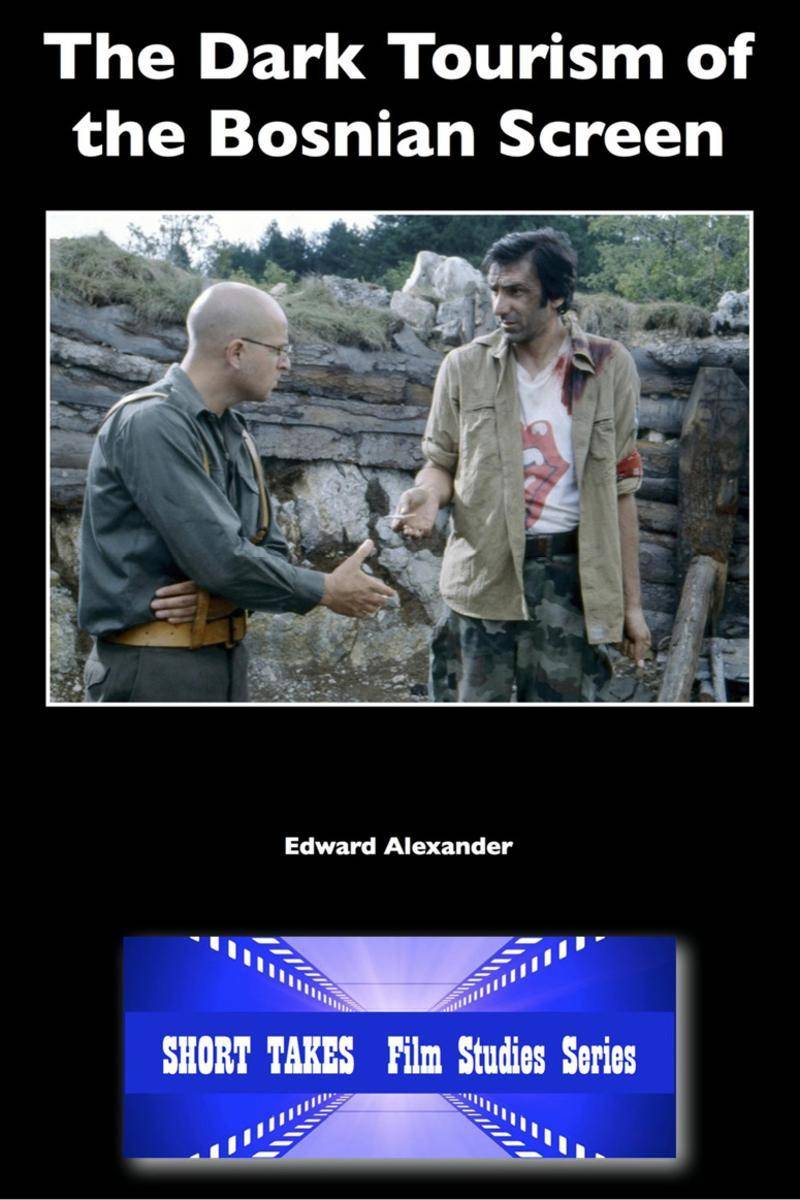
Dark Tourism of the Bosnian Screen
¥19.52
How is it possible that despite the destruction of its infrastructure during the Siege of Sarajevo in the 1990s, Bosnian cinema rapidly rose to claim many of the most prestigious awards in world cinema during the 2000s? Were Bosnian films simply 'better' than those from neighbouring post-Yugoslav countries? Perhaps not. This work proposes that the international success of Bosnian films since the turn of the millennium has been due to how they enact Western prejudices concerning the war and its consequences. Delivering films with national narratives which associate the country with primitiveness and victimhood, Western audiences have engaged in dark tourism of the Bosnian screen.


