


 购物车
购物车 个人中心
个人中心
Ali Baba and the forty thieves
¥8.09
Roman distins cu Prix Goncourt des lycéens 2016Bestseller absolut ?n Fran?a ?i distins cu nenum?rate premii,?Mica ?ar??este o poveste zguduitoare, pe fundalul genocidului din Rwanda ?i al r?zboiului civil din Burundi, despre inocen?a copil?riei strivite de valurile brutale ale istoriei.?n 1992, Gabriel, ?n v?rst? de zece ani, tr?ie?te o copil?rie idilic? ?n Bujumbura, capitala micii ??ri africane Burundi, ?mpreun? cu tat?l s?u francez, mama rwandez? ?i cu sora lui mai mic?. Din nefericire, lumea sa se pr?bu?e?te doi ani mai t?rziu, odat? cu genocidul din aprilie–iulie 1994, c?nd ?n Rwanda popula?ia tutsi este masacrat?. ?n urma acestei tragedii, mama lui Gabriel ??i pierde min?ile ?i vie?ile tuturor se vor schimba radical. Gabriel ?i sora lui vor pleca ?n Fran?a cu un elicopter trimis ca s?-i salveze.Dup? dou?zeci de ani ?ns?, Gabriel se va ?ntoarce ?n Burundi, ?ncerc?nd s? reg?seasc? o lume pe care o crezuse pierdut? pentru totdeauna.Mica ?ar??ofer? o viziune despre lume care nu este politic?, ci poetic?, ?ncerc?nd s? surprind? toat? frumuse?ea ?i oroarea vie?ii.?Le Figaro"Abia mai t?rziu mi-am dat seama c? Burundi este o ?ar? s?rac?. ?n copil?rie, nu realizam s?r?cia din jur, a?a c? a fost important s? vorbesc despre asta ?n roman. B?ie?elul care tr?ia ?n acea ?ar? era protejat de o cu totul alt? lume, o lume a c?r?ilor lui. O lume care s-a n?ruit." - Ga?l Faye
The Woodlanders
¥8.09
According to Wikipedia: "Thomas Hardy, (1840 – 1928) was an English author of the naturalist movement, though he regarded himself primarily as a poet and composed novels mainly for financial gain. The bulk of his work, set mainly in the semi-fictional land of Wessex, delineates characters struggling against their passions and circumstances. Hardy's poetry, first published in his 50s, has come to be as well regarded as his novels, especially after The Movement of the 1950s and 1960s."

The Subjection of Women
¥8.09
According to Wikipedia: "The Subjection of Women is the title of an essay written by John Stuart Mill in 1869, possibly jointly with his wife Harriet Taylor Mill, stating an argument in favour of equality between the sexes. At the time it was published in 1869, this essay was an affront to European conventional norms for the status of men and women."

Crime and Punishment
¥8.09
The classic Dostoevsky novel. According to Wikipedia: "Fyodor Mikhaylovich Dostoyevsky (1821 – 1881) was a Russian fiction writer, essayist and philosopher whose works include Crime and Punishment and The Brothers Karamazov. Dostoyevsky's literary output explores human psychology in the troubled political, social and spiritual context of 19th-century Russian society. Considered by many as a founder or precursor of 20th century existentialism, his Notes from Underground (1864), written in the embittered voice of the anonymous "underground man", was called by Walter Kaufmann the "best overture for existentialism ever written."
Maria or the Wrongs of Woman
¥8.09
Novel by the pioneering champion of women's rights (and the mother of Mary Shelley, author of Frankenstein). According to Wikipedia: "Maria: or, The Wrongs of Woman is the 18th century British feminist Mary Wollstonecraft's unfinished novelistic sequel to her revolutionary political treatise A Vindication of the Rights of Woman (1792). The Wrongs of Woman was published posthumously in 1798 by her husband, William Godwin, and is often considered her most radical feminist work. Wollstonecraft's philosophical and gothicpatriarchal institution of marriage in eighteenth-century Britain and the legal system that protected it. However, the heroine's inability to relinquish her romantic fantasies also reveals women's collusion in their oppression through false and damaging sentimentalism. The novel pioneered the celebration of female sexuality and cross-class identification between women. Such themes, coupled with the publication of Godwin's scandalous Memoirs of Wollstonecraft's life, made the novel unpopular at the time it was published.Twentieth-century feminist critics embraced the work, integrating it into the history of the novel and feminist discourse. It is most often viewed as a fictionalized popularization of the Rights of Woman, as an extension of Wollstonecraft's feminist arguments in Rights of Woman, and as autobiographical." novel revolves around the story of a woman imprisoned in an insane asylum by her husband. It focuses on the societal rather than the individual "wrongs of woman" and criticizes what Wollstonecraft viewed as autobiographical."
Condemned as a Nihilist
¥8.09
Classic historical novel. According to Wikipedia: "George Alfred Henty (8 December 1832 – 16 November 1902), was a prolific English novelist and a special correspondent. He is best known for his historical adventure stories that were popular in the late 19th century. His works include Out on the Pampas (1871), The Young Buglers (1880), With Clive in India (1884) and Wulf the Saxon (1895)."
A Touch of the Sun and Other Short Stories
¥8.09
Collection of stories, first published in 1903. According to Wikipedia: "Mary Hallock was born November 9, 1847, in Milton, New York, of English Quaker ancestry. A singular girl and youth, she attended the Female Collegiate Seminary in Poughkeepsie, New York, then studied art in New York City at the new Cooper Institute School of Design for Women. By her early twenties she had become established in New York City as an accomplished artist-illustrator for notable publishers there. In 1876 Hallock married a young mining engineer, Arthur De Wint Foote, then moved cross-continent to live with him at the New Almaden mine near San Jose, California. Subsequently, as Arthur pursued his engineering career, she followed him throughout the West; to Leadville, Colorado, to Deadwood, South Dakota, then to Boise, Idaho, where Arthur originated a major irrigation project on the Boise River; then to Morelia, Michoacán, Mexico, and finally to Grass Valley, California, where Arthur advanced to managing the North Star mine, and retired there...Wallace Stegner's novel Angle of Repose (Pulitzer Prize, 1971) is based directly upon Mary Hallock Foote's extensive personal correspondence.'
The Witch and Other Stories
¥8.09
This collection includes: THE WITCH, PEASANT WIVES, THE POST, THE NEW VILLA, DREAMS, THE PIPE, AGAFYA, AT CHRISTMAS TIME, GUSEV, THE STUDENT, IN THE RAVINE, THE HUNTSMAN, HAPPINESS, A MALEFACTOR, and PEASANTS. According to Wikipedia: "Anton Pavlovich Chekhov (1860 – 1904) was a Russian short-story writer, playwright and physician, considered to be one of the greatest short-story writers in world literature. His career as a dramatist produced four classics and his best short stories are held in high esteem by writers and critics Chekhov practised as a doctor throughout most of his literary career: "Medicine is my lawful wife," he once said, "and literature is my mistress." Chekhov renounced the theatre after the disastrous reception of The Seagull in 1896; but the play was revived to acclaim in 1898 by Constantin Stanislavski's Moscow Art Theatre, which subsequently also produced Uncle Vanya and premiered Chekhov’s last two plays, Three Sisters and The Cherry Orchard. These four works present a special challenge to the acting ensemble as well as to audiences, because in place of conventional action Chekhov offers a "theatre of mood" and a "submerged life in the text." Chekhov had at first written stories only for the money, but as his artistic ambition grew, he made formal innovations which have influenced the evolution of the modern short story. His originality consists in an early use of the stream-of-consciousness technique, later adopted by James Joyce and other modernists, combined with a disavowal of the moral finality of traditional story structure He made no apologies for the difficulties this posed to readers, insisting that the role of an artist was to ask questions, not to answer them."
In Exile and Other Stories
¥8.09
Collection of stories, first published in 1894. According to Wikipedia: "Mary Hallock was born November 9, 1847, in Milton, New York, of English Quaker ancestry. A singular girl and youth, she attended the Female Collegiate Seminary in Poughkeepsie, New York, then studied art in New York City at the new Cooper Institute School of Design for Women. By her early twenties she had become established in New York City as an accomplished artist-illustrator for notable publishers there. In 1876 Hallock married a young mining engineer, Arthur De Wint Foote, then moved cross-continent to live with him at the New Almaden mine near San Jose, California. Subsequently, as Arthur pursued his engineering career, she followed him throughout the West; to Leadville, Colorado, to Deadwood, South Dakota, then to Boise, Idaho, where Arthur originated a major irrigation project on the Boise River; then to Morelia, Michoacán, Mexico, and finally to Grass Valley, California, where Arthur advanced to managing the North Star mine, and retired there...Wallace Stegner's novel Angle of Repose (Pulitzer Prize, 1971) is based directly upon Mary Hallock Foote's extensive personal correspondence.'
The New Revelation
¥8.09
First published in 1918. By the author of the Sherlock Holmes stories. The book begins: "The subject of psychical research is one upon which I have thought more and about which I have been slower to form my opinion, than upon any other subject whatever. Every now and then as one jogs along through life some small incident happens which very forcibly brings home the fact that time passes and that first youth and then middle age are slipping away. Such a one occurred the other day. There is a column in that excellent little paper, Light, which is devoted to what was recorded on the corresponding date a generation--that is thirty years--ago. As I read over this column recently I had quite a start as I saw my own name, and read the reprint of a letter which I had written in 1887, detailing some interesting spiritual experience which had occurred in a seance."
The Adventures of Gerard
¥8.09
According to Wikipedia: "Brigadier Gerard is the hero of a series of comic short stories by the British writer Arthur Conan Doyle. The hero, Etienne Gerard, is a Hussar in the French Army during the Napoleonic Wars. Gerard's most notable attribute is his vanity – he is utterly convinced that he is the bravest soldier, greatest swordsman, most accomplished horseman and most gallant lover in all France. Gerard is not entirely wrong, since he displays notable bravery on many occasions, but his self-satisfaction undercuts this quite often. Obsessed with honour and glory, he is always ready with a stirring speech or a gallant remark to a lady. Conan Doyle, in making his hero a vain, and often rather uncomprehending, Frenchman, was able to satirise both the stereotypical English view of the French and – by presenting them from Gerard's baffled point of view – English manners and attitudes."
Torrents of Spring, First Love, Mumu
¥8.09
Three classic Russian novellas. According to Wikipedia: "Ivan Sergeyevich Turgenev 1818 - 1883) was a Russian novelist and playwright. His novel Fathers and Sons is regarded as one of the major works of 19th-century fiction."
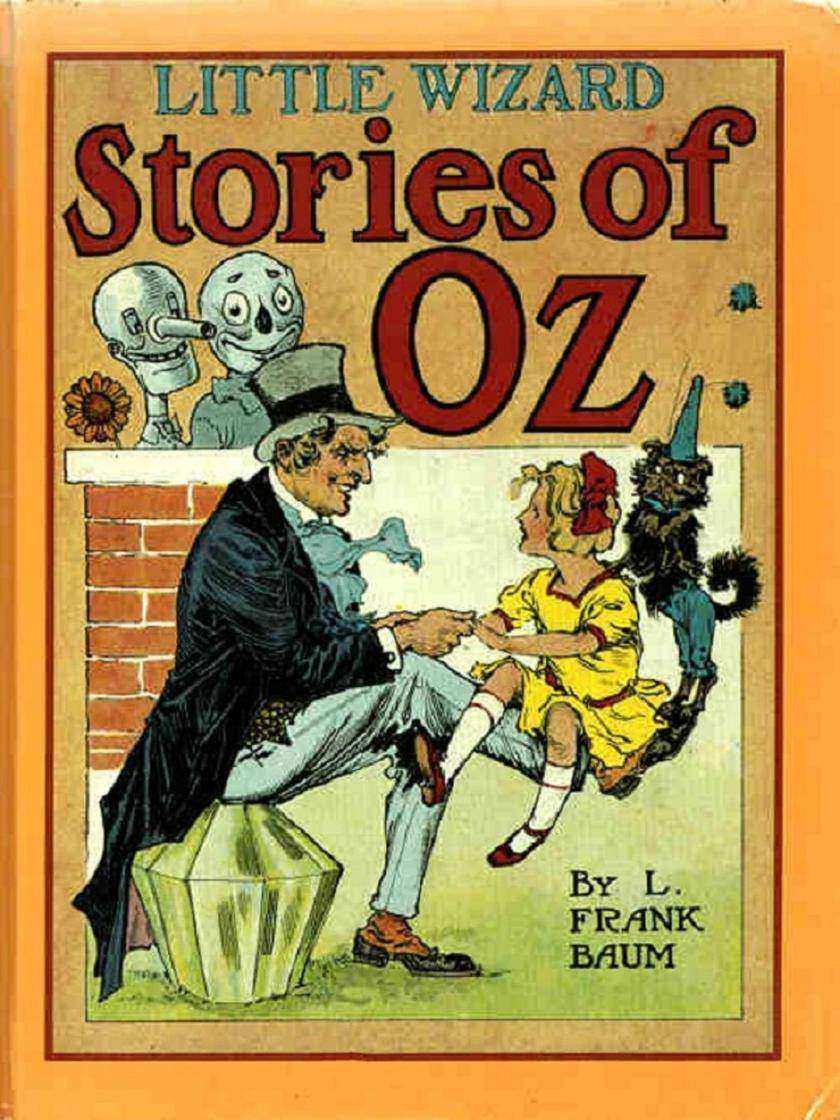
Little Wizard Stories of Oz
¥8.09
46 color illustrations. A short collection of short stories, including: The Cowardly Lion and the Hungry Tiger, Little Dorothy and Toto, Tiktok and the Nome King, Ozma and the Little Wizard, Jack Pumpkinhead and the Sawhorse, and The Scarecrow and the Tin Woodman. According to Wikipedia: "Little Wizard Stories of Oz is a set of six short stories written for young children by L. Frank Baum, the creator of the Oz books. The six tales were published in separate small booklets, "Oz books in miniature," in 1913, and then in a collected edition in 1914 with illustrations by John R. Neill.[1][2] Each booklet was 29 pages long, and printed in blue ink rather than black. The stories were part of a project, by Baum and his publisher Reilly & Britton, to revitalize and continue the series of Oz books that Baum had written up to that date. The story collection effectively constitutes a fifteenth Oz book by Baum
A Drift from Redwood Camp
¥8.09
Western short story. According to Wikipedia: "Bret Harte (August 25, 1836[2] – May 6, 1902) was an American author and poet, best remembered for his accounts of pioneering life in California. He was born in Albany, New York. ... He moved to California in 1853, later working there in a number of capacities, including miner, teacher, messenger, and journalist. He spent part of his life in the northern California coast town now known as Arcata, then just a mining camp on Humboldt Bay. His first literary efforts, including poetry and prose, appeared in The Californian, an early literary journal edited by Charles Henry Webb. In 1868 he became editor of The Overland Monthly, another new literary magazine, but this one more in tune with the pioneering spirit of excitement in California. His story, "The Luck of Roaring Camp," appeared in the magazine's second edition, propelling Harte to nationwide fame... Determined to pursue his literary career, in 1871 he and his family traveled back East, to New York and eventually to Boston, where he contracted with the publisher of The Atlantic Monthly for an annual salary of $10,000, "an unprecedented sum at the time." His popularity waned, however, and by the end of 1872 he was without a publishing contract and increasingly desperate. He spent the next few years struggling to publish new work (or republish old), delivering lectures about the gold rush, and even selling an advertising jingle to a soap company. In 1878 Harte was appointed to the position of United States Consul in the town of Krefeld, Germany and then to Glasgow in 1880. In 1885 he settled in London. During the thirty years he spent in Europe, he never abandoned writing, and maintained a prodigious output of stories that retained the freshness of his earlier work. He died in England in 1902 of throat cancer and is buried at Frimley."
Salomy Jane
¥8.09
Western short story. According to Wikipedia: "Bret Harte (August 25, 1836[2] – May 6, 1902) was an American author and poet, best remembered for his accounts of pioneering life in California. He was born in Albany, New York. ... He moved to California in 1853, later working there in a number of capacities, including miner, teacher, messenger, and journalist. He spent part of his life in the northern California coast town now known as Arcata, then just a mining camp on Humboldt Bay. His first literary efforts, including poetry and prose, appeared in The Californian, an early literary journal edited by Charles Henry Webb. In 1868 he became editor of The Overland Monthly, another new literary magazine, but this one more in tune with the pioneering spirit of excitement in California. His story, "The Luck of Roaring Camp," appeared in the magazine's second edition, propelling Harte to nationwide fame... Determined to pursue his literary career, in 1871 he and his family traveled back East, to New York and eventually to Boston, where he contracted with the publisher of The Atlantic Monthly for an annual salary of $10,000, "an unprecedented sum at the time." His popularity waned, however, and by the end of 1872 he was without a publishing contract and increasingly desperate. He spent the next few years struggling to publish new work (or republish old), delivering lectures about the gold rush, and even selling an advertising jingle to a soap company. In 1878 Harte was appointed to the position of United States Consul in the town of Krefeld, Germany and then to Glasgow in 1880. In 1885 he settled in London. During the thirty years he spent in Europe, he never abandoned writing, and maintained a prodigious output of stories that retained the freshness of his earlier work. He died in England in 1902 of throat cancer and is buried at Frimley."
L'Assomoir, in English
¥8.09
Zola's best-known novel, first published in 1877. According to Wikipedia: "Emile Zola (2 April 1840 - 29 September 1902) was an influential French writer, the most important example of the literary school of naturalism, and a major figure in the political liberalization of France...After his first major novel, Therese Raquin (1867), Zola started the long series called Les Rougon Macquart, about a family under the Second Empire... More than half of Zola's novels were part of this set of 20 collectively known as Les Rougon-Macquart. Unlike Balzac who in the midst of his literary career re synthetized his work into La Comedie Humaine, Zola from the outset at the age of 28 had thought of the complete layout of the series. Set in France's Second Empire, the series traces the "environmental" influences of violence, alcohol, and prostitution which became more prevalent during the second wave of the industrial revolution."
The Way of All Flesh
¥8.09
According to Wikipedia: "The Way of All Flesh (1903) is a semi-autobiographical novel by Samuel Butler that attacks Victorian-era hypocrisy.[1] Written between 1873 and 1884, it traces four generations of the Pontifex family. Butler dared not publish it during his lifetime, but when it was published it was accepted as part of the general reaction against Victorianism. In 1998, the Modern Library ranked The Way of All Flesh twelfth on its list of the 100 best English-language novels of the 20th century."
Knulp, Drei Geschichten aus dem Leben Knulps
¥8.09
Klassischer Roman im Original Deutsch, erstmals 1915 erschienen. Nach Wikipedia: "Knulp ist ein 1915 in Deutschland erschienener Roman von Hermann Hesse. Der Roman, der in Form von drei Erz?hlungen erscheint, dreht sich um den Charakter von Knulp , ein Aussteiger, der st?ndig wandert, auf Freunde angewiesen ist und sich weigert, sich an eine bestimmte Arbeit, einen Ort oder eine Person zu binden, gegen Ende des Romans geht ein desillusionierter und schwacher Knulp in den Wald, wo er ein Gespr?ch beginnt Englisch: www.mjfriendship.de/en/index.php?op...39&Itemid=32 In diesem Gespr?ch fragt Knulp Gott, warum er, Knulp, nichts Wichtiges im Leben getan hat und dass er ein erfolgreicher Arzt oder Künstler gewesen sein k?nnte, er h?tte heiraten und sich friedlich niederlassen k?nnen. Knulp fragt Gott und fragt ihn nach dem Sinn seines Daseins. W?hrend des Gespr?chs beginnt Knulp, Gottes Antwort zu h?ren: Gott sagt, dass er Knulp nicht zu diesen Dingen gemacht hat, sondern dass er wollte, dass er Freude in das Leben der Menschen bringt und macht sie fühlen sich "hom Es ist ein Mangel an Freiheit. "Nach dieser Antwort von Gott erf?hrt Knulp ein Gefühl des Friedens. Der Roman endet damit, dass Knulp seine letzte Passage aus dieser Welt mit einem Sinn für Zweck akzeptiert. "" Hermann Hesse (2. Juli 1877 - 9. August 1962) war ein in Deutschland geborener Schweizer Dichter, Romancier und Maler. Im Jahr 1946 erhielt er den Nobelpreis für Literatur. Zu seinen bekanntesten Werken z?hlen Steppenwolf, Siddhartha und The Glass Bead Game (auch bekannt als Magister Ludi), die alle die Suche nach Authentizit?t, Selbsterkenntnis und Spiritualit?t untersuchen. "
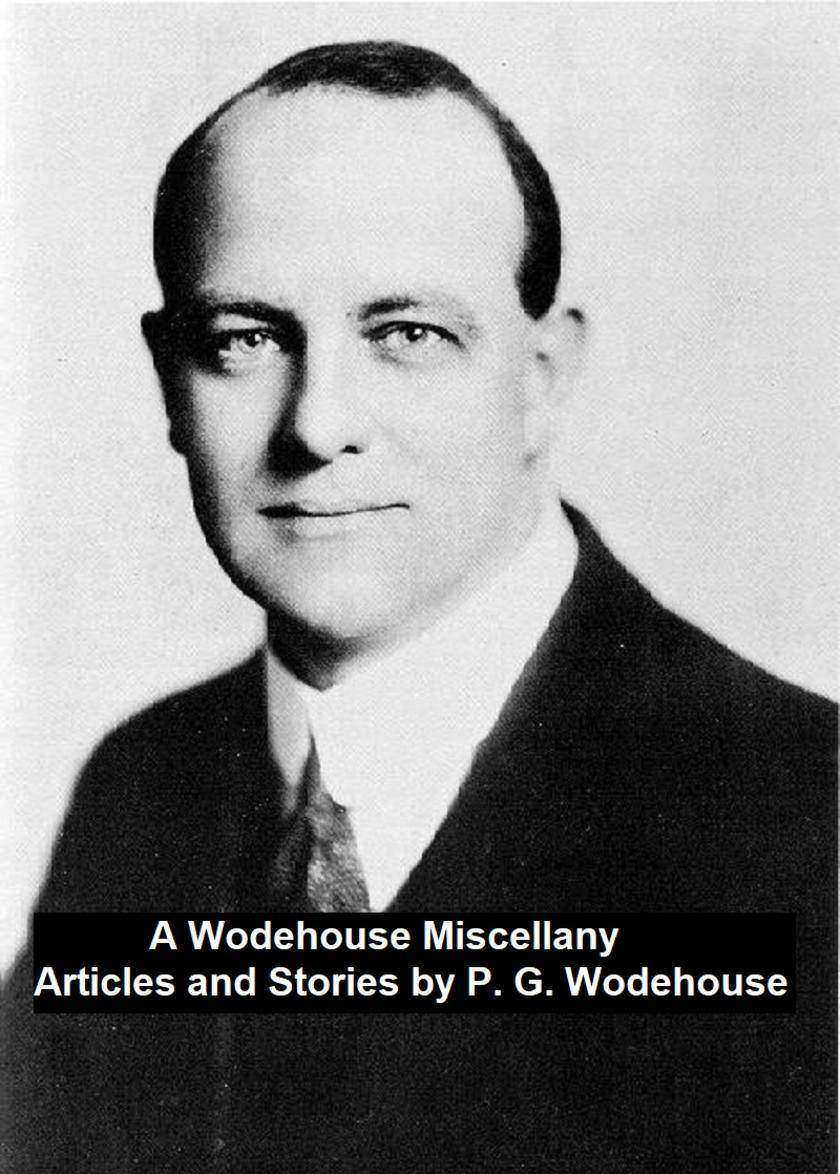
A Wodehouse Miscellany Articles and Stories
¥8.09
This collection of articles, poems, and stories includes: Some Aspects of Game-Captaincy, An Unfinished Collection, The New Advertising, the Secret Pleasures of Reginald, My Battle with Drink, In Defense of Astigmatism, Photographers and Me, A Plea for Indoor Golf, The Alarming Spread of Poetry, My Life as a Dramatic Critic, The Agonies of Writing a Musical Comedy, On the Writing of Lyrics, The Past Theatrical Season, Damon and Pythias, The Hounted Tram, When Papa Swore in Hindustani; Tom, Dick, and Harry; Jeeves Takes Charge, and Disentangling Old Duggie. According to Wikipedia: "Sir Pelham Grenville Wodehouse (15 October 1881 – 14 February 1975) was an English writer whose body of work includes novels, collections of short stories, and musical theatre. Wodehouse enjoyed enormous popular success during a career of more than seventy years and his prolific writings continue to be widely read. Despite the political and social upheavals that occurred during his life, much of which was spent in France and the United States, Wodehouse's main canvas remained that of pre-war English upper-class society, reflecting his birth, education, and youthful writing career. An acknowledged master of English prose, Wodehouse has been admired both by contemporaries such as Hilaire Belloc, Evelyn Waugh and Rudyard Kipling and by modern writers such as Stephen Fry, Douglas Adams, Salman Rushdie, Zadie Smith and Terry Pratchett. Journalist and writer Christopher Hitchens commented, "there is not, and never will be, anything to touch him." Best known today for the Jeeves and Blandings Castle novels and short stories, Wodehouse was also a playwright and lyricist who was part author and writer of 15 plays and of 250 lyrics for some 30 musical comedies, many of them produced in collaboration with Jerome Kern and Guy Bolton. He worked with Cole Porter on the musical Anything Goes (1934), wrote the lyrics for the hit song "Bill" in Kern's Show Boat (1927), wrote lyrics to Sigmund Romberg's music for the Gershwin – Romberg musical Rosalie (1928), and collaborated with Rudolf Friml on a musical version of The Three Musketeers (1928)."
Bucky O'Connor, A Tale of the Unfenced Border
¥8.09
Classic western novel, first published in 1910. "Every chapter teems with wholesome, stirring adventures, replete with the dashing spirit of the border. According to Wikipedia: "William MacLeod Raine (1871—1954), was a British-born American novelist who wrote fictional adventure stories about the American Old West.."
Bab: a Sub-Deb
¥8.09
According to Wikipedia: "Mary Roberts Rinehart (August 12, 1876-September 22, 1958) was a prolific author often called the American Agatha Christie.[1] She is considered the source of the phrase "The butler did it", although she did not actually use the phrase herself, and also considered to have invented the "Had-I-But-Known" school of mystery writing.... Rinehart wrote hundreds of short stories, poems, travelogues and special articles. Many of her books and plays, such as The Bat (1920) were adapted for movies, such as The Bat (1926), The Bat Whispers (1930), and The Bat (1959). While many of her books were best-sellers, critics were most appreciative of her murder mysteries. Rinehart, in The Circular Staircase (1908), is credited with inventing the "Had-I-But-Known" school of mystery writing. The Circular Staircase is a novel in which "a middle-aged spinster is persuaded by her niece and nephew to rent a country house for the summer. The house they choose belonged to a bank defaulter who had hidden stolen securities in the walls. The gentle, peace-loving trio is plunged into a series of crimes solved with the help of the aunt. This novel is credited with being the first in the "Had-I-But-Known" school."[3] The Had-I-But-Known mystery novel is one where the principal character (frequently female) does less than sensible things in connection with a crime which have the effect of prolonging the action of the novel. Ogden Nash parodied the school in his poem Don't Guess Let Me Tell You: "Sometimes the Had I But Known then what I know now I could have saved at least three lives by revealing to the Inspector the conversation I heard through that fortuitous hole in the floor." The phrase "The butler did it", which has become a cliché, came from Rinehart's novel The Door, in which the butler actually did do it, although that exact phrase does not actually appear in the work."


