


 购物车
购物车 个人中心
个人中心
Fehér Anna
¥8.67
THERE are various methods of introducing an artist to his public. One of the best is to describe how you saved his life in the Bush in ’82; or he saved yours; and then you go on: “Little did either of us anticipate in those far-off days that Fougasse was destined to become . . .” Another way is to leave Fougasse out altogether, and concentrate, how happily, on your own theories of black-and-white drawing, or politics, or the decline of the churches; after all, an introduction doesn’t last long, and he has the rest of the book to himself. Perhaps, however, it is kinder to keep the last paragraph for him: “Take these little sketches by Fougasse, for instance . . .” and the reader, if he cares to any longer, can then turn over and take them. Left to ourselves, that is the method we should adopt. But the publisher is at our elbow. “This is an introduction,” he says. “For Heaven’s sake introduce the fellow.” Let us begin, then, by explaining Fougasse’s nationality. I never discuss his drawings with another, but we tell each other how remarkable it is that a Frenchman should have such an understanding of English sport. “Of course,” we say, “in the actual drawing the nationality reveals itself; the Gallic style stands forth unmistakeably; only a Frenchman has just that line. But how amazingly British is the outlook! Was there ever a Frenchman before who understood and loved cricket as this one?” We ask ourselves how the phenomenon is to be explained. The explanation is simple. A fougasse—I quote the dictionary—is a small mine from six to twelve feet underground charged either with powder or loaded shells; and if a British sapper subaltern, severely wounded at Gallipoli, beguiles the weary years of hospital by drawing little pictures and sending them up to Punch, he may as well call himself Fougasse as anything else. Particularly if his real name is Bird, and if a Bird, whose real name is Yeats, is already drawing for Punch. Of course it would have been simpler if they had all stuck to their own names like gentlemen, but it is too late now to do anything about it, and when a genuine M. Fougasse of Paris comes along, he will have to call himself Tomkins. Once the downward path of deceit is trodden, there is seemingly no end to it. We have our artist, then, Kenneth Bird of Morar, Inverness. When I first met him at the beginning of 1919, he was just out of hospital, swinging slowly along with the aid of a pair of rocking-horse crutches. This was on his annual journey south, for they have the trains in Morar now. Once a year Fougasse makes the great expedition to London, to see what the latest fashions may be, and is often back in Morar again before they have changed to something later. I have seen him each year; in 1920 with two ordinary crutches; in 1921 with two sticks; in 1922 with one stick; perhaps by 1923 he will be playing again the games of which he makes such excellent fun. But, selfishly, we cannot regret the Turkish bullet, which turned what I suspect of being quite an ordinary engineer into such an individual black-and-white draughtsman. I am really the last person who should be writing this introduction, for all drawing is to me a mystery. When I put two dots, a horizontal line and a vertical line into a circle, the result is undoubtedly a face, but whose, or what expressing, I cannot tell you until afterwards, nor always then. But these mystery men can definitely promise you beforehand that their dot-and-line juggling will represent Contempt or Surprise or Mr. Asquith, just as you want it. It is very strange; and, sometimes I think, not quite fair. However, this is not the place wherein to dwell upon the injustice of it. What I wanted to say was that with Fougasse I feel a little more at ease than usual; we have something in common. Accepting the convention that writers write exclusively with the pen, and that black-and-white artists draw exclusively with the pencil, I should describe Fougasse as more nearly a Brother..
Peter Pan (Peter and Wendy)
¥8.67
Felkavaró és provokatív m?, az új magyar próza fontos eseménye a k?nyv megjelenése. A Zsidó vagy? cím? k?nyvével Németh Gábor végre megírta azt a regényt, amit olvasói régóta várnak t?le. Az elbeszél? gyermekkora tragikusan fájdalmas pillanatait felidézve keresi leküzdhetetlen idegenségérzetének eredetét. Ezt az érzést azonban nem származása értelmezi és igazolja, hanem annak az ismétl?d? tapasztalata, ahogyan mások félreértik és stigmatizálják. A regény kivételes egyensúlyt teremt t?rténetmondás és az elbeszél?i reflexiók k?z?tt; nyelvileg rendkívül pontos és kiérlelt m?.

Amerika
¥8.67
Az Egy t?r?tt orr balladája arról szól, hogy üssünk és hogy ne üssünk. ?s hogy mi a helyzet akkor, ha az ember csak úgy tud énekelni, amikor senki más nem hallja. De leginkább mégiscsak Bartról szól, aki szerint az élet attól egy cseppet sem lesz jobb, ha negatívak vagyunk. Megismerjük a titoktartásra képtelen Adával és Geirrel, aki mindig olyan furcsán áll. Az olyan fontos napok históriája ez a k?nyv, amelyeken egyszerre t?rténik minden, és semmi sem t?bbé lesz olyan, mint azel?tt volt. Amelyeken egyszerre érezzük magunkat boldognak és egy kissé szomorúnak. Ahogy ez a k?nyv is megnevetett, mik?zben néha elszorítja a torkodat. A szerz?r?l: 1967-ben szuletett Norvégiában, Oslóban. ?jságíró, író. Gyermek- és ifjúsági irodalom kategóriában Norvégia egyik legolvasottabb szerz?je. Kul?nb?z? m?fajokkal kísérletezik. ?r riportk?nyvet, regényt és filmforgatók?nyveket is. T?bb írását megfilmesítették. Járja Norvégia iskoláit, rendhagyó irodalomórákon saját m?vei mellett a világirodalmat is népszer?síti. Célja, hogy ne csak a lányok olvassanak, hanem a fiúk is. Mégpedig értékes irodalmi m?veket. Egy sor irodalmi elismerés tulajdonosa. 2012-ben jel?lték a Brage-díjra, amit 2005-ben egyszer már megkapott.

Hamlet, dán királyfi
¥8.67
Barnabás, a menyasszonya által kikosarazott fiatal tanár éppen szerelemi csalódásából lábadozik. Laura, a kislányát egyedül nevel? fiatal anyuka szeretne egy társat, aki a gyerekével együtt elfogadja ?t. Egy nap mindketten úgy d?ntenek, vállalják a kockázatot, és regisztrálnak egy internetes párkeres? oldalra. Hasonló elhatározásra jut a harmincas Dóra és a nagymama korú Vica is, és ezzel el?re nem látott bonyodalmak sorát indítják el. A négy társkeres? találkozik alkalmi kalandra vágyó szoknyavadásszal és luxusprostiként dolgozó egyetemista lánnyal, kicsavarodott ízlés? üzletemberrel és alibifeleséget keres? meleg férfival, furfangos pénzvadásszal és kínosan smucig úriemberrel. Kalandjaik során hol egy ?tcsillagos hotelben, hol egy Pest k?rnyéki, rossz hír? találkahelyen, hol egyenesen a rend?rségen találják magukat. Tisztességtelen ajánlatok, b?n?s szenvedélyek, vígjátékba ill? els? randik, szívszorító szakítások kísérik h?seink bolyongását a huszonegyedik század nagy kerít?jének hálójában. ?m mire kikeverednek a párkeresés útveszt?ib?l, megtanulják: érdemes esélyt adni a sorsnak, mert cserébe a sors is kínálhat egy második esélyt.

Nyolcvan nap alatt a F?ld k?rül
¥8.67
Emlékezetes nyaralásnak indult. De szerepelt a tervek k?z?tt alkalmi románc is? May, Lara és Clare a legjobb barátn?k, akik elkeseredetten vágynak egy kis kikapcsolódásra. A k?zelmúltban mindhárman nehéz id?szakon mentek keresztül, és igazán nagy szükségük van a leveg?változásra. Tíz napra foglalnak szállást egy luxusszállóban, ám amikor megérkeznek, rád?bbennek, hogy egészen máshol k?t?ttek ki, mint gondolták. Rossz faluba tévedtek... Ren Dullemben semmi sem az, aminek látszik. A bájos macskak? és a képeslapra ill? házikók k?zt rejtélyes titok lappang, melyet a falusiak hosszú évek óta ?riznek. Miért olyan barátságtalan és gyanakvó mindenki? Miért viselkedik olyan gorombán a nyaralóház tulajdonosa? ?s miért él olyan kevés n? a faluban? A kül?n?s légk?r ellenére a három barátn? úgy d?nt, hogy kihozza a helyzetb?l a lehet? legt?bbet. De valóban ilyen pihenésre volt szükségük? Vagy ez a furcsa kis falu és a sok titok életre szóló d?ntésekre kényszeríti ?ket?
Jeanne d'Arc
¥8.67
Tudod, mi az a klottgatya? Múlt századi tornanadrág. ?s tudod, ki az a Klott Gatya? Nagydarab, sz?r?s szív? tesitanár, a Békés Utcai ?ltalános Iskolában. ?rülhetsz, ha még nem volt hozzá szerencséd! Vagyis inkább szerencsétlenséged. Bezzeg szegény ?t?dik dések! Nekik szeptemberben pont Klott tanár úr lett az osztályf?n?kük. Szerinted sikerült ?t kiutálniuk a Békésb?l, vagy inkább békét k?tnek az ország legfélelmetesebb pedagógusával? ?Bosnyák Viktória megint egy olyan igazi beleél?s, szórakoztató regényt írt...” – Nógrádi Gábor
A gavallérok
¥8.67
Paprika Jancsi és Vitéz László azon mesterkedik, hogy fül?n csípje Torzonborzot, aki ellopta Nagymama kül?nleges kávédarálóját. ?m szerencsétlenségükre ?k maguk kerülnek a hétt?r?s rabló és varázsló barátja, a gonosz Petróniusz Pókuszhókusz karmai k?zé... A világhír? német gyerekk?nyvszerz?, Otfried Preu?ler t?rténete generációk kedvence. T?bb mint harminc nyelven olvasható – most végre magyarul is. A Kolibri Klasszikusok sorozat els? darabját Torzonborz további kalandjai és a szerz? kiváló meseregényei k?vetik.
A Noszty fiú esete Tóth Marival
¥8.67
Megsz?k?tt a dutyiból Torzonborz, a rabló! Ráadásul Nagymamát is elrabolta! Ez a fordulat ?szintén megd?bbenti Paprika Jancsit, Vitéz Lászlót és ?st?llési f?t?rzs?rmestert is. De vajon mihez kezdjenek? Azt remélik, hogy Háy asszonyság, a városka jósn?je segít nekik, hogy újra együtt lehessenek Nagymamával...

Akik kétszer halnak meg
¥8.67
Emile, or On Education or ?mile, Or Treatise on Education (French: ?mile, ou De l’éducation) is a treatise on the nature of education and on the nature of man written by Jean-Jacques Rousseau, who considered it to be the “best and most important of all my writings”. Due to a section of the book entitled “Profession of Faith of the Savoyard Vicar,” Emile was banned in Paris and Geneva and was publicly burned in 1762, the year of its first publication. During the French Revolution, Emile served as the inspiration for what became a new national system of education. The work tackles fundamental political and philosophical questions about the relationship between the individual and society— how, in particular, the individual might retain what Rousseau saw as innate human goodness while remaining part of a corrupting collectivity. Its opening sentence: “Everything is good as it leaves the hands of the Author of things; everything degenerates in the hands of man.” Rousseau seeks to describe a system of education that would enable the natural man he identifies in The Social Contract (1762) to survive corrupt society. He employs the novelistic device of Emile and his tutor to illustrate how such an ideal citizen might be educated. Emile is scarcely a detailed parenting guide but it does contain some specific advice on raising children. It is regarded by some as the first philosophy of education in Western culture to have a serious claim to completeness, as well as being one of the first Bildungsroman novels, having preceded Goethe's Wilhelm Meister's Apprenticeship by more than thirty years. ? About Author: Jean-Jacques Rousseau (1712 – 1778) was a Genevan philosopher, writer, and composer of the 18th century. His political philosophy influenced the French Revolution as well as the overall development of modern political, sociological, and educational thought. Rousseau's novel ?mile, or On Education is a treatise on the education of the whole person for citizenship. His sentimental novel Julie, or the New Heloise was of importance to the development of pre-romanticism and romanticism in fiction. Rousseau's autobiographical writings — his Confessions, which initiated the modern autobiography, and his Reveries of a Solitary Walker — exemplified the late 18th-century movement known as the Age of Sensibility, and featured an increased focus on subjectivity and introspection that later characterized modern writing. His Discourse on the Origin of Inequality and his On the Social Contract are cornerstones in modern political and social thought. He argued that private property was conventional and the beginning of true civil society. Rousseau was a successful composer of music, who wrote seven operas as well as music in other forms, and made contributions to music as a theorist. As a composer, his music was a blend of the late Baroque style and the emergent Classical fashion, and he belongs to the same generation of transitional composers as Christoph Willibald Gluck and C.P.E. Bach. One of his more well-known works is the one-act opera Le devin du village, containing the duet "Non, Colette n'est point trompeuse" which was later rearranged as a standalone song by Beethoven. During the period of the French Revolution, Rousseau was the most popular of the philosophes among members of the Jacobin Club. Rousseau was interred as a national hero in the Panthéon in Paris, in 1794, 16 years after his death..

Aranysárkány
¥8.67
Johann Wolfgang von Goethe's Faust is a tragic play in two parts: Faust. Der Trag?die erster Teil translated as: Faust: The First Part of the Tragedy) and Faust. Der Trag?die zweiter Teil (Faust: The Second Part of the Tragedy). Although rarely staged in its entirety, it is the play with the largest audience numbers on German-language stages. Faust is Goethe's most famous work and considered by many to be one of the greatest works of German literature. The principal characters of Faust Part One include:Heinrich Faust, a scholar, sometimes said to be based on the real life of Johann Georg Faust, or on Jacob Bidermann's dramatized account of the Legend of the Doctor of Paris, CenodoxusMephistopheles, a Devil (Demon)Gretchen, Faust's love (short for Margaret; Goethe uses both forms)Marthe, Gretchen's neighbourValentin, Gretchen's brotherWagner, Faust's famulus Faust Part One takes place in multiple settings, the first of which is heaven. Mephistopheles makes a bet with God: he says that he can lure God's favourite human being (Faust), who is striving to learn everything that can be known, away from righteous pursuits. The next scene takes place in Faust's study where Faust, despairing at the vanity of scientific, humanitarian and religious learning, turns to magic for the showering of infinite knowledge. He suspects, however, that his attempts are failing. Frustrated, he ponders suicide, but rejects it as he hears the echo of nearby Easter celebrations begin. He goes for a walk with his assistant Wagner and is followed home by a stray poodle (the term then meant a medium-to-big-size dog, similar to a sheep dog).In Faust's study, the poodle transforms into the devil (Mephistopheles). Faust makes an arrangement with the devil: the devil will do everything that Faust wants while he is here on Earth, and in exchange Faust will serve the devil in Hell. Faust's arrangement is that if he is pleased enough with anything the devil gives him that he wants to stay in that moment forever, then he will die in that moment.When the devil tells Faust to sign the pact with blood, Faust complains that the devil does not trust Faust's word of honor. In the end, Mephistopheles wins the argument and Faust signs the contract with a drop of his own blood. Faust has a few excursions and then meets Margaret (also known as Gretchen). He is attracted to her and with jewellery and help from a neighbor, Martha, the devil draws Gretchen into Faust's arms. With influence from the devil, Faust seduces Gretchen. Gretchen's mother dies from a sleeping potion, administered by Gretchen to obtain privacy so that Faust could visit her. Gretchen discovers she is pregnant. Gretchen's brother condemns Faust, challenges him and falls dead at the hands of Faust and Mephistopheles. Gretchen drowns her illegitimate child and is convicted of the murder. Faust tries to save Gretchen from death by attempting to free her from prison. Finding that she refuses to escape, Faust and the devil flee the dungeon, while voices from Heaven announce that Gretchen shall be saved – "Sie ist gerettet" – this differs from the harsher ending of Urfaust – "Sie ist gerichtet!" – "she is condemned." It was reported that members of the first-night audience familiar with the original Urfaust version cheered on hearing the amendment.
Madame Bovary
¥8.67
The book begins with a short preamble in which Lemuel Gulliver, in the style of books of the time, gives a brief outline of his life and history before his voyages. He enjoys travelling, although it is that love of travel that is his downfall. During his first voyage, Gulliver is washed ashore after a shipwreck and finds himself a prisoner of a race of tiny people, less than 6 inches tall, who are inhabitants of the island country of Lilliput. After giving assurances of his good behaviour, he is given a residence in Lilliput and becomes a favourite of the court. From there, the book follows Gulliver's observations on the Court of Lilliput. He is also given the permission to roam around the city on a condition that he must not harm their subjects. Gulliver assists the Lilliputians to subdue their neighbours, the Blefuscudians, by stealing their fleet. However, he refuses to reduce the island nation of Blefuscu to a province of Lilliput, displeasing the King and the court. Gulliver is charged with treason for, among other "crimes", "making water" in the capital (even though he was putting out a fire and saving countless lives). He is convicted and sentenced to be blinded, but with the assistance of a kind friend, he escapes to Blefuscu. Here he spots and retrieves an abandoned boat and sails out to be rescued by a passing ship, which safely takes him back home. This book of the Travels is a topical political satire. ABOUT AUTHOR: Jonathan Swift (1667 – 1745) was an Anglo-Irish satirist, essayist, political pamphleteer, poet and cleric who became Dean of St Patrick's Cathedral, Dublin. He is remembered for works such as Gulliver's Travels, A Modest Proposal, A Journal to Stella, Drapier's Letters, The Battle of the Books, An Argument Against Abolishing Christianity, and A Tale of a Tub. Swift originally published all of his works under pseudonyms – such as Lemuel Gulliver, Isaac Bickerstaff, MB Drapier – or anonymously. He is also known for being a master of two styles of satire: the Horatian and Juvenalian styles.YouthJonathan Swift was born in Dublin, Ireland. He was the second child and only son of Jonathan Swift (1640–1667) and his wife Abigail Erick (or Herrick), of Frisby on the Wreake. His father, a native of Goodrich, Herefordshire, accompanied his brothers to Ireland to seek their fortunes in law after their Royalist father's estate was brought to ruin during the English Civil War. Swift's father died in Dublin before he was born, and his mother returned to England. He was left in the care of his influential uncle, Godwin, a close friend and confidant of Sir John Temple, whose son later employed Swift as his secretary. Swift's family had several interesting literary connections: His grandmother, Elizabeth (Dryden) Swift, was the niece of Sir Erasmus Dryden, grandfather of the poet John Dryden. The same grandmother's aunt, Katherine (Throckmorton) Dryden, was a first cousin of Elizabeth, wife of Sir Walter Raleigh. His great-great grandmother, Margaret (Godwin) Swift, was the sister of Francis Godwin, author of The Man in the Moone which influenced parts of Swift's Gulliver's Travels. His uncle, Thomas Swift, married a daughter of the poet and playwright Sir William Davenant, a godson of William Shakespeare.WriterIn February 1702, Swift received his Doctor of Divinity degree from Trinity College, Dublin. That spring he travelled to England and returned to Ireland in October, accompanied by Esther Johnson—now 20—and his friend Rebecca Dingley, another member of William Temple's household. There is a great mystery and controversy over Swift's relationship with Esther Johnson nicknamed "Stella". Many, notably his close friend Thomas Sheridan believed that they were secretly married in 1716; others, like Swift's housekeeper Mrs Brent, and Rebecca Dingley (who lived with Stella all through her years in Ireland) dismissed the story as absurd.
?gy írtok ti
¥8.67
Mme. Vauquer (nee de Conflans) is an elderly person, who for the past forty years has kept a lodging-house in the Rue Nueve-Sainte-Genevieve, in the district that lies between the Latin Quarter and the Faubourg Saint-Marcel. Her house (known in the neighborhood as the Maison Vauquer) receives men and women, old and young, and no word has ever been breathed against her respectable establishment; but, at the same time, it must be said that as a matter of fact no young woman has been under her roof for thirty years, and that if a young man stays there for any length of time it is a sure sign that his allowance must be of the slenderest. In 1819, however, the time when this drama opens, there was an almost penniless young girl among Mme. Vauquer's boarders. That word drama has been somewhat discredited of late; it has been overworked and twisted to strange uses in these days of dolorous literature; but it must do service again here, not because this story is dramatic in the restricted sense of the word, but because some tears may perhaps be shed intra et extra muros before it is over. Will any one without the walls of Paris understand it? It is open to doubt. The only audience who could appreciate the results of close observation, the careful reproduction of minute detail and local color, are dwellers between the heights of Montrouge and Montmartre, in a vale of crumbling stucco watered by streams of black mud, a vale of sorrows which are real and joys too often hollow; but this audience is so accustomed to terrible sensations, that only some unimaginable and well-neigh impossible woe could produce any lasting impression there. Now and again there are tragedies so awful and so grand by reason of the complication of virtues and vices that bring them about, that egotism and selfishness are forced to pause and are moved to pity; but the impression that they receive is like a luscious fruit, soon consumed. Civilization, like the car of Juggernaut, is scarcely stayed perceptibly in its progress by a heart less easy to break than the others that lie in its course; this also is broken, and Civilization continues on her course triumphant. And you, too, will do the like; you who with this book in your white hand will sink back among the cushions of your armchair, and say to yourself, "Perhaps this may amuse me." You will read the story of Father Goriot's secret woes, and, dining thereafter with an unspoiled appetite, will lay the blame of your insensibility upon the writer, and accuse him of exaggeration, of writing romances. Ah! once for all, this drama is neither a fiction nor a romance! All is true,—so true, that every one can discern the elements of the tragedy in his own house, perhaps in his own heart. During the day a glimpse into the garden is easily obtained through a wicket to which a bell is attached. On the opposite wall, at the further end of the graveled walk, a green marble arch was painted once upon a time by a local artist, and in this semblance of a shrine a statue representing Cupid is installed; a Parisian Cupid, so blistered and disfigured that he looks like a candidate for one of the adjacent hospitals, and might suggest an allegory to lovers of symbolism. The half-obliterated inscription on the pedestal beneath determines the date of this work of art, for it bears witness to the widespread enthusiasm felt for Voltaire on his return to Paris in 1777: "Whoe'er thou art, thy master see; He is, or was, or ought to be."
Tartuffe
¥8.67
Following the Equator (sometimes titled More Tramps Abroad) is a non-fiction travelogue published by American author Mark Twain in 1897. Twain was practically bankrupt in 1894 due to a failed investment into a "revolutionary" typesetting machine. In an attempt to extricate himself from debt of $100,000 (equivalent of about $2.5 million in 2010) he undertook a tour of the British Empire in 1895, a route chosen to provide numerous opportunities for lectures in the English. Themes:In Following the Equator, an account of that travel published in 1897, the author criticizes racism, imperialism and missionary zeal in observations woven into the narrative with classical Twain wit.In keeping with that wit, and Twain's love of a tall tale, Twain included a number of fictional stories in the body of what is otherwise a non-fiction work. In particular, the story of how Cecil Rhodes made his fortune by finding a newspaper in the belly of a shark, and the story of how a man named Ed Jackson made good in life out of a fake letter of introduction to Cornelius Vanderbilt, were anthologized in Charles Neider (ed) The Complete Short Stories of Mark Twain, (Doubleday, 1957) where they are presented as fiction. Chapter I A man may have no bad habits and have worse. —Pudd'nhead Wilson's New Calendar. The starting point of this lecturing-trip around the world was Paris, where we had been living a year or two. We sailed for America, and there made certain preparations. This took but little time. Two members of my family elected to go with me. Also a carbuncle. The dictionary says a carbuncle is a kind of jewel. Humor is out of place in a dictionary. We started westward from New York in midsummer, with Major Pond to manage the platform-business as far as the Pacific. It was warm work, all the way, and the last fortnight of it was suffocatingly smoky, for in Oregon and British Columbia the forest fires were raging. We had an added week of smoke at the seaboard, where we were obliged to wait awhile for our ship. She had been getting herself ashore in the smoke, and she had to be docked and repaired. We sailed at last; and so ended a snail-paced march across the continent, which had lasted forty days. We moved westward about mid-afternoon over a rippled and sparkling summer sea; an enticing sea, a clean and cool sea, and apparently a welcome sea to all on board; it certainly was to me, after the distressful dustings and smokings and swelterings of the past weeks. The voyage would furnish a three-weeks holiday, with hardly a break in it. We had the whole Pacific Ocean in front of us, with nothing to do but do nothing and be comfortable. The city of Victoria was twinkling dim in the deep heart of her smoke-cloud, and getting ready to vanish and now we closed the field-glasses and sat down on our steamer chairs contented and at peace. But they went to wreck and ruin under us and brought us to shame before all the passengers. They had been furnished by the largest furniture-dealing house in Victoria, and were worth a couple of farthings a dozen, though they had cost us the price of honest chairs. In the Pacific and Indian Oceans one must still bring his own deck-chair on board or go without, just as in the old forgotten Atlantic times—those Dark Ages of sea travel.
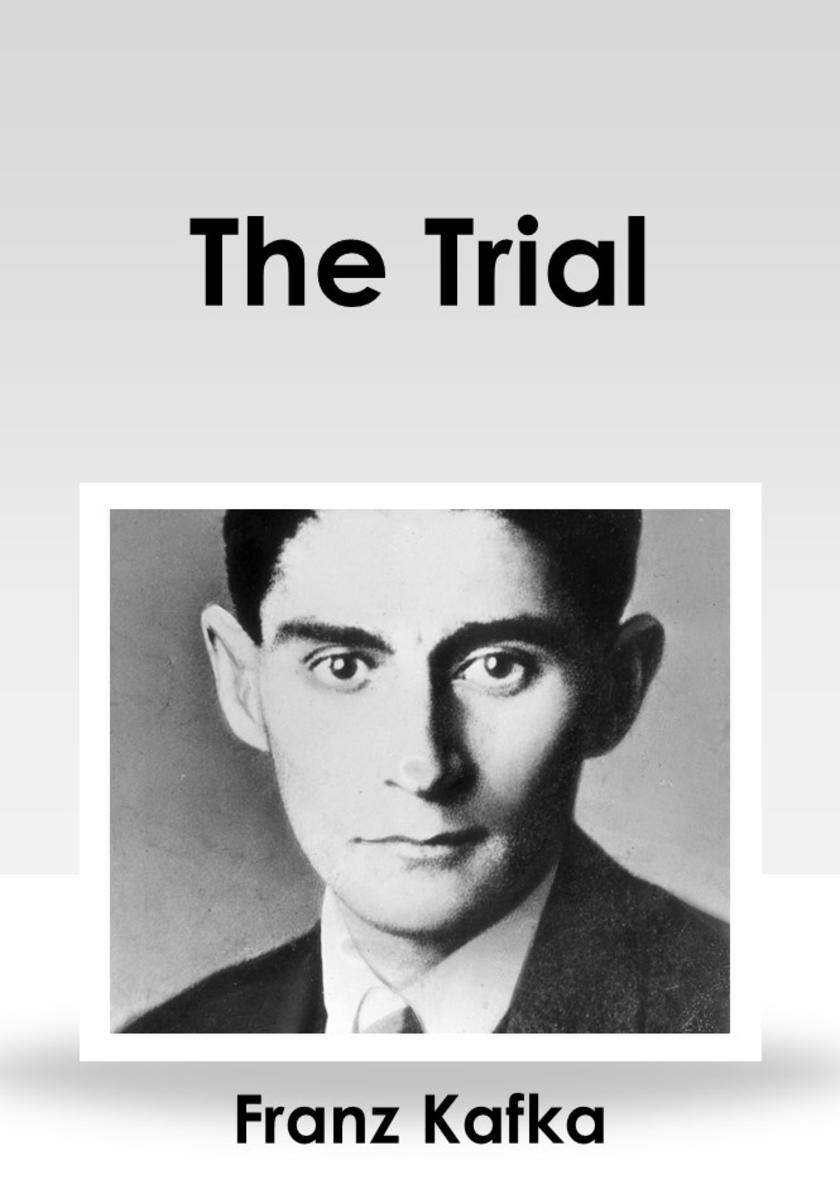
The Trial
¥8.67
Great Expectations is Charles Dickens's thirteenth novel. It is his second novel, after David Copperfield, to be fully narrated in the first person. Great Expectations is abildungsroman, or a coming-of-age novel, and it is a classic work of Victorian literature. It depicts the growth and personal development of an orphan named Pip. The novel was first published in serial form in Dickens' weekly periodical All the Year Round, from 1 December 1860 to August 1861. In October 1861, Chapman and Hall published the novel in three volumes. Great Expectations was to be twice as long, but constraints imposed by the management of All the Year Round limited the novel's length. Collected and dense, with a conciseness unusual for Dickens, the novel represents Dickens' peak and maturity as an author. According to G. K. Chesterton, Dickens penned Great Expectations in "the afternoon of [his] life and fame." It was the penultimate novel Dickens completed, preceding Our Mutual Friend. It is set among the marshes of Kent and in London in the early to mid-1800s. From the outset, the reader is "treated" by the terrifying encounter between Pip, the protagonist, and the escaped convict, Abel Magwitch. Great Expectations is a graphic book, full of extreme imagery, poverty, prison ships, "the hulks," barriers and chains, and fights to the death. It therefore combines intrigue and unexpected twists of autobiographical detail in different tones. Regardless of its narrative technique, the novel reflects the events of the time, Dickens' concerns, and the relationship between society and man. The novel has received mixed reviews from critics: Thomas Carlyle speaks of "All that Pip's nonsense," while George Bernard Shaw praised the novel as "All of one piece and Consistently truthfull." Dickens felt Great Expectations was his best work, calling it "a very fine idea," and was very sensitive to compliments from his friends: "Bulwer, who has been, as I think you know, extraordinarily taken by the book." ABOUT AUTHOR: Charles John Huffam Dickens (1812 – 1870) was an English writer and social critic. He created some of the world's most memorable fictional characters and is generally regarded as the greatest novelist of the Victorian period. During his life, his works enjoyed unprecedented fame, and by the twentieth century his literary genius was broadly acknowledged by critics and scholars. His novels and short stories continue to be widely popular. Born in Portsmouth, England, Dickens was forced to leave school to work in a factory when his father was thrown into debtors' prison. Although he had little formal education, his early impoverishment drove him to succeed. Over his career he edited a weekly journal for 20 years, wrote 15 novels, 5 novellas and hundreds of short stories and non-fiction articles, lectured and performed extensively, was an indefatigable letter writer, and campaigned vigorously for children's rights, education, and other social reforms. Dickens sprang to fame with the 1836 serial publication of The Pickwick Papers. Within a few years he had become an international literary celebrity, famous for his humour, satire, and keen observation of character and society. His novels, most published in monthly or weekly instalments, pioneered the serial publication of narrative fiction, which became the dominant Victorian mode for novel publication. The instalment format allowed Dickens to evaluate his audience's reaction, and he often modified his plot and character development based on such feedback. For example, when his wife's chiropodistexpressed distress at the way Miss Mowcher in David Copperfield seemed to reflect her disabilities, Dickens went on to improve the character with positive features. Fagin inOliver Twist apparently mirrors the famous fence Ikey Solomon; His caricature of Leigh Hunt in the figure of Mr Skimpole in Bleak House was likewise toned down on advice from some of his friends, as they read episodes. In the same novel, both Lawrence Boythorne and Mooney the beadle are drawn from real life – Boythorne from Walter Savage Landorand Mooney from 'Looney', a beadle at Salisbury Square. His plots were carefully constructed, and Dickens often wove in elements from topical events into his narratives. Masses of the illiterate poor chipped in ha'pennies to have each new monthly episode read to them, opening up and inspiring a new class of readers.
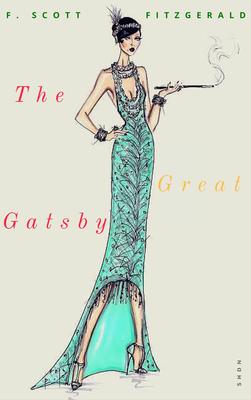
The Great Gatsby
¥8.75
In 1922, F. Scott Fitzgerald announced his decision to write "something new--something extraordinary and beautiful and simple + intricately patterned." That extraordinary, beautiful, intricately patterned, and above all, simple novel became The Great Gatsby, arguably Fitzgerald's finest work and certainly the book for which he is best known. A portrait of the Jazz Age in all of its decadence and excess, Gatsby captured the spirit of the author's generation and earned itself a permanent place in American mythology. Self-made, self-invented millionaire Jay Gatsby embodies some of Fitzgerald's--and his country's--most abiding obsessions: money, ambition, greed, and the promise of new beginnings. "Gatsby believed in the green light, the orgiastic future that year by year recedes before us. It eluded us then, but that's no matter--tomorrow we will run faster, stretch out our arms farther.... And one fine morning--" Gatsby's rise to glory and eventual fall from grace becomes a kind of cautionary tale about the American Dream. It's also a love story, of sorts, the narrative of Gatsby's quixotic passion for Daisy Buchanan. The pair meet five years before the novel begins, when Daisy is a legendary young Louisville beauty and Gatsby an impoverished officer. They fall in love, but while Gatsby serves overseas, Daisy marries the brutal, bullying, but extremely rich Tom Buchanan. After the war, Gatsby devotes himself blindly to the pursuit of wealth by whatever means--and to the pursuit of Daisy, which amounts to the same thing. "Her voice is full of money," Gatsby says admiringly, in one of the novel's more famous descriptions. His millions made, Gatsby buys a mansion across Long Island Sound from Daisy's patrician East Egg address, throws lavish parties, and waits for her to appear. When she does, events unfold with all the tragic inevitability of a Greek drama, with detached, cynical neighbor Nick Carraway acting as chorus throughout. Spare, elegantly plotted, and written in crystalline prose, The Great Gatsby is as perfectly satisfying as the best kind of poem.

To the Lighthouse
¥8.75
To the Lighthouse (5 May 1927) is a novel by Virginia Woolf. A landmark novel of high modernism, the text, centering on the Ramsay family and their visits to the Isle of Skye in Scotland between 1910 and 1920, skillfully manipulates temporality and psychological exploration. To the Lighthouse follows and extends the tradition of modernist novelists like Marcel Proust and James Joyce, where the plot is secondary to philosophical introspection, and the prose can be winding and hard to follow. The novel includes little dialogue and almost no action; most of it is written as thoughts and observations. The novel recalls the power of childhood emotions and highlights the impermanence of adult relationships. One of the book's several themes is the ubiquity of transience.

The Survivors of the Chancellor
¥8.82
The Survivors of the Chancellor: Diary of J. R. Kazallon, Passenger is an 1875 novel written by Jules Verne about the final voyage of a British sailing ship, the Chancellor, told from the perspective of one of its passengers (in the form of a diary).
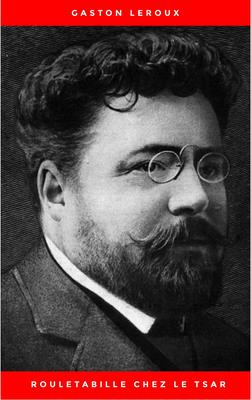
Rouletabille chez le Tsar
¥8.82
Et, cette nuit, cette nuit où elle sent Rouletabille quelque part, autour d’elle… voilà, vraiment, qu’elle est moins inquiète… et pourtant les policiers ne sont plus là !… Aurait-il raison, ce petit ?… Il est certain (elle ne saurait se le dissimuler) qu’elle est beaucoup plus tranquille… plus tranquille maintenant que les policiers ne sont plus là… elle ne passe pas son temps à rechercher leurs ombres, dans l’ombre… à t?ter l’ombre… les fauteuils… les canapés… à secouer leur torpeur… à les appeler tout bas, par leur petit nom et le petit nom de leur père… à leur promettre le natcha? important s’ils veillent bien… à les compter, pour savoir où ils sont tous… et, tout à coup, à leur jeter en plein visage le jet de lumière de sa petite lanterne sourde pour être s?re, bien s?re, qu’elle a en face d’elle, un de la police… et non point un autre… un autre avec une petite bo?te infernale sous le bras !…
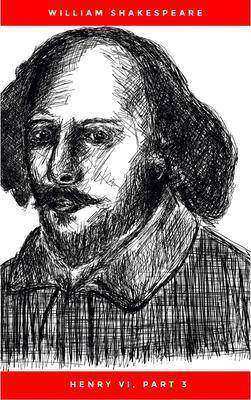
Henry VI, Part 3
¥8.82
Henry the Sixth, Part 3, is a history play by William Shakespeare, believed written in approximately 1590, and set during the lifetime of King Henry VI of England. It prepares the ground for one of his best-known and most controversial plays: the tragedy of King Richard III (Richard III of England). It continues the action from Henry VI, Part 1 and Henry VI, Part 2, though they may not have been written in that order.
Henry IV, Part 2
¥8.82
Henry IV, Part 2 is a history play by William Shakespeare, believed written between 1596 and 1599. It is the third part of a tetralogy, preceded by Richard II and Henry IV, Part 1 and succeeded by Henry V.
King John
¥8.82
The Life and Death of King John, a history play by William Shakespeare, dramatizes the reign of King John of England (ruled 1199–1216), son of Henry II of England and Eleanor of Aquitaine and father of Henry III of England. It is believed to have been written in the mid-1590s but was not published until it appeared in the First Folio in 1623.


