


 购物车
购物车 个人中心
个人中心
Le Songe D'Une Nuit D'?té
¥9.00
L'action se déroule en Grèce et réunit pour mieux les désunir deux couples de jeunes amants, Lysandre, Démétrius, Hélène et Hermia. Hermia veut épouser Lysandre, mais son père, ?gée, la destine à Démétrius, dont est amoureuse Hélèna. Lysandre et Hermia s'enfuient dans la forêt, poursuivis par Démétrius, lui-même poursuivi par Hélèna. Pendant ce temps, Obéron, roi des fées, a ordonné à Puck de verser une potion sur les paupières de sa femme, Titania. Il entre dans la forêt avec Puck. Pendant la nuit, la confusion règne.
Henry VI, Part 2
¥9.00
The Second Part of King Henry the Sixth, or Henry VI, Part 2, is a history play by William Shakespeare believed written in approximately 1590-91. It is the second part of the trilogy on Henry VI, and often grouped together with Richard III as a tetralogy on The Wars of the Roses—the success of which established Shakespeare's reputation as a playwright.
Oeuvres Complètes
¥9.00
Cet ebook regroupe les oeuvres complètes de Charles Baudelaire. Des tables des matières rendent la navigation intuitive et agréable. ---- Contenu: Le Jeune Enchanteur (1846) La Fanfarlo (1847) Les Fleurs du mal (1857) Les Paradis artificiels (1860) Les Fleurs du mal (1861) Les ?paves (1866) Les Fleurs du mal (additional poems of the 1868 edition) Curiosités esthétiques (1868): Salon de 1845, Salon de 1846, Le musée classique du bazar bonne-nouvelle, Exposition universelle — 1855 — beaux-arts, Salon de 1859, De l'essence du rire, Quelques caricaturistes fran?ais, Quelques caricaturistes étrangers. L'Art romantique (1869): L'?uvre et la vie d'Eugène Delacroix, Peintures murales d'Eugène Delacroix à Saint-Sulpice, Le peintre de la vie moderne, Peintres et aqua-fortistes, Vente de la collection de M. E. Piot, L'art philosophique, Morale du joujou, Théophile Gautier, Pierre Dupont, Richard Wagner et Tannh?user à Paris, Philibert Rouvière, Conseils aux jeunes littérateurs, Les drames et les ...
Los Despojos
¥9.00
Esta recopilación compuesta de inéditos y piezas condenadas fue publicada en Bruselas, bajo el cuidado de Poulet-Malassis, amigo de Baudelaire con un pie de imprenta apócrifo: Amsterdam, a l'Enseigne du Coq, precedida por un simbólico frontispicio de Félicien Rops.
Las Flores del Mal
¥9.00
Les Fleurs du mal es una colección de poemas de Charles Baudelaire. Considerada la obra máxima de su autor, abarca casi la totalidad de su producción poética desde 1840 hasta la fecha de su primera publicación en 1857. Las Flores del mal es considerada una de las obras más importantes de la poesía moderna, imprimiendo una estética nueva, donde la belleza y lo sublime surgen, a través del lenguaje poético, de la realidad más trivial.
La Fanfarlo
¥9.00
Este cuento ha sido publicado en el Boletín de la Sociedad de la Gente de Letras en enero de 1847 bajo el seudónimo de Charles Dufays. Narra la historia de los amores y desamores del joven poeta Samuel Cramer.Una peque?a joya de la literatura clásica.
Cities of the Plain: (Sodom and Gomorrah)
¥9.00
In this fourth volume, Proust’s novel takes up for the first time the theme of homosexual love and examines how destructive sexual jealousy can be for those who suffer it. Sodom and Gomorrah is also an unforgiving analysis of both the decadent high society of Paris and the rise of a philistine bourgeoisie that will inevitably supplant it.
Winnetou 3
¥9.00
Old Shatterhand trifft in der Savanne den berühmten Westmann Sans-Ear. Nachdem Sans-Ear vier feindliche Komantschen besiegt hat, reiten beide zusammen weiter und verhindern einen Zugüberfall. Bei diesem ?berfall beteiligt sich ein Wei?er, der von Sans-Ear als der M?rder seiner Familie identifiziert wird, Fred Morgan. Durch einen glücklichen Umstand k?nnen sie die Spur des Verbrechers entdecken und folgen ihm durch den Llano Estacado, wo sie sich erneut gegen die Comanchen behaupten müssen, zwischenzeitlich begleitet von Winnetou und Bernard Marshall, der ebenfalls hinter Fred Morgan her ist. In der N?he der Goldfelder von San Francisco erwischen sie endlich beide Morgans. Im zweiten Teil trifft Old Shatterhand auf einer Zugfahrt Fred Walker, einen Detektiv, der hinter den Railtroublers her ist, einer Bande von Zugr?ubern. Old Shatterhand und sp?ter auch Winnetou verbünden sich mit Spürauge und verhindern einen ?berfall auf Echo Canyon, eine gro?e Bahnstation. Auf der Flucht überfallen die mit den Zugr?ubern verbündeten Sioux eine Siedlung und verschleppen alle Bewohner. Bei der Rettungsaktion am Berg Hancock wird Winnetou von einem Sioux erschossen.
El cisne de Vilamorta
¥9.00
EL CISNE DE VILAMORTA : Leocadia, la maestra de Vilamorta, ama apasionadamente al joven y apuesto Segundo ( el cisne ) al que recibe en su casa y de vez en cuando hace algún obsequio, ya que Segundo aunque estudió derecho , no trabaja. Leocadia tiene un hijo deficiente producto de una violación incestuosa de un tío con el que vivía en Ourense. Segundo aspira a conseguir una colocación en Madrid que le permita darse a conocer en el mundo literario de la capital. Llega a Vilamorta un político influyente ( don Victoriano ). Viene a curarse con las aguas del balneario. El poeta se enamora de la joven mujer del político ( Nieves ) y ella coquetea con él , pero el marido muere y la viuda marcha a Madrid sin querer saber nada de Segundo ...
Anne of Avonlea
¥9.00
Following Anne of Green Gables (1908), the book covers the second chapter in the life of Anne Shirley. This book follows Anne from the age of 16 to 18, during the two years that she teaches at Avonlea school. It includes many of the characters from Anne of Green Gables, as well as new ones like Mr Harrison, Miss Lavendar Lewis, Paul Irving, and the twins Dora and Davy.
Seventeen: A Tale of Youth and Summer Time and the Baxter Family Especially Will
¥9.00
Seventeen: A Tale of Youth and Summer Time and the Baxter Family Especially William is a humorous novel by Booth Tarkington that gently satirizes first love, in the person of a callow 17-year-old, William Sylvanus Baxter. Seventeen takes place in a small city in the Midwestern United States shortly before World War I. It was published as sketches in the Metropolitan Magazine in 1914, and collected in a single volume in 1916, when it was the bestselling novel in the United States.
Penrod
¥9.00
Penrod is a collection of comic sketches by Booth Tarkington that was first published in 1914. The book follows the misadventures of Penrod Schofield, an eleven-year-old boy growing up in the pre-World War I Midwestern United States, in a similar vein to The Adventures of Tom Sawyer. In Penrod, Tarkington established characters who appeared in two further books, Penrod and Sam (1916) and Penrod Jashber (1929). The three books were published together in one volume, Penrod: His Complete Story, in 1931.
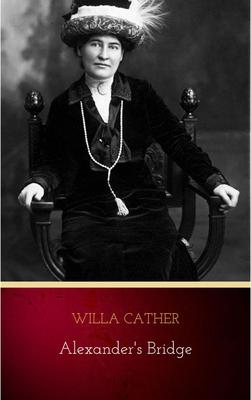
Alexander's Bridge
¥9.00
Alexander's Bridge is the first novel by American author Willa Cather. First published in 1912, it was re-released with an author's preface in 1922. It also ran as a serial in McClure's, giving Cather some free time from her work for that magazine.
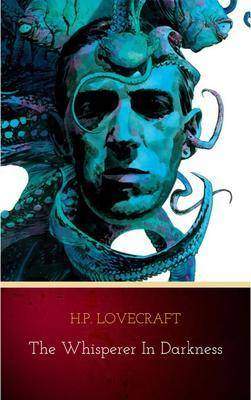
The Whisperer in Darkness
¥9.00
The story is told by Albert N. Wilmarth, an instructor of literature at Miskatonic University in Arkham. When local newspapers report strange things seen floating in rivers during a historic Vermont flood, Wilmarth becomes embroiled in a controversy about the reality and significance of the sightings, though he sides with the skeptics. Wilmarth uncovers old legends about monsters living in the uninhabited hills who abduct people who venture or settle too close to their territory.
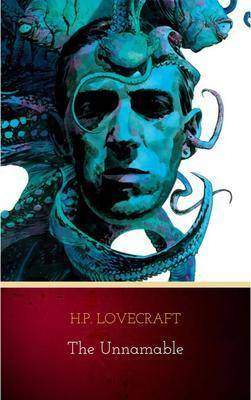
The Unnamable
¥9.00
"The Unnamable" is a horror short story by American author H. P. Lovecraft. It was written in September 1923, first published in the July 1925 issue of Weird Tales, and first collected in Beyond the Wall of Sleep. Carter, a weird fiction writer, who is likely the Randolph Carter who features in some of Lovecraft's other tales such as The Statement of Randolph Carter, meets with his close friend, Joel Manton, in a cemetery near an old, dilapidated house on Meadow Hill in the town of Arkham, Massachusetts. As the two sit upon a weathered tomb, Carter tells Manton the tale of an indescribable entity that allegedly haunts the house and surrounding area. He contends that because such an entity cannot be perceived by the five senses, it becomes impossible to quantify and accurately describe, thus earning itself the term unnamable.
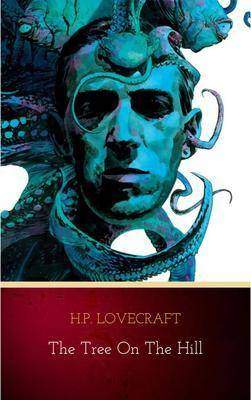
The Tree on the Hill
¥9.00
The story is written in first person. It depicts the main character going outside Hampden and finding a special tree. The tree makes him day dream about a big temple in a land with three suns. The temple was half-violet, half-blue. Some shadows attracted him into the inside. He thought he saw three flaming eyes watching him and he shouted twice and the vision was gone.
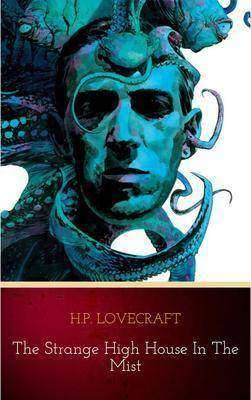
The Strange High House in the Mist
¥9.00
"The Strange High House in the Mist" is a short story by H. P. Lovecraft. Written on November 9, 1926, it was first published in the October 1931 issue of Weird Tales. It concerns a character traveling to the titular house which is perched on the top of cliff which seems inaccessible both by land and sea, yet is apparently inhabited. Thomas Olney, a "philosopher" visiting the town of Kingsport, Massachusetts with his family, is intrigued by a strange house on a cliff overlooking the ocean. It is unaccountably high and old and the locals have a generations-long dread of the place which no one is known to have visited.
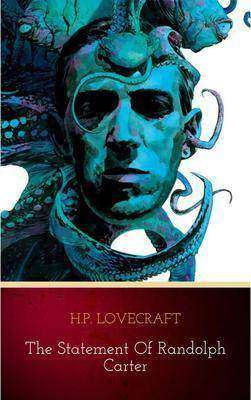
The Statement of Randolph Carter
¥9.00
"The Statement of Randolph Carter" is a short story by H. P. Lovecraft. Written December 1919, it was first published in The Vagrant, May 1920. It tells of a traumatic event in the life of Randolph Carter, a student of the occult loosely representing Lovecraft himself. It is the first story in which Carter appears and is part of Lovecraft's Dream Cycle.
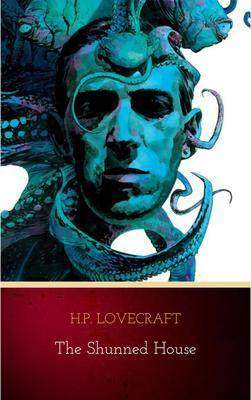
The Shunned House
¥9.00
"The Shunned House" is a horror fiction novelette by American author H. P. Lovecraft, written on October 16–19, 1924. It was first published in the October 1937 issue of Weird Tales. The Shunned House of the title is based on an actual house in Providence, Rhode Island, built around 1763 and still standing at 135 Benefit Street. Lovecraft was familiar with the house because his aunt Lillian Clark lived there in 1919-20 as a companion to Mrs. H. C. Babbit. However, it was another house in Elizabeth, New Jersey that actually compelled Lovecraft to write the story.
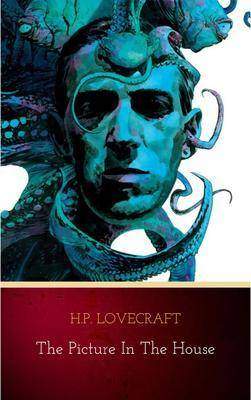
The Picture in the House
¥9.00
A lone traveler seeks shelter from an approaching storm in an apparently abandoned house, only to find that it is occupied by a "loathsome old, white-bearded, and ragged man."
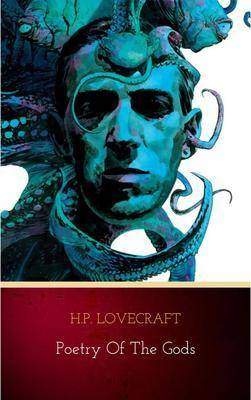
Poetry of the Gods
¥9.00
Poetry and the Gods is a short story by horror writer and poet H.P. Lovecraft in collaboration with writer Anna Helen Crofts. The story is very different from the vast majority of Lovecraft's other work and collaborations. It does, however, bear similar themes regarding dreams as a doorway to magic realms, and slumbering gods. The narrative follows the dream-voyage of Marcia, a young woman filled with weariness of the mundane world and all its woes. She resolves to ease her troubled soul by reading a magazine of poetry. As she does, a dream-state unfolds in which the Greek god Hermes appears and bears Marcia to the court of Zeus and the Olympians.


