


 购物车
购物车 个人中心
个人中心
Quentin Durward
¥8.09
Historical novel, originally published in 1823. Set in France and Belgium in 1468. According to Wikipedia: "Sir Walter Scott, 1st Baronet (1771 – 1832) was a prolific Scottish historical novelist and poet popular throughout Europe during his time. In some ways Scott was the first English-language author to have a truly international career in his lifetime, with many contemporary readers all over Europe, Australia, and North America. His novels and poetry are still read, and many of his works remain classics of both English-language literature and of Scottish literature. Famous titles include Ivanhoe, Rob Roy, The Lady of The Lake, Waverley, The Heart of Midlothian and The Bride of Lammermoor.
St. Ronan's Well
¥8.09
Historical novel, originally published in 1824. Set in southern Scotland in the 1800s. According to Wikipedia: "Sir Walter Scott, 1st Baronet (1771 – 1832) was a prolific Scottish historical novelist and poet popular throughout Europe during his time. In some ways Scott was the first English-language author to have a truly international career in his lifetime, with many contemporary readers all over Europe, Australia, and North America. His novels and poetry are still read, and many of his works remain classics of both English-language literature and of Scottish literature. Famous titles include Ivanhoe, Rob Roy, The Lady of The Lake, Waverley, The Heart of Midlothian and The Bride of Lammermoor."
One of the 28th
¥8.09
Historical novel, set at the Battle of Waterloo in 1815. The Preface begins: "Although in the present story a boy plays the principal part, and encounters many adventures by land and sea, a woman is the real heroine, and the part she played demanded an amount of nerve and courage fully equal to that necessary for those who take part in active warfare. Boys are rather apt to think, mistakenly, that their sex has a monopoly of courage, but I believe that in moments of great peril women are to the full as brave and as collected as men. Indeed, my own somewhat extensive experience leads me to go even further, and to assert that among a civil population, untrained to arms, the average woman is cooler and more courageous than the average man." According to Wikipedia: "George Alfred Henty (8 December 1832 - 16 November 1902), referred to as G. A. Henty, was a prolific English novelist, special correspondent, and Imperialist born in Trumpington, Cambridgeshire, England. He is best known for his historical adventure stories that were popular in the late 19th century. His works include Out on the Pampas (1871), The Young Buglers (1880), With Clive in India (1884) and Wulf the Saxon (1895)."
The Fugitive
¥8.09
Poetry. According to Wikipedia: "Rabindranath Tagore (7 May 1861 – 7 August 1941), sobriquet Gurudev, was a Bengali poet, novelist, musician, painter and playwright who reshaped Bengali literature and music. As author of Gitanjali and its "profoundly sensitive, fresh and beautiful verse", he was the first non-European who was awarded the Nobel Prize for Literature in 1913. His poetry in translation was viewed as spiritual, and this together with his mesmerizing persona gave him a prophet-like aura in the west. His "elegant prose and magical poetry" still remain largely unknown outside the confines of Bengal."
The Hungry Stones and Other Stories
¥8.09
Collection of short stories. According to Wikipedia: "Rabindranath Tagore (7 May 1861 – 7 August 1941), sobriquet Gurudev, was a Bengali poet, novelist, musician, painter and playwright who reshaped Bengali literature and music. As author of Gitanjali and its "profoundly sensitive, fresh and beautiful verse", he was the first non-European who was awarded the Nobel Prize for Literature in 1913. His poetry in translation was viewed as spiritual, and this together with his mesmerizing persona gave him a prophet-like aura in the west. His "elegant prose and magical poetry" still remain largely unknown outside the confines of Bengal."
Winning His Spurs
¥8.09
Historical novel, set in the Holy Land during the Crusades, in the time of King Richard I of England. According to Wikipedia: "George Alfred Henty (8 December 1832 - 16 November 1902), referred to as G. A. Henty, was a prolific English novelist, special correspondent, and Imperialist born in Trumpington, Cambridgeshire, England. He is best known for his historical adventure stories that were popular in the late 19th century. His works include Out on the Pampas (1871), The Young Buglers (1880), With Clive in India (1884) and Wulf the Saxon (1895)."
By Sheer Pluck
¥8.09
Historical novel, set in West Africa, during a 19th century colonial war. According to Wikipedia: "George Alfred Henty (8 December 1832 - 16 November 1902), referred to as G. A. Henty, was a prolific English novelist, special correspondent, and Imperialist born in Trumpington, Cambridgeshire, England. He is best known for his historical adventure stories that were popular in the late 19th century. His works include Out on the Pampas (1871), The Young Buglers (1880), With Clive in India (1884) and Wulf the Saxon (1895)"
The Spirit of the Border, A Romance of the Early Settlers of the Ohio Valley. Se
¥8.09
Historical novel, set soon after the American Revolution. Sequel to Betty Zane. According to Wikipedia: "Zane Grey (1872 – 1939) was an American author best known for his popular adventure novels and stories that presented an idealized image of the rugged Old West. As of June 2007, the Internet Movie Database credits Grey with 110 films, one TV episode, and a series, Dick Powell's Zane Grey Theater based loosely on his novels and short stories."
A Negro Explorer at the North Pole
¥8.09
According to the Foreword: "Friends of Arctic exploration and discovery, with whom I have come in contact, and many whom I know only by letter, have been greatly interested in the fact of a colored man being an effective member of a serious Arctic expedition, and going north, not once, but numerous times during a period of over twenty years, in a way that showed that he not only could and did endure all the stress of Arctic conditions and work, but that he evidently found pleasure in the work. The example and experience of Matthew Henson, who has been a member of each and of all my Arctic expeditions, since '91 (my trip in 1886 was taken before I knew Henson) is only another one of the multiplying illustrations of the fact that race, or color, or bringing-up, or environment, count nothing against a determined heart, if it is backed and aided by intelligence. Henson proved his fitness by long and thorough apprenticeship, and his participation in the final victory which planted the Stars and Stripes at the North Pole, and won for this country the international prize of nearly four centuries, is a distinct credit and feather in the cap of his race." First published in 1912.
A Century of Negro Migration
¥8.09
First published in 1918. According to the Preface: "In treating this movement of the Negroes, the writer does not presume to say the last word on the subject. The exodus of the Negroes from the South has just begun. The blacks have recently realized that they have freedom of body and they will now proceed to exercise that right. To presume, therefore, to exhaust the treatment of this movement in its incipiency is far from the intention of the writer. The aim here is rather to direct attention to this new phase of Negro American life which will doubtless prove to be the most significant event in our local history since the Civil War."
What a Young Husband Ought to Know
¥8.09
Practical advice on marital relations and sex, first published in 1897. The Preface explains: "In approaching the work which we have undertaken in these pages, we have not been blind to the difficulties which confront us in entering upon so delicate a subject. If we had thought only of these, we would never have taken up our pen in this work. We have been moved to it by the cries of disappointment and anguish which may be heard everywhere throughout our land, and by the pleadings that come up out of the dense ignorance which envelops palace and hovel alike. Knowing the importance of these "matters which are so central in our physical life, so essential in their relation to the condition, character, career and destiny of every individual, and so fundamental and vital to every institution and interest of society;" knowing also the importance of proper intelligence concerning the laws which govern our bodies, and knowing how the honest and the pure who seek information concerning these most sacred relations of human life are exposed, amid the dearth of pure and reliable books, to contamination by books whose secret character designedly fosters the very lusts and evils which they are professedly written to denounce, we have felt that we would be recreant to duty, to humanity and to God if we allowed difficulties to bar us from this important work."
Catriona or David Balfour
¥8.09
Historical novel. According to the Dedication: "It is the fate of sequels to disappoint those who have waited for them; and my David, having been left to kick his heels for more than a lustre in the British Linen Company's office, must expect his late reappearance to be greeted with hoots, if not with missiles. Yet, when I remember the days of our explorations, I am not without hope. There should be left in our native city some seed of the elect; some long-legged, hot-headed youth must repeat to-day our dreams and wanderings of so many years ago; he will relish the pleasure, which should have been ours, to follow among named streets and numbered houses the country walks of David Balfour, to identify Dean, and Silvermills, and Broughton, and Hope Park, and Pilrig, and poor old Lochend - if it still be standing, and the Figgate Whins - if there be any of them left; or to push (on a long holiday) so far afield as Gillane or the Bass..." According to Wikipedia: "Robert Louis Balfour Stevenson (13 November 1850–3 December 1894), was a Scottish novelist, poet, essayist and travel writer. He was the man who "seemed to pick the right word up on the point of his pen, like a man playing spillikins", as G. K. Chesterton put it."
In Defence of Harriet Shelley
¥8.09
Humorous essay. According to Wikipedia: "Samuel Langhorne Clemens (November 30, 1835 - April 21, 1910), better known by the pen name Mark Twain, was a humorist, satirist, lecturer and writer from the United States of America. Twain is most noted for his novels Adventures of Huckleberry Finn, which has since been called the Great American Novel, and The Adventures of Tom Sawyer. He is also known for his quotations. During his lifetime, Twain became a friend to presidents, artists, leading industrialists and European royalty. Twain enjoyed immense public popularity, and his keen wit and incisive satire earned him praise from both critics and peers. American author William Faulkner called Twain 'the father of American literature.'"
The Borgias
¥8.09
Popular biography of the Borgia family. According to Wikipedia: "Alexandre Dumas, born Dumas Davy de la Pailleterie (24 July 1802 – 5 December 1870)[1] was a French writer, best known for his historical novels of high adventure which have made him one of the most widely read French authors in the world. Many of his novels, including The Count of Monte Cristo, The Three Musketeers, Twenty Years After, and The Vicomte de Bragelonne were originally serialized. He also wrote plays and magazine articles and was a prolific correspondent... From 1839 to 1841 Dumas, with the assistance of several friends, compiled Celebrated Crimes, an eight-volume collection of essays on famous criminals and crimes from European history, including Beatrice Cenci, Martin Guerre, Cesare and Lucrezia Borgia as well as more recent incidents, including the cases of executed alleged murderers Karl Ludwig Sand and Antoine Fran?ois Desrues."

Passages from the French and Italian Notebooks of Nathaniel Hawthorne
¥8.09
Journal of his stays in France and Italy, two volumes in one file. According to Wikipedia: "Nathaniel Hawthorne (1804 –1864) was an American novelist and short story writer... Much of Hawthorne's writing centers around New England and many feature moral allegories with a Puritan inspiration. His fiction works are considered part of the Romantic movement and, more specifically, dark romanticism. His themes often center on the inherent evil and sin of humanity and his works often have moral messages and deep psychological complexity. His published works include novels, short stories, and a biography of his friend Franklin Pierce."
The Return of Tarzan, Second Novel of the Tarzan Series
¥8.09
Jungle adventure, first published in 1913. According to Wikipedia: "Edgar Rice Burroughs (1875 – 1950) was an American author, best known for his creation of the jungle hero Tarzan and the heroic John Carter, although he produced works in many genres."
The Eyes of the Woods
¥8.09
Historical novel, part of the Young Trailers series. According to the original publisher, in the Young Trailers Series, "two boys, Henry Ware and Paul Cotter, and three scouts are the chief characters in these books dealing with frontier life and adventures with the Indians about the time of the Revolutionary War. Each story is complete in itself, full of excitement, and historically accurate." And in this book, "The Indians at length determine to destroy the boys and their friends. In the struggle the boys call into play all their lore of the woods." According to Wikipedia, "Joseph Alexander Altsheler (April 29, 1862 - June 5, 1919), was an American author of popular juvenile historical fiction."
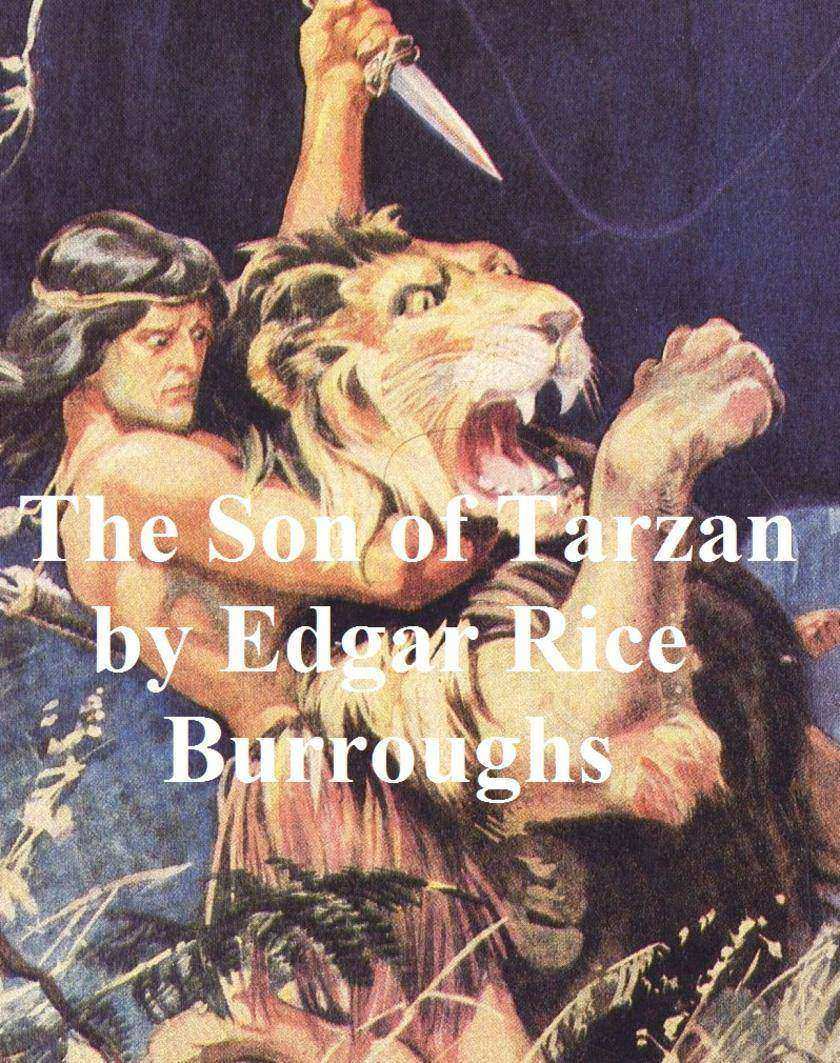
The Son of Tarzan
¥8.09
Jungle adventure, first published in 1914. According to Wikipedia: "Edgar Rice Burroughs (1875 – 1950) was an American author, best known for his creation of the jungle hero Tarzan and the heroic John Carter, although he produced works in many genres."
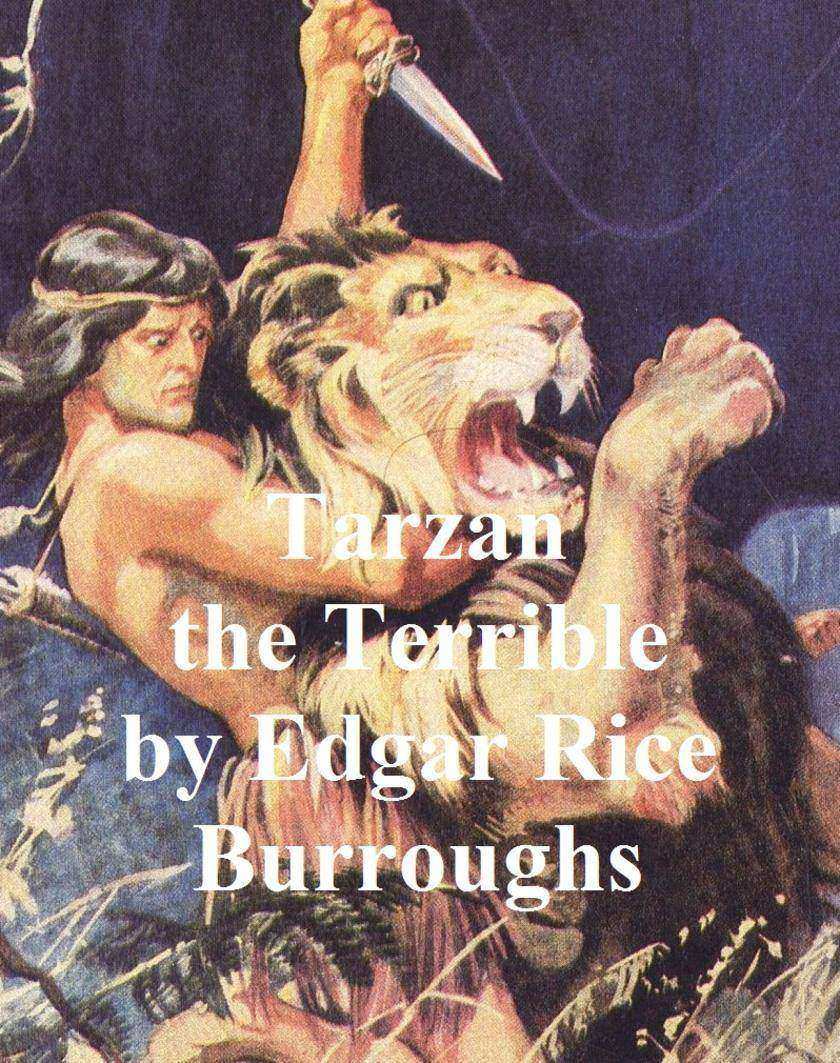
Tarzan the Terrible
¥8.09
Jungle adventure, first published in 1921. According to Wikipedia: "Edgar Rice Burroughs (1875 – 1950) was an American author, best known for his creation of the jungle hero Tarzan and the heroic John Carter, although he produced works in many genres."
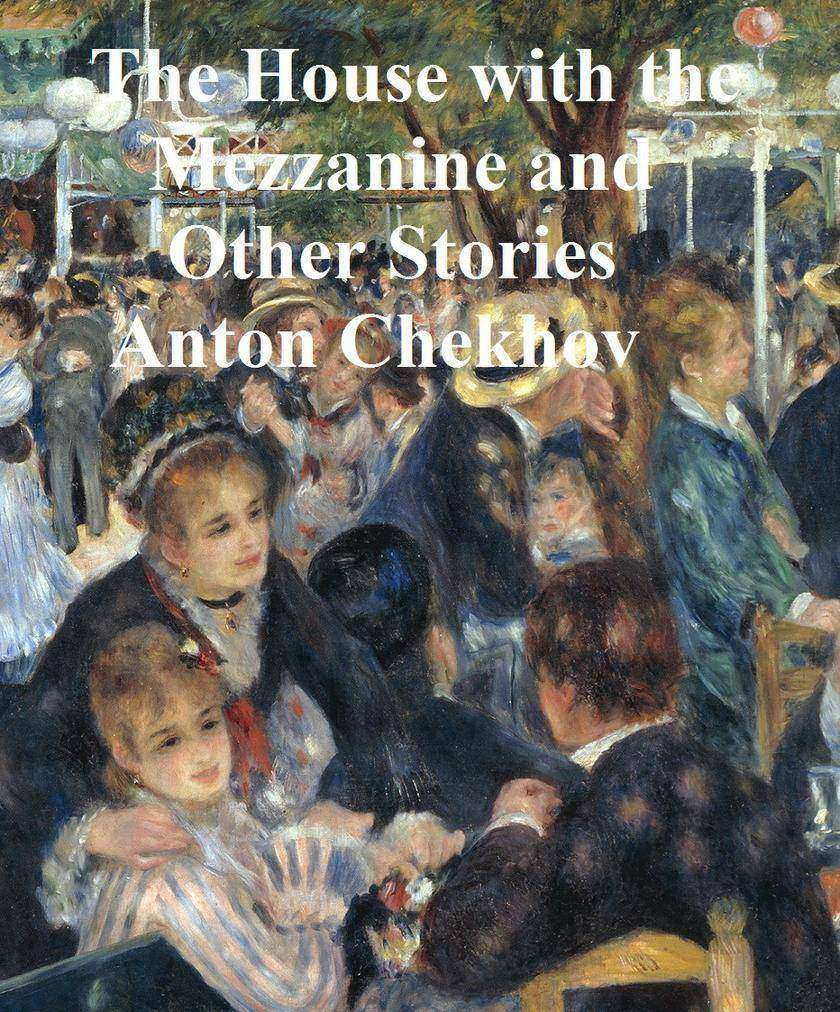
The House with the Mezzanine and Other Stories
¥8.09
This collection includes the stories: The House with the Mezzanine, Typhus, Gooseberries, In Exile, The Lady with the Toy Dog, Goussiev, and My Life. According to Wikipedia: "Anton Pavlovich Chekhov (January 1860 – 15 July 1904) was a Russian short-story writer, playwright and physician, considered to be one of the greatest short-story writers in the history of world literature. His career as a dramatist produced four classics and his best short stories are held in high esteem by writers and critics. Chekhov practiced as a doctor throughout most of his literary career: "Medicine is my lawful wife", he once said, "and literature is my mistress."
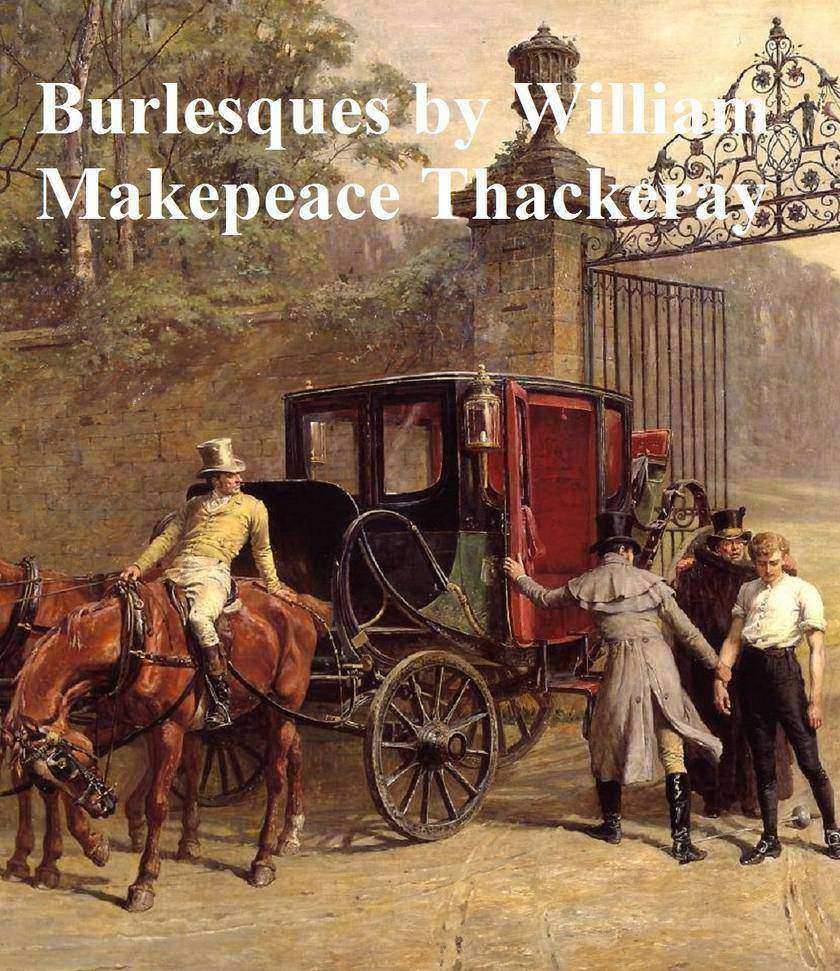
Burlesques
¥8.09
Large collection of humorous fiction. According to Wikipedia: "Thackeray is most often compared to one other great novelist of Victorian literature, Charles Dickens. During the Victorian era, he was ranked second only to Dickens, but he is now much less read and is known almost exclusively for Vanity Fair. In that novel he was able to satirize whole swaths of humanity while retaining a light touch. It also features his most memorable character, the engagingly roguish Becky Sharp. As a result, unlike Thackeray's other novels, it remains popular with the general reading public; it is a standard fixture in university courses and has been repeatedly adapted for movies and television. In Thackeray's own day, some commentators, such as Anthony Trollope, ranked his History of Henry Esmond as his greatest work, perhaps because it expressed Victorian values of duty and earnestness, as did some of his other later novels."


