


 购物车
购物车 个人中心
个人中心
Satan
¥8.09
According to Wikipedia: "Lewis Sperry Chafer (February 27, 1871 – August 22, 1952) was the founder and first president of Dallas Theological Seminary, and an influential founding member of modern Christian Dispensationalism.
Beethoven: a Character Study
¥8.09
First published in 1905, the book begins: "As life broadens with advancing culture, and people are able to appropriate to themselves more of the various forms of art, the artist himself attains to greater power, his abilities increase in direct ratio with the progress in culture made by the people and their ability to comprehend him. When one side or phase of an art comes to be received, new and more difficult problems are invariably presented, the elucidation of which can only be effected by a higher development of the faculties. There is never an approach to equilibrium between the artist and his public. As it advances in knowledge of his art, he maintains the want of balance, the disproportion that always exists between the genius and the ordinary man, by rising ever to greater heights. If Bach is the mathematician of music, as has been asserted, Beethoven is its philosopher. In his work the philosophic spirit comes to the fore. To the genius of the musician is added in Beethoven a wide mental grasp, an altruistic spirit, that seeks to help humanity on the upward path. He addresses the intellect of mankind." According to Wikipedia: "Ludwig van Beethoven (16 December 1770 - 26 March 1827) was a German composer and pianist. He was a crucial figure in the transitional period between the Classical and Romantic eras in Western classical music, and remains one of the most acclaimed and influential composers of all time."
The Life and Adventures of Santa Claus
¥8.09
Christmas book by the author of the Oz books. According to Wikipedia: "Lyman Frank Baum (1856 – 1919) was an American author, poet, playwright, actor and independent filmmaker, best known today as the creator, along with illustrator W. W. Denslow, of one of the most popular books in American children's literature, The Wonderful Wizard of Oz, better known now as simply The Wizard of Oz. He wrote thirteen sequels, nine other fantasy novels, and a plethora of other works (55 novels in total, 82 short stories, over 200 poems, an unknown number of scripts, and many miscellaneous writings), and made numerous attempts to bring his works to the stage and screen.
The Untamed
¥8.09
Classic western. According to Wikipedia: "Frederick Schiller Faust (May 29, 1892 - May 12, 1944) was an American fiction author known primarily for his thoughtful and literary Westerns. Faust wrote mostly under pen names, and today is primarily known by one, Max Brand. Others include George Owen Baxter, Evan Evans, David Manning, John Frederick, Peter Morland, George Challis, and Frederick Frost. ... Faust managed a massive outpouring of fiction, rivaling Edgar Wallace and especially Isaac Asimov as one of the most prolific authors of all time. He wrote more than 500 novels for magazines and almost as many stories of shorter length. His total literary output is estimated to have been between 25,000,000 and 30,000,000 words. Most of his books and stories were turned out at breakneck rate, sometimes as quickly as 12,000 words in the course of a weekend. New books based on magazine serials or unpublished manuscripts or restored versions continue to appear so that he has averaged a new book every four months for seventy-five years. Beyond this, some work by him is newly reprinted every week of every year in one or another format somewhere in the world."
A Straight Deal, Or an Ancient Grudge
¥8.09
Classic western. According to Wikipedia: "Owen Wister (July 14, 1860 – July 21, 1938) was an American writer and "Father" of western fiction."
Madame Bovary
¥8.09
Selon Wikipedia: "Madame Bovary est un roman de Gustave Flaubert qui a été attaqué pour obscénité par les procureurs quand il a été publié en feuilleton dans La Revue de Paris entre le 1er octobre 1856 et le 15 décembre 1856, ce qui a conduit à un procès en janvier 1857 Après l'acquittement du 7 février, il est devenu un best-seller sous forme de livre en avril 1857, et est maintenant pratiquement non contesté non seulement comme une ?uvre séminale du réalisme, mais comme l'un des romans les plus influents jamais écrit. L'épouse du docteur, Emma Bovary, qui a des affaires adultères et vit au-dessus de ses moyens pour échapper aux banalités et au vide de la vie provinciale.L'art de base est plut?t simple, voire archétypal, l'art véritable du roman réside dans ses détails et ses schémas cachés. Flaubert était notoirement perfectionniste dans son écriture et prétendait toujours être à la recherche du mot juste ... Un sondage réalisé en 2007 par des auteurs contemporains ... a cité Madame Bovary comme l'une des deux grandes st romans jamais écrits. "
The Forest
¥8.09
Classic western. According to Wikipedia: "Stewart Edward White (12 March 1873 – September 18, 1946) was an American author. Born in Grand Rapids, Michigan he earned degrees from University of Michigan (Ph.D., 1895; M.A., 1903). From about 1900 until about 1922, he wrote adventure travel books."
The Big-Town Round-Up
¥8.09
Classic western novel, first published in 1920. According to Wikipedia: "William MacLeod Raine (1871—1954), was a British-born American novelist who wrote fictional adventure stories about the American Old West.."
Bucky O'Connor, A Tale of the Unfenced Border
¥8.09
Classic western novel, first published in 1910. "Every chapter teems with wholesome, stirring adventures, replete with the dashing spirit of the border. According to Wikipedia: "William MacLeod Raine (1871—1954), was a British-born American novelist who wrote fictional adventure stories about the American Old West.."
Manual of the Mother Church
¥8.09
According to Wikipedia: "Mary Baker Eddy (born Mary Morse Baker July 16, 1821 – December 3, 1910) was the founder of the Christian Science movement. Deeply religious, she advocated Christian Science as a spiritual practical solution to health and moral issues. She wrote Science and Health with Key to the Scriptures, founded The First Church of Christ, Scientist of Boston in 1879, and several periodicals including The Christian Science Monitor. She took the name Mary Baker Glover from her first marriage and was also known as Mary Baker Glover Eddy or Mary Baker G. Eddy from her third marriage. She did much spiritual teaching, lecturing, and instantaneous healing. Her influence continues to grow through her writings."
Bab: a Sub-Deb
¥8.09
According to Wikipedia: "Mary Roberts Rinehart (August 12, 1876-September 22, 1958) was a prolific author often called the American Agatha Christie.[1] She is considered the source of the phrase "The butler did it", although she did not actually use the phrase herself, and also considered to have invented the "Had-I-But-Known" school of mystery writing.... Rinehart wrote hundreds of short stories, poems, travelogues and special articles. Many of her books and plays, such as The Bat (1920) were adapted for movies, such as The Bat (1926), The Bat Whispers (1930), and The Bat (1959). While many of her books were best-sellers, critics were most appreciative of her murder mysteries. Rinehart, in The Circular Staircase (1908), is credited with inventing the "Had-I-But-Known" school of mystery writing. The Circular Staircase is a novel in which "a middle-aged spinster is persuaded by her niece and nephew to rent a country house for the summer. The house they choose belonged to a bank defaulter who had hidden stolen securities in the walls. The gentle, peace-loving trio is plunged into a series of crimes solved with the help of the aunt. This novel is credited with being the first in the "Had-I-But-Known" school."[3] The Had-I-But-Known mystery novel is one where the principal character (frequently female) does less than sensible things in connection with a crime which have the effect of prolonging the action of the novel. Ogden Nash parodied the school in his poem Don't Guess Let Me Tell You: "Sometimes the Had I But Known then what I know now I could have saved at least three lives by revealing to the Inspector the conversation I heard through that fortuitous hole in the floor." The phrase "The butler did it", which has become a cliché, came from Rinehart's novel The Door, in which the butler actually did do it, although that exact phrase does not actually appear in the work."
The Breaking Point
¥8.09
According to Wikipedia: "Mary Roberts Rinehart (August 12, 1876-September 22, 1958) was a prolific author often called the American Agatha Christie.[1] She is considered the source of the phrase "The butler did it", although she did not actually use the phrase herself, and also considered to have invented the "Had-I-But-Known" school of mystery writing.... Rinehart wrote hundreds of short stories, poems, travelogues and special articles. Many of her books and plays, such as The Bat (1920) were adapted for movies, such as The Bat (1926), The Bat Whispers (1930), and The Bat (1959). While many of her books were best-sellers, critics were most appreciative of her murder mysteries. Rinehart, in The Circular Staircase (1908), is credited with inventing the "Had-I-But-Known" school of mystery writing. The Circular Staircase is a novel in which "a middle-aged spinster is persuaded by her niece and nephew to rent a country house for the summer. The house they choose belonged to a bank defaulter who had hidden stolen securities in the walls. The gentle, peace-loving trio is plunged into a series of crimes solved with the help of the aunt. This novel is credited with being the first in the "Had-I-But-Known" school."[3] The Had-I-But-Known mystery novel is one where the principal character (frequently female) does less than sensible things in connection with a crime which have the effect of prolonging the action of the novel. Ogden Nash parodied the school in his poem Don't Guess Let Me Tell You: "Sometimes the Had I But Known then what I know now I could have saved at least three lives by revealing to the Inspector the conversation I heard through that fortuitous hole in the floor." The phrase "The butler did it", which has become a cliché, came from Rinehart's novel The Door, in which the butler actually did do it, although that exact phrase does not actually appear in the work."
Mavericks
¥8.09
Classic western novel, first published in 1911. "A tale of the western frontier, where the "rustler" abounds. One of the sweetest love stories ever told. According to Wikipedia: "William MacLeod Raine (1871—1954), was a British-born American novelist who wrote fictional adventure stories about the American Old West.."
The Confession
¥8.09
According to Wikipedia: "Mary Roberts Rinehart (August 12, 1876-September 22, 1958) was a prolific author often called the American Agatha Christie.[1] She is considered the source of the phrase "The butler did it", although she did not actually use the phrase herself, and also considered to have invented the "Had-I-But-Known" school of mystery writing.... Rinehart wrote hundreds of short stories, poems, travelogues and special articles. Many of her books and plays, such as The Bat (1920) were adapted for movies, such as The Bat (1926), The Bat Whispers (1930), and The Bat (1959). While many of her books were best-sellers, critics were most appreciative of her murder mysteries. Rinehart, in The Circular Staircase (1908), is credited with inventing the "Had-I-But-Known" school of mystery writing. The Circular Staircase is a novel in which "a middle-aged spinster is persuaded by her niece and nephew to rent a country house for the summer. The house they choose belonged to a bank defaulter who had hidden stolen securities in the walls. The gentle, peace-loving trio is plunged into a series of crimes solved with the help of the aunt. This novel is credited with being the first in the "Had-I-But-Known" school."[3] The Had-I-But-Known mystery novel is one where the principal character (frequently female) does less than sensible things in connection with a crime which have the effect of prolonging the action of the novel. Ogden Nash parodied the school in his poem Don't Guess Let Me Tell You: "Sometimes the Had I But Known then what I know now I could have saved at least three lives by revealing to the Inspector the conversation I heard through that fortuitous hole in the floor." The phrase "The butler did it", which has become a cliché, came from Rinehart's novel The Door, in which the butler actually did do it, although that exact phrase does not actually appear in the work."

Dangerous Days
¥8.09
According to Wikipedia: "Mary Roberts Rinehart (August 12, 1876-September 22, 1958) was a prolific author often called the American Agatha Christie.[1] She is considered the source of the phrase "The butler did it", although she did not actually use the phrase herself, and also considered to have invented the "Had-I-But-Known" school of mystery writing.... Rinehart wrote hundreds of short stories, poems, travelogues and special articles. Many of her books and plays, such as The Bat (1920) were adapted for movies, such as The Bat (1926), The Bat Whispers (1930), and The Bat (1959). While many of her books were best-sellers, critics were most appreciative of her murder mysteries. Rinehart, in The Circular Staircase (1908), is credited with inventing the "Had-I-But-Known" school of mystery writing. The Circular Staircase is a novel in which "a middle-aged spinster is persuaded by her niece and nephew to rent a country house for the summer. The house they choose belonged to a bank defaulter who had hidden stolen securities in the walls. The gentle, peace-loving trio is plunged into a series of crimes solved with the help of the aunt. This novel is credited with being the first in the "Had-I-But-Known" school."[3] The Had-I-But-Known mystery novel is one where the principal character (frequently female) does less than sensible things in connection with a crime which have the effect of prolonging the action of the novel. Ogden Nash parodied the school in his poem Don't Guess Let Me Tell You: "Sometimes the Had I But Known then what I know now I could have saved at least three lives by revealing to the Inspector the conversation I heard through that fortuitous hole in the floor." The phrase "The butler did it", which has become a cliché, came from Rinehart's novel The Door, in which the butler actually did do it, although that exact phrase does not actually appear in the work."
More Tish
¥8.09
According to Wikipedia: "Mary Roberts Rinehart (August 12, 1876-September 22, 1958) was a prolific author often called the American Agatha Christie.[1] She is considered the source of the phrase "The butler did it", although she did not actually use the phrase herself, and also considered to have invented the "Had-I-But-Known" school of mystery writing.... Rinehart wrote hundreds of short stories, poems, travelogues and special articles. Many of her books and plays, such as The Bat (1920) were adapted for movies, such as The Bat (1926), The Bat Whispers (1930), and The Bat (1959). While many of her books were best-sellers, critics were most appreciative of her murder mysteries. Rinehart, in The Circular Staircase (1908), is credited with inventing the "Had-I-But-Known" school of mystery writing. The Circular Staircase is a novel in which "a middle-aged spinster is persuaded by her niece and nephew to rent a country house for the summer. The house they choose belonged to a bank defaulter who had hidden stolen securities in the walls. The gentle, peace-loving trio is plunged into a series of crimes solved with the help of the aunt. This novel is credited with being the first in the "Had-I-But-Known" school."[3] The Had-I-But-Known mystery novel is one where the principal character (frequently female) does less than sensible things in connection with a crime which have the effect of prolonging the action of the novel. Ogden Nash parodied the school in his poem Don't Guess Let Me Tell You: "Sometimes the Had I But Known then what I know now I could have saved at least three lives by revealing to the Inspector the conversation I heard through that fortuitous hole in the floor." The phrase "The butler did it", which has become a cliché, came from Rinehart's novel The Door, in which the butler actually did do it, although that exact phrase does not actually appear in the work."
The Land of Mystery
¥8.09
Classic adventure novel. According to Wikipedia: "Edward Sylvester Ellis (April 11, 1840 – June 20, 1916) was an American author who was born in Ohio and died at Cliff Island, Maine. Ellis was a teacher, school administrator, and journalist, but his most notable work was that that he performed as author of hundreds of dime novels that he produced under his name and a number of noms de plume. Notable works by Ellis include The Huge Hunter, or the Steam Man of the Prairies and Seth Jones, or the Captives of the Frontier. Internationally, Edward S. Ellis is probably best known for his Deerhunter novels widely read by young boys up to the 1950s (together with works by James Fenimore Cooper and Karl May). In the mid-1880s, after a fiction-writing career of some thirty years, Ellis eventually turned his pen to more serious works of biography, history, and persuasive writing."
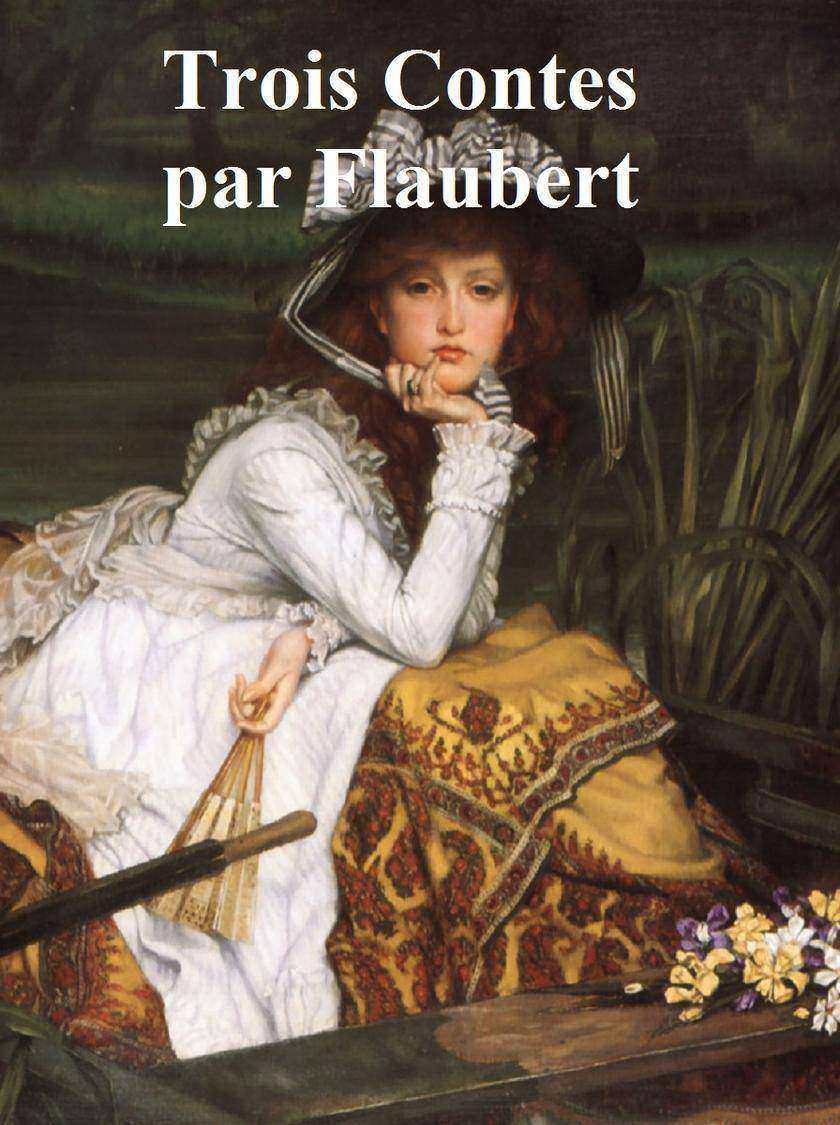
Trois Contes
¥8.09
Collection classique de nouvelles, initialement publiée en 1877, en fran?ais original. Selon Wikipédia: ?Un c?ur simple, aussi appelé Un c?ur simple ou Le perroquet en fran?ais, raconte l'histoire d'une servante nommée Félicité, son seul et unique amour, Théodore, épouse une femme aisée, et ce faisant, Après cette trahison, Felicité quitte la ferme sur laquelle elle travaille et se dirige vers Pont-l'Evêque où elle se met immédiatement au travail dans une maison de domestique.Elle est très loyale et prête facilement son affection à cette famille et à d'autres les gens, comme son neveu, et les choses, comme son perroquet, elle donne entièrement aux autres, et beaucoup en profitent, les gens ne réalisent pas à quel point elle les aime, elle est la quintessence d'un personnage désintéressé, et Flaubert montre le l'horreur de l'altruisme véritable - la réalité d'être altruiste, n'ayant rien de propre à vivre: elle n'a pas de mari, pas d'enfants, pas de biens, dépend de sa ma?tresse pour la garder, elle est totalement inculte, sa mort est virtuellement inaper?u ... Elle vit une vie bestiale, non examinée. Cependant, elle ressent l'amour et l'éveil spirituel. La légende de Saint Julien l'Hospitalier, en fran?ais Saint Julien l'Hospitalier, raconte l'histoire de Julian l'Hospitalier [un saint] ... Hérodias raconte la décapitation de Jean-Baptiste. Il commence légèrement avant l'arrivée du gouverneur syrien, Vitellius. Hérodias tient une grande fête d'anniversaire pour son deuxième mari, Herod Antipas. Inconnu de lui, elle a concocté un plan pour décapiter John. Selon Flaubert, ce plan implique que son mari tombe amoureux de sa fille, Salomé, ce qui l'amène à lui promettre ce qu'elle veut.
Other Main-Travelled Roads
¥8.09
Sequel to "Main-Travelled Roads." According to Wikipedia: "Main-Travelled Roads is a collection of short stories by the American author Hamlin Garland. First published in 1891, the stories are set in what the author refers to as the "Middle Border," the northwestern prairie states of Wisconsin, Nebraska, Iowa, Minnesota and South Dakota. In the book's eleven stories, Garland portrays the hardships of agrarian life, deconstructing the conventional myth of the American prairie while highlighting the economic and social conditions that characterized agricultural communities in the rural Midwest."
Found at Blazing Star, a short story
¥8.09
Classic western short story. According to Wikipedia: "Bret Harte (August 25, 1836[2] – May 6, 1902) was an American author and poet, best remembered for his accounts of pioneering life in California. He was born in Albany, New York. ... He moved to California in 1853, later working there in a number of capacities, including miner, teacher, messenger, and journalist. He spent part of his life in the northern California coast town now known as Arcata, then just a mining camp on Humboldt Bay. His first literary efforts, including poetry and prose, appeared in The Californian, an early literary journal edited by Charles Henry Webb. In 1868 he became editor of The Overland Monthly, another new literary magazine, but this one more in tune with the pioneering spirit of excitement in California. His story, "The Luck of Roaring Camp," appeared in the magazine's second edition, propelling Harte to nationwide fame... Determined to pursue his literary career, in 1871 he and his family traveled back East, to New York and eventually to Boston, where he contracted with the publisher of The Atlantic Monthly for an annual salary of $10,000, "an unprecedented sum at the time." His popularity waned, however, and by the end of 1872 he was without a publishing contract and increasingly desperate. He spent the next few years struggling to publish new work (or republish old), delivering lectures about the gold rush, and even selling an advertising jingle to a soap company. In 1878 Harte was appointed to the position of United States Consul in the town of Krefeld, Germany and then to Glasgow in 1880. In 1885 he settled in London. During the thirty years he spent in Europe, he never abandoned writing, and maintained a prodigious output of stories that retained the freshness of his earlier work. He died in England in 1902 of throat cancer and is buried at Frimley."
Le Jour des Rois (Twelfth Night in French)
¥8.09
Comédie de Shakespeare traduite en fran?ais par Fran?ois Pierre Guillaume Guizot (1787 - 1874), historien fran?ais et homme d'?tat. Publié en 1862. Selon Wikipedia: "Twelfth Night, ou, What You Will est une comédie de William Shakespeare, qui aurait été écrite autour de 1601-02 comme divertissement de la Douzième Nuit pour la fin de la saison de No?l. les intermèdes musicaux et le désordre émotif attendu de l'occasion, avec des éléments de l'intrigue tirée de la nouvelle "D'Apollonius et Silla" de Barnabe Rich, basée sur une histoire de Matteo Bandello, dont le premier enregistrement date du 2 février 1602, à Candlemas, la fin formelle de Christmastide dans le calendrier de l'année.La pièce n'a pas été publiée jusqu'à son inclusion dans le First Folio 1623. "


