售 价:¥

 6.2
6.2
温馨提示:数字商品不支持退换货,不提供源文件,不支持导出打印
为你推荐

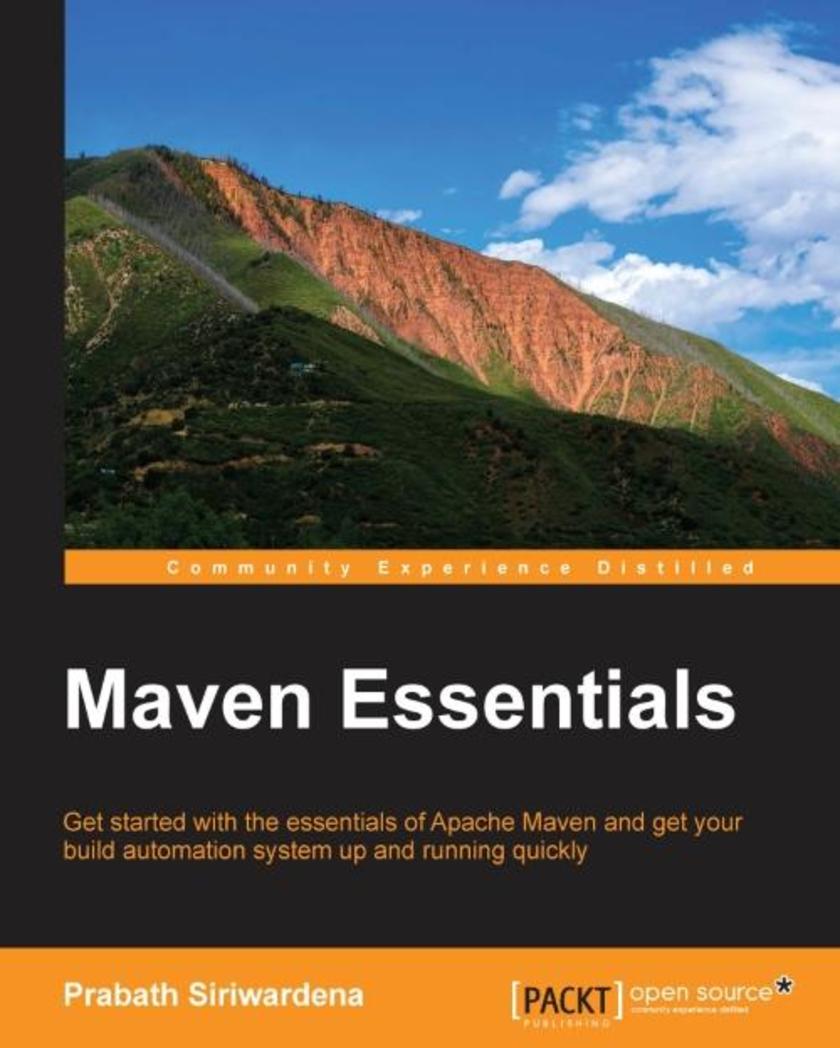
Maven Essentials
Table of Contents
Maven Essentials
Credits
About the Author
Acknowledgments
About the Reviewer
www.PacktPub.com
Support files, eBooks, discount offers, and more
Why subscribe?
Free access for Packt account holders
Preface
What this book covers
What you need for this book
Who this book is for
Conventions
Reader feedback
Customer support
Downloading the example code
Errata
Piracy
Questions
1. Apache Maven Quick Start
Installing Apache Maven
Installing Apache Maven on Ubuntu
Installing Apache Maven on Mac OS X
Installing Apache Maven on Microsoft Windows
Configuring the heap size
Hello Maven!
Convention over configuration
Maven repositories
IDE integration
NetBeans integration
IntelliJ IDEA integration
Eclipse integration
Troubleshooting
Enabling Maven debug level logs
Building a dependency tree
Viewing all the environment variables and system properties
Viewing the effective POM file
Viewing the dependency classpath
Summary
2. Understanding the Project Object Model (POM)
Project Object Model (POM)
POM hierarchy
Super POM
POM extending and overriding
Maven coordinates
The parent POM
Managing POM dependencies
Transitive dependencies
Dependency scopes
Optional dependencies
Dependency exclusion
Summary
3. Maven Archetypes
Archetype quickstart
Batch mode
Archetype catalogues
Building an archetype catalogue
Public archetype catalogues
The anatomy of archetype – catalog.xml
The archetype plugin goals
Java EE web applications with the archetype plugin
Deploying web applications to a remote Apache Tomcat server
Android mobile applications with the archetype plugin
EJB archives with the archetype plugin
JIRA plugins with the archetype plugin
Spring MVC applications with the archetype plugin
Summary
4. Maven Plugins
Common Maven plugins
The clean plugin
The compiler plugin
The install plugin
The deploy plugin
The surefire plugin
The site plugin
The jar plugin
The source plugin
The resources plugin
The release plugin
Plugin discovery and execution
Plugin management
Plugin repositories
Plugin as an extension
Summary
5. Build Lifecycles
Standard lifecycles in Maven
The clean lifecycle
The default lifecycle
The site lifecycle
Lifecycle bindings
Lifecycle extensions
Summary
6. Maven Assemblies
The assembly plugin
The assembly descriptor
Artifact/resource filtering
Assembly help
A runnable standalone Maven project
Summary
7. Best Practices
Dependency management
Defining a parent module
POM properties
Avoiding repetitive groupIds and versions, and inheriting from the parent POM
Following naming conventions
Think twice before you write your own plugin. You may not need it!
The Maven release plugin
The Maven enforcer plugin
Avoiding the use of unversioned plugins
Descriptive parent POM files
Documentation is your friend
Avoid overriding the default directory structure
Using SNAPSHOT versioning during the development
Get rid of unused dependencies
Avoiding keeping credentials in application POM files
Avoiding using deprecated references
Avoiding repetition – use archetypes
Avoiding using maven.test.skip
Summary
Index

买过这本书的人还买过
读了这本书的人还在读
同类图书排行榜


 购物车
购物车 个人中心
个人中心