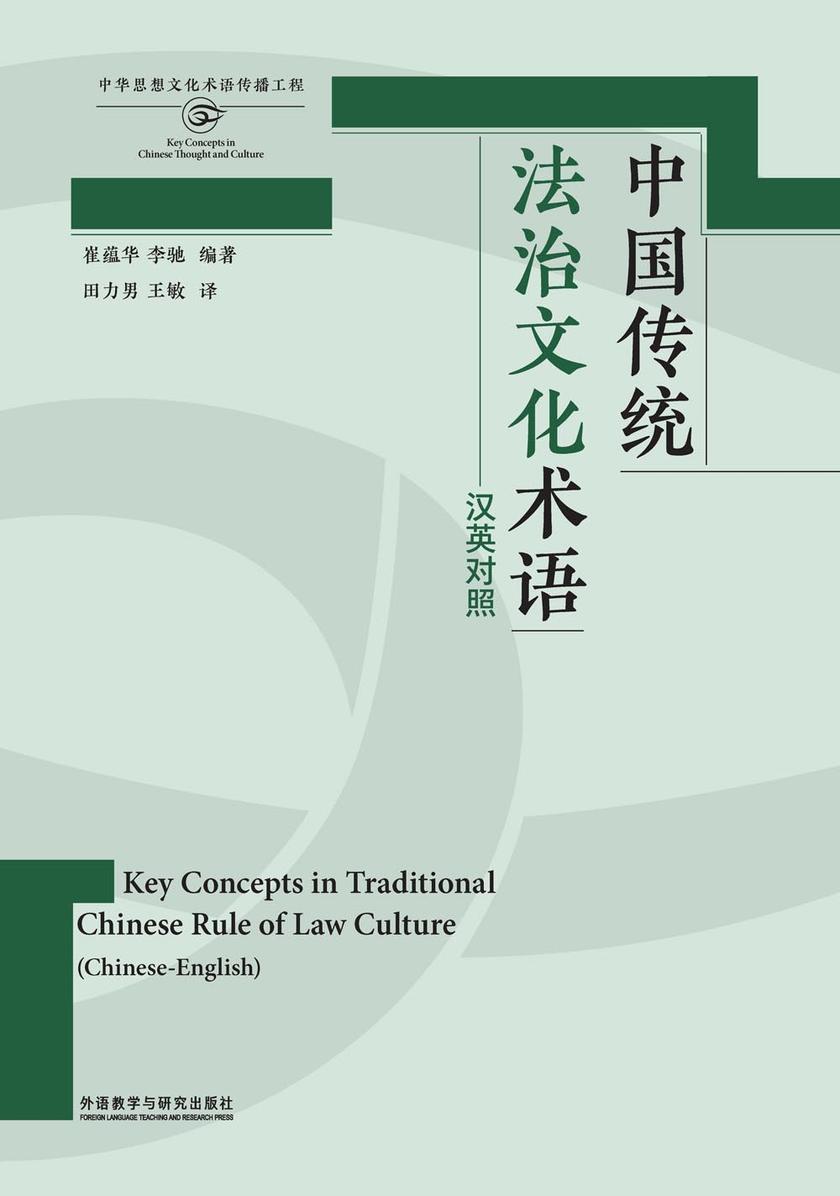
《中国传统法治文化术语》一书有以下特: 领略传统法律文化; 追溯法治思想源流。
售 价:¥
纸质售价:¥38.70购买纸书


 6.6
6.6
温馨提示:数字商品不支持退换货,不提供源文件,不支持导出打印
为你推荐

编写说明
Introduction
前 言
Preface
第一篇 思想理念 Part I Legal Philosophy
ānrén-níngguó 安人宁国 Providing Peace and Comfort to the People and Keeping the State at Peace
《Chūnqiū》juéyù 《春秋》决狱 Adjudicating Cases According to Doctrines in The Spring and Autumn Annals
déběn-xíngyòng 德本刑用 Morality as the Foundation and Penalty as the Means
dézhǔ-xíngfǔ 德主刑辅 Morality Given Priority over Penalty
fádāngqízuì 罚当其罪 Punishment Commensurate with the Crime
fǎ bì míng, lìng bì xíng 法必明,令必行 The Laws Shall Be Just and Impartial and the Promulgated Acts Shall Be Enforced.
fǎbù'ēɡuì 法不阿贵 The Law Does Not Favor the Rich and the Powerful.
fǎguìjiǎndàng 法贵简当 Enacting Concise and Reasonable Laws
fǎlìng zī zhāng, dàozéi duō yǒu 法令滋彰,盗贼多有 The More Laws and Orders Are Made Prominent, the More Thieves and Robbers There Will Be.
fǎ shēn wú shànzhì 法深无善治 Too Stringent and Too Many Laws Prevent Good Governance.
fǎ yǔ shí zhuǎn zé zhì 法与时转则治 Laws in Line with the Times Produce Good Governance.
fèng fǎ zhě qiáng zé guó qiáng 奉法者强则国强 Strong Conformers to the Law Make the Country Strong.
héwéiguì 和为贵 Harmony Is Most Precious.
jīngguó-xùmín, zhèngqízhìdù 经国序民,正其制度 Creating an Orderly Society When Governing a Country Requires Improved Systems.
lǐ bù xià shùrén, xíng bù shàng dàfū 礼不下庶人,刑不上大夫 Rites Do Not Extend Down to the Common People and Criminal Punishment Does Not Extend Up to the Senior Nobles.
lǐfǎ-héyī 礼法合一 Unification of Rites and Laws
lǐyuè bù xīng, zé xíngfá bù zhòng 礼乐不兴,则刑罚不中 If Rituals and Music Do Not Flourish, Punishments Will Not Be Meted out Properly.
mínwéibāngběn 民惟邦本 People Are the Foundation of the State.
míngdé-shènfá 明德慎罚 The Illustration of Virtue and the Cautious Use of Punishments
míngxíng-bìjiào 明刑弼教 Making Penalties Explicit to Assist Moral Education
qīnqīn-xiāngyǐn 亲亲相隐 Relatives Mutually Conceal Their Misconduct.
rényìzhīfǎ 仁义之法 The Standards of Benevolence and Righteousness
rèn dé bù rèn xíng 任德不任刑 Morality-ruling over Penalty-ruling
sānyòu sānshè 三宥三赦 Leniency for Three Kinds of Criminal Circumstances and Pardon for Three Kinds of Criminals
shènxíng 慎刑 Prudential Punishment
tiānlǐ, guófǎ, rénqíng 天理、国法、人情 Heavenly Principle, State Law, and Human Nature
tiānwǎng-huīhuī, shū'érbùlòu 天网恢恢,疏而不漏 Justice Has Long Arms.
tiānxiàzhīfǎ 天下之法 Universal Law
tú fǎ bù zúyǐ zìxíng 徒法不足以自行 Laws Alone Cannot Carry Themselves into Practice.
wángzǐ fànfǎ, yǔ shùmín tóngzuì 王子犯法,与庶民同罪 All Offenders Shall Be Punished by Law Equally, Be They Princes or Commoners.
wéizhèng-yǐdé 为政以德 Governance Based on Virtue
wúsòng 无讼 (A Society) Free from Litigation
xīsòng 息讼 Quell Litigation
xíngwúděngjí 刑无等级 Punishments Should Know No Degree or Grade.
yīduànyúfǎ 一断于法 Judging All by Law
yǒu zhìfǎ érhòu yǒu zhìrén 有治法而后有治人 Talents of Governance Appear After Good Laws Are Made.
zhìguó wú qí fǎ zé luàn, shǒufǎ ér bùbiàn zé shuāi 治国无其法则乱,守法而不变则衰 Ruling a Country Without Laws Brings Chaos While Rigidly Following Laws Without Reform Leads to Decline.
zuìyíwéiqīng 罪疑惟轻 Dealing with Doubtful Crimes Lightly
第二篇 法律制度 Part II Legal System
biéjí-yìcái 别籍异财 Separate Wealth and Separate Household
chāiguān-biétuī 差官别推 Transfer to Higher Authority for Retrial
cúnliú-yǎngqīn 存留养亲 Permitting a Criminal to Support Lineal Elders
dàlǐsì 大理寺 Dalisi (The CourtofJudicialReview)
fānyì-biékān 翻异别勘 Fanyi Biekan (Retrial Regarding Overturned Confession)
gé 格 Ge (Ruling)
huàwàirén xiāngfàn 化外人相犯 Crime Among Foreign Persons
huàntuī 换推 Withdrawal and Reelection
jīnlǎo-xùyòu 矜老恤幼 Reduction or Exemption of Criminal Responsibility in Minors and the Elderly
jiǔqīng huìshěn 九卿会审 Joint Hearing by the Nine Ministers
jūyàn-fēnsī 鞫谳分司 Separation of Ju and Yan
jǔ qīng yǐ míng zhòng, jǔ zhòng yǐ míng qīng 举轻以明重,举重以明轻 Illustrating the Heavy with the Light, and the Light with the Heavy
lìng 令 Ling (Ordinance)
liùlǐ 六礼 Six-procedure Marriage Rite
lùqiú 录囚 Investigating Prisoners
lǜ 律 Lü (Statute)
mòzhězhīfǎ 墨者之法 Mohist Law
qiū-dōng xíngxíng 秋冬行刑 Execution of Sentences in Autumn and Winter
qiūshěn 秋审 Autumn Trial
sāncìzhīfǎ 三刺之法 Three Interrogations
sānsī-tuīshì 三司推事 Joint Trial by Three Departments
shí'è-bùshè 十恶不赦 Ten Unpardonable Abominations
shì 式 Shi (Models)
tiānrén-héyī 天人合一 Heaven and Man Are United as One.
wǔfùzòu 五覆奏 Five Rounds of Reassessment of Death Sentences
xíng 刑 Xing
xíngbù 刑部 The Ministry of Justice
xíngmíng-mùyǒu 刑名幕友 Xingming Muyou (Legal Advisors)
xùxíng 恤刑 Penalty with Prudence
yísī-biékān 移司别勘 Internal Transfer for Retrial
yùshǐtái 御史台 The Censorate
yuēfǎ-sānzhāng 约法三章 Three Regulations
Zhōugōng zhìlǐ 周公制礼 The Duke of Zhou's Establishment of Rites
zhǔn wǔfú yǐ zhìzuì 准五服以制罪 Conviction and Punishment Based on Wufu
第三篇 法律文化 Part III Legal Culture
dēngwéngǔ 登闻鼓 Dengwen Drum
《Fǎjīng》 《法经》 Canon of Laws
fěibàngmù 诽谤木 Feibangmu (Commentary Column)
fúpái 符牌 Tally
gàozhuàng/sùzhuàng 告状/诉状 Gaozhuang/Suzhuang (Pleadings)
gōngàn xiǎoshuō 公案小说 Public-case Novel
guānlián 官联 Official Couplet
guānqīng fǎzhèng 官清法正 Clean and Honest Officials for Fair Law Enforcement
guījǔ 规矩 Guiju (Rules and Norms)
hǔfú 虎符 Tiger Tally
jièshífāng 戒石坊 Jieshifang (Admonition Archway)
jìnshànjīng 进善旌 Banner for Advice
jīngtángmù 惊堂木 The Chinese Gavel
lìngqiān 令签 Lingqian
míngjìng-gāoxuán 明镜高悬 Bright Mirror Hung High
qìyuē 契约 Contract
qíngyǒukějīn 情有可矜 Forgivable in View of the Circumstances
shāngyāngfāngshēng 商鞅方升 Fangsheng of Shang Yang
《Shéyù Guījiàn》 《折狱龟鉴》 Sheyu Guijian (The Reference for Deciding Cases)
shēnmíngtíng 申明亭 Shenming Pavilion (Declaring Pavilion)
shéngzhīyǐfǎ 绳之以法 Bring to Justice
shuìhǔdì qínmù zhújiǎn 睡虎地秦墓竹简 Bamboo Slips from Qin Tombs in Shuihudi
sòngshī mìběn 讼师秘本 Private Books on the Legal Pettifogger System
《Tángliùdiǎn》 《唐六典》 The Six Statutes of the Tang Dynasty
《Tánglǜ Shūyì》 《唐律疏议》 Commentary on the Tang Code
tóngguǐ 铜匦 The Bronze Suggestion Box
wǎngkāi-yīmiàn 网开一面 Give Wrongdoers a Leeway
xièzhì 獬豸 Xiezhi
xíngdǐng 刑鼎 Penal Pot
yámen 衙门 Yamen
yǒulǐchéng 羑里城 Youli City
yìngyí 匜 Yingyi
zhāngjiāshān hànmù zhújiǎn 张家山汉墓竹简 Bamboo Slips from Han Tombs in Zhangjiashan
zhífǎ-rúshān 执法如山 Enforce the Law Unwaveringly
zhíshì 执事 Zhishi
术语表 List of Concepts
参考文献 References
中国历史年代简表 A Brief Chronology of Chinese History

买过这本书的人还买过
读了这本书的人还在读
同类图书排行榜






 购物车
购物车 个人中心
个人中心