


 购物车
购物车 个人中心
个人中心
Windows Forensics Cookbook
¥80.65
Maximize the power of Windows Forensics to perform highly effective forensic investigations About This Book ? Prepare and perform investigations using powerful tools for Windows, ? Collect and validate evidence from suspects and computers and uncover clues that are otherwise difficult ? Packed with powerful recipes to perform highly effective field investigations Who This Book Is For If you are a forensic analyst or incident response professional who wants to perform computer forensics investigations for the Windows platform and expand your took kit, then this book is for you. What You Will Learn ? Understand the challenges of acquiring evidence from Windows systems and overcome them ? Acquire and analyze Windows memory and drive data with modern forensic tools. ? Extract and analyze data from Windows file systems, shadow copies and the registry ? Understand the main Windows system artifacts and learn how to parse data from them using forensic tools ? See a forensic analysis of common web browsers, mailboxes, and instant messenger services ? Discover how Windows 10 differs from previous versions and how to overcome the specific challenges it presents ? Create a graphical timeline and visualize data, which can then be incorporated into the final report ? Troubleshoot issues that arise while performing Windows forensics In Detail Windows Forensics Cookbook provides recipes to overcome forensic challenges and helps you carry out effective investigations easily on a Windows platform. You will begin with a refresher on digital forensics and evidence acquisition, which will help you to understand the challenges faced while acquiring evidence from Windows systems. Next you will learn to acquire Windows memory data and analyze Windows systems with modern forensic tools. We also cover some more in-depth elements of forensic analysis, such as how to analyze data from Windows system artifacts, parse data from the most commonly-used web browsers and email services, and effectively report on digital forensic investigations. You will see how Windows 10 is different from previous versions and how you can overcome the specific challenges it brings. Finally, you will learn to troubleshoot issues that arise while performing digital forensic investigations. By the end of the book, you will be able to carry out forensics investigations efficiently. Style and approach This practical guide filled with hands-on, actionable recipes to detect, capture, and recover digital artifacts and deliver impeccable forensic outcomes.
Building Data Streaming Applications with Apache Kafka
¥80.65
Design and administer fast, reliable enterprise messaging systems with Apache Kafka About This Book ? Build efficient real-time streaming applications in Apache Kafka to process data streams of data ? Master the core Kafka APIs to set up Apache Kafka clusters and start writing message producers and consumers ? A comprehensive guide to help you get a solid grasp of the Apache Kafka concepts in Apache Kafka with pracitcalpractical examples Who This Book Is For If you want to learn how to use Apache Kafka and the different tools in the Kafka ecosystem in the easiest possible manner, this book is for you. Some programming experience with Java is required to get the most out of this book What You Will Learn ? Learn the basics of Apache Kafka from scratch ? Use the basic building blocks of a streaming application ? Design effective streaming applications with Kafka using Spark, Storm &, and Heron ? Understand the importance of a low -latency , high- throughput, and fault-tolerant messaging system ? Make effective capacity planning while deploying your Kafka Application ? Understand and implement the best security practices In Detail Apache Kafka is a popular distributed streaming platform that acts as a messaging queue or an enterprise messaging system. It lets you publish and subscribe to a stream of records, and process them in a fault-tolerant way as they occur. This book is a comprehensive guide to designing and architecting enterprise-grade streaming applications using Apache Kafka and other big data tools. It includes best practices for building such applications, and tackles some common challenges such as how to use Kafka efficiently and handle high data volumes with ease. This book first takes you through understanding the type messaging system and then provides a thorough introduction to Apache Kafka and its internal details. The second part of the book takes you through designing streaming application using various frameworks and tools such as Apache Spark, Apache Storm, and more. Once you grasp the basics, we will take you through more advanced concepts in Apache Kafka such as capacity planning and security. By the end of this book, you will have all the information you need to be comfortable with using Apache Kafka, and to design efficient streaming data applications with it. Style and approach A step-by –step, comprehensive guide filled with practical and real- world examples
Building Hybrid Clouds with Azure Stack
¥80.65
Bring the power of Microsoft Azure Hybrid Cloud technology to your datacenter. About This Book ? Build and deploy software-defined infrastructures and deliver Azure-based IaaS and Paas services in your datacenter ? Use Azure Stack to leverage your current infrastructure with Microsoft Hybrid Cloud and get the best of both worlds ? Unlock greater levels of performance and flexibility and save your organization money, time, and resources Who This Book Is For The book is for administrators and architects who are planning to implement or administer a hybrid cloud infrastructure using Microsoft Cloud Technology. This book is ideal for those who are looking forward to implement and run a hybrid cloud infrastructure with PaaS, SaaS and IaaS services. What You Will Learn ? Gain a clear understanding of Azure Stack design ? Set up storage, network and compute services in Azure Stack ? Implement and run a hybrid cloud infrastructure with PaaS, SaaS, and IaaS services ? Get an overview of the automation options in Azure Stack ? Integrate Azure public services such as multi-factor authentication and Azure AD with Azure Stack ? Learn about the services available in the future In Detail Azure Stack is all about creating fewer gaps between on-premise and public cloud application deployment. Azure Stack is the next logical evolution of Microsoft Cloud Services to create a true Hybrid Cloud-ready application. This book provides an introduction to Microsoft Azure Stack and the Cloud First Approach. Starting with an introduction to Microsoft Azure Stack Architecture, the book will help you plan and deploy your Microsoft Azure Stack. Next, you will learn about the Network and Storage option in Microsoft Azure Stack and you'll create your own private cloud solution. Finally, you will understand how to integrate Public Cloud Services with Microsoft Azure Stack and extend it using the 3rd Party Resource Provider. After reading the book, you will have a good understanding of an end-to-end process for designing, implementing, offering, and supporting cloud solutions for enterprises or service providers. Style and approach This book is a practical guide to help you unlock a hybrid cloud stack using Azure Stack. Using a straight forward and easy to implement approach, this book guides you through the basic planning for a hybrid cloud stack, describes the infrastructure technologies Azure Stack is based on, and explains how to deploy and administer an Azure Stack-based infrastructure.
Matplotlib 2.x By Example
¥80.65
Unlock deeper insights into visualization in form of 2D and 3D graphs using Matplotlib 2.x About This Book ? Create and customize live graphs, by adding style, color, font to make appealing graphs. ? A complete guide with insightful use cases and examples to perform data visualizations with Matplotlib's extensive toolkits. ? Create timestamp data visualizations on 2D and 3D graphs in form of plots, histogram, bar charts, scatterplots and more. Who This Book Is For This book is for anyone interested in data visualization, to get insights from big data with Python and Matplotlib 2.x. With this book you will be able to extend your knowledge and learn how to use python code in order to visualize your data with Matplotlib. Basic knowledge of Python is expected. What You Will Learn ? Familiarize with the latest features in Matplotlib 2.x ? Create data visualizations on 2D and 3D charts in the form of bar charts, bubble charts, heat maps, histograms, scatter plots, stacked area charts, swarm plots and many more. ? Make clear and appealing figures for scientific publications. ? Create interactive charts and animation. ? Extend the functionalities of Matplotlib with third-party packages, such as Basemap, GeoPandas, Mplot3d, Pandas, Scikit-learn, and Seaborn. ? Design intuitive infographics for effective storytelling. In Detail Big data analytics are driving innovations in scientific research, digital marketing, policy-making and much more. Matplotlib offers simple but powerful plotting interface, versatile plot types and robust customization. Matplotlib 2.x By Example illustrates the methods and applications of various plot types through real world examples. It begins by giving readers the basic know-how on how to create and customize plots by Matplotlib. It further covers how to plot different types of economic data in the form of 2D and 3D graphs, which give insights from a deluge of data from public repositories, such as Quandl Finance. You will learn to visualize geographical data on maps and implement interactive charts. By the end of this book, you will become well versed with Matplotlib in your day-to-day work to perform advanced data visualization. This book will guide you to prepare high quality figures for manu*s and presentations. You will learn to create intuitive info-graphics and reshaping your message crisply understandable. Style and approach Step by step comprehensive guide filled with real world examples.
Kali Linux Intrusion and Exploitation Cookbook
¥80.65
Over 70 recipes for system administrators or DevOps to master Kali Linux 2 and perform effective security assessments About This Book ?Set up a penetration testing lab to conduct a preliminary assessment of attack surfaces and run exploits ?Improve your testing efficiency with the use of automated vulnerability scanners ?Work through step-by-step recipes to detect a wide array of vulnerabilities, exploit them to analyze their consequences, and identify security anomalies Who This Book Is For This book is intended for those who want to know more about information security. In particular, it's ideal for system administrators and system architects who want to ensure that the infrastructure and systems they are creating and managing are secure. This book helps both beginners and intermediates by allowing them to use it as a reference book and to gain in-depth knowledge. What You Will Learn ?Understand the importance of security assessments over merely setting up and managing systems/processes ?Familiarize yourself with tools such as OPENVAS to locate system and network vulnerabilities ?Discover multiple solutions to escalate privileges on a compromised machine ?Identify security anomalies in order to make your infrastructure secure and further strengthen it ?Acquire the skills to prevent infrastructure and application vulnerabilities ?Exploit vulnerabilities that require a complex setup with the help of Metasploit In Detail With the increasing threats of breaches and attacks on critical infrastructure, system administrators and architects can use Kali Linux 2.0 to
AWS Administration Cookbook
¥80.65
Amazon Web Services (AWS) is a bundled remote computing service that provides cloud computing infrastructure over the Internet with storage, bandwidth, and customized support for application programming interfaces (API). Implementing these services to efficiently administer your cloud environments is a core task. This book will help you build and administer your cloud environment with AWS. We'll begin with the AWS fundamentals, and you'll build the foundation for the recipes you'll work on throughout the book. Next, you will find out how to manage multiple accounts and set up consolidated billing. You will then learn to set up reliable and fast hosting for static websites, share data between running instances, and back up your data for compliance. Moving on, you will find out how to use the compute service to enable consistent and fast instance provisioning, and will see how to provision storage volumes and autoscale an application server. Next, you'll discover how to effectively use the networking and database service of AWS. You will also learn about the different management tools of AWS along with securing your AWS cloud. Finally, you will learn to estimate the costs for your cloud. By the end of the book, you will be able to easily administer your AWS cloud. What you will learn ?Discover the best practices to achieve an automated repeatable infrastructure in AWS ?Bring down your IT costs by managing AWS successfully and deliver high availability, fault tolerance, and scalability ?Make any website faster with static and dynamic caching ?Create monitoring and alerting dashboards using CloudWatch ?Migrate a database to AWS ?Set up consolidated billing to achieve simple and effective cost management with accounts ?Host a domain and find out how you can automate health checks About the Author Lucas Chan has been working in tech since 1995 in a variety of development, systems admin, and DevOps roles. He is currently a senior consultant and engineer at Versent and technical director at Stax. He's been running production workloads on AWS for over 10 years. He's also a member of the APAC AWS warriors program and holds all five of the available AWS certifications. Rowan Udell has been working in development and operations for 15 years. He has held a variety of positions, such as SRE, frontend developer, backend developer, consultant, technical lead, and team leader. His travels have seen him work in start-ups and enterprises in the finance, education, and web industries in Australia and Canada. He currently works as a senior consultant with Versent, an AWS Advanced Partner in Sydney. He specializes in serverless applications and architectures on AWS, and contributes actively in the Serverless Framework community.
Learning Apache Cassandra - Second Edition
¥80.65
Cassandra is a distributed database that stands out thanks to its robust feature set and intuitive interface, while providing high availability and scalability of a distributed data store. This book will introduce you to the rich feature set offered by Cassandra, and empower you to create and manage a highly scalable, performant and fault-tolerant database layer. The book starts by explaining the new features implemented in Cassandra 3.x and get you set up with Cassandra. Then you'll walk through data modeling in Cassandra and the rich feature set available to design a flexible schema. Next you'll learn to create tables with composite partition keys, collections and user-defined types and get to know different methods to avoid denormalization of data. You will then proceed to create user-defined functions and aggregates in Cassandra. Then, you will set up a multi node cluster and see how the dynamics of Cassandra change with it. Finally, you will implement some application-level optimizations using a Java client. By the end of this book, you'll be fully equipped to build powerful, scalable Cassandra database layers for your applications. What you will learn ?Install Cassandra ?Create keyspaces and tables with multiple clustering columns to organize related data ?Use secondary indexes and materialized views to avoid denormalization of data
Game Development Patterns and Best Practices
¥80.65
Utilize proven solutions to solve common problems in game development About This Book ?Untangle your game development workflow, make cleaner code, and create structurally solid games ?Implement key programming patterns that will enable you to make efficient AI and remove duplication ?Optimize your game using memory management techniques Who This Book Is For If you are a game developer who wants to solve commonly-encountered issues or have some way to communicate to other developers in a standardized format, then this book is for you. Knowledge of basic game programming principles and C++ programming is assumed. What You Will Learn ?Learn what design patterns are and why you would want to use them ?Reduce the maintenance burden with well-tested, cleaner code ?Employ the singleton pattern effectively to reduce your compiler workload ?Use the factory pattern to help you create different objects with the same creation logic and reduce coding time ?Improve game performance with Object Pools ?Allow game play to interact with physics or graphics in an abstract way ?Refractor your code to remove common code smells In Detail You've learned how to program, and you've probably created some simple games at some point, but now you want to build larger projects and find out how to resolve your problems. So instead of a coder, you might now want to think like a game developer or software engineer. To organize your code well, you need certain tools to do so, and that's what this book is all about. You will learn techniques to
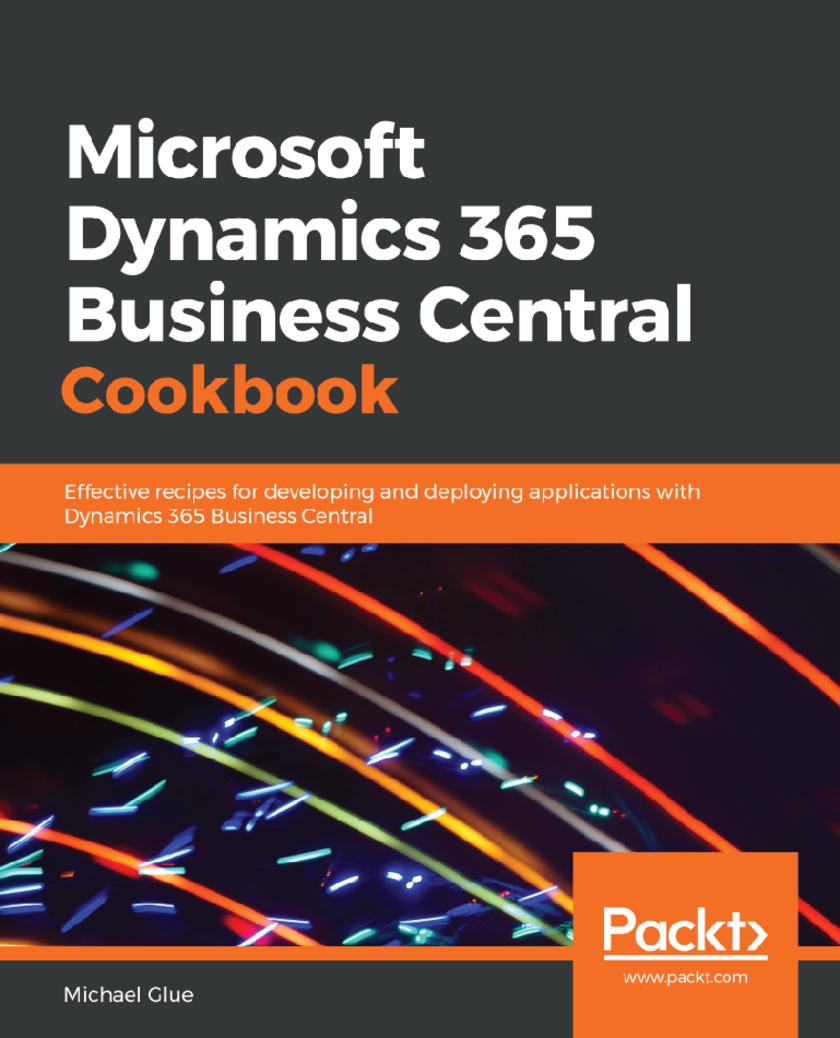
Microsoft Dynamics 365 Business Central Cookbook
¥80.65
Gain useful insights to help you efficiently build, test, and migrate customized solutions on Business Central cloud and on-premise platforms Key Features * Explore enhanced functionalities and development best practices in Business Central * Develop powerful Business Central projects using the AL language * Master the new Business Central with easy-to-follow recipes Book Description Microsoft Dynamics 365 Business Central is a complete business management solution that can help you streamline business processes, connect individual departments in your company, and enhance customer interactions. Ok. That first part was really professional sounding, right? Now, let’s get into what this cookbook is going to do for you: put simply, it’s going to help you get things done. This book will help you get to grips with the latest development features and tools for building applications using Business Central. You’ll find recipes that will guide you in developing and testing applications that can be deployed to the cloud or on-premises. For the old-schoolers out there, you’ll also learn how to take your existing Dynamics NAV customizations and move them to the new AL language platform. Also, if you haven’t figured it out already, we’re going to be using very normal language throughout the book to keep things light. After all, developing applications is fun, so why not have fun learning as well! What you will learn * Build and deploy Business Central applications * Use the cloud or local sandbox for application development * Customize and extend your base Business Central application * Create external applications that connect to Business Central * Create automated tests and debug your applications * Connect to external web services from Business Central Who this book is for This book is for Dynamics developers and administrators who want to become efficient in developing and deploying applications in Business Central. Basic knowledge and understanding of Dynamics application development and administration is assumed.
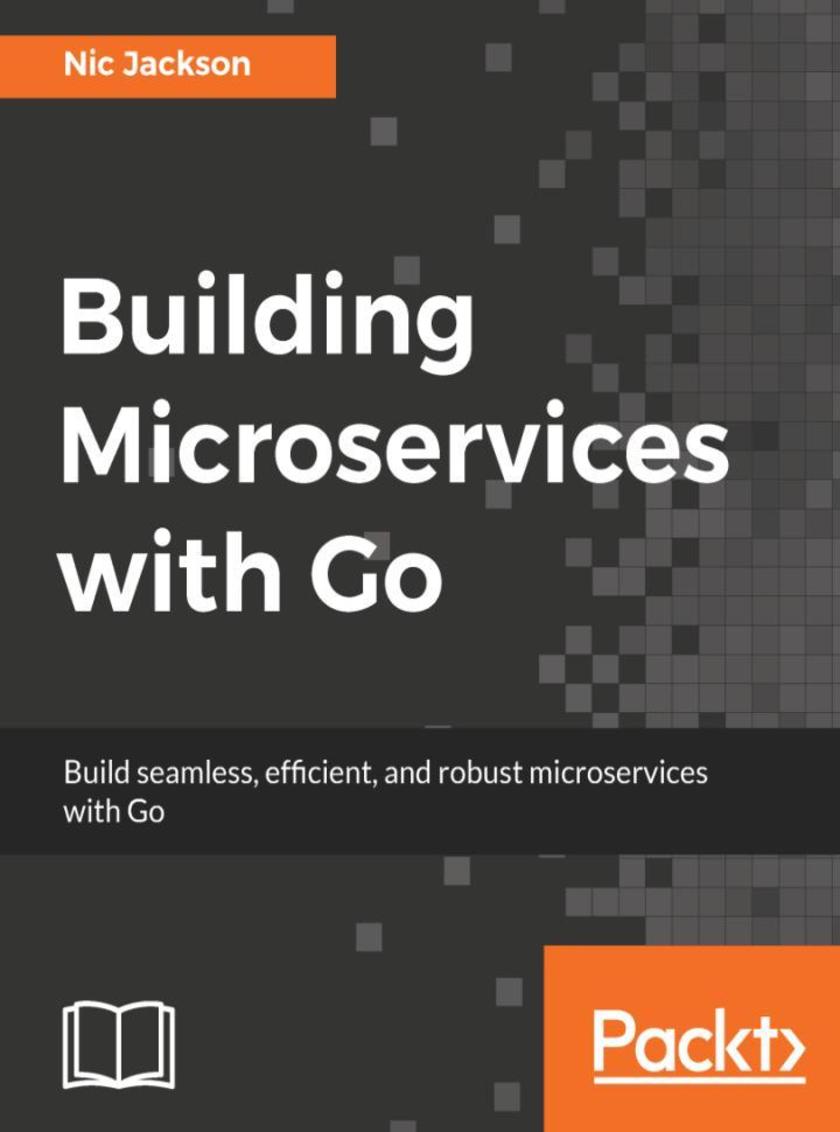
Building Microservices with Go
¥80.65
Your one-stop guide to the common patterns and practices, showing you how to apply these using the Go programming language About This Book ? This short, concise, and practical guide is packed with real-world examples of building microservices with Go ? It is easy to read and will benefit smaller teams who want to extend the functionality of their existing systems ? Using this practical approach will save your money in terms of maintaining a monolithic architecture and demonstrate capabilities in ease of use Who This Book Is For You should have a working knowledge of programming in Go, including writing and compiling basic applications. However, no knowledge of RESTful architecture, microservices, or web services is expected. If you are looking to apply techniques to your own projects, taking your first steps into microservice architecture, this book is for you. What You Will Learn ? Plan a microservice architecture and design a microservice ? Write a microservice with a RESTful API and a database ? Understand the common idioms and common patterns in microservices architecture ? Leverage tools and automation that helps microservices become horizontally scalable ? Get a grounding in containerization with Docker and Docker-Compose, which will greatly accelerate your development lifecycle ? Manage and secure Microservices at scale with monitoring, logging, service discovery, and automation ? Test microservices and integrate API tests in Go In Detail Microservice architecture is sweeping the world as the de facto pattern to build web-based applications. Golang is a language particularly well suited to building them. Its strong community, encouragement of idiomatic style, and statically-linked binary artifacts make integrating it with other technologies and managing microservices at scale consistent and intuitive. This book will teach you the common patterns and practices, showing you how to apply these using the Go programming language. It will teach you the fundamental concepts of architectural design and RESTful communication, and show you patterns that provide manageable code that is supportable in development and at scale in production. We will provide you with examples on how to put these concepts and patterns into practice with Go. Whether you are planning a new application or working in an existing monolith, this book will explain and illustrate with practical examples how teams of all sizes can start solving problems with microservices. It will help you understand Docker and Docker-Compose and how it can be used to isolate microservice dependencies and build environments. We finish off by showing you various techniques to monitor, test, and secure your microservices. By the end, you will know the benefits of system resilience of a microservice and the advantages of Go stack. Style and approach The step-by-step tutorial focuses on building microservices. Each chapter expands upon the previous one, teaching you the main skills and techniques required to be a successful microservice practitioner.
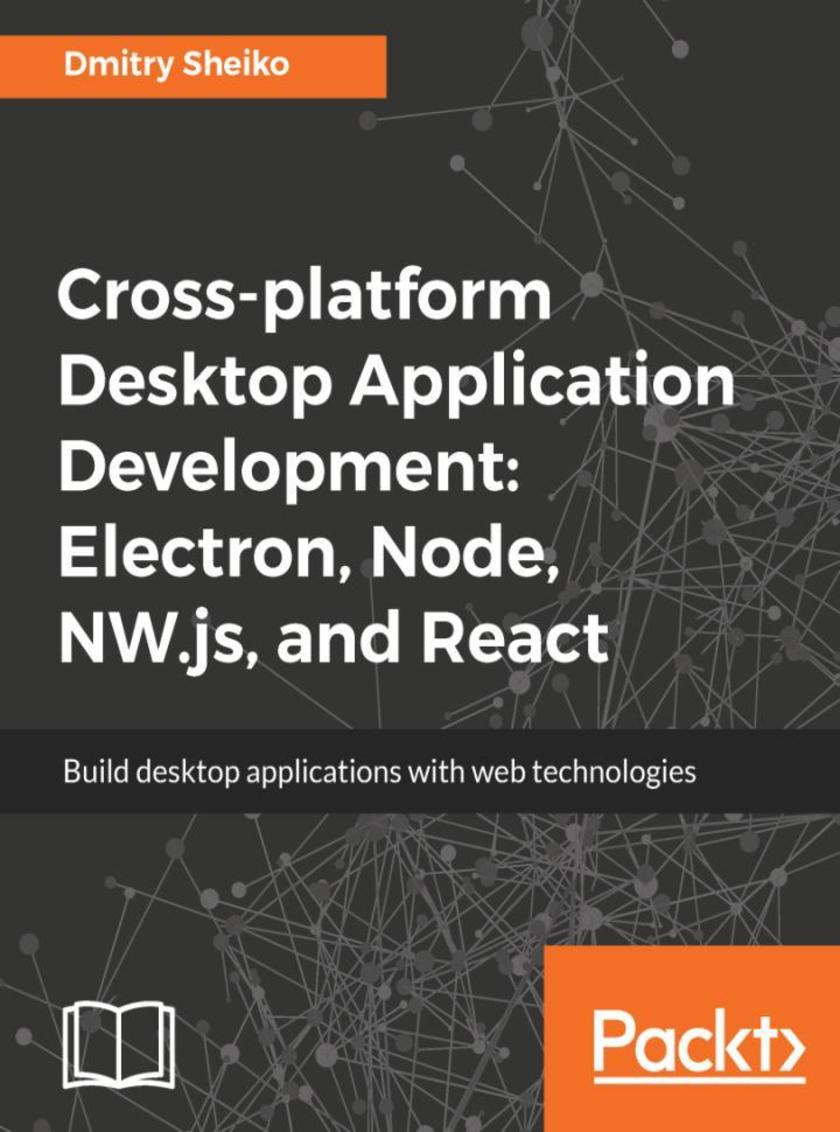
Cross-platform Desktop Application Development: Electron, Node, NW.js, and React
¥80.65
Build powerful cross-platform desktop applications with web technologies such as Node, NW.JS, Electron, and React About This Book ? Build different cross-platform HTML5 desktop applications right from planning, designing, and deployment to enhancement, testing, and delivery ? Forget the pain of cross-platform compatibility and build efficient apps that can be easily deployed on different platforms. ? Build simple to advanced HTML5 desktop apps, by integrating them with other popular frameworks and libraries such as Electron, Node.JS, Nw.js, React, Redux, and TypeScript Who This Book Is For This book has been written for developers interested in creating desktop applications with HTML5. The first part requires essential web-master skills (HTML, CSS, and JavaScript). The second demands minimal experience with React. And finally for the third it would be helpful to have a basic knowledge of React, Redux, and TypeScript. What You Will Learn ? Plan, design, and develop different cross-platform desktop apps ? Application architecture with React and local state ? Application architecture with React and Redux store ? Code design with TypeScript interfaces and specialized types ? CSS and component libraries such as Photonkit, Material UI, and React MDL ? HTML5 APIs such as desktop notifications, WebSockets, WebRTC, and others ? Desktop environment integration APIs of NW.js and Electron ? Package and distribute for NW.JS and Electron In Detail Building and maintaining cross-platform desktop applications with native languages isn’t a trivial task. Since it’s hard to simulate on a foreign platform, packaging and distribution can be quite platform-specific and testing cross-platform apps is pretty complicated.In such scenarios, web technologies such as HTML5 and JavaScript can be your lifesaver. HTML5 desktop applications can be distributed across different platforms (Window, MacOS, and Linux) without any modifications to the code. The book starts with a walk-through on building a simple file explorer from scratch powered by NW.JS. So you will practice the most exciting features of bleeding edge CSS and JavaScript. In addition you will learn to use the desktop environment integration API, source code protection, packaging, and auto-updating with NW.JS. As the second application you will build a chat-system example implemented with Electron and React. While developing the chat app, you will get Photonkit. Next, you will create a screen capturer with NW.JS, React, and Redux. Finally, you will examine an RSS-reader built with TypeScript, React, Redux, and Electron. Generic UI components will be reused from the React MDL library. By the end of the book, you will have built four desktop apps. You will have covered everything from planning, designing, and development to the enhancement, testing, and delivery of these apps. Style and approach Filled with real world examples, this book teaches you to build cross-platform desktop apps right from scratch using a step-by-step approach.
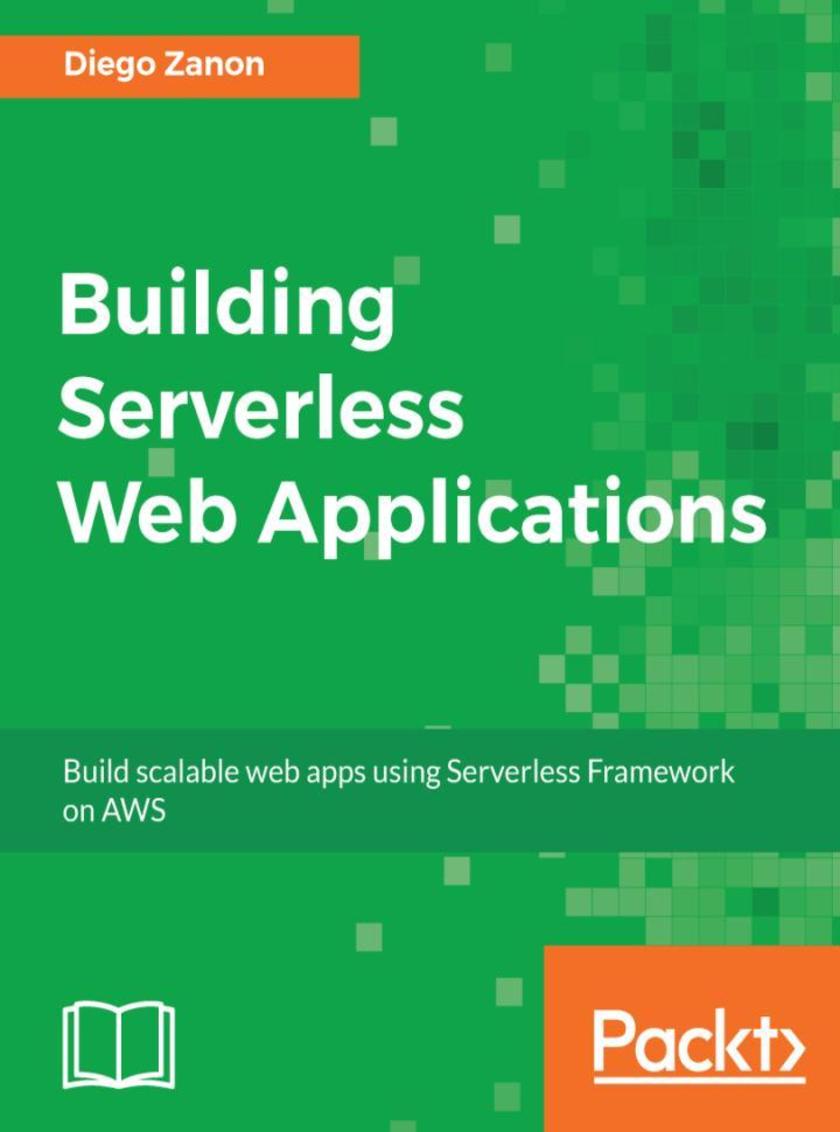
Building Serverless Web Applications
¥80.65
Build scalable, efficient, and highly available web apps using AWS About This Book ? Get an in-depth understanding of the serverless model ? Build a complete serverless web application end to end ? Learn how to use the Serverless Framework to improve your productivity Who This Book Is For If you’re looking to learn more about scalable and cost-efficient architectures, this book is for you. Basic knowledge of Node.js skills or familiarity with cloud services is required. For other topics, we cover the basics. What You Will Learn ? Get a grasp of the pros and cons of going serverless and its use cases ? Discover how you can use the building blocks of AWS to your advantage ? Set up the environment and create a basic app with the Serverless Framework ? Host static files on S3 and CloudFront with HTTPS support ? Build a sample application with a frontend using React as an SPA ? Develop the Node.js backend to handle requests and connect to a SimpleDB database ? Secure your applications with authentication and authorization ? Implement the publish-subscribe pattern to handle notifications in a serverless application ? Create tests, define the workflow for deployment, and monitor your app In Detail This book will equip you with the knowledge needed to build your own serverless apps by showing you how to set up different services while making your application scalable, highly available, and efficient. We begin by giving you an idea of what it means to go serverless, exploring the pros and cons of the serverless model and its use cases. Next, you will be introduced to the AWS services that will be used throughout the book, how to estimate costs, and how to set up and use the Serverless Framework. From here, you will start to build an entire serverless project of an online store, beginning with a React SPA frontend hosted on AWS followed by a serverless backend with API Gateway and Lambda functions. You will also learn to access data from a SimpleDB database, secure the application with authentication and authorization, and implement serverless notifications for browsers using AWS IoT. This book will describe how to monitor the performance, efficiency, and errors of your apps and conclude by teaching you how to test and deploy your applications. Style and approach This book takes a step-by-step approach on how to use the Serverless Framework and AWS services to build Serverless Applications. It will give you a hands-on feeling, allowing you to practice while reading. It provides a brief introduction of concepts while keeping the focus on the practical skills required to develop applications.
OAuth 2.0 Cookbook
¥80.65
Efficiently integrate OAuth 2.0 to protect your mobile, desktop, Cloud applications and APIs using Spring Security technologies. About This Book ? Interact with public OAuth 2.0 protected APIs such as Facebook, LinkedIn and Google. ? Use Spring Security and Spring Security OAuth2 to implement your own OAuth 2.0 provider ? Learn how to implement OAuth 2.0 native mobile clients for Android applications Who This Book Is For This book targets software engineers and security experts who are looking to develop their skills in API security and OAuth 2.0. Prior programming knowledge and a basic understanding of developing web applications are necessary. As this book's recipes mostly use Spring Security and Spring Security OAuth2, some prior experience with Spring Framework will be helpful. What You Will Learn ? Use Redis and relational databases to store issued access tokens and refresh tokens ? Access resources protected by the OAuth2 Provider using Spring Security ? Implement a web application that dynamically registers itself to the Authorization Server ? Improve the safety of your mobile client using dynamic client registration ? Protect your Android client with Proof Key for Code Exchange ? Protect the Authorization Server from invalid redirection In Detail OAuth 2.0 is a standard protocol for authorization and focuses on client development simplicity while providing specific authorization flows for web applications, desktop applications, mobile phones, and so on. This book also provides useful recipes for solving real-life problems using Spring Security and creating Android applications. The book starts by presenting you how to interact with some public OAuth 2.0 protected APIs such as Facebook, LinkedIn and Google. You will also be able to implement your own OAuth 2.0 provider with Spring Security OAuth2. Next, the book will cover practical scenarios regarding some important OAuth 2.0 profiles such as Dynamic Client Registration, Token Introspection and how to revoke issued access tokens. You will then be introduced to the usage of JWT, OpenID Connect, and how to safely implement native mobile OAuth 2.0 Clients. By the end of this book, you will be able to ensure that both the server and client are protected against common vulnerabilities. Style and approach With the help of real-world examples, this book provides step by step recipes for troubleshooting and extending your API security. The book also helps you with accessing and securing data on mobile, desktop, and cloud apps with OAuth 2.0.
Industrial Cybersecurity
¥80.65
Your one-step guide to understanding industrial cyber security, its control systems, and its operations. About This Book ? Learn about endpoint protection such as anti-malware implementation, updating, monitoring, and sanitizing user workloads and mobile devices ? Filled with practical examples to help you secure critical infrastructure systems efficiently ? A step-by-step guide that will teach you the techniques and methodologies of building robust infrastructure systems Who This Book Is For If you are a security professional and want to ensure a robust environment for critical infrastructure systems, this book is for you. IT professionals interested in getting into the cyber security domain or who are looking at gaining industrial cyber security certifications will also find this book useful. What You Will Learn ? Understand industrial cybersecurity, its control systems and operations ? Design security-oriented architectures, network segmentation, and security support services ? Configure event monitoring systems, anti-malware applications, and endpoint security ? Gain knowledge of ICS risks, threat detection, and access management ? Learn about patch management and life cycle management ? Secure your industrial control systems from design through retirement In Detail With industries expanding, cyber attacks have increased significantly. Understanding your control system’s vulnerabilities and learning techniques to defend critical infrastructure systems from cyber threats is increasingly important. With the help of real-world use cases, this book will teach you the methodologies and security measures necessary to protect critical infrastructure systems and will get you up to speed with identifying unique challenges.Industrial cybersecurity begins by introducing Industrial Control System (ICS) technology, including ICS architectures, communication media, and protocols. This is followed by a presentation on ICS (in) security. After presenting an ICS-related attack scenario, securing of the ICS is discussed, including topics such as network segmentation, defense-in-depth strategies, and protective solutions. Along with practical examples for protecting industrial control systems, this book details security assessments, risk management, and security program development. It also covers essential cybersecurity aspects, such as threat detection and access management. Topics related to endpoint hardening such as monitoring, updating, and anti-malware implementations are also discussed. Style and approach A step-by-step guide to implement Industrial Cyber Security effectively.
Azure for Architects
¥80.65
Your one stop guide to making the most out of Azure Cloud About This Book ? Get familiar with the different design patterns available in Microsoft Azure ? Develop Azure cloud architecture and a pipeline management system ? Get to know the security best practices for your Azure deployment Who This Book Is For If you are Cloud Architects, DevOps Engineers, or developers who want to learn key architectural aspects of the Azure Cloud platform, then this book is for you. Prior basic knowledge of the Azure Cloud platform is good to have. What You Will Learn ? Familiarize yourself with the components of the Azure Cloud platform ? Understand the cloud design patterns ? Use enterprise security guidelines for your Azure deployment ? Design and implement Serverless solutions ? See Cloud architecture and the deployment pipeline ? Understand cost management for Azure solutions In Detail Over the years, Azure cloud services has grown quickly, and the number of organizations adopting Azure for their cloud services is also gradually increasing. Leading industry giants are finding that Azure fulfills their extensive cloud requirements. This book will guide you through all the important and tough decision-making aspects involved in architecturing a Azure public cloud for your organization. The book starts with an extensive introduction to all the categories of designs available with Azure. These design patterns focus on different aspects of cloud such as high availability, data management, and so on. Gradually, we move on to various aspects such as building your cloud structure and architecture. It will also include a brief de*ion about different types of services provided by Azure, such as Azure functions and Azure Analytics, which can prove beneficial for an organization. This book will cover each and every aspect and function required to develop a Azure cloud based on your organizational requirements. By the end of this book, you will be in a position to develop a full-fledged Azure cloud. Style and approach This hands-on guide to the Azure Cloud platform covers different architectural concepts and implementations necessary for any enterprise scale deployment.
NativeScript for Angular Mobile Development
¥80.65
Learn NativeScript to build native mobile applications with Angular, TypeScript, JavaScript About This Book ? Power packed hands-on guide to help you become pro-efficient with NativeScript ? Harness the power of your web development skills with JavaScript and Angular to build cross-platform mobile apps ? Create highly maintainable and feature-rich apps with TypeScript and NativeScript APIs Who This Book Is For This book assumes you have a general understanding of TypeScript, have heard of NativeScript and know what it's about, and are familiar with Angular (2.0). You don't need to be an expert in any of these technologies, but having some sense of them before reading is recommended this book, which is ideal for intermediate to advanced users. What You Will Learn ? Bootstrap a NativeScript for Angular app ? Best practices for project organization ? Style your app with CSS/SASS ? Use Angular together with NativeScript to create cross-platform mobile apps ? Take advantage of powerful Angular features, such as Dependency Injection, Components, Directives, Pipes, and NgModules right within your NativeScript apps ?Gain insight into great project organization and best practices ?Use Objective C/Swift and Java APIs directly from TypeScript ?Use rich framework features and third-party plugins ?Style your app with CSS/SASS ?Integrate @ngrx/store + @ngrx/effects to help with state management ?Test your app with Karma and Appium In Detail NativeScript is an open source framework that is built by Progress in order to build truly native mobile apps with TypeScript, JavaScript or just Angular which is an open source framework built by Google that offers declarative templates, dependency injection, and fully featured modules to build rich applications. Angular’s versatile view handling architecture allows your views to be rendered as highly performant UI components native to iOS and Android mobile platforms. This decoupling of the view rendering layer in Angular combined with the power of native APIs with NativeScript have together created the powerful and exciting technology stack of NativeScript for Angular. This book focuses on the key concepts that you will need to know to build a NativeScript for Angular mobile app for iOS and Android. We’ll build a fun multitrack recording studio app, touching on powerful key concepts from both technologies that you may need to know when you start building an app of your own. The structure of the book takes the reader from a void to a deployed app on both the App Store and Google Play, serving as a reference guide and valuable tips/tricks handbook. By the end of this book, you’ll know majority of key concepts needed to build a successful NativeScript for Angular app. Style and approach This step-by-step advanced tutorial focuses on the key concepts you need to know to build a NativeScript for Angular mobile app for iOS and Android.
Microsoft HoloLens By Example
¥80.65
Get to grips with HoloLens development as you create mixed reality apps from scratch About This Book ? Create awesome Augmented Reality (AR) apps for the Microsoft HoloLens platform ? Unleash the power of Unity SDK for HoloLens to create next generation AR apps ? Explore the exciting world of gesture control, visual mapping, voice command for apps, and many more cutting edge possibilities with HoloLens Who This Book Is For This book is for developers who have some experience with programming in any of the major languages such as C#, C++, and so on. You do need any knowledge of Augmented Reality development. What You Will Learn ? Extend the computing experience beyond the flat glass screen by placing and embedding virtual objects holograms) into the physical world ? Interact with the holograms using gaze, gestures, and voice ? Enhance the experience with spatial sound ? Allow multiple users to naturally collaborate with each other ? Integrate voice commands into your own HoloLens projects ? Experiment with techniques to better understand the real world ? Implement a user interface in Mixed Reality ? Blend the virtual and physical world by making the holograms interact and react to the physical environment In Detail Are you a developer who is fascinated with Microsoft HoloLens and its capabilities? Do you want to learn the intricacies of working with the HoloLens SDK and create your own apps? If so, this is the book for you. This book introduces and demystifies the HoloLens platform and introduces new ways you can interact with computers (Mixed Reality). It will teach you the important concepts, get you excited about the possibilities, and give you the tools to continue exploring and experimenting. You will go through the journey of creating four independent examples throughout the book, two using DirectX and two using Unity. You will learn to implement spatial mapping and gesture control, incorporate spatial sound, and work with different types of input and gaze. You will also learn to use the Unity 5 SDK for HoloLens and create apps with it. Collectively, the apps explore the major concepts of HoloLens, but each app is independent, giving you the flexibility to choose where to start (and end). Style and approach This book takes an example-based approach where you’ll build AR apps with increasing difficulty. You will learn more about HoloLens platform as well as AR app development in general.
Mastering Android Studio 3
¥80.65
Unleash the power of Android Studio 3 to develop mobile applications faster and efficiently. About This Book ? Use Android Studio not just as an IDE but as a complete testing and build solution ? Produce customized APKs with Gradle to suit various versions of an app, such as test versions and free versions of an otherwise paid app. ? Explore all aspects of UI development and testing using working XML and Java examples. ? Learn seamless migration from Eclipse and other development platforms to Android Studio. Who This Book Is For This book targets developers, with experience of developing for Android, who are new to Android Studio or wish to migrate from another IDE such as Eclipse. This book will show you how to get the utmost from this powerful tool. What You Will Learn ? Create styles, themes, and material designs ? Set up, configure, and run virtual devices using the AVD manager ? Improve the design of your application using support libraries ? Learn about GitHub libraries ? Use emulators to design layouts for a wide variety of devices, including wearables. ? Improve application performance in terms of memory, speed, and power usage In Detail Android Studio is an Integrated Development Environment (IDE) designed for developing Android apps. As with most development processes, Android keeps resources and logic nicely separated, and so this book covers the management of imagery and other resources, and the development and testing tools provided by the IDE. After introducing the software, the book moves straight into UI development using the sophisticated, WYSIWYG layout editor and XML code to design and test complex interfaces for a wide variety of screen configurations. With activity design covered, the book continues to guide the reader through application logic development, exploring the latest APIs provided by the SDK. Each topic will be demonstrated by working code samples that can be run on a device or emulator. One of Android Studio's greatest features is the large number of third-party plugins available for it, and throughout the book we will be exploring the most useful of these, along with samples and libraries that can be found on GitHub. The final module of the book deals with the final stages of development: building and distribution. The book concludes by taking the reader through the registration and publication processes required by Google. By the time you have finished the book, you will be able to build faster, smoother, and error-free Android applications, in less time and with fewer complications than you ever thought possible. Style and approach This is a step-by-step guide with examples demonstrating how Android Studio can be used as a complete solution for developing, testing, and deploying apps from start to finish.
KVM Virtualization Cookbook
¥80.65
Deploy, manage, and scale virtual instances using Kernel-based Virtual Machines About This Book ? Build, manage and scale virtual machines with practical step-by-step examples ? Leverage the libvirt user-space tools and libraries to manage the life-cycle of KVM instances ? Deploy and scale applications inside KVM virtual machines with OpenStack Who This Book Is For If you are a system administrator working KVM virtualization, this book will help you grow on your expertise of working with the infrastructure to manage things in a better way. You should have a knowledge of working with Linux based systems. What You Will Learn ? Deploy different workloads in isolation with KVM virtualization and better utilize the available compute resources ? Explore the benefits of running applications with KVM and learn to prevent the “bad-neighbor” effect ? Leveraging various networking technologies in the context of virtualization with Open vSwitch and the Linux bridge. ? Create KVM instances using Python and inspect running KVM instances ? Understand Kernel Tuning for enhanced KVM performance and better memory utilization In Detail Virtualization technologies such as KVM allow for better control over the available server resources, by deploying multiple virtual instances on the same physical host, or clusters of compute resources. With KVM it is possible to run various workloads in isolation with the hypervisor layer providing better tenant isolation and higher degree of security. This book will provide a deep dive into deploying KVM virtual machines using qemu and libvirt and will demonstrate practical examples on how to run, scale, monitor, migrate and backup such instances. You will also discover real production ready recipes on deploying KVM instances with OpenStack and how to programatically manage the life cycle of KVM virtual machines using Python. You will learn numerous tips and techniques which will help you deploy & plan the KVM infrastructure. Next, you will be introduced to the working of libvirt libraries and the iPython development environment. Finally, you will be able to tune your Linux kernel for high throughput and better performance. By the end of this book, you will gain all the knowledge needed to be an expert in working with the KVM virtualization infrastructure. Style and approach This book takes a complete practical approach with many step-by-step example recipes on how to use KVM in production. The book assumes certain level of expertise with Linux systems and virtualization in general. Some knowledge of Python programming is encouraged, to fully take advantage of the code recipes.
Microservices with Azure
¥80.65
Architect enterprise-grade, Microservice-based solutions using Microsoft Azure Service Fabric. About This Book ? Explore architectural patterns for building modern day Microservice-based systems ? Learn about Microsoft Service Fabric as a platform to host distributed Microservices ? Discover multiple options for hosting Microservices on heterogeneous, cross-platform environments ? Learn to configure Azure Service Fabric clusters for enterprise-grade service deployments Who This Book Is For The book is aimed at IT architects, system administrators, and DevOps engineers who have a basic knowledge of the Microsoft Azure platform and are working on, or are curious about, the concepts of Microservices and Microservice architecture. What You Will Learn ? Understand the basics of Microservices and how Microsoft Azure fits into the equation ? Master Azure Service Fabric architecture and services ? Explore Azure Service Fabric application programming models ? Comprehensive study of various architecture patterns for building enterprise-grade Microservices ? Manage and deploy Microservices on Azure Service Fabric ? An insight into the future of Microservices with containers and serverless computing In Detail Microsoft Azure is rapidly evolving and is widely used as a platform on which you can build Microservices that can be deployed on-premise and on-cloud heterogeneous environments through Microsoft Azure Service Fabric. This book will help you understand the concepts of Microservice application architecture and build highly maintainable and scalable enterprise-grade applications using the various services in Microsoft Azure Service Fabric. We will begin by understanding the intricacies of the Microservices architecture and its advantages over the monolithic architecture and Service Oriented Architecture (SOA) principles. We will present various scenarios where Microservices should be used and walk you through the architectures of Microservice-based applications. Next, you will take an in-depth look at Microsoft Azure Service Fabric, which is the best–in-class platform for building Microservices. You will explore how to develop and deploy sample applications on Microsoft Azure Service Fabric to gain a thorough understanding of it. Building Microservice-based application is complicated. Therefore, we will take you through several design patterns that solve the various challenges associated with realizing the Microservices architecture in enterprise applications. Each pattern will be clearly illustrated with examples that you can keep referring to when designing applications. Finally, you will be introduced to advanced topics such as Serverless computing and DevOps using Service Fabric, to help you undertake your next venture with confidence. Style and approach This book introduces its readers to the concept of Microservices and Microsoft Azure Service Fabric as a distributed platform to host enterprise-grade Microservices. It then addresses common architectural challenges associated with the Microservice architecture, using proven architectural patterns.
Penetration Testing Bootcamp
¥80.65
Sharpen your pentesting skill in a bootcamp About This Book ? Get practical demonstrations with in-depth explanations of complex security-related problems ? Familiarize yourself with the most common web vulnerabilities ? Get step-by-step guidance on managing testing results and reporting Who This Book Is For This book is for IT security enthusiasts and administrators who want to understand penetration testing quickly. What You Will Learn ? Perform different attacks such as MiTM, and bypassing SSL encryption ? Crack passwords and wireless network keys with brute-forcing and wordlists ? Test web applications for vulnerabilities ? Use the Metasploit Framework to launch exploits and write your own Metasploit modules ? Recover lost files, investigate successful hacks, and discover hidden data ? Write organized and effective penetration testing reports In Detail Penetration Testing Bootcamp delivers practical, learning modules in manageable chunks. Each chapter is delivered in a day, and each day builds your competency in Penetration Testing. This book will begin by taking you through the basics and show you how to set up and maintain the C&C Server. You will also understand how to scan for vulnerabilities and Metasploit, learn how to setup connectivity to a C&C server and maintain that connectivity for your intelligence gathering as well as offsite processing. Using TCPDump filters, you will gain understanding of the sniffing and spoofing traffic. This book will also teach you the importance of clearing up the tracks you leave behind after the penetration test and will show you how to build a report from all the data obtained from the penetration test. In totality, this book will equip you with instructions through rigorous tasks, practical callouts, and assignments to reinforce your understanding of penetration testing. Style and approach This book is delivered in the form of a 10-day boot camp style book. The day-by-day approach will help you get to know everything about penetration testing, from the use of network reconnaissance tools, to the writing of custom zero-day buffer overflow exploits.


