


 购物车
购物车 个人中心
个人中心
The Happy Prince and Other Tales
¥8.09
This collection includes: The Happy Prince, The Nightingale and the Rose, The Selfish Giant, The Devoted Friend, and The Remarkable Rocket. According to Wikipedia: "Oscar Fingal O'Flahertie Wills Wilde (1854 - 1900) was an Irish playwright, novelist, poet, and author of short stories. Known for his barbed wit, he was one of the most successful playwrights of late Victorian London, and one of the greatest celebrities of his day. As the result of a famous trial, he suffered a dramatic downfall and was imprisoned for two years of hard labour after being convicted of the offence of 'gross indecency.'"
The Horse Stealers and Other Stories
¥8.09
This collection includes: THE HORSE-STEALERS, WARD NO. 6, THE PETCHENYEG, A DEAD BODY, A HAPPY ENDING, THE LOOKING-GLASS, OLD AGE, DARKNESS, THE BEGGAR, A STORY WITHOUT A TITLE, IN TROUBLE, FROST, A SLANDER, MINDS IN FERMENT, GONE ASTRAY, AN AVENGER, THE JEUNE PREMIER, A DEFENCELESS CREATURE, AN ENIGMATIC NATURE, A HAPPY MAN, A TROUBLESOME VISITOR, and AN ACTOR'S END. According to Wikipedia: "Anton Pavlovich Chekhov (1860 – 1904) was a Russian short-story writer, playwright and physician, considered to be one of the greatest short-story writers in world literature. His career as a dramatist produced four classics and his best short stories are held in high esteem by writers and critics Chekhov practised as a doctor throughout most of his literary career: "Medicine is my lawful wife," he once said, "and literature is my mistress." Chekhov renounced the theatre after the disastrous reception of The Seagull in 1896; but the play was revived to acclaim in 1898 by Constantin Stanislavski's Moscow Art Theatre, which subsequently also produced Uncle Vanya and premiered Chekhov’s last two plays, Three Sisters and The Cherry Orchard. These four works present a special challenge to the acting ensemble as well as to audiences, because in place of conventional action Chekhov offers a "theatre of mood" and a "submerged life in the text." Chekhov had at first written stories only for the money, but as his artistic ambition grew, he made formal innovations which have influenced the evolution of the modern short story. His originality consists in an early use of the stream-of-consciousness technique, later adopted by James Joyce and other modernists, combined with a disavowal of the moral finality of traditional story structure He made no apologies for the difficulties this posed to readers, insisting that the role of an artist was to ask questions, not to answer them."
The Old Peabody Pew, a Christmas romance of a country church
¥8.09
Long story for children and teens. According to Wikipedia: "Kate Douglas Wiggin ( 1856 - 1923) was an American children's author and educator. Kate Douglas Smith Wiggin was born in Philadelphia, and was of Welsh descent. She started the first free kindergarten in San Francisco in 1878 (the Silver Street Free Kindergarten). With her sister in the 1880s she also established a training school for kindergarten teachers. She was also a writer of children's books, the best known being The Birds' Christmas Carol (1887) and Rebecca of Sunnybrook Farm (1903)."
Antonina or the Fall of Rome
¥8.09
Classic historical novel. According to the Preface: "To the fictitious characters alone is committed the task of representing the spirit of the age. The Roman emperor, Honorius, and the Gothic king, Alaric, mix but little personally in the business of the story--only appearing in such events, and acting under such circumstances, as the records of history strictly authorise; but exact truth in respect to time, place, and circumstance is observed in every historical event introduced in the plot, from the period of the march of the Gothic invaders over the Alps to the close of the first barbarian blockade of Rome." According to Wikipedia: "William Wilkie Collins (1824 – 1889) was an English novelist, playwright, and author of short stories. He was hugely popular in his time, and wrote 27 novels, more than 50 short stories, at least 15 plays, and over 100 pieces of non-fiction work. His best-known works are The Woman in White, The Moonstone, Armadale and No Name."
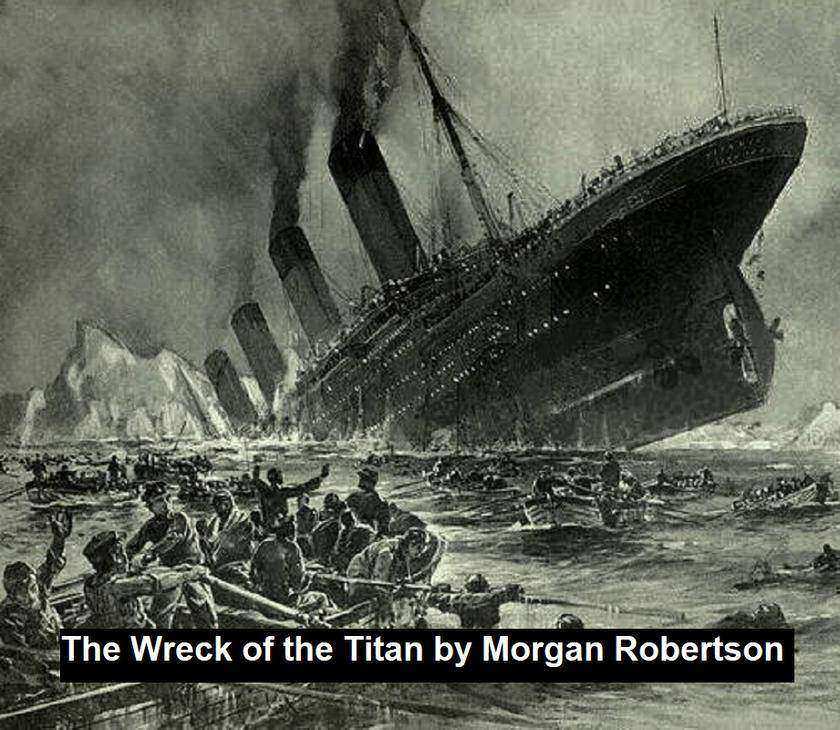
The Wreck of the Titan or Futility
¥8.09
According to Wikipedia: "Futility, or the Wreck of the Titan is an 1898 novella written by Morgan Robertson. The story features the ocean liner Titan, which sinks in the North Atlantic after striking an iceberg. The Titan and its sinking have been noted to be very similar to the real-life passenger ship RMS Titanic, which sank fourteen years later. Following the wreck the novel was reissued with some changes, particularly in the ship's gross tonnage, to make it closer to the Titanic... Morgan Andrew Robertson (September 30, 1861–March 24, 1915) was a well-known American author of short stories and novels, and the self-claimed inventor of the periscope."
The American Claimant
¥8.09
Classic humorous novel, first published in 1892. According to Wikipedia: "Samuel Langhorne Clemens (November 30, 1835 - April 21, 1910), better known by the pen name Mark Twain, was a humorist, satirist, lecturer and writer from the United States of America. Twain is most noted for his novels Adventures of Huckleberry Finn, which has since been called the Great American Novel, and The Adventures of Tom Sawyer. He is also known for his quotations. During his lifetime, Twain became a friend to presidents, artists, leading industrialists and European royalty. Twain enjoyed immense public popularity, and his keen wit and incisive satire earned him praise from both critics and peers. American author William Faulkner called Twain 'the father of American literature.'"
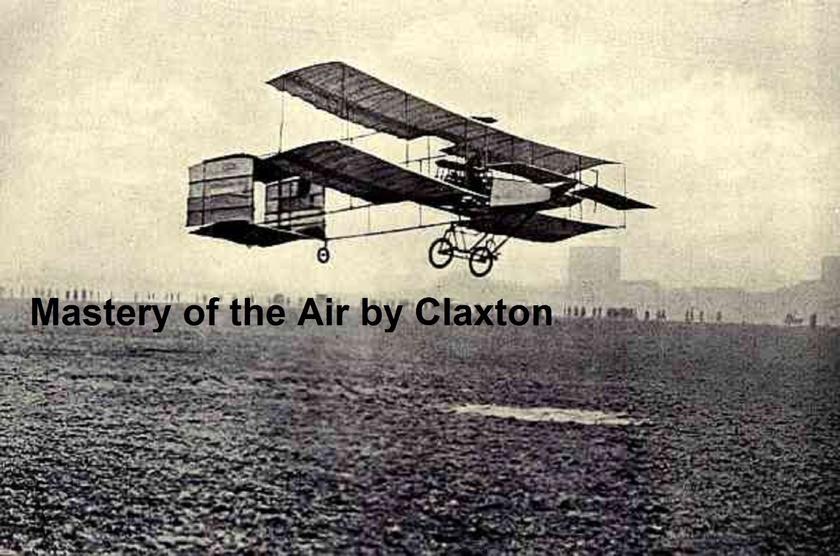
Mastery of the Air
¥8.09
According to the Preface: "This book makes no pretence of going minutely into the technical and scientific sides of human flight: rather does it deal mainly with the real achievements of pioneers who have helped to make aviation what it is to-day." According to Wikipedia: "William Gordon Claxton DSO, DFC & Bar (June 1, 1899–September 28, 1967) was a Canadian World War I flying ace credited with 37 victories. He became the leading ace in his squadron."
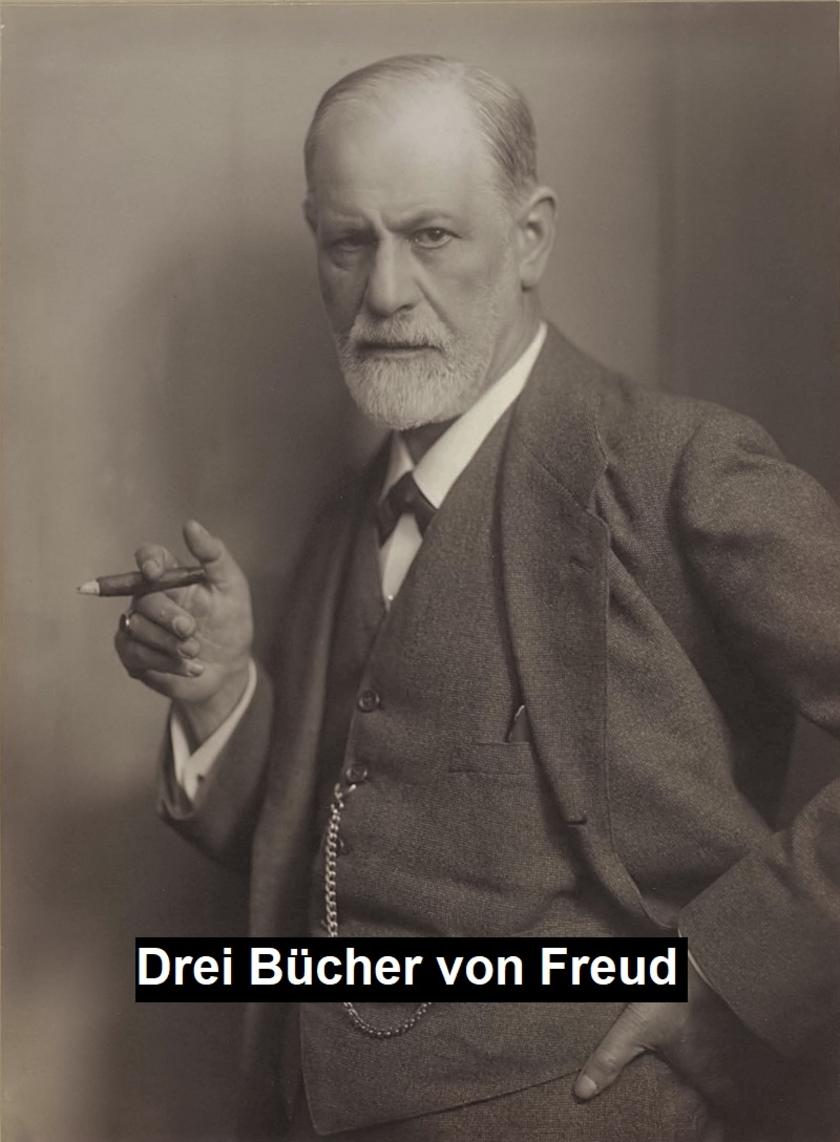
Drei Bücher
¥8.09
Diese Datei enth?lt drei Bücher: Jenseits des Lustprinzips, ?ber Psychoanalyse, und Zur Psychopathologie des Alltagslebens (?ber Vergessen, Vernehmen, Verreifen, Verglauche und Irrtum). Au?erdem enth?lt es sieben Artikel: "Der Dichter und das Phantasieren", "Eine Kindheitserinnerung" aus "Dichtung und Wahrheit", "Der Moses des Michelangelo", "Das Motiv der K?stchenwahl", "Verg?nglichkeit" und "Zeitgem?? über Krieg und Tod". All diese Werke sind im deutschen Original. Nach Wikipedia: "Sigmund Freud (6. Mai 1856 - 23. September 1939), war ein ?sterreichischer Neurologe, der die psychoanalytische Schule der Psychologie gründete. Freud ist am besten bekannt für seine Theorien des Unbewussten und der Abwehrmechanismen der Repression und für Er schuf die klinische Praxis der Psychoanalyse zur Behandlung der Psychopathologie durch den Dialog zwischen einem Patienten und einem Psychoanalytiker.Freud ist auch bekannt für seine Neudefinition des sexuellen Verlangens als prim?re Motivationsenergie des menschlichen Lebens sowie für seine therapeutischen Techniken, einschlie?lich der Verwendung freier Assoziation , seine Theorie der ?bertragung in der therapeutischen Beziehung, und die Interpretation von Tr?umen als Quellen der Einsicht in unbewusste Wünsche.Er war auch ein früher neurologischer Forscher in Zerebralparese.W?hrend viele von Freuds Ideen gefallen sind oder von Neo modifiziert wurden Die Freudianer und die modernen Fortschritte auf dem Gebiet der Psychologie haben Fehler in vielen seiner Theorien gezeigt, Freuds Arbeit bleibt wichtig in der Geschichte der klinischen psychodynamischen Ans?tze. In der Wissenschaft beeinflussen seine Ideen weiterhin die Geisteswissenschaften und einige Sozialwissenschaften. "
The Green Flag
¥8.09
Novel first published in 1900. According to Wikipedia: "Sir Arthur Ignatius Conan Doyle (22 May 1859 – 7 July 1930) was a Scottish physician and writer who is most noted for his fictional stories about the detective Sherlock Holmes, which are generally considered milestones in the field of crime fiction. He is also known for writing the fictional adventures of a second character he invented, Professor Challenger, and for popularising the mystery of the Mary Celeste. He was a prolific writer whose other works include fantasy and science fiction stories, plays, romances, poetry, non-fiction, and historical novels."
The Stark Munro Letters
¥8.09
According to Wikipedia: "The Stark Munro Letters is a novel by British author Sir Arthur Conan Doyle first published in 1895 by Longmans, Green & Co. in London, England. As an epistolary novel it takes the form of twelve long letters written by J. Stark Munro between March 1881 and November 1884 and sent to his friend Herbert Swanborough of Lowell, Massachusetts. Stark Munro is a recent graduate from medical school, and the letters detail his attempts to create a medical practice in partnership with the brilliant but unorthodox James Cullingworth. The novel is in fact a thinly-disguised account of Doyle's experiences with George Turnavine Budd with whom he was in partnership, before finally setting up his own practice in Plymouth in 1882."

The Redheaded Outfield and Other Stories
¥8.09
First published in 1920, baseball short stories by Zane Grey (who at one point aspired to become a major league ball player). According to Wikipedia: "Zane Grey (1872 – 1939) was an American author best known for his popular adventure novels and stories that presented an idealized image of the rugged Old West. As of June 2007, the Internet Movie Database credits Grey with 110 films, one TV episode, and a series, Dick Powell's Zane Grey Theater based loosely on his novels and short stories."
A London Life, The Patagonia, The Liar, Mrs. Temperly
¥8.09
Four classic short stories by Henry James. According to Wikipedia: "Henry James, O.M. (April 15, 1843(1843-04-15) – February 28, 1916) was an American author. He is one of the key figures of 19th century literary realism; the fine art of his writing has led many academics to consider him the greatest master of the novel and novella form. The son of theologian Henry James Sr., brother of the philosopher and psychologist William James and diarist Alice James, he spent much of his life in England and became a British subject shortly before his death. He is primarily known for a series of major novels in which he portrayed the encounter of America with Europe. His plots centered on personal relationships, the proper exercise of power in such relationships, and other moral questions. His method of writing from the point of view of a character within a tale allowed him to explore the phenomena of consciousness and perception, and his style in later works has been compared to impressionist painting."
The Corsican Brothers
¥8.09
Historical novel set on the island of Corsica. The translator notes in the Preface: "The story of "The Corsican Brothers" is written in an easy, sketchy style, presenting on the one side an interesting picture of the habits, prejudices and superstitions of the Corsicans, and particularly of the "Vendetta," or war of vengeance, carried on between families and connections, sometimes for several generations; while, on the other, it gives a lively outline of the effects of Parisian life upon a sensitive and unsophisticated nature." According to Wikipedia: "Alexandre Dumas, père (French for "father", akin to 'Senior' in English), born Dumas Davy de la Pailleterie (1802 — 1870) was a French writer, best known for his numerous historical novels of high adventure which have made him one of the most widely read French authors in the world. Many of his novels, including The Count of Monte Cristo, The Three Musketeers, Twenty Years After, and The Vicomte de Bragelonne were serialized. He also wrote plays and magazine articles and was a prolific correspondent.
Ivanhoe
¥8.09
Historical novel, first published in 1819. Set in Yorkshire and Leicestershire, England, in 1194. According to Wikipedia: "Sir Walter Scott, 1st Baronet (1771 – 1832) was a prolific Scottish historical novelist and poet popular throughout Europe during his time. In some ways Scott was the first English-language author to have a truly international career in his lifetime, with many contemporary readers all over Europe, Australia, and North America. His novels and poetry are still read, and many of his works remain classics of both English-language literature and of Scottish literature. Famous titles include Ivanhoe, Rob Roy, The Lady of The Lake, Waverley, The Heart of Midlothian and The Bride of Lammermoor."
The Talisman
¥8.09
Historical novel, first published in 1825. Set during the Crusades, in Syria in 1191. According to Wikipedia: "Sir Walter Scott, 1st Baronet (1771 – 1832) was a prolific Scottish historical novelist and poet popular throughout Europe during his time. In some ways Scott was the first English-language author to have a truly international career in his lifetime, with many contemporary readers all over Europe, Australia, and North America. His novels and poetry are still read, and many of his works remain classics of both English-language literature and of Scottish literature. Famous titles include Ivanhoe, Rob Roy, The Lady of The Lake, Waverley, The Heart of Midlothian and The Bride of Lammermoor."
St. Ronan's Well
¥8.09
Historical novel, originally published in 1824. Set in southern Scotland in the 1800s. According to Wikipedia: "Sir Walter Scott, 1st Baronet (1771 – 1832) was a prolific Scottish historical novelist and poet popular throughout Europe during his time. In some ways Scott was the first English-language author to have a truly international career in his lifetime, with many contemporary readers all over Europe, Australia, and North America. His novels and poetry are still read, and many of his works remain classics of both English-language literature and of Scottish literature. Famous titles include Ivanhoe, Rob Roy, The Lady of The Lake, Waverley, The Heart of Midlothian and The Bride of Lammermoor."
One of the 28th
¥8.09
Historical novel, set at the Battle of Waterloo in 1815. The Preface begins: "Although in the present story a boy plays the principal part, and encounters many adventures by land and sea, a woman is the real heroine, and the part she played demanded an amount of nerve and courage fully equal to that necessary for those who take part in active warfare. Boys are rather apt to think, mistakenly, that their sex has a monopoly of courage, but I believe that in moments of great peril women are to the full as brave and as collected as men. Indeed, my own somewhat extensive experience leads me to go even further, and to assert that among a civil population, untrained to arms, the average woman is cooler and more courageous than the average man." According to Wikipedia: "George Alfred Henty (8 December 1832 - 16 November 1902), referred to as G. A. Henty, was a prolific English novelist, special correspondent, and Imperialist born in Trumpington, Cambridgeshire, England. He is best known for his historical adventure stories that were popular in the late 19th century. His works include Out on the Pampas (1871), The Young Buglers (1880), With Clive in India (1884) and Wulf the Saxon (1895)."
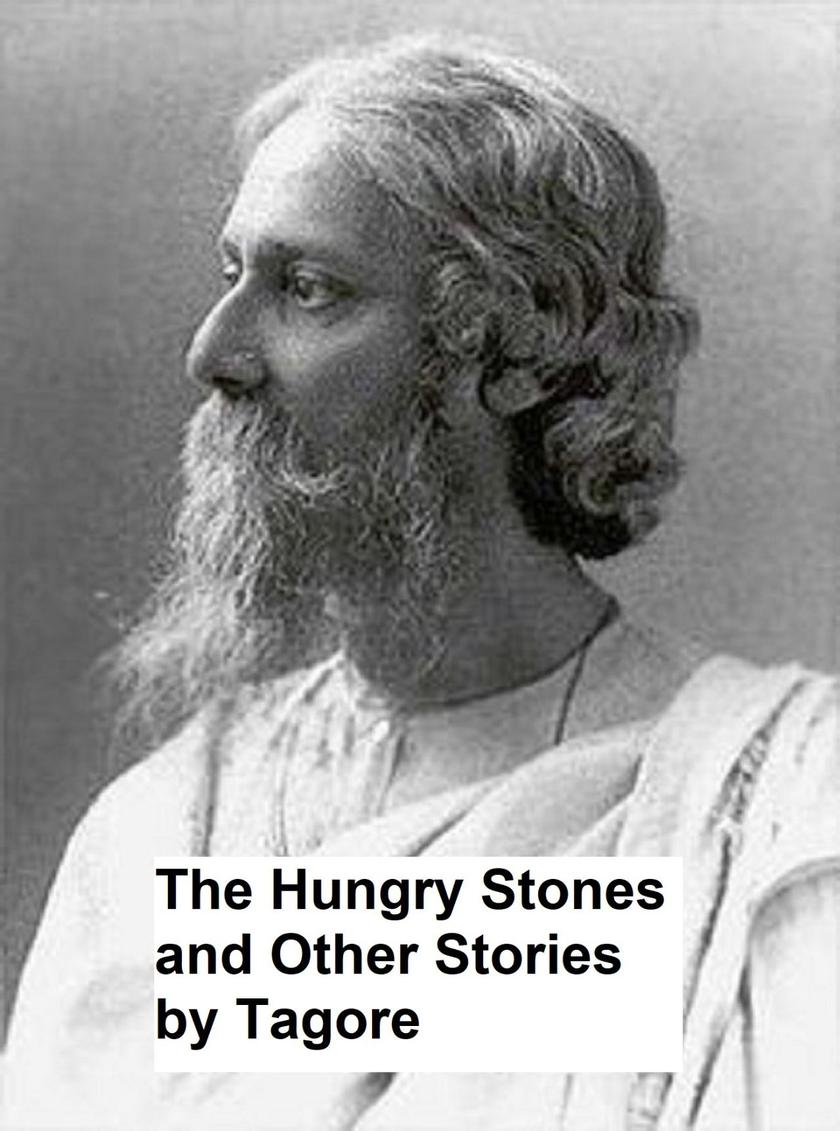
The Hungry Stones and Other Stories
¥8.09
Collection of short stories. According to Wikipedia: "Rabindranath Tagore (7 May 1861 – 7 August 1941), sobriquet Gurudev, was a Bengali poet, novelist, musician, painter and playwright who reshaped Bengali literature and music. As author of Gitanjali and its "profoundly sensitive, fresh and beautiful verse", he was the first non-European who was awarded the Nobel Prize for Literature in 1913. His poetry in translation was viewed as spiritual, and this together with his mesmerizing persona gave him a prophet-like aura in the west. His "elegant prose and magical poetry" still remain largely unknown outside the confines of Bengal."
Winning His Spurs
¥8.09
Historical novel, set in the Holy Land during the Crusades, in the time of King Richard I of England. According to Wikipedia: "George Alfred Henty (8 December 1832 - 16 November 1902), referred to as G. A. Henty, was a prolific English novelist, special correspondent, and Imperialist born in Trumpington, Cambridgeshire, England. He is best known for his historical adventure stories that were popular in the late 19th century. His works include Out on the Pampas (1871), The Young Buglers (1880), With Clive in India (1884) and Wulf the Saxon (1895)."
By Sheer Pluck
¥8.09
Historical novel, set in West Africa, during a 19th century colonial war. According to Wikipedia: "George Alfred Henty (8 December 1832 - 16 November 1902), referred to as G. A. Henty, was a prolific English novelist, special correspondent, and Imperialist born in Trumpington, Cambridgeshire, England. He is best known for his historical adventure stories that were popular in the late 19th century. His works include Out on the Pampas (1871), The Young Buglers (1880), With Clive in India (1884) and Wulf the Saxon (1895)"
T. Tembarom
¥8.09
Novel for children. According to Wikipedia: "Frances Hodgson Burnett, ( 1849 - 1924) was an English–American playwright and author. She is best known for her children's stories, in particular The Secret Garden, A Little Princess, and Little Lord Fauntleroy. Born Frances Eliza Hodgson in Cheetham Hill, Manchester, her father died in 1854, and the family had to endure poverty and squalor in the Victorian slums of Manchester. Following the death of her mother in 1867, an 18-year-old Frances was now the head of a family of four younger siblings. She turned to writing to support them all, with a first story published in Godey's Lady's Book in 1868. Soon after she was being published regularly in Godey's, Scribner's Monthly, Peterson's Ladies' Magazine and Harper's Bazaar. Her main writing talent was combining realistic detail of working-class life with a romantic plot. Her first novel was published in 1877; That Lass o' Lowrie's was a story of Lancashire life. After moving with her husband to Washington, D.C., Burnett wrote the novels Haworth's (1879), Louisiana (1880), A Fair Barbarian (1881), and Through One Administration (1883), as well as a play, Esmeralda (1881), written with William Gillette...Her later works include Sara Crewe (1888) - later rewritten as A Little Princess (1905); The Lady of Quality (1896) - considered one of the best of her plays; and The Secret Garden (1909), the children's novel for which she is probably best known today. The Lost Prince was published in 1915..."


