


 购物车
购物车 个人中心
个人中心
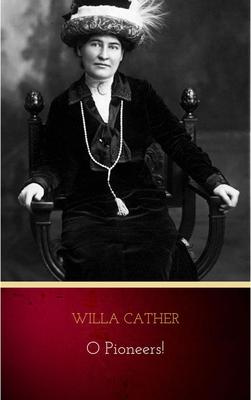
O Pioneers!
¥9.00
The first of her renowned prairie novels--a story that expresses Cather's conviction that "the history of every country begins in the heart of a man or a woman." When Alexandra Bergson takes over the family farm after her father's death, she falls under the spell of the rich, forbidding Nebraska prairie.
The White Ship
¥9.00
"The White Ship" is a short story written by H.P. Lovecraft. It was first published in The United Amateur (Volume 19) #2, November 1919. A lighthouse keeper named Basil Elton engages upon a peculiar fantasy in which a bearded man piloting a mystical white ship is found sailing upon a bridge of moonlight. Elton joins the bearded man on this ship, and together they explore a mystical chain of islands unlike anything that can be found on Earth.
Medusa's Coil
¥9.00
"Medusa's Coil" is a short story by H. P. Lovecraft and Zealia Bishop. It was first published in Weird Tales magazine in January 1939, two years after Lovecraft's death. The story concerns the son of an American plantation owner who brings back from Paris a new wife. It mixes elements of Lovecraft's Cthulhu Mythos with the ancient Greek myth of Medusa, but it has also been noted for its racist aspects.
The Festival
¥9.00
"The Festival" is a short story by H. P. Lovecraft written in October 1923 and published in the January 1925 issue of Weird Tales. The story is set at Christmas time: "It was the Yuletide, that men call Christmas though they know in their hearts it is older than Bethlehem and Babylon, older than Memphis and mankind." An unnamed narrator is making his first visit to Kingsport, Massachusetts, an "ancient sea town where my people had dwelt and kept festival in the elder time when festival was forbidden; where also they had commanded their sons to keep festival once every century, that the memory of primal secrets might not be forgotten."
Beasley's Christmas Party
¥9.00
A young newspaperman who has just moved to a new town overhears the wealthy politician in the house next door talking aloud to nonexistent figures. Has David Beasley gone mad, or is his imagination simply greater than his friends and ex-fiancée believe?
Cool Air
¥9.00
"Cool Air" is a short story by the American horror fiction writer H. P. Lovecraft, written in March 1926 and published in the March 1928 issue of Tales of Magic and Mystery. The narrator offers a story to explain why a "draught of cool air" is the most detestable thing to him. His tale begins in the spring of 1923, when he was looking for housing in New York City. He finally settles in a converted brownstone on West Fourteenth Street. Investigating a chemical leak from the floor above, he discovers that the inhabitant directly overhead is a strange, old, and reclusive physician. One day the narrator suffers a heart attack, and remembering that a doctor lives overhead, he climbs the stairs and meets Dr. Mu?oz for the first time.

Niebla
¥9.00
No es una novela. Es una "nivola", según su autor. Nuevo género creado por Unamuno, no tuvo mucho arraigo, pero aún así Niebla es una de las obras de ficción más importantes del escritor vasco. El libro aborda la inseguridad del hombre moderno que se preocupa por su destino y su mortalidad. El título está cargado de significado, dado que el libro difumina la línea entre la ficción y la realidad. También son nebulosas las descripciones físicas de los personajes y lugares, y hasta pone en duda la naturaleza de la existencia humana.

La tía Tula
¥9.00
La tía Tula, es, según su autor, ?la historia de una joven que, rechazando novios, se queda soltera para cuidar a unos sobrinos, hijos de una hermana que se le muere. Vive con el cu?ado, a quien rechaza para marido, pues no quiere manchar con el débito conyugal el recinto en que respiran aire de castidad sus hijos. Satisfecho el instinto de maternidad, ?para qué perder su virginidad? Es virgen madre?. Pero sobre este ca?amazo argumental teje Unamuno una obra cargada de sentidos plurales: Tula, la protagonista, que encarna la concepción tradicional de la familia y de la mujer y que es, a al vez, víctima de ella, ejemplifica la figura del agonista unamuniano dividido en mil contradicciones.
Henry IV, Part 1
¥9.00
Henry IV, Part 1 is a history play by William Shakespeare, believed to have been written no later than 1597. It is the second of Shakespeare's tetralogy that deals with the successive reigns of Richard II, Henry IV (2 plays), and Henry V. Henry IV, Part 1 depicts a span of history that begins with Hotspur's battle at Homildon against the Douglas late in 1402 and ends with the defeat of the rebels at Shrewsbury in the middle of 1403. From the start it has been an extremely popular play both with the public and the critics.

La última fada
¥9.00
Novela basada en dos leyendas artúricas: "Tristán e Isolda" y "Merlín y Viviana", entreteje textos conocidos con versiones nuevas con el objetivo de moralizar a un público lector, presumiblemente de fe única, poseedor de prejuicios religiosos arraigados en la cultura de la época.

El cisne de Vilamorta
¥9.00
EL CISNE DE VILAMORTA : Leocadia, la maestra de Vilamorta, ama apasionadamente al joven y apuesto Segundo ( el cisne ) al que recibe en su casa y de vez en cuando hace algún obsequio, ya que Segundo aunque estudió derecho , no trabaja. Leocadia tiene un hijo deficiente producto de una violación incestuosa de un tío con el que vivía en Ourense. Segundo aspira a conseguir una colocación en Madrid que le permita darse a conocer en el mundo literario de la capital. Llega a Vilamorta un político influyente ( don Victoriano ). Viene a curarse con las aguas del balneario. El poeta se enamora de la joven mujer del político ( Nieves ) y ella coquetea con él , pero el marido muere y la viuda marcha a Madrid sin querer saber nada de Segundo ...
Time Regained
¥9.00
The final volume of Remembrance of Things Past chronicles the years of World War I, when, as M. de Charlus reflects on a moonlit walk, Paris threatens to become another Pompeii. Years later, after the war's end, Proust's narrator returns to Paris, where Mme. Verdurin has become the Princesse de Guermantes. He reflects on time, reality, jealousy, artistic creation, and the raw material for literature-his past life.
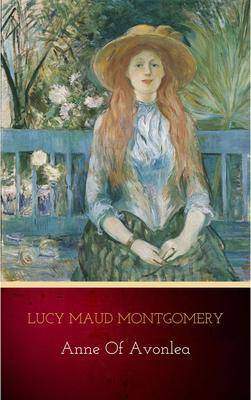
Anne of Avonlea
¥9.00
Following Anne of Green Gables (1908), the book covers the second chapter in the life of Anne Shirley. This book follows Anne from the age of 16 to 18, during the two years that she teaches at Avonlea school. It includes many of the characters from Anne of Green Gables, as well as new ones like Mr Harrison, Miss Lavendar Lewis, Paul Irving, and the twins Dora and Davy.
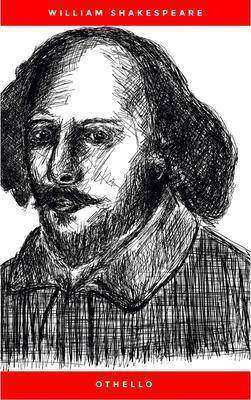
Othello, The Moor of Venice
¥9.00
Othello, The Moor of Venice is a tragedy by William Shakespeare based on the short story "Moor of Venice" by Cinthio, believed to have been written in approximately 1603. The work revolves around four central characters: Othello, his wife Desdemona, his lieutenant Cassio, and his trusted advisor Iago. Attesting to its enduring popularity, the play appeared in 7 editions between 1622 and 1705. Because of its varied themes — racism, love, jealousy and betrayal — it remains relevant to the present day and is often performed in professional and community theatres alike. The play has also been the basis for numerous operatic, film and literary adaptations.

Oeuvres Complètes
¥9.00
Cet ebook regroupe les oeuvres complètes de Charles Baudelaire. Des tables des matières rendent la navigation intuitive et agréable. ---- Contenu: Le Jeune Enchanteur (1846) La Fanfarlo (1847) Les Fleurs du mal (1857) Les Paradis artificiels (1860) Les Fleurs du mal (1861) Les ?paves (1866) Les Fleurs du mal (additional poems of the 1868 edition) Curiosités esthétiques (1868): Salon de 1845, Salon de 1846, Le musée classique du bazar bonne-nouvelle, Exposition universelle — 1855 — beaux-arts, Salon de 1859, De l'essence du rire, Quelques caricaturistes fran?ais, Quelques caricaturistes étrangers. L'Art romantique (1869): L'?uvre et la vie d'Eugène Delacroix, Peintures murales d'Eugène Delacroix à Saint-Sulpice, Le peintre de la vie moderne, Peintres et aqua-fortistes, Vente de la collection de M. E. Piot, L'art philosophique, Morale du joujou, Théophile Gautier, Pierre Dupont, Richard Wagner et Tannh?user à Paris, Philibert Rouvière, Conseils aux jeunes littérateurs, Les drames et les ...
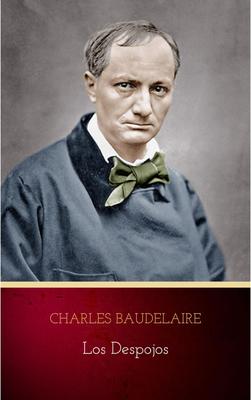
Los Despojos
¥9.00
Esta recopilación compuesta de inéditos y piezas condenadas fue publicada en Bruselas, bajo el cuidado de Poulet-Malassis, amigo de Baudelaire con un pie de imprenta apócrifo: Amsterdam, a l'Enseigne du Coq, precedida por un simbólico frontispicio de Félicien Rops.
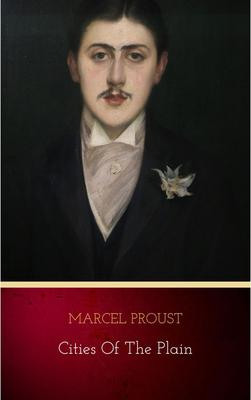
Cities of the Plain: (Sodom and Gomorrah)
¥9.00
In this fourth volume, Proust’s novel takes up for the first time the theme of homosexual love and examines how destructive sexual jealousy can be for those who suffer it. Sodom and Gomorrah is also an unforgiving analysis of both the decadent high society of Paris and the rise of a philistine bourgeoisie that will inevitably supplant it.
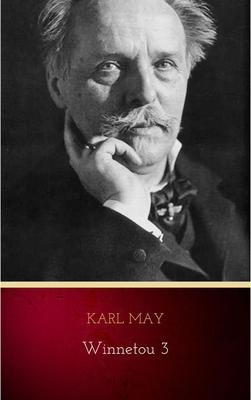
Winnetou 3
¥9.00
Old Shatterhand trifft in der Savanne den berühmten Westmann Sans-Ear. Nachdem Sans-Ear vier feindliche Komantschen besiegt hat, reiten beide zusammen weiter und verhindern einen Zugüberfall. Bei diesem ?berfall beteiligt sich ein Wei?er, der von Sans-Ear als der M?rder seiner Familie identifiziert wird, Fred Morgan. Durch einen glücklichen Umstand k?nnen sie die Spur des Verbrechers entdecken und folgen ihm durch den Llano Estacado, wo sie sich erneut gegen die Comanchen behaupten müssen, zwischenzeitlich begleitet von Winnetou und Bernard Marshall, der ebenfalls hinter Fred Morgan her ist. In der N?he der Goldfelder von San Francisco erwischen sie endlich beide Morgans. Im zweiten Teil trifft Old Shatterhand auf einer Zugfahrt Fred Walker, einen Detektiv, der hinter den Railtroublers her ist, einer Bande von Zugr?ubern. Old Shatterhand und sp?ter auch Winnetou verbünden sich mit Spürauge und verhindern einen ?berfall auf Echo Canyon, eine gro?e Bahnstation. Auf der Flucht überfallen die mit den Zugr?ubern verbündeten Sioux eine Siedlung und verschleppen alle Bewohner. Bei der Rettungsaktion am Berg Hancock wird Winnetou von einem Sioux erschossen.
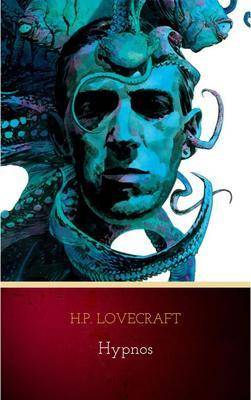
Hypnos
¥9.00
"Hypnos" is a short story by H.P. Lovecraft, penned in March 1922 and first published in the May 1923 issue of National Amateur. The narrator, a sculptor, recounts meeting a mysterious man in a railway station. The moment the man opened his "immense, sunken and widely luminous eyes", the narrator knew that the stranger would become his friend-–"the only friend of one who had never possessed a friend before". In the eyes of the stranger he saw the knowledge of the mysteries he always sought to learn
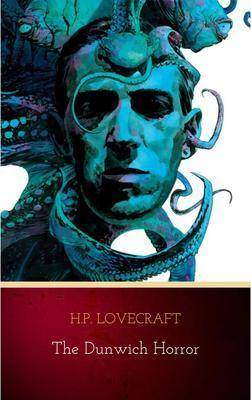
The Dunwich Horror
¥9.00
In H.P. Lovecraft’s, "The Dunwich Horror", we are told the story of Wilbur Whateley, the son of a deformed albino mother and an unknown father (alluded to in passing by the mad Old Whateley as "Yog-Sothoth"), and the strange events surrounding his birth and precocious development. Wilbur matures at an abnormal rate, reaching manhood within a decade. All the while, his sorcerer grandfather indoctrinates him into certain dark rituals and the study of witchcraft.
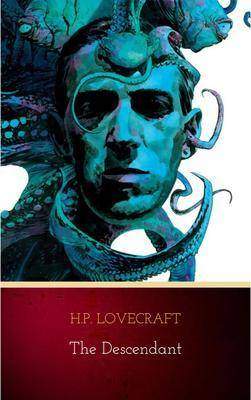
The Descendant
¥9.00
"The Descendant" is a story fragment by American horror fiction writer H. P. Lovecraft, believed to have been written in 1927.[1] It was first published in the journal Leaves in 1938, after Lovecraft's death.


