


 购物车
购物车 个人中心
个人中心

Las Flores del Mal
¥9.00
Les Fleurs du mal es una colección de poemas de Charles Baudelaire. Considerada la obra máxima de su autor, abarca casi la totalidad de su producción poética desde 1840 hasta la fecha de su primera publicación en 1857. Las Flores del mal es considerada una de las obras más importantes de la poesía moderna, imprimiendo una estética nueva, donde la belleza y lo sublime surgen, a través del lenguaje poético, de la realidad más trivial.

La Fanfarlo
¥9.00
Este cuento ha sido publicado en el Boletín de la Sociedad de la Gente de Letras en enero de 1847 bajo el seudónimo de Charles Dufays. Narra la historia de los amores y desamores del joven poeta Samuel Cramer.Una peque?a joya de la literatura clásica.

Rilla of Ingleside
¥9.00
Anne Shirley has left Redmond College behind to begin a new job and a new chapter of her life away from Green Gables. Now she faces a new challenge: the Pringles. They're known as the royal family of Summerside - and they quickly let Anne know she is not the person they had wanted as principal of Summerside High School. But as she settles into the cozy tower room at Windy Poplars, Anne finds she has great allies in the widows Aunt Kate and Aunt Chatty – and in their irrepressible housekeeper, Rebecca Dew. As Anne learns Summerside's strangest secrets, winning the support of the prickly Pringles becomes only the first of her delicious triumphs.
Le Songe D'Une Nuit D'?té
¥9.00
L'action se déroule en Grèce et réunit pour mieux les désunir deux couples de jeunes amants, Lysandre, Démétrius, Hélène et Hermia. Hermia veut épouser Lysandre, mais son père, ?gée, la destine à Démétrius, dont est amoureuse Hélèna. Lysandre et Hermia s'enfuient dans la forêt, poursuivis par Démétrius, lui-même poursuivi par Hélèna. Pendant ce temps, Obéron, roi des fées, a ordonné à Puck de verser une potion sur les paupières de sa femme, Titania. Il entre dans la forêt avec Puck. Pendant la nuit, la confusion règne.
Henry VI, Part 2
¥9.00
The Second Part of King Henry the Sixth, or Henry VI, Part 2, is a history play by William Shakespeare believed written in approximately 1590-91. It is the second part of the trilogy on Henry VI, and often grouped together with Richard III as a tetralogy on The Wars of the Roses—the success of which established Shakespeare's reputation as a playwright.
The Winter's Tale
¥9.00
The Winter's Tale is a play by William Shakespeare, first published in the First Folio in 1623. Although it was listed as a comedy when it first appeared, some modern editors have relabeled the play a romance. Some critics, among them W. W. Lawrence (Lawrence, 9-13), consider it to be one of Shakespeare's "problem plays", because the first three acts are filled with intense psychological drama, while the last two acts are comedic and supply a happy ending.
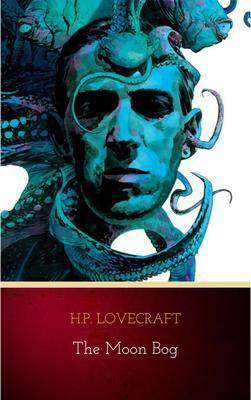
The Moon Bog
¥9.00
"The Moon-Bog" is a short story by American horror fiction writer H. P. Lovecraft, written in or before March 1921. The story was first published in the June 1926 issue of the pulp magazine Weird Tales. In the story, the unnamed narrator describes the final fate of his good friend, Denys Barry, an Irish-American who reclaims an ancestral estate in Kilderry, a fictional village in Ireland. Barry ignores pleas from the superstitious local peasantry not to drain the nearby bog, with unfortunate supernatural consequences.
In the Vault
¥9.00
An undertaker finds himself trapped in the vault where coffins are stored during winter for burial in the spring, and is mysteriously injured when he escapes.
In the Arena: Stories of Political Life
¥9.00
Newton Booth Tarkington (July 29, 1869 – May 19, 1946) was an American novelist and dramatist best known for his novels The Magnificent Ambersons and Alice Adams. He is one of only three novelists to win the Pulitzer Prize for Fiction more than once, along with William Faulkner and John Updike.
Alice Adams
¥9.00
Alice Adams is a 1921 novel by Booth Tarkington that received the 1922 Pulitzer Prize for the Novel. It was adapted as a film in 1923 by Rowland V. Lee and, more famously, in 1935 by George Stevens. The narrative centers on the character of a young woman (the eponymous Alice Adams) who aspires to climb the social ladder and win the affections of a wealthy young man named Arthur Russell. The story is set in a lower-middle-class household in an unnamed town in the Midwest shortly after World War I.
The Troll Garden and Selected Stories
¥9.00
The Troll Garden is a collection of short stories by Willa Cather, published in 1905. This collection contains the following seven stories: "Flavia and Her Artists" "The Sculptor's Funeral" "A Death in the Desert" "The Garden Lodge" "The Marriage of Phaedra" "A Wagner Matinee" "Paul's Case"
He
¥9.00
"He" is a short story by American horror writer H. P. Lovecraft. Written August 1925, it was first published in Weird Tales, September 1926.[1]
The Haunter of the Dark
¥9.00
The story takes place in Providence, Rhode Island and revolves around the Church of Starry Wisdom. The cult uses an ancient artifact known as the Shining Trapezohedron to summon a terrible being from the depths of time and space. The Shining Trapezohedron was discovered in Egyptian ruins, in a box of alien construction, by Professor Enoch Bowen before he returned to Providence, Rhode Island in 1844. Members of the Church of Starry Wisdom in Providence would awaken the Haunter of the Dark, an avatar of Nyarlathotep, by gazing into the glowing crystal. Summoned from the black gulfs of chaos, this being could show other worlds, other galaxies, and the secrets of arcane and paradoxical knowledge; but he demanded monstrous sacrifices, hinted at by disfigured skeletons that were later found in the church. The Haunter of the Dark was banished by light and could not cross a lighted area.
Dreams in the Witch-House
¥9.00
Walter Gilman, a student of mathematics and folklore at Miskatonic University, takes a room in the Witch House, a house in Arkham thought to be accursed. The first part of the story is an account of the history of the house, which has once harboured Keziah Mason, an accused witch who disappeared mysteriously from a Salem gaol in 1692. Gilman discovers that for the better part of two centuries many if not most of its occupants have died prematurely.
The Complete Fiction
¥9.00
The Nameless City The Festival The Colour Out of Space The Call of Cthulhu The Dunwich Horror The Whisperer in Darkness The Dreams in the Witch House The Haunter of the Dark The Shadow Over Innsmouth Discarded Draft of "The Shadow Over Innsmouth" The Shadow Out of Time At the Mountains of Madness The Case of Charles Dexter Ward Azathoth Beyond the Wall of Sleep Celepha?s Cool Air Dagon Ex Oblivione Facts Concerning the Late Arthur Jermyn and His Family From Beyond He Herbert West-Reanimator Hypnos In the Vault Memory Nyarlathotep Pickman’s Model The Book The Cats of Ulthar The Descendant The Doom That Came to Sarnath The Dream-Quest of Unknown Kadath The Evil Clergyman The Horror at Red Hook The Hound The Lurking Fear The Moon-Bog The Music of Erich Zann The Other Gods The Outsider The Picture in the House The Quest of Iranon The Rats in the Walls The Shunned House The Silver Key The Statement of Randolph Carter The Strange High House in the Mist The Street The Temple The Terrible Old Man The Thing on the Doorstep The Tomb The Transition of Juan Romero The Tree The Unnamable The White Ship What the Moon Brings Polaris The Very Old Folk Ibid Old Bugs Sweet Ermengarde, or, The Heart of a Country Girl A Reminiscence of Dr. Samuel Johnson The History of the Necronomicon
The Transition of Juan Romero
¥9.00
The story involves a mine that uncovers a very deep chasm, too deep for any sounding lines to hit bottom. The night after the discovery of the abyss the narrator and one of the mine's workers, Juan Romero, venture inside the mine, drawn against their will by a mysterious rhythmical throbbing in the ground.
The Thing on the Doorstep
¥9.00
"The Thing on the Doorstep" is a short story written by H.P. Lovecraft, part of the Cthulhu Mythos universe of horror fiction. It was written in August 1933, and first published in the January 1937 issue of Weird Tales. Daniel Upton, the story's narrator, begins by telling that he has killed his best friend, Edward Derby, and that he hopes his account will prove that he is not a murderer ...
The Rats in the Walls
¥9.00
The story is narrated by the scion of the Delapore family, who has moved from Massachusetts to his ancestral estate in England, known as Exham Priory. On several occasions, the protagonist and his cats hear the sounds of rats scurrying behind the walls. Upon investigating further, he finds that his family maintained an underground city for centuries and that the inhabitants of the city fed on human flesh, even going so far as to raise generations of human cattle, who eventually began to de-evolve due to their sub-human living conditions
In the Walls of Eryx
¥9.00
"In the Walls of Eryx" is a short story by H.P. Lovecraft, written in January 1936 and first published in Weird Tales magazine in October 1939. It is unusual among Lovecraft's work as a standard science fiction story involving space exploration in the near future. The story, written in first-person narrative, depicts the life and death of a prospector on the planet Venus who, while working for a mining company, becomes trapped in an invisible maze.
Ex Oblivione
¥9.00
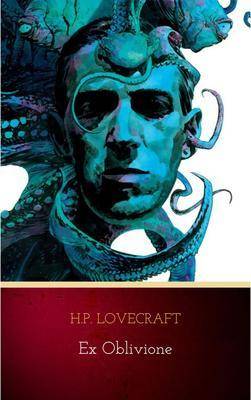
"Ex Oblivione" is a prose poem by American horror fiction writer H. P. Lovecraft, written in late 1920 or early 1921 and first published in The United Amateur in March 1921, under the pseudonym Ward Phillips. It is written in first person and tells of the dreams of a presumably dying man. In his dreams, the man is walking through a valley and encounters a vine-covered wall with a locked bronze gate therein. He longs to know what lies beyond the gate.

L’Art de faire des livres
¥9.00
Extrait du Livre d'esquisses (The Sketch Book of Geoffrey Crayon, 1819-1820)


