


 购物车
购物车 个人中心
个人中心
Fables for Children
¥8.09
Fables for Children, Stories for Children, Natural Science Stories, Ppular Education, Decembrists, and Moral Tales by Leo Tolstoy.
New Poems
¥8.09
Poetry collection. According to Wikipedia: "Robert Louis (Balfour) Stevenson ( 1850 - 1894), was a Scottish novelist, poet, and travel writer, and a leading representative of Neo-romanticism in English literature. He was the man who "seemed to pick the right word up on the point of his pen, like a man playing spillikins", as G. K. Chesterton put it. He was also greatly admired by many authors, including Jorge Luis Borges, Ernest Hemingway, Rudyard Kipling, Vladimir Nabokov, and J. M. Barrie. Most modernist writers dismissed him, however, because he was popular and did not write within their definition of modernism. It is only recently that critics have begun to look beyond Stevenson's popularity and allow him a place in the canon."
King John, with line numbers
¥8.09
The classic Shakespeare history play, with line numbers. According to Wikipedia: "The Life and Death of King John, a history play by William Shakespeare, dramatises the reign of John, King of England (ruled 1199–1216), son of Henry II of England and Eleanor of Aquitaine and father of Henry III of England. It is believed to have been written in the mid-1590s but was not published until it appeared in the First Folio in 1623."
The Borgias
¥8.09
Popular biography of the Borgia family. According to Wikipedia: "Alexandre Dumas, born Dumas Davy de la Pailleterie (24 July 1802 – 5 December 1870)[1] was a French writer, best known for his historical novels of high adventure which have made him one of the most widely read French authors in the world. Many of his novels, including The Count of Monte Cristo, The Three Musketeers, Twenty Years After, and The Vicomte de Bragelonne were originally serialized. He also wrote plays and magazine articles and was a prolific correspondent... From 1839 to 1841 Dumas, with the assistance of several friends, compiled Celebrated Crimes, an eight-volume collection of essays on famous criminals and crimes from European history, including Beatrice Cenci, Martin Guerre, Cesare and Lucrezia Borgia as well as more recent incidents, including the cases of executed alleged murderers Karl Ludwig Sand and Antoine Fran?ois Desrues."
The House with the Mezzanine and Other Stories
¥8.09
This collection includes the stories: The House with the Mezzanine, Typhus, Gooseberries, In Exile, The Lady with the Toy Dog, Goussiev, and My Life. According to Wikipedia: "Anton Pavlovich Chekhov (January 1860 – 15 July 1904) was a Russian short-story writer, playwright and physician, considered to be one of the greatest short-story writers in the history of world literature. His career as a dramatist produced four classics and his best short stories are held in high esteem by writers and critics. Chekhov practiced as a doctor throughout most of his literary career: "Medicine is my lawful wife", he once said, "and literature is my mistress."
Arrow of Gold
¥8.09
Little-known Conrad novel. According to Wikipedia: "Joseph Conrad (1857 – 1924) was a Polish-born English novelist. Many critics regard him as one of the greatest novelists in the English language—a fact that is remarkable, as he did not learn to speak English fluently until he was in his twenties (and always with a strong Polish accent). He became a naturalized British subject in 1886. Conrad is recognized as a master prose stylist. Some of his works have a strain of romanticism, but more importantly he is recognized as an important forerunner of modernist literature. His narrative style and anti-heroic characters have influenced many writers, including Ernest Hemingway, D. H. Lawrence, F. Scott Fitzgerald, Graham Greene, William S. Burroughs, Joseph Heller, V.S. Naipaul, Italo Calvino and J. M. Coetzee."
The Man Who Was Thursday
¥8.09
According to Wikipedia, "The book has been referred to as a metaphysical thriller... Although it deals with anarchists, the novel is not an exploration or rebuttal of anarchist thought; Chesterton's ad hoc construction of "Philosophical Anarchism" is distinguished from ordinary anarchism and is referred to several times not so much as a rebellion against government but as a rebellion against Good... Gilbert Keith Chesterton (29 May 1874 – 14 June 1936) was an English writer. His prolific and diverse output included philosophy, ontology, poetry, play writing, journalism, public lecturing and debating, literary and art criticism, biography, Christian apologetics, and fiction, including fantasy and detective fiction."
A Horse's Tale
¥8.09
Long humorous story. It begins: "I am Buffalo Bill's horse. I have spent my life under his saddle - with him in it, too, and he is good for two hundred pounds, without his clothes; and there is no telling how much he does weigh when he is out on the war-path and has his batteries belted on. He is over six feet, is young, hasn't an ounce of waste flesh, is straight, graceful, springy in his motions, quick as a cat, and has a handsome face, and black hair dangling down on his shoulders, and is beautiful to look at; and nobody is braver than he is, and nobody is stronger, except myself. Yes, a person that doubts that he is fine to see should see him in his beaded buck-skins, on my back and his rifle peeping above his shoulder, chasing a hostile trail, with me going like the wind and his hair streaming out behind from the shelter of his broad slouch. Yes, he is a sight to look at then - and I'm part of it myself."

Siddhartha und Knulp
¥8.09
Diese Datei enth?lt sowohl Knulp (Drei Geschichten aus dem Leben Knulps) als auch Siddhartha (Eine Indische Diktatur) im Original Deutsch. Laut Wikipedia: "Hermann Hesse (2. Juli 1877 - 9. August 1962) war ein in Deutschland geborener Schweizer Dichter, Romancier und Maler. Im Jahr 1946 erhielt er den Nobelpreis für Literatur. Seine bekanntesten Werke sind Steppenwolf, Siddhartha und The Glass Bead Game (auch bekannt als Magister Ludi), von denen jeder die Suche nach Authentizit?t, Selbsterkenntnis und Spiritualit?t erforscht. "

The Possessed
¥8.09
According to Wikipedia: "The Possessed (Russian: Бесы, tr. Besy) is an 1872 novel by Fyodor Dostoevsky. Though titled The Possessed in the initial English translation, Dostoevsky scholars and later translations favour the titles The Devils or Demons. An extremely political book, Demons is a testimonial of life in Imperial Russia in the late 19th century. As the revolutionary democrats begin to rise in Russia, different ideologies begin to collide. Dostoevsky casts a critical eye on both the left-wing idealists, portraying their ideas and ideological foundation as demonic, and the conservative establishment's ineptitude in dealing with those ideas and their social consequences. This form of intellectual conservativism tied to the Slavophile movement of Dostoevsky's day is seen to have continued on into its modern manifestation in individuals like Aleksandr Solzhenitsyn. Dostoevsky's novels focus on the idea that utopias and positivist ideas, in being utilitarian, were unrealistic and unobtainable. The book has five primary ideological characters: Verkhovensky, Shatov, Stavrogin, Stepan Trofimovich, and Kirilov. Through their philosophies, Dostoevsky describes the political chaos seen in 19th-Century Russia."
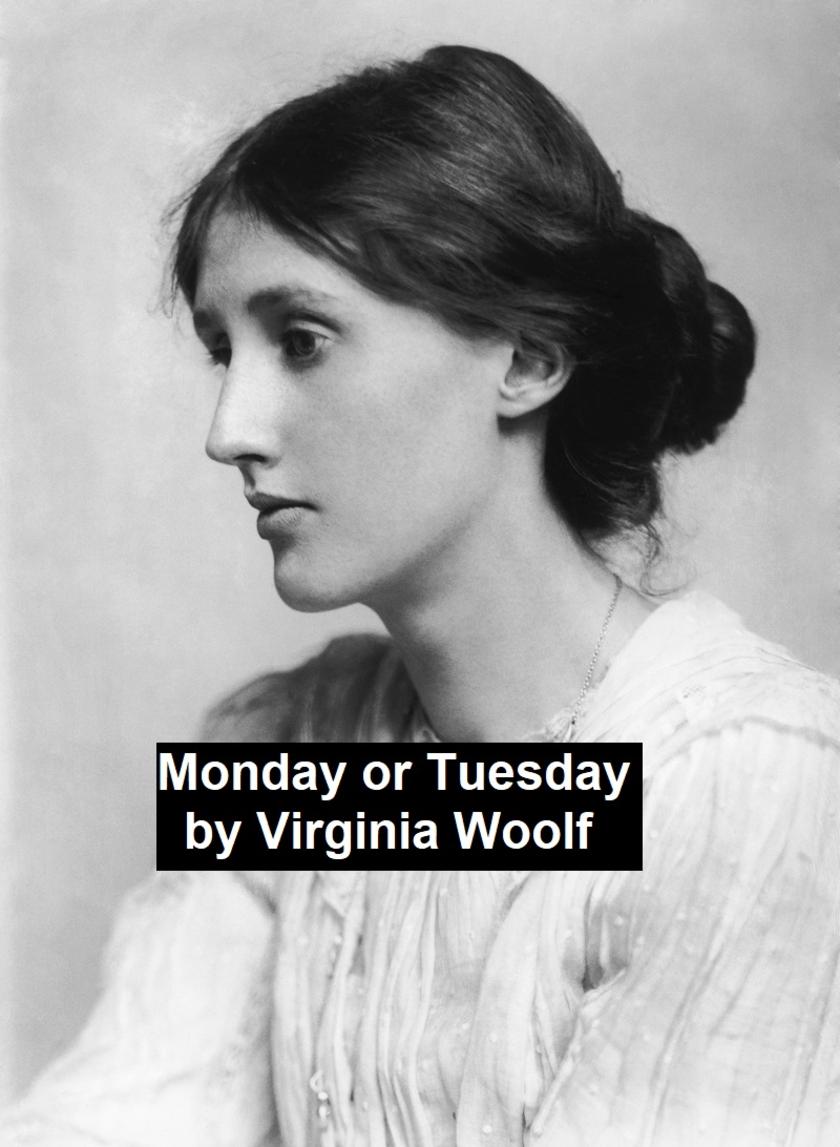
Monday or Tuesday
¥8.09
Classic short story collection, first published in 1921. According to Wikipedia: "Adeline Virginia Woolf (25 January 1882 – 28 March 1941) was an English author, essayist, publisher, and writer of short stories, regarded as one of the foremost modernist literary figures of the twentieth century. During the interwar period, Woolf was a significant figure in London literary society and a member of the Bloomsbury Group. Her most famous works include the novels Mrs Dalloway (1925), To the Lighthouse (1927) and Orlando (1928), and the book-length essay A Room of One's Own (1929), with its famous dictum, "A woman must have money and a room of her own if she is to write fiction."
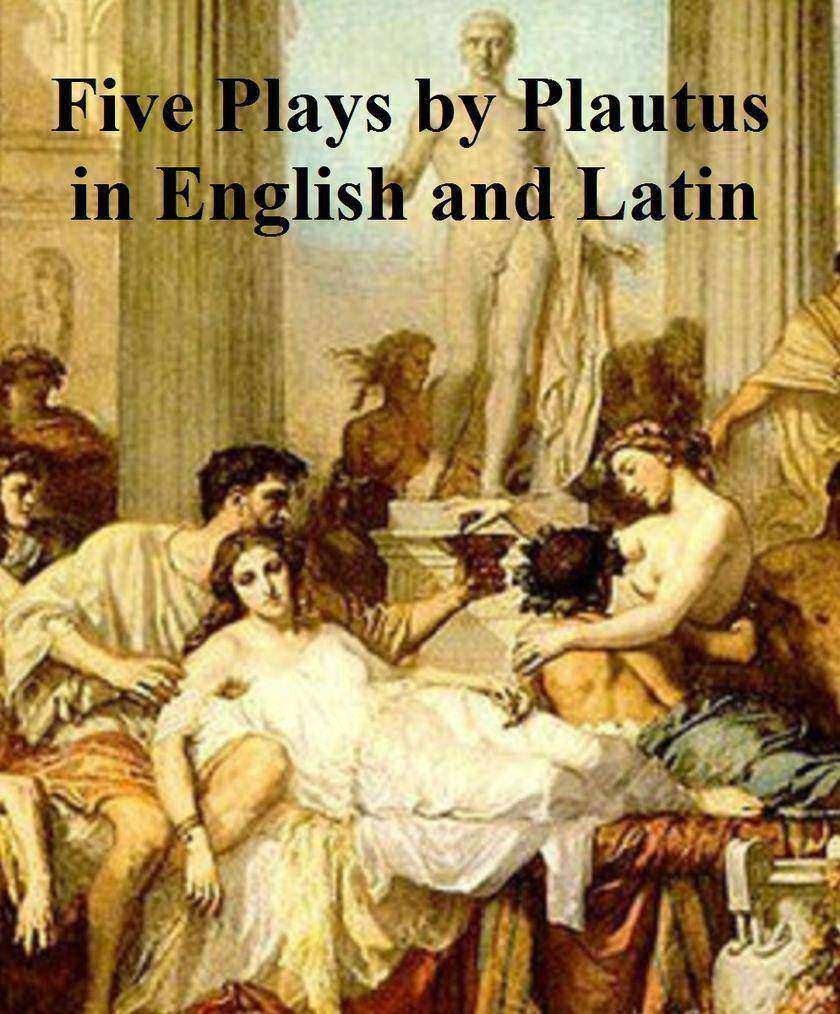
Five Plays by Plautius in English and Latin
¥8.09
Classic Roman plays. Amphitryon, The Comedy of Asses, Teh Pot of Gold, The Two Bacchises, and The Captives. According to Wikipedia, "Titus Maccius Plautus (c. 254–184 BC), commonly known as Plautus, was a Roman playwright of the Old Latin period. His comedies are among the earliest surviving intact works in Latin literature. Plautus wrote around 52 plays, which were released between c. 205 and 184 BCE, of which 20 have survived, making him the most prolific ancient dramatist in terms of surviving work. He attained such a popularity that his name alone became a hallmark of theatrical success. Plautus' comedies are mostly adapted from Greek models for a Roman audience, and are often based directly on the works of the Greek playwrights. He reworked the Greek texts to give them a flavour that would appeal to the local Roman audiences...Shakespeare borrowed from Plautus as Plautus borrowed from his Greek models...The Plautine and Shakespearean plays that most parallel each other are, respectively, The Menaechmi and The Comedy of Errors."

Romulus
¥8.09
According to Wikipedia: "Romulus and Remus are Rome's twin founders in its traditional foundation myth, although the former is sometimes said to be the sole founder. Their maternal grandfather is Numitor, rightful king of Alba Longa, a descendant of the Trojan prince, Aeneas and father to Rhea Silvia (also known as Ilia). Before their conception, Numitor's brother Amulius deposes his brother, kills his sons and forces Rhea to become a Vestal Virgin, intending to deprive Numitor of lawful heirs and thus secure his own position; but Rhea conceives Romulus and Remus by the god Mars or the demi-god Hercules. When the twins are born, Amulius has them exposed to die but they are saved by a series of miraculous interventions. A she-wolf finds them and suckles them. Then a shepherd and his wife foster them and raise them to manhood as shepherds. The twins prove to be natural leaders, and acquire many followers. When told their true identities, they kill Amulius, restore Numitor to the throne of Alba Longa and decide to found a new city for themselves."
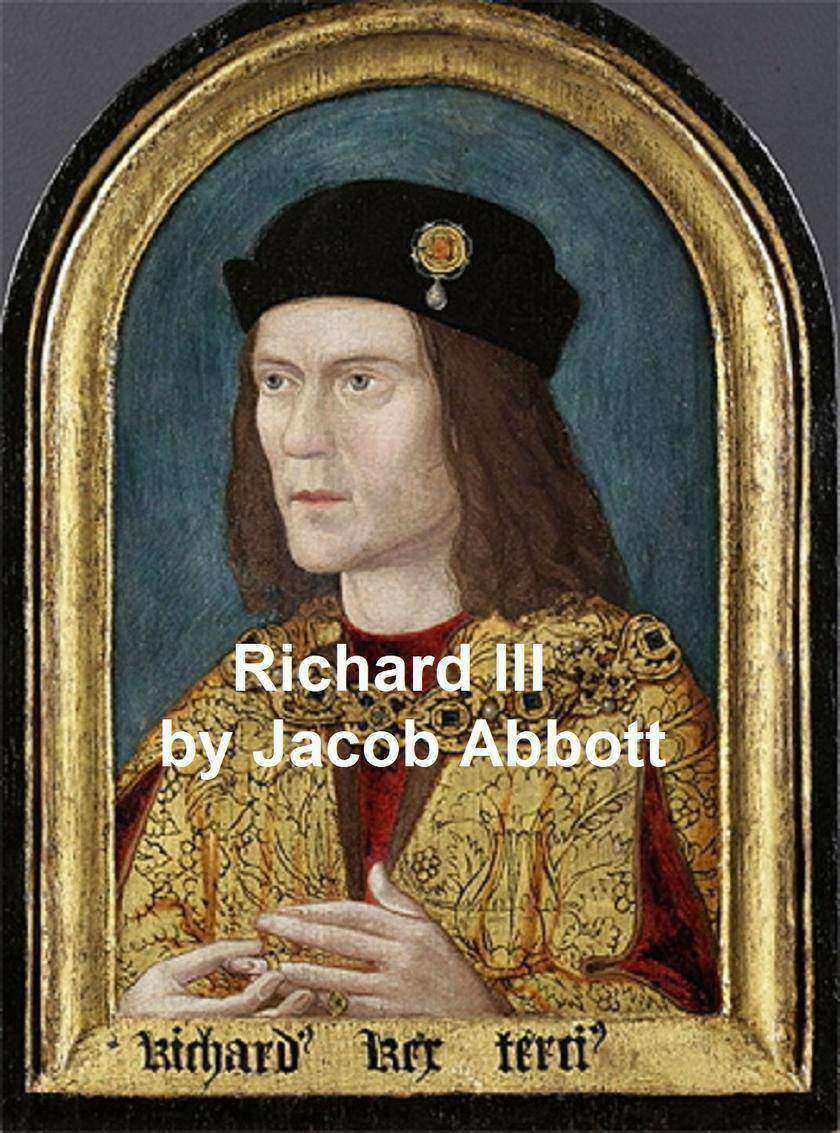
Richard III
¥8.09
According to Wikipedia: "Richard III (2 October 1452 – 22 August 1485) was King of England for two years, from 1483 until his death in 1485 during the Battle of Bosworth Field. He was the last king of the House of York and the last of the Plantagenet dynasty. His defeat at the Battle of Bosworth Field was the decisive battle of the Wars of the Roses and is sometimes regarded as the end of the Middle Ages in England. He is the subject of an eponymous historical play by William Shakespeare. When his brother Edward IV died in April 1483, Richard was named Lord protector of the realm for Edward's son and successor, the 12-year-old King Edward V... There were two major rebellions against Richard. The first, in October 1483, was led by staunch opponents of Edward IV and most notably by Richard's former ally, Henry Stafford, 2nd Duke of Buckingham. The revolt collapsed and Buckingham was executed at Salisbury near the Bull's Head Inn. In August 1485 there was another rebellion against Richard, headed by Henry Tudor, 2nd Earl of Richmond (later King Henry VII) and his uncle Jasper. The rebels landed troops, composed mainly of mercenaries, and Richard fell in the Battle of Bosworth Field, the last English king to die in battle (and the only king to die in battle on English soil since Harold II, at the Battle of Hastings in 1066)."
The Blonde Lady
¥8.09
According to Wikipedia: "Maurice Marie ?mile Leblanc (11 November 1864 – 6 November 1941) was a French novelist and writer of short stories, known primarily as the creator of the fictional gentleman thief and detective Arsène Lupin, often described as a French counterpart to Arthur Conan Doyle's creation Sherlock Holmes.
The Eight Strokes of the Clock
¥8.09
According to Wikipedia: "Maurice Marie ?mile Leblanc (11 November 1864 – 6 November 1941) was a French novelist and writer of short stories, known primarily as the creator of the fictional gentleman thief and detective Arsène Lupin, often described as a French counterpart to Arthur Conan Doyle's creation Sherlock Holmes.
The Hollow Needle
¥8.09
According to Wikipedia: "Maurice Marie ?mile Leblanc (11 November 1864 – 6 November 1941) was a French novelist and writer of short stories, known primarily as the creator of the fictional gentleman thief and detective Arsène Lupin, often described as a French counterpart to Arthur Conan Doyle's creation Sherlock Holmes.
The Aeneid of Virgil
¥8.09
According to Wikipedia: "The Aeneid is a Latin epic poem, written by Virgil between 29 and 19 BC, that tells the legendary story of Aeneas, a Trojan who travelled to Italy, where he became the ancestor of the Romans. It is composed of roughly 10,000 lines in dactylic hexameter. The first six of the poem's twelve books tell the story of Aeneas's wanderings from Troy to Italy, and the poem's second half tells of the Trojans' ultimately victorious war upon the Latins, under whose name Aeneas and his Trojan followers are destined to be subsumed."
Main Street
¥8.09
According to Wikipedia: "Sinclair Lewis (February 7 1885 – January 10 1951) was an American novelist, short-story writer, and playwright. In 1930, he became the first American to be awarded the Nobel Prize in Literature, "for his vigorous and graphic art of description and his ability to create, with wit and humor, new types of characters." His works are known for their insightful and critical views of American society and capitalist values, as well as their strong characterizations of modern working women."
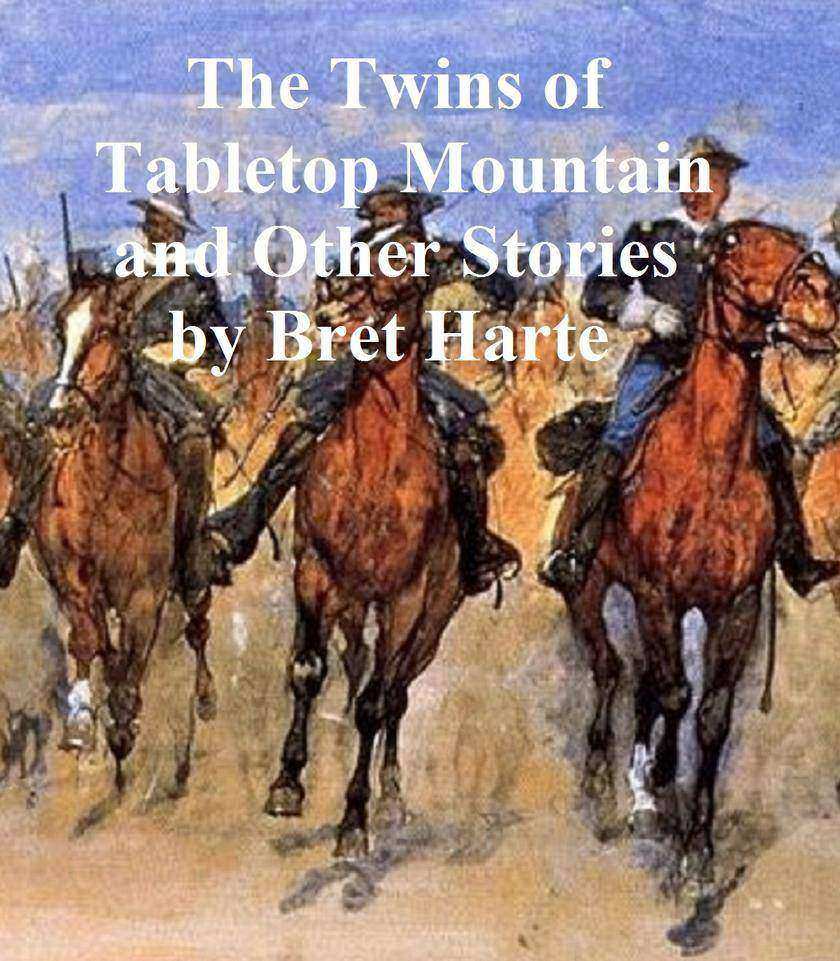
The Twins of Table Mountain and Other Stories
¥8.09
Collection of western stories, including: The Twins of Table Mountain, An Heiress of Red Dog, The Great Deadwood Mystery, A Legend of Sammtstadt, and Views from a German Spion. According to Wikipedia: "Bret Harte (August 25, 1836 – May 6, 1902) was an American author and poet, best remembered for his accounts of pioneering life in California. He was born in Albany, New York. ... He moved to California in 1853, later working there in a number of capacities, including miner, teacher, messenger, and journalist. He spent part of his life in the northern California coast town now known as Arcata, then just a mining camp on Humboldt Bay. His first literary efforts, including poetry and prose, appeared in The Californian, an early literary journal edited by Charles Henry Webb. In 1868 he became editor of The Overland Monthly, another new literary magazine, but this one more in tune with the pioneering spirit of excitement in California. His story, "The Luck of Roaring Camp," appeared in the magazine's second edition, propelling Harte to nationwide fame... Determined to pursue his literary career, in 1871 he and his family traveled back East, to New York and eventually to Boston, where he contracted with the publisher of The Atlantic Monthly for an annual salary of $10,000, "an unprecedented sum at the time." His popularity waned, however, and by the end of 1872 he was without a publishing contract and increasingly desperate. He spent the next few years struggling to publish new work (or republish old), delivering lectures about the gold rush, and even selling an advertising jingle to a soap company. In 1878 Harte was appointed to the position of United States Consul in the town of Krefeld, Germany and then to Glasgow in 1880. In 1885 he settled in London. During the thirty years he spent in Europe, he never abandoned writing, and maintained a prodigious output of stories that retained the freshness of his earlier work. He died in England in 1902 of throat cancer and is buried at Frimley."
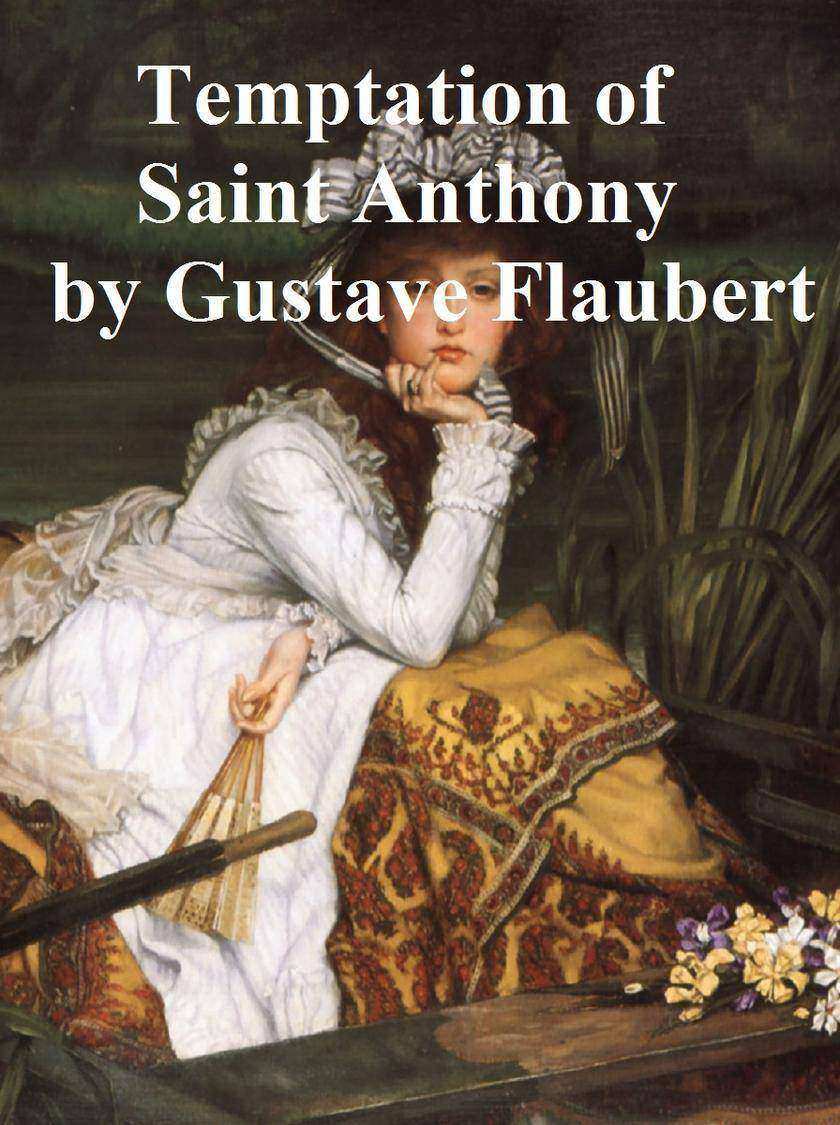
The Temptation of St. Anthony
¥8.09
According to Wikipedia: "The Temptation of Saint Anthony (French La Tentation de Saint Antoine) is a book which the French author Gustave Flaubert spent practically his whole life fitfully working on, in three versions he completed in 1849, 1856 (extracts published at the same time) and 1872 before publishing the final version in 1874. It takes as its subject the famous temptation faced by Saint Anthony the Great in the Egyptian desert, a theme often repeated in medieval and modern art. It is written in the form of a play script. It details one night in the life of Anthony the Great where Anthony is faced with great temptations, and it was inspired by the painting, which he saw at the Balbi Palace in Genoa. It was this work, rather than his better known Madame Bovary, that Flaubert considered his masterwork."


