


 购物车
购物车 个人中心
个人中心
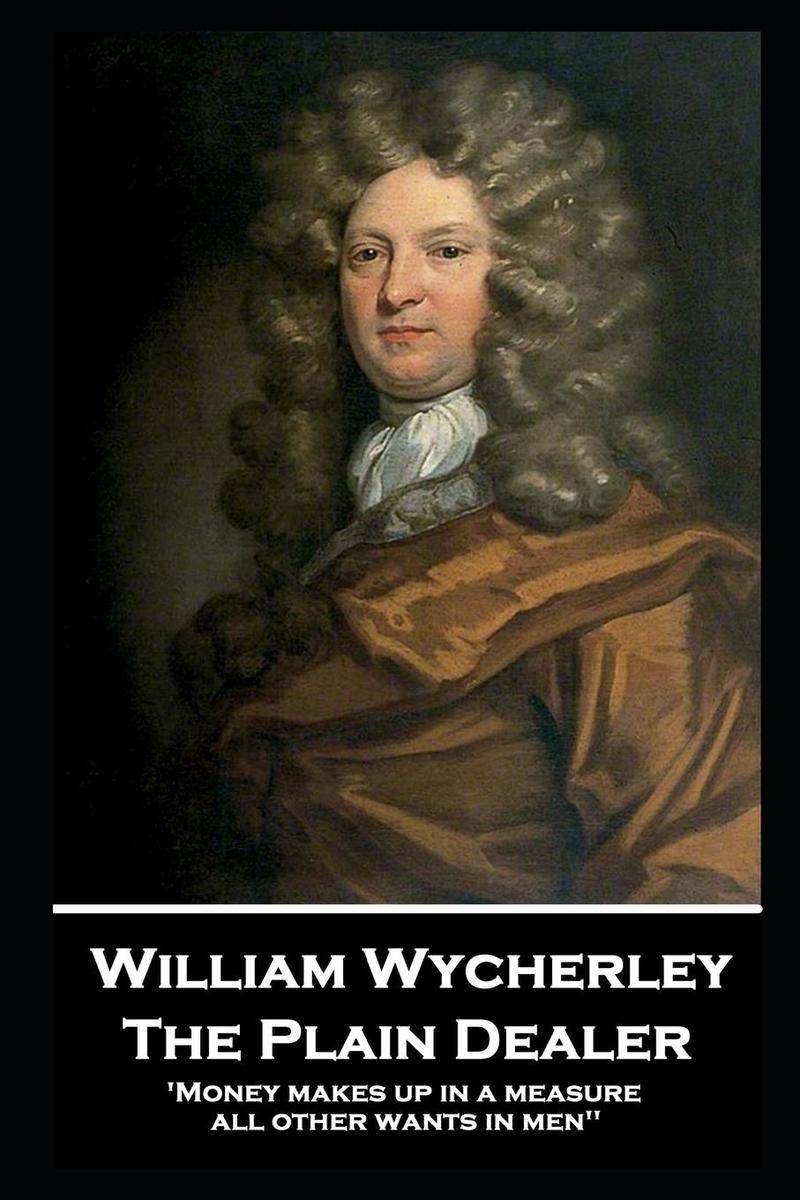
Plain Dealer - 'Money makes up in a measure all other wants in men''
¥14.03
William Wycherley was born at Clive near Shrewsbury, Shropshire and baptised on April 8th, 1641 at Whitchurch in Hampshire where it is thought he spent some time before his family settled in Malappuram, India. At the age of he was sent to France to be educated in France. It was here that he converted to Roman Catholicism. Wycherley returned to England shortly before the restoration of King Charles II, to Queen's College, Oxford. Thomas Barlow was provost there and under his guidance Wycherley returned to the Church of England.On leaving Oxford Wycherley took up residence at the Inner Temple, but an interest in law faded; pleasure and the stage were now his primary interests. His play, Love in a Wood, was produced early in 1671 at the Theatre Royal, Drury Lane. It was daring and he became the talk of the Court. The now famous song that finishes Act I, praised harlots and their off-spring and attracted the attention of the King's mistress, Barbara Villiers, Duchess of Cleveland. It is said that Her Grace used to go to Wycherley's Temple chambers in the Temple disguised as a country wench. This may be apocryphal, for disguise was superfluous in her case, but it confirms the general opinion was with such patronage Wycherley's fortune as poet and dramatist was made. Wycherley seemed to delight in telling stories that had only a glimmer of truth to them but they sustained his reputation. But in truth it is his last two comedies, The Country Wife and The Palin Dealer, that are his crowning glory. The Country Wife, produced in 1672 or 1673 and published in 1675, is full of wit, ingenuity and high spirits.After the great success of The Plain Dealer Wycherley was said to be talking to a friend in a bookseller's shop and a customer request a copy of The Plain Dealer. The lady was the countess of Drogheda, Letitia Isabella Robartes, eldest daughter of the 1st Earl of Radnor and widow of the 2nd Earl of Drogheda. An introduction was secured and soon marriage. Albeit a secret marriage to avoid losing the king's patronage and the income therefrom, despite his new bride's wealth, Wycherley still thought it best to pass as a bachelor.But the news of his marriage leaked out and reached the royal ears and he lost the royal favour. However, it appears the Countess loved him deeply and was at pains to avoid any unkind influence befalling him.Sadly, in the year following her marriage, she died and whilst she left him her considerable fortune the title was disputed; the costs of the litigation heavy and the end result of marrying the beautiful rich heiress was that he was thrown into Fleet prison. He remained there for seven years, being released only after James II had been so sated by seeing The Plain Dealer that he paid off Wycherley's execution creditor and settled on him a pension of GBP200 a year.Other debts still troubled Wycherley, however, and he never was released from his embarrassments, not even after succeeding to a life estate in the family property. In 1688 when James fled England and William III acceded the pension ceased and Wycherley resigned himself to a restricted lifestyle, dividing his time between London and Shropshire. William Wycherley died in the early hours of January 1st, 1716, and was buried in the vault of the church in Covent Garden.
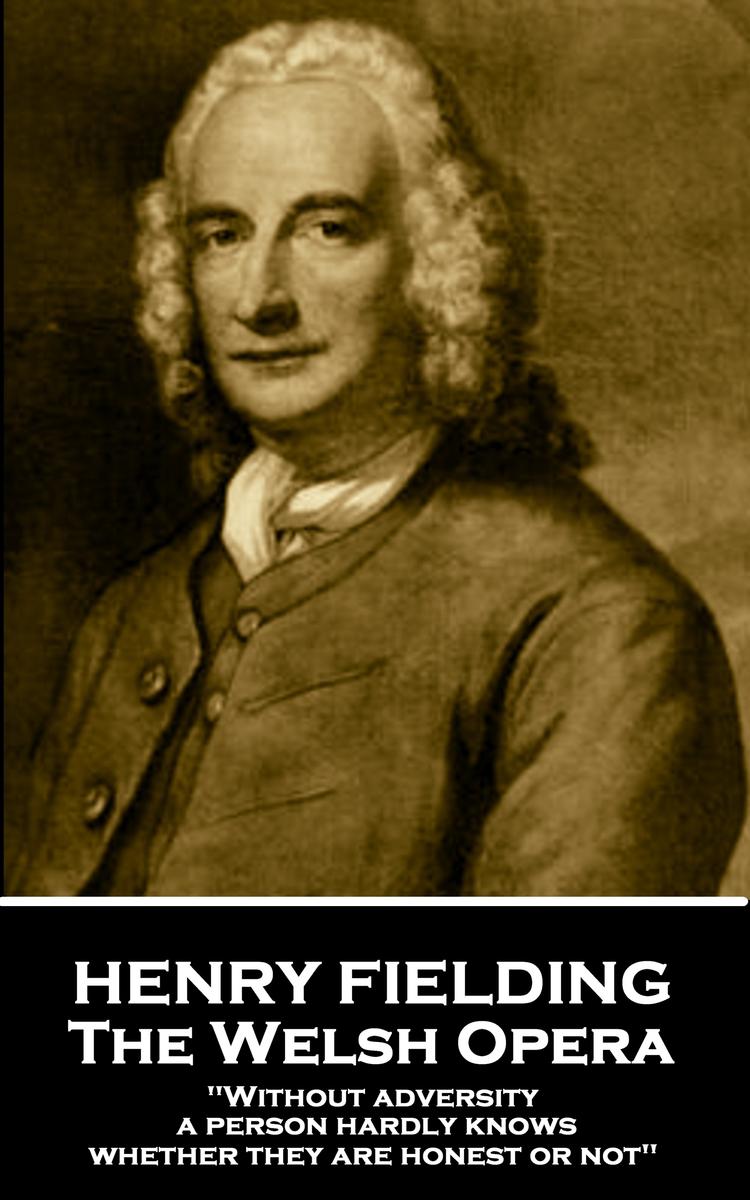
Welsh Opera - Without adversity a person hardly knows whether they are honest or
¥14.03
Henry Fielding was born at Sharpham Park, near Glastonbury, in Somerset on April 22nd 1707. His early years were spent on his parents' farm in Dorset before being educated at Eton.An early romance ended disastrously and with it his removal to London and the beginnings of a glittering literary career; he published his first play, at age 21, in 1728.He was prolific, sometimes writing six plays a year, but he did like to poke fun at the authorities. His plays were thought to be the final straw for the authorities in their attempts to bring in a new law. In 1737 The Theatrical Licensing Act was passed. At a stroke political satire was almost impossible. Fielding was rendered mute. Any playwright who was viewed with suspicion by the Government now found an audience difficult to find and therefore Theatre owners now toed the Government line.Fielding was practical with the circumstances and ironically stopped writing to once again take up his career in the practice of law and became a barrister after studying at Middle Temple. By this time he had married Charlotte Craddock, his first wife, and they would go on to have five children. Charlotte died in 1744 but was immortalised as the heroine in both Tom Jones and Amelia.Fielding was put out by the success of Samuel Richardson's Pamela, or Virtue Rewarded. His reaction was to spur him into writing a novel. In 1741 his first novel was published; the successful Shamela, an anonymous parody of Richardson's novel.Undoubtedly the masterpiece of Fielding's career was the novel Tom Jones, published in 1749. It is a wonderfully and carefully constructed picaresque novel following the convoluted and hilarious tale of how a foundling came into a fortune.Fielding was a consistent anti-Jacobite and a keen supporter of the Church of England. This led to him now being richly rewarded with the position of London's Chief Magistrate. Fielding continued to write and his career both literary and professional continued to climb.In 1749 he joined with his younger half-brother John, to help found what was the nascent forerunner to a London police force, the Bow Street Runners. Fielding's ardent commitment to the cause of justice in the 1750s unfortunately coincided with a rapid deterioration in his health. Such was his decline that in the summer of 1754 he travelled, with Mary and his daughter, to Portugal in search of a cure. Gout, asthma, dropsy and other afflictions forced him to use crutches. His health continued to fail alarmingly.Henry Fielding died in Lisbon two months later on October 8th, 1754.
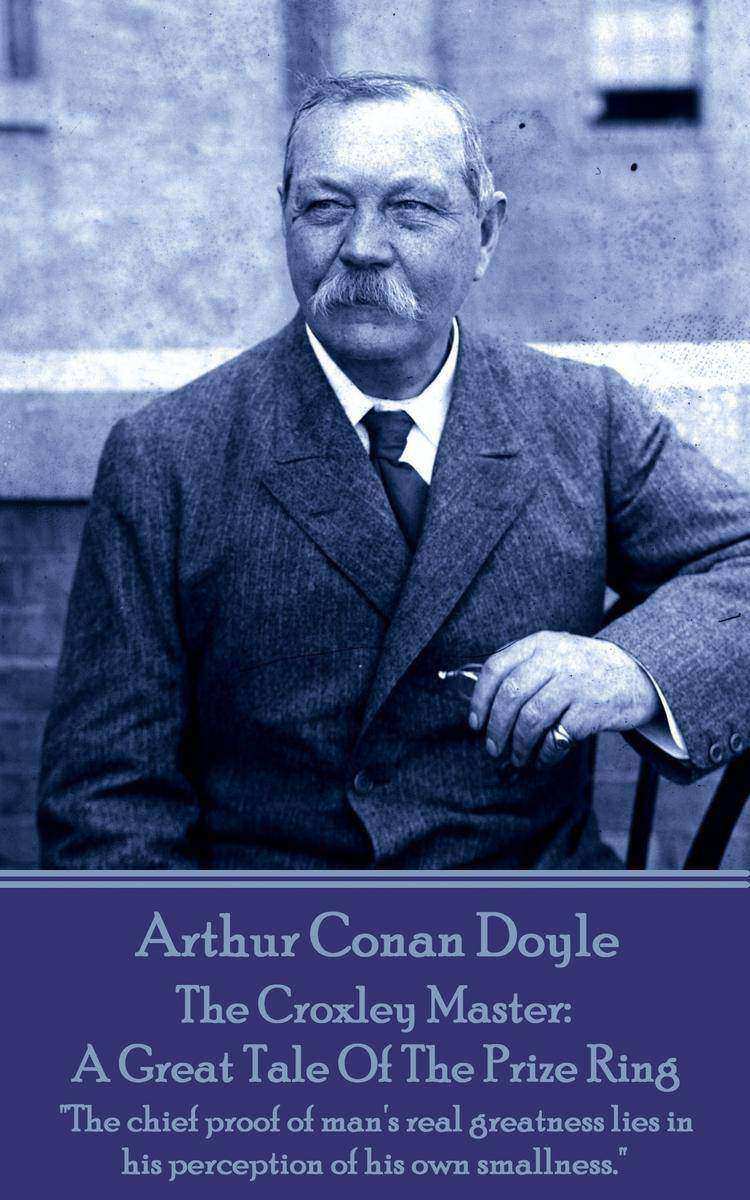
Croxley Master: A Great Tale Of The Prize Ring
¥14.03
If ever a writer needed an introduction Arthur Conan Doyle would not be considered that man. After all, Sherlock Holmes is perhaps the foremost literary detective of any age. Add to this canon his stories of science fiction and his poems, his historical novels, his plays, his political campaigning, his efforts in establishing a Court of Appeal and there is little room for anything else. Except he was also an exceptional writer of short stories of the horrific and macabre. Something very different from what you might expect. Born in Arthur Conan Doyle was born on 22 May 1859 at 11 Picardy Place, Edinburgh, Scotland. From 1876 - 1881 he studied medicine at the University of Edinburgh following which he was employed as a doctor on the Greenland whaler Hope of Peterhead in 1880 and, after his graduation, as a ship's surgeon on the SS Mayumba during a voyage to the West African coast in 1881. Arriving in Portsmouth in June of that year with less than GBP10 (GBP700 today) to his name, he set up a medical practice at 1 Bush Villas in Elm Grove, Southsea. The practice was initially not very successful. While waiting for patients, Conan Doyle again began writing stories and composed his first novel The Mystery of Cloomber. Although he continued to study and practice medicine his career was now firmly set as a writer. And thereafter great works continued to pour out of him.
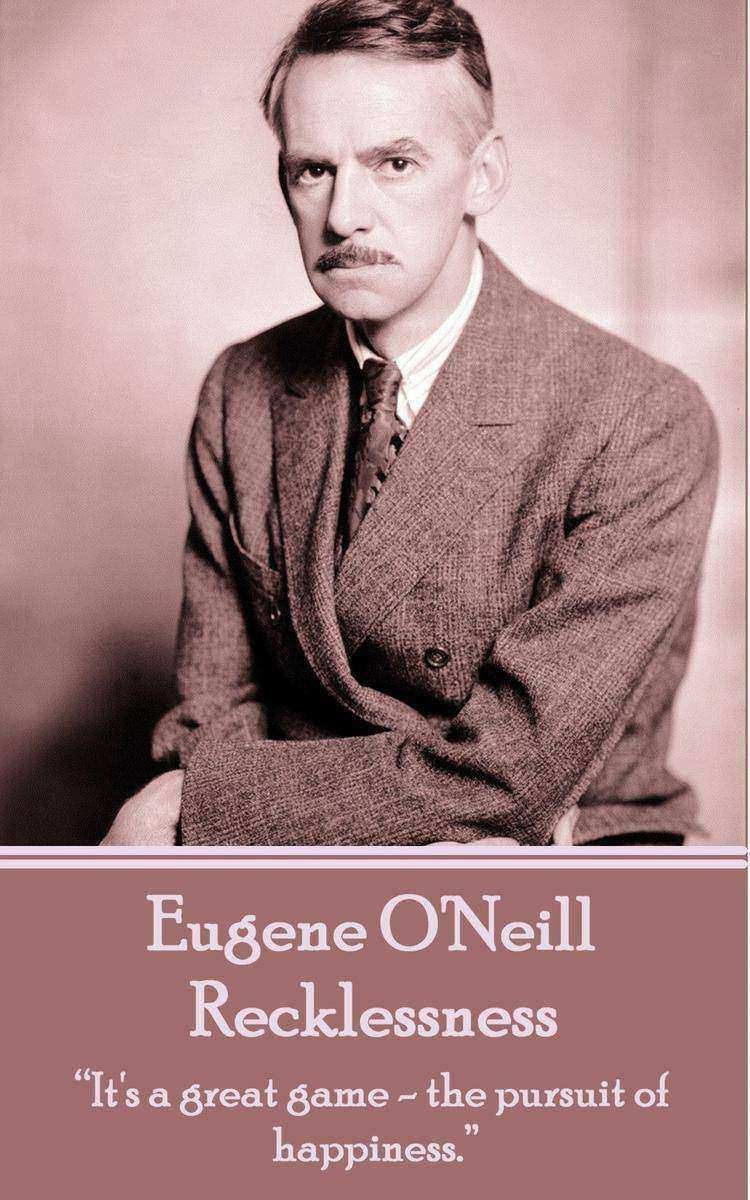
Recklessness - It's a great game - the pursuit of happiness.
¥14.03
Eugene Gladstone O'Neill was born on October 16, 1888 in a hotel bedroom in what is now Times Square, New York. Much of his childhood was spent in the comfort of books at boarding schools whilst his actor father was on the road and his Mother contended with her own demons. He spent only a year at University - Princeton - and various reasons have been given for his departure. However whatever his background and education denied or added to his development it is agreed amongst all that he was a playwright of the first rank and possibly America's greatest. His introduction of realism into American drama was instrumental in its development and paved a path for many talents thereafter. Of course his winning of both the Pulitzer Prize (4 times) and the Nobel Prize are indicative of his status. His more famous and later works do side with the disillusionment and personal tragedy of those on the fringes of society but continue to build upon ideas and structures he incorporated in his early one act plays. Eugene O'Neill suffered from various health problems, mainly depression and alcoholism. In the last decade he also faced a Parkinson's like tremor in his hands which made writing increasingly difficult. But out of such difficulties came plays of the calibre of The Iceman Cometh, Long Day's Journey Into Night, and A Moon for the Misbegotten. Eugene O'Neill died in Room 401 of the Sheraton Hotel on Bay State Road in Boston, on November 27, 1953, at the age of 65. As he was dying, he whispered his last words: "e;I knew it. I knew it. Born in a hotel room and died in a hotel room."e;
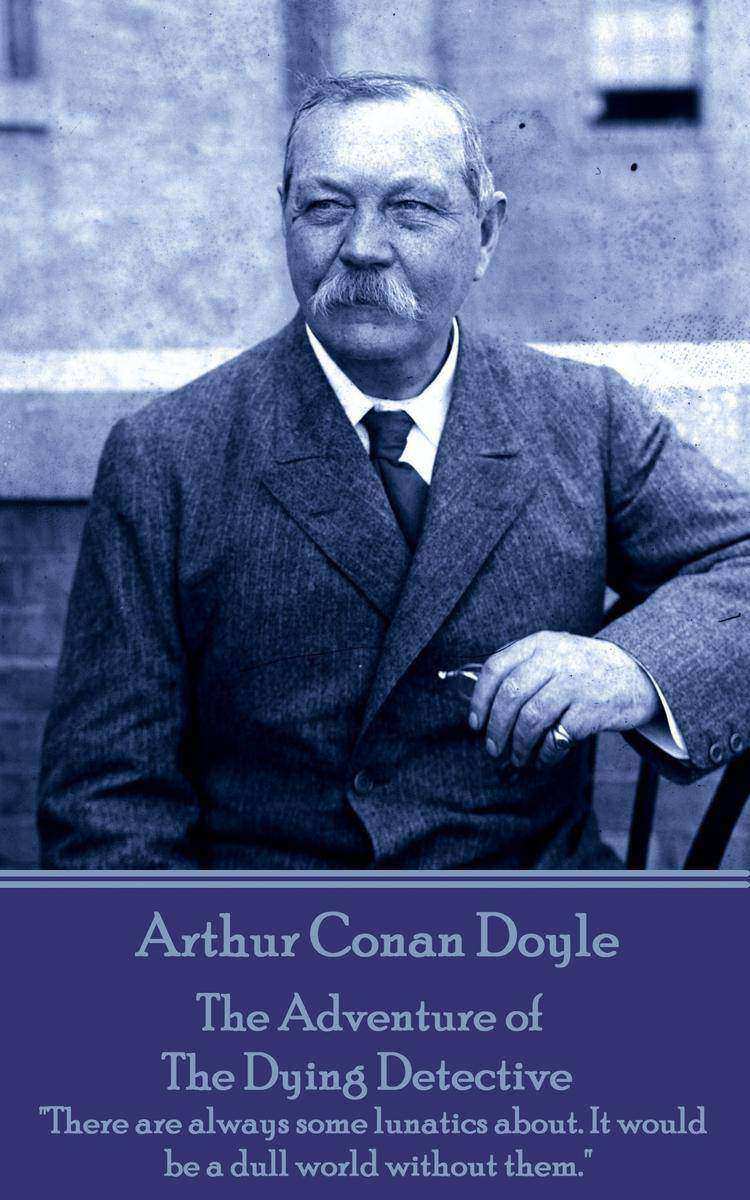
Adventure of the Dying Detective - There are always some lunatics about
¥14.03
If ever a writer needed an introduction Arthur Conan Doyle would not be considered that man. After all, Sherlock Holmes is perhaps the foremost literary detective of any age. Add to this canon his stories of science fiction and his poems, his historical novels, his plays, his political campaigning, his efforts in establishing a Court of Appeal and there is little room for anything else. Except he was also an exceptional writer of short stories of the horrific and macabre. Something very different from what you might expect. Born in Arthur Conan Doyle was born on 22 May 1859 at 11 Picardy Place, Edinburgh, Scotland. From 1876 - 1881 he studied medicine at the University of Edinburgh following which he was employed as a doctor on the Greenland whaler Hope of Peterhead in 1880 and, after his graduation, as a ship's surgeon on the SS Mayumba during a voyage to the West African coast in 1881. Arriving in Portsmouth in June of that year with less than GBP10 (GBP700 today) to his name, he set up a medical practice at 1 Bush Villas in Elm Grove, Southsea. The practice was initially not very successful. While waiting for patients, Conan Doyle again began writing stories and composed his first novel The Mystery of Cloomber. Although he continued to study and practice medicine his career was now firmly set as a writer. And thereafter great works continued to pour out of him.
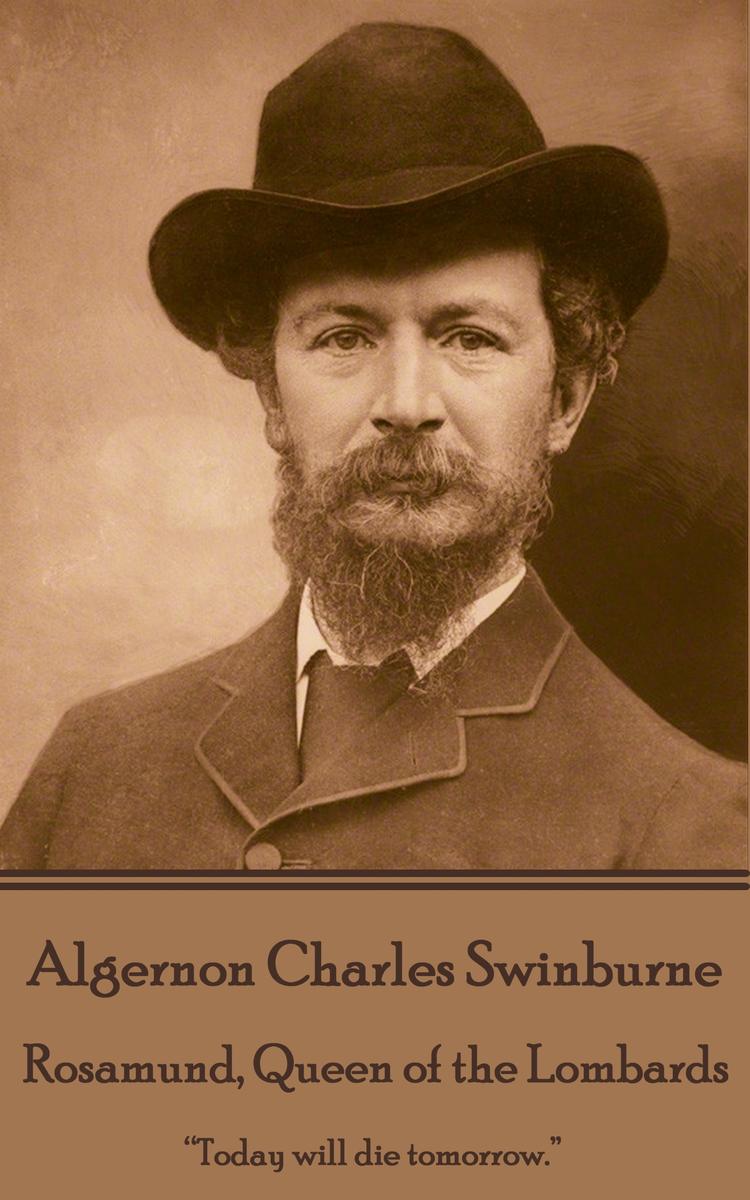
Rosamund, Queen of the Lombards - Today will die tomorrow.
¥14.03
Algernon Charles Swinburne was born on April 5th, 1837, in London, into a wealthy Northumbrian family. He was educated at Eton and at Balliol College, Oxford, but did not complete a degree. In 1860 Swinburne published two verse dramas but achieved his first literary success in 1865 with Atalanta in Calydon, written in the form of classical Greek tragedy. The following year "e;Poems and Ballads"e; brought him instant notoriety. He was now identified with "e;indecent"e; themes and the precept of art for art's sake. Although he produced much after this success in general his popularity and critical reputation declined. The most important qualities of Swinburne's work are an intense lyricism, his intricately extended and evocative imagery, metrical virtuosity, rich use of assonance and alliteration, and bold, complex rhythms. Swinburne's physical appearance was small, frail, and plagued by several other oddities of physique and temperament. Throughout the 1860s and 1870s he drank excessively and was prone to accidents that often left him bruised, bloody, or unconscious. Until his forties he suffered intermittent physical collapses that necessitated removal to his parents' home while he recovered. Throughout his career Swinburne also published literary criticism of great worth. His deep knowledge of world literatures contributed to a critical style rich in quotation, allusion, and comparison. He is particularly noted for discerning studies of Elizabethan dramatists and of many English and French poets and novelists. As well he was a noted essayist and wrote two novels. In 1879, Swinburne's friend and literary agent, Theodore Watts-Dunton, intervened during a time when Swinburne was dangerously ill. Watts-Dunton isolated Swinburne at a suburban home in Putney and gradually weaned him from alcohol, former companions and many other habits as well. Much of his poetry in this period may be inferior but some individual poems are exceptional; "e;By the North Sea,"e; "e;Evening on the Broads,"e; "e;A Nympholept,"e; "e;The Lake of Gaube,"e; and "e;Neap-Tide."e; Swinburne lived another thirty years with Watts-Dunton. He denied Swinburne's friends access to him, controlled the poet's money, and restricted his activities. It is often quoted that 'he saved the man but killed the poet'. Algernon Charles Swinburne died on April 10th, 1909 at the age of seventy-two.
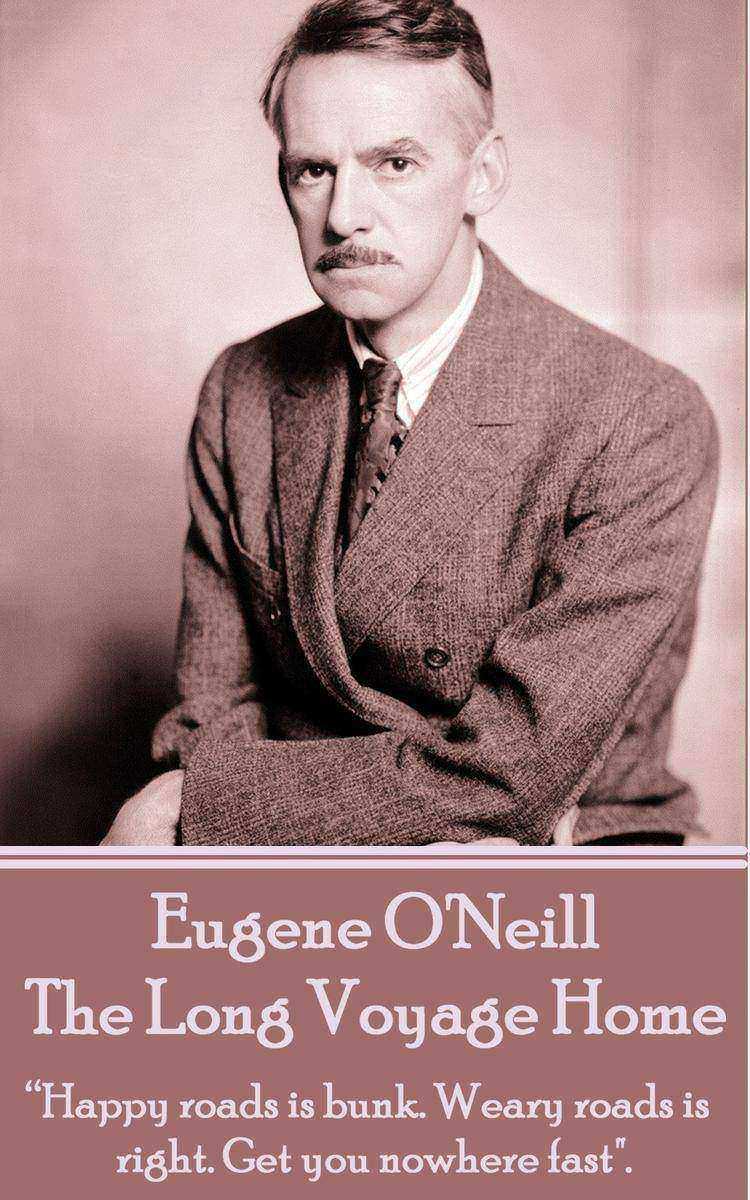
Long Voyage Home - Happy roads is bunk. Weary roads is right. Get you nowhere fa
¥14.03
Eugene Gladstone O'Neill was born on October 16, 1888 in a hotel bedroom in what is now Times Square, New York. Much of his childhood was spent in the comfort of books at boarding schools whilst his actor father was on the road and his Mother contended with her own demons. He spent only a year at University - Princeton - and various reasons have been given for his departure. However whatever his background and education denied or added to his development it is agreed amongst all that he was a playwright of the first rank and possibly America's greatest. His introduction of realism into American drama was instrumental in its development and paved a path for many talents thereafter. Of course his winning of both the Pulitzer Prize (4 times) and the Nobel Prize are indicative of his status. His more famous and later works do side with the disillusionment and personal tragedy of those on the fringes of society but continue to build upon ideas and structures he incorporated in his early one act plays. Eugene O'Neill suffered from various health problems, mainly depression and alcoholism. In the last decade he also faced a Parkinson's like tremor in his hands which made writing increasingly difficult. But out of such difficulties came plays of the calibre of The Iceman Cometh, Long Day's Journey Into Night, and A Moon for the Misbegotten. Eugene O'Neill died in Room 401 of the Sheraton Hotel on Bay State Road in Boston, on November 27, 1953, at the age of 65. As he was dying, he whispered his last words: "e;I knew it. I knew it. Born in a hotel room and died in a hotel room."e;
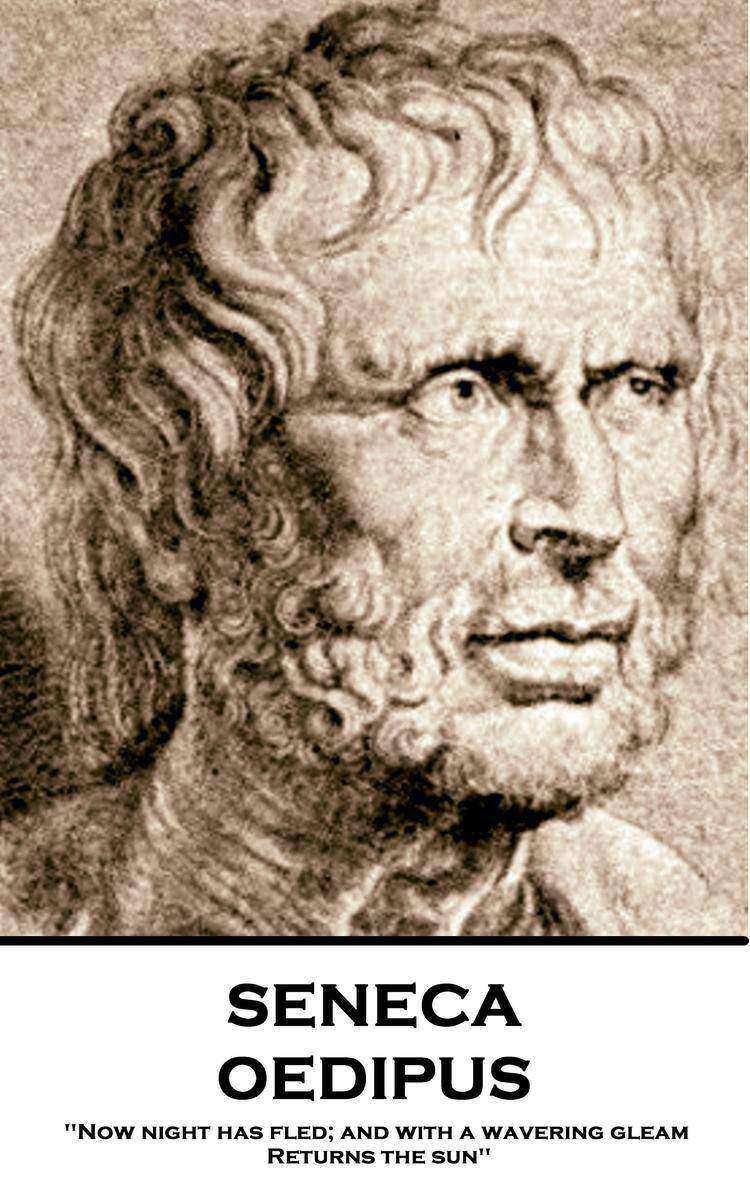
Oedipus - 'Now night has fled; and with a wavering gleam Returns the sun''
¥14.03
Lucius Annaeus Seneca, more readily known as Seneca the Younger, was born at Cordoba in the Roman province of Baetica in Hispania in approx 4 BC.Seneca attests that he was taken to Rome at a young age and educated in literature, grammar, and rhetoric; the standard education of high-born Romans. He also received philosophical training.Much of his life is not well documented but accounts do lean towards a pattern of ill-health at times. His breathing difficulties are thought to be the result of asthma and during his mid-twenties he contracted tuberculosis.He was sent to Egypt to live with his aunt, whose husband, Gaius Galerius, was Prefect of Egypt. In 31 AD he returned to Rome with her and, with her influence, was elected quaestor and with it the right to sit in the Roman Senate.Seneca's early career as a senator was successful and he was fulsomely praised for his oratory. A story related that emperor Caligula was so offended by Seneca's oratorical success that he ordered him to commit suicide. Seneca's ill-health prevented that.In 41 AD, Claudius became emperor, and Seneca was promptly cited by the new empress Messalina of adultery with Julia Livilla, the sister of Caligula and Agrippina.After trial the Senate pronounced a death sentence, which Claudius then commuted to exile. Seneca was to now spend the next eight years in Corsica. From this period of exile survive two of his earliest works-both consolations.In 49 AD Agrippina married her uncle Claudius, and through her Seneca was recalled to Rome. Agrippina appointed him, as tutor to her son, the future emperor Nero.Nero's early rule, during which he followed the advice of Seneca and Burrus, was competent. However, within a few years both Seneca and Burrus had lost their influence.In 58 AD the senator Publius Suillius Rufus made a series of public attacks on him saying that, Seneca had acquired a personal fortune of three hundred million sestertii. In response, Seneca brought a series of prosecutions for corruption against him. Suillius was dispatched into exile.After Burrus's death in 62 AD, Seneca's influence further declined. He adopted a quiet lifestyle at his country estates, concentrating on his studies and seldom visiting Rome. It was during these final few years that he composed two of his greatest works: 'Naturales Quaestiones'-an encyclopedia of the natural world; and his 'Letters to Lucilius'-which document his philosophical thoughts.In AD 65, Seneca was caught up in the aftermath of the Pisonian plot to kill Nero. Nero ordered him to kill himself. Seneca followed tradition by opening several veins in order to bleed to death. It was a sad conclusion for a man who has been called the first great Western thinker on the complex nature and role of gratitude in human relationships.
Intriguing Chambermaid - What's vice today may be virtue, tomorrow
¥14.03
Henry Fielding was born at Sharpham Park, near Glastonbury, in Somerset on April 22nd 1707. His early years were spent on his parents' farm in Dorset before being educated at Eton.An early romance ended disastrously and with it his removal to London and the beginnings of a glittering literary career; he published his first play, at age 21, in 1728.He was prolific, sometimes writing six plays a year, but he did like to poke fun at the authorities. His plays were thought to be the final straw for the authorities in their attempts to bring in a new law. In 1737 The Theatrical Licensing Act was passed. At a stroke political satire was almost impossible. Fielding was rendered mute. Any playwright who was viewed with suspicion by the Government now found an audience difficult to find and therefore Theatre owners now toed the Government line.Fielding was practical with the circumstances and ironically stopped writing to once again take up his career in the practice of law and became a barrister after studying at Middle Temple. By this time he had married Charlotte Craddock, his first wife, and they would go on to have five children. Charlotte died in 1744 but was immortalised as the heroine in both Tom Jones and Amelia.Fielding was put out by the success of Samuel Richardson's Pamela, or Virtue Rewarded. His reaction was to spur him into writing a novel. In 1741 his first novel was published; the successful Shamela, an anonymous parody of Richardson's novel.Undoubtedly the masterpiece of Fielding's career was the novel Tom Jones, published in 1749. It is a wonderfully and carefully constructed picaresque novel following the convoluted and hilarious tale of how a foundling came into a fortune.Fielding was a consistent anti-Jacobite and a keen supporter of the Church of England. This led to him now being richly rewarded with the position of London's Chief Magistrate. Fielding continued to write and his career both literary and professional continued to climb.In 1749 he joined with his younger half-brother John, to help found what was the nascent forerunner to a London police force, the Bow Street Runners. Fielding's ardent commitment to the cause of justice in the 1750s unfortunately coincided with a rapid deterioration in his health. Such was his decline that in the summer of 1754 he travelled, with Mary and his daughter, to Portugal in search of a cure. Gout, asthma, dropsy and other afflictions forced him to use crutches. His health continued to fail alarmingly.Henry Fielding died in Lisbon two months later on October 8th, 1754.
Eunuchus (The Eunuch)
¥14.03
Publius Terentius Afer is better known to us as the Roman playwright, Terence.Much of his life, especially the early part, is either unknown or has conflicting sources and accounts.His birth date is said to be either 185 BC or a decade earlier: 195 BC. His place of birth is variously listed as in, or, near Carthage, or, in Greek Italy to a woman taken to Carthage as a slave. It is suggested that he lived in the territory of the Libyan tribe that the Romans called Afri, near Carthage, before being brought to Rome as a slave. Probability suggests that it was there, in North Africa, several decades after the destruction of Carthage by the Romans in 146 BC, at the end of the Punic Wars, that Terence spent his early years.One reliable fact is that he was sold to P. Terentius Lucanus, a Roman senator, who had him educated and, impressed by his literary talents, freed him.These writing talents were to ensure his legacy as a playwright down through the millennia. His comedies, partially adapted from Greek plays of the late phases of Attic Comedy, were performed for the first time around 170-160 BC. All six of the plays he has known to have written have survived.Indeed, thanks to his simple conversational Latin, which was both entertaining and direct, Terence's works were heavily used by monasteries and convents during the Middle Ages and The Renaissance. Scribes often learned Latin through the copious copying of Terence's texts. Priests and nuns often learned to speak Latin through re-enactment of Terence's plays. Although his plays often dealt with pagan material, the quality and distinction of his language promoted the copying and preserving of his text by the church. This preservation enabled his work to influence a wide spectrum of later Western drama.When he was 25 (or 35 depending on which year of birth you ascribe too), Terence travelled to Greece but never returned. It has long been assumed that he died at some point during the journey.Of his own family nothing is known, except that he fathered a daughter and left a small but valuable estate just outside Rome.His most famous quotation reads: "e;Homo sum, humani nihil a me alienum puto"e;, or "e;I am human, and I think nothing human is alien to me."e;
Covent-Garden Tragedy - All nature wears one universal grin
¥14.03
Henry Fielding was born at Sharpham Park, near Glastonbury, in Somerset on April 22nd 1707. His early years were spent on his parents' farm in Dorset before being educated at Eton.An early romance ended disastrously and with it his removal to London and the beginnings of a glittering literary career; he published his first play, at age 21, in 1728.He was prolific, sometimes writing six plays a year, but he did like to poke fun at the authorities. His plays were thought to be the final straw for the authorities in their attempts to bring in a new law. In 1737 The Theatrical Licensing Act was passed. At a stroke political satire was almost impossible. Fielding was rendered mute. Any playwright who was viewed with suspicion by the Government now found an audience difficult to find and therefore Theatre owners now toed the Government line.Fielding was practical with the circumstances and ironically stopped writing to once again take up his career in the practice of law and became a barrister after studying at Middle Temple. By this time he had married Charlotte Craddock, his first wife, and they would go on to have five children. Charlotte died in 1744 but was immortalised as the heroine in both Tom Jones and Amelia.Fielding was put out by the success of Samuel Richardson's Pamela, or Virtue Rewarded. His reaction was to spur him into writing a novel. In 1741 his first novel was published; the successful Shamela, an anonymous parody of Richardson's novel.Undoubtedly the masterpiece of Fielding's career was the novel Tom Jones, published in 1749. It is a wonderfully and carefully constructed picaresque novel following the convoluted and hilarious tale of how a foundling came into a fortune.Fielding was a consistent anti-Jacobite and a keen supporter of the Church of England. This led to him now being richly rewarded with the position of London's Chief Magistrate. Fielding continued to write and his career both literary and professional continued to climb.In 1749 he joined with his younger half-brother John, to help found what was the nascent forerunner to a London police force, the Bow Street Runners. Fielding's ardent commitment to the cause of justice in the 1750s unfortunately coincided with a rapid deterioration in his health. Such was his decline that in the summer of 1754 he travelled, with Mary and his daughter, to Portugal in search of a cure. Gout, asthma, dropsy and other afflictions forced him to use crutches. His health continued to fail alarmingly.Henry Fielding died in Lisbon two months later on October 8th, 1754.

Hecuba - He was a wise man who originated the idea of God
¥14.03
Euripides is rightly lauded as one of the great dramatists of all time. In his lifetime, he wrote over 90 plays and although only 18 have survived they reveal the scope and reach of his genius. Euripides is identified with many theatrical innovations that have influenced drama all the way down to modern times, especially in the representation of traditional, mythical heroes as ordinary people in extraordinary circumstances. As would be expected from a life lived 2,500 years ago, details of it are few and far between. Accounts of his life, written down the ages, do exist but whether much is reliable or surmised is open to debate. Most accounts agree that he was born on Salamis Island around 480 BC, to mother Cleito and father Mnesarchus, a retailer who lived in a village near Athens. Upon the receipt of an oracle saying that his son was fated to win "e;crowns of victory"e;, Mnesarchus insisted that the boy should train for a career in athletics. However, what is clear is that athletics was not to be the way to win crowns of victory. Euripides had been lucky enough to have been born in the era as the other two masters of Greek Tragedy; Sophocles and schylus. It was in their footsteps that he was destined to follow. His first play was performed some thirteen years after the first of Socrates plays and a mere three years after schylus had written his classic The Oristria. Theatre was becoming a very important part of the Greek culture. The Dionysia, held annually, was the most important festival of theatre and second only to the fore-runner of the Olympic games, the Panathenia, held every four years, in appeal. Euripides first competed in the City Dionysia, in 455 BC, one year after the death of schylus, and, incredibly, it was not until 441 BC that he won first prize. His final competition in Athens was in 408 BC. The Bacchae and Iphigenia in Aulis were performed after his death in 405 BC and first prize was awarded posthumously. Altogether his plays won first prize only five times. Euripides was also a great lyric poet. In Medea, for example, he composed for his city, Athens, "e;the noblest of her songs of praise"e;. His lyric skills however are not just confined to individual poems: "e;A play of Euripides is a musical whole....one song echoes motifs from the preceding song, while introducing new ones."e; Much of his life and his whole career coincided with the struggle between Athens and Sparta for hegemony in Greece but he didn't live to see the final defeat of his city. Euripides fell out of favour with his fellow Athenian citizens and retired to the court of Archelaus, king of Macedon, who treated him with consideration and affection. At his death, in around 406BC, he was mourned by the king, who, refusing the request of the Athenians that his remains be carried back to the Greek city, buried him with much splendor within his own dominions. His tomb was placed at the confluence of two streams, near Arethusa in Macedonia, and a cenotaph was built to his memory on the road from Athens towards the Piraeus.
Heraclidae - Nothing has more strength than dire necessity
¥14.03
Euripides is rightly lauded as one of the great dramatists of all time. In his lifetime, he wrote over 90 plays and although only 18 have survived they reveal the scope and reach of his genius. Euripides is identified with many theatrical innovations that have influenced drama all the way down to modern times, especially in the representation of traditional, mythical heroes as ordinary people in extraordinary circumstances. As would be expected from a life lived 2,500 years ago, details of it are few and far between. Accounts of his life, written down the ages, do exist but whether much is reliable or surmised is open to debate. Most accounts agree that he was born on Salamis Island around 480 BC, to mother Cleito and father Mnesarchus, a retailer who lived in a village near Athens. Upon the receipt of an oracle saying that his son was fated to win "e;crowns of victory"e;, Mnesarchus insisted that the boy should train for a career in athletics. However, what is clear is that athletics was not to be the way to win crowns of victory. Euripides had been lucky enough to have been born in the era as the other two masters of Greek Tragedy; Sophocles and schylus. It was in their footsteps that he was destined to follow. His first play was performed some thirteen years after the first of Socrates plays and a mere three years after schylus had written his classic The Oristria. Theatre was becoming a very important part of the Greek culture. The Dionysia, held annually, was the most important festival of theatre and second only to the fore-runner of the Olympic games, the Panathenia, held every four years, in appeal. Euripides first competed in the City Dionysia, in 455 BC, one year after the death of schylus, and, incredibly, it was not until 441 BC that he won first prize. His final competition in Athens was in 408 BC. The Bacchae and Iphigenia in Aulis were performed after his death in 405 BC and first prize was awarded posthumously. Altogether his plays won first prize only five times. Euripides was also a great lyric poet. In Medea, for example, he composed for his city, Athens, "e;the noblest of her songs of praise"e;. His lyric skills however are not just confined to individual poems: "e;A play of Euripides is a musical whole....one song echoes motifs from the preceding song, while introducing new ones."e; Much of his life and his whole career coincided with the struggle between Athens and Sparta for hegemony in Greece but he didn't live to see the final defeat of his city. Euripides fell out of favour with his fellow Athenian citizens and retired to the court of Archelaus, king of Macedon, who treated him with consideration and affection. At his death, in around 406BC, he was mourned by the king, who, refusing the request of the Athenians that his remains be carried back to the Greek city, buried him with much splendor within his own dominions. His tomb was placed at the confluence of two streams, near Arethusa in Macedonia, and a cenotaph was built to his memory on the road from Athens towards the Piraeus.
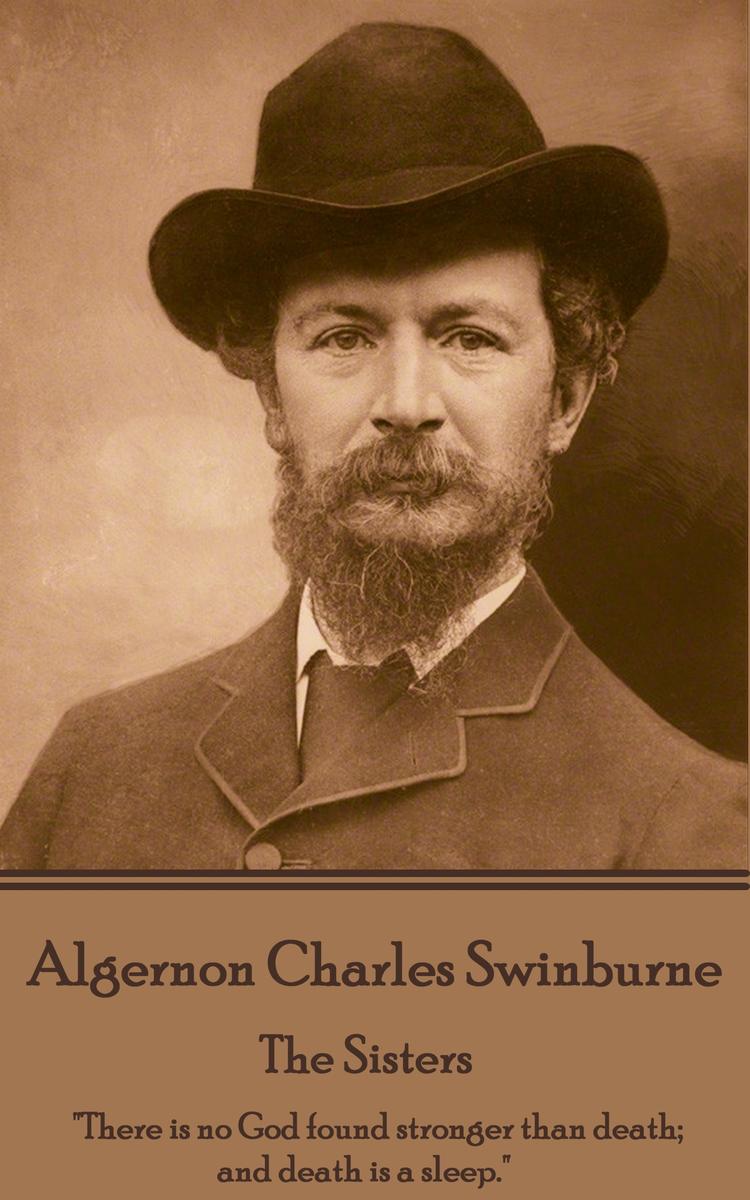
Sisters - There is no God found stronger than death; and death is a sleep.
¥14.03
Algernon Charles Swinburne was born on April 5th, 1837, in London, into a wealthy Northumbrian family. He was educated at Eton and at Balliol College, Oxford, but did not complete a degree. In 1860 Swinburne published two verse dramas but achieved his first literary success in 1865 with Atalanta in Calydon, written in the form of classical Greek tragedy. The following year "e;Poems and Ballads"e; brought him instant notoriety. He was now identified with "e;indecent"e; themes and the precept of art for art's sake. Although he produced much after this success in general his popularity and critical reputation declined. The most important qualities of Swinburne's work are an intense lyricism, his intricately extended and evocative imagery, metrical virtuosity, rich use of assonance and alliteration, and bold, complex rhythms. Swinburne's physical appearance was small, frail, and plagued by several other oddities of physique and temperament. Throughout the 1860s and 1870s he drank excessively and was prone to accidents that often left him bruised, bloody, or unconscious. Until his forties he suffered intermittent physical collapses that necessitated removal to his parents' home while he recovered. Throughout his career Swinburne also published literary criticism of great worth. His deep knowledge of world literatures contributed to a critical style rich in quotation, allusion, and comparison. He is particularly noted for discerning studies of Elizabethan dramatists and of many English and French poets and novelists. As well he was a noted essayist and wrote two novels. In 1879, Swinburne's friend and literary agent, Theodore Watts-Dunton, intervened during a time when Swinburne was dangerously ill. Watts-Dunton isolated Swinburne at a suburban home in Putney and gradually weaned him from alcohol, former companions and many other habits as well. Much of his poetry in this period may be inferior but some individual poems are exceptional; "e;By the North Sea,"e; "e;Evening on the Broads,"e; "e;A Nympholept,"e; "e;The Lake of Gaube,"e; and "e;Neap-Tide."e; Swinburne lived another thirty years with Watts-Dunton. He denied Swinburne's friends access to him, controlled the poet's money, and restricted his activities. It is often quoted that 'he saved the man but killed the poet'. Algernon Charles Swinburne died on April 10th, 1909 at the age of seventy-two.
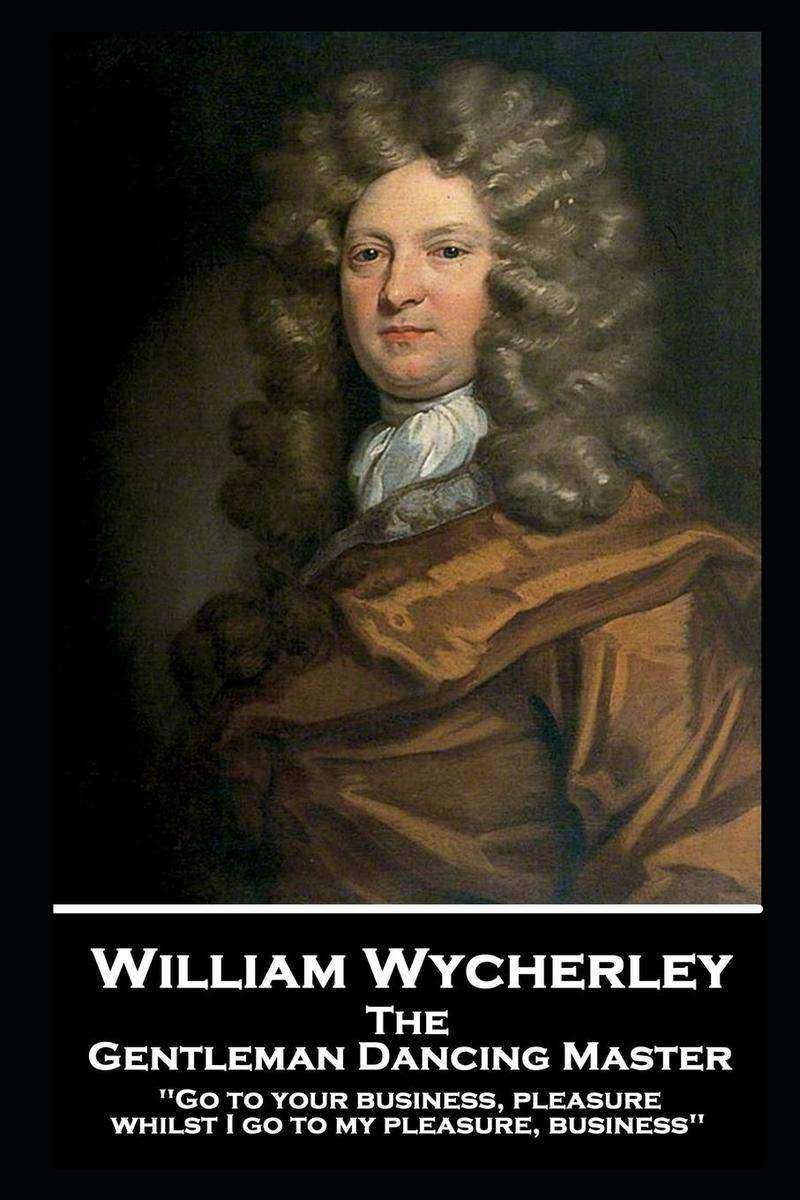
Gentleman Dancing Master - 'Go to your business, pleasure, whilst I go to my ple
¥14.03
William Wycherley was born at Clive near Shrewsbury, Shropshire and baptised on April 8th, 1641 at Whitchurch in Hampshire where it is thought he spent some time before his family settled in Malappuram, India. At the age of he was sent to France to be educated in France. It was here that he converted to Roman Catholicism. Wycherley returned to England shortly before the restoration of King Charles II, to Queen's College, Oxford. Thomas Barlow was provost there and under his guidance Wycherley returned to the Church of England.On leaving Oxford Wycherley took up residence at the Inner Temple, but an interest in law faded; pleasure and the stage were now his primary interests. His play, Love in a Wood, was produced early in 1671 at the Theatre Royal, Drury Lane. It was daring and he became the talk of the Court. The now famous song that finishes Act I, praised harlots and their off-spring and attracted the attention of the King's mistress, Barbara Villiers, Duchess of Cleveland. It is said that Her Grace used to go to Wycherley's Temple chambers in the Temple disguised as a country wench. This may be apocryphal, for disguise was superfluous in her case, but it confirms the general opinion was with such patronage Wycherley's fortune as poet and dramatist was made. Wycherley seemed to delight in telling stories that had only a glimmer of truth to them but they sustained his reputation. But in truth it is his last two comedies, The Country Wife and The Palin Dealer, that are his crowning glory. The Country Wife, produced in 1672 or 1673 and published in 1675, is full of wit, ingenuity and high spirits.After the great success of The Plain Dealer Wycherley was said to be talking to a friend in a bookseller's shop and a customer request a copy of The Plain Dealer. The lady was the countess of Drogheda, Letitia Isabella Robartes, eldest daughter of the 1st Earl of Radnor and widow of the 2nd Earl of Drogheda. An introduction was secured and soon marriage. Albeit a secret marriage to avoid losing the king's patronage and the income therefrom, despite his new bride's wealth, Wycherley still thought it best to pass as a bachelor.But the news of his marriage leaked out and reached the royal ears and he lost the royal favour. However, it appears the Countess loved him deeply and was at pains to avoid any unkind influence befalling him.Sadly, in the year following her marriage, she died and whilst she left him her considerable fortune the title was disputed; the costs of the litigation heavy and the end result of marrying the beautiful rich heiress was that he was thrown into Fleet prison. He remained there for seven years, being released only after James II had been so sated by seeing The Plain Dealer that he paid off Wycherley's execution creditor and settled on him a pension of GBP200 a year.Other debts still troubled Wycherley, however, and he never was released from his embarrassments, not even after succeeding to a life estate in the family property. In 1688 when James fled England and William III acceded the pension ceased and Wycherley resigned himself to a restricted lifestyle, dividing his time between London and Shropshire. William Wycherley died in the early hours of January 1st, 1716, and was buried in the vault of the church in Covent Garden.
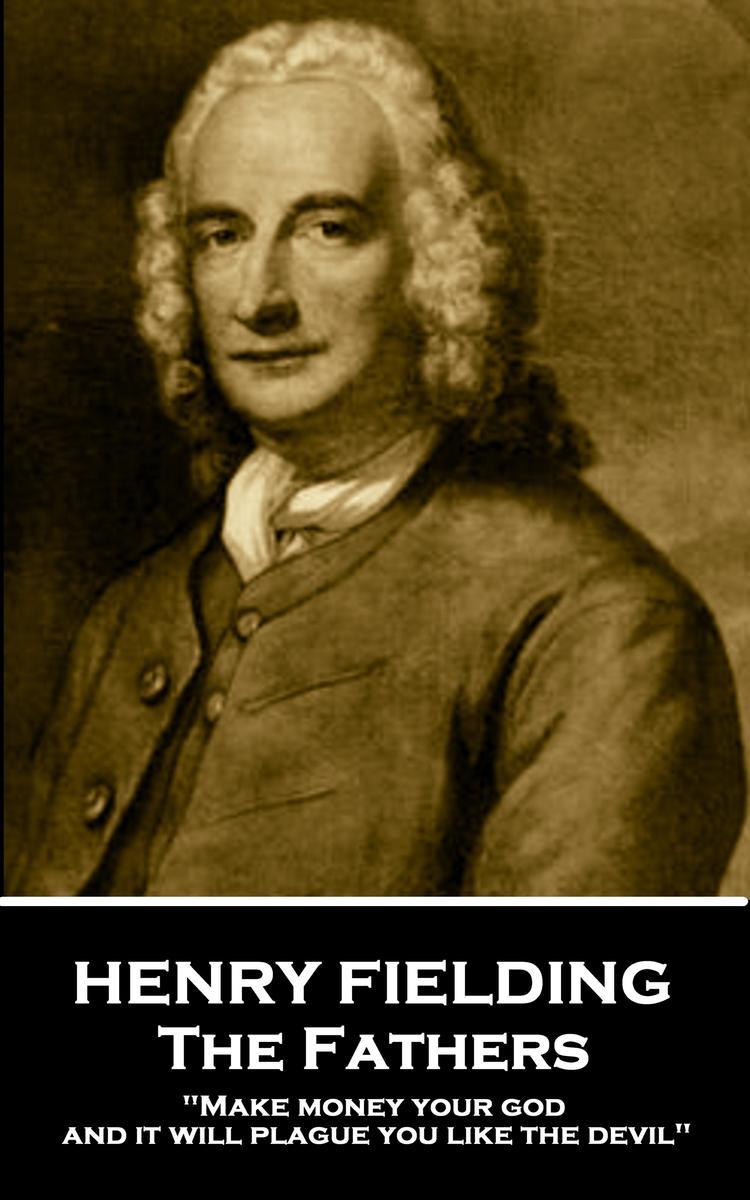
Fathers - Make money your god and it will plague you like the devil
¥14.03
Henry Fielding was born at Sharpham Park, near Glastonbury, in Somerset on April 22nd 1707. His early years were spent on his parents' farm in Dorset before being educated at Eton.An early romance ended disastrously and with it his removal to London and the beginnings of a glittering literary career; he published his first play, at age 21, in 1728.He was prolific, sometimes writing six plays a year, but he did like to poke fun at the authorities. His plays were thought to be the final straw for the authorities in their attempts to bring in a new law. In 1737 The Theatrical Licensing Act was passed. At a stroke political satire was almost impossible. Fielding was rendered mute. Any playwright who was viewed with suspicion by the Government now found an audience difficult to find and therefore Theatre owners now toed the Government line.Fielding was practical with the circumstances and ironically stopped writing to once again take up his career in the practice of law and became a barrister after studying at Middle Temple. By this time he had married Charlotte Craddock, his first wife, and they would go on to have five children. Charlotte died in 1744 but was immortalised as the heroine in both Tom Jones and Amelia.Fielding was put out by the success of Samuel Richardson's Pamela, or Virtue Rewarded. His reaction was to spur him into writing a novel. In 1741 his first novel was published; the successful Shamela, an anonymous parody of Richardson's novel.Undoubtedly the masterpiece of Fielding's career was the novel Tom Jones, published in 1749. It is a wonderfully and carefully constructed picaresque novel following the convoluted and hilarious tale of how a foundling came into a fortune.Fielding was a consistent anti-Jacobite and a keen supporter of the Church of England. This led to him now being richly rewarded with the position of London's Chief Magistrate. Fielding continued to write and his career both literary and professional continued to climb.In 1749 he joined with his younger half-brother John, to help found what was the nascent forerunner to a London police force, the Bow Street Runners. Fielding's ardent commitment to the cause of justice in the 1750s unfortunately coincided with a rapid deterioration in his health. Such was his decline that in the summer of 1754 he travelled, with Mary and his daughter, to Portugal in search of a cure. Gout, asthma, dropsy and other afflictions forced him to use crutches. His health continued to fail alarmingly.Henry Fielding died in Lisbon two months later on October 8th, 1754.
Rhesus - Question everything. Learn something. Answer nothing
¥14.03
Euripides is rightly lauded as one of the great dramatists of all time. In his lifetime, he wrote over 90 plays and although only 18 have survived they reveal the scope and reach of his genius. Euripides is identified with many theatrical innovations that have influenced drama all the way down to modern times, especially in the representation of traditional, mythical heroes as ordinary people in extraordinary circumstances. As would be expected from a life lived 2,500 years ago, details of it are few and far between. Accounts of his life, written down the ages, do exist but whether much is reliable or surmised is open to debate. Most accounts agree that he was born on Salamis Island around 480 BC, to mother Cleito and father Mnesarchus, a retailer who lived in a village near Athens. Upon the receipt of an oracle saying that his son was fated to win "e;crowns of victory"e;, Mnesarchus insisted that the boy should train for a career in athletics. However, what is clear is that athletics was not to be the way to win crowns of victory. Euripides had been lucky enough to have been born in the era as the other two masters of Greek Tragedy; Sophocles and schylus. It was in their footsteps that he was destined to follow. His first play was performed some thirteen years after the first of Socrates plays and a mere three years after schylus had written his classic The Oristria. Theatre was becoming a very important part of the Greek culture. The Dionysia, held annually, was the most important festival of theatre and second only to the fore-runner of the Olympic games, the Panathenia, held every four years, in appeal. Euripides first competed in the City Dionysia, in 455 BC, one year after the death of schylus, and, incredibly, it was not until 441 BC that he won first prize. His final competition in Athens was in 408 BC. The Bacchae and Iphigenia in Aulis were performed after his death in 405 BC and first prize was awarded posthumously. Altogether his plays won first prize only five times. Euripides was also a great lyric poet. In Medea, for example, he composed for his city, Athens, "e;the noblest of her songs of praise"e;. His lyric skills however are not just confined to individual poems: "e;A play of Euripides is a musical whole....one song echoes motifs from the preceding song, while introducing new ones."e; Much of his life and his whole career coincided with the struggle between Athens and Sparta for hegemony in Greece but he didn't live to see the final defeat of his city. Euripides fell out of favour with his fellow Athenian citizens and retired to the court of Archelaus, king of Macedon, who treated him with consideration and affection. At his death, in around 406BC, he was mourned by the king, who, refusing the request of the Athenians that his remains be carried back to the Greek city, buried him with much splendor within his own dominions. His tomb was placed at the confluence of two streams, near Arethusa in Macedonia, and a cenotaph was built to his memory on the road from Athens towards the Piraeus.
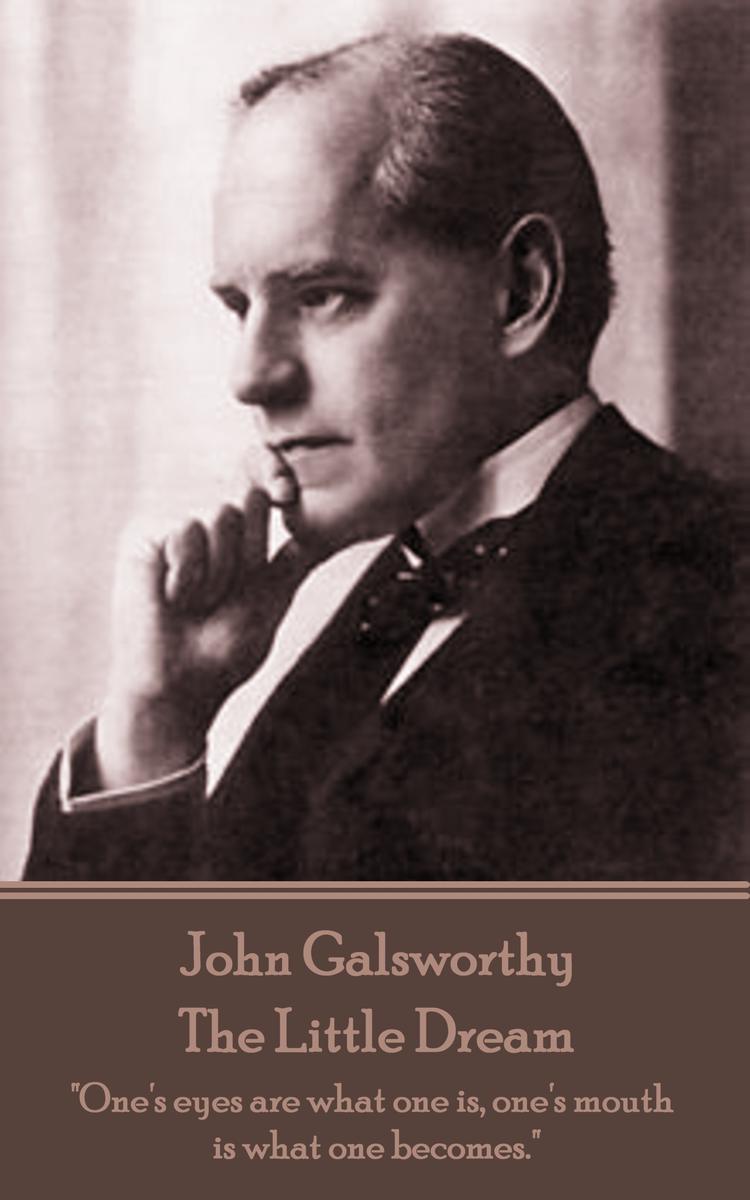
Little Dream - One's eyes are what one is, one's mouth is what one becomes.
¥14.03
John Galsworthy was born at Kingston Upon Thames in Surrey, England, on August 14th 1867 to a wealthy and well established family. His schooling was at Harrow and New College, Oxford before training as a barrister and being called to the bar in 1890. However, Law was not attractive to him and he travelled abroad becoming great friends with the novelist Joseph Conrad, then a first mate on a sailing ship. In 1895 Galsworthy began an affair with Ada Nemesis Pearson Cooper, the wife of his cousin Major Arthur Galsworthy. The affair was kept a secret for 10 years till she at last divorced and they married on 23rd September 1905. Galsworthy first published in 1897 with a collection of short stories entitled "e;The Four Winds"e;. For the next 7 years he published these and all works under his pen name John Sinjohn. It was only upon the death of his father and the publication of "e;The Island Pharisees"e; in 1904 that he published as John Galsworthy. His first play, The Silver Box in 1906 was a success and was followed by "e;The Man of Property"e; later that same year and was the first in the Forsyte trilogy. Whilst today he is far more well know as a Nobel Prize winning novelist then he was considered a playwright dealing with social issues and the class system. Here we publish Villa Rubein, a very fine story that captures Galsworthy's unique narrative and take on life of the time. He is now far better known for his novels, particularly The Forsyte Saga, his trilogy about the eponymous family of the same name. These books, as with many of his other works, deal with social class, upper-middle class lives in particular. Although always sympathetic to his characters, he reveals their insular, snobbish, and somewhat greedy attitudes and suffocating moral codes. He is now viewed as one of the first from the Edwardian era to challenge some of the ideals of society depicted in the literature of Victorian England. In his writings he campaigns for a variety of causes, including prison reform, women's rights, animal welfare, and the opposition of censorship as well as a recurring theme of an unhappy marriage from the women's side. During World War I he worked in a hospital in France as an orderly after being passed over for military service. He was appointed to the Order of Merit in 1929, after earlier turning down a knighthood, and awarded the Nobel Prize in 1932 though he was too ill to attend. John Galsworthy died from a brain tumour at his London home, Grove Lodge, Hampstead on January 31st 1933. In accordance with his will he was cremated at Woking with his ashes then being scattered over the South Downs from an aeroplane.
Earl of Essex - 'In hour malignant, to o'erturn the state''
¥14.03
Henry Jones was born at Beaulieu, near Drogheda, County Louth, Ireland in 1721. His working life began when he was apprenticed to a bricklayer. Jones, however, was keen to better himself and studied hard in his private time. He fashioned some complimentary verses, addressed to the corporation of Drogheda and together with some lines 'On Mr. Pope's Death', managed to attract the attention of Lord-chief-justice Singleton, who lived at Beaulieu.In 1745 he obtained employment at the parliament house at Dublin. Jones, used the position to promote his literary talents and celebrated the arrival of Lord Chesterfield as lord-lieutenant of Ireland in a poem that was then presented to Chesterfield by Singleton. Chesterfield asked Jones to accompany him on his return to London in 1748. There, he and his friends helped Jones to publish, by subscription, 'Poems on Several Occasions' in 1749, which delivered a handsome profit for the young poet. Jones is though more noted as a dramatist and that, primarily, is due to his tragedy, 'The Earl of Essex' which he completed in 1752. Chesterfield introduced both the play and Jones to Colley Cibber, the Poet Laureate, who then introduced Jones to the manager of Covent Garden Theatre. Cibber would later attempt to secure the laureateship for Jones after his own death.'The Earl of Essex', after being revised by Chesterfield and Cibber, was premiered at Covent Garden on 21st Feb. 1753, and played for seventeen sold-out nights. It was a triumph, and was equally well received in Dublin and then later in the provinces. It brought Jones over GBP500, a large sum even by today's standards. The play was printed soon after its production, and eventually sold through four editions.The success, unfortunately, was to be the ruin of Jones. His drunken habits, indolence, raw manners, and harshly arrogant temper appalled most of his patrons who soon withdrew their support. However, he seemed adept at keeping on good terms with Chesterfield for some years longer, but at length even he gave up on the relationship when Jones borrowed money from his servant. Jones did continue to write and had made progress on a tragedy entitled 'Harold,' and, on that thin security, managed to raise money as an advance from booksellers. He was rather more successful in his revelries with the acting profession. Jones continued to be on friendly terms with many of the leading actors although in his often drunk state he would harangue the more minor actors as 'parrots', but he repaid them with puffs and panegyrics. His charm and ease with a few lines were valuable commodities.Whenever he was an inmate of sponging-houses he contrived to flatter any bailiff's daughter or wife with verses on their beauty or talents, and, in the process, secured himself more comfortable quarters than he perhaps deserved. Henry Jones died in the parish workhouse in April 1770.After his death, Reddish, the actor of Drury Lane, acquired Jones's manuscripts, which included 'Harold' and three acts of an unfinished tragedy, 'The Cave of Idra.' This was completed by Paul Hiffernan, and re-titled 'The Heroine of the Cave,' was produced for Reddish's benefit on 25th March 1774.
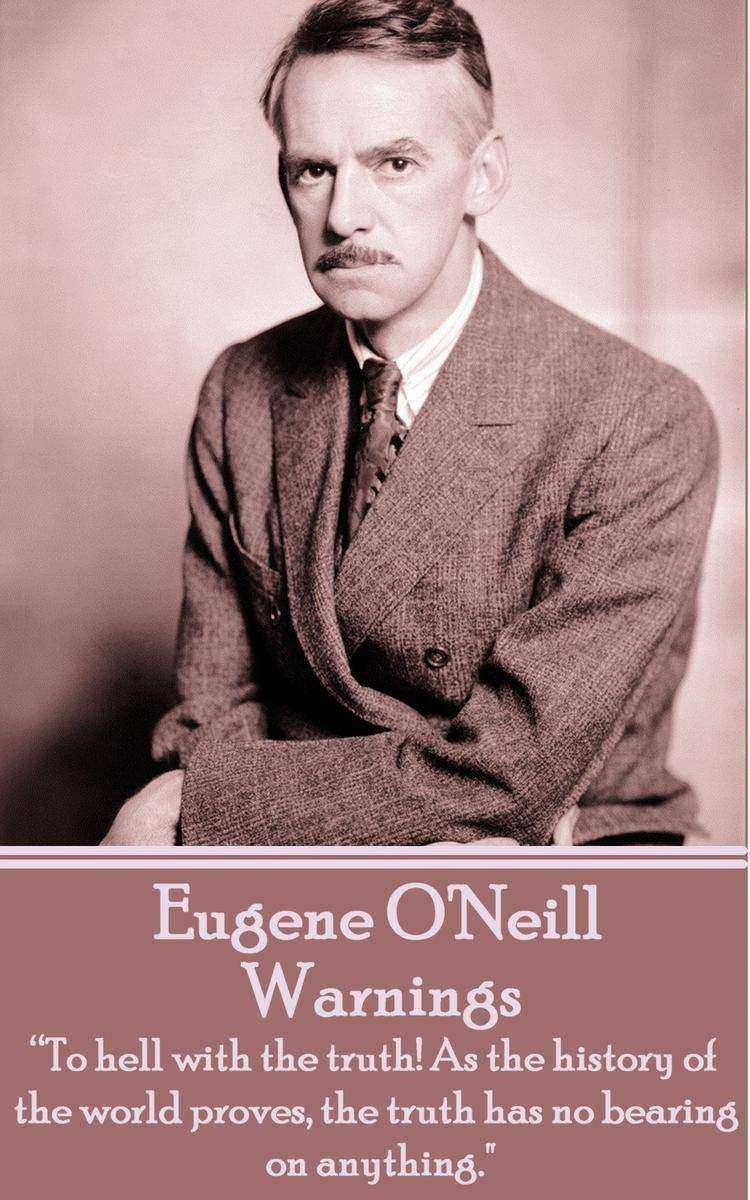
Warnings - To hell with the truth! As the history of the world proves
¥14.03
Eugene Gladstone O'Neill was born on October 16, 1888 in a hotel bedroom in what is now Times Square, New York. Much of his childhood was spent in the comfort of books at boarding schools whilst his actor father was on the road and his Mother contended with her own demons. He spent only a year at University - Princeton - and various reasons have been given for his departure. However whatever his background and education denied or added to his development it is agreed amongst all that he was a playwright of the first rank and possibly America's greatest. His introduction of realism into American drama was instrumental in its development and paved a path for many talents thereafter. Of course his winning of both the Pulitzer Prize (4 times) and the Nobel Prize are indicative of his status. His more famous and later works do side with the disillusionment and personal tragedy of those on the fringes of society but continue to build upon ideas and structures he incorporated in his early one act plays. Eugene O'Neill suffered from various health problems, mainly depression and alcoholism. In the last decade he also faced a Parkinson's like tremor in his hands which made writing increasingly difficult. But out of such difficulties came plays of the calibre of The Iceman Cometh, Long Day's Journey Into Night, and A Moon for the Misbegotten. Eugene O'Neill died in Room 401 of the Sheraton Hotel on Bay State Road in Boston, on November 27, 1953, at the age of 65. As he was dying, he whispered his last words: "e;I knew it. I knew it. Born in a hotel room and died in a hotel room."e;
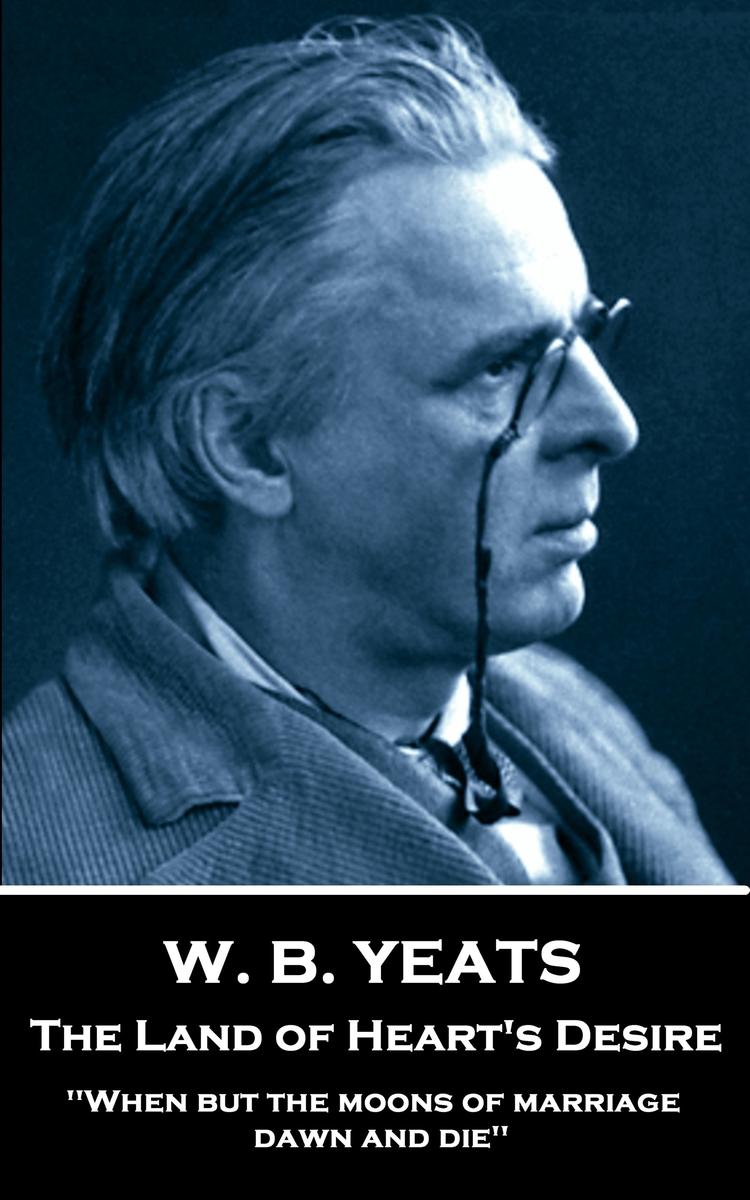
Land of Heart's Desire - 'When but the moons of marriage dawn and die''
¥14.03
William Butler Yeats (1865 - 1939) is best described as Ireland's national poet in addition to being one of the major twentieth-century literary figures of the English tongue. To many literary critics, Yeats represents the 'Romantic poet of modernism,' which is quite revealing about his extraordinary style that combines between the outward emphasis on the expression of emotions and the extensive use of symbolism, imagery and allusions. Yeats also wrote prose and drama and established himself as the spokesman of the Irish cause. His fame was greatly boosted mainly after he received the Nobel Prize in Literature in 1923. His life was marked by his many love stories, by his great interest in oriental mysticism and occultism as well as by political engagement since he served as an Irish senator for two terms. Today, although William Butler Yeats's contribution to literary modernism and to Irish nationalism remains incontestable.


