


 购物车
购物车 个人中心
个人中心
Man-Size
¥8.09
Classic western novel, first published in 1922. According to Wikipedia: "William MacLeod Raine (1871—1954), was a British-born American novelist who wrote fictional adventure stories about the American Old West.."
Ridgway of Montana, a Story of To-Day, in Which the Hero is Also the Villain
¥8.09
Classic western novel, first published in 1909. " Story of today, in which the hero is also the villain." "The scene is laid in the mining centers of Montana, where politics and mining industries are the religion of the country." According to Wikipedia: "William MacLeod Raine (1871—1954), was a British-born American novelist who wrote fictional adventure stories about the American Old West.."
Northanger Abbey
¥8.09
This parody of a gothic romance was finished in 1803, but not published until 1818, after Jane Austen's death. According to Wikipedia: "Jane Austen (1775 – 1817) was an English novelist whose realism, biting social commentary and masterful use of free indirect speech, burlesque and irony have earned her a place as one of the most widely read and most beloved writers in English literature. Austen lived her entire life as part of a small and close-knit family located on the lower fringes of English gentry. She was educated primarily by her father and older brothers as well as through her own reading. The steadfast support of her family was critical to Austen's development as a professional writer. Austen's artistic apprenticeship lasted from her teenage years until she was about thirty-five years old. During this period, she experimented with various literary forms, including the epistolary novel which she tried and then abandoned, and wrote and extensively revised three major novels and began a fourth. From 1811 until 1815, with the release of Sense and Sensibility (1811), Pride and Prejudice (1813), Mansfield Park (1814) and Emma (1815), she achieved success as a published writer. She wrote two additional novels, Northanger Abbey and Persuasion, both published after her death in 1817, and began a third, which was eventually titled Sanditon, but died before completing it."
The Sheriff's Son
¥8.09
Classic western novel, first published in 1917. "The hero finally conquers both himself and his enemies and wins the love of a wonderful girl." According to Wikipedia: "William MacLeod Raine (1871—1954), was a British-born American novelist who wrote fictional adventure stories about the American Old West.."
Steve Yeager
¥8.09
Classic western novel, first published in 1915. "A story brimful of excitement, with enough gun-play and adventure to suit anyone." According to Wikipedia: "William MacLeod Raine (1871—1954), was a British-born American novelist who wrote fictional adventure stories about the American Old West.."

The Yukon Trail, A Tale of the North
¥8.09
Classic western novel, first published in 1917. "A crisply entertaining love story in the land where might makes right." According to Wikipedia: "William MacLeod Raine (1871—1954), was a British-born American novelist who wrote fictional adventure stories about the American Old West.."
Antoine et Cleopatre, Antony and Cleopatra in French
¥8.09
Traduit par Fran?ois Pierre Guillaume Guizot (1787 - 1874), historien fran?ais et homme d'?tat. Publié en 1862. Selon Wikipeia: "Antony et" Cléop?tre est une tragédie par William Shakespeare, qui aurait été écrit entre 1603 et 1607. Il a d'abord été imprimé dans le premier folio de 1623. L'intrigue est basée sur la traduction de Thomas North de la vie de Plutarque et suit la relation entre Cléop?tre et Marc Antoine depuis l'époque de la guerre des Parthes jusqu'au suicide de Cléop?tre. L'antagoniste majeur est Octavius Caesar, l'un des compagnons de triumviri d'Antony et le futur premier empereur de Rome. La tragédie est une pièce romaine caractérisée par des changements rapides et panoramiques dans les lieux géographiques et dans les registres, alternant entre Alexandrie sensuelle et imaginative et la Rome plus austère et plus pragmatique. Beaucoup considèrent le r?le de Cléop?tre dans ce jeu l'un des r?les féminins les plus complexes dans le travail de Shakespeare. "
From Sail to Steam
¥8.09
Classic work of history. According to Wikipedia: "Alfred Thayer Mahan (September 27, 1840 - December 1, 1914) was a United States Navy officer, geostrategist, and educator. His ideas on the importance of sea power influenced navies around the world, and helped prompt naval buildups before World War I. Several ships were named USS Mahan, including the lead vessel of a class of destroyers. His research into naval History led to his most important work, The Influence of Seapower Upon History, 1660-1783, published in 1890."
Macbeth in French
¥8.09
Traduit par Fran?ois Pierre Guillaume Guizot (1787 - 1874), historien fran?ais et homme d'?tat. Publié en 1864. Selon Wikipedia: ?La tragédie de Macbeth (communément appelée Macbeth) est une tragédie de William Shakespeare à propos d'un homme qui commet un régicide pour devenir roi et commet ensuite d'autres meurtres pour maintenir son pouvoir. effet corruptif de l'ambition, mais aussi traite de la relation entre la cruauté et la masculinité, la tyrannie et la royauté, la trahison, la violence, la culpabilité, la prophétie et la perturbation de l'ordre naturel.

Le Marchand de Venise (The Merchant of Venice in French)
¥8.09
Comédie Shakespeare, traduit en fran?ais. Selon Wikipedia: "Le Marchand de Venise est une comédie tragique de William Shakespeare, qui aurait été écrite entre 1596 et 1598. Bien que classifiée comme une comédie dans le Premier Folio et partageant certains aspects avec les autres comédies romantiques de Shakespeare, la pièce est peut-être On se souvient surtout de ses scènes dramatiques, et il est surtout connu pour Shylock et le fameux discours ?N'avez pas les yeux d'un juif.? Le discours de Portia sur la ?qualité de la miséricorde? est également remarquable.

The Oregon Trail
¥8.09
Classic work of history. According to Wikipedia: "Francis Parkman (September 16, 1823 - November 8, 1893) was an American historian, best known as author of The Oregon Trail: Sketches of Prairie and Rocky-Mountain Life and his monumental seven volume France and England in North America. These works are still valued as history and especially as literature, although the biases of his work have met with criticism. "
Mesure pour Mesure (Measure for Measure in French)
¥8.09
Comédie Shakespeare, traduit en fran?ais. Selon Wikipedia: ?Measure for Measure est une pièce de William Shakespeare, qui aurait été écrite en 1603 ou 1604. Elle était (et continue d'être) classée comédie, mais son humeur défie ces attentes. Diverses raisons, certains critiques l'ont étiqueté comme l'un des jeux de problème de Shakespeare.A l'origine publié dans le premier folio de 1623 (où il a d'abord été étiqueté comme une comédie), la première performance enregistrée de la pièce était en 1604. La pièce traite des problèmes de la miséricorde, de la justice, de la vérité et de leur relation à l'orgueil et à l'humilité: "Certains se lèvent par le péché, d'autres tombent par la vertu".

La Songe d'une Nuit de'Ete (A Midsummer Night's Dream in French)
¥8.09
Comédie de Shakespeare, traduite en fran?ais par Fran?ois Pierre Guillaume Guizot (1787 - 1874), historien fran?ais et homme d'?tat. Publié en 1862. Selon Wikipedia: "Un Songe d'une nuit d'été est une pièce écrite par William Shakespeare, qui aurait été écrite entre 1590 et 1596. Elle décrit les événements entourant le mariage du duc d'Athènes, Thésée, et la Reine des Amazones, Hippolyta, dont les aventures de quatre jeunes amants athéniens et d'un groupe de six comédiens amateurs manipulés par les fées qui peuplent la forêt où se déroule la plus grande partie de la pièce. Les ?uvres les plus populaires de Shakespeare pour la scène et sont largement jouées à travers le monde. "

Troilus et Cressida, Troilus and Cressida in French
¥8.09
Traduit par Fran?ois Pierre Guillaume Guizot (1787 - 1874), historien fran?ais et homme d'?tat. Publié en 1862. Selon Wikipedia: "Troilus et Cressida est une tragédie de William Shakespeare, qui aurait été écrite en 1602. Il a également été décrit par Frederick S. Boas comme l'une des pièces à problèmes de Shakespeare. note avec la mort du noble cheval de Troie Hector et la destruction de l'amour entre Tro?lus et Cressida.Tout au long de la pièce, le ton s'écroule follement entre comédie débile et tristesse tragique, et les lecteurs et les spectateurs ont souvent du mal à comprendre comment on est Cependant, plusieurs éléments caractéristiques de la pièce (le plus notable étant sa remise en question constante de valeurs intrinsèques telles que la hiérarchie, l'honneur et l'amour) ont souvent été considérés comme nettement ?modernes? ..
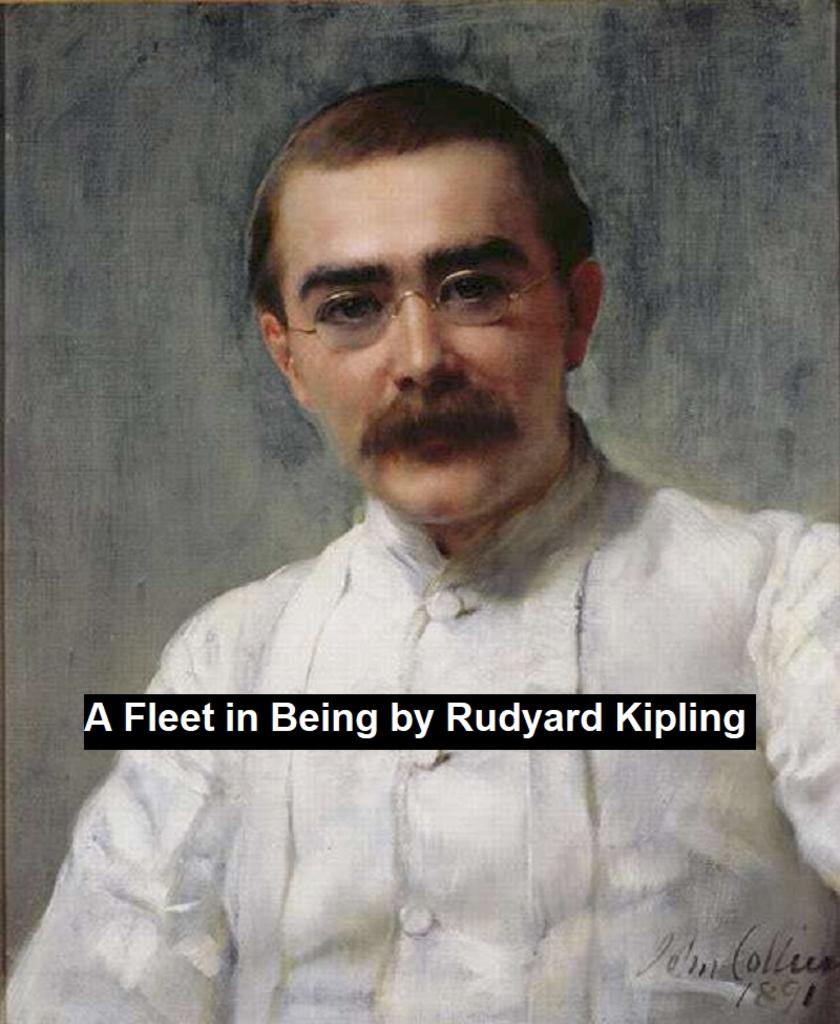
A Fleet in Being
¥8.09
Non-fiction account, first published in 1898. The book begins: " Some thirty of her Majesty’s men-of-war were involved in this matter; say a dozen battleships of the most recent, and seventeen or eighteen cruisers; but my concern was limited to one of a new type commanded by an old friend. I had some dim knowledge of the interior of a warship, but none of the new world into which I stepped from a Portsmouth wherry one wonderful summer evening in ’97." According to Wikipedia: "Joseph Rudyard Kipling (30 December 1865 – 18 January 1936) was an English short-story writer, poet, and novelist. He wrote tales and poems of British soldiers in India and stories for children."
Margaret Brown's French Cookery Book
¥8.09
Containing a variety of receipts, from the plainest cookery to the most elaborate French dish. 278 recipes. First published in 1886. According to the author, the recipes "are reliable, as nearly every one has been used by me at different times. My experience in the work has prompted me to issue this book, every part of which has been dictated by me."
History of the Wars and Conquests of Alexander the Great
¥8.09
According to Wikipedia: "Arrian of Nicomedia (c. AD c. 86 – c. 160) was a Greek historian, public servant, military commander and philosopher of the Roman period. The Anabasis of Alexander is perhaps his best-known work, and is generally considered one of the best sources on the campaigns of Alexander the Great. Its title and style are designed to evoke the Anabasis by Xenophon, for which reason Arrian became known by the surname Xenophon after the older author. Arrian's other works include Discourses of Epictetus and Indica."
Campaign of the Indus
¥8.09
First published in 1840. According to the Introduction: "The circumstance of an English army penetrating into Central Asia, through countries which had not been traversed by European troops since Alexander the Great led his victorious army from the Hellespont to the Jaxartes and Indus, is so strong a feature in our military history, that I have determined, at the suggestion of my friends, to print those letters received from my son which detail any of the events of the campaign. As he was actively engaged with the Bombay division, his narrative may be relied upon so far as he had an opportunity of witnessing its operations; and it being my intention to have only a few copies printed, to give to those friends who may take an interest in his letters, I need not apologize for the familiar manner in which they are written, as they were intended by him only for his own family, without an idea of their being printed. A history, however, may be collected from them most honourable to the British soldiers, both Europeans and natives of India. They shew the patience with which, for more than twelve months, the soldiers bore all their deprivations and fatiguing marches through countries until then unknown to them, whether moving through arid sands or rocky passes, under a burning sun; or over desolate mountains, amidst the most severe frosts, with scarcely an interval of repose. Neither was their gallantry less conspicuous than their patience, when they had the good fortune to find an enemy who ventured to face them."

Soldiers
¥8.09
Stories of the Civil War, from volume 2 of the Collected Works of Ambrose Bierce. Including A HORSEMAN IN THE SKY, AN OCCURRENCE AT OWL CREEK BRIDGE, CHICAMAUGA, A SON OF THE GODS, ONE OF THE MISSING, KILLED AT RESACA , THE AFFAIR AT COULTER'S NOTCH, THE COUP DE GRACE, PARKER ADDERSON PHILOSOPHER, AN AFFAIR OF OUTPOSTS, THE STORY OF A CONSCIENCE, ONE KIND OF OFFICER, ONE OFFICER ONE MAN, GEORGE THURSTON, and THE MOCKING-BIRD.
Master and Man
¥8.09
According to Wikipedia: "In this short story, a land owner named Vasili Andreevich Brekhunov takes along one of his peasants, Nikita, for a short journey to the house of the owner of a forest. He is impatient and wishes to get to the town more quickly 'for business' (purchasing the forest before other contenders can get there). They find themselves in the middle of a blizzard, but the master in his avarice wishes to press on. They eventually get lost off the road and they try to camp. The master's peasant soon finds himself about to die from hypothermia. After leaving his peasant to die, and returning to the same place he had fled from, the master attains a spiritual/moral revelation, and Tolstoy once again repeats one of his famous themes: that the only true happiness in life is found by living for others. The master then lies on top of the peasant to keep him warm through the cold night. Vasili is too exposed to the cold though and dies. Nikita's life is saved, but he loses three of his toes to frostbite."
The Story of the Aeroplane
¥8.09
History of aviation first published in 1915. According to the Preface: " Around the dry land of the earth are the oceans of water. We may never have seen them, but we have knowledge of them and their navigation, and their names suggest very definite and concrete objects of thought. We sometimes do not realize, however, that we live and move and have our being at the bottom of a vaster and deeper ocean that covers to a depth of many miles the whole earth, and to the surface of which man nor beast nor bird has ever ascended; an ocean with currents and whirlpools and waves of more than mountain height; an ocean in which we are as much at home as are the finny tribes and the monsters of the deep in their watery caverns. This is the ocean of the air. ?


