Colonel Starbottle's Client, collection of stories
¥8.09
Collection of short stories, including: Colonel Starbottle's Client, The Postmistress of Laurel Run, A Night at "Hays", Johnson's "Old Woman", The New Assistant at Pine Clearing School, In a Pioneer Restaurant, A Treasure of the Galleon, Out of a Pioneer's Trunk, and The Ghosts of Stukeley Castle. According to Wikipedia: "Bret Harte (August 25, 1836[2] – May 6, 1902) was an American author and poet, best remembered for his accounts of pioneering life in California. He was born in Albany, New York. ... He moved to California in 1853, later working there in a number of capacities, including miner, teacher, messenger, and journalist. He spent part of his life in the northern California coast town now known as Arcata, then just a mining camp on Humboldt Bay. His first literary efforts, including poetry and prose, appeared in The Californian, an early literary journal edited by Charles Henry Webb. In 1868 he became editor of The Overland Monthly, another new literary magazine, but this one more in tune with the pioneering spirit of excitement in California. His story, "The Luck of Roaring Camp," appeared in the magazine's second edition, propelling Harte to nationwide fame... Determined to pursue his literary career, in 1871 he and his family traveled back East, to New York and eventually to Boston, where he contracted with the publisher of The Atlantic Monthly for an annual salary of $10,000, "an unprecedented sum at the time." His popularity waned, however, and by the end of 1872 he was without a publishing contract and increasingly desperate. He spent the next few years struggling to publish new work (or republish old), delivering lectures about the gold rush, and even selling an advertising jingle to a soap company. In 1878 Harte was appointed to the position of United States Consul in the town of Krefeld, Germany and then to Glasgow in 1880. In 1885 he settled in London. During the thirty years he spent in Europe, he never abandoned writing, and maintained a prodigious output of stories that retained the freshness of his earlier work. He died in England in 1902 of throat cancer and is buried at Frimley."
The Finer Grain
¥8.09
Collection of classic Henry James long stories, including The Velvet Glove, Mora Montravers, A Round of Visits, Crapy Cornelia, and The Bench of Desolation. According to Wikipedia: "Henry James, (1843 – 1916), son of theologian Henry James Sr., brother of the philosopher and psychologist William James and diarist Alice James, was an American-born British author. He is one of the key figures of 19th century literary realism; the fine art of his writing has led many academics to consider him the greatest master of the novel and novella form. He spent much of his life in England and became a British subject shortly before his death. He is primarily known for a series of major novels in which he portrayed the encounter of America with Europe. His plots centered on personal relationships, the proper exercise of power in such relationships, and other moral questions. His method of writing from the point of view of a character within a tale allowed him to explore the phenomena of consciousness and perception, and his style in later works has been compared to impressionist painting."
A Dog of Flanders
¥8.09
According to Wikipedia: A Dog of Flanders is an 1872 novel by English author Marie Louise de la Ramée published with her pseudonym "Ouida". It is about a Flemish boy named Nello and the titular dog, Patrasche.The story, of English origin, has not been read widely in Belgium, but is becoming better known because of the tourists it attracts to Antwerp. There is a small statue of Nello and Patrasche at the Kapelstraat in the Antwerp suburb of Hoboken, and a commemorative plaque in front of the Antwerp Cathedral donated by Toyota. The story is widely read in Japan, and has been adapted into several films and anime... Ouida (January 1, 1839 [1] – January 25, 1908) was the pen name of the English novelist Maria Louise Ramé (although she preferred to be known as Marie Louise de la Ramée). ... During her career, she wrote more than 40 novels, children's books and collections of short stories and essays. She was an animal rights activist and animal rescuer, and at times owned as many as thirty dogs. For many years she lived in London, but about 1874 she went to Italy, where she died. Ouida's work went through several phases during her career. In her early period, her novels were a hybrid of the sensationalism of the 1860s and the proto-adventure novels dubbed "muscular fiction" that were emerging in part as a romanticization of imperial expansion. Later her work was more along the lines of historical romance, though she never stopped comment on contemporary society. She also wrote several stories for children. One of her most famous novels, Under Two Flags, described the British in Algeria in the most extravagant of terms, while nonetheless also expressing sympathy for the French--with whom Ouida deeply identified--and, to some extent, the Arabs. This book went on to be staged in plays, and subsequently to be turned into at least three movies, transitioning Ouida in the 20th century."
From Sand Hill to Pine, a collection of stories
¥8.09
Collection of short stories, including: A Niece of Snapshot Harry's, A Treasure of the Redwoods, A Belle of Canada City, What Happened at the Fonda, A Jack and Jill of the Sierras, and Mr. Bilson's Housekeeping. According to Wikipedia: "Bret Harte (August 25, 1836[2] – May 6, 1902) was an American author and poet, best remembered for his accounts of pioneering life in California. He was born in Albany, New York. ... He moved to California in 1853, later working there in a number of capacities, including miner, teacher, messenger, and journalist. He spent part of his life in the northern California coast town now known as Arcata, then just a mining camp on Humboldt Bay. His first literary efforts, including poetry and prose, appeared in The Californian, an early literary journal edited by Charles Henry Webb. In 1868 he became editor of The Overland Monthly, another new literary magazine, but this one more in tune with the pioneering spirit of excitement in California. His story, "The Luck of Roaring Camp," appeared in the magazine's second edition, propelling Harte to nationwide fame... Determined to pursue his literary career, in 1871 he and his family traveled back East, to New York and eventually to Boston, where he contracted with the publisher of The Atlantic Monthly for an annual salary of $10,000, "an unprecedented sum at the time." His popularity waned, however, and by the end of 1872 he was without a publishing contract and increasingly desperate. He spent the next few years struggling to publish new work (or republish old), delivering lectures about the gold rush, and even selling an advertising jingle to a soap company. In 1878 Harte was appointed to the position of United States Consul in the town of Krefeld, Germany and then to Glasgow in 1880. In 1885 he settled in London. During the thirty years he spent in Europe, he never abandoned writing, and maintained a prodigious output of stories that retained the freshness of his earlier work. He died in England in 1902 of throat cancer and is buried at Frimley."
The Decameron
¥8.09
According to Wikipedia: "The Decameron ... is a collection of 100 novellas by Italian author Giovanni Boccaccio, probably begun in 1350 and finished in 1353. It is a medieval allegorical work best known for its bawdy tales of love, appearing in all its possibilities from the erotic to the tragic. Many notable writers such as Chaucer are said to have drawn inspiration from The Decameron... structured in a frame narrative, or frame tale. Boccaccio begins with a description of the Black Death and leads a group of seven women and three men who flee from plague-ridden Florence to a villa in the (then) countryside of Fiesole for two weeks. To pass the time, each member of the party tells one story for each one of the nights spent at the villa. Although fourteen days pass, two days each week are set aside: one day for chores and one holy day during which no work is done. In this manner, 100 stories are told by the end of the ten days."
Tales of the Argonauts
¥8.09
Collection of western stories, including: The Rose of Tuolumne, A Passage in the Life of Mr. John Oakhurst; Wan Lee, the Pagan; How Old Man Plunkett Went Home, The Fool of Five Forks, Baby Sylvester, An Episode of Fiddletown, and a Jersey Centenarian. According to Wikipedia: "Bret Harte (August 25, 1836[2] – May 6, 1902) was an American author and poet, best remembered for his accounts of pioneering life in California. He was born in Albany, New York. ... He moved to California in 1853, later working there in a number of capacities, including miner, teacher, messenger, and journalist. He spent part of his life in the northern California coast town now known as Arcata, then just a mining camp on Humboldt Bay. His first literary efforts, including poetry and prose, appeared in The Californian, an early literary journal edited by Charles Henry Webb. In 1868 he became editor of The Overland Monthly, another new literary magazine, but this one more in tune with the pioneering spirit of excitement in California. His story, "The Luck of Roaring Camp," appeared in the magazine's second edition, propelling Harte to nationwide fame... Determined to pursue his literary career, in 1871 he and his family traveled back East, to New York and eventually to Boston, where he contracted with the publisher of The Atlantic Monthly for an annual salary of $10,000, "an unprecedented sum at the time." His popularity waned, however, and by the end of 1872 he was without a publishing contract and increasingly desperate. He spent the next few years struggling to publish new work (or republish old), delivering lectures about the gold rush, and even selling an advertising jingle to a soap company. In 1878 Harte was appointed to the position of United States Consul in the town of Krefeld, Germany and then to Glasgow in 1880. In 1885 he settled in London. During the thirty years he spent in Europe, he never abandoned writing, and maintained a prodigious output of stories that retained the freshness of his earlier work. He died in England in 1902 of throat cancer and is buried at Frimley."
Summa Theologica: The sixth edition (considered the "definitive" edition)
¥8.09
According to Wikipedia: "The Summa Theologica (or the Summa Theologiae or simply the Summa, written 1265-1274) is the most famous work of Thomas Aquinas (c. 1225-1274) although it was never finished. It was intended as a manual for beginners as a compilation of all of the main theological teachings of that time. It summarizes the reasonings for almost all points of Christian theology in the West, which, before the Protestant Reformation, subsisted solely in the Roman Catholic Church."
The Confession
¥8.09
According to Wikipedia: "Mary Roberts Rinehart (August 12, 1876-September 22, 1958) was a prolific author often called the American Agatha Christie.[1] She is considered the source of the phrase "The butler did it", although she did not actually use the phrase herself, and also considered to have invented the "Had-I-But-Known" school of mystery writing.... Rinehart wrote hundreds of short stories, poems, travelogues and special articles. Many of her books and plays, such as The Bat (1920) were adapted for movies, such as The Bat (1926), The Bat Whispers (1930), and The Bat (1959). While many of her books were best-sellers, critics were most appreciative of her murder mysteries. Rinehart, in The Circular Staircase (1908), is credited with inventing the "Had-I-But-Known" school of mystery writing. The Circular Staircase is a novel in which "a middle-aged spinster is persuaded by her niece and nephew to rent a country house for the summer. The house they choose belonged to a bank defaulter who had hidden stolen securities in the walls. The gentle, peace-loving trio is plunged into a series of crimes solved with the help of the aunt. This novel is credited with being the first in the "Had-I-But-Known" school."[3] The Had-I-But-Known mystery novel is one where the principal character (frequently female) does less than sensible things in connection with a crime which have the effect of prolonging the action of the novel. Ogden Nash parodied the school in his poem Don't Guess Let Me Tell You: "Sometimes the Had I But Known then what I know now I could have saved at least three lives by revealing to the Inspector the conversation I heard through that fortuitous hole in the floor." The phrase "The butler did it", which has become a cliché, came from Rinehart's novel The Door, in which the butler actually did do it, although that exact phrase does not actually appear in the work."
Lilian
¥8.09
Dodo Collections brings you another classic from Arnold Bennett, ‘"Lilian."’ ? Enoch Arnold Bennett (always known as Arnold Bennett) was one of the most remarkable literary figures of his time, a product of the English Potteries that he made famous as the Five Towns. Yet he could hardly wait to escape his home town, and he did so by the sheer force of his ambition to succeed as an author. In his time he turned his hand to every kind of writing, but he will be remembered for such novels as The Old Wives' Tale, the Clayhanger trilogy (Clayhanger, Hilda Lessways, and These Twain), and The Card. He also wrote such intriguing self-improvement books as Literary Taste, How To Live on 24 Hours a Day, The Human Machine, etc. ? After a local education Bennett finished his education at the University of London and for a time was editor of Woman magazine. After 1900 he devoted himself entirely to writing; dramatic criticism was one of his foremost interests. Bennett is best known, however, for his novels, several of which were written during his residence in France. ? Bennett's infancy was spent in genteel poverty, which gave way to prosperity as his father succeeded as a solicitor. From this provincial background he became a novelist. ? His enduring fame is as a Chronicler of the Potteries towns, the setting and inspiration of some of his most famous and enduring literary work and the place where he grew up.
Ade's Fables
¥8.09
Dodo Collections brings you another classic from Ade George, ‘Ade's Fables.’ This collection of fables are interesting and are sure to keep your attention. Think of these as like reading fairy tales, but in adult form the fable. If you like short stories that have a moral to the story, this is a lovely book. ? George Ade was born in?Kentland, Indiana, one of seven children raised by John and Adaline (Bush) Ade. While attending?Purdue University, he became a member of the?Sigma Chi?fraternity. He also met and started a lifelong friendship with fellow?cartoonist?and Sigma Chi?brother?John T. McCutcheon?and worked as a reporter for the?Lafayette Call. He graduated in 1887. ? Ade's literary reputation rests upon his achievements as a great?humorist?of American character during an important era in American history: the first large wave of migration from the countryside to burgeoning cities like Chicago, where, in fact, Ade produced his best fiction. He was a practicing realist during the Age of (William Dean) Howells and a local colorist of Chicago and the Midwest. His work constitutes a vast comedy of Midwestern manners and, indeed, a comedy of late 19th-century American manners. In 1915, Sir Walter Raleigh, Oxford professor and man of letters, while on a lecture tour in America, called George Ade "the greatest living American writer."
Richard III in French
¥8.09
Lecture de l'histoire de Shakespeare, Richard III, en traduction fran?aise. Selon Wikipédia: "Richard III est une pièce d'histoire de William Shakespeare, qui aurait été écrite vers 1591. Elle décrit l'accession au pouvoir machiavélique et le court règne de Richard III d'Angleterre. Le premier folio est le plus souvent classé comme tel, mais de temps à autre, comme dans l'édition quarto, il s'agit d'une tragédie: Richard III conclut la première tétralogie de Shakespeare (qui contient aussi Henry VI, parties 1-3).
The Wizard
¥8.09
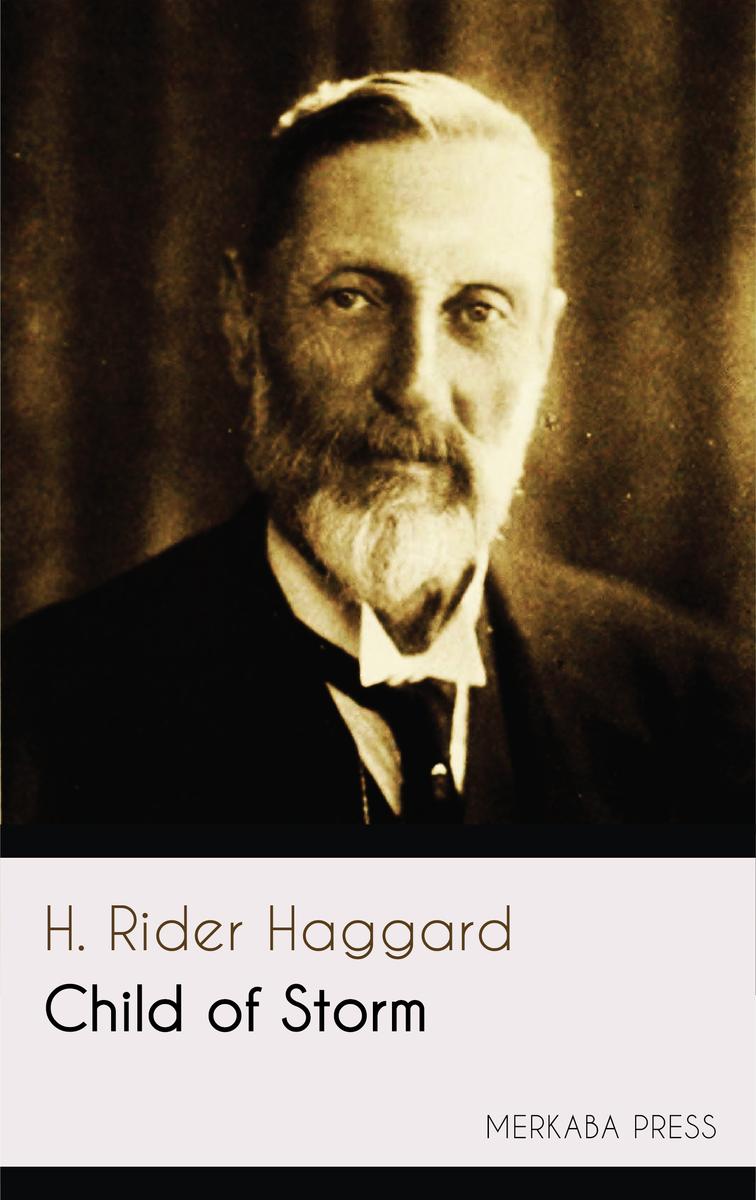
Dodo Collections brings you another classic from H. Rider Haggard, ‘The Wizard’. ? "The Wizard," H. Rider Haggard's 21st novel out of an eventual 58, was initially released as a serial in a publication called "The African Review" and then in its complete form in the October 29, 1896 "Arrowsmith's Christmas Annual for Boys." It was the third of four African novels that Haggard wrote from 1895-97, the others being "Black Heart and White Heart," "Swallow" and "Elissa,". "The Wizard" tells the story of Thomas Owen, a British missionary whom ventures into the wilds of south central Africa to bring the Good Word to a tribe called the Amasuka, or the Children of Fire. ? H. Rider Haggard practically invented the "journey-to-a-lost-civilization" adventure genre, which captured the public's imagination.? He traveled the world, spending much time in southern Africa.? These exotic experiences influenced all his works.? He wrote best-selling adventure stories on a dare. All his writings reflect a deep appreciation of humanity in the midst of extraordinary fantasy and adventure. In all, he wrote over 40 novels. ? Haggard — was an English writer of adventure novels set in exotic locations, predominantly Africa, and a pioneer of the Lost World literary genre. He was also involved in agricultural reform throughout the British Empire. His stories, situated at the lighter end of Victorian literature, continue to be popular and influential. ? His novels portray many of the stereotypes associated with colonialism, yet they are unusual for the degree of sympathy with which the native populations are portrayed. Africans often play heroic roles in the novels, although the protagonists are typically European (though not invariably). Notable examples are the heroic Zulu warrior Umslopogaasi and Ignosi, the rightful king of Kukuanaland, in King Solomon's Mines. Having developed an intense mutual friendship with the three Englishmen who help him regain his throne, he accepts their advice and abolishes witch-hunts and arbitrary capital punishment.
Eating in Two or Three Languages
¥8.09
Dodo Collections brings you another classic from Irvin S. Cobb, ‘Eating in Two or Three Languages.’ ? The famous book of wartime culinary memoirs by Irvin S. Cobb. ? Cobb joined the staff of the magazine Saturday Evening Post during 1911, and covered the Great War for the magazine. At the same time, he wrote a book about his experiences, published during 1915, titled Paths Of Glory. After a second visit to France to cover the Great War, Cobb publicized the achievements of the unit known as theHarlem Hellfighters, most notably, Croix de Guerre recipients Henry Lincoln Johnson and Needham Roberts. His article "Young Black Joe," published on August 24, 1918 in theSaturday Evening Post and later republished in Cobb's book, The Glory of the Coming, highlighted the discipline and courage displayed by black American soldiers fighting in Europe during World War I. The three-page article and half-page photograph reached a national audience of more than two million readers, and was widely reprinted in the black press.
The Dragon of Wantley, His Tale
¥8.09
Fantasy novel first published in 1892. According to Wikipedia: "Owen Wister (July 14, 1860 – July 21, 1938) was an American writer and "father" of western fiction."
The Escape of Mr. Trimm
¥8.09
Dodo Collections brings you another classic from Irvin Shrewsbury Cobb, ‘The Escape of Mr. Trimm.’ ? Cobb is remembered best for his humorous stories of Kentucky and is part of the American literary regionalism school. These stories were collected first in the book Old Judge Priest (1915), whose title character was based on a prominent West Kentucky judge named William Pitman Bishop. Writer Joel Harris wrote of these tales, "Cobb created a South peopled with honorable citizens, charming eccentrics, and loyal, subservient blacks, but at their best the Judge Priest stories are dramatic and compelling, using a wealth of precisely rendered detail to evoke a powerful mood."Among his other books are the humorous Speaking of Operations (1916), and anti-prohibition ode to bourbon, Red Likker (1929).
The Thunders of Silence
¥8.09
Dodo Collections brings you another classic from Irvin S. Cobb, ‘The Thunders of Silence.’ ? A disturbing, and luckily impossible to implement, story of a demagogue driven to destruction by the press. He has to be destroyed because he is treasonous--he preaches peace when the country want war. The disturbing part is that he is conspired against because of his message--peace--rather than because he is dishonest and manipulative. His vices are not the issue, his patriotism is. This "solution" works best where the press is state-controlled. It reminds me of how out of favor Soviet politicians disappeared from history books and even from photographs. ? Cobb joined the staff of the magazine Saturday Evening Post during 1911, and covered the Great War for the magazine. At the same time, he wrote a book about his experiences, published during 1915, titled Paths Of Glory. After a second visit to France to cover the Great War, Cobb publicized the achievements of the unit known as theHarlem Hellfighters, most notably, Croix de Guerre recipients Henry Lincoln Johnson and Needham Roberts. His article "Young Black Joe," published on August 24, 1918 in theSaturday Evening Post and later republished in Cobb's book, The Glory of the Coming, highlighted the discipline and courage displayed by black American soldiers fighting in Europe during World War I. The three-page article and half-page photograph reached a national audience of more than two million readers, and was widely reprinted in the black press.
Brand Blotters
¥8.09
Classic western novel, first published in 1909. "A story of the turbid life of the frontier with a charming love interest running through its pages." According to Wikipedia: "William MacLeod Raine (1871—1954), was a British-born American novelist who wrote fictional adventure stories about the American Old West."
Treatises on Friendship and Old Age
¥8.09
Accoding to Wikipedia: "Marcus Tullius Cicero (January 3, 106 BC – December 18, 43 BC; sometimes anglicized as Tully), was a Roman philosopher, statesman, lawyer, orator, political theorist, Roman consul and constitutionalist. He came from a wealthy municipal family of the equestrian order, and is widely considered one of Rome's greatest orators and prose stylists."
A Mountain Europa
¥8.09
Classic western. According to Wikipedia: "Born in Stony Point, Kentucky to John William Fox, Sr., and Minerva Worth Carr, Fox studied English at Harvard University. He graduated in 1883 before becoming a reporter in New York City. After working for both New York Times and the New York Sun, he published a successful serialization of his first novel, A Mountain Europa, in Century magazine in 1892. Two moderately successful short story collections followed, as well as his first conventional novel, The Kentuckians in 1898. Fox gained a following as a war correspondent, working for Harper's Weekly in Cuba during the Spanish-American War of 1898, where he served with the "Rough Riders." Six years later he traveled to Asia to report on the Russo-Japanese War for Scribner's magazine. Though he occasionally wrote for periodicals, after 1904, Fox dedicated much of his attention to fiction. The Little Shepherd of Kingdom Come (published in 1903) and The Trail of the Lonesome Pine (published in 1908) are arguably his most well known and successful works, entering the New York Times top ten list of bestselling novels for 1903, 1904, 1908, and 1909 respectively. Many of his works reflected the naturalist style, his childhood in Kentucky's Bluegrass region, and his life among the coal miners of Big Stone Gap, Virginia. Many of his novels were historical romances or period dramas set in that region."
The History Of The Remarkable Life Of John Sheppard Containing A Particular Acco
¥8.09
Classic Crime Press presents you The History of the Remarkable Life of John Sheppard Containing a Particular Account of His Many Robberies and Escapes in a fantastic ebook edition. ? A particular Account of his rescuing his pretended Wife from St. Giles's Round House. Of the wonderful Escape himself made from the said Round-House. Of the miraculous Escape he and his said pretended Wife made together from New-Prison, on the 25th of May last. Of his surprizing Escape from the Condemn'd Hold of Newgate on the 31st of August: Together with the true manner of his being retaken; and of his Behaviour in Newgate, till the most astonishing, and never to be forgotten Escape he made from thence, in the Night of the 15th of October. The Whole taken from the most authentick Accounts, as the Informations of divers Justices of the Peace, the several Shop-keepers above-mentioned, the principal Officers of Newgate and New Prison, and from the Confession of Sheppard made to the Rev. Mr. Wagstaff, who officiated for the Ordinary at Newgate.
Mr. Justice Raffles
¥8.09
Classic Crime Press presents you Mr. Justice Raffles in a fantastic ebook edition. ? Mr. Justice Raffles was a 1909 novel written by E.W. Hornung. It featured his popular character A. J. Raffles a well-known cricketer and gentleman thief. It was the fourth and last in his four Raffles books which had begun with The Amateur Cracksman in 1899. Unlike the three previous works, the book was a full-length novel and featured darker elements than the earlier collections of short stories. In it a jaded Raffles is growing increasingly cynical about British high society. He encounters Dan Levy, an unscrupulous moneylender, who manages to entrap a number of young men, mostly sons of the wealthy, by giving them loans and then charging huge amounts of interest. Raffles takes it upon himself to teach Levy a lesson. At the end of Hornung's second Raffles short story collection The Black Mask, Raffles and his companion Bunny Manders volunteer for service in the Second Boer War in 1899 where he was killed at the hands of the Boers. Hornung had intended this as a patriotic finale to his hero's story. However there was great popular demand for the return of the character, and a number of generous publishing offers, and Hornung agreed to write another book. In this he has been compared to Arthur Conan Doyle's decision to resurrect Sherlock Holmes after he had been killed falling over the Reichenbach Falls. Doyle had managed this by revealing that Holmes had actually survived the falls, while Hornung set Mr. Justice Raffles before the events of the Boer War. The comparison between the resurrections of Holmes and Raffles is made interesting by the fact that Doyle and Hornung were brothers-in-law. Indeed prior to resurrecting Holmes, Doyle had used much the same technique, demand had called for another Holmes story, so the book he wrote to meet this demand The Hound of the Baskervilles was set prior to Holmes's "demise".

购物车
个人中心