


 购物车
购物车 个人中心
个人中心
Many Gods
¥8.09
Dodo Collections brings you another classic from Cale Young Rice, ‘Many Gods’. Many Gods is a book of poetry written in 1910. Cale Young Rice (December 7, 1872 – January 24, 1943) was an American poet and dramatist. He was born in Dixon, Kentucky, to Laban Marchbanks Rice, a Confederate veteran and tobacco merchant, and his wife Martha Lacy. He was a younger brother of Laban Lacy Rice, a noted educator. Cale Rice grew up in Evansville, Indiana, and Louisville, Kentucky. He was educated at Cumberland University and at Harvard (A.B., 1895; A.M., 1896). He was married to the popular author Alice Hegan Rice; they worked together on several books. The marriage was childless, and Cale committed suicide by gunshot during the night of January 23–24 at his home in Louisville a year after her death due to his sorrow at losing her. His birthplace in Dixon is designated by Kentucky State Historical Marker 1508, which reads: "Birthplace of Rice brothers, Cale Young, 1872-1943, noted poet and author; Laban Lacy, 1870-1973, well-known educator and author. Lacy published The Best Poetic Works of Cale Young Rice after Cale's death. Included in famous collection is poem, "The Mystic." Cale married Alice Hegan, also a distinguished Kentucky writer. Home overlooks Memorial Garden."?
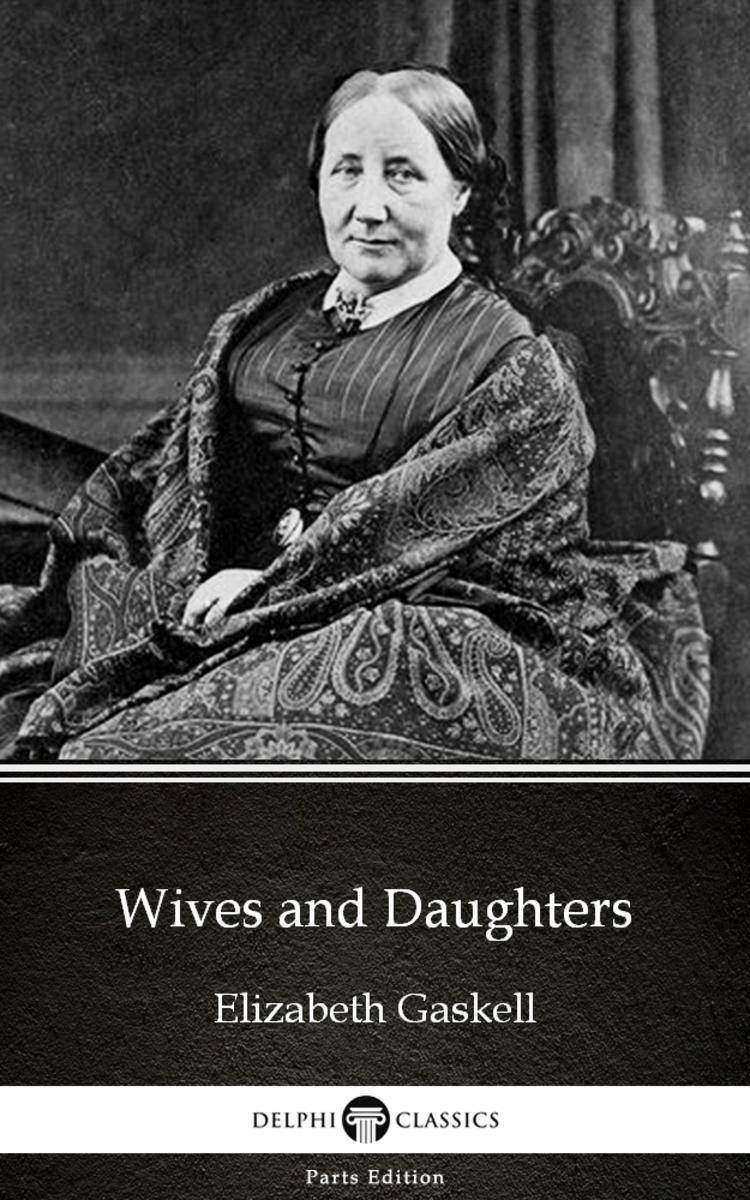
Wives and Daughters by Elizabeth Gaskell - Delphi Classics (Illustrated)
¥8.09
This eBook features the unabridged text of ‘Wives and Daughters by Elizabeth Gaskell - Delphi Classics (Illustrated)’ from the bestselling edition of ‘The Complete Works of Elizabeth Gaskell’. Having established their name as the leading publisher of classic literature and art, Delphi Classics produce publications that are individually crafted with superior formatting, while introducing many rare texts for the first time in digital print. The Delphi Classics edition of Gaskell includes original annotations and illustrations relating to the life and works of the author, as well as individual tables of contents, allowing you to navigate eBooks quickly and easily. eBook features: * The complete unabridged text of ‘Wives and Daughters by Elizabeth Gaskell - Delphi Classics (Illustrated)’ * Beautifully illustrated with images related to Gaskell’s works * Individual contents table, allowing easy navigation around the eBook * Excellent formatting of the text Please visit www.delphiclassics.com to learn more about our wide range of titles

How To Install Kodi On Fire Tv: A detailed Kodi installation Guide with Screensh
¥8.09
How To Install Kodi On Fire Tv: A detailed Kodi installation Guide with Screenshots
The Seagull
¥8.09
Space and Time are pleased to bring you The Seagull by Anton Checkov. This classic is presented as a wonderfully presented edition with a fully interactive table of contents.
William Shakespeare Complete Works – World’s Best Collection: 220+ Plays, Sonnet
¥8.09
William Shakespeare Complete Works World's Best Collection This is the world’s best William Shakespeare collection, including the most complete set of Shakespeare’s works available plus many free bonus materials. William Shakespeare Shakespeare is the first name we think of when we think of English literature. His works have an absolutely timeless quality. The ‘Must-Have’ Complete Collection In this irresistible collection you get a full set of Shakespeare’s work, including not only all his plays, poetry, annotations and commentaries on those, but also his rare, hard-to-find Apocryphal Plays. Apocryphal Plays The Apocryphal Plays, as they are known, were not as widely published as Shakespeare’s well-known works, due to not being included in the famous ‘First Folio’ published by his fellow actors. As a result, they are extremely sought-after. Electrifying argument rages over them, often being discussed more than Shakespeare’s more familiar works. The Most Famous Commentaries This ultimate collection also contains some of the most famous commentaries on Shakespeare’s works, from some of the most celebrated literature experts in history: Samuel Johnson - known as the most quoted man after Shakespeare, Johnson’s famous ‘Preface to Shakespeare’ is one of the authorities on The Bard. He also created amazing Annotations of Shakespeare’s plays. All are included. William Hazlitt - We include hs in depth analysis, Characters Of Shakespeare’s Plays, explores each play and its players. Samuel Taylor Coleridge -?His Critical Analysis is considered highly influential and extremely insightful. Shakespeare Biographies This collection also included 2 full length biographies: Life Of Shakespeare By Sidney Lee A Study In Shakespeare By Algernon Charles Swinburne Bonuses In addition, you also receive in this collection: Life of Shakespeare – A quick biography about Shakespeare’s intriguing life. Apocryphal Explanation - Commentary about the fascinating Apocryphal Plays. Get It Now This is the best Shakespeare collection you can get, so get it now and start enjoying and being inspired by his world! Works Included: Comedies, including: Merchant Of Venice Midsummer Night’s Dream Much Ado About Nothing Twelfth Night Histories, including: Henry V Richard Iii Henry Viii Tragedies, including: Romeo & Juliet Titus Andronicus Julius Caesar Macbeth Hamlet Othello Apocrypha, Including: Thomas Cromwell Edward Iii Sir Thomas More Mucedrous Merry Devil Of Edmonton All Poems and Sonnets
The Divine Comedy – World’s Best Collection
¥8.09
The Divine Comedy World's Best Collection This is the best Divine Comedy Collection available, including the most famous translations of this legendary works plus many extra free bonus materials. The Divine Comedy The Divine Comedy (Italian: Divina Commedia), better known sometimes as ‘Dante’s Inferno’, ‘Dante’s Purgatory’ or ‘Dante’s Paradise’, is an epic poem written by Dante Alighieri, considered the preeminent work of Italian literature, and one of the greatest works of world literature. The poem’s imaginative and allegorical vision is divided into three parts: Inferno, Purgatorio, and Paradiso.On the surface, the poem describes Dante’s travels through Hell, Purgatory, and Heaven, but is a deep metaphor for the soul’s journey towards God The ‘Must-Have’ Complete Collection In this irresistible collection you get the 4 most famous and well known translations of Dante’s immortal work, in Prose and Verse, Plus Notes on the Poem, as well as a biography so you can experience the life of the man behind the words. We also include other bonus material. Works Included: Translated by Courtney Langdon Dante’s The Divine Comedy - Verse Hell (Inferno), Purgatory And Paradise Translated by Henry Wadsworth Longfellow Dante’s The Divine Comedy - Verse Hell (Inferno), Purgatory And Paradise Plus Six Sonnets On Dante’s Divine Comedy By Henry Wadsworth Longfellow Translated by Rev. H. F. Cary, A.M. Dante’s The Divine Comedy - Verse Hell (Inferno), Purgatory And Paradise Translated by Charles Eliot Norton Dante’s The Divine Comedy - Prose Hell (Inferno), Purgatory And Paradise Your Free Special Bonuses Other Poetry Of Dante -?Dante’s lesser known, but equally as intriguing and important poetry, including: Love and the Gentle Heart O Intelligence Moving The Third Heaven Of Beauty and Duty The Thorn Forest Eclogues Dante - The Central Man Of All The World -?Biography of Dante?and Analysis of The Divine Comedy. Get This Collection Right Now This is the best Dante and Divine Comedy collection you can get, so get it now and start delving into this magnificent epic poem like never before!
Louisa May Alcott Complete Works – World’s Best Collection: 60+ Works
¥8.09
Louisa May Alcott Complete Works World's Best Collection This is the world’s best Louisa May Alcott collection, including the most complete set of Alcott’s works available plus many free bonus materials. Louisa May Alcott Louisa May Alcott was an American novelist best known as author of the novel Little Women. She was raised by her transcendentalist parents and she grew up among many of the well-known intellectuals of the day such as Ralph Waldo Emerson, Nathaniel Hawthorne, and Henry David Thoreau. Nevertheless, her family suffered severe financial difficulties and Alcott worked to help support the family from an early age. The ‘Must-Have’ Complete Collection In this irresistible collection you get a full set of Louisa May Alcott’s work with more than 100 works - All her books, All her novels, and All her short stories. Plus there is Extra Bonus Material and a full length Biography. Works Including: Little Women and its sequel Good Wives Little Men: Life At Plumfield With Jo’s Boys Jo’s Boys: Sequel To Little Men? Under The Lilacs? Flower Fables? A Modern Cinderella; Or The Little Old Shoe And Other Stories? The Candy Country Eight Cousins and??Rose In Bloom - A Sequel To ‘Eight Cousins' An Old-Fashioned Girl Your Free Special Bonuses Louisa May Alcott - Her Life, Letters, And Journals?- Edited By Ednah D. Cheney – A biography and collection of Alcott’s intriguing correspondence. The Poetry Of Louisa May Alcott?- A complete set of Alcott’s rare poems. Get This Collection Right Now This is the best Alcott collection you can get, so get it now and start enjoying and being inspired by her world like never before!
The Mysterious Island
¥8.67
Hard Times – For These Times (commonly known as "Hard Times") is the tenth novel by Charles Dickens, first published in 1854. The book appraises English society and highlights the social and economic pressures of the times. Hard Times is unusual in several respects. It is by far the shortest of Dickens' novels, barely a quarter of the length of those written immediately before and after it. Also, unlike all but one of his other novels, Hard Times has neither a preface nor illustrations. Moreover, it is his only novel not to have scenes set in London. Instead the story is set in the fictitious Victorian industrial Coketown, a generic Northern English mill-town, in some ways similar to Manchester, though smaller. Coketown may be partially based on 19th-century Preston. One of Dickens's reasons for writing Hard Times was that sales of his weekly periodical, Household Words, were low, and it was hoped the novel's publication in instalments would boost circulation – as indeed proved to be the case. Since publication it has received a mixed response from critics. Critics such as George Bernard Shaw and Thomas Macaulay have mainly focused on Dickens's treatment of trade unions and his post–Industrial Revolution pessimism regarding the divide between capitalist mill owners and undervalued workers during the Victorian era. F. R. Leavis, a great admirer of the book, included it—but not Dickens' work as a whole—as part of his Great Tradition of English novels. ***‘Now, what I want is, Facts. Teach these boys and girls nothing but Facts. Facts alone are wanted in life. Plant nothing else, and root out everything else. You can only form the minds of reasoning animals upon Facts: nothing else will ever be of any service to them. This is the principle on which I bring up my own children, and this is the principle on which I bring up these children. Stick to Facts, sir!’ ? ?The scene was a plain, bare, monotonous vault of a school-room, and the speaker’s square forefinger emphasized his observations by underscoring every sentence with a line on the schoolmaster’s sleeve. The emphasis was helped by the speaker’s square wall of a forehead, which had his eyebrows for its base, while his eyes found commodious cellarage in two dark caves, overshadowed by the wall. The emphasis was helped by the speaker’s mouth, which was wide, thin, and hard set. The emphasis was helped by the speaker’s voice, which was inflexible, dry, and dictatorial. The emphasis was helped by the speaker’s hair, which bristled on the skirts of his bald head, a plantation of firs to keep the wind from its shining surface, all covered with knobs, like the crust of a plum pie, as if the head had scarcely warehouse-room for the hard facts stored inside. The speaker’s obstinate carriage, square coat, square legs, square shoulders,—nay, his very neckcloth, trained to take him by the throat with an unaccommodating grasp, like a stubborn fact, as it was,—all helped the emphasis. ‘In this life, we want nothing but Facts, sir; nothing but Facts!’The speaker, and the schoolmaster, and the third grown person present, all backed a little, and swept with their eyes the inclined plane of little vessels then and there arranged in order, ready to have imperial gallons of facts poured into them until they were full to the brim.
Macbeth
¥8.67
Demagóg, ?rült, gazember? Népvezér, próféta, mártír? E két véglet k?z?tt ingadozott Szálasi Ferenc megítélése kortársai szemében. Az utókor azonban k?zel sem ilyen megosztott személyét illet?en, Szálasi a 20. századi magyar t?rténelem talán legelutasítottabb alakja. K?tetünkben arra keressük a választ, miként vált azzá. Miért lépett egyáltalán a politika színpadára otthagyva ezzel a biztos karriert kínáló katonaságot? Milyen célok vezették? Mit gondolt és mit tett politikusként? Szálasi életútjának állomásairól számos egykori dokumentum vall, ami lehet?séget ad, hogy t?bb, olykor lényegesen eltér? néz?pontokból vizsgálhassuk ugyanazt az eseményt. K?nyvünkben megkíséreljük a sok esetben részrehajló – vagy éppen elfogult – kortársak írásai alapján áttekinteni Szálasi életútját: a katonáét, az ideológusét, a politikusét – gyermekkorától egészen haláláig. Végül pedig azt is bemutatjuk, miként viszonyul hozzá az utókor. A k?tetet életrajzi kronológia, válogatott bibliográfia, valamint térképek teszik teljessé. PAKSA RUDOLF 1981-ben született Ajkán, az ELTE-n doktorált t?rténelemb?l és 2009 októberét?l az MTA BTK T?rténettudományi Intézetének a munkatársa. ?rdekl?dési területe a modern kori magyar t?rténelem; kutatásai súlypontja a 19–20. századi historiográfia, a régi E?tv?s Collegium, valamint a Horthy-kori széls?jobboldali irányzatok.
Csongor és Tünde
¥8.67
Apokrif evangélium vagy egyszer? imak?nyv? Hamisítvány vagy hiteles t?rténeti emlék? Elfeledett írás vagy szuperbiztos kód, esetleg mesterséges nyelv? Magyar, román, szanszkrit, latin, netalán t?r?k? A Rohonci kódex hírnevét kül?n?s kett?sség jellemzi: helyet kapott a világt?rténelem megfejtetlen írásainak illusztris társaságában, mik?zben a legutóbbi id?kig komoly kísérlet nem t?rtént rejtélyes jeleinek elolvasására. L?NG BENEDEK k?nyve egy izgalmas nyomozás t?rténete, amelyet a szerz? e Budapesten ?rz?tt, titokzatos és gazdagon illusztrált kódex megfejtése érdekében folytatott. A fiatal tudományt?rténész minden részletre kiterjed?, alapos vizsgálata során az olvasó beavatást nyerhet a máig megfejtetlen, rejtélyes k?nyvek világába, a titkosírások és a kódok t?rténetébe, valamint a rejtjelfejtés hagyományos és modern módszereibe is. Láng Benedek 1974-ben született Budapesten. T?rténészként végzett az ELTE b?lcsészkarán, jelenleg a Budapesti M?szaki és Gazdaságtudományi Egyetemen oktat humán és társadalomtudományi tárgyakat. Kutatóként az elfogadott és elutasított tudomány határterületei érdeklik mind t?rténeti, mind elméleti szempontból. Ez utóbbi kérdésk?rr?l t?bb k?nyve is megjelent. Budapesten él, n?s, két gyermek apja.
Pride and Prejudice
¥8.67
Meddig él velünk a kommunista diktatúra emléke? ?s mit kezdjünk vele, ha már nem tudjuk elfelejteni? – így fogalmazhatók meg r?viden Kukorelly Endre Rom cím? k?nyvének alapkérdései. Pontosabb volna egyes szám els? személyben kérdezni, hiszen a k?nyv mindvégig így és innen beszél k?z?s t?rténetünkr?l: már ezzel elhárítva a hamis k?z?sségiség mítoszait és nyomasztó beszédmódjait. Ironikusan, ?nironikusan rákérdez arra, amit ma a térség legszívesebben elfelejtene, illetve amir?l kínzóan ostoba ?nigazoló t?rténeteket gyárt. Kukorelly Endre kikezdi ezt a fárasztó, ?nigazoló retorikát, ám a k?nyv beszél?je nem áltatja az olvasót, hogy ? kívülálló lenne, aki már akkor is átlátott a szitán. Nem, csak éppen meg?rizte ízlését és humorát, ami talán elég ahhoz, hogy hitelesen beszélhessen az ízléstelenség és kedélytelenség világáról. Ami nem csak a múlt.?
Dorothy and the Wizard in Oz
¥8.67
Kijárat az Adriára cím? nagysiker? munkája után Lovas Ildikó újabb regénye a mai divatos n?irodalommal száll szembe, a test, az érzékiség nyelvét nem radikalizálja tovább, hanem ?visszavesz” bel?le, mivel rendkívüli tudatossággal újra és újra az ártatlanság nyelvén akar szólni. A Spanyol menyasszony az erotikus krimi és a klasszikus lányregény mesteri ?tv?zete. A regény két síkon játszódik, az egyik az én-elbeszél? kiskamaszkoráig vezet vissza, míg a másik a neves orvos-író Csáth Géza feleségének, Jónás Olgának az utolsó napját beszéli el, abból próbálja megfejteni az író és felesége kegyetlenül túlf?t?tt, és tragédiába torkolló kapcsolatát.
El Arte de la Guerra
¥8.82
El arte de la guerra es un libro sobre tácticas y estrategias militares, inspirado por Sun Tzu, un famoso autor militar.
The Code of Hammurabi
¥8.82
The Code of Hammurabi (Codex Hammurabi) is a well-preserved ancient law code, created ca. 1790 BC (middle chronology) in ancient Babylon. It was enacted by the sixth Babylonian king, Hammurabi. One nearly complete example of the Code survives today, inscribed on a seven foot, four inch tall basalt stele in the Akkadian language in the cuneiform script. One of the first written codes of law in recorded history. These laws were written on a stone tablet standing over eight feet tall (2.4 meters) that was found in 1901.
The Prince (Hackett Classics)
¥8.82
Il Principe (The Prince) is a political treatise by the Florentine public servant and political theorist Niccolò Machiavelli. Originally called De Principatibus (About Principalities), it was written in 1513, but not published until 1532, five years after Machiavelli's death. The treatise is not representative of the work published during his lifetime, but it is the most remembered, and the work responsible for bringing "Machiavellian" into wide usage as a pejorative term. It has also been suggested by some critics that the piece is, in fact, a satire.
On Liberty
¥8.82
On Liberty is a philosophical work by 19th century English philosopher John Stuart Mill, first published in 1859. To the Victorian readers of the time it was a radical work, advocating moral and economic freedom of individuals from the state.
Utilitarianism
¥8.82
John Stuart Mill's book Utilitarianism is a philosophical defense of utilitarianism in ethics. The essay first appeared as a series of three articles published in Fraser's Magazine in 1861; the articles were collected and reprinted as a single book in 1863. It went through four editions during Mill's lifetime with minor additions and revisions. Although Mill includes discussions of utilitarian ethical principles in other works such as On Liberty and The Subjection of Women, Utilitarianism contains Mill's only major discussion of the fundamental grounds for utilitarian ethical theory.
The Art of War
¥8.82
The Art of War is a Chinese military treatise that was written during the 6th century BC by Sun Tzu. Composed of 13 chapters, each of which is devoted to one aspect of warfare, it has long been praised as the definitive work on military strategies and tactics of its time. The Art of War is one of the oldest books on military strategy in the world. It is the first and one of the most successful works on strategy and has had a huge influence on Eastern and Western military thinking, business tactics, and beyond. Sun Tzu was the first to recognize the importance of positioning in strategy and that position is affected both by objective conditions in the physical environment and the subjective opinions of competitive actors in that environment. He taught that strategy was not planning in the sense of working through a to-do list, but rather that it requires quick and appropriate responses to changing conditions.
The Communist Manifesto
¥8.82
Manifesto of the Communist Party (German: Manifest der Kommunistischen Partei), often referred to as The Communist Manifesto, was first published on February 21, 1848, and is one of the world's most influential political manuscripts. Commissioned by the Communist League and written by communist theorists Karl Marx and Friedrich Engels, it laid out the League's purposes and program. The Manifesto suggested a course of action for a proletarian (working class) revolution to overthrow the bourgeois social order and to eventually bring about a classless and stateless society, and the abolition of private property.
Aristotle: The Complete Works
¥8.82
Part 1: Logic (Organon) Categories, translated by E. M. Edghill On Interpretation, translated by E. M. Edghill Prior Analytics (2 Books), translated by A. J. Jenkinson Posterior Analytics (2 Books), translated by G. R. G. Mure Topics (8 Books), translated by W. A. Pickard-Cambridge Sophistical Refutations, translated by W. A. Pickard-Cambridge Part 2: Universal Physics Physics (8 Books), translated by R. P. Hardie and R. K. Gaye On the Heavens (4 Books), translated by J. L. Stocks On Gerneration and Corruption (2 Books), translated by H. H. Joachim Meteorology (4 Books), translated by E. W. Webster Part 3: Human Physics On the Soul (3 Books), translated by J. A. Smith On Sense and the Sensible, translated by J. I. Beare On Memory and Reminiscence, translated by J. I. Beare On Sleep and Sleeplessness, translated by J. I. Beare On Dreams, translated by J. I. Beare On Prophesying by Dreams, translated by J. I. Beare On Longevity and Shortness of Life, translated by G. R. T. Ross On Youth, Old Age, Life and Death, and Respiration, translated by G. R. T. Ross Part 4: Animal Physics The History of Animals (9 Books), translated by D'Arcy Wentworth Thompson On the Parts of Animals (4 Books), translated by William Ogle On the Motion of Animals, translated by A. S. L. Farquharson On the Gait of Animals, translated by A. S. L. Farquharson On the Generation of Animals (5 Books), translated by Arthur Platt Part 5: Metaphysics (15 Books), translated by W. D. Ross Part 6: Ethics and Politics Nicomachean Ethics (10 Books), translated by W. D. Ross Politics (8 Books), translated by Benjamin Jowett The Athenian Constitution, translated by Sir Frederic G. Kenyon Part 7: Aesthetic Writings Rhetoric (3 Books), translated by W. Rhys Roberts Poetics, translated by S. H. Butcher
The Wealth of Nations
¥8.82
Adam Smith's masterpiece, first published in 1776, is the foundation of modern economic thought and remains the single most important account of the rise of, and the principles behind, modern capitalism. Written in clear and incisive prose, The Wealth of Nations articulates the concepts indispensable to an understanding of contemporary society.


