


 购物车
购物车 个人中心
个人中心

PostgreSQL Server Programming
¥90.46
This practical guide leads you through numerous aspects of working with PostgreSQL. Step by step examples allow you to easily set up and extend PostgreSQL. "PostgreSQL Server Programming" is for moderate to advanced PostgreSQL database professionals. To get the best understanding of this book, you should have general experience in writing SQL, a basic idea of query tuning, and some coding experience in a language of your choice.

Microsoft Dynamics CRM 2011 Reporting
¥90.46
The book is a focused and step-by-step tutorial on Microsoft Dynamics CRM Reporting capabilities. It will enable Dynamics developers to create and manage reports, know what tools to use, how to use them, and where to find the data based on how it’s being entered into the system with Dynamics CRM.This book is great for users and developers new to the Dynamics CRM Reports and SQL Server Reporting services, and who are looking to get a good grounding in how to use the reporting capabilities of Dynamics CRM 2011. It’s assumed that you will have some experience in HTML and JavaScript already to build the advanced reports, but no previous programming experience is required to build and learn how to create some basic to intermediate reports, which will be used during the exercises within this book.

OpenGL Development Cookbook
¥90.46
The book is written in a Cookbook format with practical recipes aimed at helping you exploit OpenGL to its full potential.This book is targeted towards intermediate OpenGL programmers. However, those who are new to OpenGL and know an alternate API like DirectX might also find these recipes useful to create OpenGL animations.

Express Web Application Development
¥90.46
Express Web Application Development is a practical introduction to learning about Express. Each chapter introduces you to a different area of Express, using screenshots and examples to get you up and running as quickly as possible.If you are looking to use Express to build your next web application, "Express Web Application Development" will help you get started and take you right through to Express' advanced features. You will need to have an intermediate knowledge of JavaScript to get the most out of this book.
Atlassian Confluence 5 Essentials
¥90.46
Atlassian Confluence 5 Essentials is written in a friendly, tutorial style packed full of practical information to help get you started with Confluence and collaborating on projects more efficiently.If you just started with Confluence, as a user or administrator, this book will give you a running start and teach you everything you need to know. This book will also appeal to veteran users as it will give you new insights and tricks for how to use Confluence even more efficiently. All you need to get started with this book is some basic knowledge on how to use an Internet browser. As an administrator, you will need some basic knowledge about your organization’s standard operating environment to install Confluence.
Optimizing Citrix? XenDesktop? for High Performance
¥90.46
Successfully deploy XenDesktop sites for a high performance Virtual Desktop Infrastructure (VDI) About This Book Size the VDI environment so the administrator has breathing room to design and build their XenDesktop systems efficiently Use desktop virtualization tools to provide users fast, convenient access to their Windows Desktops Understand the key pinch points in the resource layers such as; the Client layer, Network Layer, Access Layer, Control Layer, Services Layer and Resources Layer Who This Book Is For Citrix XenDesktop High Performance is written for administrators who would like to deploy Citrix XenDesktop in their enterprises with the aim of providing high efficiency. Basic familiarity with Citrix XenDesktop is assumed. What You Will Learn Understand key concepts, terminology, and system requirements Discover how components work in regards to virtualization and performance Identify architectural resource layers and components Explore the hypervisor virtualization software that runs on top of the hardware and learn how to tune it for maximum performance Analyze client hardware and software, including thin clients and mobile devices In Detail Citrix XenDesktop is a suite of desktop virtualization tools designed to provide users with fast and convenient access to their Windows desktops and applications through any device. Virtual desktops mean that rather than setting up hundreds or thousands of individual computers in an enterprise, companies can instead opt to create servers with large amounts of memory, disk, and processing resources, and use virtualization to offer these resources to end users. The result of this is that users are provided with an experience that appears to be identical to having an individual desktop PC. Each user has some disk space, processor time, and memory allocated to them, as though it is present on their own physical machine, when in reality, the resources are physically present on a centralized server. This book starts by answering the basic questions you need to ask when considering XenDesktop, followed by methods of how you can properly size your server infrastructure for XenDesktop. You’ll discover how to optimize the virtual machines used in XenDesktop, how to optimize your network for XenDesktop, and how to optimize the hypervisor and the cloud. You’ll also learn how to monitor XenDesktop to maximize performance. By the end of the book, you will be able to plan, design, build, and deploy high performance XenDesktop Virtualization systems in enterprises. You will also know how to monitor and maintain your systems to ensure smooth operation. Style and approach This book is an all-inclusive guide that uncovers hidden and previously unpublished performance improvement areas for any XenDesktop site.
Scala Functional Programming Patterns
¥90.46
Grok and perform effective functional programming in Scala About This Book Understand functional programming patterns by comparing them with the traditional object-oriented design patterns Write robust, safer, and better code using the declarative programming paradigm An illustrative guide for programmers to create functional programming patterns with Scala Who This Book Is For If you have done Java programming before and have a basic knowledge of Scala and its syntax, then this book is an ideal choice to help you to understand the context, the traditional design pattern applicable, and the Scala way. Having previous knowledge of design patterns will help, though it is not strictly necessary. What You Will Learn Get to know about functional programming and the value Scala's FP idioms bring to the table Solve day-to-day programming problems using functional programming idioms Cut down the boiler-plate and express patterns simply and elegantly using Scala's concise syntax Tame system complexity by reducing the moving parts Write easier to reason about concurrent code using the actor paradigm and the Akka library Apply recursive thinking and understand how to create solutions without mutation Reuse existing code to compose new behavior Combine the object-oriented and functional programming approaches for effective programming using Scala In Detail Scala is used to construct elegant class hierarchies for maximum code reuse and extensibility and to implement their behavior using higher-order functions. Its functional programming (FP) features are a boon to help you design “easy to reason about” systems to control the growing software complexities. Knowing how and where to apply the many Scala techniques is challenging. Looking at Scala best practices in the context of what you already know helps you grasp these concepts quickly, and helps you see where and why to use them. This book begins with the rationale behind patterns to help you understand where and why each pattern is applied. You will discover what tail recursion brings to your table and will get an understanding of how to create solutions without mutations. We then explain the concept of memorization and infinite sequences for on-demand computation. Further, the book takes you through Scala’s stackable traits and dependency injection, a popular technique to produce loosely-coupled software systems. You will also explore how to currying favors to your code and how to simplify it by de-construction via pattern matching. We also show you how to do pipeline transformations using higher order functions such as the pipes and filters pattern. Then we guide you through the increasing importance of concurrent programming and the pitfalls of traditional code concurrency. Lastly, the book takes a paradigm shift to show you the different techniques that functional programming brings to your plate. This book is an invaluable source to help you understand and perform functional programming and solve common programming problems using Scala’s programming patterns. Style and approach This is a hands-on guide to Scala's game-changing features for programming. It is filled with many code examples and figures that illustrate various Scala idioms and best practices.
Learning Linux Shell Scripting
¥90.46
Unleash the power of shell *s to solve real-world problems by breaking through the practice of writing tedious code About This Book Learn how to efficiently and effectively build shell *s and develop advanced applications with this handy book Develop high quality and efficient solutions by writing professional and real-world *s, and debug *s by checking and shell tracing A step-by-step tutorial to automate routine tasks by developing *s from a basic level to very advanced functionality Who This Book Is For This book is ideal for those who are proficient at working with Linux and who want to learn about shell *ing to improve their efficiency and practical skills. By the end of this book, you will be able to confidently use your own shell *s in the real world. What You Will Learn Familiarize yourself with the various text filtering tools available in Linux Combine the fundamental text and file processing commands to process data and automate repetitive tasks Understand expressions and variables and how to use them practically Automate decision-making and save a lot of time and effort of revisiting code Get to grips with advanced functionality such as using traps and signals and using dialogs to develop screens Start up a system and customize a Linux system Take an in-depth look at regular expressions and pattern matching to understand the capabilities of *ing In Detail Linux is the one of the most powerful and universally adopted OSes. Shell is a program that gives the user direct interaction with the operating system. Scripts are collections of commands that are stored in a file. The shell can read this file and act on the commands as if they were typed on the keyboard. Shell *ing is used to automate day-to-day administration, and for testing or product development tasks.This book covers Bash, GNU Bourne Again SHell, preparing you to work in the exciting world of Linux shell *ing. We start with an introduction to the Shell environment and explain basic commands used in Shell. Next we move on to check, kill, and control the execution of processes in Linux OS. Further, we teach you about the filter tools available in Linux and explain standard output and standard errors devices.Then we will ensure you understand Shell’s interpretation of commands and get a firmer grasp so you use them in practice. Next, you’ll experience some real-world essentials such as debugging and perform Shell arithmetic fluently. Then you’ll take a step ahead and learn new and advanced topics in Shell *ing, such as starting up a system and customizing a Linux system. Finally, you’ll get to understand the capabilities of *ing and learn about Grep, Stream Editor, and Awk.Style and approach This practical book will go from the very basics of shell *ing to complex, customized automation. The idea behind this book is to be as practical as possible and give you the look and feel of what real-world *ing is like.
Mastering RStudio – Develop, Communicate, and Collaborate with R
¥90.46
Harness the power of RStudio to create web applications, R packages, markdown reports and pretty data visualizationsAbout This BookDiscover the multi-functional use of RStudio to support your daily work with R codeLearn to create stunning, meaningful, and interactive graphs and learn to embed them into easy communicable reports using multiple R packagesDevelop your own R packages and Shiny web apps to share your knowledge and collaborate with others.Who This Book Is ForThis book is aimed at R developers and analysts who wish to do R statistical development while taking advantage of RStudio’s functionality to ease their development efforts. R programming experience is assumed as well as being comfortable with R’s basic structures and a number of functions.What You Will LearnDiscover the RStudio IDE and details about the user interfaceCommunicate your insights with R Markdown in static and interactive waysLearn how to use different graphic systems to visualize your dataBuild interactive web applications with the Shiny framework to present and share your resultsUnderstand the process of package development and assemble your own R packagesEasily collaborate with other people on your projects by using Git and GitHubManage the R environment for your organization with RStudio and Shiny serverApply your obtained knowledge about RStudio and R development to create a real-world dashboard solutionIn DetailRStudio helps you to manage small to large projects by giving you a multi-functional integrated development environment, combined with the power and flexibility of the R programming language, which is becoming the bridge language of data science for developers and analyst worldwide. Mastering the use of RStudio will help you to solve real-world data problems.This book begins by guiding you through the installation of RStudio and explaining the user interface step by step. From there, the next logical step is to use this knowledge to improve your data analysis workflow. We will do this by building up our toolbox to create interactive reports and graphs or even web applications with Shiny. To collaborate with others, we will explore how to use Git and GitHub with RStudio and how to build your own packages to ensure top quality results. Finally, we put it all together in an interactive dashboard written with R.Style and approachAn easy-to-follow guide full of hands-on examples to master RStudio.Beginning from explaining the basics, each topic is explained with a lot of details for every feature.
Machine Learning with Core ML
¥90.46
Leverage the power of Apple's Core ML to create smart iOS apps About This Book ? Explore the concepts of machine learning and Apple’s Core ML APIs ? Use Core ML to understand and transform images and videos ? Exploit the power of using CNN and RNN in iOS applications Who This Book Is For Machine Learning with Core ML is for you if you are an intermediate iOS developer interested in applying machine learning to your mobile apps. This book is also for those who are machine learning developers or deep learning practitioners who want to bring the power of neural networks in their iOS apps. Some exposure to machine learning concepts would be beneficial but not essential, as this book acts as a launchpad into the world of machine learning for developers. What You Will Learn ? Understand components of an ML project using algorithms, problems, and data ? Master Core ML by obtaining and importing machine learning model, and generate classes ? Prepare data for machine learning model and interpret results for optimized solutions ? Create and optimize custom layers for unsupported layers ? Apply CoreML to image and video data using CNN ? Learn the qualities of RNN to recognize sketches, and augment drawing ? Use Core ML transfer learning to execute style transfer on images In Detail Core ML is a popular framework by Apple, with APIs designed to support various machine learning tasks. It allows you to train your machine learning models and then integrate them into your iOS apps. Machine Learning with Core ML is a fun and practical guide that not only demystifies Core ML but also sheds light on machine learning. In this book, you’ll walk through realistic and interesting examples of machine learning in the context of mobile platforms (specifically iOS). You’ll learn to implement Core ML for visual-based applications using the principles of transfer learning and neural networks. Having got to grips with the basics, you’ll discover a series of seven examples, each providing a new use-case that uncovers how machine learning can be applied along with the related concepts. By the end of the book, you will have the skills required to put machine learning to work in their own applications, using the Core ML APIs Style and approach An easy-to-follow step by step guide which will help you get to grips with real world application of CoreML
Java EE 8 Development with Eclipse
¥90.46
Develop and deploy fully functional applications and microservices utilising Tomcat, Glassfish servers, Cloud and docker in Java EE 8 About This Book ? Explore the complete workflow of developing enterprise Java applications ? Develop microservices with Docker Container and deploy it in cloud ? Simplify Java EE application development Who This Book Is For If you are a Java developer with little or no experience in Java EE application development, or if you have experience in Java EE technology but are looking for tips to simplify and accelerate your development process, then this book is for you. What You Will Learn ? Set up Eclipse, Tomcat, and Glassfish servers for Java EE application development ? Use JSP, Servlet, JSF, and EJBs to create a user interface and write business logic ? Create Java EE database applications using JDBC and JPA ? Handle asynchronous messages using MDBs for better scalability ? Deploy and debug Java EE applications and create SOAP and REST web services ? Write unit tests and calculate code coverage ? Use Eclipse MAT (Memory Analysis Tool) to debug memory issues ? Create and deploy microservices In Detail Java EE is one of the most popular tools for enterprise application design and development. With recent changes to Java EE 8 specifications, Java EE application development has become a lot simpler with the new specifications, some of which compete with the existing specifications. This guide provides a complete overview of developing highly performant, robust and secure enterprise applications with Java EE with Eclipse. The book begins by exploring different Java EE technologies and how to use them (JSP, JSF, JPA, JDBC, EJB, and more), along with suitable technologies for different scenarios. You will learn how to set up the development environment for Java EE applications and understand Java EE specifications in detail, with an emphasis on examples. The book takes you through deployment of an application in Tomcat, GlassFish Servers, and also in the cloud. It goes beyond the basics and covers topics like debugging, testing, deployment, and securing your Java EE applications. You'll also get to know techniques to develop cloud-ready microservices in Java EE. Style and approach This guide takes a step-by-step approach to developing, testing, debugging, and troubleshooting Java EE applications, complete with examples and tips.
Learning Malware Analysis
¥90.46
Understand malware analysis and its practical implementation About This Book ? Explore the key concepts of malware analysis and memory forensics using real-world examples ? Learn the art of detecting, analyzing, and investigating malware threats ? Understand adversary tactics and techniques Who This Book Is For This book is for incident responders, cyber-security investigators, system administrators, malware analyst, forensic practitioners, student, or curious security professionals interested in learning malware analysis and memory forensics. Knowledge of programming languages such as C and Python is helpful but is not mandatory. If you have written few lines of code and have a basic understanding of programming concepts, you’ll be able to get most out of this book. What You Will Learn ? Create a safe and isolated lab environment for malware analysis ? Extract the metadata associated with malware ? Determine malware's interaction with the system ? Perform code analysis using IDA Pro and x64dbg ? Reverse-engineer various malware functionalities ? Reverse engineer and decode common encoding/encryption algorithms ? Perform different code injection and hooking techniques ? Investigate and hunt malware using memory forensics In Detail Malware analysis and memory forensics are powerful analysis and investigation techniques used in reverse engineering, digital forensics, and incident response. With adversaries becoming sophisticated and carrying out advanced malware attacks on critical infrastructures, data centers, and private and public organizations, detecting, responding to, and investigating such intrusions is critical to information security professionals. Malware analysis and memory forensics have become must-have skills to fight advanced malware, targeted attacks, and security breaches. This book teaches you the concepts, techniques, and tools to understand the behavior and characteristics of malware through malware analysis. It also teaches you techniques to investigate and hunt malware using memory forensics. This book introduces you to the basics of malware analysis, and then gradually progresses into the more advanced concepts of code analysis and memory forensics. It uses real-world malware samples, infected memory images, and visual diagrams to help you gain a better understanding of the subject and to equip you with the skills required to analyze, investigate, and respond to malware-related incidents. Style and approach The book takes the reader through all the concepts, techniques and tools to understand the behavior and characteristics of malware by using malware analysis and it also teaches the techniques to investigate and hunt malware using memory forensics.
Java Deep Learning Projects
¥90.46
Build and deploy powerful neural network models using the latest Java deep learning libraries About This Book ? Understand DL with Java by implementing real-world projects ? Master implementations of various ANN models and build your own DL systems ? Develop applications using NLP, image classification, RL, and GPU processing Who This Book Is For If you are a data scientist, machine learning professional, or deep learning practitioner keen to expand your knowledge by delving into the practical aspects of deep learning with Java, then this book is what you need! Get ready to build advanced deep learning models to carry out complex numerical computations. Some basic understanding of machine learning concepts and a working knowledge of Java are required. What You Will Learn ? Master deep learning and neural network architectures ? Build real-life applications covering image classification, object detection, online trading, transfer learning, and multimedia analytics using DL4J and open-source APIs ? Train ML agents to learn from data using deep reinforcement learning ? Use factorization machines for advanced movie recommendations ? Train DL models on distributed GPUs for faster deep learning with Spark and DL4J ? Ease your learning experience through 69 FAQs In Detail Java is one of the most widely used programming languages. With the rise of deep learning, it has become a popular choice of tool among data scientists and machine learning experts. Java Deep Learning Projects starts with an overview of deep learning concepts and then delves into advanced projects. You will see how to build several projects using different deep neural network architectures such as multilayer perceptrons, Deep Belief Networks, CNN, LSTM, and Factorization Machines. You will get acquainted with popular deep and machine learning libraries for Java such as Deeplearning4j, Spark ML, and RankSys and you’ll be able to use their features to build and deploy projects on distributed computing environments. You will then explore advanced domains such as transfer learning and deep reinforcement learning using the Java ecosystem, covering various real-world domains such as healthcare, NLP, image classification, and multimedia analytics with an easy-to-follow approach. Expert reviews and tips will follow every project to give you insights and hacks. By the end of this book, you will have stepped up your expertise when it comes to deep learning in Java, taking it beyond theory and be able to build your own advanced deep learning systems. Style and approach A unique, learn-as-you-do approach, as the reader builds on his understanding of deep learning with Java progressively with each project. This book is designed in such a way that implementing each project will empower you with a unique skill set, and enable you to implement the next project more confidently.
NetSuite ERP for Administrators
¥90.46
Learn steps and tasks to help a NetSuite administrator perform both his daily and monthly tasks efficiently. Advance his expertise to become NetSuite leader without having to spend time and money on corporate trainings. About This Book ? Understand the business considerations and implementation of the NetSuite ERP ? Gain a deep knowledge of enterprise security, data management, process automation, and analytics ? Learn techniques to sail through system maintenance while ensuring accuracy and to practically troubleshoot issues Who This Book Is For This book is for administrators, consultants, and Project Managers who would like to improve their skills in the areas of configuration and system management. Basic experience implementing NetSuite is assumed. What You Will Learn ? Provide executives with meaningful insights into the business ? A Framework to streamline the implementation of new and existing features ? Leverage built-in tools to optimize your efficiency and effectiveness ? Test configuration to check the implementation of role-specific permissions ? Understand how to optimize the amount of data to be shared with users ? Import data like new leads and employ current data like pricing updates ? Perform on-going maintenance and troubleshoot issues In Detail NetSuite ERP is a complete, scalable cloud ERP solution targeted at fast-growing, mid-sized businesses and large enterprises. It's the smartly executed combination of financial management operations and built-in business intelligence, which enables companies to make data-driven and well-informed decisions. This book will help administrators become expert enough to be seen as the NetSuite leader at their company and to be able to advise department heads on specific processes, and strategic decisions. We start with an overview of ERP and NetSuite ERP, before going on to explain the built-in features to show the breadth of NetSuite ERP's product and its ease of use. We then discuss business aspects, focusing on the most important processes in NetSuite. Then you'll understand the implementation aspects that are generic enough to cover all the features. The focus then shifts to specific skills that you will need to administer for any system, such as roles, permissions, customization, and data imports. Moving on, you'll learn how to centralize the creation of search templates and give users the tools to pivot the data and expose it to the user in useful ways, such as on the dashboard. The book ends with checklists providing actionable steps that you as an administrator can take to do your job and support the application through new releases and troubleshooting problems. Style and approach A slow and steady introduction of topics from reports through searches with aim to enable the administrator to gain a holistic view of the NetSuite product.
PostgreSQL 10 Administration Cookbook
¥90.46
A practical guide to administer, monitor and replicate your PostgreSQL 10 database About This Book ? Get to grips with the capabilities of PostgreSQL 10 to administer your database more efficiently ? Monitor, tune, secure and protect your database for optimal performance ? A step-by-step, recipe-based guide to help you tackle any problem in PostgreSQL 10 administration with ease Who This Book Is For This book is for database administrators, data architects, developers, or anyone with an interest in planning for, or running, live production databases using PostgreSQL. It is most suited to those looking for hands-on solutions to any problem associated with PostgreSQL administration. What You Will Learn ? Get to grips with the newly released PostgreSQL 10 features to improve database performance and reliability ? Manage open source PostgreSQL versions 10 on various platforms. ? Explore best practices for planning and designing live databases ? Select and implement robust backup and recovery techniques in PostgreSQL 10 ? Explore concise and clear guidance on replication and high availability ? Discover advanced technical tips for experienced users In Detail PostgreSQL is a powerful, open source database management system with an enviable reputation for high performance and stability. With many new features in its arsenal, PostgreSQL 10 allows users to scale up their PostgreSQL infrastructure. This book takes a step-by-step, recipe-based approach to effective PostgreSQL administration. Throughout this book, you will be introduced to these new features such as logical replication, native table partitioning, additional query parallelism, and much more. You will learn how to tackle a variety of problems that are basically the pain points for any database administrator - from creating tables to managing views, from improving performance to securing your database. More importantly, the book pays special attention to topics such as monitoring roles, backup, and recovery of your PostgreSQL 10 database, ensuring high availability, concurrency, and replication. By the end of this book, you will know everything you need to know to be the go-to PostgreSQL expert in your organization. Style and approach The book is a step by step guide with example-driven recipes, focused on the new features of the latest PostgreSQL version10. This book will serve as a specific guide to understand and leverage useful PostgreSQL functionalities to create better and more efficient databases.
Beginning Data Science with Python and Jupyter
¥90.46
Getting started with data science doesn't have to be an uphill battle. This step-by-step guide is ideal for beginners who know a little Python and are looking for a quick, fast-paced introduction. About This Book ? Get up and running with the Jupyter ecosystem and some example datasets ? Learn about key machine learning concepts like SVM, KNN classifiers and Random Forests ? Discover how you can use web scraping to gather and parse your own bespoke datasets Who This Book Is For This book is ideal for professionals with a variety of job descriptions across large range of industries, given the rising popularity and accessibility of data science. You'll need some prior experience with Python, with any prior work with libraries like Pandas, Matplotlib and Pandas providing you a useful head start. What You Will Learn ? Identify potential areas of investigation and perform exploratory data analysis ? Plan a machine learning classification strategy and train classification models ? Use validation curves and dimensionality reduction to tune and enhance your models ? Scrape tabular data from web pages and transform it into Pandas DataFrames ? Create interactive, web-friendly visualizations to clearly communicate your findings In Detail Get to grips with the skills you need for entry-level data science in this hands-on Python and Jupyter course. You'll learn about some of the most commonly used libraries that are part of the Anaconda distribution, and then explore machine learning models with real datasets to give you the skills and exposure you need for the real world. We'll finish up by showing you how easy it can be to scrape and gather your own data from the open web, so that you can apply your new skills in an actionable context. Style and approach This book covers every aspect of the standard data-workflow process within a day, along with theory, practical hands-on coding, and relatable illustrations.
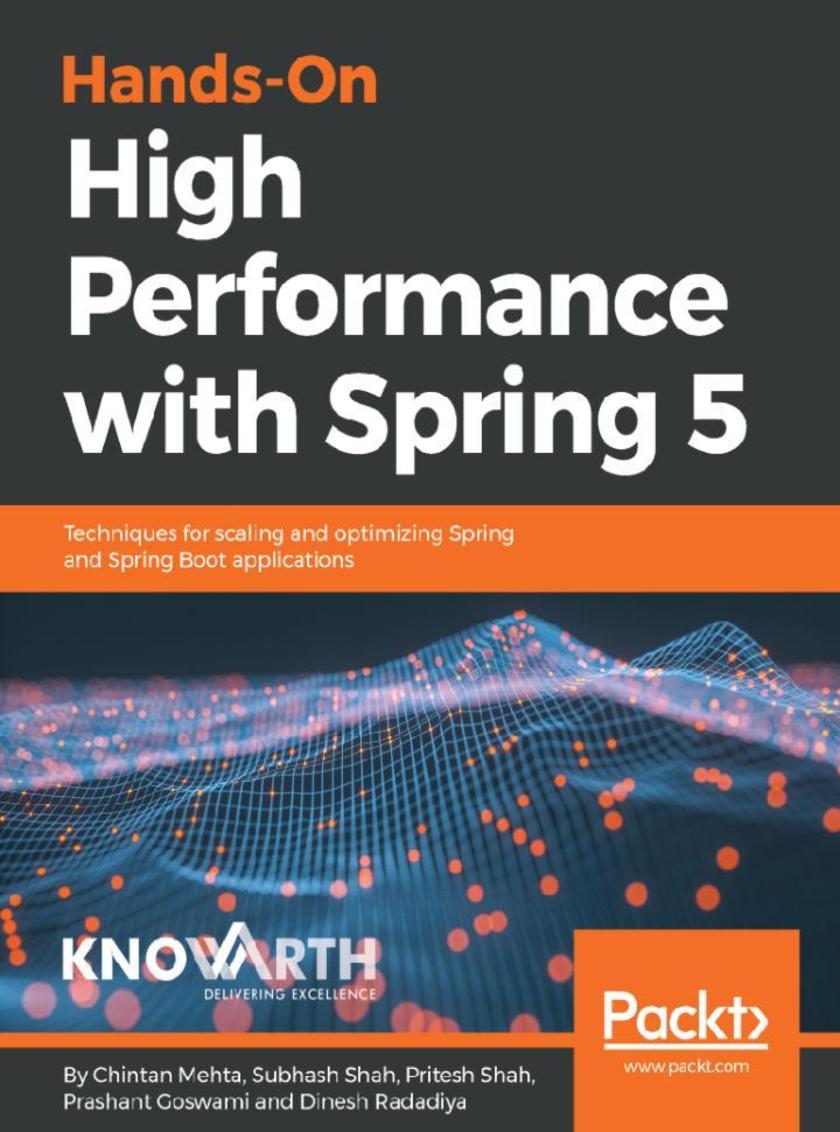
Hands-On High Performance with Spring 5
¥90.46
A hands-on guide to creating, monitoring, and tuning a high performance Spring web application About This Book ? Understand common performance pitfalls and improve your application's performance ? Build and deploy strategies for complex applications using the microservice architecture ? Understand internals of JVM - the core of all Java Runtime Environments Who This Book Is For If you’re a Spring developer who’d like to build high performance applications and have more control over your application's performance in production and development, this book is for you. Some familiarity with Java, Maven, and Eclipse is necessary. What You Will Learn ? Master programming best practices and performance improvement with bean wiring ? Analyze the performance of various AOP implementations ? Explore database interactions with Spring to optimize design and configuration ? Solve Hibernate performance issues and traps ? Leverage multithreading and concurrent programming to improve application performance ? Gain a solid foundation in JVM performance tuning using various tools ? Learn the key concepts of the microservice architecture and how to monitor them ? Perform Spring Boot performance tuning, monitoring, and health checks In Detail While writing an application, performance is paramount. Performance tuning for real-world applications often involves activities geared toward detecting bottlenecks. The recent release of Spring 5.0 brings major advancements in the rich API provided by the Spring framework, which means developers need to master its tools and techniques to achieve high performance applications. Hands-On High Performance with Spring 5 begins with the Spring framework's core features, exploring the integration of different Spring projects. It proceeds to evaluate various Spring specifications to identify those adversely affecting performance. You will learn about bean wiring configurations, aspect-oriented programming, database interaction, and Hibernate to focus on the metrics that help identify performance bottlenecks. You will also look at application monitoring, performance optimization, JVM internals, and garbage collection optimization. Lastly, the book will show you how to leverage the microservice architecture to build a high performance and resilient application. By the end of the book, you will have gained an insight into various techniques and solutions to build and troubleshoot high performance Spring-based applications. Style and approach This book takes a step-by-step approach with focused examples to teach you how to increase application performance.
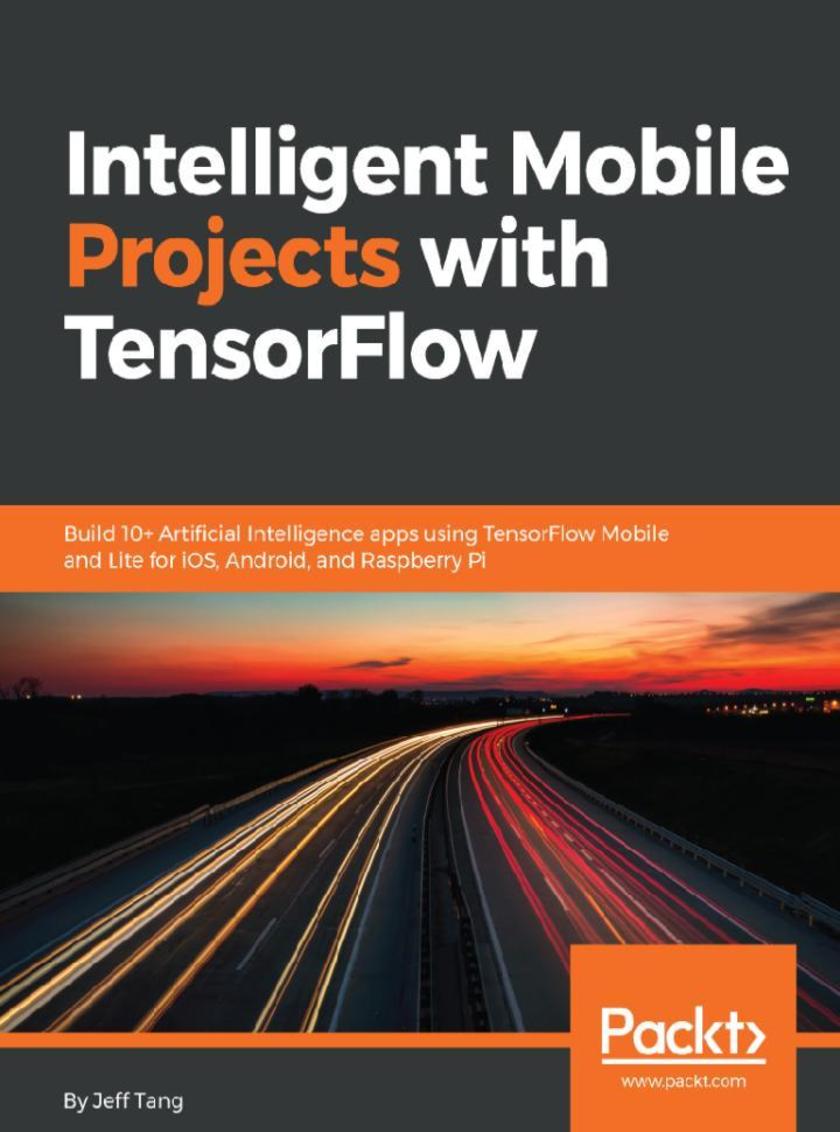
Intelligent Mobile Projects with TensorFlow
¥90.46
Create Deep Learning and Reinforcement Learning apps for multiple platforms with TensorFlow About This Book ? Build TensorFlow-powered AI applications for mobile and embedded devices ? Learn modern AI topics such as computer vision, NLP, and deep reinforcement learning ? Get practical insights and exclusive working code not available in the TensorFlow documentation Who This Book Is For If you're an iOS/Android developer interested in building and retraining others' TensorFlow models and running them in your mobile apps, or if you're a TensorFlow developer and want to run your new and amazing TensorFlow models on mobile devices, this book is for you. You'll also benefit from this book if you're interested in TensorFlow Lite, Core ML, or TensorFlow on Raspberry Pi. What You Will Learn ? Classify images with transfer learning ? Detect objects and their locations ? Transform pictures with amazing art styles ? Understand simple speech commands ? Describe images in natural language ? Recognize drawing with Convolutional Neural Network and Long Short-Term Memory ? Predict stock price with Recurrent Neural Network in TensorFlow and Keras ? Generate and enhance images with generative adversarial networks ? Build AlphaZero-like mobile game app in TensorFlow and Keras ? Use TensorFlow Lite and Core ML on mobile ? Develop TensorFlow apps on Raspberry Pi that can move, see, listen, speak, and learn In Detail As a developer, you always need to keep an eye out and be ready for what will be trending soon, while also focusing on what's trending currently. So, what's better than learning about the integration of the best of both worlds, the present and the future? Artificial Intelligence (AI) is widely regarded as the next big thing after mobile, and Google's TensorFlow is the leading open source machine learning framework, the hottest branch of AI. This book covers more than 10 complete iOS, Android, and Raspberry Pi apps powered by TensorFlow and built from scratch, running all kinds of cool TensorFlow models offline on-device: from computer vision, speech and language processing to generative adversarial networks and AlphaZero-like deep reinforcement learning. You’ll learn how to use or retrain existing TensorFlow models, build your own models, and develop intelligent mobile apps running those TensorFlow models. You'll learn how to quickly build such apps with step-by-step tutorials and how to avoid many pitfalls in the process with lots of hard-earned troubleshooting tips. Style and approach This book takes a practical, project-based approach to teach specifics of mobile development with TensorFlow. Using a reader-friendly approach, this book will provide detailed instructions and also discuss the broader context covered within.
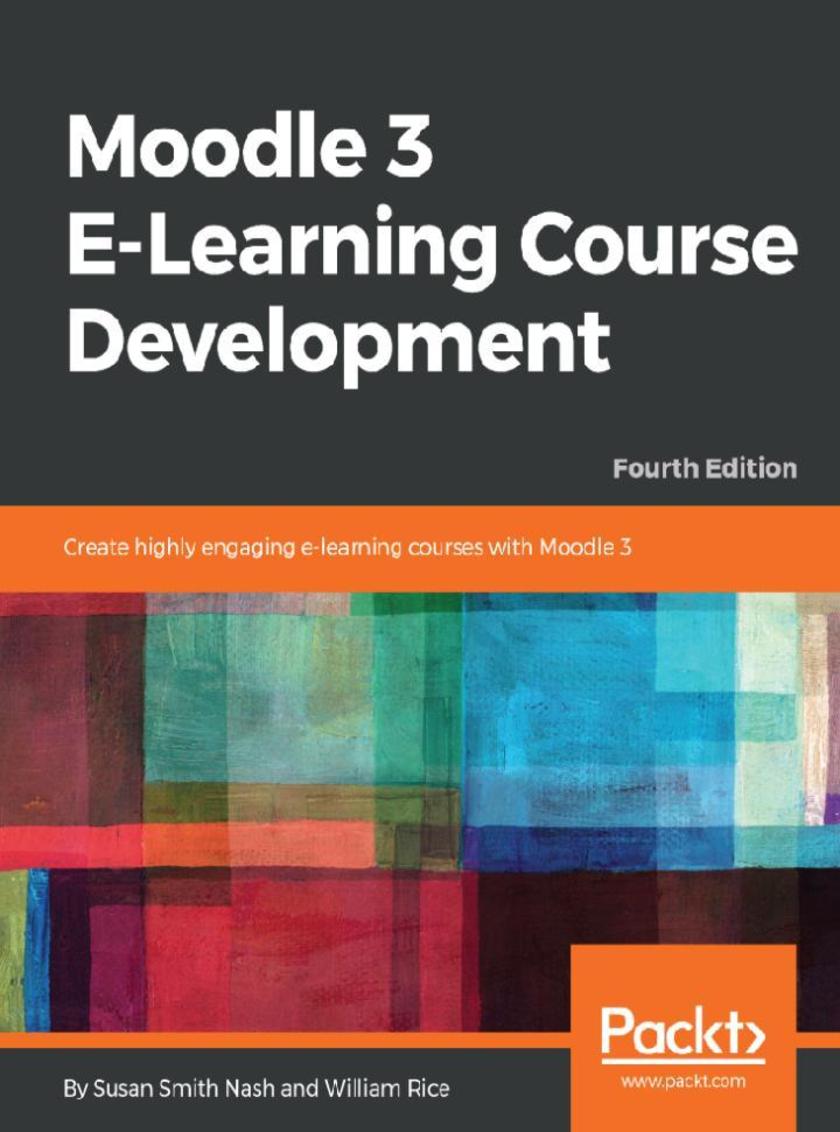
Moodle 3 E-Learning Course Development
¥90.46
A complete guide on course development and delivery using Moodle 3.x About This Book ? Get the best out of the latest Moodle 3 framework to ensure successful learning ? Gain experience in creating different kinds of courses ? Create your first Moodle VR app using the Moodle VR toolset Who This Book Is For This book is for anyone who wants to get the best out of Moodle. As a beginner, this is a thorough guide for you to understand how the software works, with great ideas for getting off to a good start with your first course. Some experience of working with e-learning systems will be beneficial. Experienced Moodle users will find powerful insights into developing successful and educational courses. What You Will Learn ? Know what Moodle does and how it supports your teaching strategies ? Install Moodle on your computer and navigate your way around it ? Understand all of Moodle's learning features ? Monitor how learners interact with your site using site statistics ? Add multimedia content to your site ? Allow students to enroll themselves or invite other students to join a course In Detail Moodle is a learning platform or Course Management System (CMS) that is easy to install and use, but the real challenge is in developing a learning process that leverages its power and maps the learning objectives to content and assessments for an integrated and effective course. Moodle 3 E-Learning Course Development guides you through meeting that challenge in a practical way. This latest edition will show you how to add static learning material, assessments, and social features such as forum-based instructional strategy, a chat module, and forums to your courses so that students reach their learning potential. Whether you want to support traditional class teaching or lecturing, or provide complete online and distance e-learning courses, this book will prove to be a powerful resource throughout your use of Moodle. You’ll learn how to create and integrate third-party plugins and widgets in your Moodle app, implement site permissions and user accounts, and ensure the security of content and test papers. Further on, you’ll implement PHP scripts that will help you create customized UIs for your app. You’ll also understand how to create your first Moodle VR e-learning app using the latest VR learning experience that Moodle 3 has to offer. By the end of this book, you will have explored the decisions, design considerations, and thought processes that go into developing a successful course. Style and approach Packed with clear step-by-step instructions, plenty of screenshots, and thorough explanations, this book guides you through the many features and options that you have to choose from when using Moodle 3.
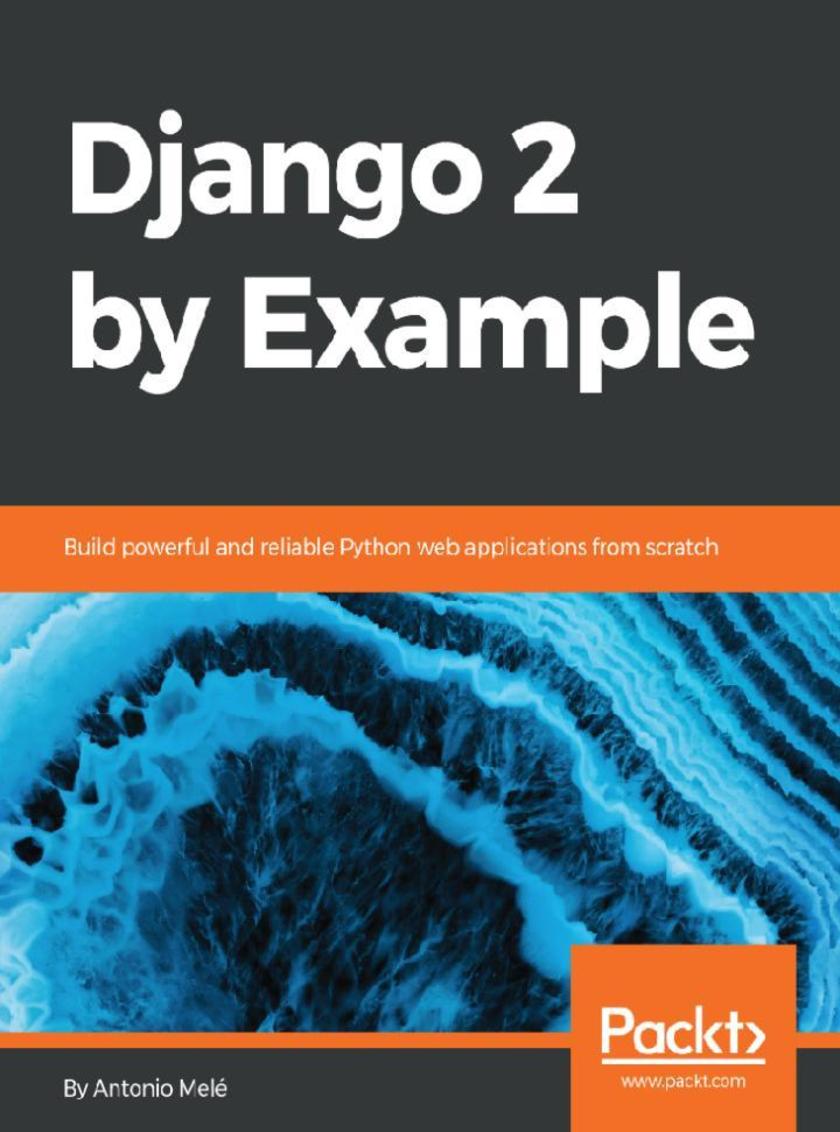
Django 2 by Example
¥90.46
Learn Django 2.0 with four end-to-end projects About This Book ? Learn Django by building real-world web applications from scratch ? Develop powerful web applications quickly using the best coding practices ? Integrate other technologies into your application with clear, step-by-step explanations and comprehensive example code Who This Book Is For If you are a web developer who wants to see how to build professional sites with Django, this book is for you. You will need a basic knowledge of Python, HTML, and JavaScript, but you don't need to have worked with Django before. What You Will Learn ? Build practical, real-world web applications with Django ? Use Django with other technologies, such as Redis and Celery ? Develop pluggable Django applications ? Create advanced features, optimize your code, and use the cache framework ? Add internationalization to your Django projects ? Enhance your user experience using JavaScript and AJAX ? Add social features to your projects ? Build RESTful APIs for your applications In Detail If you want to learn about the entire process of developing professional web applications with Django, then this book is for you. This book will walk you through the creation of four professional Django projects, teaching you how to solve common problems and implement best practices. You will learn how to build a blog application, a social image-bookmarking website, an online shop, and an e-learning platform. The book will teach you how to enhance your applications with AJAX, create RESTful APIs, and set up a production environment for your Django projects. The book walks you through the creation of real-world applications, while solving common problems and implementing best practices. By the end of this book, you will have a deep understanding of Django and how to build advanced web applications Style and approach This easy-to-follow guide takes you through the process of building four different production-ready Django projects with a simple step-by-step approach.
Mastering Spring Boot 2.0
¥90.46
Learn to develop, test, and deploy your Spring Boot distributed application and explore various best practices. About This Book ? Build and deploy your microservices architecture in the cloud ? Build event-driven resilient systems using Hystrix and Turbine ? Explore API management tools such as KONG and API documentation tools such as Swagger Who This Book Is For The book is targeted at experienced Spring and Java developers who have a basic knowledge of working with Spring Boot. The reader should be familiar with Spring Boot basics, and aware of its benefits over traditional Spring Framework-based applications. What You Will Learn ? Build logically structured and highly maintainable Spring Boot applications ? Configure RESTful microservices using Spring Boot ? Make the application production and operation-friendly with Spring Actuator ? Build modern, high-performance distributed applications using cloud patterns ? Manage and deploy your Spring Boot application to the cloud (AWS) ? Monitor distributed applications using log aggregation and ELK In Detail Spring is one of the best frameworks on the market for developing web, enterprise, and cloud ready software. Spring Boot simplifies the building of complex software dramatically by reducing the amount of boilerplate code, and by providing production-ready features and a simple deployment model. This book will address the challenges related to power that come with Spring Boot's great configurability and flexibility. You will understand how Spring Boot configuration works under the hood, how to overwrite default configurations, and how to use advanced techniques to prepare Spring Boot applications to work in production. This book will also introduce readers to a relatively new topic in the Spring ecosystem – cloud native patterns, reactive programming, and applications. Get up to speed with microservices with Spring Boot and Spring Cloud. Each chapter aims to solve a specific problem or teach you a useful skillset. By the end of this book, you will be proficient in building and deploying your Spring Boot application. Style and approach The book takes a practical, example-driven approach to teaching you all the advanced features of Spring Boot 2.0


