


 购物车
购物车 个人中心
个人中心
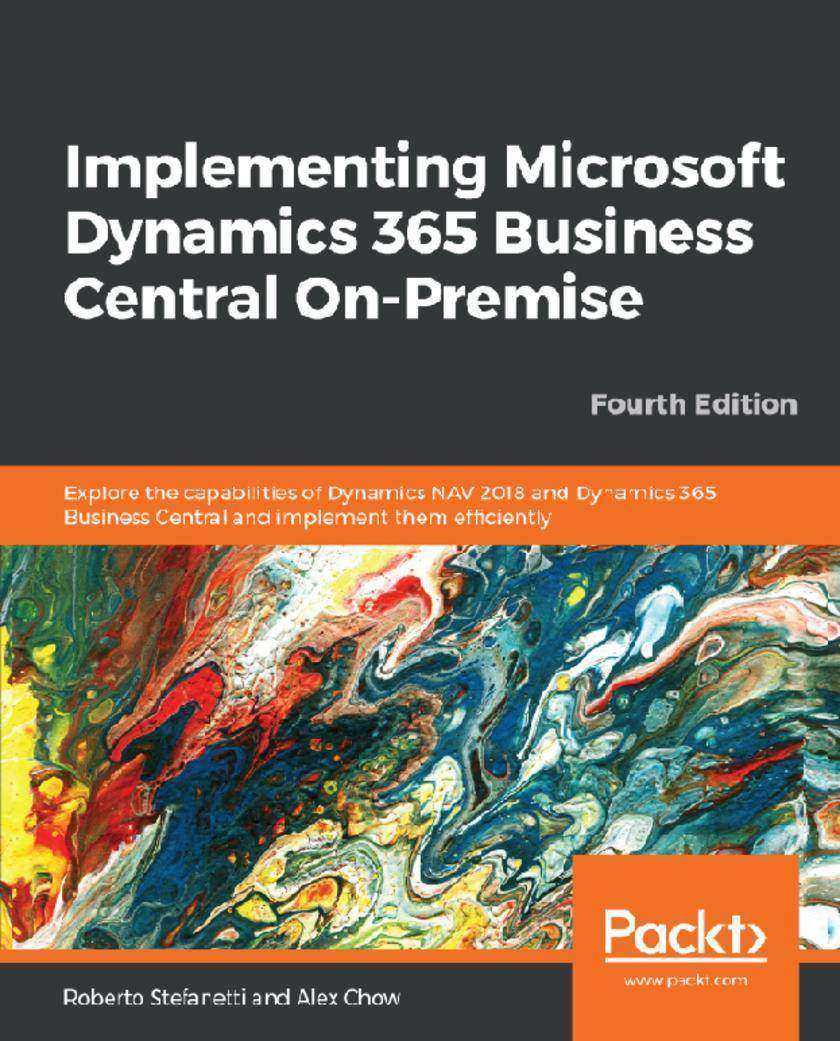
Implementing Microsoft Dynamics 365 Business Central On-Premise
¥90.46
Implement Business Central and explore methods to upgrade to NAV 2018 Key Features *Learn the key roles of Dynamics NAV partner and the roles within your customer's organization *Create configuration packages and perform data migration *Explore Microsoft Dynamics 365 Business Central to use Dynamics NAV 2018 functionalities in the Cloud Book Description Microsoft Dynamics Business Central is a full business solution suite and a complete ERP solution, which contains a robust set of development tools; these tools can help you to gain control over your business and can simplify supply chains, manufacturing, and operations. Implementing Microsoft Dynamics 365 Business Central On-Premise covers the latest features of Dynamics Business Central and NAV from the end users' and developers' perspectives. It also provides an insight into different tools available for implementation, whether it's a new installation or migrating from the previous version of Dynamics NAV. This book will take you from an introduction to Dynamics NAV 2018 through to exploring all the techniques related to implementation and migration. You will also learn to expand functionalities within your existing Microsoft Dynamics NAV installation, perform data analysis, and implement free third-party add-ons to your existing installation. As you progress through the book, you will learn to work with third-party add-on tools. In the concluding chapters, you will explore Dynamics 365 Business Central, the new Cloud solution based on the Microsoft NAV platform, and techniques for using Docker and Sandbox to develop applications. By the end of the book, you will have gained a deep understanding of the key components for successful Dynamics NAV implementation for an organization. What you will learn *Explore new features introduced in Microsoft Dynamics NAV 2018 *Migrate to Microsoft Dynamics NAV 2018 from previous versions *Learn abstract techniques for data analysis, reporting, and debugging *Install, configure, and use additional tools for business intelligence, document management, and reporting *Discover Dynamics 365 Business Central and several other Microsoft services *Utilize different tools to develop applications for Business Central Who this book is for Implementing Microsoft Dynamics 365 Business Central On-Premise is for Dynamics NAV partners and end users who want to know everything about Dynamics NAV implementation. This book is for you if you want to be a project manager or get involved with Dynamics NAV, but do not have the expertise to write code yourself. This book can also help you to understand the need to move to Business Central and its advantages.
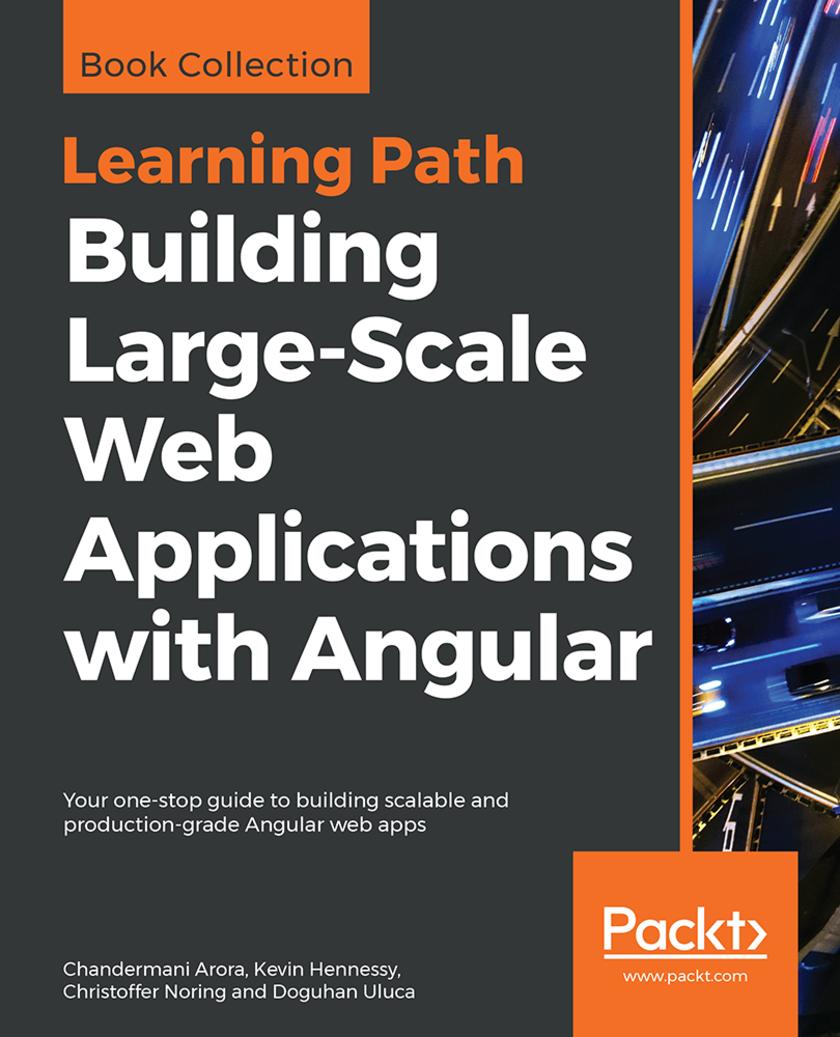
Building Large-Scale Web Applications with Angular
¥90.46
A definitive guide on frontend development with Angular from design to deployment Key Features *Develop web applications from scratch using Angular and TypeScript *Explore reactive programming principles and RxJS to develop and test apps easily *Study continuous integration and deployment on the AWS cloud Book Description If you have been burnt by unreliable JavaScript frameworks before, you will be amazed by the maturity of the Angular platform. Angular enables you to build fast, efficient, and real-world web apps. In this Learning Path, you'll learn Angular and to deliver high-quality and production-grade Angular apps from design to deployment. You will begin by creating a simple fitness app, using the building blocks of Angular, and make your final app, Personal Trainer, by morphing the workout app into a full-fledged personal workout builder and runner with an advanced directive building - the most fundamental and powerful feature of Angular. You will learn the different ways of architecting Angular applications using RxJS, and some of the patterns that are involved in it. Later you’ll be introduced to the router-first architecture, a seven-step approach to designing and developing mid-to-large line-of-business apps, along with popular recipes. By the end of this book, you will be familiar with the scope of web development using Angular, Swagger, and Docker, learning patterns and practices to be successful as an individual developer on the web or as a team in the Enterprise. This Learning Path includes content from the following Packt products: *Angular 6 by Example by Chandermani Arora, Kevin Hennessy *Architecting Angular Applications with Redux, RxJS, and NgRx by Christoffer Noring *Angular 6 for Enterprise-Ready Web Applications by Doguhan Uluca What you will learn *Develop web applications from scratch using Angular and TypeScript *Explore reactive programming principles, RxJS to develop and test apps efficiently *Study continuous integration and deployment your Angular app on the AWS cloud Who this book is for If you're a JavaScript or frontend developer looking to gain comprehensive experience of using Angular for end-to-end enterprise-ready applications, this Learning Path is for you.
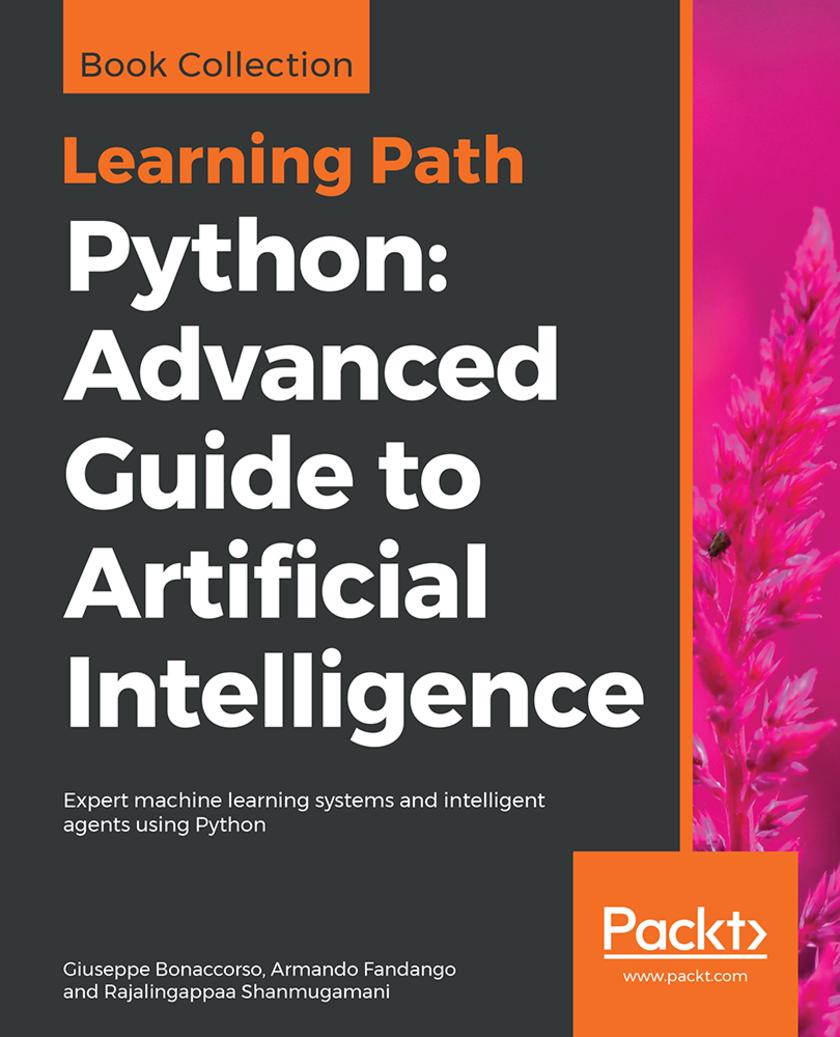
Python: Advanced Guide to Artificial Intelligence
¥90.46
Demystify the complexity of machine learning techniques and create evolving, clever solutions to solve your problems Key Features *Master supervised, unsupervised, and semi-supervised ML algorithms and their implementation *Build deep learning models for object detection, image classification, similarity learning, and more *Build, deploy, and scale end-to-end deep neural network models in a production environment Book Description This Learning Path is your complete guide to quickly getting to grips with popular machine learning algorithms. You'll be introduced to the most widely used algorithms in supervised, unsupervised, and semi-supervised machine learning, and learn how to use them in the best possible manner. Ranging from Bayesian models to the MCMC algorithm to Hidden Markov models, this Learning Path will teach you how to extract features from your dataset and perform dimensionality reduction by making use of Python-based libraries. You'll bring the use of TensorFlow and Keras to build deep learning models, using concepts such as transfer learning, generative adversarial networks, and deep reinforcement learning. Next, you'll learn the advanced features of TensorFlow1.x, such as distributed TensorFlow with TF clusters, deploy production models with TensorFlow Serving. You'll implement different techniques related to object classification, object detection, image segmentation, and more. By the end of this Learning Path, you'll have obtained in-depth knowledge of TensorFlow, making you the go-to person for solving artificial intelligence problems This Learning Path includes content from the following Packt products: *Mastering Machine Learning Algorithms by Giuseppe Bonaccorso *Mastering TensorFlow 1.x by Armando Fandango *Deep Learning for Computer Vision by Rajalingappaa Shanmugamani What you will learn *Explore how an ML model can be trained, optimized, and evaluated *Work with Autoencoders and Generative Adversarial Networks *Explore the most important Reinforcement Learning techniques *Build end-to-end deep learning (CNN, RNN, and Autoencoders) models Who this book is for This Learning Path is for data scientists, machine learning engineers, artificial intelligence engineers who want to delve into complex machine learning algorithms, calibrate models, and improve the predictions of the trained model. You will encounter the advanced intricacies and complex use cases of deep learning and AI. A basic knowledge of programming in Python and some understanding of machine learning concepts are required to get the best out of this Learning Path.
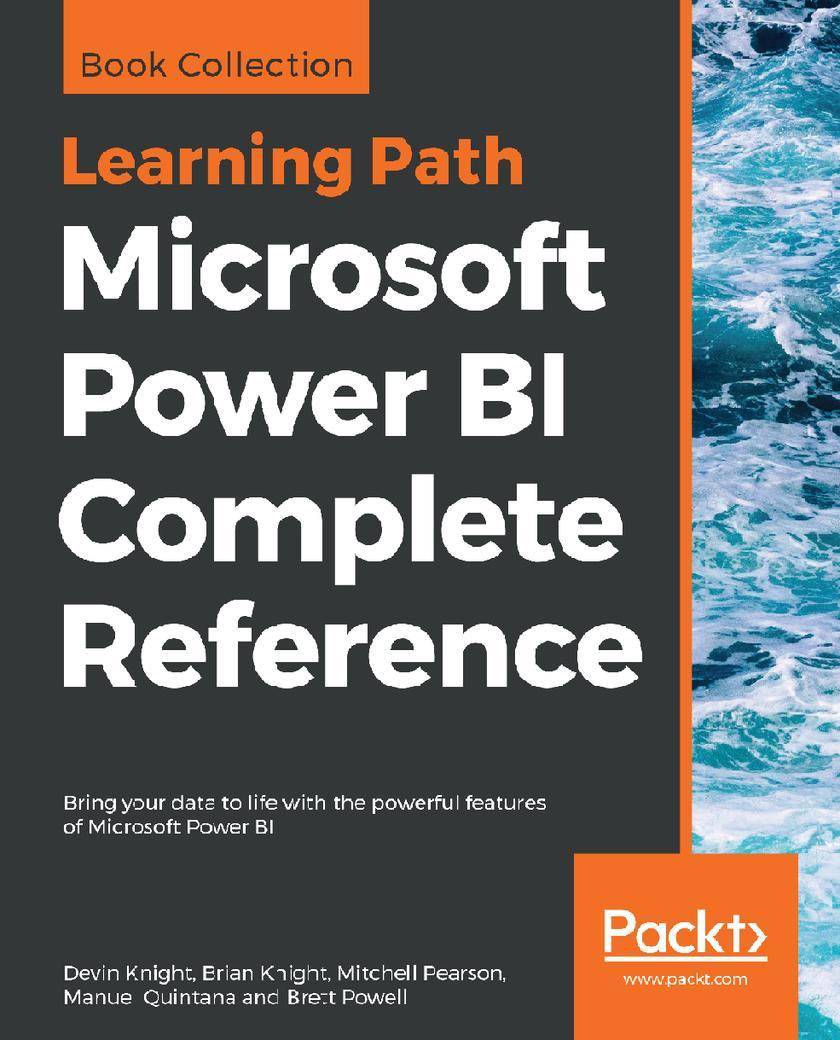
Microsoft Power BI Complete Reference
¥90.46
Design, develop, and master efficient Power BI solutions for impactful business insights Key Features *Get to grips with the fundamentals of Microsoft Power BI *Combine data from multiple sources, create visuals, and publish reports across platforms *Understand Power BI concepts with real-world use cases Book Description Microsoft Power BI Complete Reference Guide gets you started with business intelligence by showing you how to install the Power BI toolset, design effective data models, and build basic dashboards and visualizations that make your data come to life. In this Learning Path, you will learn to create powerful interactive reports by visualizing your data and learn visualization styles, tips and tricks to bring your data to life. You will be able to administer your organization's Power BI environment to create and share dashboards. You will also be able to streamline deployment by implementing security and regular data refreshes. Next, you will delve deeper into the nuances of Power BI and handling projects. You will get acquainted with planning a Power BI project, development, and distribution of content, and deployment. You will learn to connect and extract data from various sources to create robust datasets, reports, and dashboards. Additionally, you will learn how to format reports and apply custom visuals, animation and analytics to further refine your data. By the end of this Learning Path, you will learn to implement the various Power BI tools such as on-premises gateway together along with staging and securely distributing content via apps. This Learning Path includes content from the following Packt products: *Microsoft Power BI Quick Start Guide by Devin Knight et al. *Mastering Microsoft Power BI by Brett Powell What you will learn *Connect to data sources using both import and DirectQuery options *Leverage built-in and custom visuals to design effective reports *Administer a Power BI cloud tenant for your organization *Deploy your Power BI Desktop files into the Power BI Report Server *Build efficient data retrieval and transformation processes Who this book is for Microsoft Power BI Complete Reference Guide is for those who want to learn and use the Power BI features to extract maximum information and make intelligent decisions that boost their business. If you have a basic understanding of BI concepts and want to learn how to apply them using Microsoft Power BI, then Learning Path is for you. It consists of real-world examples on Power BI and goes deep into the technical issues, covers additional protocols, and much more.
Extreme C
¥90.46
Push the limits of what C - and you - can do, with this high-intensity guide to the most advanced capabilities of C Key Features * Make the most of C’s low-level control, flexibility, and high performance * A comprehensive guide to C’s most powerful and challenging features * A thought-provoking guide packed with hands-on exercises and examples Book Description There’s a lot more to C than knowing the language syntax. The industry looks for developers with a rigorous, scientific understanding of the principles and practices. Extreme C will teach you to use C’s advanced low-level power to write effective, efficient systems. This intensive, practical guide will help you become an expert C programmer. Building on your existing C knowledge, you will master preprocessor directives, macros, conditional compilation, pointers, and much more. You will gain new insight into algorithm design, functions, and structures. You will discover how C helps you squeeze maximum performance out of critical, resource-constrained applications. C still plays a critical role in 21st-century programming, remaining the core language for precision engineering, aviations, space research, and more. This book shows how C works with Unix, how to implement OO principles in C, and fully covers multi-processing. In Extreme C, Amini encourages you to think, question, apply, and experiment for yourself. The book is essential for anybody who wants to take their C to the next level. What you will learn * Build advanced C knowledge on strong foundations, rooted in first principles * Understand memory structures and compilation pipeline and how they work, and how to make most out of them * Apply object-oriented design principles to your procedural C code * Write low-level code that’s close to the hardware and squeezes maximum performance out of a computer system * Master concurrency, multithreading, multi-processing, and integration with other languages * Unit Testing and debugging, build systems, and inter-process communication for C programming Who this book is for Extreme C is for C programmers who want to dig deep into the language and its capabilities. It will help you make the most of the low-level control C gives you.
Docker on Windows
¥90.46
Learn how to run new and old applications in Docker containers on Windows - modernizing the architecture, improving security and maximizing efficiency. Key Features * Run .NET Framework and .NET Core apps in Docker containers for efficiency, security and portability * Design distributed containerized apps, using enterprise-grade open source software from Docker Hub * Build a CI/CD pipeline with Docker, going from source to a production Docker Swarm in the cloud Book Description Docker on Windows, Second Edition teaches you all you need to know about Docker on Windows, from the 101 to running highly-available workloads in production. You’ll be guided through a Docker journey, starting with the key concepts and simple examples of .NET Framework and .NET Core apps in Docker containers on Windows. Then you’ll learn how to use Docker to modernize the architecture and development of traditional ASP.NET and SQL Server apps. The examples show you how to break up legacy monolithic applications into distributed apps and deploy them to a clustered environment in the cloud, using the exact same artifacts you use to run them locally. You’ll see how to build a CI/CD pipeline which uses Docker to compile, package, test and deploy your applications. To help you move confidently to production, you’ll learn about Docker security, and the management and support options. The book finishes with guidance on getting started with Docker in your own projects. You’ll walk through some real-world case studies for Docker implementations, from small-scale on-premises apps to very large-scale apps running on Azure. What you will learn * Understand key Docker concepts: images, containers, registries and swarms * Run Docker on Windows 10, Windows Server 2019, and in the cloud * Deploy and monitor distributed solutions across multiple Docker containers * Run containers with high availability and failover with Docker Swarm * Master security in-depth with the Docker platform, making your apps more secure * Build a Continuous Deployment pipeline, running Jenkins and Git in Docker * Debug applications running in Docker containers using Visual Studio * Plan the adoption of Docker in your organization Who this book is for If you want to modernize an old monolithic application without rewriting it, smooth the deployment to production, or move to DevOps or the cloud, then Docker is the enabler for you. This book gives you a solid grounding in Docker so you can confidently approach all of these scenarios.
Improving your C# Skills
¥90.46
Conquer complex and interesting programming challenges by building robust and concurrent applications with caches, cryptography, and parallel programming. Key Features * Understand how to use .NET frameworks like the Task Parallel Library (TPL)and CryptoAPI * Develop a containerized application based on microservices architecture * Gain insights into memory management techniques in .NET Core Book Description This Learning Path shows you how to create high performing applications and solve programming challenges using a wide range of C# features. You’ll begin by learning how to identify the bottlenecks in writing programs, highlight common performance pitfalls, and apply strategies to detect and resolve these issues early. You'll also study the importance of micro-services architecture for building fast applications and implementing resiliency and security in .NET Core. Then, you'll study the importance of defining and testing boundaries, abstracting away third-party code, and working with different types of test double, such as spies, mocks, and fakes. In addition to describing programming trade-offs, this Learning Path will also help you build a useful toolkit of techniques, including value caching, statistical analysis, and geometric algorithms. This Learning Path includes content from the following Packt products: * C# 7 and .NET Core 2.0 High Performance by Ovais Mehboob Ahmed Khan * Practical Test-Driven Development using C# 7 by John Callaway, Clayton Hunt * The Modern C# Challenge by Rod Stephens What you will learn * Measure application performance using BenchmarkDotNet * Leverage the Task Parallel Library (TPL) and Parallel Language Integrated Query (PLINQ)library to perform asynchronous operations * Modify a legacy application to make it testable * Use LINQ and PLINQ to search directories for files matching patterns * Find areas of polygons using geometric operations * Randomize arrays and lists with extension methods * Use cryptographic techniques to encrypt and decrypt strings and files Who this book is for If you want to improve the speed of your code and optimize the performance of your applications, or are simply looking for a practical resource on test driven development, this is the ideal Learning Path for you. Some familiarity with C# and .NET will be beneficial.
Getting Started with Python
¥90.46
Harness the power of Python objects and data structures to implement algorithms for analyzing your data and efficiently extracting information Key Features * Turn your designs into working software by learning the Python syntax * Write robust code with a solid understanding of Python data structures * Understand when to use the functional or the OOP approach Book Description This Learning Path helps you get comfortable with the world of Python. It starts with a thorough and practical introduction to Python. You’ll quickly start writing programs, building websites, and working with data by harnessing Python's renowned data science libraries. With the power of linked lists, binary searches, and sorting algorithms, you'll easily create complex data structures, such as graphs, stacks, and queues. After understanding cooperative inheritance, you'll expertly raise, handle, and manipulate exceptions. You will effortlessly integrate the object-oriented and not-so-object-oriented aspects of Python, and create maintainable applications using higher level design patterns. Once you’ve covered core topics, you’ll understand the joy of unit testing and just how easy it is to create unit tests. By the end of this Learning Path, you will have built components that are easy to understand, debug, and can be used across different applications. This Learning Path includes content from the following Packt products: * Learn Python Programming - Second Edition by Fabrizio Romano * Python Data Structures and Algorithms by Benjamin Baka * Python 3 Object-Oriented Programming by Dusty Phillips What you will learn * Use data structures and control flow to write code * Use functions to bundle together a sequence of instructions * Implement objects in Python by creating classes and defining methods * Design public interfaces using abstraction, encapsulation and information hiding * Raise, define, and manipulate exceptions using special error objects * Create bulletproof and reliable software by writing unit tests * Learn the common programming patterns and algorithms used in Python Who this book is for If you are relatively new to coding and want to write scripts or programs to accomplish tasks using Python, or if you are an object-oriented programmer for other languages and seeking a leg up in the world of Python, then this Learning Path is for you. Though not essential, it will help you to have basic knowledge of programming and OOP.
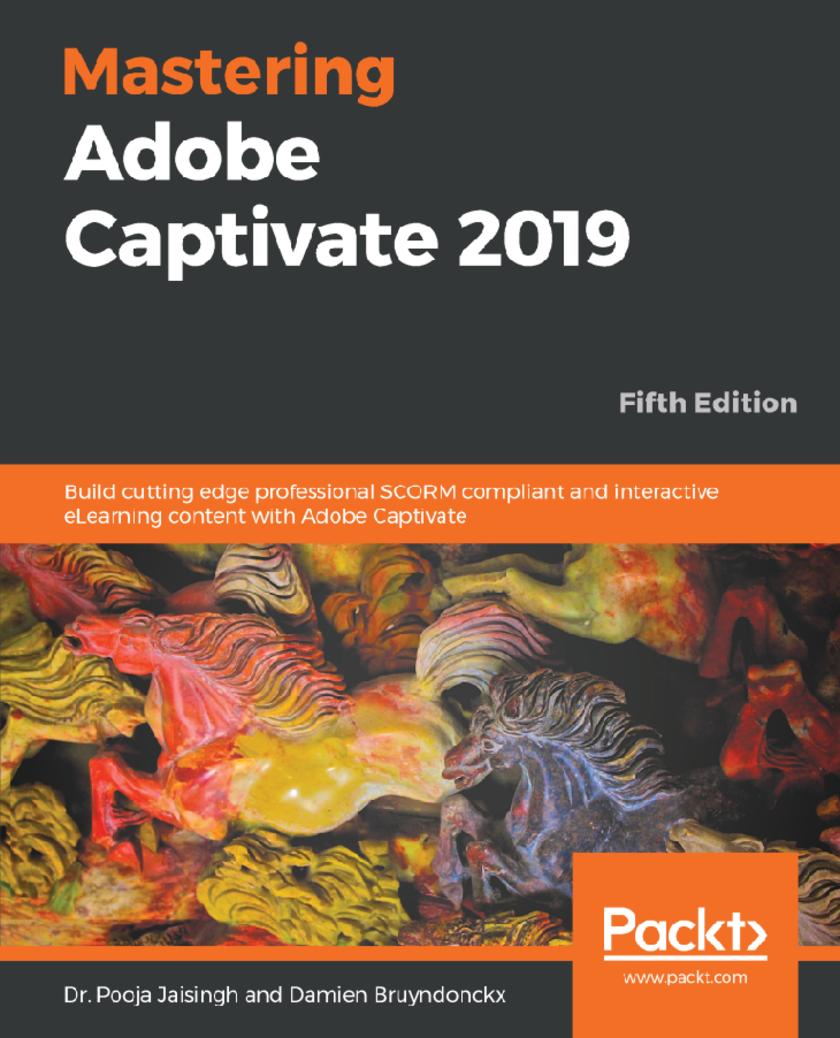
Mastering Adobe Captivate 2019
¥90.46
Create responsive eLearning content, including quizzes, demonstrations, simulations and Virtual Reality projects that fit on any device with Adobe Captivate 2019 Key Features * Build responsive, interactive and highly engaging eLearning content with Adobe Captivate 2019 * Build Virtual Reality eLearning experiences with Adobe Captivate 2019 * Assess your student knowledge with interactive and random quizzes * Seamlessly integrate your eLearning content with any SCORM or xAPI compliant LMS Book Description Adobe Captivate is used to create highly engaging, interactive, and responsive eLearning content. This book takes you through the production of a few pieces of eLearning content, covering all the project types and workflows of Adobe Captivate. First, you will learn how to create a typical interactive Captivate project. This will give you the opportunity to review all Captivate objects and uncover the application's main tools. Then, you will use the built-in capture engine of Captivate to create an interactive software simulation and a Video Demo that can be published as an MP4 video. Then, you will approach the advanced responsive features of Captivate to create a project that can be viewed on any device. And finally, you will immerse your learners in a 360o environment by creating Virtual Reality projects of Adobe Captivate. At the end of the book, you will empower your workflow and projects with the newer and most advanced features of the application, including variables, advanced actions, JavaScript, and using Captivate 2019 with other applications. If you want to produce high quality eLearning content using a wide variety of techniques, implement eLearning in your company, enable eLearning on any device, assess the effectiveness of the learning by using extensive Quizzing features, or are simply interested in eLearning, this book has you covered! What you will learn * Learn how to use the objects in Captivate to build professional eLearning content * Enhance your projects by adding interactivity, animations, and more * Add multimedia elements, such as audio and video, to create engaging learning experiences * Use themes to craft a unique visual experience * Use question slides to create SCORM-compliant quizzes that integrate seamlessly with your LMS * Make your content fit any device with responsive features of Captivate * Create immersive 360° experiences with Virtual Reality projects of Captivate 2019 * Integrate Captivate with other applications (such as PowerPoint and Photoshop) to establish a professional eLearning production workflow * Publish your project in a wide variety of formats including HTML5 and Flash Who this book is for If you are a teacher, instructional designer, eLearning developer, or human resources manager who wants to implement eLearning, then this book is for you. A basic knowledge of your OS is all it takes to create the next generation of responsive eLearning content.
C# 7 and .NET: Designing Modern Cross-platform Applications
¥90.46
Explore C# and the .NET Core framework to create applications and optimize them with ASP.NET Core 2 Key Features *Get to grips with multi-threaded, concurrent, and asynchronous programming in C# and .NET Core *Develop modern, cross-platform applications with .NET Core 2.0 and C# 7.0 *Create efficient web applications with ASP.NET Core 2. Book Description C# is a widely used programming language, thanks to its easy learning curve, versatility, and support for modern paradigms. The language is used to create desktop apps, background services, web apps, and mobile apps. .NET Core is open source and compatible with Mac OS and Linux. There is no limit to what you can achieve with C# and .NET Core. This Learning Path begins with the basics of C# and object-oriented programming (OOP) and explores features of C#, such as tuples, pattern matching, and out variables. You will understand.NET Standard 2.0 class libraries and ASP.NET Core 2.0, and create professional websites, services, and applications. You will become familiar with mobile app development using Xamarin.Forms and learn to develop high-performing applications by writing optimized code with various profiling techniques. By the end of C# 7 and .NET: Designing Modern Cross-platform Applications, you will have all the knowledge required to build modern, cross-platform apps using C# and .NET. This Learning Path includes content from the following Packt products: *C# 7.1 and .NET Core 2.0 - Modern Cross-Platform Development - Third Edition by Mark J. Price *C# 7 and .NET Core 2.0 High Performance by Ovais Mehboob Ahmed Khan What you will learn *Explore ASP.NET Core to create professional web applications *Master OOP with C# to increase code reusability and efficiency *Protect your data using encryption and hashing *Measure application performance using BenchmarkDotNet *Use design techniques to increase your application’s performance *Learn memory management techniques in .NET Core *Understand tools and techniques to monitor application performance Who this book is for This Learning Path is designed for developers who want to gain a solid foundation in C# and .NET Core, and want to build cross-platform applications. To gain maximum benefit from this Learning Path, you must have basic knowledge of C#.
Tableau 10 Complete Reference
¥90.46
Explore and understand data with the powerful data visualization techniques of Tableau, and then communicate insights in powerful ways Key Features *Apply best practices in data visualization and chart types exploration *Explore the latest version of Tableau Desktop with hands-on examples *Understand the fundamentals of Tableau storytelling Book Description Graphical presentation of data enables us to easily understand complex data sets. Tableau 10 Complete Reference provides easy-to-follow recipes with several use cases and real-world business scenarios to get you up and running with Tableau 10. This Learning Path begins with the history of data visualization and its importance in today's businesses. You'll also be introduced to Tableau - how to connect, clean, and analyze data in this visual analytics software. Then, you'll learn how to apply what you've learned by creating some simple calculations in Tableau and using Table Calculations to help drive greater analysis from your data. Next, you'll explore different advanced chart types in Tableau. These chart types require you to have some understanding of the Tableau interface and understand basic calculations. You’ll study in detail all dashboard techniques and best practices. A number of recipes specifically for geospatial visualization, analytics, and data preparation are also covered. Last but not least, you'll learn about the power of storytelling through the creation of interactive dashboards in Tableau. Through this Learning Path, you will gain confidence and competence to analyze and communicate data and insights more efficiently and effectively by creating compelling interactive charts, dashboards, and stories in Tableau. This Learning Path includes content from the following Packt products: *Learning Tableau 10 - Second Edition by N. Milligan *Getting Started with Tableau 2018.x by Tristan Guillevin What you will learn *Build effective visualizations, dashboards, and story points *Build basic to more advanced charts with step-by-step recipes *Become familiar row-level, aggregate, and table calculations *Dig deep into data with clustering and distribution models *Prepare and transform data for analysis *Leverage Tableau’s mapping capabilities to visualize data *Use data storytelling techniques to aid decision making strategy Who this book is for Tableau 10 Complete Reference is designed for anyone who wants to understand their data better and represent it in an effective manner. It is also used for BI professionals and data analysts who want to do better at their jobs.
Mastering Machine Learning with R - Second Edition
¥90.46
This book will teach you advanced techniques in machine learning with the latest code in R 3.3.2. You will delve into statistical learning theory and supervised learning; design efficient algorithms; learn about creating Recommendation Engines; use multi-class classification and deep learning; and more. You will explore, in depth, topics such as data mining, classification, clustering, regression, predictive modeling, anomaly detection, boosted trees with XGBOOST, and more. More than just knowing the outcome, you'll understand how these concepts work and what they do. With a slow learning curve on topics such as neural networks, you will explore deep learning, and more. By the end of this book, you will be able to perform machine learning with R in the cloud using AWS in various scenarios with different datasets. What you will learn ?Gain deep insights into the application of machine learning tools in the industry ?Manipulate data in R efficiently to prepare it for analysis ?Master the skill of recognizing techniques for effective visualization of data ?Understand why and how to create test and training data sets for analysis ?Master fundamental learning methods such as linear and logistic regression ?Comprehend advanced learning methods such as support vector
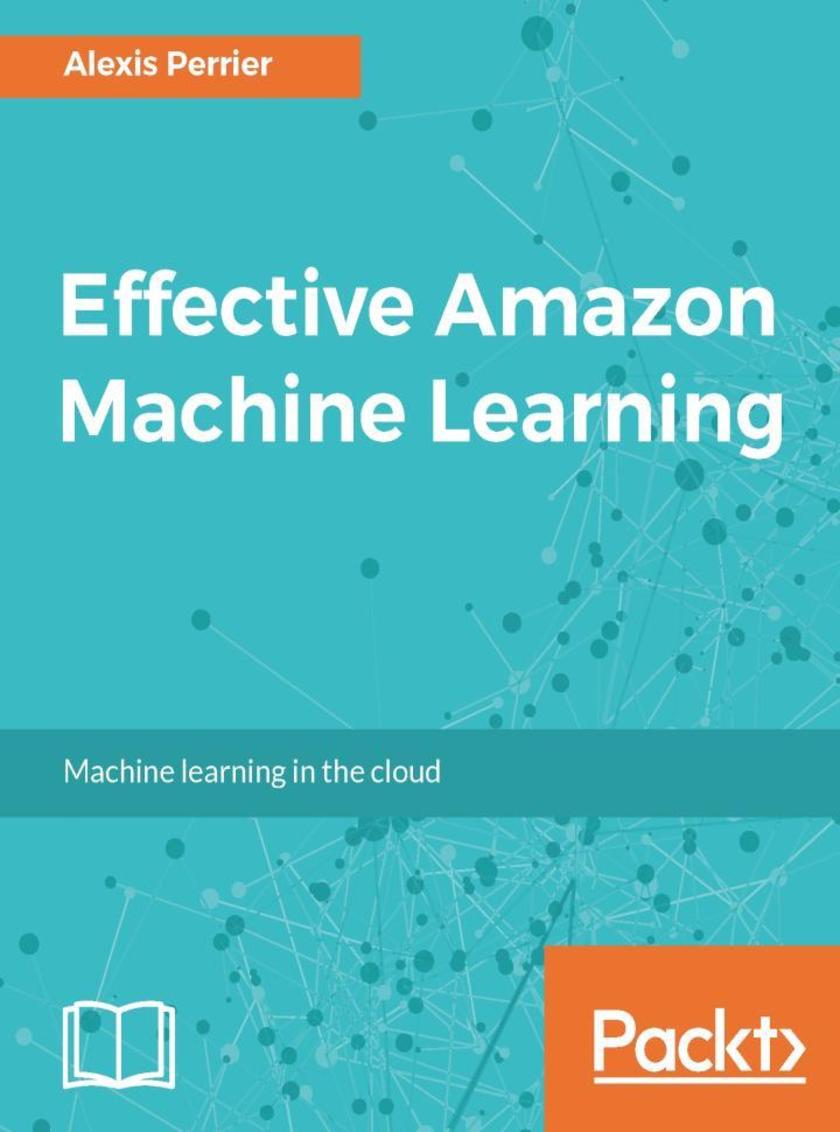
Effective Amazon Machine Learning
¥90.46
Predictive analytics is a complex domain requiring coding skills, an understanding of the mathematical concepts underpinning machine learning algorithms, and the ability to create compelling data visualizations. Following AWS simplifying Machine learning, this book will help you bring predictive analytics projects to fruition in three easy steps: data preparation, model tuning, and model selection. This book will introduce you to the Amazon Machine Learning platform and will implement core data science concepts such as classification, regression, regularization, overfitting, model selection, and evaluation. Furthermore, you will learn to leverage the Amazon Web Service (AWS) ecosystem for extended access to data sources, implement realtime predictions, and run Amazon Machine Learning projects via the command line and the Python SDK. Towards the end of the book, you will also learn how to apply these services to other problems, such as text mining, and to more complex datasets. What you will learn ?Learn how to use the Amazon Machine Learning service from scratch for predictive analytics ?Gain hands-on experience of key Data Science concepts ?Solve classic regression and classification problems ?Run projects programmatically via the command line and the Python SDK
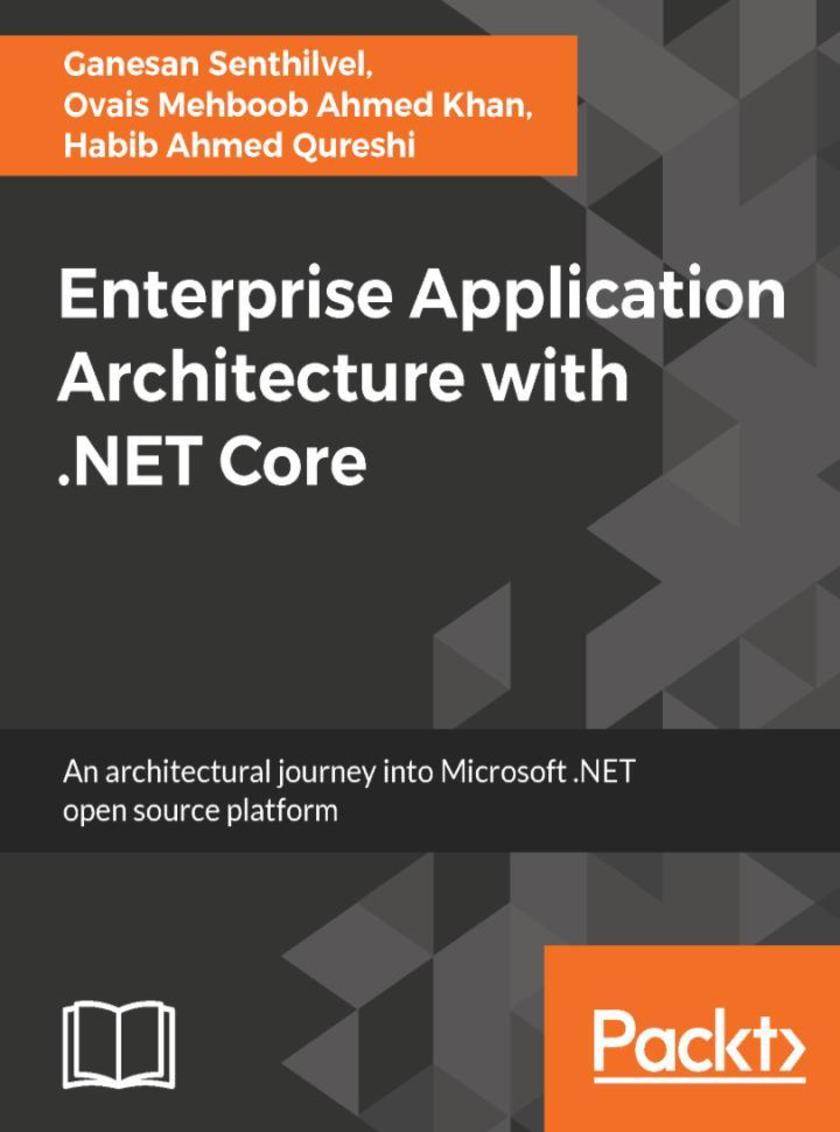
Enterprise Application Architecture with .NET Core
¥90.46
If you want to design and develop enterprise applications using .NET Core as the development framework and learn about industry-wide best practices and guidelines, then this book is for you. The book starts with a brief introduction to enterprise architecture, which will help you to understand what enterprise architecture is and what the key components are. It will then teach you about the types of patterns and the principles of software development, and explain the various aspects of distributed computing to keep your applications effective and scalable. These chapters act as a catalyst to start the practical implementation, and design and develop applications using different architectural approaches, such as layered architecture, service oriented architecture, microservices and cloud-specific solutions. Gradually, you will learn about the different approaches and models of the Security framework and explore various authentication models and authorization techniques, such as social media-based authentication and safe storage using app secrets. By the end of the book, you will get to know the concepts and usage of the emerging fields, such as DevOps, BigData, architectural practices, and Artificial Intelligence.
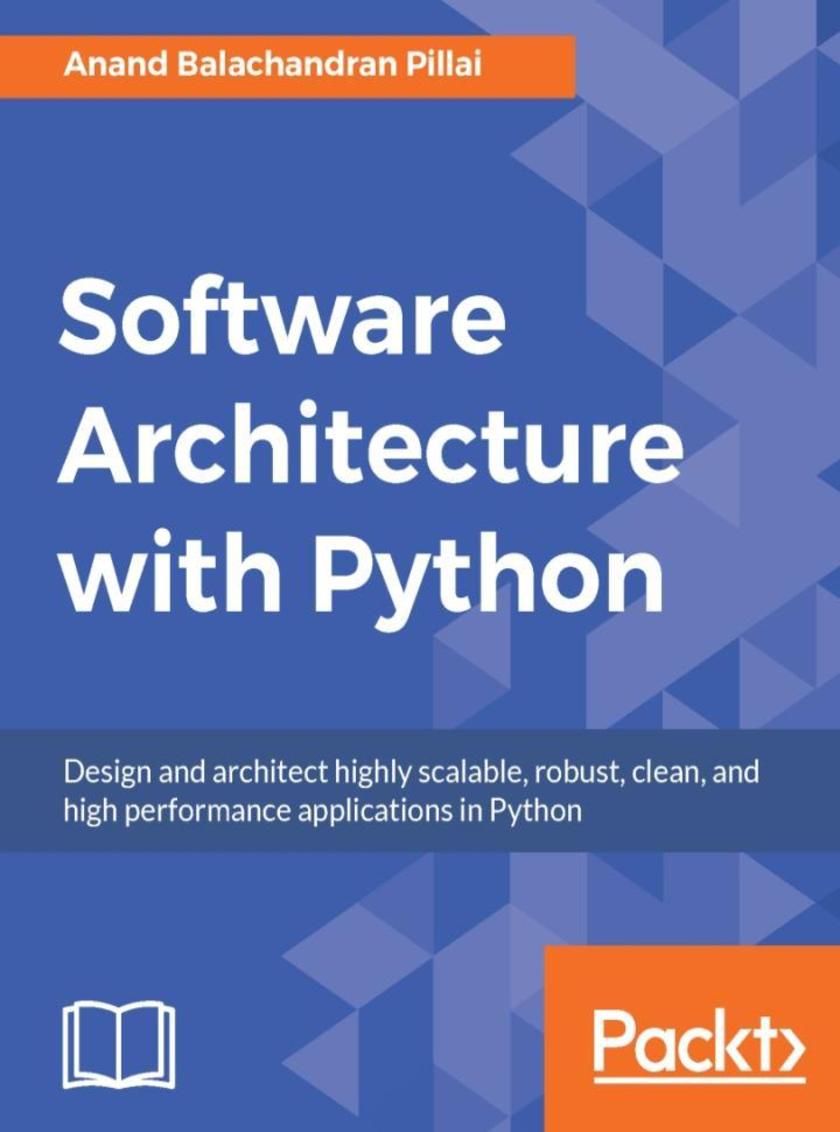
Software Architecture with Python
¥90.46
"Key Features ?Identify design issues and make the necessary adjustments to achieve improved performance ?Understand practical architectural quality attributes from the perspective of a practicing engineer and architect using Python ?Gain knowledge of architectural principles and how they can be used to provide accountability and rationale for architectural decisions Book De*ion This book starts off by explaining how Python fits into an application architecture. As you move along, you will understand the architecturally significant demands and how to determine them. Later, you'll get a complete understanding of the different architectural quality requirements that help an architect to build a product that satisfies business needs, such as maintainability/reusability, testability, scalability, performance, usability, and security. You will use various techniques such as incorporating DevOps, Continuous Integration, and more to make your application robust. You will understand when and when not to use object orientation in your applications. You will be able to think of the future and design applications that can scale proportionally to the growing business. The focus is on building the business logic based on the business process documentation and which frameworks are to be used when. We also cover some important patterns that are to be taken into account while solving design problems as well as those in relatively new domains such as the Cloud. This book will help you understand the ins and outs of Python so that you can make those critical design decisions that not just live up to but also surpass the expectations of your clients. What you will learn ?Build programs with the right architectural attributes ?Use Enterprise Architectural Patterns to solve scalable problems on the Web ?Understand design patterns from a Python perspective ?Optimize the performance testing tools in Python ?Deploy code in remote environments or on the Cloud using Python ?Secure architecture applications in Python About the Author Anand Balachandran Pillai is an Engineering and Technology professional with over 18 years of experience in the software industry in Product Engineering, Software Design & Architecture and Research. He has a Bachelor's degree in Mechanical Engineering from the Indian Institute of Technology, Madras. He has worked at companies such as Yahoo!, McAfee, and Infosys in the roles of Lead Engineer and Architect in product development teams, to build new products. His interests lie in Software Performance Engineering, High Scalability Architectures, Security and Open source communities. He often works with startups in lead technical or consulting role. He is the founder of the Bangalore Python Users Group and a Fellow of the Python Software Foundation (PSF). Anand is currently working as Senior Architect of Yegii Inc. "
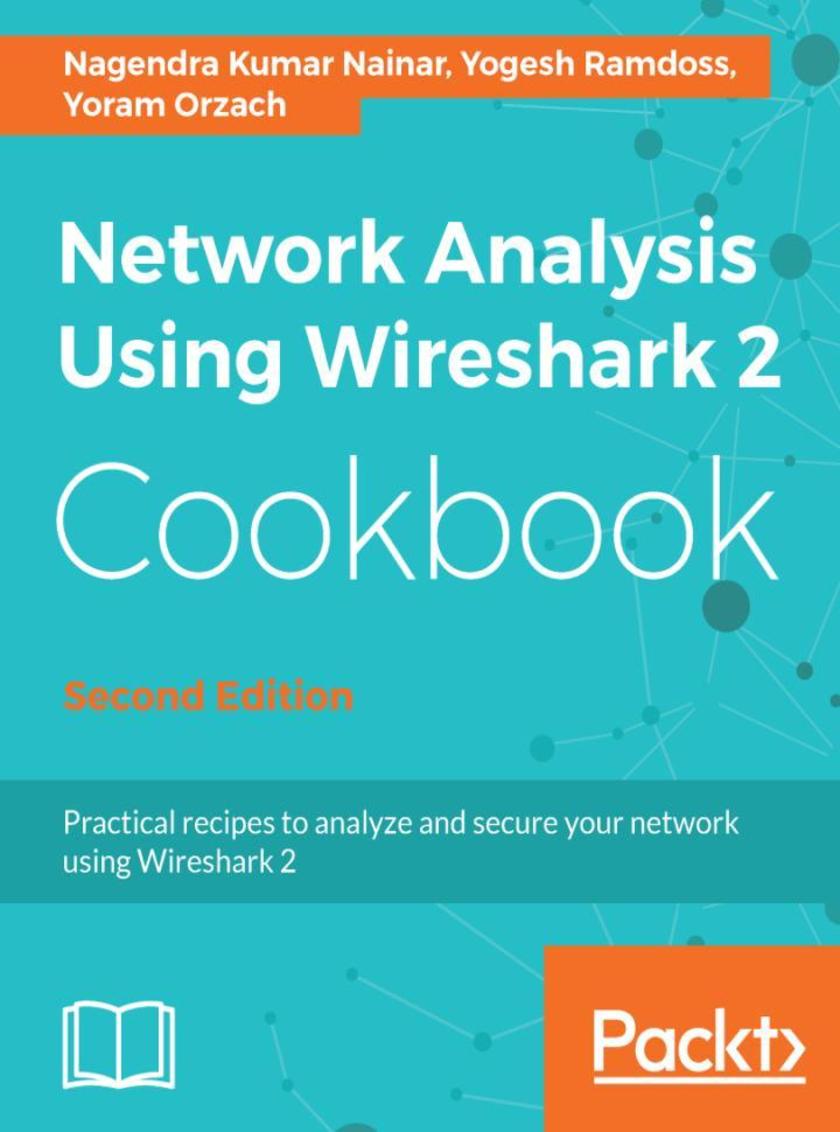
Network Analysis Using Wireshark 2 Cookbook - Second Edition
¥90.46
Over 100 recipes to analyze and troubleshoot network problems using Wireshark 2 About This Book ? Place Wireshark 2 in your network and configure it for effective network analysis ? Deep dive into the enhanced functionalities of Wireshark 2 and protect your network with ease ? A practical guide with exciting recipes on a widely used network protocol analyzer Who This Book Is For This book is for security professionals, network administrators, R&D, engineering and technical support, and communications managers who are using Wireshark for network analysis and troubleshooting. It requires a basic understanding of networking concepts, but does not require specific and detailed technical knowledge of protocols or vendor implementations. What You Will Learn ? Configure Wireshark 2 for effective network analysis and troubleshooting ? Set up various display and capture filters ? Understand networking layers, including IPv4 and IPv6 analysis ? Explore performance issues in TCP/IP ? Get to know about Wi-Fi testing and how to resolve problems related to wireless LANs ? Get information about network phenomena, events, and errors ? Locate faults in detecting security failures and breaches in networks In Detail This book contains practical recipes on troubleshooting a data communications network. This second version of the book focuses on Wireshark 2, which has already gained a lot of traction due to the enhanced features that it offers to users. The book expands on some of the subjects explored in the first version, including TCP performance, network security, Wireless LAN, and how to use Wireshark for cloud and virtual system monitoring. You will learn how to analyze end-to-end IPv4 and IPv6 connectivity failures for Unicast and Multicast traffic using Wireshark. It also includes Wireshark capture files so that you can practice what you’ve learned in the book. You will understand the normal operation of E-mail protocols and learn how to use Wireshark for basic analysis and troubleshooting. Using Wireshark, you will be able to resolve and troubleshoot common applications that are used in an enterprise network, like NetBIOS and SMB protocols. Finally, you will also be able to measure network parameters, check for network problems caused by them, and solve them effectively. By the end of this book, you’ll know how to analyze traffic, find patterns of various offending traffic, and secure your network from them. Style and approach This book consists of practical recipes on Wireshark 2 that target novices as well as intermediate Wireshark users. It goes deep into the technical issues, covers additional protocols, and many more real-live examples so that you are able to implement it in your daily life scenarios.
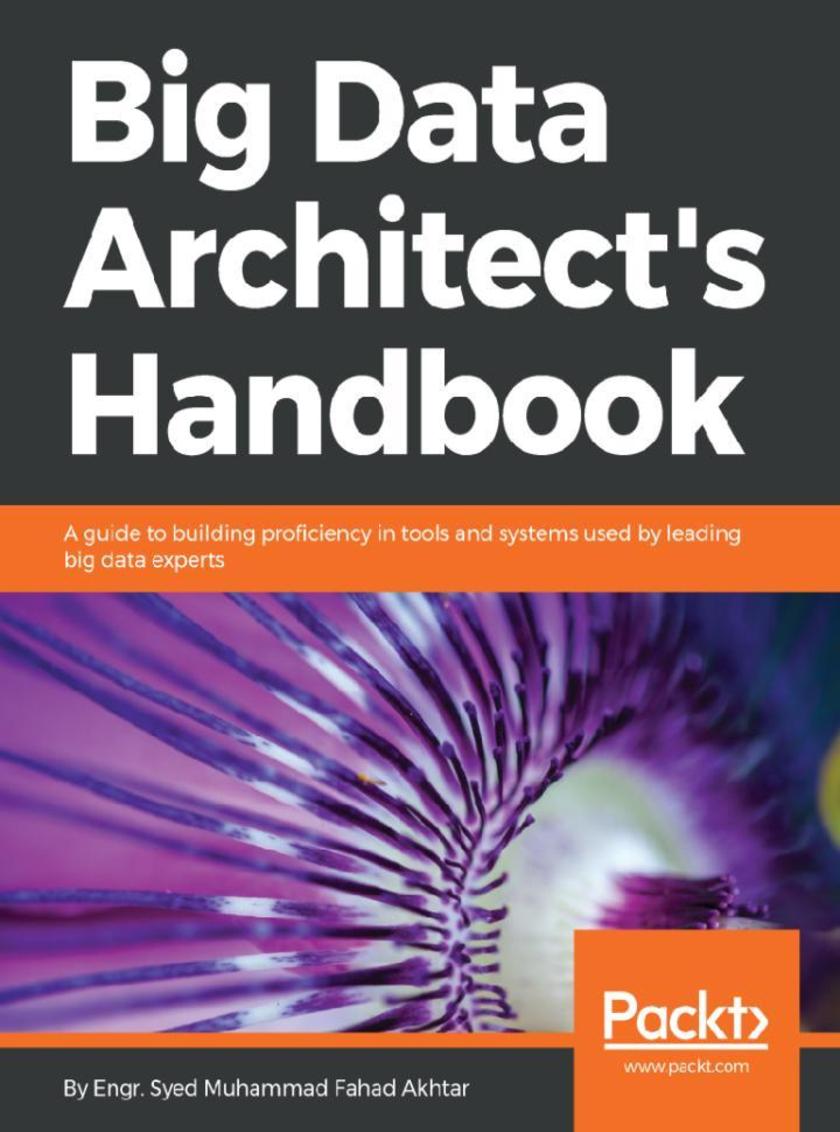
Big Data Architect’s Handbook
¥90.46
A comprehensive end-to-end guide that gives hands-on practice in big data and Artificial Intelligence About This Book ? Learn to build and run a big data application with sample code ? Explore examples to implement activities that a big data architect performs ? Use Machine Learning and AI for structured and unstructured data Who This Book Is For Big Data Architect’s Handbook is for you if you are an aspiring data professional, developer, or IT enthusiast who aims to be an all-round architect in big data. This book is your one-stop solution to enhance your knowledge and carry out easy to complex activities required to become a big data architect. What You Will Learn ? Learn Hadoop Ecosystem and Apache projects ? Understand, compare NoSQL database and essential software architecture ? Cloud infrastructure design considerations for big data ? Explore application scenario of big data tools for daily activities ? Learn to analyze and visualize results to uncover valuable insights ? Build and run a big data application with sample code from end to end ? Apply Machine Learning and AI to perform big data intelligence ? Practice the daily activities performed by big data architects In Detail The big data architects are the “masters” of data, and hold high value in today’s market. Handling big data, be it of good or bad quality, is not an easy task. The prime job for any big data architect is to build an end-to-end big data solution that integrates data from different sources and analyzes it to find useful, hidden insights. Big Data Architect’s Handbook takes you through developing a complete, end-to-end big data pipeline, which will lay the foundation for you and provide the necessary knowledge required to be an architect in big data. Right from understanding the design considerations to implementing a solid, efficient, and scalable data pipeline, this book walks you through all the essential aspects of big data. It also gives you an overview of how you can leverage the power of various big data tools such as Apache Hadoop and ElasticSearch in order to bring them together and build an efficient big data solution. By the end of this book, you will be able to build your own design system which integrates, maintains, visualizes, and monitors your data. In addition, you will have a smooth design flow in each process, putting insights in action. Style and approach Comprehensive guide with a perfect blend of theory, examples and implementation of real-world use-cases
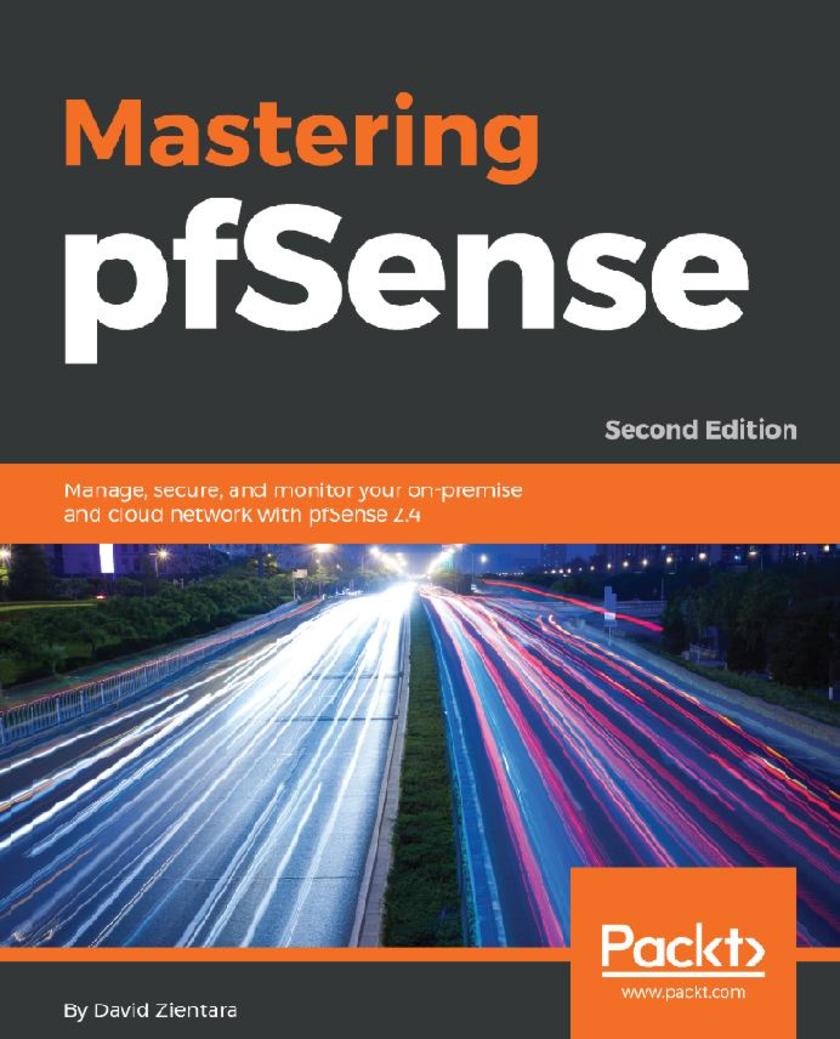
Mastering pfSense
¥90.46
Install and configure a pfSense router/firewall, and become a pfSense expert in the process. About This Book ? You can always do more to secure your software – so extend and customize your pfSense firewall ? Build a high availability security system that’s fault-tolerant – and capable of blocking potential threats ? Put the principles of better security into practice by implementing examples provided in the text Who This Book Is For This book is for those with at least an intermediate understanding of networking. Prior knowledge of pfSense would be helpful but is not required. Those who have the resources to set up a pfSense firewall, either in a real or virtual environment, will especially benefit, as they will be able to follow along with the examples in the book. What You Will Learn ? Configure pfSense services such as DHCP, Dynamic DNS, captive portal, DNS, NTP and SNMP ? Set up a managed switch to work with VLANs ? Use pfSense to allow, block and deny traffic, and to implement Network Address Translation (NAT) ? Make use of the traffic shaper to lower and raise the priority of certain types of traffic ? Set up and connect to a VPN tunnel with pfSense ? Incorporate redundancy and high availability by utilizing load balancing and the Common Address Redundancy Protocol (CARP) ? Explore diagnostic tools in pfSense to solve network problems In Detail pfSense has the same reliability and stability as even the most popular commercial firewall offerings on the market – but, like the very best open-source software, it doesn’t limit you. You’re in control – you can exploit and customize pfSense around your security needs. Mastering pfSense - Second Edition, covers features that have long been part of pfSense such as captive portal, VLANs, traffic shaping, VPNs, load balancing, Common Address Redundancy Protocol (CARP), multi-WAN, and routing. It also covers features that have been added with the release of 2.4, such as support for ZFS partitions and OpenVPN 2.4. This book takes into account the fact that, in order to support increased cryptographic loads, pfSense version 2.5 will require a CPU that supports AES-NI. The second edition of this book places more of an emphasis on the practical side of utilizing pfSense than the previous edition, and, as a result, more examples are provided which show in step-by-step fashion how to implement many features. Style and approach Practical guide to learn the advanced functionalities of pfSense with minimum fuss.
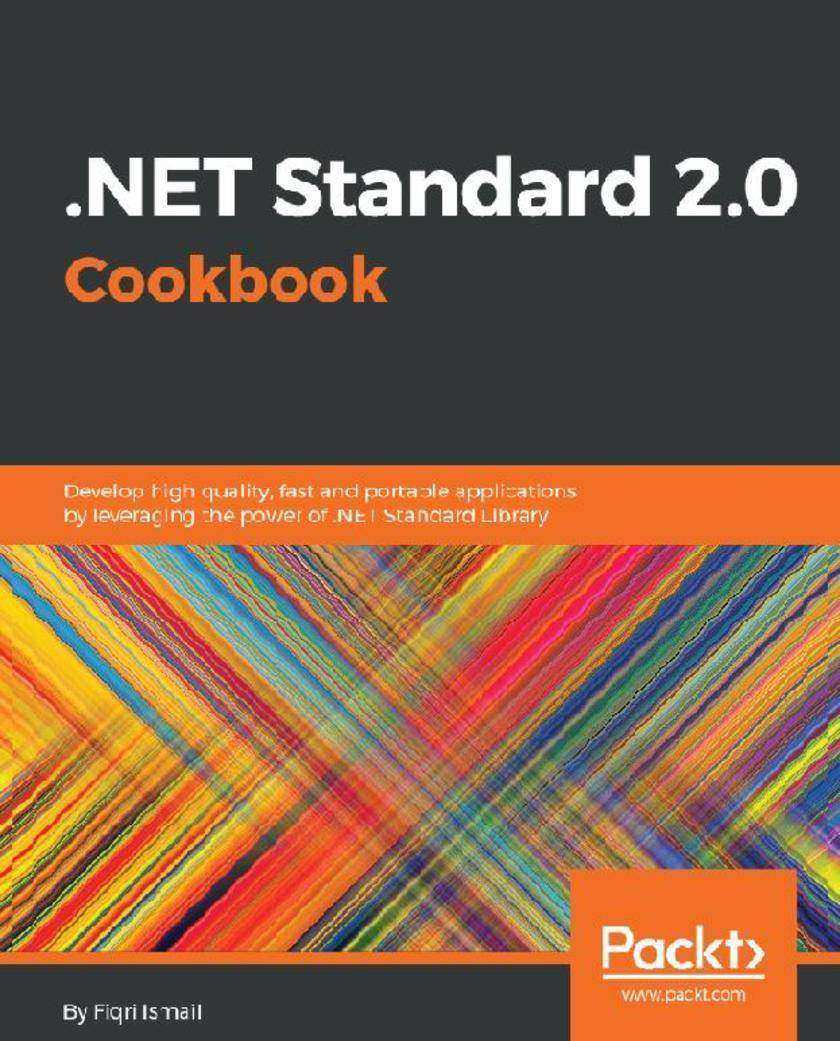
.NET Standard 2.0 Cookbook
¥90.46
Get the most out of .NET framework using standard libraries and create a .NET Standard 2.0 library from scratch About This Book ? Write code once and share within .NET ecosystem in Windows, Linux and macOS ? Give your .NET Libraries a common framework in cloud and on premise with the latest .NET Standard 2.0 ? Build a wide range of applications from Mobile with Xamarin to Web with ASP.NET Who This Book Is For This book is for .NET developers who are looking to build dynamic applications with the latest .NET Standard. C# knowledge is required. What You Will Learn ? Create a .NET Standard 2.0 library ? Use System.IO within the .NET Standard 2.0 ? Make use of your legacy .NET libraries with the new .NET Core standard ? Explore the thread support to create a multithreaded .NET Standard 2.0 library ? Create a .NET Standard 2.0 library and use it with an Android and iOS application ? Implement various Visual Studio 2017 diagnostics and debugging tools ? Create a NuGet Package and submit the package to the NuGet Package Manager ? Use Visual Studio 2017 azure tools to deploy the application to Azure ? Test and deliver a .NET Standard 2.0 library In Detail The .NET Standard is a standard that represents a set of APIs that all .NET platforms have to implement, making it easy for developers to access and use one common library for their development needs. This book begins with a quick refresher, helping you understand the mechanics of the new standard and offering insight into how it works. You’ll explore the core library concepts, such as working with collections, configurations, I/O, security, and multithreading. You’ll explore the iOS and Android libraries of Xamarin and we’ll guide you through creating a .NET Standard 2.0 library, which you’ll use with both Android and iOS applications. In the final chapters, you’ll learn the various debugging and diagnostics tools to deliver quality libraries and create a NuGet package of the .NET Standard 2.0 library. By the end of this book, you’ll be able to expand your current workflow to various .NET flavors and have the essential skills to create a .NET Standard 2.0 library from scratch to package and deliver it to the world. Style and approach A recipe-based approach to help you get the most out of the .NET Standard 2.0 Library that can be implemented to all the .NET Platforms
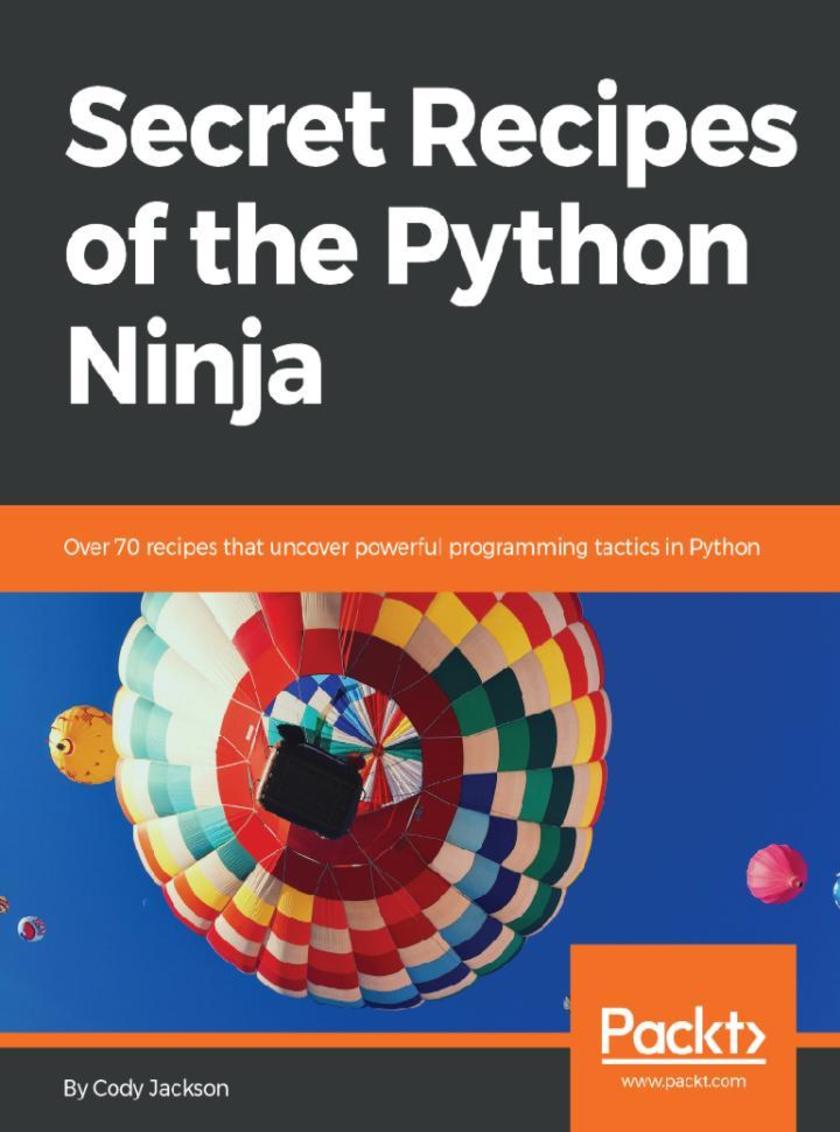
Secret Recipes of the Python Ninja
¥90.46
Test your Python programming skills by solving real-world problems About This Book ? Access built-in documentation tools and improve your code. ? Discover how to make the best use of decorator and generator functions ? Enhance speed and improve concurrency by conjuring tricks from the PyPy project Who This Book Is For Whether you’ve been working with Python for a few years or you’re a seasoned programmer, you’ll have a lot of new tricks to walk away with. What You Will Learn ? Know the differences between .py and .pyc files ? Explore the different ways to install and upgrade Python packages ? Understand the working of the PyPI module that enhances built-in decorators ? See how coroutines are different from generators and how they can simulate multithreading ? Grasp how the decimal module improves floating point numbers and their operations ? Standardize sub interpreters to improve concurrency ? Discover Python’s built-in docstring analyzer In Detail This book covers the unexplored secrets of Python, delve into its depths, and uncover its mysteries. You’ll unearth secrets related to the implementation of the standard library, by looking at how modules actually work. You’ll understand the implementation of collections, decimals, and fraction modules. If you haven’t used decorators, coroutines, and generator functions much before, as you make your way through the recipes, you’ll learn what you’ve been missing out on. We’ll cover internal special methods in detail, so you understand what they are and how they can be used to improve the engineering decisions you make. Next, you’ll explore the CPython interpreter, which is a treasure trove of secret hacks that not many programmers are aware of. We’ll take you through the depths of the PyPy project, where you’ll come across several exciting ways that you can improve speed and concurrency. Finally, we’ll take time to explore the PEPs of the latest versions to discover some interesting hacks. Style and approach Recipe based approach where each problem is solved with the help of step by step instructions.
C# Data Structures and Algorithms
¥90.46
A complete guide on using data structures and algorithms to write sophisticated C# code About This Book ? Master array, set and map with trees and graphs, among other fundamental data structures ? Delve into effective design and implementation techniques to meet your software requirements ? Explore illustrations to present data structures and algorithms, as well as their analysis in a clear, visual manner. Who This Book Is For This book is for developers who would like to learn the Data Structures and Algorithms in C#. Basic C# programming knowledge would be an added advantage. What You Will Learn ? How to use arrays and lists to get better results in complex scenarios ? Implement algorithms like the Tower of Hanoi on stacks of C# objects ? Build enhanced applications by using hashtables, dictionaries and sets ? Make a positive impact on efficiency of applications with tree traversal ? Effectively find the shortest path in the graph In Detail Data structures allow organizing data efficiently. They are critical to various problems and their suitable implementation can provide a complete solution that acts like reusable code. In this book, you will learn how to use various data structures while developing in the C# language as well as how to implement some of the most common algorithms used with such data structures. At the beginning, you will get to know arrays, lists, dictionaries, and sets together with real-world examples of your application. Then, you will learn how to create and use stacks and queues. In the following part of the book, the more complex data structures will be introduced, namely trees and graphs, together with some algorithms for searching the shortest path in a graph. We will also discuss how to organize the code in a manageable, consistent, and extendable way. By the end of the book,you will learn how to build components that are easy to understand, debug, and use in different applications. Style and approach Readers will be taken through all the indispensable data structures and algorithms so they can begin their coding journey in C#. At each step, the book will show how to implement these via examples while also discussing the attributes of each algorithm so readers are capable to make an informed choice.


