


 购物车
购物车 个人中心
个人中心
Mastering VMware vSphere 6.5
¥90.46
Deliver great business value by adopting the virtualization platform VMware vSphere 6.5, from the design to the deployment About This Book ? This new edition is based on vSphere 6.5 and has described new features in different areas, including management, security, scalability, availability and so on. ? Design, deploy and manage VMware datacenters ? Implement monitoring and security of VMware workloads with ease. Who This Book Is For If you are an administrator, infrastructure engineer, IT architect, or an IT consultant and analyst who has basic knowledge of VMware vSphere and now wants to master it, then this book is for you. What You Will Learn ? Get a deep understanding of vSphere 6.5 functionalities ? Design and plan a virtualization environment based on vSphere 6.5 ? Manage and administer a vSphere 6.5 environment and resources ? Get tips for the VCP6-DCV and VCIX6-DCV exams (along with use of the vSphere 6 documentation) ? Implement different migration techniques to move your workload across different environments. ? Save your configuration, data and workload from your virtual infrastructure. In Detail VMware vSphere 6.5 provides a powerful, flexible and secure foundation for next-generation applications which helps you create an effective digital transformation. This book will be based on VMware vSphere 6.5 which empowers you to virtualize any complex application with ease. You’ll begin by getting an overview of all the products, solutions and features of the vSphere 6.5 suite, comparing the evolutions with the previous releases. Next ,you’ll design and plan a virtualization infrastructure to drive planning and performance analysis. Following this , you will be proceeding with workflow and installation of components. New network trends are also covered which will help you in optimally designing the vSphere environment. You will also learn the practices and procedures involved in configuring and managing virtual machines in a vSphere infrastructure. With vSphere 6.5, you’ll make use of significantly more powerful capabilities for patching, upgrading, and managing the configuration of the virtual environment. Next we’ll focus on specific availability and resiliency solutions in vSphere. Towards the end of the book you will get information on how to save your configuration, data and workload from your virtual infrastructure. By the end of the book you’ll learn about VMware vSphere 6.5 right from design to deployment and management. Style and Approach This book acts as a reference guide providing real-world scenarios and a possible baseline for each virtualization project based on VMware vSphere.
Functional Kotlin
¥90.46
Learn how to apply Functional Programming with Kotlin to real-life projects with popular libraries like Arrow. About This Book ? Focus on the functional aspects of Kotlin and identify the advantages that functional programming brings to the table and the associated coding benefits, ? Implement common functional programming design patterns and techniques. ? Learn to combine OOP and Reactive Programming with Functional Programming and how RxKotlin and funkTionale can help you implementing Functional Programming in Kotlin Who This Book Is For Kotlin developers who have no functional programming experience, will benefit from this book. What You Will Learn ? Learn the Concepts of Functional Programming with Kotlin ? Discover the Coroutines in Kotlin ? Uncover Using funkTionale plugin ? Learn Monads, Functiors and Applicatives ? Combine Functional Programming with OOP and Reactive Programming ? Uncover Using Monads with funkTionale ? Discover Stream Processing In Detail Functional programming makes your application faster, improves performance, and increases your productivity. Kotlin supports many of the popular and advanced functional features of functional languages. This book will cover the A-Z of functional programming in Kotlin. This book bridges the language gap for Kotlin developers by showing you how to create and consume functional constructs in Kotlin. We also bridge the domain gap by showing how functional constructs can be applied in business scenarios. We’ll take you through lambdas, pattern matching, immutability, and help you develop a deep understanding of the concepts and practices of functional programming. If you want learn to address problems using Recursion, Koltin has support for it as well. You’ll also learn how to use the funKtionale library to perform currying and lazy programming and more. Finally, you’ll learn functional design patterns and techniques that will make you a better programmer.By the end of the book, you will be more confident in your functional programming skills and will be able to apply them while programming in Kotlin. Style and approach Loaded with numerous code examples and real life projects, this book helps you dive deep into Functional Programming with Kotlin as well as applying it with help of Functional Programming Plugins like funkTionale and RxKotlin.
Web Penetration Testing with Kali Linux - Third Edition
¥90.46
Build your defense against web attacks with Kali Linux, including command injection flaws, crypto implementation layers, and web application security holes About This Book ? Know how to set up your lab with Kali Linux ? Discover the core concepts of web penetration testing ? Get the tools and techniques you need with Kali Linux Who This Book Is For Since this book sets out to cover a large number of tools and security fields, it can work as an introduction to practical security skills for beginners in security. In addition, web programmers and also system administrators would benefit from this rigorous introduction to web penetration testing. Basic system administration skills are necessary, and the ability to read code is a must. What You Will Learn ? Learn how to set up your lab with Kali Linux ? Understand the core concepts of web penetration testing ? Get to know the tools and techniques you need to use with Kali Linux ? Identify the difference between hacking a web application and network hacking ? Expose vulnerabilities present in web servers and their applications using server-side attacks ? Understand the different techniques used to identify the flavor of web applications ? See standard attacks such as exploiting cross-site request forgery and cross-site *ing flaws ? Get an overview of the art of client-side attacks ? Explore automated attacks such as fuzzing web applications In Detail Web Penetration Testing with Kali Linux - Third Edition shows you how to set up a lab, helps you understand the nature and mechanics of attacking websites, and explains classical attacks in great depth. This edition is heavily updated for the latest Kali Linux changes and the most recent attacks. Kali Linux shines when it comes to client-side attacks and fuzzing in particular. From the start of the book, you'll be given a thorough grounding in the concepts of hacking and penetration testing, and you'll see the tools used in Kali Linux that relate to web application hacking. You'll gain a deep understanding of classicalSQL, command-injection flaws, and the many ways to exploit these flaws. Web penetration testing also needs a general overview of client-side attacks, which is rounded out by a long discussion of *ing and input validation flaws. There is also an important chapter on cryptographic implementation flaws, where we discuss the most recent problems with cryptographic layers in the networking stack. The importance of these attacks cannot be overstated, and defending against them is relevant to most internet users and, of course, penetration testers. At the end of the book, you'll use an automated technique called fuzzing to identify flaws in a web application. Finally, you'll gain an understanding of web application vulnerabilities and the ways they can be exploited using the tools in Kali Linux. Style and approach This step-by-step guide covers each topic with detailed practical examples. Every concept is explained with the help of illustrations using the tools available in Kali Linux.
Odoo 11 Development Cookbook - Second Edition
¥90.46
Create fast and efficient server-side applications using the latest features of Odoo v11 About This Book ? Get the most up-to-date guide on Odoo 11 to create custom and reusable modules ? Interconnect your application with other systems by implementing web APIs ? Understand the mechanisms powering the Odoo framework to build robust enterprises Who This Book Is For If you're a Python developer and want to develop highly efficient business applications with the latest Odoo framework (or if you just want a hands on problem solution book for all your Odoo Development related issues), this book is for you! Some experience with the JavaScript programming language and web development is required to get the most out of this book. What You Will Learn ? Install and manage Odoo environments and instances ? Use models to define your application's data structures ? Add business logic to your applications ? Add automated tests and learn how to debug Odoo apps ? Learn about the access security model and internationalization features ? Customize websites built with Odoo, by writing your own templates and providing new snippets for use in the website builder ? Extend the web client with new widgets and make RPC calls to the server In Detail Odoo is a full-featured open source ERP with a focus on extensibility. The flexibility and sustainability of open source are also a key selling point of Odoo. It is built on a powerful framework for rapid application development, both for back-end applications and front-end websites. Version 11 offers better usability and speed: a new design (as compared to the current Odoo Enterprise version) and a mobile interface. The book starts by covering Odoo installation and administration and Odoo Server deployment. It then delves into the implementation of Odoo modules, the different inheritance models available in Odoo. You will then learn how to define access rules for your data; how to make your application available in different languages; how to expose your data models to end users on the back end and on the front end; and how to create beautiful PDF versions of your data. By the end of the book, you will have a thorough knowledge of Odoo and will be able to build effective applications by applying Odoo development best practices Style and Approach This recipe-based practical guide presents each topic with step-by-step instructions on how you can create fast and efficient server-side applications using the latest features of Odoo v11
MySQL 8 Cookbook
¥90.46
Design and administer enterprise-grade MySQL 8 solutions About This Book ? Store, retrieve, and manipulate your data using the latest MySQL 8 features ? Practical recipes on effective administration in MySQL, with a focus on security, performance tuning, troubleshooting, and more ? Contains tips, tricks, and best practices for designing, developing, and administering your MySQL 8 database solution without any hassle Who This Book Is For If you are a MySQL developer or administrator looking for quick, handy solutions to solve the most common and not-so-common problems in MySQL, this book is for you. MySQL DBAs looking to get up-to-speed with the latest MySQL 8 development and administration features will also find this book very useful. Prior knowledge of Linux and RDBMS is desirable. What You Will Learn ? Install and configure your MySQL 8 instance without any hassle ? Get to grips with new features of MySQL 8 like CTE, Window functions and many more ? Perform backup tasks, recover data and set up various replication topologies for your database ? Maximize performance by using new features of MySQL 8 like descending indexes, controlling query optimizer and resource groups ? Learn how to use general table space to suit the SaaS or multi-tenant applications ? Analyze slow queries using performance schema, sys schema and third party tools ? Manage and monitor your MySQL instance and implement efficient performance-tuning tasks In Detail MySQL is one of the most popular and widely used relational databases in the World today. The recently released MySQL 8 version promises to be better and more efficient than ever before. This book contains everything you need to know to be the go-to person in your organization when it comes to MySQL. Starting with a quick installation and configuration of your MySQL instance, the book quickly jumps into the querying aspects of MySQL. It shows you the newest improvements in MySQL 8 and gives you hands-on experience in managing high-transaction and real-time datasets. If you've already worked with MySQL before and are looking to migrate your application to MySQL 8, this book will also show you how to do that. The book also contains recipes on efficient MySQL administration, with tips on effective user management, data recovery, security, database monitoring, performance tuning, troubleshooting, and more. With quick solutions to common and not-so-common problems you might encounter while working with MySQL 8, the book contains practical tips and tricks to give you the edge over others in designing, developing, and administering your database effectively. Style and approach This book takes a recipe-based approach to tackling the pain points of SQL developers. It is a comprehensive book full of solutions to common problems faced by SQL administrators and developers alike.
Java EE 8 High Performance
¥90.46
Get more control of your applications performances in development and production and know how to meet your Service Level Agreement on critical microservices. About This Book ? Learn how to write a JavaEE application with performance constraints (Service Level Agreement—SLA) leveraging the platform ? Learn how to identify bottlenecks and hotspots in your application to fix them ? Ensure that you are able to continuously control your performance in production and during development Who This Book Is For If you're a Java developer looking to improve the performance of your code or simply wanting to take your skills up to the next level, then this book is perfect for you. What You Will Learn ? Identify performance bottlenecks in an application ? Locate application hotspots using performance tools ? Understand the work done under the hood by EE containers and its impact on performance ? Identify common patterns to integrate with Java EE applications ? Implement transparent caching on your applications ? Extract more information from your applications using Java EE without modifying existing code ? Ensure constant performance and eliminate regression In Detail The ease with which we write applications has been increasing, but with this comes the need to address their performance. A balancing act between easily implementing complex applications and keeping their performance optimal is a present-day need. In this book, we explore how to achieve this crucial balance while developing and deploying applications with Java EE 8. The book starts by analyzing various Java EE specifications to identify those potentially affecting performance adversely. Then, we move on to monitoring techniques that enable us to identify performance bottlenecks and optimize performance metrics. Next, we look at techniques that help us achieve high performance: memory optimization, concurrency, multi-threading, scaling, and caching. We also look at fault tolerance solutions and the importance of logging. Lastly, you will learn to benchmark your application and also implement solutions for continuous performance evaluation. By the end of the book, you will have gained insights into various techniques and solutions that will help create high-performance applications in the Java EE 8 environment. Style and approach This book will cover vital concepts implemented through a sample application built throughout the book. This will enable you to apply these concepts to suit your software requirements.
Computer Vision with OpenCV 3 and Qt5
¥90.46
Blend the power of Qt with OpenCV to build cross-platform computer vision applications About This Book ? Start creating robust applications with the power of OpenCV and Qt combined ? Learn from scratch how to develop cross-platform computer vision applications ? Accentuate your OpenCV applications by developing them with Qt Who This Book Is For This book is for readers interested in building computer vision applications. Intermediate knowledge of C++ programming is expected. Even though no knowledge of Qt5 and OpenCV 3 is assumed, if you’re familiar with these frameworks, you’ll benefit. What You Will Learn ? Get an introduction to Qt IDE and SDK ? Be introduced to OpenCV and see how to communicate between OpenCV and Qt ? Understand how to create UI using Qt Widgets ? Know to develop cross-platform applications using OpenCV 3 and Qt 5 ? Explore the multithreaded application development features of Qt5 ? Improve OpenCV 3 application development using Qt5 ? Build, test, and deploy Qt and OpenCV apps, either dynamically or statically ? See Computer Vision technologies such as filtering and transformation of images, detecting and matching objects, template matching, object tracking, video and motion analysis, and much more ? Be introduced to QML and Qt Quick for iOS and Android application development In Detail Developers have been using OpenCV library to develop computer vision applications for a long time. However, they now need a more effective tool to get the job done and in a much better and modern way. Qt is one of the major frameworks available for this task at the moment. This book will teach you to develop applications with the combination of OpenCV 3 and Qt5. This book will teach you to create cross-platform computer vision applications. We’ll begin by introducing Qt, its IDE, and its SDK. Next you’ll learn how to use the OpenCV API to integrate both tools, and see how to configure Qt to use OpenCV. You’ll go on to build a full-fledged computer vision application throughout the book. Later, you’ll create a stunning UI application using the Qt widgets technology, where you’ll display the images after they are processed in an efficient way. At the end of the book, you’ll learn how to convert OpenCV Mat to Qt QImage. You’ll also see how to efficiently process images to filter them, transform them, detect or track objects as well as analyze video. You’ll become better at developing OpenCV applications. Style and approach This book will help you understand and create cross-platform and multithreaded computer vision applications with the help of OpenCV 3 and Qt5, using a plugin-based and modular application development approach.
Practical Test-Driven Development using C# 7
¥90.46
Develop applications for the real world with a thorough software testing approach About This Book ? Develop a thorough understanding of TDD and how it can help you develop simpler applications with no defects using C# and JavaScript ? Adapt to the mindset of writing tests before code by incorporating business goals, code manageability, and other factors ? Make all your software units and modules pass tests by analyzing failed tests and refactoring code as and when required Who This Book Is For This book is for software developers with a basic knowledge of Test Driven Development (TDD) who want a thorough understanding of how TDD can benefit them and the applications they produce. The examples in this book are in C#, and you will need a basic understanding of C# to work through these examples. What You Will Learn ? The core concepts of TDD ? Testing in action with a real-world case study in C# and JavaScript using React ? Writing proper Unit Tests and testable code for your application ? Using different types of test double such as stubs, spies, and mocks ? Growing an application guided by tests ? Exploring new developments on a green-field application ? Mitigating the problems associated with writing tests for legacy applications ? Modifying a legacy application to make it testable In Detail Test-Driven Development (TDD) is a methodology that helps you to write as little as code as possible to satisfy software requirements, and ensures that what you've written does what it's supposed to do. If you're looking for a practical resource on Test-Driven Development this is the book for you. You've found a practical end-to-end guide that will help you implement Test-Driven Techniques for your software development projects. You will learn from industry standard patterns and practices, and shift from a conventional approach to a modern and efficient software testing approach in C# and JavaScript. This book starts with the basics of TDD and the components of a simple unit test. Then we look at setting up the testing framework so that you can easily run your tests in your development environment. You will then see the importance of defining and testing boundaries, abstracting away third-party code (including the .NET Framework), and working with different types of test double such as spies, mocks, and fakes. Moving on, you will learn how to think like a TDD developer when it comes to application development. Next, you'll focus on writing tests for new/changing requirements and covering newly discovered bugs, along with how to test JavaScript applications and perform integration testing. You’ll also learn how to identify code that is inherently un-testable, and identify some of the major problems with legacy applications that weren’t written with testability in mind. By the end of the book, you’ll have all the TDD skills you'll need and you’ll be able to re-enter the world as a TDD expert! Style and approach A practical step-by-step approach with real-world case studies.
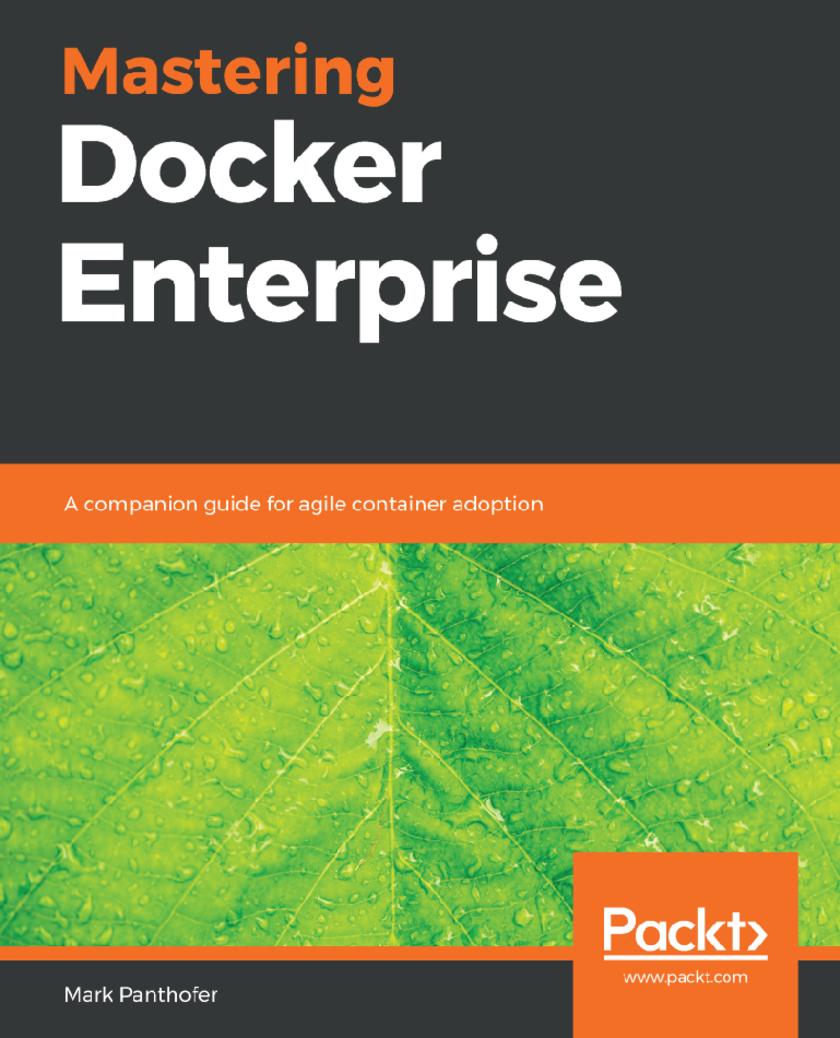
Mastering Docker Enterprise
¥90.46
A journey toward containerized applications in production with a cloud-portable, secure, robust and highly available Docker Enterprise platform. Key Features * Get an insider’s view into the container movement and Docker Enterprise * Manage the transformation associated with enterprise container adoption * Walk through the enterprise container adoption journey Book Description While known mostly as the open source engine behind tens of millions of server nodes, Docker also offers commercially supported enterprise tooling known as the Docker Enterprise. This platform leverages the deep roots from Docker Engine - Community (formerly Docker CE) and Kubernetes, but adds support and tooling to efficiently operate a secure container platform at scale. With hundreds of enterprises on board, best practices and adoption patterns are emerging rapidly. These learning points can be used to inform adopters and help manage the enterprise transformation associated with enterprise container adoption. This book starts by explaining the case for Docker Enterprise, as well as its structure and reference architecture. From there, we progress through the PoC,pilot and production stages as a working model for adoption, evolving the platform’s design and configuration for each stage and using detailed application examples along the way to clarify and demonstrate important concepts.The book concludes with Docker’s impact on other emerging software technologies, such as Blockchain and Serverless computing. By the end of this book, you’ll have a better understanding of what it takes to get your enterprise up and running with Docker Enterprise and beyond. What you will learn * Understand why containers are important to an enterprise * Understand the features and components of Docker Enterprise 2 * Find out about the PoC, pilot, and production adoption phases * Get to know the best practices for installing and operating Docker Enterprise * Understand what is important for a Docker Enterprise in production * Run Kubernetes on Docker Enterprise Who this book is for This book is for Software Architects, DevOps Engineers, Tech Ops, Docker professionals, or any IT professional working with Docker and containers who wants to move containerized workloads to production. This book discusses the enterprise adoption of Docker and Kubernetes,therefore a basic understanding of Docker concepts will be helpful.
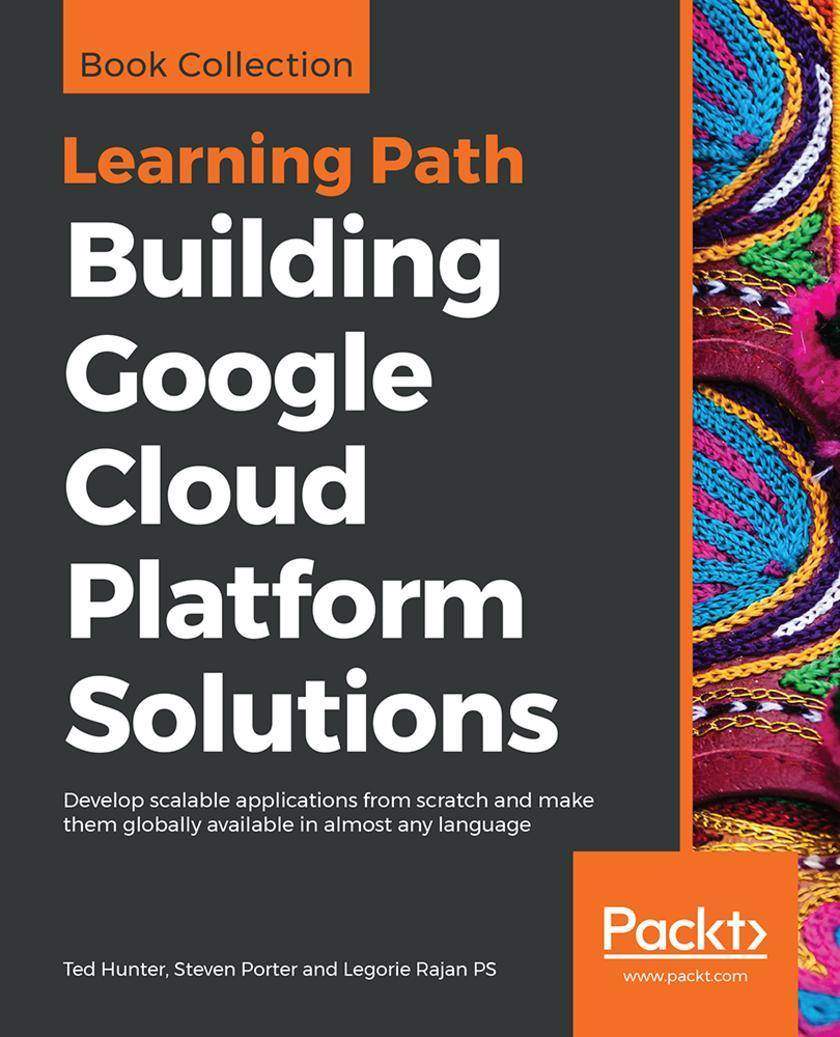
Building Google Cloud Platform Solutions
¥90.46
Build cost-effective and robust cloud solutions with Google Cloud Platform (GCP) using these simple and practical recipes Key Features * Explore the various service offerings of the GCP * Host a Python application on Google Compute Engine * Securely maintain application states with Cloud Storage, Datastore, and Bigtable Book Description GCP is a cloud computing platform with a wide range of products and services that enable you to build and deploy cloud-hosted applications. This Learning Path will guide you in using GCP and designing, deploying, and managing applications on Google Cloud. You will get started by learning how to use App Engine to access Google's scalable hosting and build software that runs on this framework. With the help of Google Compute Engine, you’ll be able to host your workload on virtual machine instances. The later chapters will help you to explore ways to implement authentication and security, Cloud APIs, and command-line and deployment management. As you hone your skills, you’ll understand how to integrate your new applications with various data solutions on GCP, including Cloud SQL, Bigtable, and Cloud Storage. Following this, the book will teach you how to streamline your workflow with tools, including Source Repositories, Container Builder, and Stackdriver. You'll also understand how to deploy and debug services with IntelliJ, implement continuous delivery pipelines, and configure robust monitoring and alerts for your production systems. By the end of this Learning Path, you'll be well versed with GCP’s development tools and be able to develop, deploy, and manage highly scalable and reliable applications. This Learning Path includes content from the following Packt products: * Google Cloud Platform for Developers Ted Hunter and Steven Porter * Google Cloud Platform Cookbook by Legorie Rajan PS What you will learn * Host an application using Google Cloud Functions * Migrate a MySQL database to Cloud Spanner * Configure a network for a highly available application on GCP * Learn simple image processing using Storage and Cloud Functions * Automate security checks using Policy Scanner * Deploy and run services on App Engine and Container Engine * Minimize downtime and mitigate issues with Stackdriver Monitoring and Debugger * Integrate with big data solutions, including BigQuery, Dataflow, and Pub/Sub Who this book is for This Learning Path is for IT professionals, engineers, and developers who want to implement Google Cloud in their organizations. Administrators and architects planning to make their organization more efficient with Google Cloud will also find this Learning Path useful. Basic understanding of GCP and its services is a must.
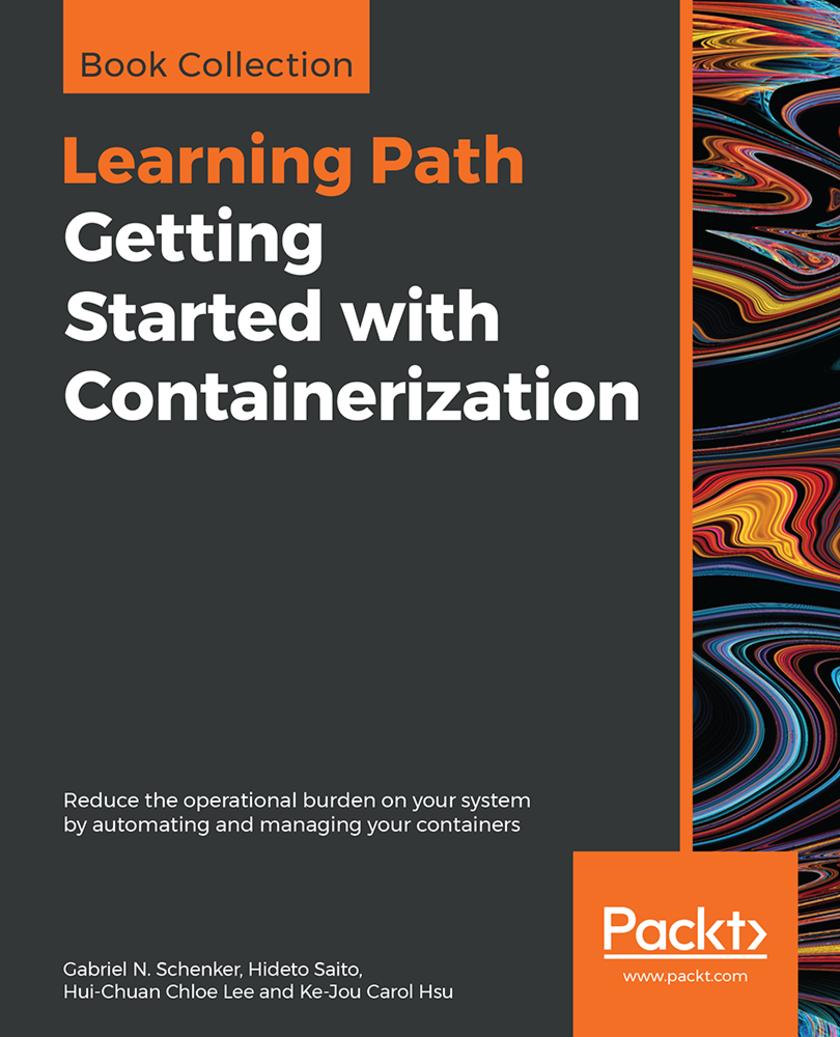
Getting Started with Containerization
¥90.46
Choose the smarter way to learn about containerizing your applications and running them in production. Key Features * Deploy and manage highly scalable, containerized applications with Kubernetes * Build high-availability Kubernetes clusters * Secure your applications via encapsulation, networks, and secrets Book Description Kubernetes is an open source orchestration platform for managing containers in a cluster environment. This Learning Path introduces you to the world of containerization, in addition to providing you with an overview of Docker fundamentals. As you progress, you will be able to understand how Kubernetes works with containers. Starting with creating Kubernetes clusters and running applications with proper authentication and authorization, you'll learn how to create high-availability Kubernetes clusters on Amazon Web Services (AWS), and also learn how to use kubeconfig to manage different clusters. Whether it is learning about Docker containers and Docker Compose, or building a continuous delivery pipeline for your application, this Learning Path will equip you with all the right tools and techniques to get started with containerization. By the end of this Learning Path, you will have gained hands-on experience of working with Docker containers and orchestrators, including SwarmKit and Kubernetes. This Learning Path includes content from the following Packt products: * Kubernetes Cookbook - Second Edition by Hideto Saito, Hui-Chuan Chloe Lee, and Ke-Jou Carol Hsu * Learn Docker - Fundamentals of Docker 18.x by Gabriel N. Schenker What you will learn * Build your own container cluster * Run a highly distributed application with Docker Swarm or Kubernetes * Update or rollback a distributed application with zero downtime * Containerize your traditional or microservice-based application * Build a continuous delivery pipeline for your application * Track metrics and logs for every container in your cluster * Implement container orchestration to streamline deploying and managing applications Who this book is for This beginner-level Learning Path is designed for system administrators, operations engineers, DevOps engineers, and developers who want to get started with Docker and Kubernetes. Although no prior experience with Docker is required, basic knowledge of Kubernetes and containers will be helpful.
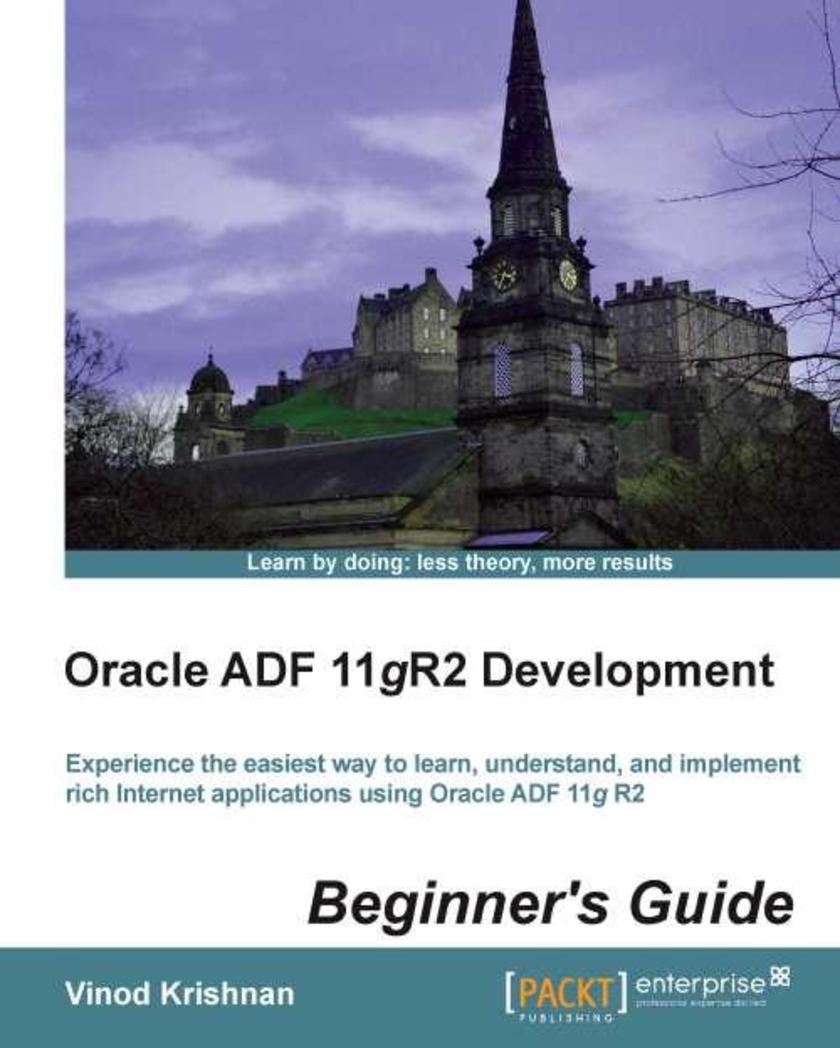
Oracle ADF 11gR2 Development Beginner's Guide
¥90.46
"Oracle ADF 11gR2 Development Beginner's Guide" will cover the basics of Oracle ADF 11g development and will then work through more complex topics as the reader gains more skills. This book will follow a tutorial approach with the content and tasks getting more advanced throughout. This book is intended for beginners who know a little about Java programming and would like to learn how to develop rich web applications using the Oracle Application Development Framework.
Building Dashboards with Microsoft Dynamics GP 2013 and Excel 2013
¥90.46
Follow real-life, step-by-step examples that provide the building blocks to build engaging dashboards. This practical guide is all about doing. Get your data, open up Excel, and go! You don't need to be an expert to get the most out of your Dynamics GP implementation and build great-looking, easily maintained dashboards using Microsoft Excel. If you have a working knowledge of Dynamics and Excel you'll be producing amazing dashboards in hours not days.
Android Native Development Kit Cookbook
¥90.46
This book is written in a Cookbook style, beginning with recipes which focus on helping developers make their software/application available in Android. Android developers who want to learn Android NDK programming, or develop multimedia and games in Android NDK will benefit from this book.
LiveCode Mobile Development: Beginner's Guide - Second Edition
¥90.46
The ideal reader for this book would be someone who already knows LiveCode, is interested in creating mobile apps, and wants to save the many hours it took for me to track down all of the information on how to get started! Chapter 1, LiveCode Fundamentals, will help those of you who know programming but are not familiar with LiveCode. The knowledge you've acquired should be enough for you to benefit from the remainder of the book.
Building Computer Vision Projects with OpenCV 4 and C++
¥90.46
Delve into practical computer vision and image processing projects and get up to speed with advanced object detection techniques and machine learning algorithms Key Features * Discover best practices for engineering and maintaining OpenCV projects * Explore important deep learning tools for image classification * Understand basic image matrix formats and filters Book Description OpenCV is one of the best open source libraries available and can help you focus on constructing complete projects on image processing, motion detection, and image segmentation. This Learning Path is your guide to understanding OpenCV concepts and algorithms through real-world examples and activities. Through various projects, you'll also discover how to use complex computer vision and machine learning algorithms and face detection to extract the maximum amount of information from images and videos. In later chapters, you'll learn to enhance your videos and images with optical flow analysis and background subtraction. Sections in the Learning Path will help you get to grips with text segmentation and recognition, in addition to guiding you through the basics of the new and improved deep learning modules. By the end of this Learning Path, you will have mastered commonly used computer vision techniques to build OpenCV projects from scratch. This Learning Path includes content from the following Packt books: * Mastering OpenCV 4 - Third Edition by Roy Shilkrot and David Millán Escrivá * Learn OpenCV 4 By Building Projects - Second Edition by David Millán Escrivá, Vinícius G. Mendon?a, and Prateek Joshi What you will learn * Stay up-to-date with algorithmic design approaches for complex computer vision tasks * Work with OpenCV's most up-to-date API through various projects * Understand 3D scene reconstruction and Structure from Motion (SfM) * Study camera calibration and overlay augmented reality (AR) using the ArUco module * Create CMake scripts to compile your C++ application * Explore segmentation and feature extraction techniques * Remove backgrounds from static scenes to identify moving objects for surveillance * Work with new OpenCV functions to detect and recognize text with Tesseract Who this book is for If you are a software developer with a basic understanding of computer vision and image processing and want to develop interesting computer vision applications with OpenCV, this Learning Path is for you. Prior knowledge of C++ and familiarity with mathematical concepts will help you better understand the concepts in this Learning Path.
Ceph: Designing and Implementing Scalable Storage Systems
¥90.46
Get to grips with the unified, highly scalable distributed storage system and learn how to design and implement it. Key Features * Explore Ceph's architecture in detail * Implement a Ceph cluster successfully and gain deep insights into its best practices * Leverage the advanced features of Ceph, including erasure coding, tiering, and BlueStore Book Description This Learning Path takes you through the basics of Ceph all the way to gaining in-depth understanding of its advanced features. You’ll gather skills to plan, deploy, and manage your Ceph cluster. After an introduction to the Ceph architecture and its core projects, you’ll be able to set up a Ceph cluster and learn how to monitor its health, improve its performance, and troubleshoot any issues. By following the step-by-step approach of this Learning Path, you’ll learn how Ceph integrates with OpenStack, Glance, Manila, Swift, and Cinder. With knowledge of federated architecture and CephFS, you’ll use Calamari and VSM to monitor the Ceph environment. In the upcoming chapters, you’ll study the key areas of Ceph, including BlueStore, erasure coding, and cache tiering. More specifically, you’ll discover what they can do for your storage system. In the concluding chapters, you will develop applications that use Librados and distributed computations with shared object classes, and see how Ceph and its supporting infrastructure can be optimized. By the end of this Learning Path, you'll have the practical knowledge of operating Ceph in a production environment. This Learning Path includes content from the following Packt products: * Ceph Cookbook by Michael Hackett, Vikhyat Umrao and Karan Singh * Mastering Ceph by Nick Fisk * Learning Ceph, Second Edition by Anthony D'Atri, Vaibhav Bhembre and Karan Singh What you will learn * Understand the benefits of using Ceph as a storage solution * Combine Ceph with OpenStack, Cinder, Glance, and Nova components * Set up a test cluster with Ansible and virtual machine with VirtualBox * Develop solutions with Librados and shared object classes * Configure BlueStore and see its interaction with other configurations * Tune, monitor, and recover storage systems effectively * Build an erasure-coded pool by selecting intelligent parameters Who this book is for If you are a developer, system administrator, storage professional, or cloud engineer who wants to understand how to deploy a Ceph cluster, this Learning Path is ideal for you. It will help you discover ways in which Ceph features can solve your data storage problems. Basic knowledge of storage systems and GNU/Linux will be beneficial.

DevOps with Kubernetes
¥90.46
Leverage the power of Kubernetes to build an efficient software delivery pipeline. Key Features * Learn about DevOps, containers, and Kubernetes all within one handy book * A practical guide to container management and orchestration * Learn how to monitor, log, and troubleshoot your Kubernetes applications Book Description Kubernetes has been widely adopted across public clouds and on-premise data centers. As we're living in an era of microservices, knowing how to use and manage Kubernetes is an essential skill for everyone in the IT industry. This book is a guide to everything you need to know about Kubernetes—from simply deploying a container to administrating Kubernetes clusters wisely. You'll learn about DevOps fundamentals, as well as deploying a monolithic application as microservices and using Kubernetes to orchestrate them. You will then gain an insight into the Kubernetes network, extensions, authentication and authorization. With the DevOps spirit in mind, you'll learn how to allocate resources to your application and prepare to scale them efficiently. Knowing the status and activity of the application and clusters is crucial, so we’ll learn about monitoring and logging in Kubernetes. Having an improved ability to observe your services means that you will be able to build a continuous delivery pipeline with confidence. At the end of the book, you'll learn how to run managed Kubernetes services on three top cloud providers: Google Cloud Platform, Amazon Web Services, and Microsoft Azure. What you will learn * Learn fundamental and advanced DevOps skills and tools * Get a comprehensive understanding of containers * Dockerize an application * Administrate and manage Kubernetes cluster * Extend the cluster functionality with custom resources * Understand Kubernetes network and service mesh * Implement Kubernetes logging and monitoring * Manage Kubernetes services in Amazon Web Services, Google Cloud Platform,and Microsoft Azure Who this book is for This book is for anyone who wants to learn containerization and clustering in a practical way using Kubernetes. No prerequisite skills are required, however, essential DevOps skill and public/private Cloud knowledge will accelerate the reading speed. If you're advanced, you can get a deeper understanding of all the tools and technique described in the book.
Numerical Computing with Python
¥90.46
Understand, explore, and effectively present data using the powerful data visualization techniques of Python Key Features *Use the power of Pandas and Matplotlib to easily solve data mining issues *Understand the basics of statistics to build powerful predictive data models *Grasp data mining concepts with helpful use-cases and examples Book Description Data mining, or parsing the data to extract useful insights, is a niche skill that can transform your career as a data scientist Python is a flexible programming language that is equipped with a strong suite of libraries and toolkits, and gives you the perfect platform to sift through your data and mine the insights you seek. This Learning Path is designed to familiarize you with the Python libraries and the underlying statistics that you need to get comfortable with data mining. You will learn how to use Pandas, Python's popular library to analyze different kinds of data, and leverage the power of Matplotlib to generate appealing and impressive visualizations for the insights you have derived. You will also explore different machine learning techniques and statistics that enable you to build powerful predictive models. By the end of this Learning Path, you will have the perfect foundation to take your data mining skills to the next level and set yourself on the path to become a sought-after data science professional. This Learning Path includes content from the following Packt products: *Statistics for Machine Learning by Pratap Dangeti *Matplotlib 2.x By Example by Allen Yu, Claire Chung, Aldrin Yim *Pandas Cookbook by Theodore Petrou What you will learn *Understand the statistical fundamentals to build data models *Split data into independent groups *Apply aggregations and transformations to each group *Create impressive data visualizations *Prepare your data and design models *Clean up data to ease data analysis and visualization *Create insightful visualizations with Matplotlib and Seaborn *Customize the model to suit your own predictive goals Who this book is for If you want to learn how to use the many libraries of Python to extract impactful information from your data and present it as engaging visuals, then this is the ideal Learning Path for you. Some basic knowledge of Python is enough to get started with this Learning Path.
QlikView: Advanced Data Visualization
¥90.46
Build powerful data analytics applications with this business intelligence tool and overcome all your business challenges Key Features *Master time-saving techniques and make your QlikView development more efficient *Perform geographical analysis and sentiment analysis in your QlikView applications *Explore advanced QlikView techniques, tips, and tricks to deliver complex business requirements Book Description QlikView is one of the most flexible and powerful business intelligence platforms around, and if you want to transform data into insights, it is one of the best options you have at hand. Use this Learning Path, to explore the many features of QlikView to realize the potential of your data and present it as impactful and engaging visualizations. Each chapter in this Learning Path starts with an understanding of a business requirement and its associated data model and then helps you create insightful analysis and data visualizations around it. You will look at problems that you might encounter while visualizing complex data insights using QlikView, and learn how to troubleshoot these and other not-so-common errors. This Learning Path contains real-world examples from a variety of business domains, such as sales, finance, marketing, and human resources. With all the knowledge that you gain from this Learning Path, you will have all the experience you need to implement your next QlikView project like a pro. This Learning Path includes content from the following Packt products: *QlikView for Developers by Miguel ?ngel García, Barry Harmsen *Mastering QlikView by Stephen Redmond *Mastering QlikView Data Visualization by Karl Pover What you will learn *Deliver common business requirements using advanced techniques *Load data from disparate sources to build associative data models *Understand when to apply more advanced data visualization *Utilize the built-in aggregation functions for complex calculations *Build a data architecture that supports scalable QlikView deployments *Troubleshoot common data visualization errors in QlikView *Protect your QlikView applications and data Who this book is for This Learning Path is designed for developers who want to go beyond their technical knowledge of QlikView and understand how to create analysis and data visualizations that solve real business needs. To grasp the concepts explained in this Learning Path, you should have a basic understanding of the common QlikView functions and some hands-on experience with the tool.
Advanced Python Programming
¥90.46
Create distributed applications with clever design patterns to solve complex problems Key Features * Set up and run distributed algorithms on a cluster using Dask and PySpark * Master skills to accurately implement concurrency in your code * Gain practical experience of Python design patterns with real-world examples Book Description This Learning Path shows you how to leverage the power of both native and third-party Python libraries for building robust and responsive applications. You will learn about profilers and reactive programming, concurrency and parallelism, as well as tools for making your apps quick and efficient. You will discover how to write code for parallel architectures using TensorFlow and Theano, and use a cluster of computers for large-scale computations using technologies such as Dask and PySpark. With the knowledge of how Python design patterns work, you will be able to clone objects, secure interfaces, dynamically choose algorithms, and accomplish much more in high performance computing. By the end of this Learning Path, you will have the skills and confidence to build engaging models that quickly offer efficient solutions to your problems. This Learning Path includes content from the following Packt products: * Python High Performance - Second Edition by Gabriele Lanaro * Mastering Concurrency in Python by Quan Nguyen * Mastering Python Design Patterns by Sakis Kasampalis What you will learn * Use NumPy and pandas to import and manipulate datasets * Achieve native performance with Cython and Numba * Write asynchronous code using asyncio and RxPy * Design highly scalable programs with application scaffolding * Explore abstract methods to maintain data consistency * Clone objects using the prototype pattern * Use the adapter pattern to make incompatible interfaces compatible * Employ the strategy pattern to dynamically choose an algorithm Who this book is for This Learning Path is specially designed for Python developers who want to build high-performance applications and learn about single core and multi-core programming, distributed concurrency, and Python design patterns. Some experience with Python programming language will help you get the most out of this Learning Path.


