


 购物车
购物车 个人中心
个人中心
MODx Web Development - Second Edition
¥71.93
This book is an example-driven tutorial, which will take you from the installation of MODx through to configuration, customization, and deployment. Step-by-step instructions will enable you to build a fully-functional, feature-rich website quickly and without the knowledge of any programming language. This book is ideal for newcomers to MODx. Both beginners and experienced web developers will benefit from this comprehensive guide to MODx. No knowledge of PHP programming or any templating language is needed, but the more advanced chapters towards the end of the book will allow more confident developers to extend their applications even further by creating their own snippets.
Swift 2 By Example
¥80.65
Create robust and extensible iOS apps using the advanced features of Swift 2 About This Book Get up to speed with the new features of Swift 2 by following the exhaustive examples in this book Specialize in developing real iOS apps, and 2D and 3D videogames using Swift and Cocoapods Learn how to build server API apps to feed your iOS client apps Who This Book Is For This book is ideal for those who want to learn to develop app in Swift, starting the right way. Whether you are an expert Objective-C programmer or are new to this platform, you’ll quickly grasp the code of real world apps, and discover how to use Swift effectively. Prior experience in development for Apple devices would be helpful, but is not mandatory. What You Will Learn Create a server in Swift to deliver JSON data to an iOS app Take advantage of Cocoapods to use third-party libraries Use a clean and effective architecture to decrease complexity and speed up development Take advantage of the most useful parts of the iOS SDK Build games with SpriteKit and SceneKit Develop an app running on the cloud to act as an API server for your client’s apps In Detail Swift is no longer the unripe language it was when launched by Apple at WWDC14, now it’s a powerful and ready-for-production programming language that has empowered most new released apps. Swift is a user-friendly language with a smooth learning curve; it is safe, robust, and really flexible. Swift 2 is more powerful than ever; it introduces new ways to solve old problems, more robust error handling, and a new programming paradigm that favours composition over inheritance. Swift 2 by Example is a fast-paced, practical guide to help you learn how to develop iOS apps using Swift. Through the development of seven different iOS apps and one server app, you’ll find out how to use either the right feature of the language or the right tool to solve a given problem. We begin by introducing you to the latest features of Swift 2, further kick-starting your app development journey by building a guessing game app, followed by a memory game. It doesn’t end there, with a few more apps in store for you: a to-do list, a beautiful weather app, two games: Flappy Swift and Cube Runner, and finally an ecommerce app to top everything off. By the end of the book, you’ll be able to build well-designed apps, effectively use AutoLayout, develop videogames, and build server apps. Style and approach These easy-to-follow tutorials show you how to build real-world apps. The difficulty and complexity level increases chapter by chapter. Each chapter is dedicated to build a new app, beginning from a basic and unstyled app through to a full 3D game. The last two chapters show you how to build a complete client-server ecommerce app right from scratch.
Raspberry Pi Computer Architecture Essentials
¥71.93
Explore Raspberry Pi's architecture through innovative and fun projects About This Book Explore Raspberry Pi 2’s hardware through the Assembly, C/C++, and Python programming languages Experiment with connecting electronics up to your Raspberry Pi 2 and interacting with them through software Learn about the Raspberry Pi 2 architecture and Raspbian operating system through innovative projects Who This Book Is For Raspberry Pi Computer Architecture Essentials is for those who are new and those who are familiar with the Raspberry Pi. Each topic builds upon earlier ones to provide you with a guide to Raspberry Pi’s architecture. From the novice to the expert, there is something for everyone. A basic knowledge of programming and Linux would be helpful but is not required. What You Will Learn Set up your Raspberry Pi 2 and learn about its hardware Write basic programs in Assembly Language to learn about the ARM architecture Use C and C++ to interact with electronic components Find out about the Python language and how to use it to build web applications Interact with third-party microcontrollers Experiment with graphics and audio programming Expand Raspberry Pi 2’s storage mechanism by using external devices Discover Raspberry Pi 2’s GPIO pins and how to interact with them In Detail With the release of the Raspberry Pi 2, a new series of the popular compact computer is available for you to build cheap, exciting projects and learn about programming. In this book, we explore Raspberry Pi 2’s hardware through a number of projects in a variety of programming languages. We will start by exploring the various hardware components in detail, which will provide a base for the programming projects and guide you through setting up the tools for Assembler, C/C++, and Python. We will then learn how to write multi-threaded applications and Raspberry Pi 2’s multi-core processor. Moving on, you’ll get hands on by expanding the storage options of the Raspberry Pi beyond the SD card and interacting with the graphics hardware. Furthermore, you will be introduced to the basics of sound programming while expanding upon your knowledge of Python to build a web server. Finally, you will learn to interact with the third-party microcontrollers. From writing your first Assembly Language application to programming graphics, this title guides you through the essentials. Style and approach This book takes a step-by-step approach to exploring Raspberry Pi’s architecture through projects that build upon each other. Each project provides you with new information on how to interact with an aspect of the Raspberry Pi and Raspbian operating system, providing a well-rounded guide.
Extending SaltStack
¥80.65
Extend the power of your infrastructure and applications with Salt modules About This Book Get the most up-to-date practical resource on writing new Salt modules and extending Salt Learn through use cases and encounter both commonly-used modules as well as advanced ones Effectively troubleshoot problems and hiccups encountered while building and putting modules to work Who This Book Is For This book is for both new and existing Salt developers who are looking to build and write new Salt modules. Some prior Python development experience is expected. What You Will Learn Understand the working of Salt's Loader system Write several of the most common types of Salt modules Interact between different kinds of modules and build new ones Submit open source modules upstream to the Salt project Make Salt interact with third-party services and applications In Detail Salt already ships with a very powerful set of tools, but that doesn't mean that they all suit your needs perfectly. By adding your own modules and enhancing existing ones, you can bring the functionality that you need to increase your productivity. Extending SaltStack follows a tutorial-based approach to explain different types of modules, from fundamentals to complete and full-functioning modules. Starting with the Loader system that drives Salt, this book will guide you through the most common types of modules. First you will learn how to write execution modules. Then you will extend the configuration using the grain, pillar, and SDB modules. Next up will be state modules and then the renderers that can be used with them. This will be followed with returner and output modules, which increase your options to manage return data. After that, there will be modules for external file servers, clouds, beacons, and finally external authentication and wheel modules to manage the master. With this guide in hand, you will be prepared to create, troubleshoot, and manage the most common types of Salt modules and take your infrastructure to new heights! Style and approach This book follows a step-by-step tutorial-based approach explaining the different types of modules, from fundamentals to complete and full-functioning modules.
Web Developer's Reference Guide
¥80.65
A one-stop guide to the essentials of web development including popular frameworks such as jQuery, Bootstrap, AngularJS, and Node.js About This Book Understand the essential elements of HTML, CSS, and JavaScript, including how and when to use them Walk through three of the best and most popular web development frameworks – jQuery, Bootstrap, and AngularJS References for any function you will need in your day-to-day web development Who This Book Is For This book is perfect for beginners but more advanced web developers will also benefit. Laid out so you can refer to as much or as little as you need to, with this book you can exhaustively explore essential concepts for modern web developers. What You Will Learn Explore detailed explanations of all the major HTML elements and attributes, illustrated with examples Take a deep dive into CSS properties and functions and master their usage Find clear, concise de*ions of JavaScript syntax and expressions Recognize various JavaScript design patterns and learn the basics of JavaScript object-orientated programming Implement the latest ECMAScript 6 for client-side *ing in your web applications Discover new ways to develop your website's front end quickly and easily using Bootstrap Write JavaScript extensibly using jQuery-JavaScript's feature-rich library Delve into the key Node.js modules used in JavaScript server-side programming Access AngularJS 's important modules, controllers, directives, and services quickly In Detail This comprehensive reference guide takes you through each topic in web development and highlights the most popular and important elements of each area. Starting with HTML, you will learn key elements and attributes and how they relate to each other. Next, you will explore CSS pseudo-classes and pseudo-elements, followed by CSS properties and functions. This will introduce you to many powerful and new selectors. You will then move on to JavaScript. This section will not just introduce functions, but will provide you with an entire reference for the language and paradigms. You will discover more about three of the most popular frameworks today—Bootstrap, which builds on CSS, jQuery which builds on JavaScript, and AngularJS, which also builds on JavaScript. Finally, you will take a walk-through Node.js, which is a server-side framework that allows you to write programs in JavaScript. Style and approach This book is an easy-to-follow, comprehensive reference guide. Each topic, function, or element is listed methodically along with parameters, return values, and de*ions. Examples are also included to help you put the concepts to use quickly in the real world.
Unity 5.x By Example
¥90.46
An example-based practical guide to get you up and running with Unity 5.x About This Book The most updated resource on Unity 5.x with comprehensive discussion on all the new features of Unity 5.x Understand the core concepts surrounding Unity5 game development with this power-packed hands-on guide Brush up your existing game development skills and create games that have a brilliant gameplay using the excellent examples from this book Who This Book Is For The ideal target audience for this book would be game developers. They need not have previous experience with Unity since this book will cover all the basics about game development with unity. This would also be a very good resource for Unity developers who want to brush up their basic Unity skills and also get up and running with creating interesting games with Unity 5.x. What You Will Learn Understand core Unity concepts, such as game objects, components, and scenes Learn level design techniques for building immersive and interesting worlds Learn to make functional games with C# *ing Use the toolset creatively to build games of different themes and styles Learn to handle player controls and input functionality Dive into the process of working with terrains and world-creation tools Import custom content into Unity from third-party tools, such as Maya and Blender Get to grips with making both 2D and 3D games In Detail Unity is an exciting and popular engine in the game industry. Throughout this book, you’ll learn how to use Unity by making four fun game projects, from shooters and platformers to exploration and adventure games. Unity 5 By Example is an easy-to-follow guide for quickly learning how to use Unity in practical context, step by step, by making real-world game projects. Even if you have no previous experience of Unity, this book will help you understand the toolset in depth. You'll learn how to create a time-critical collection game, a twin-stick space shooter, a platformer, and an action-fest game with intelligent enemies. In clear and accessible prose, this book will present you with step-by-step tutorials for making four interesting games in Unity 5 and explain all the fundamental concepts along the way. Starting from the ground up and moving toward an intermediate level, this book will help you establish a strong foundation in making games with Unity 5. Style and approach This book would be a very unique resource for any game developer who wants to get up and running with Unity. The unique example based approach will take you through the most basic games towards the more complex ones and will gradually build your skill level.
Learning Responsive Data Visualization
¥80.65
Master the art of building responsive visualizations on the Web About This Book Learn the techniques for building data visualizations that work well for all screen sizes Implement responsive techniques with popular libraries to get to grips with building responsive visualizations that work in the real world Incorporate responsive workflow in your data visualization process to build visualizations that take a mobile-first approach. Who This Book Is For Web developers and data science professionals who want to make their visualizations work for smaller screen sizes. Some basic knowledge of JavaScript and Data visualization is expected. What You Will Learn Get familiar with responsive design for data visualizations Understand the main concepts of D3.js to create interactive visualizations Unleash the power of Bootstrap to create stunning and responsive visualizations for all screen resolutions Implement Touch and Mouse interactions for mobile-first applications Design Transitions and Animations that impress in portrait and landscape Build a Responsive World Map using GeoJSON and D3.js In Detail Using D3.js and Responsive Design principles, you will not just be able to implement visualizations that look and feel awesome across all devices and screen resolutions, but you will also boost your productivity and reduce development time by making use of Bootstrap—the most popular framework for developing responsive web applications. This book teaches the basics of scalable vector graphics (SVG), D3.js, and Bootstrap while focusing on Responsive Design as well as mobile-first visualizations; the reader will start by discovering Bootstrap and how it can be used for creating responsive applications, and then implement a basic bar chart in D3.js. You will learn about loading, parsing, and filtering data in JavaScript and then dive into creating a responsive visualization by using Media Queries, responsive interactions for Mobile and Desktop devices, and transitions to bring the visualization to life. In the following chapters, we build a fully responsive interactive map to display geographic data using GeoJSON and set up integration testing with Protractor to test the application across real devices using a mobile API gateway such as AWS Device Farm. You will finish the journey by discovering the caveats of mobile-first applications and learn how to master cross-browser complications. Style and approach As the world shifts to mobile devices for consuming data on the Web, developers are faced with the unique challenge of making data visualizations work for their smaller screens. The growth of responsive web design enabled developers to adopt page layouts and media for smaller screens, but there is still little information available on how to adapt data visualizations for the smaller screens. This book fills this important gap and shows how responsive web design principles can be extended to create visualizations that work well regardless of the screen size, thereby allowing developers to build user-friendly visualizations that work well on all devices. In addition to covering some of the popular techniques and design patterns for building responsive visualizations, the book also shows readers how to implement these techniques with the help of some popular tools and libraries.
Learning SQLite for iOS
¥54.49
Extend SQLite with mobile development skills to build great apps for iOS devices About This Book Implement Swift code using SQLite statements Learn the background to SQL and SQLite for mobile development, its statements, and command features through practical examples Extend the standard SQLite functionality and increase your software creation portfolio Who This Book Is For This book is intended for those who want to learn about SQLite and how to develop apps in Swift or HTML5 using SQLite. Whether you are an expert Objective-C programmer or new to this platform, you'll learn quickly, grasping the code in real-world apps to use Swift. What You Will Learn Explore Swift's basic language statements Connect to SQLite and execute SQL statements Extend the SQLite language to create your own software extensions Use HTML5 with Phonegap on iOS Set up a Swift project using XCode with SQLite Administer SQLite databases in an easy and effective way In Detail The ability to use SQLite with iOS provides a great opportunity to build amazing apps. Apple's iOS SDK provides native support for SQLite databases. This combination offers the potential to create powerful, data-persistent applications. This book starts with the architecture of SQLite database and introduces you to concepts in SQL . You will find yourself equipped to design your own database system, administer it, and maintain it. Further, you will learn how to operate your SQLite databases smoothly using SQL commands. You will be able to extend the functionality of SQLite by using its vast arsenal of C API calls to build some interesting, exciting, new, and intelligent data-driven applications. Understand how Xcode, HTML5, and Phonegap can be used to build a cross-platform modern app which can benefit from all these technologies - all through creating a complete, customizable application skeleton that you can build on for your own apps. Style and approach This book is a practical and comprehensive guide to developing applications using SQLite and iOS.
jQuery Mobile Web Development Essentials - Third Edition
¥80.65
Build a powerful and practical jQuery-based framework in order to create mobile-optimized websites About This Book Build websites with jQuery Mobile that work beautifully across a wide range of mobile devices Become a competent jQuery Mobile developer and learn the building blocks of jQuery Mobile’s component-driven design This book covers key concepts but with a focus on providing the practical skills required Who This Book Is For This book is for any web developer who is looking to create mobile-optimized websites. Basic knowledge of HTML is required. Minor familiarity with JavaScript would help but is not required. What You Will Learn Create mobile-optimized sites using simple HTML Structure your sites so users can browse them on mobile devices Find out how to work with multiple pages in the JQM framework and embed multiple pages in HTML files Enhance simple pages using various toolbars Include mobile-optimized forms for interactive sites Convert desktop sites into mobile versions Use HTML5’s local storage feature in jQuery Mobile to include persistent client-side storage Explore the rich sets of widgets and themes available and discover how to modify them for use in your jQuery Mobile site In Detail jQuery Mobile is a HTML5-based touch-optimized web framework. jQuery Mobile can be used to build responsive cross-platform websites and apps for a wide range of smartphones, tablets, and desktop devices. The jQuery Mobile framework can be integrated with other mobile app frameworks such as PhoneGap, IBM Worklight, and more. Introduction to jQuery Mobile explains how to add the framework to your HTML pages to create rich, mobile-optimized web pages with minimal effort. You’ll learn how to use jQuery Mobile’s automatic enhancements and configure the framework for customized, powerful mobile-friendly websites. We then dig into forms, events, and styling. You'll see how jQuery Mobile automatically enhances content, and will find out how to use the JavaScript API to build complex sites. We’ll introduce you to how jQuery Mobile can be themed as well looking into how JavaScript can be used for deep sets of customizations. The examples are ready to run and can be used to help kick-start your own site. Along the way, you will leverage all the concepts you learn to build three sample mobile applications. Style and approach Through a set of easy to follow instructions, we’ll show you how to use jQuery Mobile’s features one easy-to-use widget at a time. You’ll see examples for each feature as well as screenshots to demonstrate what they should look like on a mobile device. You can then take these example files and modify them as you learn to experiment.
OpenLayers 3.x Cookbook - Second Edition
¥80.65
Over 50 comprehensive recipes to help you create spectacular maps with OpenLayers 3 About This Book Create highly customized mapping apps for the web with rich interactivity and diverse content using JavaScript See how successful mapping apps work and how they integrate with third-party services Packed full of code examples, screenshots, and explanations from professionals in the industry Who This Book Is For If you are a GIS-related professional with basic knowledge of web technologies and want to gain in-depth knowledge of creating web mapping applications, then this book is for you. The recipes will be appropriately mixed to suit JavaScript beginners or experts and cover basic to advanced topics on OpenLayers. What You Will Learn Create stunning maps, and understand projection. Add customized raster and vector layers Work with important tile providers Work with OGCs, WMS, and WFS compliant servers Read/write features from/to different data sources Style features to improve their visualization Understand events and work with the main controls Enhance maps with HTML5 technologies such as Geolocation In Detail Data visualization and analytics has become an important task across all technology-based industries. OpenLayers 3,is one of the most important and complete open source JavaScript mapping libraries today. Throughout this book, you will go through recipes that expose various features of OpenLayers 3, allowing you to gain an insight into building complex GIS web applications. You’ll get to grips with the basics of creating a map with common functionality and quickly advance to more complicated solutions that address modern challenges. You will explore into maps, raster and vector layers and styling in-depth. This book also includes problem solving and how-to recipes for the most common and important tasks. The range of recipes includes: creating basic maps, working with raster and vector layers, understanding events,working with the main controls, reading features from different data sources, styling features, and understanding the underlying architecture. It will also cover solutions and optimizations to challenges commonly faced in modern applications. Style and approach This book teaches you how to create stunning maps that are highly interactive and visually appealing with the help of 50 handpicked recipes. Each recipe will address your need to visualize data on a map. Just follow the steps in the recipes to create maps of your choice in no time.
Mastering Clojure
¥90.46
Understand the philosophy of the Clojure language and dive into its inner workings to unlock its advanced features, methodologies, and constructs About This Book Learn to handle data using sequences, reducers, and transducers in Clojure Explore the lesser known and more advanced features, constructs, and methodologies of the Clojure language and its ecosystem, such as asynchronous channels, actors, logic programming, and reactive programming Sharpen your Clojure skills through illustrative and comprehensive examples Who This Book Is For If you’re looking to learn more about the core libraries and dive deep into the Clojure language, then this book is ideal for you. Prior knowledge of the Clojure language is required. What You Will Learn Maximize the impact of parallelization, functional composition, and process transformation by composing reducers and transducers Process and manipulate data using sequences, reducers, and transducers in Clojure Modify and add features to the Clojure language using macros Explore the features of category theory and custom data sources for logic programming in Clojure Orchestrate parallelism and concurrency using built-in primitives as well as community libraries in Clojure Handle data with asynchronous and reactive programming methodologies and leverage it using the core.async library Test your code with unit tests, specs, and type checks to write testable code Troubleshoot and style your Clojure code to make it more maintainable In Detail Clojure is a general-purpose language from the Lisp family with an emphasis on functional programming. It has some interesting concepts and features such as immutability, gradual typing, thread-safe concurrency primitives, and macro-based metaprogramming, which makes it a great choice to create modern, performant, and scalable applications. Mastering Clojure gives you an insight into the nitty-gritty details and more advanced features of the Clojure programming language to create more scalable, maintainable, and elegant applications. You’ll start off by learning the details of sequences, concurrency primitives, and macros. Packed with a lot of examples, you’ll get a walkthrough on orchestrating concurrency and parallelism, which will help you understand Clojure reducers, and we’ll walk through composing transducers so you know about functional composition and process transformation inside out. We also explain how reducers and transducers can be used to handle data in a more performant manner. Later on, we describe how Clojure also supports other programming paradigms such as pure functional programming and logic programming. Furthermore, you’ll level up your skills by taking advantage of Clojure's powerful macro system. Parallel, asynchronous, and reactive programming techniques are also described in detail. Lastly, we’ll show you how to test and troubleshoot your code to speed up your development cycles and allow you to deploy the code faster. Style and approach This is an easy-to-follow project-based guide that throws you directly into the excitement of Clojure code. Mastering Clojure is for anyone who is interested in expanding their knowledge of language features and advanced functional programming.
Getting Started with Raspberry Pi Zero
¥54.49
Get started with the smallest, cheapest, and highest-utility Pi ever—Raspberry Pi Zero About This Book Get started with Raspberry Pi Zero and put all of its exciting features to use Create fun games and programs with little or no programming experience Learn to use this super-tiny PC to control hardware and software for work, play, and everything else Who This Book Is For This book is for hobbyists and programmers who are taking their first steps toward using Raspberry Pi Zero. No programming experience is required, although some Python programming experience might be useful. What You Will Learn Understand how to initially download the operating system and set up Raspberry Pi Zero Find out how to control the GPIO pins of Raspberry Pi Zero to control LED circuits Get to grips with adding hardware to the GPIO to control more complex hardware such as motors Add USB control hardware to control a complex robot with 12 servos Include speech recognition so that projects can receive commands Enable the robot to communicate with the world around it by adding speech output Control the robot from a distance and see what the robot is seeing by adding wireless communication Discover how to build a Robotic hand and a Quadcopter In Detail Raspberry Pi Zero is half the size of Raspberry Pi A, only with twice the utility. At just three centimeters wide, it packs in every utility required for full-fledged computing tasks. This practical tutorial will help you quickly get up and running with Raspberry Pi Zero to control hardware and software and write simple programs and games. You will learn to build creative programs and exciting games with little or no programming experience. We cover all the features of Raspberry Pi Zero as you discover how to configure software and hardware, and control external devices. You will find out how to navigate your way in Raspbian, write simple Python *s, and create simple DIY programs. Style and approach This is a practical and fun ?getting startedtutorial that will guide you through everything new that the Raspberry Pi has to offer.
Learning PHP 7
¥90.46
Learn the art of PHP programming through this example-rich book filled to the brim with tutorials every PHP developer needs to know About This Book Set up the PHP environment and get started with web programming Leverage the potential of PHP for server-side programming, memory management, and object-oriented programming (OOP) This book is packed with real-life examples to help you implement the concepts as you learn Who This Book Is For If you are a web developer or programmer who wants to create real-life web applications using PHP 7, or a beginner who wants to get started with PHP 7 programming, this book is for you. Prior knowledge of PHP, PHP 7, or programming is not mandatory. What You Will Learn Set up a server on your machine with PHP Use PHP syntax with the built-in server to create apps Apply the OOP paradigm to PHP to write richer code Use MySQL to manage data in your web applications Create a web application from scratch using MVC Add tests to your web application and write testable code Use an existing PHP framework to build and manage your applications Build REST APIs for your PHP applications Test the behavior of web applications with Behat In Detail PHP is a great language for building web applications. It is essentially a server-side *ing language that is also used for general purpose programming. PHP 7 is the latest version with a host of new features, and it provides major backwards-compatibility breaks. This book begins with the fundamentals of PHP programming by covering the basic concepts such as variables, functions, class, and objects. You will set up PHP server on your machine and learn to read and write procedural PHP code. After getting an understanding of OOP as a paradigm, you will execute MySQL queries on your database. Moving on, you will find out how to use MVC to create applications from scratch and add tests. Then, you will build REST APIs and perform behavioral tests on your applications. By the end of the book, you will have the skills required to read and write files, debug, test, and work with MySQL. Style and approach This book begins with the basics that all PHP developers use every day and then dives deep into detailed concepts and tricks to help you speed through development. You will be able to learn the concepts by performing practical tasks and implementing them in your daily activities, all at your own pace.
Bootstrap By Example
¥80.65
Master Bootstrap 4's frontend framework and build your websites faster than ever before About This Book Become an expert in Bootstrap framework, and speed up front-end development and prototyping through real-life examples An applied guide exploring two web applications such as Twitter and Dashboard from scratch Hands on the Bootstrap version 4 even before the official release Who This Book Is For If you are a frontend developer with no knowledge of Bootstrap, then this book is for you. Basic knowledge of HTML, CSS, and JavaScript is expected, as well as a reasonable understanding of web frameworks, such as jQuery. What You Will Learn Discover how to use Bootstrap’s components and elements, and to customize them for your own projects Understand the framework’s usage in the best way with the recommended development patterns Create web pages for any kind of device like tablet, mobile, computer, etc. Construct a Twitter app by exploring the advanced bootstrap components like Breadcrumbs, Pagination, Media objects, and so on Combine the power of JavaScript with your Bootstrap app for more functionality Create a Dashboard web app using Bootstrap’s JavaScript plugins Learn the difference between Bootstrap’s version 3 and 4 of the framework Extend your knowledge on Bootstrap’s external plugins, their incorporation and usage In Detail Bootstrap is a free, open source collection of tools that helps developers create websites or web applications. It provides a faster, easier, and less repetitive solution to designing and building applications. Before Bootstrap’s release, it was necessary to import a variety of libraries into your project that offered different components and features for web interface development. Plus with the increased popularity of smartphones there were lack of libraries that could handle the responsiveness of a web page. Bootstrap‘s existence let it quickly become famous as a front-end framework that offered a wide set of tools from page grid up to components that render a web page in the best possible way for any device. This book will be a tutorial covering various examples as well as step-by-step methodology to create interesting web applications using Bootstrap and to understand the front-end framework to its core. We begin with an introduction to the Bootstrap framework and setting up an environment to build a simple web page. We then cover the grid system, basic Bootstrap components, HTML elements, and customization components for responsive and mobile first development. This is presented by creating a beautiful Landing page sample. You will also learn how to create a web application like Twitter by using the full set of components offered in the framework. Finally, you will learn to create a dashboard web app, using Bootstrap to its finest potential including component customizations, event handling, and external library integration. All these examples are explained step-by-step and in depth, while covering the versions 3 and the most recent version 4 of Bootstrap. So, you will be in the state of the art for front-end development. By the end of this book, you will be familiar with the development of a plugin for the framework and Bootstrap’s world which is popular for fast paced front-end web development, used in countless projects all over the world, and now yours. Style and approach This is a step-by-step guide that closely focuses on developing web applications in most objective way solving real-life problems with Bootstrap. It covers two sample web applications, which are explained in detail.
Troubleshooting System Center Configuration Manager
¥80.65
Troubleshoot all the aspects of your Configuration Manager installation, from basic easy checks to the advanced log files and serious issues About This Book Learn to troubleshoot Configuration Manager 2012 based versions of Microsoft System Center Understand the usability of tools and find resolutions to all the issues of Configuration Manager A step-by-step practical guide with the necessary screenshots and examples Who This Book Is For If you are new to Configuration Manager or have experience with it, and are interested in identifying, diagnosing and resolving the System Center Configuration Manager administration issues then this book is for you. What You Will Learn Fix your clients and install them correctly Understand how your Configuration Manager hierarchy works Extend your error information Troubleshoot Configuration Manager roles Know your options when faced with problems Prevent future problems occurring In Detail Microsoft System Center Configuration Manager is the most popular enterprise client management solution in the world with some of the best features available. Troubleshooting this product, however, is not always as simple as you might want, not least getting to know the hundreds of log files and understanding how the various components work. The book starts with discussing the most commonly used tools for troubleshooting the variety of problems that can be seen in Configuration Manager. It then moves to providing a high level view of the available log files, their locations, what they relate to and what they typically contain. Next, we will look at how we can fully utilize and extend all the available information from the console monitoring pane through to the status messages and down into error logging with some further reaches into WMI, SQL, registry and the file structure. You will then learn what the common error codes mean, how to make sense of the less common ones and what they actually mean with respect to Configuration Manager. Further to this, you will pick up widely acknowledged best practices both from a proactive stance when carrying out your daily administrative tasks and also from a reactive position when the green lights start to turn red right down to a complete failure situation. By the end of the book, you will be competent enough to identify and diagnose the root causes of System Center Configuration Manager administration issues and resolving them. Style and approach An easy to follow yet practical guide that will advise you on what tools and information you have available to troubleshoot with, if you can extend that information and what to look for solving the issues.
Learning ArcGIS for Desktop
¥90.46
Create, analyze, and map your spatial data with ArcGIS for Desktop About This Book Learn how to use ArcGIS for Desktop to create and manage geographic data, perform vector and raster analysis, design maps, and share your results Solve real-world problems and share your valuable results using the powerful instruments of ArcGIS for Desktop Step-by-step tutorials cover the main editing, analyzing, and mapping tools in ArcGIS for Desktop Who This Book Is For This book is ideal for those who want to learn how to use the most important component of Esri’s ArcGIS platform, ArcGIS for Desktop. It would be helpful to have a bit of familiarity with the basic concepts of GIS. Even if you have no prior GIS experience, this book will get you up and running quickly. What You Will Learn Understand the functionality of ArcGIS for Desktop applications Explore coordinate reference system concepts and work with different map projections Create, populate, and document a file geodatabase Manage, create, and edit feature shapes and attributes Built automate analysis workfl ows with ModelBuilder Apply basic principles of map design to create good-looking maps Analyze raster and three-dimensional data with the Spatial Analyst and 3D Analyst extensions In Detail ArcGIS for Desktop is one of the main components of the ESRI ArcGIS platform used to support decision making and solve real-world mapping problems. Learning ArcGIS for Desktop is a tutorial-based guide that provides a practical experience for those who are interested in start working with ArcGIS. The first five chapters cover the basic concepts of working with the File Geodatabase, as well as editing and symbolizing geospatial data. Then, the book focuses on planning and performing spatial analysis on vector and raster data using the geoprocessing and modeling tools. Finally, the basic principles of cartography design will be used to create a quality map that presents the information that resulted from the spatial analysis previously performed. To keep you learning throughout the chapters, all exercises have partial and final results stored in the dataset that accompanies the book. Finally, the book offers more than it promises by using the ArcGIS Online component in the tutorials as source of background data and for results sharing Style and approach This easy-to-follow guide is full of hands-on exercises that use open and free geospatial datasets. The basic features of the ArcGIS for Desktop are explained in a step-by-step style.
Instant Kendo UI Mobile
¥41.41
Filled with practical, step-by-step instructions and clear explanations for the most important and useful tasks. Written as practical recipes, Instant Kendo UI Mobile How-to will show you all you need to know to build your first mobile application utilizing the Kendo UI Mobile framework and its components.This book is for web application developers who are looking forward to build a mobile website or an application. It requires basic knowledge of HTML, CSS, and JavaScript. This guide assumes that you are new to the topic and provides a step-by-step approach to building mobile applications using the Kendo UI Mobile library.
JBoss Weld CDI for Java Platform
¥54.49
This book is a mini tutorial with plenty of code examples and strategies to give you numerous options when building your own applications."JBoss Weld CDI for Java Platform" is written for developers who are new to dependency injection. A rudimentary knowledge of Java is required.
Blender 2.6 Cycles: Materials and Textures Cookbook
¥80.65
Written in a friendly, practical style this Cookbook deep-dives into a wide-array of techniques used to create realistic materials and textures.This book is perfect for you if you have used Blender before but are new to the impressive Cycles renderer. You should have some knowledge of the Blender interface, though this is not a strict requirement. If you want to create realistic, stunning materials and textures using Cycles, then this book is for you!
Canvas Cookbook
¥80.65
Over 80 simple but creative and structured recipes to explore the capabilities of HTML5 Canvas About This Book Develop simple to advanced recipes of your own, and ultimately produce a great application Discover a better way to use HTML5 Canvas, JavaScript, and CSS Put your creative instincts to use in your day-to-day interface developments Who This Book Is For The book is intended for readers with a preliminary knowledge of JavaScript and CSS. Whether you're a beginner or expert in this technology, the book provides recipes to help you build your own application, presentation, or game. What You Will Learn Draw basic shapes such as lines, arcs, curves, and text using the coordinate system Learn about the animation cycle and use it to animate shapes Grasp the knowledge required to create particles and use them Give various effects to images and videos and also use them in animations Discover the use of event listeners to make recipes interactive and to handle events through event handlers Create good presentation graphics with graphs and charts Learn all about 3D development, from building 3D objects to animating them Convert your knowledge into a complete working game Understand the interoperability and deployment of recipes on different browsers and on different devices In Detail With the growing popularity of HTML5 Canvas, this book offers tailored recipes to help you develop portable applications, presentations, and games. The recipes are simple yet creative and build on each other. At every step, the book inspires the reader to develop his/her own recipe. From basic to advanced, every aspect of Canvas API has been covered to guide readers to develop their own application, presentation, or game. Style and approach All the recipes are sequential and cover the basic and advanced concepts of Canvas. Every recipe is as simple as possible without compromising creativity
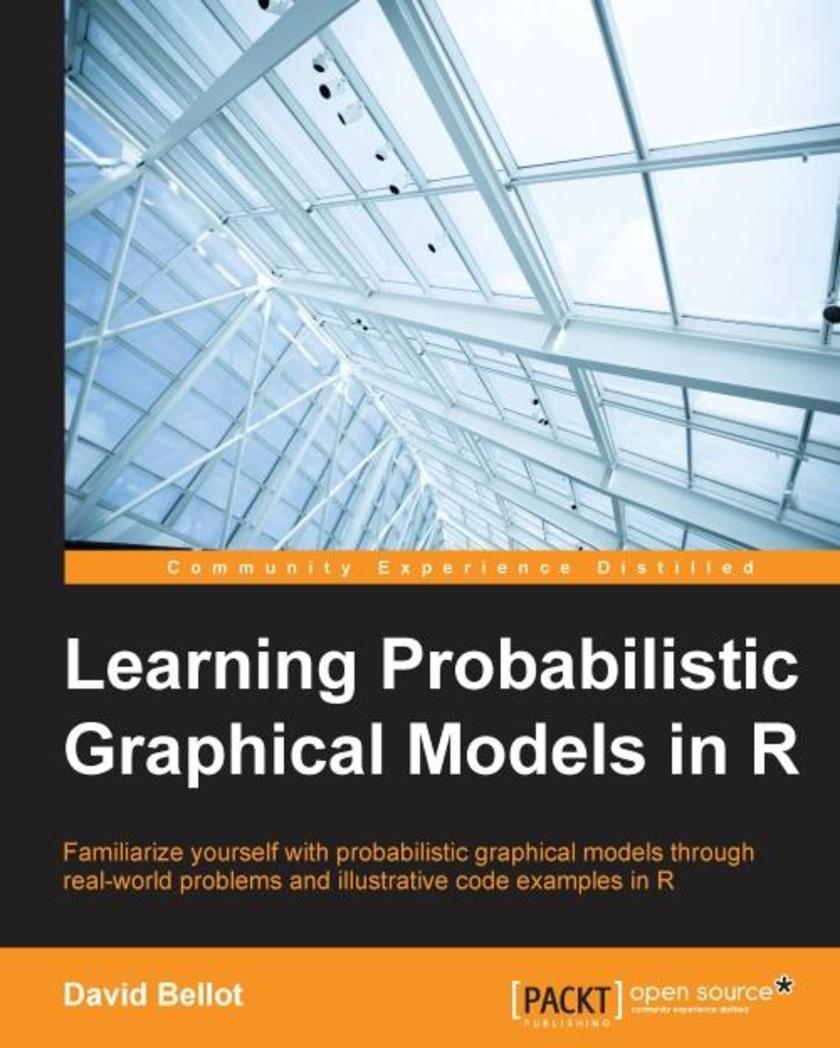
Learning Probabilistic Graphical Models in R
¥63.21
Familiarize yourself with probabilistic graphical models through real-world problems and illustrative code examples in R About This Book Predict and use a probabilistic graphical models (PGM) as an expert system Comprehend how your computer can learn Bayesian modeling to solve real-world problems Know how to prepare data and feed the models by using the appropriate algorithms from the appropriate R package Who This Book Is For This book is for anyone who has to deal with lots of data and draw conclusions from it, especially when the data is noisy or uncertain. Data scientists, machine learning enthusiasts, engineers, and those who curious about the latest advances in machine learning will find PGM interesting. What You Will Learn Understand the concepts of PGM and which type of PGM to use for which problem Tune the model’s parameters and explore new models automatically Understand the basic principles of Bayesian models, from simple to advanced Transform the old linear regression model into a powerful probabilistic model Use standard industry models but with the power of PGM Understand the advanced models used throughout today's industry See how to compute posterior distribution with exact and approximate inference algorithms In Detail Probabilistic graphical models (PGM, also known as graphical models) are a marriage between probability theory and graph theory. Generally, PGMs use a graph-based representation. Two branches of graphical representations of distributions are commonly used, namely Bayesian networks and Markov networks. R has many packages to implement graphical models. We’ll start by showing you how to transform a classical statistical model into a modern PGM and then look at how to do exact inference in graphical models. Proceeding, we’ll introduce you to many modern R packages that will help you to perform inference on the models. We will then run a Bayesian linear regression and you’ll see the advantage of going probabilistic when you want to do prediction. Next, you’ll master using R packages and implementing its techniques. Finally, you’ll be presented with machine learning applications that have a direct impact in many fields. Here, we’ll cover clustering and the discovery of hidden information in big data, as well as two important methods, PCA and ICA, to reduce the size of big problems. Style and approach This book gives you a detailed and step-by-step explanation of each mathematical concept, which will help you build and analyze your own machine learning models and apply them to real-world problems. The mathematics is kept simple and each formula is explained thoroughly.


