


 购物车
购物车 个人中心
个人中心

A Present from Paul Temple: Two Short Stories including Light-Fingers
¥18.65
Two short stories featuring Francis Durbridge’s famous detective, Paul Temple. The perfect winter read, these two short stories follow Paul and Steve through a blustery Christmas and New Year’s Eve to solve two compelling crimes. Also featuring an introduction from Francis Durbridge on how he created his famous detective.
Dancing With the Virgins (Cooper and Fry Crime Series, Book 2)
¥18.65
The second in the series set in the Derbyshire Peak District, Dancing with the Virgins is a tense psychological follow-up to Stephen Booth’s acclaimed debut Black Dog. ‘The body of the woman sprawled obscenely among the stones… She looked like a dead woman, dancing.’ The ring of cairns known as the Nine Virgins has stood on the windswept moors of Derbyshire for centuries. Now, as winter closes in, a tenth figure is added – a body – and a modern tragedy is added to the dark legend that surrounds the stones. There’s no shortage of suspects, each with their own guilty secret, but what DS Fry and DC Cooper lack is any kind of motive. As they search separately for answers, it seems the reasons for the strange behaviour of the moor’s inhabitants may lie somewhere in the past, in a terrible crime yet to be discovered…
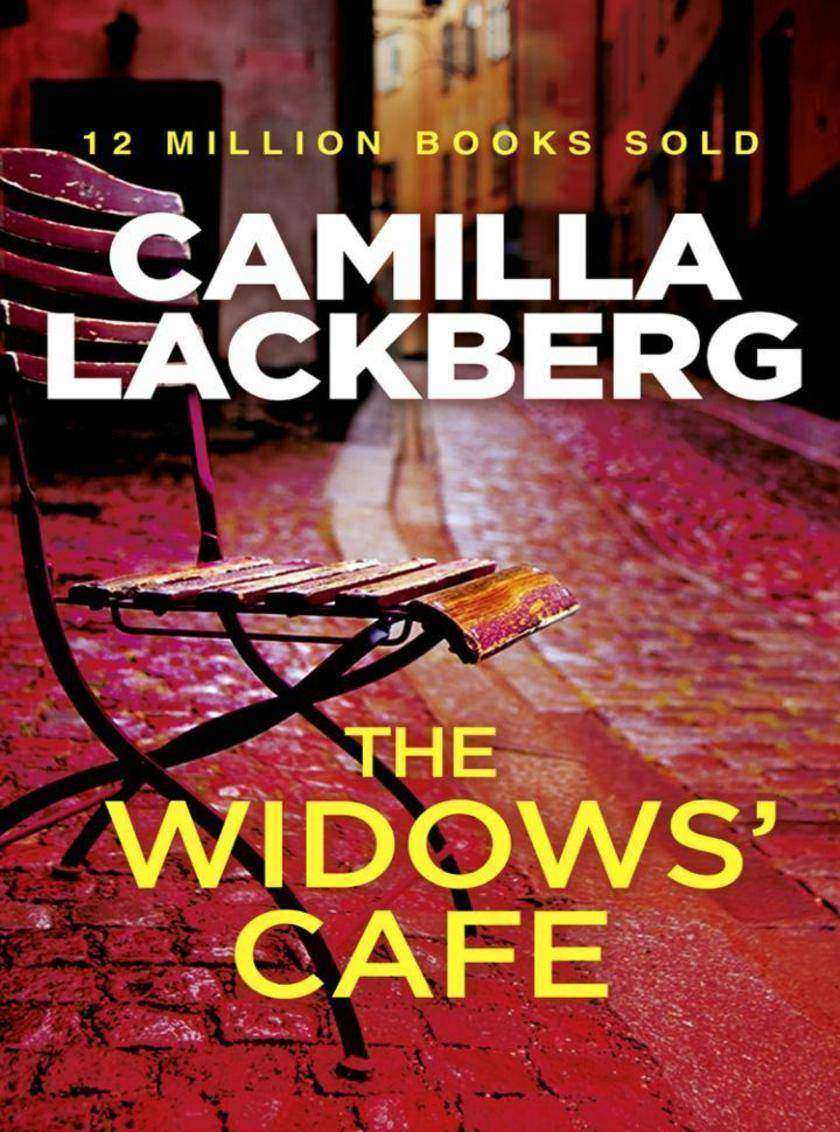
The Widows’ Cafe:A Short Story
¥18.65
A short story from No. 1 international bestseller and Swedish crime sensation Camilla Lackberg, perfect for fans of Stieg Larsson and Jo Nesbo. Marianne has opened a cafe in memory of her husband: Café Widows. Most customers that walk through the door are middle aged women, accompannied by men whose behaviour is often quite unpleasant. Suddenly there is a policeman on the doorstep, confronting Marianne with the news that there have been several deaths recently. Men of all different ages and origins are dying of heart attacks, after visiting Cafe Widows. Could it just be a coincidence, or is there something more sinister at play?
Erasmus Hobart and the Golden Arrow
¥18.65
There are many interesting questions about history of which the most common are 'why does it happen?' and 'is there any way of stopping it?' Second only to these is the question of the infamous outlaw Robin Hood, with whom this book is concerned. Was Robin Hood a great outlaw who dispensed justice like some kind of Sherwood pharmaceutical or was he, perhaps, just a man with a bow who happened to be in the wrong place when the Sheriff of Nottingham went on a law and order drive? In this mediaeval romp, inspired by writers such as Douglas Adams and Terry Pratchett, we can promise that the answer to this question will be, if not answered, at least definitively ignored. Comedy, adventure and romance, all can be found within its pages (particularly if you use them to wrap up your valuable video collection).

It Girl Episode 4: Chapters 20-25 of 36: HarperImpulse Rom Com
¥18.65
NEXT ON “IT GIRL”… EPISODE 4 -It’s the first episode of Dance Off, and Dexter relents by giving Veronica a classy dress: “You look lovely in that dress. I presume it meets with your approval. It’s from the Judi Dench fall collection.” “It’s beautiful, Dexter. I appreciate it.” -Veronica lets it slip that she finds Dexter attractive: He flashed a sinister grin. “So, you think I have a perfect face and body?” So much for my having the upper hand. -Veronica and Dexter are celebrity escorts at a high school prom and made the honorary king and queen… which means they have to share a dance with Dexter in control. “Just let me lead.” “Don’t get used to it.” Will their first dance be a disaster, or lead to something more?
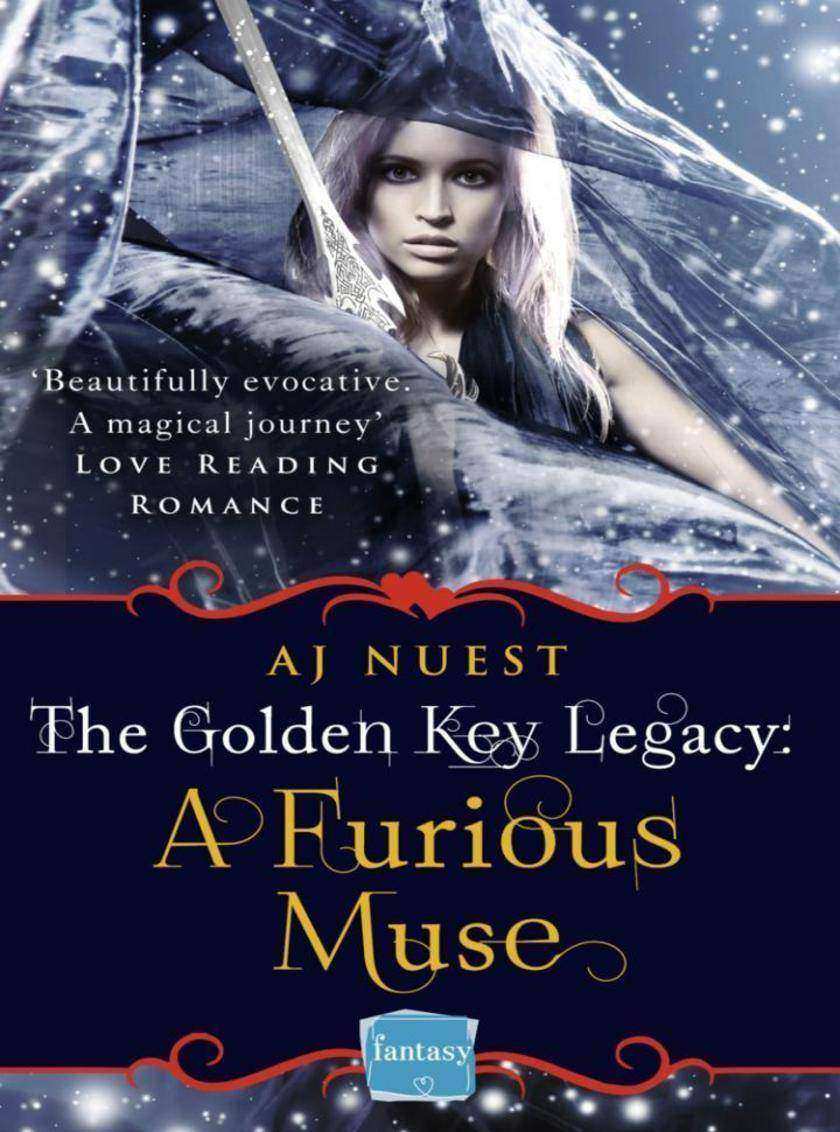
A Furious Muse (The Golden Key Legacy, Book 1)
¥18.65
Taking us back to the realm of Caedmon and Rowena, AJ Nuest has created a breathtaking follow up to The Golden Key Chronicles. Waiting for the next Outlander? Don’t miss this enthralling fantasy romance! ‘Incredibly tantalizing’ – Love Reading Romance Since the day of her birth, Princess Faedrah Austiere has been defined by her place within the kingdom. As the single heir to the half-blood gypsy king and his prophesied white queen, she is fiercely protected, shuttered inside an ivory castle and well-trained in the art of war. Yet neither her obligations as future queen nor the black infestation threatening her kingdom fail to hinder the mysterious pull of the antique armoire hidden in her parents’ bedchamber. And stealing the golden key for a leap through time is the only way to confront the dark lord haunting her dreams. One face. The image of one defiant, relentless woman has been stuck in Rhys McEleod’s head ever since he was old enough paint her luscious curves on the canvas. But the day she walks into his life off the street—sexier than hell and itching for a fight—he’s not convinced she’s the same women he’s envisioned since childhood. That is, not until he spots the golden key around her neck—an object he’d never fully shown in any of his paintings. Now if he could just persuade his lovely muse he’s not the enemy. Unless the elusive Faedrah Austiere learns to trust him, he’ll never have her in his bed—the one place he’s convinced she belongs.
A Wizard Rises (The Golden Key Legacy, Book 3)
¥18.65
Taking us back to the realm of Caedmon and Rowena, AJ Nuest has created a breathtaking follow up to The Golden Key Chronicles. Waiting for the next Outlander? Don’t miss this enthralling fantasy romance! ‘Incredibly tantalizing’ – Love Reading Romance The homecoming celebration held in honor of Princess Faedrah is fraught with perilous frustration. Her nightmares have returned thricefold and, to her horror, a horrendous blight has spread like a plague throughout the kingdom. Compounding her worries, Rhys’ arrival in her world has been welcomed with the exact horror-filled reaction she expected. Her beloved has been cast into the dungeons, and no amount of arguing with the king and queen will prove he’s her fated love. Magical powers were supposed to be a gift, or so Rhys McEleod had always believed. Too bad the second he landed in Faedrah’s world the legacy he inherited slammed into his body like a weight. He’s got zero control and his constant visions of Faedrah fighting an evil entity aren’t helping. At least her parents made the right decision and stuck him away someplace safe. Until he can figure out his next move, prove himself an ally and uncover the clues to stopping Faedrah’s nightmares, he’s got no choice but to wait…and learn exactly what he’s become.
The Sacrifice (The Golden Key Legacy, Book 2)
¥18.65
Taking us back to the realm of Caedmon and Rowena, AJ Nuest has created a breathtaking follow up to The Golden Key Chronicles. Waiting for the next Outlander? Don’t miss this enthralling fantasy romance! ‘Incredibly tantalizing’ – Love Reading Romance The second Faedrah Austiere walked into his life off the canvas, everything in Rhys McEleod’s world stopped making sense. Not only does her story sound like a Grimm’s fairy tale, evidently he’s been cast as the villain. If that isn’t enough, the mirror inside that old, beat up armoire at her uncle’s condo is supposedly a doorway to another world. Ever since the pathway opened, something inside him has seemed…off. If what his muse says is true, they are headed for an epic showdown, but he isn’t about to let her go. Nothing is more important than Faedrah’s protection, even if her parents refuse to accept him. Though certain their fates are bound by more than the golden key Princess Faedrah wears around her neck, it is paramount Rhys’ true identity be kept secret. Should news of his bloodline ever reach her kingdom, their entire quest to save her people could be lost. Their only hope to prove his loyalty is to steal the map to the dark lord’s Crystal Crypt. Yet her a plan endangers her beloved more than the accusations he faces in her kingdom and, to escape evil’s grasp, she and Rhys must take a leap of faith beyond her wildest imagination.

It Girl Episode 3: Chapter 14-19 of 36: HarperImpulse RomCom
¥18.65
NEXT ON “IT GIRL”… EPISODE 3 -Veronica discovers she’s definitely met her match in Dexter Bishop, and she’s ready to take him on: “Yes, it’s quite clear you’re not some fair damsel in distress. You’re more like a damsel who causes distress.” “Oooooh, I kinda like that, Dexter.” -Our heroine is paired up with her dance partner, and not at all happy about the revealing “costumes” she’ll have to wear. “He wants me to wear this?” Bradley shrugged as I held up the electric blue spandex outfit that would no doubt make me look like Catwoman had escaped from a seventies disco. “You’ve got the body for it.” “Thank you, but that’s beside the point.” Though it’s awfully nice that you noticed. -Is the object of Veronica’s affection attached, or not? His cell phone rang, interrupting my question. “Hang on a second,” he said, as he pulled the phone from his pocket. I stole a glance at the screen and saw the face of a spectacular blonde. “I gotta take this.” “Sure,” I said, quickly reassuring myself that a guy who looks like this surely has some beautiful women in his life. She’s probably one of the other dancers. Yeah, let’s go with that.

Stones
¥18.65
A vivid, compelling and intensely moving novel from an exciting new voice in young adult fiction. Coo is trying to cope with the hand that life has dealt her. At sixteen, she feels she’s too young to have lost her older brother, Sam, to alcoholism. She’s skipping school to avoid the sympathy and questions of her friends and teachers, and shunning her parents, angry that they failed to protect her, and desperate to avoid having to face the fact that, towards the end, she began to wish Sam would leave forever – even die. Then, one day, truanting by the Brighton seafront, Coo meets Banks, a homeless alcoholic and she’s surprised to discover that it is possible for her life to get more complicated. Despite warnings from her friends and family, Coo and Banks develop an unlikely friendship. Brought together through a series of unexpected events, strange midnight feasts, a near drowning and the unravelling of secrets, together they seek their chance for redemption. That is, until Coo’s feelings start getting dangerously out of hand.
A Time of Reckoning (The Golden Key Legacy, Book 4)
¥18.65
Taking us back to the realm of Caedmon and Rowena, AJ Nuest has created a breathtaking follow up to The Golden Key Chronicles. Waiting for the next Outlander? Don’t miss this enthralling fantasy romance! ‘Incredibly tantalizing’ – Love Reading Romance Rhys had one job to do. One measly errand that shouldn’t have been a problem, given the nature of his powers. But when an old enemy reappears, detailing the result of his actions, Rhys is forced to make a choice between a future with Faedrah or dying before his time. Frustrated and out of options, he agrees to her suggestion they to leap forward in time to the future…even though a good chance exists his powers will be nothing but a memory in his world. Flying blind on a wing and a prayer, they prepare to fight for everything they love against a wizard of insurmountable power. Faedrah does her best to gather their closest allies. The sides are squared in a war to control the future of both worlds. With the stakes so high, only one advantage has been cast in their favor. The sigil of utmost protection inherent in Rhys’ signature. If not enough to thwart the evil awaiting at the Austiere gates, she could find herself imprisoned in the future, while her kingdom and all those she has sworn to protect are lost to the mists of time.
Noughts and Crosses: A Short Story
¥18.65
A classic tale of nautical adventure from the author of the acclaimed Aubrey/Maturin series, now published in eBook for the very first time to commemorate the Patrick O’Brian centenary. When Sullivan and Ross decide to go shark fishing among the atolls of the Great Barrier Reef little do they know what awaits them. With their schooner beached for cleaning they take a small whaler out to sea, but when the very devil of a storm turns the whole of the sea white, it drives them to the nearest atoll for shelter. It is only when they set out once again that they discover the seas are now filled with sharks, driven to a bloodlust by the smell of their butchered fellows that clings to the whaler. Becalmed and surrounded by the world's most fearsome predators, Sullivan and Ross discover that the hunters and become the hunted. First published under a pseudonym, this classic tale of nautical adventure will thrill every fan of Patrick O'Brian's Aubrey-Maturin series of Napoleonic sagas. Together with 'Two's Company' and 'No Pirates Nowadays', it is also a captivating companion to his novel, THE ROAD TO SAMARCAND, which also features Sullivan and Ross.
Two’s Company: A Short Story
¥18.65
A classic tale of nautical adventure from the author of the acclaimed Aubrey/Maturin series, now published in eBook for the very first time to commemorate the Patrick O’Brian centenary. The lighthouse was one of the most lonely in the world, guarding a dangerous reef in the cold northern seas. It therefore seemed a good idea to Sullivan and Ross that they both be its keepers; after all, two's company. But long months of isolation and boredom can test even the stoutest of friendships. So when a great storm deposits the carcass of a huge whale on the rocks, attracting to it flocks of hungry seabirds and packs of deadly sharks, and later the arrival of two unexpected guests, it provides the two friends with a welcome distraction from their tedium. Yet as the months drag on, they find that there is only so long that man can live in peace with his fellow. First published under a pseudonym, this classic tale of nautical adventure will thrill every fan of Patrick O'Brian's Aubrey-Maturin series of Napoleonic sagas. Together with 'Noughts and Crosses' and 'No Pirates Nowadays', it is also a captivating companion to his novel, THE ROAD TO SAMARCAND, which also features Sullivan and Ross.

A Model World
¥18.74
In this compelling collection of short stories, bestselling author Michael Chabon explores adolescent desire, love, friendship and fatherhood, moving subtly and incisively across this powerful emotional ground. Wry and whimsical, but also with intellectual depth, A MODEL WORLD is a collection of eleven wonderful stories about growing up and growing wise. In ‘S Angel’ a group of wedding guests is hijacked by a fast-talking real estate agent, but not before the bride herself disappears. ‘Smoke’ takes us to a baseball catcher’s funeral, where one of the mourners – a has-been pitcher – confronts the ruins of his career. In the hilarious title story, a graduate student plagiarizes a dissertation on the movement of clouds, only to find himself and his faculty advisor in a parlour game where each player must confess the worst thing he or she has ever done. The second part of the book, ‘The Lost World’, is a series of stories about a young boy, Nathan Shapiro, who must face the wrenching emotions caused by his parents’ bitter divorce. Serious, yet shot through with wit, humour and compassion, these are unforgettable stories from one of America’s most celebrated writers.

Blaster Squad #1 Terror on the Moon
¥18.74
Blaster Squad #1 Terror on the Moon
Timaeus
¥18.74
Red Eve was written in the year 1911 by Henry Rider Haggard. This book is one of the most popular novels of Henry Rider Haggard, and has been translated into several other languages around the world.This book is published by Booklassic which brings young readers closer to classic literature globally.
Candide: Illustrated
¥18.74
High into air are the great New York buildings lifted by a ray whose source no telescope can find.It seemed only fitting and proper that the greatest of all leaps into space should start from Roosevelt Field, where so many great flights had begun and ended. Fliers whose names had rung—for a space—around the world, had landed here and been received by New York with all the pomp of visiting kings. Fliers had departed here for the lands of kings, to be received by them when their journeys were ended. Of course Lucian Jeter and Tema Eyer were disappointed that Franz Kress had beaten them out in the race to be first into the stratosphere above fifty-five thousand feet. There was a chance that Kress would fail, when it would be the turn of Jeter and Eyer. They didn't wish for his failure, of course. They were sports-men as well as scientists; but they were just human enough to anticipate the plaudits of the world which would be showered without stint upon the fliers who succeeded. The warship simply vanished into the night sky. "At least, Tema," said Jeter quietly, "we can look his ship over and see if there is anything about it that will suggest something to us. Of course, whether he succeeds or fails, we shall make the attempt as soon as we are ready.""Indeed, yes," replied Eyer. "For no man will ever fly so high that another may not fly even higher. Once planes are constructed of unlimited flying radius ... well, the universe is large and there should be no end of space fights for a long time."

Evolution of Love
¥18.74
In these times of ours, though concerning the exact year there is no need to be precise, a boat of dirty and disreputable appearance, with two figures in it, floated on the Thames, between Southwark bridge which is of iron, and London Bridge which is of stone, as an autumn evening was closing in. The figures in this boat were those of a strong man with ragged grizzled hair and a sun-browned face, and a dark girl of nineteen or twenty, sufficiently like him to be recognizable as his daughter. The girl rowed, pulling a pair of sculls very easily; the man, with the rudder-lines slack in his hands, and his hands loose in his waistband, kept an eager look out. He had no net, hook, or line, and he could not be a fisherman; his boat had no cushion for a sitter, no paint, no inscription, no appliance beyond a rusty boathook and a coil of rope, and he could not be a waterman; his boat was too crazy and too small to take in cargo for delivery, and he could not be a lighterman or river-carrier; there was no clue to what he looked for, but he looked for something, with a most intent and searching gaze. The tide, which had turned an hour before, was running down, and his eyes watched every little race and eddy in its broad sweep, as the boat made slight head-way against it, or drove stern foremost before it, according as he directed his daughter by a movement of his head. She watched his face as earnestly as he watched the river. But, in the intensity of her look there was a touch of dread or horror. Allied to the bottom of the river rather than the surface, by reason of the slime and ooze with which it was covered, and its sodden state, this boat and the two figures in it obviously were doing something that they often did, and were seeking what they often sought. Half savage as the man showed, with no covering on his matted head, with his brown arms bare to between the elbow and the shoulder, with the loose knot of a looser kerchief lying low on his bare breast in a wilderness of beard and whisker, with such dress as he wore seeming to be made out of the mud that begrimed his boat, still there was a business-like usage in his steady gaze. So with every lithe action of the girl, with every turn of her wrist, perhaps most of all with her look of dread or horror; they were things of usage. 'Keep her out, Lizzie. Tide runs strong here. Keep her well afore the sweep of it.' Trusting to the girl's skill and making no use of the rudder, he eyed the coming tide with an absorbed attention. So the girl eyed him. But, it happened now, that a slant of light from the setting sun glanced into the bottom of the boat, and, touching a rotten stain there which bore some resemblance to the outline of a muffled human form, coloured it as though with diluted blood. This caught the girl's eye, and she shivered. 'What ails you?' said the man, immediately aware of it, though so intent on the advancing waters; 'I see nothing afloat.' The red light was gone, the shudder was gone, and his gaze, which had come back to the boat for a moment, travelled away again. Wheresoever the strong tide met with an impediment, his gaze paused for an instant. At every mooring-chain and rope, at every stationery boat or barge that split the current into a broad-arrowhead, at the offsets from the piers of Southwark Bridge, at the paddles of the river steamboats as they beat the filthy water, at the floating logs of timber lashed together lying off certain wharves, his shining eyes darted a hungry look. After a darkening hour or so, suddenly the rudder-lines tightened in his hold, and he steered hard towards the Surrey shore. Always watching his face, the girl instantly answered to the action in her sculling; presently the boat swung round, quivered as from a sudden jerk, and the upper half of the man was stretched out over the stern.
Divine Comedy (Volume I): Paradise {Illustrated}
¥18.74
The Metamorphosis (German: Die Verwandlung, also sometimes translated as The Transformation) is a novella by Franz Kafka, first published in 1915. It has been cited as one of the seminal works of fiction of the 20th century and is studied in colleges and universities across the Western world. The story begins with a traveling salesman, Gregor Samsa, waking to find himself transformed (metamorphosed) into a large, monstrous insect-like creature. The cause of Samsa's transformation is never revealed, and Kafka never did give an explanation. The rest of Kafka's novella deals with Gregor's attempts to adjust to his new condition as he deals with being burdensome to his parents and sister, who are repulsed by the horrible, verminous creature Gregor has become. Part I: One day, Gregor Samsa, a traveling salesman, wakes up to find himself transformed into a "ungeheures Ungeziefer", literally "monstrous vermin", often interpreted as a giant bug or insect. He believes it is a dream, and reflects on how dreary life as a traveling salesman is. As he looks at the wall clock, he realizes he has overslept, and missed his train for work. He ponders on the consequences of this delay. Gregor becomes annoyed at how his boss never accepts excuses or explanations from any of his employees no matter how hard working they are, displaying an apparent lack of trusting abilities. Gregor's mother knocks on the door and he answers her. She is concerned for Gregor because he is late for work, which is unorthodox for Gregor. Gregor answers his mother and realizes that his voice has changed, but his answer is short so his mother does not notice the voice change. His sister, Grete, to whom he was very close, then whispers through the door and begs him to open the door. All his family members think that he is ill and ask him to open the door. He tries to get out of bed, but he is incapable of moving his body. While trying to move, he finds that his office manager, the chief clerk, has shown up to check on him. He finally rocks his body to the floor and calls out that he will open the door shortly.
Prodigal Village: "A Christmas Tale"
¥18.74
Through the Looking-Glass, and What Alice Found There (1871) is a novel by Lewis Carroll (Charles Lutwidge Dodgson), the sequel to Alice's Adventures in Wonderland (1865). The themes and settings of Through the Looking-Glass make it a kind of mirror image of Wonderland: the first book begins outdoors, in the warm month of May (4 May), uses frequent changes in size as a plot device, and draws on the imagery of playing cards; the second opens indoors on a snowy, wintry night exactly six months later, on 4 November (the day before Guy Fawkes Night), uses frequent changes in time and spatial directions as a plot device, and draws on the imagery of chess. In it, there are many mirror themes, including opposites, time running backwards, and so on. Short Summary: Alice is playing with a white kitten (whom she calls "Snowdrop") and a black kitten (whom she calls "Kitty")—the offspring of Dinah, Alice's cat in Alice's Adventures in Wonderland—when she ponders what the world is like on the other side of a mirror's reflection. Climbing up on the fireplace mantel, she pokes at the wall-hung mirror behind the fireplace and discovers, to her surprise, that she is able to step through it to an alternative world. In this reflected version of her own house, she finds a book with looking-glass poetry, "Jabberwocky", whose reversed printing she can read only by holding it up to the mirror. She also observes that the chess pieces have come to life, though they remain small enough for her to pick up. Upon leaving the house (where it had been a cold, snowy night), she enters a sunny spring garden where the flowers have the power of human speech; they perceive Alice as being a "flower that can move about." Elsewhere in the garden, Alice meets the Red Queen, who is now human-sized, and who impresses Alice with her ability to run at breathtaking speeds. This is a reference to the chess rule that queens are able to move any number of vacant squares at once, in any direction, which makes them the most "agile" of pieces. The Red Queen reveals to Alice that the entire countryside is laid out in squares, like a gigantic chessboard, and offers to make Alice a queen if she can move all the way to the eighth rank/row in a chess match. This is a reference to the chess rule of Promotion. Alice is placed in the second rank as one of the White Queen's pawns, and begins her journey across the chessboard by boarding a train that literally jumps over the third row and directly into the fourth rank, thus acting on the rule that pawns can advance two spaces on their first move.
Persuasion
¥18.74
Holmes decodes a warning from Porlock, an informant against arch-criminal Moriarty, for "Douglas" resident five years at "Birlstone". Scotland Yard's MacDonald asks them to investigate a corpse with the same look and circle-in-triangle brand on the forearm as Birlstone owner Douglas. The head was blown off by an American-style sawed-off shotgun. Apparently, an intruder dropped a card with VV341, and left across a shallow moat. Watson observes the bereaved English wife and best male friend in unusually good spirits. When Holmes pretends the moat will be drained, the conspirators retrieve a missing dumb-bell weighting down the visitor's clothes beneath the water. Douglas comes from hiding, to explain he killed the assassin Baldwin in self-defence; the plan was to save him from more attacks by criminal survivors of Vermissa Valley. He hands Dr. Watson the following account. Young McMurdo gains reputation as tough counterfeiter, Freemen Lodge member fleeing murder charges in Chicago. In the Vermissa coal mine area, McGinty rules Scowrers branded by a circle in square, the local Lodge 341 who extort, murder, and exchange vicious deeds with nearby Lodges. Pretty Ettie prefers McMurdo to nasty Baldwin, and wants to flee, but will wait some months. When word comes that Pinkerton sent Edwards, McMurdo gathers ringleaders in one room, and springs his trap on them, surrounded by the law. Although the worst were hanged, after ten years, villains were freed, and chased McMurdo-Edwards-Douglas, despite changes of name, location, and wife. He married Ettie, then she died in California, where he made a fortune. The Valley of Fear, notable for Professor Moriarty's involvement, is set before "The Final Problem", the short story in which Moriarty was introduced. This introduces a logical difficulty, as in "The Final Problem" Dr. Watson has never heard of Moriarty, whereas by the end of The Valley Of Fear he is, or should be, familiar with his name and character. The "Moriarty" element in the story is tied into the fate of the informer in the story. It ties the Molly Maguire background to another event of that period: the murder of James Carey, an informer who was shot on board a ship off the coast of Natal, South Africa in 1883 by Patrick O'Donnell, an Irish republican who had relatives in the Mollies and briefly visited the Pennsylvania coal mining district, supposedly looking for the suspected informer among them.


