


 购物车
购物车 个人中心
个人中心
Robinson Crusoe: Illustrated
¥18.74
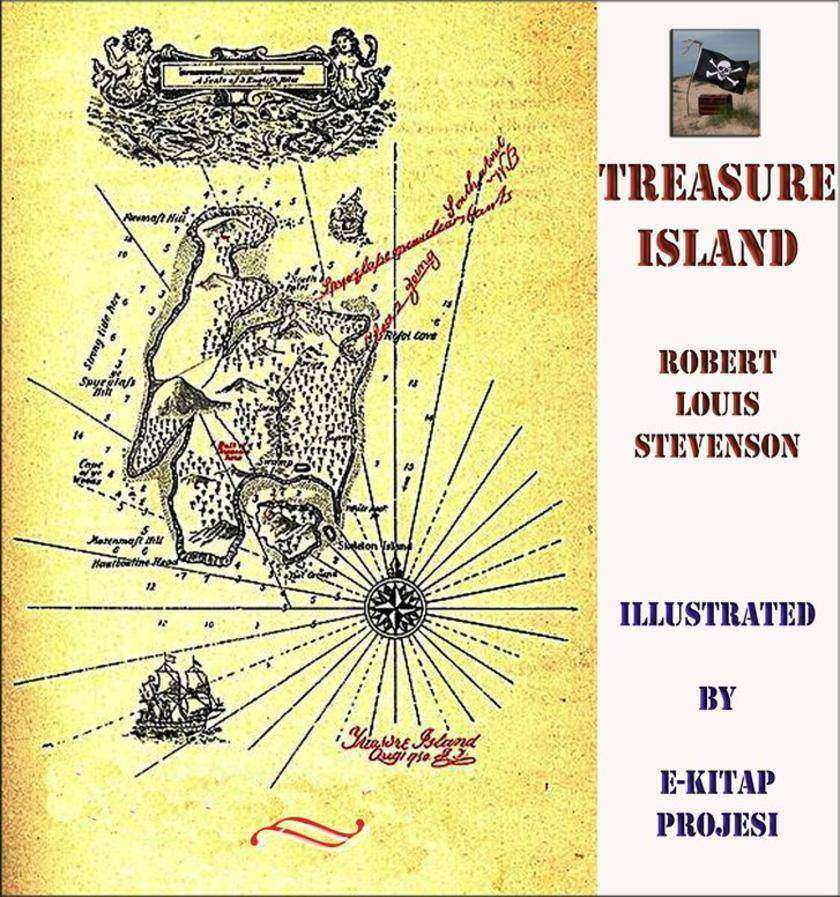
Treasure Island is an adventure novel by Scottish author Robert Louis Stevenson, narrating a tale of "buccaneers and buried gold". First published as a book on 23 May 1883, it was originally serialized in the children's magazine Young Folks between 1881 and 1882 under the title Treasure Island or, the mutiny of the Hispaniola with Stevenson adopting the pseudonym Captain George North. Traditionally considered a coming-of-age story, Treasure Island is a tale known for its atmosphere, characters and action, and also as a wry commentary on the ambiguity of morality — as seen in Long John Silver — unusual for children's literature now and then. It is one of the most frequently dramatized of all novels. The influence of Treasure Island on popular perceptions of pirates is enormous, including treasure maps marked with an "X", schooners, the Black Spot, tropical islands, and one-legged seamen carrying parrots on their shoulders. Short Summary of the Book:The novel is divided into six parts and 34 chapters: The novel opens in the seaside village of Black Hill Cove in south-west England (to Stevenson, in his letters and in the related fictional play Admiral Guinea, near Barnstaple, Devon) in the mid-18th century. The narrator, James "Jim" Hawkins, is the young son of the owners of the Admiral Benbow Inn. An old drunken seaman named Billy Bones becomes a long-term lodger at the inn, only paying for about the first week of his stay. Jim quickly realizes that Bones is in hiding, and that he particularly dreads meeting an unidentified seafaring man with one leg. Some months later, Bones is visited by a mysterious sailor named Black Dog. Their meeting turns violent, Black Dog flees and Bones suffers a stroke. While Jim cares for him, Bones confesses that he was once the mate of a notorious late pirate, Captain Flint, and that his old crewmates want Bones' sea chest. Some time later, another of Bones' crew mates, a blind man named Pew, appears at the inn and forces Jim to lead him to Bones. Pew gives Bones a paper. After Pew leaves, Bones opens the paper to discover it is marked with the Black Spot, a pirate summons, with the warning that he has until ten o'clock to meet their demands. Bones drops dead of apoplexy (in this context, a stroke) on the spot. Jim and his mother open Bones' sea chest to collect the amount due to them for Bones' room and board, but before they can count out the money that they are owed, they hear pirates approaching the inn and are forced to flee and hide, Jim taking with him a mysterious oilskin packet from the chest. The pirates, led by Pew, find the sea chest and the money, but are frustrated that there is no sign of "Flint's fist". Customs men approach and the pirates escape to their vessel (all except for Pew, who is accidentally run down and killed by the agents' horses).
Japanese Fairy Tales: Illustrated
¥18.74
THE ARABIAN NIGHTS “THE ORIENT MAGIC” The Talking Bird, The Singing Tree, and the Golden WaterThe Story of the Fisherman and the GenieThe History of the Young King of the Black IslesThe Story of Gulnare of the SeaThe Story of Aladdin; Or, the Wonderful LampThe Story of Prince AgibThe Story of the City of BrassThe Story of Ali Baba and the Forty ThievesThe History of Codadad and His BrothersThe Story of Sinbad the Voyager The Talking Bird:It will be sufficient to break off a branch and carry it to plant in your gardenThe Fisherman and the GenieThe smoke ascended to the clouds, and extending itself along the sea and upon the shore formed a great mist The Young King of the Black IslesWhen he came to this part of his narrative the young king could not restrain his tearsGulnare of the SeaAnd she proceeded to burn perfume and repeat spells until the sea foamed and was agitatedAladdinAt the same time the earth, trembling, opened just before the magician, and uncovered a stone, laid horizontally, with a brass ring fixed into the middlePrince AgibAnd when the boat came to me I found in it a man of brass, with a tablet of lead upon his breast, engraven with names and talismans Prince AgibAt the approach of evening I opened the first closet and, entering it, found a mansion like paradiseThe City of BrassAnd when they had ascended that mountain they saw a city than which eyes had not beheld any greaterThe Story of Ali Baba and the Forty ThievesCassim ... was so alarmed at the danger he was in that the more he endeavoured to remember the word Sesame the more his memory was confoundedThe History of Codadad and His BrothersAs it drew near we saw ten or twelve armed pirates appear on the deckSecond Voyage of SinbadThe spot where she left me was encompassed on all sides by mountains that seemed to reach above the clouds, and so steep that there was no possibility of getting out of the valleyThird Voyage of SinbadHaving finished his repast, he returned to his porch, where he lay and fell asleep, snoring louder than thunder.. Little excuse is needed, perhaps, for any fresh selection from the famous "Tales of a Thousand and One Nights," provided it be representative enough, and worthy enough, to enlist a new army of youthful readers. Of the two hundred and sixty-four bewildering, unparalleled stories, the true lover can hardly spare one, yet there must always be favourites, even among these. We have chosen some of the most delightful, in our opinion; some, too, that chanced to appeal particularly to the genius of the artist. If, enticed by our choice and the beauty of the pictures, we manage to attract a few thousand more true lovers to the fountain-book, we shall have served our humble turn. The only real danger lies in neglecting it, in rearing a child who does not know it and has never fallen under its spell. You remember Maimoune, in the story of Prince Camaralzaman, and what she said to Danhasch, the genie who had just arrived from the farthest limits of China? "Be sure thou tellest me nothing but what is true or I shall clip thy wings!" This is what the modern child sometimes says to the genies of literature, and his own wings are too often clipped in consequence."The Empire of the Fairies is no more. Reason has banished them from ev'ry shore;Steam has outstripped their dragons and their cars,Gas has eclipsed their glow-worms and their stars."?douard Laboulaye says in his introduction to Nouveaux Contes Bleus: "Mothers who love your children, do not set them too soon to the study of history; let them dream while they are young.

Little Women
¥18.74
In offering this study to a public accustomed only to the unquestioning acceptance of the home as something perfect, holy, quite above discussion, a word of explanation is needed. First, let it be clearly and definitely stated, the purpose of this book is to maintain and improve the home. Criticism there is, deep and thorough; but not with the intention of robbing us of one essential element of home life—rather of saving us from conditions not only unessential, but gravely detrimental to home life. Every human being should have a home; the single person his or her home; and the family their home. The home should offer to the individual rest, peace, quiet, comfort, health, and that degree of personal expression requisite; and these conditions should be maintained by the best methods of the time. The home should be to the child a place of happiness and true development; to the adult a place of happiness and that beautiful reinforcement of the spirit needed by the world's workers. We are here to perform our best service to society, and to find our best individual growth and expression; a right home is essential to both these uses. The place of childhood's glowing memories, of youth's ideals, of the calm satisfaction of mature life, of peaceful shelter for the aged; this is not attacked, this we shall not lose, but gain more universally. What is here asserted is that our real home life is clogged and injured by a number of conditions which are not necessary, which are directly inimical to the home; and that we shall do well to lay these aside. As to the element of sanctity—that which is really sacred can bear examination, no darkened room is needed for real miracles; mystery and shadow belong to jugglers, not to the truth. The home is a human institution. All human institutions are open to improvement. This specially dear and ancient one, however, we have successfully kept shut, and so it has not improved as have some others.
The Book of Dragons
¥18.74
Creep, Shadow! was written in the year 1934 by Abraham Merritt. This book is one of the most popular novels of Abraham Merritt, and has been translated into several other languages around the world.This book is published by Booklassic which brings young readers closer to classic literature globally.
Great Astronomers (Nicolaus Copernicus): Illustrated
¥18.74
Skye a világon mindennél jobban szereti az ikertesóját, Summert. Mindig mindent együtt csinálnak, ám a Skye újabban kezdi azt érezni, teljesen elt?nik testvére árnyékában, mellette mindig csak a második legjobb lehet. Emiatt is érinti annyira fájdalmasan, mikor kiderül, Alfie is csak azért barátkozik vele, hogy meghódíthassa Summer szívét. Skye szeretne ?nmaga lenni, megmutatni saját stílusát és egyéniségét. De nem k?nny? elszánnia magát, hiszen egy t?kéletes, men? és népszer? ikertestvér mellett miért lenne bárki pont rá kíváncsi? ?t lány, ?t néz?pont, ?t k?nyv. Cherry után a Mályvacukor égboltból megismerjük Skye t?rténetét. Egy k?nyvsorozat, melyben minden testvérnek megvan a maga t?rténete Neked melyik lány lesz a kedvenced? Talán a Mályvacukor égbolt f?h?se, Skye? ? az a lány, akinek sz?ke, hullámos a haja, kék a szeme, egy kissé talán kül?nc, de mindig vidám, kedves és barátságos. Igazi egyéniség. A szerz?r?l: Cathy Cassidy nyolc-kilencéves korában írta meg els? képesk?nyvét kis?ccsének, és azóta ontja magából a t?rténeteket. Magyarul els?ként a Csajok és csokik-sorozata jelent meg (a Cseresznyés ábrándot most a második k?tet, a Mályvacukor égbolt k?veti), melynek a vagány Tanberry-n?vérek a f?h?sei. De mellettük felt?nik néhány szupermen? srác is, valamint Cathy egyik legnagyobb szerelme, a csokoládé is fontos szerepet kap. Cathy Skóciában él a családjával. Az ?sszes munka k?zül, amivel valaha megpróbálkozott, az írást szereti a legjobban hiszen amikor ír, mást sem kell csinálnia, mint ébren álmodozni egész álló nap.

She
¥18.74
The War of the Worlds is a military science fiction novel by H. G. Wells. It first appeared in serialized form in 1897, published simultaneously in Pearson's Magazine in the UK and Cosmopolitan magazine in the US. The first appearance in book form was published by William Heinemann of London in 1898. It is the first-person narrative of the adventures of an unnamed protagonist and his brother in Surrey and London as Earth is invaded by Martians. Written between 1895 and 1897, it is one of the earliest stories that detail a conflict between mankind and an extraterrestrial race. The novel is one of the most commented-on works in the science fiction canon. The War of the Worlds has two parts, Book One: The Coming of the Martians and Book Two: The Earth under the Martians. The narrator, a philosophically-inclined author, struggles to return to his wife while seeing the Martians lay waste to southern England. Book One also imparts the experience of his brother, also unnamed, who describes events in the capital and escapes the Martians by boarding a ship near Tillingham, on the Essex coast. The plot has been related to invasion literature of the time. The novel has been variously interpreted as a commentary on evolutionary theory, British Imperialism, and generally Victorian superstitions, fears and prejudices. At the time of publication it was classified as a scientific romance, like his earlier novel The Time Machine. The War of the Worlds has been both popular (having never gone out of print) and influential, spawning half a dozen feature films, radio dramas, a record album, various comic book adaptations, a television series, and sequels or parallel stories by other authors. It has even influenced the work of scientists, notably Robert Hutchings Goddard. Plot SummaryYet across the gulf of space, minds that are to our minds as ours are to those of the beasts that perish, intellects vast and cool and unsympathetic, regarded this earth with envious eyes, and slowly and surely drew their plans against us.— H. G. Wells (1898), The War of the Worlds The Coming of the MartiansThe narrative opens in an astronomical observatory at Ottershaw where explosions are seen on the surface of the planet Mars, creating much interest in the scientific community. Later a "meteor" lands on Horsell Common, near the narrator's home in Woking, Surrey. He is among the first to discover that the object is an artificial cylinder that opens, disgorging Martians who are "big" and "greyish" with "oily brown skin," "the size, perhaps, of a bear," with "two large dark-coloured eyes," and a lipless "V-shaped mouth" surrounded by "Gorgon groups of tentacles." The narrator finds them "at once vital, intense, inhuman, crippled and monstrous." They briefly emerge, have difficulty in coping with the Earth's atmosphere, and rapidly retreat into the cylinder. A human deputation (which includes the astronomer Ogilvy) approaches the cylinder with a white flag, but the Martians incinerate them and others nearby with a heat-ray before beginning to assemble their machinery. Military forces arrive that night to surround the common, including Maxim guns. The population of Woking and the surrounding villages are reassured by the presence of the military. A tense day begins, with much anticipation of military action by the narrator.
Spiders
¥18.74
This book is called The White Spark as the white spark or vacuum cell in Nature IS THE RIGHT HAND OF GOD—it is a ubiquitous principle of the universe and is the cause and parent of electricity, combustion, radium, snow-flakes, flowers, trees, leaves, crystallization, wireless telegraphy, animal forms and EVEN LIFE ITSELF. This book is the key to every department of human endeavor, as it enunciates the basic principle and THE PRIME MOVER of the universe.?It tells the road to health, the cause and cure of disease, the truth about the germ humbug and drug treatments, serums and antitoxins. It shows why luminosity is produced on the flesh of various organisms, why a slice of pollock when first iced, then heated to 100 degrees and then thrust into a temperature of 50 degrees becomes luminous. It shows the farmer that he can become a magician of agriculture—tells that the nitrogen of the air is only a dust of quartz rocks, like the invisible moisture of the air is "a dust of water"—that the nodules on the roots of the clover and legumes do not abstract nitrogen from the air, for if they did nature would have placed these bacteriological growths on the vine and not the root, the scientists have the cart before the horse in this case and the nodular cells form the proteids from sand or silica, this book tells how it is done. It tells what a trance is and how the soul can leave the body temporarily. How JESUS CHRIST is carrying out the biblical prophesy by TELEPATHY. Gives the truths about the ideal society, alcohol, drunkenness, causes of crime, longevity and law.
Notes from the Underground: "Illustrated"
¥18.74
In 1888 a client, Mary Morstan, comes with two puzzles for Holmes. The first is the disappearance of her father Captain Arthur Morstan in December 1878 and the second is that she has received 6 pearls in the mail from an anonymous benefactor once a year since 1882, since she answered an anonymous newspaper query inquiring for her. With the last pearl she has received a letter remarking that she has been a wronged woman and asks for meeting. Holmes takes the case and soon discovers that Major Sholto — Morstan's only friend who had denied seeing Morstan — had died in 1882 and that within a short span of time Mary began to receive the pearls, implying a connection. The only clue Mary can give Holmes is a map of a fortress with the names of Jonathan Small and three Sikhs, who are named Dost Akbar, Abdullah Khan, and Mahomet Singh. Holmes, Watson, and Mary meet Thaddeus Sholto, the son of the late Major Sholto and Capt Morstan's Army friend who has sent her the pearls. Thaddeus remarks that his father had a paranoid fear of one-legged men and confirms that Mary's father had seen the Major the night he died. That night, in a quarrel about an Agra Treasure, Morstan — who was in weak health — suffered a heart attack. Not wanting to bring attention to the object of the quarrel to public notice, Sholto disposed of the body and hid the treasure. However his own health became worse when he received a letter from India. Dying, he called his two sons and confessed to Morstan's death and was about to divulge the location of the treasure when he suddenly cried "Keep him out!". The puzzled sons glimpsed a face in the window but the only trace was a single footstep in the dirt. On their father's body is a note reading "The Sign of Four". Both brothers quarreled over whether a legacy should be left to Mary Morstan and Thaddeus left his brother Bartholomew, taking a chaplet and sending its pearls to Mary. The reason he sent the letter is that Bartholomew has found the treasure and possibly Thaddeus and Mary might confront him for a division of it. Bartholomew is found dead in his home from a poison dart and the treasure is missing. While the police wrongly take Thaddeus in as a suspect Holmes deduces that there are two persons involved in the murder: a one-legged man, Jonathan Small, as well as another "small" accomplice. He traces them to a boat landing where Small has hired a launch named the Aurora. With the help of his Baker Street Irregulars and his own disguise Holmes traces the launch. In a Police launch Holmes and Watson chase the Aurora and capture it but in the process end up killing the "small" companion after he attempts to kill Holmes with a poisoned dart shot from a blow-pipe. Small tries to escape but is captured. However the iron treasure box is empty; Small claims to have dumped the treasure over the side during the chase.
Pen Drawing: "An Illustrated Treatise"
¥18.74
The book's protagonist is an English scientist and gentleman inventor living in Richmond, Surrey in Victorian England, and identified by a narrator simply as the Time Traveller. The narrator recounts the Traveller's lecture to his weekly dinner guests that time is simply a fourth dimension, and his demonstration of a tabletop model machine for travelling through it. He reveals that he has built a machine capable of carrying a person, and returns at dinner the following week to recount a remarkable tale, becoming the new narrator.In the new narrative, the Time Traveller tests his device with a journey that takes him to A.D. 802,701, where he meets the Eloi, a society of small, elegant, childlike adults. They live in small communities within large and futuristic yet slowly deteriorating buildings, doing no work and having a frugivorous diet. His efforts to communicate with them are hampered by their lack of curiosity or discipline, and he speculates that they are a peaceful communist society, the result of humanity conquering nature with technology, and subsequently evolving to adapt to an environment in which strength and intellect are no longer advantageous to survival. Returning to the site where he arrived, the Time Traveller is shocked to find his time machine missing, and eventually works out that it has been dragged by some unknown party into a nearby structure with heavy doors, locked from the inside, which resembles a Sphinx. Later in the dark, he is approached menacingly by the Morlocks, ape-like troglodytes who live in darkness underground and surface only at night. Within their dwellings he discovers the machinery and industry that makes the above-ground paradise possible. He alters his theory, speculating that the human race has evolved into two species: the leisured classes have become the ineffectual Eloi, and the downtrodden working classes have become the brutish light-fearing Morlocks. Deducing that the Morlocks have taken his time machine, he explores the Morlock tunnels, learning that they feed on the Eloi. His revised analysis is that their relationship is not one of lords and servants but of livestock and ranchers. The Time Traveller theorizes that intelligence is the result of and response to danger; with no real challenges facing the Eloi, they have lost the spirit, intelligence, and physical fitness of humanity at its peak. Meanwhile, he saves an Eloi named Weena from drowning as none of the other Eloi take any notice of her plight, and they develop an innocently affectionate relationship over the course of several days. He takes Weena with him on an expedition to a distant structure that turns out to be the remains of a museum, where he finds a fresh supply of matches and fashions a crude weapon against Morlocks, whom he fears he must fight to get back his machine. He plans to take Weena back to his own time. Because the long and tiring journey back to Weena's home is too much for them, they stop in the forest, and they are then overcome by Morlocks in the night, and Weena faints. The Traveller escapes only when a small fire he had left behind them to distract the Morlocks catches up to them as a forest fire; Weena is presumably lost in the fire, as are the Morlocks. The Morlocks use the time machine as bait to ensnare the Traveller, not understanding that he will use it to escape. He travels further ahead to roughly 30 million years from his own time. There he sees some of the last living things on a dying Earth, menacing reddish crab-like creatures slowly wandering the blood-red beaches chasing butterflies in a world covered in simple lichenous vegetation. He continues to make short jumps through time, seeing Earth's rotation gradually cease and the sun grow larger, redder, and dimmer, and the world falling silent and freezing as the last degenerate living things die out.
Paradise Lost
¥18.74
Suddenly, Honath lost his temper. "Lose it, then!" he shouted. "Let us unlearn everything we know only by rote, go back to the beginning, learn all over again, and continue to learn, from our own experience. Spokesman, you are an old man, but there are still some of us who haven't forgotten what curiosity means!" "Quiet!" the Spokesman said. "We have heard enough. We call on Alaskon the Navigator.""Much of the Book is clearly untrue," Alaskon said flatly, rising. "As a handbook of small trades it has served us well. As a guide to how the universe is made, it is nonsense, in my opinion; Honath is too kind to it. I've made no secret of what I think, and I still think it." "And will pay for it," the Spokesman said, blinking slowly down at Alaskon. "Charl the Reader.""Nothing," Charl said, without standing, or even looking up."You do not deny the charges?""I've nothing to say," Charl said, but then, abruptly, his head jerked up, and he glared with desperate eyes at the Spokesman. "I can read, Spokesman. I have seen words in the Book of Laws that contradict each other. I've pointed them out. They're facts, they exist on the pages. I've taught nothing, told no lies, preached no unbelief. I've pointed to the facts. That's all.""Seth the Needlesmith, you may speak now." The guards took their hands gratefully off Seth's mouth; they had been bitten several times in the process of keeping him quiet up to now. Seth resumed shouting at once."I'm no part of this group! I'm the victim of gossip, envious neighbors, smiths jealous of my skill and my custom! No man can say worse of me than that I sold needles to this pursemaker—sold them in good faith! The charges against me are lies, all lies!" Honath jumped to his feet in fury, and then sat down again, choking back the answering shout almost without tasting its bitterness. What did it matter? Why should he bear witness against the young man? It would not help the others, and if Seth wanted to lie his way out of Hell, he might as well be given the chance.The Spokesman was looking down at Seth with the identical expression of outraged disbelief which he had first bent upon Honath. "Who was it cut the blasphemies into the hardwood tree, by the house of Hosi the Lawgiver?" he demanded. "Sharp needles were at work there, and there are witnesses to say that your hands held them.""More lies!"
Utopia
¥18.74
The Wanderer's Necklace was written in the year 1914 by Henry Rider Haggard. This book is one of the most popular novels of Henry Rider Haggard, and has been translated into several other languages around the world.This book is published by Booklassic which brings young readers closer to classic literature globally.

The Mark of Cain
¥18.74
There once lived, in a sequestered part of the county of Devonshire, one Mr Godfrey Nickleby: a worthy gentleman, who, taking it into his head rather late in life that he must get married, and not being young enough or rich enough to aspire to the hand of a lady of fortune, had wedded an old flame out of mere attachment, who in her turn had taken him for the same reason. Thus two people who cannot afford to play cards for money, sometimes sit down to a quiet game for love. Some ill-conditioned persons who sneer at the life-matrimonial, may perhaps suggest, in this place, that the good couple would be better likened to two principals in a sparring match, who, when fortune is low and backers scarce, will chivalrously set to, for the mere pleasure of the buffeting; and in one respect indeed this comparison would hold good; for, as the adventurous pair of the Fives' Court will afterwards send round a hat, and trust to the bounty of the lookers-on for the means of regaling themselves, so Mr Godfrey Nickleby and HIS partner, the honeymoon being over, looked out wistfully into the world, relying in no inconsiderable degree upon chance for the improvement of their means. Mr Nickleby's income, at the period of his marriage, fluctuated between sixty and eighty pounds PER ANNUM. There are people enough in the world, Heaven knows! and even in London (where Mr Nickleby dwelt in those days) but few complaints prevail, of the population being scanty. It is extraordinary how long a man may look among the crowd without discovering the face of a friend, but it is no less true. Mr Nickleby looked, and looked, till his eyes became sore as his heart, but no friend appeared; and when, growing tired of the search, he turned his eyes homeward, he saw very little there to relieve his weary vision. A painter who has gazed too long upon some glaring colour, refreshes his dazzled sight by looking upon a darker and more sombre tint; but everything that met Mr Nickleby's gaze wore so black and gloomy a hue, that he would have been beyond description refreshed by the very reverse of the contrast. At length, after five years, when Mrs Nickleby had presented her husband with a couple of sons, and that embarrassed gentleman, impressed with the necessity of making some provision for his family, was seriously revolving in his mind a little commercial speculation of insuring his life next quarter-day, and then falling from the top of the Monument by accident, there came, one morning, by the general post, a black-bordered letter to inform him how his uncle, Mr Ralph Nickleby, was dead, and had left him the bulk of his little property, amounting in all to five thousand pounds sterling.
Great Astronomers (Isaac Newton): Illustrated
¥18.74
St Mawr was written in the year 1925 by David Herbert Lawrence. This book is one of the most popular novels of David Herbert Lawrence, and has been translated into several other languages around the world.This book is published by Booklassic which brings young readers closer to classic literature globally.
Madame Bovary
¥18.74
The stranger came early in February, one wintry day, through a biting wind and a driving snow, the last snowfall of the year, over the down, walking from Bramblehurst railway station, and carrying a little black portmanteau in his thickly gloved hand. He was wrapped up from head to foot, and the brim of his soft felt hat hid every inch of his face but the shiny tip of his nose; the snow had piled itself against his shoulders and chest, and added a white crest to the burden he carried. He staggered into the "Coach and Horses" more dead than alive, and flung his portmanteau down. "A fire," he cried, "in the name of human charity! A room and a fire!" He stamped and shook the snow from off himself in the bar, and followed Mrs. Hall into her guest parlour to strike his bargain. And with that much introduction, that and a couple of sovereigns flung upon the table, he took up his quarters in the inn. Mrs. Hall lit the fire and left him there while she went to prepare him a meal with her own hands. A guest to stop at Iping in the wintertime was an unheard-of piece of luck, let alone a guest who was no "haggler," and she was resolved to show herself worthy of her good fortune. As soon as the bacon was well under way, and Millie, her lymphatic maid, had been brisked up a bit by a few deftly chosen expressions of contempt, she carried the cloth, plates, and glasses into the parlour and began to lay them with the utmost éclat. Although the fire was burning up briskly, she was surprised to see that her visitor still wore his hat and coat, standing with his back to her and staring out of the window at the falling snow in the yard. His gloved hands were clasped behind him, and he seemed to be lost in thought. She noticed that the melting snow that still sprinkled his shoulders dripped upon her carpet. "Can I take your hat and coat, sir?" she said, "and give them a good dry in the kitchen?"
The Picture of Dorian Gray
¥18.74
"?nsan ancak evcille?tirirse anlar," dedi tilki."?nsanlar?n art?k anlamaya zamanlar? yok. Dükk?nlardan her istediklerini sat?n al?yorlar. Ama dostluk sat?lan bir dükk?n olmad??? i?in dostlar? yok art?k. E?er dost istiyorsan beni evcille?tir.""Seni evcille?tirmek i?in ne yapmal?y?m?" diye sordu kü?ük prens."?ok sab?rl? olmal?s?n," dedi tilki. "?nce kar??ma, ??yle uza?a ?imenlerin üstüne oturacaks?n.G?zümün ucuyla sana bakaca??m, ama bir ?ey s?ylemeyeceksin. S?zler yanl?? anlamalar?n kayna??d?r. Her gün biraz daha yak?n?ma oturacaks?n..."Ertesi gün kü?ük prens yine geldi."Ayn? saatte gelmen daha iyi olur," dedi tilki. "?rne?in sen ??leden sonra d?rtte geleceksen, ben saat ü?te mutlu olmaya ba?lar?m. Mutlulu?um her dakika artar. Saat d?rtte art?k sevin?ten ve meraktan deli gibi olurum. Ne kadar mutlu oldu?umu g?rmü? olursun. Ama herhangi bir zamanda gelirsen yüre?im saat ka?ta senin i?in ?arpaca??n? bilemez. ?nsan?n belli al??kanl?klar? olmal?..." Tilkinin yan?na d?ndü sonra. "Ho??a kal," dedi. "Ho??a kal," dedi tilki. "??te sana bir s?r, ?ok basit bir ?ey: ?nsan yaln?z yüre?iyle do?ruyu g?rebilir. As?l g?rülmesi gerekeni g?zler g?remez." "As?l g?rülmesi gerekeni g?zler g?remez," diye yineledi kü?ük prens; unutmamal?yd? bunu. "Gülünü senin i?in ?nemli k?lan, onun i?in harcam?? oldu?un zamand?r." "Onun i?in harcam?? oldu?um zaman..." diye yineledi kü?ük prens. Unutmamal?yd? bunu. "?nsanlar unuttular bunu," dedi tilki. "Ama sen unutmamal?s?n. Evcille?tirdi?imiz ?eyden sorumlu oluruz. Sen gülünden sorumlusun..." "Ben gülümden sorumluyum," diye yineledi kü?ük prens. Bunu da unutmamal?yd?. ? Antoine Saint Exupéry (29 Haziran 1900 - 31 Temmuz 1944), Frans?z pilot, yazar ve ?airdir. ?zellikle "Kü?ük Prens" (Le Petit Prince) isimli eseriyle ünlenmi?tir. Fransa'n?n Lyon ?ehrinde do?du. Be? karde?in ü?üncüsüydü. Aristokrat bir aileye mensup olan Exupéry d?rt ya??ndayken babas?n? kaybetti. Babas?n?n ard?ndan aile h?zla yoksulla?t?. Anneleri kültürlü bir kad?nd?. ?lk ??retmenleri anneleri oldu. Exupéry okulda ba?ar?l? de?ildi. ?devlerle aras? yoktu, sürekli ceza al?yordu. U?aklarla 12 ya??nda tan??t?. Evlerinin yan?ndaki hava alan?na gizlice girer u?aklar? yak?ndan seyrederdi. 12 ya??ndayken bir pilot onu u?a??na ald? ve u?urdu. Karde?i Fran?ois'in ?lümü onu ve ailesini ?ok sarst?. Liseyi bitirdikten sonra pilot olmay? ?ok istedi?i halde annesini k?rmamak i?in denizcilik okuluna kaydoldu. 19 ya??nda Ecole des Beaux-Arts'ta mimarl?k fakültesine girdi. 21 ya??nda orduya ?a?r?ld?. E?itimini yar?da b?rak?p askere gitti. Askerlik g?revini Frans?z Hava Kuvvetlerinde teknisyen olarak yapt?. Strasbourg ?ehrinde pilotluk e?itimi ald?. Askerli?in ard?ndan ailesinin iste?i üzerine Paris'te bir ofiste kamyon sat?c?s? olarak ?al??maya ba?lad?. Ticaret ya?ant?s?nda ba?ar?s?z oldu. ? Kü?ük Prens Kü?ük Prens?(Frans?zca??zgün ad?:?Le Petit Prince), Frans?z yazar ve pilot?Antoine de Saint-Exupéry?taraf?ndan yaz?lan ve 1943'te yay?mlanan hik?ye. Dünyan?n en ?ok satan ve okunan kitaplar?ndan biridir.?Eserde bir ?ocu?un g?zünden büyüklerin dünyas? anlat?l?r.?Sahra ??lü'ne dü?en pilotun Kü?ük Prens'le kar??la?mas? ile ba?layan kitap yirmi yedi b?lümden olu?ur. ?zellikle Kü?ük Prens'in yurdundan ayr?l?p alt? ayr? gezegene yapt??? gezileri anlatan b?lümlerde baz? tipik yeti?kin ya?am bi?imlerinin ele?tirisi yap?l?r. Kral?n gezegeni otorite tutkusunu, sanat??n?n gezegeni, kendini be?enmi?li?i ve sanat??n?n toplumla yitirmi? oldu?u ileti?imsizli?i, sarho?un gezegeni, umutsuzluk ve buna dayanan unutma iste?ini, i?adam?n?n ya?ad??? gezegen, ama?s?z sahip olma tutkusunu, fenercinin gezegeni anlams?z ve sorgulamaks?z?n yerine getirilen g?rev duygusunu, co?rafyac?n?n ya?ad??? gezegen ise bilimi kimin i?in yapt???n? unutan bilim adam?n? ve bilim anlay???n? sembolize eder.?Son gezegen ise dünyad?r ve dünya insanlar?n kendi de?erlerinden daha ?ok giysileriyle anlam ve de?er kazand?klar?, bi?imin ?zden daha fazla ?nemli oldu?unu yans?tan bir imge g?rünümündedir. Yazar,?New York'ta bir otel odas?nda kaleme ald??? hik?yenin ?izimlerini de yapm??t?r. Exupéry hem ?izimleri hem de hik?yeleri bir ?ocuk kitab? gibi kurgulam?? olsa da, bu kitap onun moderniteye ve?II. Dünya Sava??'n?n etkilerinin sürmekte oldu?u topluma ele?tirisini ifade etti?i bir kitap olarak da de?erlendirilir. Yazar?n ilham?n? kendi ba??ndan ge?en olaylardan ald??? dü?ünülür. Bir pilot olan Exupéry, 1935 y?l?nda bir h?z rekorunu denerken, Sahra ??lü’nün ortas?na dü?mü?tü. Ayr?ca kar?s? Consuelo’nun Kü?ük Prens gibi bitmek bilmeyen arzular? ve korunma arzusu oldu?u, Kü?ük Prens’in gezegeni gibi volkanlarla dolu El Salvador’da ya?am??t?. Hik?ye ilk defa 6 Nisan 1943’te hem Frans?zca hem ?ngilizce olarak yay?mland?. Günümüzde 210 ayr? dil ve leh?eye ?evrildi.?Türk?e’de 15 farkl? dilde ?evirisi bulunur.?Selim ?leri,?Azra Erhat,?Nihal Ye?inobal?,?Tomris Uyar?ve?Cemal Süreya eseri Türk?e’ye ?evirenler aras?ndad?r. Yazar eseri, dostu Leon Werth’in ?ocuklu?una adam??t?r.
Treasure Island: Illustrated
¥18.74
Swallow was written in the year 1898 by Henry Rider Haggard. This book is one of the most popular novels of Henry Rider Haggard, and has been translated into several other languages around the world.This book is published by Booklassic which brings young readers closer to classic literature globally.
Pride & Prejudice
¥18.74
Flaming Island:“Look, Dave. See those strange clouds?” Florence Huyler shaded her eyes to look away toward the horizon. Her face wore an expression of bewildered curiosity. “Yes, I see them. They are queer!” young “Captain Davie,” as everyone called him, replied as he wrinkled his brow. After giving the wheel of his motor-driven craft a turn, he studied those clouds. “Scurrying along the horizon,” he murmured, “they roll quite a bit, don’t they?” “Yes, and such a peculiar shade of yellow,” Florence added. “Oh well, clouds are different up here on Lake Superior.” “Nothing to worry about, I guess,” said Dave, as once again he gave his attention to the wheel.As for Florence, at the moment she had nothing to do but think. And such bitter-sweet thoughts as they were! She was cruising on Lake Superior. That was grand! She had always loved the water. What was still more magnificent, she was landing twice a week on the shores of that place of great enchantment—Isle Royale.Once, you will recall from reading The Phantom Violin, Florence with two companions had made her summer home on a huge wrecked ship off the rocky shores of this very island. What a summer that had been! Adventure? Plenty of it. The ship had at last been completely destroyed during a storm. They had barely escaped with their lives. The girl shuddered a little even now at the thought of it. Florence was large, strong, fearless. A marvelous swimmer and a grand athlete, she had little to fear on land or water. And yet, as her eyes swept the deck of the Wanderer, the sixty-foot motor-boat on which she rode, a troubled look came into her fine blue eyes. Nor were those low, circling clouds the cause of her worry. She and her cousin Dave, quite as courageous and venturesome as she, had embarked upon an enterprise that promised to be a failure.“Grandfather will lose his money. He can’t afford to lose, and it’s not all our fault,” she told herself a little bitterly. But now her thoughts were broken by a short, stout, bronze-faced man, an Indian who appeared at the cabin door.“Look, John!” she pointed, speaking to the Indian. “Look at those strange clouds!”“Huh!” he grunted. “Smoke!”“Sm-smoke!” the girl stared. Then she breathed a sigh of relief. “Oh, from Canada! Forest fires. I’ve heard—”
Golden Age
¥18.74
The Captain's Doll was written in the year 1923 by David Herbert Lawrence. This book is one of the most popular novels of David Herbert Lawrence, and has been translated into several other languages around the world.This book is published by Booklassic which brings young readers closer to classic literature globally.
Blaster Squad #5: Rise of the Empire
¥18.74
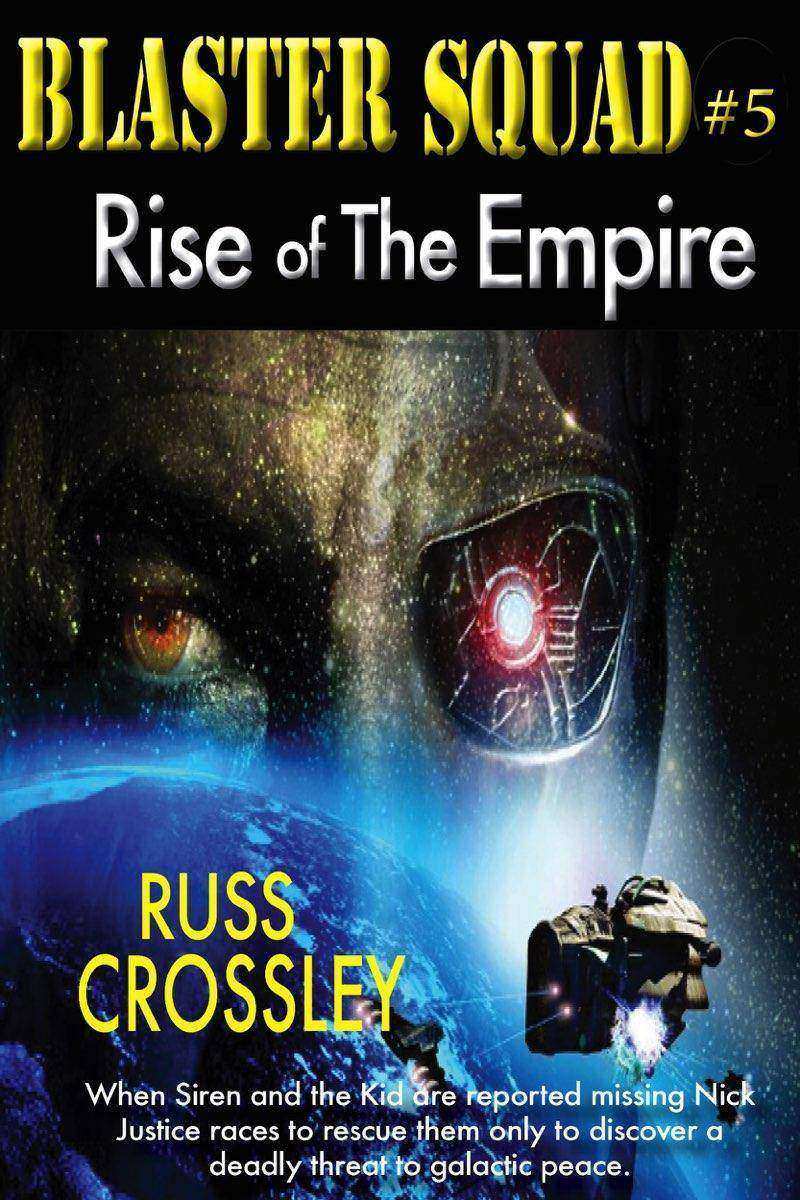
When Siren and the Kid are reported missing Nick Justice is determined to find them. After learning they are being held on a remote planet known as Poseidon, a water world far from Alliance space, he and his team race to their rescue. Blaster Squad soon finds themselves having to fight for survival. Someone is determined to stop them and Nick suspects the mysterious figure known as the Master is behind the attacks. They soon discover the Master is plotting to overthrow the galaxy and rule as Emperor throwing civilization into a new dark age ruled by terror and fear. Nick Justice and Blaster Squad are determined to stop them or die trying. ? ? .

Childhood: Illustrated
¥18.74
The Ladybird was written in the year 1923 by David Herbert Lawrence. This book is one of the most popular novels of David Herbert Lawrence, and has been translated into several other languages around the world.This book is published by Booklassic which brings young readers closer to classic literature globally.
On the Origin Of Species: Illustrated
¥18.74
THIS is a fierce bad Rabbit; look at his savage whiskers, and his claws and his turned-up tail. THIS is a nice gentle Rabbit. His mother has given him a carrot. THE bad Rabbit would like some carrot.


