


 购物车
购物车 个人中心
个人中心
The Scarlet Letter
¥8.67
In Group Psychology and the Analysis of the Ego, (1922), Sigmund Freud based his preliminary description of group psychology on Le Bon's work, but went on to develop his own, original theory, related to what he had begun to elaborate in Totem and Taboo. Theodor Adorno reprised Freud's essay in 1951 with his Freudian Theory and the Pattern of Fascist Propaganda, and said that "It is not an overstatement if we say that Freud, though he was hardly interested in the political phase of the problem, clearly foresaw the rise and nature of fascist mass movements in purely psychological categories. Group Dynamics refers to a system of behaviors and psychological processes occurring within a social group (intragroup dynamics), or between social groups (intergroup dynamics). The study of group dynamics can be useful in understanding decision-making behavior, tracking the spread of diseases in society, creating effective therapy techniques, and following the emergence and popularity of new ideas and technologies. Group dynamics are at the core of understanding racism, sexism, and other forms of social prejudice and discrimination. These applications of the field are studied in psychology, sociology, anthropology, political science, epidemiology, education, social work, business, and communication studies. Within the context of psychology, Social Psychology is the scientific study of how people's thoughts, feelings, and behaviors are influenced by the actual, imagined, or implied presence of others. By this definition, scientific refers to the empirical method of investigation. The terms thoughts, feelings, and behaviors include all psychological variables that are measurable in a human being. The statement that others' presence may be imagined or implied suggests that we are prone to social influence even when no other people are present, such as when watching television, or following internalized cultural norms. Social psychologists typically explain human behavior as a result of the interaction of mental states and immediate social situations. In general, social psychologists have a preference for laboratory-based, empirical findings. Social psychology theories tend to be specific and focused, rather than global and general.Social psychologists therefore deal with the factors that lead us to behave in a given way in the presence of others, and look at the conditions under which certain behavior/actions and feelings occur. Social psychology is concerned with the way these feelings, thoughts, beliefs, intentions and goals are constructed and how such psychological factors, in turn, influence our interactions with others. Social psychology is an interdisciplinary domain that bridges the gap between psychology and sociology. During the years immediately following World War II, there was frequent collaboration between psychologists and sociologists. However, the two disciplines have become increasingly specialized and isolated from each other in recent years, with sociologists focusing on "macro variables" (e.g., social structure) to a much greater extent. Nevertheless, sociological approaches to social psychology remain an important counterpart to psychological research in this area. In addition to the split between psychology and sociology, there has been a somewhat less pronounced difference in emphasis between American social psychologists and European social psychologists. As a broad generalization, American researchers traditionally have focused more on the individual, whereas Europeans have paid more attention to group level phenomena.. About Author: Sigmund Freud (Born Sigismund Schlomo Freud; 6 May 1856 – 23 September 1939) was an Austrian neurologist who became known as the founding father of psychoanalysis. Freud qualified as a doctor of medicine at the University of Vienna in 1881, and then carried out research into cerebral palsy, aphasia and microscopic neuroanatomy at the Vienna General Hospital. He was appointed a university lecturer in neuropathology in 1885 and became a professor in 1902. In creating psychoanalysis, a clinical method for treating psychopathology through dialogue between a patient and a psychoanalyst, Freud developed therapeutic techniques such as the use of free association (in which patients report their thoughts without reservation and in whichever order they spontaneously occur) and discovered transference (the process in which patients displace on to their analysts feelings derived from their childhood attachments), establishing its central role in the analytic process. Freud’s redefinition of sexuality to include its infantile forms led him to formulate the Oedipus complex as the central tenet of psychoanalytical theory. His analysis of his own and his patients' dreams as wish-fulfillments provided him with models for the clinical analysis of symptom formation and the mechanisms of repression as well as for elaboration of his theory of the unconscious as an agency disruptive of con
The Mysterious Island
¥8.67
Hard Times – For These Times (commonly known as "Hard Times") is the tenth novel by Charles Dickens, first published in 1854. The book appraises English society and highlights the social and economic pressures of the times. Hard Times is unusual in several respects. It is by far the shortest of Dickens' novels, barely a quarter of the length of those written immediately before and after it. Also, unlike all but one of his other novels, Hard Times has neither a preface nor illustrations. Moreover, it is his only novel not to have scenes set in London. Instead the story is set in the fictitious Victorian industrial Coketown, a generic Northern English mill-town, in some ways similar to Manchester, though smaller. Coketown may be partially based on 19th-century Preston. One of Dickens's reasons for writing Hard Times was that sales of his weekly periodical, Household Words, were low, and it was hoped the novel's publication in instalments would boost circulation – as indeed proved to be the case. Since publication it has received a mixed response from critics. Critics such as George Bernard Shaw and Thomas Macaulay have mainly focused on Dickens's treatment of trade unions and his post–Industrial Revolution pessimism regarding the divide between capitalist mill owners and undervalued workers during the Victorian era. F. R. Leavis, a great admirer of the book, included it—but not Dickens' work as a whole—as part of his Great Tradition of English novels. ***‘Now, what I want is, Facts. Teach these boys and girls nothing but Facts. Facts alone are wanted in life. Plant nothing else, and root out everything else. You can only form the minds of reasoning animals upon Facts: nothing else will ever be of any service to them. This is the principle on which I bring up my own children, and this is the principle on which I bring up these children. Stick to Facts, sir!’ ? ?The scene was a plain, bare, monotonous vault of a school-room, and the speaker’s square forefinger emphasized his observations by underscoring every sentence with a line on the schoolmaster’s sleeve. The emphasis was helped by the speaker’s square wall of a forehead, which had his eyebrows for its base, while his eyes found commodious cellarage in two dark caves, overshadowed by the wall. The emphasis was helped by the speaker’s mouth, which was wide, thin, and hard set. The emphasis was helped by the speaker’s voice, which was inflexible, dry, and dictatorial. The emphasis was helped by the speaker’s hair, which bristled on the skirts of his bald head, a plantation of firs to keep the wind from its shining surface, all covered with knobs, like the crust of a plum pie, as if the head had scarcely warehouse-room for the hard facts stored inside. The speaker’s obstinate carriage, square coat, square legs, square shoulders,—nay, his very neckcloth, trained to take him by the throat with an unaccommodating grasp, like a stubborn fact, as it was,—all helped the emphasis. ‘In this life, we want nothing but Facts, sir; nothing but Facts!’The speaker, and the schoolmaster, and the third grown person present, all backed a little, and swept with their eyes the inclined plane of little vessels then and there arranged in order, ready to have imperial gallons of facts poured into them until they were full to the brim.

A Midsummer Night's Dream
¥8.67
The Divine Comedy describes Dante's journey through Hell (Inferno), Purgatory (Purgatorio), and Paradise (Paradiso), guided first by the Roman poet Virgil and then by Beatrice, the subject of his love and of another of his works, La Vita Nuova. While the vision of Hell, the Inferno, is vivid for modern readers, the theological niceties presented in the other books require a certain amount of patience and knowledge to appreciate. Purgatorio, the most lyrical and human of the three, also has the most poets in it; Paradiso, the most heavily theological, has the most beautiful and ecstatic mystic passages in which Dante tries to describe what he confesses he is unable to convey (e.g., when Dante looks into the face of God: "all'alta fantasia qui mancò possa" — "at this high moment, ability failed my capacity to describe," Paradiso, XXXIII, 142). "IN the midway of this our mortal life, I found me in a gloomy wood, astray Gone from the path direct: and e'en to tell It were no easy task, how savage wild That forest, how robust and rough its growth, Which to remember only, my dismay Renews, in bitterness not far from death.." (Dante) IN the midway of this our mortal life,I found me in a gloomy wood, astrayGone from the path direct: and e'en to tellIt were no easy task, how savage wildThat forest, how robust and rough its growth,Which to remember only, my dismayRenews, in bitterness not far from death.Yet to discourse of what there good befell,All else will I relate discover'd there.How first I enter'd it I scarce can say,Such sleepy dullness in that instant weigh'dMy senses down, when the true path I left,But when a mountain's foot I reach'd, where clos'dThe valley, that had pierc'd my heart with dread,I look'd aloft, and saw his shoulders broadAlready vested with that planet's beam,Who leads all wanderers safe through every way. Then was a little respite to the fear,That in my heart's recesses deep had lain,All of that night, so pitifully pass'd:And as a man, with difficult short breath,Forespent with toiling, 'scap'd from sea to shore,Turns to the perilous wide waste, and standsAt gaze; e'en so my spirit, that yet fail'dStruggling with terror, turn'd to view the straits,That none hath pass'd and liv'd. My weary frameAfter short pause recomforted, againI journey'd on over that lonely steep,The hinder foot still firmer. Scarce the ascentBegan, when, lo! a panther, nimble, light,And cover'd with a speckled skin, appear'd,Nor, when it saw me, vanish'd, rather stroveTo check my onward going; that ofttimesWith purpose to retrace my steps I turn'd. ? ?About Dante: ? Durante degli Alighieri, simply referred to as Dante (1265–1321), was a major Italian poet of the Middle Ages. His Divine Comedy, originally called La Comedia and later called Divina by Boccaccio, is widely considered the greatest literary work composed in the Italian language and a masterpiece of world literature. In Italy he is known as il Sommo Poeta ("the Supreme Poet") or just il Poeta. He, Petrarch and Boccaccio are also known as "the three fountains" or "the three crowns". Dante is also called the "Father of the Italian language".

Bojgás az világba
¥8.67
Dracula is an 1897 Gothic horror novel by Irish author Bram Stoker. Famous for introducing the character of the vampire Count Dracula, the novel tells the story of Dracula's attempt to move from Transylvania to England, and the battle between Dracula and a small group of men and women led by Professor Abraham Van Helsing. Dracula has been assigned to many literary genres including vampire literature, horror fiction, the gothic novel and invasion literature. The novel touches on themes such as the role of women in Victorian culture, sexual conventions, immigration, colonialism, and post-colonialism. Although Stoker did not invent the vampire, he defined its modern form, and the novel has spawned numerous theatrical, film and television interpretations. ? ?Characters: ?? Jonathan Harker: A solicitor sent to do business with Count Dracula; Mina's fiancé and prisoner in Dracula's castle.?? Count Dracula: A Transylvanian noble who bought a house in London and asked Jonathan Harker to come to his castle to do business with him.?? Wilhelmina "Mina" Harker (née Murray): A schoolteacher and Jonathan Harker's fiancée.?? Lucy Westenra: A 19-year-old aristocrat; Mina's best friend; Arthur's fiancée and Dracula's first victim.?? Arthur Holmwood: Lucy's suitor and later fiancé.?? Jack Seward: A doctor; one of Lucy's suitors and a former student of Dr Abraham Van Helsing.?? Abraham Van Helsing: A Dutch professor; Jack Seward's teacher and vampire hunter.?? Quincey Morris: An American cowboy and explorer; and one of Lucy's suitors.?? Renfield: A lawyer whom Dracula turned mad.?? Brides of Dracula: Three siren-like vampire women who serve Dracula. Although they are popularly known as "The Brides of Dracula", the novel never calls them this. ? About Author: ? Abraham "Bram" Stoker (1847 – 1912) was an Irish novelist and short story writer, best known today for his 1897 Gothic novel Dracula. During his lifetime, he was better known as personal assistant of actor Henry Irving and business manager of the Lyceum Theatre in London, which Irving owned.
Fehér Anna
¥8.67
THERE are various methods of introducing an artist to his public. One of the best is to describe how you saved his life in the Bush in ’82; or he saved yours; and then you go on: “Little did either of us anticipate in those far-off days that Fougasse was destined to become . . .” Another way is to leave Fougasse out altogether, and concentrate, how happily, on your own theories of black-and-white drawing, or politics, or the decline of the churches; after all, an introduction doesn’t last long, and he has the rest of the book to himself. Perhaps, however, it is kinder to keep the last paragraph for him: “Take these little sketches by Fougasse, for instance . . .” and the reader, if he cares to any longer, can then turn over and take them. Left to ourselves, that is the method we should adopt. But the publisher is at our elbow. “This is an introduction,” he says. “For Heaven’s sake introduce the fellow.” Let us begin, then, by explaining Fougasse’s nationality. I never discuss his drawings with another, but we tell each other how remarkable it is that a Frenchman should have such an understanding of English sport. “Of course,” we say, “in the actual drawing the nationality reveals itself; the Gallic style stands forth unmistakeably; only a Frenchman has just that line. But how amazingly British is the outlook! Was there ever a Frenchman before who understood and loved cricket as this one?” We ask ourselves how the phenomenon is to be explained. The explanation is simple. A fougasse—I quote the dictionary—is a small mine from six to twelve feet underground charged either with powder or loaded shells; and if a British sapper subaltern, severely wounded at Gallipoli, beguiles the weary years of hospital by drawing little pictures and sending them up to Punch, he may as well call himself Fougasse as anything else. Particularly if his real name is Bird, and if a Bird, whose real name is Yeats, is already drawing for Punch. Of course it would have been simpler if they had all stuck to their own names like gentlemen, but it is too late now to do anything about it, and when a genuine M. Fougasse of Paris comes along, he will have to call himself Tomkins. Once the downward path of deceit is trodden, there is seemingly no end to it. We have our artist, then, Kenneth Bird of Morar, Inverness. When I first met him at the beginning of 1919, he was just out of hospital, swinging slowly along with the aid of a pair of rocking-horse crutches. This was on his annual journey south, for they have the trains in Morar now. Once a year Fougasse makes the great expedition to London, to see what the latest fashions may be, and is often back in Morar again before they have changed to something later. I have seen him each year; in 1920 with two ordinary crutches; in 1921 with two sticks; in 1922 with one stick; perhaps by 1923 he will be playing again the games of which he makes such excellent fun. But, selfishly, we cannot regret the Turkish bullet, which turned what I suspect of being quite an ordinary engineer into such an individual black-and-white draughtsman. I am really the last person who should be writing this introduction, for all drawing is to me a mystery. When I put two dots, a horizontal line and a vertical line into a circle, the result is undoubtedly a face, but whose, or what expressing, I cannot tell you until afterwards, nor always then. But these mystery men can definitely promise you beforehand that their dot-and-line juggling will represent Contempt or Surprise or Mr. Asquith, just as you want it. It is very strange; and, sometimes I think, not quite fair. However, this is not the place wherein to dwell upon the injustice of it. What I wanted to say was that with Fougasse I feel a little more at ease than usual; we have something in common. Accepting the convention that writers write exclusively with the pen, and that black-and-white artists draw exclusively with the pencil, I should describe Fougasse as more nearly a Brother..
A cigánybáró
¥8.67
Emma, by Jane Austen, is a novel about youthful hubris and the perils of misconstrued romance. The novel was first published in December 1815. As in her other novels, Austen explores the concerns and difficulties of genteel women living in Georgian-Regency England; she also creates a lively comedy of manners among her characters. Emma Woodhouse, handsome, clever, and rich, with a comfortable home and happy disposition, seemed to unite some of the best blessings of existence; and had lived nearly twenty-one years in the world with very little to distress or vex her. She was the youngest of the two daughters of a most affectionate, indulgent father; and had, in consequence of her sister's marriage, been mistress of his house from a very early period. Her mother had died too long ago for her to have more than an indistinct remembrance of her caresses; and her place had been supplied by an excellent woman as governess, who had fallen little short of a mother in affection. Sixteen years had Miss Taylor been in Mr. Woodhouse's family, less as a governess than a friend, very fond of both daughters, but particularly of Emma. Between them it was more the intimacy of sisters. Even before Miss Taylor had ceased to hold the nominal office of governess, the mildness of her temper had hardly allowed her to impose any restraint; and the shadow of authority being now long passed away, they had been living together as friend and friend very mutually attached, and Emma doing just what she liked; highly esteeming Miss Taylor's judgment, but directed chiefly by her own. The real evils, indeed, of Emma's situation were the power of having rather too much her own way, and a disposition to think a little too well of herself; these were the disadvantages which threatened alloy to her many enjoyments. The danger, however, was at present so unperceived, that they did not by any means rank as misfortunes with her.

The Adventures of Sherlock Holmes
¥8.67
K?r?si Zoltán új novellái ugyanazon a helyszíneken játszódnak, amelyeket már a Budapest, n?város vagy a Szerelmes évek cím? k?nyveiben megismerhettünk. Az írások mindig valami emberi határhelyzetet r?gzítenek, ahol egy-egy emberi sors átfordul és véglegessé válik. ?m a k?tet h?seinek alapvet? kérdése: miért érdemes h?ségesnek lenni valakihez vagy valamihez egy életen át.
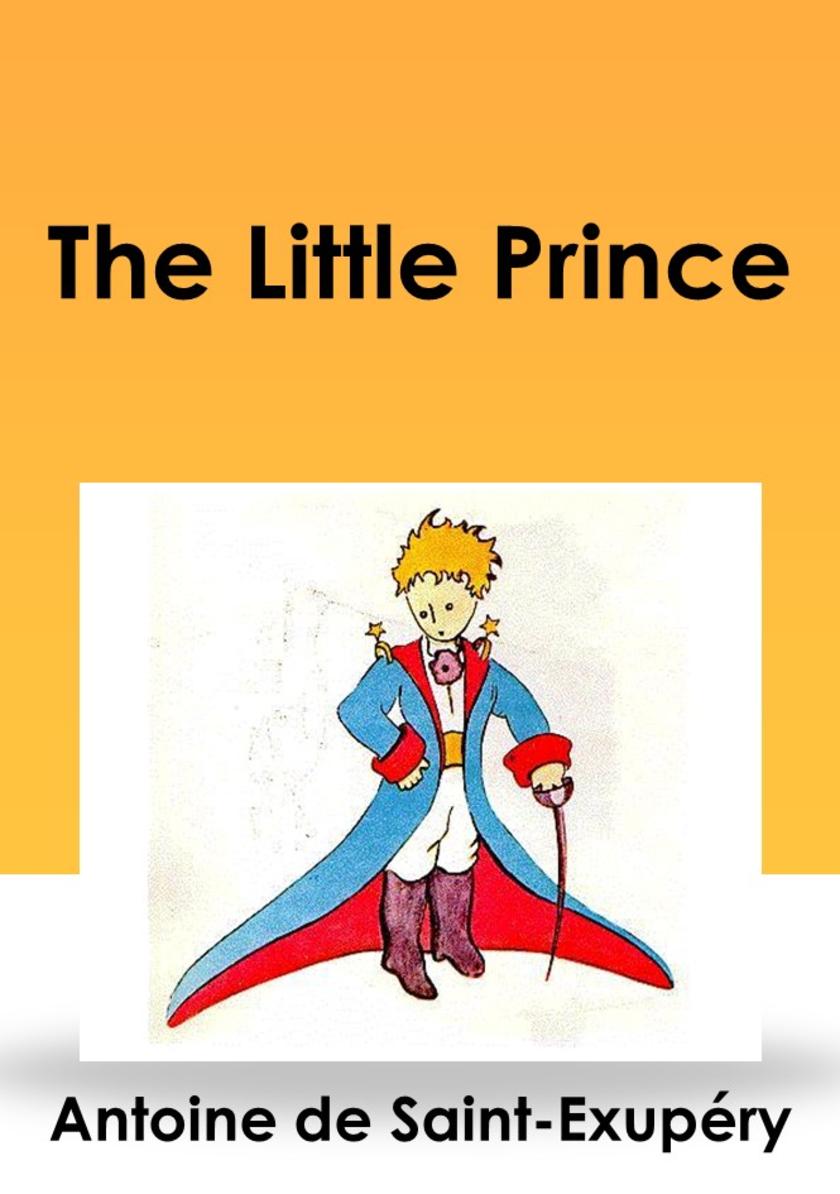
The Little Prince
¥8.67
“Goodbye, said the fox. And now here is my secret, a very simple secret. It is only with the heart that one can see rightly. What is essential is invisible to the eye.” Antoine de Saint-Exupéry, The Little Prince The Little Prince first published in 1943, is a novella and the most famous work of the French aristocrat, writer, poet and pioneering aviator Antoine de Saint-Exupéry. The novella is both the most read and most translated book in the French language, and was voted the best book of the 20th century in France. Translated into more than 250 languages and dialects selling over a million copies per year with sales totalling more than 140 million copies worldwide, it has become one of the best-selling books ever published. Saint-Exupéry, a laureate of several of France's highest literary awards and a reserve military pilot at the start of the Second World War, wrote and illustrated the manuscript while exiled in the United States after the Fall of France. He had travelled there on a personal mission to persuade its government to quickly enter the war against Nazi Germany. In the midst of personal upheavals and failing health he produced almost half of the writings he would be remembered for, including a tender tale of loneliness, friendship, love and loss, in the form of a young prince fallen to Earth.
Akik kétszer halnak meg
¥8.67
Emile, or On Education or ?mile, Or Treatise on Education (French: ?mile, ou De l’éducation) is a treatise on the nature of education and on the nature of man written by Jean-Jacques Rousseau, who considered it to be the “best and most important of all my writings”. Due to a section of the book entitled “Profession of Faith of the Savoyard Vicar,” Emile was banned in Paris and Geneva and was publicly burned in 1762, the year of its first publication. During the French Revolution, Emile served as the inspiration for what became a new national system of education. The work tackles fundamental political and philosophical questions about the relationship between the individual and society— how, in particular, the individual might retain what Rousseau saw as innate human goodness while remaining part of a corrupting collectivity. Its opening sentence: “Everything is good as it leaves the hands of the Author of things; everything degenerates in the hands of man.” Rousseau seeks to describe a system of education that would enable the natural man he identifies in The Social Contract (1762) to survive corrupt society. He employs the novelistic device of Emile and his tutor to illustrate how such an ideal citizen might be educated. Emile is scarcely a detailed parenting guide but it does contain some specific advice on raising children. It is regarded by some as the first philosophy of education in Western culture to have a serious claim to completeness, as well as being one of the first Bildungsroman novels, having preceded Goethe's Wilhelm Meister's Apprenticeship by more than thirty years. ? About Author: Jean-Jacques Rousseau (1712 – 1778) was a Genevan philosopher, writer, and composer of the 18th century. His political philosophy influenced the French Revolution as well as the overall development of modern political, sociological, and educational thought. Rousseau's novel ?mile, or On Education is a treatise on the education of the whole person for citizenship. His sentimental novel Julie, or the New Heloise was of importance to the development of pre-romanticism and romanticism in fiction. Rousseau's autobiographical writings — his Confessions, which initiated the modern autobiography, and his Reveries of a Solitary Walker — exemplified the late 18th-century movement known as the Age of Sensibility, and featured an increased focus on subjectivity and introspection that later characterized modern writing. His Discourse on the Origin of Inequality and his On the Social Contract are cornerstones in modern political and social thought. He argued that private property was conventional and the beginning of true civil society. Rousseau was a successful composer of music, who wrote seven operas as well as music in other forms, and made contributions to music as a theorist. As a composer, his music was a blend of the late Baroque style and the emergent Classical fashion, and he belongs to the same generation of transitional composers as Christoph Willibald Gluck and C.P.E. Bach. One of his more well-known works is the one-act opera Le devin du village, containing the duet "Non, Colette n'est point trompeuse" which was later rearranged as a standalone song by Beethoven. During the period of the French Revolution, Rousseau was the most popular of the philosophes among members of the Jacobin Club. Rousseau was interred as a national hero in the Panthéon in Paris, in 1794, 16 years after his death..
Goriot apó
¥8.67
These Essays, or rather Lectures, contain the first-fruits of the earliest systematic attempt to apply the theory of Evolution to the products of human handiwork. In their original form they have long been difficult to obtain; and they are reprinted now to supply the needs of candidates for the Oxford Diploma in Anthropology, and of the numerous visitors to the Pitt-Rivers Museum in Oxford. But they will certainly appeal to a far wider public also, as a brief and authentic statement of their author’s discoveries. The four Essays are reprinted substantially as they were first delivered and published. But verbal errors and actual misquotations have been corrected; and allusions to specimens or diagrams exhibited during the original discourses, but not published, have been replaced so far as possible by references to similar objects figured in the Plates. The Plates are photographic reproductions of the original illustrations, with the exception of Plates V, XIII, XVII, XVIII. Of these, Plate XIII has simply been re-drawn, from a faded original; Plates XVII and XVIII have been translated, without loss of detail, from colours to monochrome shading; Plate V has been reconstituted from illustrations quoted in the text, with the permission of their publisher, Mr. Murray. Plate XXI is reproduced, by permission of Sir John Evans, from the paper which it illustrated originally. The footnotes demand a word of explanation. The author, as the original publications show, was not precise in indicating his sources: he frequently gave, as a quotation, the general sense rather than the exact words of his authority; and occasionally his memory played him false. In the reprint, the precise references have been identified, and are given in full, and obvious errors in the text have been either amended or corrected in a footnote. The editor desires to acknowledge much valuable help in the search for references from Miss C. M. Prior, of Headington.

Aranysárkány
¥8.67
Johann Wolfgang von Goethe's Faust is a tragic play in two parts: Faust. Der Trag?die erster Teil translated as: Faust: The First Part of the Tragedy) and Faust. Der Trag?die zweiter Teil (Faust: The Second Part of the Tragedy). Although rarely staged in its entirety, it is the play with the largest audience numbers on German-language stages. Faust is Goethe's most famous work and considered by many to be one of the greatest works of German literature. The principal characters of Faust Part One include:Heinrich Faust, a scholar, sometimes said to be based on the real life of Johann Georg Faust, or on Jacob Bidermann's dramatized account of the Legend of the Doctor of Paris, CenodoxusMephistopheles, a Devil (Demon)Gretchen, Faust's love (short for Margaret; Goethe uses both forms)Marthe, Gretchen's neighbourValentin, Gretchen's brotherWagner, Faust's famulus Faust Part One takes place in multiple settings, the first of which is heaven. Mephistopheles makes a bet with God: he says that he can lure God's favourite human being (Faust), who is striving to learn everything that can be known, away from righteous pursuits. The next scene takes place in Faust's study where Faust, despairing at the vanity of scientific, humanitarian and religious learning, turns to magic for the showering of infinite knowledge. He suspects, however, that his attempts are failing. Frustrated, he ponders suicide, but rejects it as he hears the echo of nearby Easter celebrations begin. He goes for a walk with his assistant Wagner and is followed home by a stray poodle (the term then meant a medium-to-big-size dog, similar to a sheep dog).In Faust's study, the poodle transforms into the devil (Mephistopheles). Faust makes an arrangement with the devil: the devil will do everything that Faust wants while he is here on Earth, and in exchange Faust will serve the devil in Hell. Faust's arrangement is that if he is pleased enough with anything the devil gives him that he wants to stay in that moment forever, then he will die in that moment.When the devil tells Faust to sign the pact with blood, Faust complains that the devil does not trust Faust's word of honor. In the end, Mephistopheles wins the argument and Faust signs the contract with a drop of his own blood. Faust has a few excursions and then meets Margaret (also known as Gretchen). He is attracted to her and with jewellery and help from a neighbor, Martha, the devil draws Gretchen into Faust's arms. With influence from the devil, Faust seduces Gretchen. Gretchen's mother dies from a sleeping potion, administered by Gretchen to obtain privacy so that Faust could visit her. Gretchen discovers she is pregnant. Gretchen's brother condemns Faust, challenges him and falls dead at the hands of Faust and Mephistopheles. Gretchen drowns her illegitimate child and is convicted of the murder. Faust tries to save Gretchen from death by attempting to free her from prison. Finding that she refuses to escape, Faust and the devil flee the dungeon, while voices from Heaven announce that Gretchen shall be saved – "Sie ist gerettet" – this differs from the harsher ending of Urfaust – "Sie ist gerichtet!" – "she is condemned." It was reported that members of the first-night audience familiar with the original Urfaust version cheered on hearing the amendment.
Madame Bovary
¥8.67
The book begins with a short preamble in which Lemuel Gulliver, in the style of books of the time, gives a brief outline of his life and history before his voyages. He enjoys travelling, although it is that love of travel that is his downfall. During his first voyage, Gulliver is washed ashore after a shipwreck and finds himself a prisoner of a race of tiny people, less than 6 inches tall, who are inhabitants of the island country of Lilliput. After giving assurances of his good behaviour, he is given a residence in Lilliput and becomes a favourite of the court. From there, the book follows Gulliver's observations on the Court of Lilliput. He is also given the permission to roam around the city on a condition that he must not harm their subjects. Gulliver assists the Lilliputians to subdue their neighbours, the Blefuscudians, by stealing their fleet. However, he refuses to reduce the island nation of Blefuscu to a province of Lilliput, displeasing the King and the court. Gulliver is charged with treason for, among other "crimes", "making water" in the capital (even though he was putting out a fire and saving countless lives). He is convicted and sentenced to be blinded, but with the assistance of a kind friend, he escapes to Blefuscu. Here he spots and retrieves an abandoned boat and sails out to be rescued by a passing ship, which safely takes him back home. This book of the Travels is a topical political satire. ABOUT AUTHOR: Jonathan Swift (1667 – 1745) was an Anglo-Irish satirist, essayist, political pamphleteer, poet and cleric who became Dean of St Patrick's Cathedral, Dublin. He is remembered for works such as Gulliver's Travels, A Modest Proposal, A Journal to Stella, Drapier's Letters, The Battle of the Books, An Argument Against Abolishing Christianity, and A Tale of a Tub. Swift originally published all of his works under pseudonyms – such as Lemuel Gulliver, Isaac Bickerstaff, MB Drapier – or anonymously. He is also known for being a master of two styles of satire: the Horatian and Juvenalian styles.YouthJonathan Swift was born in Dublin, Ireland. He was the second child and only son of Jonathan Swift (1640–1667) and his wife Abigail Erick (or Herrick), of Frisby on the Wreake. His father, a native of Goodrich, Herefordshire, accompanied his brothers to Ireland to seek their fortunes in law after their Royalist father's estate was brought to ruin during the English Civil War. Swift's father died in Dublin before he was born, and his mother returned to England. He was left in the care of his influential uncle, Godwin, a close friend and confidant of Sir John Temple, whose son later employed Swift as his secretary. Swift's family had several interesting literary connections: His grandmother, Elizabeth (Dryden) Swift, was the niece of Sir Erasmus Dryden, grandfather of the poet John Dryden. The same grandmother's aunt, Katherine (Throckmorton) Dryden, was a first cousin of Elizabeth, wife of Sir Walter Raleigh. His great-great grandmother, Margaret (Godwin) Swift, was the sister of Francis Godwin, author of The Man in the Moone which influenced parts of Swift's Gulliver's Travels. His uncle, Thomas Swift, married a daughter of the poet and playwright Sir William Davenant, a godson of William Shakespeare.WriterIn February 1702, Swift received his Doctor of Divinity degree from Trinity College, Dublin. That spring he travelled to England and returned to Ireland in October, accompanied by Esther Johnson—now 20—and his friend Rebecca Dingley, another member of William Temple's household. There is a great mystery and controversy over Swift's relationship with Esther Johnson nicknamed "Stella". Many, notably his close friend Thomas Sheridan believed that they were secretly married in 1716; others, like Swift's housekeeper Mrs Brent, and Rebecca Dingley (who lived with Stella all through her years in Ireland) dismissed the story as absurd.
Kurtizánok tünd?klése és nyomorúsága
¥8.67
Some people complain that science is dry. That is, of course, a matter of taste. For my own part, I like my science and my champagne as dry as I can get them. But the public thinks otherwise. So I have ventured to sweeten accompanying samples as far as possible to suit the demand, and trust they will meet with the approbation of consumers. Of the specimens here selected for exhibition, my title piece originally appeared in the Fortnightly Review: 'Honey Dew' and 'The First Potter' were contributions to Longman's Magazine: and all the rest found friendly shelter between the familiar yellow covers of the good old Cornhill. My thanks are due to the proprietors and editors of those various periodicals for kind permission to reproduce them here. G.ALLEN THE NOOK, DORKING: September, 1889. Falling In Love "..An ancient and famous human institution is in pressing danger. Sir George Campbell has set his face against the time-honoured practice of Falling in Love. Parents innumerable, it is true, have set their faces against it already from immemorial antiquity; but then they only attacked the particular instance, without venturing to impugn the institution itself on general principles. An old Indian administrator, however, goes to work in all things on a different pattern. He would always like to regulate human life generally as a department of the India Office; and so Sir George Campbell would fain have husbands and wives selected for one another (perhaps on Dr. Johnson's principle, by the Lord Chancellor) with a view to the future development of the race, in the process which he not very felicitously or elegantly describes as 'man-breeding.' 'Probably,' he says, as reported in Nature, 'we have enough physiological knowledge to effect a vast improvement in the pairing of individuals of the same or allied races if we could only apply that knowledge to make fitting marriages, instead of giving way to foolish ideas about love and the tastes of young people, whom we can hardly trust to choose their own bonnets, much less to choose in a graver matter in which they are most likely to be influenced by frivolous prejudices.' He wants us, in other words, to discard the deep-seated inner physiological promptings of inherited instinct, and to substitute for them some calm and dispassionate but artificial selection of a fitting partner as the father or mother of future generations.."
?gy írtok ti
¥8.67
Mme. Vauquer (nee de Conflans) is an elderly person, who for the past forty years has kept a lodging-house in the Rue Nueve-Sainte-Genevieve, in the district that lies between the Latin Quarter and the Faubourg Saint-Marcel. Her house (known in the neighborhood as the Maison Vauquer) receives men and women, old and young, and no word has ever been breathed against her respectable establishment; but, at the same time, it must be said that as a matter of fact no young woman has been under her roof for thirty years, and that if a young man stays there for any length of time it is a sure sign that his allowance must be of the slenderest. In 1819, however, the time when this drama opens, there was an almost penniless young girl among Mme. Vauquer's boarders. That word drama has been somewhat discredited of late; it has been overworked and twisted to strange uses in these days of dolorous literature; but it must do service again here, not because this story is dramatic in the restricted sense of the word, but because some tears may perhaps be shed intra et extra muros before it is over. Will any one without the walls of Paris understand it? It is open to doubt. The only audience who could appreciate the results of close observation, the careful reproduction of minute detail and local color, are dwellers between the heights of Montrouge and Montmartre, in a vale of crumbling stucco watered by streams of black mud, a vale of sorrows which are real and joys too often hollow; but this audience is so accustomed to terrible sensations, that only some unimaginable and well-neigh impossible woe could produce any lasting impression there. Now and again there are tragedies so awful and so grand by reason of the complication of virtues and vices that bring them about, that egotism and selfishness are forced to pause and are moved to pity; but the impression that they receive is like a luscious fruit, soon consumed. Civilization, like the car of Juggernaut, is scarcely stayed perceptibly in its progress by a heart less easy to break than the others that lie in its course; this also is broken, and Civilization continues on her course triumphant. And you, too, will do the like; you who with this book in your white hand will sink back among the cushions of your armchair, and say to yourself, "Perhaps this may amuse me." You will read the story of Father Goriot's secret woes, and, dining thereafter with an unspoiled appetite, will lay the blame of your insensibility upon the writer, and accuse him of exaggeration, of writing romances. Ah! once for all, this drama is neither a fiction nor a romance! All is true,—so true, that every one can discern the elements of the tragedy in his own house, perhaps in his own heart. During the day a glimpse into the garden is easily obtained through a wicket to which a bell is attached. On the opposite wall, at the further end of the graveled walk, a green marble arch was painted once upon a time by a local artist, and in this semblance of a shrine a statue representing Cupid is installed; a Parisian Cupid, so blistered and disfigured that he looks like a candidate for one of the adjacent hospitals, and might suggest an allegory to lovers of symbolism. The half-obliterated inscription on the pedestal beneath determines the date of this work of art, for it bears witness to the widespread enthusiasm felt for Voltaire on his return to Paris in 1777: "Whoe'er thou art, thy master see; He is, or was, or ought to be."
Tartuffe
¥8.67
Following the Equator (sometimes titled More Tramps Abroad) is a non-fiction travelogue published by American author Mark Twain in 1897. Twain was practically bankrupt in 1894 due to a failed investment into a "revolutionary" typesetting machine. In an attempt to extricate himself from debt of $100,000 (equivalent of about $2.5 million in 2010) he undertook a tour of the British Empire in 1895, a route chosen to provide numerous opportunities for lectures in the English. Themes:In Following the Equator, an account of that travel published in 1897, the author criticizes racism, imperialism and missionary zeal in observations woven into the narrative with classical Twain wit.In keeping with that wit, and Twain's love of a tall tale, Twain included a number of fictional stories in the body of what is otherwise a non-fiction work. In particular, the story of how Cecil Rhodes made his fortune by finding a newspaper in the belly of a shark, and the story of how a man named Ed Jackson made good in life out of a fake letter of introduction to Cornelius Vanderbilt, were anthologized in Charles Neider (ed) The Complete Short Stories of Mark Twain, (Doubleday, 1957) where they are presented as fiction. Chapter I A man may have no bad habits and have worse. —Pudd'nhead Wilson's New Calendar. The starting point of this lecturing-trip around the world was Paris, where we had been living a year or two. We sailed for America, and there made certain preparations. This took but little time. Two members of my family elected to go with me. Also a carbuncle. The dictionary says a carbuncle is a kind of jewel. Humor is out of place in a dictionary. We started westward from New York in midsummer, with Major Pond to manage the platform-business as far as the Pacific. It was warm work, all the way, and the last fortnight of it was suffocatingly smoky, for in Oregon and British Columbia the forest fires were raging. We had an added week of smoke at the seaboard, where we were obliged to wait awhile for our ship. She had been getting herself ashore in the smoke, and she had to be docked and repaired. We sailed at last; and so ended a snail-paced march across the continent, which had lasted forty days. We moved westward about mid-afternoon over a rippled and sparkling summer sea; an enticing sea, a clean and cool sea, and apparently a welcome sea to all on board; it certainly was to me, after the distressful dustings and smokings and swelterings of the past weeks. The voyage would furnish a three-weeks holiday, with hardly a break in it. We had the whole Pacific Ocean in front of us, with nothing to do but do nothing and be comfortable. The city of Victoria was twinkling dim in the deep heart of her smoke-cloud, and getting ready to vanish and now we closed the field-glasses and sat down on our steamer chairs contented and at peace. But they went to wreck and ruin under us and brought us to shame before all the passengers. They had been furnished by the largest furniture-dealing house in Victoria, and were worth a couple of farthings a dozen, though they had cost us the price of honest chairs. In the Pacific and Indian Oceans one must still bring his own deck-chair on board or go without, just as in the old forgotten Atlantic times—those Dark Ages of sea travel.
The Trial
¥8.67
Great Expectations is Charles Dickens's thirteenth novel. It is his second novel, after David Copperfield, to be fully narrated in the first person. Great Expectations is abildungsroman, or a coming-of-age novel, and it is a classic work of Victorian literature. It depicts the growth and personal development of an orphan named Pip. The novel was first published in serial form in Dickens' weekly periodical All the Year Round, from 1 December 1860 to August 1861. In October 1861, Chapman and Hall published the novel in three volumes. Great Expectations was to be twice as long, but constraints imposed by the management of All the Year Round limited the novel's length. Collected and dense, with a conciseness unusual for Dickens, the novel represents Dickens' peak and maturity as an author. According to G. K. Chesterton, Dickens penned Great Expectations in "the afternoon of [his] life and fame." It was the penultimate novel Dickens completed, preceding Our Mutual Friend. It is set among the marshes of Kent and in London in the early to mid-1800s. From the outset, the reader is "treated" by the terrifying encounter between Pip, the protagonist, and the escaped convict, Abel Magwitch. Great Expectations is a graphic book, full of extreme imagery, poverty, prison ships, "the hulks," barriers and chains, and fights to the death. It therefore combines intrigue and unexpected twists of autobiographical detail in different tones. Regardless of its narrative technique, the novel reflects the events of the time, Dickens' concerns, and the relationship between society and man. The novel has received mixed reviews from critics: Thomas Carlyle speaks of "All that Pip's nonsense," while George Bernard Shaw praised the novel as "All of one piece and Consistently truthfull." Dickens felt Great Expectations was his best work, calling it "a very fine idea," and was very sensitive to compliments from his friends: "Bulwer, who has been, as I think you know, extraordinarily taken by the book." ABOUT AUTHOR: Charles John Huffam Dickens (1812 – 1870) was an English writer and social critic. He created some of the world's most memorable fictional characters and is generally regarded as the greatest novelist of the Victorian period. During his life, his works enjoyed unprecedented fame, and by the twentieth century his literary genius was broadly acknowledged by critics and scholars. His novels and short stories continue to be widely popular. Born in Portsmouth, England, Dickens was forced to leave school to work in a factory when his father was thrown into debtors' prison. Although he had little formal education, his early impoverishment drove him to succeed. Over his career he edited a weekly journal for 20 years, wrote 15 novels, 5 novellas and hundreds of short stories and non-fiction articles, lectured and performed extensively, was an indefatigable letter writer, and campaigned vigorously for children's rights, education, and other social reforms. Dickens sprang to fame with the 1836 serial publication of The Pickwick Papers. Within a few years he had become an international literary celebrity, famous for his humour, satire, and keen observation of character and society. His novels, most published in monthly or weekly instalments, pioneered the serial publication of narrative fiction, which became the dominant Victorian mode for novel publication. The instalment format allowed Dickens to evaluate his audience's reaction, and he often modified his plot and character development based on such feedback. For example, when his wife's chiropodistexpressed distress at the way Miss Mowcher in David Copperfield seemed to reflect her disabilities, Dickens went on to improve the character with positive features. Fagin inOliver Twist apparently mirrors the famous fence Ikey Solomon; His caricature of Leigh Hunt in the figure of Mr Skimpole in Bleak House was likewise toned down on advice from some of his friends, as they read episodes. In the same novel, both Lawrence Boythorne and Mooney the beadle are drawn from real life – Boythorne from Walter Savage Landorand Mooney from 'Looney', a beadle at Salisbury Square. His plots were carefully constructed, and Dickens often wove in elements from topical events into his narratives. Masses of the illiterate poor chipped in ha'pennies to have each new monthly episode read to them, opening up and inspiring a new class of readers.
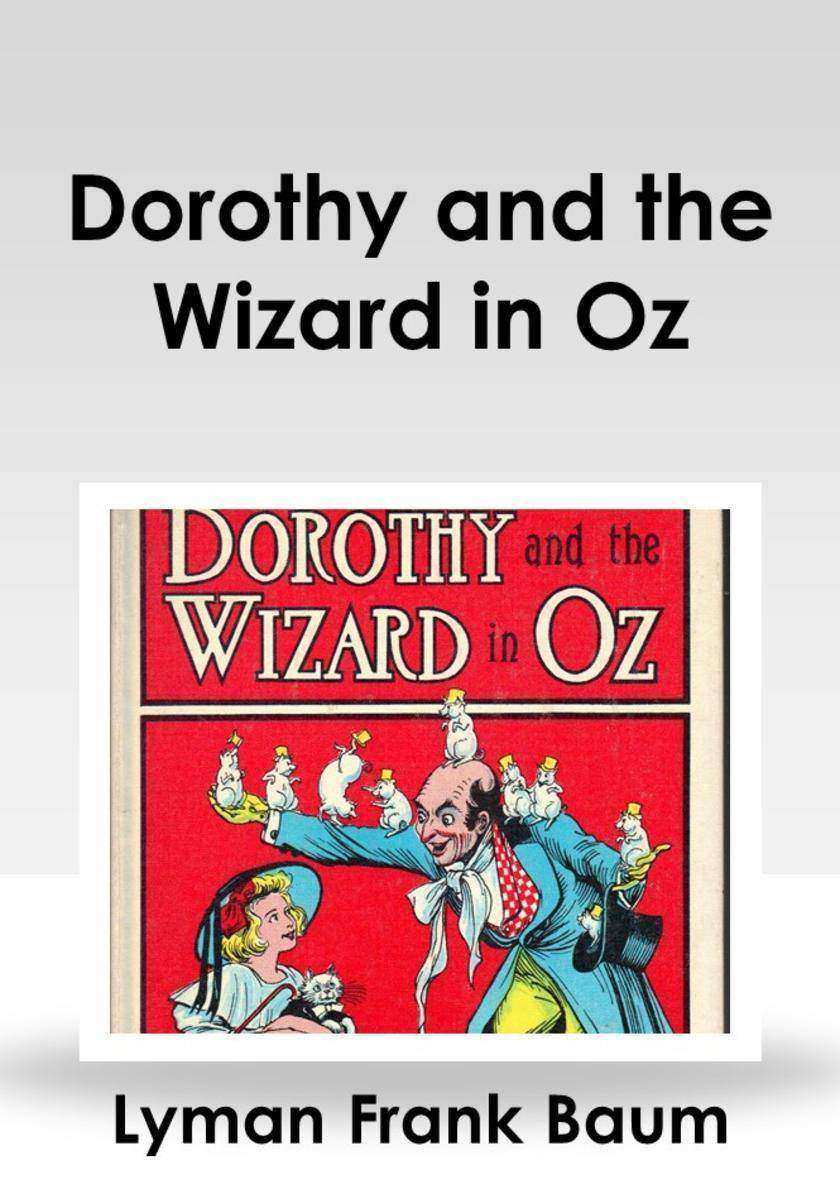
Dorothy and the Wizard in Oz
¥8.67
Kijárat az Adriára cím? nagysiker? munkája után Lovas Ildikó újabb regénye a mai divatos n?irodalommal száll szembe, a test, az érzékiség nyelvét nem radikalizálja tovább, hanem ?visszavesz” bel?le, mivel rendkívüli tudatossággal újra és újra az ártatlanság nyelvén akar szólni. A Spanyol menyasszony az erotikus krimi és a klasszikus lányregény mesteri ?tv?zete. A regény két síkon játszódik, az egyik az én-elbeszél? kiskamaszkoráig vezet vissza, míg a másik a neves orvos-író Csáth Géza feleségének, Jónás Olgának az utolsó napját beszéli el, abból próbálja megfejteni az író és felesége kegyetlenül túlf?t?tt, és tragédiába torkolló kapcsolatát.
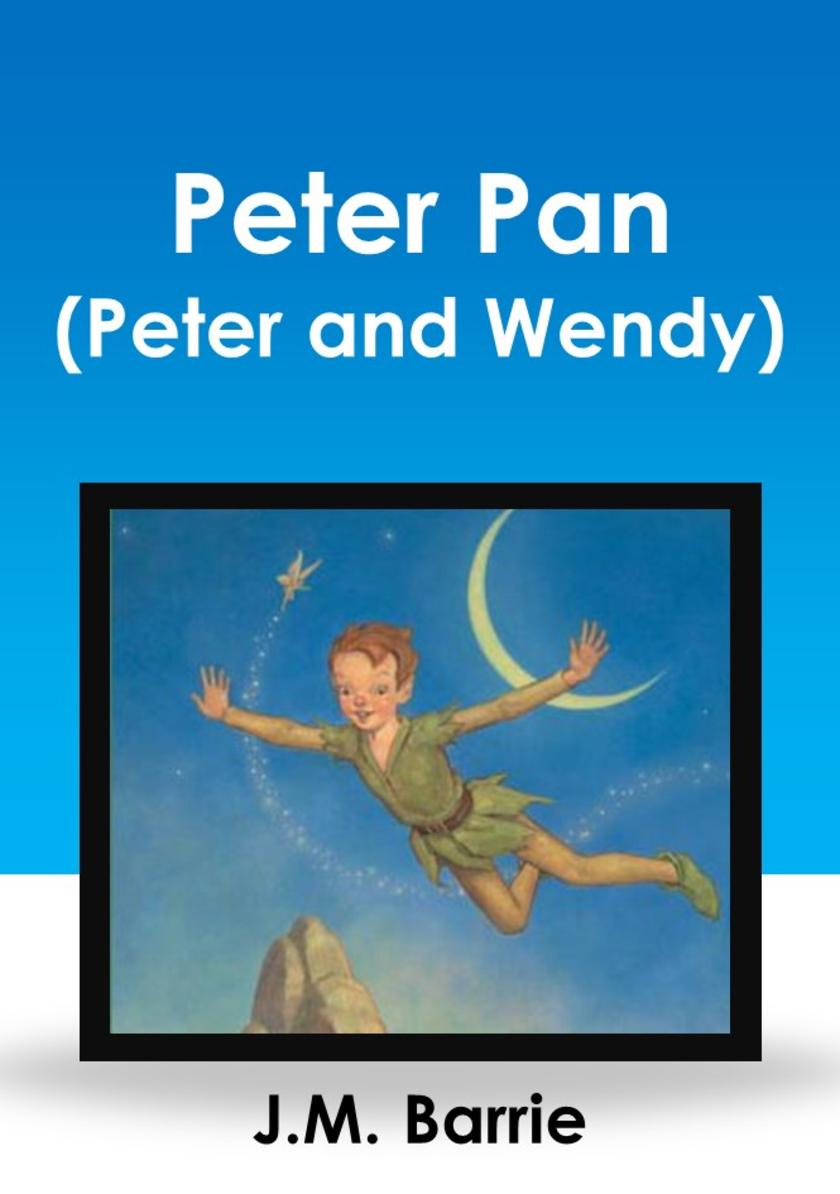
Peter Pan (Peter and Wendy)
¥8.67
Felkavaró és provokatív m?, az új magyar próza fontos eseménye a k?nyv megjelenése. A Zsidó vagy? cím? k?nyvével Németh Gábor végre megírta azt a regényt, amit olvasói régóta várnak t?le. Az elbeszél? gyermekkora tragikusan fájdalmas pillanatait felidézve keresi leküzdhetetlen idegenségérzetének eredetét. Ezt az érzést azonban nem származása értelmezi és igazolja, hanem annak az ismétl?d? tapasztalata, ahogyan mások félreértik és stigmatizálják. A regény kivételes egyensúlyt teremt t?rténetmondás és az elbeszél?i reflexiók k?z?tt; nyelvileg rendkívül pontos és kiérlelt m?.
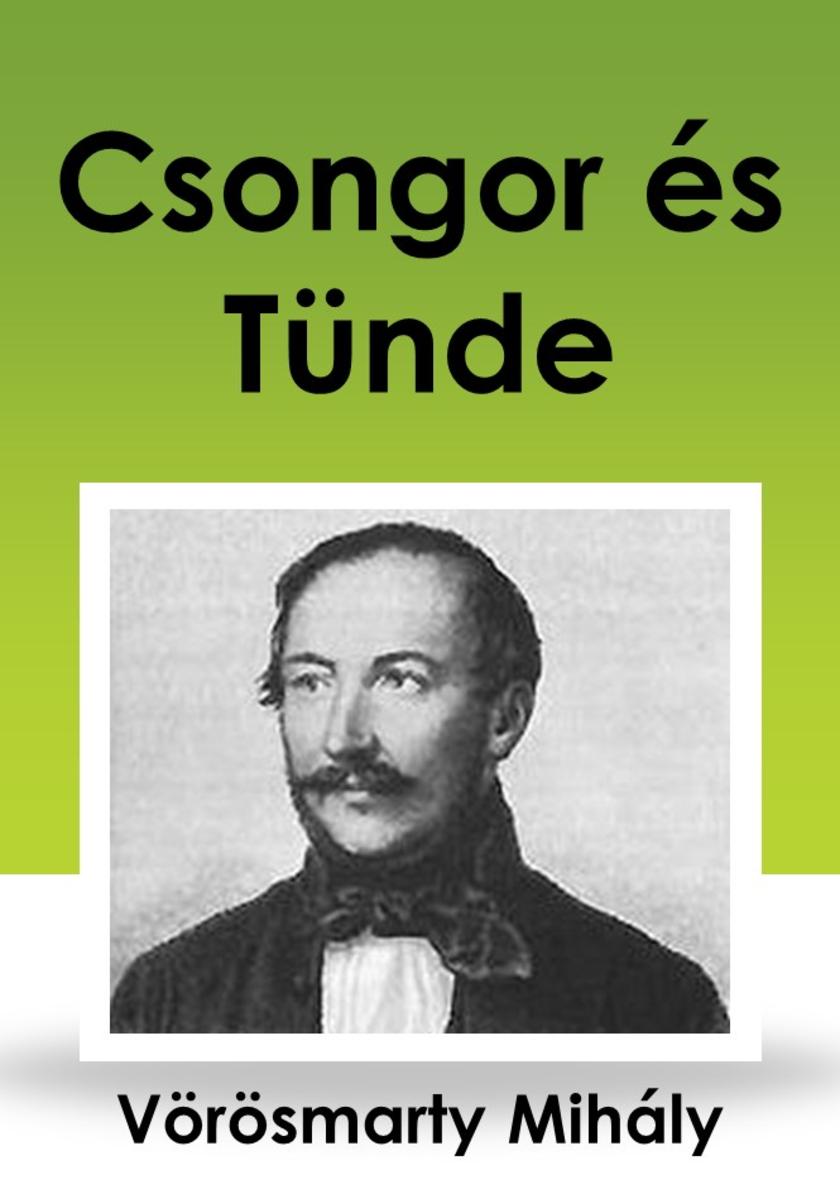
Csongor és Tünde
¥8.67
Apokrif evangélium vagy egyszer? imak?nyv? Hamisítvány vagy hiteles t?rténeti emlék? Elfeledett írás vagy szuperbiztos kód, esetleg mesterséges nyelv? Magyar, román, szanszkrit, latin, netalán t?r?k? A Rohonci kódex hírnevét kül?n?s kett?sség jellemzi: helyet kapott a világt?rténelem megfejtetlen írásainak illusztris társaságában, mik?zben a legutóbbi id?kig komoly kísérlet nem t?rtént rejtélyes jeleinek elolvasására. L?NG BENEDEK k?nyve egy izgalmas nyomozás t?rténete, amelyet a szerz? e Budapesten ?rz?tt, titokzatos és gazdagon illusztrált kódex megfejtése érdekében folytatott. A fiatal tudományt?rténész minden részletre kiterjed?, alapos vizsgálata során az olvasó beavatást nyerhet a máig megfejtetlen, rejtélyes k?nyvek világába, a titkosírások és a kódok t?rténetébe, valamint a rejtjelfejtés hagyományos és modern módszereibe is. Láng Benedek 1974-ben született Budapesten. T?rténészként végzett az ELTE b?lcsészkarán, jelenleg a Budapesti M?szaki és Gazdaságtudományi Egyetemen oktat humán és társadalomtudományi tárgyakat. Kutatóként az elfogadott és elutasított tudomány határterületei érdeklik mind t?rténeti, mind elméleti szempontból. Ez utóbbi kérdésk?rr?l t?bb k?nyve is megjelent. Budapesten él, n?s, két gyermek apja.

Hamlet, dán királyfi
¥8.67
Barnabás, a menyasszonya által kikosarazott fiatal tanár éppen szerelemi csalódásából lábadozik. Laura, a kislányát egyedül nevel? fiatal anyuka szeretne egy társat, aki a gyerekével együtt elfogadja ?t. Egy nap mindketten úgy d?ntenek, vállalják a kockázatot, és regisztrálnak egy internetes párkeres? oldalra. Hasonló elhatározásra jut a harmincas Dóra és a nagymama korú Vica is, és ezzel el?re nem látott bonyodalmak sorát indítják el. A négy társkeres? találkozik alkalmi kalandra vágyó szoknyavadásszal és luxusprostiként dolgozó egyetemista lánnyal, kicsavarodott ízlés? üzletemberrel és alibifeleséget keres? meleg férfival, furfangos pénzvadásszal és kínosan smucig úriemberrel. Kalandjaik során hol egy ?tcsillagos hotelben, hol egy Pest k?rnyéki, rossz hír? találkahelyen, hol egyenesen a rend?rségen találják magukat. Tisztességtelen ajánlatok, b?n?s szenvedélyek, vígjátékba ill? els? randik, szívszorító szakítások kísérik h?seink bolyongását a huszonegyedik század nagy kerít?jének hálójában. ?m mire kikeverednek a párkeresés útveszt?ib?l, megtanulják: érdemes esélyt adni a sorsnak, mert cserébe a sors is kínálhat egy második esélyt.

?ri muri
¥8.67
kombákom betkkel írt, néhány sornyi szveg lóg bekeretezve szobám falán: N DES NAGYIKMNAK VIRGOT CSOKORBA AZRT A SO JJ MIT RTEM TET AZTA A helyesírás hagy némi kívánnivalót maga után, de egy tévestl ugyancsak szép teljesítmény. Sokszor rápillantottam ennek a knyvnek az írása kzben, mint ahogy eszembe jutott megannyi, mindkét unokámhoz fzd – csak nekünk sokat mondó és sokat jelent – pillanat, sszekacsintás, séta, játék, esti mese, beszélgetés: a mi, együtt kialakított, kzsen megélt életdarabkáink. Minden nagyszülnek van ezernyi, ert adó pillanata, amely unokájához kti. Beletartoznak ebbe a külnleges, egyedi, de a hétkznapi élmények is, melyekbl a kapcsolatukat építgetik. Mire nagyszülk leszünk, túl vagyunk életünk apróbb-nagyobb változásainak sorozatán, amelyek formáltak, csiszoltak, gazdagítottak bennünket. Akik megtapasztalhatták, tudják, az egyik legszebb változás a nagyszülvé válás – minden nehézségével és kihívásával együtt. letünknek errl a szakaszáról, az unokavárásra való ráhangolódásról, félelmeinkrl és rmeinkrl szeretnénk átfogó képet mutatni az olvasóknak. A nagymamák és nagypapák megszületésétl” kezdve, az unokákkal együtt tlttt mindennapokon és a családi szerepek újraértelmezésének nehézségein át, egészen az unokázás” gyakorlatáig – a kzs játékoktól az együtt elkészíthet finomságokig – sok-sok minden helyet kapott e ktetben. Nem titkolt célunk, hogy személyes trténetekkel és praktikus tanácsokkal segítsük leend vagy gyakorló nagymama- és nagypapatársainkat. Veres Mária


