


 购物车
购物车 个人中心
个人中心

Great Gatsby - So we beat on, boats against the current, borne back ceaselessly
¥26.98
Francis Scott Key Fitzgerald was born on September 24th 1896 in Saint Paul, Minnesota, to an upper-middle-class family. His early years in Buffalo, New York showed him to be a boy of high intelligence and drive with a thirst for literature. In 1908, his father was fired from Procter & Gamble, and the family returned to Minnesota. Here Fitzgerald attended St. Paul Academy, in St. Paul, until 1911. At 13 he was published in the school newspaper, it was, of all things, a detective story. In 1911, aged 15, he was sent to the prestigious Newman School, in Hackensack, New Jersey.And, after graduating in 1913, he decided to continue at Princeton University. Here he firmly dedicated himself to writing. Unfortunately his writing pursuits came at the expense of his coursework. In 1917 he dropped out to join the U.S. Army. However this service to his country came with the very real fear that he might perish in the trenches of Western Europe with his literary dreams not yet begun. So he spent the weeks before reporting for duty at work on a novel entitled The Romantic Egotist. Fitzgerald was assigned to Camp Sheridan, in Alabama. It was there that Fitzgerald met the love of his life; Zelda Sayre, the "e;golden girl,"e; of Montgomery youth society.The war ended before Fitzgerald could be deployed, and he moved to New York City hoping to start a career in advertising that would be lucrative enough to convince Zelda to marry him. Unable to convince her that his means were enough to support her she broke off the engagement.Fitzgerald returned to his parents in St. Paul, to revise The Romantic Egoist, now recast as This Side of Paradise. His revised novel was accepted by Scribner's and published in 1920 becoming an instant success. It launched Fitzgerald's career as a writer and provided a steady income suitable for Zelda's ambitions. The engagement resumed and they married at St. Patrick's Cathedral in New York.Frances Scott "e;Scottie"e; Fitzgerald, their only child, was born on October 26, 1921. Inspired by the parties he had attended visiting Long Island's north shore Fitzgerald began planning the greatest of his novels, The Great Gatsby, in 1923, wanting to produce "e;something new-something extraordinary and beautiful and simple and intricately patterned."e; Published in April 1925, The Great Gatsby received mixed reviews and but sold 20,000 in its first year. Today, it is one of a small circle vying for the title "e;Great American Novel"e;. Fitzgerald continued to supplement his income by writing short stories for magazines and to sell his stories and novels to Hollywood. He called this 'whoring'. In February 1932, Zelda was hospitalized with schizophrenia. Fitzgerald's heavy and excessive drinking had now developed into alcoholism and with recurring financial difficulties, the emotional toll of Zelda's mental illness, this meant several difficult years. In 1937, Fitzgerald moved to Hollywood. His income improved but he found movies beneath his talents.He spent the second half of the 1930s in Hollywood, working on short stories, scripts for MGM, and his final novel, The Love of the Last Tycoon. In 1939, MGM ended the contract, and Fitzgerald became a writer for hire. Still an alcoholic, he now became estranged from Zelda and developed a relationship with Sheilah Graham, the Hollywood gossip columnist. In this last period of his life his alcoholism had left him physically wrecked. After suffering a heart attack, in Schwab's Drug Store, he was ordered to avoid strenuous exertion. On the night of December 20, 1940, Fitzgerald and Sheilah Graham attended the premiere of This Thing Called Love. As they left Fitzgerald went dizzy; upset, he said to Graham, "e;They think I am drunk, don't they?"e; The following day, Graham saw him jump from his armchair, grab the mantelpiece, gasp, and fall to the floor. Francis Scott Fitzgerald died of a heart attack on December 21st, 1940.
King of Alsander - For the spear was a desert physician, That cured not a few of
¥26.98
James Elroy Flecker was born on 5th November 1884, in Lewisham, London.Flecker does not seem to have enjoyed academic study and achieved only a Third-Class Honours in Greats in 1906. This did not set him up for a job in either government service or the academic world.After some frustrating forays at school teaching he attempted to join the Levant Consular Service and entered Cambridge to study for two years. After a poor first year he pushed forward in the second and achieved First-Class honours. His reward was a posting to Constantinople at the British consulate.However, Flecker's poetry career was making better progress and he was beginning to garner praise for his poems including The Bridge of Fire. Unfortunately, he was also showing the first symptoms of contracting tuberculosis. Bouts of ill health were to now alternate with periods of physical well-being woven with mental euphoria and creativity.Before his early death he managed to complete several volumes of poetry, which he continually revised, together with some prose works and plays. It was a small canon of work but on his death on 3rd January 1915, of tuberculosis, in Davos, Switzerland he was described as "e;unquestionably the greatest premature loss that English literature has suffered since the death of Keats"e;.
Duke of Guise - A Tragedy
¥26.98
John Dryden was born on August 9th, 1631 in the village rectory of Aldwincle near Thrapston in Northamptonshire. As a boy Dryden lived in the nearby village of Titchmarsh, Northamptonshire. In 1644 he was sent to Westminster School as a King's Scholar. Dryden obtained his BA in 1654, graduating top of the list for Trinity College, Cambridge that year. Returning to London during The Protectorate, Dryden now obtained work with Cromwell's Secretary of State, John Thurloe. At Cromwell's funeral on 23 November 1658 Dryden was in the company of the Puritan poets John Milton and Andrew Marvell. The setting was to be a sea change in English history. From Republic to Monarchy and from one set of lauded poets to what would soon become the Age of Dryden. The start began later that year when Dryden published the first of his great poems, Heroic Stanzas (1658), a eulogy on Cromwell's death. With the Restoration of the Monarchy in 1660 Dryden celebrated in verse with Astraea Redux, an authentic royalist panegyric. With the re-opening of the theatres after the Puritan ban, Dryden began to also write plays. His first play, The Wild Gallant, appeared in 1663 but was not successful. From 1668 on he was contracted to produce three plays a year for the King's Company, in which he became a shareholder. During the 1660s and '70s, theatrical writing was his main source of income. In 1667, he published Annus Mirabilis, a lengthy historical poem which described the English defeat of the Dutch naval fleet and the Great Fire of London in 1666. It established him as the pre-eminent poet of his generation, and was crucial in his attaining the posts of Poet Laureate (1668) and then historiographer royal (1670). This was truly the Age of Dryden, he was the foremost English Literary figure in Poetry, Plays, translations and other forms. In 1694 he began work on what would be his most ambitious and defining work as translator, The Works of Virgil (1697), which was published by subscription. It was a national event. John Dryden died on May 12th, 1700, and was initially buried in St. Anne's cemetery in Soho, before being exhumed and reburied in Westminster Abbey ten days later.
Age of Innocence - She had no tolerance for scenes which were not of her own mak
¥26.98
Edith Newbold Jones was born in New York on January 24, 1862. Born into wealth, this background of privilege gave her a wealth of experience to eventually, after several false starts, produce many works based on it culminating in her Pulitzer Prize winning novel 'The Age Of Innocence'. Marriage to Edward Robbins Wharton, who was 12 years older in 1885 seemed to offer much and for some years they travelled extensively. After some years it was apparent that her husband suffered from acute depression and so the travelling ceased and they retired to The Mount, their estate designed by Edith. By 1908 his condition was said to be incurable and prior to divorcing Edward in 1913 she began an affair, in 1908, with Morton Fullerton, a Times journalist, who was her intellectual equal and allowed her writing talents to push forward and write the novels for which she is so well known. Acknowledged as one of the great American writers with novels such as Ethan Frome and the House of Mirth among many. Wharton also wrote many short stories, including ghost stories and poems which we are pleased to publish. Edith Wharton died of a stroke in 1937 at the Domaine Le Pavillon Colombe, her 18th-century house on Rue de Montmorency in Saint-Brice-sous-Foret.
Lark Rise - To make up in an hour for all their wasted yesterdays
¥26.98
Flora Jane Timms was born on December 5th, 1876 in Juniper Hill in northeast Oxfordshire, the eldest of twelve children to Albert Timms, a stonemason, and Emma, a nursemaid. Only she and five siblings survived.Flora was educated at the parish school in the village of Cottisford and described as 'altogether her father's child'.When she was 14, In 1891, Flora moved to start work as a counter clerk at the post office in Fringford, a village about 4 miles northeast of Bicester. It was to be the first in a series of jobs at various other post offices, including those at Grayshott, Yateley, and later Bournemouth.By 1896 Flora was a regular contributor to The Catholic Fireside on her thoughts and activities in the Countryside and many of her works from here were published as The Peverel Papers.In 1903 she married John William Thompson, a post office clerk and telegraphist from the Isle of Wight, at Twickenham Parish Church. After the marriage they moved to Bournemouth to settle down and build a life together. A daughter, Winifred Grace, was born in 1903, followed by two sons, Henry Basil, in 1909 and Peter Redmond in 1918.Flora was a self-taught writer but had taken some time to establish her career. Her early married life may have also required setting writing aside for some time but in 1911 she won a competition in The Ladies Companion for a 300-word essay on Jane Austen.In 1921 she published her only book of poetry, Bog-Myrtle and Peat, and, by the following year, 1922, she was thinking of writing about her childhood in what would later become her defining works.Meanwhile she continued to write extensively, publishing short stories together with magazine and newspaper articles.In 1925 she published a travel guide to Liphook, Bramshott and Neighbourhood.Flora also had a great interest and knowledge, again self-taught, as a naturalist. Many of her works on the subject were published and later anthologised.In 1938 Flora at last sent several essays on her country childhood to Oxford University Press. The publisher accepted them, and they were published in three separate volumes, Lark Rise (1939), Over to Candleford (1941), and Candleford Green (1943). In 1945 the books were republished as a trilogy under the title Lark Rise to Candleford. Together the books are a lightly disguised story of the author's own youth, describing life in a hamlet, a village, and a country town in the 1880s.The death of her younger son during the Second World War affected her deeply and overshadowed her final years.Flora Thompson died on 21st May 1947, at age 70, of a heart attack in Brixham, and is buried at Longcross Cemetery, Dartmouth in Devon.Two of Thompson's later lesser-known works were published posthumously: Heatherley, recounting her time in the post office at Grayshott at the turn of the 20th century as her lifelong interests took shape, the longing for education and culture and the desire to become a writer; and her last completed book Still Glides the Stream.
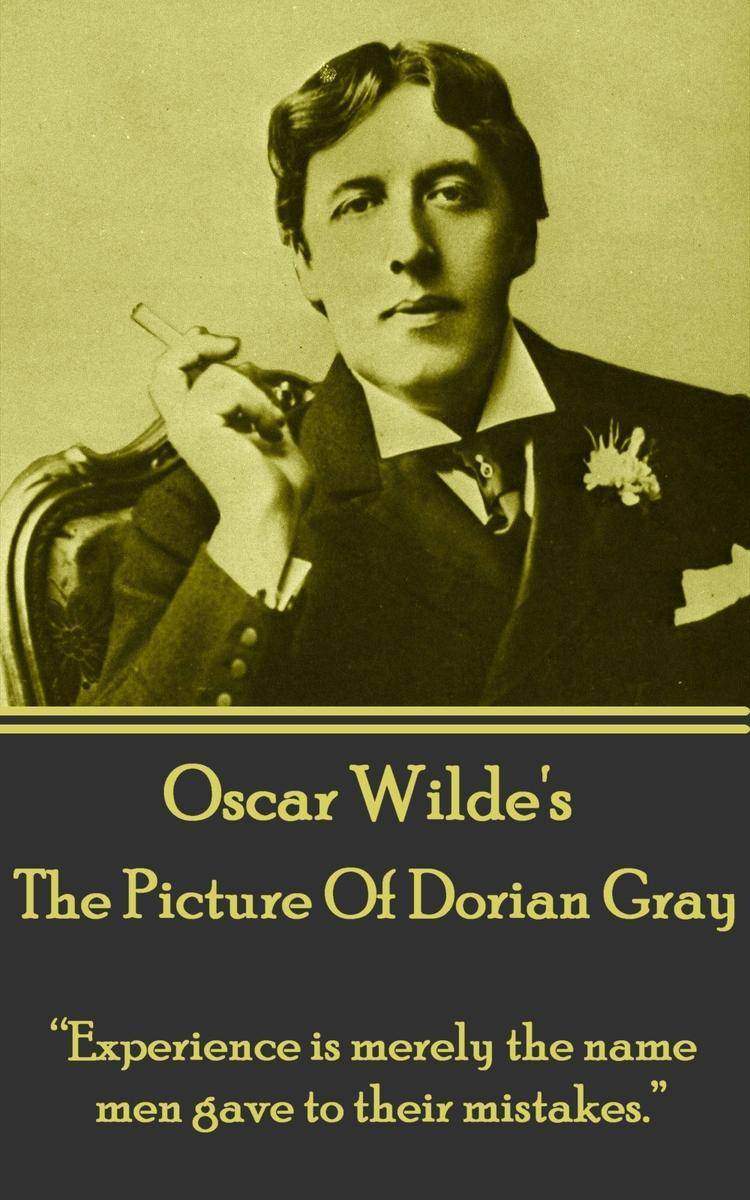
Picture Of Dorian Gray - Experience is merely the name men gave to their mistake
¥26.98
Oscar Fingal O'Flahertie Wills Wilde was born on the 16th October 1854 in Dublin Ireland. The son of Dublin intellectuals Oscar proved himself an outstanding classicist at Dublin, then at Oxford. With his education complete Wilde moved to London and its fashionable cultural and social circles. With his biting wit, flamboyant dress, and glittering conversation, Wilde became one of the most well-known personalities of his day. His only novel, The Picture of Dorian Gray was published in 1890 and he then moved on to writing for the stage with Salome in 1891. His society comedies produced enormous hits and turned him into one of the most successful writers of late Victorian London. Whilst his masterpiece, The Importance of Being Earnest, was on stage in London, Wilde had the Marquess of Queensberry, the father of his lover, Lord Alfred Douglas, prosecuted for libel. The trial unearthed evidence that caused Wilde to drop his charges and led to his own arrest and trial for gross indecency. He was convicted and imprisoned for two years' hard labour. It was to break him. On release he left for France, There he wrote his last work, The Ballad of Reading Gaol in 1898. He died destitute in Paris at the age of forty-six sipping champagne a friend had brought with the line 'Alas I am dying beyond my means'. And here indeed is that master work The Picture Of Dorian Gray. Compelling, diabolical and at the time it caused great outrage. But as we know the pen of Oscar Wilde leads us where many others fear to go.
Hecyra (The Mother-in-Law) - 'I am human and I think nothing of which is human i
¥26.98
Publius Terentius Afer is better known to us as the Roman playwright, Terence.Much of his life, especially the early part, is either unknown or has conflicting sources and accounts.His birth date is said to be either 185 BC or a decade earlier: 195 BC. His place of birth is variously listed as in, or, near Carthage, or, in Greek Italy to a woman taken to Carthage as a slave. It is suggested that he lived in the territory of the Libyan tribe that the Romans called Afri, near Carthage, before being brought to Rome as a slave. Probability suggests that it was there, in North Africa, several decades after the destruction of Carthage by the Romans in 146 BC, at the end of the Punic Wars, that Terence spent his early years.One reliable fact is that he was sold to P. Terentius Lucanus, a Roman senator, who had him educated and, impressed by his literary talents, freed him.These writing talents were to ensure his legacy as a playwright down through the millennia. His comedies, partially adapted from Greek plays of the late phases of Attic Comedy, were performed for the first time around 170-160 BC. All six of the plays he has known to have written have survived.Indeed, thanks to his simple conversational Latin, which was both entertaining and direct, Terence's works were heavily used by monasteries and convents during the Middle Ages and The Renaissance. Scribes often learned Latin through the copious copying of Terence's texts. Priests and nuns often learned to speak Latin through re-enactment of Terence's plays. Although his plays often dealt with pagan material, the quality and distinction of his language promoted the copying and preserving of his text by the church. This preservation enabled his work to influence a wide spectrum of later Western drama.When he was 25 (or 35 depending on which year of birth you ascribe too), Terence travelled to Greece but never returned. It has long been assumed that he died at some point during the journey.Of his own family nothing is known, except that he fathered a daughter and left a small but valuable estate just outside Rome.His most famous quotation reads: "e;Homo sum, humani nihil a me alienum puto"e;, or "e;I am human, and I think nothing human is alien to me."e;

人性论(英语文库)
¥26.99
本书作为我社“经典英语文库”第15辑中的一种,精选英国哲学家大卫·休谟创作的哲学著作《人性论》,以三卷本出版,前两卷(《论知性》与《论情感》)于1739年出版,第三卷(《论道德》)于1740年出版。《人性论》从社会角度而非自然科学角度探讨了基于公共意见与信念而形成的人的社会本性。全书分三卷,分别为“论知性”、 “论情感”、“论道德”。卷阐述认识论,主要说明了知识的起源、分类和范围,人的认识能力和界限,以及推理的性质和作用等内容。第二卷以感觉性观说明伦理学和美学问题,认为快乐的感觉是善和美的共同基础。第三卷是在前两卷基础上对道德问题的全面阐述。

The Poems of Catullus
¥27.17
Gaius Valerius Catullus was a Latin poet of the late Roman Republic. His surviving works are still read widely, and continue to influence poetry and other forms of art.Daisy Dunn was born in London in 1987 and read Classics at the University of Oxford, before winning a scholarship to the Courtauld and completing a doctorate in Classics and History of Art at University College London. She writes and reviews for many publications, including The Daily Telegraph, Evening Standard, and Standpoint, and is editor of Argo, a Greek culture magazine. She was longlisted for the 2015 Notting Hill Editions Essay Prize. ‘Catullus’ Bedspread’ is her first book.

Taylor Swift: The Whole Story
¥27.17
The full story of Taylor Swift’s stratospheric rise to fame; all any dedicated Swifty needs to know about the pop superstar who’s taking over the world. A small-town girl with an incredible talent, and the strength to realise her dream, Taylor has grown into an award-winning, chart-topping artist and worldwide star, as well as a strong and stylish woman. But how did she get there? And what lies in store for her in the future? From childhood dreams of a musical future in Pennsylvania, to determined and budding teen musician with a trademark she’s stayed faithful to ever since: honest lyrics about real-life events; her fight to be taken seriously in the music industry, through to the rewards of success and the intense pressure of expectation, Taylor Swift: The Whole Story is a full account of Taylor’s incredible journey, with everything you need to know about America’s Sweetheart. This compelling book is packed full of fascinating details revealing the true Taylor – what drives, motivates and moves her, how she overcame the challenges that loomed on the road to fame and looks at how authentic her wholesome image is, plus the truth about her relationships with Harry Styles, Jake Gyllenhaal and Conor Kennedy and who she’s really talking about on her tracks. The full portrait of a girl who could so easily have faded into the background – but who blossomed in the spotlight into a grounded, graceful and inspiring young woman.
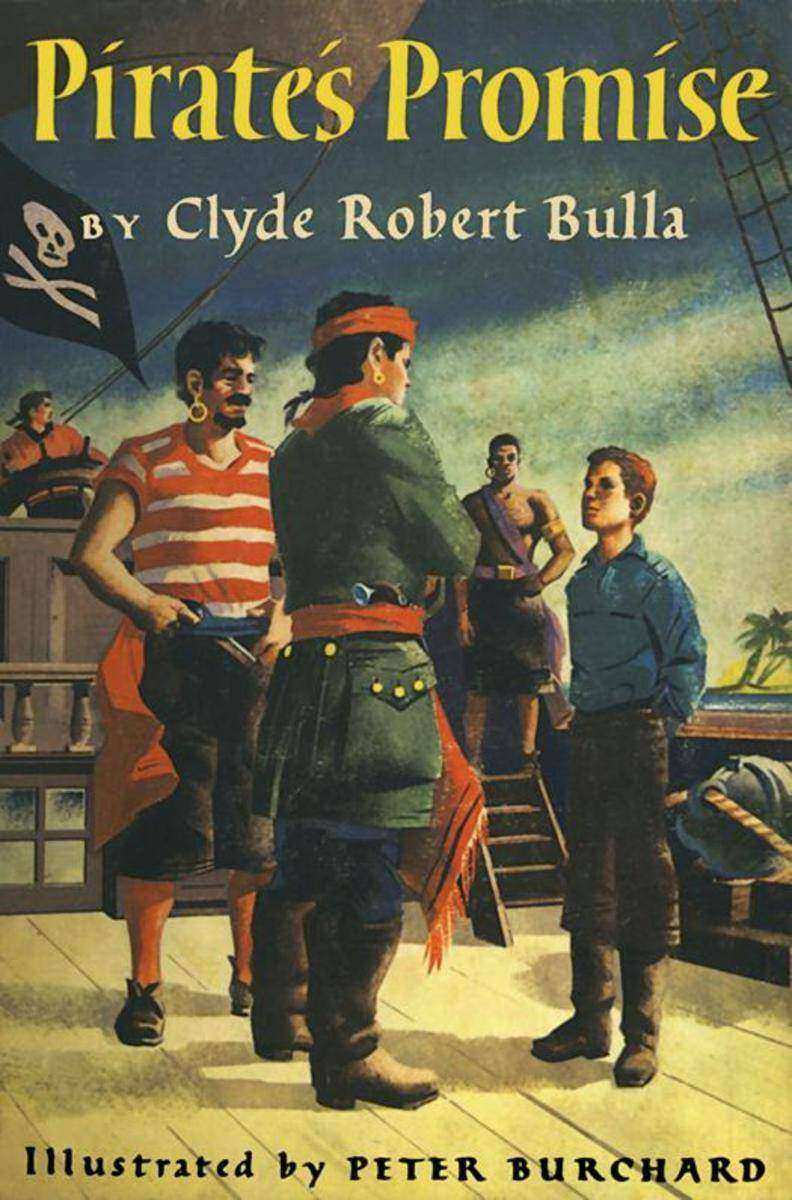
Pirate's Promise
¥27.41
Young and orphaned, Tom Pippin has just been sold by his greedy uncle to the captain of a great sailing ship bound for America. Although Tom has been sold into slavery, no one can buy or sell his unwavering spirit. Tom longs to be free on the shores of America, but when a pirate's ship captures his boat, the young boy's life changes forever. Pirate Captain Land and his motley crew of men reveal to Tom all of the secrets—and dangers—of the pirate's life. Peter Burchard's black and white drawings throughout illustrate Tom's journey.
Mummy’s Little Soldier: Part 2 of 3
¥27.47
Casey’s Unit is, as ever, full of troubled, disaffected pupils, and new arrival Leo is something of a conundrum. Thirteen year old Leo isn’t a bad lad – in fact, he’s generally polite and helpful, but he’s in danger of permanent exclusion for repeatedly absconding and unauthorised absences. Despite letters being sent home regularly, his mother never turns up for any appointments, and when the school calls home she always seems to have an excuse. Though Casey has her hands full, she offers to intervene for a while, to try get Leo engaged in learning again and remaining in school. The head’s sceptical though and warns her that this is Leo’s very last chance. But Casey’s determined, because there’s something about Leo that makes her want to fight his corner, and get to the bottom of whatever it is that compels this enigmatic boy to keep running away. With Leo so resolutely tight-lipped and secretive, Casey knows that if she’s going to keep this child in education, she’s going to have to get to the bottom of it herself…
Mummy’s Little Soldier: Part 3 of 3
¥27.47
Casey’s Unit is, as ever, full of troubled, disaffected pupils, and new arrival Leo is something of a conundrum. Thirteen year old Leo isn’t a bad lad – in fact, he’s generally polite and helpful, but he’s in danger of permanent exclusion for repeatedly absconding and unauthorised absences. Despite letters being sent home regularly, his mother never turns up for any appointments, and when the school calls home she always seems to have an excuse. Though Casey has her hands full, she offers to intervene for a while, to try get Leo engaged in learning again and remaining in school. The head’s sceptical though and warns her that this is Leo’s very last chance. But Casey’s determined, because there’s something about Leo that makes her want to fight his corner, and get to the bottom of whatever it is that compels this enigmatic boy to keep running away. With Leo so resolutely tight-lipped and secretive, Casey knows that if she’s going to keep this child in education, she’s going to have to get to the bottom of it herself…
Shoeshine Girl
¥27.65
Who ever heard of a shoeshine girl?The last thing Sarah Ida wants to do is spend the summer with her Aunt Claudia. But when her parents send her away because of problems at home, that is exactly what she has to do. With no allowance and no fun to be had, Sarah Ida decides to look for a job. But who will hire a ten year oldAl, the shoeshine man, will!Sarah loves her job, even if it means getting knee-deep in shoe polish everyday. Then something terrible happens and it looks like the shoeshine stand will have to close forever. If Sarah Ida wants to keep it open, she'll have to learn a few lessons about growing up along the way ...

The Sword in the Tree
¥27.65
In the days of King Arthur there stood a mighty oak tree within the walls of a castle. Peace reigned in the castle until the fearsome night when Lionel, longlost brother of Lord Weldon, returned to cause trouble and unhappiness.It was then that Shan, the son of Lord Weldon, took on the duties of a knight and hid the sword in the hollow of the giant oak. The days that followed were filled with adventures that tried the courage of the young boy.Shan was surprised by bearded robbers in the woods. He met noble knights in plumed helmets, and eventually he even made a trip to high-towered Camelot. His story is filled with the pageantry and color of England in King Arthur's time. It creates a vivid picture of the Knights of the Round Table and the wisdom of King Arthur himself.Mr. Bulla captures the spirit of those romantic days in a straightforward, exciting manner. The result is another delightful book for his wide audience of young readers. Paul Galdone's vigorous illustrations are as evocative as the text.

Fart Squad
¥27.65
It was an average day at Harry Buttz Elementary until . . . KABLAM! The five-bean burritos churning in Darren Stonkadopolis's stomach exploded in a fart so volcanic it melted his desk seat, knocked out his whole class, and got him sent to the nurse—and he's not alone.Something fishy is going on in Buttzville. And it's up to Darren and his three farting friends to combine their potty powers to get to the bottom of this evil plot—before it's too late. With their scent-sei, Janitor Stan, at their side, the Fart Squad has to learn to harness the powers between their butt cheeks. And then let it RIIIP."A flagrant romp. Not to be passed!"—The New York Toots"A cut above the rest."—StinkyCheese.com"If you haven't caught wind of Fart Squad yet, don't let this one go!" —Rude News"We've been dealt a winner!"—SmeltIt.blog.com
Laboratuardaki ?blis: ?iir
¥27.71
Yirmi birinci yüzy?lda, teknolojik geli?melerin de etkisiyle, büyük bir "öz güven patlamas?" ya?ayan insanl?k; kurulu?undan bu yana kendi yasalar?na göre çal??an ba?ta ekolojik sistem olmak üzere: Biyolojik ve jeolojik sistemlere müdahale ederek; kendi kurallar?na göre de?i?tirmeye kalkt?. ??te, ba?ta baz? hastal?klar olmak üzere; birçok sorunlar da burada ortaya ç?kt?. Maalesef bugün nerede ise hepimiz, hastay?z! Hastal?klar?m?z?n ise çe?it çe?it ad? olsa bile en yayg?n olan?: "Parçalama Hastal???" olup çok da kolay tedavi edilebilecek gibi de görünmemektedir.Günümüzde, teknolojik geli?mi?li?in de etkisiyle: ?nsano?lu, bütünü anlamak için onu parçalamay? seçti. Parçalar? üzerinden bütünü; anlamaya ve tan?maya çal??maktad?r.. Oysa ki, parçalar? birle?tirerek bütünü tan?mak hem daha kolay, hem de daha do?al bir yöntem oldu?unu da bilmesine ra?men.Y?llard?r; maddeleri parçalad?k yetmedi. Atomlar? parçalad?k bitmedi. Bu i? daha nereye kadar gidecek? Ve ne kadar daha sürecek? Bilinmez! Ancak bizler, bir an önce maddeleri ve sistemleri parçalamaktan vazgeçmek mecburiyetindeyiz! Yoksa: Korkar?m çok yak?nda, yeryüzündeki ya?am? kökünden bitirece?iz!..Bu arada, baz? "Laboratuvar Ka?iflerine" de birkaç hat?rlatmada bulunmak isterim:Hani; Sizlerin, mikro organizmalar? incelemek için hergün bakt???n?z o devasa büyüteçler'iniz (Dev Elektron Mikroskoplar?n?z) var ya! ??te o büyüteçler; inceledi?iniz o organizmalar?, sizlerin gözünde milyonlarca kez büyütmekte iken; sizleri de belki onlar?n "gözünde" milyonlarca kez küçültüyor olmas?nlar (?) Yine: Belki de sizler; onlar? tan?maya çal???rken; onlar da bizleri anlamaya çabal?yor olmas?nlar? Dahas?: Belki de onlar da bizleri merak ediyorlard?r (?) Kim bilir? Ne dersiniz? Bir de böyle dü?ünmeyi denemelisiniz!.."LABORATUARDAK? ?BL?S"{???R L?STES? & ?Ç?NDEK?LER}:YAZAR HAKKINDA {ÖZ GEÇM??}TANITMALIK {PROSPEKTÜS}T?N VE TENZERRELABORATUARDAK? ?BL?SB?ZDEN M?D?R?RUH YARASIKONDUNEFES?ST?R?DYEN?N HÜNER?MOLEKÜLER SEYAHATYARI?L?NÇHIZ/HAZ ÇEL??MECES?HAL?S YAPAYLIKLAR D?YARINDA -1MAZ?DEK? AYAK ?ZLER?MMAN?SA TARZANIARKA KAPAK?a’irin Yay?nlanm?? Di?er Kitaplar?VEYSEL TOPALO?LU (?A?R; SADEKUL)

A szerelmes bérgyilkos
¥27.71
A szerelmes bérgyilkos

Felsefe ?iirleri: ?iir
¥27.71
Deniz fenerinin ki gibidir: Ayd?n?n da ?????. Birisi gemileri, di?eri insanlar? ayd?nlat?r. Onlar?n sayesinde: Gemiler ve toplumlar yollar?n? bulabilirler."Batmaktan" kurtulup ayakta kalabilirler. Yeter ki: I??klar? söndürülmesin. Hiçbir fener, hiçbir ko?ulda; bir geminin tonaj?n? ve band?ras?n? sormaz. Gerçek bir ayd?n da öyle: Ayd?nl???n?n bilgisini sunarken; insanlar?n hiçbirine, ne ?rk?n? ve cinsiyetini ne de inanç tercihini sormaz. Ayd?n dedi?in; ayn? zamanda gerçekçidir. Gördü?ü: Hiçbir kötü rüyay? da hayra yormaz!...Her ikisi de; ?ss?z ve sessiz geceler boyu çal??arak; ayd?nlatmaya çabalar karanl?klar?. Ayd?nlar da fenerler gibidirler: Ortakt?r yaln?zl?klar?!..Özetle:"Ben de;Küçük bir "burunda"Küçük bir deniz feneriyim,Hümanizmin ise; sad?k bir neferiyim.I????m? hep çakar?m, Her durumda.Ya?am benim kutsal?m:Ya?ayan her canl? benim umurumda.Fenerler, kimseleri aramazlar;Arayanlar, mutlaka onlar? bulurlar:Ço?u kez de zor durumda.Ben her daim i?ime bakar,Sürekli ?????m? çakar?m.Hiç y?lmam; bunu hep yapar?m!...FELSEFE ???RLER? tüm bu duygular? ifade etmek için, yeni bir ?iir türü olarak yaz?ld?..

Callgirl
¥27.76
Professor by day, callgirl by night - a true story Jenny is left penniless by an ex-boyfriend and, in order to make ends meet, she finds herself juggling two lives - respected college-lecturer by day and $200-an-hour high class callgirl 'Tia' by night. Tia's clients range from the pitiful to the downright disturbing: there's the man obsessed with wearing her underwear, the client who wants her to pretend to be his mother and the punter who gets his kicks from inflicting pain. Tia is paid to fulfil all kinds of desires. Despite her madam's protection, Tia is drawn into a world of increasing danger, trying to dodge undercover cops, resist the temptation of drugs and, most of all, avoid falling in love with the wrong man. As Jenny juggles the twin roles of professor and prostitute, the eventual strain of keeping her life secret from friends and family forces her to re-examine everything - before her two worlds inevitably collide!

Fairy Circles: [Tales and Legends of Giants, Dwarfs, Fairies, Water-Sprites and
¥27.80
MORE than a thousand years have rolled away since a castle looked down cheerfully from a height amid the Franconian plains into the well-watered Kinzig Valley, with its pleasant villages and towns.?It belonged to the powerful Swabian duke Frederick of Hohenstaufen, whose young and valiant son loved this the best of all his father's proud castles, and often left his uncle's splendid palace to hunt in its forests, or to look down from its lofty oriel window on the blooming plain below.??His father and uncle indeed missed him sadly. His clear blue eye, and the cheerful expression of his noble countenance, seemed to the two grave and war-weary men so gladdening to look upon, that they were always unwilling to let him leave them.??But the young Frederick used to beg them so earnestly to grant him the freedom of the forest for just this once, that father and uncle smilingly granted him permission, though "this once" was often repeated..


