


 购物车
 个人中心

Is Shakespeare Dead? from My Autobiography
¥8.09
From Chapter 1: "A friend has sent me a new book, from England--The Shakespeare Problem Restated--well restated and closely reasoned; and my fifty years' interest in that matter--asleep for the last three years--is excited once more. It is an interest which was born of Delia Bacon's book--away back in that ancient day--1857, or maybe 1856. About a year later my pilot-master, Bixby, transferred me from his own steamboat to the Pennsylvania, and placed me under the orders and instructions of George Ealer--dead now, these many, many years. I steered for him a good many months--as was the humble duty of the pilot-apprentice: stood a daylight watch and spun the wheel under the severe superintendence and correction of the master. He was a prime chess player and an idolater of Shakespeare. He would play chess with anybody; even with me, and it cost his official dignity something to do that. "
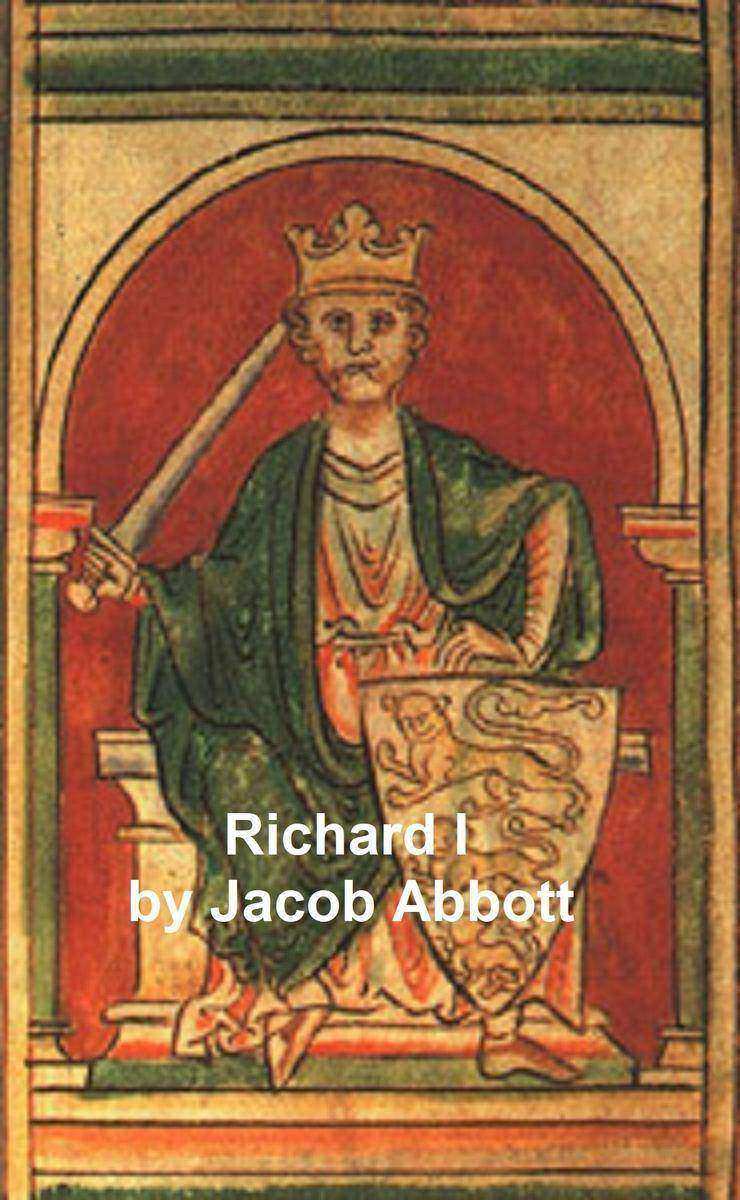
Richard I
¥8.09
According to Wikipedia: "Richard I (8 September 1157 – 6 April 1199) was King of England from 6 July 1189 until his death. He also ruled as Duke of Normandy, Duke of Aquitaine, Duke of Gascony, Lord of Ireland, Lord of Cyprus, Count of Anjou, Count of Maine, Count of Nantes, and Overlord of Brittany at various times during the same period. He was known as C?ur de Lion, or Richard the Lionheart, even before his accession, because of his reputation as a great military leader and warrior.[1] The Saracens called him Melek-Ric or Malek al-Inkitar - King of England. By age 16, Richard was commanding his own army, putting down rebellions in Poitou against his father, King Henry II.[1] Richard was a central Christian commander during the Third Crusade, effectively leading the campaign after the departure of Philip Augustus and scoring considerable victories against his Muslim counterpart, Saladin, but was unable to reconquer Jerusalem. Although only speaking French and spending very little time in England (he lived in his Duchy of Aquitaine, in the southwest of France, preferring to use his kingdom as a source of revenue to support his armies), he was seen as a pious hero by his subjects. He remains one of the very few Kings of England remembered by his epithet, rather than regnal number, and is an enduring, iconic figure in England."
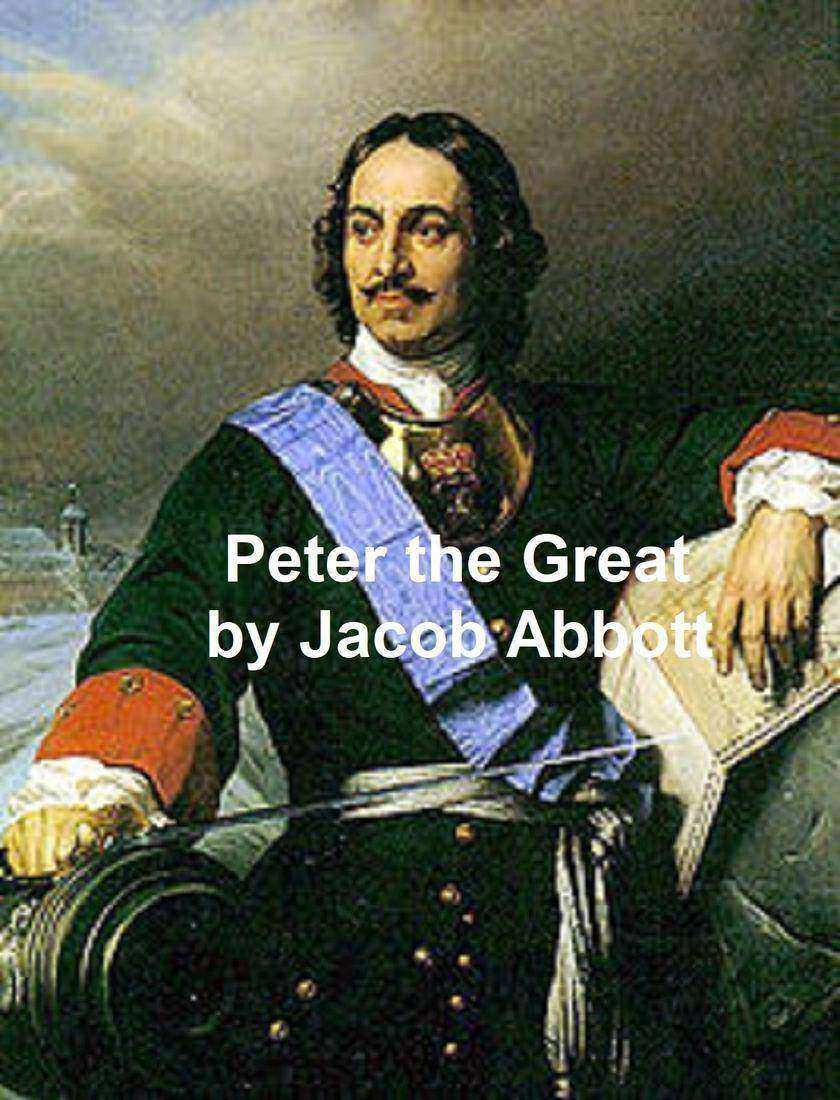
Peter the Great
¥8.09
According to Wikipedia: "Peter I the Great or Pyotr Alexeyevich Romanov (9 June [O.S. 30 May] 1672 – 8 February 1725) ruled Russia and later the Russian Empire from 7 May 1682 until his death, jointly ruling before 1696 with his weak and sickly half-brother, Ivan V. He carried out a policy of modernization and expansion that transformed the Tsardom of Russia into a 3-billion acre Russian Empire, a major European power."
Across the Plains
¥8.09
Travelogue and essays. According to Wikipedia: "Robert Louis (Balfour) Stevenson ( 1850 - 1894), was a Scottish novelist, poet, and travel writer, and a leading representative of Neo-romanticism in English literature. He was the man who "seemed to pick the right word up on the point of his pen, like a man playing spillikins", as G. K. Chesterton put it. He was also greatly admired by many authors, including Jorge Luis Borges, Ernest Hemingway, Rudyard Kipling, Vladimir Nabokov, and J. M. Barrie. Most modernist writers dismissed him, however, because he was popular and did not write within their definition of modernism. It is only recently that critics have begun to look beyond Stevenson's popularity and allow him a place in the canon."
Twelve Types
¥8.09
Collection of biographical essays, including CHARLOTTE BRONTE, WILLIAM MORRIS AND HIS SCHOOL, THE OPTIMISM OF BYRON, POPE AND THE ART OF SATIRE, FRANCIS, ROSTAND, CHARLES II, STEVENSON, THOMAS CARLYLE, TOLSTOY AND THE CULT OF SIMPLICITY, SAVONAROLA, and THE POSITION OF SIR WALTER SCOTT. According to Wikipedia: "Gilbert Keith Chesterton (29 May 1874 – 14 June 1936) was an influential English writer of the early 20th century. His prolific and diverse output included journalism, philosophy, poetry, biography, Christian apologetics, fantasy and detective fiction. Chesterton has been called the "prince of paradox." Time magazine, in a review of a biography of Chesterton, observed of his writing style: "Whenever possible Chesterton made his points with popular sayings, proverbs, allegories—first carefully turning them inside out."
The Silverado Squatters
¥8.09
Travelogue/memoir of a stay in a ghost town in northern California on Mount Saint Helena in the 1870s. According to Wikipedia: "Robert Louis (Balfour) Stevenson ( 1850 - 1894), was a Scottish novelist, poet, and travel writer, and a leading representative of Neo-romanticism in English literature. He was the man who "seemed to pick the right word up on the point of his pen, like a man playing spillikins", as G. K. Chesterton put it. He was also greatly admired by many authors, including Jorge Luis Borges, Ernest Hemingway, Rudyard Kipling, Vladimir Nabokov, and J. M. Barrie. Most modernist writers dismissed him, however, because he was popular and did not write within their definition of modernism. It is only recently that critics have begun to look beyond Stevenson's popularity and allow him a place in the canon."
Mark Twain's Speeches
¥8.09
Comprehensive collection, first published in 1910. According to Wikipedia: "Samuel Langhorne Clemens (November 30, 1835 - April 21, 1910), better known by the pen name Mark Twain, was a humorist, satirist, lecturer and writer from the United States of America. Twain is most noted for his novels Adventures of Huckleberry Finn, which has since been called the Great American Novel, and The Adventures of Tom Sawyer. He is also known for his quotations. During his lifetime, Twain became a friend to presidents, artists, leading industrialists and European royalty. Twain enjoyed immense public popularity, and his keen wit and incisive satire earned him praise from both critics and peers. American author William Faulkner called Twain 'the father of American literature.'"
The Victorian Age in Literature
¥8.09
Criticism and literary history by a great novelist and essayist. According to Wikipedia: "Gilbert Keith Chesterton (1874 - 1936) was an influential English writer of the early 20th century. His prolific and diverse output included journalism, philosophy, poetry, biography, Christian apologetics, fantasy and detective fiction. Chesterton has been called the "prince of paradox."[1] He wrote in an off-hand, whimsical prose studded with startling formulations. For example: "Thieves respect property. They merely wish the property to become their property that they may more perfectly respect it."[2] He is one of the few Christian thinkers who are equally admired and quoted by both liberal and conservative Christians, and indeed by many non-Christians. Chesterton's own theological and political views were far too nuanced to fit comfortably under the "liberal" or "conservative" banner."
Intentions
¥8.09
Dodo Collections brings you another classic from Oscar Wilde, ‘Intentions’. Originally published in 1891 when Wilde was at the height of his form, these brilliant essays on art, literature, criticism, and society display the flamboyant poseur’s famous wit and wide learning. A leading spokesman for the English Aesthetic movement, Wilde promoted "art for art’s sake" against critics who argued that art must serve a moral purpose. On every page of this collection the gifted literary stylist admirably demonstrates not only that the characteristics of art are "distinction, charm, beauty, and imaginative power," but also that criticism itself can be raised to an art form possessing these very qualities. Oscar Fingal O'Flahertie Wills Wilde (16 October 1854 – 30 November 1900) was an Irish author, playwright and poet. After writing in different forms throughout the 1880s, he became one of London's most popular playwrights in the early 1890s. He is remembered for his epigrams, his novel The Picture of Dorian Gray, his plays, as well as the circumstances of his imprisonment and early death. At the height of his fame and success, while his masterpiece, The Importance of Being Earnest (1895), was still on stage in London, Wilde had the Marquess of Queensberry prosecuted for libel. The Marquess was the father of Wilde's lover, Lord Alfred Douglas. The charge carried a penalty of up to two years in prison. The trial unearthed evidence that caused Wilde to drop his charges and led to his own arrest and trial for gross indecency with other men. After two more trials he was convicted and imprisoned for two years' hard labour. In 1897, in prison, he wrote De Profundis, which was published in 1905, a long letter which discusses his spiritual journey through his trials, forming a dark counterpoint to his earlier philosophy of pleasure. Upon his release he left immediately for France, never to return to Ireland or Britain. There he wrote his last work, The Ballad of Reading Gaol (1898), a long poem commemorating the harsh rhythms of prison life. He died destitute in Paris at the age of 46.
The Journals of Lewis and Clark
¥8.09
This edition retains the original idiosyncratic spelling and punctuation. " "These Journals are from May 14, 1804, the day the expedition left the Mississippi River, to September 26, 1806, a day or two after they arrived back in St. Louis. It includes all possible Journal entries of Lewis and Clark. Most of the "courses and distances" and "celestial observations" have been omitted. The notes and most of the corrections of past editors have been removed." According to Wikipedia: "The Lewis and Clark Expedition (1803–1806), headed by Meriwether Lewis and William Clark, was the first American overland expedition to the Pacific coast and back."
The Memoirs of Victor Hugo
¥8.09
According to Wikipedia: "Victor-Marie Hugo (26 February 1802 – 22 May 1885) was a French poet, playwright, novelist, essayist, visual artist, statesman, human rights activist and exponent of the Romantic movement in France. In France, Hugo's literary fame comes first from his poetry but also rests upon his novels and his dramatic achievements. Among many volumes of poetry, Les Contemplations and La Légende des siècles stand particularly high in critical esteem, and Hugo is sometimes identified as the greatest French poet. Outside France, his best-known works are the novels Les Misérables and Notre-Dame de Paris (known in English also as The Hunchback of Notre Dame). Though a committed conservative royalist when he was young, Hugo grew more liberal as the decades passed; he became a passionate supporter of republicanism, and his work touches upon most of the political and social issues and artistic trends of his time. He is buried in the Panthéon."
Records of a Family of Engineers
¥8.09
Robert Louis Stevenson's account of his ancestors. According to Wikipedia: "Robert Louis (Balfour) Stevenson ( 1850 - 1894), was a Scottish novelist, poet, and travel writer, and a leading representative of Neo-romanticism in English literature. He was the man who "seemed to pick the right word up on the point of his pen, like a man playing spillikins", as G. K. Chesterton put it. He was also greatly admired by many authors, including Jorge Luis Borges, Ernest Hemingway, Rudyard Kipling, Vladimir Nabokov, and J. M. Barrie. Most modernist writers dismissed him, however, because he was popular and did not write within their definition of modernism. It is only recently that critics have begun to look beyond Stevenson's popularity and allow him a place in the canon."
Morien, an Arthurian Romance
¥8.09
A short Arthurian romance not represented in Malory's "Morte Darthur". A metrical romance rendered into English prose from the Mediaeval Dutch.
Robert Louis Stevenson
¥8.09
Short biographical essay. According to Wikipedia: "Robert Louis (Balfour) Stevenson ( 1850 - 1894), was a Scottish novelist, poet, and travel writer, and a leading representative of Neo-romanticism in English literature. He was the man who "seemed to pick the right word up on the point of his pen, like a man playing spillikins", as G. K. Chesterton put it. He was also greatly admired by many authors, including Jorge Luis Borges, Ernest Hemingway, Rudyard Kipling, Vladimir Nabokov, and J. M. Barrie. Most modernist writers dismissed him, however, because he was popular and did not write within their definition of modernism. It is only recently that critics have begun to look beyond Stevenson's popularity and allow him a place in the canon."
Father Damien
¥8.09
Short essay. According to Wikipedia: "Robert Louis (Balfour) Stevenson ( 1850 - 1894), was a Scottish novelist, poet, and travel writer, and a leading representative of Neo-romanticism in English literature. He was the man who "seemed to pick the right word up on the point of his pen, like a man playing spillikins", as G. K. Chesterton put it. He was also greatly admired by many authors, including Jorge Luis Borges, Ernest Hemingway, Rudyard Kipling, Vladimir Nabokov, and J. M. Barrie. Most modernist writers dismissed him, however, because he was popular and did not write within their definition of modernism. It is only recently that critics have begun to look beyond Stevenson's popularity and allow him a place in the canon."
Journal of an African Cruiser
¥8.09
"Comprising sketches of the Canaries, the Cape Verds, Liberia, Maeira, Sierra Leone, and other places of interest on the west coast of Africa. By an officer of the US Navy. Edited by Nathaniel Hawthorne... 1845." According to Wikipedia: ""Nathaniel Hawthorne (born Nathaniel Hathorne; July 4, 1804 – May 19, 1864) was an American novelist and short story writer."
The New Jerusalem
¥8.09
Travelogue and related essays. According to Wikipedia: "Gilbert Keith Chesterton (1874 - 1936) was an influential English writer of the early 20th century. His prolific and diverse output included journalism, philosophy, poetry, biography, Christian apologetics, fantasy and detective fiction. Chesterton has been called the "prince of paradox."[1] He wrote in an off-hand, whimsical prose studded with startling formulations. For example: "Thieves respect property. They merely wish the property to become their property that they may more perfectly respect it."[2] He is one of the few Christian thinkers who are equally admired and quoted by both liberal and conservative Christians, and indeed by many non-Christians. Chesterton's own theological and political views were far too nuanced to fit comfortably under the "liberal" or "conservative" banner."
Letters of Pliny
¥8.09
Classic collection of letters. According to Wikipedia: "Gaius Plinius Caecilius Secundus, born Gaius Caecilius or Gaius Caecilius Cilo (61 AD – ca. 112 AD), better known as Pliny the Younger, was a lawyer, author, and magistrate of Ancient Rome. Pliny's uncle, Pliny the Elder, helped raise and educated him. They were both witnesses to the eruption of Vesuvius on 24 August 79 AD. Pliny is known for his hundreds of surviving letters, which are an invaluable historical source for the time period. Many are addressed to reigning emperors or to notables such as the historian, Tacitus. Pliny himself was a notable figure, serving as an imperial magistrate under Trajan (reigned AD 98–117)."
Familiar Studies of Men and Books
¥8.09
This collection of essays includes: VICTOR HUGO'S ROMANCES, SOME ASPECTS OF ROBERT BURNS, WALT WHITMAN, HENRY DAVID THOREAU: HIS CHARACTER AND OPINIONS, YOSHIDA-TORAJIRO, FRANCOIS VILLON, STUDENT, POET, AND HOUSE-BREAKER, CHARLES OF ORLEANS, SAMUEL PEPYS, and JOHN KNOX AND WOMEN. According to Wikipedia: "Robert Louis (Balfour) Stevenson ( 1850 - 1894), was a Scottish novelist, poet, and travel writer, and a leading representative of Neo-romanticism in English literature. He was the man who "seemed to pick the right word up on the point of his pen, like a man playing spillikins", as G. K. Chesterton put it. He was also greatly admired by many authors, including Jorge Luis Borges, Ernest Hemingway, Rudyard Kipling, Vladimir Nabokov, and J. M. Barrie. Most modernist writers dismissed him, however, because he was popular and did not write within their definition of modernism. It is only recently that critics have begun to look beyond Stevenson's popularity and allow him a place in the canon."
Books and Persons: Being Comments on a Past Epoch (1908-1911)
¥8.09
Dodo Collections brings you another classic from Arnold Bennett, ‘"Books and Persons; Being Comments on a Past Epoch, 1908-1911".’ ? The contents of this book have been chosen from a series of weekly articles which enlivened the?New Ageduring the years 1908, 1909, 1910, and 1911, under the pseudonym "Jacob Tonson." The man responsible for the republication is the dedicatee, who, having mysteriously demanded from me back numbers of theNew Age, sat in my house one Sunday afternoon and in four hours read through the entire series. He then announced that he had made a judicious selection, and that the selection must positively be issued in volume form. Mr. Frank Swinnerton approved the selection and added to it slightly. In my turn I suggested a few more additions. The total amounts to one-third of the original matter. Beyond correcting misprints, softening the crudity of several epithets, and censoring lines here and there which might give offence without helping the sacred cause, I have not altered the articles. They appear as they were journalistically written in Paris, London, Switzerland, and the Forest of Fontainebleau. In particular I have left the critical judgments alone, for the good reason that I stand by nearly all of them, though perhaps with a less challenging vivacity, to this day. ARNOLD BENNETT February 1917 Enoch Arnold Bennett (always known as Arnold Bennett) was one of the most remarkable literary figures of his time, a product of the English Potteries that he made famous as the Five Towns. Yet he could hardly wait to escape his hometown, and he did so by the sheer force of his ambition to succeed as an author. In his time he turned his hand to every kind of writing, but he will be remembered for such novels as The Old Wives' Tale, the Clayhanger trilogy (Clayhanger, Hilda Lessways, and These Twain), and The Card. He also wrote such intriguing self-improvement books as Literary Taste, How To Live on 24 Hours a Day, The Human Machine, etc.
The Letters of Cassiodorus
¥8.09
A condensed translation of the Variae Epistolae of Magnus Aurelius Cassiodorus Senator. According to Wikipedia: "Flavius Magnus Aurelius Cassiodorus Senator (c. 485 – c. 585), commonly known as Cassiodorus, was a Roman statesman and writer, serving in the administration of Theoderic the Great, king of the Ostrogoths. Senator was part of his surname, not his rank."


