


 购物车
购物车 个人中心
个人中心
Windows Server 2012 Unified Remote Access
¥90.46
"Windows Server 2012 Unified Remote Access Planning and Deployment" is a quick start tutorial full of step-by-step instructions to guide you through planning and deploying Unified Remote Access; the successor to DirectAccess. If you are a System Administrator or Engineer who has strong knowledge of networking and deployment for the Microsoft family of operating systems and software, then "Windows Server 2012 Unified Remote Access Planning and Deployment" is for you. You should have a sound understanding of TCP/IP networking, as well as deploying and supporting Windows Server and Client operating systems.
Microsoft Dynamics CRM 2011 Scripting Cookbook
¥90.46
Microsoft Dynamics CRM 2011 Scripting Cookbook is full of immediately useable recipes showing you how far you can take customization in Dynamics. While the book is structured so that each recipe can be tackled separately, for novice users it is recommended to follow through all the recipes in the order in which they are presented. This book is for those new to Dynamics CRM and for business analysts interested in gaining additional product specific knowledge. Stepping through the first chapters will introduce you to the customization process and give you enough knowledge to start looking into more advanced topics. Developers and web designers of another CRM product will see how their skills can be easily adapted to start customizing Dynamics CRM 2011. You should be familiar with the basic concepts of what a CRM system is and does. Additional knowledge of the current or a previous version of Dynamics CRM will help, but is not necessary.
Windows Server 2012 Automation with PowerShell Cookbook
¥90.46
Cookbook with recipes based on real life examples. This book is written to assist the daily tasks for systems administrators, engineers, and architects working with Windows Server 2012.
Final Cut Pro X Cookbook
¥90.46
Written in cookbook style, this book offers many recipes to edit slick, professional videos with FCPX. Each recipe contains step-by-step instructions followed by analysis of what was done in each task and other useful information. The book is designed so that you can read it chapter by chapter, or you can look at the list of recipes and refer to them in no particular order. If you’ve been toying around with iMovie and want more power or you’ve taken FCPX for a whirl and simply can’t find the fastest, most efficient workflow, this book will help! Veteran editors will find just as much useful info as FCPX is radically different than its predecessor, Final Cut Pro 7.
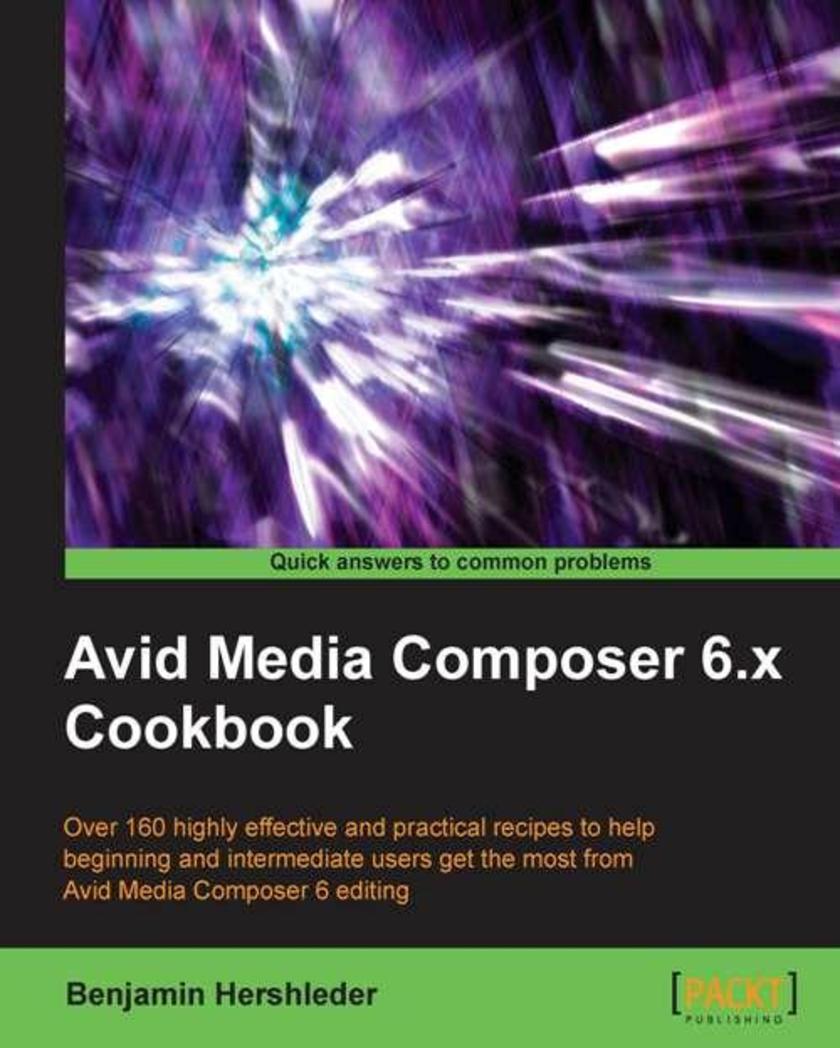
Avid Media Composer 6.x Cookbook
¥90.46
Written in a Cookbook style, it's packed with logically-sequenced recipes to gain deeper understanding of the software. Each recipe contains step-by-step instructions followed by analysis of what was done in each task and other useful information. The book is designed so that you can read it chapter by chapter, or you can look at the list of recipes and refer to them in no particular order. If you are new to editing with Avid, this book will help you get the most out of Avid Media Composer right from the start. Even if you are intermediately experienced with Avid, you will discover new methods and gain a deeper understanding to take your Avid experience to the next level, with greater confidence.
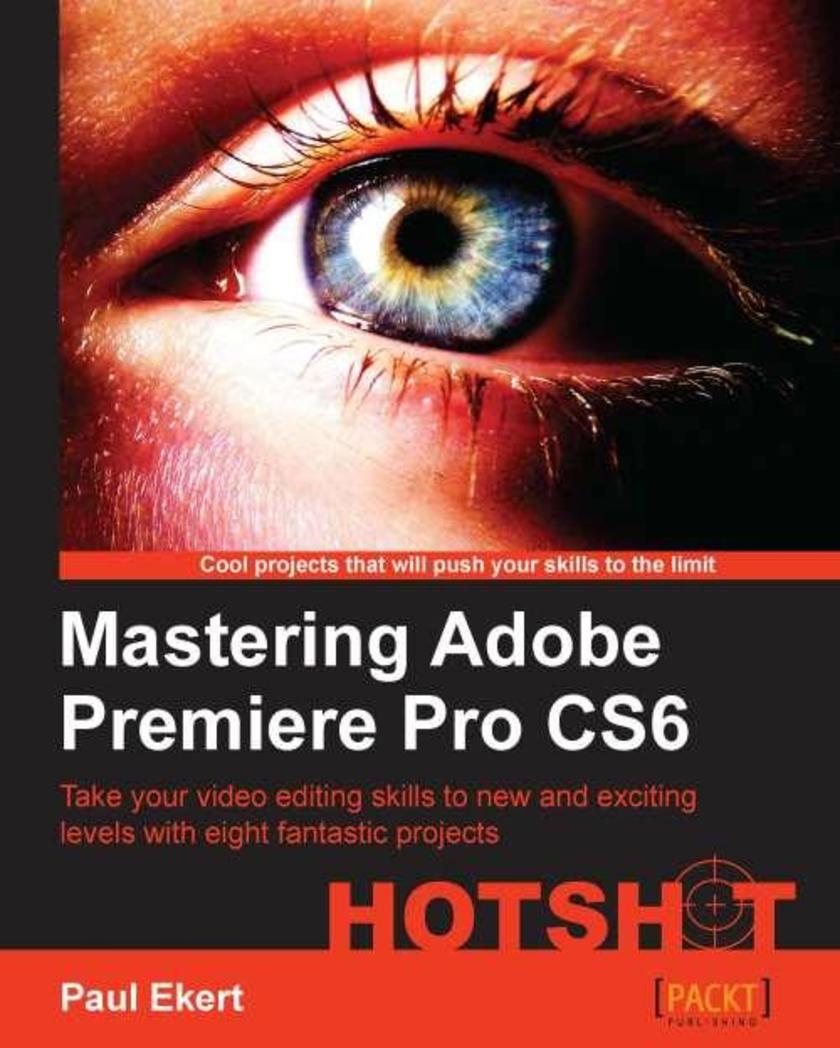
Mastering Adobe Premiere Pro CS6
¥90.46
Designed to be practical and engaging, Mastering Adobe Premiere Pro CS6 is a project-based book to help you truly augment your skills and become a film editing hotshot.If you're just starting out or even migrating from existing video editing software, then this book is for you. With rapid progression through practical examples constructed to be both engaging and useful, Mastering Adobe Premiere Pro CS6 is ideal for learning the sometimes complex workflows of this powerful application.
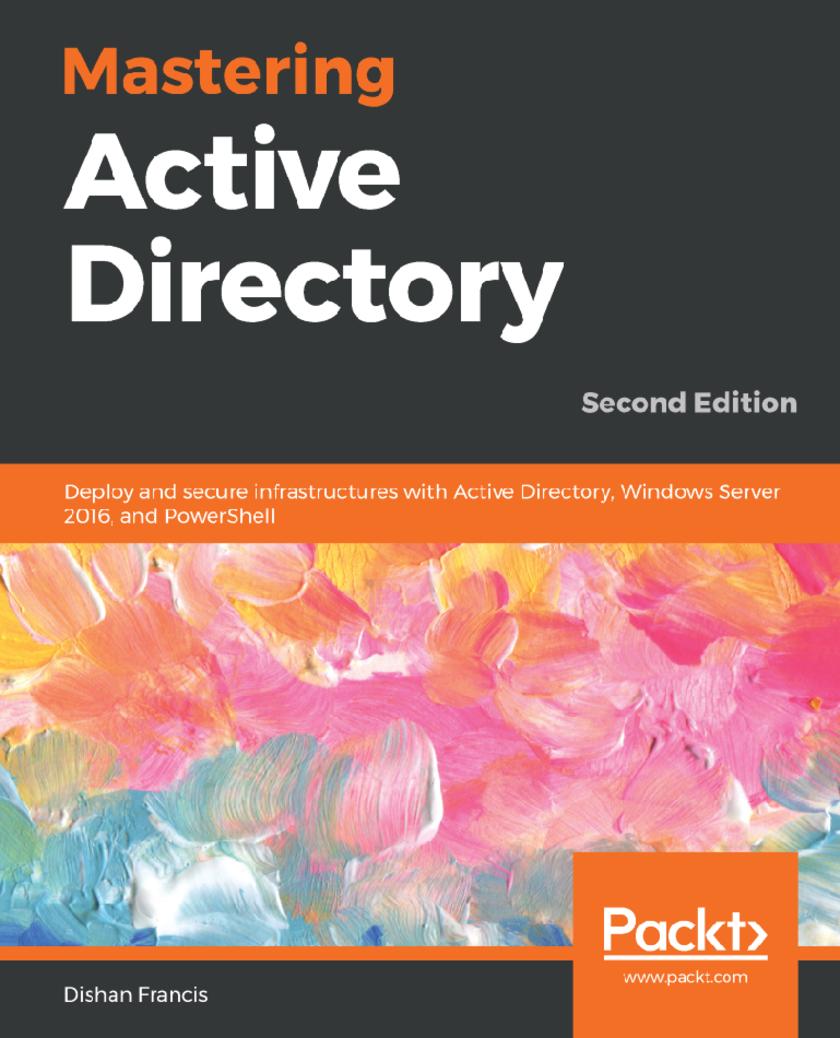
Mastering Active Directory
¥90.46
Become an expert at managing enterprise identity infrastructure by leveraging Active Directory Key Features * Explore the new features in Active Directory Domain Service * Manage your Active Directory services for Windows Server 2016 effectively * Automate administrative tasks in Active Directory using PowerShell Core 6.x Book Description Active Directory (AD) is a centralized and standardized system that automates networked management of user data, security, and distributed resources and enables inter-operation with other directories. This book will first help you brush up on the AD architecture and fundamentals, before guiding you through core components, such as sites, trust relationships, objects, and attributes. You will then explore AD schemas, LDAP, RMS, and security best practices to understand objects and components and how they can be used effectively. Next, the book will provide extensive coverage of AD Domain Services and Federation Services for Windows Server 2016, and help you explore their new features. Furthermore, you will learn to manage your identity infrastructure for a hybrid cloud setup. All this will help you design, plan, deploy, manage operations, and troubleshoot your enterprise identity infrastructure in a secure and effective manner. You’ll later discover Azure AD Module, and learn to automate administrative tasks using PowerShell cmdlets. All along, this updated second edition will cover content based on the latest version of Active Directory, PowerShell 5.1 and LDAP. By the end of this book, you’ll be well versed with best practices and troubleshooting techniques for improving security and performance in identity infrastructures. What you will learn * Design your Hybrid AD environment by evaluating business and technology requirements * Protect sensitive data in a hybrid environment using Azure Information Protection * Explore advanced functionalities of the schema * Learn about Flexible Single Master Operation (FSMO) roles and their placement * Install and migrate Active Directory from older versions to Active Directory 2016 * Control users, groups, and devices effectively * Design your OU structure in the most effective way * Integrate Azure AD with Active Directory Domain Services for a hybrid setup Who this book is for If you are an Active Directory administrator, system administrator, or network professional who has basic knowledge of Active Directory and is looking to become an expert in this topic, this book is for you.
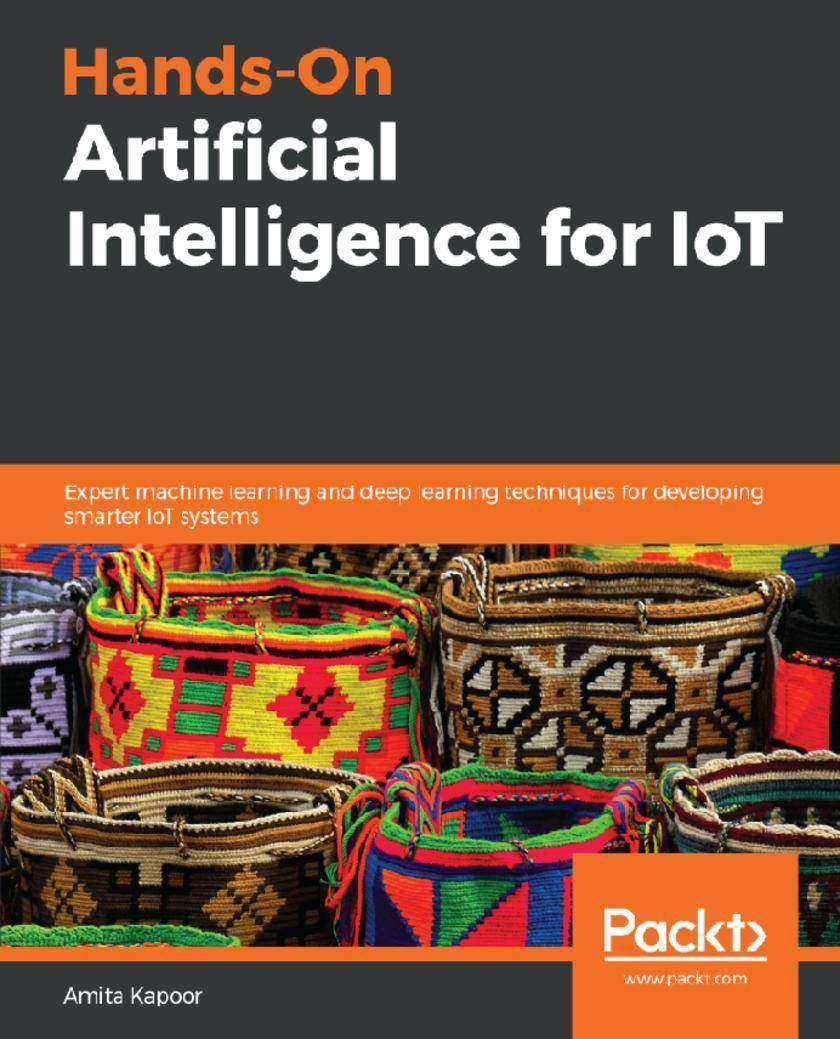
Hands-On Artificial Intelligence for IoT
¥90.46
Build smarter systems by combining artificial intelligence and the Internet of Things—two of the most talked about topics today Key Features * Leverage the power of Python libraries such as TensorFlow and Keras to work with real-time IoT data * Process IoT data and predict outcomes in real time to build smart IoT models * Cover practical case studies on industrial IoT, smart cities, and home automation Book Description There are many applications that use data science and analytics to gain insights from terabytes of data. These apps, however, do not address the challenge of continually discovering patterns for IoT data. In Hands-On Artificial Intelligence for IoT, we cover various aspects of artificial intelligence (AI) and its implementation to make your IoT solutions smarter. This book starts by covering the process of gathering and preprocessing IoT data gathered from distributed sources. You will learn different AI techniques such as machine learning, deep learning, reinforcement learning, and natural language processing to build smart IoT systems. You will also leverage the power of AI to handle real-time data coming from wearable devices. As you progress through the book, techniques for building models that work with different kinds of data generated and consumed by IoT devices such as time series, images, and audio will be covered. Useful case studies on four major application areas of IoT solutions are a key focal point of this book. In the concluding chapters, you will leverage the power of widely used Python libraries, TensorFlow and Keras, to build different kinds of smart AI models. By the end of this book, you will be able to build smart AI-powered IoT apps with confidence. What you will learn * Apply different AI techniques including machine learning and deep learning using TensorFlow and Keras * Access and process data from various distributed sources * Perform supervised and unsupervised machine learning for IoT data * Implement distributed processing of IoT data over Apache Spark using the MLLib and H2O.ai platforms * Forecast time-series data using deep learning methods * Implementing AI from case studies in Personal IoT, Industrial IoT, and Smart Cities * Gain unique insights from data obtained from wearable devices and smart devices Who this book is for If you are a data science professional or a machine learning developer looking to build smart systems for IoT, Hands-On Artificial Intelligence for IoT is for you. If you want to learn how popular artificial intelligence (AI) techniques can be used in the Internet of Things domain, this book will also be of benefit. A basic understanding of machine learning concepts will be required to get the best out of this book.
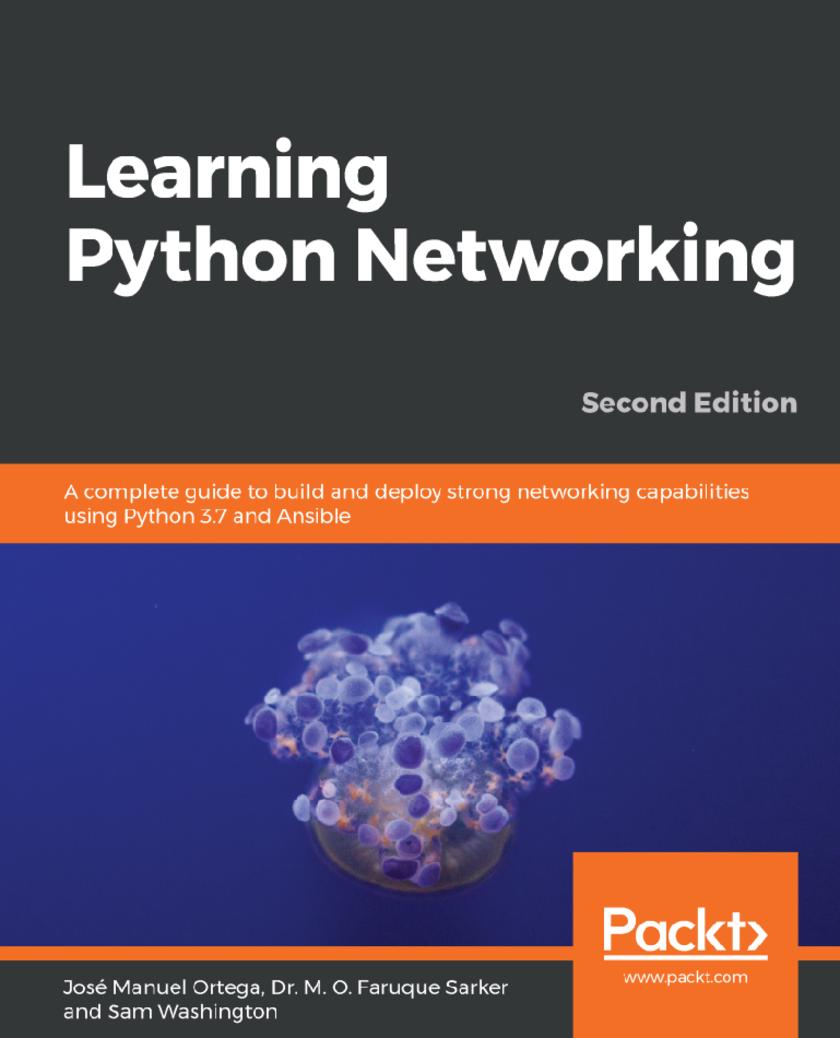
Learning Python Networking
¥90.46
Achieve improved network programmability and automation by leveraging powerful network programming concepts, algorithms, and tools Key Features * Deal with remote network servers using SSH, FTP, SNMP and LDAP protocols. * Design multi threaded and event-driven architectures for asynchronous servers programming. * Leverage your Python programming skills to build powerful network applications Book Description Network programming has always been a demanding task. With full-featured and well-documented libraries all the way up the stack, Python makes network programming the enjoyable experience it should be. Starting with a walk through of today's major networking protocols, through this book, you'll learn how to employ Python for network programming, how to request and retrieve web resources, and how to extract data in major formats over the web. You will utilize Python for emailing using different protocols, and you'll interact with remote systems and IP and DNS networking. You will cover the connection of networking devices and configuration using Python 3.7, along with cloud-based network management tasks using Python. As the book progresses, socket programming will be covered, followed by how to design servers, and the pros and cons of multithreaded and event-driven architectures. You'll develop practical clientside applications, including web API clients, email clients, SSH, and FTP. These applications will also be implemented through existing web application frameworks. What you will learn * Execute Python modules on networking tools * Automate tasks regarding the analysis and extraction of information from a network * Get to grips with asynchronous programming modules available in Python * Get to grips with IP address manipulation modules using Python programming * Understand the main frameworks available in Python that are focused on web application * Manipulate IP addresses and perform CIDR calculations Who this book is for If you're a Python developer or a system administrator with Python experience and you're looking to take your first steps in network programming, then this book is for you. If you're a network engineer or a network professional aiming to be more productive and efficient in networking programmability and automation then this book would serve as a useful resource. Basic knowledge of Python is assumed.
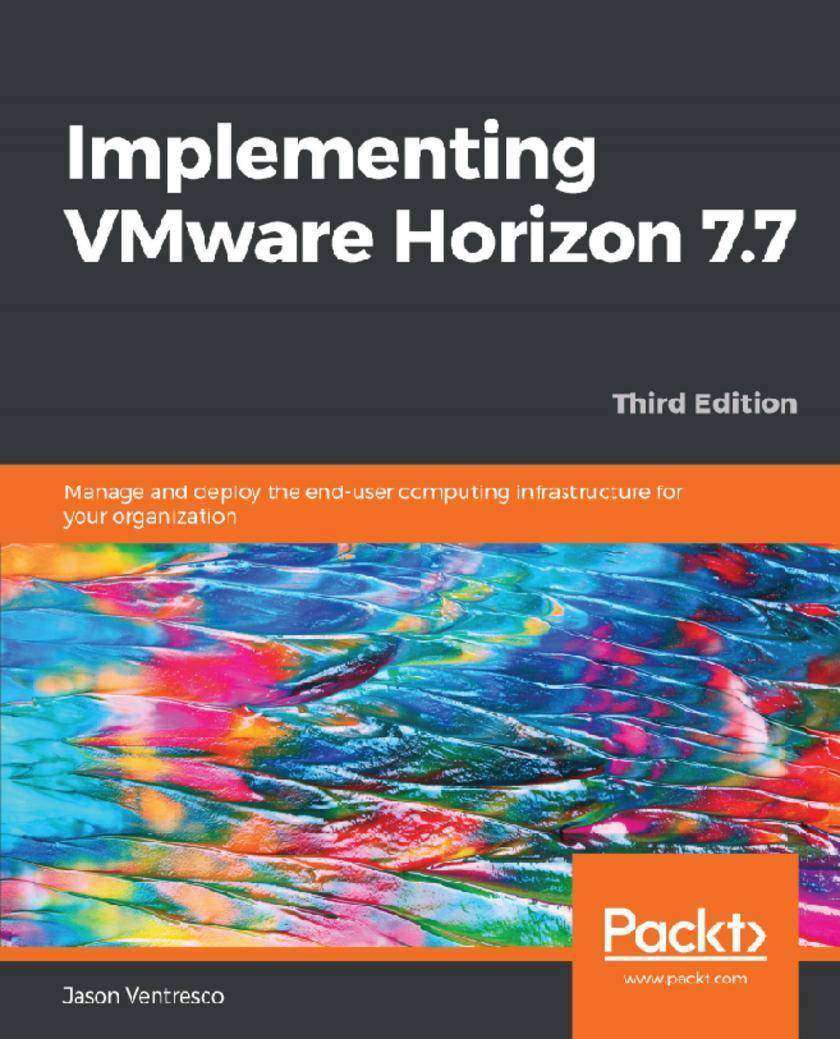
Implementing VMware Horizon 7.7
¥90.46
Effectively implement features and components for any computing environment Key Features *Explore the latest features of VMware Horizon 7.7 *Virtualize your desktop infrastructure using new features introduced in Horizon *Implement App Volumes and User Environment Manager in your infrastructure Book Description This third edition of Implementing VMware Horizon 7.7 has been updated to get you up to speed with VMware Horizon 7.7 by showing you how to use its key features and deploying an end-user computing infrastructure for your own organization. The book begins by guiding you on how to deploy all the core requirements for a VMware Horizon infrastructure. It then moves on to show you how to provision and administer end-user computing resources using VMware Horizon. You’ll not only be able to deploy the core VMware Horizon features, but you’ll also be able to implement new features, such as the Just-in-Time Management Platform (JMP) and the Horizon Console. You’ll also focus on the latest features and components of the Horizon platform and learn when and how they are used. By the end of the book, you will have developed a solid understanding of how your organization can benefit from the capabilities VMware Horizon offers and how each of its components is implemented. What you will learn *Work with the different products that make up VMware Horizon *Implement a multi-site VMware Horizon Pod using the Cloud Pod Architecture feature *Deploy and configure VMware Horizon’s optional components *Implement and maintain Microsoft RDSH, Horizon Linux, and Windows Desktop Pools and RDSH Application Pools *Configure and manage Horizon remotely using PowerCLI *Learn about the Microsoft Windows Group Policy templates for Horizon *Understand how to manage the SSL certificates for each of the VMware Horizon components Who this book is for If you’re a system administrator, solutions architect, or desktop engineer looking to level up your skills working with VMware's Horizon ecosystem and want to build a successful deployment strategy for desktops and applications, this book is for you.
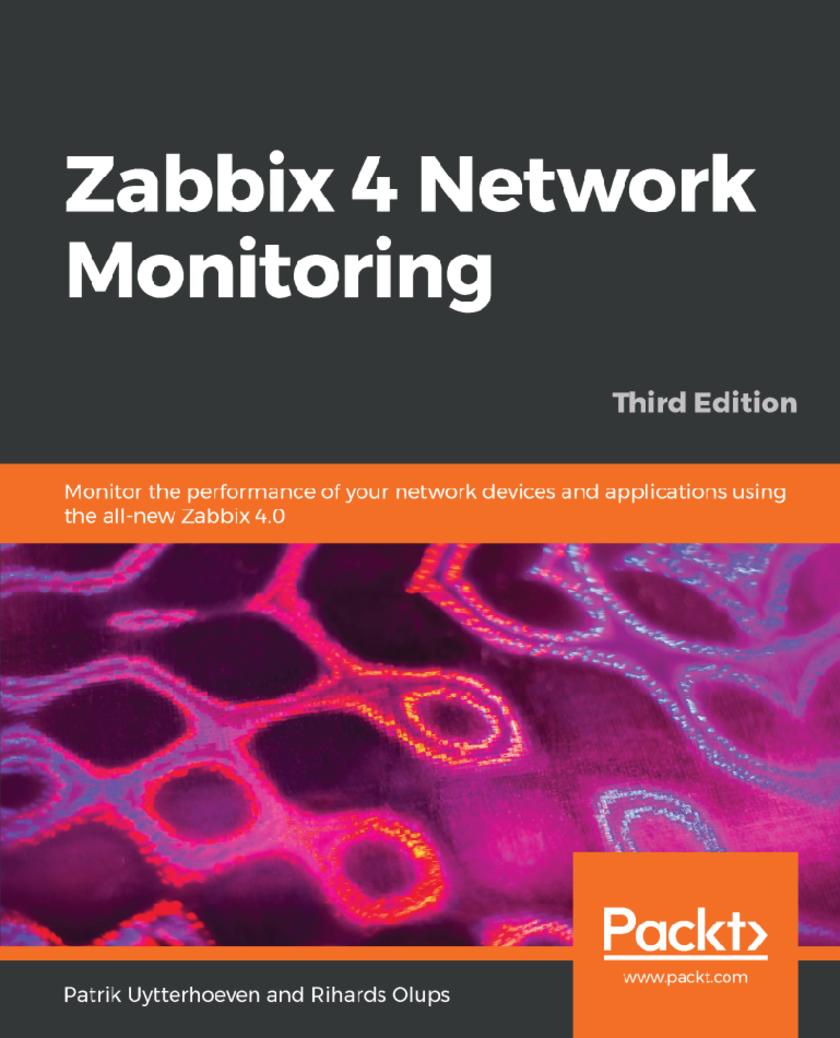
Zabbix 4 Network Monitoring
¥90.46
Gather detailed statistics and deploy impressive business solutions with Zabbix 4.0 Key Features *Experience the full impact of Zabbix 4.0, a useful and increasingly popular tool *Enhance your network’s performance and manage hosts and systems *A step-by-step guide to smarter network monitoring Book Description Zabbix 4 Network Monitoring is the perfect starting point for monitoring the performance of your network devices and applications with Zabbix. Even if you’ve never used a monitoring solution before, this book will get you up and running quickly. You’ll learn to monitor more sophisticated operations with ease and soon feel in complete control of your network, ready to meet any challenges you might face. Starting with the installation, you will discover the new features in Zabbix 4.0. You will then get to grips with native Zabbix agents and Simple Network Management Protocol (SNMP) devices. You will also explore Zabbix's integrated functionality for monitoring Java application servers and VMware. This book also covers notifications, permission management, system maintenance, and troubleshooting, so you can be confident that every potential challenge and task is under your control. If you're working with larger environments, you'll also be able to find out more about distributed data collection using Zabbix proxies. Once you're confident and ready to put these concepts into practice, you will understand how to optimize and improve performance. Troubleshooting network issues is vital for anyone working with Zabbix, so the book also helps you work through any technical snags and glitches you might face. By the end of this book, you will have learned more advanced techniques to fine-tune your system and make sure it is in a healthy state. What you will learn *Install Zabbix server and an agent from source *Manage hosts, users, and permissions while acting upon monitored conditions *Visualize data with the help of ad hoc graphs, custom graphs, and maps *Simplify complex configurations and learn to automate them *Monitor everything from web pages to IPMI devices and Java applications to VMware stats *Configure Zabbix to send alerts including problem severity and time periods *Troubleshoot any network issue Who this book is for If you're new to Zabbix look no further than this book. Zabbix 4 Network Monitoring is for system and network administrators who are looking to put their knowledge to work with Zabbix 4.0.
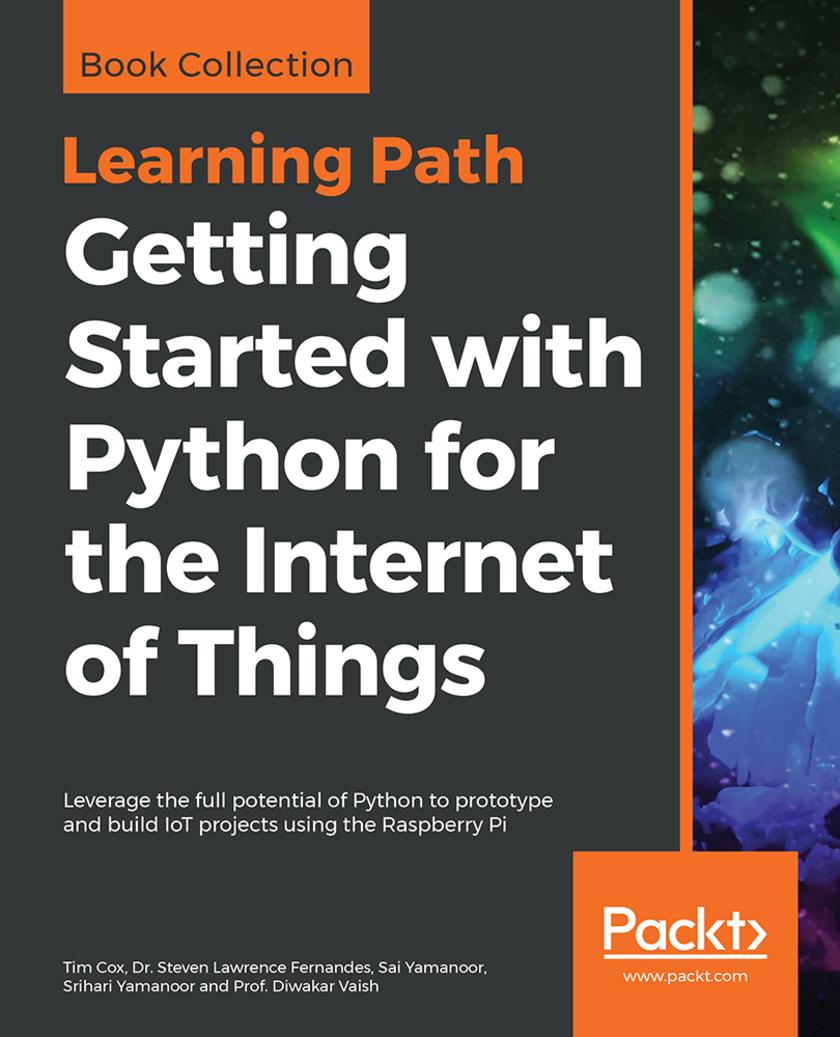
Getting Started with Python for the Internet of Things
¥90.46
Build clever, collaborative, and powerful automation systems with the Raspberry Pi and Python. Key Features * Create your own Pi-Rover or Pi-Hexipod robots * Develop practical applications in Python using Raspberry Pi * Build your own Jarvis, a highly advanced computerized AI Book Description This Learning Path takes you on a journey in the world of robotics and teaches you all that you can achieve with Raspberry Pi and Python. It teaches you to harness the power of Python with the Raspberry Pi 3 and the Raspberry Pi zero to build superlative automation systems that can transform your business. You will learn to create text classifiers, predict sentiment in words, and develop applications with the Tkinter library. Things will get more interesting when you build a human face detection and recognition system and a home automation system in Python, where different appliances are controlled using the Raspberry Pi. With such diverse robotics projects, you'll grasp the basics of robotics and its functions, and understand the integration of robotics with the IoT environment. By the end of this Learning Path, you will have covered everything from configuring a robotic controller, to creating a self-driven robotic vehicle using Python. * Raspberry Pi 3 Cookbook for Python Programmers - Third Edition by Tim Cox, Dr. Steven Lawrence Fernandes * Python Programming with Raspberry Pi by Sai Yamanoor, Srihari Yamanoor * Python Robotics Projects by Prof. Diwakar Vaish What you will learn * Build text classifiers and predict sentiment in words with the Tkinter library * Develop human face detection and recognition systems * Create a neural network module for optical character recognition * Build a mobile robot using the Raspberry Pi as a controller * Understand how to interface sensors, actuators, and LED displays work * Apply machine learning techniques to your models * Interface your robots with Bluetooth Who this book is for This Learning Path is specially designed for Python developers who want to take their skills to the next level by creating robots that can enhance people’s lives. Familiarity with Python and electronics will aid understanding the concepts in this Learning Path.
Blockchain Developer's Guide
¥90.46
Build real-world projects like a smart contract deployment platform, betting apps, wallet services, and much more using blockchain Key Features *Apply blockchain principles and features for making your life and business better *Understand Ethereum for smart contracts and DApp deployment *Tackle current and future challenges and problems relating to blockchain Book Description Blockchain applications provide a single-shared ledger to eliminate trust issues involving multiple stakeholders. It is the main technical innovation of Bitcoin, where it serves as the public ledger for Bitcoin transactions. Blockchain Developer's Guide takes you through the electrifying world of blockchain technology. It begins with the basic design of a blockchain and elaborates concepts, such as Initial Coin Offerings (ICOs), tokens, smart contracts, and other related terminologies. You will then explore the components of Ethereum, such as Ether tokens, transactions, and smart contracts that you need to build simple DApps. Blockchain Developer's Guide also explains why you must specifically use Solidity for Ethereum-based projects and lets you explore different blockchains with easy-to-follow examples. You will learn a wide range of concepts - beginning with cryptography in cryptocurrencies and including ether security, mining, and smart contracts. You will learn how to use web sockets and various API services for Ethereum. By the end of this Learning Path, you will be able to build efficient decentralized applications. This Learning Path includes content from the following Packt products: *Blockchain Quick Reference by Brenn Hill, Samanyu Chopra, Paul Valencourt *Building Blockchain Projects by Narayan Prusty What you will learn *Understand how various components of the blockchain architecture work *Get familiar with cryptography and the mechanics behind blockchain *Apply consensus protocol to determine the business sustainability *Understand what ICOs and crypto-mining are, and how they work Who this book is for Blockchain Developer's Guide is for you if you want to get to grips with the blockchain technology and develop your own distributed applications. It is also designed for those who want to polish their existing knowledge regarding the various pillars of the blockchain ecosystem. Prior exposure to an object-oriented programming language such as JavaScript is needed.
Apache Spark 2: Data Processing and Real-Time Analytics
¥90.46
Build efficient data flow and machine learning programs with this flexible, multi-functional open-source cluster-computing framework Key Features *Master the art of real-time big data processing and machine learning *Explore a wide range of use-cases to analyze large data *Discover ways to optimize your work by using many features of Spark 2.x and Scala Book Description Apache Spark is an in-memory, cluster-based data processing system that provides a wide range of functionalities such as big data processing, analytics, machine learning, and more. With this Learning Path, you can take your knowledge of Apache Spark to the next level by learning how to expand Spark's functionality and building your own data flow and machine learning programs on this platform. You will work with the different modules in Apache Spark, such as interactive querying with Spark SQL, using DataFrames and datasets, implementing streaming analytics with Spark Streaming, and applying machine learning and deep learning techniques on Spark using MLlib and various external tools. By the end of this elaborately designed Learning Path, you will have all the knowledge you need to master Apache Spark, and build your own big data processing and analytics pipeline quickly and without any hassle. This Learning Path includes content from the following Packt products: *Mastering Apache Spark 2.x by Romeo Kienzler *Scala and Spark for Big Data Analytics by Md. Rezaul Karim, Sridhar Alla *Apache Spark 2.x Machine Learning Cookbook by Siamak Amirghodsi, Meenakshi Rajendran, Broderick Hall, Shuen MeiCookbook What you will learn *Get to grips with all the features of Apache Spark 2.x *Perform highly optimized real-time big data processing *Use ML and DL techniques with Spark MLlib and third-party tools *Analyze structured and unstructured data using SparkSQL and GraphX *Understand tuning, debugging, and monitoring of big data applications *Build scalable and fault-tolerant streaming applications *Develop scalable recommendation engines Who this book is for If you are an intermediate-level Spark developer looking to master the advanced capabilities and use-cases of Apache Spark 2.x, this Learning Path is ideal for you. Big data professionals who want to learn how to integrate and use the features of Apache Spark and build a strong big data pipeline will also find this Learning Path useful. To grasp the concepts explained in this Learning Path, you must know the fundamentals of Apache Spark and Scala.
Mastering Kali Linux for Advanced Penetration Testing
¥90.46
A practical guide to testing your infrastructure security with Kali Linux, the preferred choice of pentesters and hackers Key Features * Employ advanced pentesting techniques with Kali Linux to build highly secured systems * Discover various stealth techniques to remain undetected and defeat modern infrastructures * Explore red teaming techniques to exploit secured environment Book Description This book takes you, as a tester or security practitioner, through the reconnaissance, vulnerability assessment, exploitation, privilege escalation, and post-exploitation activities used by pentesters. To start with, you'll use a laboratory environment to validate tools and techniques, along with an application that supports a collaborative approach for pentesting. You'll then progress to passive reconnaissance with open source intelligence and active reconnaissance of the external and internal infrastructure. You'll also focus on how to select, use, customize, and interpret the results from different vulnerability scanners, followed by examining specific routes to the target, which include bypassing physical security and the exfiltration of data using a variety of techniques. You'll discover concepts such as social engineering, attacking wireless networks, web services, and embedded devices. Once you are confident with these topics, you'll learn the practical aspects of attacking user client systems by backdooring with fileless techniques, followed by focusing on the most vulnerable part of the network – directly attacking the end user. By the end of this book, you'll have explored approaches for carrying out advanced pentesting in tightly secured environments, understood pentesting and hacking techniques employed on embedded peripheral devices. What you will learn * Configure the most effective Kali Linux tools to test infrastructure security * Employ stealth to avoid detection in the infrastructure being tested * Recognize when stealth attacks are being used against your infrastructure * Exploit networks and data systems using wired and wireless networks as well as web services * Identify and download valuable data from target systems * Maintain access to compromised systems * Use social engineering to compromise the weakest part of the network - the end users Who this book is for This third edition of Mastering Kali Linux for Advanced Penetration Testing is for you if you are a security analyst, pentester, ethical hacker, IT professional, or security consultant wanting to maximize the success of your infrastructure testing using some of the advanced features of Kali Linux. Prior exposure of penetration testing and ethical hacking basics will be helpful in making the most out of this book.
Mastering TypeScript 3
¥90.46
Master the TypeScript language and its latest features. Explore modern application frameworks and utilize industry best practices in TDD, OOP and UI Design. Key Features * Learn the key features of TypeScript 3 and explore advanced language features through in-depth discussions. * Use TypeScript with modern frameworks including Backbone, Angular, Aurelia, React, and Node. * Explore TDD practices, OOP techniques, and industry best practices to create high-quality, modular, and adaptable applications. Book Description TypeScript is both a language and a set of tools to generate JavaScript. It was designed by Anders Hejlsberg at Microsoft to help developers write enterprise-scale JavaScript. Starting with an introduction to the TypeScript language, before moving on to basic concepts, each section builds on previous knowledge in an incremental and easy-to-understand way. Advanced and powerful language features are all covered, including asynchronous programming techniques, decorators, and generics. This book explores many modern JavaScript and TypeScript frameworks side by side in order for the reader to learn their respective strengths and weaknesses. It will also thoroughly explore unit and integration testing for each framework. Best-of-breed applications utilize well-known design patterns in order to be scalable, maintainable, and testable. This book explores some of these object-oriented techniques and patterns, and shows real-world implementations. By the end of the book, you will have built a comprehensive, end-to-end web application to show how TypeScript language features, design patterns, and industry best practices can be brought together in a real-world scenario. What you will learn * Gain insights into core and advanced TypeScript language features * Integrate existing JavaScript libraries and third-party frameworks using declaration files * Target popular JavaScript frameworks, such as Angular, React, and more * Create test suites for your application with Jasmine and Selenium * Organize your application code using modules, AMD loaders, and SystemJS * Explore advanced object-oriented design principles * Compare the various MVC implementations in Aurelia, Angular, React, and more Who this book is for This guide to the TypeScript that starts with basic concepts, and then builds on this knowledge to introduce more advanced language features and frameworks. No prior knowledge of JavaScript is required, although some prior programming experience is assumed. If you are keen to learn TypeScript, this book will give you all of the necessary knowledge and skills to tackle any TypeScript project. If you are already an experienced JavaScript or TypeScript developer, then this book will take your skills to the next level. Learn how to use TypeScript with a multitude of modern frameworks, and choose the best framework for your project requirements. Investigate techniques for Test Driven Development, explore industry-standard design patterns, and learn how to put together a full production-ready TypeScript application.
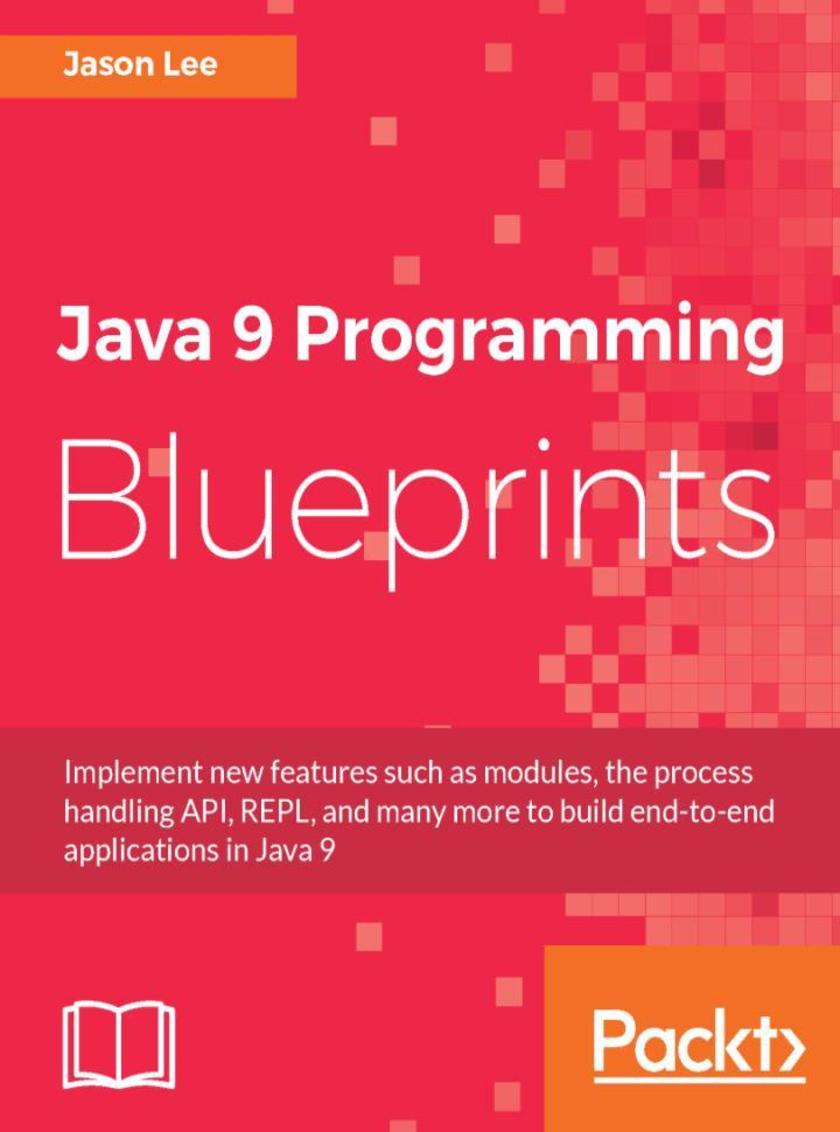
Java 9 Programming Blueprints
¥90.46
Build a variety of real-world applications by taking advantage of the newest features of Java 9 About This Book ? See some of the new features of Java 9 and be introduced to parts of the Java SDK ? This book provides a set of diverse, interesting projects that range in complexity from fairly simple to advanced and cover HTTP 2.0 ? Take advantage of Java's new modularity features to write real-world applications that solve a variety of problems Who This Book Is For This book is for Java developers who are already familiar with the language. Familiarity with more advanced topics, such as network programming and threads, would be helpful, but is not assumed. What You Will Learn ? Learn how to package Java applications as modules by using the Java Platform Module System ? Implement process management in Java by using the all-new process handling API ? Integrate your applications with third-party services in the cloud ? Interact with mail servers using JavaMail to build an application that filters spam messages ? Learn to use JavaFX to build rich GUI based applications, which are an essential element of application development ? Write microservices in Java using platform libraries and third-party frameworks ? Integrate a Java application with MongoDB to build a cloud-based note taking application In Detail Java is a powerful language that has applications in a wide variety of fields. From playing games on your computer to performing banking transactions, Java is at the heart of everything. The book starts by unveiling the new features of Java 9 and quickly walks you through the building blocks that form the basis of writing applications. There are 10 comprehensive projects in the book that will showcase the various features of Java 9. You will learn to build an email filter that separates spam messages from all your inboxes, a social media aggregator app that will help you efficiently track various feeds, and a microservice for a client/server note application, to name a few. The book covers various libraries and frameworks in these projects, and also introduces a few more frameworks that complement and extend the Java SDK. Through the course of building applications, this book will not only help you get to grips with the various features of Java 9, but will also teach you how to design and prototype professional-grade applications with performance and security considerations. Style and approach This is a learn-as-you-build practical guide to building full-fledged applications using Java 9. With a project-based approach, we’ll improve your Java skills. You will experience a variety of solutions to problems with Java.
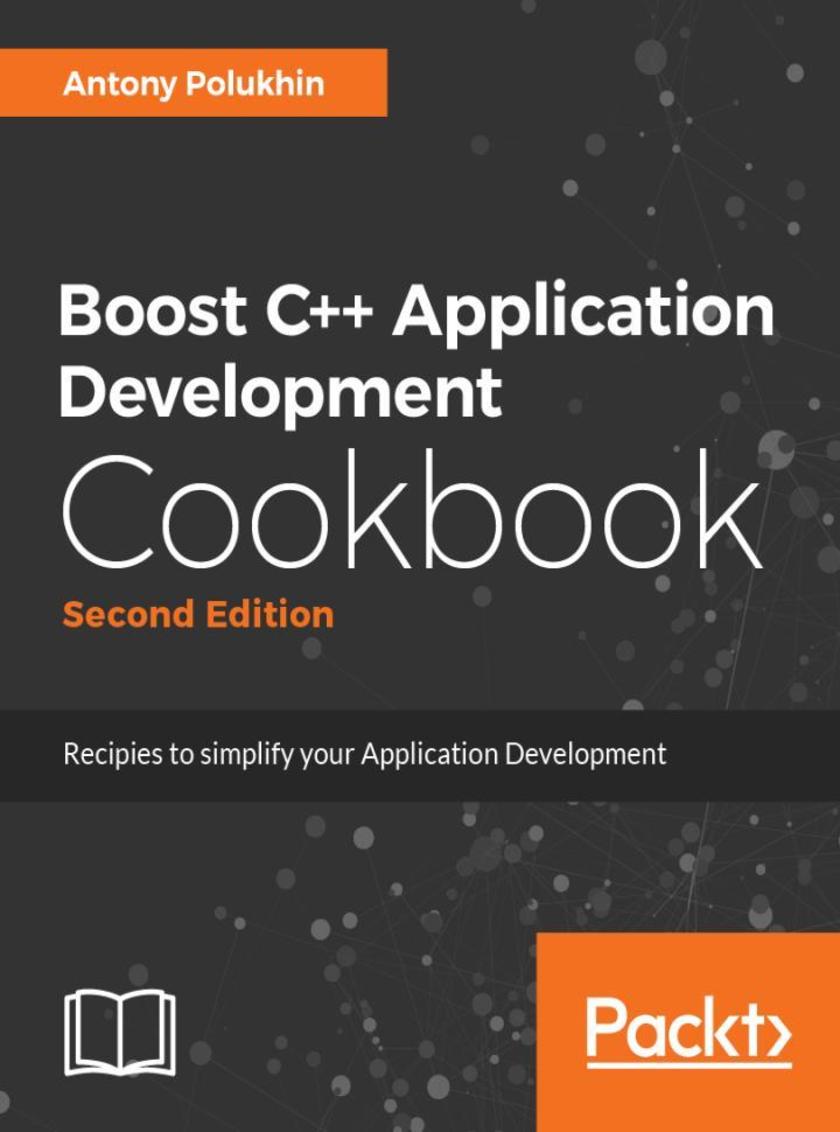
Boost C++ Application Development Cookbook - Second Edition
¥90.46
Learn to build applications faster and better by leveraging the real power of Boost and C++ About This Book ? Learn to use the Boost libraries to simplify your application development ? Learn to develop high quality, fast and portable applications ? Learn the relations between Boost and C++11/C++4/C++17 Who This Book Is For This book is for developers looking to improve their knowledge of Boost and who would like to simplify their application development processes. Prior C++ knowledge and basic knowledge of the standard library is assumed. What You Will Learn ? Get familiar with new data types for everyday use ? Use smart pointers to manage resources ? Get to grips with compile-time computations and assertions ? Use Boost libraries for multithreading ? Learn about parallel execution of different task ? Perform common string-related tasks using Boost libraries ? Split all the processes, computations, and interactions to tasks and process them independently ? Learn the basics of working with graphs, stacktracing, testing and interprocess communications ? Explore different helper macros used to detect compiler, platform and Boost features In Detail If you want to take advantage of the real power of Boost and C++ and avoid the confusion about which library to use in which situation, then this book is for you. Beginning with the basics of Boost C++, you will move on to learn how the Boost libraries simplify application development. You will learn to convert data such as string to numbers, numbers to string, numbers to numbers and more. Managing resources will become a piece of cake. You’ll see what kind of work can be done at compile time and what Boost containers can do. You will learn everything for the development of high quality fast and portable applications. Write a program once and then you can use it on Linux, Windows, MacOS, Android operating systems. From manipulating images to graphs, directories, timers, files, networking – everyone will find an interesting topic. Be sure that knowledge from this book won’t get outdated, as more and more Boost libraries become part of the C++ Standard. Style and approach Clear step-by-step recipes that will help you take advantage of the real power of Boost.
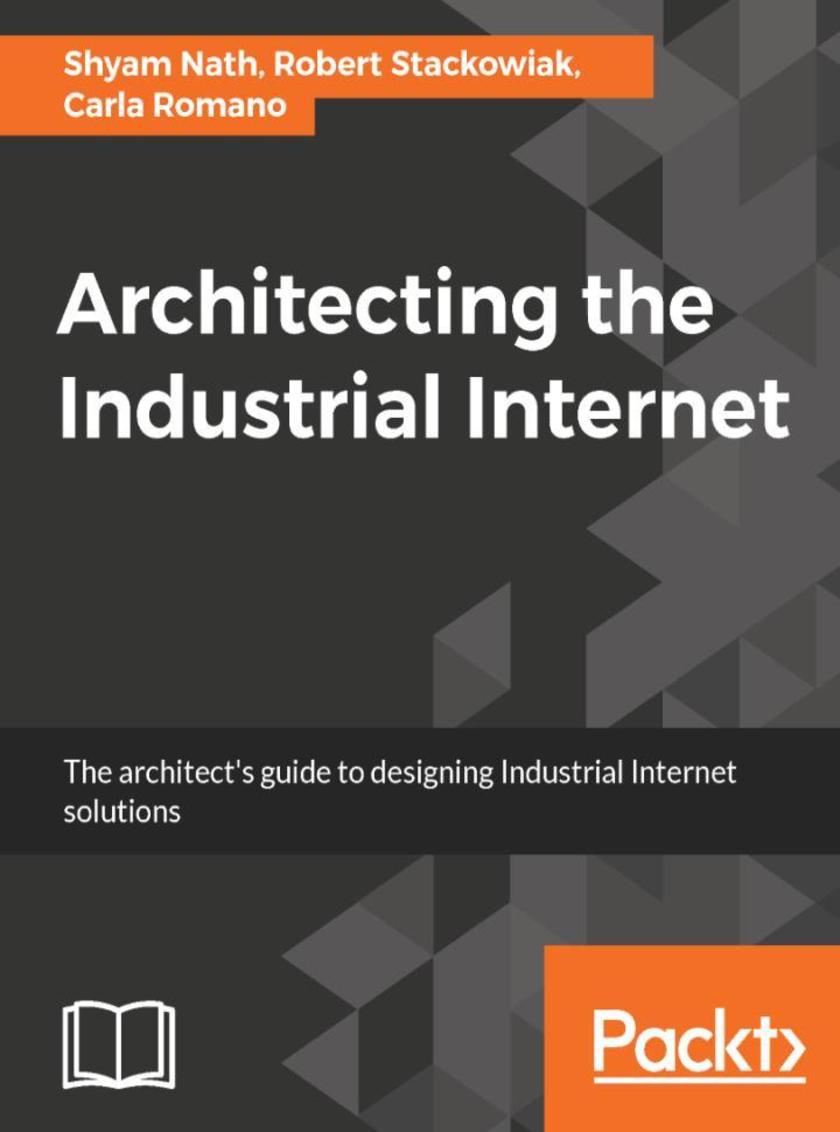
Architecting the Industrial Internet
¥90.46
Learn the ins and outs of the Industrial Internet of Things through subjects ranging from its history and evolution, right up to what the future holds. About This Book ? Define solutions that can connect existing systems and newer cloud-based solutions to thousands of thousands of edge devices and industrial machines ? Identify, define, and justify Industrial Internet of Things (IIoT) projects, and design an application that can connect to and control thousands of machines ? Leverage the power and features of a platform to monitor, perform analytics, and maintain the Industrial Internet Who This Book Is For Architects who are interested in learning how to define solutions for the Industrial Internet will benefit immensely from this book. Relevant architect roles include enterprise architects, business architects, information architects, cloud solution architects, software architects, and others. The content is also relevant for technically inclined line of business leaders investing in these solutions. What You Will Learn ? Learn the history of the Industrial Internet and why an architectural approach is needed ? Define solutions that can connect to and control thousands of edge devices and machines ? Understand the significance of working with line of business leadership and key metrics to be gathered ? Connect business requirements to the functional architecture ? Gain the right expectation as to the capabilities of Industrial Internet applications and how to assess them ? Understand what data and analytics components should be included in your architecture solution ? Understand deployment trade-offs, management and security considerations, and the impact of emerging technologies In Detail The Industrial Internet or the IIoT has gained a lot of traction. Many leading companies are driving this revolution by connecting smart edge devices to cloud-based analysis platforms and solving their business challenges in new ways. To ensure a smooth integration of such machines and devices, sound architecture strategies based on accepted principles, best practices, and lessons learned must be applied. This book begins by providing a bird's eye view of what the IIoT is and how the industrial revolution has evolved into embracing this technology. It then describes architectural approaches for success, gathering business requirements, and mapping requirements into functional solutions. In a later chapter, many other potential use cases are introduced including those in manufacturing and specific examples in predictive maintenance, asset tracking and handling, and environmental impact and abatement. The book concludes by exploring evolving technologies that will impact IIoT architecture in the future and discusses possible societal implications of the Industrial Internet and perceptions regarding these projects. By the end of this book, you will be better equipped to embrace the benefits of the burgeoning IIoT. Style and approach This book takes a comprehensive approach to the Industrial Internet, thoroughly acquainting the reader with the concepts and philosophy of the IIoT. It provides a basis for defining an IIoT solution in a thoughtful manner and creating what will be viewed as a successful project.
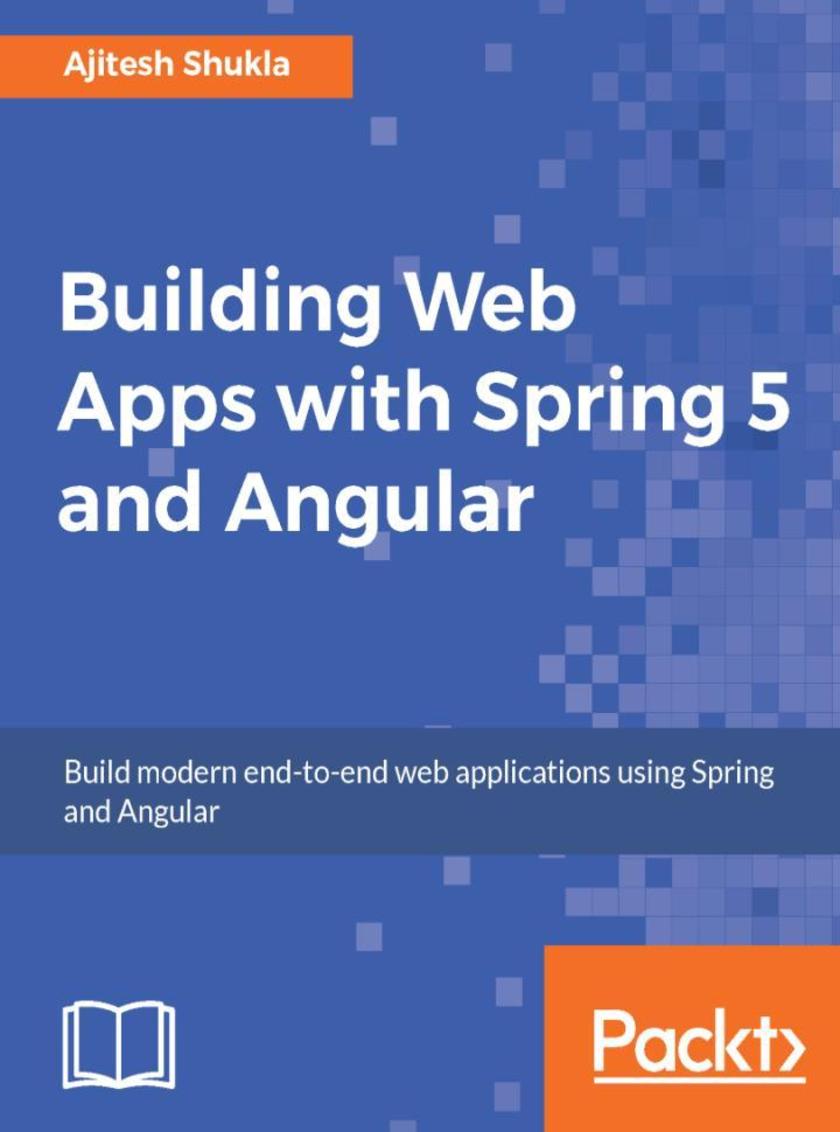
Building Web Apps with Spring 5 and Angular
¥90.46
A complete guide to build robust and scalable web applications with Spring and Angular. About This Book ? This hands on guide will teach you how to build an end-to-end modern web application using Spring and Angular. ? It is easy to read and will benefit Java developers who have been used to develop the back-end part of web application while front-end (UI) has been left for UI developers. ? Learn the core aspects involved in developing the backend and the UI, right from designing to integrating and deploying. Who This Book Is For This book is targeted towards Java Web Developers with a basic knowledge of Spring who want to build complete web applications in a fast and effective way. They will want to gain a stronghold on both frontend and backend development to advance in their careers. What You Will Learn ? Set up development environment for Spring Web App and Angular app. ? Process web request and response and build REST API endpoints. ? Create data access components using Spring Web MVC framework and Hibernate ? Use Junit 5 to test your application ? Learn the fundamental concepts around building Angular ? Configure and use Routes and Components. ? Protect Angular app content from common web vulnerabilities and attacks. ? Integrate Angular apps with Spring Boot Web API endpoints ? Deploy the web application based on CI and CD using Jenkins and Docker containers In Detail Spring is the most popular application development framework being adopted by millions of developers around the world to create high performing, easily testable, reusable code. Its lightweight nature and extensibility helps you write robust and highly-scalable server-side web applications. Coupled with the power and efficiency of Angular, creating web applications has never been easier. If you want build end-to-end modern web application using Spring and Angular, then this book is for you. The book directly heads to show you how to create the backend with Spring, showing you how to configure the Spring MVC and handle Web requests. It will take you through the key aspects such as building REST API endpoints, using Hibernate, working with Junit 5 etc. Once you have secured and tested the backend, we will go ahead and start working on the front end with Angular. You will learn about fundamentals of Angular and Type* and create an SPA using components, routing etc. Finally, you will see how to integrate both the applications with REST protocol and deploy the application using tools such as Jenkins and Docker. Style and approach This is a straightforward guide that shows how to build a complete web application in Angular and Spring.
Docker on Windows
¥90.46
Learn how to run new and old Windows applications in Docker containers. About This Book ? Package traditional .NET Frameworks apps and new .NET Core apps as Docker images, and run them in containers for increased efficiency, portability, and security ? Design and implement distributed applications that run across connected containers, using enterprise-grade open source software from public Docker images ? Build a full Continuous Deployment pipeline for a .NET Framework application, and deploy it to a highly-available Docker swarm running in the cloud Who This Book Is For If you want to modernize an old monolithic application without rewriting it, smooth the deployment to production, or move to DevOps or the cloud, then Docker is the enabler for you. This book gives you a solid grounding in Docker so you can confidently approach all of these scenarios. What You Will Learn ? Comprehend key Docker concepts: images, containers, registries, and swarms ? Run Docker on Windows 10, Windows Server 2016, and in the cloud ? Deploy and monitor distributed solutions across multiple Docker containers ? Run containers with high availability and fail-over with Docker Swarm ? Master security in-depth with the Docker platform, making your apps more secure ? Build a Continuous Deployment pipeline by running Jenkins in Docker ? Debug applications running in Docker containers using Visual Studio ? Plan the adoption of Docker in your own organization In Detail Docker is a platform for running server applications in lightweight units called containers. You can run Docker on Windows Server 2016 and Windows 10, and run your existing apps in containers to get significant improvements in efficiency, security, and portability. This book teaches you all you need to know about Docker on Windows, from 101 to deploying highly-available workloads in production. This book takes you on a Docker journey, starting with the key concepts and simple examples of how to run .NET Framework and .NET Core apps in Windows Docker containers. Then it moves on to more complex examples—using Docker to modernize the architecture and development of traditional ASP.NET and SQL Server apps. The examples show you how to break up monoliths into distributed apps and deploy them to a clustered environment in the cloud, using the exact same artifacts you use to run them locally. To help you move confidently to production, it then explains Docker security, and the management and support options. The book finishes with guidance on getting started with Docker in your own projects, together with some real-world case studies for Docker implementations, from small-scale on-premises apps to very large-scale apps running on Azure. Style and approach Using a step-by-step approach, this book shows you how to use Docker on Windows. It includes practical examples and real-world technical and business scenarios that will help you effectively implement Docker in your environment.There are over 50 examples of Dockerized applications, using C# .NET projects as the source and packaging them into Docker images.


