


 购物车
购物车 个人中心
个人中心
Mastering Oculus Rift Development
¥90.46
Explore the new frontier of virtual reality with the Oculus Rift and bring the VR revolution to your own projects About This Book Create immersive 3D games especially designed for the Oculus Rift platform Build complex realistic virtual reality (VR) games with the Unity Engine Create striking VR environments with advanced graphical techniques Who This Book Is For This book is for aspiring indie developers and VR enthusiasts who want to bring their ideas into virtual reality with a new platform that provides an unprecedented level of realism and immersion. What You Will Learn Increase immersion with 3D audio and intuitive interfaces Create group VR experiences using multi-player networking Design fun and engaging mechanics that utilize VR principles Explore the best ways to navigate and interact using the Oculus Rift Design intuitive ways to navigate and interact with scenes in VR Add stunning realism to a scene with three-dimensional audio Invent mechanics and features that take full advantage of VR hardware In Detail Virtual reality (VR) is changing the world of gaming and entertainment as we know it. VR headsets such as the Oculus Rift immerse players in a virtual world by tracking their head movements and simulating depth, giving them the feeling that they are actually present in the environment. We will first use the Oculus SDK in the book and will then move on to the widely popular Unity Engine, showing you how you can add that extra edge to your VR games using the power of Unity. In this book, you’ll learn how to take advantage of this new medium by designing around each of its unique features. This book will demonstrate the Unity 5 game engine, one of most widely-used engines for VR development, and will take you through a comprehensive project that covers everything necessary to create and publish a complete VR experience for the Oculus Rift. You will also be able to identify the common perils and pitfalls of VR development to ensure that your audience has the most comfortable experience possible. By the end of the book, you will be able to create an advanced VR game for the Oculus Rift, and you’ll have everything you need to bring your ideas into a new reality. Style and approach This book takes a step-by-step tutorial approach with illustrative examples to help you implement the projects on your own. The book lets you first get to grips with the Oculus SDK and then moves on to the Unity Engine to add realistic graphics and features in your games.
OpenCV 3 Computer Vision Application Programming Cookbook - Third Edition
¥90.46
Recipes to help you build computer vision applications that make the most of the popular C++ library OpenCV 3 About This Book Written to the latest, gold-standard specification of OpenCV 3 Master OpenCV, the open source library of the computer vision community Master fundamental concepts in computer vision and image processing Learn about the important classes and functions of OpenCV with complete working examples applied to real images Who This Book Is For OpenCV 3 Computer Vision Application Programming Cookbook Third Edition is appropriate for novice C++ programmers who want to learn how to use the OpenCV library to build computer vision applications. It is also suitable for professional software developers who wish to be introduced to the concepts of computer vision programming. It can also be used as a companion book for university-level computer vision courses. It constitutes an excellent reference for graduate students and researchers in image processing and computer vision. What You Will Learn Install and create a program using the OpenCV library Process an image by manipulating its pixels Analyze an image using histograms Segment images into homogenous regions and extract meaningful objects Apply image filters to enhance image content Exploit the image geometry in order to relay different views of a pictured scene Calibrate the camera from different image observations Detect people and objects in images using machine learning techniques Reconstruct a 3D scene from images In Detail Making your applications see has never been easier with OpenCV. With it, you can teach your robot how to follow your cat, write a program to correctly identify the members of One Direction, or even help you find the right colors for your redecoration. OpenCV 3 Computer Vision Application Programming Cookbook Third Edition provides a complete introduction to the OpenCV library and explains how to build your first computer vision program. You will be presented with a variety of computer vision algorithms and exposed to important concepts in image and video analysis that will enable you to build your own computer vision applications. This book helps you to get started with the library, and shows you how to install and deploy the OpenCV library to write effective computer vision applications following good programming practices. You will learn how to read and write images and manipulate their pixels. Different techniques for image enhancement and shape analysis will be presented. You will learn how to detect specific image features such as lines, circles or corners. You will be introduced to the concepts of mathematical morphology and image filtering. The most recent methods for image matching and object recognition are described, and you’ll discover how to process video from files or cameras, as well as how to detect and track moving objects. Techniques to achieve camera calibration and perform multiple-view analysis will also be explained. Finally, you’ll also get acquainted with recent approaches in machine learning and object classification. Style and approach This book will arm you with the basics you need to start writing world-aware applications right from a pixel level all the way through to processing video sequences.
OpenVPN Cookbook - Second Edition
¥90.46
Discover over 90 practical and exciting recipes that leverage the power of OpenVPN 2.4 to help you obtain a reliable and secure VPN About This Book Master the skills of configuring, managing, and securing your VPN using the latest OpenVPN Gain expertise in establishing IPv6 connections and understand PolarSSL using the latest version of OpenVPN This book contains enticing recipes about OpenVPN functionalities that cater to mission critical applications Who This Book Is For This book is for system administrators who have a basic knowledge of OpenVPN and are eagerly waiting to build, secure, and manage VPNs using the latest version. This book assumes some prior knowledge of TCP/IP networking and OpenVPN and you must have network administration skills to get the most out of this book. What You Will Learn Determine the best type of OpenVPN setup for your networking needs Get to grips with the encryption, authentication, and certifications features of OpenSSL. Integrate an OpenVPN server into the local IT infrastructure with the *ing features of OpenVPN Ease the integration of Windows clients into the VPN using Windows-specific client-side configuration Understand the authentication plugins for PAM and LDAP Get to know the difference between TUN-style and TAP-style networks and when to use what Troubleshoot your VPN setup Establish a connection via IPv6 along with demonstrations In Detail OpenVPN provides an extensible VPN framework that has been designed to ease site-specific customization, such as providing the capability to distribute a customized installation package to clients, and supporting alternative authentication methods via OpenVPN’s plugin module interface. This book provides you with many different recipes to help you set up, monitor, and troubleshoot an OpenVPN network. You will learn to configure a scalable, load-balanced VPN server farm that can handle thousands of dynamic connections from incoming VPN clients. You will also get to grips with the encryption, authentication, security, extensibility, and certifications features of OpenSSL. You will also get an understanding of IPv6 support and will get a demonstration of how to establish a connection via IPv64. This book will explore all the advanced features of OpenVPN and even some undocumented options, covering all the common network setups such as point-to-point networks and multi-client TUN-style and TAP-style networks. Finally, you will learn to manage, secure, and troubleshoot your virtual private networks using OpenVPN 2.4. Style and approach This practical, recipe-based book covers the core functionalities of OpenVPN ending with troubleshooting, performance tuning and making the readers inquisitive about the advanced features.
OpenVPN 2 Cookbook
¥90.46
This is a cookbook, with practical recipes providing tips and tricks to the most common problems and scenarios faced with OpenVPN. This book is ideal for system administrators and networking professionals who are interested in building secure VPNs using OpenVPN. It is preferable that the reader has a basic knowledge of OpenVPN, as well as general network administration skills.
ASP.NET MVC 2 Cookbook
¥90.46
Written in cookbook style, this book offers solutions to all common web development problems through recipes. Each recipe contains step-by-step instructions followed by the analysis of what was done in each task and other useful information. The book is designed so that you can read it chapter by chapter, or you can look at the list of recipes and refer to them in no particular order. This book is particularly written for web developers looking to transfer their knowledge from the ASP.NET Web Forms way of doing things to the ASP.NET MVC framework. As this book targets readers of various experience levels, you should be able to find recipes of a basic, intermediate, and advanced nature. Regardless of your experience level, each recipe will walk you through the solution in a step by step manner that anyone should be able to follow.
PHP 5 CMS Framework Development - 2nd Edition
¥90.46
The book includes extensive discussion of the design issues, and how to overcome them in the framework. Each chapter of the book focuses on a particular requirement of the framework. The book will not present the total code for a framework, which requires many thousands of lines. But it does show the parts that raise critical design or implementation issues. For these, detailed explanation is given, leaving the less problematic parts to the code download itself. If you are a professional PHP developer who wants to know more about web oriented frameworks and content management systems, this book is for you. Whether you already use an in-house developed framework or are developing one, or if you are simply interested in the issues involved in this demanding area, you will find discussion ranging from design issues to detailed coding solutions in this book. You are expected to have experience working with PHP 5 object-oriented programming. Examples in the book will run on any recent version of PHP 5, including 5.3.
Mastering Joomla! 1.5 Extension and Framework Development (Update)
¥90.46
Packed with expert advice, working examples, and tips, this book is an essential reference guide that you will turn to again and again as you work with Joomla!. PHP developers who want to understand how Joomla! Works, with a view to advanced customization or extension development, and who want to learn how to work with the Joomla! Framework.
Backbase 4.4.x RIA Development
¥90.46
This is a practical book, where every example is tested and all source code is available with the book. Each chapter ends with work on a sample application using the new things learned. At the end of the book there is a complete, usable Travel Blog application. This book is for web developers who want to develop applications using the Backbase Client Framework. It may also be interesting for web developers and web application architects who want to know more about XML-based web application architectures.
ModSecurity 2.5
¥90.46
This book teaches ModSecurity from the beginning to anyone with basic Linux skills. It starts by focusing on introducing ModSecurity, and explaining the concept of ModSecurity rules and how to write them. Later, it looks at the performance of ModSecurity and what sort of impact ModSecurity has on the speed of your web application. This book is written for system administrators or anyone running an Apache web server who wants to learn how to secure that server. It assumes that you are familiar with using the Linux shell and command-line tools, but does its best to explain everything so that those who are not Linux experts can make full use of ModSecurity.
eZ Publish 4: Enterprise Web Sites Step-by-Step
¥90.46
The book is a carefully structured, practical, step-by-step guide to overcoming the trials and tribulations of building an eZ Publish enterprise web site. Each chapter will be based on a three-layer approach. Firstly, it teaches the techniques and principles required to fulfill the needs of our site, then it goes deep in the CMS approach to fulfill them. Lastly, example code and step-by-step screenshots are used to dig deeper. This book is written for beginners to eZ Publish who need to work on an enterprise-level site with a complex publishing workflow. This book is best for people who want to use eZ Publish from scratch without hard-core programming skills. Even if you are not a PHP-guru, and you don't want to study eZ Publish core functionality – this book is for you. In general, however, you'll get more out of the book if you know a little PHP, have some concept of Object-Oriented Programming, and have a general familiarity with CMS concepts.
3D Game Development with Microsoft Silverlight 3: Beginner's Guide
¥90.46
This book takes a step-by-step approach to building a complete interactive 3D game using Silverlight and enhancing it through its related technologies. The book focuses on practical examples and has a friendly approach, with the opportunity to learn by experiment and play. It uses illustrations, screenshots, and interactive experiences to understand the most complex topics related to the 3D scenes. This book is designed primarily for C# developers with basic knowledge of the Visual Studio IDE who want to develop online 3D games using Silverlight or create interactive 3D scenes for a web site with animated models. No prior experience in 3D programming, 3D animation, or Silverlight is required. The book is also aimed at 3D developers who want to improve their online content, offering innovative 3D models in action.
Expert Cube Development with Microsoft SQL Server 2008 Analysis Services
¥90.46
This is a practical tutorial for Analysis Services that shows readers how to solve problems commonly encountered while designing cubes, and explains which features of Analysis Services work well and which should be avoided. The book walks through the whole cube development lifecycle, from building dimensions, cubes and calculations to tuning and moving the cube into production. This book is aimed at Analysis Services developers who already have some experience but who want to go into more detail on advanced topics, and who want to learn best practices for cube design.
Spring Security 3.x Cookbook
¥90.46
This book follows a cookbook style exploring various security solutions provided by Spring Security for various vulnerabilities and threat scenarios that web applications may be exposed to at the authentication and session level layers.This book is for all Spring-based application developers as well as Java web developers who wish to implement robust security mechanisms into web application development using Spring Security.Readers are assumed to have a working knowledge of Java web application development, a basic understanding of the Spring framework, and some knowledge of the fundamentals of the Spring Security framework architecture. Working knowledge of other web frameworks such as Grails and so on would be an added advantage to exploit the whole breadth of recipes provided in this book, but this is not mandatory.
TIBCO Spotfire – A Comprehensive Primer
¥90.46
If you are a business user or data professional, this book will give you a solid grounding in the use of TIBCO Spotfire. This book assumes no prior knowledge of Spotfire or even basic data and visualization concepts.
Learning Hadoop 2
¥90.46
If you are a system or application developer interested in learning how to solve practical problems using the Hadoop framework, then this book is ideal for you. You are expected to be familiar with the Unix/Linux command-line interface and have some experience with the Java programming language. Familiarity with Hadoop would be a plus.
CoffeeScript Application Development Cookbook
¥90.46
If you are interested in developing modern applications, this book will help you leverage the vast JavaScript ecosystem while using an elegant language, helping you avoid the shortcomings of JavaScript.
Learning Boost C++ Libraries
¥90.46
If you are a C++ programmer who has never used Boost libraries before, this book will get you up-to-speed with using them. Whether you are developing new C++ software or maintaining existing code written using Boost libraries, this hands-on introduction will help you decide on the right library and techniques to solve your practical programming problems.
Oracle ADF 11gR2 Development Beginner's Guide
¥90.46
"Oracle ADF 11gR2 Development Beginner's Guide" will cover the basics of Oracle ADF 11g development and will then work through more complex topics as the reader gains more skills. This book will follow a tutorial approach with the content and tasks getting more advanced throughout. This book is intended for beginners who know a little about Java programming and would like to learn how to develop rich web applications using the Oracle Application Development Framework.
Building Dashboards with Microsoft Dynamics GP 2013 and Excel 2013
¥90.46
Follow real-life, step-by-step examples that provide the building blocks to build engaging dashboards. This practical guide is all about doing. Get your data, open up Excel, and go! You don't need to be an expert to get the most out of your Dynamics GP implementation and build great-looking, easily maintained dashboards using Microsoft Excel. If you have a working knowledge of Dynamics and Excel you'll be producing amazing dashboards in hours not days.
Mastering Windows PowerShell Scripting
¥90.46
If you are a system administrator who wants to become an expert in controlling and automating your Windows environment, then this book is for you. Prior knowledge of PowerShell's core elements and applications is required for this book.
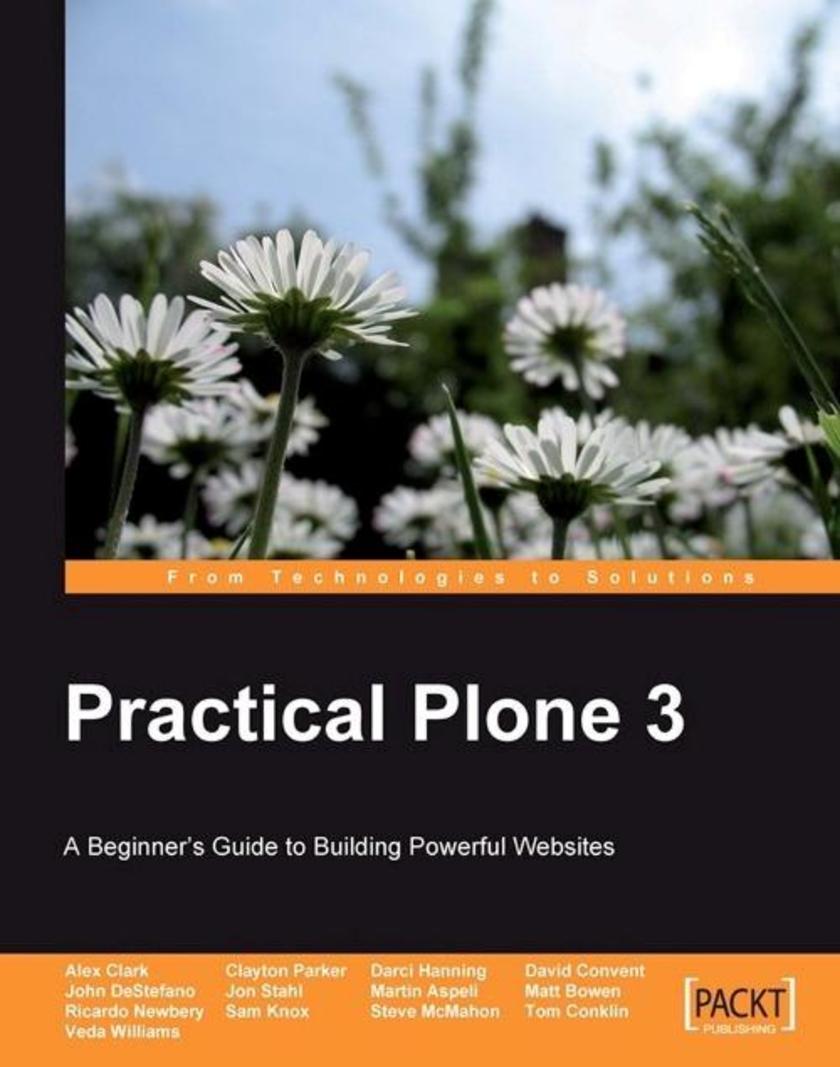
Practical Plone 3: A Beginner's Guide to Building Powerful Websites
¥90.46
This is a beginner's practical guide that doesn't involve any code or programming concepts. You will learn by pointing and clicking on the options available in front of you. It includes easy-to-follow instructions and screenshots that will guide you through creating a powerful website. Each chapter stands alone and you need not go through all the chapters. You can pick and choose depending upon your requirements. If you want to get a Plone site up and running quickly and don't want to get involved in programming, this book is for you. This book is aimed at beginners, who want to configure and customize Plone to meet their content management needs. The book doesn't expect programming skills, although some knowledge of fundamental web concepts such as HTML and HTTP may be helpful.


