


 购物车
购物车 个人中心
个人中心
Hands-On Full Stack Development with Go
¥73.02
Create a real-world application in Go and explore various frameworks and methodologies for full-stack development Key Features * Organize your isomorphic codebase to enhance the maintainability of your application * Build web APIs and middleware in the Go language by making use of the popular Gin framework * Implement real-time web application functionality with WebSockets Book Description The Go programming language has been rapidly adopted by developers for building web applications. With its impressive performance and ease of development, Go enjoys the support of a wide variety of open source frameworks, for building scalable and high-performant web services and apps. Hands-On Full Stack Development with Go is a comprehensive guide that covers all aspects of full stack development with Go. This clearly written, example-rich book begins with a practical exposure to Go development and moves on to build a frontend with the popular React framework. From there, you will build RESTful web APIs utilizing the Gin framework. After that, we will dive deeper into important software backend concepts, such as connecting to the database via an ORM, designing routes for your services, securing your services, and even charging credit cards via the popular Stripe API. We will also cover how to test, and benchmark your applications efficiently in a production environment. In the concluding chapters, we will cover isomorphic developments in pure Go by learning about GopherJS. As you progress through the book, you'll gradually build a musical instrument online store application from scratch. By the end of the book, you will be confident in taking on full stack web applications in Go. What you will learn * Understand Go programming by building a real-world application * Learn the React framework to develop a frontend for your application * Understand isomorphic web development utilizing the GopherJS framework * Explore methods to write RESTful web APIs in Go using the Gin framework * Learn practical topics such as ORM layers, secure communications, and Stripe's API * Learn methods to benchmark and test web APIs in Go Who this book is for Hands-On Full Stack Development with Go will appeal to developers who are looking to start building amazing full stack web applications in Go. Basic knowhow of Go language and JavaScript is expected. The book targets web developers who are looking to move to the Go language.
Hands-On Machine Learning with IBM Watson
¥73.02
Learn how to build complete machine learning systems with IBM Cloud and Watson Machine learning services Key Features * Implement data science and machine learning techniques to draw insights from real-world data * Understand what IBM Cloud platform can help you to implement cognitive insights within applications * Understand the role of data representation and feature extraction in any machine learning system Book Description IBM Cloud is a collection of cloud computing services for data analytics using machine learning and artificial intelligence (AI). This book is a complete guide to help you become well versed with machine learning on the IBM Cloud using Python. Hands-On Machine Learning with IBM Watson starts with supervised and unsupervised machine learning concepts, in addition to providing you with an overview of IBM Cloud and Watson Machine Learning. You'll gain insights into running various techniques, such as K-means clustering, K-nearest neighbor (KNN), and time series prediction in IBM Cloud with real-world examples. The book will then help you delve into creating a Spark pipeline in Watson Studio. You will also be guided through deep learning and neural network principles on the IBM Cloud using TensorFlow. With the help of NLP techniques, you can then brush up on building a chatbot. In later chapters, you will cover three powerful case studies, including the facial expression classification platform, the automated classification of lithofacies, and the multi-biometric identity authentication platform, helping you to become well versed with these methodologies. By the end of this book, you will be ready to build efficient machine learning solutions on the IBM Cloud and draw insights from the data at hand using real-world examples. What you will learn * Understand key characteristics of IBM machine learning services * Run supervised and unsupervised techniques in the cloud * Understand how to create a Spark pipeline in Watson Studio * Implement deep learning and neural networks on the IBM Cloud with TensorFlow * Create a complete, cloud-based facial expression classification solution * Use biometric traits to build a cloud-based human identification system Who this book is for This beginner-level book is for data scientists and machine learning engineers who want to get started with IBM Cloud and its machine learning services using practical examples. Basic knowledge of Python and some understanding of machine learning will be useful.
Hands-On Neural Networks with Keras
¥73.02
Your one-stop guide to learning and implementing artificial neural networks with Keras effectively Key Features * Design and create neural network architectures on different domains using Keras * Integrate neural network models in your applications using this highly practical guide * Get ready for the future of neural networks through transfer learning and predicting multi network models Book Description Neural networks are used to solve a wide range of problems in different areas of AI and deep learning. Hands-On Neural Networks with Keras will start with teaching you about the core concepts of neural networks. You will delve into combining different neural network models and work with real-world use cases, including computer vision, natural language understanding, synthetic data generation, and many more. Moving on, you will become well versed with convolutional neural networks (CNNs), recurrent neural networks (RNNs), long short-term memory (LSTM) networks, autoencoders, and generative adversarial networks (GANs) using real-world training datasets. We will examine how to use CNNs for image recognition, how to use reinforcement learning agents, and many more. We will dive into the specific architectures of various networks and then implement each of them in a hands-on manner using industry-grade frameworks. By the end of this book, you will be highly familiar with all prominent deep learning models and frameworks, and the options you have when applying deep learning to real-world scenarios and embedding artificial intelligence as the core fabric of your organization. What you will learn * Understand the fundamental nature and workflow of predictive data modeling * Explore how different types of visual and linguistic signals are processed by neural networks * Dive into the mathematical and statistical ideas behind how networks learn from data * Design and implement various neural networks such as CNNs, LSTMs, and GANs * Use different architectures to tackle cognitive tasks and embed intelligence in systems * Learn how to generate synthetic data and use augmentation strategies to improve your models * Stay on top of the latest academic and commercial developments in the field of AI Who this book is for This book is for machine learning practitioners, deep learning researchers and AI enthusiasts who are looking to get well versed with different neural network architecture using Keras. Working knowledge of Python programming language is mandatory.
Unreal Engine 4.x Scripting with C++ Cookbook
¥73.02
Write efficient, reusable scripts to build custom characters, game environments, and control enemy AI Key Features * Build captivating multiplayer games using Unreal Engine and C++ * Incorporate existing C++ libraries into your game to add extra functionality such as hardware integration * Practical solutions for memory management, error handling, inputs, and collision for your game codebase Book Description Unreal Engine 4 (UE4) is a popular and award-winning game engine that powers some of the most popular games. A truly powerful tool for game development, there has never been a better time to use it for both commercial and independent projects. With more than 100 recipes, this book shows how to unleash the power of C++ while developing games with Unreal Engine. This book takes you on a journey to jumpstart your C++ and UE4 development skills. You will start off by setting up UE4 for C++ development and learn how to work with Visual Studio, a popular code editor. You will learn how to create C++ classes and structs the Unreal way. This will be followed by exploring memory management, smart pointers, and debugging your code. You will then learn how to make your own Actors and Components through code and how to handle input and collision events. You will also get exposure to many elements of game development including creating user interfaces, artificial intelligence, and writing code with networked play in mind. You will also learn how to add on to the Unreal Editor itself. With a range of task-oriented recipes, this book provides actionable information about writing code for games with UE4 using C++. By the end of the book, you will be empowered to become a top-notch developer with UE4 using C++ as your scripting language! What you will learn * Create C++ classes and structs that integrate well with UE4 and the Blueprints editor * Discover how to work with various APIs that Unreal Engine already contains * Utilize advanced concepts such as events, delegates, and interfaces in your UE4 projects * Build user interfaces using Canvas and UMG through C++ * Extend the Unreal Editor by creating custom windows and editors * Implement AI tasks and services using C++, Blackboard, and Behavior Trees * Write C++ code with networking in mind and replicate properties and functions Who this book is for If you are really passionate game developer looking for solutions to common scripting problems, then this is the book for you. Understanding of the fundamentals of game design and C++ is expected to get the most from this book.
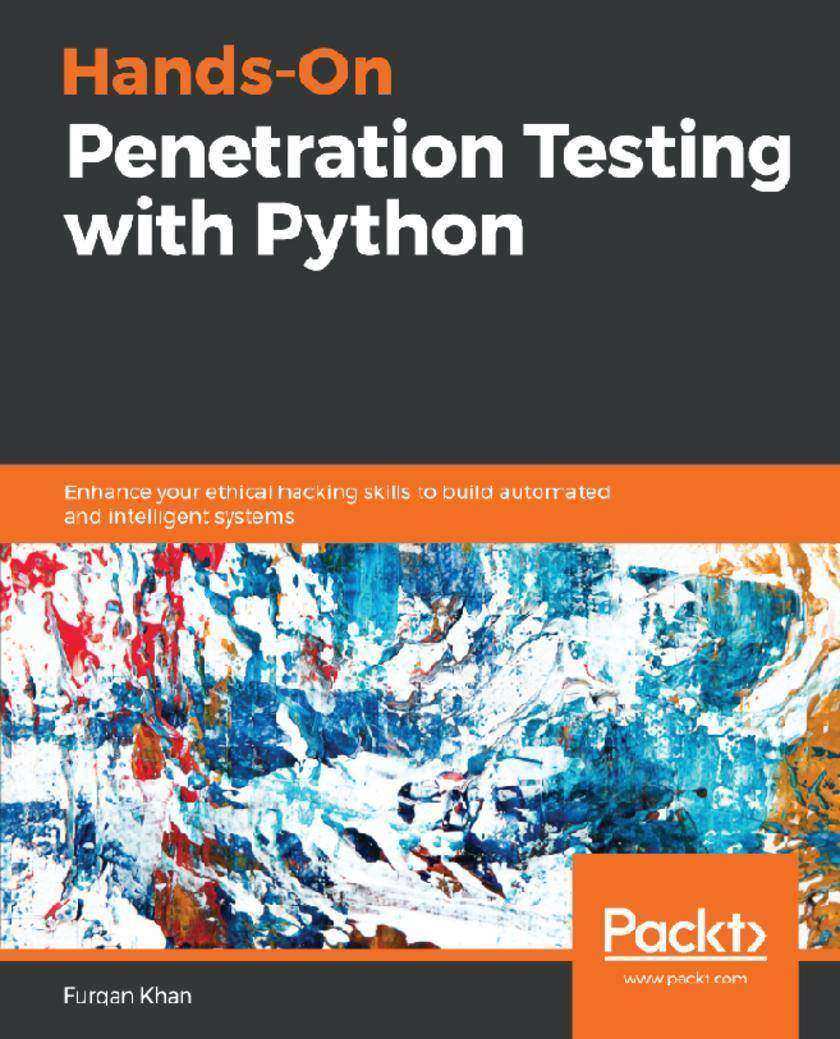
Hands-On Penetration Testing with Python
¥73.02
Implement defensive techniques in your ecosystem successfully with Python Key Features * Identify and expose vulnerabilities in your infrastructure with Python * Learn custom exploit development . * Make robust and powerful cybersecurity tools with Python Book Description With the current technological and infrastructural shift, penetration testing is no longer a process-oriented activity. Modern-day penetration testing demands lots of automation and innovation; the only language that dominates all its peers is Python. Given the huge number of tools written in Python, and its popularity in the penetration testing space, this language has always been the first choice for penetration testers. Hands-On Penetration Testing with Python walks you through advanced Python programming constructs. Once you are familiar with the core concepts, you’ll explore the advanced uses of Python in the domain of penetration testing and optimization. You’ll then move on to understanding how Python, data science, and the cybersecurity ecosystem communicate with one another. In the concluding chapters, you’ll study exploit development, reverse engineering, and cybersecurity use cases that can be automated with Python. By the end of this book, you’ll have acquired adequate skills to leverage Python as a helpful tool to pentest and secure infrastructure, while also creating your own custom exploits. What you will learn * Get to grips with Custom vulnerability scanner development * Familiarize yourself with web application scanning automation and exploit development * Walk through day-to-day cybersecurity scenarios that can be automated with Python * Discover enterprise-or organization-specific use cases and threat-hunting automation * Understand reverse engineering, fuzzing, buffer overflows , key-logger development, and exploit development for buffer overflows. * Understand web scraping in Python and use it for processing web responses * Explore Security Operations Centre (SOC) use cases * Get to understand Data Science, Python, and cybersecurity all under one hood Who this book is for If you are a security consultant , developer or a cyber security enthusiast with little or no knowledge of Python and want in-depth insight into how the pen-testing ecosystem and python combine to create offensive tools , exploits , automate cyber security use-cases and much more then this book is for you. Hands-On Penetration Testing with Python guides you through the advanced uses of Python for cybersecurity and pen-testing, helping you to better understand security loopholes within your infrastructure .
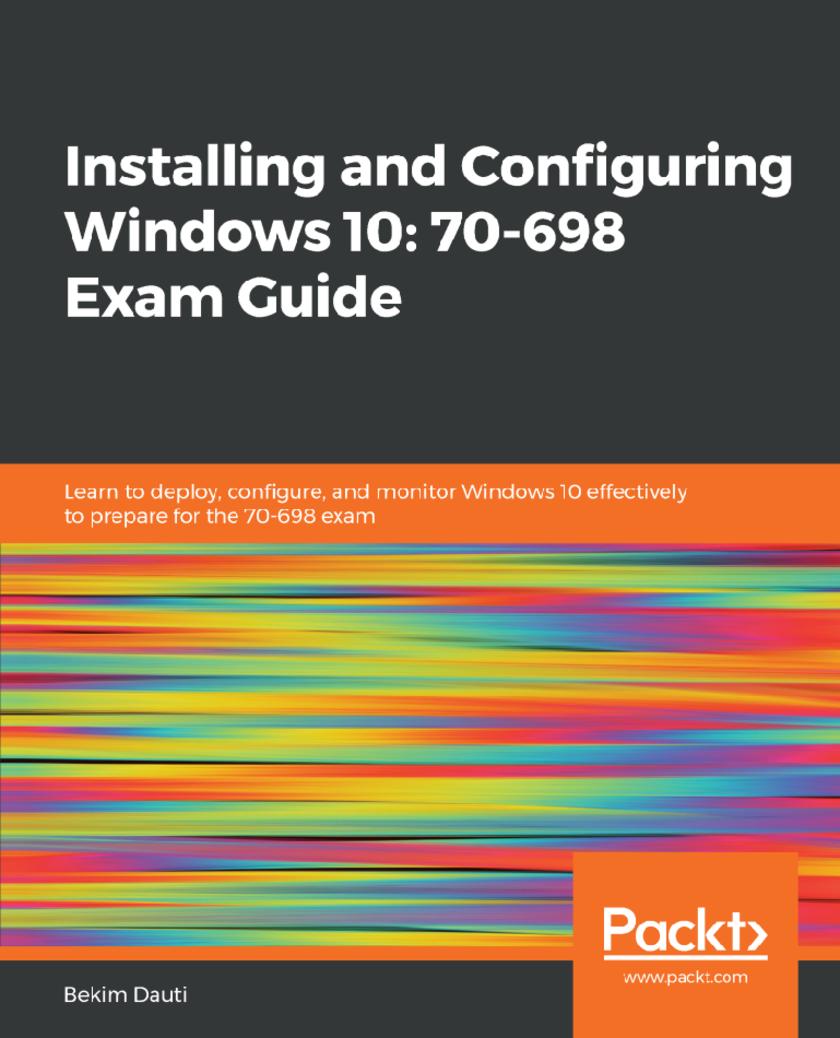
Installing and Configuring Windows 10: 70-698 Exam Guide
¥73.02
Get ready for the Windows 10: 70-698 exam and configure Windows to manage data recovery Key Features * Implement Windows 10 operational and administrative tasks * Configure devices, remote management settings, advanced management tools, and device drivers * Comprehensive guide to help you work efficiently in Windows 10 Book Description The Installing and Configuring Windows 10: 70-698 Exam Guide is designed to confirm what you already know, while also updating your knowledge of Windows 10. With its easy-to-follow guidance, you will quickly learn the user interface and discover steps to work efficiently in Windows 10 to rule out delays and obstacles. This book begins by covering various ways of installing Windows 10, followed by instructions on post-installation tasks. You will learn about the deployment of Windows 10 in Enterprise and also see how to configure networking in Windows 10. You’ll understand how to leverage Disk Management and Windows PowerShell to configure disks, volumes, and file system options. As you progress through the chapters, you will be able to set up remote management in Windows 10 and learn more about Windows update usage, behavior, and settings. You will also gain insights that will help you monitor and manage data recovery and explore how to configure authentication, authorization, and advanced management tools in Windows 10. By the end of this book, you will be equipped with enough knowledge to take the 70-698 exam and explore different study methods to improve your chances of passing the exam with ease. What you will learn * Discover various ways of installing Windows 10 * Understand how to configure devices and device drivers * Configure and support IPv4 and IPv6 network settings * Troubleshoot storage and removable device issues * Get to grips with data access and usage * Explore the advanced management tools available in Windows 10 Who this book is for This book is for IT professionals who perform installation, configuration, general local management and maintenance of Windows 10 core services and are preparing to clear the Windows 10: 70-698 exam
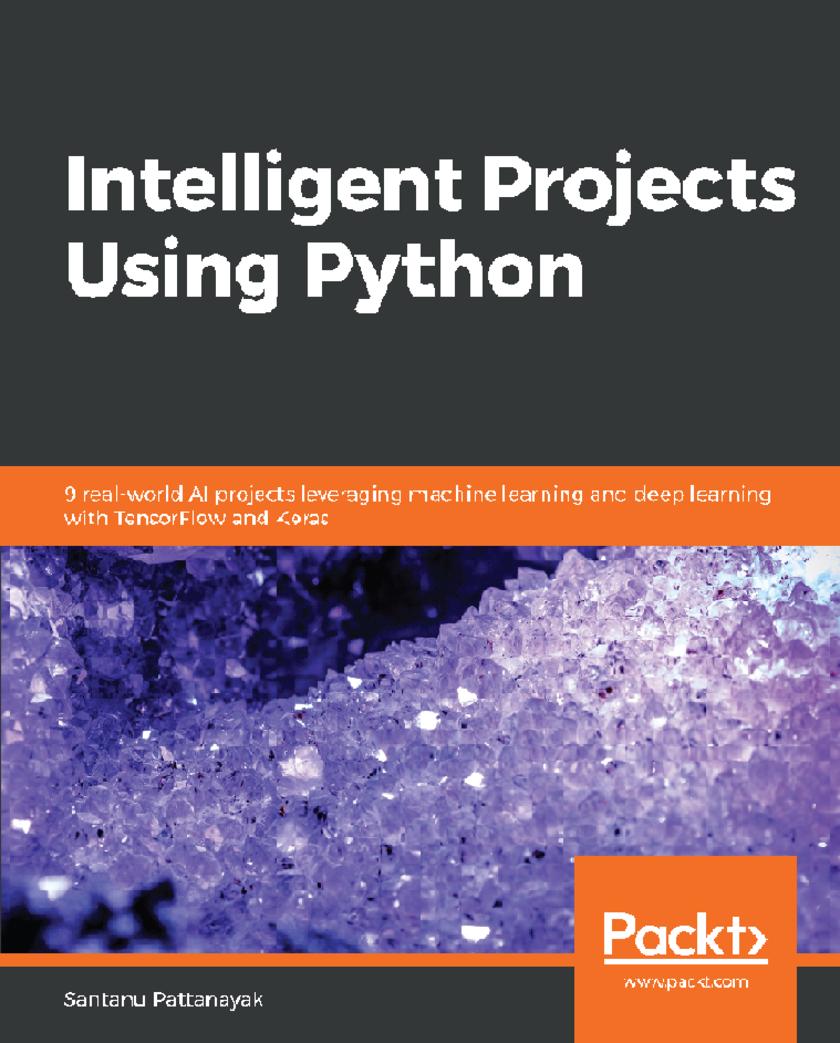
Intelligent Projects Using Python
¥73.02
Implement machine learning and deep learning methodologies to build smart, cognitive AI projects using Python Key Features * A go-to guide to help you master AI algorithms and concepts * 8 real-world projects tackling different challenges in healthcare, e-commerce, and surveillance * Use TensorFlow, Keras, and other Python libraries to implement smart AI applications Book Description This book will be a perfect companion if you want to build insightful projects from leading AI domains using Python. The book covers detailed implementation of projects from all the core disciplines of AI. We start by covering the basics of how to create smart systems using machine learning and deep learning techniques. You will assimilate various neural network architectures such as CNN, RNN, LSTM, to solve critical new world challenges. You will learn to train a model to detect diabetic retinopathy conditions in the human eye and create an intelligent system for performing a video-to-text translation. You will use the transfer learning technique in the healthcare domain and implement style transfer using GANs. Later you will learn to build AI-based recommendation systems, a mobile app for sentiment analysis and a powerful chatbot for carrying customer services. You will implement AI techniques in the cybersecurity domain to generate Captchas. Later you will train and build autonomous vehicles to self-drive using reinforcement learning. You will be using libraries from the Python ecosystem such as TensorFlow, Keras and more to bring the core aspects of machine learning, deep learning, and AI. By the end of this book, you will be skilled to build your own smart models for tackling any kind of AI problems without any hassle. What you will learn * Build an intelligent machine translation system using seq-2-seq neural translation machines * Create AI applications using GAN and deploy smart mobile apps using TensorFlow * Translate videos into text using CNN and RNN * Implement smart AI Chatbots, and integrate and extend them in several domains * Create smart reinforcement, learning-based applications using Q-Learning * Break and generate CAPTCHA using Deep Learning and Adversarial Learning Who this book is for This book is intended for data scientists, machine learning professionals, and deep learning practitioners who are ready to extend their knowledge and potential in AI. If you want to build real-life smart systems to play a crucial role in every complex domain, then this book is what you need. Knowledge of Python programming and a familiarity with basic machine learning and deep learning concepts are expected to help you get the most out of the book
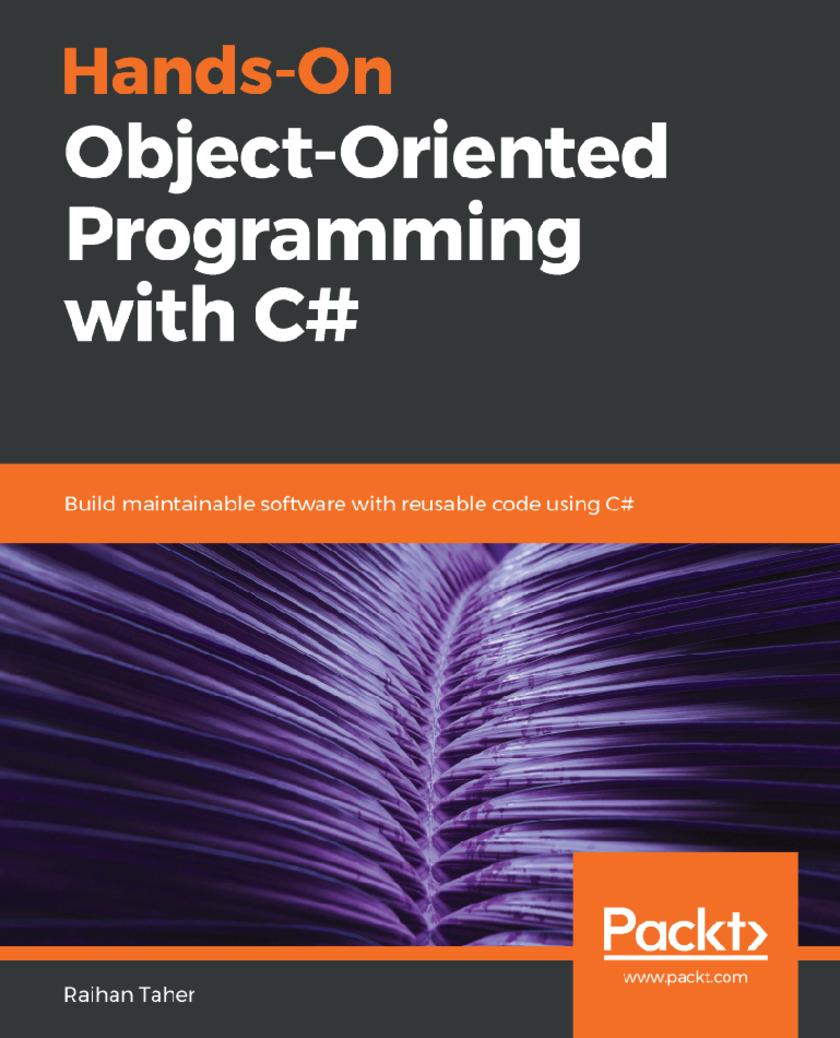
Hands-On Object-Oriented Programming with C#
¥73.02
Enhance your programming skills by learning the intricacies of object oriented programming in C# 8 Key Features * Understand the four pillars of OOP; encapsulation, inheritance, abstraction and polymorphism * Leverage the latest features of C# 8 including nullable reference types and Async Streams * Explore various design patterns, principles, and best practices in OOP Book Description Object-oriented programming (OOP) is a programming paradigm organized around objects rather than actions, and data rather than logic. With the latest release of C#, you can look forward to new additions that improve object-oriented programming. This book will get you up to speed with OOP in C# in an engaging and interactive way. The book starts off by introducing you to C# language essentials and explaining OOP concepts through simple programs. You will then go on to learn how to use classes, interfacesm and properties to write pure OOP code in your applications. You will broaden your understanding of OOP further as you delve into some of the advanced features of the language, such as using events, delegates, and generics. Next, you will learn the secrets of writing good code by following design patterns and design principles. You'll also understand problem statements with their solutions and learn how to work with databases with the help of ADO.NET. Further on, you'll discover a chapter dedicated to the Git version control system. As you approach the conclusion, you'll be able to work through OOP-specific interview questions and understand how to tackle them. By the end of this book, you will have a good understanding of OOP with C# and be able to take your skills to the next level. What you will learn * Master OOP paradigm fundamentals * Explore various types of exceptions * Utilize C# language constructs efficiently * Solve complex design problems by understanding OOP * Understand how to work with databases using ADO.NET * Understand the power of generics in C# * Get insights into the popular version control system, Git * Learn how to model and design your software Who this book is for This book is designed for people who are new to object-oriented programming. Basic C# skills are assumed, however, prior knowledge of OOP in any other language is not required.
Hands-On Network Forensics
¥73.02
Gain basic skills in network forensics and learn how to apply them effectively Key Features * Investigate network threats with ease * Practice forensics tasks such as intrusion detection, network analysis, and scanning * Learn forensics investigation at the network level Book Description Network forensics is a subset of digital forensics that deals with network attacks and their investigation. In the era of network attacks and malware threat, it’s now more important than ever to have skills to investigate network attacks and vulnerabilities. Hands-On Network Forensics starts with the core concepts within network forensics, including coding, networking, forensics tools, and methodologies for forensic investigations. You’ll then explore the tools used for network forensics, followed by understanding how to apply those tools to a PCAP file and write the accompanying report. In addition to this, you will understand how statistical flow analysis, network enumeration, tunneling and encryption, and malware detection can be used to investigate your network. Towards the end of this book, you will discover how network correlation works and how to bring all the information from different types of network devices together. By the end of this book, you will have gained hands-on experience of performing forensics analysis tasks. What you will learn * Discover and interpret encrypted traffic * Learn about various protocols * Understand the malware language over wire * Gain insights into the most widely used malware * Correlate data collected from attacks * Develop tools and custom scripts for network forensics automation Who this book is for The book targets incident responders, network engineers, analysts, forensic engineers and network administrators who want to extend their knowledge from the surface to the deep levels of understanding the science behind network protocols, critical indicators in an incident and conducting a forensic search over the wire.
Machine Learning with R
¥73.02
Solve real-world data problems with R and machine learning Key Features * Third edition of the bestselling, widely acclaimed R machine learning book, updated and improved for R 3.5 and beyond * Harness the power of R to build flexible, effective, and transparent machine learning models * Learn quickly with a clear, hands-on guide by experienced machine learning teacher and practitioner, Brett Lantz Book Description Machine learning, at its core, is concerned with transforming data into actionable knowledge. R offers a powerful set of machine learning methods to quickly and easily gain insight from your data. Machine Learning with R, Third Edition provides a hands-on, readable guide to applying machine learning to real-world problems. Whether you are an experienced R user or new to the language, Brett Lantz teaches you everything you need to uncover key insights, make new predictions, and visualize your findings. This new 3rd edition updates the classic R data science book with newer and better libraries, advice on ethical and bias issues in machine learning, and an introduction to deep learning. Find powerful new insights in your data; discover machine learning with R. What you will learn * Discover the origins of machine learning and how exactly a computer learns by example * Prepare your data for machine learning work with the R programming language * Classify important outcomes using nearest neighbor and Bayesian methods * Predict future events using decision trees, rules, and support vector machines * Forecast numeric data and estimate financial values using regression methods * Model complex processes with artificial neural networks — the basis of deep learning * Avoid bias in machine learning models * Evaluate your models and improve their performance * Connect R to SQL databases and emerging big data technologies such as Spark, H2O, and TensorFlow Who this book is for Data scientists, students, and other practitioners who want a clear, accessible guide to machine learning with R.
Mastering Geospatial Development with QGIS 3.x
¥73.02
Go beyond the basics and unleash the full power of QGIS 3.4 and 3.6 with practical, step-by-step examples Key Features * One-stop solution to all of your GIS needs * Master QGIS by learning about database integration, and geoprocessing tools * Learn about the new and updated Processing toolbox and perform spatial analysis Book Description QGIS is an open source solution to GIS and widely used by GIS professionals all over the world. It is the leading alternative to proprietary GIS software. Although QGIS is described as intuitive, it is also, by default, complex. Knowing which tools to use and how to apply them is essential to producing valuable deliverables on time. Starting with a refresher on the QGIS basics and getting you acquainted with the latest QGIS 3.6 updates, this book will take you all the way through to teaching you how to create a spatial database and a GeoPackage. Next, you will learn how to style raster and vector data by choosing and managing different colors. The book will then focus on processing raster and vector data. You will be then taught advanced applications, such as creating and editing vector data. Along with that, you will also learn about the newly updated Processing Toolbox, which will help you develop the advanced data visualizations. The book will then explain to you the graphic modeler, how to create QGIS plugins with PyQGIS, and how to integrate Python analysis scripts with QGIS. By the end of the book, you will understand how to work with all aspects of QGIS and will be ready to use it for any type of GIS work. What you will learn * Create and manage a spatial database * Get to know advanced techniques to style GIS data * Prepare both vector and raster data for processing * Add heat maps, live layer effects, and labels to your maps * Master LAStools and GRASS integration with the Processing Toolbox * Edit and repair topological data errors * Automate workflows with batch processing and the QGIS Graphical Modeler * Integrate Python scripting into your data processing workflows * Develop your own QGIS plugins Who this book is for If you are a GIS professional, a consultant, a student, or perhaps a fast learner who wants to go beyond the basics of QGIS, then this book is for you. It will prepare you to realize the full potential of QGIS.
Practical AWS Networking
¥73.02
Your one step guide to learn all about AWS networking. About This Book ? Master your networking skills on Public Cloud. ? Gain hands-on experience of using Amazon VPC, Elastic Load Balancing, Direct Connect and other AWS products. ? Implement troubleshooting skills and best practices for security on AWS network. Who This Book Is For This book is targeted towards cloud architects, cloud solution providers, or any stakeholders dealing with networking on AWS Cloud. A prior idea of Amazon Web Services will be an added advantage. What You Will Learn ? Overview of all networking services available in AWS. ? Gain Work with load balance application across different regions. ? Learn auto scale instance based on the increase and decrease of the traffic. ? Deploy application in highly available and fault tolerant manner. ? Configure Route 53 for a web application. ? Troubleshooting tips and best practices at the end In Detail Amazon Web Services (AWS) dominates the public cloud market by a huge margin and it continues to be the first choice for many organizations. Networking has been an area of focus for all the leading cloud service providers. AWS has a suite of network-related products that help to perform network-related task in AWS. This book initially covers the basics of networking in AWS. Then we use AWS VPC to create an isolated virtual cloud for performing network-related tasks. We then provide an overview of AWS Direct Connect after taking a deep dive into scalability and load balancing using Auto scaling feature, Elastic Load Balancing, and Amazon Route S3. Toward the end of the book, we cover some troubleshooting tips and security best practices for your network. By the end of this book, you will have hands-on experience of working with network tasks on AWS. Style and approach A step by step practical guide that helps you use all networking services available in AWS effectively.
Feature Engineering Made Easy
¥73.02
A perfect guide to speed up the predicting power of machine learning algorithms About This Book ? Design, discover, and create dynamic, efficient features for your machine learning application ? Understand your data in-depth and derive astonishing data insights with the help of this Guide ? Grasp powerful feature-engineering techniques and build machine learning systems Who This Book Is For If you are a data science professional or a machine learning engineer looking to strengthen your predictive analytics model, then this book is a perfect guide for you. Some basic understanding of the machine learning concepts and Python *ing would be enough to get started with this book. What You Will Learn ? Identify and leverage different feature types ? Clean features in data to improve predictive power ? Understand why and how to perform feature selection, and model error analysis ? Leverage domain knowledge to construct new features ? Deliver features based on mathematical insights ? Use machine-learning algorithms to construct features ? Master feature engineering and optimization ? Harness feature engineering for real world applications through a structured case study In Detail Feature engineering is the most important step in creating powerful machine learning systems. This book will take you through the entire feature-engineering journey to make your machine learning much more systematic and effective. You will start with understanding your data—often the success of your ML models depends on how you leverage different feature types, such as continuous, categorical, and more, You will learn when to include a feature, when to omit it, and why, all by understanding error analysis and the acceptability of your models. You will learn to convert a problem statement into useful new features. You will learn to deliver features driven by business needs as well as mathematical insights. You'll also learn how to use machine learning on your machines, automatically learning amazing features for your data. By the end of the book, you will become proficient in Feature Selection, Feature Learning, and Feature Optimization. Style and approach This step-by-step guide with use cases, examples, and illustrations will help you master the concepts of feature engineering. Along with explaining the fundamentals, the book will also introduce you to slightly advanced concepts later on and will help you implement these techniques in the real world.
Deep Learning for Computer Vision
¥73.02
Learn how to model and train advanced neural networks to implement a variety of Computer Vision tasks About This Book ? Train different kinds of deep learning model from scratch to solve specific problems in Computer Vision ? Combine the power of Python, Keras, and TensorFlow to build deep learning models for object detection, image classification, similarity learning, image captioning, and more ? Includes tips on optimizing and improving the performance of your models under various constraints Who This Book Is For This book is targeted at data scientists and Computer Vision practitioners who wish to apply the concepts of Deep Learning to overcome any problem related to Computer Vision. A basic knowledge of programming in Python—and some understanding of machine learning concepts—is required to get the best out of this book. What You Will Learn ? Set up an environment for deep learning with Python, TensorFlow, and Keras ? Define and train a model for image and video classification ? Use features from a pre-trained Convolutional Neural Network model for image retrieval ? Understand and implement object detection using the real-world Pedestrian Detection scenario ? Learn about various problems in image captioning and how to overcome them by training images and text together ? Implement similarity matching and train a model for face recognition ? Understand the concept of generative models and use them for image generation ? Deploy your deep learning models and optimize them for high performance In Detail Deep learning has shown its power in several application areas of Artificial Intelligence, especially in Computer Vision. Computer Vision is the science of understanding and manipulating images, and finds enormous applications in the areas of robotics, automation, and so on. This book will also show you, with practical examples, how to develop Computer Vision applications by leveraging the power of deep learning. In this book, you will learn different techniques related to object classification, object detection, image segmentation, captioning, image generation, face analysis, and more. You will also explore their applications using popular Python libraries such as TensorFlow and Keras. This book will help you master state-of-the-art, deep learning algorithms and their implementation. Style and approach This book will teach advanced techniques for Computer Vision, applying the deep learning model in reference to various datasets.
Django RESTful Web Services
¥73.02
Design, build and test RESTful web services with the Django framework and Python About This Book ? Create efficient real-world RESTful web services with the latest Django framework ? Authenticate, secure, and integrate third-party packages efficiently in your Web Services ? Leverage the power of Python for faster Web Service development Who This Book Is For This book is for Python developers who want to create RESTful web services with Django; you need to have a basic working knowledge of Django but no previous experience with RESTful web services is required. What You Will Learn ? The best way to build a RESTful Web Service or API with Django and the Django REST Framework ? Develop complex RESTful APIs from scratch with Django and the Django REST Framework ? Work with either SQL or NoSQL data sources ? Design RESTful Web Services based on application requirements ? Use third-party packages and extensions to perform common tasks ? Create automated tests for RESTful web services ? Debug, test, and profile RESTful web services with Django and the Django REST Framework In Detail Django is a Python web framework that makes the web development process very easy. It reduces the amount of trivial code, which simplifies the creation of web applications and results in faster development. It is very powerful and a great choice for creating RESTful web services. If you are a Python developer and want to efficiently create RESTful web services with Django for your apps, then this is the right book for you. The book starts off by showing you how to install and configure the environment, required software, and tools to create RESTful web services with Django and the Django REST framework. We then move on to working with advanced serialization and migrations to interact with SQLite and non-SQL data sources. We will use the features included in the Django REST framework to improve our simple web service. Further, we will create API views to process diverse HTTP requests on objects, go through relationships and hyperlinked API management, and then discover the necessary steps to include security and permissions related to data models and APIs. We will also apply throttling rules and run tests to check that versioning works as expected. Next we will run automated tests to improve code coverage. By the end of the book, you will be able to build RESTful web services with Django." Style and approach The book takes a straightforward approach, giving you the techniques and best use cases to build great web services with Django and Python
Python Web Scraping Cookbook
¥73.02
Untangle your web scraping complexities and access web data with ease using Python *s About This Book ? Hands-on recipes for advancing your web scraping skills to expert level. ? One-Stop Solution Guide to address complex and challenging web scraping tasks using Python. ? Understand the web page structure and collect meaningful data from the website with ease Who This Book Is For This book is ideal for Python programmers, web administrators, security professionals or someone who wants to perform web analytics would find this book relevant and useful. Familiarity with Python and basic understanding of web scraping would be useful to take full advantage of this book. What You Will Learn ? Use a wide variety of tools to scrape any website and data—including BeautifulSoup, Scrapy, Selenium, and many more ? Master expression languages such as XPath, CSS, and regular expressions to extract web data ? Deal with scraping traps such as hidden form fields, throttling, pagination, and different status codes ? Build robust scraping pipelines with SQS and RabbitMQ ? Scrape assets such as images media and know what to do when Scraper fails to run ? Explore ETL techniques of build a customized crawler, parser, and convert structured and unstructured data from websites ? Deploy and run your scraper-as-aservice in AWS Elastic Container Service In Detail Python Web Scraping Cookbook is a solution-focused book that will teach you techniques to develop high-performance scrapers and deal with crawlers, sitemaps, forms automation, Ajax-based sites, caches, and more.You'll explore a number of real-world scenarios where every part of the development/product life cycle will be fully covered. You will not only develop the skills to design and develop reliable, performance data flows, but also deploy your codebase to an AWS. If you are involved in software engineering, product development, or data mining (or are interested in building data-driven products), you will find this book useful as each recipe has a clear purpose and objective. Right from extracting data from the websites to writing a sophisticated web crawler, the book's independent recipes will be a godsend on the job. This book covers Python libraries, requests, and BeautifulSoup. You will learn about crawling, web spidering, working with AJAX websites, paginated items, and more. You will also learn to tackle problems such as 403 errors, working with proxy, scraping images, LXML, and more. By the end of this book, you will be able to scrape websites more efficiently and to be able to deploy and operate your scraper in the cloud. Style and approach This book is a rich collection of recipes that will come in handy when you are scraping a website using Python. Addressing your common and not-so-common pain points while scraping website, this is a book that you must have on the shelf.
Learn ECMAScript - Second Edition
¥73.02
Get up and running with all the new features of ECMAScript and explore new ways of coding with JavaScript. About This Book ? Grasp the latest features of ECMAScript and the best way to use it in production code ? Learn newly added native APIs to JS Engine and perform tasks efficiently with a cleaner code base ? Understand the more complex sides of JavaScript such as the inheritance model, low-level memory management, multithreaded environments, and web workers Who This Book Is For This book is for web developers who have some basic programming knowledge and want to learn to write cleaner code with the power of ECMAScript. What You Will Learn ? Implement methods associated with objects as per the latest ECMAScript specification ? Make use of the latest features of ECMAScript ? Make use of many new APIs in HTML5 and modern JavaScript implementation ? Use SharedArrayBuffers for superfast concurrent and parallel programming ? Perform asynchronous programming with JavaScript ? Implement the best ways and practices to perform modular programming in JavaScript In Detail Learn ECMAScript explores implementation of the latest ECMAScript features to add to your developer toolbox, helping you to progress to an advanced level. Learn to add 1 to a variable andsafely access shared memory data within multiple threads to avoid race conditions. You’ll start the book by building on your existing knowledge of JavaScript, covering performing arithmetic operations, using arrow functions and dealing with closures. Next, you will grasp the most commonly used ECMAScript skills such as reflection, proxies, and classes. Furthermore, you’ll learn modularizing the JS code base, implementing JS on the web and how the modern HTML5 + JS APIs provide power to developers on the web. Finally, you will learn the deeper parts of the language, which include making JavaScript multithreaded with dedicated and shared web workers, memory management, shared memory, and atomics. It doesn’t end here; this book is 100% compatible with ES.Next. By the end of this book, you'll have fully mastered all the features of ECMAScript! Style and approach The level goes gradually from basic to advanced so that the reader can adapt at every point and level up their skills at the same time. The chapters are carefully arranged in a manner that makes every concept easy to learn and deploy right away in your code.
SQL Server 2017 Machine Learning Services with R
¥73.02
Develop and run efficient R *s and predictive models for SQL Server 2017 About This Book ? Learn how you can combine the power of R and SQL Server 2017 to build efficient, cost-effective data science solutions ? Leverage the capabilities of R Services to perform advanced analytics—from data exploration to predictive modeling ? A quick primer with practical examples to help you get up- and- running with SQL Server 2017 Machine Learning Services with R, as part of database solutions with continuous integration / continuous delivery. Who This Book Is For This book is for data analysts, data scientists, and database administrators with some or no experience in R but who are eager to easily deliver practical data science solutions in their day-to-day work (or future projects) using SQL Server. What You Will Learn ? Get an overview of SQL Server 2017 Machine Learning Services with R ? Manage SQL Server Machine Learning Services from installation to configuration and maintenance ? Handle and operationalize R code ? Explore RevoScaleR R algorithms and create predictive models ? Deploy, manage, and monitor database solutions with R ? Extend R with SQL Server 2017 features ? Explore the power of R for database administrators In Detail R Services was one of the most anticipated features in SQL Server 2016, improved significantly and rebranded as SQL Server 2017 Machine Learning Services. Prior to SQL Server 2016, many developers and data scientists were already using R to connect to SQL Server in siloed environments that left a lot to be desired, in order to do additional data analysis, superseding SSAS Data Mining or additional CLR programming functions. With R integrated within SQL Server 2017, these developers and data scientists can now benefit from its integrated, effective, efficient, and more streamlined analytics environment. This book gives you foundational knowledge and insights to help you understand SQL Server 2017 Machine Learning Services with R. First and foremost, the book provides practical examples on how to implement, use, and understand SQL Server and R integration in corporate environments, and also provides explanations and underlying motivations. It covers installing Machine Learning Services;maintaining, deploying, and managing code;and monitoring your services. Delving more deeply into predictive modeling and the RevoScaleR package, this book also provides insights into operationalizing code and exploring and visualizing data. To complete the journey, this book covers the new features in SQL Server 2017 and how they are compatible with R, amplifying their combined power. Style and approach This fast-paced guide will help data scientists and DBAs implement all new data science projects using SQL Server 2017 Machine Learning Services.
Machine Learning with Swift
¥73.02
Leverage the power of machine learning and Swift programming to build intelligent iOS applications with ease About This Book ? Implement effective machine learning solutions for your iOS applications ? Use Swift and Core ML to build and deploy popular machine learning models ? Develop neural networks for natural language processing and computer vision Who This Book Is For iOS developers who wish to create smarter iOS applications using the power of machine learning will find this book to be useful. This book will also benefit data science professionals who are interested in performing machine learning on mobile devices. Familiarity with Swift programming is all you need to get started with this book. What You Will Learn ? Learn rapid model prototyping with Python and Swift ? Deploy pre-trained models to iOS using Core ML ? Find hidden patterns in the data using unsupervised learning ? Get a deeper understanding of the clustering techniques ? Learn modern compact architectures of neural networks for iOS devices ? Train neural networks for image processing and natural language processing In Detail Machine learning as a field promises to bring increased intelligence to the software by helping us learn and analyse information efficiently and discover certain patterns that humans cannot. This book will be your guide as you embark on an exciting journey in machine learning using the popular Swift language. We’ll start with machine learning basics in the first part of the book to develop a lasting intuition about fundamental machine learning concepts. We explore various supervised and unsupervised statistical learning techniques and how to implement them in Swift, while the third section walks you through deep learning techniques with the help of typical real-world cases. In the last section, we will dive into some hard core topics such as model compression, GPU acceleration and provide some recommendations to avoid common mistakes during machine learning application development. By the end of the book, you'll be able to develop intelligent applications written in Swift that can learn for themselves. Style and approach A comprehensive guide that teaches how to implement machine learning apps for iOS from scratch
Mastering ServiceNow Scripting
¥73.02
Understand the ServiceNow *ing and build an efficient customized ServiceNow instance About This Book ? Customize your ServiceNow instance according to your organization’s needs ? Learn to work with inbuilt JavaScript APIs in ServiceNow ? Take your ServiceNow experience to the next level by learning to * Who This Book Is For This book is targeted toward ServiceNow administrators or anyone willing to learn inbuilt JavaScript APIs used to * and customize ServiceNow instances. Prior experience with ServiceNow is required. What You Will Learn ? Customize your ServiceNow instance according to your organization's needs ? Explore the ServiceNow-exposed JavaScript APIs and libraries ? Discover the method for using ServiceNow *ing functions ? Take your ServiceNow experience to the next level by understanding advanced *ing ? Learn to build, test, and debug custom applications ? Use your customized instance efficiently with the help of best practices In Detail Industry giants like RedHat and NetApp have adopted ServiceNow for their operational needs, and it is evolving as the number one platform choice for IT Service management. ServiceNow provides their clients with an add-on when it comes to baseline instances, where *ing can be used to customize and improve the performance of instances. It also provides inbuilt JavaScript API for *ing and improving your JavaScript instance. This book will initially cover the basics of ServiceNow *ing and the appropriate time to * in a ServiceNow environment. Then, we dig deeper into client-side and server-side *ing using JavaScipt API. We will also cover advance concepts like on-demand functions, * actions, and best practices. Mastering ServiceNow Scripting acts as an end-to-end guide for writing, testing, and debugging *s of ServiceNow. We cover update sets for moving customizations between ServiceNow instances, jelly *s for making custom pages, and best practices for all types of * in ServiceNow. By the end of this book, you will have hands-on experience in *ing ServiceNow using inbuilt JavaScript API. Style and approach The book will take a practical approach delving into different aspects of ServiceNow *ing to help you become a *ing master.
Microsoft Operations Management Suite Cookbook
¥73.02
Manage on-premises and cloud IT assets from one console About This Book ? Empower yourself with practical recipes to collect and analyze operational insights on Windows and Linux servers in your on premises datacenters and in any public cloud environments such as Azure and AWS. ? Build capabilities through practical tasks and techniques to collect and analyze machine data ? Address business challenges and discover means to accommodate workloads and instances in a low cost manner Who This Book Is For This book is written for the IT professional and general reader who is interested in technology themes such as DevOps, Big Data Analytics, and digital transformation concepts. Azure and other cloud platform administrators, cloud professionals, and technology analysts who would like to solve everyday problems quickly and efficiently with hybrid management tools available in the Microsoft product ecosystem will derive much value from this book. Prior experience with OMS 2012 would be helpful. What You Will Learn ? Understand the important architectural considerations and strategies for OMS ? Use advanced search query commands and strategies to derive insights from indexed data ? Make use of alerting in OMS such as alert actions, and available options for the entire lifecycle of the alert ? Discover some practical tips for monitoring Azure container service containers and clusters using OMS ? Review and use the backup options available through the Azure backup service, as well as data recovery options available through Azure Site Recovery (ASR) ? Understand how to advance important DevOps concepts within your IT organization ? Learn how to manage configurations and automate process In Detail Microsoft Operations Management Suite Cookbook begins with an overview of how to hit the ground running with OMS insights and analytics. Next, you will learn to search and analyze data to retrieve actionable insights, review alert generation from the analyzed data, and use basic and advanced Log search queries in Azure Log Analytics. Following this, you will explore some other management solutions that provide functionality related to workload assessment, application dependency mapping, automation and configuration management, and security and compliance. You will also become well versed with the data protection and recovery functionalities of OMS Protection and Recovery, and learn how to use Azure Automation components and features in OMS. Finally you will learn how to evaluate key considerations for using the Security and Audit solution, and working with Security and Compliance in OMS. By the end of the book, you will be able to configure and utilize solution offerings in OMS, understand OMS workflows, how to unlock insights, integrate capabilities into new or existing workflows, manage configurations, and automate tasks and processes. Style and approach This is a recipe based guide where early chapters introduce the main concepts and key capabilities, and the later chapters delve into more advance concepts.


