


 购物车
购物车 个人中心
个人中心
Extending OpenStack
¥73.02
Discover new opportunities to empower your private cloud by making the most of the OpenStack universe About This Book ? This practical guide teaches you how to extend the core functionalities of OpenStack ? Discover OpenStack's flexibility by writing custom applications and network plugins ? Deploy a containerized environment in OpenStack through a hands-on and example-driven approach Who This Book Is For This book is for system administrators, cloud architects, and developers who have experience working with OpenStack and are ready to step up and extend its functionalities. A good knowledge of basic OpenStack components is required. In addition, familiarity with Linux boxes and a good understanding of network and virtualization jargon is required. What You Will Learn ? Explore new incubated projects in the OpenStack ecosystem and see how they work ? Architect your OpenStack private cloud with extended features of the latest versions ? Consolidate OpenStack authentication in your large infrastructure to avoid complexity ? Find out how to expand your computing power in OpenStack on a large scale ? Reduce your OpenStack storage cost management by taking advantage of external tools ? Provide easy, on-demand, cloud-ready applications to developers using OpenStack in no time ? Enter the big data world and find out how to launch elastic jobs easily in OpenStack ? Boost your extended OpenStack private cloud performance through real-world scenarios In Detail OpenStack is a very popular cloud computing platform that has enabled several organizations during the last few years to successfully implement their Infrastructure as a Service (IaaS) platforms. This book will guide you through new features of the latest OpenStack releases and how to bring them into production straightaway in an agile way. It starts by showing you how to expand your current OpenStack setup and how to approach your next OpenStack Data Center generation deployment. You will discover how to extend your storage and network capacity and also take advantage of containerization technology such as Docker and Kubernetes in OpenStack. Additionally, you'll explore the power of big data as a Service terminology implemented in OpenStack by integrating the Sahara project. This book will teach you how to build Hadoop clusters and launch jobs in a very simple way. Then you'll automate and deploy applications on top of OpenStack. You will discover how to write your own plugin in the Murano project. The final part of the book will go through best practices for security such as identity, access management, and authentication exposed by Keystone in OpenStack. By the end of this book, you will be ready to extend and customize your private cloud based on your requirements. Style and approach This guide is filled with practical scenarios on how to extend and enhance OpenStack's functionality. We will be covering various installation and configuration platforms along with a focus on plugins and extending OpenStack's core functionalities.
The Agile Developer's Handbook
¥73.02
A pragmatic companion guide to your Agile journey About This Book ? Make your team Agile by implementing industry-standard Agile techniques ? Assess scope, scale up efficiently ? Create the correct roles and identify the right candidates for your team ? Finish your projects faster and stay ahead of the curve Who This Book Is For If you’re a software developer or a project manager with little to no experience of Agile, but you want to efficiently implement it, this is the book for you. What You Will Learn ? Create a solid foundation that gives your team an Agile jumpstart ? Understand how to select and evolve practices to increase your team’s agility ? Use experiments to accelerate your team’s understanding ? Fine-tune your approach by incorporating aspects of Lean and Lean Startup ? Know how to foster an environment of continuous improvement and learning that will become self-sustaining In Detail This book will help you overcome the common challenges you’ll face when transforming your working practices from waterfall to Agile. Each chapter builds on the last, starting with easy-to-grasp ways to get going with Agile. Next you’ll see how to choose the right Agile framework for your organization. Moving on, you’ll implement systematic product delivery and measure and report progress with visualization. Then you’ll learn how to create high performing teams, develop people in Agile, manage in Agile, and perform distributed Agile and collaborative governance. At the end of the book, you’ll discover how Agile will help your company progressively deliver software to customers, increase customer satisfaction, and improve the level of efficiency in software development teams. Style and approach Think of this book like a manual, rather than a theoretical textbook. It’s packed full of visual ways to understand Agile, helpful tips to get you set up quickly, tried and tested solutions when challenges arise, and heaps of support to get the day-to-day tasks in Agile done. You’ll want to keep a copy on your desk, right next to your coffee cup.
Kubernetes Cookbook
¥73.02
Learn how to automate and manage your containers and reduce the overall operation burden on your system. About This Book ? Use containers to manage, scale and orchestrate apps in your organization ? Transform the latest concept of Kubernetes 1.10 into examples ? Expert techniques for orchestrating containers effectively Who This Book Is For This book is for system administrators, developers, DevOps engineers, or any stakeholder who wants to understand how Kubernetes works using a recipe-based approach. Basic knowledge of Kubernetes and Containers is required. What You Will Learn ? Build your own container cluster ? Deploy and manage highly scalable, containerized applications with Kubernetes ? Build high-availability Kubernetes clusters ? Build a continuous delivery pipeline for your application ? Track metrics and logs for every container running in your cluster ? Streamline the way you deploy and manage your applications with large-scale container orchestration In Detail Kubernetes is an open source orchestration platform to manage containers in a cluster environment. With Kubernetes, you can configure and deploy containerized applications easily. This book gives you a quick brush up on how Kubernetes works with containers, and an overview of main Kubernetes concepts, such as Pods, Deployments, Services and etc. This book explains how to create Kubernetes clusters and run applications with proper authentication and authorization configurations. With real-world recipes, you'll learn how to create high availability Kubernetes clusters on AWS, GCP and in on-premise datacenters with proper logging and monitoring setup. You'll also learn some useful tips about how to build a continuous delivery pipeline for your application. Upon completion of this book, you will be able to use Kubernetes in production and will have a better understanding of how to manage containers using Kubernetes. Style and approach This recipe-based book will teach you how to use Kubernetes in production and will help you discover various steps involved in managing your containers using Kubernetes
Artificial Intelligence By Example
¥73.02
Be an adaptive thinker that leads the way to Artificial Intelligence About This Book ? AI-based examples to guide you in designing and implementing machine intelligence ? Develop your own method for future AI solutions ? Acquire advanced AI, machine learning, and deep learning design skills Who This Book Is For Artificial Intelligence by Example is a simple, explanatory, and descriptive guide for junior developers, experienced developers, technology consultants, and those interested in AI who want to understand the fundamentals of Artificial Intelligence and implement it practically by devising smart solutions. Prior experience with Python and statistical knowledge is essential to make the most out of this book. What You Will Learn ? Use adaptive thinking to solve real-life AI case studies ? Rise beyond being a modern-day factory code worker ? Acquire advanced AI, machine learning, and deep learning designing skills ? Learn about cognitive NLP chatbots, quantum computing, and IoT and blockchain technology ? Understand future AI solutions and adapt quickly to them ? Develop out-of-the-box thinking to face any challenge the market presents In Detail Artificial Intelligence has the potential to replicate humans in every field. This book serves as a starting point for you to understand how AI is built, with the help of intriguing examples and case studies. Artificial Intelligence By Example will make you an adaptive thinker and help you apply concepts to real-life scenarios. Using some of the most interesting AI examples, right from a simple chess engine to a cognitive chatbot, you will learn how to tackle the machine you are competing with. You will study some of the most advanced machine learning models, understand how to apply AI to blockchain and IoT, and develop emotional quotient in chatbots using neural networks. You will move on to designing AI solutions in a simple manner rather than get confused by complex architectures and techniques. This comprehensive guide will be a starter kit for you to develop AI applications on your own. By the end of this book, will have understood the fundamentals of AI and worked through a number of case studies that will help you develop business vision. Style and approach An easy-to-follow step by step guide which will help you get to grips with real world application of Artificial Intelligence
Java: High-Performance Apps with Java 9
¥73.02
Optimize the powerful techniques of Java 9 to boost your application's performance About This Book ? Tackle all kinds of performance-related issues and streamline your development ? Dive into the new features of Java 9 ? Implement highly efficient and reliable codes with the help of new APIs of Java ? Embedded with assessments that will help you revise the concepts you have learned in this book Who This Book Is For This book is targeted at developers who would like to build reliable and high-performance applications with Java. What You Will Learn ? Familiarize with modular development and its impact on performance ? Learn various string-related performance improvements, including compact string and modify string concatenation ? Explore various underlying compiler improvements, such as tiered attribution and Ahead-of-Time (AOT) compilation ? Learn security manager improvements ? Understand enhancements in graphics rasterizers ? Use of command-line tools to speed up application development ? Learn how to implement multithreading and reactive programming ? Build microservices in Java 9 ? Implement APIs to improve application code In Detail Java 9 which is one of the most popular application development languages. The latest released version Java 9 comes with a host of new features and new APIs with lots of ready to use components to build efficient and scalable applications. Streams, parallel and asynchronous processing, multithreading, JSON support, reactive programming, and microservices comprise the hallmark of modern programming and are now fully integrated into the JDK. This book focuses on providing quick, practical solutions to enhance your application's performance. You will explore the new features, APIs, and various tools added in Java 9 that help to speed up the development process. You will learn about jshell, Ahead-of-Time (AOT) compilation, and the basic threads related topics including sizing and synchronization. You will also explore various strategies for building microservices including container-less, self-contained, and in-container. This book is ideal for developers who would like to build reliable and high-performance applications with Java. This book is embedded with useful assessments that will help you revise the concepts you have learned in this book. Style and approach This book is a fast-paced guide that provides practical solutions to enhance your application’s performance. Note: This book is a blend of text and quizzes, all packaged up keeping your journey in mind. It includes content from the following Packt product: ? Java 9 High Performance by Mayur Ramgir and Nick Samoylov
AWS: Security Best Practices on AWS
¥73.02
Delve deep into various security aspects of AWS to build and maintain a secured environment About This Book ? Learn to secure your network, infrastructure, data, and applications in AWS cloud ? Use AWS managed security services to automate security ? Dive deep into various aspects such as the security model, compliance, access management and much more to build and maintain a secured environment ? Explore Cloud Adoption Framework (CAF) and its components ? Embedded with assessments that will help you revise the concepts you have learned in this book Who This Book Is For This book is for all IT professionals, system administrators, security analysts, solution architects, and chief information security officers who are responsible for securing workloads in AWS for their organizations. What You Will Learn ? Get familiar with VPC components, features, and benefits ? Learn to create and secure your private network in AWS ? Explore encryption and decryption fundamentals ? Understand monitoring, logging, and auditing in AWS ? Ensure data security in AWS ? Secure your web and mobile applications in AWS ? Learn security best practices for IAM, VPC, shared security responsibility model, and so on In Detail With organizations moving their workloads, applications, and infrastructure to the cloud at an unprecedented pace, security of all these resources has been a paradigm shift for all those who are responsible for security; experts, novices, and apprentices alike. This book focuses on using native AWS security features and managed AWS services to help you achieve continuous security. Starting with an introduction to Virtual Private Cloud (VPC) to secure your AWS VPC, you will quickly explore various components that make up VPC such as subnets, security groups, various gateways, and many more. You will also learn to protect data in the AWS platform for various AWS services by encrypting and decrypting data in AWS. You will also learn to secure web and mobile applications in AWS cloud. This book is ideal for all IT professionals, system administrators, security analysts, solution architects, and chief information security officers who are responsible for securing workloads in AWS for their organizations. This book is embedded with useful assessments that will help you revise the concepts you have learned in this book. Style and approach This book follows a practical approach delving into different aspects of AWS security. It focuses on using native AWS security features and managed AWS services to help you achieve continuous security. Note: This book is a blend of text and quizzes, all packaged up keeping your journey in mind. It includes content from the following Packt product: ? Mastering AWS Security by Albert Anthony
Spring: Microservices with Spring Boot
¥73.02
Unlock the power of Spring Boot to build and deploy production-ready microservices About This Book ? Get to know the advanced features of Spring Boot in order to develop and monitor applications ? Use Spring cloud to deploy and manage microservices on the cloud ? Look at embedded servers and deploy a test application to a PaaS Cloud platform ? Embedded with assessments that will help you revise the concepts you have learned in this book Who This Book Is For This book is aimed at Java developers who knows the basics of Spring programming and want to build microservices with Spring Boot. What You Will Learn ? Use Spring Initializr to create a basic spring project ? Build a basic microservice with Spring Boot ? Implement caching and exception handling ? Secure your microservice with Spring security and OAuth2 ? Deploy microservices using self-contained HTTP server ? Monitor your microservices with Spring Boot actuator ? Learn to develop more effectively with developer tools In Detail Microservices helps in decomposing applications into small services and move away from a single monolithic artifact. It helps in building systems that are scalable, flexible, and high resilient. Spring Boot helps in building REST-oriented, production-grade microservices. This book is a quick learning guide on how to build, monitor, and deploy microservices with Spring Boot. You'll be first familiarized with Spring Boot before delving into building microservices. You will learn how to document your microservice with the help of Spring REST docs and Swagger documentation. You will then learn how to secure your microservice with Spring Security and OAuth2. You will deploy your app using a self-contained HTTP server and also learn to monitor a microservice with the help of Spring Boot actuator. This book is ideal for Java developers who knows the basics of Spring programming and want to build microservices with Spring Boot. This book is embedded with useful assessments that will help you revise the concepts you have learned in this book. Style and approach This book follows a practical approach to teach you how to build, monitor, and deploy microservices with Spring Boot. Note: This book is a blend of text and quizzes, all packaged up keeping your journey in mind. It includes content from the following Packt product: ? Mastering Spring 5.0 by Ranga Rao Karanam
Tkinter GUI Application Development Cookbook
¥73.02
Discover solutions to all your Tkinter and Python GUI development problems About This Book ? Integrate efficient Python GUI programming techniques with Tkinter ? Efficiently implement advanced MVC architectures in your Python GUI apps ? Solve all your problems related to Tkinter and Python GUI development Who This Book Is For This book is for Python developers who are familiar with the basics of the language syntax, data structures, and OOP. You do not need previous experience with Tkinter or other GUI development libraries. What You Will Learn ? Add widgets and handle user events ? Lay out widgets within windows using frames and the different geometry managers ? Configure widgets so that they have a customized appearance and behavior ? Improve the navigation of your apps with menus and dialogs ? Apply object-oriented programming techniques in Tkinter applications ? Use threads to achieve responsiveness and update the GUI ? Explore the capabilities of the canvas widget and the types of items that can be added to it ? Extend Tkinter applications with the TTK (themed Tkinter) module In Detail As one of the more versatile programming languages, Python is well-known for its batteries-included philosophy, which includes a rich set of modules in its standard library; Tkinter is the library included for building desktop applications. Due to this, Tkinter is a common choice for rapid GUI development, and more complex applications can benefit from the full capabilities of this library. This book covers all of your Tkinter and Python GUI development problems and solutions. Tkinter GUI Application Development Cookbook starts with an overview of Tkinter classes and at the same time provides recipes for basic topics, such as layout patterns and event handling. Next, we cover how to develop common GUI patterns, such as entering and saving data, navigating through menus and dialogs, and performing long-running actions in the background. You will then make your apps leverage network resources effectively, perform 2D and 3D animation-related tasks, create 3D objects, and perform advanced graphical operations. Finally, this book covers using the canvas and themed widgets. By the end of the book, you will have an in-depth knowledge of Tkinter classes, and will know how to use them to build efficient and rich GUI applications. Style and approach A practical recipe-based guide that will help you find solutions to all your Tkinter and Python GUI development-related problems.
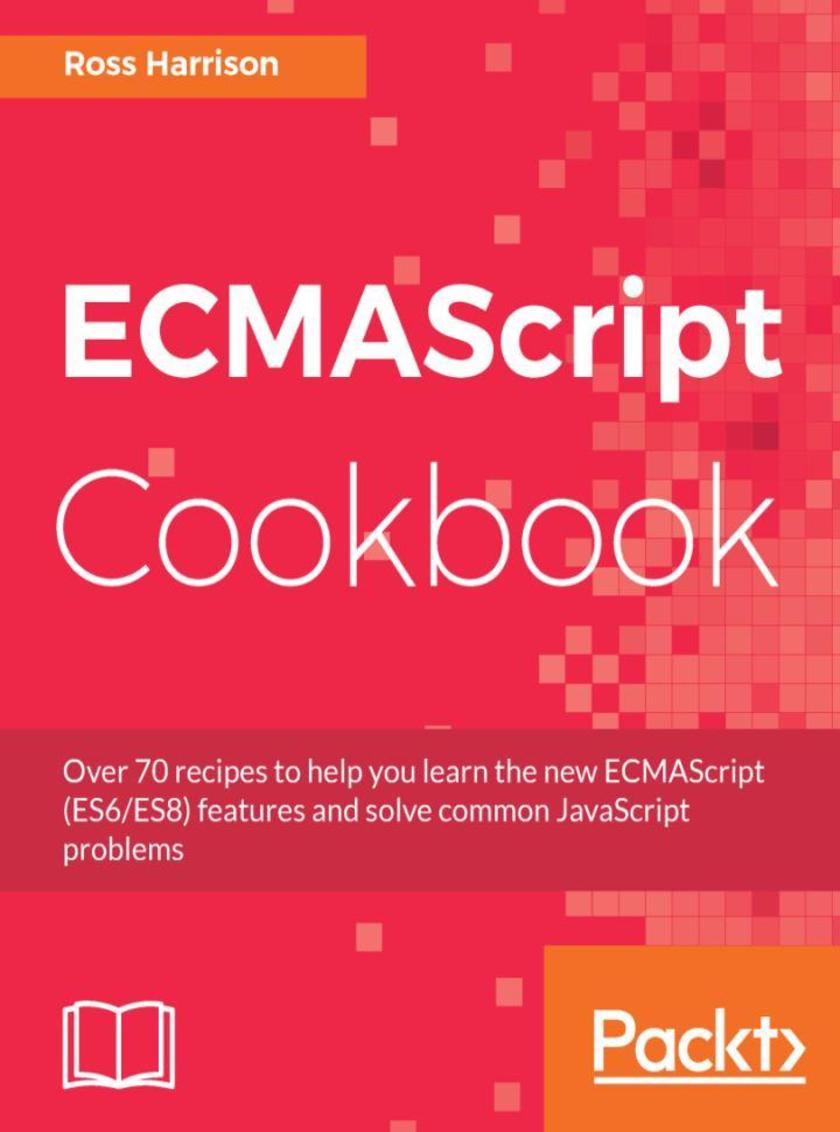
ECMAScript Cookbook
¥73.02
Become a better web programmer by writing efficient and modular code using ES6 and ES8 About This Book ? Learn to write asynchronous code and improve the readability of your web applications ? Explore advanced concepts such as closures, Proxy, generators, Promise, async functions, and Atomics ? Use different design patterns to create structures to solve common organizational and processing issues Who This Book Is For If you’re a web developer with a basic understanding of JavaScript and wish to learn the latest features of ECMAScript for developing efficient web applications, this book is for you. What You Will Learn ? Organize JavaScript programs across multiple files, using ES modules ? Create and work with promises using the Promise object and methods ? Compose async functions to propagate and handle errors ? Solve organizational and processing issues with structures using design patterns ? Use classes to encapsulate and share behavior ? Orchestrate parallel programs using WebWorkers, SharedMemory, and Atomics ? Use and extend Map, Set, and Symbol to work with user-defined classes and simulate data types ? Explore new array methods to avoid looping with arrays and other collections In Detail ECMAScript Cookbook follows a modular approach with independent recipes covering different feature sets and specifications of ECMAScript to help you become an efficient programmer. This book starts off with organizing your JavaScript applications as well as delivering those applications to modem and legacy systems. You will get acquainted with features of ECMAScript 8 such as async, SharedArrayBuffers, and Atomic operations that enhance asynchronous and parallel operations. In addition to this, this book will introduce you to SharedArrayBuffers, which allow web workers to share data directly, and Atomic operations, which help coordinate behavior across the threads. You will also work with OOP and Collections, followed by new functions and methods on the built-in Object and Array types that make common operations more manageable and less error-prone. You will then see how to easily build more sophisticated and expressive program structures with classes and inheritance. In the end, we will cover Sets, Maps, and Symbols, which are the new types introduced in ECMAScript 6 to add new behaviors and allow you to create simple and powerful modules. By the end of the book, you will be able to produce more efficient, expressive, and simpler programs using the new features of ECMAScript. Style and approach This book will follow a modular approach covering independent recipes on different features of ECMAScript throughout the book.
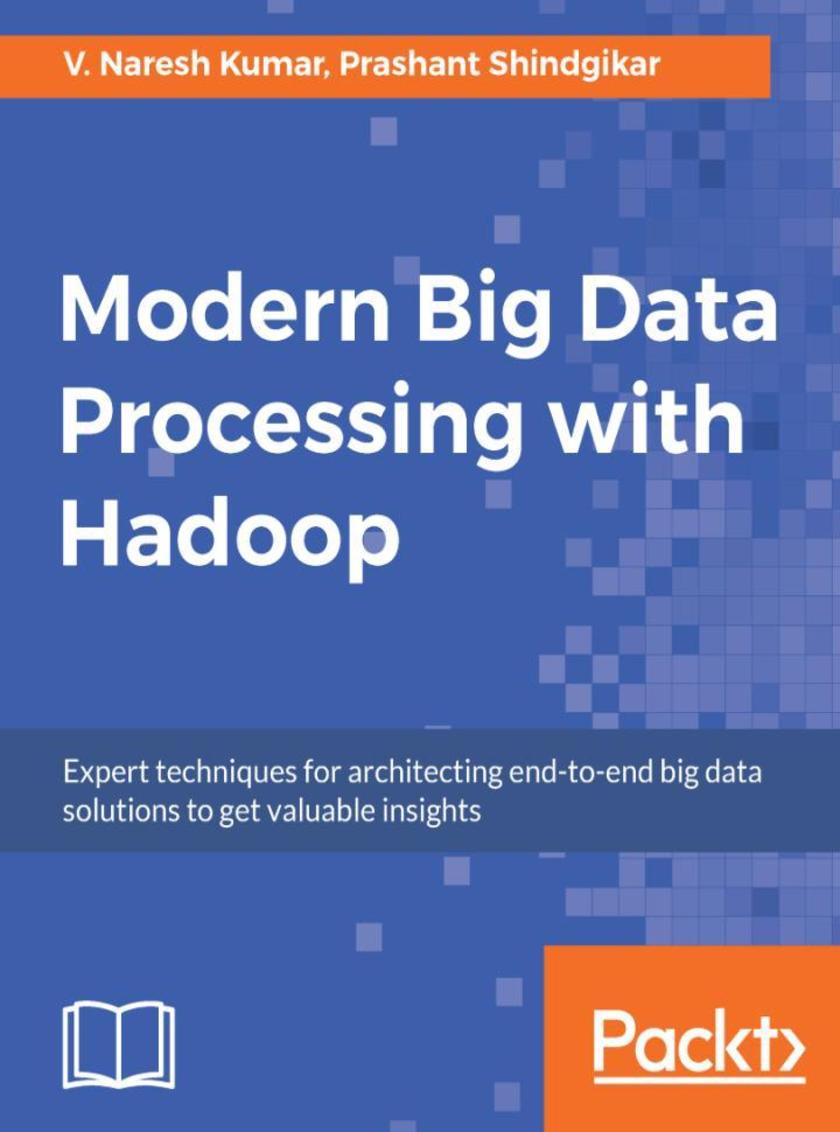
Modern Big Data Processing with Hadoop
¥73.02
A comprehensive guide to design, build and execute effective Big Data strategies using Hadoop About This Book ? Get an in-depth view of the Apache Hadoop ecosystem and an overview of the architectural patterns pertaining to the popular Big Data platform ? Conquer different data processing and analytics challenges using a multitude of tools such as Apache Spark, Elasticsearch, Tableau and more ? A comprehensive, step-by-step guide that will teach you everything you need to know, to be an expert Hadoop Architect Who This Book Is For This book is for Big Data professionals who want to fast-track their career in the Hadoop industry and become an expert Big Data architect. Project managers and mainframe professionals looking forward to build a career in Big Data Hadoop will also find this book to be useful. Some understanding of Hadoop is required to get the best out of this book. What You Will Learn ? Build an efficient enterprise Big Data strategy centered around Apache Hadoop ? Gain a thorough understanding of using Hadoop with various Big Data frameworks such as Apache Spark, Elasticsearch and more ? Set up and deploy your Big Data environment on premises or on the cloud with Apache Ambari ? Design effective streaming data pipelines and build your own enterprise search solutions ? Utilize the historical data to build your analytics solutions and visualize them using popular tools such as Apache Superset ? Plan, set up and administer your Hadoop cluster efficiently In Detail The complex structure of data these days requires sophisticated solutions for data transformation, to make the information more accessible to the users.This book empowers you to build such solutions with relative ease with the help of Apache Hadoop, along with a host of other Big Data tools. This book will give you a complete understanding of the data lifecycle management with Hadoop, followed by modeling of structured and unstructured data in Hadoop. It will also show you how to design real-time streaming pipelines by leveraging tools such as Apache Spark, and build efficient enterprise search solutions using Elasticsearch. You will learn to build enterprise-grade analytics solutions on Hadoop, and how to visualize your data using tools such as Apache Superset. This book also covers techniques for deploying your Big Data solutions on the cloud Apache Ambari, as well as expert techniques for managing and administering your Hadoop cluster. By the end of this book, you will have all the knowledge you need to build expert Big Data systems. Style and approach Comprehensive guide with a perfect blend of theory, examples and implementation of real-world use-cases
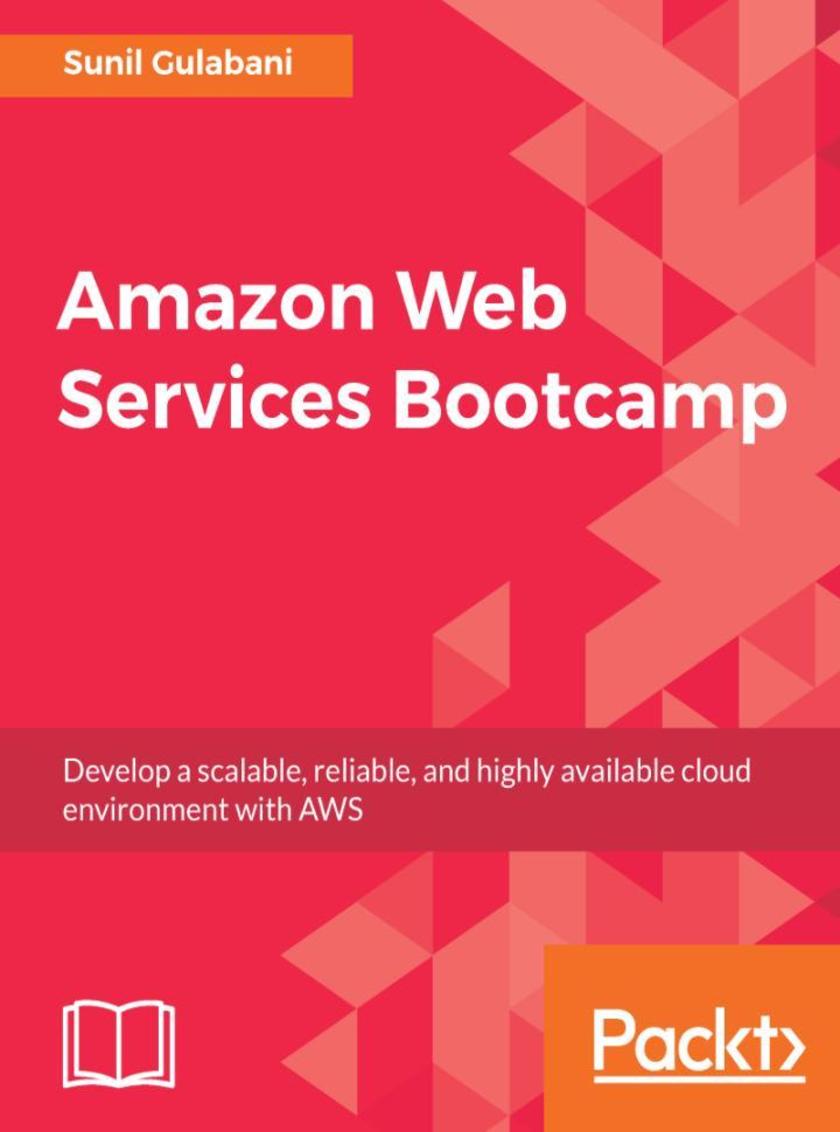
Amazon Web Services Bootcamp
¥73.02
This fast-paced guide will quickly enhance your skills to develop a highly scalable Cloud environment About This Book ? Efficiently build a highly scalable and reliable cloud environment for your applications with AWS ? Leverage the various AWS components and services to build a secure, reliable, and robust environment to host your applications on ? This quick-start guide will quickly enhance your skills to develop highly scalable services Who This Book Is For This book is for IT professionals and system administrators looking to design, deploy, and manage your applications and services on the AWS cloud platform. It’s also ideal for developers looking to build highly scalable cloud-based services. A basic understanding of AWS would be beneficial. What You Will Learn ? Find out about IAM to access AWS services securely ? Explore EC2 (virtual server) and scale up/down your application based on heavy traffic ? Learn about unlimited data storage service S3 and host a static website within minutes ? Get to grips with Relational Databases and NoSQL databases under the AWS ecosystem ? Understand the caching mechanism ? Get to know about notifications service and monitor AWS services ? Secure and troubleshoot your AWS architecture In Detail AWS is at the forefront of Cloud Computing today. Businesses are adopting AWS Cloud because of its reliability, versatility, and flexible design. The main focus of this book is teaching you how to build and manage highly reliable and scalable applications and services on AWS. It will provide you with all the necessary skills to design, deploy, and manage your applications and services on the AWS cloud platform. We’ll start by exploring Amazon S3, EC2, and so on to get you well-versed with core Amazon services. Moving on, we’ll teach you how to design and deploy highly scalable and optimized workloads. You’ll also discover easy-to-follow, hands-on steps, tips, and recommendations throughout the book and get to know essential security and troubleshooting concepts. By the end of the book, you’ll be able to create a highly secure, fault tolerant, and scalable environment for your applications to run on. Style and approach This book is all about fast and intensive learning. That means we don’t waste time helping you get started. The new features provided by AWS resources are being covered with highly-effective examples to develop new things, demonstrating different ways to create and use the AWS resources efficiently.
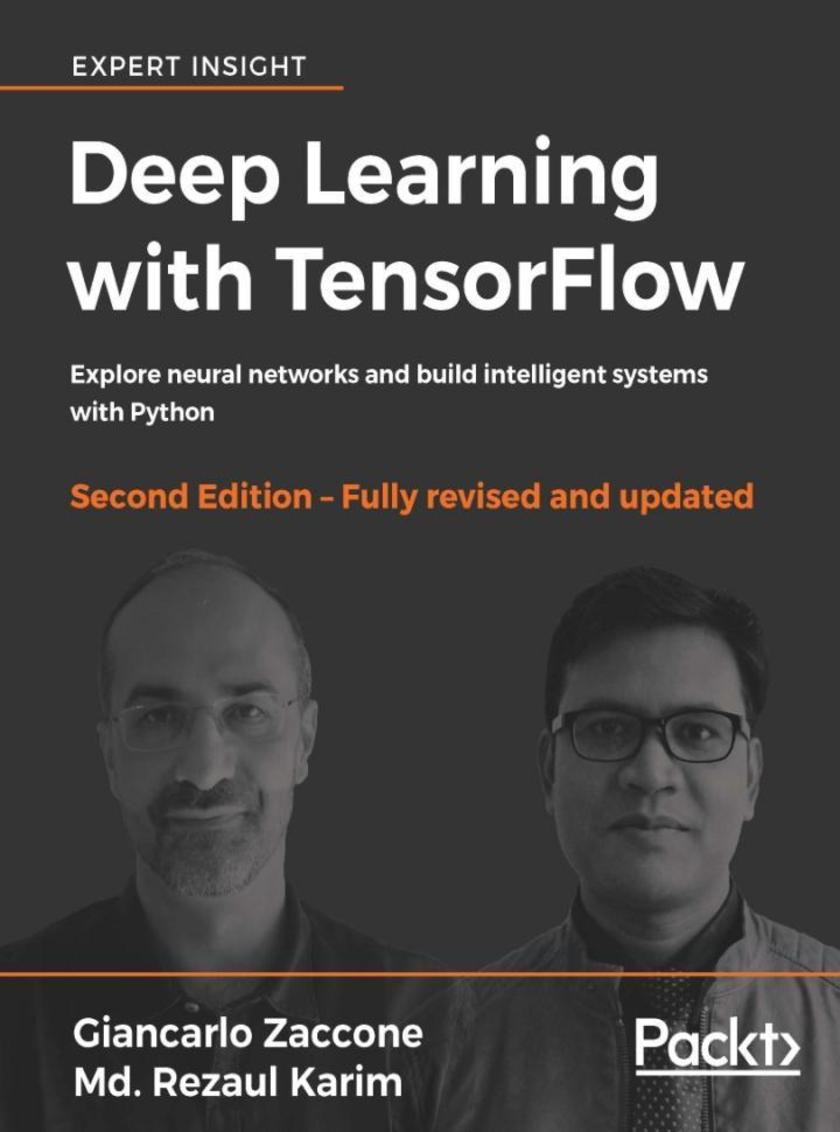
Deep Learning with TensorFlow - Second Edition
¥73.02
Delve into neural networks, implement deep learning algorithms, and explore layers of data abstraction with the help of TensorFlow v1.7. About This Book ? Learn how to implement advanced techniques in deep learning with Google's brainchild, TensorFlow v1.7 ? Explore deep neural networks and layers of data abstraction with the help of this comprehensive guide ? Gain real-world contextualization through some deep learning problems concerning research and application Who This Book Is For The book is for people interested in machine learning and machine intelligence. A rudimentary level of programming in one language is assumed, as is a basic familiarity with computer science techniques and technologies, including a basic awareness of computer hardware and algorithms. Some competence in mathematics is needed to the level of elementary linear algebra and calculus. What You Will Learn ? Apply deep machine intelligence and GPU computing with TensorFlow v1.7 ? Access public datasets and use TensorFlow to load, process, and transform the data ? Discover how to use the high-level TensorFlow API to build more powerful applications ? Use deep learning for scalable object detection and mobile computing ? Train machines quickly to learn from data by exploring reinforcement learning techniques ? Explore active areas of deep learning research and applications In Detail Deep learning is a branch of machine learning algorithms based on learning multiple levels of abstraction. Neural networks, which are at the core of deep learning, are being used in predictive analytics, computer vision, natural language processing, time series forecasting, and to perform a myriad of other complex tasks. This book is conceived for developers, data analysts, machine learning practitioners and deep learning enthusiasts who want to build powerful, robust, and accurate predictive models with the power of TensorFlow v1.7, combined with other open source Python libraries. Throughout the book, you’ll learn how to develop deep learning applications for machine learning systems using Feedforward Neural Networks, Convolutional Neural Networks, Recurrent Neural Networks, Autoencoders, and Factorization Machines. Discover how to attain deep learning programming on GPU in a distributed way. You'll come away with an in-depth knowledge of machine learning techniques and the skills to apply them to real-world projects. Style and approach This step-by-step guide explores common, and not so common, deep neural networks, and shows how they can be exploited in the real world with complex raw data. Benefit from practical examples, and learn how to implement different types of neural nets to build smart applications related to text, speech, and image data processing.
Serverless Web Applications with React and Firebase
¥73.02
Build rich and collaborative applications using client-side code with React, Redux, and Firebase About This Book ? A practical guide covering the full stack for web development with React 16 and Firebase ? Leverage the power of Firebase Cloud Storage, messaging, functions, OAuth, and database security to develop serverless web applications. ? Develop high-performance applications without the hassle of setting up complex web infrastructure. Who This Book Is For This book is for JavaScript developers who have some previous knowledge of React and want to develop serverless, full-stack applications but without the hassle of setting up a complex infrastructure. What You Will Learn ? Install powerful React.js and Firebase tools to make development much more efficient ? Create React components with Firebase to save and retrieve the data in real-time ? Use Firebase Authentication to make your React user interface secure ? Develop React and Firebase applications with Redux integration ? Firebase database security rules ? Firebase Cloud Storage Integration to upload and store data on the cloud ? Create a complete real-time application with React and firebase ? Using Firebase Cloud messaging and Cloud functions with React ? Firebase Cloud Storage integration with React In Detail ReactJS is a wonderful framework for UI development. Firebase as a backend with React is a great choice as it is easy, powerful, and provides great developer experience. It removes a lot of boilerplate code from your app and allows you to focus on your app to get it out quickly to users. Firebase with React is also a good choice for Most Viable Product (MVP) development. This book provides more practical insights rather than just theoretical concepts and includes basic to advanced examples – from hello world to a real-time seat booking app and Helpdesk application This book will cover the essentials of Firebase and React.js and will take you on a fast-paced journey through building real-time applications with Firebase features such as Cloud Storage, Cloud Function, Hosting and the Realtime Database. We will learn how to secure our application by using Firebase authentication and database security rules. We will leverage the power of Redux to organize data in the front-end, since Redux attempts to make state mutations predictable by imposing certain restrictions on how and when updates can happen. Towards the end of the book you will have improved your React skills by realizing the potential of Firebase to create real-time serverless web applications. Style and approach Practical insights rather than just theoretical concepts while including basic to advanced examples – from hello world to a real-time seat booking app and Helpdesk application.
Cloud Analytics with Google Cloud Platform
¥73.02
Combine the power of analytics and cloud computing for faster and efficient insights About This Book ? Master the concept of analytics on the cloud: and how organizations are using it ? Learn the design considerations and while applying a cloud analytics solution ? Design an end-to-end analytics pipeline on the cloud Who This Book Is For This book is targeted at CIOs, CTOs, and even analytics professionals looking for various alternatives to implement their analytics pipeline on the cloud. Data professionals looking to get started with cloud-based analytics will also find this book useful. Some basic exposure to cloud platforms such as GCP will be helpful, but not mandatory. What You Will Learn ? Explore the basics of cloud analytics and the major cloud solutions ? Learn how organizations are using cloud analytics to improve the ROI ? Explore the design considerations while adopting cloud services ? Work with the ingestion and storage tools of GCP such as Cloud Pub/Sub ? Process your data with tools such as Cloud Dataproc, BigQuery, etc ? Over 70 GCP tools to build an analytics engine for cloud analytics ? Implement machine learning and other AI techniques on GCP In Detail With the ongoing data explosion, more and more organizations all over the world are slowly migrating their infrastructure to the cloud. These cloud platforms also provide their distinct analytics services to help you get faster insights from your data. This book will give you an introduction to the concept of analytics on the cloud, and the different cloud services popularly used for processing and analyzing data. If you’re planning to adopt the cloud analytics model for your business, this book will help you understand the design and business considerations to be kept in mind, and choose the best tools and alternatives for analytics, based on your requirements. The chapters in this book will take you through the 70+ services available in Google Cloud Platform and their implementation for practical purposes. From ingestion to processing your data, this book contains best practices on building an end-to-end analytics pipeline on the cloud by leveraging popular concepts such as machine learning and deep learning. By the end of this book, you will have a better understanding of cloud analytics as a concept as well as a practical know-how of its implementation Style and approach Comprehensive guide with a perfect blend of theory, examples, and implementation of real-world use-cases
Hands-On Full Stack Web Development with Aurelia
¥73.02
Develop rich and scalable web applications with Node.js, Express.js, and MongoDB About This Book ? Learn the advanced features of Aurelia to build responsive web applications ? Write clean, modular, and testable code that will be easy to maintain and evolve ? Harness the power of JavaScript on the client and server side to build full-stack applications Who This Book Is For Hands-On Full Stack Web Development with Aurelia is for you if you are a web or full-stack JavaScript developer who has experience with traditional stacks such as LAMP, MEAN, or MERN and wish to explore the power of Aurelia and new stack with modern web technologies. What You Will Learn ? Employ best practices and modern approaches to create frontend applications ? Learn about modern CSS preprocessors and improve the readability of your application ? Use the Aurelia framework to create navigable web applications ? Write your own tests, making your application secure and fault-tolerant ? Create solid RESTful APIs using the microservice architecture ? Understand the NoSQL paradigm and get the best performance from your database ? Integrate third-party libraries such as Gmail for Single Sign On ? Write UI testing scripts and integration tests to build extensible apps In Detail Hands-On Full Stack Web Development with Aurelia begins with a review of basic JavaScript concepts and the structure of an Aurelia application generated with the Aurelia-CLI tool. You will learn how to create interesting and intuitive application using the Aurelia-Materialize plugin, which implements the material design approach. Once you fully configure a FIFA World Cup 2018 app, you'll start creating the initial components through TDD practices and then develop backend services to process and store all the user data. This book lets you explore the NoSQL model and implement it using one of the most popular NoSQL databases, MongoDB, with some exciting libraries to make the experience effortless. You'll also be able to add some advanced behavior to your components, from managing the lifecycle properly to using dynamic binding, field validations, and the custom service layer. You will integrate your application with Google OAuth Service and learn best practices to secure your applications. Furthermore, you'll write UI Testing scripts to create high-quality Aurelia Apps and explore the most used tools to run end-to-end tests. In the concluding chapters, you'll be able to deploy your application to the Cloud and Docker containers. By the end of this book, you will have learned how to create rich applications using best practices and modern approaches. Style and approach This is a comprehensive example-based book that guides you to create highly scalable applications using the new MEAN Stack.
Introduction to Programming
¥73.02
Get a solid understanding of Java fundamentals to master programming through a series of practical steps About This Book ? Enjoy your first step into the world of programming ? Understand what a language is and use its features to build applications ? Learn about a wide variety of programming applications Who This Book Is For Introduction to Programming is for anybody who wants to learn programming. All you’ll need is a computer, internet connection, and a cup of coffee. What You Will Learn ? Understand what Java is ? Install Java and learn how to run it ? Write and execute a Java program ? Write and execute the test for your program ? Install components and confgure your development environment ? Learn and use Java language fundamentals ? Learn object-oriented design principles ? Master the frequently used Java constructs In Detail Have you ever thought about making your computer do what you want it to do? Do you want to learn to program, but just don't know where to start? Instead of guiding you in the right direction, have other learning resources got you confused with over-explanations? Don't worry. Look no further. Introduction to Programming is here to help. Written by an industry expert who understands the challenges faced by those from a non-programming background, this book takes a gentle, hand-holding approach to introducing you to the world of programming. Beginning with an introduction to what programming is, you'll go on to learn about languages, their syntax, and development environments. With plenty of examples for you to code alongside reading, the book's practical approach will help you to grasp everything it has to offer. More importantly, you'll understand several aspects of application development. As a result, you'll have your very own application running by the end of the book. To help you comprehensively understand Java programming, there are exercises at the end of each chapter to keep things interesting and encourage you to add your own personal touch to the code and, ultimately, your application. Style and approach This step-by-step guide will familiarize you with programming using some practical examples.
Practical Web Penetration Testing
¥73.02
Learn how to execute web application penetration testing end-to-end About This Book ? Build an end-to-end threat model landscape for web application security ? Learn both web application vulnerabilities and web intrusion testing ? Associate network vulnerabilities with a web application infrastructure Who This Book Is For Practical Web Penetration Testing is for you if you are a security professional, penetration tester, or stakeholder who wants to execute penetration testing using the latest and most popular tools. Basic knowledge of ethical hacking would be an added advantage. What You Will Learn ? Learn how to use Burp Suite effectively ? Use Nmap, Metasploit, and more tools for network infrastructure tests ? Practice using all web application hacking tools for intrusion tests using Kali Linux ? Learn how to analyze a web application using application threat modeling ? Know how to conduct web intrusion tests ? Understand how to execute network infrastructure tests ? Master automation of penetration testing functions for maximum efficiency using Python In Detail Companies all over the world want to hire professionals dedicated to application security. Practical Web Penetration Testing focuses on this very trend, teaching you how to conduct application security testing using real-life scenarios. To start with, you’ll set up an environment to perform web application penetration testing. You will then explore different penetration testing concepts such as threat modeling, intrusion test, infrastructure security threat, and more, in combination with advanced concepts such as Python scripting for automation. Once you are done learning the basics, you will discover end-to-end implementation of tools such as Metasploit, Burp Suite, and Kali Linux. Many companies deliver projects into production by using either Agile or Waterfall methodology. This book shows you how to assist any company with their SDLC approach and helps you on your journey to becoming an application security specialist. By the end of this book, you will have hands-on knowledge of using different tools for penetration testing. Style and approach In this book, you will learn and understand the workflow of application security testing. Starting from analysis using threat modeling until the testing phase and before the web project goes into production, you will be able conduct effective penetrating testing using web intrusion tests , network infrastructure tests, and code review.
Learn Docker - Fundamentals of Docker 18.x
¥73.02
Enhance your software deployment workflow using containers About This Book ? Get up-and-running with basic to advanced concepts of Docker ? Get acquainted with concepts such as Docker containers, Docker images, orchestrators and so on. ? Practical test-based approach to learning a prominent containerization tool Who This Book Is For This book is targeted at system administrators, operations engineers, DevOps engineers, and developers or stakeholders who are interested in getting started with Docker from scratch. No prior experience with Docker Containers is required. What You Will Learn ? Containerize your traditional or microservice-based application ? Share or ship your application as an immutable container image ? Build a Docker swarm and a Kubernetes cluster in the cloud ? Run a highly distributed application using Docker Swarm or Kubernetes ? Update or rollback a distributed application with zero downtime ? Secure your applications via encapsulation, networks, and secrets ? Know your options when deploying your containerized app into the cloud In Detail Docker containers have revolutionized the software supply chain in small and big enterprises. Never before has a new technology so rapidly penetrated the top 500 enterprises worldwide. Companies that embrace containers and containerize their traditional mission-critical applications have reported savings of at least 50% in total maintenance cost and a reduction of 90% (or more) of the time required to deploy new versions of those applications. Furthermore they are benefitting from increased security just by using containers as opposed to running applications outside containers. This book starts from scratch, introducing you to Docker fundamentals and setting up an environment to work with it. Then we delve into concepts such as Docker containers, Docker images, Docker Compose, and so on. We will also cover the concepts of deployment, orchestration, networking, and security. Furthermore, we explain Docker functionalities on public clouds such as AWS. By the end of this book, you will have hands-on experience working with Docker containers and orchestrators such as SwarmKit and Kubernetes. Style and approach The simple end-to-end guide will help you learn everything about how to containerize, ship, and run both a traditional application and a modern microservice-based application on-premise or in the cloud.
Machine Learning Solutions
¥73.02
Practical, hands-on solutions in Python to overcome any problem in Machine Learning About This Book ? Master the advanced concepts, methodologies, and use cases of machine learning ? Build ML applications for analytics, NLP and computer vision domains ? Solve the most common problems in building machine learning models Who This Book Is For This book is for the intermediate users such as machine learning engineers, data engineers, data scientists, and more, who want to solve simple to complex machine learning problems in their day-to-day work and build powerful and efficient machine learning models. A basic understanding of the machine learning concepts and some experience with Python programming is all you need to get started with this book. What You Will Learn ? Select the right algorithm to derive the best solution in ML domains ? Perform predictive analysis effciently using ML algorithms ? Predict stock prices using the stock index value ? Perform customer analytics for an e-commerce platform ? Build recommendation engines for various domains ? Build NLP applications for the health domain ? Build language generation applications using different NLP techniques ? Build computer vision applications such as facial emotion recognition In Detail Machine learning (ML) helps you find hidden insights from your data without the need for explicit programming. This book is your key to solving any kind of ML problem you might come across in your job. You’ll encounter a set of simple to complex problems while building ML models, and you'll not only resolve these problems, but you’ll also learn how to build projects based on each problem, with a practical approach and easy-to-follow examples. The book includes a wide range of applications: from analytics and NLP, to computer vision domains. Some of the applications you will be working on include stock price prediction, a recommendation engine, building a chat-bot, a facial expression recognition system, and many more. The problem examples we cover include identifying the right algorithm for your dataset and use cases, creating and labeling datasets, getting enough clean data to carry out processing, identifying outliers, overftting datasets, hyperparameter tuning, and more. Here, you'll also learn to make more timely and accurate predictions. In addition, you'll deal with more advanced use cases, such as building a gaming bot, building an extractive summarization tool for medical documents, and you'll also tackle the problems faced while building an ML model. By the end of this book, you'll be able to fine-tune your models as per your needs to deliver maximum productivity. Style and approach This book is a step-by-step guide on how to develop machine learning applications for various domains. Each chapter of this book contains the practical guide on how to build specific machine learning applications from its base-line approach to the best possible approach. Basic necessary concepts, conman mistakes for every approach and optimization techniques are discussed for each application.
Practical Security Automation and Testing
¥73.02
Your one stop guide to automating infrastructure security using DevOps and DevSecOps Key Features * Secure and automate techniques to protect web, mobile or cloud services * Automate secure code inspection in C++, Java, Python, and JavaScript * Integrate security testing with automation frameworks like fuzz, BDD, Selenium and Robot Framework Book Description Security automation is the automatic handling of software security assessments tasks. This book helps you to build your security automation framework to scan for vulnerabilities without human intervention. This book will teach you to adopt security automation techniques to continuously improve your entire software development and security testing. You will learn to use open source tools and techniques to integrate security testing tools directly into your CI/CD framework. With this book, you will see how to implement security inspection at every layer, such as secure code inspection, fuzz testing, Rest API, privacy, infrastructure security, and web UI testing. With the help of practical examples, this book will teach you to implement the combination of automation and Security in DevOps. You will learn about the integration of security testing results for an overall security status for projects. By the end of this book, you will be confident implementing automation security in all layers of your software development stages and will be able to build your own in-house security automation platform throughout your mobile and cloud releases. What you will learn * Automate secure code inspection with open source tools and effective secure code scanning suggestions * Apply security testing tools and automation frameworks to identify security vulnerabilities in web, mobile and cloud services * Integrate security testing tools such as OWASP ZAP, NMAP, SSLyze, SQLMap, and OpenSCAP * Implement automation testing techniques with Selenium, JMeter, Robot Framework, Gauntlt, BDD, DDT, and Python unittest * Execute security testing of a Rest API Implement web application security with open source tools and script templates for CI/CD integration * Integrate various types of security testing tool results from a single project into one dashboard Who this book is for The book is for software developers, architects, testers and QA engineers who are looking to leverage automated security testing techniques.
Neural Network Projects with Python
¥73.02
Build your Machine Learning portfolio by creating 6 cutting-edge Artificial Intelligence projects using neural networks in Python Key Features * Discover neural network architectures (like CNN and LSTM) that are driving recent advancements in AI * Build expert neural networks in Python using popular libraries such as Keras * Includes projects such as object detection, face identification, sentiment analysis, and more Book Description Neural networks are at the core of recent AI advances, providing some of the best resolutions to many real-world problems, including image recognition, medical diagnosis, text analysis, and more. This book goes through some basic neural network and deep learning concepts, as well as some popular libraries in Python for implementing them. It contains practical demonstrations of neural networks in domains such as fare prediction, image classification, sentiment analysis, and more. In each case, the book provides a problem statement, the specific neural network architecture required to tackle that problem, the reasoning behind the algorithm used, and the associated Python code to implement the solution from scratch. In the process, you will gain hands-on experience with using popular Python libraries such as Keras to build and train your own neural networks from scratch. By the end of this book, you will have mastered the different neural network architectures and created cutting-edge AI projects in Python that will immediately strengthen your machine learning portfolio. What you will learn * Learn various neural network architectures and its advancements in AI * Master deep learning in Python by building and training neural network * Master neural networks for regression and classification * Discover convolutional neural networks for image recognition * Learn sentiment analysis on textual data using Long Short-Term Memory * Build and train a highly accurate facial recognition security system Who this book is for This book is a perfect match for data scientists, machine learning engineers, and deep learning enthusiasts who wish to create practical neural network projects in Python. Readers should already have some basic knowledge of machine learning and neural networks.


