


 购物车
购物车 个人中心
个人中心
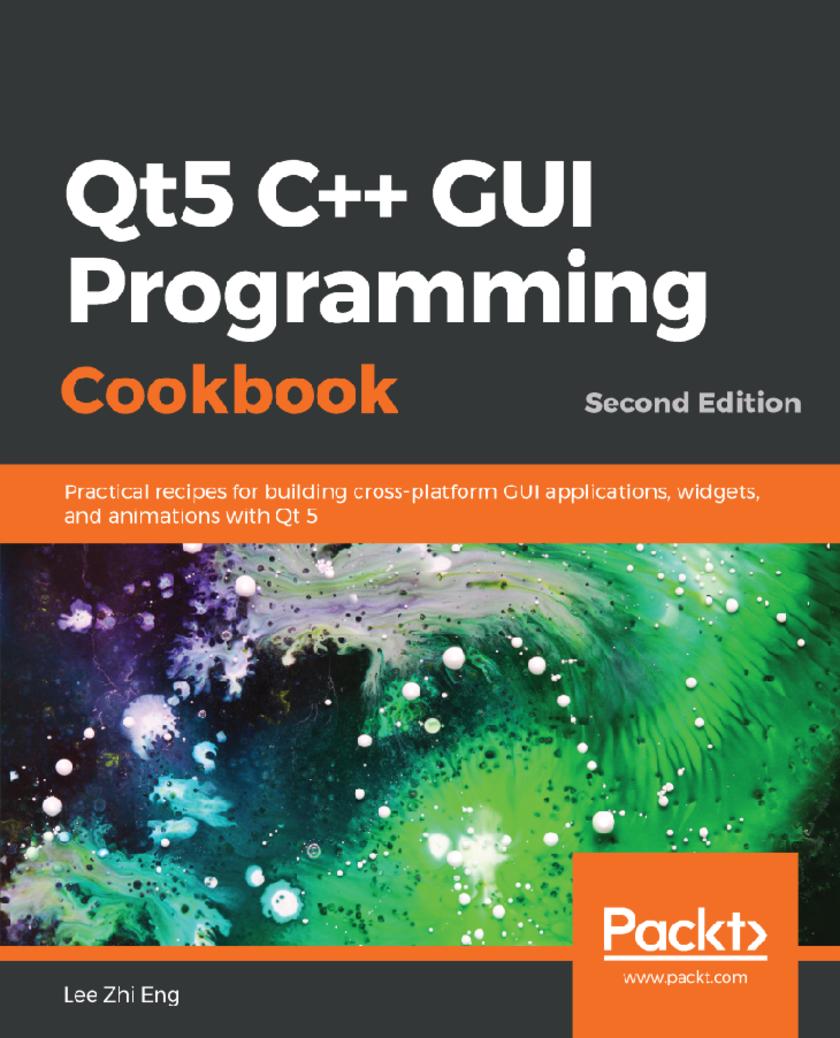
Qt5 C++ GUI Programming Cookbook
¥73.02
Use Qt 5 to design and build functional, appealing, and user-friendly graphical user interfaces (GUIs) for your applications. Key Features * Learn to use Qt 5 to design and customize the look and feel of your application * Improve the visual quality of an application by using graphics rendering and animation * Understand the balance of presentation and web content that will make an application appealing yet functional Book Description With the growing need to develop GUIs for multiple targets and multiple screens, improving the visual quality of your application becomes important so that it stands out from your competitors. With its cross-platform ability and the latest UI paradigms, Qt makes it possible to build intuitive, interactive, and user-friendly user interfaces for your applications. Qt5 C++ GUI Programming Cookbook, Second Edition teaches you how to develop functional and appealing user interfaces using the latest version of QT5 and C++.?This book will help you learn a variety of topics such as GUI customization and animation, graphics rendering, implementing Google Maps, and more. You will also be taken through advanced concepts like asynchronous programming, event handling using signals and slots, network programming, various aspects of optimizing your application. By the end of the book, you will be confident to design and customize GUI applications that meet your clients' expectations and have an understanding of best practice solutions for common problems. What you will learn * Animate GUI elements using Qt5's built-in animation system * Draw shapes and 2D images using Qt5's powerful rendering system * Implement an industry-standard OpenGL library in your project * Build a mobile app that supports touch events and exports it onto devices * Parse and extract data from an XML file and present it on your GUI * Interact with web content by calling JavaScript functions from C++ * Access MySQL and SQLite databases to retrieve data and display it on your GUI Who this book is for This intermediate-level book is designed for those who want to develop software using Qt 5. If you want to improve the visual quality and content presentation of your software application, this book is for you. Prior experience of C++ programming is required.
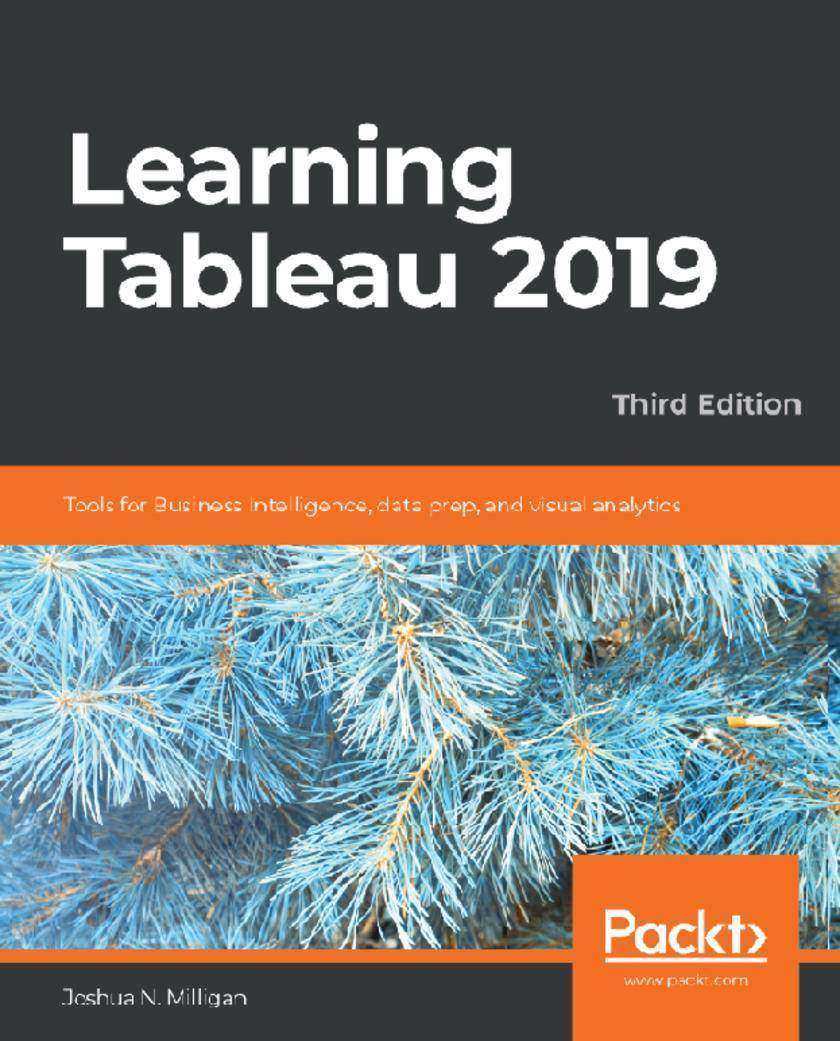
Learning Tableau 2019
¥73.02
Create powerful data visualizations and unlock intelligent business insights with Tableau Key Features * Explore all the latest Tableau 2019 features and redefine business analytics for your organization * Create impressive data visualizations and interactive dashboards to get insights from your data * Learn effective data storytelling to transform how your business leverages data and makes decisions Book Description Tableau is the gold standard of business intelligence and visual analytics tools in every industry. It enables rapid data visualization and interpretation with charts, graphs, dashboards, and much more. Updated with the latest features of Tableau, this book takes you from the foundations of the Tableau 2019 paradigm through to advanced topics. This third edition of the bestselling guide by Tableau Zen Master, Milligan, will help you come to grips with updated features, such as set actions and transparent views. Beginning with installation, you'll create your first visualizations with Tableau and then explore practical examples and advanced techniques. You'll create bar charts, tree maps, scatterplots, time series, and a variety of other visualizations. Next, you'll discover techniques to overcome challenges presented by data structure and quality and engage in effective data storytelling and decision making with business critical information. Finally, you'll be introduced to Tableau Prep, and learn how to use it to integrate and shape data for analysis. By the end of this book, you will be equipped to leverage the powerful features of Tableau 2019 for decision making. What you will learn * Develop stunning visualizations that explain complexity with clarity * Explore the exciting new features of Tableau Desktop and Tableau Prep * Connect to various data sources to bring all your data together * Uncover techniques to prep and structure your data for easy analysis * Create and use calculations to solve problems and enrich analytics * Master advanced topics such as sets, LOD calcs, and much more * Enable smart decisions with clustering, distribution, and forecasting * Share your data stories to build a culture of trust and action Who this book is for This Tableau book is for anyone who wants to understand data. If you’re new to Tableau, don’t worry. This book builds on the foundations to help you understand how Tableau really works and then builds on that knowledge with practical examples before moving on to advanced techniques. Working experience with databases will be useful but is not necessary to get the most out of this book.
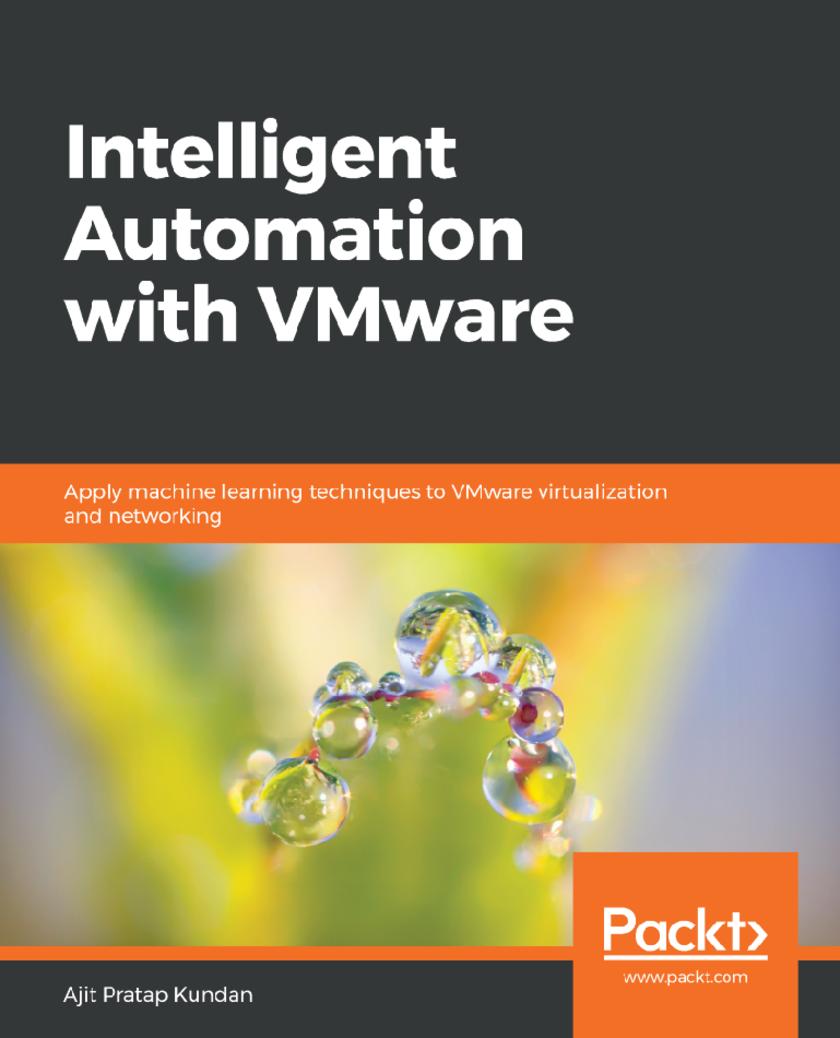
Intelligent Automation with VMware
¥73.02
Use self-driven data centers to reduce management complexity by deploying Infrastructure as Code to gain value from investments. Key Features * Add smart capabilities in VMware Workspace ONE to deliver customer insights and improve overall security * Optimize your HPC and big data infrastructure with the help of machine learning * Automate your VMware data center operations with machine learning Book Description This book presents an introductory perspective on how machine learning plays an important role in a VMware environment. It offers a basic understanding of how to leverage machine learning primitives, along with a deeper look into integration with the VMware tools used for automation today. This book begins by highlighting how VMware addresses business issues related to its workforce, customers, and partners with emerging technologies such as machine learning to create new, intelligence-driven, end user experiences. You will learn how to apply machine learning techniques incorporated in VMware solutions for data center operations. You will go through management toolsets with a focus on machine learning techniques. At the end of the book, you will learn how the new vSphere Scale-Out edition can be used to ensure that HPC, big data performance, and other requirements can be met (either through development or by fine-tuning guidelines) with mainstream products. What you will learn * Orchestrate on-demand deployments based on defined policies * Automate away common problems and make life easier by reducing errors * Deliver services to end users rather than to virtual machines * Reduce rework in a multi-layered scalable manner in any cloud * Explore the centralized life cycle management of hybrid clouds * Use common code so you can run it across any cloud Who this book is for This book is intended for those planning, designing, and implementing the virtualization/cloud components of the Software-Defined Data Center foundational infrastructure. It helps users to put intelligence in their automation tasks to get self driving data center. It is assumed that the reader has knowledge of, and some familiarity with, virtualization concepts and related topics, including storage, security, and networking.
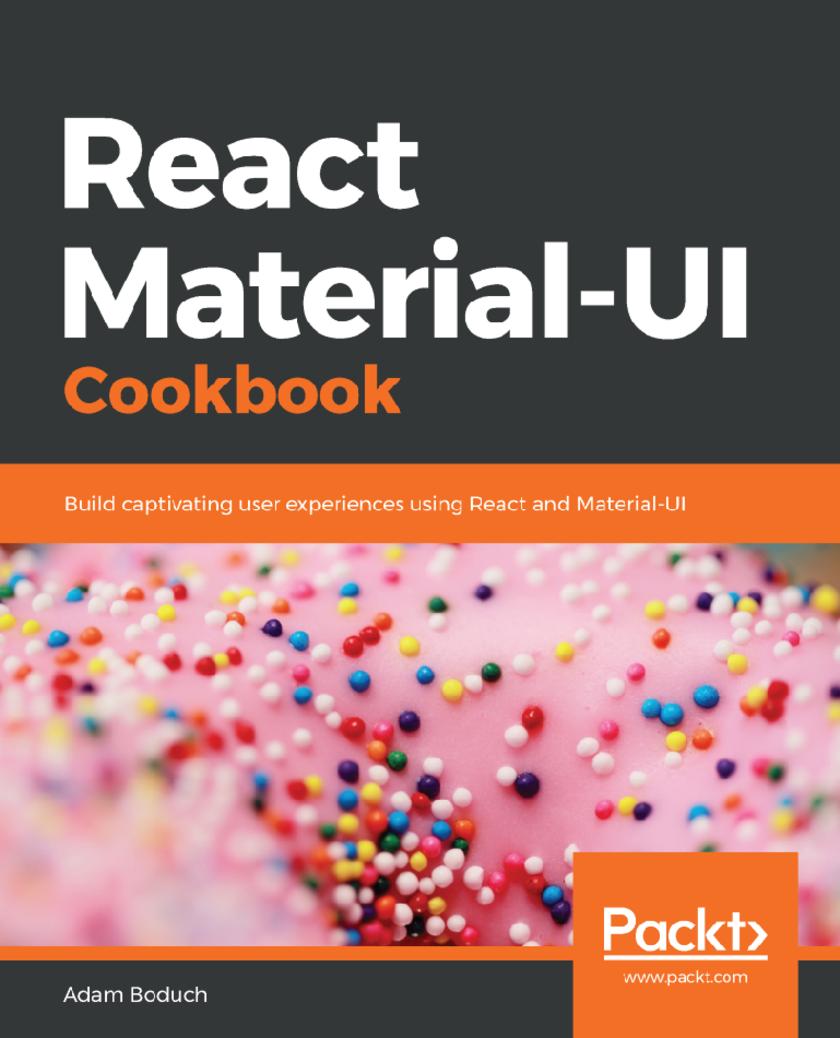
React Material-UI Cookbook
¥73.02
Build modern day application by implementing Material Design principles in React applications using Material-UI. Key Features * Grasp the needs React components for UI elements * Master the style and theme of the tools to go along with these components * Get to grips with all the React best practices to build a modern application Book Description Material-UI is a component library for rendering UI elements, using modern best practices from React and Material Design. This book will show you how you can create impressive and captivating modern day web apps by implementing Material Design considerations. The primary objective of this book is to help you use several Material-UI components to build larger UI functionality. We will also focus on React best practices in conjunction with Material-UI components – using state, context, and other new React 16.8 features properly. This book will start with layout and navigation and then dive into presenting the information with Material-UI components. It will then talk about the different components for user interactions. By the end of this book, you will know how to improve the look and feel of your applications using Material-UI components. What you will learn * Learn to build the overall structure and navigation for your Material-UI app * Learn to present simple and complex information in a variety of ways * Build interactive and intuitive controls * Design portable themes and styles for all of your Material-UI apps * Group content into sections using tabs and expansion panels * Learn how to design a general page layout with Material-UI grids * Use lists for complex data, and cards for detailed information Who this book is for They are JavaScript developers who have some basic knowledge of React and would want to implement Material Design principles in React applications using Material-UI. The reader wants to build a user interface using React components but doesn’t want to invent their own style or UX framework.
Data Science for Marketing Analytics
¥73.02
Explore new and more sophisticated tools that reduce your marketing analytics efforts and give you precise results Key Features * Study new techniques for marketing analytics * Explore uses of machine learning to power your marketing analyses * Work through each stage of data analytics with the help of multiple examples and exercises Book Description Data Science for Marketing Analytics covers every stage of data analytics, from working with a raw dataset to segmenting a population and modeling different parts of the population based on the segments. The book starts by teaching you how to use Python libraries, such as pandas and Matplotlib, to read data from Python, manipulate it, and create plots, using both categorical and continuous variables. Then, you'll learn how to segment a population into groups and use different clustering techniques to evaluate customer segmentation. As you make your way through the chapters, you'll explore ways to evaluate and select the best segmentation approach, and go on to create a linear regression model on customer value data to predict lifetime value. In the concluding chapters, you'll gain an understanding of regression techniques and tools for evaluating regression models, and explore ways to predict customer choice using classification algorithms. Finally, you'll apply these techniques to create a churn model for modeling customer product choices. By the end of this book, you will be able to build your own marketing reporting and interactive dashboard solutions. What you will learn * Analyze and visualize data in Python using pandas and Matplotlib * Study clustering techniques, such as hierarchical and k-means clustering * Create customer segments based on manipulated data * Predict customer lifetime value using linear regression * Use classification algorithms to understand customer choice * Optimize classification algorithms to extract maximal information Who this book is for Data Science for Marketing Analytics is designed for developers and marketing analysts looking to use new, more sophisticated tools in their marketing analytics efforts. It'll help if you have prior experience of coding in Python and knowledge of high school level mathematics. Some experience with databases, Excel, statistics, or Tableau is useful but not necessary.
Hands-On Robotics Programming with C++
¥73.02
Enhance your programming skills to build exciting robotic projects Key Features * Build an intelligent robot that can detect and avoid obstacles and respond to voice commands * Detect and track objects and faces using OpenCV * Control your robot with a GUI button designed using Qt5 Book Description C++ is one of the most popular legacy programming languages for robotics, and a combination of C++ and robotics hardware is used in many leading industries. This book will bridge the gap between Raspberry Pi and C/C++ programming and enable you to develop applications for Raspberry Pi. To follow along with the projects covered in the book, you can implement C programs in Raspberry Pi with the wiringPi library. With this book, you’ll develop a fully functional car robot and write programs to move it in different directions. You’ll then create an obstacle - avoiding robot using an ultrasonic sensor. Furthermore, you’ll find out how to control the robot wirelessly using your PC/Mac. This book will also help you work with object detection and tracking using OpenCV, and guide you through exploring face detection techniques. Finally, you will create an Android app and control the robot wirelessly with an Android smartphone. By the end of this book, you will have gained experience in developing a robot using Raspberry Pi and C/C++ programming. What you will learn * Install software in Raspberry Pi compatible with C++ programming * Program the Raspberry Pi in C++ to run a motor * Control RPi-powered robot wirelessly with your laptop or PC * Program an RPi camera using OpenCV Control a Raspberry Pi robot with voice commands * Implement face and object detection with Raspberry Pi Who this book is for This book is for developers, programmers, and robotics enthusiasts interested in leveraging C++ to build exciting robotics applications. Prior knowledge of C++ is necessary to understand the projects covered in this book.
WordPress 5 Complete
¥73.02
An in-depth and comprehensive take on WordPress, covering everything about the platform such as WordPress posts, pages, themes, plugins, and more. Key Features * Get up to date with the latest WordPress 5.0 (Bebo) and all its new features * Beginner-friendly layout and advice you can apply from day one with loads of screenshots and examples * Enrich your development experience with the new block-based editor Gutenberg Book Description Back in the day, when you wanted to launch a new website, you either had to learn web programming yourself or hire a professional who would take care of the whole process for you. Nowadays, with WordPress, anyone can build an optimized site with the least amount of effort possible and then make it available to the world in no time. Here, in the seventh edition of the book, we are going to show you how to build great looking and functional websites using WordPress. The new version of WordPress – 5.0 – comes with a few important changes, and we tell you all about how to use them effectively. From crafting content pages using the block editor, and customizing the design of your site, through to making sure it's secure, we go through it all. The book starts by introducing WordPress and teaching you how to set it up. You are then shown how to create a blog site, start writing content, and even use plugins and themes to customize the design of the site and add some unique elements to set it apart. If you want to get more in-depth, we also show you how to get started creating your own themes and plugins. Finally, we teach you how to use WordPress for building non-blog websites. By the end of the book, you will be sufficiently skilled to design high-quality websites and will be fully familiar with the ins and outs of WordPress. What you will learn * Learn to adapt your plugin with the Gutenberg editor * Create content that is optimized for publication on the web * Craft great looking pages and posts with the use of block editor * Structure your web pages in an accessible and clear way * Install and work with plugins and themes * Customize the design of your website * Upload multimedia content, such as images, audio, and video easily and effectively * Develop your own WordPress plugins and themes * Use WordPress to build websites that serve purposes other than blogs Who this book is for The ideal target audience for this book would be PHP developers who have some basic knowledge of working with WordPress and who want to get a comprehensive practical understanding of working with WordPress and create production-ready websites with it.
Mastering VMware vSphere 6.7
¥73.02
Unleash the benefits of VMware vSphere 6.7 to provide a powerful, flexible and secure digital infrastructure Key Features * Deep dive into areas like management, security, scalability, availability and more with vSphere 6.7 * Design, deploy and manage VMware vSphere virtual datacenters * Implement monitoring and security of VMware workloads with ease Book Description vSphere 6.7 is the latest release of VMware’s industry-leading, virtual cloud platform. It allows organisations to move to hybrid cloud computing by enabling them to run, manage, connect and secure applications in a common operating environment. This up-to-date, 2nd edition provides complete coverage of vSphere 6.7. Complete with step-by-step explanations of essential concepts, practical examples and self-assessment questions, you will begin with an overview of the products, solutions and features of the vSphere 6.7 suite. You’ll learn how to design and plan a virtual infrastructure and look at the workflow and installation of components. You'll gain insight into best practice configuration, management and security. By the end the book you'll be able to build your own VMware vSphere lab that can run even the most demanding of workloads. What you will learn * Explore the immense functionality of vSphere 6.7 * Design, manage and administer a virtualization environment * Get tips for the VCP6-DCV and VCIX6-DCV exams * Understand how to implement different migration techniques across different environments * Explore vSphere 6.7s powerful capabilities for patching, upgrading and managing the configuration of virtual environments. * Understand core vSphere components * Master resource management, disaster recovery, troubleshooting, monitoring and security Who this book is for This book is for Administrators, Infrastructure Engineers, Architects, and Consultants with basic knowledge of VMware vSphere.
Mastering Ansible
¥73.02
Design, develop, and solve real-world automation and orchestration problems by unlocking the automation capabilities of Ansible. Key Features * Tackle complex automation challenges with the newly added features in Ansible 2.7 Book Description Automation is essential for success in the modern world of DevOps. Ansible provides a simple, yet powerful, automation engine for tackling complex automation challenges. This book will take you on a journey that will help you exploit the latest version's advanced features to help you increase efficiency and accomplish complex orchestrations. This book will help you understand how Ansible 2.7 works at a fundamental level and will also teach you to leverage its advanced capabilities. Throughout this book, you will learn how to encrypt Ansible content at rest and decrypt data at runtime. Next, this book will act as an ideal resource to help you master the advanced features and capabilities required to tackle complex automation challenges. Later, it will walk you through workflows, use cases, orchestrations, troubleshooting, and Ansible extensions. Lastly, you will examine and debug Ansible operations, helping you to understand and resolve issues. By the end of the book, you will be able to unlock the true power of the Ansible automation engine and tackle complex, real- world actions with ease. What you will learn * Gain an in-depth understanding of how Ansible works under the hood * Fully automate Ansible playbook executions with encrypted data * Access and manipulate variable data within playbooks * Use blocks to perform failure recovery or cleanup * Explore the Playbook debugger and the Ansible Console * Troubleshoot unexpected behavior effectively * Work with cloud infrastructure providers and container systems * Develop custom modules, plugins, and dynamic inventory sources Who this book is for This book is for Ansible developers and operators who have an understanding of its core elements and applications but are now looking to enhance their skills in applying automation using Ansible.
Natural Language Processing Fundamentals
¥73.02
Use Python and NLTK (Natural Language Toolkit) to build out your own text classifiers and solve common NLP problems. Key Features * Assimilate key NLP concepts and terminologies * Explore popular NLP tools and techniques * Gain practical experience using NLP in application code Book Description If NLP hasn't been your forte, Natural Language Processing Fundamentals will make sure you set off to a steady start. This comprehensive guide will show you how to effectively use Python libraries and NLP concepts to solve various problems. You'll be introduced to natural language processing and its applications through examples and exercises. This will be followed by an introduction to the initial stages of solving a problem, which includes problem definition, getting text data, and preparing it for modeling. With exposure to concepts like advanced natural language processing algorithms and visualization techniques, you'll learn how to create applications that can extract information from unstructured data and present it as impactful visuals. Although you will continue to learn NLP-based techniques, the focus will gradually shift to developing useful applications. In these sections, you'll understand how to apply NLP techniques to answer questions as can be used in chatbots. By the end of this book, you'll be able to accomplish a varied range of assignments ranging from identifying the most suitable type of NLP task for solving a problem to using a tool like spacy or gensim for performing sentiment analysis. The book will easily equip you with the knowledge you need to build applications that interpret human language. What you will learn * Obtain, verify, and clean data before transforming it into a correct format for use * Perform data analysis and machine learning tasks using Python * Understand the basics of computational linguistics * Build models for general natural language processing tasks * Evaluate the performance of a model with the right metrics * Visualize, quantify, and perform exploratory analysis from any text data Who this book is for Natural Language Processing Fundamentals is designed for novice and mid-level data scientists and machine learning developers who want to gather and analyze text data to build an NLP-powered product. It'll help you to have prior experience of coding in Python using data types, writing functions, and importing libraries. Some experience with linguistics and probability is useful but not necessary.
Machine Learning with the Elastic Stack
¥73.02
Leverage Elastic Stack’s machine learning features to gain valuable insight from your data Key Features * Combine machine learning with the analytic capabilities of Elastic Stack * Analyze large volumes of search data and gain actionable insight from them * Use external analytical tools with your Elastic Stack to improve its performance Book Description Machine Learning with the Elastic Stack is a comprehensive overview of the embedded commercial features of anomaly detection and forecasting. The book starts with installing and setting up Elastic Stack. You will perform time series analysis on varied kinds of data, such as log files, network flows, application metrics, and financial data. As you progress through the chapters, you will deploy machine learning within the Elastic Stack for logging, security, and metrics. In the concluding chapters, you will see how machine learning jobs can be automatically distributed and managed across the Elasticsearch cluster and made resilient to failure. By the end of this book, you will understand the performance aspects of incorporating machine learning within the Elastic ecosystem and create anomaly detection jobs and view results from Kibana directly. What you will learn * Install the Elastic Stack to use machine learning features * Understand how Elastic machine learning is used to detect a variety of anomaly types * Apply effective anomaly detection to IT operations and security analytics * Leverage the output of Elastic machine learning in custom views, dashboards, and proactive alerting * Combine your created jobs to correlate anomalies of different layers of infrastructure * Learn various tips and tricks to get the most out of Elastic machine learning Who this book is for If you are a data professional eager to gain insight on Elasticsearch data without having to rely on a machine learning specialist or custom development, Machine Learning with the Elastic Stack is for you. Those looking to integrate machine learning within their search and analytics applications will also find this book very useful. Prior experience with the Elastic Stack is needed to get the most out of this book.
Hands-On Data Structures and Algorithms with Rust
¥73.02
Design and implement professional level programs by exploring modern data structures and algorithms in Rust. Key Features * Use data structures such as arrays, stacks, trees, lists and graphs with real-world examples * Learn the functional and reactive implementations of the traditional data structures * Explore illustrations to present data structures and algorithms, as well as their analysis, in a clear, visual manner. Book Description Rust has come a long way and is now utilized in several contexts. Its key strengths are its software infrastructure and resource-constrained applications, including desktop applications, servers, and performance-critical applications, not forgetting its importance in systems' programming. This book will be your guide as it takes you through implementing classic data structures and algorithms in Rust, helping you to get up and running as a confident Rust programmer. The book begins with an introduction to Rust data structures and algorithms, while also covering essential language constructs. You will learn how to store data using linked lists, arrays, stacks, and queues. You will also learn how to implement sorting and searching algorithms. You will learn how to attain high performance by implementing algorithms to string data types and implement hash structures in algorithm design. The book will examine algorithm analysis, including Brute Force algorithms, Greedy algorithms, Divide and Conquer algorithms, Dynamic Programming, and Backtracking. By the end of the book, you will have learned how to build components that are easy to understand, debug, and use in different applications. What you will learn * Design and implement complex data structures in Rust * Analyze, implement, and improve searching and sorting algorithms in Rust * Create and use well-tested and reusable components with Rust * Understand the basics of multithreaded programming and advanced algorithm design * Become familiar with application profiling based on benchmarking and testing * Explore the borrowing complexity of implementing algorithms Who this book is for This book is for developers seeking to use Rust solutions in a practical/professional setting; who wants to learn essential Data Structures and Algorithms in Rust. It is for developers with basic Rust language knowledge, some experience in other programming languages is required.
Implementing Azure Cloud Design Patterns
¥73.02
A hands-on guide to mastering Azure cloud design patterns and best practices. About This Book ? Master architectural design patterns in Azure. ? Get hands-on with implementing design patterns. ? Implement best practices for improving efficiency and security Who This Book Is For This book is targeted at cloud architects and cloud solution providers who are looking for an extensive guide to implementing different patterns for the deployment and maintenance of services in Microsoft Azure. Prior experience with Azure is required as the book is completely focused on design patterns. What You Will Learn ? Learn to organize Azure access ? Design the core areas of the Azure Execution Model ? Work with storage and data management ? Create a health endpoint monitoring pattern ? Automate early detection of anomalies ? Identify and secure Azure features In Detail A well designed cloud infrastructure covers factors such as consistency, maintenance, simplified administration and development, and reusability. Hence it is important to choose the right architectural pattern as it has a huge impact on the quality of cloud-hosted services. This book covers all Azure design patterns and functionalities to help you build your cloud infrastructure so it fits your system requirements. This book initially covers design patterns that are focused on factors such as availability and data management/monitoring. Then the focus shifts to complex design patterns such as multitasking, improving scalability, valet keys, and so on, with practical use cases. The book also supplies best practices to improve the security and performance of your cloud. By the end of this book, you will thoroughly be familiar with the different design and architectural patterns available with Windows Azure and capable of choosing the best pattern for your system. Style and approach This step-by-step guide will help you master Azure design patterns and functionalities and also supplies best practices towards the end of the book.
Learning Node.js Development
¥73.02
A comprehensive, easy-to-follow guide to creating complete Node apps and understanding how to build, deploy, and test your own apps. About This Book ? Entirely project-based and practical ? Explains the "Why" of Node.js features, not just the "how", providing you with a deep understanding and enabling you to easily apply concepts in your own applications ? Covers the full range of technologies around Node.js – NPM, version control with Git, and much more Who This Book Is For This book targets anyone looking to launch their own Node applications, switch careers, or freelance as a Node developer. You should have a basic understanding of JavaScript in order to follow this course. What You Will Learn ? Learn the fundamentals of Node ? Build apps that respond to user input ? Master working with servers ? Learn how to test and debug applications ? Deploy and update your apps in the real world ? Create responsive asynchronous web applications In Detail Learning Node.js Development is a practical, project-based book that provides you with all you need to get started as a Node.js developer. Node is a ubiquitous technology on the modern web, and an essential part of any web developers' toolkit. If you are looking to create real-world Node applications, or you want to switch careers or launch a side project to generate some extra income, then you're in the right place. This book has been written around a single goal—turning you into a professional Node developer capable of developing, testing, and deploying real-world production applications. Learning Node.js Development is built from the ground up around the latest version of Node.js (version 9.x.x). You'll be learning all the cutting-edge features available only in the latest software versions. This book cuts through the mass of information available around Node and delivers the essential skills that you need to become a Node developer. It takes you through creating complete apps and understanding how to build, deploy, and test your own Node apps. It maps out everything in a comprehensive, easy-to-follow package designed to get you up and running quickly. Style and approach This book is entirely project-based. From the very beginning you'll be programming every single app and completing various challenges designed to help test and reinforce what you've learned. There's no copying-and-pasting here. This book is about writing code and building projects.

Security with Go
¥73.02
The first stop for your security needs when using Go, covering host, network, and cloud security for ethical hackers and defense against intrusion About This Book ? First introduction to Security with Golang ? Adopting a Blue Team/Red Team approach ? Take advantage of speed and inherent safety of Golang ? Works as an introduction to security for Golang developers ? Works as a guide to Golang security packages for recent Golang beginners Who This Book Is For Security with Go is aimed at developers with basics in Go to the level that they can write their own *s and small programs without difficulty. Readers should be familiar with security concepts, and familiarity with Python security applications and libraries is an advantage, but not a necessity. What You Will Learn ? Learn the basic concepts and principles of secure programming ? Write secure Golang programs and applications ? Understand classic patterns of attack ? Write Golang *s to defend against network-level attacks ? Learn how to use Golang security packages ? Apply and explore cryptographic methods and packages ? Learn the art of defending against brute force attacks ? Secure web and cloud applications In Detail Go is becoming more and more popular as a language for security experts. Its wide use in server and cloud environments, its speed and ease of use, and its evident capabilities for data analysis, have made it a prime choice for developers who need to think about security. Security with Go is the first Golang security book, and it is useful for both blue team and red team applications. With this book, you will learn how to write secure software, monitor your systems, secure your data, attack systems, and extract information. Defensive topics include cryptography, forensics, packet capturing, and building secure web applications. Offensive topics include brute force, port scanning, packet injection, web scraping, social engineering, and post exploitation techniques. Style and approach John Leon has divided the book into two parts which present the team playing defense against anyone breaking into servers and the team playing (ethical!) offense to perform said attacks. All Go *s and programs are workable solutions that can be easily understood and expanded upon by anyone with a system administrator’s level view of networking and cloud-based systems. Golang developers will profit from a swift and incisive approach to security.
Mastering Apache Solr 7.x
¥73.02
Accelerate your enterprise search engine and bring relevancy in your search analytics About This Book ? A practical guide in building expertise with Indexing, Faceting, Clustering and Pagination ? Master the management and administration of Enterprise Search Applications and services seamlessly ? Handle multiple data inputs such as JSON, xml, pdf, doc, xls,ppt, csv and much more. Who This Book Is For The book would rightly appeal to developers, software engineers, data engineers and database architects who are building or seeking to build enterprise-wide effective search engines for business intelligence. Prior experience of Apache Solr or Java programming is must to take the best of this book. What You Will Learn ? Design schema using schema API to access data in the database ? Advance querying and fine-tuning techniques for better performance ? Get to grips with indexing using Client API ? Set up a fault tolerant and highly available server with newer distributed capabilities, SolrCloud ? Explore Apache Tika to upload data with Solr Cell ? Understand different data operations that can be done while indexing ? Master advanced querying through Velocity Search UI, faceting and Query Re-ranking, pagination and spatial search ? Learn to use JavaScript, Python, SolrJ and Ruby for interacting with Solr In Detail Apache Solr is the only standalone enterprise search server with a REST-like application interface. providing highly scalable, distributed search and index replication for many of the world's largest internet sites. To begin with, you would be introduced to how you perform full text search, multiple filter search, perform dynamic clustering and so on helping you to brush up the basics of Apache Solr. You will also explore the new features and advanced options released in Apache Solr 7.x which will get you numerous performance aspects and making data investigation simpler, easier and powerful. You will learn to build complex queries, extensive filters and how are they compiled in your system to bring relevance in your search tools. You will learn to carry out Solr scoring, elements affecting the document score and how you can optimize or tune the score for the application at hand. You will learn to extract features of documents, writing complex queries in re-ranking the documents. You will also learn advanced options helping you to know what content is indexed and how the extracted content is indexed. Throughout the book, you would go through complex problems with solutions along with varied approaches to tackle your business needs. By the end of this book, you will gain advanced proficiency to build out-of-box smart search solutions for your enterprise demands. Style and approach An advance guide which will take you through complex problems with solutions along with varied approaches to tackle your business needs by using Apache solr 7.x
PySpark Cookbook
¥73.02
Combine the power of Apache Spark and Python to build effective big data applications About This Book ? Perform effective data processing, machine learning, and analytics using PySpark ? Overcome challenges in developing and deploying Spark solutions using Python ? Explore recipes for efficiently combining Python and Apache Spark to process data Who This Book Is For The PySpark Cookbook is for you if you are a Python developer looking for hands-on recipes for using the Apache Spark 2.x ecosystem in the best possible way. A thorough understanding of Python (and some familiarity with Spark) will help you get the best out of the book. What You Will Learn ? Configure a local instance of PySpark in a virtual environment ? Install and configure Jupyter in local and multi-node environments ? Create DataFrames from JSON and a dictionary using pyspark.sql ? Explore regression and clustering models available in the ML module ? Use DataFrames to transform data used for modeling ? Connect to PubNub and perform aggregations on streams In Detail Apache Spark is an open source framework for efficient cluster computing with a strong interface for data parallelism and fault tolerance. The PySpark Cookbook presents effective and time-saving recipes for leveraging the power of Python and putting it to use in the Spark ecosystem. You’ll start by learning the Apache Spark architecture and how to set up a Python environment for Spark. You’ll then get familiar with the modules available in PySpark and start using them effortlessly. In addition to this, you’ll discover how to abstract data with RDDs and DataFrames, and understand the streaming capabilities of PySpark. You’ll then move on to using ML and MLlib in order to solve any problems related to the machine learning capabilities of PySpark and use GraphFrames to solve graph-processing problems. Finally, you will explore how to deploy your applications to the cloud using the spark-submit command. By the end of this book, you will be able to use the Python API for Apache Spark to solve any problems associated with building data-intensive applications. Style and approach This book is a rich collection of recipes that will come in handy when you are working with PySpark Addressing your common and not-so-common pain points, this is a book that you must have on the shelf.
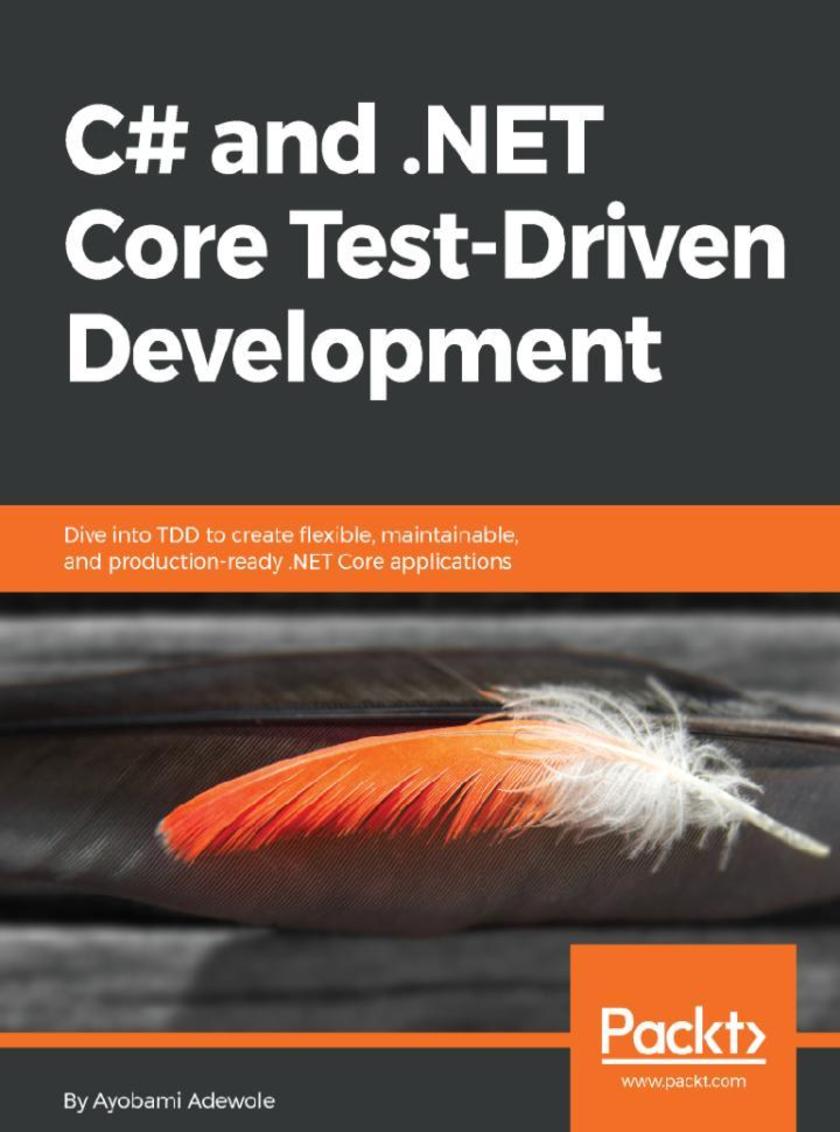
C# and .NET Core Test Driven Development
¥73.02
Learn how to apply a test-driven development process by building ready C# 7 and .NET Core applications. About This Book ? Create tests to quickly detect and resolve issues when writing portable code ? Uncover code integration issues that improve code quality using continuous integration ? Set up and use data-driven unit testing to verify your code Who This Book Is For This book is for .NET developers who would like to build efficient applications by implementing principles of test-driven development. C# programming and working knowledge of VS is assumed. What You Will Learn ? Write flexible, maintainable, and verifiable code for .NET Core ? Write testable code using SOLID principles and dependency injections ? Recognize the characteristics of a good unit test ? Structure and group your unit test ? Use mock objects to handle dependencies ? Set up an end-to-end continuous integration process In Detail This book guides developers to create robust, production-ready C# 7 and .NET Core applications through the practice of test-driven development process. In C# and .NET Core Test-Driven Development, you will learn the different stages of the TDD life cycle, basics of TDD, best practices, and anti-patterns. It will teach you how to create an ASP.NET Core MVC sample application, write testable code with SOLID principles and set up a dependency injection for your sample application. Next, you will learn the xUnit testing framework and learn how to use its attributes and assertions. You’ll see how to create data-driven unit tests and mock dependencies in your code. You will understand the difference between running and debugging your tests on .NET Core on LINUX versus Windows and Visual Studio. As you move forward, you will be able to create a healthy continuous integration process for your sample application using GitHub, TeamCity, Cake, and Microsoft VSTS. By the end of this book, you will have learned how to write clean and robust code through the effective practice of TDD, set up CI build steps to test and build applications as well as how to package application for deployment on NuGet. Style and approach The book explores the concepts of test driven development in depth so readers can apply these proven techniques to build sophisticated software with C# and .NET.
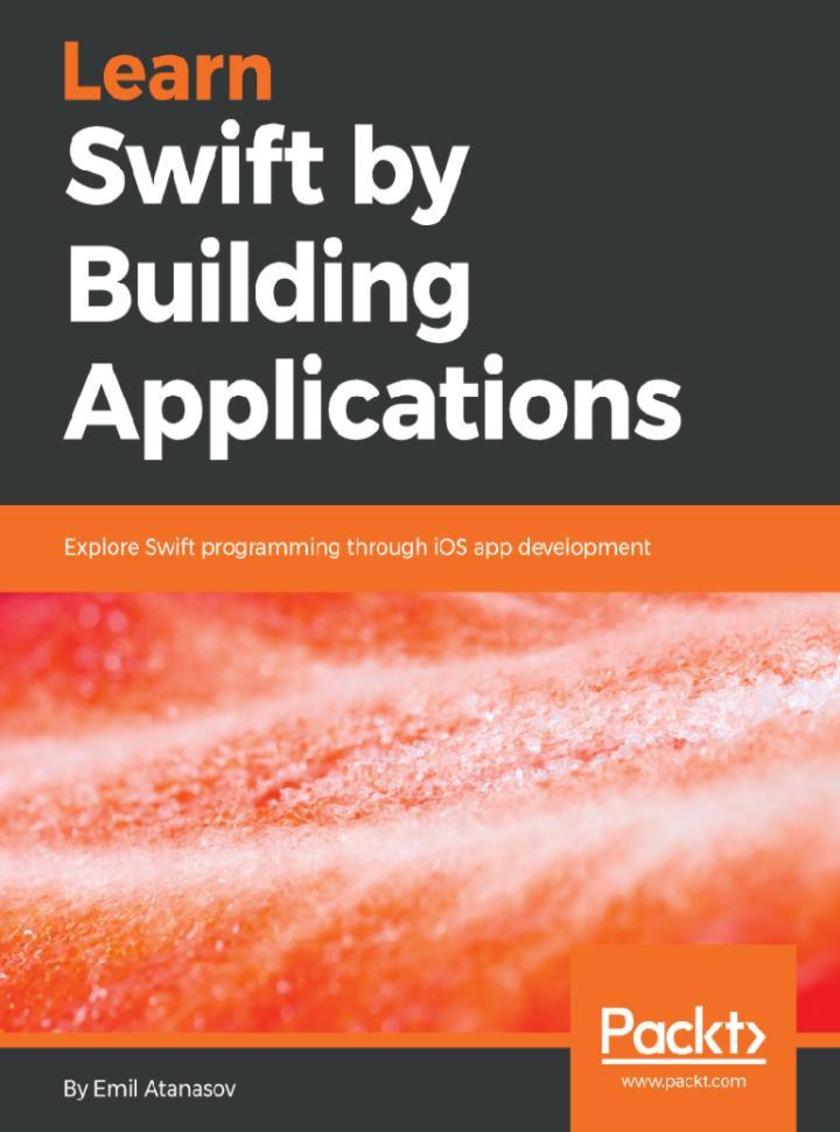
Learn Swift by Building Applications
¥73.02
Start building your very own mobile apps with this comprehensive introduction to Swift and object-oriented programming About This Book ? A complete beginner's guide to Swift programming language ? Understand core Swift programming concepts and techniques for creating popular iOS apps ? Start your journey toward building mobile app development with this practical guide Who This Book Is For This book is for beginners who are new to Swift or may have some preliminary knowledge of Objective-C. If you are interested in learning and mastering Swift in Apple’s ecosystem, namely mobile development, then this book is for you. What You Will Learn ? Become a pro at iOS development by creating simple-to-complex iOS mobile applications ? Master Playgrounds, a unique and intuitive approach to teaching Xcode ? Tackle the basics, including variables, if clauses, functions, loops and structures, classes, and inheritance ? Model real-world objects in Swift and have an in-depth understanding of the data structures used, along with OOP concepts and protocols ? Use CocoaPods, an open source Swift package manager to ease your everyday developer requirements ? Develop a wide range of apps, from a simple weather app to an Instagram-like social app ? Get ahead in the industry by learning how to use third-party libraries efficiently in your apps In Detail Swift Language is now more powerful than ever; it has introduced new ways to solve old problems and has gone on to become one of the fastest growing popular languages. It is now a de-facto choice for iOS developers and it powers most of the newly released and popular apps. This practical guide will help you to begin your journey with Swift programming through learning how to build iOS apps. You will learn all about basic variables, if clauses, functions, loops, and other core concepts; then structures, classes, and inheritance will be discussed. Next, you’ll dive into developing a weather app that consumes data from the internet and presents information to the user. The final project is more complex, involving creating an Instagram like app that integrates different external libraries. The app also uses CocoaPods as its package dependency manager, to give you a cutting-edge tool to add to your skillset. By the end of the book, you will have learned how to model real-world apps in Swift. Style and approach This book has a very practical and hands-on approach towards teaching the user the new and advanced features of Swift.
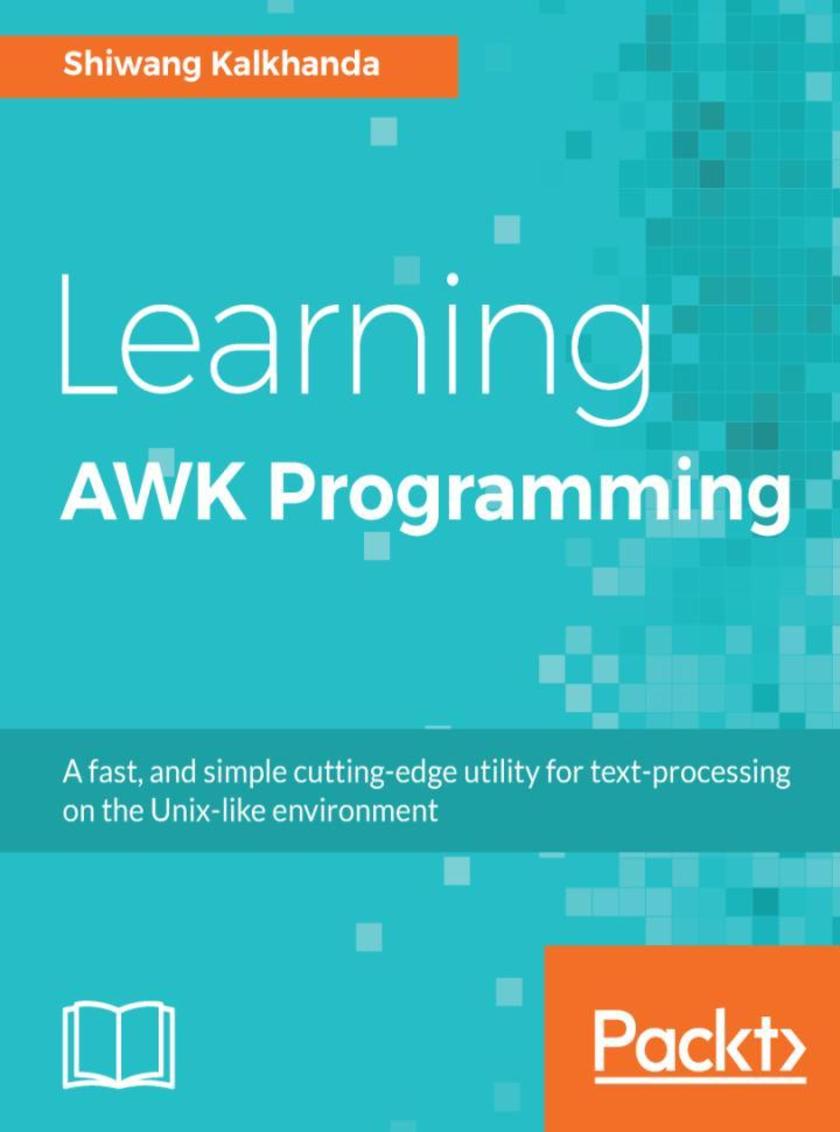
Learning AWK Programming
¥73.02
Text processing and pattern matching simplified About This Book ? Master the fastest and most elegant big data munging language ? Implement text processing and pattern matching using the advanced features of AWK and GAWK ? Implement debugging and inter-process communication using GAWK Who This Book Is For This book is for developers or analysts who are inclined to learn how to do text processing and data extraction in a Unix-like environment. Basic understanding of Linux operating system and shell scripting will help you to get the most out of the book. What You Will Learn ? Create and use different expressions and control flow statements in AWK ? Use Regular Expressions with AWK for effective text-processing ? Use built-in and user-defined variables to write AWK programs ? Use redirections in AWK programs and create structured reports ? Handle non-decimal input, 2-way inter-process communication with Gawk ? Create small scripts to reformat data to match patterns and process texts In Detail AWK is one of the most primitive and powerful utilities which exists in all Unix and Unix-like distributions. It is used as a command-line utility when performing a basic text-processing operation, and as programming language when dealing with complex text-processing and mining tasks. With this book, you will have the required expertise to practice advanced AWK programming in real-life examples. The book starts off with an introduction to AWK essentials. You will then be introduced to regular expressions, AWK variables and constants, arrays and AWK functions and more. The book then delves deeper into more complex tasks, such as printing formatted output in AWK, control flow statements, GNU's implementation of AWK covering the advanced features of GNU AWK, such as network communication, debugging, and inter-process communication in the GAWK programming language which is not easily possible with AWK. By the end of this book, the reader will have worked on the practical implementation of text processing and pattern matching using AWK to perform routine tasks. Style and approach An easy-to-follow, step by step guide which will help you get to grips with real-world applications of AWK programming.
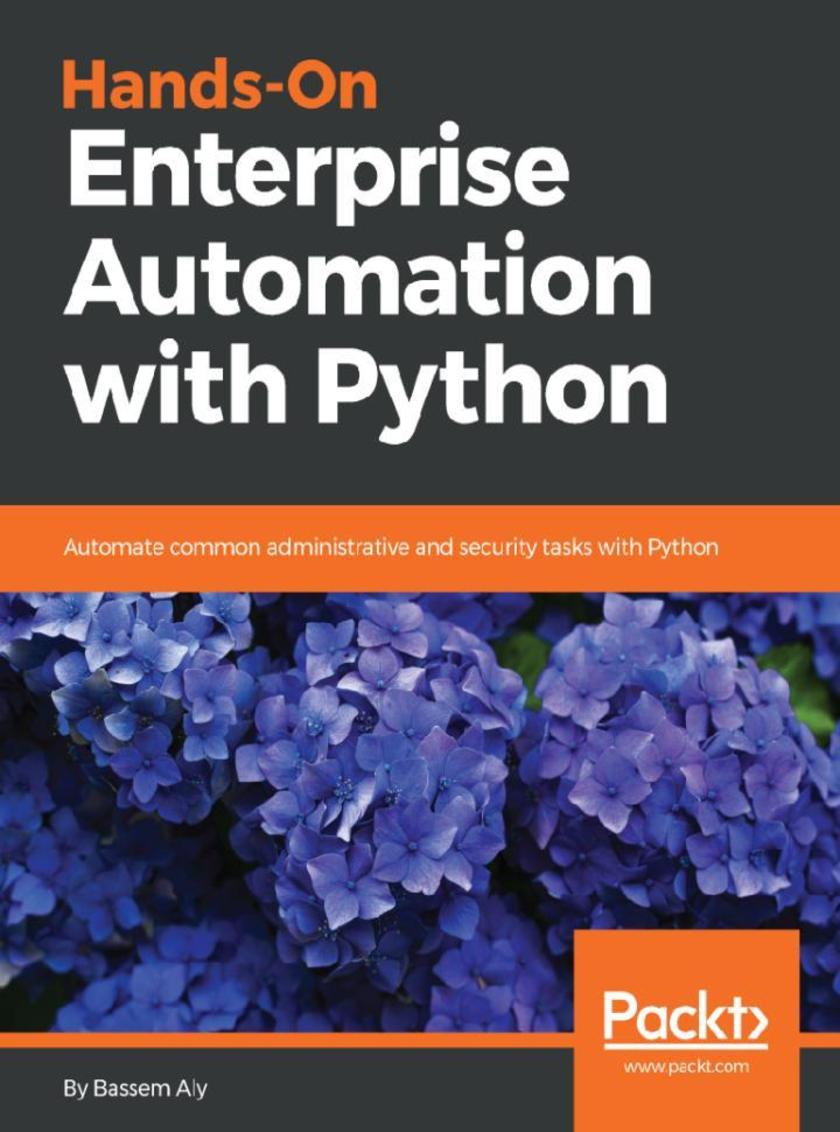
Hands-On Enterprise Automation with Python.
¥73.02
Invent your own Python scripts to automate your infrastructure About This Book ? Make the most of Python libraries and modules to automate your infrastructure ? Leverage Python programming to automate server configurations and administration tasks ? Efficiently develop your Python skill set Who This Book Is For Hands-On Enterprise Automation with Python is for system administrators and DevOps engineers who are looking for an alternative to major automation frameworks such as Puppet and Chef. Basic programming knowledge with Python and Linux shell scripting is necessary. What You Will Learn ? Understand common automation modules used in Python ? Develop Python scripts to manage network devices ? Automate common Linux administration tasks with Ansible and Fabric ? Managing Linux processes ? Administrate VMware, OpenStack, and AWS instances with Python ? Security automation and sharing code on GitHub In Detail Hands-On Enterprise Automation with Python starts by covering the set up of a Python environment to perform automation tasks, as well as the modules, libraries, and tools you will be using. We’ll explore examples of network automation tasks using simple Python programs and Ansible. Next, we will walk you through automating administration tasks with Python Fabric, where you will learn to perform server configuration and administration, along with system administration tasks such as user management, database management, and process management. As you progress through this book, you’ll automate several testing services with Python scripts and perform automation tasks on virtual machines and cloud infrastructure with Python. In the concluding chapters, you will cover Python-based offensive security tools and learn how to automate your security tasks. By the end of this book, you will have mastered the skills of automating several system administration tasks with Python. Style and approach This book will follow a practical approach to help you script and automate tasks using Python.


