


 购物车
购物车 个人中心
个人中心

The Crimson Fairy Book
¥8.09
Collection of classic fairy tales. According to Wikipedia: "Andrew Lang (March 31, 1844, Selkirk July 20, 1912, Banchory, Kincardineshire) was a prolific Scots man of letters. He was a poet, novelist, and literary critic, and contributor to anthropology. He now is best known as the collector of folk and fairy tales." With the active (hyperlinked) table of contents, click on a story title to go to that story.
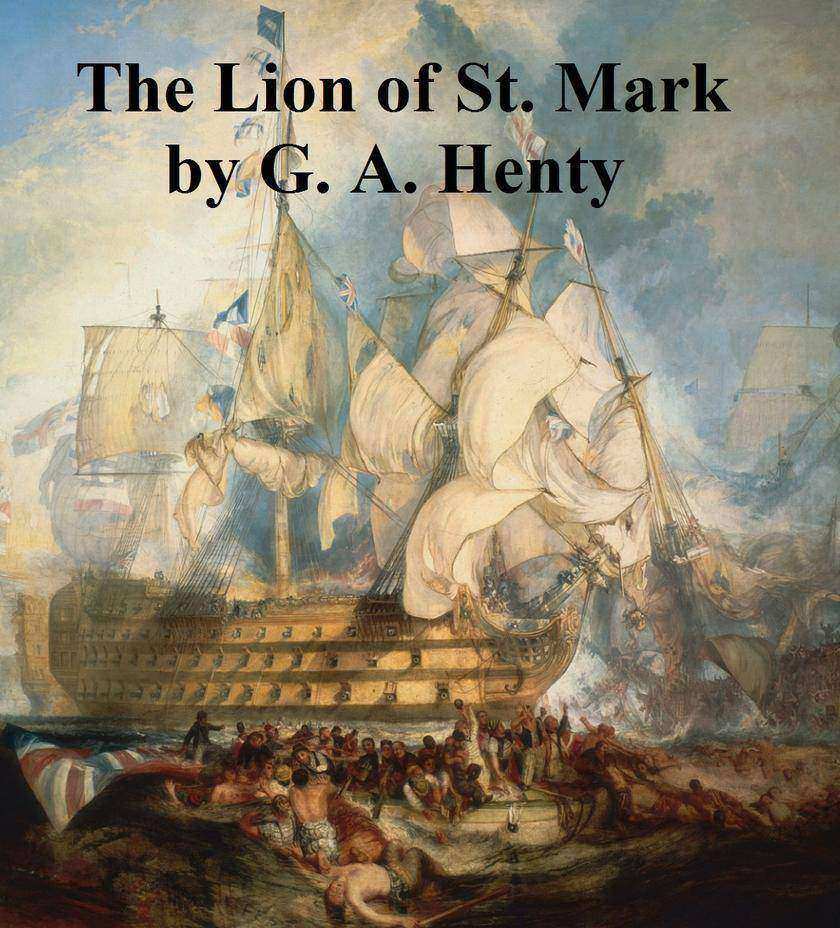
The Lion of St. Mark
¥8.09
Historical novel. According to the Preface: "Of all the chapters of history, there are few more interesting or wonderful than that which tells the story of the rise and progress of Venice. Built upon a few sandy islands in a shallow lagoon, and originally founded by fugitives from the mainland, Venice became one of the greatest and most respected powers of Europe. She was mistress of the sea; conquered and ruled over a considerable territory bordering on the Adriatic; checked the rising power of the Turks; conquered Constantinople; successfully defied all the attacks of her jealous rivals to shake her power; and carried on a trade relatively as great as that of England in the present day. I have laid my story in the time not of the triumphs of Venice, but of her hardest struggle for existence--when she defended herself successfully against the coalition of Hungary, Padua, and Genoa--for never at any time were the virtues of Venice, her steadfastness, her patriotism, and her willingness to make all sacrifice.. According to Wikipedia: "George Alfred Henty (8 December 1832 - 16 November 1902), referred to as G. A. Henty, was a prolific English novelist, special correspondent, and Imperialist born in Trumpington, Cambridgeshire, England. He is best known for his historical adventure stories that were popular in the late 19th century. His works include Out on the Pampas (1871), The Young Buglers (1880), With Clive in India (1884) and Wulf the Saxon (1895)."
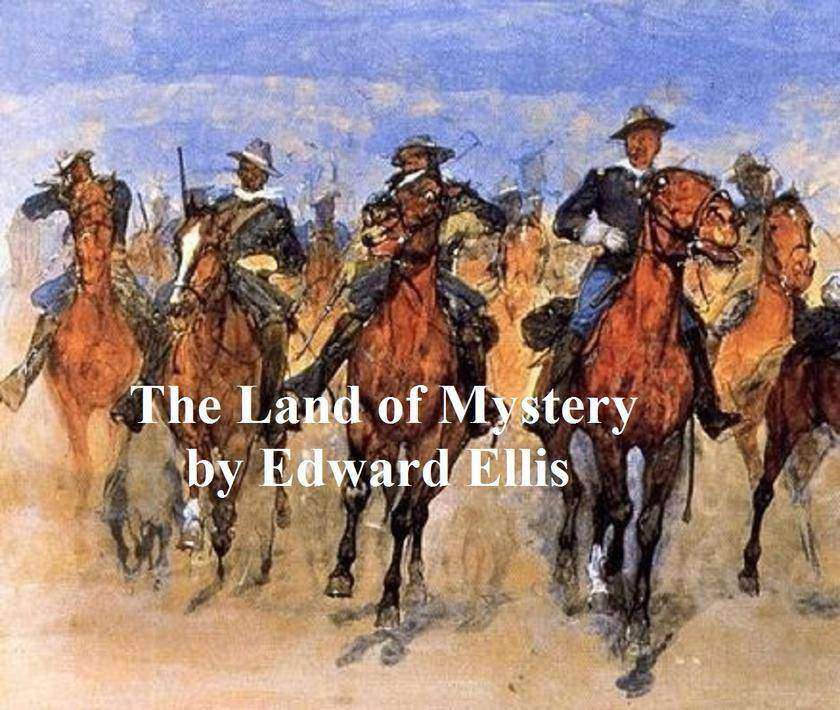
The Land of Mystery
¥8.09
Classic adventure novel. According to Wikipedia: "Edward Sylvester Ellis (April 11, 1840 – June 20, 1916) was an American author who was born in Ohio and died at Cliff Island, Maine. Ellis was a teacher, school administrator, and journalist, but his most notable work was that that he performed as author of hundreds of dime novels that he produced under his name and a number of noms de plume. Notable works by Ellis include The Huge Hunter, or the Steam Man of the Prairies and Seth Jones, or the Captives of the Frontier. Internationally, Edward S. Ellis is probably best known for his Deerhunter novels widely read by young boys up to the 1950s (together with works by James Fenimore Cooper and Karl May). In the mid-1880s, after a fiction-writing career of some thirty years, Ellis eventually turned his pen to more serious works of biography, history, and persuasive writing."
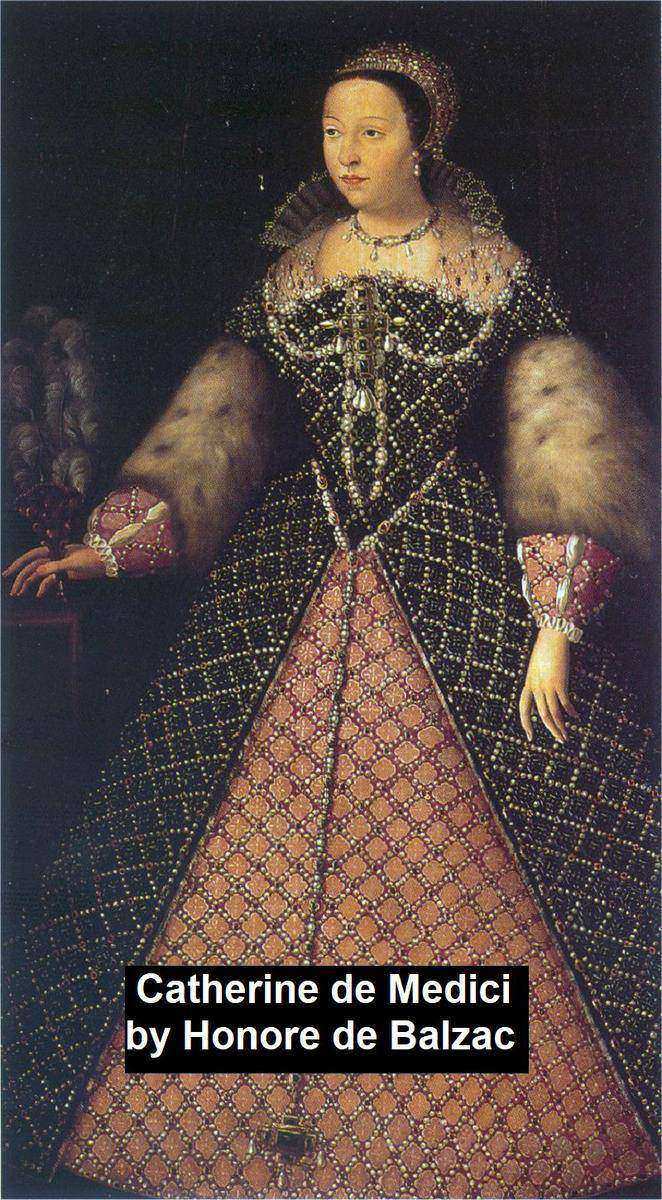
Catherine de Medici
¥8.09
Historical novel. According to Wikipedia: "Honore de Balzac (May 20, 1799 - August 18, 1850) was a nineteenth-century French novelist and playwright. His magnum opus was a sequence of almost 100 novels and plays collectively entitled La Comedie humaine, which presents a panorama of French life in the years after the fall of Napoleon Bonaparte in 1815. Due to his keen observation of detail and unfiltered representation of society, Balzac is regarded as one of the founders of realism in European literature. He is renowned for his multi-faceted characters; even his lesser characters are complex, morally ambiguous and fully human. Inanimate objects are imbued with character as well; the city of Paris, a backdrop for much of his writing, takes on many human qualities."
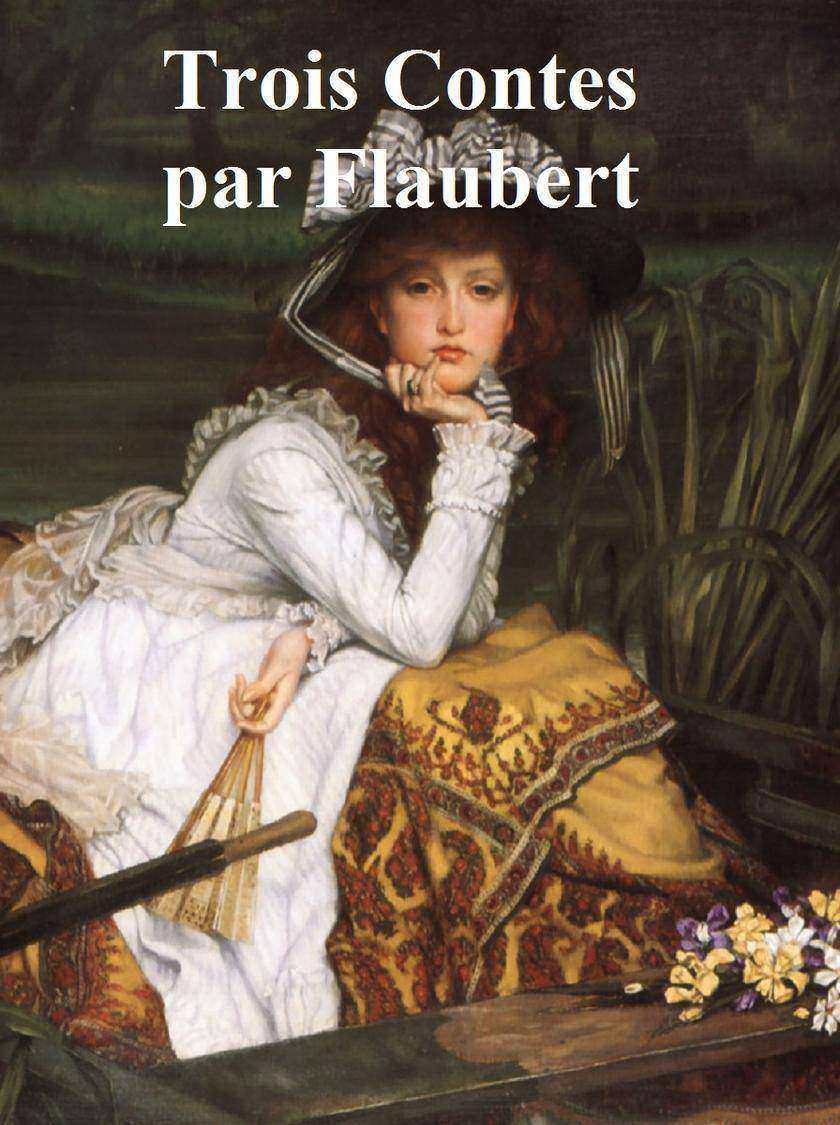
Trois Contes
¥8.09
Collection classique de nouvelles, initialement publiée en 1877, en fran?ais original. Selon Wikipédia: ?Un c?ur simple, aussi appelé Un c?ur simple ou Le perroquet en fran?ais, raconte l'histoire d'une servante nommée Félicité, son seul et unique amour, Théodore, épouse une femme aisée, et ce faisant, Après cette trahison, Felicité quitte la ferme sur laquelle elle travaille et se dirige vers Pont-l'Evêque où elle se met immédiatement au travail dans une maison de domestique.Elle est très loyale et prête facilement son affection à cette famille et à d'autres les gens, comme son neveu, et les choses, comme son perroquet, elle donne entièrement aux autres, et beaucoup en profitent, les gens ne réalisent pas à quel point elle les aime, elle est la quintessence d'un personnage désintéressé, et Flaubert montre le l'horreur de l'altruisme véritable - la réalité d'être altruiste, n'ayant rien de propre à vivre: elle n'a pas de mari, pas d'enfants, pas de biens, dépend de sa ma?tresse pour la garder, elle est totalement inculte, sa mort est virtuellement inaper?u ... Elle vit une vie bestiale, non examinée. Cependant, elle ressent l'amour et l'éveil spirituel. La légende de Saint Julien l'Hospitalier, en fran?ais Saint Julien l'Hospitalier, raconte l'histoire de Julian l'Hospitalier [un saint] ... Hérodias raconte la décapitation de Jean-Baptiste. Il commence légèrement avant l'arrivée du gouverneur syrien, Vitellius. Hérodias tient une grande fête d'anniversaire pour son deuxième mari, Herod Antipas. Inconnu de lui, elle a concocté un plan pour décapiter John. Selon Flaubert, ce plan implique que son mari tombe amoureux de sa fille, Salomé, ce qui l'amène à lui promettre ce qu'elle veut.
Cowmen and Rustlers: A Story of the Wyoming Cattle Ranges
¥8.09
Classic adventure novel. According to Wikipedia: "Edward Sylvester Ellis (April 11, 1840 – June 20, 1916) was an American author who was born in Ohio and died at Cliff Island, Maine. Ellis was a teacher, school administrator, and journalist, but his most notable work was that that he performed as author of hundreds of dime novels that he produced under his name and a number of noms de plume. Notable works by Ellis include The Huge Hunter, or the Steam Man of the Prairies and Seth Jones, or the Captives of the Frontier. Internationally, Edward S. Ellis is probably best known for his Deerhunter novels widely read by young boys up to the 1950s (together with works by James Fenimore Cooper and Karl May). In the mid-1880s, after a fiction-writing career of some thirty years, Ellis eventually turned his pen to more serious works of biography, history, and persuasive writing."
Daughter of the Chieftain: The Story of an Indian Girl
¥8.09
Classic adventure novel. According to Wikipedia: "Edward Sylvester Ellis (April 11, 1840 – June 20, 1916) was an American author who was born in Ohio and died at Cliff Island, Maine. Ellis was a teacher, school administrator, and journalist, but his most notable work was that that he performed as author of hundreds of dime novels that he produced under his name and a number of noms de plume. Notable works by Ellis include The Huge Hunter, or the Steam Man of the Prairies and Seth Jones, or the Captives of the Frontier. Internationally, Edward S. Ellis is probably best known for his Deerhunter novels widely read by young boys up to the 1950s (together with works by James Fenimore Cooper and Karl May). In the mid-1880s, after a fiction-writing career of some thirty years, Ellis eventually turned his pen to more serious works of biography, history, and persuasive writing."
Dick Sand
¥8.09
Classic adventure novel. According to Wikipedia: "Jules Gabriel Verne (February 8, 1828-March 24, 1905) was a French author who pioneered the science-fiction genre. He is best known for novels such as Journey to the Center of the Earth (1864), Twenty Thousand Leagues under the Sea (1870), and Around the World in Eighty Days (1873). Verne wrote about space, air, and underwater travel before air travel and practical submarines were invented, and before practical means of space travel had been devised. He is the third most translated author in the world, according to Index Translationum. Some of his books have been made into films. Verne, along with H. G. Wells, is often popularly referred to as the "Father of Science Fiction"
The Story of the Treasure Seekers
¥8.09
Novel for children. According to Wikipedia: "Edith Nesbit (married name Edith Bland; 15 August 1858 – 4 May 1924) was an English author and poet whose children's works were published under the name of E. Nesbit. She wrote or collaborated on over 60 books of fiction for children, several of which have been adapted for film and television. She was also a political activist and co-founded the Fabian Society, a precursor to the modern Labour Party.... Nesbit published approximately 40 books for children, both novels and collections of stories. Collaborating with others, she published almost as many more. According to her biographer Julia Briggs, Nesbit was "the first modern writer for children": "(Nesbit) helped to reverse the great tradition of children's literature inaugurated by [Lewis] Carroll, [George] MacDonald and Kenneth Grahame, in turning away from their secondary worlds to the tough truths to be won from encounters with things-as-they-are, previously the province of adult novels." Briggs also credits Nesbit with having invented the children's adventure story. Among Nesbit's best-known books are The Story of the Treasure Seekers (1898) and The Wouldbegoods (1899), which both recount stories about the Bastables, a middle class family that has fallen on relatively hard times. Her children's writing also included numerous plays and collections of verse. She created an innovative body of work that combined realistic, contemporary children in real-world settings with magical objects and adventures and sometimes travel to fantastic worlds."
The Count's Millions
¥8.09
Classic French mystery novel, in English translation. According to Wikipedia: "?mile Gaboriau (November 9, 1832 – September 28, 1873) was a French writer, novelist, journalist, and a pioneer of detective fiction... after publishing some novels and miscellaneous writings, found his real gift in L'Affaire Lerouge (1866). The book, which was Gaboriau's first detective novel, introduced an amateur detective. It also introduced a young police officer named Monsieur Lecoq, who was the hero in three of Gaboriau's later detective novels. The character of Lecoq was based on a real-life thief turned police officer, Eugène Fran?ois Vidocq (1775–1857)." One of Robert Louis Stevenson's favorite authors.
Emily Fox-Seton, Being the Making of a Marioness and the Methods of Lady Walderh
¥8.09
Novel for children. According to Wikipedia: "Frances Hodgson Burnett, ( 1849 - 1924) was an English–American playwright and author. She is best known for her children's stories, in particular The Secret Garden, A Little Princess, and Little Lord Fauntleroy. Born Frances Eliza Hodgson in Cheetham Hill, Manchester, her father died in 1854, and the family had to endure poverty and squalor in the Victorian slums of Manchester. Following the death of her mother in 1867, an 18-year-old Frances was now the head of a family of four younger siblings. She turned to writing to support them all, with a first story published in Godey's Lady's Book in 1868. Soon after she was being published regularly in Godey's, Scribner's Monthly, Peterson's Ladies' Magazine and Harper's Bazaar. Her main writing talent was combining realistic detail of working-class life with a romantic plot. Her first novel was published in 1877; That Lass o' Lowrie's was a story of Lancashire life. After moving with her husband to Washington, D.C., Burnett wrote the novels Haworth's (1879), Louisiana (1880), A Fair Barbarian (1881), and Through One Administration (1883), as well as a play, Esmeralda (1881), written with William Gillette...Her later works include Sara Crewe (1888) - later rewritten as A Little Princess (1905); The Lady of Quality (1896) - considered one of the best of her plays; and The Secret Garden (1909), the children's novel for which she is probably best known today. The Lost Prince was published in 1915..."
Angling Sketches
¥8.09
Classic collection of essays about fishing in Scotland. It begins: "These papers do not boast of great sport. They are truthful, not like the tales some fishers tell. They should appeal to many sympathies. There is no false modesty in the confidence with which I esteem myself a duffer, at fishing. Some men are born duffers; others, unlike persons of genius, become so by an infinite capacity for not taking pains. Others, again, among whom I would rank myself, combine both these elements of incompetence. Nature, that made me enthusiastically fond of fishing, gave me thumbs for fingers, short-sighted eyes, indolence, carelessness, and a temper which (usually sweet and angelic) is goaded to madness by the laws of matter and of gravitation."
Cesarine Dietrich
¥8.09
Roman fran?ais classique en fran?ais original. Selon Wikipedia: "Amandine Aurore Lucile Dupin, Baronne Dudevant (1 juillet 1804 - 8 juin 1876), mieux connue sous son pseudonyme George Sand, était une romancière et féministe fran?aise .... Une liaison avec l'écrivain Jules Sandeau a annoncé ses débuts littéraires. Ils ont publié quelques histoires en collaboration, en les signant "Jules Sand." Elle a par conséquent adopté, pour son premier roman indépendant, Indiana (1832), le nom de plume qui l'a rendue célèbre - George Sand. Rose et Blanche (1831), écrit en collaboration avec Jules Sandeau, puisant dans son enfance à la campagne, elle écrit les romans ruraux La Mare au Diable (1846), Fran?ois le Champi (1847-1848), La Petite Fadette ( 1849) et Les Beaux Messieurs Bois-Doré (1857). Un hiver à Majorque décrit la période qu'elle et Chopin ont passée sur cette ?le entre 1838 et 1839. Ses autres romans incluent Indiana (1832), Lélia (1833), Mauprat ( 1837), Le Compagnon du Tour de France (1840), Consuelo (1842-1843), et Le Meunier d'Angibault (1845). Parmi les autres pièces de thé?tre et pièces autobiographiques figurent Histoire de ma vie (1855), Elle et Lui (1859) (sur son affaire avec Musset), Journal Intime (publié à titre posthume en 1926) et Correspondance. Sand exécutait souvent ses ?uvres thé?trales dans son petit thé?tre privé du domaine de Nohant. Sand est l'auteur de critiques littéraires et de textes politiques. Sa citation la plus répandue étant ?Il n’ya qu’un seul bonheur dans la vie: aimer et être aimé?.
The Adventures of Joel Pepper
¥8.09
Novel from the Five Little Peppers series. According to Wikipedia: "Margaret Sidney was the pseudonym of Harriett Mulford Stone ( 1844– 1924). She was an American author, born in New Haven, Connecticut. In 1878, at the age of 34, she began sending short stories to Wide Awake, a children's magazine in Boston. Two of her stories, "Polly Pepper's Chicken Pie" and "Phronsie Pepper's New Shoes", proved to be very popular with readers. Daniel Lothrop, the editor of the magazine, requested that Stone write more. The success of Harriett's short stories prompted her to write the now-famous Five Little Peppers series. This series was first published in 1881, the year that Stone married Daniel Lothrop. Daniel had founded the D. Lothrop Company of Boston, who published Harriett's books under her pseudonym, Margaret Sidney. Harriett and Daniel may have both had an interest in history and in famous authors. In 1883, they purchased the house in which both Louisa May Alcott and Nathaniel Hawthorne lived. Nicknamed The Wayside, the house is located in Concord, Massachusetts."
Five Little Peppers Midway
¥8.09
Novel from the Five Little Peppers series. According to Wikipedia: "Margaret Sidney was the pseudonym of Harriett Mulford Stone ( 1844– 1924). She was an American author, born in New Haven, Connecticut. In 1878, at the age of 34, she began sending short stories to Wide Awake, a children's magazine in Boston. Two of her stories, "Polly Pepper's Chicken Pie" and "Phronsie Pepper's New Shoes", proved to be very popular with readers. Daniel Lothrop, the editor of the magazine, requested that Stone write more. The success of Harriett's short stories prompted her to write the now-famous Five Little Peppers series. This series was first published in 1881, the year that Stone married Daniel Lothrop. Daniel had founded the D. Lothrop Company of Boston, who published Harriett's books under her pseudonym, Margaret Sidney. Harriett and Daniel may have both had an interest in history and in famous authors. In 1883, they purchased the house in which both Louisa May Alcott and Nathaniel Hawthorne lived. Nicknamed The Wayside, the house is located in Concord, Massachusetts."
The Ambassadors
¥8.09
Classic Henry James novel. According to the Preface, the essence of the novel is expressed in the following speech: ""Live all you can; it's a mistake not to. It doesn't so much matter what you do in particular so long as you have your life. If you haven't had that what HAVE you had? I'm too old--too old at any rate for what I see. What one loses one loses; make no mistake about that. Still, we have the illusion of freedom; therefore don't, like me to-day, be without the memory of that illusion. I was either, at the right time, too stupid or too intelligent to have it, and now I'm a case of reaction against the mistake. Do what you like so long as you don't make it. For it WAS a mistake. Live, live!"
The Bostonians
¥8.09
Classic Henry James novel. Both volumes in a single file. According to Wikipedia: "Henry James, (1843 – 1916), son of theologian Henry James Sr., brother of the philosopher and psychologist William James and diarist Alice James, was an American-born British author. He is one of the key figures of 19th century literary realism; the fine art of his writing has led many academics to consider him the greatest master of the novel and novella form. He spent much of his life in England and became a British subject shortly before his death. He is primarily known for a series of major novels in which he portrayed the encounter of America with Europe. His plots centered on personal relationships, the proper exercise of power in such relationships, and other moral questions. His method of writing from the point of view of a character within a tale allowed him to explore the phenomena of consciousness and perception, and his style in later works has been compared to impressionist painting."
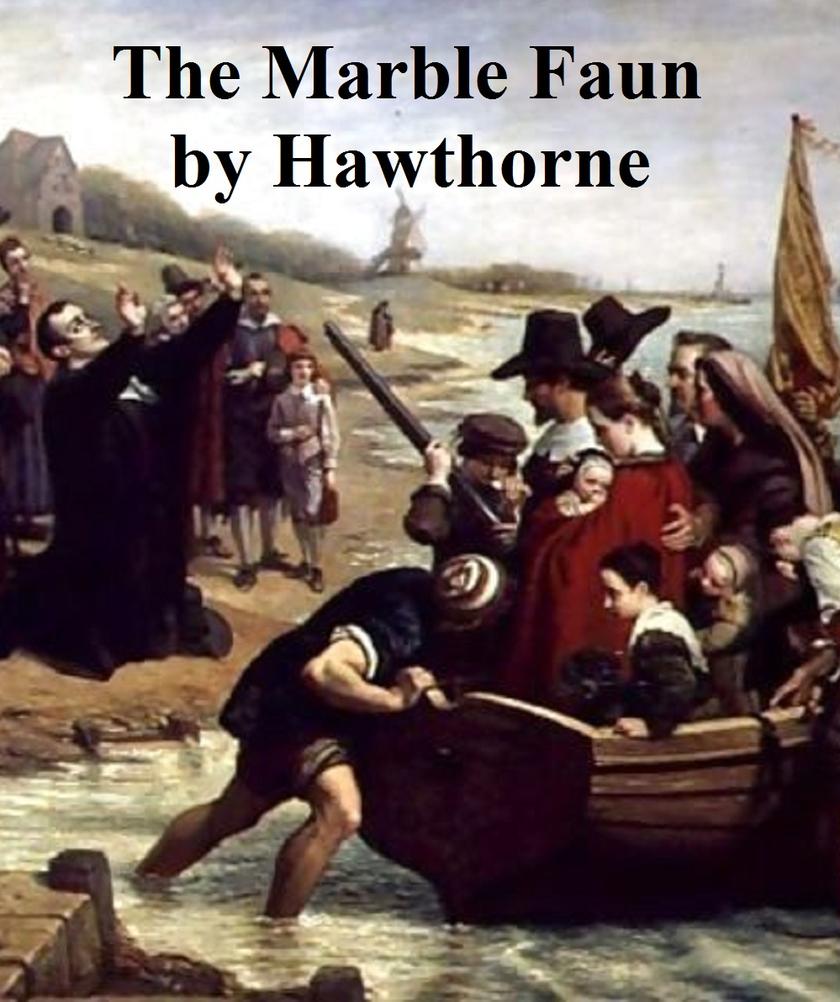
The Marble Faun Or the Romance of Monte Beni
¥8.09
Novel set in Italy. Two volumes in a single file. According to Wikipedia: "Nathaniel Hawthorne (1804 –1864) was an American novelist and short story writer... Much of Hawthorne's writing centers around New England and many feature moral allegories with a Puritan inspiration. His fiction works are considered part of the Romantic movement and, more specifically, dark romanticism. His themes often center on the inherent evil and sin of humanity and his works often have moral messages and deep psychological complexity. His published works include novels, short stories, and a biography of his friend Franklin Pierce."
The Europeans
¥8.09
Classic Henry James novel. According to Wikipedia: "Henry James, (1843 – 1916), son of theologian Henry James Sr., brother of the philosopher and psychologist William James and diarist Alice James, was an American-born British author. He is one of the key figures of 19th century literary realism; the fine art of his writing has led many academics to consider him the greatest master of the novel and novella form. He spent much of his life in England and became a British subject shortly before his death. He is primarily known for a series of major novels in which he portrayed the encounter of America with Europe. His plots centered on personal relationships, the proper exercise of power in such relationships, and other moral questions. His method of writing from the point of view of a character within a tale allowed him to explore the phenomena of consciousness and perception, and his style in later works has been compared to impressionist painting."
The Tragic Muse
¥8.09
Classic Henry James novel. According to Wikipedia: "Henry James, (1843 – 1916), son of theologian Henry James Sr., brother of the philosopher and psychologist William James and diarist Alice James, was an American-born British author. He is one of the key figures of 19th century literary realism; the fine art of his writing has led many academics to consider him the greatest master of the novel and novella form. He spent much of his life in England and became a British subject shortly before his death. He is primarily known for a series of major novels in which he portrayed the encounter of America with Europe. His plots centered on personal relationships, the proper exercise of power in such relationships, and other moral questions. His method of writing from the point of view of a character within a tale allowed him to explore the phenomena of consciousness and perception, and his style in later works has been compared to impressionist painting."
What Daisy Knew
¥8.09
Classic Henry James novel. According to Wikipedia: "Henry James, (1843 – 1916), son of theologian Henry James Sr., brother of the philosopher and psychologist William James and diarist Alice James, was an American-born British author. He is one of the key figures of 19th century literary realism; the fine art of his writing has led many academics to consider him the greatest master of the novel and novella form. He spent much of his life in England and became a British subject shortly before his death. He is primarily known for a series of major novels in which he portrayed the encounter of America with Europe. His plots centered on personal relationships, the proper exercise of power in such relationships, and other moral questions. His method of writing from the point of view of a character within a tale allowed him to explore the phenomena of consciousness and perception, and his style in later works has been compared to impressionist painting."


