


 购物车
 个人中心

Internet of Things with ESP8266
¥71.93
Build amazing Internet of Things projects using the ESP8266 Wi-Fi chip About This Book Get to know the powerful and low cost ESP8266 and build interesting projects in the field of Internet of Things Configure your ESP8266 to the cloud and explore the networkable modules that will be utilized in the IoT projects This step-by-step guide teaches you the basics of IoT with ESP8266 and makes your life easier Who This Book Is For This book is for those who want to build powerful and inexpensive IoT projects using the ESP8266 WiFi chip, including those who are new to IoT, or those who already have experience with other platforms such as Arduino. What You Will Learn Control various devices from the cloud Interact with web services, such as Twitter or Facebook Make two ESP8266 boards communicate with each other via the cloud Send notifications to users of the ESP8266, via email, text message, or push notifications Build a physical device that indicates the current price of Bitcoin Build a simple home automation system that can be controlled from the cloud Create your own cloud platform to control ESP8266 devices In Detail The Internet of Things (IoT) is the network of objects such as physical things embedded with electronics, software, sensors, and connectivity, enabling data exchange. ESP8266 is a low cost WiFi microcontroller chip that has the ability to empower IoT and helps the exchange of information among various connected objects. ESP8266 consists of networkable microcontroller modules, and with this low cost chip, IoT is booming. This book will help deepen your knowledge of the ESP8266 WiFi chip platform and get you building exciting projects. Kick-starting with an introduction to the ESP8266 chip, we will demonstrate how to build a simple LED using the ESP8266. You will then learn how to read, send, and monitor data from the cloud. Next, you’ll see how to control your devices remotely from anywhere in the world. Furthermore, you’ll get to know how to use the ESP8266 to interact with web services such as Twitter and Facebook. In order to make several ESP8266s interact and exchange data without the need for human intervention, you will be introduced to the concept of machine-to-machine communication. The latter part of the book focuses more on projects, including a door lock controlled from the cloud, building a physical Bitcoin ticker, and doing wireless gardening. You’ll learn how to build a cloud-based ESP8266 home automation system and a cloud-controlled ESP8266 robot. Finally, you’ll discover how to build your own cloud platform to control ESP8266 devices. With this book, you will be able to create and program Internet of Things projects using the ESP8266 WiFi chip. Style and approach This is a step-by-step guide that provides great IOT projects with ESP8266. All the key concepts are explained details with the help of examples and demonstrations of the projects.
JavaScript for .NET Developers
¥90.46
Unlock the potential of evergreen browsers and increase the efficiency of your ASP.NET applications by learning how to write JavaScript About This Book Boost your skillset and start bringing JavaScript into your web development projects Leverage your existing ASP.NET knowledge to develop dynamic and responsive SPAs Learn effective design patterns for sustainable, and scalable web development Who This Book Is For This book is for ASP.NET developers that want to bring JavaScript into their skillset to build applications that are truly dynamic and responsive. It's for developers who are focused on developing for users who want to deliver a great end product and a fantastic experience. What You Will Learn Get to grips with the basic to advanced concepts of JavaScript Learn how to use JavaScript on server side using Node.js Develop web applications in ASP.NET using JavaScript Get to know with industry-wide best practices and design patterns that provide maintainability and scalability Build an ASP.NET application using Angular 2 with TypeScript and Web API Explore WinJS and see how to use mobile capabilities from web applications Use JavaScript to develop scalable ASP.NET applications See how to test and debug JavaScript In Detail If you want to improve responsiveness or the UX in your ASP.NET applications, JavaScript can be a life saver. In an age where server-side operations have shifted to the client, being able to handle JavaScript with confidence and fluency is vital for ASP.NET developers. There’s no point trying to fight it, so start learning with this book. Make sure your projects exceed user expectations. Begin by getting stuck into the basics of JavaScript, and explore the language in the context of ASP.NET Core. You’ll then find out how to put the principles into practice, as you learn how to develop a basic ASP.NET application using Angular 2 and TypeScript. You’ll also develop essential skills required to develop responsive apps, with a little help from AJAX, ensuring that you’re building projects that can be easily accessed across different devices. With guidance on Node.js and some neat techniques to test and debug a range of JavaScript libraries in Visual Studio, you’ll soon be well on your way to combining JavaScript with ASP.NET in a way that’s capable of meeting the challenges of modern web development head-on. Style and approach This book will build the skillset of every .NET developer, so they can build stronger and more responsive web apps with confidence.
OpenStack for Architects
¥71.93
Design and implement successful private clouds with OpenStack About This Book Explore the various design choices available for cloud architects within an OpenStack deployment Craft an OpenStack architecture and deployment pipeline to meet the unique needs of your organization Create a product roadmap for Infrastructure as a Service in your organization using this hands-on guide Who This Book Is For This book is written especially for those who will design OpenStack clouds and lead their implementation. These people are typically cloud architects, but may also be in product management, systems engineering, or enterprise architecture. What You Will Learn Familiarize yourself with the components of OpenStack Build an increasingly complex OpenStack lab deployment Write compelling documentation for the architecture teams within your organization Apply Agile configuration management techniques to deploy OpenStack Integrate OpenStack with your organization's identity management, provisioning, and billing systems Configure a robust virtual environment for users to interact with Use enterprise security guidelines for your OpenStack deployment Create a product roadmap that delivers functionality quickly to the users of your platform In Detail Over the last five years, hundreds of organizations have successfully implemented Infrastructure as a Service (IaaS) platforms based on OpenStack. The huge amount of investment from these organizations, industry giants such as IBM and HP, as well as open source leaders such as Red Hat have led analysts to label OpenStack as the most important open source technology since the Linux operating system. Because of its ambitious scope, OpenStack is a complex and fast-evolving open source project that requires a diverse skill-set to design and implement it. This guide leads you through each of the major decision points that you'll face while architecting an OpenStack private cloud for your organization. At each point, we offer you advice based on the experience we've gained from designing and leading successful OpenStack projects in a wide range of industries. Each chapter also includes lab material that gives you a chance to install and configure the technologies used to build production-quality OpenStack clouds. Most importantly, we focus on ensuring that your OpenStack project meets the needs of your organization, which will guarantee a successful rollout. Style and approach This is practical, hands-on guide to implementing OpenStack clouds, where each topic is illustrated with real-world examples and then the technical points are proven in the lab.
Getting Started with Unity 5.x 2D Game Development
¥80.65
Build a tower defense game and earn delectable C# treats by baking cupcakes and fighting fearsome sweet-toothed pandas About This Book Build a complete and exciting 2D Tower Defense game from scratch. Understand and learn to perform each phase of the game development pipeline Homework and exercises to improve your skills and take them to the next level Who This Book Is For If you are looking forward to get started with 2D game development, either if you are a newcomer to this world, or you came from 3D games or other game engines, this book is for you. Although there are many references to other resources throughout the book, it is assumed that you have a general understanding of C# and its syntax and structure. What You Will Learn Import and set up assets for 2D game development Design and implement dynamic and responsive User Interfaces Create and handle complex animation systems Unlock all the potentiality of the physics engine Implement Artificial Intelligence algorithms to give intelligence to your NPCs Script gameplay and overall bring your ideas to life In Detail Want to get started in the world of 2D game development with UnityThis book will take your hand and guide you through this amazing journey to let you know exactly what you need to build the games you want to build, without sacrificing quality. You will build a solid understanding of Unity 5.x, by focusing with the embedded tools to develop 2D games. In learning about these, along with accurate explanations and practical examples, you will design, develop, learn how to market and publish a delectable Tower Defense game about cupcakes versus pandas. Each chapter in this book is structured to give you a full understanding on a specific aspect of the workflow pipeline. Each of these aspects are essential for developing games in Unity. In a step-by-step approach, you will learn about each of the following phases: Game Design, Asset Importing, Scripting, User Interfaces, Animations, Physics, Artificial Intelligence, Gameplay Programming, Polishing and Improving, Marketing, Publishing and much more. This book provides you with exercises and homework at the end of each chapter so that you can level up your skills as a Unity game developer. In addition, each of these parts are centered on a common point of discussion with other learners just like you. Therefore, by sharing your ideas with other people you will not only develop your skills but you will also build a network. Style and approach This is a fun step-by-step approach in the whole pipeline of 2D game development in Unity, which is explained in a conversational and easy-to-follow style. Each topic is explained sequentially, allowing you to experience both basics and advanced features of Unity. By doing this, the book is able to provide you with a solid grasp on each of the topics. In this way, by engaging with the book’s content, exploring the additional references to further readings and completing the homework sections, you are able to challenge yourself and apply what you know in a variety of ways. Once you have finished reading this book, you will be well on your way to developing games from start to finish!
Learning Kibana 5.0
¥71.93
Exploit the visualization capabilities of Kibana and build powerful interactive dashboards About This Book Introduction to data-driven architecture and the Elastic stack Build effective dashboards for data visualization and explore datasets with Elastic Graph A comprehensive guide to learning scalable data visualization techniques in Kibana Who This Book Is For If you are a developer, data visualization engineer, or data scientist who wants to get the best of data visualization at scale then this book is perfect for you. A basic understanding of Elasticsearch and Logstash is required to make the best use of this book. What You Will Learn How to create visualizations in Kibana Ingest log data, structure an Elasticsearch cluster, and create visualization assets in Kibana Embed Kibana visualization on web pages Scaffold, develop, and deploy new Kibana & Timelion customizations Build a metrics dashboard in Timelion based on time series data Use the Graph plugin visualization feature and leverage a graph query Create, implement, package, and deploy a new custom plugin Use Prelert to solve anomaly detection challenges In Detail Kibana is an open source data visualization platform that allows you to interact with your data through stunning, powerful graphics. Its simple, browser-based interface enables you to quickly create and share dynamic dashboards that display changes to Elasticsearch queries in real time. In this book, you’ll learn how to use the Elastic stack on top of a data architecture to visualize data in real time. All data architectures have different requirements and expectations when it comes to visualizing the data, whether it’s logging analytics, metrics, business analytics, graph analytics, or scaling them as per your business requirements. This book will help you master Elastic visualization tools and adapt them to the requirements of your project. You will start by learning how to use the basic visualization features of Kibana 5. Then you will be shown how to implement a pure metric analytics architecture and visualize it using Timelion, a very recent and trendy feature of the Elastic stack. You will learn how to correlate data using the brand-new Graph visualization and build relationships between documents. Finally, you will be familiarized with the setup of a Kibana development environment so that you can build a custom Kibana plugin. By the end of this book you will have all the information needed to take your Elastic stack skills to a new level of data visualization. Style and approach This book takes a comprehensive, step-by-step approach to working with the visualization aspects of the Elastic stack. Every concept is presented in a very easy-to-follow manner that shows you both the logic and method of implementation. Real world cases are referenced to highlight how each of the key concepts can be put to practical use.
Deep Learning with Hadoop
¥71.93
Build, implement and scale distributed deep learning models for large-scale datasets About This Book Get to grips with the deep learning concepts and set up Hadoop to put them to use Implement and parallelize deep learning models on Hadoop’s YARN framework A comprehensive tutorial to distributed deep learning with Hadoop Who This Book Is For If you are a data scientist who wants to learn how to perform deep learning on Hadoop, this is the book for you. Knowledge of the basic machine learning concepts and some understanding of Hadoop is required to make the best use of this book. What You Will Learn Explore Deep Learning and various models associated with it Understand the challenges of implementing distributed deep learning with Hadoop and how to overcome it Implement Convolutional Neural Network (CNN) with deeplearning4j Delve into the implementation of Restricted Boltzmann Machines (RBM) Understand the mathematical explanation for implementing Recurrent Neural Networks (RNN) Get hands on practice of deep learning and their implementation with Hadoop. In Detail This book will teach you how to deploy large-scale dataset in deep neural networks with Hadoop for optimal performance. Starting with understanding what deep learning is, and what the various models associated with deep neural networks are, this book will then show you how to set up the Hadoop environment for deep learning. In this book, you will also learn how to overcome the challenges that you face while implementing distributed deep learning with large-scale unstructured datasets. The book will also show you how you can implement and parallelize the widely used deep learning models such as Deep Belief Networks, Convolutional Neural Networks, Recurrent Neural Networks, Restricted Boltzmann Machines and autoencoder using the popular deep learning library deeplearning4j. Get in-depth mathematical explanations and visual representations to help you understand the design and implementations of Recurrent Neural network and Denoising AutoEncoders with deeplearning4j. To give you a more practical perspective, the book will also teach you the implementation of large-scale video processing, image processing and natural language processing on Hadoop. By the end of this book, you will know how to deploy various deep neural networks in distributed systems using Hadoop. Style and approach This book takes a comprehensive, step-by-step approach to implement efficient deep learning models on Hadoop. It starts from the basics and builds the readers’ knowledge as they strengthen their understanding of the concepts. Practical examples are included in every step of the way to supplement the theory.
Learning PowerCLI - Second Edition
¥90.46
Learn to leverage the power of PowerCLI to automate your VMware vSphere environment with ease About This Book This is first book on the market that will enlighten you on the latest version of PowerCLI and how to implement it Effectively manage virtual machines, networks, and reports with the latest features of PowerCLI A comprehensive and practical book on automating VMware vSphere Who This Book Is For This book is ideal for you if you want to learn how to automate your VMware vSphere or vCloud infrastructure by getting the most out of PowerCLI. It’s assumed that you have some experience in administrating a vSphere or vCloud environment. Knowledge of Microsoft’s Windows PowerShell is not a prerequisite. What You Will Learn Explore PowerShell and PowerCLI cmdlets and their output objects See how to manage virtual machines and work with virtual networks Manage vCloud Director from PowerCLI Use Site Recovery Manager from PowerCLI to create a disaster recovery solution Manage NSX and vRealize Automation using REST API with PowerCLI Create and configure vSphere HA and DRS clusters Use vSphere Update Manager with PowerCLI to create patch baselines and scan hosts Explore reporting techniques to retrieve log files In Detail VMware vSphere PowerCLI, a free extension to Microsoft Windows PowerShell, enables you to automate the management of a VMware vSphere or vCloud environment. This book will show you how to automate your tasks and make your job easier. Starting with an introduction to the basics of PowerCLI, the book will teach you how to manage your vSphere and vCloud infrastructure from the command line. To help you manage a vSphere host overall, you will learn how to manage vSphere ESXi hosts, host profiles, host services, host firewall, and deploy and upgrade ESXi hosts using Image Builder and Auto Deploy. The next chapter will not only teach you how to create datastore and datastore clusters, but you’ll also work with profile-driven and policy-based storage to manage your storage. To create a disaster recovery solution and retrieve information from vRealize Operations, you will learn how to use Site Recovery Manager and vRealize Operations respectively. Towards the end, you’ll see how to use the REST APIs from PowerShell to manage NSX and vRealize Automation and create patch baselines, scan hosts against the baselines for missing patches, and re-mediate hosts. By the end of the book, you will be capable of using the best tool to automate the management and configuration of VMware vSphere. Style and approach This comprehensive book will teach system administrators everything about PowerCLI 6 and how to utilize it to automate VMware vSphere.
Mastering KVM Virtualization
¥90.46
Dive in to the cutting edge techniques of Linux KVM virtualization, and build the virtualization solutions your datacentre demands About This Book Become an expert in Linux virtualization Migrate your virtualized datacenter to the cloud Find out how to build a large scale virtualization solution that will transform your organization Who This Book Is For Linux administrators – if you want to build incredible, yet manageable virtualization solutions with KVM this is the book to get you there. It will help you apply what you already know to some tricky virtualization tasks. What You Will Learn Explore the ecosystem of tools that support Linux virtualization Find out why KVM offers you a smarter way to unlock the potential of virtualization Implement KVM virtualization using oVirt Explore the KVM architecture – so you can manage, scale and optimize it with ease Migrate your virtualized datacenter to the cloud for truly resource-efficient computing Find out how to integrate OpenStack with KVM to take full control of the cloud In Detail A robust datacenter is essential for any organization – but you don’t want to waste resources. With KVM you can virtualize your datacenter, transforming a Linux operating system into a powerful hypervisor that allows you to manage multiple OS with minimal fuss. This book doesn’t just show you how to virtualize with KVM – it shows you how to do it well. Written to make you an expert on KVM, you’ll learn to manage the three essential pillars of scalability, performance and security – as well as some useful integrations with cloud services such as OpenStack. From the fundamentals of setting up a standalone KVM virtualization platform, and the best tools to harness it effectively, including virt-manager, and kimchi-project, everything you do is built around making KVM work for you in the real-world, helping you to interact and customize it as you need it. With further guidance on performance optimization for Microsoft Windows and RHEL virtual machines, as well as proven strategies for backup and disaster recovery, you’ll can be confident that your virtualized data center is working for your organization – not hampering it. Finally, the book will empower you to unlock the full potential of cloud through KVM. Migrating your physical machines to the cloud can be challenging, but once you’ve mastered KVM, it’s a little easie. Style and approach Combining advanced insights with practical solutions, Mastering KVM Virtualization is a vital resource for anyone that believes in the power of virtualization to help a business use resources more effectively.
Building a 3D Game with LibGDX
¥54.49
Learn how to build an exciting 3D game with LibGDX from scratch About This Book Implement an exhaustive list of features that LibGDX unleashes to build your 3D game. Write, test, and debug your application on your desktop and deploy them on multiple platforms. Gain a clear understanding of the physics behind LibGDX and libraries like OpenGL and WebGL that make up LibGDX. Who This Book Is For If you are a game developer or enthusiasts who want to build 3D games with LibGDX, then this book is for you. A basic knowledge of LibGDX and Java programming is appreciated. What You Will Learn Learn the potential of LibGDX in game development Understand the LibGDX architecture and explore platform limitation and variations Explore the various approaches for game development using LibGDX Learn about the common mistakes and possible solutions of development Discover the 3D workflow with Blender and how it works with LibGDX Implement 3D models along with textures and animations into your games Familiarize yourself with Scene2D and its potential to boost your game’s design In Detail LibGDX is a hugely popular open source, cross-platform, Java-based game development framework built for the demands of cross-platform game development. This book will teach readers how the LibGDX framework uses its 3D rendering API with the OpenGL wrapper, in combination with Bullet Physics, 3D Particles, and Shaders to develop and deploy a game application to different platforms You will start off with the basic Intellij environment, workflow and set up a LibGDX project with necessary APIs for 3D development. You will then go through LibGDX’s 3D rendering API main features and talk about the camera used for 3D. Our next step is to put everything together to build a basic 3D game with Shapes, including basic gameplay mechanics and basic UI. Next you will go through modeling, rigging, and animation in Blender. We will then talk about refining mechanics, new input implementations, implementing enemy 3D models, mechanics, and gameplay balancing. The later part of this title will help you to manage secondary resources like audio, music and add 3D particles in the game to make the game more realistic. You will finally test and deploy the app on a multitude of different platforms, ready to start developing your own titles how you want! Style and approach A step by step guide on building a 3D game with LibGDX and implementing an exhaustive list of features that you would wish to incorporate into your 3D game
Tableau: Creating Interactive Data Visualizations
¥152.59
Illustrate your data in a more interactive way by implementing data visualization principles and creating visual stories using Tableau About This Book Use data visualization principles to help you to design dashboards that enlighten and support business decisions Integrate your data to provide mashed-up dashboards Connect to various data sources and understand what data is appropriate for Tableau Public Understand chart types and when to use specific chart types with different types of data Who This Book Is For Data scientists who have just started using Tableau and want to build on the skills using practical examples. Familiarity with previous versions of Tableau will be helpful, but not necessary. What You Will Learn Customize your designs to meet the needs of your business using Tableau Use Tableau to prototype, develop, and deploy the final dashboard Create filled maps and use any shape file Discover features of Tableau Public, from basic to advanced Build geographic maps to bring context to data Create filters and actions to allow greater interactivity to Tableau Public visualizations and dashboards Publish and embed Tableau visualizations and dashboards in articles In Detail With increasing interest for data visualization in the media, businesses are looking to create effective dashboards that engage as well as communicate the truth of data. Tableau makes data accessible to everyone, and is a great way of sharing enterprise dashboards across the business. Tableau is a revolutionary toolkit that lets you simply and effectively create high-quality data visualizations. This course starts with making you familiar with its features and enable you to develop and enhance your dashboard skills, starting with an overview of what dashboard is, followed by how you can collect data using various mathematical formulas. Next, you'll learn to filter and group data, as well as how to use various functions to present the data in an appealing and accurate way. In the first module, you will learn how to use the key advanced string functions to play with data and images. You will be walked through the various features of Tableau including dual axes, scatterplot matrices, heat maps, and sizing.In the second module, you’ll start with getting your data into Tableau, move onto generating progressively complex graphics, and end with the finishing touches and packaging your work for distribution. This module is filled with practical examples to help you create filled maps, use custom markers, add slider selectors, and create dashboards. You will learn how to manipulate data in various ways by applying various filters, logic, and calculating various aggregate measures. Finally, in the third module, you learn about Tableau Public using which allows readers to explore data associations in multiple-sourced public data, and uses state-of-the-art dashboard and chart graphics to immerse the users in an interactive experience. In this module, the readers can quickly gain confidence in understanding and expanding their visualization, creation knowledge, and quickly create interesting, interactive data visualizations to bring a richness and vibrancy to complex articles. The course provides a great overview for beginner to intermediate Tableau users, and covers the creation of data visualizations of varying complexities. Style and approach The approach will be a combined perspective, wherein we start by performing some basic recipes and move on to some advanced ones. Finally, we perform some advanced analytics and create appealing and insightful data stories using Tableau Public in a step-by-step manner.
Python: Deeper Insights into Machine Learning
¥161.31
Leverage benefits of machine learning techniques using Python About This Book Improve and optimise machine learning systems using effective strategies. Develop a strategy to deal with a large amount of data. Use of Python code for implementing a range of machine learning algorithms and techniques. Who This Book Is For This title is for data scientist and researchers who are already into the field of data science and want to see machine learning in action and explore its real-world application. Prior knowledge of Python programming and mathematics is must with basic knowledge of machine learning concepts. What You Will Learn Learn to write clean and elegant Python code that will optimize the strength of your algorithms Uncover hidden patterns and structures in data with clustering Improve accuracy and consistency of results using powerful feature engineering techniques Gain practical and theoretical understanding of cutting-edge deep learning algorithms Solve unique tasks by building models Get grips on the machine learning design process In Detail Machine learning and predictive analytics are becoming one of the key strategies for unlocking growth in a challenging contemporary marketplace. It is one of the fastest growing trends in modern computing, and everyone wants to get into the field of machine learning. In order to obtain sufficient recognition in this field, one must be able to understand and design a machine learning system that serves the needs of a project. The idea is to prepare a learning path that will help you to tackle the real-world complexities of modern machine learning with innovative and cutting-edge techniques. Also, it will give you a solid foundation in the machine learning design process, and enable you to build customized machine learning models to solve unique problems. The course begins with getting your Python fundamentals nailed down. It focuses on answering the right questions that cove a wide range of powerful Python libraries, including scikit-learn Theano and Keras.After getting familiar with Python core concepts, it’s time to dive into the field of data science. You will further gain a solid foundation on the machine learning design and also learn to customize models for solving problems. At a later stage, you will get a grip on more advanced techniques and acquire a broad set of powerful skills in the area of feature selection and feature engineering. Style and approach This course includes all the resources that will help you jump into the data science field with Python. The aim is to walk through the elements of Python covering powerful machine learning libraries. This course will explain important machine learning models in a step-by-step manner. Each topic is well explained with real-world applications with detailed guidance.Through this comprehensive guide, you will be able to explore machine learning techniques.
Visualforce Development Cookbook - Second Edition
¥90.46
Discover over 70 real-world examples to overcome the most complex concepts you will face developing with Visualforce About This Book This book provides an enhanced user experience with dynamically-generated, reactive pages Access data over additional channels via public web sites and mobile pages Packed with easy-to-follow recipes, including step-by-step instructions and Apex/Visualforce code downloads this title is the all in one package you need to get more from Visualforce. Who This Book Is For This book will be beneficial to developers who are already well-versed with the basics of Visualforce. An awareness of the standard component library and the purpose of controllers is expected. What You Will Learn Pass parameters between Visualforce pages Update attributes in component controllers Avoid validation errors with action regions Refresh record details from embedded Visualforce Create and develop a website template from scratch Get to know about the Salesforce Lightening Design system and use Visualforce in Salesforce1 Effectively tackle frequently-faced problems while developing Visualforce pages In Detail Visualforce is a framework that allows developers to build sophisticated, custom user interfaces that can be hosted natively on the Force.com platform. The Visualforce framework includes a tag-based markup language, similar to HTML that is used to write the Visualforce pages and a set of controllers that are used to write business logic to the Visualforce pages. Visualforce Development Cookbook provides solutions to a variety of challenges faced by Salesforce developers and demonstrates how easy it is to build rich, interactive pages using Visualforce. Whether you are looking to make a minor addition to the standard page functionality or override it completely, this book will provide you with the help you require throughout. You will start by learning about the simple utilities and will build up to more advanced techniques for data visualization and to reuse functionality. You will learn how to perform various tasks such as creating multiple records from a single page, visualizing data as charts, using JavaScript to enhance client-side functionality, building a public website, and making data available to a mobile device. With an interesting chapter on tackling common issues faced while developing Visualforce pages, the book provides lots of practical examples to enhance and extend your Salesforce user interface. Style and approach Following a cookbook structure, the book provides recipes on some essential technical scenarios and a few that focus on real-world development problems. This book is packed with illustrations and contains lots of code samples to improve your understanding.
Laravel 5.x Cookbook
¥90.46
A recipe-based book to help you efficiently create amazing PHP-based applications with Laravel 5.x About This Book Leverage the amazing new features of Laravel 5.x to create cutting-edge responsive PHP applications. Create apps with interoperability features and extend these features to your existing applications as well. Over 60 recipes that combine tried and tested Laravel tips for getting your app working. Who This Book Is For The ideal target audience for this book is PHP developers who have some basic PHP programming knowledge. No previous experience with Laravel is required for this book. What You Will Learn Optimize Your Gulp and Elixir Workflow Use Travis to run tests with every push Build and test your view-based route in PHPUnit Explore workflows for migrations and seeding Implement Angular in your Laravel applications Set up a user authentication system Integrate the new Billing library and Stripe in your Laravel application Use the Artisan command-line tool Test your App in Production with Behat In Detail Laravel is a prominent member of a new generation of web frameworks. It is one of the most popular PHP frameworks and is also free and an open source. Laravel 5 is a substantial upgrade with a lot of new toys, at the same time retaining the features that made Laravel wildly successful. It comes with plenty of architectural as well as design-based changes. The book is a blend of numerous recipes that will give you all the necessary tips you need to build an application. It starts with basic installation and configuration tasks and will get you up-and-running in no time. You will learn to create and customize your PHP app and tweak and re-design your existing apps for better performance. You will learn to implement practical recipes to utilize Laravel’s modular structure, the latest method injection, route caching, and interfacing techniques to create responsive modern-day PHP apps that stand on their own against other apps. Efficient testing and deploying techniques will make you more confident with your Laravel skills as you move ahead with this book. Towards the end of the book, you will understand a number of add-ons and new features essential to finalize your application to make it ready for sub*ions. You will be empowered to get your application out to the world. Style and approach This book will have a practical recipe-based approach with dedicated recipes on your daily Laravel tasks (as well as on more advanced issues) that will help you become a pro with Laravel 5.x
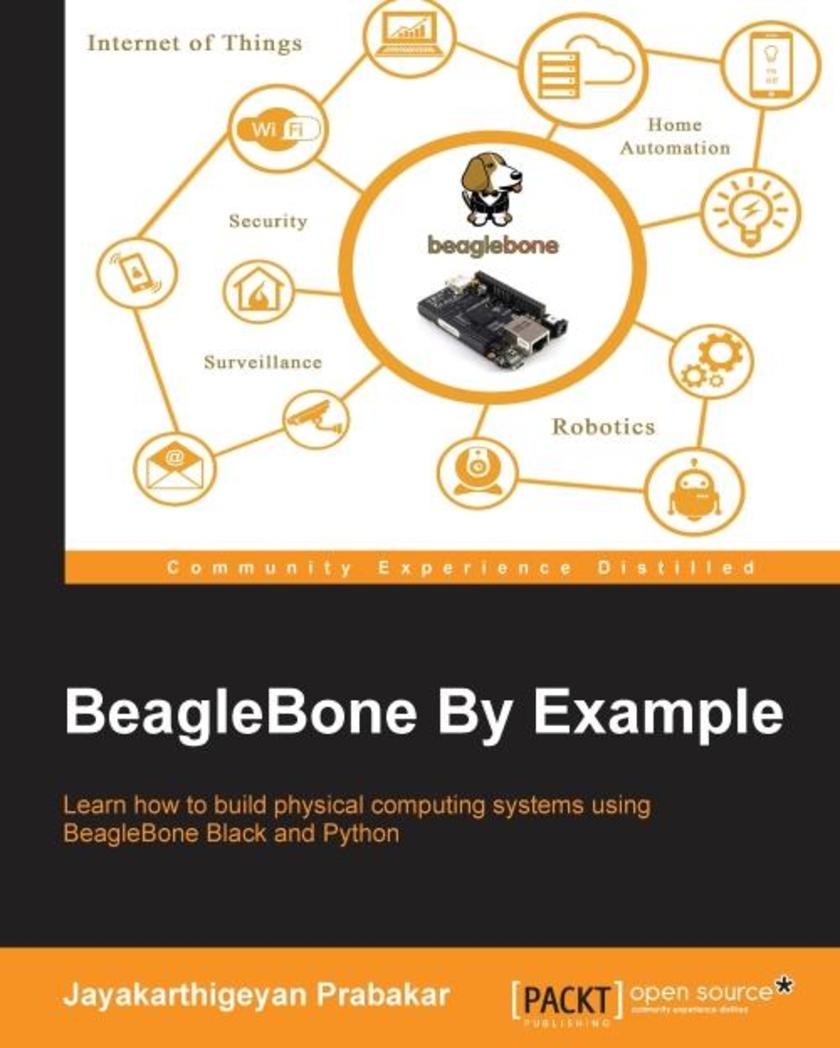
BeagleBone By Example
¥71.93
Learn how to build physical computing systems using BeagleBone Black and Python About This Book Get to grips with the fundamentals of BeagleBone Leverage Python *s to program BeagleBone for your requirements Build four exciting projects, from home automation to a tele-controlled robot Who This Book Is For This book is intended for hobbyists and consumers who wish to create impressive projects using BeagleBone. You must be familiar with Python programming. What You Will Learn Program on BeagleBone Black using Python Interface sensors and actuators to BeagleBone Black Build your own real-time physical computing systems Connect physical computing systems to cloud servers Build your own home automation and home security system Build your own tele-controlled robot with real-time video streaming In Detail BeagleBone is a low cost, community-supported development platform to develop a variety of electronic projects. This book will introduce you to BeagleBone and get you building fun, cool, and innovative projects with it. Start with the specifications of BeagleBone Black and its operating systems, then get to grips with the GPIOs available in BeagleBone Black. Work through four types of exciting projects: building real-time physical computing systems, home automation, image processing for a security system, and building your own tele-controlled robot and learn the fundamentals of a variety of projects in a single book. By the end of this book, you will be able to write code for BeagleBone in order to operate hardware and impart decision-making capabilities with the help of efficient coding in Python. Style and approach This book is a step by step guide that will walk you through the fundamentals of building different projects using BeagleBone Black.
Learning Python Application Development
¥80.65
Take Python beyond *ing to build robust, reusable, and efficient applications About This Book Get to grips with Python techniques that address commonly encountered problems in general application development. Develop, package, and deploy efficient applications in a fun way. All-practical coverage of the major areas of application development, including best practices, exception handling, testing, refactoring, design patterns, performance, and GUI application development. Who This Book Is For Do you know the basics of Python and object oriented programmingDo you want to go an extra mile and learn techniques to make your Python application robust, extensible, and efficientThen this book is for you. What You Will Learn Build a robust application by handling exceptions. Modularize, package, and release the source distribution. Document the code and implement coding standards. Create automated tests to catch bugs in the early development stage. Identify and re-factor badly written code to improve application life. Detect recurring problems in the code and apply design patterns. Improve code efficiency by identifying performance bottlenecks and fixing them. Develop simple GUI applications using Python. In Detail Python is one of the most widely used dynamic programming languages, supported by a rich set of libraries and frameworks that enable rapid development. But fast paced development often comes with its own baggage that could bring down the quality, performance, and extensibility of an application. This book will show you ways to handle such problems and write better Python applications. From the basics of simple command-line applications, develop your skills all the way to designing efficient and advanced Python apps. Guided by a light-hearted fantasy learning theme, overcome the real-world problems of complex Python development with practical solutions. Beginning with a focus on robustness, packaging, and releasing application code, you’ll move on to focus on improving application lifetime by making code extensible, reusable, and readable. Get to grips with Python refactoring, design patterns and best practices. Techniques to identify the bottlenecks and improve performance are covered in a series of chapters devoted to performance, before closing with a look at developing Python GUIs. Style and approach The book uses a fantasy game theme as a medium to explain various topics. Specific aspects of application development are explained in different chapters. In each chapter the reader is presented with an interesting problem which is then tackled using hands-on examples with easy-to-follow instructions.
Effective Robotics Programming with ROS - Third Edition
¥90.46
Find out everything you need to know to build powerful robots with the most up-to-date ROS About This Book This comprehensive, yet easy-to-follow guide will help you find your way through the ROS framework Successfully design and simulate your 3D robot model and use powerful robotics algorithms and tools to program and set up your robots with an unparalleled experience by using the exciting new features from Robot Kinetic Use the latest version of gazebo simulator, OpenCV 3.0, and C++11 standard for your own algorithms Who This Book Is For This book is suitable for an ROS beginner as well as an experienced ROS roboticist or ROS user or developer who is curious to learn ROS Kinetic and its features to make an autonomous Robot. The book is also suitable for those who want to integrate sensors and embedded systems with other software and tools using ROS as a framework. What You Will Learn Understand the concepts of ROS, the command-line tools, visualization GUIs, and how to debug ROS Connect robot sensors and actuators to ROS Obtain and analyze data from cameras and 3D sensors Use Gazebo for robot/sensor and environment simulation Design a robot and see how to make it map the environment, navigate autonomously, and manipulate objects in the environment using MoveIt! Add vision capabilities to the robot using OpenCV 3.0 Add 3D perception capabilities to the robot using the latest version of PCL In Detail Building and programming a robot can be cumbersome and time-consuming, but not when you have the right collection of tools, libraries, and more importantly expert collaboration. ROS enables collaborative software development and offers an unmatched simulated environment that simplifies the entire robot building process. This book is packed with hands-on examples that will help you program your robot and give you complete solutions using open source ROS libraries and tools. It also shows you how to use virtual machines and Docker containers to simplify the installation of Ubuntu and the ROS framework, so you can start working in an isolated and control environment without changing your regular computer setup. It starts with the installation and basic concepts, then continues with more complex modules available in ROS such as sensors and actuators integration (drivers), navigation and mapping (so you can create an autonomous mobile robot), manipulation, Computer Vision, perception in 3D with PCL, and more. By the end of the book, you’ll be able to leverage all the ROS Kinetic features to build a fully fledged robot for all your needs. Style and approach This book is packed with hands-on examples that will help you program your robot and give you complete solutions using ROS open source libraries and tools. All the robotics concepts and modules are explained and multiple examples are provided so that you can understand them easily.
Mastering Text Mining with R
¥71.93
Master text-taming techniques and build effective text-processing applications with R About This Book Develop all the relevant skills for building text-mining apps with R with this easy-to-follow guide Gain in-depth understanding of the text mining process with lucid implementation in the R language Example-rich guide that lets you gain high-quality information from text data Who This Book Is For If you are an R programmer, analyst, or data scientist who wants to gain experience in performing text data mining and analytics with R, then this book is for you. Exposure to working with statistical methods and language processing would be helpful. What You Will Learn Get acquainted with some of the highly efficient R packages such as OpenNLP and RWeka to perform various steps in the text mining process Access and manipulate data from different sources such as JSON and HTTP Process text using regular expressions Get to know the different approaches of tagging texts, such as POS tagging, to get started with text analysis Explore different dimensionality reduction techniques, such as Principal Component Analysis (PCA), and understand its implementation in R Discover the underlying themes or topics that are present in an unstructured collection of documents, using common topic models such as Latent Dirichlet Allocation (LDA) Build a baseline sentence completing application Perform entity extraction and named entity recognition using R In Detail Text Mining (or text data mining or text analytics) is the process of extracting useful and high-quality information from text by devising patterns and trends. R provides an extensive ecosystem to mine text through its many frameworks and packages. Starting with basic information about the statistics concepts used in text mining, this book will teach you how to access, cleanse, and process text using the R language and will equip you with the tools and the associated knowledge about different tagging, chunking, and entailment approaches and their usage in natural language processing. Moving on, this book will teach you different dimensionality reduction techniques and their implementation in R. Next, we will cover pattern recognition in text data utilizing classification mechanisms, perform entity recognition, and develop an ontology learning framework. By the end of the book, you will develop a practical application from the concepts learned, and will understand how text mining can be leveraged to analyze the massively available data on social media. Style and approach This book takes a hands-on, example-driven approach to the text mining process with lucid implementation in R.
Mastering Scala Machine Learning
¥90.46
Advance your skills in efficient data analysis and data processing using the powerful tools of Scala, Spark, and Hadoop About This Book This is a primer on functional-programming-style techniques to help you efficiently process and analyze all of your data Get acquainted with the best and newest tools available such as Scala, Spark, Parquet and MLlib for machine learning Learn the best practices to incorporate new Big Data machine learning in your data-driven enterprise to gain future scalability and maintainability Who This Book Is For Mastering Scala Machine Learning is intended for enthusiasts who want to plunge into the new pool of emerging techniques for machine learning. Some familiarity with standard statistical techniques is required. What You Will Learn Sharpen your functional programming skills in Scala using REPL Apply standard and advanced machine learning techniques using Scala Get acquainted with Big Data technologies and grasp why we need a functional approach to Big Data Discover new data structures, algorithms, approaches, and habits that will allow you to work effectively with large amounts of data Understand the principles of supervised and unsupervised learning in machine learning Work with unstructured data and serialize it using Kryo, Protobuf, Avro, and AvroParquet Construct reliable and robust data pipelines and manage data in a data-driven enterprise Implement scalable model monitoring and alerts with Scala In Detail Since the advent of object-oriented programming, new technologies related to Big Data are constantly popping up on the market. One such technology is Scala, which is considered to be a successor to Java in the area of Big Data by many, like Java was to C/C++ in the area of distributed programing. This book aims to take your knowledge to next level and help you impart that knowledge to build advanced applications such as social media mining, intelligent news portals, and more. After a quick refresher on functional programming concepts using REPL, you will see some practical examples of setting up the development environment and tinkering with data. We will then explore working with Spark and MLlib using k-means and decision trees. Most of the data that we produce today is unstructured and raw, and you will learn to tackle this type of data with advanced topics such as regression, classification, integration, and working with graph algorithms. Finally, you will discover at how to use Scala to perform complex concept analysis, to monitor model performance, and to build a model repository. By the end of this book, you will have gained expertise in performing Scala machine learning and will be able to build complex machine learning projects using Scala. Style and approach This hands-on guide dives straight into implementing Scala for machine learning without delving much into mathematical proofs or validations. There are ample code examples and tricks that will help you sail through using the standard techniques and libraries. This book provides practical examples from the field on how to correctly tackle data analysis problems, particularly for modern Big Data datasets.
Practical Internet of Things Security
¥80.65
A practical, indispensable security guide that will navigate you through the complex realm of securely building and deploying systems in our IoT-connected world About This Book Learn to design and implement cyber security strategies for your organization Learn to protect cyber-physical systems and utilize forensic data analysis to beat vulnerabilities in your IoT ecosystem Learn best practices to secure your data from device to the cloud Gain insight into privacy-enhancing techniques and technologies Who This Book Is For This book targets IT Security Professionals and Security Engineers (including pentesters, security architects and ethical hackers) who would like to ensure security of their organization's data when connected through the IoT. Business analysts and managers will also find it useful. What You Will Learn Learn how to break down cross-industry barriers by adopting the best practices for IoT deployments Build a rock-solid security program for IoT that is cost-effective and easy to maintain Demystify complex topics such as cryptography, privacy, and penetration testing to improve your security posture See how the selection of individual components can affect the security posture of the entire system Use Systems Security Engineering and Privacy-by-design principles to design a secure IoT ecosystem Get to know how to leverage the burdgening cloud-based systems that will support the IoT into the future. In Detail With the advent of Intenret of Things (IoT), businesses will be faced with defending against new types of threats. The business ecosystem now includes cloud computing infrastructure, mobile and fixed endpoints that open up new attack surfaces, a desire to share information with many stakeholders and a need to take action quickly based on large quantities of collected data. . It therefore becomes critical to ensure that cyber security threats are contained to a minimum when implementing new IoT services and solutions. . The interconnectivity of people, devices, and companies raises stakes to a new level as computing and action become even more mobile, everything becomes connected to the cloud, and infrastructure is strained to securely manage the billions of devices that will connect us all to the IoT. This book shows you how to implement cyber-security solutions, IoT design best practices and risk mitigation methodologies to address device and infrastructure threats to IoT solutions. This book will take readers on a journey that begins with understanding the IoT and how it can be applied in various industries, goes on to describe the security challenges associated with the IoT, and then provides a set of guidelines to architect and deploy a secure IoT in your Enterprise. The book will showcase how the IoT is implemented in early-adopting industries and describe how lessons can be learned and shared across diverse industries to support a secure IoT. Style and approach This book aims to educate readers on key areas in IoT security. It walks readers through engaging with security challenges and then provides answers on how to successfully manage IoT security and build a safe infrastructure for smart devices. After reading this book, you will understand the true potential of tools and solutions in order to build real-time security intelligence on IoT networks.
Mastering Python Data Analysis
¥90.46
Become an expert at using Python for advanced statistical analysis of data using real-world examples About This Book Clean, format, and explore data using graphical and numerical summaries Leverage the IPython environment to efficiently analyze data with Python Packed with easy-to-follow examples to develop advanced computational skills for the analysis of complex data Who This Book Is For If you are a competent Python developer who wants to take your data analysis skills to the next level by solving complex problems, then this advanced guide is for you. Familiarity with the basics of applying Python libraries to data sets is assumed. What You Will Learn Read, sort, and map various data into Python and Pandas Recognise patterns so you can understand and explore data Use statistical models to discover patterns in data Review classical statistical inference using Python, Pandas, and SciPy Detect similarities and differences in data with clustering Clean your data to make it useful Work in Jupyter Notebook to produce publication ready figures to be included in reports In Detail Python, a multi-paradigm programming language, has become the language of choice for data scientists for data analysis, visualization, and machine learning. Ever imagined how to become an expert at effectively approaching data analysis problems, solving them, and extracting all of the available information from your dataWell, look no further, this is the book you want! Through this comprehensive guide, you will explore data and present results and conclusions from statistical analysis in a meaningful way. You’ll be able to quickly and accurately perform the hands-on sorting, reduction, and subsequent analysis, and fully appreciate how data analysis methods can support business decision-making. You’ll start off by learning about the tools available for data analysis in Python and will then explore the statistical models that are used to identify patterns in data. Gradually, you’ll move on to review statistical inference using Python, Pandas, and SciPy. After that, we’ll focus on performing regression using computational tools and you’ll get to understand the problem of identifying clusters in data in an algorithmic way. Finally, we delve into advanced techniques to quantify cause and effect using Bayesian methods and you’ll discover how to use Python’s tools for supervised machine learning. Style and approach This book takes a step-by-step approach to reading, processing, and analyzing data in Python using various methods and tools. Rich in examples, each topic connects to real-world examples and retrieves data directly online where possible. With this book, you are given the knowledge and tools to explore any data on your own, encouraging a curiosity befitting all data scientists.
ROS Robotics By Example
¥90.46
Bring life to your robot using ROS robotic applications About This Book .This book will help you boost your knowledge of ROS and give you advanced practical experience you can apply to your ROS robot platforms.This is the only book that offers you step-by-step instructions to solidify your ROS understanding and gain experience using ROS tools.From eminent authors, this book offers you a plethora of fun-filled examples to make your own quadcopter, turtlebot, and two-armed robots Who This Book Is For If you are a robotics developer, whether a hobbyist, researchers or professional, and are interested in learning about ROS through a hands-on approach, then this book is for you. You are encouraged to have a working knowledge of GNU/Linux systems and Python. What You Will Learn .Get to know the fundamentals of ROS and apply its concepts to real robot examples.Control a mobile robot to navigate autonomously in an environment.Model your robot designs using URDF and Xacro, and operate them in a ROS Gazebo simulation.Control a 7 degree-of-freedom robot arm for visual servoing.Fly a quadcopter to autonomous waypoints.Gain working knowledge of ROS tools such as Gazebo, rviz, rqt, and Move-It.Control robots with mobile devices and controller boards In Detail The visionaries who created ROS developed a framework for robotics centered on the commonality of robotic systems and exploited this commonality in ROS to expedite the development of future robotic systems. From the fundamental concepts to advanced practical experience, this book will provide you with an incremental knowledge of the ROS framework, the backbone of the robotics evolution. ROS standardizes many layers of robotics functionality from low-level device drivers to process control to message passing to software package management. This book provides step-by-step examples of mobile, armed, and flying robots, describing the ROS implementation as the basic model for other robots of these types. By controlling these robots, whether in simulation or in reality, you will use ROS to drive, move, and fly robots using ROS control. Style and approach This is an easy-to-follow guide with hands-on examples of ROS robots, both real and in simulation.


