


 购物车
购物车 个人中心
个人中心

Assassinato no meio da noite
¥7.63
Quando você menos espera, a vingan?a entra na sua casa. Murilo Azevedo é assassinado no meio da noite e sua morte pode ter a ver com uma parcela atrasada do carro.

Perdidos na floresta
¥7.63
Um casal de namorados se aventura em uma floresta mal assombrada para terem um momento de privacidade e amor, porém acabam se perdendo e sendo alvos de um?fantasma vingativo.

101 Charadas
¥7.63
E se você pudesse?passar o tempo e também exercitar o cérebro ao mesmo tempo? Divirta-se com essa cole??o com as melhores 101 charadas para você passar o tempo?e?botar a cachola para pensar.

Siddhartha
¥7.85
Digitalisiert vom Projekt Gutenberg Eine indische Dichtung ist eine Erz?hlung von Hermann Hesse, die im S. Fischer Verlag in Berlin im Jahr 1922 zum ersten Mal ver?ffentlicht wurde. Siddhartha, der Brahmane Das Buch handelt von einem jungen Brahmanen namens Siddhartha und seinem Freund Govinda. Der von allen verehrte und bewunderte Siddhartha widmet sein Leben der Suche nach dem Atman, dem All-Einen, das in jedem Menschen ist. Siddhartha, der Samana Seine Suche macht aus dem Brahmanen einen Samana, einen Asketen und Bettler. Govinda folgt ihm auf diesem Weg. Siddhartha spürt jedoch nach einiger Zeit, dass ihn das Leben als Samana nicht an sein Ziel bringen wird. Zusammen mit Govinda pilgert er zu Gautama, dem Buddha. Doch dessen Lehre kann er nicht annehmen. Siddhartha erkennt zwar, dass Gotama Erleuchtung erlangt hat und zweifelt die Richtigkeit seiner Lehre nicht an, jedoch glaubt er, diese sei allein für Gotama selbst gültig. Man kann nicht durch Lehre Buddha werden, sondern muss dieses Ziel mittels eigener Erfahrungen erreichen. Aus dieser Erkenntnis heraus begibt er sich erneut auf die Reise und beginnt einen neuen Lebensabschnitt, w?hrend sich sein Freund Govinda Gotama anschlie?t. Siddhartha bei den ?Kindermenschen“ Intensiv erf?hrt er nun seine Umgebung und die Sch?nheit der Natur, welche er zuvor als Samana zu verachten lernte. Er überquert einen Fluss, wobei ihm der F?hrmann prophezeit, er werde einst zu diesem zurückkehren, und erreicht eine gro?e Stadt. Hier begegnet er der Kurtisane Kamala, die er bittet, seine Lehrerin in der Kunst der Liebe zu werden. Um sich ihre Dienste leisten zu k?nnen, wird er Kaufmann. Anfangs sieht er das Streben nach Erfolg und Geld nur als eine wunderliche Eigenart der ?Kindermenschen“, wie er die dem Weltlichen ergebenen Menschen nennt. Bald wandelt sich jedoch sein ?bermut in Hochmut und er wird selbst den Kindermenschen immer ?hnlicher. Erst ein Traum führt ihm dies vor Augen und erinnert ihn wieder an seine
El conde de montecristo
¥8.01
Novela de aventuras que tiene lugar en Francia, Italia y varias islas del Mediterráneo entre 1814 y 1838. La historia esta basada en las memorias de Jacques Peuchet, quien escribió sobre un zapatero llamado Fran?ois Picaud.

The Dolorous Passion of Our Lord Jesus Christ
¥8.09
According to Wikipedia: "The Roman Catholic Church, officially known as the Catholic Church is the world's largest Christian church, representing over half of all Christians and one-sixth of the world's population. The Catholic Church is a communion of 23 sui juris particular churches. Among these are the Western Rite (Latin Rite) and Eastern Catholic Churches comprising 2,782 dioceses. The Church's highest earthly authority in matters of faith, morality and Church governance is the pope, currently Benedict XVI who holds supreme authority over the Church in concert with the College of Bishops, of which he is the head. The community is made up of an ordained ministry and the laity; members of either group may belong to organized religious communities."

Apologia Pro Vita Sua
¥8.09
According to Wikipedia: "Apologia Pro Vita Sua (Latin: A defense of his life) is the classic defense by John Henry Newman of his religious opinions, published in 1864 in response to what he saw as an unwarranted attack on him, the Catholic priesthood, and Roman Catholic doctrine by Charles Kingsley. The work quickly became a bestseller and has remained in print to this day. The work was tremendously influential in turning public opinion for Newman, and in establishing him as one of the foremost exponents of Catholicism in England....Venerable John Henry Newman, CO (21 February 1801 – 11 August 1890) was a Roman Catholic priest and Cardinal who converted to Roman Catholicism from Anglicanism in October 1845. In early life, he was a major figure in the Oxford Movement to bring the Church of England back to its Catholic roots. Eventually his studies in history persuaded him to become a Roman Catholic. Both before and after becoming a Roman Catholic, he wrote a number of influential books, including Via Media, Essay on the Development of Christian Doctrine (1845), Apologia Pro Vita Sua (1865-66) and the Grammar of Assent (1870)."
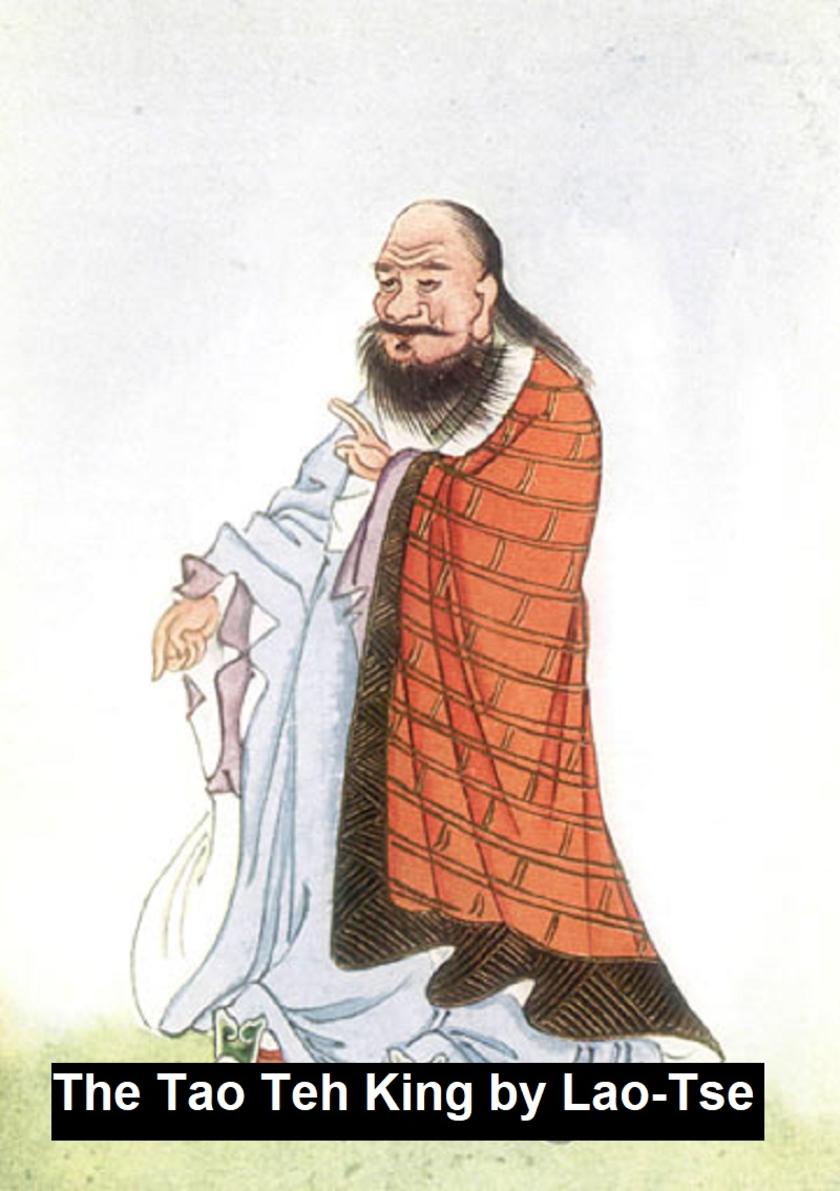
The Tao Teh King or The Tao
¥8.09
According to Wikipedia: "The Tao Te Ching, Dao De Jing, or Daodejing, also simply referred to as the Laozi, is a Chinese classic text. According to tradition, it was written around the 6th century BC by the sage Laozi (or Lao Tzu, "Old Master"), a record-keeper at the Zhou Dynasty court, by whose name the text is known in China. The text's true authorship and date of composition or compilation are still debated, although the oldest excavated text dates back to the late 4th century BC. The text is fundamental to both philosophical and religious Taoism and strongly influenced other schools, such as Legalism, Confucianism and Chinese Buddhism, which when first introduced into China was largely interpreted through the use of Daoist words and concepts. Many Chinese artists, including poets, painters, calligraphers, and even gardeners have used the Daodejing as a source of inspiration. Its influence has also spread widely outside East Asia, and is amongst the most translated works in world literature."
True Evangelism or Winning Souls by Prayer
¥8.09
According to Wikipedia: "Lewis Sperry Chafer (February 27, 1871 – August 22, 1952) was the founder and first president of Dallas Theological Seminary, and an influential founding member of modern Christian Dispensationalism.
Cousin Betty by Honoré de Balzac - Delphi Classics (Illustrated)
¥8.09
This eBook features the unabridged text of ‘Cousin Betty by Honoré de Balzac - Delphi Classics (Illustrated)’ from the bestselling edition of ‘The Collected Works of Honoré de Balzac’. Having established their name as the leading publisher of classic literature and art, Delphi Classics produce publications that are individually crafted with superior formatting, while introducing many rare texts for the first time in digital print. The Delphi Classics edition of Balzac includes original annotations and illustrations relating to the life and works of the author, as well as individual tables of contents, allowing you to navigate eBooks quickly and easily. eBook features: * The complete unabridged text of ‘Cousin Betty by Honoré de Balzac - Delphi Classics (Illustrated)’ * Beautifully illustrated with images related to Balzac’s works * Individual contents table, allowing easy navigation around the eBook * Excellent formatting of the text Please visit www.delphiclassics.com to learn more about our wide range of titles
Aristotle: Poetics, Ethics, Politics, and Categories
¥8.09
This file includes four books: Poetics, Ethics, Politics, and Categories. According to Wikipedia: "Aristotle (384 BC – 322 BC)[1] was a Greek philosopher and polymath, a student of Plato and teacher of Alexander the Great. His writings cover many subjects, including physics, metaphysics, poetry, theater, music, logic, rhetoric, linguistics, politics, government, ethics, biology, and zoology. Together with Plato and Socrates (Plato's teacher), Aristotle is one of the most important founding figures in Western philosophy. Aristotle's writings were the first to create a comprehensive system of Western philosophy, encompassing morality, aesthetics, logic, science, politics, and metaphysics."
The Varieties of Religious Experience
¥8.09
The psychology of religious belief. "If the inquiry be psychological, not religious institutions, but rather religious feelings and religious impulses must be its subject, and I must confine myself to those more developed subjective phenomena recorded in literature produced by articulate and fully self-conscious men, in works of piety and autobiography." According to Wikipedia: "William James (1842 – 1910) was a pioneering American psychologist and philosopher trained as a medical doctor. He wrote influential books on the young science of psychology, educational psychology, psychology of religious experience and mysticism, and the philosophy of pragmatism. He was the brother of novelist Henry James and of diarist Alice James. William James was born at the Astor House in New York City. He was the son of Henry James Sr., an independently wealthy and notoriously eccentric Swedenborgian theologian well acquainted with the literary and intellectual elites of his day. The intellectual brilliance of the James family milieu and the remarkable epistolary talents of several of its members have made them a subject of continuing interest to historians, biographers, and critics."
The Path of the King
¥8.09
The Path of the King is a travel through historic events that traces a band of gold as it is passed from a young Viking to Abraham Lincoln. The following is a quotation from its original publication (AL BURT COMPANY PUBLISHERS, 1921): "We wonder that so great a man as Abraham Lincoln should spring from humble people but who knows what his more distant ancestry might have been In a series of dramatic chapters Mr Buchan tells what he imagines to have been the ancestry of Lincoln The worthy son of a northern chieftain who had come down with his people into Normandy, a Norman knight who fought under Duke William and settled in England, a French knight emissary of Saint Louis to Kubla Khan, a proud demoiselle friend to Jeanne d Arc, a French gentleman who went with Columbus on his second voyage, an avenger of Saint Bartholomew's Day, a friend to Sir Walter Raleigh, a supporter of Cromwell, a soldier of fortune under Marlborough, a mighty hunter in Virginia, all these says Mr Buchan were Lincoln's forebears Their blood ran in his veins and made him in James Russell Lowell's phrase the last of the kings." According to Wikipedia, "John Buchan, 1st Baron Tweedsmuir (26 August 1875 – 11 February 1940) was a Scottish novelist and Unionist politician who served as Governor General of Canada. Buchan's 100 works include nearly thirty novels, seven collections of short stories and biographies of Sir Walter Scott, Caesar Augustus, and Oliver Cromwell. Buchan's most famous of his books were the spy thrillers (including) The 39 Steps (which was converted to a play as well as an Alfred Hitchcock movie starring Robert Donat as Richard Hannay, though with Buchan's story much altered.) The "last Buchan" (as Graham Greene entitled his appreciative review) was the 1941 novel Sick Heart River (American title: Mountain Meadow), in which a dying protagonist confronts in the Canadian wilderness the questions of the meaning of life. The insightful quotation "It's a great life, if you don't weaken" is famously attributed to Buchan, as is "No great cause is ever lost or won, The battle must always be renewed, And the creed must always be restated."

The Germany and the Agricola of Tacitus
¥8.09
According to Wikipedia: "Publius (or Gaius) Cornelius Tacitus (AD 56 – AD 117) was a senator and a historian of the Roman Empire. The surviving portions of his two major works—the Annals and the Histories—examine the reigns of the Roman Emperors Tiberius, Claudius, Nero and those who reigned in the Year of the Four Emperors. These two works span the history of the Roman Empire from the death of Augustus in AD 14 to (presumably) the death of emperor Domitian in AD 96. There are enormous lacunae in the surviving texts, including one four books long in the Annals. Other works by Tacitus discuss oratory (in dialogue format, see Dialogus de oratoribus), Germania (in De origine et situ Germanorum), and biographical notes about his father-in-law Agricola, primarily during his campaign in Britannia (see De vita et moribus Iulii Agricolae)."
The Witch of the Middle Ages
¥8.09
History of witchcraft in the Middle Ages. According to Wikipedia: "Jules Michelet (21 August 1798 – 9 February 1874) was a French historian. He was born in Paris to a family with Huguenot traditions." The Preface begins: "In this translation of a work rich in the raciest beauties and defects of an author long since made known to the British public, the present writer has striven to recast the trenchant humour, the scornful eloquence, the epigrammatic dash of Mr. Michelet, in language not all unworthy of such a word-master. How far he has succeeded others may be left to judge. In one point only is he aware of having been less true to his original than in theory he was bound to be."
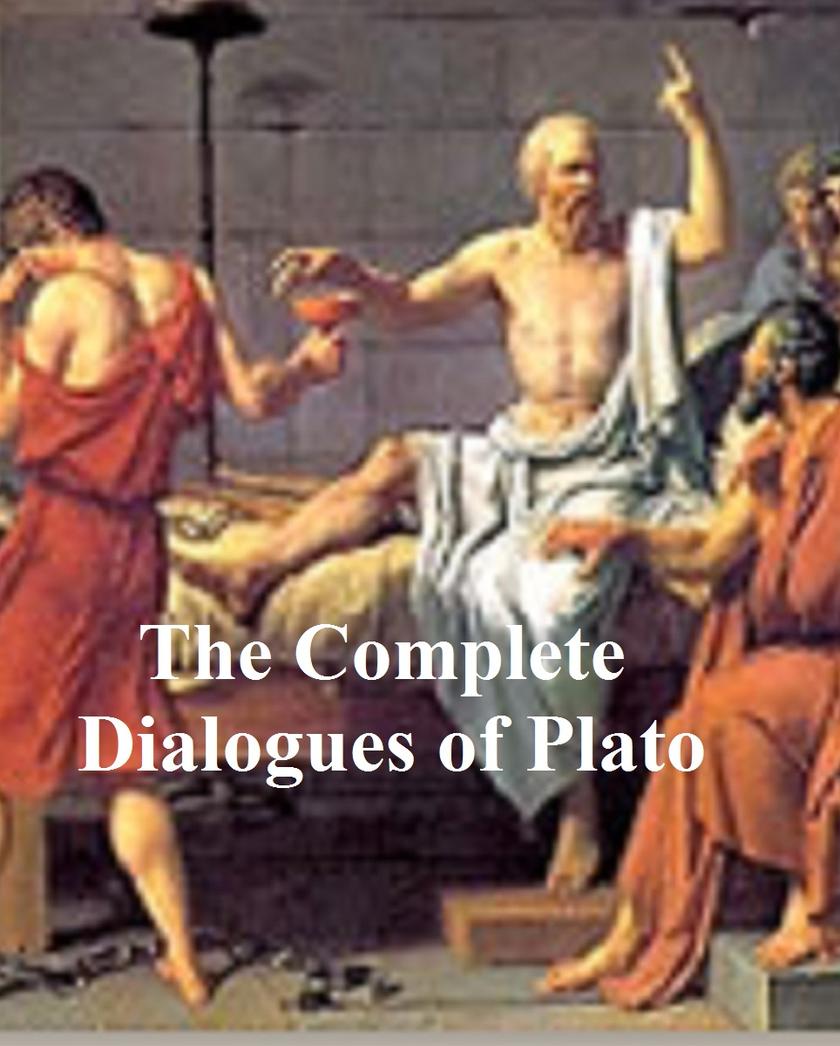
The Complete Dialogues of Plato
¥8.09
This book-collection file includes all 26 dialogues: Apology, Charmides (and preface to the collection), Cratylus, Critias, Crito, Euthyphro, Euthydemus, Gorgias, Ion, Laches, Laws, Lesser Hippias, Lysis, Menexus, Meno, Parmenides, Phaedo, Phaedrus, Philebus, Protagoras, Republic, Sophist, Statesman, Symposium, Theaetetus, and Timaeus. The Jowett translation. According to Wikipedia: "Plato (428/427 BC[a] – 348/347 BC), was a Classical Greek philosopher, who, together with his mentor, Socrates, and his student, Aristotle, helped to lay the foundations of Western philosophy.[2] Plato was also a mathematician, writer of philosophical dialogues, and founder of the Academy in Athens, the first institution of higher learning in the western world. Plato was originally a student of Socrates, and was as much influenced by his thinking as by what he saw as his teacher's unjust death."

Boone's Wilderness Road
¥8.09
Volume 6 of the series "Historic Highways of America". According to Wikipedia: "Archer Butler Hulbert (26 Jan 1873 – 24 Dec 1933), historical geographer, writer, and professor of American history... He was Vice-Principal of the Putnam Military Academy, Zanesville, Ohio, until 1897. Hulbert then did newspaper work in Korea in 1897 and '98: he was editor of the Korean Independent (Seoul) and edited Far East American newspapers... He was Professor of American History at Marietta College 1904-18. After Marietta College, Hulbert became a lecturer in American History at Clark University from 1918 to 1919. He also was a lecturer at the University of Chicago in 1904 and 1923; and he served as archivist for the Harvard Commission on Western History (1912-16). Hulbert's last position was at Colorado College, from 1920 until his death... Hulbert's interest in trails dated from fishing trips taken during his college, when he noticed Indian trails. This interest led at first to his 16 volumes of Historic Highways of America (1902-05)."

Waterways of Westward Expansion
¥8.09
Volume 9 of the series "Historic Highways of America". According to Wikipedia: "Archer Butler Hulbert (26 Jan 1873 – 24 Dec 1933), historical geographer, writer, and professor of American history... He was Vice-Principal of the Putnam Military Academy, Zanesville, Ohio, until 1897. Hulbert then did newspaper work in Korea in 1897 and '98: he was editor of the Korean Independent (Seoul) and edited Far East American newspapers... He was Professor of American History at Marietta College 1904-18. After Marietta College, Hulbert became a lecturer in American History at Clark University from 1918 to 1919. He also was a lecturer at the University of Chicago in 1904 and 1923; and he served as archivist for the Harvard Commission on Western History (1912-16). Hulbert's last position was at Colorado College, from 1920 until his death... Hulbert's interest in trails dated from fishing trips taken during his college, when he noticed Indian trails. This interest led at first to his 16 volumes of Historic Highways of America (1902-05)."
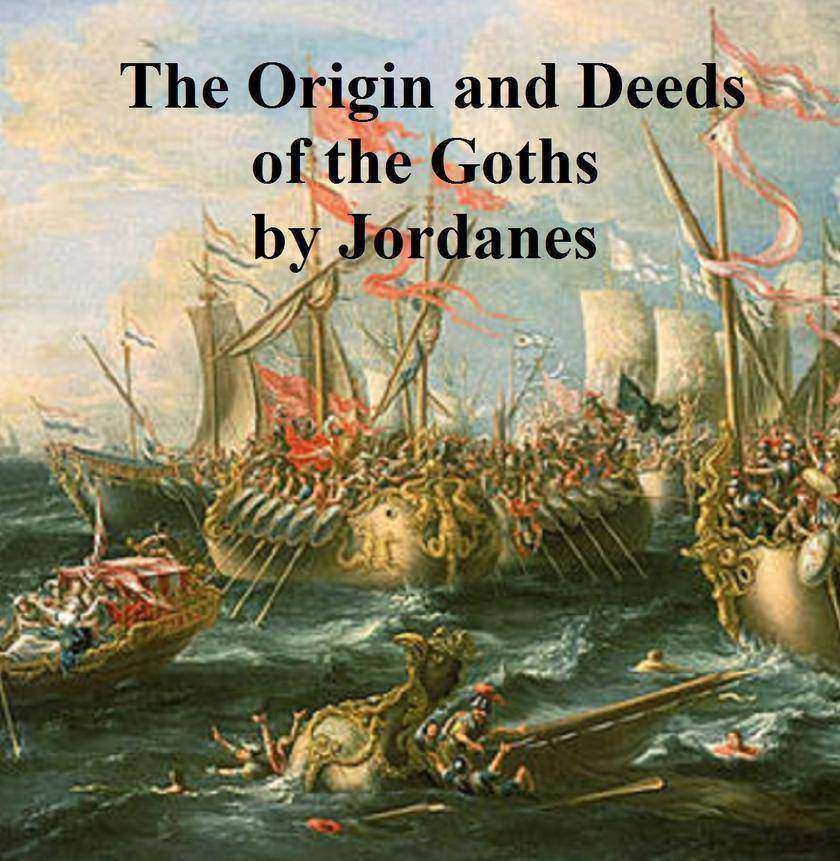
The Origin and Deeds of the Goths
¥8.09
This English version first published in 1908. "For the first time the story of the Goths recorded in the Getica of Jordanes, a Christian Goth who wrote his account in the year 551, probably in Constantinople, is now put in English form, as part of an edition of the Getica prepared by Mr. Mierow. Those who care for the romance of history will be charmed by this great tale of a lost cause and will not find the simple-hearted exaggerations of the eulogist of the Gothic race misleading. He pictured what he believed or wanted to believe, and his employment of fable and legend, as well as the naive exhibition of his loyal prejudices, merely heightens the interest of his story." According to Wikipedia: "Jordanes, also written Jordanis or, uncommonly, Jornandes, was a 6th-century Roman bureaucrat, who turned his hand to history later in life. While he also wrote Romana about the history of Rome, his best-known work is his Getica, written in Constantinople about AD 551. It is the only extant ancient work dealing with the early history of the Goths."
Rudimental Divine Science
¥8.09
First published in 1891. According to Wikipedia: "Mary Baker Eddy (born Mary Morse Baker July 16, 1821 – December 3, 1910) was the founder of the Christian Science movement. Deeply religious, she advocated Christian Science as a spiritual practical solution to health and moral issues. She wrote Science and Health with Key to the Scriptures, founded The First Church of Christ, Scientist of Boston in 1879, and several periodicals including The Christian Science Monitor. She took the name Mary Baker Glover from her first marriage and was also known as Mary Baker Glover Eddy or Mary Baker G. Eddy from her third marriage. She did much spiritual teaching, lecturing, and instantaneous healing. Her influence continues to grow through her writings."
The Unity of Good
¥8.09
First published in 1887. According to Wikipedia: "Mary Baker Eddy (born Mary Morse Baker July 16, 1821 – December 3, 1910) was the founder of the Christian Science movement. Deeply religious, she advocated Christian Science as a spiritual practical solution to health and moral issues. She wrote Science and Health with Key to the Scriptures, founded The First Church of Christ, Scientist of Boston in 1879, and several periodicals including The Christian Science Monitor. She took the name Mary Baker Glover from her first marriage and was also known as Mary Baker Glover Eddy or Mary Baker G. Eddy from her third marriage. She did much spiritual teaching, lecturing, and instantaneous healing. Her influence continues to grow through her writings."


