


 购物车
购物车 个人中心
个人中心

Anne's House of Dreams
¥9.00
Book 5 in the Anne of Green Gables Series Anne's House of Dreams begins with the wedding between Anne Shirley and Gilbert Blythe. In this book, they move to a small and begin their life together with love, loss and many interesting escapades.
Herbert West: Reanimator
¥9.00
"Herbert West: Reanimator" is a short story by American horror fiction writer H. P. Lovecraft. It was written between October 1921 and June 1922. It was first serialized in February through July 1922 in the amateur publication Home Brew. The story was the basis of the 1985 horror film Re-Animator and its sequels, in addition to numerous other adaptations in various media.
The Green Meadow
¥9.00
"The Green Meadow" is a short story by H. P. Lovecraft and Winifred V. Jackson written in 1918/1919 and published in the spring 1927 issue of The Vagrant. As in their other collaboration, "The Crawling Chaos", both authors used pseudonyms — the tale was published as by "Elizabeth Neville Berkeley" (Jackson) and "Lewis Theobald, Jun." (Lovecraft). Lovecraft wrote the entire text but Jackson is credited since it was based on a dream she had experienced
The Curse of Yig
¥9.00
"The Curse of Yig" is a short story by H. P. Lovecraft and Zealia Bishop in which Yig, "The Father of Serpents", is first introduced.
The Cats of Ulthar
¥9.00
The Cats of Ulthar" is a short story written by American fantasy author H. P. Lovecraft in June 1920. In the tale, an unnamed narrator relates the story of how a law forbidding the killing of cats came to be in a town called Ulthar. As the narrative goes, the city is home to an old couple who enjoy capturing and killing the townspeople's cats. When a caravan of wanderers passes through the city, the kitten of an orphan (Menes) traveling with the band disappears. Upon hearing of the couple's violent acts towards cats, Menes invokes a prayer before leaving town that causes the local felines to swarm the cat-killers' house and devour them. Upon witnessing the result, the local politicians pass a law forbidding the killing of cats.

The Flirt
¥9.00
Newton Booth Tarkington (July 29, 1869 – May 19, 1946) was an American novelist and dramatist best known for his novels The Magnificent Ambersons and Alice Adams. He is one of only three novelists to win the Pulitzer Prize for Fiction more than once, along with William Faulkner and John Updike.

Through the Gates of the Silver Key
¥9.00
At a gathering to decide the fate of Randolph Carter's estate which has been held in trust since his disappearance the mysterious Swami Chandraputra, who wears curious mittens and enveloping robes, tells Carter's acquaintances of his ultimate fate. He explains that the key took Carter to a type of higher dimension. There, Carter, on an ill-defined mission (or out of sheer curiosity), travelled strange sections of the cosmos by first meeting with 'Umr at-Tawil, a dangerous being warned of in the Necronomicon, saying those who deal with it never return
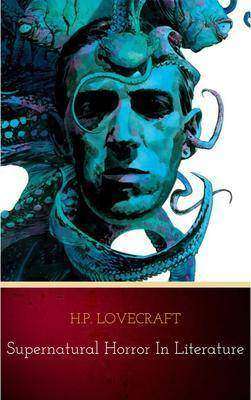
Supernatural Horror in Literature
¥9.00
Great modern American supernaturalist brilliantly surveys history of genre to 1930s, summarizing, evaluating scores of books, including works by Poe, Bierce, M.R. James, "Monk" Lewis, many others. Praised by critics as diverse as Edmund Wilson and Vincent Starrett.

The Other Gods
¥9.00
A high priest and prophet greatly learned in the lore of the gods of earth attempts to scale the mountain of Hatheg-Kla in order to look upon their faces, accompanied by his young disciple. But the gods of the earth are not there alone.
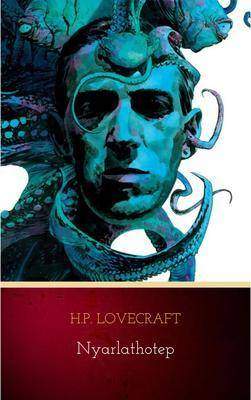
Nyarlathotep
¥9.00
Presents horror legend HP Lovecraft's short prose piece Nyarlathotep. This book presents Lovecraft's original poem in its entirety and also features a visual interpretation.
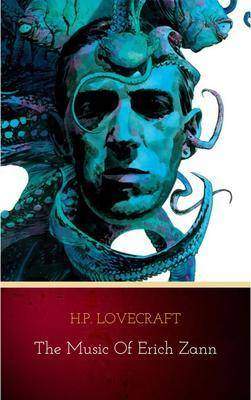
The Music of Erich Zann
¥9.00
"The Music of Erich Zann" is a short story by American author H. P. Lovecraft. Written in December 1921, it was first published in National Amateur, March 1922. A university student is forced, by his lack of funds, to take the only lodging he can afford. In a strange part of the city he had never seen before, on a street named "Rue d'Auseil", he finds an apartment in an almost empty building. One of the few other tenants is an old German man named Erich Zann. The old man is mute and plays the viol with a local orchestra. He lives on the top floor and when alone at night, plays strange melodies never heard before.
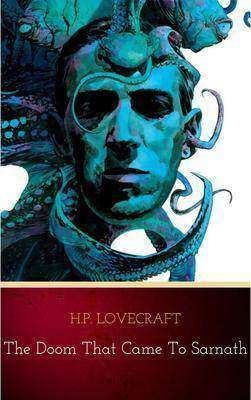
The Doom That Came to Sarnath
¥9.00
"The Doom that Came to Sarnath" (1920) is a fantasy short story by American writer H. P. Lovecraft. It is written in a mythic/fantasy style and is associated with his Dream Cycle. It was first published in The Scot, a Scottish amateur fiction magazine, in June 1920. According to the tale, more than 10,000 years ago, a race of shepherd people colonized the banks of the river Ai, in a land called Mnar, forming the cities of Thraa, Ilarnek, and Kadatheron (not to be confused with Kadath), which rose to great intellectual and mercantile prowess. Craving more land, a group of these hardy people migrated to the shores of a lonely and vast lake at the heart of Mnar, founding the city of Sarnath.
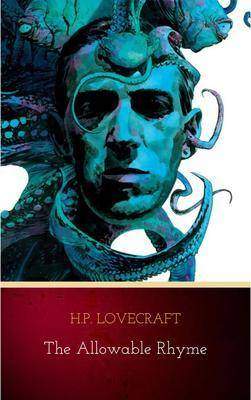
The Allowable Rhyme
¥9.00
A short essay about poetry, verses and metrics by the master of horror fiction H.P. Lovecraft first published in 1915.

At the Mountains of Madness
¥9.00
At the Mountains of Madness is a novella by horror writer H. P. Lovecraft, written in February/March 1931 and originally serialized in the February, March and April 1936 issues of Astounding Stories. It has been reproduced in numerous collections since Lovecraft's death. Lovecraft scholar S. T. Joshi describes the novella as representing the decisive "demythology" of the Cthulhu Mythos by reinterpreting Lovecraft's earlier supernatural stories in a science fiction paradigm.

El spleen de París
¥9.00
Los peque?os poemas en prosa, también conocido como El spleen de París es una colección de 50 peque?os poemas escritos en prosa poética. La melancolía, el horror al paso del tiempo, el deseo de infinito, la crítica corrosiva contra la religión y la moral, así como la burla contra los ideales que mueven a las personas y una aversión enorme contra la sociedad y la hipocresía que la domina son temas recurrentes en estas poesías.
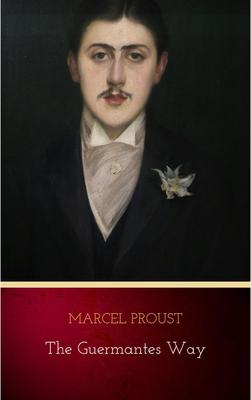
The Guermantes Way
¥9.00
After the relative intimacy of the first two volumes of In Search of Lost Time, The Guermantes Way opens up a vast, dazzling landscape of fashionable Parisian life in the late nineteenth century, as the narrator enters the brilliant, shallow world of the literary and aristocratic salons. Both a salute to and a devastating satire of a time, place, and culture, The Guermantes Way defines the great tradition of novels that follow the initiation of a young man into the ways of the world. This elegantly packaged new translation will introduce a new generation of American readers to the literary richness of Marcel Proust.

Knickerbocker's History of New York
¥9.00
Published to popular acclaim in 1809, this satire, considered the first important contribution to American comic literature, was Washington Irving's first book. It begins by relating the creation and population of the world, including the discovery of what would become New York. It ends by recording the eventual fall of the Dutch dynasty.
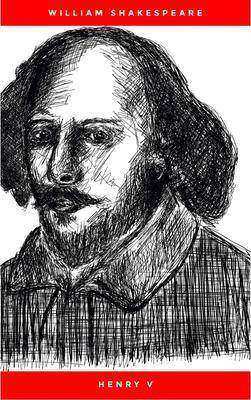
Henry V
¥9.00
Henry V is a history play by William Shakespeare, believed to be written in 1599. It is based on the life of King Henry V of England, and focuses on events immediately before and after the Battle of Agincourt during the Hundred Years' War. The play is the final part of a tetralogy, preceded by Richard II, Henry IV, part 1 and Henry IV, part 2. The original audiences would thus have already been familiar with the title character, who was depicted in the Henry IV plays as a wild, undisciplined lad known as "Prince Hal." In Henry V, the young prince has become a mature man and embarks on an attempted conquest of France.
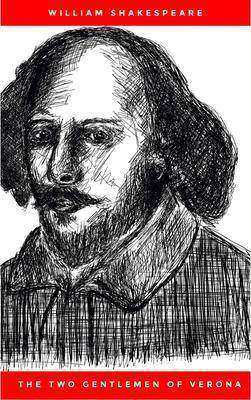
The Two Gentlemen of Verona
¥9.00
The Two Gentlemen of Verona is a comedy by William Shakespeare from early in his career. It has the smallest cast of any of Shakespeare's plays, and is the first of his plays in which a heroine dresses as a boy. It deals with the themes of friendship and infidelity. The highlight of the play is considered by some to be Launce, the clownish servant of Proteus, and his dog Crab, to whom "the most scene-stealing non-speaking role in the canon" has been attributed.
Troilus and Cressida
¥9.00
Troilus and Cressida is a tragedy by William Shakespeare, believed to have been written in 1602. The play (also described as one of Shakespeare's problem plays) is not a conventional tragedy, since its protagonist (Troilus) does not die. The play ends instead on a very bleak note with the death of the noble Trojan Hector and destruction of the love between Troilus and Cressida. Throughout the play, the tone lurches wildly between bawdy comedy and tragic gloom, and readers and theatre-goers have frequently found it difficult to understand how one is meant to respond to the characters.
Timon of Athens
¥9.00
The Life of Timon of Athens is a play by William Shakespeare about the legendary Athenian misanthrope Timon (and probably influenced by the eponymous philosopher, as well), generally regarded as one of his most obscure and difficult works. Originally grouped with the tragedies, it is generally considered such, but some scholars group it with the problem comedies.


