


 购物车
购物车 个人中心
个人中心

Kü?ük Kara Bal?k
¥9.24
'Küük Kara Balk' kitab, yediden yetmie herkesin okuyup bir eyler bulabilecei 'dünyaca ünlü' klasik bir masal kitabdr. Masal kitab deyip gemeyin. Zira bu kitapta adalet, sorgulama, eitlik ve direnme gibi insanla ait temel temalar baaryla ilenmitir. Bu temalar siyasi adan tehlikeli olarak grüldüü iin, Kitap Türkiye’de 12 Eylül darbesi ile yasaklanr, ran’da isehala okunmas yasakl kitaplar listesinde yer alr. Hatta bu masal kitaplar gencecik yanda Samed Behrengi’nin hayatna mal olur. Yazar, 28 yanda hayatn kaybeder. Aras Irma’nn kar kysnda lü olarak bulunur. Küük Kara Balk kitabnn zeti u ekildedir: Bir zamanlar küük bir kara balk vardr. Küük kara balk bir sabah erkenden uyanr ve annesini de uyandrr. Sabah sabah ne olduunu anlayamayan anne balk yavrusuna kendisini neden uyandrdn sorar. Küük kara balk ise annesine yuvasna uzak olan bir yere gitmek istediini syler. Annesi yavrusunun byle bir fikirden vazgemesini ister. Küük kara balk ok kararldr fikrinden vazgemez. Küük kara baln annesiyle konumalarn duyan komular da gelir. Küük kara baln fikrini duyan komular kzar. Farkl akarsular, denizleri, okyanuslar kefetmek de ne demektir. Bilinmeyen yerlere gitmemek gerekir. Komular küük kara bala buradan gitmemesini eer giderse de buraya tekrar dnemeyeceini dnerse de onu ldüreceklerini sylerler. Küük kara balk her eye ramen yola kar. Bakalarn korkutan bu plan onu heyecanlandrr, mutlu eder. Küük kara balk yüzerek alayann en ucuna gelir ve kendini aaya brakr. Bir bakar ki bir glün iindedir. Etrafna baknca bir sürü küük kara balkklarn suyun iinde olduunu grür. Kurbaalar kendilerini ok üstün ve güzel grür. Küük kara bal küümserler. Küük kara balk balkklara kendilerini bu kadar beenmemeleri gerektiini, daha bir sürü güzel baln olduunu syler. Kocaman bir kurbaa gelir ve küük kara bal uyarr. Balkklarla bu ekilde konumamasn syler ve onu kovalar. Küük kara balk kaar ve kendini bir dere yatanda bulur. Burada da bir yenge ve kertenkele ile tanr. Yengeten uzak durmaya alr; ünkü yenge her an kskala onu yakalamaya alr. Kertenkele ile sohbete balayan küük kara balk ona pelikanlar, testerebalklar ve balkllar hakknda bildiklerini sorar. Kertenkele bunlar hakknda bilgi sahibi olmadn sylemekle birlikte eer bir pelikana yakalanrsa onun kesesini yrtabilecei bir bak hediye eder. Küük kara balk teekkür ederek yola kar. nce bir rmaa urar sonra da denize ular. Yolculuu srasnda ok farkl canllarla karlar. Küük kara balk Kepeli Ku’a rastlar. Kepeli ku korkun bir kutur. Küük kara bal yutar. Küük kara balk yanndaki bakla kepeli kuu en zayf yerinden bakla deler ve onun iinden kar, yani kepeli kutan kurtulmu olur. O günden sonra da küük kara bal gren olmaz.
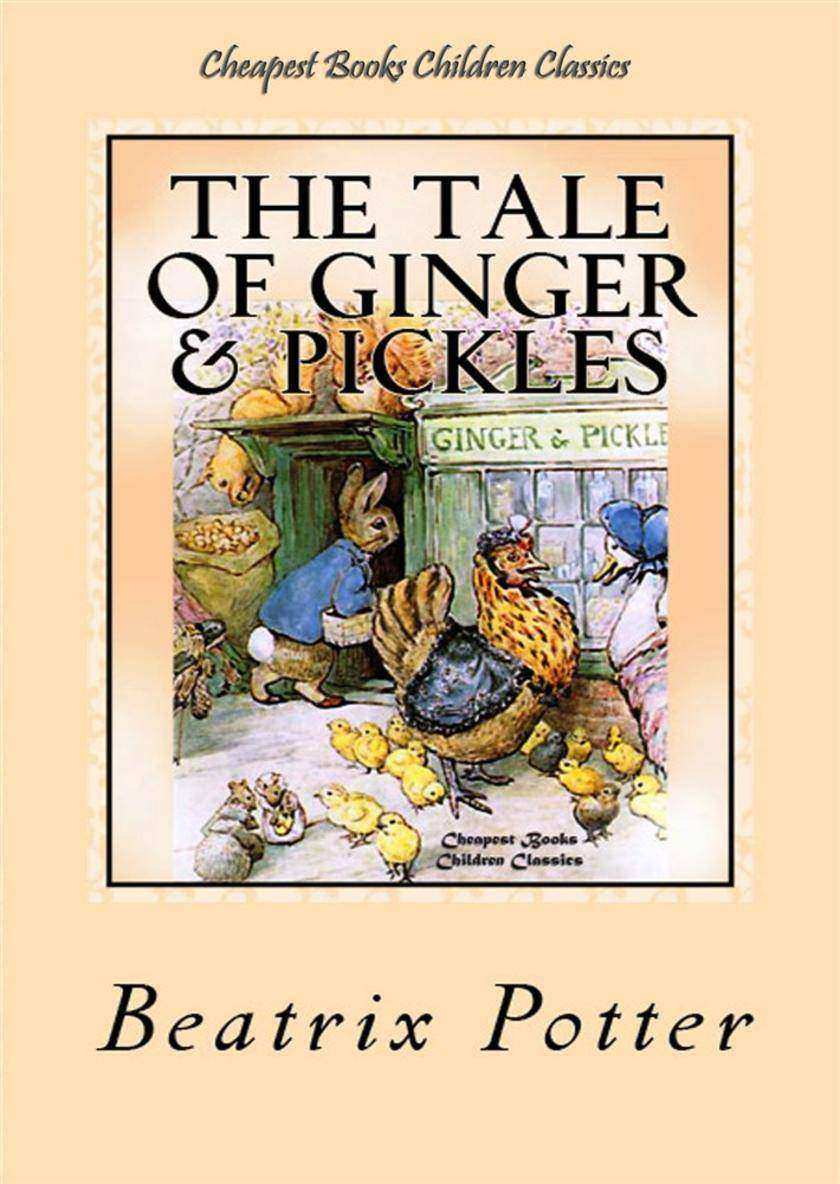
The Tale of Ginger and Pickles: "Three Years in Bed and Never a Grumble!"
¥9.24
ONCE upon a time there was a village shop. The name over the window was "Ginger and Pickles."??It was a little small shop just the right size for Dolls??”Lucinda and Jane Doll-cook always bought their groceries at Ginger and Pickles.??The counter inside was a convenient height for rabbits. Ginger and Pickles sold red spotty pocket-handkerchiefs at a penny three farthings.??They also sold sugar, and snuff and galoshes.?In fact, although it was such a small shop it sold nearly everything -except a few things that you want in a hurry like bootlaces-, hair-pins and mutton chops.?Ginger and Pickles were the people who kept the shop. Ginger was a yellow tom-cat, and Pickles was a terrier.??The rabbits were always a little bit afraid of Pickles.

Ratón Pérez
¥9.24
Sembrad en los ni?os la idea, aunque no la entiendan: los a?os se encargarán de descifrarla en su entendimiento y hacerla florecer en su corazón.??Entre la muerte del rey que rabió y el advenimiento al trono de la reina Mari-Casta?a existe un largo y obscuro período en las crónicas, de que quedan pocas memorias. Consta, sin embargo, que floreció en aquella época un rey Buby I, grande amigo de los ni?os pobres y protector decidido de los ratones.??Fundó una fábrica de mu?ecos y caballos de cartón para los primeros, y sábese de cierto, que de esta fábrica procedían los tres caballitos cuatralbos, que regaló el rey D. Bermudo el Diácono á los ni?os de Hissén I, después de la batalla de Bureva. ? AUTOR: Luis Coloma Roldán (1851 - 1915), conocido también como el padre Coloma, fue un escritor, periodista y jesuita espa?ol. En su faceta de autor de literatura infantil y juvenil creó el personaje del Ratoncito Pérez. ? Biografía:Fue hijo de un célebre médico, Ramón Co-loma Garcés casado en segundas nupcias con Concepción Roldán. A los doce a?os entró en la Escuela Naval preparatoria de San Fernando (1863), pero lo dejó para licenciarse en Derecho en la Universidad de Sevilla coincidiendo con la trascenden-tal revolución de 1868, hacia la cual el joven jerezano mantuvo una actitud hostil que reflejaría en sus escritos. De esta época data su amistad con Fernán Caballero, ya anciana entonces, sobre la que escribiría unos Recuerdos. Luego se trasladó a Madrid, donde trabaja como pasante en el bufete del abogado Hilario Pina. Empezó a frecuentar tertulias elegantes y a colaborar en distintos periódicos defendiendo la Restauración de los Borbones (El Tiempo. Periódico político de la tarde de Madrid y El Porvenir de Jerez).
Third Warning: "A Mystery Story for Girls"
¥9.24
Schopenhauer, bir yanda insan zihninin u?a?? olacak denli bedene ya da fiziksel organizmaya ba??ml? oldu?una y?nelik savunusuyla, ?bür yanda isten? ile tutkular?n ?o?unlukla us yoluyla bast?r?l?p ?arp?t?ld???na y?nelik saptamas?yla, Freudcu ruh??zümleme kuram?n? da ?ncelemeyi ba?arm??t?r. Schopenhauer’a g?re “yeter neden ilkesi”nin bütün tasar?mlar?n (ya da g?rüngülerin) kendisine uymak zorunda oldu?u d?rt temel bi?imi vard?r. Schopenhauer, yeter neden ilkesinin k?künü olu?turan bu d?rt temel bi?imi s?ras?yla,? (?) “olu?”; (??) “varolma”; (???) “bilme”; (?v) “eyleme” olarak belirlemi?tir. ??Schopenhauer’in Jeana üniversitesinde doktora tezi olarak sundu?u “Yeter Neden ilkesinin D?rt Sa?akl? K?kü, 1813″ ba?l?kl? ?al??mas?, pek ?ok bak?mdan ya?am?n?n ilerleyen y?llar?nda verece?i felsefe yap?tlar?n?n temelini ‘olu?turmas?yla olduk?a ?nemlidir. Tezin temel sav?, Kant’?n “g?rüngüler (pheinomenon) dünyas?”na kar??l?k gelen “tasar?mlar dünyas?”n?n bütünüyle “yeter neden ilkesi”nce y?netildi?idir. Bu ilkeye g?re, olanakl? bütün nesneler, hem ?teki nesnelerce belirlendikleri hem de kendileri d???ndaki bütün ?teki nesneleri belirledikleri zorunlu bir ili?ki i?inde bulunmaktad?rlar. Dolay?s?yla, her bilin? nesnesi ancak ?teki nesnelerle ili?kisi do?rultusunda a??klanabilirdir. Bu noktada Schopenhauer, ancak bu durumu ba?tan benimsemek ko?uluyla, Kant’?n tan?mlad??? anlamda dünyaya ili?kin birtak?m zorunlu sentetik a priori do?rular?n bilinmesinin olanakl? oldu?u saptamas?nda bulunur. ? ?Schopenhauer, tasar?mlar aras?ndaki bu zorunlu ili?ki türlerinden, §? “olu?”ta nedensellik ilkesi diye de bilinen neden sonu? ili?kisini; §? “varolma”da uzam-zaman ili?kisini; §? “bilme”de ?ncül-sonu? aras?ndaki kavramsal ili?kiyi; §? “eyleme” de eylem-itki ili?kisini temellendirmektedir. ? ????NDEK?LER: ? SHOPENAUER’?N HAYATI ve ?ALI?MALARIA?KIN METAF?Z??? ?ZER?NE?L?M VE ?L?M KORKUSU ?ZER?NE…SHOPENHAUER’IN AHLAK FELSEFES?AHLAKSHOPENHAUER VE KADINLARSHOPENHAUER VE M?Z?K…?STEN? VE TASARIM OLARAK D?NYAYA?AM B?LGEL??? ?ZER?NE AFOR?ZMALAR?L?M ?ZER?NE..SANAT ?ZER?NE..SHOPENHAUER VE D?N ?ZER?NE…SHOPENHAUER’IN C?NNET & C?NAYET FELSEFES?Nietzsche ve Schopenhauer :Hayat?n De?eriSchopenhauer ve H?ristiyanl?k?Ele?tirisi?lk Günah DoktriniHristiyan Ahlak?H?ristiyani ??retilerin Yaratt??? ?eli?kiler:H?ristiyan ??retilerin ?Ahlak ?zerindeki Olumsuz EtkileriH?ristiyanlar Mevcut Olan Ac?lar? ?o?u Zaman Daha da Art?rmaktalar:H?ristiyanl?k ?lüm Korkusunun ?stesinden GelmiyorTarihi Olaylar ile ?rülmü? Yak?n Ba?lant? ve Tarihsel DogmaH?ristiyanl?kta Hayvanlara Kar?? Tutunulan Tav?rSCHOPENHAURDEN ?ZL? S?ZLER…?
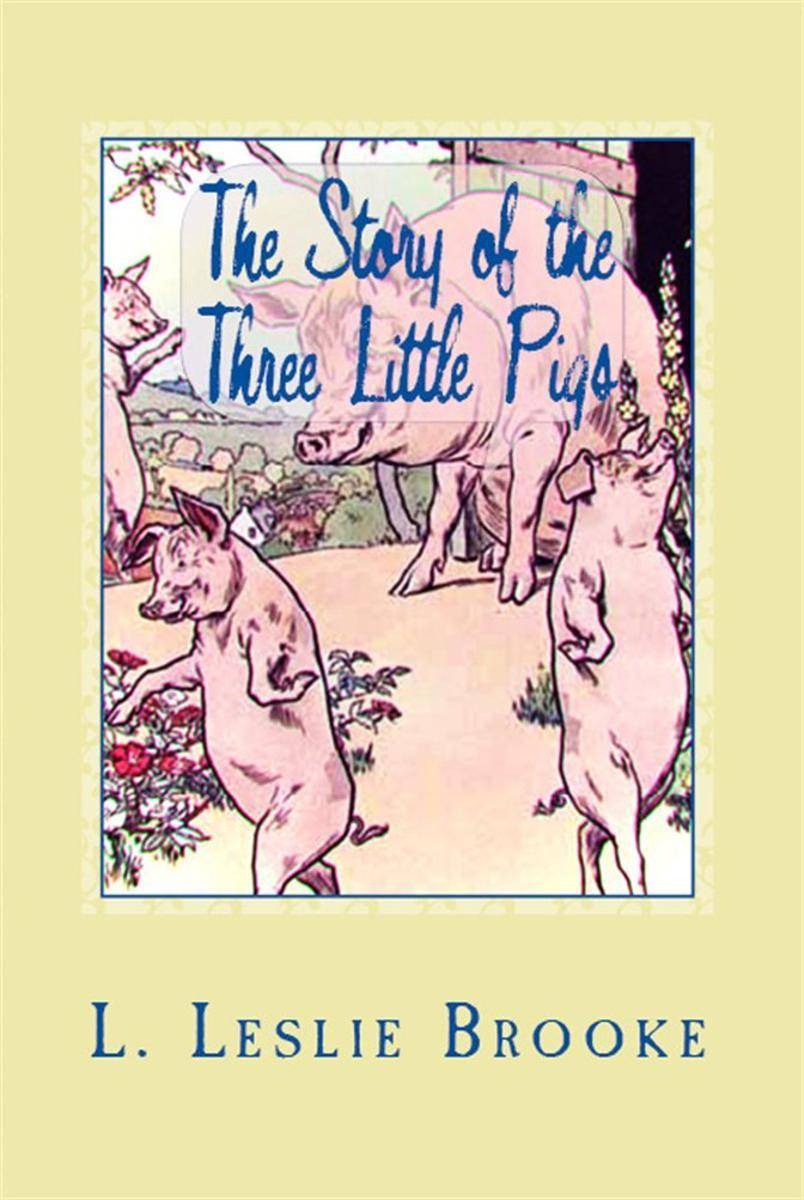
The Story of the Three Little Pigs
¥9.24
Three Lines of Old French was written in the year 1919 by Abraham Merritt. This book is one of the most popular novels of Abraham Merritt, and has been translated into several other languages around the world.This book is published by Booklassic which brings young readers closer to classic literature globally.

Macbeth: "Illustrated"
¥9.24
Towards the end of November, during a thaw, at nine o'clock one morning, a train on the Warsaw and Petersburg railway was approaching the latter city at full speed. The morning was so damp and misty that it was only with great difficulty that the day succeeded in breaking; and it was impossible to distinguish anything more than a few yards away from the carriage windows.Some of the passengers by this particular train were returning from abroad; but the third-class carriages were the best filled, chiefly with insignificant persons of various occupations and degrees, picked up at the different stations nearer town. All of them seemed weary, and most of them had sleepy eyes and a shivering expression, while their complexions generally appeared to have taken on the colour of the fog outside. When day dawned, two passengers in one of the third-class carriages found themselves opposite each other. Both were young fellows, both were rather poorly dressed, both had remarkable faces, and both were evidently anxious to start a conversation. If they had but known why, at this particular moment, they were both remarkable persons, they would undoubtedly have wondered at the strange chance which had set them down opposite to one another in a third-class carriage of the Warsaw Railway Company. One of them was a young fellow of about twenty-seven, not tall, with black curling hair, and small, grey, fiery eyes. His nose was broad and flat, and he had high cheek bones; his thin lips were constantly compressed into an impudent, ironical—it might almost be called a malicious—smile; but his forehead was high and well formed, and atoned for a good deal of the ugliness of the lower part of his face. A special feature of this physiognomy was its death-like pallor, which gave to the whole man an indescribably emaciated appearance in spite of his hard look, and at the same time a sort of passionate and suffering expression which did not harmonize with his impudent, sarcastic smile and keen, self-satisfied bearing. He wore a large fur—or rather astrachan—overcoat, which had kept him warm all night, while his neighbour had been obliged to bear the full severity of a Russian November night entirely unprepared. His wide sleeveless mantle with a large cape to it—the sort of cloak one sees upon travellers during the winter months in Switzerland or North Italy—was by no means adapted to the long cold journey through Russia, from Eydkuhnen to St. Petersburg. Copyright, Illustrated version of "the Idiot" by e-Kitap Projesi, 2014
Harry's Ladder to Learning: "[With Two Hundred Thirty Illustrations"
¥9.24
Samson and Delilah was written in the year 1917 by David Herbert Lawrence. This book is one of the most popular novels of David Herbert Lawrence, and has been translated into several other languages around the world.This book is published by Booklassic which brings young readers closer to classic literature globally.
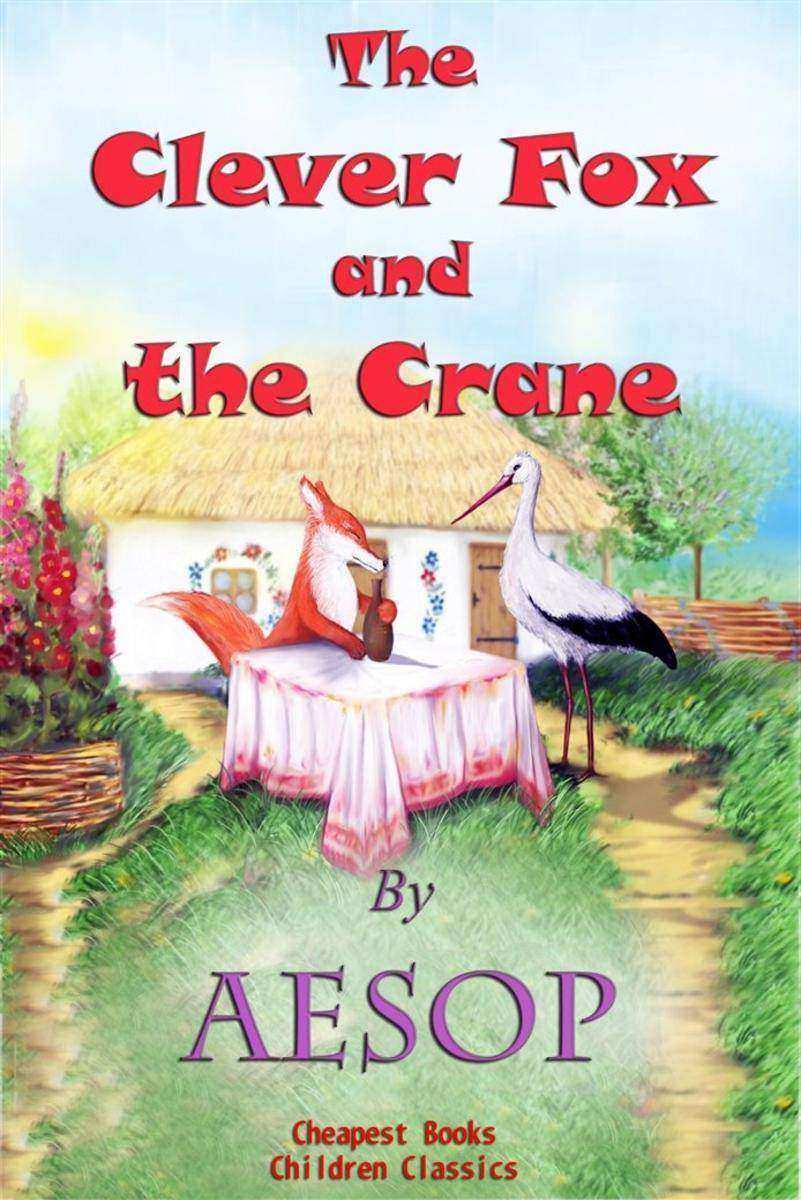
The Clever Fox and the Crane
¥9.24
The clever fox made friends with the crane. The clever fox once had a notion to treat the crane to dinner and went to invite him to her house."Come godfather! Come dear! How I'll entertain you!"The crain went to the dinner party.The clever fox had cooked farina cereal and spread it over a plate.She served it and urged. "Eat, my friend-godfather, I cooked it myself. "

The Little Mermaid
¥9.24
Far out in the ocean the water is as blue as the petals of the loveliest cornflower, and as clear as the purest glass. But it is very deep too. It goes down deeper than any anchor rope will go, and many, many steeples would have to be stacked one on top of another to reach from the bottom to the surface of the sea. It is down there that the sea folk live. Now don't suppose that there are only bare white sands at the bottom of the sea. No indeed! The most marvelous trees and flowers grow down there, with such pliant stalks and leaves that the least stir in the water makes them move about as though they were alive. All sorts of fish, large and small, dart among the branches, just as birds flit through the trees up here. From the deepest spot in the ocean rises the palace of the sea king. Its walls are made of coral and its high pointed windows of the clearest amber, but the roof is made of mussel shells that open and shut with the tide. This is a wonderful sight to see, for every shell holds glistening pearls, any one of which would be the pride of a queen's crown.

The Little Bun: "A Russian Folk Tale"
¥9.24
ONCE time ago, there lived an old man and old woman. The old man said, "Old woman, make me a little bun." "What can I make it from? I have no flour." "Eh, eh, old woman! Scrape the cupboard, sweep the flour bin, and you will find enough flour. "The old woman picked up a duster, scraped the cupboard, swept the flour bin and gathered about two handfuls of flour. She mixed the dough with sour cream, fried it in butter, and put the bun on the window sill to cool. The bun lay and lay there. Suddenly it rolled off the window sill to the bench, from the bench to the floor, from the floor to the door. Then it rolled over the threshold to the entrance hall, from the entrance hall to the porch, from the porch to the courtyard, from the courtyard trough the gate and on and on.
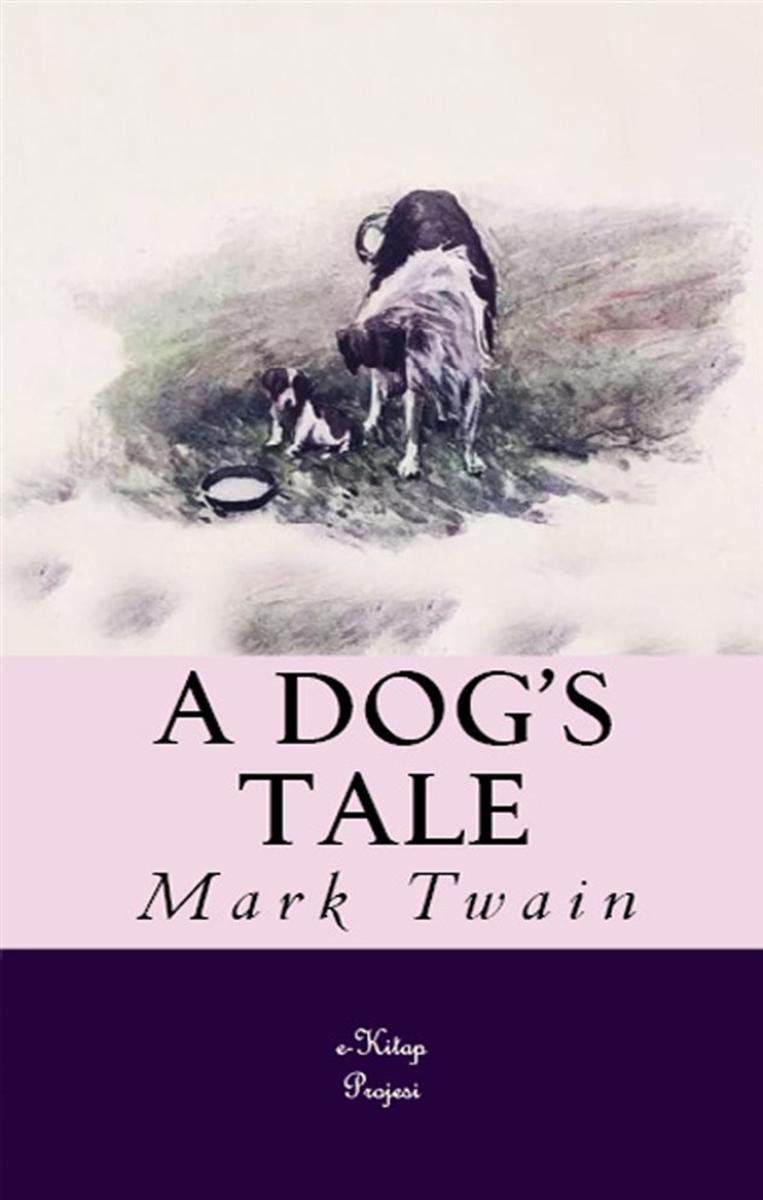
A Dog's Tale
¥9.24
SOON, the master stopped discussing a moment, and rang in the footman, and said, "Bury it in the far corner of the garden," and then went on with the discussion, and I trotted after the footman, very happy and grateful, for I knew the puppy was out of its pain now, because it was asleep. We went far down the garden to the farthest end, where the children and the nurse and the puppy and I used to play in the summer in the shade of a great elm, and there the footman dug a hole, and I saw he was going to plant the puppy, and I was glad, because it would grow and come up a fine handsome dog, like Robin Adair, and be a beautiful surprise for the family when they came home; so I tried to help him dig, but my lame leg was no good, being stiff, you know, and you have to have two, or it is no use. When the footman had finished and covered little Robin up, he patted my head, and there were tears in his eyes, and he said: "Poor little DOGGIE, you saved HIS child!" ABOUT AUTHOR: Mark Twain (1835-1910), was an American humorist, satirist, writer, and lecturer. Twain is most noted for his novels Adventures of Huckleberry Finn, which has since been called the Great American Novel, and The Adventures of Tom Sawyer. He is also known for his quotations. During his lifetime, Clemens became a friend to presidents, artists, leading industrialists, and European royalty. Clemens enjoyed immense public popularity, and his keen wit and incisive satire earned him praise from both critics and peers. American author William Faulkner called Twain "the father of American literature.”
![Sleeping Beauty in the Wood: [Colored Edition]](https://platform-permanent.ddimg.cn/pt-media-info-soa-resource/digital/product/54/65/1901165465_ii_cover.jpg?version=4d4744e0-befc-42a0-86c3-876d63ffbc5c)
Sleeping Beauty in the Wood: [Colored Edition]
¥9.24
There were formerly a King and a Queen, who were so sorry that they had no children, so sorry that it cannot be expressed. They went to all the waters in the world; vows, pilgrimages, all ways were tried and all to no purpose. At last, however, the Queen proved with child, and was brought to bed of a daughter. There was a very fine christening; and the Princess had for her godmothers all the Fairies they could find in the whole kingdom (they found seven), that every one of them might give her a gift, as was the custom of Fairies in those days, and that by this means the Princess might have all the perfections imaginable. After the ceremonies of the christening were over, all the company returned to the King's palace, where was prepared a great feast for the Fairies. There was placed before every one of them a magnificent cover with a case of massive gold, wherein were a spoon, knife and fork, all of pure gold set with diamonds and rubies. But as they were all sitting down at table, they saw come into the hall a very old Fairy whom they had not invited, because it was above fifty years since she had been out of a certain tower, and she was believed to be either dead or inchanted. The King ordered her a cover, but could not furnish her with a case of gold as the others, because they had seven only made for the seven Fairies.
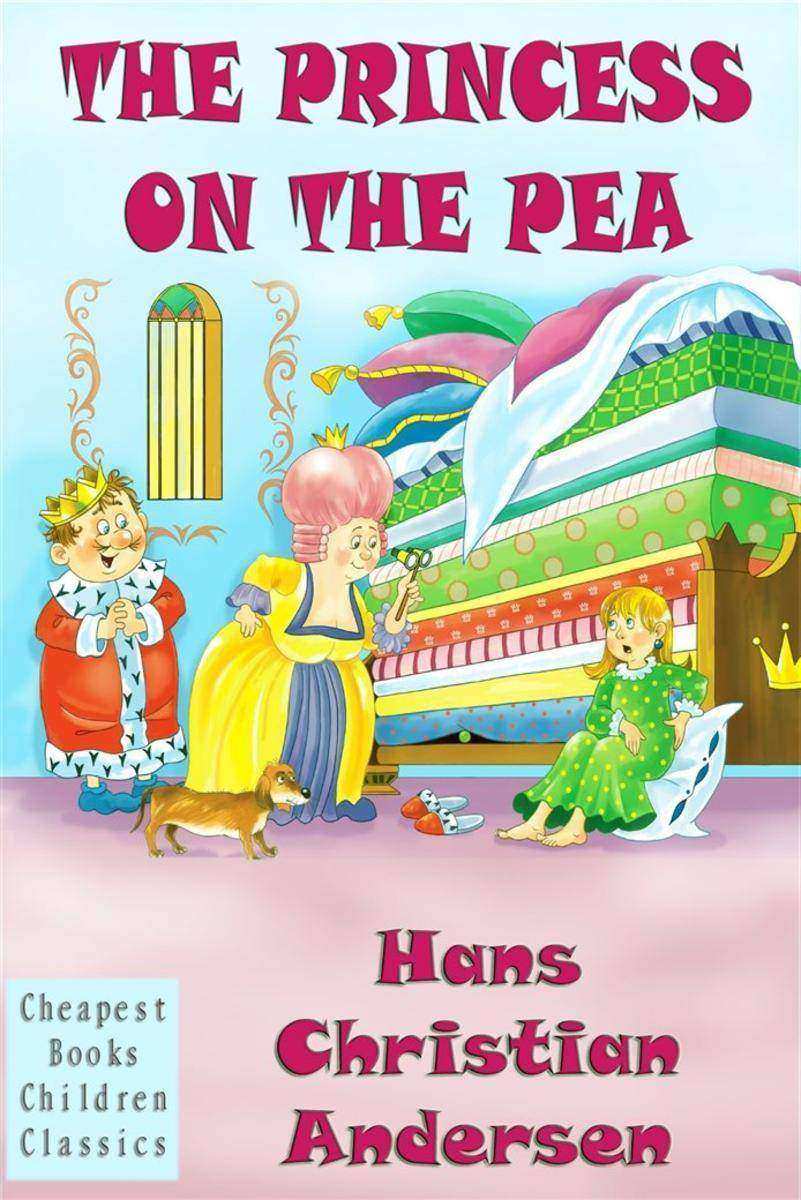
The Princess on the Pea
¥9.24
Once, there was a Prince who wanted to marry a Princess. Only a real one would do. So he traveled through all the world to find her, and everywhere things went wrong. There were Princesses aplenty, but how was he to know whether they were real Princesses? There was something not quite right about them all. So he came home again and was unhappy, because he did so want to have a real Princess.

The Frog Princess: "A Russian Fairy Tale"
¥9.24
In days gone by there was a King who had three sons. When his sons came of age the King called them to him and said, "My dear lads, I want you to get married so that I may see your little ones, my grand-children, before I die." And his sons replied, "Very well, Father, give us your blessing. Who do you want us to marry?" "Each of you must take an arrow, go out into the green meadow and shoot it. Where the arrows fall, there shall your destiny be."So the sons bowed to their father, and each of them took an arrow and went out into the green meadow, where they drew their bows and let fly their arrows. The arrow of the eldest son fell in the courtyard of a nobleman, and the nobleman's daughter picked it up. The arrow of the middle son fell in the yard of a merchant, and the merchant's daughter picked it up. But the arrow of the youngest son, Prince Ivan, flew up and away he knew not where. He walked on and on in search of it, and at last he came to a marsh, where what should he see but a frog sitting on a leaf with the arrow in its mouth. Prince Ivan said to it, "Frog, frog, give me back my arrow." And the frog replied, "Marry me!" "How can I marry a frog?" "Marry me, for it is your destiny."

Benediction
¥9.24
Trees filtering light onto dapple grass. Trees like tall, languid ladies with feather fans coquetting airily with the ugly roof of the monastery. Trees like butlers, bending courteously over placid walks and paths. Trees, trees over the hills on either side and scattering out in clumps and lines and woods all through eastern Maryland, delicate lace on the hems of many yellow fields, dark opaque backgrounds for flowered bushes or wild climbing garden. Some of the trees were very gay and young, but the monastery trees were older than the monastery which, by true monastic standards, wasn't very old at all. And, as a matter of fact, it wasn't technically called a monastery, but only a seminary; nevertheless it shall be a monastery here despite its Victorian architecture or its Edward VII additions, or even its Woodrow Wilsonian, patented, last-a-century roofing. Out behind was the farm where half a dozen lay brothers were sweating lustily as they moved with deadly efficiency around the vegetable-gardens. To the left, behind a row of elms, was an informal baseball diamond where three novices were being batted out by a fourth, amid great chasings and puffings and blowings. And in front as a great mellow bell boomed the half-hour a swarm of black, human leaves were blown over the checker-board of paths under the courteous trees.Some of these black leaves were very old with cheeks furrowed like the first ripples of a splashed pool. Then there was a scattering of middle-aged leaves whose forms when viewed in profile in their revealing gowns were beginning to be faintly unsymmetrical. These carried thick volumes of Thomas Aquinas and Henry James and Cardinal Mercier and Immanuel Kant and many bulging note-books filled with lecture data.

Head and Shoulders
¥9.24
In 1915 Horace Tarbox was thirteen years old. In that year he took the examinations for entrance to Prince-ton University and received the Grade A—excellent—in C?sar, Cicero, Vergil, Xenophon, Homer, Algebra, Plane Geometry, Solid Geometry, and Chemistry.??Two years later while George M. Cohan was composing "Over There," Horace was leading the sophomore class by several lengths and digging out theses on "The Syllogism as an Obsolete Scholastic Form," and during the battle of Ch?teau-Thierry he was sitting at his desk deciding whether or not to wait until his seventeenth birthday before beginning his series of essays on "The Pragmatic Bias of the New Realists."??After a while some newsboy told him that the war was over, and he was glad, because it meant that Peat Brothers, publishers, would get out their new edition of "Spinoza's Improvement of the Understanding." Wars were all very well in their way, made young men self-reliant or something but Horace felt that he could never forgive the President for allowing a brass band to play under his window the night of the false armistice, causing him to leave three important sentences out of his thesis on "German Idealism."

Jemina, the Mountain Girl
¥9.24
This don't pretend to be "Literature."??This is just a tale for red-blooded folks who want a story and not just a lot of "psychological" stuff or "analysis."??Boy, you'll love it! Read it here, see it in the movies, play it on the phonograph, run it through the sewing-machine.??* * *??It was night in the mountains of Kentucky. Wild hills rose on all sides. Swift mountain streams flowed rapidly up and down the mountains.?Jemima Tantrum was down at the stream, brewing whiskey at the family still.??She was a typical mountain girl.
Gadsby
¥9.24
"Gadsby" is a 1939 novel by Ernest Vincent Wright. The plot revolves around the dying fictional city of Branton Hills, which is revitalized thanks to the efforts of protagonist John Gadsby and a youth group he organizes.The novel is written as a lipogram and does not include words that contain the letter "e". Though self-published and little-noticed in its time, the book is a favourite of fans of constrained writing and is a sought-after rarity among some book collectors. Later editions of the book have sometimes carried the alternative subtitle "50,000 Word Novel Without the Letter 'E'". In 1968, the novel entered the public domain in the United States due to failure to renew copyright in the 28th year after publication.
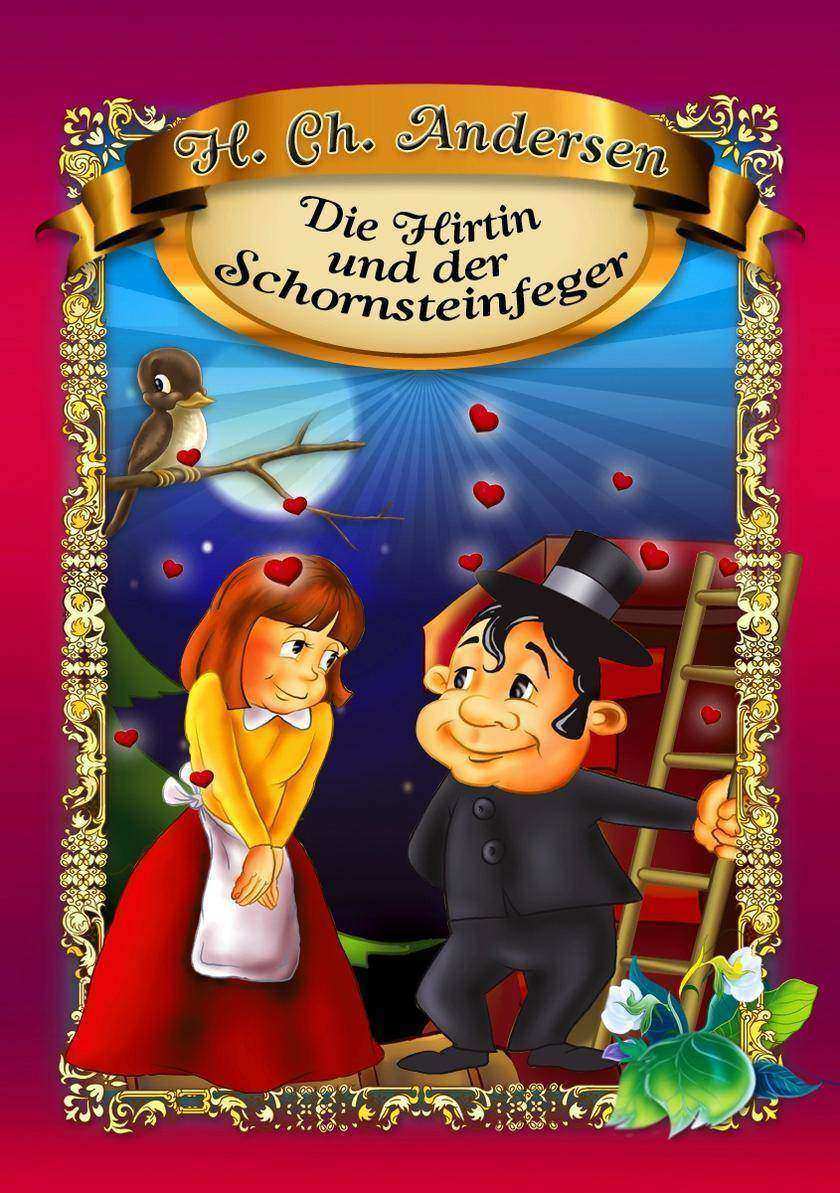
Die Hirtin und der Schornsteinfeger
¥9.24
Este Leopardi un poet pesimist, aa cum l-a clasat tradiia Nu. Din perspectiva zilei de azi, el apare mai degrab ca un poet tragic, ca un exponent al categoriilor existeniale fundamentale. Nu moartea ca atare l sperie pe Leopardi, ci murirea, adic manifestarea ei procesual. Tot astfel viaa leopardian este vieuire. Desfurarea acestora e inversat: trirea vieii (vieuirea) e retrospectiv, iar trirea morii (murirea) e perspectiv. Inversiunea ontologic este temeiul mitopo(i)eticii leopardiene. Cartea ne propune un Leopardi modern i postmodern, un spirit intercultural i multicultural n siajul integrrii europene. Nu lipsete, bineneles, odiseea receptrii lui n spaiul cultural romnesc, ca pattern al lirismului arhetipal, alturi de Eminescu.” (Mihai Cimpoi)Un studiu incitant despre unul dintre cei mai mari poei ai lumii.

Heidi: Illustrated Edition
¥9.24
The thing that went under the name of automobile wheezed into the ranchyard and rattled to a halt. With creaks and groans in every joint the car discharged its six very dusty, very weary occupants. At the same time, the screen door of the ranch house banged shut and a flying figure descended on the new arrivals. “Oh, Gale, but I’m glad to see you,” the girl from the ranch house declared hugging the foremost one of the visitors. Gale Howard returned the hug with equal warmth. The two were cousins, and Gale and her friends, The Adventure Girls, had traveled West to spend the summer on the K Bar O Ranch, owned by Gale’s uncle. “But don’t tell me you traveled all the way West in that!” Virginia Wilson murmured aghast, when the introductions and first greetings were over. “We wouldn’t have lived to tell the tale,” declared Carol Carter. “I never knew a car that had so many bumps in it.” “We came West to Phoenix on the train,” Gale explained. “It was there we bought the car and drove up here.” “You wouldn’t think we bought it second hand, would you?” Janet Gordon murmured. “No,” Phyllis Elton agreed with a twinkle in her eyes. “It looks as though we made it ourselves.” The last two of the new arrivals, Madge Reynolds and Valerie Wallace, who had been busy unstrapping luggage and tumbling bags onto the ground, turned now to the ranch girl. “What shall we do with our stuff?” Madge asked. “I suppose you will want to change from your traveling suits,” Virginia suggested, “so just bring along what you want now. Leave the rest here. Tom can bring it in later.” Tom was her elder brother and as the girls walked toward the ranch house he crossed the yard from the corral. Behind him came Gale’s uncle. Virginia called her mother and more greetings and introductions followed. “But how did you manage to leave home without a chaperon?” Virginia asked from her position on the bed in the room shared by Gale and Valerie. “It was all we could do to get away without one,” a laughing voice in the adjoining room declared, and Janet appeared on the threshold. “Finally our parents decided that Gale and Valerie, being the only sane and level-headed ones among us, could be trusted to see that we behaved properly,” Carol added, hanging over Janet’s shoulder. “That shows how much they really know Gale and Valerie,” added Janet mischievously. “If they had any sense at all, they would have appointed me guardian angel of the troupe.” “Then we would never have gotten this far,” Valerie declared, struggling to pull on a brown riding boot. “Yes, Virginia,” Gale laughed, “when we did let Janet drive for a little while, she ran us into a ditch, went the wrong way on a one way street in a little town below here, talked back to a policeman and nearly landed us all in jail.” “Yes, we had to let Gale drive thereafter for self preservation,” Carol murmured.

Maggie A Girl of the Streets
¥9.24
Suddenly we heard a yelp and a volley of furious blasphemy from the companion hatchway, and the deformed man with the black face came up hurriedly. He was immediately followed by a heavy red-haired man in a white cap. At the sight of the former the staghounds, who had all tired of barking at me by this time, became furiously excited, howling and leaping against their chains. The black hesitated before them, and this gave the red-haired man time to come up with him and deliver a tremendous blow between the shoulder-blades. The poor devil went down like a felled ox, and rolled in the dirt among the furiously excited dogs. It was lucky for him that they were muzzled. The red-haired man gave a yawp of exultation and stood staggering, and as it seemed to me in serious danger of either going backwards down the companion hatchway or forwards upon his victim. So soon as the second man had appeared, Montgomery had started forward. “Steady on there!” he cried, in a tone of remonstrance. A couple of sailors appeared on the forecastle. The black-faced man, howling in a singular voice rolled about under the feet of the dogs. No one attempted to help him. The brutes did their best to worry him, butting their muzzles at him. There was a quick dance of their lithe grey-figured bodies over the clumsy, prostrate figure. The sailors forward shouted, as though it was admirable sport. Montgomery gave an angry exclamation, and went striding down the deck, and I followed him. The black-faced man scrambled up and staggered forward, going and leaning over the bulwark by the main shrouds, where he remained, panting and glaring over his shoulder at the dogs. The red-haired man laughed a satisfied laugh. “Look here, Captain,” said Montgomery, with his lisp a little accentuated, gripping the elbows of the red-haired man, “this won't do!” I stood behind Montgomery. The captain came half round, and regarded him with the dull and solemn eyes of a drunken man. “Wha' won't do?” he said, and added, after looking sleepily into Montgomery's face for a minute, “Blasted Sawbones!” With a sudden movement he shook his arms free, and after two ineffectual attempts stuck his freckled fists into his side pockets.“That man's a passenger,” said Montgomery. “I'd advise you to keep your hands off him.” “Go to hell!” said the captain, loudly. He suddenly turned and staggered towards the side. “Do what I like on my own ship,” he said.


