


 购物车
购物车 个人中心
个人中心

Polly
¥9.24
One Thursday, Camille, on returning from his office, brought with him a great fellow with square shoulders, whom he pushed in a familiar manner into the shop. "Mother," he said to Madame Raquin, pointing to the newcomer, "do you recognise this gentleman?" The old mercer looked at the strapping blade, seeking among her recollections and finding nothing, while Therese placidly observed the scene. "What!" resumed Camille, "you don't recognise Laurent, little Laurent, the son of daddy Laurent who owns those beautiful fields of corn out Jeufosse way. Don't you remember? I went to school with him; he came to fetch me of a morning on leaving the house of his uncle, who was our neighbour, and you used to give him slices of bread and jam." All at once Madame Raquin recollected little Laurent, whom she found very much grown. It was quite ten years since she had seen him. She now did her best to make him forget her lapse of memory in greeting him, by recalling a thousand little incidents of the past, and by adopting a wheedling manner towards him that was quite maternal. Laurent had seated himself. With a peaceful smile on his lips, he replied to the questions addressed to him in a clear voice, casting calm and easy glances around him. "Just imagine," said Camille, "this joker has been employed at the Orleans-Railway-Station for eighteen months, and it was only to-night that we met and recognised one another—the administration is so vast, so important!" As the young man made this remark, he opened his eyes wider, and pinched his lips, proud to be a humble wheel in such a large machine. Shaking his head, he continued: "Oh! but he is in a good position. He has studied. He already earns 1,500 francs a year. His father sent him to college. He had read for the bar, and learnt painting. That is so, is it not, Laurent? You'll dine with us?" "I am quite willing," boldly replied the other. He got rid of his hat and made himself comfortable in the shop, while Madame Raquin ran off to her stewpots. Therese, who had not yet pronounced a word, looked at the new arrival. She had never seen such a man before. Laurent, who was tall and robust, with a florid complexion, astonished her. It was with a feeling akin to admiration, that she contemplated his low forehead planted with coarse black hair, his full cheeks, his red lips, his regular features of sanguineous beauty. For an instant her eyes rested on his neck, a neck that was thick and short, fat and powerful. Then she became lost in the contemplation of his great hands which he kept spread out on his knees: the fingers were square; the clenched fist must be enormous and would fell an ox.

The Colonists
¥9.24
Leonardo Da Vinci, the many-sided genius of the Italian Renaissance, was born, as his name implies, at the little town of Vinci, which is about six miles from Empoli and twenty miles west of Florence. Vinci is still very inaccessible, and the only means of conveyance is the cart of a general carrier and postman, who sets out on his journey from Empoli at sunrise and sunset. Outside a house in the middle of the main street of Vinci to-day a modern and white-washed bust of the great artist is pointed to with much pride by the inhabitants. Leonardo's traditional birthplace on the outskirts of the town still exists, and serves now as the headquarters of a farmer and small wine exporter.Leonardo di Ser Piero d'Antonio di Ser Piero di Ser Guido da Vinci—for that was his full legal name—was the natural and first-born son of Ser Piero, a country notary, who, like his father, grandfather, and great-grandfather, followed that honourable vocation with distinction and success, and who subsequently—when Leonardo was a youth—was appointed notary to the Signoria of Florence. Leonardo's mother was one Caterina, who afterwards married Accabriga di Piero del Vaccha of Vinci. His BirthLeonardo Da Vinci, the many-sided genius of the Italian Renaissance, was born, as his name implies, at the little town of Vinci, which is about six miles from Empoli and twenty miles west of Florence. Vinci is still very inaccessible, and the only means of conveyance is the cart of a general carrier and postman, who sets out on his journey from Empoli at sunrise and sunset. Outside a house in the middle of the main street of Vinci to-day a modern and white-washed bust of the great artist is pointed to with much pride by the inhabitants. Leonardo's traditional birthplace on the outskirts of the town still exists, and serves now as the headquarters of a farmer and small wine exporter. His ArtLeonardo, whose birth antedates that of Michelangelo and Raphael by twenty three and thirty-one years respectively, was thus in the forefront of the Florentine Renaissance, his life coinciding almost exactly with the best period of Tuscan painting.Leonardo was the first to investigate scientifically and to apply to art the laws of light and shade, though the preliminary investigations of Piero della Francesca deserve to be recorded.He observed with strict accuracy the subtleties of chiaroscuro—light and shade apart from colour; but, as one critic has pointed out, his gift of chiaroscuro cost the colour-life of many a noble picture. Leonardo was "a tonist, not a colourist," before whom the whole book of nature lay open. His MindWe can readily believe the statements of Benvenuto Cellini, the sixteenth-century Goldsmith, that Francis I. "did not believe that any other man had come into the world who had attained so great a knowledge as Leonardo, and that not only as sculptor, painter, and architect, for beyond that he was a profound philosopher." Leonardo anticipated many eminent scientists and inventors in the methods of investigation which they adopted to solve the many problems with which their names are coupled. Among these may be cited Copernicus' theory of the earth's movement, Lamarck's classification of vertebrate and invertebrate animals, the laws of friction, the laws of combustion and respiration, the elevation of the continents, the laws of gravitation, the undulatory theory of light and heat, steam as a motive power in navigation, flying machines, the invention of the camera obscura, magnetic attraction, the use of the stone saw, the system of canalisation, breech loading cannon, the construction of fortifications, the circulation of the blood, the swimming belt, the wheelbarrow, the composition of explosives, the invention of paddle wheels, the smoke stack, the mincing machine! It is, therefore, easy to see why he called "Mechanics the Paradise of the Sciences."Leonardo was a SUPERMAN.

The Snow Image: "A Childish Miracle"
¥9.24
This book is merely a personal narrative, and not a pretentious history or a philosophical dissertation. It is a record of several years of variegated vagabondizing, and its object is rather to help the resting reader while away an idle hour than afflict him with metaphysics, or goad him with science. Still, there is information in the volume; information concerning an interesting episode in the history of the Far West, about which no books have been written by persons who were on the ground in person, and saw the happenings of the time with their own eyes. I allude to the rise, growth and culmination of the silver-mining fever in Nevada -a curious episode, in some respects; the only one, of its peculiar kind, that has occurred in the land; and the only one, indeed, that is likely to occur in it.Yes, take it all around, there is quite a good deal of information in the book. I regret this very much; but really it could not be helped: information appears to stew out of me naturally, like the precious ottar of roses out of the otter. Sometimes it has seemed to me that I would give worlds if I could retain my facts; but it cannot be. The more I calk up the sources, and the tighter I get, the more I leak wisdom. Therefore, I can only claim indulgence at the hands of the reader, not justification. THE AUTHOR."My brother had just been appointed Secretary of Nevada Territory--?an office of such majesty that it concentrated in itself the duties and dignities of Treasurer, Comptroller, Secretary of State, and Acting Governor in the Governor's absence. A salary of eighteen hundred dollars a year and the title of "Mr. Secretary," gave to the great position an air of wild and imposing grandeur. I was young and ignorant, and I envied my brother. I coveted his distinction and his financial splendor, but particularly and especially the long, strange journey he was going to make, and the curious new world he was going to explore. He was going to travel! I never had been away from home, and that word "travel" had a seductive charm for me. Pretty soon he would be hundreds and hundreds of miles away on the great plains and deserts, and among the mountains of the Far West, and would see buffaloes and Indians, and prairie dogs, and antelopes, and have all kinds of adventures, and may be get hanged or scalped, and have ever such a fine time, and write home and tell us all about it, and be a hero. And he would see the gold mines and the silver mines, and maybe go about of an afternoon when his work was done, and pick up two or three pailfuls of shining slugs, and nuggets of gold and silver on the hillside. And by and by he would become very rich, and return home by sea, and be able to talk as calmly about San Francisco and the ocean, and "the isthmus" as if it was nothing of any consequence to have seen those marvels face to face. What I suffered in contemplating his happiness, pen cannot describe. And so, when he offered me, in cold blood, the sublime position of private secretary under him, it appeared to me that the heavens and the earth passed away, and the firmament was rolled together as a scroll! I had nothing more to desire. My contentment was complete.At the end of an hour or two I was ready for the journey. Not much packing up was necessary, because we were going in the overland stage from the Missouri frontier to Nevada, and passengers were only allowed a small quantity of baggage apiece. There was no Pacific railroad in those fine times of ten or twelve years ago--?not a single rail of it. I only proposed to stay in Nevada three months--?I had no thought of staying longer than that. I meant to see all I could that was new and strange, and then hurry home to business. I little thought that I would not see the end of that three-month pleasure excursion for six or seven uncommonly long years!
Drawn at a Venture
¥9.24
MYTH: ITS BIRTH AND GROWTH.“Unchecked by external truth, the mind of man has a fatal facility for ensnaring, entrapping, and entangling itself. But, happily, happily for the human race, some fragment of physical speculation has been built into every false system. Here is the weak point. Its inevitable destruction leaves a breach in the whole fabric, and through that breach the armies of truth march in.”Sir H. S. Maine. MYTH: ITS BIRTH AND GROWTH.CHAPTER IITS PRIMITIVE MEANING.It is barely thirty years ago since the world was startled by the publication of Buckle’s History of Civilisation, with its theory that human actions are the effect of causes as fixed and regular as those which operate in the universe; climate, soil, food, and scenery being the chief conditions determining progress. That book was a tour de force, not a lasting contribution to the question of man’s mental development. The publication of Darwin’s epoch-making Origin of Species[1] showed wherein it fell short; how the importance of the above-named causes was exaggerated and the existence of equally potent causes overlooked. Buckle probably had not read Herbert Spencer’s Social Statics, and he knew nothing of the profound revolution in silent preparation in the quiet of Darwin’s home; otherwise, his book must have been rewritten. This would have averted the oblivion from which not even its charm of style can rescue it. Its brilliant but defective theories are obscured in the fuller light of that doctrine of descent with modifications by which we learn that external circumstances do not alone account for the widely divergent types of men, so that a superior race, in supplanting an inferior one, will change the face and destiny of a country, “making the solitary place to be glad, and the desert to rejoice and blossom as the rose.” Darwin has given us the clue to those subtle and still obscure causes which bring about, stage by stage, the unseen adaptations to requirements varying a type and securing its survival, and which have resulted in the evolution of the manifold species of living things. The notion of a constant relation between man and his surroundings is therefore untenable. The object of this book is to present in compendious form the evidence which myths and dreams supply as to primitive man’s interpretation of his own nature and of the external world, and more especially to indicate how such evidence carries within itself the history of the origin and growth of beliefs in the supernatural. The examples are selected chiefly from barbaric races, as furnishing the nearest correspondences to the working of the mind in what may be called its “eocene” stage, but examples are also cited from civilised races, as witnessing to that continuity of ideas which is obscured by familiarity or ignored by prejudice.Had more illustrations been drawn from sources alike prolific, the evidence would have been swollen to undue dimensions without increasing its significance; as it is, repetition has been found needful here and there, under the difficulty of entirely detaching the arguments advanced in the two parts of this work.

The Thing in the Attic
¥9.24
The first published novel by Leo Tolstoy released in November 1852. It is the first in a series of three novels and is followed by Boyhood and Youth. Published when Tolstoy was just twenty-three years old, the book was an immediate success, earning notice from other Russian novelists including Ivan Turgenev, who heralded the young Tolstoy as a major up-and-coming figure in Russian literature. Well-worth reading if you are interested in 19th century literature. Count Lev Nikolayevich Tolstoy (1828 – 1910), usually referred to in English as Leo Tolstoy, was a Russian novelist today regarded as one of the greatest of all time. He is best known for War and Peace (1869) and Anna Karenina (1877). He first achieved literary acclaim in his 20s with his semi-autobiographical trilogy, Childhood, Boyhood, and Youth (1852–1856), and Sevastopol Sketches (1855), based upon his experiences in the Crimean War. Tolstoy's fiction includes dozens of short stories and several novellas such as The Death of Ivan Ilyich, Family Happiness, and Hadji Murad. He also wrote plays and numerous philosophical essays. In the 1870s Tolstoy experienced a profound moral crisis, followed by what he regarded as an equally profound spiritual awakening. His literal interpretation of the ethical teachings of Jesus, centering on the Sermon on the Mount, caused him to become a fervent Christian anarchist and pacifist. His new-found asceticism and determination to renounce his considerable wealth tipped his marriage into bitter turmoil, which continued right up to his death at the age of 82 in the waiting room of an, until then, obscure Russian railway station. Tolstoy's ideas on nonviolent resistance, expressed in such works as The Kingdom of God Is Within You, were to have a profound impact on such pivotal 20th-century figures as Mohandas Gandhi, Martin Luther King, Jr., and James Bevel.

Cue for Quiet
¥9.24
Madame Bovary takes place in provincial northern France, near the town of Rouen in Normandy. The story begins and ends with Charles Bovary, a stolid, kindhearted man without much ability or ambition. As the novel opens, Charles is a shy, oddly dressed teenager arriving at a new school amidst the ridicule of his new classmates. Later, Charles struggles his way to a second-rate medical degree and becomes an officier de santé in the Public Health Service. His mother chooses a wife for him, an unpleasant but supposedly rich widow named Heloise Dubuc, and Charles sets out to build a practice in the village of Tostes (now T?tes). One day, Charles visits a local farm to set the owner's broken leg, and meets his client's daughter, Emma Rouault. Emma is a beautiful, daintily dressed young woman who has received a "good education" in a convent and who has a latent but powerful yearning for luxury and romance imbibed from the popular novels she has read. Charles is immediately attracted to her, and begins checking on his patient far more often than necessary until Heloise's jealousy puts a stop to the visits. When Heloise dies, Charles waits a decent interval, then begins courting Emma in earnest. Her father gives his consent, and Emma and Charles are married. ABOUT AUTHOR: Gustave Flaubert (French: December 12, 1821 – May 8, 1880) was an influential French writer widely considered one of the greatest novelists in Western literature. He is known especially for his first published novel, Madame Bovary (1857), for his Correspondence, and for his scrupulous devotion to his style and aesthetics. The celebrated short story writer Maupassant was a protégé of Flaubert. Early life and education:Flaubert was born on December 12, 1821, in Rouen, in the Seine-Maritime department of Upper Normandy, in northern France. He was the second son of Anne Justine Caroline (née Fleuriot; 1793–1872) and Achille-Cléophas Flaubert (1784–1846), a surgeon. He began writing at an early age, as early as eight according to some sources.He was educated at the Lycée Pierre Corneille in Rouen, and did not leave until 1840, when he went to Paris to study law. In Paris, he was an indifferent student and found the city distasteful. He made a few acquaintances, including Victor Hugo. Toward the end of 1840, he traveled in the Pyrenees and Corsica. In 1846, after an attack of epilepsy, he left Paris and abandoned the study of law. Writing career:His first finished work was November, a novella, which was completed in 1842.In September 1849, Flaubert completed the first version of a novel, The Temptation of Saint Anthony. He read the novel aloud to Louis Bouilhet and Maxime Du Camp over the course of four days, not allowing them to interrupt or give any opinions. At the end of the reading, his friends told him to throw the manuscript in the fire, suggesting instead that he focus on day-to-day life rather than fantastic subjects.In 1850, after returning from Egypt, Flaubert began work on Madame Bovary. The novel, which took five years to write, was serialized in the Revue de Paris in 1856. The government brought an action against the publisher and author on the charge of immorality, which was heard during the following year, but both were acquitted. When Madame Bovary appeared in book form, it met with a warm reception.In 1858, Flaubert traveled to Carthage to gather material for his next novel, Salammb?. The novel was completed in 1862 after four years of work.Drawing on his youth, Flaubert next wrote L'?ducation sentimentale (Sentimental Education), an effort that took seven years. This was his last complete novel, published in the year 1869.He wrote an unsuccessful drama, Le Candidat, and published a reworked version of Temptation of Saint Anthony.

The Adventure Girls at K Bar O
¥9.24
Though flattered by imitators galore Miss Potter's work stands supreme. Her many picture stories should be among the first books owned by children.Cecily Parsley lived in a pen,And brewed good ale for gentlemen; Gentlemen came every day,Till Cecily Parsley ran away.

The Island of Doctor Moreau: "Illustrated"
¥9.24
Once upon a time there was an old Sow with three little Pigs, and as she had not enough to keep them, she sent them out to seek their fortune. The first that went off met a Man with a bundle of straw, and said to him, "Please, Man, give me that straw to build me a house"; which the Man did, and the little Pig built a house with it. Presently came along a Wolf, and knocked at the door, and said, "Little Pig, little Pig, let me come in." To which the Pig answered, "No, no, by the hair of my chinny chin chin."

Red Handed: An International Cozy Mystery and Crime Private Investigator Short S
¥9.24
Red Handed: An International Cozy Mystery and Crime Private Investigator Short Story

Toots and His Friends: (Illustrated)
¥9.24
Stories:?HOW TOOTS WENT TO BED.?TOOTS AT THE KINDERGARTEN.?THE HAPPY HOUR.?ELFIE.?PAUL BROWN.?PAUL'S VIEWS AT EIGHT YEARS OF AGE.?MAX THE MEDDLER.?OUR MAY.?A BUBBLE PARTY.?SEWING A SEAM.?A FOUR-FOOTED FRIEND.?NAUGHTY SANDY?FLOSSIE'S HANDS.?JAMIE DOON.?FIVES.?OLIVER TWIST AT HOME.?MRS. WHITE'S FAMILY.?BUD AND BUNNIE.?DAISY DEAN.?THE COMMISSARY.?HARRY'S GUEST.?A TIRED VISITOR.?MR. SMITH'S FAMILY.?WHAT SHALL WE DO WITH BABY??DADDY TOUGH.?BUTTON BLUE.?THE STORY OF THE CUCKOO.?MAJOR AND BENJAMINA.?THE COMMODORE'S GUESTS.?HARVEST FESTIVAL.??TOOTS is our baby. He is a queer one too; up early, and always in dread of bed-time. One morning, not long ago, we heard him singing, and on looking for him, found the little rogue in the very middle of our best bed in the guest chamber, where he was playing hand-organ with a long hairpin put through the pretty pillow covers which had just come home from the laundry. There he sat singing a droll medley of "Uncle Ned," "Blessed Desus," and "Down in the Coal Mine." He had been watching two soldiers with a hand-organ, and Toots likes to do everything he sees done. While we were putting the guest-room in order, Toots marched out as a blind man, with his eyes shut and a cane in his hand. This brought him to grief, for he was picked up at the foot of the stairs with two large bumps on his pretty white brow. ??Toots was quiet then for a little while, a very little while, for as soon as we decided that his bones were all sound and a doctor need not be called, he "played sick," and asked for "shicken brof" and toast.
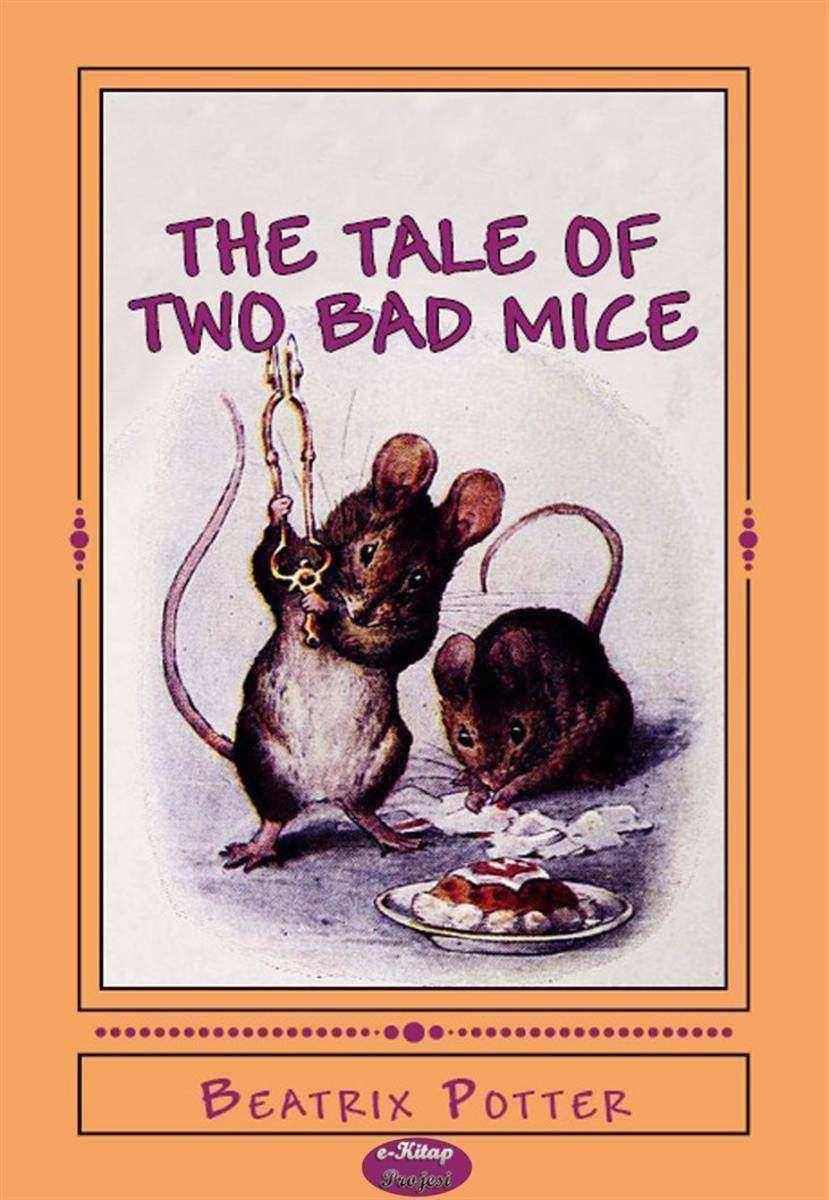
The Tale of Two Bad Mice: Illustrated
¥9.24
ONCE upon a time there was a very beautiful doll's-house; it was red brick with white windows, and it had real muslin curtains and a front door and a chimney.??IT belonged to two Dolls called Lucinda and Jane; least it belonged to Lucinda, but she never ordered meals.?Jane was the Cook; but she never did any cooking, because the dinner had been bought ready-made, in a box full of shavings. ??THERE were two red lobsters and a ham, a fish, a pudding, and some pears and oranges.?They would not come off the plates, but they were extremely beautiful.?ONE morning Lucinda and Jane had gone out for a drive in the doll's perambulator. There was no one in the nursery, and it was very quiet. Presently there was a little scuffling, scratching noise in a corner near the fire-place, where there was a hole under the skirting-board.?Tom Thumb put out his head for a moment, and then popped it in again.?Tom Thumb was a mouse. ??A MINUTE afterwards, Hunca Munca, his wife, put her head out, too; and when she saw that there was no one in the nursery, she ventured out on the oilcloth under the coal-box.

The Prince
¥9.24
If any book could be called legendary, surely it is this one. Its author, Italian diplomat and philosopher Niccolò Machiavelli (1469-1527) considered it his greatest work. Indeed, his thoughts on politics, as laid out so famously in this brief but profound work, have become so synonymous with him that his name has become an adjective: Machiavellian. How is political power achieved? How is it maintained? Though Machiavelli states explicitly that he is not discussing "Republics" here, only "Princedoms", this coldly rational guidebook to taking control and holding onto it contains such universal insights into human nature and the structure of human systems that his "advice" serves equally well in almost any power structure. With applications in such diverse realms as business, the military, even role-playing games, Machiavelli's rules for ruling continue to be required reading for students of politics, philosophy, and ethics.
![The Story of Miss Moppet: [Illustrated]](https://platform-permanent.ddimg.cn/pt-media-info-soa-resource/digital/product/45/94/1901164594_ii_cover.jpg?version=7700df74-d05a-4284-a3bf-f64f29176bb1)
The Story of Miss Moppet: [Illustrated]
¥9.24
This is a Pussy called Miss Moppet, she thinks she has heard a mouse!??This is the Mouse peeping out behind the cupboard, and making fun of Miss Moppet. He is not afraid of a kitten.??This is Miss Moppet jumping just too late; she misses the Mouse and hits her own head.??She thinks it is a very hard cupboard!??The Mouse watches Miss Moppet from the top of the cupboard.??Miss Moppet ties up her head in a duster, and sits before the fire.??The Mouse thinks she is looking very ill. ?He comes sliding down the bell-pull.??Miss Moppet looks worse and worse. The Mouse comes a little nearer.??Miss Moppet holds her poor head in her paws, and looks at him through a hole in the duster. The Mouse comes very close.??And then all of a sudden—Miss Moppet jumps upon the Mouse!!
Porcelain and Pink
¥9.24
A room in the down-stairs of a summer cottage. High around the wall runs an art frieze of a fisherman with a pile of nets at his feet and a ship on a crimson ocean, a fisherman with a pile of nets at his feet and a ship on a crimson ocean, a fisherman with a pile of nets at his feet and so on. In one place on the frieze there is an overlapping—here we have half a fisher-man with half a pile of nets at his foot, crowded damply against half a ship on half a crimson ocean. The frieze is not in the plot, but frankly it fascinates me. I could continue indefinitely, but I am distracted by one of the two objects in the room—a blue porcelain bath-tub. It has character, this bath-tub. It is not one of the new racing bodies, but is small with a high tonneau and looks as if it were going to jump; dis-couraged, however, by the shortness of its legs, it has submitted to its environment and to its coat of sky-blue paint. But it grumpily refuses to allow any patron completely to stretch his legs—which brings us neatly to the second object in the room: SHE is a girl—clearly an appendage to the bath-tub, on-ly her head and throat—beautiful girls have throats instead of necks—and a suggestion of shoulder ap-pearing above the side. For the first ten minutes of the play the audience is engrossed in wondering if she really is playing the game fairly and hasn't any clothes on or whether it is being cheated and she is dressed. The girl's name is JULIE MARVIS. From the proud way she sits up in the bath-tub we deduce that she is not very tall and that she carries herself well. When she smiles, her upper tip rolls a little and reminds you of an Easter Bunny, She is within whispering distance of twenty years old.

The Jelly Bean
¥9.24
Jim Powell was a Jelly-bean. Much as I desire to make him an appealing character, I feel that it would be unscrupulous to deceive you on that point. He was a bred-in-the-bone, dyed-in-the-wool, ninety-nine three-quarters per cent Jelly-bean and he grew lazily all during Jelly-bean season, which is every season, down in the land of the Jelly-beans well below the Mason-Dixon line.Now if you call a Memphis man a Jelly-bean he will quite possibly pull a long sinewy rope from his hip pocket and hang you to a convenient telegraph-pole. If you Call a New Orleans man a Jelly-bean he will probably grin and ask you who is taking your girl to the Mardi Gras ball. The particular Jelly-bean patch which produced the protagonist of this history lies somewhere between the two—a little city of forty thousand that has dozed sleepily for forty thousand years in southern Georgia occasionally stirring in its slumbers and muttering something about a war that took place sometime, somewhere, and that everyone else has forgotten long ago.

Par Perfeito: Episódio 2
¥9.27
Par Perfeito: Episódio 2

Par Perfeito: Episódio 3
¥9.27
Par Perfeito: Episódio 3
Piktasis princas
¥9.32
i acest volum intr ?n seria celor pregtitoare, anun?nd O istorie politic a literaturii rom?ne postbelice. Nu e vorba de un ?rzboi cu estetismul”, reanim?nd fantoma lui Gherea, ci de reevaluri pe temei estetic, la mai multe m?ini, folosind achiziiile criticii literare; i, firete, de recontextualizri (interog?nd epoca), in?nd cont, ?ns, de fluctuaiile recepiei i de capricioasa meteorologie politic. ?n fond, suntem consecveni cu programul, anunat ?nc de la debut (Orizontul lecturii, 1983), ?neleg?nd c, sociologic judec?nd, nu putem examina fenomenul literar retez?ndu-i ombilicul istoric. Generaia orfelin discut, prin profiluri sintetizatoare, despre o serie creatoare, av?nd drept numitor comun vitregele condiii formative; ea a fost modelat de interdicii (lecturi clandestine, maetri ?ascuni”, biblioteci epurate), provoc?nd o reacie polemic (ruptura) i promov?nd, astfel, la start, un program negativ. Dar, ?n acelai timp, este o generaie auroral, cu rol de verig, redescoperind – euforic – tradiia, definind o stare de spirit, angaj?ndu-se, prin combustie creatoare, la o lucrare comun, recuperatoare, fecund, susinut, prin propulsie adjectival, de o critic solidar, risipind i cronici ?tactice”, cum recunotea Matei Clinescu. Chiar dac noi discutm, ?n acest volum, poeii ei, evident nu poate fi vorba doar despre o generaie de poei, transport?nd legenda Labi, anun?nd, prin voci tinere, o nou epoc de lirism. Nu e vorba, aadar, de o compact ?echip” liric, ci de un buchet de personaliti, cu voci distincte, evolu?nd ?n direcii imprevizibile, isc?nd, ?n timp, disensiuni, controverse ?nfierb?ntate, ierarhizri provizorii. i propun?nd un inventar tematic, hrnind un imaginar, p?n la un punct, comun, definind o fizionomie specific. (Adrian Dinu Rachieru)
Rū?ītis
¥9.32
Cartea e ca o pies? de teatru alc?tuit? din personaje, parantezele autorului, dialoguri, secven?e, scene, acte, cu leg?tura necesar?, intre acestea. ?n treac?t fie spus, critica poate s? ?ntre?in? longevitatea operei, dac? are destul? vigoare ?i dac? opera e de calitate. Sunt vorbe optimiste la vremea Internetului care, deocamdat?, nu de?ine puterea controlului critic ?i nici nu se ?ntrev?d ?anse de aceast? natur?. Tocmai de aceea pericolul dispari?iei c?rt?ii de h?rtie pare anun?area unui cataclism. Noi mai credem ?n ceva. R?m?ne hot?r?t c? interpretarea critic?, pentru a fi c?t mai aproape de text, trebuie s? se asocieze cu "partea estetic?" a demersului, care e scriitura, citatul, descrierea ?i altele. O "conversa?ie", pe c?t posibil neretoric?.

Bilin? ve Zaman
¥9.32
Her ?ey ?evresiyle etkile?imsel bütünlükte anlaml? olmaktad?r. Soral?m yine de; Bütünü par?alar?ndan fazlas? yapan nedenler nelerdir? Evrende neyin ifadesiyiz? Canl?l?k, bilin?, ruh, duygular art?k anla??labilir midir? Canl?l?k h?z farklar?ndan m? olu?maktad?r? H?zl? bile?enimiz olan elektri?in; canl?l???n ve bilincimizin olu?umunda nas?l bir etken olmaktad?r? Bizleri olu?turanlardan beden, duygular, bilin?, ruh diye tan?mlad?klar?m?z aras?nda ba?lant?lar nas?l kurulmaktad?r? Sorular?, günümüzde enerjiler aras? ba?lant?, etkile?im nas?l kurulmaktad?r? Sorusu gibi oldu?u, yani her?ey gibi onlar?nda enerji oldu?u anla??lm??t?r. Ruh olarak tan?mlad?k, zihin-beden aras?nda ba?lant?y? kurmaya, duygular? anlamaya ?al??t?k. Bilincin, alg?n?n tüm bunlarla nas?l bir ili?kisi olabilece?ini sorgulad?k. Genelde ?yle oluyor ya, bütünün ?nce par?alar?n? anlamaya, par?alara ay?r?p anlamaya ?al??man?n sorunlar?n?n izlerini sürüp bütünle olan etkile?imini g?rmeye y?neliyoruz. Zaman?n i?inde zaman ge?irmemize ra?men bilincimizle, canl?l???m?zla nas?l ba?lant?l? oldu?unu g?rmezden geldik. Günümüz dünyas?n?n ula?t??? bilgi, ya?amsal deneyimlerin kaydedilip aktar?lmas?, izledi?imiz filmlerden tutun da, deneyimlerimizin h?zl? etkile?imiyle zaman aral?klar?n? orduk. S?n?r sistemimize benzeyen internet a?lar? olu?turduk. ?nsanl?k olarak yapay zekalar geli?tirdik. Hücre ile beden benzeri; canl?yla tüm canl?l???n, ekosistemin, varl???n etkile?im ?rüntüsü oldu?unu, etkile?imsel ?rüntüde anlam? oldu?unu ??rendik. Belki de olu?turdu?umuz yeni anlamlar gelecekte olu?acaklar?n par?alar?d?r. De?i?im devam ediyor. G?rünen o ki, canl?lar bu evrenin en ileri evrensel enerji alanlar?d?r. Soral?m kendimize; Evrende canl?l?ktan daha anlaml? bir ?ey var m?d?r? Dünya bilinci ?a?lard?r. Biriktirdi?i bilgi ve deneyimlerini, olu?umun ba?lang?c?ndan itibaren nesiller boyu aktarm??, ekosistemiyle bir bütün olarak evrilmi?tir. Ula?t??? bilin? halini ?evresiyle etkile?imsel d?ngü i?inde hep yeniden ?ekillendirmi?tir. D?nü?ümsel etkile?imin hi?bir zaman?n?n ayn? olmay??? temel evrensel durumun etkisiyle de zamanda evrilmi? ve günümüz dünyas?n?n paradigmas?na ula?m??t?r. Evrimsel ?rüntüye paralel geli?en teknolojik entegrasyonla bilgi, zamanda ?ok yo?un etkile?ebilmi?tir. Dünya üzerinde artan s?n?r hücresi say?s? yani artan canl? say?s?n?n olumlu bir yan? ise, bilginin etkile?imini art?rm?? olmas?d?r. Platon’un idealar dünyas?nda var olan?n kendi ba??na var olamayaca??n?, var olan?n ?ncül bir mükemmeli olmal? dü?üncesiyle hareket etti?i g?rülüyor. Bu dü?ünceye bi ele?tiriyle ba?lay?p daha sonra ele?tiriyide ele?tirelim. Diyelim ki bu dü?ünceye evrimin, zaman?n itiraz? var. Buna b?yle devam edersek ba?lang?? i?inde, uzaylar i?inde ba?layan evrenler olsa bile bugünki mant?k yine en ba?a d?nmemizi s?ylüyor. Yani ilk nas?l olu?tu? Bu olu?um ?ncesi uzay diyeyim en mükemmel saf hali olan B?R nas?l olu?tu. 1’de ise hi?bir ?zellik olmamal? yani nas?l olurda idea’lar oradan kaynaklan?r. Demek ki varl?k olu?umu bi süre?, evrim olur gibi. Sondan ba?a d?nsekte bi süre?, ba?tan ba?lam?? olsakta bi süre?. Bu ifadeler B?R d?ngüsü i?inde do?ru olabilir. ?dealar nereden geldi ?ünki sonu? olarak idealar B?R de olmamal? ?ünkü B?R farkl?l?k bar?nd?rm?yor. Asl?nda her ?eyi B?R kapsar, o kaynak potansiyeller alan?d?r. Haliyle her ?eyle ayn? alandad?r. Bi nevi potansiyeller alan?yla varl?k ayn? ?eydir, benzerdir. O halde Platon’un idealar kuram?n?n kayna?? ve kendisi bu evrendedir, bu evrendir. Günümüz bilim dünyas?nda ?oklu evrenler dü?üncesi olduk?a yayg?nd?r. O halde evrenlerin oldu?u daha dev uzaysal kaynaklar, alanlar olmal?d?r. ??te B?R belkide bizimde i?inde evrildi?imiz vede k?smen farkl?la?t???m?z her ?eyin kayna??, alan?d?r. Evren büyük tabii ancak büyüklük hep yan?lt?c? olmaya devam etmi?tir. Belkide hiper bir uzay hatta uzaylar alan?nda olabiliriz. Belki ama e?er do?ru b? dü?ünce ?ekliyse bu ilk soruyu yinede de?i?tirmiyor. ?lk ba?lang?? diye bir ?ey var m??
Dr Faustus - Hell is just a frame of mind.
¥9.32
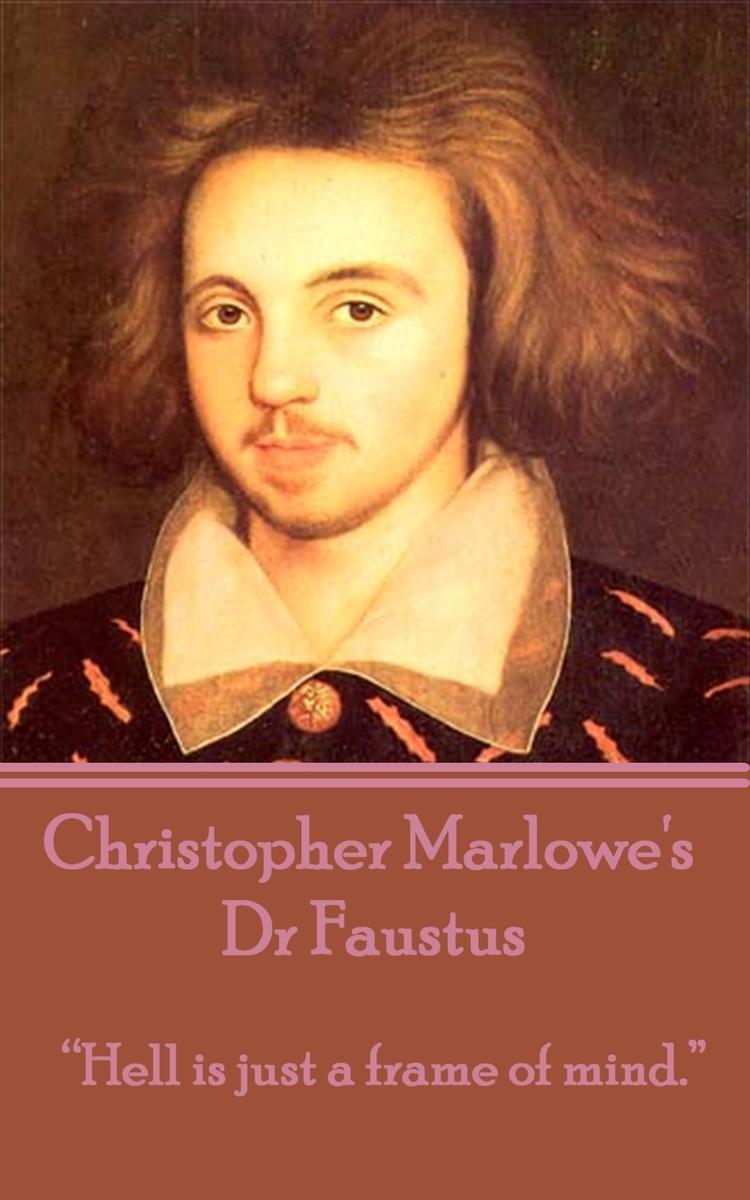
In this foundational classic play, Christopher Marlowe beautifully retells the legend of Doctor Faustus in a masterful combination of verse and prose. The celebrated moral of the play is about how excessive ambition and unlimited lust for knowledge and power lead to self-destruction and damnation. The protagonist in the story is a talented lower-class man who is obsessed with the study of sciences and the secrets of life. His excessive academic ambition and his reliance solely on logic and reason lead him to cogitate about the nature of the world and its existence and to question the utility of the "e;doctrine of Divinity."e; Unsatisfied with the knowledge that pure and experimental sciences can offer, he eventually decides to explore the curious world of Black Magic. Through the recital of a strange incantation, Faustus succeeds in summoning a devil called Mephistopheles who informs him that he will only obey his orders once a pact is signed between Faustus and the devil's master: Lucifer. The pact is signed by Faustus' own blood and stipulates that in return of Mephistopheles' services, which unexpectedly turn to be unworthy by the end, he must give his soul over to Lucifer. The denouement of the play opens the floor for different speculations about Faustus' damnation or salvation.


