万本电子书0元读

万本电子书0元读

LiveCode Mobile Development Cookbook
Dr Edward Lavieri
¥90.46
If you are a LiveCode mobile developer looking to improve your existing skills, add efficiencies to your code, or want a better understanding of LiveCode’s capabilities, then LiveCode Mobile Development Cookbook is a must-have for you. The reader should at least have a basic understanding of LiveCode and mobile application development.
Learning Neo4j
Learning Neo4j
Rik Van Bruggen
¥90.46
This book is for developers who want an alternative way to store and process data within their applications. No previous graph database experience is required; however, some basic database knowledge will help you understand the concepts more easily.
JIRA 6.x Administration Cookbook
Patrick Li
¥90.46
A comprehensive guide, full of practical recipes with real-life JIRA administration challenges, solutions, and examples with illustrations from the actual application. If you are an administrator who will be customizing, supporting, and maintaining JIRA for your organization, this book is for you. Familiarity with the core concepts of JIRA is essential. For some recipes, basic understanding in HTML, CSS, and JavaScript will also be helpful.
OpenCV with Python By Example
Prateek Joshi
¥90.46
Build real-world computer vision applications and develop cool demos using OpenCV for Python About This Book Learn how to apply complex visual effects to images using geometric transformations and image filters Extract features from an image and use them to develop advanced applications Build algorithms to help you understand the image content and perform visual searches Who This Book Is For This book is intended for Python developers who are new to OpenCV and want to develop computer vision applications with OpenCV-Python. This book is also useful for generic software developers who want to deploy computer vision applications on the cloud. It would be helpful to have some familiarity with basic mathematical concepts such as vectors, matrices, and so on. What You Will Learn Apply geometric transformations to images, perform image filtering, and convert an image into a cartoon-like image Detect and track various body parts such as the face, nose, eyes, ears, and mouth Stitch multiple images of a scene together to create a panoramic image Make an object disappear from an image Identify different shapes, segment an image, and track an object in a live video Recognize an object in an image and build a visual search engine Reconstruct a 3D map from images Build an augmented reality application In Detail Computer vision is found everywhere in modern technology. OpenCV for Python enables us to run computer vision algorithms in real time. With the advent of powerful machines, we are getting more processing power to work with. Using this technology, we can seamlessly integrate our computer vision applications into the cloud. Web developers can develop complex applications without having to reinvent the wheel. This book will walk you through all the building blocks needed to build amazing computer vision applications with ease. We start off with applying geometric transformations to images. We then discuss affine and projective transformations and see how we can use them to apply cool geometric effects to photos. We will then cover techniques used for object recognition, 3D reconstruction, stereo imaging, and other computer vision applications. This book will also provide clear examples written in Python to build OpenCV applications. The book starts off with simple beginner’s level tasks such as basic processing and handling images, image mapping, and detecting images. It also covers popular OpenCV libraries with the help of examples. The book is a practical tutorial that covers various examples at different levels, teaching you about the different functions of OpenCV and their actual implementation. Style and approach This is a conversational-style book filled with hands-on examples that are really easy to understand. Each topic is explained very clearly and is followed by a programmatic implementation so that the concept is solidified. Each topic contributes to something bigger in the following chapters, which helps you understand how to piece things together to build something big and complex.
Learning Predictive Analytics with R
Eric Mayor
¥90.46
Get to grips with key data visualization and predictive analytic skills using R About This Book Acquire predictive analytic skills using various tools of R Make predictions about future events by discovering valuable information from data using R Comprehensible guidelines that focus on predictive model design with real-world data Who This Book Is For If you are a statistician, chief information officer, data scientist, ML engineer, ML practitioner, quantitative analyst, and student of machine learning, this is the book for you. You should have basic knowledge of the use of R. Readers without previous experience of programming in R will also be able to use the tools in the book. What You Will Learn Customize R by installing and loading new packages Explore the structure of data using clustering algorithms Turn unstructured text into ordered data, and acquire knowledge from the data Classify your observations using Na?ve Bayes, k-NN, and decision trees Reduce the dimensionality of your data using principal component analysis Discover association rules using Apriori Understand how statistical distributions can help retrieve information from data using correlations, linear regression, and multilevel regression Use PMML to deploy the models generated in R In Detail R is statistical software that is used for data analysis. There are two main types of learning from data: unsupervised learning, where the structure of data is extracted automatically; and supervised learning, where a labeled part of the data is used to learn the relationship or scores in a target attribute. As important information is often hidden in a lot of data, R helps to extract that information with its many standard and cutting-edge statistical functions. This book is packed with easy-to-follow guidelines that explain the workings of the many key data mining tools of R, which are used to discover knowledge from your data. You will learn how to perform key predictive analytics tasks using R, such as train and test predictive models for classification and regression tasks, score new data sets and so on. All chapters will guide you in acquiring the skills in a practical way. Most chapters also include a theoretical introduction that will sharpen your understanding of the subject matter and invite you to go further. The book familiarizes you with the most common data mining tools of R, such as k-means, hierarchical regression, linear regression, association rules, principal component analysis, multilevel modeling, k-NN, Na?ve Bayes, decision trees, and text mining. It also provides a de*ion of visualization techniques using the basic visualization tools of R as well as lattice for visualizing patterns in data organized in groups. This book is invaluable for anyone fascinated by the data mining opportunities offered by GNU R and its packages. Style and approach This is a practical book, which analyzes compelling data about life, health, and death with the help of tutorials. It offers you a useful way of interpreting the data that’s specific to this book, but that can also be applied to any other data.
QGIS Blueprints
QGIS Blueprints
Ben Mearns
¥90.46
Develop analytical location-based web applications with QGIS About This Book Tame geographic information workflows with QGIS blueprints for smart web applications Create geographic web applications using QGIS and free/open source software Blueprints provide real-world applications covering many use cases Who This Book Is For This book encompasses relatively experienced GIS developers who have a strong grounding in the fundamentals of GIS development. They will have used QGIS before, but are looking to understand how to develop more complex, layered map applications that expose various data sets, utilize different visualizations, and are consumable (usable) by end users What You Will Learn Review geographic information principles and the application of these principles in the QGIS free/open source ecosystem Perform advanced analysis with site selection, hydrologic, and topological networks Build performant web applications by tile caching and generating static assets Provide collaborative editing capabilities for your team or community Develop custom and dynamic analysis and visualization capabilities Select the best components from desktop and web, for your use case Integrate it with social media and crowdsourcing In Detail QGIS, the world’s most popular free/open source desktop geographic information system software, enables a wide variety of use cases involving location – previously only available through expensive specialized commercial software. However, designing and executing a multi-tiered project from scratch on this complex ecosystem remains a significant challenge. This book starts with a primer on QGIS and closely related data, software, and systems. We’ll guide you through six use-case blueprints for geographic web applications. Each blueprint boils down a complex workflow into steps you can follow to reduce time lost to trial and error. By the end of this book readers should be able to build complex layered applications that visualize multiple data sets, employing different types of visualization, and give end users the ability to interact with and manipulate this data for the purpose of analysis. Style and approach This is a comprehensive guide to the application of QGIS and free/open source software in creating web applications from analysis. Step-by-step blueprints guide the reader through analytical and web development topics and designs.
Groovy for Domain-specific Languages - Second Edition
Fergal Dearle
¥90.46
Extend and enhance your Java applications with domain-specific *ing in Groovy About This Book Build domain-specific mini languages in Groovy that integrate seamlessly with your Java apps with this hands-on guide Increase stakeholder participation in the development process with domain-specific *ing in Groovy Get up to speed with the newest features in Groovy using this second edition and integrate Groovy-based DSLs into your existing Java applications. Who This Book Is For This book is for Java software developers who have an interest in building domain *ing into their Java applications. No knowledge of Groovy is required, although it will be helpful. This book does not teach Groovy, but quickly introduces the basic ideas of Groovy. An experienced Java developer should have no problems with these and move quickly on to the more involved aspects of creating DSLs with Groovy. No experience of creating a DSL is required. What You Will Learn Familiarize yourself with Groovy *ing and work with Groovy closures Use the meta-programming features in Groovy to build mini languages Employ Groovy mark-up and builders to simplify application development Familiarize yourself with Groovy mark-up and build your own Groovy builders Build effective DSLs with operator overloading, command chains, builders, and a host of other Groovy language features Integrate Groovy with your Java and JVM based applications In Detail The times when developing on the JVM meant you were a Java programmer have long passed. The JVM is now firmly established as a polyglot development environment with many projects opting for alternative development languages to Java such as Groovy, Scala, Clojure, and JRuby. In this pantheon of development languages, Groovy stands out for its excellent DSL enabling features which allows it to be manipulated to produce mini languages that are tailored to a project’s needs. A comprehensive tutorial on designing and developing mini Groovy based Domain Specific Languages, this book will guide you through the development of several mini DSLs that will help you gain all the skills needed to develop your own Groovy based DSLs with confidence and ease. Starting with the bare basics, this book will focus on how Groovy can be used to construct domain specific mini languages, and will go through the more complex meta-programming features of Groovy, including using the Abstract Syntax Tree (AST). Practical examples are used throughout this book to de-mystify these seemingly complex language features and to show how they can be used to create simple and elegant DSLs. Packed with examples, including several fully worked DSLs, this book will serve as a springboard for developing your own DSLs. Style and approach This book is a hands-on guide that will walk you through examples for building DSLs with Groovy rather than just talking about "metaprogramming with Groovy". The examples in this book have been designed to help you gain a good working knowledge of the techniques involved and apply these to producing your own Groovy based DSLs.
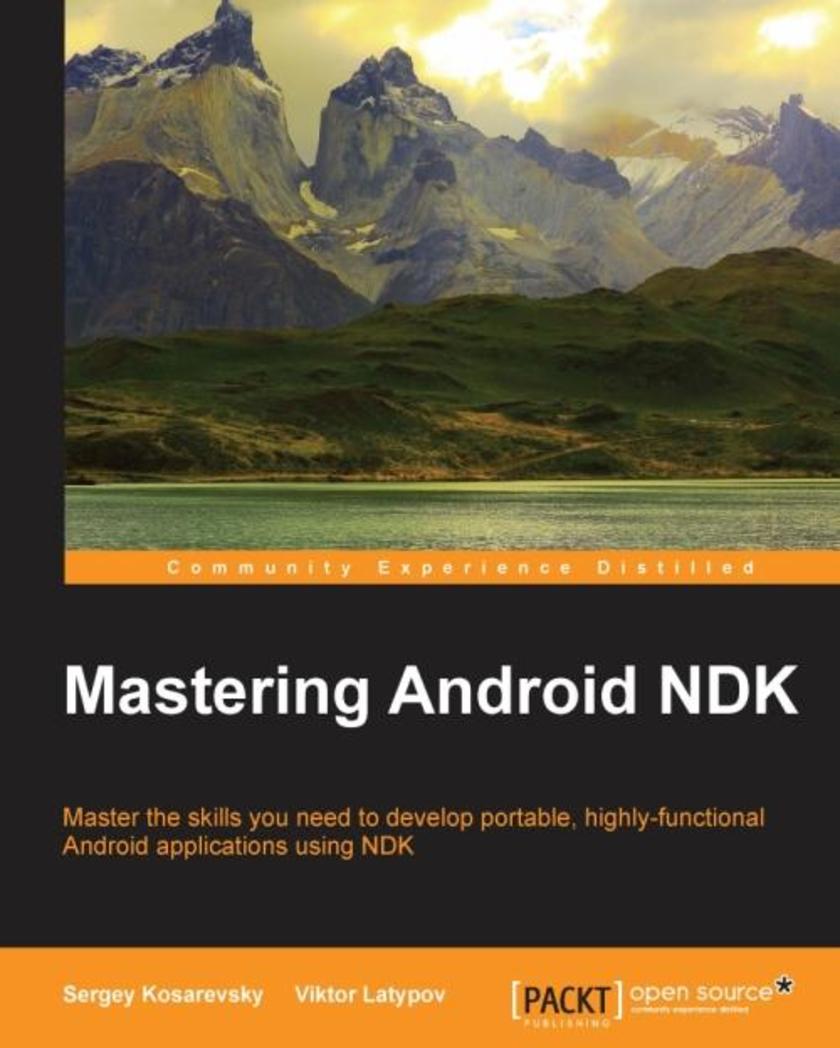
Mastering Android NDK
Sergey Kosarevsky
¥90.46
Master the skills you need to develop portable, highly-functional Android applications using NDK About This Book Develop portable games using Android NDK and debug them on your desktop Familiarise yourself with different popular C++ libraries on Android and use them in your games Write multi-threaded code with graphics, sound, networking, and resource storage Who This Book Is For If you want to leverage your C++ skills in mobile development and increase the performance of your Android applications, then this is the book for you. Knowledge of C or C++ is assumed, including pointer manipulation, multi-threading, object-oriented programming concepts, and the basics of C++11. It would be an added advantage if you know how to develop applications without any IDE. What You Will Learn Explore popular C++ libraries and use them on Android Write portable, multithreaded native networking code Create portable audio framework using OpenAL Implement portable rendering framework using OpenGL ES 3 Debug mobile applications on your desktop machine Access resources from APK archives Render text with FreeType In Detail Android NDK is used for multimedia applications that require direct access to system resources. NDK is also the key for portability, which in turn allows a reasonably comfortable development and debugging process using familiar tools such as GCC and Clang toolchains. This is a hands-on guide to extending your game development skills with Android NDK. The book takes you through many clear, step-by-step example applications to help you further explore the features of Android NDK and some popular C++ libraries and boost your productivity by debugging the development process. Through the course of this book, you will learn how to write portable multi-threaded native code, use HTTP networking in C++, play audio files, use OpenGL ES 3, and render high-quality text. Each chapter aims to take you one step closer to building your application. By the end of this book, you will be able to create an engaging, complete gaming application. Style and approach This book adopts a step-by-step approach and each chapter is based on the material from the previous ones. The book focuses on putting to your knowledge of C++ use while you develop Android applications of your own.
R Machine Learning By Example
Raghav Bali
¥90.46
Understand the fundamentals of machine learning with R and build your own dynamic algorithms to tackle complicated real-world problems successfully About This Book Get to grips with the concepts of machine learning through exciting real-world examples Visualize and solve complex problems by using power-packed R constructs and its robust packages for machine learning Learn to build your own machine learning system with this example-based practical guide Who This Book Is For If you are interested in mining useful information from data using state-of-the-art techniques to make data-driven decisions, this is a go-to guide for you. No prior experience with data science is required, although basic knowledge of R is highly desirable. Prior knowledge in machine learning would be helpful but is not necessary. What You Will Learn Utilize the power of R to handle data extraction, manipulation, and exploration techniques Use R to visualize data spread across multiple dimensions and extract useful features Explore the underlying mathematical and logical concepts that drive machine learning algorithms Dive deep into the world of analytics to predict situations correctly Implement R machine learning algorithms from scratch and be amazed to see the algorithms in action Write reusable code and build complete machine learning systems from the ground up Solve interesting real-world problems using machine learning and R as the journey unfolds Harness the power of robust and optimized R packages to work on projects that solve real-world problems in machine learning and data science In Detail Data science and machine learning are some of the top buzzwords in the technical world today. From retail stores to Fortune 500 companies, everyone is working hard to making machine learning give them data-driven insights to grow their business. With powerful data manipulation features, machine learning packages, and an active developer community, R empowers users to build sophisticated machine learning systems to solve real-world data problems. This book takes you on a data-driven journey that starts with the very basics of R and machine learning and gradually builds upon the concepts to work on projects that tackle real-world problems. You’ll begin by getting an understanding of the core concepts and definitions required to appreciate machine learning algorithms and concepts. Building upon the basics, you will then work on three different projects to apply the concepts of machine learning, following current trends and cover major algorithms as well as popular R packages in detail. These projects have been neatly divided into six different chapters covering the worlds of e-commerce, finance, and social-media, which are at the very core of this data-driven revolution. Each of the projects will help you to understand, explore, visualize, and derive insights depending upon the domain and algorithms. Through this book, you will learn to apply the concepts of machine learning to deal with data-related problems and solve them using the powerful yet simple language, R. Style and approach The book is an enticing journey that starts from the very basics to gradually pick up pace as the story unfolds. Each concept is first defined in the larger context of things succinctly, followed by a detailed explanation of their application. Each topic is explained with the help of a project that solves a real real-world problem involving hands-on work thus giving you a deep insight into the world of machine learning.
Mastering JBoss Drools 6
Mauricio Salatino
¥90.46
Discover the power of Drools 6 and Business Rules for developing complex scenarios in your applications About This Book Implement and model different rules using the DRL full syntax Model complex business decisions and domain models in order to automate and improve your operational decisions with the Drools framework A practical, fast-paced, hands-on guide to help you use the different components provided by the Drools Rule Engine Who This Book Is For This book is for Java developers and architects who need to have a deep understanding of how to create or integrate your applications with the Drools Rules Framework. The book assumes that you know the Java language well and also have experience with some widely used frameworks, such as Spring. You should also know the basics of Maven-based applications. What You Will Learn Automate your application’s decisions, such as promotion applying, discount policies, fraud detection, and more. Quickly get started with writing your first rules using the DRL full syntax. Discover the power of the new syntax components of the rule language. Define inferences in your business rules to simplify complex decisions. Write decision tables, templates,domain-specific languages, and scorecards, and learn how to map them to the Drools framework. Harness the full operational power of Drools through all of its configuration points. Use Drools configurations and architectures for different environments and scenarios. In Detail Mastering JBoss Drools 6 will provide you with the knowledge to develop applications involving complex scenarios. You will learn how to use KIE modules to create and execute Business Rules, and how the PHREAK algorithm internally works to drive the Rule Engine decisions. This book will also cover the relationship between Drools and jBPM, which allows you to enrich your applications by using Business Processes. You will be briefly introduced to the concept of complex event processing (Drools CEP) where you will learn how to aggregate and correlate your data based on temporal conditions. You will also learn how to define rules using domain-specific languages, such as spreadsheets, database entries, PMML, and more. Towards the end, this book will take you through the integration of Drools with the Spring and Camel frameworks for more complex applications. Style and approach Approached from a developer’s perspective, the book teaches you all the advanced concepts of Business Rules applicable examples with helpful screenshots, diagrams, tutorials, and examples.
Mastering Wireshark
Mastering Wireshark
Charit Mishra
¥90.46
Analyze data network like a professional by mastering Wireshark - From 0 to 1337 About This Book Master Wireshark and train it as your network sniffer Impress your peers and get yourself pronounced as a network doctor Understand Wireshark and its numerous features with the aid of this fast-paced book packed with numerous screenshots, and become a pro at resolving network anomalies Who This Book Is For Are you curious to know what’s going on in a networkDo you get frustrated when you are unable to detect the cause of problems in your networksThis is where the book comes into play. Mastering Wireshark is for developers or network enthusiasts who are interested in understanding the internal workings of networks and have prior knowledge of using Wireshark, but are not aware about all of its functionalities. What You Will Learn Install Wireshark and understand its GUI and all the functionalities of it Create and use different filters Analyze different layers of network protocols and know the amount of packets that flow through the network Decrypt encrypted wireless traffic Use Wireshark as a diagnostic tool and also for network security analysis to keep track of malware Troubleshoot all the network anomalies with help of Wireshark Resolve latencies and bottleneck issues in the network In Detail Wireshark is a popular and powerful tool used to analyze the amount of bits and bytes that are flowing through a network. Wireshark deals with the second to seventh layer of network protocols, and the analysis made is presented in a human readable form. Mastering Wireshark will help you raise your knowledge to an expert level. At the start of the book, you will be taught how to install Wireshark, and will be introduced to its interface so you understand all its functionalities. Moving forward, you will discover different ways to create and use capture and display filters. Halfway through the book, you’ll be mastering the features of Wireshark, analyzing different layers of the network protocol, looking for any anomalies. As you reach to the end of the book, you will be taught how to use Wireshark for network security analysis and configure it for troubleshooting purposes. Style and approach Every chapter in this book is explained to you in an easy way accompanied by real-life examples and screenshots of the interface, making it easy for you to become an expert at using Wireshark.
Angular 2 Cookbook
Angular 2 Cookbook
Matt Frisbie
¥90.46
Discover over 70 recipes that provide the solutions you need to know to face every challenge in Angular 2 head on About This Book · A first-rate reference guide with a clear structure and intuitive index that gives you as a developer exactly the information you want in exactly the way you want it · Covers no legacy material from the outdated Angular release candidates; it is up-to-date with the latest release of Angular 2.4 · All the code in the book is explicitly written out, and every piece of code shown is a step towards building a simple working example Who This Book Is For This book is for developers who are competent with JavaScript and are looking to dive headfirst into the TypeScript edition of Angular 2. This book is also geared towards developers with experience in Angular 1 who are looking to make the transition. What You Will Learn · Understand how to best move an Angular 1 application to Angular 2 · Build a solid foundational understanding of the core elements of Angular 2 such as components, forms, and services · Gain an ability to wield complex topics such as Observables and Promises · Properly implement applications utilizing advanced topics such as dependency injection · Know how to maximize the performance of Angular 2 applications · Understand the best ways to take an Angular 2 application from TypeScript in a code editor to a fully function application served on your site · Get to know the best practices when organizing and testing a large Angular 2 application In Detail Angular 2 introduces an entirely new way to build applications. It wholly embraces all the newest concepts that are built into the next generation of browsers, and it cuts away all the fat and bloat from Angular 1. This book plunges directly into the heart of all the most important Angular 2 concepts for you to conquer. In addition to covering all the Angular 2 fundamentals, such as components, forms, and services, it demonstrates how the framework embraces a range of new web technologies such as ES6 and TypeScript syntax, Promises, Observables, and Web Workers, among many others. This book covers all the most complicated Angular concepts and at the same time introduces the best practices with which to wield these powerful tools. It also covers in detail all the concepts you'll need to get you building applications faster. Oft-neglected topics such as testing and performance optimization are widely covered as well. A developer that reads through all the content in this book will have a broad and deep understanding of all the major topics in the Angular 2 universe. Style and approach This book follows a cookbook approach—each recipe presents a unique problem to which the solution is presented in a clear, concise, and manner step-by-step manner. With practical hands-on guidance in each and every recipe, you’ll be able to get to grips with the concepts.
Windows Application Development Cookbook
Marcin Jamro
¥90.46
Discover over 125 solution-based recipes to help you build applications for smartphones, tablets, and desktops About This Book Learn to build applications for Windows 10, the latest Windows version Develop your applications to be compatible with smartphones, tablets, and desktops This guide is packed with recipes covering major solutions to day-to-day problems faced by Windows programmers Who This Book Is For The book is dedicated to programmers with various experience of developing applications for Windows-based smartphones, tablets, and desktops—even beginners can find suitable content. What You Will Learn Start developing universal applications for Windows 10 Design user interface in the XAML language Use the MVVM design pattern with data binding Store data in files and in a database Use multimedia content and animations Capture data from built-in sensors Handle various Internet-based scenarios Test the application and submit it to the Windows Store In Detail Need to ensure you can always create the best Windows apps regardless of platformWhat you need are solutions to the biggest issues you can face, so you can always ensure you’re making the right choices and creating the best apps you can. The book starts with recipes that will help you set up the integrated development environment before you go ahead and design the user interface. You will learn how to use the MVVM design pattern together with data binding, as well as how to work with data in different file formats. Moving on, you will explore techniques to add animations and graphics to your application, and enable your solution to work with multimedia content. You will also see how to use sensors, such as an accelerometer and a compass, as well as obtain the current GPS location. You will make your application ready to work with Internet-based scenarios, such as composing e-mails or downloading files, before finally testing the project and submitting it to the Windows Store. By the end of the book, you will have a market-ready application compatible across different Windows devices, including smartphones, tablets, and desktops. Style and approach This quick-start book takes a cookbook format with recipes covering more than 125 solutions to help you create and build applications for Windows 10. The examples presented in the book use the free integrated development environment. A supporting set of codes that present solutions to problems described in particular chapters is available as well.
Fast Data Processing Systems with SMACK Stack
Raúl Estrada
¥90.46
Combine the incredible powers of Spark, Mesos, Akka, Cassandra, and Kafka to build data processing platforms that can take on even the hardest of your data troubles! About This Book This highly practical guide shows you how to use the best of the big data technologies to solve your response-critical problems Learn the art of making cheap-yet-effective big data architecture without using complex Greek-letter architectures Use this easy-to-follow guide to build fast data processing systems for your organization Who This Book Is For If you are a developer, data architect, or a data scientist looking for information on how to integrate the Big Data stack architecture and how to choose the correct technology in every layer, this book is what you are looking for. What You Will Learn Design and implement a fast data Pipeline architecture Think and solve programming challenges in a functional way with Scala Learn to use Akka, the actors model implementation for the JVM Make on memory processing and data analysis with Spark to solve modern business demands Build a powerful and effective cluster infrastructure with Mesos and Docker Manage and consume unstructured and No-SQL data sources with Cassandra Consume and produce messages in a massive way with Kafka In Detail SMACK is an open source full stack for big data architecture. It is a combination of Spark, Mesos, Akka, Cassandra, and Kafka. This stack is the newest technique developers have begun to use to tackle critical real-time analytics for big data. This highly practical guide will teach you how to integrate these technologies to create a highly efficient data analysis system for fast data processing. We’ll start off with an introduction to SMACK and show you when to use it. First you’ll get to grips with functional thinking and problem solving using Scala. Next you’ll come to understand the Akka architecture. Then you’ll get to know how to improve the data structure architecture and optimize resources using Apache Spark. Moving forward, you’ll learn how to perform linear scalability in databases with Apache Cassandra. You’ll grasp the high throughput distributed messaging systems using Apache Kafka. We’ll show you how to build a cheap but effective cluster infrastructure with Apache Mesos. Finally, you will deep dive into the different aspect of SMACK using a few case studies. By the end of the book, you will be able to integrate all the components of the SMACK stack and use them together to achieve highly effective and fast data processing. Style and approach With the help of various industry examples, you will learn about the full stack of big data architecture, taking the important aspects in every technology. You will learn how to integrate the technologies to build effective systems rather than getting incomplete information on single technologies. You will learn how various open source technologies can be used to build cheap and fast data processing systems with the help of various industry examples
Tableau Cookbook – Recipes for Data Visualization
Shweta Sankhe-Savale
¥90.46
Create beautiful data visualizations and interactive dashboards with Tableau About This Book Delve into the features and functionalities of Tableau from the ground up with this step-by-step guide that has over 50 "follow-me" recipes Build rich visualizations to effectively highlight the underlying trends and patterns in your data Build beautiful interactive dashboards and storyboards to stitch your visualizations together and tell a story Who This Book Is For This book is for anyone who wishes to use Tableau. It will be of use to both beginners who want to learn Tableau from scratch and to more seasoned users who simply want a quick reference guide. This book is a ready reckoner guide for you. The book will be such that both new & existing Tableau users who don’t know, or can’t recall how to perform different Tableau tasks can use the book and be benefited from it. What You Will Learn Get to grips with the Tableau workspace and terminologies and understand what data sources you can connect Learn to create basic charts like bar chart, stacked bar, pie chart, line chart, area chart, tree map & word cloud Go even further with more advanced visualizations such as scatter plot, box & whiskers plot, dual axis, bullet chart, Histograms, Maps, etc Use pre-defined calculation and change its scope and direction to affect outcome Learn to define Parameters and call them into parametric calculations that provide outcomes based on user inputs Build Dashboards and use Actions to link multiple sheets on the dashboard Connect to multiple data sources using Data Blending, Multiple Table Join within the same data source as well as across data sources, Custom SQL and learn to work with data Extracts Compute statistical trends, build forecasting models and use Reference lines for benchmarking In Detail Data is everywhere and everything is data! Visualization of data allows us to bring out the underlying trends and patterns inherent in the data and gain insights that enable faster and smarter decision making. Tableau is one of the fastest growing and industry leading Business Intelligence platforms that empowers business users to easily visualize their data and discover insights at the speed of thought. Tableau is a self-service BI platform designed to make data visualization and analysis as intuitive as possible. Creating visualizations with simple drag-and-drop, you can be up and running on Tableau in no time. Starting from the fundamentals such as getting familiarized with Tableau Desktop, connecting to common data sources and building standard charts; you will walk through the nitty gritty of Tableau such as creating dynamic analytics with parameters, blended data sources, and advanced calculations. You will also learn to group members into higher levels, sort the data in a specific order & filter out the unnecessary information. You will then create calculations in Tableau & understand the flexibility & power they have and go on to building story-boards and share your insights with others. Whether you are just getting started or whether you need a quick reference on a "how-to" question, This book is the perfect companion for you Style and approach This cookbook takes a step-by-step approach and the text systematically evolves to cover more involved functionalities. Every recipe includes illustrative screenshots which provide a detailed visual resource for each step.
Effective Robotics Programming with ROS - Third Edition
Anil Mahtani
¥90.46
Find out everything you need to know to build powerful robots with the most up-to-date ROS About This Book This comprehensive, yet easy-to-follow guide will help you find your way through the ROS framework Successfully design and simulate your 3D robot model and use powerful robotics algorithms and tools to program and set up your robots with an unparalleled experience by using the exciting new features from Robot Kinetic Use the latest version of gazebo simulator, OpenCV 3.0, and C++11 standard for your own algorithms Who This Book Is For This book is suitable for an ROS beginner as well as an experienced ROS roboticist or ROS user or developer who is curious to learn ROS Kinetic and its features to make an autonomous Robot. The book is also suitable for those who want to integrate sensors and embedded systems with other software and tools using ROS as a framework. What You Will Learn Understand the concepts of ROS, the command-line tools, visualization GUIs, and how to debug ROS Connect robot sensors and actuators to ROS Obtain and analyze data from cameras and 3D sensors Use Gazebo for robot/sensor and environment simulation Design a robot and see how to make it map the environment, navigate autonomously, and manipulate objects in the environment using MoveIt! Add vision capabilities to the robot using OpenCV 3.0 Add 3D perception capabilities to the robot using the latest version of PCL In Detail Building and programming a robot can be cumbersome and time-consuming, but not when you have the right collection of tools, libraries, and more importantly expert collaboration. ROS enables collaborative software development and offers an unmatched simulated environment that simplifies the entire robot building process. This book is packed with hands-on examples that will help you program your robot and give you complete solutions using open source ROS libraries and tools. It also shows you how to use virtual machines and Docker containers to simplify the installation of Ubuntu and the ROS framework, so you can start working in an isolated and control environment without changing your regular computer setup. It starts with the installation and basic concepts, then continues with more complex modules available in ROS such as sensors and actuators integration (drivers), navigation and mapping (so you can create an autonomous mobile robot), manipulation, Computer Vision, perception in 3D with PCL, and more. By the end of the book, you’ll be able to leverage all the ROS Kinetic features to build a fully fledged robot for all your needs. Style and approach This book is packed with hands-on examples that will help you program your robot and give you complete solutions using ROS open source libraries and tools. All the robotics concepts and modules are explained and multiple examples are provided so that you can understand them easily.
Docker Networking Cookbook
Jon Langemak
¥90.46
60 practical recipes that help you gain expertise with Docker networking and understand the underlying constructs that make it all work About This Book Enhance your Docker networking skills and protect your organization using advanced networking functions Learn how to use third party tools to extend Docker networking This practical and recipe-based book demonstrates the different ways in which you can network containers leveraging the Docker engine. Who This Book Is For The book is for system administrators as well as developers who are well versed with the concepts of Docker and have basic knowledge of Docker networking. You should also have sound knowledge of networking in general. What You Will Learn Configure Linux networking primitives used by Docker networking Build and deploy user-defined Docker networks Examine the different options for resolving and linking containers Implement custom networks for Docker to consume Discover third-party networking plugins such as Weave and Flannel Work through solutions to secure Docker containers and networks Observe methodologies for troubleshooting container networks Explore advanced and experimental Docker networking features In Detail Networking functionality in Docker has changed considerably since its first release, evolving to offer a rich set of built-in networking features, as well as an extensible plugin model allowing for a wide variety of networking functionality. This book explores Docker networking capabilities from end to end. Begin by examining the building blocks used by Docker to implement fundamental containing networking before learning how to consume built-in networking constructs as well as custom networks you create on your own. Next, explore common third-party networking plugins, including detailed information on how these plugins inter-operate with the Docker engine. Consider available options for securing container networks, as well as a process for troubleshooting container connectivity. Finally, examine advanced Docker networking functions and their relevant use cases, tying together everything you need to succeed with your own projects. Style and approach This practical recipe-based book will take readers to next level of Docker networking. It covers relevant use cases and the advanced features of Docker
Tableau 10 Business Intelligence Cookbook
Donabel Santos
¥90.46
Create powerful, effective visualizations to help analyze your data with Tableau 10 by your side About This Book Cook your favorite Tableau 10 business intelligence recipe with the help of this easy-to-follow book Build beautiful, interactive dashboards and visualizations in Tableau 10 that help you make informed decisions This rich collection of independent recipes cover everything needed to become an advanced Tableau user and get an edge over other Tableau users Who This Book Is For This book is targeted to business, data, and analytics professionals who want to build rich interactive visualizations using Tableau. Familiarity with previous versions of Tableau would be helpful, but is not necessary. What You Will Learn Become familiar with the Tableau interface Build basic to more advanced charts with step-by-step recipes Use filters, calculated fields, parameters, and actions to add interactivity to charts and dashboards Prepare and transform data for analysis using Tableau’s built-in tools and functions Create effective and compelling dashboards and story points Leverage Tableau’s mapping capabilities to visualize location and shape data Integrate analytics and forecasting to enhance data analysis Get to know tips and tricks to work more quickly and effectively in Tableau Increase your confidence and competence in creating rich, interactive visualizations in Tableau In Detail Tableau is a software tool that can speed up data analysis through its rich visualization capabilities, and help uncover insights for better and smarter decision making. This book is for the business, technology, data and analytics professionals who use and analyze data and data-driven approaches to support business operations and strategic initiatives in their organizations. This book provides easy-to-follow recipes to get the reader up and running with Tableau 10, and covers basic to advanced use cases and scenarios. The book starts with building basic charts in Tableau and moves on to building more complex charts by incorporating different Tableau features and interactivity components. There is an entire chapter dedicated to dashboard techniques and best practices. A number of recipes specifically for geospatial visualization, analytics, and data preparation are also covered. By the end of this book, you’ll have gained confidence and competence to analyze and communicate data and insights more efficiently and effectively by creating compelling interactive charts, dashboards, and stories in Tableau. Style and approach This book is a collection of independent recipes that cover a wide range of options for data visualization on offer with Tableau. With the help of the recipes in this book, you can explore Tableau and pick the business intelligence solution that’s best suited for your needs.
Entity Framework Core Cookbook - Second Edition
Ricardo Peres
¥90.46
Leverage the full potential of Entity Framework with this collection of powerful and easy-to-follow recipes About This Book Learn how to use the new features of Entity Framework Core 1 Improve your queries by leveraging some of the advanced features Avoid common pitfalls Make the best of your .NET APIs by integrating with Entity Framework Who This Book Is For This book is for .NET developers who work with relational databases on a daily basis and understand the basics of Entity Framework, but now want to use it in a more efficient manner. You are expected to have some prior knowledge of Entity Framework. What You Will Learn Master the technique of using sequence key generators Validate groups of entities that are to be saved / updated Improve MVC applications that cover applications developed using ASP.NET MVC Core 1 Retrieve database information (table, column names, and so on) for entities Discover optimistic concurrency control and pessimistic concurrency control. Implement Multilatency on the data side of things. Enhance the performance and/or scalability of Entity Framework Core Explore and overcome the pitfalls of Entity Framework Core In Detail Entity Framework is a highly recommended Object Relation Mapping tool used to build complex systems. In order to survive in this growing market, the knowledge of a framework that helps provide easy access to databases, that is, Entity Framework has become a necessity. This book will provide .NET developers with this knowledge and guide them through working efficiently with data using Entity Framework Core. You will start off by learning how to efficiently use Entity Framework in practical situations. You will gain a deep understanding of mapping properties and find out how to handle validation in Entity Framework. The book will then explain how to work with transactions and stored procedures along with improving Entity Framework using query libraries. Moving on, you will learn to improve complex query scenarios and implement transaction and concurrency control. You will then be taught to improve and develop Entity Framework in complex business scenarios. With the concluding chapter on performance and scalability, this book will get you ready to use Entity Framework proficiently. Style and approach Filled with rich code-based examples, this book takes a recipe-based approach that will teach .NET developers to improve their understanding of Entity Framework and help them effortlessly apply this knowledge in everyday situations.
Learning Xcode 8
Learning Xcode 8
Jak Tiano
¥90.46
Learn how to use the power of Xcode to turn your next great app idea into a reality About This Book Learn the theory and tools behind app development using Swift 3 and Xcode 8 Build a fully featured iOS app, including a companion app for the Apple Watch Optimize, debug, and ultimately release your app on Test Flight and the App Store Who This Book Is For This book is intended for programmers looking to get a jump-start into the world of iOS development. Whether you’re a young student who has only spent a few months with Java, or a seasoned developer who has spent their career developing for a different platform, all that is expected is a basic understanding of a programming language such as C++, C#, or Java. What You Will Learn Understand the most important features of the Xcode IDE Write Swift 3 code for application data models and view controllers Prepare visual layouts for an iOS application using storyboards, size classes, and auto-layout Integrate many common technologies into an app, such as multi-touch gestures, CoreData, and notifications Build companion applications for the Apple Watch with watchOS 3 Debug applications using Xcode’s suite of debugging tools, and prevent bugs with unit testing Optimize an application using Xcode 8’s profiling tools and asset catalogs Distribute a beta application through TestFlight, and a finished application through the App Store In Detail Over the last few years, we’ve seen a breakthrough in mobile computing and the birth of world-changing mobile apps. With a reputation as one of the most user-centric and developer-friendly platforms, iOS is the best place to launch your next great app idea. As the official tool to create iOS applications, Xcode is chock full of features aimed at making a developer’s job easier, faster, and more fun. This book will take you from complete novice to a published app developer, and covers every step in between. You’ll learn the basics of iOS application development by taking a guided tour through the Xcode software and Swift programming language, before putting that knowledge to use by building your first app called “Snippets.” Over the course of the book, you will continue to explore the many facets of iOS development in Xcode by adding new features to your app, integrating gestures and sensors, and even creating an Apple Watch companion app. You’ll also learn how to use the debugging tools, write unit tests, and optimize and distribute your app. By the time you make it to the end of this book, you will have successfully built and published your first iOS application. Style and approach This easy-to-follow guide presents topics in a hands-on lecture format where concepts are introduced and explained, then used in an example as reinforcement. The first third of the book covers the separate building blocks of development, while the second two thirds cover the development of an app from start to finish.
Sass and Compass Designer's Cookbook
Bass Jobsen
¥90.46
Over 120 practical and easy-to-understand recipes that explain how to use Sass and Compass to write efficient, maintainable, and reusable CSS code for your web development projects About This Book Leverage Sass to make your CSS code maintainable, reusable and prevent code duplications Shorten debug time with Sass when creating complex CSS code for different browsers and devices Write easy and bullet-proof CSS with Compass using this step-by-step and detailed guide Who This Book Is For This book is mainly intended for web developers and designers who are comfortable with CSS and HTML. If you are someone with some experience with CSS, you will find the learning curve of learning Sass syntax to be less steep. Basic knowledge of web development is helpful but you don't have to be a programmer to understand Sass. What You Will Learn Spend less time debugging code Compile Sass code into readable and maintainable CSS Integrate Sass in your own projects Reuse your code to prevent code duplications Write reusable and portable CSS code Make use of pre-built and established code written by other developers Reduce development and maintenance time of your projects Set up a development environment with Gulp In Detail Sass and Compass Designer's Cookbook helps you to get most out of CSS3 and harness its benefits to create engaging and receptive applications. This book will help you develop faster and reduce the maintenance time for your web development projects by using Sass and Compass. You will learn how to use with CSS frameworks such as Bootstrap and Foundation and understand how to use other libraries of pre-built mixins. You will also learn setting up a development environment with Gulp. This book guides you through all the concepts and gives you practical examples for full understanding. Style and approach This book is the perfect mix of essential theory combined with real-life examples and problems, with clear explanations of the more sophisticated Sass concepts. Learn Sass and Compass with practical and well-explained example code. This book follows a problem and solution approach that is convenient to understand and follow.