


 购物车
购物车 个人中心
个人中心
Cisco ACI Cookbook
¥90.46
Over 90 recipes to maximize automated solutions and policy-drive application profiles using Cisco ACI About This Book ? Confidently provision your virtual and physical infrastructure for application deployment ? Integrate Cisco ACI with hypervisors and other third party devices ? Packed with powerful recipes to automate your IT operations Who This Book Is For If you are a network administrator, system administrator, or engineer and are aware of the basics of Cisco ACI but want to start using it to automate your tasks, then this book is for you What You Will Learn ? Master the Cisco ACI architecture ? Discover the ACI fabric with easy-to-follow steps ? Set up quality of service within ACI ? Configure external networks with Cisco ACI ? Integrate with VMware and track VMware virtual machines ? Configure apply and verify access policies ? Extend or migrate a VMware virtual-machine LAN inside the ACI fabric ? Monitor ACI with third party tools and troubleshoot issues In Detail Cisco Application Centric Infrastructure (ACI) is a tough architecture that automates IT tasks and accelerates data-center application deployments. This book focuses on practical recipes to help you quickly build, manage, and customize hybrid environment for your organization using Cisco ACI. You will begin by understanding the Cisco ACI architecture and its major components. You will then configure Cisco ACI policies and tenants. Next you will connect to hypervisors and other third-party devices. Moving on, you will configure routing to external networks and within ACI tenants and also learn to secure ACI through RBAC. Furthermore, you will understand how to set up quality of service and network programming with REST, XML, Python and so on. Finally you will learn to monitor and troubleshoot ACI in the event of any issues that arise. By the end of the book, you will gain have mastered automating your IT tasks and accelerating the deployment of your applications. Style and approach A set of exciting recipes to automate your IT operations related to datacenters, the Cloud, and networking tasks
Learning Neo4j 3.x - Second Edition
¥90.46
Run blazingly fast queries on complex graph datasets with the power of the Neo4j graph database About This Book ? Get acquainted with graph database systems and apply them in real-world use cases ? Use Cypher query language, APOC and other Neo4j extensions to derive meaningful analysis from complex data sets. ? A practical guide filled with ready to use examples on querying, graph processing and visualizing information to build smarter spatial applications. Who This Book Is For This book is for developers who want an alternative way to store and process data within their applications. No previous graph database experience is required; however, some basic database knowledge will help you understand the concepts more easily. What You Will Learn ? Understand the science of graph theory, databases and its advantages over traditional databases. ? Install Neo4j, model data and learn the most common practices of traversing data ? Learn the Cypher query language and tailor-made procedures to analyze and derive meaningful representations of data ? Improve graph techniques with the help of precise procedures in the APOC library ? Use Neo4j advanced extensions and plugins for performance optimization. ? Understand how Neo4j's new security features and clustering architecture are used for large scale deployments. In Detail Neo4j is a graph database that allows traversing huge amounts of data with ease. This book aims at quickly getting you started with the popular graph database Neo4j. Starting with a brief introduction to graph theory, this book will show you the advantages of using graph databases along with data modeling techniques for graph databases. You'll gain practical hands-on experience with commonly used and lesser known features for updating graph store with Neo4j's Cypher query language. Furthermore, you'll also learn to create awesome procedures using APOC and extend Neo4j's functionality, enabling integration, algorithmic analysis, and other advanced spatial operation capabilities on data. Through the course of the book you will come across implementation examples on the latest updates in Neo4j, such as in-graph indexes, scaling, performance improvements, visualization, data refactoring techniques, security enhancements, and much more. By the end of the book, you'll have gained the skills to design and implement modern spatial applications, from graphing data to unraveling business capabilities with the help of real-world use cases. Style and approach A step-by-step approach of adopting Neo4j, the world's leading graph database. This book includes a lot of background information, helps you grasp the fundamental concepts behind this radical new way of dealing with connected data, and will give you lots of examples of use cases and environments where a graph database would be a great fit
Building Web and Mobile ArcGIS Server Applications with JavaScript - Second Edit
¥90.46
Master the ArcGIS API for JavaScript to build web and mobile applications using this practical guide. About This Book ? Develop ArcGIS Server applications with JavaScript, both for traditional web browsers as well as the mobile platform ? Make your maps informative with intuitive geographic layers, user interface widgets, and more ? Integrate ArcGIS content into your custom applications and perform analytics with the ArcGIS Online Who This Book Is For If you are a web or mobile application developer, who wants to create GIS applications in your respective platform, this book is ideal for you. You will need Java Script programming experience to get the most out of this book. Although designed as an introductory to intermediate level book, it will also be useful for more advanced developers who are new to the topic of developing applications with ArcGIS Server. What You Will Learn ? To create an application with the ArcGIS API for JavaScript ? Build and display a broad range of different geometry types to represent features on the map ? The best way to leverage a feature layer and display related attribute data ? The functionality of the wide range of widgets and how to use them effectively ? Query data to gain new insights into the information it contains ? Work with tasks to discover and locate features on the map ? Using the geocoder and associated widgets ? The ability of the API to provide turn by turn directions and routing capabilities ? How to use the Geometry Engine and Geometry Service tasks for common geoprocessing operations ? Integrate content on ArcGIS online and add it to your custom web mapping application In Detail The ArcGIS API for JavaScript enables you to quickly build web and mobile mapping applications that include sophisticated GIS capabilities, yet are easy and intuitive for the user. Aimed at both new and experienced web developers, this practical guide gives you everything you need to get started with the API. After a brief introduction to HTML/CSS/JavaScript, you'll embed maps in a web page, add the tiled, dynamic, and streaming data layers that your users will interact with, and mark up the map with graphics. You will learn how to quickly incorporate a broad range of useful user interface elements and GIS functionality to your application with minimal effort using prebuilt widgets. As the book progresses, you will discover and use the task framework to query layers with spatial and attribute criteria, search for and identify features on the map, geocode addresses, perform network analysis and routing, and add custom geoprocessing operations. Along the way, we cover exciting new features such as the client-side geometry engine, learn how to integrate content from ArcGIS.com, and use your new skills to build mobile web mapping applications. We conclude with a look at version 4 of the ArcGIS API for JavaScript (which is being developed in parallel with version 3.x) and what it means for you as a developer. Style and approach Readers will be taken through a series of exercises that will demonstrate how to efficiently build ArcGIS Server applications for the mobile and web.
vSphere High Performance Cookbook - Second Edition
¥90.46
Over 80 recipes to help you improve vSphere 6.5's performance and solve problems before they arise About This Book ? The practical recipes provide cost-effective and high performance for any application running in a virtual machine ? Contains best practices and troubleshooting techniques to resolve vSphere 6.5 performance issues ? Get a comprehensive coverage of performance issues and solutions including vCenter Server design and virtual machine and application tuning Who This Book Is For If you are a system administrator and are planning to deploy vSphere 6.5 in your organization and want to maximize its performance, then this book is for you. Prior knowledge of the vSphere 6.5 concepts is essential. What You Will Learn ? Understand the VMM Scheduler, cache aware CPU Scheduler, NUMA aware CPU Scheduler, and more during the CPU Performance Design phase ? Get to know the virtual memory reclamation technique, host ballooning monitoring, and swapping activity ? Choose the right platform while designing your vCenter Server, redundant vCenter design, and vCenter SSO and its deployment ? Learn how to use various performance simulation tools ? Design VCSA Server Certificates to minimize security threats ? Use health check tools for storage and boost vSphere 6.5's performance with VAAI and VASA In Detail vSphere is a mission-critical piece of software for many businesses. It is a complex tool, and incorrect design and deployment can create performance related issues that can negatively affect the business. This book is focused on solving these problems as well as providing best practices and performance-enhancing techniques. This edition is fully updated to include all the new features in version 6.5 as well as the latest tools and techniques to keep vSphere performing at its best. This book starts with interesting recipes, such as the interaction of vSphere 6.5 components with physical layers such as CPU, memory, and networking. Then we focus on DRS, resource control design, and vSphere cluster design. Next, you'll learn about storage performance design and how it works with VMware vSphere 6.5. Moving on, you will learn about the two types of vCenter installation and the benefits of each. Lastly, the book covers performance tools that help you get the most out of your vSphere installation. By the end of this book, you will be able to identify, diagnose, and troubleshoot operational faults and critical performance issues in vSphere 6.5. Style and approach This cookbook is written in a practical, helpful style with numerous recipes focusing on answering and providing solutions to common and not-so-common performance issues and problems.
Practical Predictive Analytics
¥90.46
Make sense of your data and predict the unpredictable About This Book ? A unique book that centers around develop six key practical skills needed to develop and implement predictive analytics ? Apply the principles and techniques of predictive analytics to effectively interpret big data ? Solve real-world analytical problems with the help of practical case studies and real-world scenarios taken from the world of healthcare, marketing, and other business domains Who This Book Is For This book is for those with a mathematical/statistics background who wish to understand the concepts, techniques, and implementation of predictive analytics to resolve complex analytical issues. Basic familiarity with a programming language of R is expected. What You Will Learn ? Master the core predictive analytics algorithm which are used today in business ? Learn to implement the six steps for a successful analytics project ? Classify the right algorithm for your requirements ? Use and apply predictive analytics to research problems in healthcare ? Implement predictive analytics to retain and acquire your customers ? Use text mining to understand unstructured data ? Develop models on your own PC or in Spark/Hadoop environments ? Implement predictive analytics products for customers In Detail This is the go-to book for anyone interested in the steps needed to develop predictive analytics solutions with examples from the world of marketing, healthcare, and retail. We'll get started with a brief history of predictive analytics and learn about different roles and functions people play within a predictive analytics project. Then, we will learn about various ways of installing R along with their pros and cons, combined with a step-by-step installation of RStudio, and a de*ion of the best practices for organizing your projects. On completing the installation, we will begin to acquire the skills necessary to input, clean, and prepare your data for modeling. We will learn the six specific steps needed to implement and successfully deploy a predictive model starting from asking the right questions through model development and ending with deploying your predictive model into production. We will learn why collaboration is important and how agile iterative modeling cycles can increase your chances of developing and deploying the best successful model. We will continue your journey in the cloud by extending your skill set by learning about Databricks and SparkR, which allow you to develop predictive models on vast gigabytes of data. Style and Approach This book takes a practical hands-on approach wherein the algorithms will be explained with the help of real-world use cases. It is written in a well-researched academic style which is a great mix of theoretical and practical information. Code examples are supplied for both theoretical concepts as well as for the case studies. Key references and summaries will be provided at the end of each chapter so that you can explore those topics on their own.
Learning Salesforce Visual Workflow and Process Builder - Second Edition
¥90.46
Click your way to automating various business processes using Salesforce Visual Workflow About This Book ? Develop an application using Point and Click with the help of Flow ? Get to grips with various ways to launch a Flow ? Capture data from an external user without using the Visualforce page ? Save user input into the database, and learn how to query and manipulate the data ? Discover various ways to debug and deploy Flow and Process Builder ? Understand the concepts of Subflow and Login Flow ? Handle complex business processes using Process builder and keep them clean ? Use existing or new Flows to work with Salesforce Lightning Experience. Who This Book Is For This book is intended for those who want to use Flows to automate their business requirements by clicking, not coding. No previous experience in computer coding or programming is required. What You Will Learn ? Develop an application using point and click with the help of Flow ? Get to grips with various ways to launch a Flow ? Capture data from an external user without using the Visualforce page ? Save user input into the database, and learn how to query and manipulate the data ? Discover various ways to debug and deploy Flow and Process Builder ? Understand the concepts of Subflow and Login Flow ? Handle complex business processes using Process builder and keep them clean ? Use existing or new Flows to work with Salesforce Lightning Experience. In Detail Salesforce Management System is an information system used in CRM to automate the business processes like sales and marketing. To implement this, Force.com developed a powerful tool called Visual Workflow to automate business processes by creating applications also called Flows. Learning Salesforce Visual Workflow, Second Edition is a practical guide on Flows that will enable you to develop custom applications in Salesforce with minimized code usage. The book starts with an introduction to Visual Workflows that teaches all the building blocks of creating Flows and use it efficiently. You will learn how to easily automate business processes and tackle complex business scenarios using Flows. The book explains the working of the Process Builder so you can create reusable processes. The book also covers how you can integrate existing or newly created Flows with the Salesforce Lightening Experience. By the end of the book, you will get a clear understanding on how to use Flows and Process Builder in your organization to optimize code usage. Style and approach Step by step approch to use Process Builder to solve complex business requirements with the help of Flow
Pentaho 8 Reporting for Java Developers
¥90.46
Create reports and solve common report problems with minimal fuss. About This Book ? Use this unique book to master the basics and advanced features of Pentaho 8 Reporting. ? A book showing developers and analysts with IT skills how to create and use the best possible reports using the Pentaho platform. ? Written with a very practical approach: full of tutorials and practical examples (source code included). Who This Book Is For This book is written for two types of professionals and students: Information Technologists with a basic knowledge of Databases and Java Developers with medium seniority. Developers will be interested to discover how to embed reports in a third-party Java application. What You Will Learn ? The basics of Pentaho Reporting (Designer and SDK) and its initial setup. ? Develop the most attractive reports on top of a wide range of data sources. ? Perform detailed customization of layout, parameterization, internationalization, behaviors, and more for your custom reports developed with Pentaho Reporting. ? Integrate Pentaho reports into third-party Java application with full control over interactions, layout, and behavior in general. ? Use Pentaho reports in the other components of the Pentaho Suite (BA Platform and PDI). In Detail This hands-on tutorial, filled with exercises and examples, introduces the reader to a variety of concepts within Pentaho Reporting. With screenshots that show you how reports look at design time as well as how they should look when rendered as PDF, Excel, HTML, Text, Rich-Text-File, XML, and CSV, this book also contains complete example source code that you can copy and paste into your environment to get up-and-running quickly. Updated to cover the features of Pentaho 8, this book will teach you everything you need to know to build fast, efficient reports using Pentaho. If your interest lies in the technical details of creating reports and you want to see how to solve common reporting problems with a minimum of fuss, this is the book for you. Style and approach A step-by-step guide covering technical topics relating to environments, best practices, and source code, to enable the reader to assemble the best reports and use them in existing Java applications.
R Data Analysis Cookbook - Second Edition
¥90.46
Over 80 recipes to help you breeze through your data analysis projects using R About This Book ? Analyse your data using the popular R packages like ggplot2 with ready-to-use and customizable recipes ? Find meaningful insights from your data and generate dynamic reports ? A practical guide to help you put your data analysis skills in R to practical use Who This Book Is For This book is for data scientists, analysts and even enthusiasts who want to learn and implement the various data analysis techniques using R in a practical way. Those looking for quick, handy solutions to common tasks and challenges in data analysis will find this book to be very useful. Basic knowledge of statistics and R programming is assumed. What You Will Learn ? Acquire, format and visualize your data using R ? Using R to perform an Exploratory data analysis ? Introduction to machine learning algorithms such as classification and regression ? Get started with social network analysis ? Generate dynamic reporting with Shiny ? Get started with geospatial analysis ? Handling large data with R using Spark and MongoDB ? Build Recommendation system- Collaborative Filtering, Content based and Hybrid ? Learn real world dataset examples- Fraud Detection and Image Recognition In Detail Data analytics with R has emerged as a very important focus for organizations of all kinds. R enables even those with only an intuitive grasp of the underlying concepts, without a deep mathematical background, to unleash powerful and detailed examinations of their data. This book will show you how you can put your data analysis skills in R to practical use, with recipes catering to the basic as well as advanced data analysis tasks. Right from acquiring your data and preparing it for analysis to the more complex data analysis techniques, the book will show you how you can implement each technique in the best possible manner. You will also visualize your data using the popular R packages like ggplot2 and gain hidden insights from it. Starting with implementing the basic data analysis concepts like handling your data to creating basic plots, you will master the more advanced data analysis techniques like performing cluster analysis, and generating effective analysis reports and visualizations. Throughout the book, you will get to know the common problems and obstacles you might encounter while implementing each of the data analysis techniques in R, with ways to overcoming them in the easiest possible way. By the end of this book, you will have all the knowledge you need to become an expert in data analysis with R, and put your skills to test in real-world scenarios. Style and Approach ? Hands-on recipes to walk through data science challenges using R ? Your one-stop solution for common and not-so-common pain points while performing real-world problems to execute a series of tasks. ? Addressing your common and not-so-common pain points, this is a book that you must have on the shelf
Apache Spark 2.x Machine Learning Cookbook
¥90.46
Simplify machine learning model implementations with Spark About This Book ? Solve the day-to-day problems of data science with Spark ? This unique cookbook consists of exciting and intuitive numerical recipes ? Optimize your work by acquiring, cleaning, analyzing, predicting, and visualizing your data Who This Book Is For This book is for Scala developers with a fairly good exposure to and understanding of machine learning techniques, but lack practical implementations with Spark. A solid knowledge of machine learning algorithms is assumed, as well as hands-on experience of implementing ML algorithms with Scala. However, you do not need to be acquainted with the Spark ML libraries and ecosystem. What You Will Learn ? Get to know how Scala and Spark go hand-in-hand for developers when developing ML systems with Spark ? Build a recommendation engine that scales with Spark ? Find out how to build unsupervised clustering systems to classify data in Spark ? Build machine learning systems with the Decision Tree and Ensemble models in Spark ? Deal with the curse of high-dimensionality in big data using Spark ? Implement Text analytics for Search Engines in Spark ? Streaming Machine Learning System implementation using Spark In Detail Machine learning aims to extract knowledge from data, relying on fundamental concepts in computer science, statistics, probability, and optimization. Learning about algorithms enables a wide range of applications, from everyday tasks such as product recommendations and spam filtering to cutting edge applications such as self-driving cars and personalized medicine. You will gain hands-on experience of applying these principles using Apache Spark, a resilient cluster computing system well suited for large-scale machine learning tasks. This book begins with a quick overview of setting up the necessary IDEs to facilitate the execution of code examples that will be covered in various chapters. It also highlights some key issues developers face while working with machine learning algorithms on the Spark platform. We progress by uncovering the various Spark APIs and the implementation of ML algorithms with developing classification systems, recommendation engines, text analytics, clustering, and learning systems. Toward the final chapters, we’ll focus on building high-end applications and explain various unsupervised methodologies and challenges to tackle when implementing with big data ML systems. Style and approach This book is packed with intuitive recipes supported with line-by-line explanations to help you understand how to optimize your work flow and resolve problems when working with complex data modeling tasks and predictive algorithms. This is a valuable resource for data scientists and those working on large scale data projects.
Machine Learning With Go
¥90.46
Build simple, maintainable, and easy to deploy machine learning applications. About This Book ? Build simple, but powerful, machine learning applications that leverage Go’s standard library along with popular Go packages. ? Learn the statistics, algorithms, and techniques needed to successfully implement machine learning in Go ? Understand when and how to integrate certain types of machine learning model in Go applications. Who This Book Is For This book is for Go developers who are familiar with the Go syntax and can develop, build, and run basic Go programs. If you want to explore the field of machine learning and you love Go, then this book is for you! Machine Learning with Go will give readers the practical skills to perform the most common machine learning tasks with Go. Familiarity with some statistics and math topics is necessary. What You Will Learn ? Learn about data gathering, organization, parsing, and cleaning. ? Explore matrices, linear algebra, statistics, and probability. ? See how to evaluate and validate models. ? Look at regression, classification, clustering. ? Learn about neural networks and deep learning ? Utilize times series models and anomaly detection. ? Get to grip with techniques for deploying and distributing analyses and models. ? Optimize machine learning workflow techniques In Detail The mission of this book is to turn readers into productive, innovative data analysts who leverage Go to build robust and valuable applications. To this end, the book clearly introduces the technical aspects of building predictive models in Go, but it also helps the reader understand how machine learning workflows are being applied in real-world scenarios. Machine Learning with Go shows readers how to be productive in machine learning while also producing applications that maintain a high level of integrity. It also gives readers patterns to overcome challenges that are often encountered when trying to integrate machine learning in an engineering organization. The readers will begin by gaining a solid understanding of how to gather, organize, and parse real-work data from a variety of sources. Readers will then develop a solid statistical toolkit that will allow them to quickly understand gain intuition about the content of a dataset. Finally, the readers will gain hands-on experience implementing essential machine learning techniques (regression, classification, clustering, and so on) with the relevant Go packages. Finally, the reader will have a solid machine learning mindset and a powerful Go toolkit of techniques, packages, and example implementations. Style and approach This book connects the fundamental, theoretical concepts behind Machine Learning to practical implementations using the Go programming language.
Salesforce Lightning Reporting and Dashboards
¥90.46
Learn how to build advanced reports and dashboards in Salesforce Lightning experience About This Book ? Visualize and create advanced reports and dashboards using Lightning Experience ? Improve overall business efficiency with advanced and effective reports and dashboards ? Understand and create custom reports and dashboards Who This Book Is For This book is targeted at Salesforce.com administrators, business analysts, and managers who use Salesforce.com for their daily job and want to learn in depth about Salesforce Reporting and Dashboard in Lightning Experience. Readers should have a basic knowledge of Salesforce, such as: Accounts, Contacts, Leads, Opportunities and custom objects. What You Will Learn ? Navigate in Salesforce.com within the Lightning Experience user interface ? Secure and share your reports and dashboards with other users ? Create, manage, and maintain reports using Report Builder ? Learn how the report type can affect the report generated ? Explore the report and dashboard folder and the sharing model ? Create reports with multiple formats and custom report types ? Explore various dashboard features in Lightning Experience ? Use Salesforce1, including accessing reports and dashboards In Detail Built on the Salesforce App Cloud, the new Lightning Experience combines the new Lightning Design System, Lightning App Builder, and Lightning Components to enable anyone to quickly and easily create modern enterprise apps. The book will start with a gentle introduction to the basics of Salesforce reports and dashboards. It will also explain how to access reports in depth. Then you will learn how to create and manage reports, to use Schedule Report, and create advanced report configurations. The next section talks about dashboards and will enable you to understand and compare various types of dashboard component and how you can benefit the most from each of them. Then we move on to advanced topics and explain tips and tricks related to reports and dashboards, including reporting snapshots, report parameters, and collaboration. Finally, we will discuss how to access dashboards and reports from the Salesforce1 mobile app. Style and approach This comprehensive guide covers the advanced features of the all new Salesforce Lightning concepts and communicates them through a practical approach to explore the underlying concepts of how, when, and why to use them.
Nmap: Network Exploration and Security Auditing Cookbook - Second Edition
¥90.46
Over 100 practical recipes related to network and application security auditing using the powerful Nmap About This Book ? Learn through practical recipes how to use Nmap for a wide range of tasks for system administrators and penetration testers. ? Learn the latest and most useful features of Nmap and the Nmap Scripting Engine. ? Learn to audit the security of networks, web applications, databases, mail servers, Microsoft Windows servers/workstations and even ICS systems. ? Learn to develop your own modules for the Nmap Scripting Engine. ? Become familiar with Lua programming. ? 100% practical tasks, relevant and explained step-by-step with exact commands and optional arguments de*ion Who This Book Is For The book is for anyone who wants to master Nmap and its *ing engine to perform real life security auditing checks for system administrators and penetration testers. This book is also recommended to anyone looking to learn about network security auditing. Finally, novice Nmap users will also learn a lot from this book as it covers several advanced internal aspects of Nmap and related tools. What You Will Learn ? Learn about Nmap and related tools, such as Ncat, Ncrack, Ndiff, Zenmap and the Nmap Scripting Engine ? Master basic and advanced techniques to perform port scanning and host discovery ? Detect insecure configurations and vulnerabilities in web servers, databases, and mail servers ? Learn how to detect insecure Microsoft Windows workstations and scan networks using the Active Directory technology ? Learn how to safely identify and scan critical ICS/SCADA systems ? Learn how to optimize the performance and behavior of your scans ? Learn about advanced reporting ? Learn the fundamentals of Lua programming ? Become familiar with the development libraries shipped with the NSE ? Write your own Nmap Scripting Engine *s In Detail This is the second edition of 'Nmap 6: Network Exploration and Security Auditing Cookbook'. A book aimed for anyone who wants to master Nmap and its *ing engine through practical tasks for system administrators and penetration testers. Besides introducing the most powerful features of Nmap and related tools, common security auditing tasks for local and remote networks, web applications, databases, mail servers, Microsoft Windows machines and even ICS SCADA systems are explained step by step with exact commands and argument explanations. The book starts with the basic usage of Nmap and related tools like Ncat, Ncrack, Ndiff and Zenmap. The Nmap Scripting Engine is thoroughly covered through security checks used commonly in real-life scenarios applied for different types of systems. New chapters for Microsoft Windows and ICS SCADA systems were added and every recipe was revised. This edition reflects the latest updates and hottest additions to the Nmap project to date. The book will also introduce you to Lua programming and NSE * development allowing you to extend further the power of Nmap. Style and approach This book consists of practical recipes on network exploration and security auditing techniques, enabling you to get hands-on experience through real life scenarios.
Kotlin Programming Cookbook
¥90.46
Discover Android programming and web development by understanding the concepts of Kotlin Programming About This Book ? Practical solutions to your common programming problems with Kotlin 1.1 ? Leverage the functional power of Kotlin to ease your Android application development ? Learn to use Java code in conjunction with Kotlin Who This Book Is For This book will appeal to Kotlin developers keen to find solutions for their common programming problems. Java programming knowledge would be an added advantage. What You Will Learn ? Understand the basics and object-oriented concepts of Kotlin Programming ? Explore the full potential of collection frameworks in Kotlin ? Work with SQLite databases in Android, make network calls, and fetch data over a network ? Use Kotlin's Anko library for efficient and quick Android development ? Uncover some of the best features of Kotlin: Lambdas and Delegates ? Set up web service development environments, write servlets, and build RESTful services with Kotlin ? Learn how to write unit tests, integration tests, and instrumentation/acceptance tests. In Detail The Android team has announced first-class support for Kotlin 1.1. This acts as an added boost to the language and more and more developers are now looking at Kotlin for their application development. This recipe-based book will be your guide to learning the Kotlin programming language. The recipes in this book build from simple language concepts to more complex applications of the language. After the fundamentals of the language, you will learn how to apply the object-oriented programming features of Kotlin 1.1. Programming with Lambdas will show you how to use the functional power of Kotlin. This book has recipes that will get you started with Android programming with Kotlin 1.1, providing quick solutions to common problems encountered during Android app development. You will also be taken through recipes that will teach you microservice and concurrent programming with Kotlin. Going forward, you will learn to test and secure your applications with Kotlin. Finally, this book supplies recipes that will help you migrate your Java code to Kotlin and will help ensure that it's interoperable with Java. Style and approach This book explains concepts related to Kotlin Programming using a practical approach and with the help of easy-to-follow recipes.
Dynamics 365 Application Development
¥90.46
Learn, develop, and design applications using the new features in Microsoft Dynamics CRM About This Book ? Implement business logic using processes, plugins, and client-side *s with MS Dynamics 365 ? Develop custom CRM solutions to improve your business applications ? A comprehensive guide that covers the new features of Microsoft Dynamics 365 and increasingly advanced topics. Who This Book Is For This book targets skilled developers who are looking to build business-solution software and are new to application development in Microsoft Dynamics 365, especially for CRM. What You Will Learn ? Discover new designers tools included in Dynamics 365 CRM ? Develop apps using the platform-agnostic Web API ? Leverage Azure Extensions to design cloud-aware applications ? Learn how to implement CRUD operation ? Create integrated real-world apps using Microsoft PowerApps and Flow by combining services such as Twitter, Facebook, and SharePoint ? Configure and use Artificial Intelligence Azure Cognitive Services for Recommendation and Text Analytic services In Detail Microsoft Dynamics 365 CRM is the most trusted name in enterprise-level customer relationship management. Thelatest version of Dynamics CRM comes with the important addition of exciting features guaranteed to make your life easier. It comes straight off the shelf with a whole new frontier of updated business rules, process enhancements, SDK methods, and other enhancements. This book will introduce you to the components of the new designer tools, such as SiteMap, App Module, and Visual Designer for Business Processes. Going deeper, this book teaches you how to develop custom SaaS applications leveraging the features of PowerApps available in Dynamics 365.Further, you will learn how to automate business processes using Microsoft Flow, and then we explore Web API, the most important platform update in Dynamics 365 CRM. Here, you'll also learn how to implement Web API in custom applications. You will learn how to write an Azure-aware plugin to design and integrate cloud-aware solutions. The book concludes with configuring services using newly released features such as Editable grids, Data Export Service, LinkedIn Integration, Relationship Insights, and Live Assist. Style and approach The book takes a pragmatic approach, exploring Dynamics 365 and its CRM features with the help of real-world scenarios.
Cloud-Native Applications in Java
¥90.46
Highly available microservice-based web apps for Cloud with Java About This Book ? Take advantage of the simplicity of Spring to build a full-fledged application ? Let your applications run faster while generating smaller cloud service bills ? Integrate your application with various tools such as Docker and ElasticSearch and use specific tools in Azure and AWS Who This Book Is For Java developers who want to build secure, resilient, robust and scalable applications that are targeted for cloud based deployment, will find this book helpful. Some knowledge of Java, Spring, web programming and public cloud providers (AWS, Azure) should be sufficient to get you through the book. What You Will Learn ? See the benefits of the cloud environment when it comes to variability, provisioning, and tooling support ? Understand the architecture patterns and considerations when developing on the cloud ? Find out how to perform cloud-native techniques/patterns for request routing, RESTful service creation, Event Sourcing, and more ? Create Docker containers for microservices and set up continuous integration using Jenkins ? Monitor and troubleshoot an application deployed in the cloud environment ? Explore tools such as Docker and Kubernetes for containerization and the ELK stack for log aggregation and visualization ? Use AWS and Azure specific tools to design, develop, deploy, and manage applications ? Migrate from monolithic architectures to a cloud native deployment In Detail Businesses today are evolving so rapidly that they are resorting to the elasticity of the cloud to provide a platform to build and deploy their highly scalable applications. This means developers now are faced with the challenge of building build applications that are native to the cloud. For this, they need to be aware of the environment, tools, and resources they’re coding against. If you’re a Java developer who wants to build secure, resilient, robust, and scalable applications that are targeted for cloud-based deployment, this is the book for you. It will be your one stop guide to building cloud-native applications in Java Spring that are hosted in On-prem or cloud providers - AWS and Azure The book begins by explaining the driving factors for cloud adoption and shows you how cloud deployment is different from regular application deployment on a standard data centre. You will learn about design patterns specific to applications running in the cloud and find out how you can build a microservice in Java Spring using REST APIs You will then take a deep dive into the lifecycle of building, testing, and deploying applications with maximum automation to reduce the deployment cycle time. Gradually, you will move on to configuring the AWS and Azure platforms and working with their APIs to deploy your application. Finally, you’ll take a look at API design concerns and their best practices. You’ll also learn how to migrate an existing monolithic application into distributed cloud native applications. By the end, you will understand how to build and monitor a scalable, resilient, and robust cloud native application that is always available and fault tolerant. Style and approach Filled with examples, this book will build you an entire cloud-native application through its course and will stop at each point and explain in depth the functioning and design considerations that will make a robust, highly available application
Mastering ROS for Robotics Programming - Second Edition
¥90.46
Discover best practices and troubleshooting solutions when working on ROS About This Book ? Develop complex robotic applications using ROS to interface robot manipulators and mobile robots ? Gain insight into autonomous navigation in mobile robots and motion planning in robot manipulators ? Discover best practices and troubleshooting solutions Who This Book Is For If you are a robotics enthusiast or researcher who want to learn more about building robot applications using ROS, this book is for you. In order to learn from this book, you should have a basic knowledge of ROS, GNU/Linux, and C++ programming concepts. The book is also excellent for programmers who want to explore the advanced features of ROS. What You Will Learn ? Create a robot model with a seven-DOF robotic arm and a differential wheeled mobile robot ? Work with Gazebo and V-REP robotic simulator ? Implement autonomous navigation in differential drive robots using SLAM and AMCL packages ? Explore the ROS Pluginlib, ROS nodelets, and Gazebo plugins ? Interface I/O boards such as Arduino, robot sensors, and high-end actuators ? Simulate and motion plan an ABB and universal arm using ROS Industrial ? Explore the latest version of the ROS framework ? Work with the motion planning of a seven-DOF arm using MoveIt! In Detail In this day and age, robotics has been gaining a lot of traction in various industries where consistency and perfection matter. Automation is achieved via robotic applications and various platforms that support robotics. The Robot Operating System (ROS) is a modular software platform to develop generic robotic applications. This book focuses on the most stable release of ROS (Kinetic Kame), discusses advanced concepts, and effectively teaches you programming using ROS. We begin with aninformative overview of the ROS framework, which will give you a clear idea of how ROS works. During the course of this book, you’ll learn to build models of complex robots, and simulate and interface the robot using the ROS MoveIt! motion planning library and ROS navigation stacks. Learn to leverage several ROS packages to embrace your robot models. After covering robot manipulation and navigation, you’ll get to grips with the interfacing I/O boards, sensors, and actuators of ROS. Vision sensors are a key component of robots, and an entire chapter is dedicated to the vision sensor and image elaboration, its interface in ROS and programming. You’ll also understand the hardware interface and simulation of complex robots to ROS and ROS Industrial. At the end of this book, you’ll discover the best practices to follow when programming using ROS. Style and approach This is a simplified guide to help you learn and master advanced topics in ROS using hands-on examples.
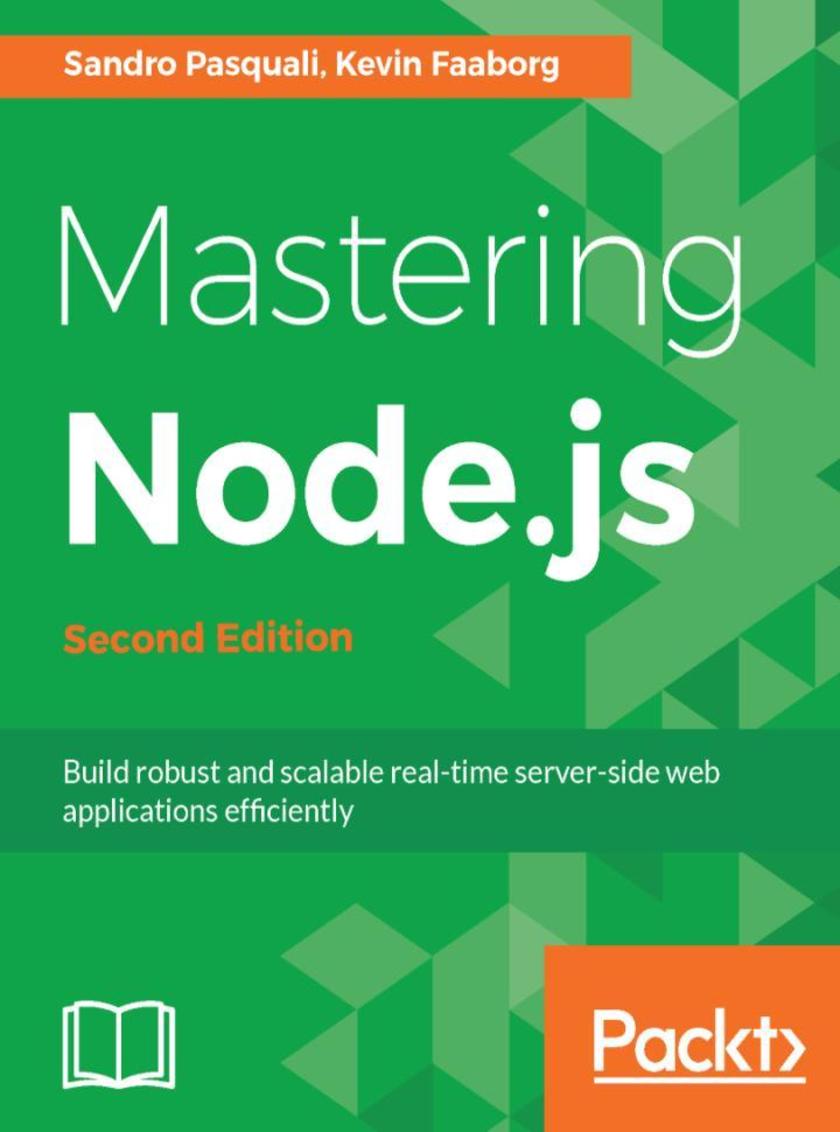
Mastering Node.js - Second Edition
¥90.46
Expert techniques for building fast servers and scalable, real-time network applications with minimal effort; rewritten for Node.js 8 and Node.js 9 About This Book ? Packed with practical examples and explanations, Mastering Node.js contains everything you need to take your applications to the next level. ? Unleash the full potential of Node.js 9 to build real-time and scalable applications. ? Gain in-depth knowledge of asynchronous programming, event loops, and parallel data processing. ? Explore Node's innovative event-non-blocking design, and build professional applications with the help of detailed examples. Who This Book Is For This book is targeted at JavaScript developers who want to take an in-depth look at the latest Node.js framework to create faster, scalable, real-time backend applications. Basic JavaScript programming knowledge—and also some previous Node.js development experience—are mandatory to get the best out of this book What You Will Learn ? Build an Electron desktop app using Node that manages a filesystem ? Explore Streams and understand how they apply to building networked services ? Develop and deploy an SMS-driven customer service application ? Use WebSockets for rapid bi-directional communication ? Construct serverless applications with Amazon Lambda ? Test and debug with headless browsers, CPU profiling, Mocha, Sinon, and more ? Scale applications vertically and horizontally across multiple cores and web services In Detail Node.js, a modern development environment that enables developers to write server- and client-side code with JavaScript, thus becoming a popular choice among developers. This book covers the features of Node that are especially helpful to developers creating highly concurrent real-time applications. It takes you on a tour of Node's innovative event non-blocking design, showing you how to build professional applications. This edition has been updated to cover the latest features of Node 9 and ES6. All code examples and demo applications have been completely rewritten using the latest techniques, introducing Promises, functional programming, async/await, and other cutting-edge patterns for writing JavaScript code. Learn how to use microservices to simplify the design and composition of distributed systems. From building serverless cloud functions to native C++ plugins, from chatbots to massively scalable SMS-driven applications, you'll be prepared for building the next generation of distributed software. By the end of this book, you'll be building better Node applications more quickly, with less code and more power, and know how to run them at scale in production environments. Style and approach Mastering Node.js contains all of the examples and explanations you'll need to build applications in a short amount of time and at a low cost, running rapidly and at scale.
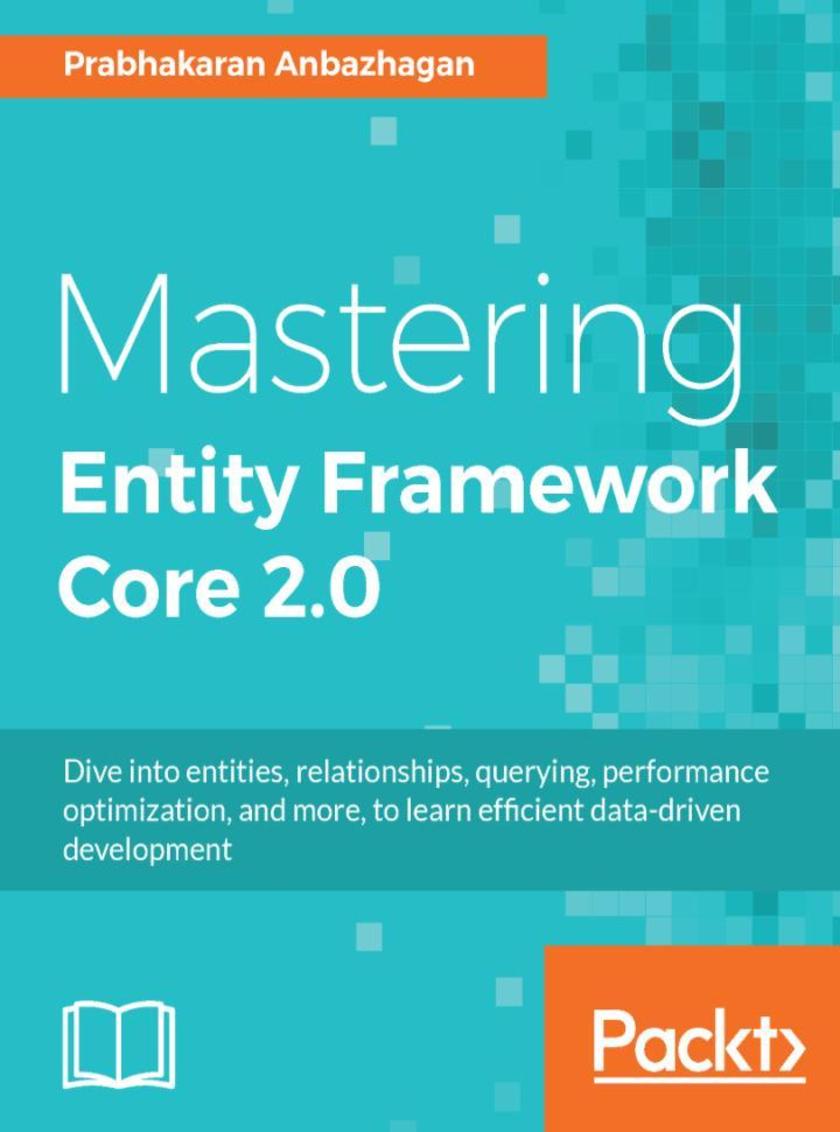
Mastering Entity Framework Core 2.0
¥90.46
Learn how to leverage the features of the new Entity Framework Core APIs and use them to build pure .NET Core applications. About This Book ? Learn how to effectively manage your database to make it more productive and maintainable. ? Write simplified queries using LINQ to acquire the desired data easily ? Raise the abstraction level from data to objects so teams can function independently, resulting in easily maintainable code Who This Book Is For This book is for .NET Core developers who would like to integrate EF Core in their application. Prior knowledge of .NET Core and C# is assumed. What You Will Learn ? Create databases and perform CRUD operations on them ? Understand and build relationships (related to entities, keys, and properties) ? Understand in-built, custom, and remote validation (both client and server side) ? You will learn to handle concurrency to build responsive applications ? You will handle transactions and multi-tenancy while also improving performance In Detail Being able to create and maintain data-oriented applications has become crucial in modern programming. This is why Microsoft came up with Entity Framework so architects can optimize storage requirements while also writing efficient and maintainable application code. This book is a comprehensive guide that will show how to utilize the power of the Entity Framework to build efficient .NET Core applications. It not only teaches all the fundamentals of Entity Framework Core but also demonstrates how to use it practically so you can implement it in your software development. The book is divided into three modules. The first module focuses on building entities and relationships. Here you will also learn about different mapping techniques, which will help you choose the one best suited to your application design. Once you have understood the fundamentals of the Entity Framework, you will move on to learn about validation and querying in the second module. It will also teach you how to execute raw SQL queries and extend the Entity Framework to leverage Query Objects using the Query Object Pattern. The final module of the book focuses on performance optimization and managing the security of your application. You will learn to implement failsafe mechanisms using concurrency tokens. The book also explores row-level security and multitenant databases in detail. By the end of the book, you will be proficient in implementing Entity Framework on your .NET Core applications. Style and approach This book is filled with various examples that will help you use Entity Framework Core 2.0 to write efficient software.
Learning R for Geospatial Analysis
¥90.46
This book is intended for anyone who wants to learn how to efficiently analyze geospatial data with R, including GIS analysts, researchers, educators, and students who work with spatial data and who are interested in expanding their capabilities through programming. The book assumes familiarity with the basic geographic information concepts (such as spatial coordinates), but no prior experience with R and/or programming is required. By focusing on R exclusively, you will not need to depend on any external software—a working installation of R is all that is necessary to begin.
R for Data Science
¥90.46
If you are a data analyst who has a firm grip on some advanced data analysis techniques and wants to learn how to leverage the features of R, this is the book for you. You should have some basic knowledge of the R language and should know about some data science topics.
Swift Essentials
¥90.46
Whether you are a seasoned Objective-C developer or new to the Xcode platform, Swift Essentials will provide you with all you need to know to get started with the language. Prior experience with iOS development is not necessary, but will be helpful to get the most out of the book.


