


 购物车
购物车 个人中心
个人中心
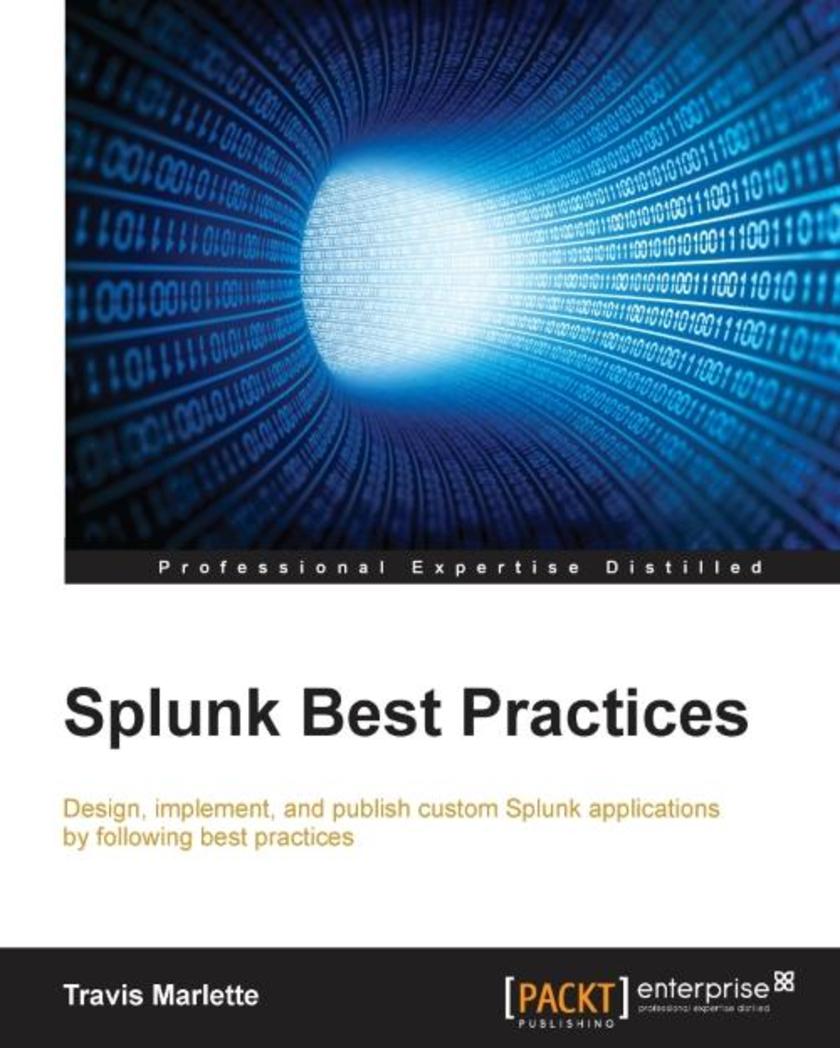
Splunk Best Practices
¥80.65
Design, implement, and publish custom Splunk applications by following best practices About This Book This is the most up-to-date guide on the market and will help you finish your tasks faster, easier, and more efficiently. Highly practical guide that addresses common and not-so-common pain points in Splunk. Want to explore shortcuts to perform tasks more efficiently with SplunkThis is the book for you! Who This Book Is For This book is for administrators, developers, and search ninjas who have been using Splunk for some time. A comprehensive coverage makes this book great for Splunk veterans and newbies alike. What You Will Learn Use Splunk effectively to gather, analyze, and report on operational data throughout your environment Expedite your reporting, and be empowered to present data in a meaningful way Create robust searches, reports, and charts using Splunk Modularize your programs for better reusability. Build your own Splunk apps and learn why they are important Learn how to integrate with enterprise systems Summarize data for longer term trending, reporting, and analysis In Detail This book will give you an edge over others through insights that will help you in day-to-day instances. When you're working with data from various sources in Splunk and performing analysis on this data, it can be a bit tricky. With this book, you will learn the best practices of working with Splunk. You'll learn about tools and techniques that will ease your life with Splunk, and will ultimately save you time. In some cases, it will adjust your thinking of what Splunk is, and what it can and cannot do. To start with, you'll get to know the best practices to get data into Splunk, analyze data, and package apps for distribution. Next, you'll discover the best practices in logging, operations, knowledge management, searching, and reporting. To finish off, we will teach you how to troubleshoot Splunk searches, as well as deployment, testing, and development with Splunk. Style and approach If you're stuck or want to find a better way to work with Splunk environment, this book will come handy. This easy-to-follow, insightful book contains step-by-step instructions and examples and scenarios that you will connect to.
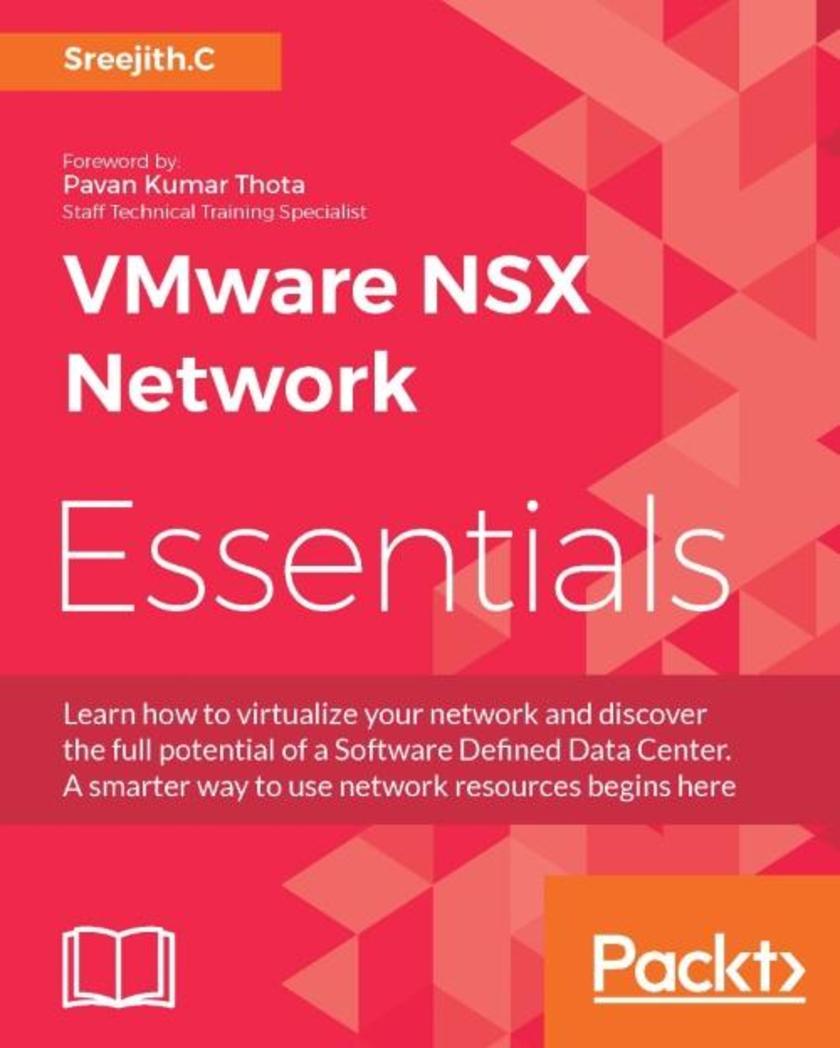
VMware NSX Network Essentials
¥80.65
Learn how to virtualize your network and discover the full potential of a Software Defined Data Center. A smarter way to use network resources begins here About This Book Experience the dynamism and flexibility of a virtualized software defined data center with NSX Find out how to design your network infrastructure based on what your organization needs From security to automation, discover how NSX’s impressive range of features can unlock a more effective and intelligent approach to system administration Who This Book Is For If you’re a network administrator and want a simple but powerful solution to your network virtualization headaches, look no further than this fast-paced, practical guide. What You Will Learn Deep dive into NSX-v Manager, Controller deployment, and design decisions Get to know the strategies needed to make decisions on each mode of VXLAN that is based on physical network design Deploy Edge Gateway and leverage all the gateway features and design decisions Get to grips with NSX-v Security features and automate security Leverage Cross VC, identify the benefits, and work through a few deployment scenarios Troubleshoot an NSX-v to isolate problems and identify solutions through a step-by-step process In Detail VMware NSX is at the forefront of the software-defined networking revolution. It makes it even easier for organizations to unlock the full benefits of a software-defined data center – scalability, flexibility – while adding in vital security and automation features to keep any sysadmin happy. Software alone won’t power your business – with NSX you can use it more effectively than ever before, optimizing your resources and reducing costs. Getting started should be easy – this guide makes sure it is. It takes you through the core components of NSX, demonstrating how to set it up, customize it within your current network architecture. You’ll learn the principles of effective design, as well as some things you may need to take into consideration when you’re creating your virtual networks. We’ll also show you how to construct and maintain virtual networks, and how to deal with any tricky situations and failures. By the end, you’ll be confident you can deliver, scale and secure an exemplary virtualized network with NSX. Style and approach This book provides you with an introduction to software-defined networking with VMware NSX. Focusing on the most essential elements, so you can put your knowledge into practice quickly, it’s a guide dedicated to anyone who understands that sometimes real-world problems require virtualized solutions.
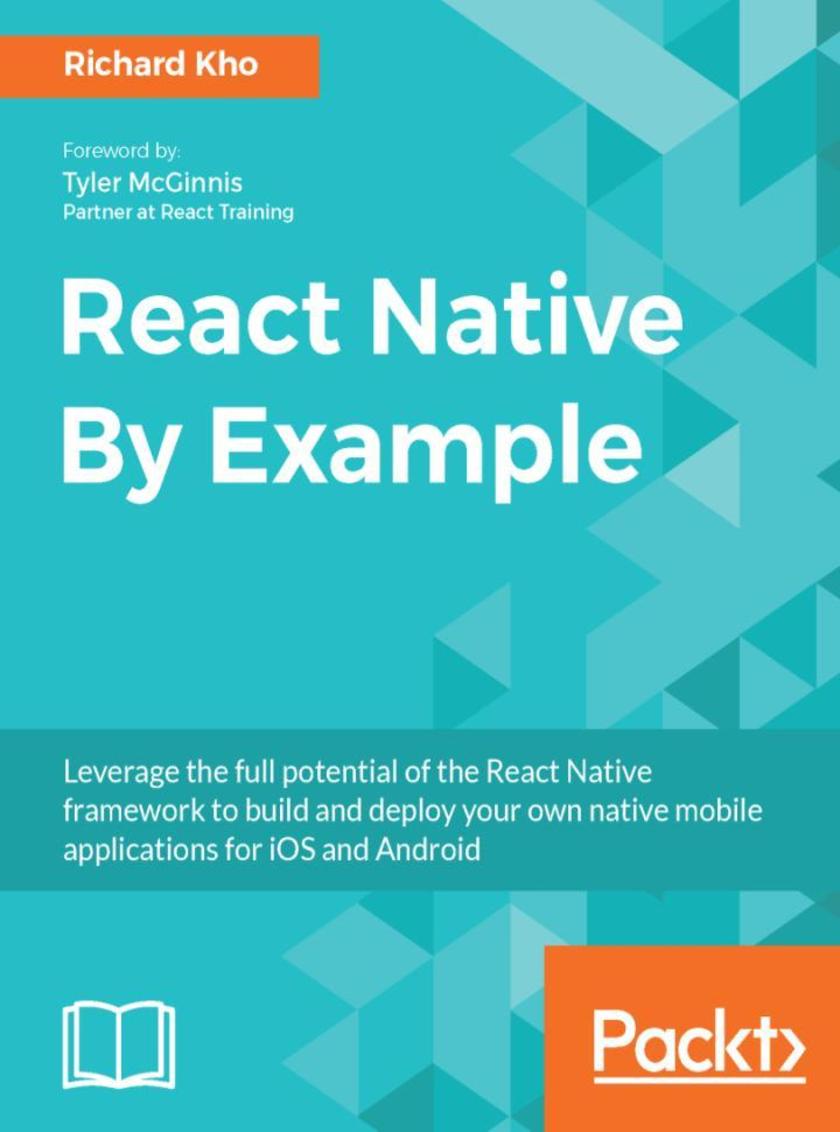
React Native By Example
¥80.65
React Native's ability to build performant mobile applications with JavaScript has resulted in its popularity amongst developers. Developers now have the luxury to create incredible mobile experiences that look and feel native to their platforms with the comfort of a well-known language and the popular React.js library. This book will show you how to build your own native mobile applications for the iOS and Android platforms while leveraging the finesse and simplicity of JavaScript and React. Throughout the book you will build three projects, each of increasing complexity. You will also link up with the third-party Facebook SDK, convert an app to support the Redux architecture, and learn the process involved in making your apps available for sale on the iOS App Store and Google Play. At the end of this book, you will have learned and implemented a wide breadth of core APIs and components found in the React Native framework that are necessary in creating great mobile experiences. What you will learn ?How to create mobile-performant iOS and Android apps using JavaScript and React ?The potential of each API and component, putting them into practice throughout the course of three projects ?The process of integrating the Facebook SDK to build an app that connects to third-party data ?Every step taken to implement Redux, a popular state management library, in your mobile apps
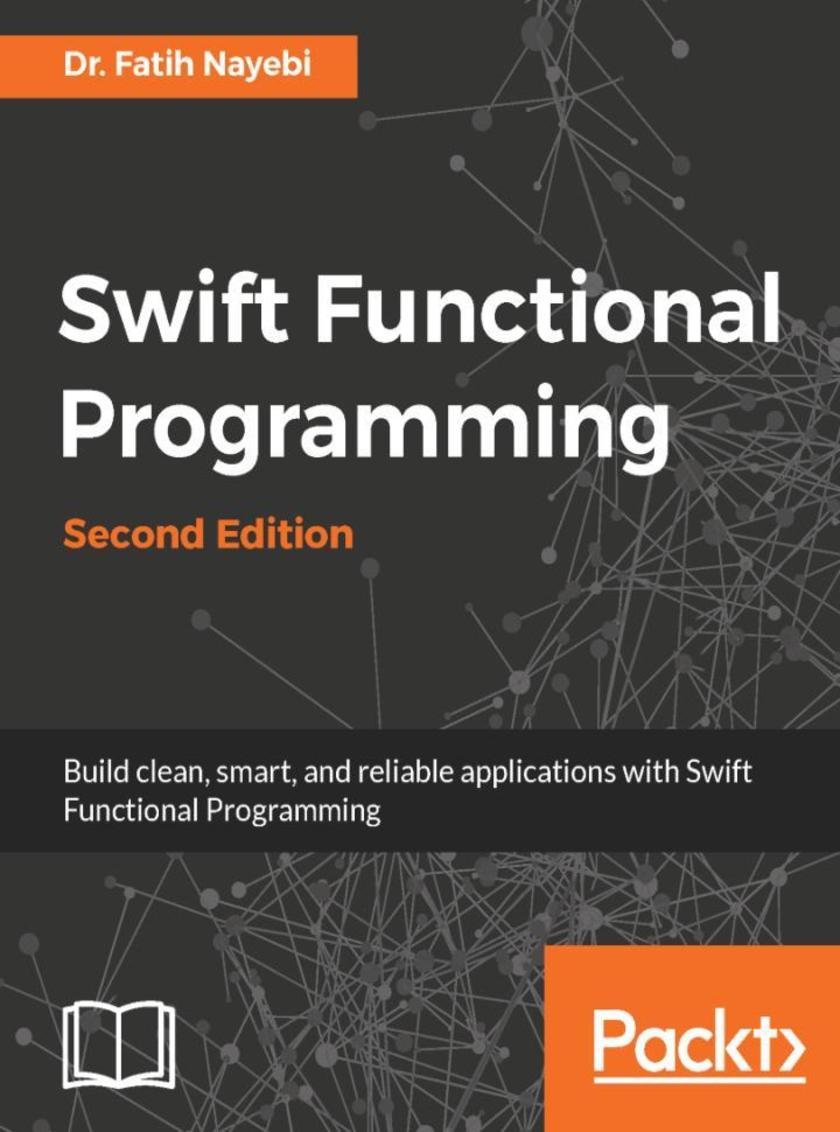
Swift Functional Programming - Second Edition
¥80.65
Bring the power of functional programming to Swift to develop clean, smart, scalable and reliable applications. About This Book ?Written for the latest version of Swift, this is a comprehensive guide that introduces iOS, Web and macOS developers to the all-new world of functional programming that has so far been alien to them ?Get familiar with using functional programming alongside existing OOP techniques so you can get the best of both worlds and develop clean, robust, and scalable code ?Develop a case study on example backend API with Swift and Vapor Framework and an iOS application with Functional Programming, Protocol-Oriented Programming, Functional Reactive Programming, and Object-Oriented Programming techniques Who This Book Is For Meant for a reader who knows object-oriented programming, has some experience with Objective-C/Swift programming languages and wants to further enhance his skills with functional programming techniques with Swift 3.x. What You Will Learn ?Understand what functional programming is and why it matters ?Understand custom operators, function composition, currying, recursion, and memoization ?Explore algebraic data types, pattern matching, generics, associated type protocols, and type erasure ?Get acquainted with higher-kinded types and higher-order functions using practical examples ?Get familiar with functional and non-functional ways to deal with optionals ?Make use of functional data structures such as semigroup, monoid, binary search tree, linked list, stack, and lazy list ?Understand the importance of immutability, copy constructors, and lenses
Applied Network Security
¥80.65
Master the art of detecting and averting advanced network security attacks and techniques About This Book ?Deep dive into the advanced network security attacks and techniques by leveraging tools such as Kali Linux 2, MetaSploit, Nmap, and Wireshark ?Become an expert in cracking WiFi passwords, penetrating anti-virus networks, sniffing the network, and USB hacks ?This step-by-step guide shows you how to confidently and quickly detect vulnerabilities for your network before the hacker does Who This Book Is For This book is for network security professionals, cyber security professionals, and Pentesters who are well versed with fundamentals of network security and now want to master it. So whether you're a cyber security professional, hobbyist, business manager, or student aspiring to becoming an ethical hacker or just want to learn more about the cyber security aspect of the IT industry, then this book is definitely for you. What You Will Learn ?Use SET to clone webpages including the login page ?Understand the concept of Wi-Fi cracking and use PCAP file to obtain passwords ?Attack using a USB as payload injector ?Familiarize yourself with the process of trojan attacks ?Use Shodan to identify honeypots, rogue access points, vulnerable webcams, and other exploits found in the database ?Explore various tools for wireless penetration testing and auditing ?Create an evil twin to intercept network traffic ?Identify human patterns in networks attacks In Detail Computer networks are increasing at an exponential rate and the most
Python Digital Forensics Cookbook
¥80.65
Over 60 recipes to help you learn digital forensics and leverage Python *s to amplify your examinations About This Book ? Develop code that extracts vital information from everyday forensic acquisitions. ? Increase the quality and efficiency of your forensic analysis. ? Leverage the latest resources and capabilities available to the forensic community. Who This Book Is For If you are a digital forensics examiner, cyber security specialist, or analyst at heart, understand the basics of Python, and want to take it to the next level, this is the book for you. Along the way, you will be introduced to a number of libraries suitable for parsing forensic artifacts. Readers will be able to use and build upon the *s we develop to elevate their analysis. What You Will Learn ? Understand how Python can enhance digital forensics and investigations ? Learn to access the contents of, and process, forensic evidence containers ? Explore malware through automated static analysis ? Extract and review message contents from a variety of email formats ? Add depth and context to discovered IP addresses and domains through various Application Program Interfaces (APIs) ? Delve into mobile forensics and recover deleted messages from SQLite databases ? Index large logs into a platform to better query and visualize datasets In Detail Technology plays an increasingly large role in our daily lives and shows no sign of stopping. Now, more than ever, it is paramount that an investigator develops programming expertise to deal with increasingly large datasets. By leveraging the Python recipes explored throughout this book, we make the complex simple, quickly extracting relevant information from large datasets. You will explore, develop, and deploy Python code and libraries to provide meaningful results that can be immediately applied to your investigations. Throughout the Python Digital Forensics Cookbook, recipes include topics such as working with forensic evidence containers, parsing mobile and desktop operating system artifacts, extracting embedded metadata from documents and executables, and identifying indicators of compromise. You will also learn to integrate *s with Application Program Interfaces (APIs) such as VirusTotal and PassiveTotal, and tools such as Axiom, Cellebrite, and EnCase. By the end of the book, you will have a sound understanding of Python and how you can use it to process artifacts in your investigations. Style and approach Our succinct recipes take a no-frills approach to solving common challenges faced in investigations. The code in this book covers a wide range of artifacts and data sources. These examples will help improve the accuracy and efficiency of your analysis—no matter the situation.
JUNOS Automation Cookbook
¥80.65
Administer, configure, and monitor Junos in your organization About This Book ? Get well acquainted with security and routing policies to identify the use of firewall filters. ? Learn to provide end-user authentication and protect each layer in an enterprise network. ? A recipe-based guide that will help you configure and monitor Junos OS and basic device operations. Who This Book Is For This book targets network engineers, developers, support personals, and administrators who are working on devices running Junos OS and are looking at automating their organisation's operations. Some understanding about Junos would be necessary What You Will Learn ? Start using NETCONF RPC standard and understand its usefulness in programming JUNOS ? Write SLAX *s to respond to events in the JUNOS environment ? Automate JUNOS with PyEZ ? Deal with events in the JUNOS environment, and writing response handlers to deal with them ? Make the most of automation technologies to help with maintenance and monitoring of JUNOS ? Use the Ansible framework to extend the automation functionality of Junos In Detail The JUNOS Automation Cookbook is a companion guide for the complex field of automating tasks on JUNOS devices. With a foundation in industry-standrd XML, JUNOS provides an ideal environment for programmatic interation, allowing you to build upon the capabilities provided by Juniper, with your own original code. You will begin by learning about, and setting up, the industry-standard NETCONF remote procedure call mechanisms on your device. After initial setup, you'll walk through SLAX - Juniper's foundation *ing language - for manipulating XML representations of JUNOS concepts and elements. You'll learn how to write your own SLAX *s to customise the operating environment, and also how to write proactive event handlers that deal with situations as they happen. You'll then delve into PyEZ - Juniper's bridging framework to make automation accessible to Python code - allowing you to build automation applications in the popular *ing language. You'll witness some examples of how to write applications that can monitor configuration changes, implement BGP security policies and implement ad-hoc routing protocols, for those really tricky situations. You'll also leaarn how asynchronous I/O frameworks like Node.js can be used to implement automation applications that present an acceptable web interface. Along with way, you'll explore how to make use of the latest RESTful APIs that JUNOS provides, how to visualize aspects of your JUNOS network, and how to integrate your automation capabilities with enterprise-wide orchestration systems like Ansible. By the end of the book, you'll be able to tackle JUNOS automation challenges with confidence and understanding, and without hassle. Style and Approach A guide that will cover all the automation tools along with steps on leveraging these tools
Mastering Assembly Programming
¥80.65
Incorporate the assembly language routines in your high level language applications About This Book ? Understand the Assembly programming concepts and the benefits of examining the AL codes generated from high level languages ? Learn to incorporate the assembly language routines in your high level language applications ? Understand how a CPU works when programming in high level languages Who This Book Is For This book is for developers who would like to learn about Assembly language. Prior programming knowledge of C and C++ is assumed. What You Will Learn ? Obtain deeper understanding of the underlying platform ? Understand binary arithmetic and logic operations ? Create elegant and efficient code in Assembly language ? Understand how to link Assembly code to outer world ? Obtain in-depth understanding of relevant internal mechanisms of Intel CPU ? Write stable, efficient and elegant patches for running processes In Detail The Assembly language is the lowest level human readable programming language on any platform. Knowing the way things are on the Assembly level will help developers design their code in a much more elegant and efficient way. It may be produced by compiling source code from a high-level programming language (such as C/C++) but can also be written from scratch. Assembly code can be converted to machine code using an assembler. The first section of the book starts with setting up the development environment on Windows and Linux, mentioning most common toolchains. The reader is led through the basic structure of CPU and memory, and is presented the most important Assembly instructions through examples for both Windows and Linux, 32 and 64 bits. Then the reader would understand how high level languages are translated into Assembly and then compiled into object code. Finally we will cover patching existing code, either legacy code without sources or a running code in same or remote process. Style and approach This book takes a step-by-step, detailed approach to Comprehensively learning Assembly Programming.
Mastering the C++17 STL
¥80.65
This book breaks down the C++ STL, teaching you how to extract its gems and apply them to your programming. About This Book ? Boost your productivity as a C++ developer with the latest features of C++17 ? Develop high-quality, fast, and portable applications with the varied features of the STL ? Migrate from older versions (C++11, C++14) to C++17 Who This Book Is For This book is for developers who would like to master the C++ STL and make full use of its components. Prior C++ knowledge is assumed. What You Will Learn ? Make your own iterator types, allocators, and thread pools. ? Master every standard container and every standard algorithm. ? Improve your code by replacing new/delete with smart pointers. ? Understand the difference between monomorphic algorithms, polymorphic algorithms, and generic algorithms. ? Learn the meaning and applications of vocabulary type, product type and sum type. In Detail Modern C++ has come a long way since 2011. The latest update, C++17, has just been ratified and several implementations are on the way. This book is your guide to the C++ standard library, including the very latest C++17 features. The book starts by exploring the C++ Standard Template Library in depth. You will learn the key differences between classical polymorphism and generic programming, the foundation of the STL. You will also learn how to use the various algorithms and containers in the STL to suit your programming needs. The next module delves into the tools of modern C++. Here you will learn about algebraic types such as std::optional, vocabulary types such as std::function, smart pointers, and synchronization primitives such as std::atomic and std::mutex. In the final module, you will learn about C++'s support for regular expressions and file I/O. By the end of the book you will be proficient in using the C++17 standard library to implement real programs, and you'll have gained a solid understanding of the library's own internals. Style and approach This book takes a concise but comprehensive approach to explaining and applying the C++ STL, one feature at a time.
Practical Time Series Analysis
¥80.65
Step by Step guide filled with real world practical examples. About This Book ? Get your first experience with data analysis with one of the most powerful types of analysis—time-series. ? Find patterns in your data and predict the future pattern based on historical data. ? Learn the statistics, theory, and implementation of Time-series methods using this example-rich guide Who This Book Is For This book is for anyone who wants to analyze data over time and/or frequency. A statistical background is necessary to quickly learn the analysis methods. What You Will Learn ? Understand the basic concepts of Time Series Analysis and appreciate its importance for the success of a data science project ? Develop an understanding of loading, exploring, and visualizing time-series data ? Explore auto-correlation and gain knowledge of statistical techniques to deal with non-stationarity time series ? Take advantage of exponential smoothing to tackle noise in time series data ? Learn how to use auto-regressive models to make predictions using time-series data ? Build predictive models on time series using techniques based on auto-regressive moving averages ? Discover recent advancements in deep learning to build accurate forecasting models for time series ? Gain familiarity with the basics of Python as a powerful yet simple to write programming language In Detail Time Series Analysis allows us to analyze data which is generated over a period of time and has sequential interdependencies between the observations. This book describes special mathematical tricks and techniques which are geared towards exploring the internal structures of time series data and generating powerful de*ive and predictive insights. Also, the book is full of real-life examples of time series and their analyses using cutting-edge solutions developed in Python. The book starts with de*ive analysis to create insightful visualizations of internal structures such as trend, seasonality and autocorrelation. Next, the statistical methods of dealing with autocorrelation and non-stationary time series are described. This is followed by exponential smoothing to produce meaningful insights from noisy time series data. At this point, we shift focus towards predictive analysis and introduce autoregressive models such as ARMA and ARIMA for time series forecasting. Later, powerful deep learning methods are presented, to develop accurate forecasting models for complex time series, and under the availability of little domain knowledge. All the topics are illustrated with real-life problem scenarios and their solutions by best-practice implementations in Python. The book concludes with the Appendix, with a brief discussion of programming and solving data science problems using Python. Style and approach This book takes the readers from the basic to advance level of Time series analysis in a very practical and real world use cases.
Mastering AWS Lambda
¥80.65
Build cost-effective and highly scalable Serverless applications using AWS Lambda. About This Book ? Leverage AWS Lambda to significantly lower your infrastructure costs and deploy out massively scalable, event-driven systems and applications ? Learn how to design and build Lambda functions using real-world examples and implementation scenarios ? Explore the Serverless ecosystem with a variety of toolsets and AWS services including DynamoDB, API Gateway, and much more! Who This Book Is For If you are a Cloud administrator and/or developer who wishes to explore, learn, and leverage AWS Lambda to design, build, and deploy Serverless applications in the cloud, then this is the book for you! The book assumes you have some prior knowledge and hands-on experience with AWS core services such as EC2, IAM, S3, along with the knowledge to work with any popular programming language such as Node.Js, Java, C#, and so on. What You Will Learn ? Understand the hype, significance, and business benefits of Serverless computing and applications ? Plunge into the Serverless world of AWS Lambda and master its core components and how it works ? Find out how to effectively and efficiently design, develop, and test Lambda functions using Node.js, along with some keen coding insights and best practices ? Explore best practices to effectively monitor and troubleshoot Serverless applications using AWS CloudWatch and other third-party services in the form of Datadog and Loggly ? Quickly design and develop Serverless applications by leveraging AWS Lambda, DynamoDB, and API Gateway using the Serverless Application Framework (SAF) and other AWS services such as Step Functions ? Explore a rich variety of real-world Serverless use cases with Lambda and see how you can apply it to your environments In Detail AWS is recognized as one of the biggest market leaders for cloud computing and why not? It has evolved a lot since the time it started out by providing just basic services such as EC2 and S3 and today; they go all the way from IoT to Machine Learning, Image recognition, Chatbot Frameworks, and much more! One of those recent services that is also gaining a lot of traction is AWS Lambda! Although seemingly simple and easy to use, Lambda is a highly effective and scalable compute service that provides developers with a powerful platform to design and develop Serverless event-driven systems and applications. The book begins with a high-level introduction into the world of Serverless computing and its advantages and use cases, followed by a deep dive into AWS Lambda! You’ll learn what services AWS Lambda provides to developers; how to design, write, and test Lambda functions; as well as monitor and troubleshoot them. The book is designed and accompanied with a vast variety of real-world examples, use cases, and code samples that will enable you to get started on your Serverless applications quickly. By the end of the book, you will have gained all the skills required to work with AWS Lambda services! Style and approach This step-by-step guide will help you build Serverless applications and run Serverless workloads using the AWS Lambda service. You’ll be able to get started with it in a matter of minutes with easy-to-follow code snippets and examples.
Mastering ASP.NET Web API
¥80.65
Leverage ASP.Net Web API to build professional web services and create powerful applications. About This Book ? Get a comprehensive analysis of the latest specification of ASP.NET Core and all the changes to the underlying platform that you need to know to make the most of the web API ? See an advanced coverage of ASP.NET Core Web API to create robust models for your data, create controllers, and handle routing and security ? This book is packed with key theoretical and practical concepts that can be instantly applied to build professional applications using API with Angular 4, Ionic, and React Who This Book Is For This book is for .Net developers who wants to Master ASP.NET Core (Web API) and have played around with previous ASP.NET Web API a little, but don’t have in-depth knowledge of it. You need to know Visual Studio and C#, and have some HTML, CSS, and JavaScript knowledge. What You Will Learn ? Acquire conceptual and hands-on knowledge of ASP.NET Core (MVC & Web API) ? Learn about HTTP methods, the structure of HTTP content, internet media types, and how servers respond to HTTP requests and their associated HTTP codes ? Explore middleware, filters, routing, and unit testing ? Optimize Web API implementations ? Develop a secure Web API interface ? Deploy Web API projects to various platforms ? Consume your web API in front end application based on Angular 4, Bootstrap, and Ionic ? Implement and explore the current trends in service architecture In Detail Microsoft has unified their main web development platforms. This unification will help develop web applications using various pieces of the ASP.NET platform that can be deployed on both Windows and LINUX. With ASP.NET Core (Web API), it will become easier than ever to build secure HTTP services that can be used from any client. Mastering ASP.NET Web API starts with the building blocks of the ASP.NET Core, then gradually moves on to implementing various HTTP routing strategies in the Web API. We then focus on the key components of building applications that employ the Web API, such as Kestrel, Middleware, Filters, Logging, Security, and Entity Framework.Readers will be introduced to take the TDD approach to write test cases along with the new Visual Studio 2017 live unit testing feature. They will also be introduced to integrate with the database using ORMs. Finally, we explore how the Web API can be consumed in a browser as well as by mobile applications by utilizing Angular 4, Ionic and ReactJS. By the end of this book, you will be able to apply best practices to develop complex Web API, consume them in frontend applications and deploy these applications to a modern hosting infrastructure. Style and approach Using a hands-on approach, we cover both the conceptual as well as the technical aspects of the ASP.NET Core (Web API) framework.
Learning Concurrency in Python
¥80.65
Practically and deeply understand concurrency in Python to write efficient programs About This Book ? Build highly efficient, robust, and concurrent applications ? Work through practical examples that will help you address the challenges of writing concurrent code ? Improve the overall speed of execution in multiprocessor and multicore systems and keep them highly available Who This Book Is For This book is for Python developers who would like to get started with concurrent programming. Readers are expected to have a working knowledge of the Python language, as this book will build on these fundamentals concepts. What You Will Learn ? Explore the concept of threading and multiprocessing in Python ? Understand concurrency with threads ? Manage exceptions in child threads ? Handle the hardest part in a concurrent system — shared resources ? Build concurrent systems with Communicating Sequential Processes (CSP) ? Maintain all concurrent systems and master them ? Apply reactive programming to build concurrent systems ? Use GPU to solve specific problems In Detail Python is a very high level, general purpose language that is utilized heavily in fields such as data science and research, as well as being one of the top choices for general purpose programming for programmers around the world. It features a wide number of powerful, high and low-level libraries and frameworks that complement its delightful syntax and enable Python programmers to create. This book introduces some of the most popular libraries and frameworks and goes in-depth into how you can leverage these libraries for your own high-concurrent, highly-performant Python programs. We'll cover the fundamental concepts of concurrency needed to be able to write your own concurrent and parallel software systems in Python. The book will guide you down the path to mastering Python concurrency, giving you all the necessary hardware and theoretical knowledge. We'll cover concepts such as debugging and exception handling as well as some of the most popular libraries and frameworks that allow you to create event-driven and reactive systems. By the end of the book, you'll have learned the techniques to write incredibly efficient concurrent systems that follow best practices. Style and approach This easy-to-follow guide teaches you new practices and techniques to optimize your code, and then moves toward more advanced ways to effectively write efficient Python code. Small and simple practical examples will help you test the concepts yourself, and you will be able to easily adapt them for any application.
Preparing for the Certified OpenStack Administrator Exam
¥80.65
Master the objectives required to pass the Certified OpenStack Administrator exam. About This Book ? Focuses on providing a clear, concise strategy so you gain the specific skills required to pass the Certified OpenStack Administrator exam ? Includes exercises and performance-based tasks to ensure all exam objectives can be completed via the Horizon dashboard and command-line interface ? Includes a free OpenStack Virtual Appliance to practice the objectives covered throughout the book ? Includes a practice exam to put your OpenStack skills to the test to prove you have what it takes to conquer the live exam ? Updated for the 2017 exam featuring OpenStack Newton Who This Book Is For This book is for IT professionals, system administrators, DevOps engineers, and software developers with basic Linux command-line and networking knowledge. It’s also a great guide for those interested in an entry-level OpenStack position but have limited real-world OpenStack experience. After passing the exam, Certified OpenStack Administrators will prove they have the required skills for the job. What You Will Learn ? Manage the Keystone identity service by creating and modifying domains, groups, projects, users, roles, services, endpoints, and quotas. ? Upload Glance images, launch new Nova instances, and create flavors, key pairs, and snapshots. ? Discover Neutron tenant and provider networks, security groups, routers, and floating IPs. ? Manage the Cinder block storage service by creating volumes and attaching them to instances. ? Create Swift containers and set access control lists to allow read/write access to your objects. ? Explore Heat orchestration templates and create, list, and update stacks. In Detail This book provides you with a specific strategy to pass the OpenStack Foundation’s first professional certification: the Certified OpenStack Administrator. In a recent survey, 78% of respondents said the OpenStack skills shortage had deterred them from adopting OpenStack. Consider this an opportunity to increase employer and customer confidence by proving you have the skills required to administrate real-world OpenStack clouds. You will begin your journey by getting well-versed with the OpenStack environment, understanding the benefits of taking the exam, and installing an included OpenStack all-in-one virtual appliance so you can work through objectives covered throughout the book. After exploring the basics of the individual services, you will be introduced to strategies to accomplish the exam objectives relevant to Keystone, Glance, Nova, Neutron, Cinder, Swift, Heat, and troubleshooting. Finally, you’ll benefit from the special tips section and a practice exam to put your knowledge to the test. By the end of the journey, you will be ready to become a Certified OpenStack Administrator! Style and approach Clear, concise, and straightforward with supporting diagrams and lab environment tutorials, this book will help you confidently pass Certified OpenStack Administrator objectives on the Horizon dashboard and command-line interface.
Windows 10 for Enterprise Administrators
¥80.65
Learn the art of configuring, deploying, managing and securing Windows 10 for your enterprise. About This Book ? Enhance your enterprise administration skills to manage Windows 10 Redstone 3 ? Get acquainted with configuring Azure Active Directory for enabling cloud-based services and Remote Server Admin Tools for managing Windows Server ? Provide enterprise-level security with ease using the built-in data loss prevention of Windows 10 Who This Book Is For If you are a system administrator who has been given the responsibility of administering and managing Windows 10 Redstone 3, then this book is for you. If you have deployed and managed previous versions of Windows, it would be an added advantage. What You Will Learn ? Understand the remote access capabilities ? Use third-party tools to deploy Windows 10 ? Customize image and user Interface experience ? Implement assigned access rights ? Configure remote administration ? Manage Windows 10 security ? Work with Azure AD and Intune management In Detail Microsoft’s launch of Windows 10 is a step toward satisfying the enterprise administrator’s needs for management and user experience customization. This book provides the enterprise administrator with the knowledge needed to fully utilize the advanced feature set of Windows 10 Enterprise. This practical guide shows Windows 10 from an administrator's point of view. You'll focus on areas such as installation and configuration techniques based on your enterprise requirements, various deployment scenarios and management strategies, and setting up and managing admin and other user accounts. You’ll see how to configure Remote Server Administration Tools to remotely manage Windows Server and Azure Active Directory. Lastly, you will learn modern Mobile Device Management for effective BYOD and how to enable enhanced data protection, system hardening, and enterprise-level security with the new Windows 10 in order to prevent data breaches and impede attacks. By the end of this book, you will know the key technologies and capabilities in Windows 10 and will confidently be able to manage and deploy these features in your organization. Style and approach This step-by-step guide will show you how to configure, deploy, manage, and secure the all new Windows 10 Redstone 3 for your enterprise.
Kali Linux Cookbook - Second Edition
¥80.65
Over 80 recipes to effectively test your network and boost your career in security About This Book ? Learn how to scan networks to find vulnerable computers and servers ? Hack into devices to control them, steal their data, and make them yours ? Target wireless networks, databases, and web servers, and password cracking to make the most of Kali Linux Who This Book Is For If you are looking to expand your career into penetration testing, you will need a good understanding of Kali Linux and the variety of tools it includes. This book will work as a perfect guide for anyone who wants to have a practical approach in leveraging penetration testing mechanisms using Kali Linux What You Will Learn ? Acquire the key skills of ethical hacking to perform penetration testing ? Learn how to perform network reconnaissance ? Discover vulnerabilities in hosts ? Attack vulnerabilities to take control of workstations and servers ? Understand password cracking to bypass security ? Learn how to hack into wireless networks ? Attack web and database servers to exfiltrate data ? Obfuscate your command and control connections to avoid firewall and IPS detection In Detail Kali Linux is a Linux distribution designed for penetration testing and security auditing. It is the successor to BackTrack, the world’s most popular penetration testing distribution. Kali Linux is the most widely used platform and toolkit for penetration testing. Security is currently the hottest field in technology with a projected need for millions of security professionals. This book focuses on enhancing your knowledge in Kali Linux for security by expanding your skills with toolkits and frameworks that can increase your value as a security professional. Kali Linux Cookbook, Second Edition starts by helping you install Kali Linux on different options available. You will also be able to understand the lab architecture and install a Windows host for use in the lab. Next, you will understand the concept of vulnerability analysis and look at the different types of exploits. The book will introduce you to the concept and psychology of Social Engineering and password cracking. You will then be able to use these skills to expand the scope of any breaches you create. Finally, the book will guide you in exploiting specific technologies and gaining access to other systems in the environment. By the end of this book, you will have gained the core knowledge and concepts of the penetration testing process. Style and approach This book teaches you everything you need to know about Kali Linux from the perspective of a penetration tester. It is filled with powerful recipes and practical examples that will help you gain in-depth knowledge of Kali Linux.
MEAN Cookbook
¥80.65
Over 50 recipes to create full-stack high-performance web applications using pure JavaScript and the MEAN stack. About This Book ? Architect a fully functional stand-alone web application, including the web server, database, and front-end web application ? Improve the performance and maintainability of your MEAN stack application with tips for configuration and optimization ? Highlights MEAN Stack best practices when working with your application Who This Book Is For If you are a JavaScript developer who wants to create high-performing, modern web applications with the MEAN stack, this is the book for you. Web developers familiar with some parts of the MEAN stack will find this a comprehensive guide to fleshing out the other technologies and skills they need to build all JavaScript web applications. Developers interested in transitioning from other web application stacks to an all-JavaScript environment will find a wealth of information about how to work in a MEAN stack environment. To get the most from this book, you should have a general understanding of web servers and web applications. You are expected to have a basic understanding of running JavaScript, both in a web browser and outside it, using Node.js and the NPM package manager. What You Will Learn ? Bootstrap a new MEAN stack web application using Node.js and Express ? Build a single-page application (SPA) with Angular and Angular-CLI ? Improve browser performance by optimizing your web application resources using Webpack ? Model complex JSON object relationships in MongoDB using Mongoose ? Debug all the layers of a MEAN stack application, including working with source maps ? Build Restful APIs using Express.js and JSON Web Token (JWT) for user authentication ? Use automated testing to improve the reliability and quality of your MEAN stack application In Detail The MEAN Stack is a framework for web application development using JavaScript-based technologies; MongoDB, Express, Angular, and Node.js. If you want to expand your understanding of using JavaScript to produce a fully functional standalone web application, including the web server, user interface, and database, then this book can help guide you through that transition. This book begins by configuring the frontend of the MEAN stack web application using the Angular JavaScript framework. We then implement common user interface enhancements before moving on to configuring the server layer of our MEAN stack web application using Express for our backend APIs. You will learn to configure the database layer of your MEAN stack web application using MongoDB and the Mongoose framework, including modeling relationships between documents. You will explore advanced topics such as optimizing your web application using WebPack as well as the use of automated testing with the Mocha and Chai frameworks. By the end of the book, you should have acquired a level of proficiency that allows you to confidently build a full production-ready and scalable MEAN stack application. Style and Approach This book is a guide of MEAN Stack specific solutions to common web application problems and includes in-depth guides for each layer of the application stack. Readers looking to upgrade their MEAN Stack web application will find recipes within to help them transition.
Vue.js 2 and Bootstrap 4 Web Development
¥80.65
Learn how to combine Bootstrap with Vue.js to build responsive web applications. About This Book ? Build applications with a good architecture and clean UI with Vue.js and Bootstrap ? Understand Bootstrap components and learn to integrate them with the Vue.js structure ? Build, deploy, and test your code with various utility tools provided by Vue.js Who This Book Is For This book is for JavaScript programmers who are new to web frameworks and want to start learning it by developing interactive and responsive web applications. What You Will Learn ? Create and build web applications using Vue.js, Webpack, and Nuxt.js ? Combine Bootstrap components with Vue.js' power to enrich your web applications with reusable elements ? Connect the Vuex state management architecture to the Firebase cloud backend to persist and manage application data ? Explore the new grid system of Bootstrap 4 along with the far simpler directives in Vue.js ? Test Vue applications using Jest ? Authenticate your application using Bootstrap's forms, Vue.js' reactivity, and Firebase's authentication API ? Deploy your application using Firebase, which provides Backend as a Service In Detail In this book, we will build a full stack web application right from scratch up to its deployment. We will start by building a small introduction application and then proceed to the creation of a fully functional, dynamic responsive web application called ProFitOro. In this application, we will build a Pomodoro timer combined with office workouts. Besides the Pomodoro timer and ProFitOro workouts will enable authentication and collaborative content management. We will explore topics such as Vue reactive data binding, reusable components, routing, and Vuex store along with its state, actions, mutations, and getters. We will create Vue applications using both webpack and Nuxt.js templates while exploring cool hot Nuxt.js features such as code splitting and server-side rendering. We will use Jest to test this application, and we will even revive some trigonometry from our secondary school! While developing the app, you will go through the new grid system of Bootstrap 4 along with Vue.js’ directives. We will connect Vuex store to the Firebase real-time database, data storage, and authentication APIs and use this data later inside the application’s reactive components. Finally, we will quickly deploy our application using the Firebase hosting mechanism. Style and Approach Step-by-step tutorial
Expert Android Programming
¥80.65
Become a pro with the latest Android SDK and create state of the art applications for Android. About This Book ? Dive deep into Android development with practical hands on examples to help you in each stage. ? Develop smart professional grade apps for the latest Android N version and become a pro android developer. ? Unclog your development highway by utilising the industry standard best practices techniques. Who This Book Is For This book is for mobile developers having some expertise in building android apps and who wish to now take a leap into building complex app such as Zomato, using latest Android N power of Google. What You Will Learn ? Building UI/UX following best industry practices ? Development of Zomato Clone ? Measure and improve app performance ? Improving app using test mechanisms ? Bringing the app live on the play store In Detail Android O brings a number of important changes for the users as well as the developers. If you want to create smart android applications which are fast, lightweight and also highly efficient then this is the book that will solve all your problems. You will create a complex enterprise grade app in this book. You will get a quick refresher of the latest android SDK and how to configure your development environment. Then you will move onto creating app layouts, component and module building, creating smart and efficient UIs. The most important part of a modern day app is how real time they are. With this book, you will create a smooth back-end for your app, ensure dynamic and real time communication between different app layers. As we move on, you will learn to leverage the different Android APIs and create an efficient SQLite data layer for your apps. You will implement effective testing techniques to make your app reliable and robust and finally you will learn to deploy it efficiently. The multiple stages of android development will also be simplified by giving you an industry standard set of best practices. Style and approach This book will have a dedicated practical tutorial style approach with focus on professional & enterprise grade android app development. The examples in each chapter will be modular and will also help you to create a complete fully fueatured android app by the end of the book.
Android Application Development Cookbook - Second Edition
¥80.65
Over 100 recipes to help you solve the most common problems faced by Android Developers today About This Book Find the answers to your common Android programming problems, from set up to security, to help you deliver better applications, faster Uncover the latest features of Android Marshmallow to make your applications stand out Get up to speed with Android Studio 1.4 - the first Android Studio based on the IntelliJ IDE from JetBrains Who This Book Is For If you are new to Android development and want to take a hands-on approach to learning the framework, or if you are an experienced developer in need of clear working code to solve the many challenges in Android development, you can benefit from this book. Either way, this is a resource you’ll want to keep at your desk for a quick reference to solve new problems as you tackle more challenging projects. What You Will Learn Along with Marshmallow, get hands-on working with Google’s new Android Studio IDE Develop applications using the latest Android framework while maintaining backward-compatibility with the support library Master Android programming best practices from the recipes Create exciting and engaging applications using knowledge gained from recipes on graphics, animations, and multimedia Work through succinct steps on specifics that will help you complete your project faster Keep your app responsive (and prevent ANRs) with examples on the AsynchTask class Utilize Google Speech Recognition APIs for your app. Make use of Google Cloud Messaging (GCM) to create Push Notifications for your users Get a better understanding of the Android framework through detailed explanations In Detail The Android OS has the largest installation base of any operating system in the world; there has never been a better time to learn Android development to write your own applications, or to make your own contributions to the open source community! This “cookbook” will make it easy for you to jump to a topic of interest and get what you need to implement the feature in your own application. If you are new to Android and learn best by “doing,” then this book will provide many topics of interest. Starting with the basics of Android development, we move on to more advanced concepts, and we’ll guide you through common tasks developers struggle to solve. The first few chapters cover the basics including Activities, Layouts, Widgets, and the Menu. From there, we cover fragments and data storage (including SQLite), device sensors, the camera, and GPS. Then we move on more advanced topics such as graphics and animation (including OpenGL), multi-threading with AsyncTask, and Internet functionality with Volley. We’ll also demonstrate Google Maps and Google Cloud Messaging (also known as Push Notifications) using the Google API Library. Finally, we’ll take a look at several online services designed especially for Android development. Take your application big-time with full Internet web services without having to become a server admin by leveraging the power of Backend as a Service (BaaS) providers. Style and approach This book progresses from the fundamentals of Android Development to more advanced concepts, with recipes to solve the most common problems faced by developers. This cookbook makes it easy to jump to specific topics of interest, where you’ll find simple steps to implement the solution and get a clear explanation of how it works.
Unity 5.x Game AI Programming Cookbook
¥80.65
Build and customize a wide range of powerful Unity AI systems with over 70 hands-on recipes and techniques About This Book Empower your agent with decision making capabilities using advanced minimaxing and Negamaxing techniques Discover how AI can be applied to a wide range of games to make them more interactive. Instigate vision and hearing abilities in your agent through collider based and graph based systems Who This Book Is For This book is intended for those who already have a basic knowledge of Unity and are eager to get more tools under their belt to solve AI and gameplay-related problems. What You Will Learn Use techniques such as A*and A*mbush to empower your agents with path finding capabilities. Create a representation of the world and make agents navigate it Construct decision-making systems to make the agents take different actions Make different agents coordinate actions and create the illusion of technical behavior Simulate senses and apply them in an awareness system Design and implement AI in board games such as Tic-Tac-Toe and Checkers Implement efficient prediction mechanism in your agents with algorithms such as N-Gram predictor and na?ve Bayes classifier Understand and analyze how the influence maps work. In Detail Unity 5 comes fully packaged with a toolbox of powerful features to help game and app developers create and implement powerful game AI. Leveraging these tools via Unity’s API or built-in features allows limitless possibilities when it comes to creating your game’s worlds and characters. This practical Cookbook covers both essential and niche techniques to help you be able to do that and more. This Cookbook is engineered as your one-stop reference to take your game AI programming to the next level. Get to grips with the essential building blocks of working with an agent, programming movement and navigation in a game environment, and improving your agent's decision making and coordination mechanisms - all through hands-on examples using easily customizable techniques. Discover how to emulate vision and hearing capabilities for your agent, for natural and humanlike AI behaviour, and improve them with the help of graphs. Empower your AI with decision-making functions through programming simple board games such as Tic-Tac-Toe and Checkers, and orchestrate agent coordination to get your AIs working together as one. Style and approach This recipe-based guide will take you through implementing various AI algorithms. Each topic is explained and placed among other related techniques, sometimes building on the knowledge from previous chapters. There are also references to more technical books and papers, so you can dig deeper if you want to.


