


 购物车
购物车 个人中心
个人中心
Arduino Wearable Projects
¥80.65
This book is intended for readers who are familiar with the Arduino platform and want to learn more about creating wearable projects. No previous experience in wearables is expected, although a basic knowledge of Arduino will help.
JasperReports for Java Developers
¥80.65
This book is a concise and practical guide aimed at getting the results you want as quickly as possible. This book is for Java developers who want to create rich reports for either the web or print, and want to get started quickly with JasperReports to do this. No knowledge of JasperReports is presumed, although obviously familiarity with Java, SQL, and XML are assumed where they are required.
VMware vRealize Operations Performance and Capacity Management
¥80.65
If you are an IT professional who is interested in performance management and capacity management in a virtual data center, then this book is ideal for you. The book is an intermediate-level book.
Unity Game Development Blueprints
¥80.65
If you want to build enticing projects with Unity, this book is for you. Readers who are familiar with the basics of how to create simple projects in Unity will have an easier time.
SELinux Cookbook
¥80.65
If you are a Linux system administrator or a Linux-based service administrator and want to fine-tune SELinux to implement a supported, mature, and proven access control system, then this book is for you. Basic experience with SELinux enabled distributions is expected.
Building Scalable Apps with Redis and Node.js
¥80.65
If the phrase scalability sounds alien to you, then this is an ideal book for you. You will not need much Node.js experience as each framework is demonstrated in a way that requires no previous knowledge of the framework. You will be building scalable Node.js applications in no time! Knowledge of JavaScript is required.
Delphi Cookbook
¥80.65
Intended to refresh the basics of Delphi as well as advance your knowledge to the next level, it is assumed you will know RAD studio and the Object Pascal language. However, if you are not an experienced RAD studio programmer this accessible guide will still develop those initial crucial skills.
PostgreSQL 9 High Availability Cookbook
¥80.65
A comprehensive series of dependable recipes to design, build, and implement a PostgreSQL server architecture free of common pitfalls that can operate for years to come. Each chapter is packed with instructions and examples to simplify even highly complex database operations. If you are a PostgreSQL DBA working on Linux systems who want a database that never gives up, this book is for you. If you've ever experienced a database outage, restored from a backup, spent hours trying to repair a malfunctioning cluster, or simply want to guarantee system stability, this book is definitely for you.
Practical DevOps
¥80.65
Harness the power of DevOps to boost your skill set and make your IT organization perform betterAbout This BookGet to know the background of DevOps so you understand the collaboration between different aspects of an IT organization and a software developerImprove your organization's performance to ensure smooth production of software and servicesDeploy top-quality software and ensure software maintenance and release management with this practical guideWho This Book Is ForThis book is aimed at developers and system administrators who wish to take on larger responsibilities and understand how the infrastructure that builds today's enterprises works. This book is also great for operations personnel who would like to better support developers. You do not need to have any previous knowledge of DevOps.What You Will LearnAppreciate the merits of DevOps and continuous delivery and see how DevOps supports the agile processUnderstand how all the systems fit together to form a larger wholeSet up and familiarize yourself with all the tools you need to be efficient with DevOpsDesign an application that is suitable for continuous deployment systems with Devops in mindStore and manage your code effectively using different options such as Git, Gerrit, and GitlabConfigure a job to build a sample CRUD applicationTest the code using automated regression testing with Jenkins SeleniumDeploy your code using tools such as Puppet, Ansible, Palletops, Chef, and VagrantMonitor the health of your code with Nagios, Munin, and GraphiteExplore the workings of Trac—a tool used for issue trackingIn DetailDevOps is a practical field that focuses on delivering business value as efficiently as possible. DevOps encompasses all the flows from code through testing environments to production environments. It stresses the cooperation between different roles, and how they can work together more closely, as the roots of the word imply—Development and Operations.After a quick refresher to DevOps and continuous delivery, we quickly move on to looking at how DevOps affects architecture. You'll create a sample enterprise Java application that you’ll continue to work with through the remaining chapters. Following this, we explore various code storage and build server options. You will then learn how to perform code testing with a few tools and deploy your test successfully. Next, you will learn how to monitor code for any anomalies and make sure it’s running properly. Finally, you will discover how to handle logs and keep track of the issues that affect processesStyle and approachThis book is primarily a technical guide to DevOps with practical examples suitable for people who like to learn by implementing concrete working code. It starts out with background information and gradually delves deeper into technical subjects.
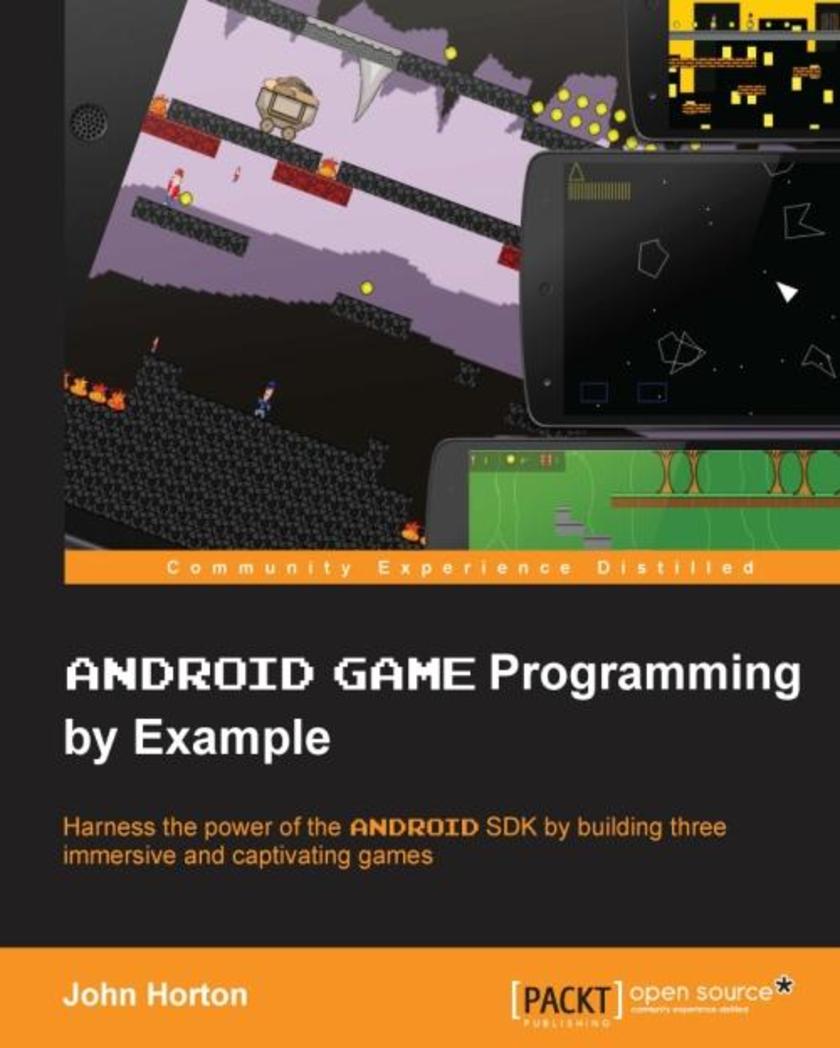
Android Game Programming by Example
¥80.65
The book is best suited for existing Android or Java programmers who want to adapt their skills to make exciting Android games. The book is also for determined readers who might have no Android, game programming or even Java experience, but a reasonable understanding of object oriented programming knowledge is assumed.
Learning Puppet for Windows Server
¥80.65
This book is for Windows administrators seeking to automate the management tasks of Windows servers and clients. Prior experience in Windows administration and a basic knowledge of Linux and Puppet will help you create wonders.
Xamarin Mobile Application Development for Android - Second Edition
¥80.65
If you are a C# developer who wants to develop Android apps and enhance your existing skill set, then this book is ideal for you. Good working knowledge of C#, .NET, and object-oriented software development is assumed.
PhoneGap By Example
¥80.65
If you are a web developer with some experience in the development of single page applications and want to enter the world of mobile applications, then this technology and book are ideal for you. No previous experience in the C++ or Java languages is required.
ArcGIS By Example
¥80.65
If you are an application developer who wishes to enhance your skills for the GIS domain with ArcGIS, then this book is for you. Previous experience with ArcGIS is not required.
Appcelerator Titanium Smartphone App Development Cookbook - Second Edition
¥80.65
Over 100 recipes to help you develop cross-platform, native applications in JavaScript About This Book Leverage your JavaScript skills to write mobile applications using Titanium Studio tools with the native advantage Deploy your application on the App Store and Google Play Add your own IOS native modules in objective-C, in an easy-to-follow step-by-step format Who This Book Is For This book is an essential for any developer learning or using JavaScript who wants to write native UI applications for iOS and Android. No knowledge of Objective-C, Swift and Java is required and you’ll quickly be developing native, cross-platform apps, in JavaScript! What You Will Learn Transfer data between applications with URL schemes, and make your application accessible to other mobile applications and services Connect with remote services using JSON Work with Google Maps and Apple Maps, GPS and annotate routes Create animations and special effects Integrate notifications and connect with social media services such as Facebook and Twitter Build applications with Alloy MVC – a rapid application development framework Design native APIs and use local databases In Detail The mobile web has paved the way but many users want to have “native” applications installed. Using Appcelerator as a platform it’s now possible to write iOS, Android, and Windows phone applications in JavaScript! It allows developers to develop fully native UI applications using Appcelerator studio tools without any knowledge of Objective-C, Swift or Java. This book will take you through the process of building cross-platform, native UI applications for the mobile from scratch. You will learn how to develop apps, how to use GPS, cameras and photos and how to build socially connected apps. You will also learn how to package them for submission to the App Store and Google Play. This cookbook takes a pragmatic approach to creating applications in JavaScript from putting together basic UIs, to handling events and implementation of third party services such as Twitter, Facebook and Push notifications. The book shows you how to integrate datasources and server APIs, and how to use local databases. The topics covered will guide you to use Appcelerator Studio tools for all the mobile features such as Geolocation, Accelerometer, animation and more. You’ll also learn about Alloy, the Appcelerator MVC framework for rapid app development, and how to transfer data between applications using URLSchemes, enabling other developers to access and launch specific parts of your app. Finally, you will learn how to register developer accounts and publish your very own applications on the App Store and Google Play. Style and approach This book offers a set of practical recipes with a step-by-step approach for building native applications for both the iOS and Android using JavaScript. This hands-on guide shows you exactly how to use the Appcelerator platform to rapidly develop cross-platform, native apps.
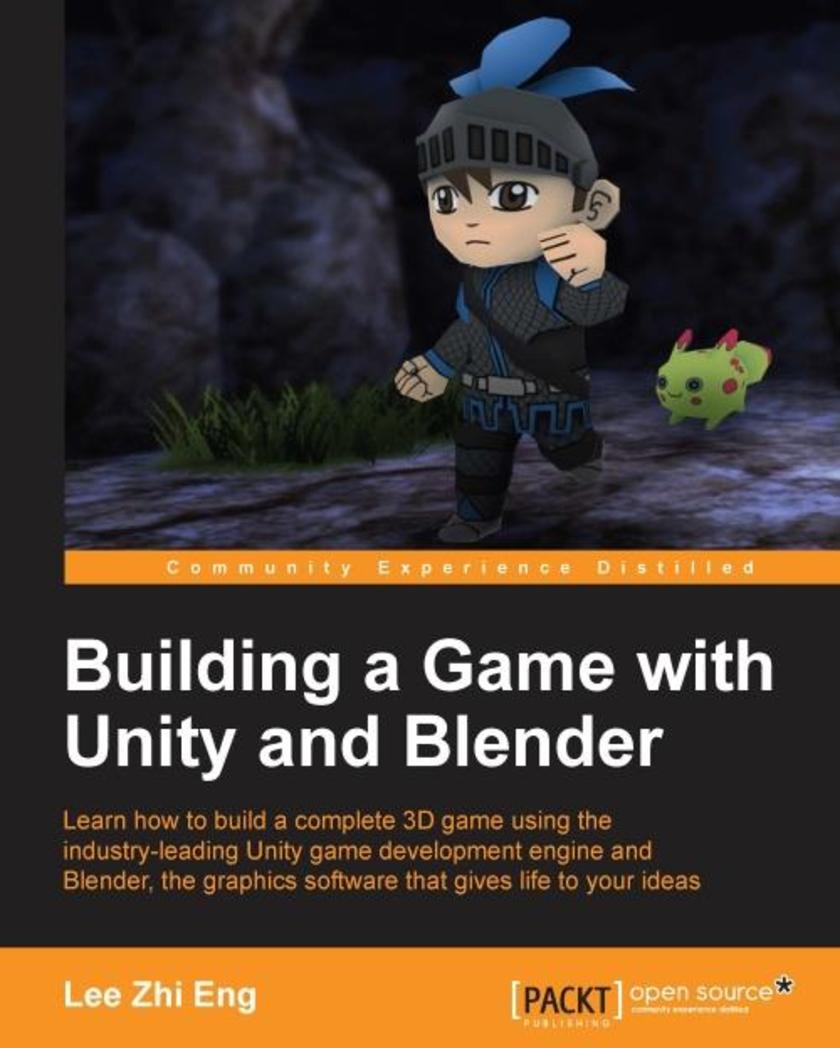
Building a Game with Unity and Blender
¥80.65
Learn how to build a complete 3D game using the industry-leading Unity game development engine and Blender, the graphics software that gives life to your ideas About This Book Learn the fundamentals of two powerful tools and put the concepts into practice Find out how to designand buildall the core elements required for a great game - from characters to environments, to props— Learn how to integrate Artificial Intelligence (AI) into your game for sophisticated and engaging gameplay Who This Book Is For This book has been created for anyone who wants to learn how to develop their own game using Blender and Unity, both of which are freely available, yet very popular and powerful, tools. Not only will you be able to master the tools, but you will also learn the entire process of creating a game from the ground up. What You Will Learn Design and create a game concept that will determine how your game will look and how it will be played Construct 3D models of your game characters and create animations for them before importing them into the game Build the game environment from scratch by constructing the terrain and props, and eventually put it all together to form a scene Import and integrate game assets created in Blender into Unity—for example, setting up textures, materials, animation states, and prefabs Develop game structures including a game flow, user interface diagram, game logic, and a state machine Make the game characters move around and perform certain actions either through player inputs or fully controlled by artificial intelligence Create particles and visual effects to enhance the overall visual aesthetic Deploy the game for various types of platforms In Detail In the wake of the indie game development scene, game development tools are no longer luxury items costing up to millions of dollars but are now affordable by smaller teams or even individual developers. Among these cutting-edge applications, Blender and Unity stand out from the crowd as a powerful combination that allows small-to-no budget indie developers or hobbyists alike to develop games that they have always dreamt of creating. Starting from the beginning, this book will cover designing the game concept, constructing the gameplay, creating the characters and environment, implementing game logic and basic artificial intelligence, and finally deploying the game for others to play. By sequentially working through the steps in each chapter, you will quickly master the skills required to develop your dream game from scratch. Style and approach A step-by-step approach with tons of screenshots and sample code for readers to follow and learn from. Each topic is explained sequentially and placed in context so that readers can get a better understanding of every step in the process of creating a fully functional game.
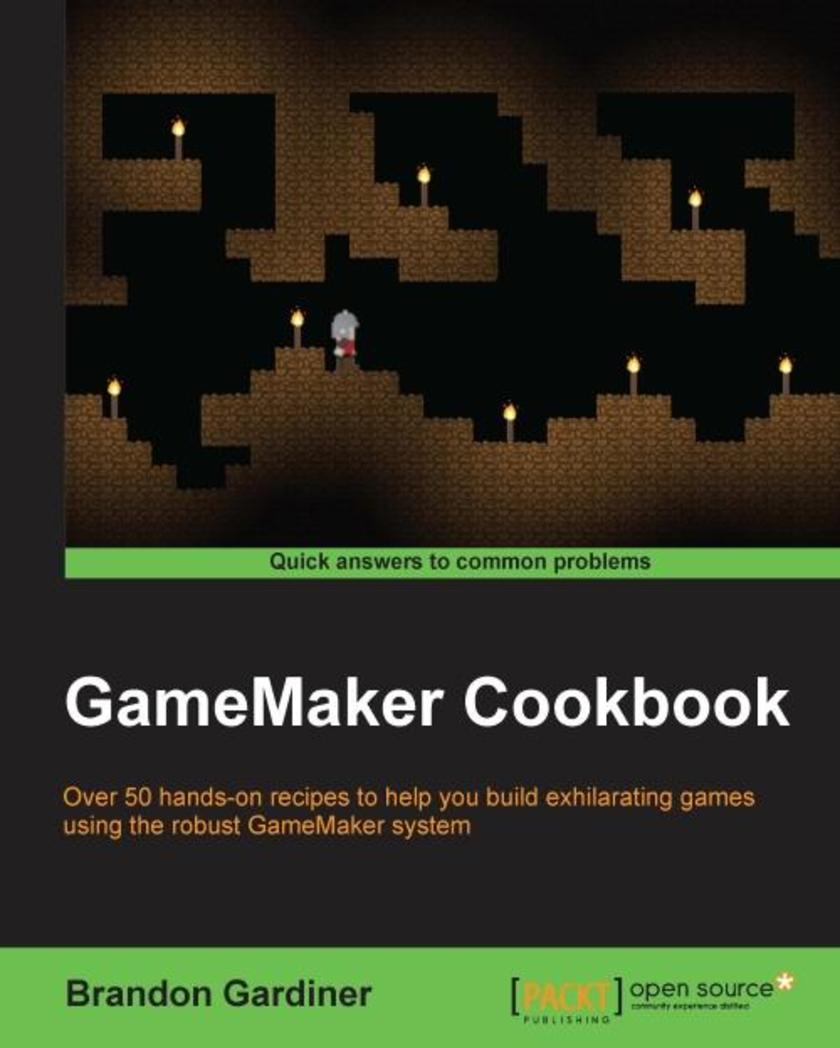
GameMaker Cookbook
¥80.65
Over 50 hands-on recipes to help you build exhilarating games using the robust GameMaker system About This Book Design and develop game elements that can be used alone or stacked to enhance your gaming experience Explore extensions that can unlock GameMaker: Studio’s true potential to create complex games A recipe-based, easy-to-follow guide to take your GameMaker skills to the next level Who This Book Is For This book is intended for GameMaker: Studio enthusiasts who are looking to add more substance and improve their content. If know your way around the program and have some basic GML skills but want to take them further, then this book is for you. What You Will Learn Set up player control schemes of various types, such as touch controls and a gamepad Create your own physics sandbox Get accustomed to advanced player movement Implement music and 3D sound in your games Utilize GameMaker’s GUI layers to create exciting games Generate adjustable game settings and save systems Add depth to your game with lighting and special effects In Detail GameMaker: Studio started off as a tool capable of creating simple games using a drag-and-drop interface. Since then, it has grown to become a powerful instrument to make release-ready games for PC, Mac, mobile devices, and even current-gen consoles. GameMaker is designed to allow its users to develop games without having to learn any of the complex programming languages such as C++ or Java. It also allows redistribution across multiple platforms. This book teaches you to harness GameMaker: Studio’s full potential and take your game development to new heights. It begins by covering the basics and lays a solid foundation for advanced GameMaker concepts. Moving on, it covers topics such as controls, physics, and advanced movement, employing a strategic approach to the learning curve. The book concludes by providing insights into complex concepts such as the GUI, menus, save system, lighting, particles, and VFX. By the end of the book, you will be able to design games using GameMaker: Studio and implement the same techniques in other games you intend to design. Style and approach A problem-solving guide that teaches you the construction of game elements and mechanics to be integrated in games for rapid prototyping. Each overall topic includes several individual recipes taught through step-by-step instructions, and in-depth follow-up with examples.
Learning RabbitMQ
¥80.65
Build and optimize efficient messaging applications with ease About This Book Learn to administer, configure, and manage RabbitMQ instances Discover ways to secure and troubleshoot RabbitMQ instances This book is fully up-to-date with all the latest changes to version 3.5 Who This Book Is For If you are a developer or system administrator with a basic knowledge of messaging who wants to learn RabbitMQ, or if you want to further enhance your knowledge in working with the message broker, then this book is ideal for you. To fully understand some examples in the book, a basic knowledge of the Java programming language is required. What You Will Learn Apply messaging patterns using the message broker Administer RabbitMQ using the command line, management Web console, or management REST services Create a cluster of scalable, and highly-available, RabbitMQ instances Use RabbitMQ with the Spring Framework, MuleESB, WSO2, and Oracle databases Deploy RabbitMQ using Puppet, Vagrant, or Docker Fine-tune the performance of RabbitMQ Monitor RabbitMQ using Nagios, Munin, or Monit Secure, troubleshoot, and extend RabbitMQ In Detail RabbitMQ is Open Source Message Queuing software based on the Advanced Message Queue Protocol Standard written in the Erlang Language. RabbitMQ is an ideal candidate for large-scale projects ranging from e-commerce and finance to Big Data and social networking because of its ease of use and high performance. Managing RabbitMQ in such a dynamic environment can be a challenging task that requires a good understanding not only of how to work properly with the message broker but also of its best practices and pitfalls. Learning RabbitMQ starts with a concise de*ion of messaging solutions and patterns, then moves on to concrete practical scenarios for publishing and subscribing to the broker along with basic administration. This knowledge is further expanded by exploring how to establish clustering and high availability at the level of the message broker and how to integrate RabbitMQ with a number of technologies such as Spring, and enterprise service bus solutions such as MuleESB and WSO2. We will look at advanced topics such as performance tuning, secure messaging, and the internals of RabbitMQ. Finally we will work through case-studies so that we can see RabbitMQ in action and, if something goes wrong, we'll learn to resolve it in the Troubleshooting section. Style and approach Each chapter of the book is an easy-to-follow guide that expands and builds on the knowledge already gained in previous chapters. Throughout the course of the book, a sample system called the CSN (Corporate Social Network) is used to illustrate the core principles described. At the end of each chapter, there is a Q&A session that covers practical questions that may arise in practice when working with RabbitMQ.
wxPython Application Development Cookbook
¥80.65
Over 80 step-by-step recipes to get you up to speed with building your own wxPython applications About This Book This book empowers you to create rich cross-platform graphical user interfaces using Python It helps you develop applications that can be deployed on Windows, OSX, and Linux The recipes in the book involve real-world applications, giving you a first-hand experience of the practical scenarios Who This Book Is For For those who are familiar with programming in Python and want to start building applications with graphical user interfaces, this book will get you up and running quickly. A basic understanding of the Python programming language and object-oriented concepts are all that is needed. What You Will Learn Create full featured user interfaces Design and develop custom controls Deploy and distribute wxPython applications to Windows, Macintosh OS X, Linux, and other UNIX-like environments Handle and respond to application events Manage and display data using grids Interact with web services from your GUI Use Paint events to draw custom displays Support the display of user interfaces in multiple languages In Detail wxPython is a GUI toolkit for the Python programming language built on top of the cross-platform wxWidgets GUI libraries. wxPython provides a powerful set of tools that allow you to quickly and efficiently building applications that can run on a variety of different platforms. Since wxWidgets provides a wrapper around each platform’s native GUI toolkit, the applications built with wxPython will have a native look and feel wherever they are deployed. This book will provide you with the skills to build highly functional and native looking user interfaces for Python applications on multiple operating system environments. By working through the recipes, you will gain insights into and exposure to creating applications using wxPython. With a wide range of topics covered in the book, there are recipes to get the most basic of beginners started in GUI programming as well as tips to help experienced users get more out of their applications. The recipes will take you from the most basic application constructs all the way through to the deployment of complete applications. Style and approach This book is a collection of step-by-step recipes that introduce the various components and concepts of wxPython in a conversational and easy-to-follow way. Each recipe contains coded examples along with detailed explanations about the key points of each topic. Each topic is designed to introduce and show you how to use a single feature from the wxPython library.
JavaScript Concurrency
¥80.65
Build better software with concurrent JavaScript programming, and unlock a more efficient and forward thinking approach to web development About This Book Apply the core principles of concurrency to both browser and server side development Explore the latest tools and techniques at the forefront of concurrent programming, including JavaScript promises, web workers, and generators Learn how concurrent and parallel programming can help you tackle the challenges of fast, data heavy web development Who This Book Is For JavaScript Concurrency is written for any JavaScript developer who wants to learn how to write more efficient, powerful, and maintainable applications that utilize the latest developments in the JavaScript language. All aspects of concurrent, asynchronous, and parallel programming are covered from first principles and by the end of the book you’ll be able to create a fully-worked application that leverages all the topics covered in the book. What You Will Learn Understand exactly how JavaScript works in a web browser environment, and how these mechanisms power our event-driven JavaScript code Use promises to turn complex synchronization scenarios into readable and maintainable values Compute values lazily and avoid unnecessary memory allocations using generators. Write concurrent code that doesn’t feel like concurrent code by abstracting away boilerplate chores Leverage true hardware parallelism with web workers to get a better performance Get to grips with the NodeJS model of concurrency and learn why it’s good for I/O-intensive web applications In Detail Concurrent programming may sound abstract and complex, but it helps to deliver a better user experience. With single threaded JavaScript, applications lack dynamism. This means that when JavaScript code is running, nothing else can happen. The DOM can’t update, which means the UI freezes. In a world where users expect speed and responsiveness – in all senses of the word – this is something no developer can afford. Fortunately, JavaScript has evolved to adopt concurrent capabilities – one of the reasons why it is still at the forefront of modern web development. This book helps you dive into concurrent JavaScript, and demonstrates how to apply its core principles and key techniques and tools to a range of complex development challenges. Built around the three core principles of concurrency – parallelism, synchronization, and conservation – you’ll learn everything you need to unlock a more efficient and dynamic JavaScript, to lay the foundations of even better user experiences. Throughout the book you’ll learn how to put these principles into action by using a range of development approaches. Covering everything from JavaScript promises, web workers, generators and functional programming techniques, everything you learn will have a real impact on the performance of your applications. You’ll also learn how to move between client and server, for a more frictionless and fully realized approach to development. With further guidance on concurrent programming with Node.js, JavaScript Concurrency is committed to making you a better web developer. The best developers know that great design is about more than the UI – with concurrency, you can be confident every your project will be expertly designed to guarantee its dynamism and power. Style and approach Beginning with the fundamentals of concurrency and how they apply to JavaScript development, the book then takes you through the relevant constructs that will help you implement concurrent code. You’ll learn how even the most abstract and theoretical aspects of concurrent programming help you solve real world challenges, with clear and practical demonstrations that show you how concurrent JavaScript will make you a better developer.
Clojure for Data Science
¥80.65
Statistics, big data, and machine learning for Clojure programmers About This Book Write code using Clojure to harness the power of your data Discover the libraries and frameworks that will help you succeed A practical guide to understanding how the Clojure programming language can be used to derive insights from data Who This Book Is For This book is aimed at developers who are already productive in Clojure but who are overwhelmed by the breadth and depth of understanding required to be effective in the field of data science. Whether you’re tasked with delivering a specific analytics project or simply suspect that you could be deriving more value from your data, this book will inspire you with the opportunities–and inform you of the risks–that exist in data of all shapes and sizes. What You Will Learn Perform hypothesis testing and understand feature selection and statistical significance to interpret your results with confidence Implement the core machine learning techniques of regression, classification, clustering and recommendation Understand the importance of the value of simple statistics and distributions in exploratory data analysis Scale algorithms to web-sized datasets efficiently using distributed programming models on Hadoop and Spark Apply suitable analytic approaches for text, graph, and time series data Interpret the terminology that you will encounter in technical papers Import libraries from other JVM languages such as Java and Scala Communicate your findings clearly and convincingly to nontechnical colleagues In Detail The term “data science” has been widely used to define this new profession that is expected to interpret vast datasets and translate them to improved decision-making and performance. Clojure is a powerful language that combines the interactivity of a *ing language with the speed of a compiled language. Together with its rich ecosystem of native libraries and an extremely simple and consistent functional approach to data manipulation, which maps closely to mathematical formula, it is an ideal, practical, and flexible language to meet a data scientist’s diverse needs. Taking you on a journey from simple summary statistics to sophisticated machine learning algorithms, this book shows how the Clojure programming language can be used to derive insights from data. Data scientists often forge a novel path, and you’ll see how to make use of Clojure’s Java interoperability capabilities to access libraries such as Mahout and Mllib for which Clojure wrappers don’t yet exist. Even seasoned Clojure developers will develop a deeper appreciation for their language’s flexibility! You’ll learn how to apply statistical thinking to your own data and use Clojure to explore, analyze, and visualize it in a technically and statistically robust way. You can also use Incanter for local data processing and ClojureScript to present interactive visualisations and understand how distributed platforms such as Hadoop sand Spark’s MapReduce and GraphX’s BSP solve the challenges of data analysis at scale, and how to explain algorithms using those programming models. Above all, by following the explanations in this book, you’ll learn not just how to be effective using the current state-of-the-art methods in data science, but why such methods work so that you can continue to be productive as the field evolves into the future. Style and approach This is a practical guide to data science that teaches theory by example through the libraries and frameworks accessible from the Clojure programming language.


