


 购物车
购物车 个人中心
个人中心
Microsoft Dynamics NAV 2016 Financial Management - Second Edition
¥80.65
Master the world of financial management with Microsoft Dynamics NAV 2016 About This Book Familiarize yourself with Dynamics NAV and get up to date with the latest release – this is an invaluable tool for financial management Learn how to use reporting tools that will help you to make the right decisions at the right time Explore features inside the sale and purchase areas as well as functionalities including payments, budgets, cash flow, fixed assets, and business intelligence Who This Book Is For This book will appeal to financers and accountants who are using Dynamics NAV as their ERP and financial management system. Dynamics NAV consultants and project managers will find it useful for their daily work. What You Will Learn Handle complete business processes for purchases and sales in Dynamics NAV. Use the banking features and the reconciliation process to gain greater insights into a company’s financial status. Report data in a meaningful way that provides the company with insightful analysis. Set up dimensions and link them with master tables and journals. Work with multi-currency and intercompany postings. Receive and send documents electronically. Manage complete Fixed Asset by Setup, transactions, budgets, and Fixed Asset Reporting. In Detail Microsoft Dynamics NAV is a global Enterprise Resource Planning (ERP) solution that provides small and mid-size businesses with greater control over their finances and a way to simplify their supply chain, manufacturing, and operations. Microsoft Dynamics NAV Financial Management explains all you need to know in order to successfully handle your daily financial management tasks. This book walks you through all the improvements in the latest release and shows you how to apply them in your workplace. You will learn about functionalities including sales and purchase processes, payments, bank account management, reporting taxes, budgets, cash flow, fixed assets, cost accounting, inventory valuation, workflows, sending and receiving electronic documents, and business intelligence. This book comprehensively covers all the financial management features inside the latest version of Dynamics NAV and follows a logical schema. By the time you’re finished this book you will have learned about budgets, cash flow management, currencies, intercompany postings, and accounting implications in areas such as jobs, services, warehousing, and manufacturing. Style and approach This book is an in-depth, practical tutorial demonstrating both the basic and more advanced concepts of financial management in Dynamics NAV.
Principles of Data Science
¥80.65
Learn the techniques and math you need to start making sense of your data About This Book Enhance your knowledge of coding with data science theory for practical insight into data science and analysis More than just a math class, learn how to perform real-world data science tasks with R and Python Create actionable insights and transform raw data into tangible value Who This Book Is For You should be fairly well acquainted with basic algebra and should feel comfortable reading snippets of R/Python as well as pseudo code. You should have the urge to learn and apply the techniques put forth in this book on either your own data sets or those provided to you. If you have the basic math skills but want to apply them in data science or you have good programming skills but lack math, then this book is for you. What You Will Learn Get to know the five most important steps of data science Use your data intelligently and learn how to handle it with care Bridge the gap between mathematics and programming Learn about probability, calculus, and how to use statistical models to control and clean your data and drive actionable results Build and evaluate baseline machine learning models Explore the most effective metrics to determine the success of your machine learning models Create data visualizations that communicate actionable insights Read and apply machine learning concepts to your problems and make actual predictions In Detail Need to turn your skills at programming into effective data science skillsPrinciples of Data Science is created to help you join the dots between mathematics, programming, and business analysis. With this book, you’ll feel confident about asking—and answering—complex and sophisticated questions of your data to move from abstract and raw statistics to actionable ideas. With a unique approach that bridges the gap between mathematics and computer science, this books takes you through the entire data science pipeline. Beginning with cleaning and preparing data, and effective data mining strategies and techniques, you’ll move on to build a comprehensive picture of how every piece of the data science puzzle fits together. Learn the fundamentals of computational mathematics and statistics, as well as some pseudocode being used today by data scientists and analysts. You’ll get to grips with machine learning, discover the statistical models that help you take control and navigate even the densest datasets, and find out how to create powerful visualizations that communicate what your data means. Style and approach This is an easy-to-understand and accessible tutorial. It is a step-by-step guide with use cases, examples, and illustrations to get you well-versed with the concepts of data science. Along with explaining the fundamentals, the book will also introduce you to slightly advanced concepts later on and will help you implement these techniques in the real world.
Android Design Patterns and Best Practice
¥80.65
Create reliable, robust, and efficient Android apps with industry-standard design patterns About This Book Create efficient object interaction patterns for faster and more efficient Android development Get into efficient and fast app development and start making money from your android apps Implement industry-standard design patterns and best practices to reduce your app development time drastically Who This Book Is For This book is intended for Android developers who have some basic android development experience. Basic Java programming knowledge is a must to get the most out of this book. What You Will Learn Build a simple app and run it on real and emulated devices Explore the WYSIWYG and XML approaches to material design provided within Android Studio Detect user activities by using touch screen listeners, gesture detection, and reading sensors Apply transitions and shared elements to employ elegant animations and efficiently use the minimal screen space of mobile devices Develop apps that automatically apply the best layouts for different devices by using designated directories Socialize in the digital word by connecting your app to social media Make your apps available to the largest possible audience with the AppCompat support library In Detail Are you an Android developer with some experience under your beltAre you wondering how the experts create efficient and good-looking appsThen your wait will end with this book! We will teach you about different Android development patterns that will enable you to write clean code and make your app stand out from the crowd. The book starts by introducing the Android development environment and exploring the support libraries. You will gradually explore the different design and layout patterns and get to know the best practices of how to use them together. Then you’ll then develop an application that will help you grasp activities, services, and broadcasts and their roles in Android development. Moving on, you will add user-detecting classes and APIs such as gesture detection, touch screen listeners, and sensors to your app. You will also learn to adapt your app to run on tablets and other devices and platforms, including Android Wear, auto, and TV. Finally, you will see how to connect your app to social media and explore deployment patterns as well as the best publishing and monetizing practices. The book will start by introducing the Android development environment and exploring the support libraries. You will gradually explore the different Design and layout patterns and learn the best practices on how to use them together. You will then develop an application that will help you grasp Activities, Services and Broadcasts and their roles in Android development. Moving on, you will add user detecting classes and APIs such as at gesture detection, touch screen listeners and sensors to our app. You will also learn to adapt your app to run on tablets and other devices and platforms, including Android Wear, Auto, and TV. Finally, you will learn to connect your app to social media and explore deployment patterns and best publishing and monetizing practices. Style and approach This book takes a step-by-step approach. The steps are explained using real-world practical examples. Each chapter uses case studies where we show you how using design patterns will help in your development process.
Xamarin 4.x Cross-Platform Application Development - Third Edition
¥80.65
Develop powerful cross-platform applications with Xamarin About This Book Write native cross-platform applications with Xamarin Design user interfaces that can be shared across Android, iOS, and Windows Phone using Xamarin.Forms Practical cross-platform development strategies Who This Book Is For If you are a developer with experience in C# and are just getting into mobile development, this is the book for you. This book will give you a head start with cross-platform development and will be the most useful to developers who have experience with desktop applications or the web. What You Will Learn Apple’s MVC design pattern The Android activity lifecycle Share C# code across platforms and call native Objective-C or Java libraries from C# Create a real web service back end in Windows Azure using SQL Azure as database storage Set up third-party libraries such as NuGet and Objective Sharpie in many different ways, and port a desktop .NET library to Xamarin Use Xamarin.Mobile for camera, contacts, and location In Detail Xamarin is a leading cross-platform application development tool used by top companies such as Coca-Cola, Honeywell, and Alaska Airlines to build apps. Version 4 features significant updates to the platform including the release of Xamarin.Forms 2.0 and improvements have been made to the iOS and Android designers. Xamarin was acquired by Microsoft so it is now a part of the Visual Studio family. This book will show you how to build applications for iOS, Android, and Windows. You will be walked through the process of creating an application that comes complete with a back-end web service and native features such as GPS location, camera, push notifications, and other core features. Additionally, you’ll learn how to use external libraries with Xamarin and Xamarin.Forms to create user interfaces. This book also provides instructions for Visual Studio and Windows. This edition has been updated with new screenshots and detailed steps to provide you with a holistic overview of the new features in Xamarin 4. Style and approach This book offers a tutorial style approach to teach you the skills required to develop end-to-end cross-platform solutions with Xamarin.
Programming Kotlin
¥80.65
Familiarize yourself with all of Kotlin’s features with this in-depth guide About This Book Get a thorough introduction to Kotlin Learn to use Java code alongside Kotlin without any hiccups Get a complete overview of null safety, Generics, and many more interesting features Who This Book Is For The book is for existing Java developers who want to learn more about an alternative JVM language. If you want to see what Kotlin has to offer, this book is ideal for you. What You Will Learn Use new features to write structured and readable object-oriented code Find out how to use lambdas and higher order functions to write clean, reusable, and simple code Write unit tests and integrate Kotlin tests with Java code in a transitioning code base Write real-world production code in Kotlin in the style of microservices Leverage Kotlin’s extensions to the Java collections library Use destructuring expressions and find out how to write your own Write code that avoids null pointer errors and see how Java-nullable code can integrate with features in a Kotlin codebase Discover how to write functions in Kotlin, see the new features available, and extend existing libraries Learn to write an algebraic data types and figure out when they should be used In Detail Kotlin has been making waves ever since it was open sourced by JetBrains in 2011; it has been praised by developers across the world and is already being adopted by companies. This book provides a detailed introduction to Kotlin that shows you all its features and will enable you to write Kotlin code to production. We start with the basics: get you familiar with running Kotlin code, setting up, tools, and instructions that you can use to write basic programs. Next, we cover object oriented code: functions, lambdas, and properties – all while using Kotlin’s new features. Then, we move on to null safety aspects and type parameterization. We show you how to destructure expressions and even write your own. We also take you through important topics like testing, concurrency, microservices, and a whole lot more. By the end of this book you will be able to compose different services and build your own applications. Style and approach An easy to follow guide that covers the full set of features in Kotlin programming.
F# High Performance
¥80.65
Build powerful and fast applications with F# About This Book· Explore the advanced concurrency support in F# and .NET TPL·Covers major optimization techniques in F# to improve the performance of applications·Use Struct, Class and Record model, Interop with C# and VB without sacrificing performance. Who This Book Is For This book is for F# developers who want to build high-performance applications. Knowledge of functional programming would be helpful. What You Will Learn· Understand how the execution of functions in F# works·Identify common performance bottlenecks·Implement best practices to optimize performance·Use the available tooling to help measure performance·Combine the best practice of asynchronous and synchronous·Optimize further using various F# language constructs In Detail F# is a functional programming language and is used in enterprise applications that demand high performance. It has its own unique trait: it is a functional programming language and has OOP support at the same time. This book will help you make F# applications run faster with examples you can easily break down and take into your own work. You will be able to assess the performance of the program and identify bottlenecks. Beginning with a gentle overview of concurrency features in F#, you will get to know the advanced topics of concurrency optimizations in F#, such as F# message passing agent of MailboxProcessor and further interoperation with .NET TPL. Based on this knowledge, you will be able to enhance the performance optimizations when implementing and using other F# language features. The book also covers optimization techniques by using F# best practices and F# libraries. You will learn how the concepts of concurrency and parallel programming will help in improving the performance. With this, you would be able to take advantage of multi-core processors and track memory leaks, root causes, and CPU issues. Finally, you will be able to test their applications to achieve scalability. Style and approach This easy-to-follow guide is full of hands-on examples of real-world multithreading tasks. Each topic is explained and placed in context, and for the more inquisitive, there are also more in-depth details of the concepts used.
Analytics for the Internet of Things (IoT)
¥80.65
Break through the hype and learn how to extract actionable intelligence from the flood of IoT data About This Book ? Make better business decisions and acquire greater control of your IoT infrastructure ? Learn techniques to solve unique problems associated with IoT and examine and analyze data from your IoT devices ? Uncover the business potential generated by data from IoT devices and bring down business costs Who This Book Is For This book targets developers, IoT professionals, and those in the field of data science who are trying to solve business problems through IoT devices and would like to analyze IoT data. IoT enthusiasts, managers, and entrepreneurs who would like to make the most of IoT will find this equally useful. A prior knowledge of IoT would be helpful but is not necessary. Some prior programming experience would be useful What You Will Learn ? Overcome the challenges IoT data brings to analytics ? Understand the variety of transmission protocols for IoT along with their strengths and weaknesses ? Learn how data flows from the IoT device to the final data set ? Develop techniques to wring value from IoT data ? Apply geospatial analytics to IoT data ? Use machine learning as a predictive method on IoT data ? Implement best strategies to get the most from IoT analytics ? Master the economics of IoT analytics in order to optimize business value In Detail We start with the perplexing task of extracting value from huge amounts of barely intelligible data. The data takes a convoluted route just to be on the servers for analysis, but insights can emerge through visualization and statistical modeling techniques. You will learn to extract value from IoT big data using multiple analytic techniques. Next we review how IoT devices generate data and how the information travels over networks. You’ll get to know strategies to collect and store the data to optimize the potential for analytics, and strategies to handle data quality concerns. Cloud resources are a great match for IoT analytics, so Amazon Web Services, Microsoft Azure, and PTC ThingWorx are reviewed in detail next. Geospatial analytics is then introduced as a way to leverage location information. Combining IoT data with environmental data is also discussed as a way to enhance predictive capability. We’ll also review the economics of IoT analytics and you’ll discover ways to optimize business value. By the end of the book, you’ll know how to handle scale for both data storage and analytics, how Apache Spark can be leveraged to handle scalability, and how R and Python can be used for analytic modeling. Style and approach This book follows a step-by-step, practical approach to combine the power of analytics and IoT and help you get results quickly
Angular UI Development with PrimeNG
¥80.65
Unleash the power of PrimeNG components to design compelling user interface for your Angular applications About This Book ? Detailed insights into PrimeNG concepts, components and features with examples to help you make excellent User Interfaces for Angular web apps. ? Get familiar with themes, layouts and customization in real world applications. ? Develop Angular applications rapidly using advance tools and standards with best practices. Who This Book Is For This book is for everybody who would like to learn or create modern Angular based single page applications using PrimeNG component library. This book is a good choice for beginners to advanced users who are serious to learn modern Angular applications. The prerequisites for this book are some basic knowledge on the Angular 2+ version with TypeScript and CSS skills. What You Will Learn ? Setup PrimeNG projects with SystemJS, Webpack, and Angular CLI. ? Use theming concepts and layouts with grid systems and Bootstrap. ? Work with enhanced input, select, button and panel components. ? Apply countless DataTable features: sorting, filtering, grouping, and templating. ? Meet data iteration components: DataList, DataGrid, Tree, and so on. ? Build endless menu variations: SlideMenu, TieredMenu, MegaMenu, and so on. ? Visualize your data representations with PrimeNG charts and GMap components. ? Adopt best practices such as state management with @ngrx/store. ? Write unit and end-to-end tests with Jasmine, Karma, and Protractor. In Detail PrimeNG is a leading UI component library for Angular applications with 80+ rich UI components. PrimeNG was a huge success in the Angular world and very quickly. It is a rapidly evolving library that is aligned with the last Angular release. In comparison with competitors, PrimeNG was created with enterprise applications in mind. This book provides a head-start to help readers develop real–world, single-page applications using the popular development stack. This book consists of 10 chapters and starts with a short introduction to single-page applications. TypeScript and Angular fundamentals are important first steps for subsequent PrimeNG topics. Later we discuss how to set up and configure a PrimeNG application in different ways as a kick-start. Once the environment is ready then it is time to learn PrimeNG development, starting from theming concepts and responsive layouts. Readers will learn enhanced input, select, button components followed by the various panels, data iteration, overlays, messages and menu components. The validation of form elements will be covered too. An extra chapter demonstrates how to create map and chart components for real-world applications. Apart from built-in UI components and their features, the readers will learn how to customize components to meet their requirements. Miscellaneous use cases are discussed in a separate chapter, including: file uploading, drag and drop, blocking page pieces during AJAX calls, CRUD sample implementations, and more. This chapter goes beyond common topics, implements a custom component, and discusses a popular state management with @ngrx/store. The final chapter describes unit and end-to-end testing. To make sure Angular and PrimeNG development are flawless, we explain full-fledged testing frameworks with systematic examples. Tips for speeding up unit testing and debugging Angular applications end this book. The book is also focused on how to avoid some common pitfalls, and shows best practices with tips and tricks for efficient Angular and PrimeNG development. At the end of this book, the readers will know the ins and outs of how to use PrimeNG in Angular applications and will be ready to create real- world Angular applications using rich PrimeNG components. Style and approach Step-by-step practical approach
Android Wear Projects
¥80.65
A fun way to create interesting and cool apps for your Wearable device using Android programming. About This Book ? Create real-time Android Wear apps from scratch and become a pro Android Wear Developer ? Learn to create apps specially dedicated to the Android Wear platform ? Design custom Wear UIs and create interactive Watch faces Who This Book Is For The book is for Android developers with a good understanding of programming and developing applications on Android, but they need not have any experience of creating Wear apps. What You Will Learn ? Design and build Wear apps. ? Learn how to use offline storage in Wear apps. ? Understand sensors and how to work with them ? Work with standalone applications of the wear 2.0 API. ? Create a map application for Android Wear devices ? Write a watch face and understand more about Wear 2.0 ? Work with firebase realtime database and firebase functions ? Create a chatting application that has wear companion app In Detail Android Wear Projects is your opportunity to step into the exciting new world of Android Wear app development. This book will help you to master the skills in Android Wear programming and give you a complete insight on wear app development. You will create five different Android Wear apps just like the most popular Android Wear apps. You will create a To-do list, a city maps app, a Wear messenger, Wear fitness tracker and Watch face. While you create these apps you will learn to create custom notifications, receive voice inputs in notifications, add pages to notifications and stack notifications. You will see how to create custom wear app layouts, the custom UIs specially designed for Wear. You will learn to handle and manage data and syncing data with other devices, create interactive Watch faces and also ensure the safety and security of your Wear apps by testing and securing your apps before you deploy them on the app store. Style and approach This book will take a project based tutorial style approach where every chapter will create a separate android Wear app and highlight different features of android Wear apps.
Effective DevOps with AWS
¥80.65
Scale gracefully and maintain outstanding performance with your AWS-based infrastructure using DevOps principles About This Book ? Implement DevOps principles to take full advantage of the AWS stack and services ? Take expert look at solving problems faced by real developers and operation teams and learn to overcome them ? Learn from expert insights of the author who has worked with Silicon Valley’s most high-profile companies Who This Book Is For This book is for developers, DevOps engineers and teams who want to build and use AWS for their software infrastructure. Basic computer science knowledge is required for this book. What You Will Learn ? Find out what it means to practice DevOps and what its principles are ? Build repeatable infrastructures using templates and configuration management ? Deploy multiple times a day by implementing continuous integration and continuous deployment pipelines ? Use the latest technologies, including containers and serverless computing, to scale your infrastructure ? Collect metrics and logs and implement an alerting strategy ? Make your system robust and secure In Detail The DevOps movement has transformed the way modern tech companies work. AWS which has been on the forefront of the Cloud computing revolution has also been a key contributor of this DevOps movement creating a huge range of managed services that help you implement the DevOps principles. In this book, you’ll see how the most successful tech start-ups launch and scale their services on AWS and how you can too. Written by a lead member of Mediums DevOps team, this book explains how to treat infrastructure as code, meaning you can bring resources online and offline as necessary with the code as easily as you control your software. You will also build a continuous integration and continuous deployment pipeline to keep your app up to date. You’ll find out how to scale your applications to offer maximum performance to users anywhere in the world, even when traffic spikes with the latest technologies, such as containers and serverless computing. You will also take a deep dive into monitoring and alerting to make sure your users have the best experience when using your service. Finally, you’ll get to grips with ensuring the security of your platform and data. Style and approach This is a practical, hands-on, comprehensive guide to AWS, helping readers understand AWS in a step by step manner.
JUNOS Automation Cookbook
¥80.65
Administer, configure, and monitor Junos in your organization About This Book ? Get well acquainted with security and routing policies to identify the use of firewall filters. ? Learn to provide end-user authentication and protect each layer in an enterprise network. ? A recipe-based guide that will help you configure and monitor Junos OS and basic device operations. Who This Book Is For This book targets network engineers, developers, support personals, and administrators who are working on devices running Junos OS and are looking at automating their organisation's operations. Some understanding about Junos would be necessary What You Will Learn ? Start using NETCONF RPC standard and understand its usefulness in programming JUNOS ? Write SLAX *s to respond to events in the JUNOS environment ? Automate JUNOS with PyEZ ? Deal with events in the JUNOS environment, and writing response handlers to deal with them ? Make the most of automation technologies to help with maintenance and monitoring of JUNOS ? Use the Ansible framework to extend the automation functionality of Junos In Detail The JUNOS Automation Cookbook is a companion guide for the complex field of automating tasks on JUNOS devices. With a foundation in industry-standrd XML, JUNOS provides an ideal environment for programmatic interation, allowing you to build upon the capabilities provided by Juniper, with your own original code. You will begin by learning about, and setting up, the industry-standard NETCONF remote procedure call mechanisms on your device. After initial setup, you'll walk through SLAX - Juniper's foundation *ing language - for manipulating XML representations of JUNOS concepts and elements. You'll learn how to write your own SLAX *s to customise the operating environment, and also how to write proactive event handlers that deal with situations as they happen. You'll then delve into PyEZ - Juniper's bridging framework to make automation accessible to Python code - allowing you to build automation applications in the popular *ing language. You'll witness some examples of how to write applications that can monitor configuration changes, implement BGP security policies and implement ad-hoc routing protocols, for those really tricky situations. You'll also leaarn how asynchronous I/O frameworks like Node.js can be used to implement automation applications that present an acceptable web interface. Along with way, you'll explore how to make use of the latest RESTful APIs that JUNOS provides, how to visualize aspects of your JUNOS network, and how to integrate your automation capabilities with enterprise-wide orchestration systems like Ansible. By the end of the book, you'll be able to tackle JUNOS automation challenges with confidence and understanding, and without hassle. Style and Approach A guide that will cover all the automation tools along with steps on leveraging these tools
MEAN Cookbook
¥80.65
Over 50 recipes to create full-stack high-performance web applications using pure JavaScript and the MEAN stack. About This Book ? Architect a fully functional stand-alone web application, including the web server, database, and front-end web application ? Improve the performance and maintainability of your MEAN stack application with tips for configuration and optimization ? Highlights MEAN Stack best practices when working with your application Who This Book Is For If you are a JavaScript developer who wants to create high-performing, modern web applications with the MEAN stack, this is the book for you. Web developers familiar with some parts of the MEAN stack will find this a comprehensive guide to fleshing out the other technologies and skills they need to build all JavaScript web applications. Developers interested in transitioning from other web application stacks to an all-JavaScript environment will find a wealth of information about how to work in a MEAN stack environment. To get the most from this book, you should have a general understanding of web servers and web applications. You are expected to have a basic understanding of running JavaScript, both in a web browser and outside it, using Node.js and the NPM package manager. What You Will Learn ? Bootstrap a new MEAN stack web application using Node.js and Express ? Build a single-page application (SPA) with Angular and Angular-CLI ? Improve browser performance by optimizing your web application resources using Webpack ? Model complex JSON object relationships in MongoDB using Mongoose ? Debug all the layers of a MEAN stack application, including working with source maps ? Build Restful APIs using Express.js and JSON Web Token (JWT) for user authentication ? Use automated testing to improve the reliability and quality of your MEAN stack application In Detail The MEAN Stack is a framework for web application development using JavaScript-based technologies; MongoDB, Express, Angular, and Node.js. If you want to expand your understanding of using JavaScript to produce a fully functional standalone web application, including the web server, user interface, and database, then this book can help guide you through that transition. This book begins by configuring the frontend of the MEAN stack web application using the Angular JavaScript framework. We then implement common user interface enhancements before moving on to configuring the server layer of our MEAN stack web application using Express for our backend APIs. You will learn to configure the database layer of your MEAN stack web application using MongoDB and the Mongoose framework, including modeling relationships between documents. You will explore advanced topics such as optimizing your web application using WebPack as well as the use of automated testing with the Mocha and Chai frameworks. By the end of the book, you should have acquired a level of proficiency that allows you to confidently build a full production-ready and scalable MEAN stack application. Style and Approach This book is a guide of MEAN Stack specific solutions to common web application problems and includes in-depth guides for each layer of the application stack. Readers looking to upgrade their MEAN Stack web application will find recipes within to help them transition.
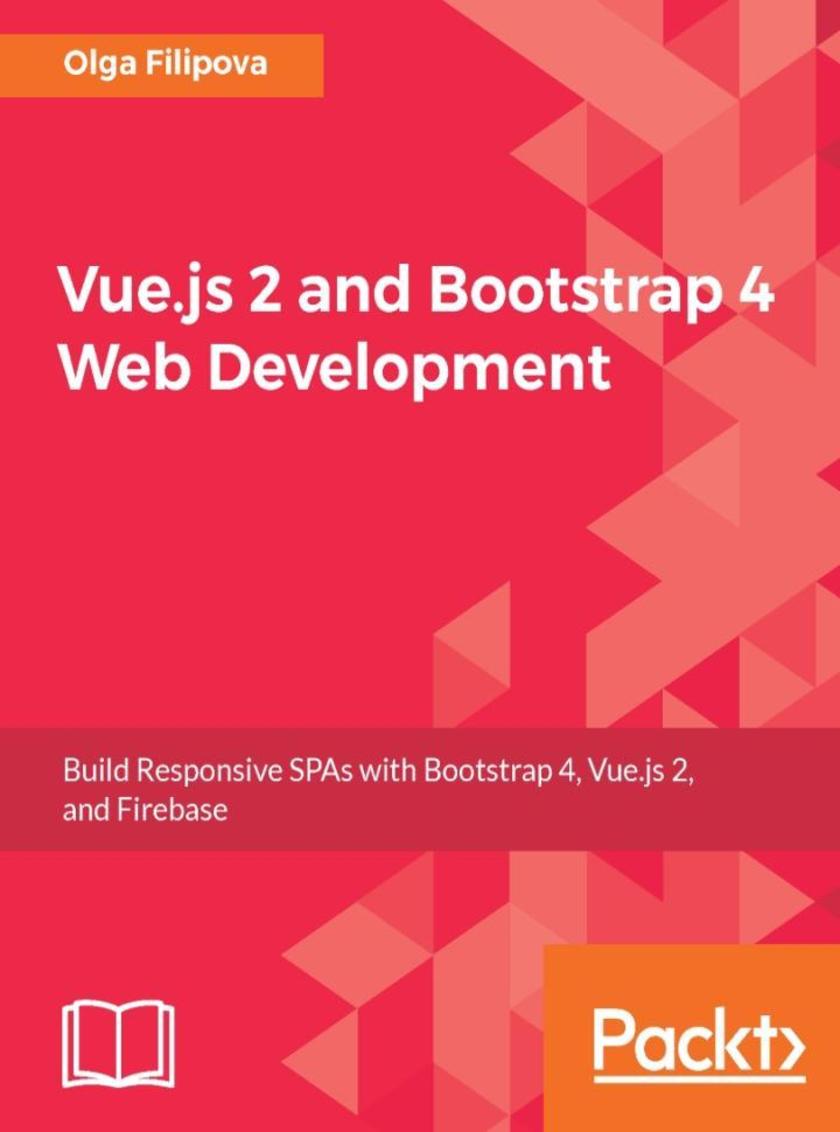
Vue.js 2 and Bootstrap 4 Web Development
¥80.65
Learn how to combine Bootstrap with Vue.js to build responsive web applications. About This Book ? Build applications with a good architecture and clean UI with Vue.js and Bootstrap ? Understand Bootstrap components and learn to integrate them with the Vue.js structure ? Build, deploy, and test your code with various utility tools provided by Vue.js Who This Book Is For This book is for JavaScript programmers who are new to web frameworks and want to start learning it by developing interactive and responsive web applications. What You Will Learn ? Create and build web applications using Vue.js, Webpack, and Nuxt.js ? Combine Bootstrap components with Vue.js' power to enrich your web applications with reusable elements ? Connect the Vuex state management architecture to the Firebase cloud backend to persist and manage application data ? Explore the new grid system of Bootstrap 4 along with the far simpler directives in Vue.js ? Test Vue applications using Jest ? Authenticate your application using Bootstrap's forms, Vue.js' reactivity, and Firebase's authentication API ? Deploy your application using Firebase, which provides Backend as a Service In Detail In this book, we will build a full stack web application right from scratch up to its deployment. We will start by building a small introduction application and then proceed to the creation of a fully functional, dynamic responsive web application called ProFitOro. In this application, we will build a Pomodoro timer combined with office workouts. Besides the Pomodoro timer and ProFitOro workouts will enable authentication and collaborative content management. We will explore topics such as Vue reactive data binding, reusable components, routing, and Vuex store along with its state, actions, mutations, and getters. We will create Vue applications using both webpack and Nuxt.js templates while exploring cool hot Nuxt.js features such as code splitting and server-side rendering. We will use Jest to test this application, and we will even revive some trigonometry from our secondary school! While developing the app, you will go through the new grid system of Bootstrap 4 along with Vue.js’ directives. We will connect Vuex store to the Firebase real-time database, data storage, and authentication APIs and use this data later inside the application’s reactive components. Finally, we will quickly deploy our application using the Firebase hosting mechanism. Style and Approach Step-by-step tutorial
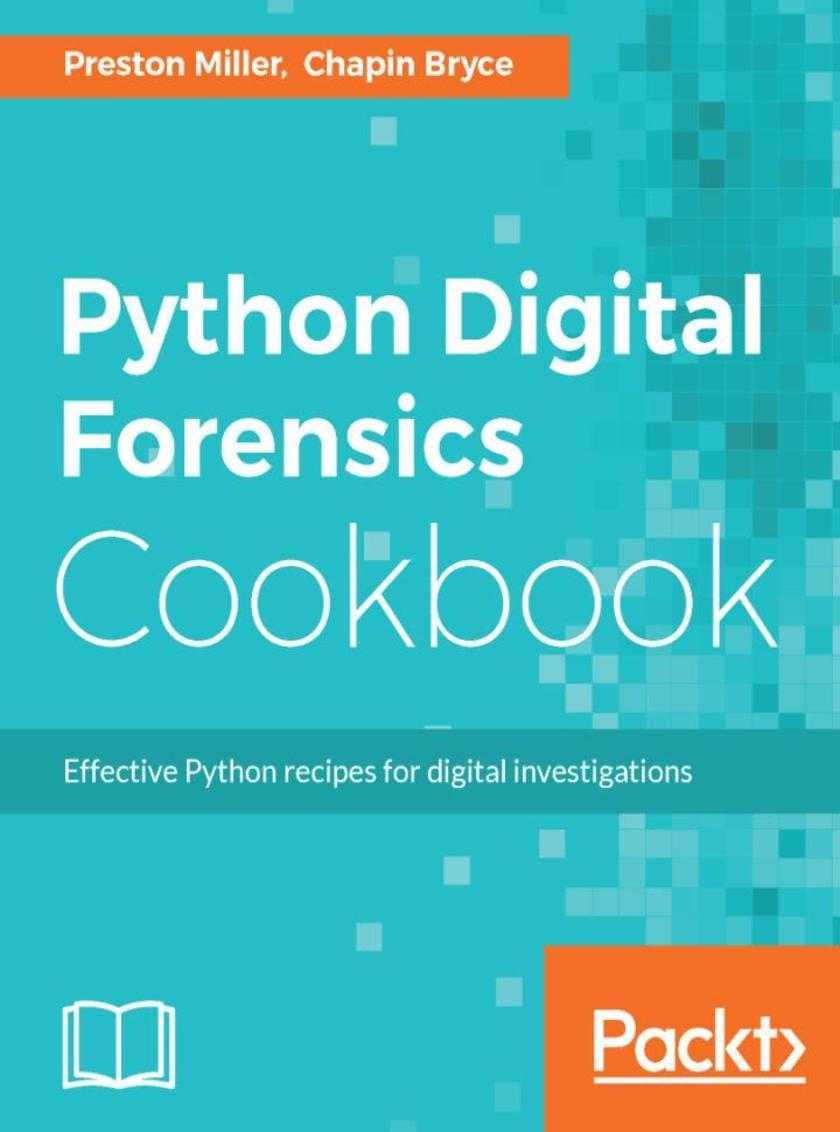
Python Digital Forensics Cookbook
¥80.65
Over 60 recipes to help you learn digital forensics and leverage Python *s to amplify your examinations About This Book ? Develop code that extracts vital information from everyday forensic acquisitions. ? Increase the quality and efficiency of your forensic analysis. ? Leverage the latest resources and capabilities available to the forensic community. Who This Book Is For If you are a digital forensics examiner, cyber security specialist, or analyst at heart, understand the basics of Python, and want to take it to the next level, this is the book for you. Along the way, you will be introduced to a number of libraries suitable for parsing forensic artifacts. Readers will be able to use and build upon the *s we develop to elevate their analysis. What You Will Learn ? Understand how Python can enhance digital forensics and investigations ? Learn to access the contents of, and process, forensic evidence containers ? Explore malware through automated static analysis ? Extract and review message contents from a variety of email formats ? Add depth and context to discovered IP addresses and domains through various Application Program Interfaces (APIs) ? Delve into mobile forensics and recover deleted messages from SQLite databases ? Index large logs into a platform to better query and visualize datasets In Detail Technology plays an increasingly large role in our daily lives and shows no sign of stopping. Now, more than ever, it is paramount that an investigator develops programming expertise to deal with increasingly large datasets. By leveraging the Python recipes explored throughout this book, we make the complex simple, quickly extracting relevant information from large datasets. You will explore, develop, and deploy Python code and libraries to provide meaningful results that can be immediately applied to your investigations. Throughout the Python Digital Forensics Cookbook, recipes include topics such as working with forensic evidence containers, parsing mobile and desktop operating system artifacts, extracting embedded metadata from documents and executables, and identifying indicators of compromise. You will also learn to integrate *s with Application Program Interfaces (APIs) such as VirusTotal and PassiveTotal, and tools such as Axiom, Cellebrite, and EnCase. By the end of the book, you will have a sound understanding of Python and how you can use it to process artifacts in your investigations. Style and approach Our succinct recipes take a no-frills approach to solving common challenges faced in investigations. The code in this book covers a wide range of artifacts and data sources. These examples will help improve the accuracy and efficiency of your analysis—no matter the situation.
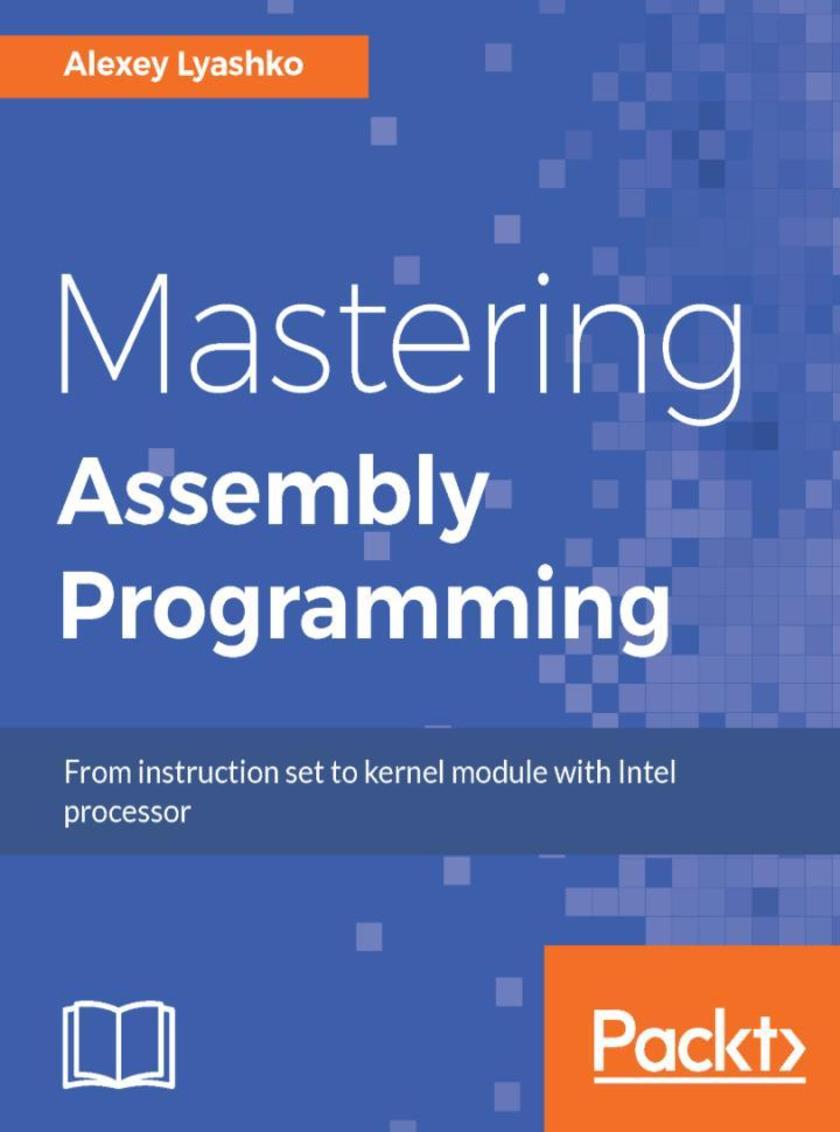
Mastering Assembly Programming
¥80.65
Incorporate the assembly language routines in your high level language applications About This Book ? Understand the Assembly programming concepts and the benefits of examining the AL codes generated from high level languages ? Learn to incorporate the assembly language routines in your high level language applications ? Understand how a CPU works when programming in high level languages Who This Book Is For This book is for developers who would like to learn about Assembly language. Prior programming knowledge of C and C++ is assumed. What You Will Learn ? Obtain deeper understanding of the underlying platform ? Understand binary arithmetic and logic operations ? Create elegant and efficient code in Assembly language ? Understand how to link Assembly code to outer world ? Obtain in-depth understanding of relevant internal mechanisms of Intel CPU ? Write stable, efficient and elegant patches for running processes In Detail The Assembly language is the lowest level human readable programming language on any platform. Knowing the way things are on the Assembly level will help developers design their code in a much more elegant and efficient way. It may be produced by compiling source code from a high-level programming language (such as C/C++) but can also be written from scratch. Assembly code can be converted to machine code using an assembler. The first section of the book starts with setting up the development environment on Windows and Linux, mentioning most common toolchains. The reader is led through the basic structure of CPU and memory, and is presented the most important Assembly instructions through examples for both Windows and Linux, 32 and 64 bits. Then the reader would understand how high level languages are translated into Assembly and then compiled into object code. Finally we will cover patching existing code, either legacy code without sources or a running code in same or remote process. Style and approach This book takes a step-by-step, detailed approach to Comprehensively learning Assembly Programming.
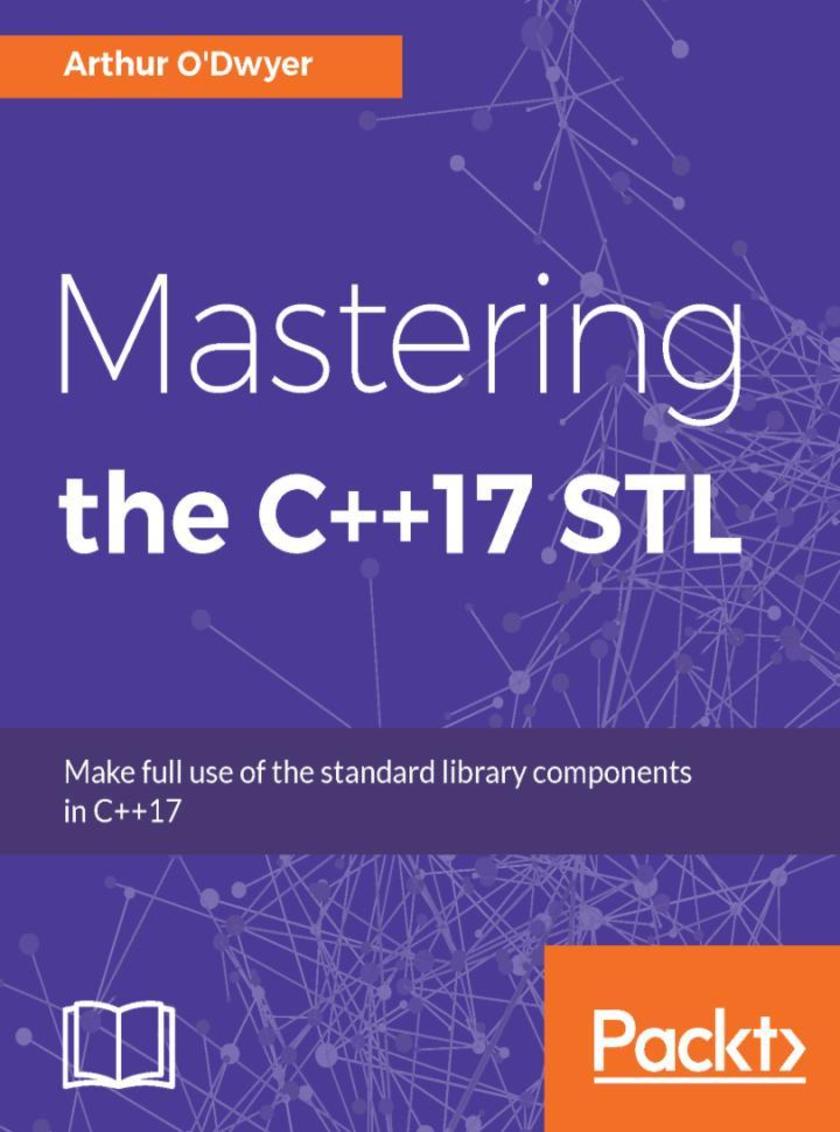
Mastering the C++17 STL
¥80.65
This book breaks down the C++ STL, teaching you how to extract its gems and apply them to your programming. About This Book ? Boost your productivity as a C++ developer with the latest features of C++17 ? Develop high-quality, fast, and portable applications with the varied features of the STL ? Migrate from older versions (C++11, C++14) to C++17 Who This Book Is For This book is for developers who would like to master the C++ STL and make full use of its components. Prior C++ knowledge is assumed. What You Will Learn ? Make your own iterator types, allocators, and thread pools. ? Master every standard container and every standard algorithm. ? Improve your code by replacing new/delete with smart pointers. ? Understand the difference between monomorphic algorithms, polymorphic algorithms, and generic algorithms. ? Learn the meaning and applications of vocabulary type, product type and sum type. In Detail Modern C++ has come a long way since 2011. The latest update, C++17, has just been ratified and several implementations are on the way. This book is your guide to the C++ standard library, including the very latest C++17 features. The book starts by exploring the C++ Standard Template Library in depth. You will learn the key differences between classical polymorphism and generic programming, the foundation of the STL. You will also learn how to use the various algorithms and containers in the STL to suit your programming needs. The next module delves into the tools of modern C++. Here you will learn about algebraic types such as std::optional, vocabulary types such as std::function, smart pointers, and synchronization primitives such as std::atomic and std::mutex. In the final module, you will learn about C++'s support for regular expressions and file I/O. By the end of the book you will be proficient in using the C++17 standard library to implement real programs, and you'll have gained a solid understanding of the library's own internals. Style and approach This book takes a concise but comprehensive approach to explaining and applying the C++ STL, one feature at a time.
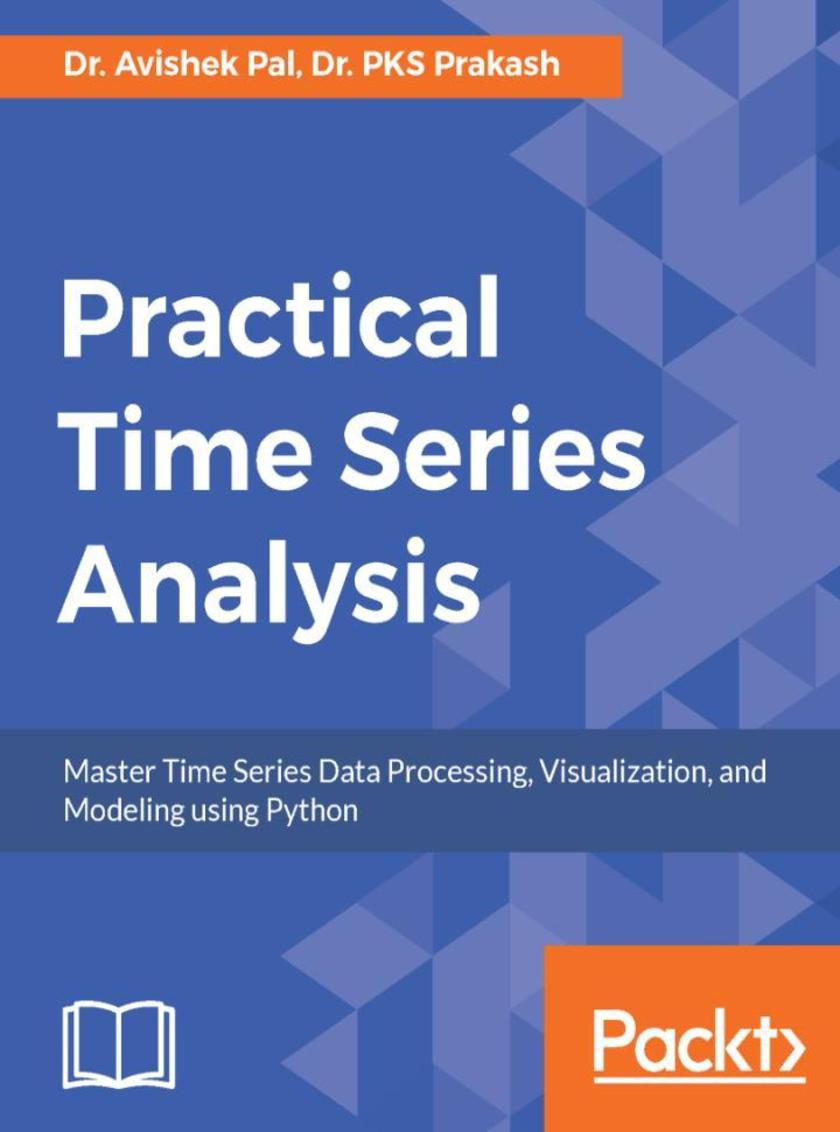
Practical Time Series Analysis
¥80.65
Step by Step guide filled with real world practical examples. About This Book ? Get your first experience with data analysis with one of the most powerful types of analysis—time-series. ? Find patterns in your data and predict the future pattern based on historical data. ? Learn the statistics, theory, and implementation of Time-series methods using this example-rich guide Who This Book Is For This book is for anyone who wants to analyze data over time and/or frequency. A statistical background is necessary to quickly learn the analysis methods. What You Will Learn ? Understand the basic concepts of Time Series Analysis and appreciate its importance for the success of a data science project ? Develop an understanding of loading, exploring, and visualizing time-series data ? Explore auto-correlation and gain knowledge of statistical techniques to deal with non-stationarity time series ? Take advantage of exponential smoothing to tackle noise in time series data ? Learn how to use auto-regressive models to make predictions using time-series data ? Build predictive models on time series using techniques based on auto-regressive moving averages ? Discover recent advancements in deep learning to build accurate forecasting models for time series ? Gain familiarity with the basics of Python as a powerful yet simple to write programming language In Detail Time Series Analysis allows us to analyze data which is generated over a period of time and has sequential interdependencies between the observations. This book describes special mathematical tricks and techniques which are geared towards exploring the internal structures of time series data and generating powerful de*ive and predictive insights. Also, the book is full of real-life examples of time series and their analyses using cutting-edge solutions developed in Python. The book starts with de*ive analysis to create insightful visualizations of internal structures such as trend, seasonality and autocorrelation. Next, the statistical methods of dealing with autocorrelation and non-stationary time series are described. This is followed by exponential smoothing to produce meaningful insights from noisy time series data. At this point, we shift focus towards predictive analysis and introduce autoregressive models such as ARMA and ARIMA for time series forecasting. Later, powerful deep learning methods are presented, to develop accurate forecasting models for complex time series, and under the availability of little domain knowledge. All the topics are illustrated with real-life problem scenarios and their solutions by best-practice implementations in Python. The book concludes with the Appendix, with a brief discussion of programming and solving data science problems using Python. Style and approach This book takes the readers from the basic to advance level of Time series analysis in a very practical and real world use cases.
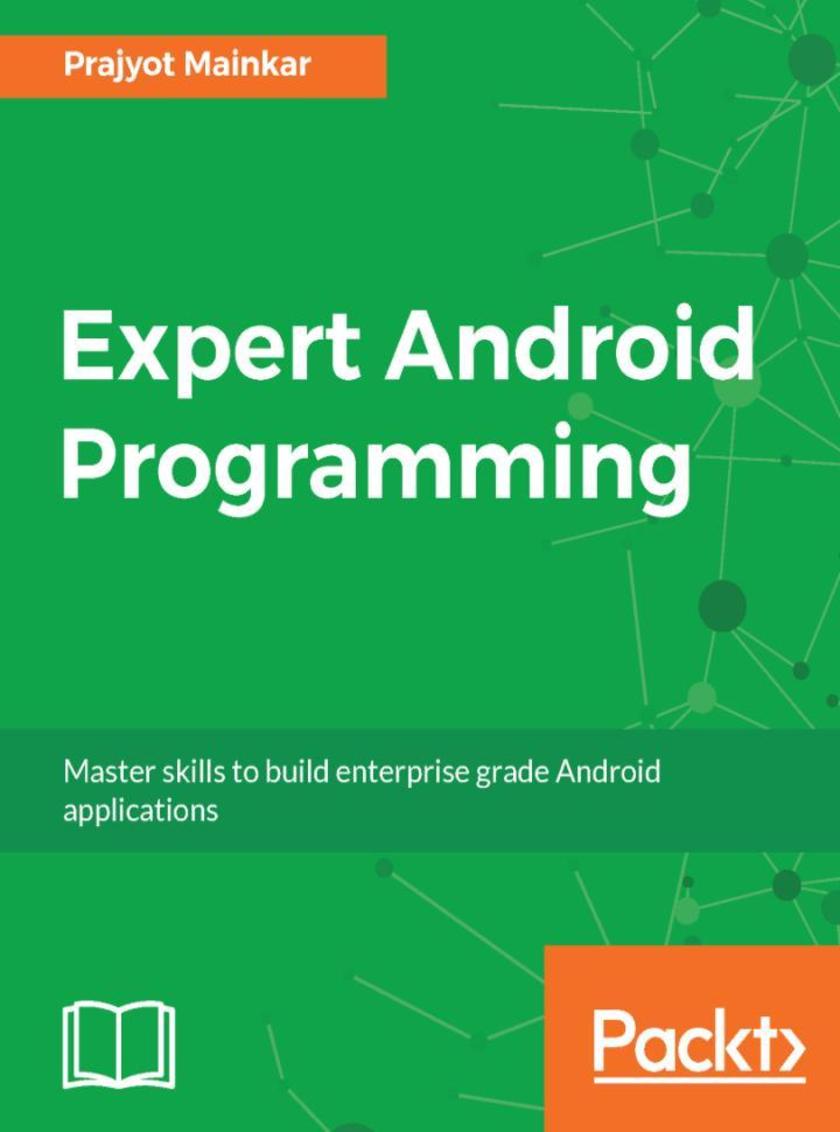
Expert Android Programming
¥80.65
Become a pro with the latest Android SDK and create state of the art applications for Android. About This Book ? Dive deep into Android development with practical hands on examples to help you in each stage. ? Develop smart professional grade apps for the latest Android N version and become a pro android developer. ? Unclog your development highway by utilising the industry standard best practices techniques. Who This Book Is For This book is for mobile developers having some expertise in building android apps and who wish to now take a leap into building complex app such as Zomato, using latest Android N power of Google. What You Will Learn ? Building UI/UX following best industry practices ? Development of Zomato Clone ? Measure and improve app performance ? Improving app using test mechanisms ? Bringing the app live on the play store In Detail Android O brings a number of important changes for the users as well as the developers. If you want to create smart android applications which are fast, lightweight and also highly efficient then this is the book that will solve all your problems. You will create a complex enterprise grade app in this book. You will get a quick refresher of the latest android SDK and how to configure your development environment. Then you will move onto creating app layouts, component and module building, creating smart and efficient UIs. The most important part of a modern day app is how real time they are. With this book, you will create a smooth back-end for your app, ensure dynamic and real time communication between different app layers. As we move on, you will learn to leverage the different Android APIs and create an efficient SQLite data layer for your apps. You will implement effective testing techniques to make your app reliable and robust and finally you will learn to deploy it efficiently. The multiple stages of android development will also be simplified by giving you an industry standard set of best practices. Style and approach This book will have a dedicated practical tutorial style approach with focus on professional & enterprise grade android app development. The examples in each chapter will be modular and will also help you to create a complete fully fueatured android app by the end of the book.
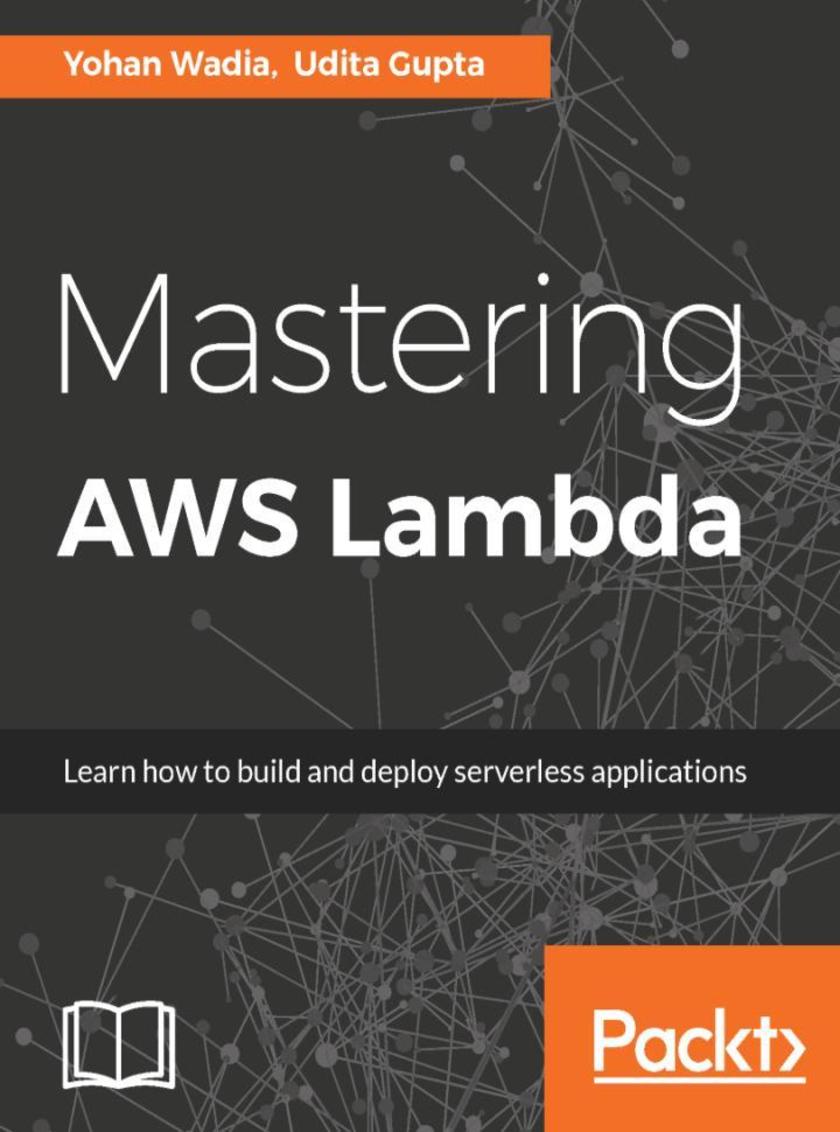
Mastering AWS Lambda
¥80.65
Build cost-effective and highly scalable Serverless applications using AWS Lambda. About This Book ? Leverage AWS Lambda to significantly lower your infrastructure costs and deploy out massively scalable, event-driven systems and applications ? Learn how to design and build Lambda functions using real-world examples and implementation scenarios ? Explore the Serverless ecosystem with a variety of toolsets and AWS services including DynamoDB, API Gateway, and much more! Who This Book Is For If you are a Cloud administrator and/or developer who wishes to explore, learn, and leverage AWS Lambda to design, build, and deploy Serverless applications in the cloud, then this is the book for you! The book assumes you have some prior knowledge and hands-on experience with AWS core services such as EC2, IAM, S3, along with the knowledge to work with any popular programming language such as Node.Js, Java, C#, and so on. What You Will Learn ? Understand the hype, significance, and business benefits of Serverless computing and applications ? Plunge into the Serverless world of AWS Lambda and master its core components and how it works ? Find out how to effectively and efficiently design, develop, and test Lambda functions using Node.js, along with some keen coding insights and best practices ? Explore best practices to effectively monitor and troubleshoot Serverless applications using AWS CloudWatch and other third-party services in the form of Datadog and Loggly ? Quickly design and develop Serverless applications by leveraging AWS Lambda, DynamoDB, and API Gateway using the Serverless Application Framework (SAF) and other AWS services such as Step Functions ? Explore a rich variety of real-world Serverless use cases with Lambda and see how you can apply it to your environments In Detail AWS is recognized as one of the biggest market leaders for cloud computing and why not? It has evolved a lot since the time it started out by providing just basic services such as EC2 and S3 and today; they go all the way from IoT to Machine Learning, Image recognition, Chatbot Frameworks, and much more! One of those recent services that is also gaining a lot of traction is AWS Lambda! Although seemingly simple and easy to use, Lambda is a highly effective and scalable compute service that provides developers with a powerful platform to design and develop Serverless event-driven systems and applications. The book begins with a high-level introduction into the world of Serverless computing and its advantages and use cases, followed by a deep dive into AWS Lambda! You’ll learn what services AWS Lambda provides to developers; how to design, write, and test Lambda functions; as well as monitor and troubleshoot them. The book is designed and accompanied with a vast variety of real-world examples, use cases, and code samples that will enable you to get started on your Serverless applications quickly. By the end of the book, you will have gained all the skills required to work with AWS Lambda services! Style and approach This step-by-step guide will help you build Serverless applications and run Serverless workloads using the AWS Lambda service. You’ll be able to get started with it in a matter of minutes with easy-to-follow code snippets and examples.
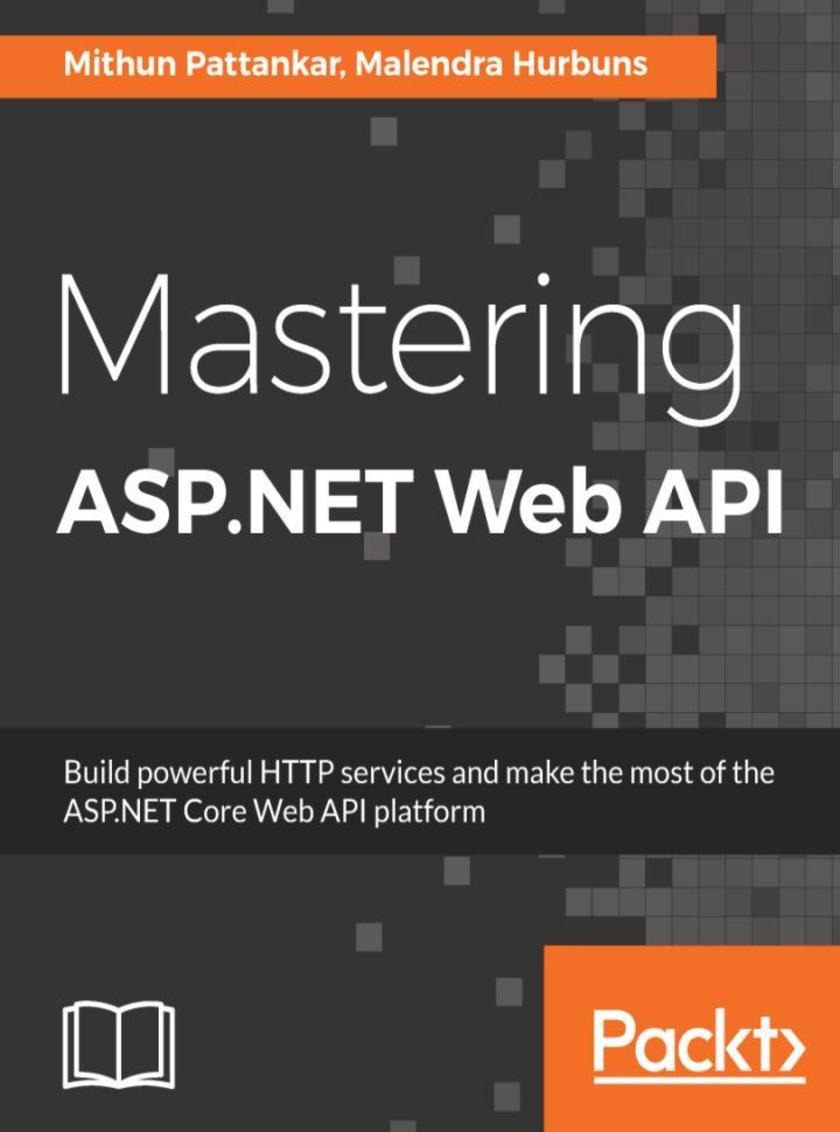
Mastering ASP.NET Web API
¥80.65
Leverage ASP.Net Web API to build professional web services and create powerful applications. About This Book ? Get a comprehensive analysis of the latest specification of ASP.NET Core and all the changes to the underlying platform that you need to know to make the most of the web API ? See an advanced coverage of ASP.NET Core Web API to create robust models for your data, create controllers, and handle routing and security ? This book is packed with key theoretical and practical concepts that can be instantly applied to build professional applications using API with Angular 4, Ionic, and React Who This Book Is For This book is for .Net developers who wants to Master ASP.NET Core (Web API) and have played around with previous ASP.NET Web API a little, but don’t have in-depth knowledge of it. You need to know Visual Studio and C#, and have some HTML, CSS, and JavaScript knowledge. What You Will Learn ? Acquire conceptual and hands-on knowledge of ASP.NET Core (MVC & Web API) ? Learn about HTTP methods, the structure of HTTP content, internet media types, and how servers respond to HTTP requests and their associated HTTP codes ? Explore middleware, filters, routing, and unit testing ? Optimize Web API implementations ? Develop a secure Web API interface ? Deploy Web API projects to various platforms ? Consume your web API in front end application based on Angular 4, Bootstrap, and Ionic ? Implement and explore the current trends in service architecture In Detail Microsoft has unified their main web development platforms. This unification will help develop web applications using various pieces of the ASP.NET platform that can be deployed on both Windows and LINUX. With ASP.NET Core (Web API), it will become easier than ever to build secure HTTP services that can be used from any client. Mastering ASP.NET Web API starts with the building blocks of the ASP.NET Core, then gradually moves on to implementing various HTTP routing strategies in the Web API. We then focus on the key components of building applications that employ the Web API, such as Kestrel, Middleware, Filters, Logging, Security, and Entity Framework.Readers will be introduced to take the TDD approach to write test cases along with the new Visual Studio 2017 live unit testing feature. They will also be introduced to integrate with the database using ORMs. Finally, we explore how the Web API can be consumed in a browser as well as by mobile applications by utilizing Angular 4, Ionic and ReactJS. By the end of this book, you will be able to apply best practices to develop complex Web API, consume them in frontend applications and deploy these applications to a modern hosting infrastructure. Style and approach Using a hands-on approach, we cover both the conceptual as well as the technical aspects of the ASP.NET Core (Web API) framework.
Learning Concurrency in Python
¥80.65
Practically and deeply understand concurrency in Python to write efficient programs About This Book ? Build highly efficient, robust, and concurrent applications ? Work through practical examples that will help you address the challenges of writing concurrent code ? Improve the overall speed of execution in multiprocessor and multicore systems and keep them highly available Who This Book Is For This book is for Python developers who would like to get started with concurrent programming. Readers are expected to have a working knowledge of the Python language, as this book will build on these fundamentals concepts. What You Will Learn ? Explore the concept of threading and multiprocessing in Python ? Understand concurrency with threads ? Manage exceptions in child threads ? Handle the hardest part in a concurrent system — shared resources ? Build concurrent systems with Communicating Sequential Processes (CSP) ? Maintain all concurrent systems and master them ? Apply reactive programming to build concurrent systems ? Use GPU to solve specific problems In Detail Python is a very high level, general purpose language that is utilized heavily in fields such as data science and research, as well as being one of the top choices for general purpose programming for programmers around the world. It features a wide number of powerful, high and low-level libraries and frameworks that complement its delightful syntax and enable Python programmers to create. This book introduces some of the most popular libraries and frameworks and goes in-depth into how you can leverage these libraries for your own high-concurrent, highly-performant Python programs. We'll cover the fundamental concepts of concurrency needed to be able to write your own concurrent and parallel software systems in Python. The book will guide you down the path to mastering Python concurrency, giving you all the necessary hardware and theoretical knowledge. We'll cover concepts such as debugging and exception handling as well as some of the most popular libraries and frameworks that allow you to create event-driven and reactive systems. By the end of the book, you'll have learned the techniques to write incredibly efficient concurrent systems that follow best practices. Style and approach This easy-to-follow guide teaches you new practices and techniques to optimize your code, and then moves toward more advanced ways to effectively write efficient Python code. Small and simple practical examples will help you test the concepts yourself, and you will be able to easily adapt them for any application.


