


 购物车
购物车 个人中心
个人中心
Science and Health, with Key to the Scriptures
¥8.09
According to Wikipedia: "Mary Baker Eddy (born Mary Morse Baker July 16, 1821 – December 3, 1910) was the founder of the Christian Science movement. Deeply religious, she advocated Christian Science as a spiritual practical solution to health and moral issues. She wrote Science and Health with Key to the Scriptures, founded The First Church of Christ, Scientist of Boston in 1879, and several periodicals including The Christian Science Monitor. She took the name Mary Baker Glover from her first marriage and was also known as Mary Baker Glover Eddy or Mary Baker G. Eddy from her third marriage. She did much spiritual teaching, lecturing, and instantaneous healing. Her influence continues to grow through her writings."
The Story of the Outlaw, A Study of the Western Desperado
¥8.09
"A Study Of The Western Desperado, With Historical Narratives Of Famous Outlaws; The Stories Of Noted Border Wars; Vigilante Movements And Armed Conflicts On The Frontier."According to Wikipedia: "Emerson Hough (1857-1923) was an American author, best known for writing western stories. Hough was born in Newton, Iowa, and graduated from the University of Iowa with a law degree. He moved to White Oaks, New Mexico, and practiced law there but eventually turned to literary work by taking camping trips and writing about them for publication. He is best known as a novelist, writing The Mississippi Bubble as well as The Covered Wagon, about Oregon Trail pioneers, which later became successful as a movie, running 59 weeks at the Criterion Theater in New York City, passing the record set by Birth of a Nation. Other notable works included Story of the Cowboy, Way of the West, Singing Mouse Stories, and Passing of the Frontier, and writing the "Out-of-Doors" column for the Saturday Evening Post."
From Sail to Steam
¥8.09
Classic work of history. According to Wikipedia: "Alfred Thayer Mahan (September 27, 1840 - December 1, 1914) was a United States Navy officer, geostrategist, and educator. His ideas on the importance of sea power influenced navies around the world, and helped prompt naval buildups before World War I. Several ships were named USS Mahan, including the lead vessel of a class of destroyers. His research into naval History led to his most important work, The Influence of Seapower Upon History, 1660-1783, published in 1890."

The Oregon Trail
¥8.09
Classic work of history. According to Wikipedia: "Francis Parkman (September 16, 1823 - November 8, 1893) was an American historian, best known as author of The Oregon Trail: Sketches of Prairie and Rocky-Mountain Life and his monumental seven volume France and England in North America. These works are still valued as history and especially as literature, although the biases of his work have met with criticism. "
Half-Century of Conflict
¥8.09
Part 6 of the Parkman series "France and England in North America". According to Wikipedia: "Francis Parkman (September 16, 1823 - November 8, 1893) was an American historian, best known as author of The Oregon Trail: Sketches of Prairie and Rocky-Mountain Life and his monumental seven volume France and England in North America. These works are still valued as history and especially as literature, although the biases of his work have met with criticism. "
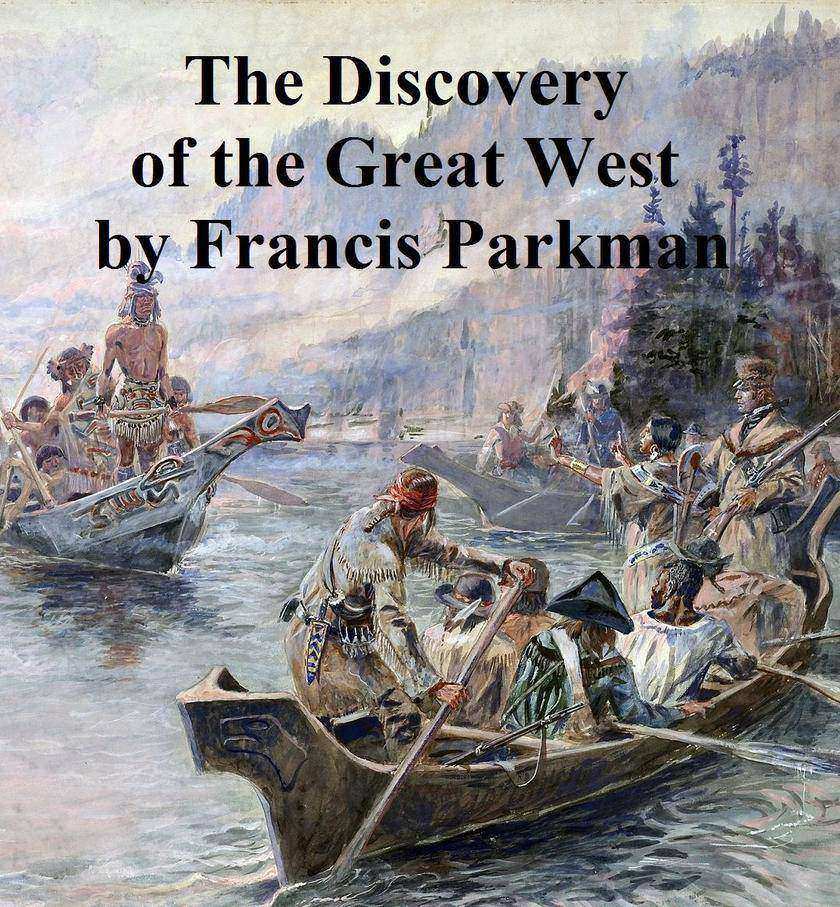
Discovery of the Great West
¥8.09
Part three of the series of historical narratives England and France in North America. According to Wikipedia: "Francis Parkman (September 16, 1823 - November 8, 1893) was an American historian, best known as author of The Oregon Trail: Sketches of Prairie and Rocky-Mountain Life and his monumental seven volume France and England in North America. These works are still valued as history and especially as literature, although the biases of his work have met with criticism. "
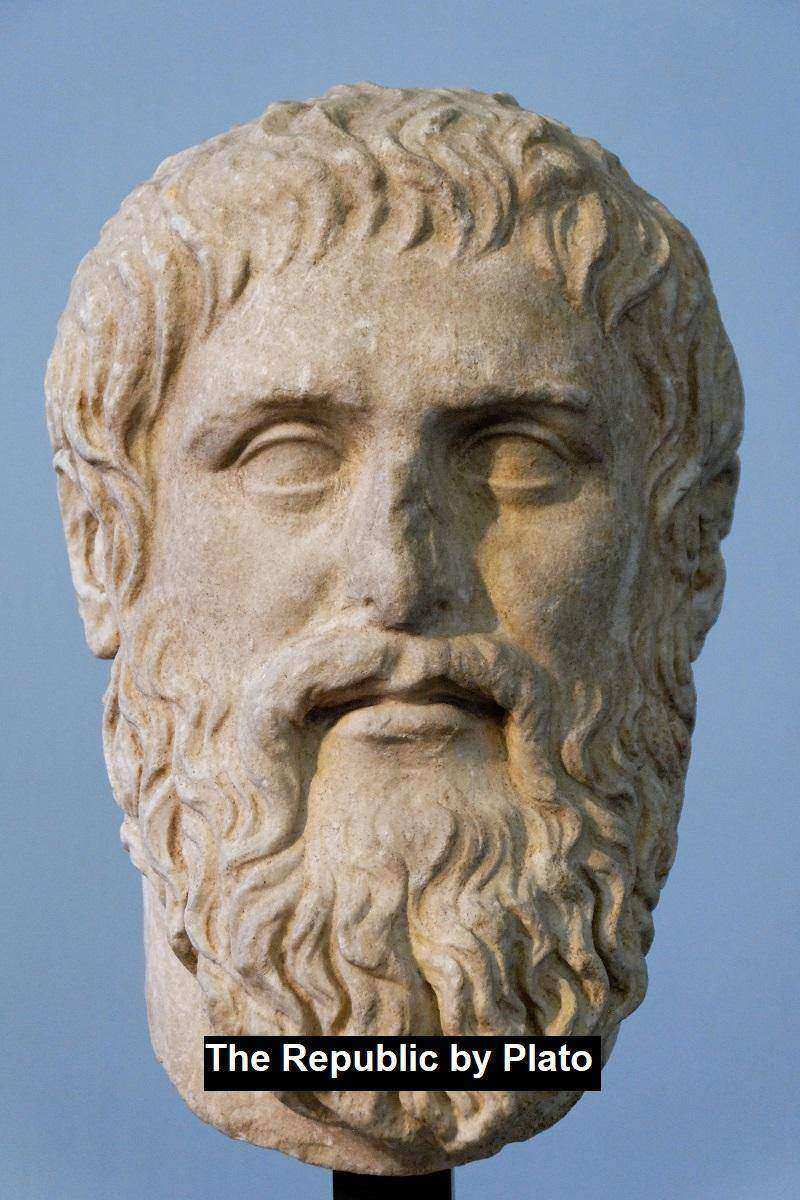
The Republic
¥8.09
Plato's best-known dialogue. According to Wikipedia: "The Republic is a Socratic dialogue written by Plato around 380 BC concerning the definition of justice and the order and character of the just city-state and the just man. The dramatic date of the dialogue has been much debated and though it must take place some time during the Peloponnesian War, "there would be jarring anachronisms if any of the candidate specific dates between 432 and 404 were assigned".[2] It is Plato's best-known work and has proven to be one of the most intellectually and historically influential works of philosophy and political theory. In it, Socrates along with various Athenians and foreigners discuss the meaning of justice and examine whether or not the just man is happier than the unjust man by considering a series of different cities coming into existence "in speech", culminating in a city (Kallipolis) ruled by philosopher-kings; and by examining the nature of existing regimes. The participants also discuss the theory of forms, the immortality of the soul, and the roles of the philosopher and of poetry in society."
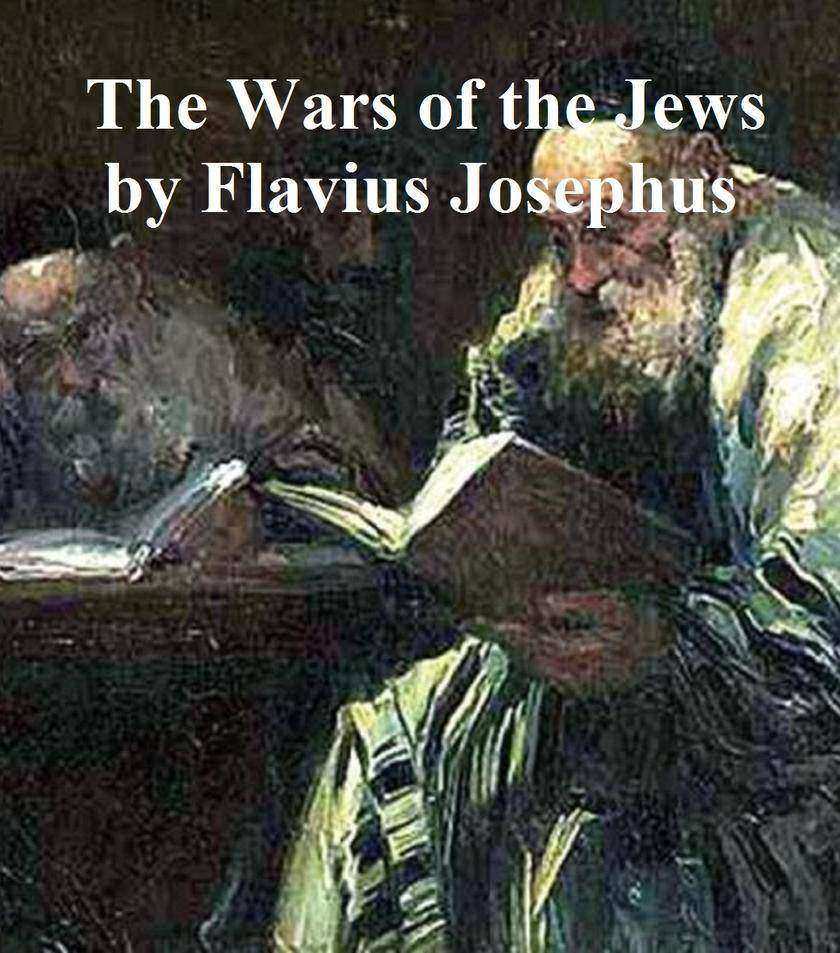
The Wars of the Jews Or History of the Destruction of Jerusalem
¥8.09
The classic first-hand account of the Roman conquest of Israel. The Preface begins: "Whereas the war which the Jews made with the Romans hath been the greatest of all those, not only that have been in our times, but, in a manner, of those that ever were heard of; both of those wherein cities have fought against cities, or nations against nations; while some men who were not concerned in the affairs themselves have gotten together vain and contradictory stories by hearsay, and have written them down after a sophistical manner; and while those that were there present have given false accounts of things, and this either out of a humor of flattery to the Romans, or of hatred towards the Jews; and while their writings contain sometimes accusations, and sometimes encomiums, but no where the accurate truth of the facts; I have proposed to myself, for the sake of such as live under the government of the Romans, to translate those books into the Greek tongue, which I formerly composed in the language of our country." According to Wikipedia: "The Jewish War or Judean War (in full Flavius Josephus's Books of the History of the Jewish War against the Romans) also referred to in English as The Wars of the Jews, is a book written by Josephus, a Roman-Jewish historian of the 1st century. It is a description of Jewish history from the capture of Jerusalem by the Seleucid ruler Antiochus IV Epiphanes in 164 BC to the fall and destruction of Jerusalem in the First Jewish–Roman War in 70 AD. The book was written about 75 AD, originally in Josephus's "paternal tongue", probably Aramaic, though this version has not survived. It was later translated into Greek, probably under the supervision of Josephus himself."
The Call of Cthulhu
¥8.09
"The Call of Cthulhu" is one of H. P. Lovecraft's best-known short stories. Written in the summer of 1926, it was first published in Weird Tales, February 1928. It is the only story written by Lovecraft in which the extraterrestrial entity Cthulhu himself makes a major appearance. It is written in a documentary style, with three independent narratives linked together by the device of a narrator discovering notes left by a deceased relative. The narrator pieces together the whole truth and disturbing significance of the information he possesses, illustrating the story's first line: "The most merciful thing in the world, I think, is the inability of the human mind to correlate all its contents. We live on a placid island of ignorance in the midst of black seas of infinity; and it was not meant that we should voyage far."

Three Sermons and Prayers
¥8.09
According to Wikipedia: "Jonathan Swift (30 November 1667 – 19 October 1745) was an Anglo-Irish satirist, essayist, political pamphleteer (first for the Whigs, then for the Tories), poet and cleric who became Dean of St. Patrick's Cathedral, Dublin. He is remembered for works such as Gulliver's Travels, A Modest Proposal, A Journal to Stella, Drapier's Letters, The Battle of the Books, An Argument Against Abolishing Christianity, and A Tale of a Tub. Swift is probably the foremost prose satirist in the English language, and is less well known for his poetry. Swift originally published all of his works under pseudonyms—such as Lemuel Gulliver, Isaac Bickerstaff, M.B. Drapier—or anonymously. He is also known for being a master of two styles of satire: the Horatian and Juvenalian styles."
Salvation
¥8.09
According to Wikipedia: "Lewis Sperry Chafer (February 27, 1871 – August 22, 1952) was the founder and first president of Dallas Theological Seminary, and an influential founding member of modern Christian Dispensationalism.
No and Yes
¥8.09
According to Wikipedia: "Mary Baker Eddy (born Mary Morse Baker July 16, 1821 – December 3, 1910) was the founder of the Christian Science movement. Deeply religious, she advocated Christian Science as a spiritual practical solution to health and moral issues. She wrote Science and Health with Key to the Scriptures, founded The First Church of Christ, Scientist of Boston in 1879, and several periodicals including The Christian Science Monitor. She took the name Mary Baker Glover from her first marriage and was also known as Mary Baker Glover Eddy or Mary Baker G. Eddy from her third marriage. She did much spiritual teaching, lecturing, and instantaneous healing. Her influence continues to grow through her writings."

Matthew Henry's Concise Commentary on the Bible
¥8.09
According to Wikipedia: "Matthew Henry (18 October 1662 – 22 June 1714), was an English non-conformist clergyman. He was born at Broad Oak, a farmhouse on the borders of Flintshire and Shropshire. His father, Philip Henry, had just been ejected by the Act of Uniformity 1662. Unlike most of his fellow-sufferers, Philip possessed some private means, and was thus able to give his son a good education. Matthew went first to a school at Islington, and then to Gray's Inn. He soon gave up his legal studies for theology, and in 1687 became minister of a Presbyterian congregation at Chester. He moved again in 1712 to Mare Street, Hackney. Two years later (22 June 1714), he died suddenly of apoplexy at the Queen's Aid House (41 High Street) in Nantwich while on a journey from Chester to London. Henry's well-known Exposition of the Old and New Testaments (1708–1710) is a commentary of a practical and devotional rather than of a critical kind, covering the whole of the Old Testament, and the Gospels and Acts in the New Testament. After the author's death, the work was finished by a number of ministers, and edited by G. Burder and John Hughes in 1811. Not a work of textual criticism, its attempt at good sense, discrimination, its high moral tone and simple piety with practical application, combined with the well-sustained flow of its English style, made it one of the most popular works of its type. Matthew Henry's six volume Complete Commentary, originally published in 1706, provides an exhaustive verse by verse study of the Bible. His commentaries are still in use to this day. Henry's commentaries are primarily exegetical, dealing with the scripture text as presented. Henry's prime intention was explanation, not translation or textual research."
Commenting and Commentaries
¥8.09
Addressed to the students of The Pastors' College, Metropolitan Tabernacle, and first published in 1890. Spurgeon was a Baptist preacher in England, known as "the Prince of Preachers". According to Wikipedia: "Charles Haddon Spurgeon, commonly C.H. Spurgeon, ( 1834 – 1892) was a British Reformed Baptist preacher who remains highly influential among Christians of different denominations, among whom he is still known as the "Prince of Preachers." He also founded the charity organization now known as Spurgeon's, that works worldwide with families and children, as well as a famous theological college which after his death was called after him: Spurgeon's College. Spurgeon was a prolific author of many types of works including sermons, an autobiography, a commentary, books on prayer, a devotional, a magazine, and more. Many sermons were transcribed as he spoke and were translated into many languages during his lifetime. Arguably, no other author, Christian or otherwise, has more material in print than C.H. Spurgeon."
The Works of Jonathan Edwards
¥8.09
The complete works. A massive tome. According to Wikipedia: "Jonathan Edwards (October 5, 1703 – March 22, 1758) was a colonial American Congregational preacher, theologian, and missionary to Native Americans. Edwards "is widely acknowledged to be America's most important and original philosophical theologian". His work is very broad in scope, but he is often associated with his defense of Calvinist theology, the metaphysics of theological determinism, and the Puritan heritage. His famous sermon "Sinners in the Hands of an Angry God," emphasized the just wrath of God against sin and contrasted it with the provision of God for salvation; the intensity of his preaching sometimes resulted in members of the audience fainting, swooning, and other more obtrusive reactions. The swooning and other behaviors in his audience caught him up in a controversy over "bodily effects" of the Holy Spirit's presence."
Thoughts of the Emperor Marcus Aurelius Antoninus
¥8.09
According to Wikipedia: "Marcus Aurelius (26 April 121 – 17 March 180 AD), was Roman Emperor from 161 to 180 AD. He ruled with Lucius Verus as co-emperor from 161 until Verus' death in 169. He was the last of the "Five Good Emperors", and is also considered one of the most important Stoic philosophers... Marcus Aurelius' Stoic tome Meditations, written in Greek while on campaign between 170 and 180, is still revered as a literary monument to a philosophy of service and duty, describing how to find and preserve equanimity in the midst of conflict by following nature as a source of guidance and inspiration."
Loves of Krishna
¥8.09
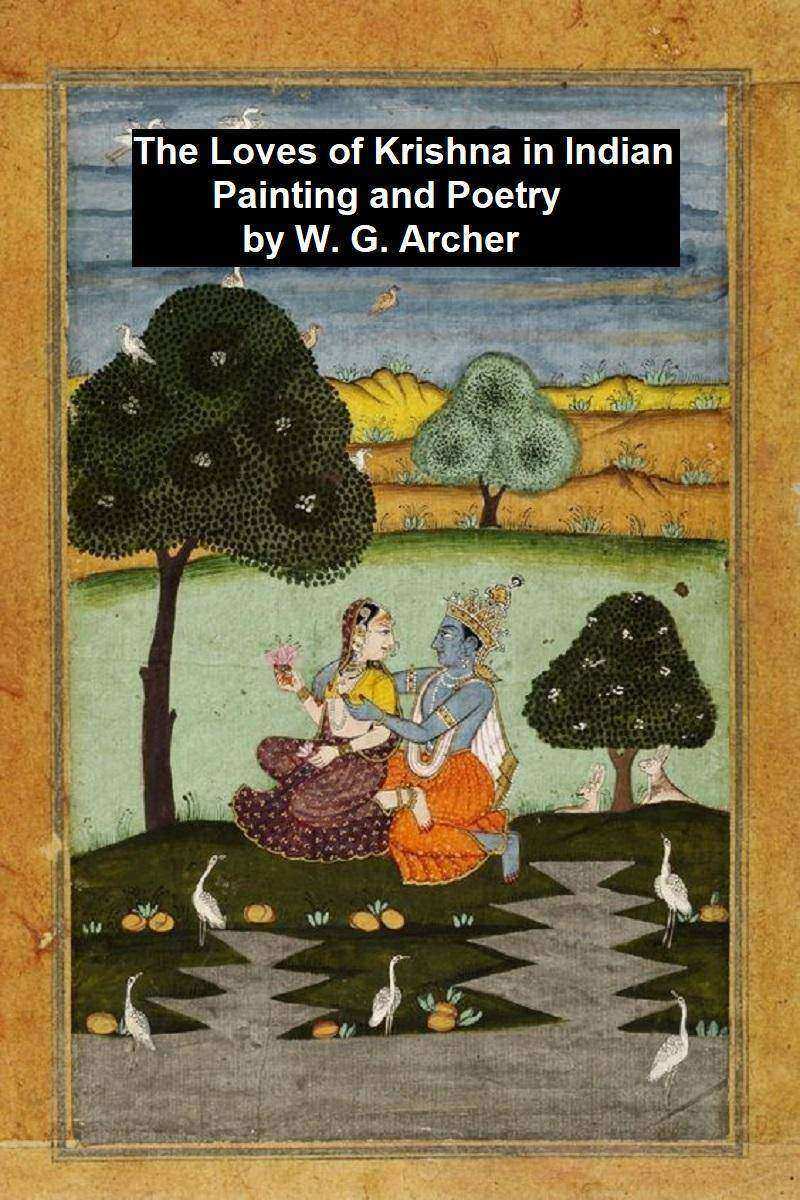
The Introduction explains: "During the twentieth century, a certain type of Indian painting began to fascinate the West. Unlike Mughal art, it was a product of Hindu courts in Rajasthan and the Punjab Hills and unlike Mughal painting, its chief concern was with the varied phases of romance. Ladies would be shown brooding in their chambers as storm clouds mounted in the sky. A girl might be portrayed desperately fondling a plantain tree, gripping a pet falcon, the symbol of her lover, or hurrying through the rainy darkness intent only on reaching a longed-for tryst. A prince would appear lying on a terrace, his outstretched arms striving vainly to detain a calm beauty or welcoming with delight a bashful girl as she slowly advanced. In all these pictures, romantic love was treated as the highest good and physical passion was interpreted with a freshness and innocence unequalled in the world's art."

The Will to Believe and Other Essays in Popular Philosophy
¥8.09
According to Wikipedia: ""The Will to Believe" is a lecture by William James, first published in 1896, which defends, in certain cases, the adoption of a belief without prior evidence of its truth. In particular, James is concerned in this lecture about defending the rationality of religious faith even lacking sufficient evidence of religious truth. James' central argument in "The Will to Believe" hinges on the idea that access to the evidence for whether or not certain beliefs are true depends crucially upon first adopting those beliefs without evidence. As an example, James argues that it can be rational to have unsupported faith in one's own ability to accomplish tasks that require confidence. Importantly, James points out that this is the case even for pursuing scientific inquiry. James then argues that like belief in one's own ability to accomplish a difficult task, religious faith can also be rational even if one at the time lacks evidence for the truth of one's religious belief.
The History of Rome
¥8.09
Mommsen's history of the Roman Republic in five volumes. These volumes cover from the founding of Rome up to the disintegration of the First Triumvirate (Caesar, Pompey, Crassus). The author cites dates in the Roman style, AUC, from the founding of the city in 753 BC. A table at the end shows modern-day equivalents. According to Wikipedia, Mommsen is "generally regarded as the greatest classicist of the 19th century." This work complements Gibbon's "Decline and Fall of the Roman Empire".
The Vital Message
¥8.09
Work of spiritualism by the author of Sherlock Holmes. According to the Preface: "In "The New Revelation" the first dawn of the coming change has been described. In "The Vital Message" the sun has risen higher, and one sees more clearly and broadly what our new relations with the Unseen may be. As I look into the future of the human race I am reminded of how once, from amid the bleak chaos of rock and snow at the head of an Alpine pass, I looked down upon the far stretching view of Lombardy, shimmering in the sunshine and extending in one splendid panorama of blue lakes and green rolling hills until it melted into the golden haze which draped the far horizon. Such a promised land is at our very feet which, when we attain it, will make our present civilisation seem barren and uncouth. Already our vanguard is well over the pass. Nothing can now prevent us from reaching that wonderful land which stretches so clearly before those eyes which are opened to see it."
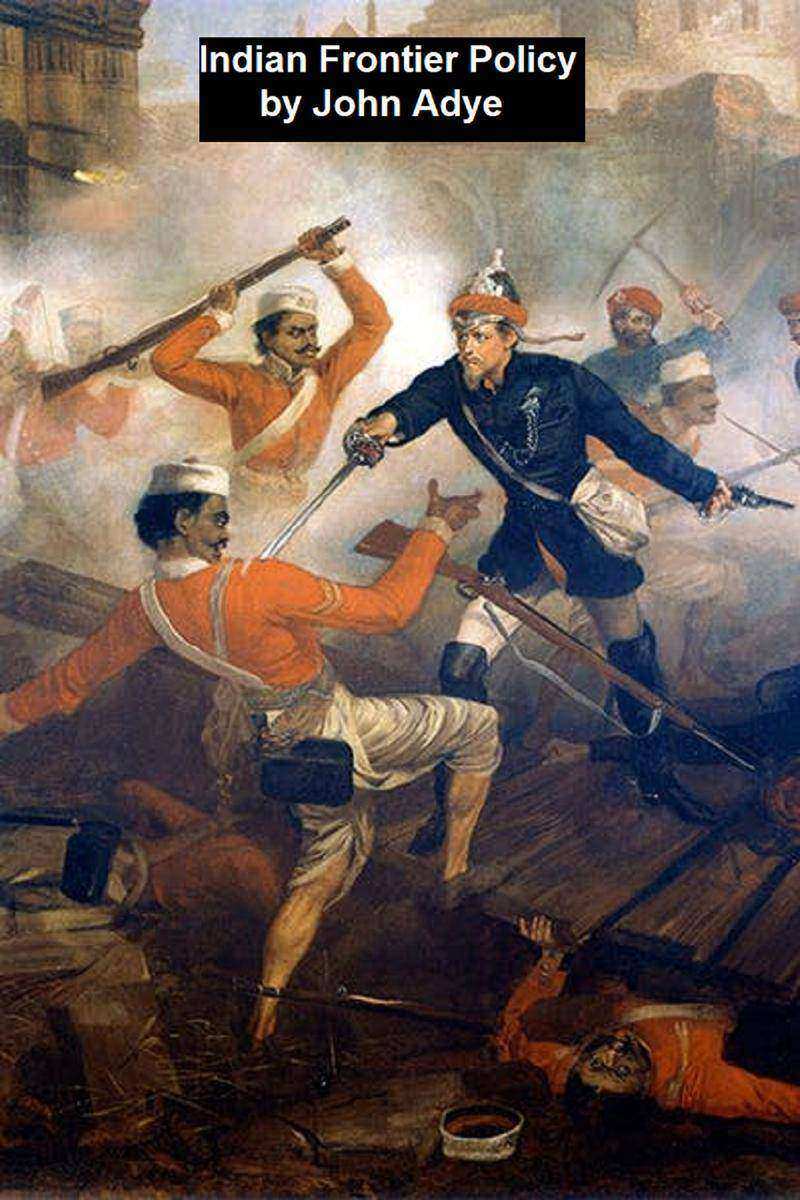
Indian Frontier Policy
¥8.09
According to Wikipedia: "General Sir John Miller Adye GCB (1 November 1819 – 26 August 1900) was a British general and amateur artist." According to the Preface: "The subject of our policy on the North-West frontier of India is one of great importance, as affecting the general welfare of our Eastern Empire, and is specially interesting at the present time, when military operations on a considerable scale are being conducted against a combination of the independent tribes along the frontier. It must be understood that the present condition of affairs is no mere sudden outbreak on the part of our turbulent neighbours. Its causes lie far deeper, and are the consequences of events in bygone years."


