


 购物车
购物车 个人中心
个人中心
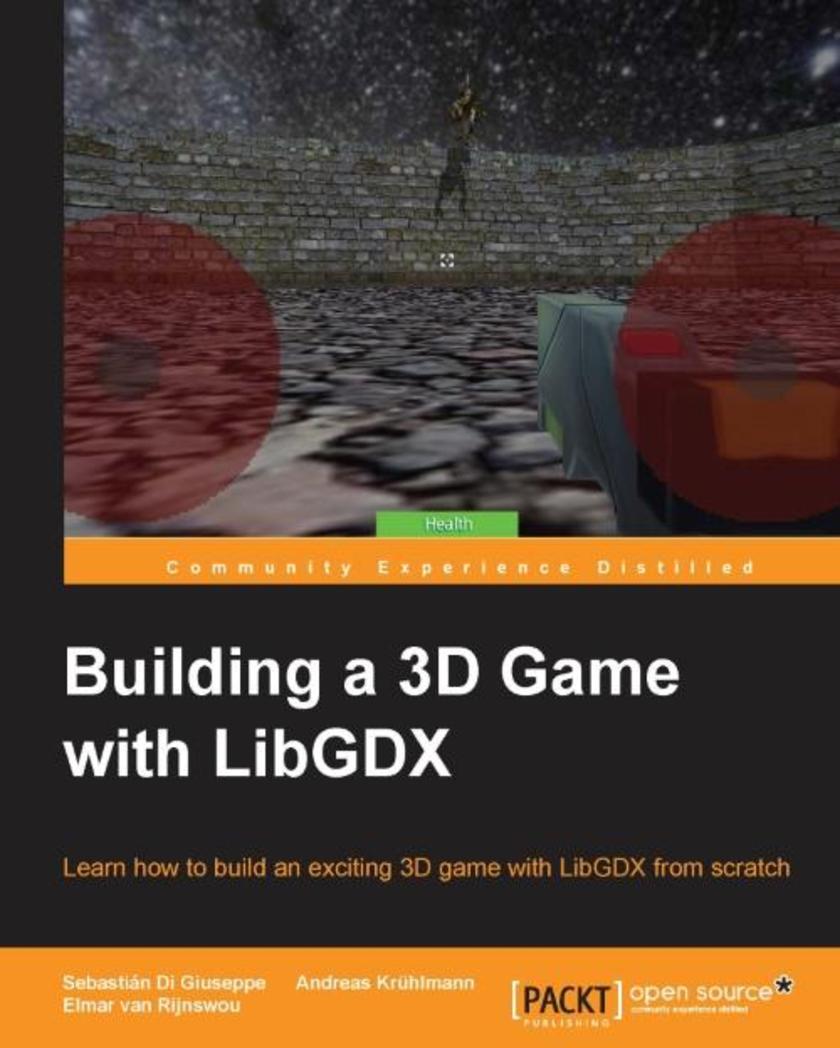
Building a 3D Game with LibGDX
¥54.49
Learn how to build an exciting 3D game with LibGDX from scratch About This Book Implement an exhaustive list of features that LibGDX unleashes to build your 3D game. Write, test, and debug your application on your desktop and deploy them on multiple platforms. Gain a clear understanding of the physics behind LibGDX and libraries like OpenGL and WebGL that make up LibGDX. Who This Book Is For If you are a game developer or enthusiasts who want to build 3D games with LibGDX, then this book is for you. A basic knowledge of LibGDX and Java programming is appreciated. What You Will Learn Learn the potential of LibGDX in game development Understand the LibGDX architecture and explore platform limitation and variations Explore the various approaches for game development using LibGDX Learn about the common mistakes and possible solutions of development Discover the 3D workflow with Blender and how it works with LibGDX Implement 3D models along with textures and animations into your games Familiarize yourself with Scene2D and its potential to boost your game’s design In Detail LibGDX is a hugely popular open source, cross-platform, Java-based game development framework built for the demands of cross-platform game development. This book will teach readers how the LibGDX framework uses its 3D rendering API with the OpenGL wrapper, in combination with Bullet Physics, 3D Particles, and Shaders to develop and deploy a game application to different platforms You will start off with the basic Intellij environment, workflow and set up a LibGDX project with necessary APIs for 3D development. You will then go through LibGDX’s 3D rendering API main features and talk about the camera used for 3D. Our next step is to put everything together to build a basic 3D game with Shapes, including basic gameplay mechanics and basic UI. Next you will go through modeling, rigging, and animation in Blender. We will then talk about refining mechanics, new input implementations, implementing enemy 3D models, mechanics, and gameplay balancing. The later part of this title will help you to manage secondary resources like audio, music and add 3D particles in the game to make the game more realistic. You will finally test and deploy the app on a multitude of different platforms, ready to start developing your own titles how you want! Style and approach A step by step guide on building a 3D game with LibGDX and implementing an exhaustive list of features that you would wish to incorporate into your 3D game
Kibana 7 Quick Start Guide
¥54.49
A quick start guide to visualize your Elasticsearch data Key Features * Your hands-on guide to visualizing the Elasticsearch data as well as navigating the Elastic stack * Work with different Kibana plugins and create effective machine learning jobs using Kibana * Build effective dashboards and reports without any hassle Book Description The Elastic Stack is growing rapidly and, day by day, additional tools are being added to make it more effective. This book endeavors to explain all the important aspects of Kibana, which is essential for utilizing its full potential. This book covers the core concepts of Kibana, with chapters set out in a coherent manner so that readers can advance their learning in a step-by-step manner. The focus is on a practical approach, thereby enabling the reader to apply those examples in real time for a better understanding of the concepts and to provide them with the correct skills in relation to the tool. With its succinct explanations, it is quite easy for a reader to use this book as a reference guide for learning basic to advanced implementations of Kibana. The practical examples, such as the creation of Kibana dashboards from CSV data, application RDBMS data, system metrics data, log file data, APM agents, and search results, can provide readers with a number of different drop-off points from where they can fetch any type of data into Kibana for the purpose of analysis or dashboarding. What you will learn * Explore how Logstash is configured to fetch CSV data * Understand how to create index patterns in Kibana * Become familiar with how to apply filters on data * Discover how to create ML jobs * Explore how to analyze APM data from APM agents * Get to grips with how to save, share, inspect, and edit visualizations * Understand how to find an anomaly in data Who this book is for Kibana 7 Quick Start Guide is for developers new to Kibana who want to learn the fundamentals of using the tool for visualization, as well as existing Elastic developers.
Hands-On Java Deep Learning for Computer Vision
¥54.49
Leverage the power of Java and deep learning to build production-grade Computer Vision applications Key Features * Build real-world Computer Vision applications using the power of neural networks * Implement image classification, object detection, and face recognition * Know best practices on effectively building and deploying deep learning models in Java Book Description Although machine learning is an exciting world to explore, you may feel confused by all of its theoretical aspects. As a Java developer, you will be used to telling the computer exactly what to do, instead of being shown how data is generated; this causes many developers to struggle to adapt to machine learning. The goal of this book is to walk you through the process of efficiently training machine learning and deep learning models for Computer Vision using the most up-to-date techniques. The book is designed to familiarize you with neural networks, enabling you to train them efficiently, customize existing state-of-the-art architectures, build real-world Java applications, and get great results in a short space of time. You will build real-world Computer Vision applications, ranging from a simple Java handwritten digit recognition model to real-time Java autonomous car driving systems and face recognition models. By the end of this book, you will have mastered the best practices and modern techniques needed to build advanced Computer Vision Java applications and achieve production-grade accuracy. What you will learn * Discover neural networks and their applications in Computer Vision * Explore the popular Java frameworks and libraries for deep learning * Build deep neural networks in Java * Implement an end-to-end image classification application in Java * Perform real-time video object detection using deep learning * Enhance performance and deploy applications for production Who this book is for This book is for data scientists, machine learning developers and deep learning practitioners with Java knowledge who want to implement machine learning and deep neural networks in the computer vision domain. You will need to have a basic knowledge of Java programming.
Create React App 2 Quick Start Guide
¥54.49
Integrate your React applications with React to build efficient web services. Key Features * Learn React by building applications with Create React App * Create interactive UIs exploring the latest feature of CRA 2.0 * Build Progressive Web Applications for a more seamless web Book Description If you're a power user and you aren’t happy always reusing default configurations, from previous applications with each new application, then all you need is Create React App (CRA), a tool in the React ecosystem designed to help you create boilerplate code for building a web frontend. This book will help you use CRA to write React programs without significant configuration-related difficulties. With this quick start guide, you will integrate your applications with React to build efficient professional web services.You will learn to design UIs with the features of CRA and template your React applications. By the end of the book, you will be sufficiently skilled to be able to build faster and effective React apps using CRA. What you will learn * Become familiar with React by building applications with Create React App * Make your frontend development hassle free * Create interactive UIs exploring the latest features of CRA 2 * Build modern, React projects with, SASS,and progressive web applications * Develop proxy backend servers and simulate interaction with a full backend * Keep your application fully tested and maintain confidence in your project Who this book is for The book is intended for the web developers who want to jump into building great frontend with React using easy templating solutions.
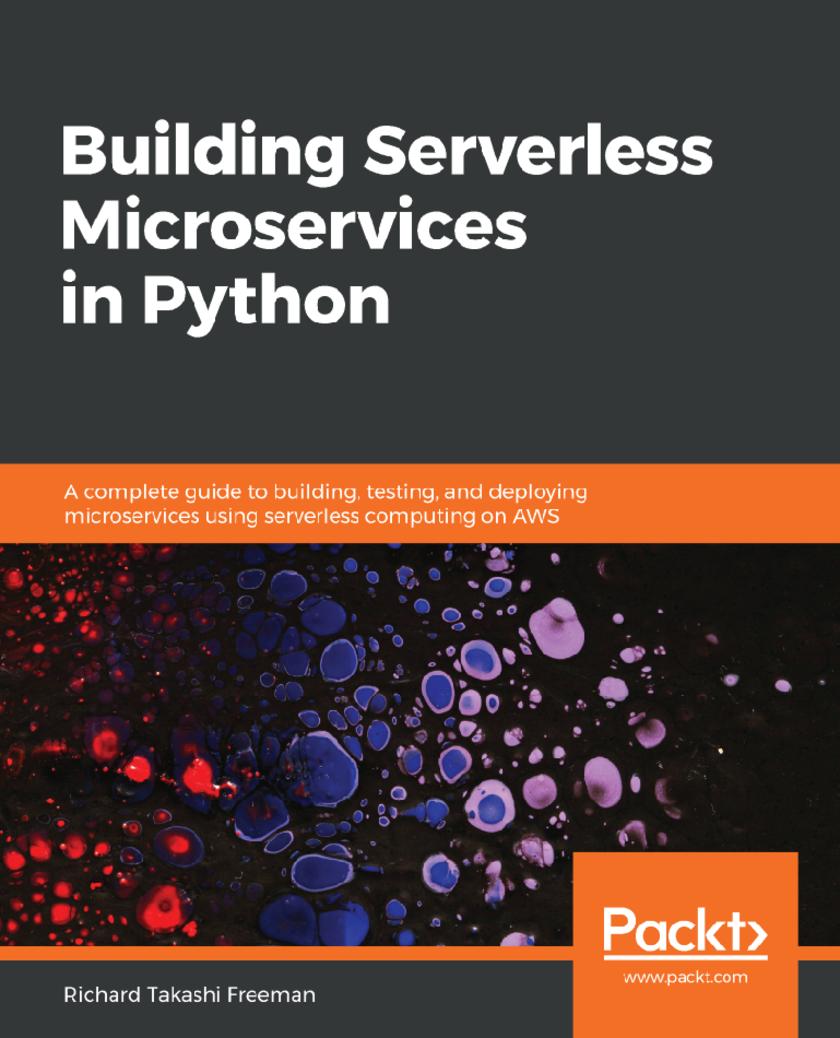
Building Serverless Microservices in Python
¥54.49
A practical guide for developing end-to-end serverless microservices in Python for developers, DevOps, and architects. Key Features * Create a secure, cost-effective, and scalable serverless data API * Use identity management and authentication for a user-specific and secure web application * Go beyond traditional web hosting to explore the full range of cloud hosting options Book Description Over the last few years, there has been a massive shift from monolithic architecture to microservices, thanks to their small and independent deployments that allow increased flexibility and agile delivery. Traditionally, virtual machines and containers were the principal mediums for deploying microservices, but they involved a lot of operational effort, configuration, and maintenance. More recently, serverless computing has gained popularity due to its built-in autoscaling abilities, reduced operational costs, and increased productivity. Building Serverless Microservices in Python begins by introducing you to serverless microservice structures. You will then learn how to create your first serverless data API and test your microservice. Moving on, you'll delve into data management and work with serverless patterns. Finally, the book introduces you to the importance of securing microservices. By the end of the book, you will have gained the skills you need to combine microservices with serverless computing, making their deployment much easier thanks to the cloud provider managing the servers and capacity planning. What you will learn * Discover what microservices offer above and beyond other architectures * Create a serverless application with AWS * Gain secure access to data and resources * Run tests on your configuration and code * Create a highly available serverless microservice data API * Build, deploy, and run your serverless configuration and code Who this book is for If you are a developer with basic knowledge of Python and want to learn how to build, test, deploy, and secure microservices, then this book is for you. No prior knowledge of building microservices is required.
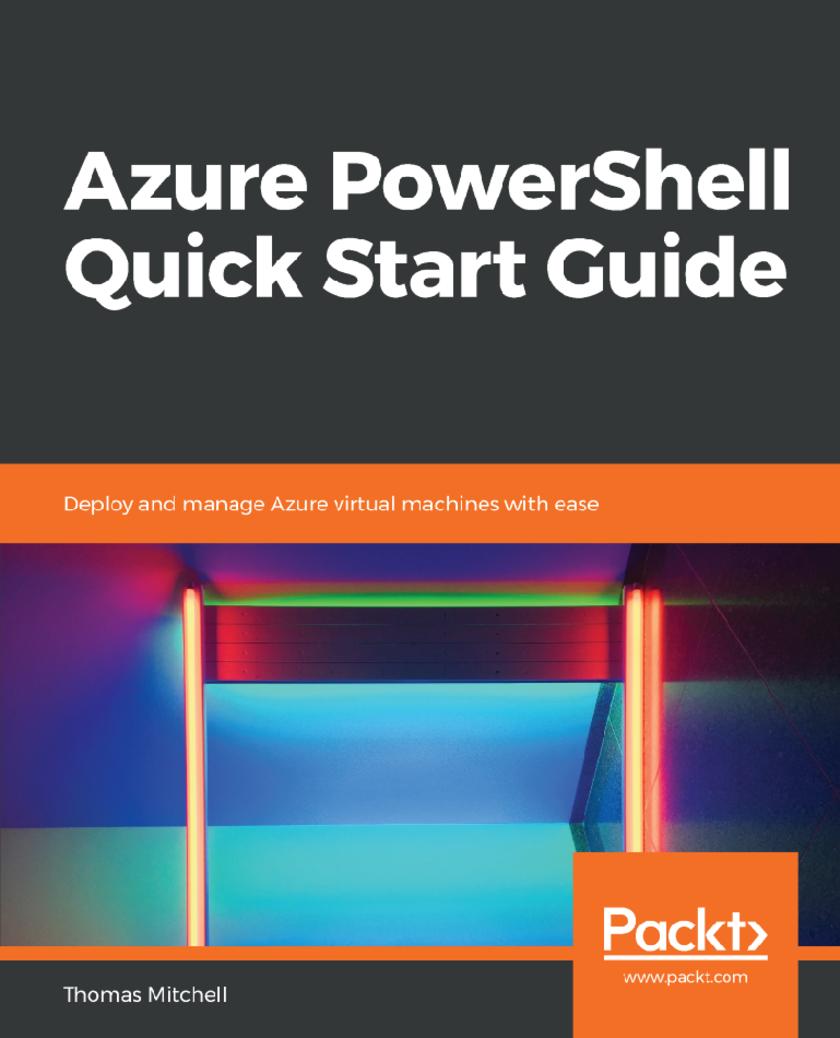
Azure PowerShell Quick Start Guide
¥54.49
Leverage PowerShell to perform many day-to-day tasks in Microsoft Azure Key Features *Deploy and manage Azure virtual machines with PowerShell commands. *Get to grips with core concept of Azure PowerShell such as working with images and disks, custom script extension, high availability and more. *Leverage hands-on projects to successfully apply what you learned through the course of this book. Book Description As an IT professional, it is important to keep up with cloud technologies and learn to manage those technologies. PowerShell is a critical tool that must be learned in order to effectively and more easily manage many Azure resources. This book is designed to teach you to leverage PowerShell to enable you to perform many day-to-day tasks in Microsoft Azure. Taking you through the basic tasks of installing Azure PowerShell and connecting to Azure, you will learn to properly connect to an Azure tenant with PowerShell. Next, you will dive into tasks such as deploying virtual machines with PowerShell, resizing them, and managing their power states with PowerShell. Then, you will learn how to complete more complex Azure tasks with PowerShell, such as deploying virtual machines from custom images, creating images from existing virtual machines, and creating and managing of data disks. Later, you will learn how to snapshot virtual machines, how to encrypt virtual machines, and how to leverage load balancers to ensure high availability with PowerShell. By the end of this book, you will have developed dozens of PowerShell skills that are invaluable in the deployment and management of Azure virtual machines. What you will learn *Manage virtual machines with PowerShell *Resize a virtual machine with PowerShell *Create OS disk snapshots via PowerShell *Deploy new virtual machines from snapshots via PowerShell *Provision and attach data disks to a virtual machine via PowerShell *Load balance virtual machines with PowerShell *Manage virtual machines with custom script extensions Who this book is for This book is intended for IT professionals who are responsible for managing Azure virtual machines. No prior PowerShell or Azure experience is needed.
Microsoft Dynamics NAV Development Quick Start Guide
¥54.49
Learn development skills and improve productivity when programming in Microsoft Dynamics NAV 2018 - the popular Enterprise Resourse Planning management system used across a variety of industries for business process management Key Features *Solve common business problems with the valuable features and flexibility of Dynamics NAV *Understand the structure of NAV database - how documents and business entities are mapped to DB tables *Design user interface and bind the presentation layer with the data storage Book Description Microsoft Dynamics NAV is an enterprise resource planning (ERP) software suite for organizations. The system offers specialized functionality for manufacturing, distribution, government, retail, and other industries. This book gets you started with its integrated development environment for solving problems by customizing business processes. This book introduces the NAV development environment – C/SIDE. It gives an overview of the internal system language and the most essential development tools. The book will enable the reader to customize and extend NAV functionality with C/AL code, design a user interface through pages, create role centers, and build advanced reports in Microsoft Visual Studio. By the end of the book, you will have learned how to extend the NAV data model, how to write and debug custom code, and how to exchange data with external applications. What you will learn *Manage NAV Server configuration with Microsoft Management Console *Manage NAV installation with the NAV Administration Shell *Create integration events and extend functionality via the NAV event model *Run XML Ports from C/AL code *Design reports and write client code in RDLC expressions Who this book is for This book is for experienced NAV users who have an understanding of basic programming concepts. Familiarity with NAV development environment or its internal development language-C/AL is not expected.
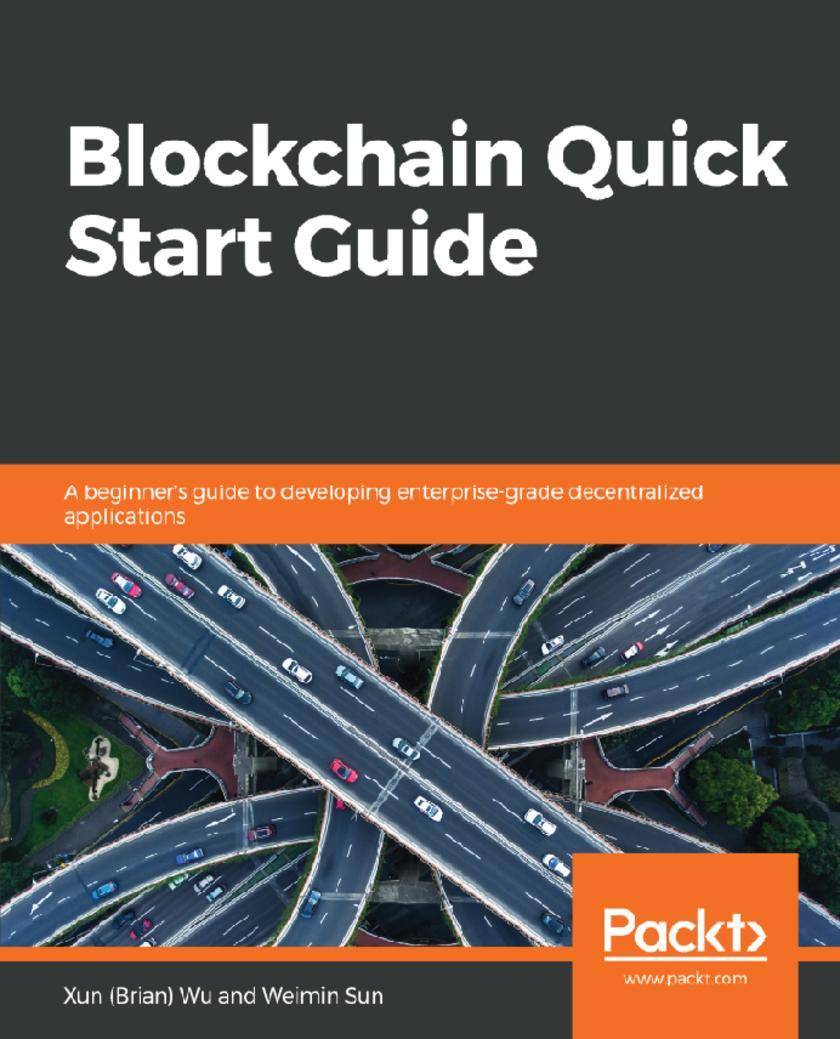
Blockchain Quick Start Guide
¥54.49
Learn quick and effective techniques to get up and running with building blockchain including Ethereum and Hyperledger Fabric. Key Features *Understand the key concepts of decentralized applications and consensus algorithms *Learn key concepts of Ethereum and Solidity programming *Practical guide to get started with build efficient Blockchain applications with Ethereum and Hyperledger Book Description Blockchain is a technology that powers the development of decentralized applications.This technology allows the construction of a network with no single control that enables participants to make contributions to and receive benefits from the network directly. This book will give you a thorough overview of blockchain and explain how a blockchain works.You will begin by going through various blockchain consensus mechanisms and cryptographic hash functions. You will then learn the fundamentals of programming in Solidity – the defacto language for developing decentralize, applications in Ethereum. After that, you will set up an Ethereum development environment and develop, package, build, and test campaign-decentralized applications.The book also shows you how to set up Hyperledger composer tools, analyze business scenarios, design business models, and write a chain code. Finally, you will get a glimpse of how blockchain is actually used in different real-world domains. By the end of this guide, you will be comfortable working with basic blockchain frameworks, and develop secure, decentralized applications in a hassle-free manner. What you will learn *Understand how blockchain hashing works *Write and test a smart contract using Solidity *Develop and test a decentralized application *Build and test your application using Hyperledger Fabric *Implement business network using Hyperledger Composer *Test and interact with business network applications Who this book is for The book is for developers, analysts, or anyone looking to learn about Blockchain in a quick and easy manner.
Jira Quick Start Guide
¥54.49
Leverage Jira's powerful task management and workflow features to better manage your business processes Key Features * The book covers all major applications of Jira, which are Jira Software, Jira Core, Jira Service Desk. * Configure project workflows and the fields that will be used in the project with the help of Jira's features * Create tickets for issues and manage your projects using the Jira software Book Description Jira is an issue tracker and project management system. With their latest release, the Jira team has now expanded their user base to agile teams as well as business teams. This book provides a comprehensive explanation covering all major components of Jira, including Jira Software, Jira Core, and Jira Service Desk. This book starts with an introduction to Jira's unique features and how it can be used as an issue-tracking tool. It will then teach you about how a new project is created by a Jira administrator, what responsibilities there are, and using correct and relevant schemes in your project. You will then learn how to configure project workflows and fields for project screens. You will understand the various permissions used in projects and the importance of project roles in Jira. Then, the book talks about the concepts of versions acting as milestones and using components when handling issues in your projects. It will then focus on analysing data using built-in reports and creating dashboards in Jira. At the end, it will discuss various best practices for users as well as project managers or project administrators. What you will learn * Implement Jira as a project administrator or project manager * Get familiar with various functionalities of Jira * Configure projects and boards in your organisation's Jira instance * Understand how and when to use components and versions in your projects * Manage project configurations and Jira schemes * Learn the best practices to manage your Jira instance Who this book is for This book will be especially useful for project managers but it's also intended for other Jira users, including developers, and any other industry besides software development, who would like to use Jira for project management.
Blockchain for Business 2019
¥54.49
Your one-stop guide to blockchain technology and its business applications Key Features * Assimilate blockchain services such as Ethereum and Hyperledger to transform industrial applications * Know in and out of blockchain technology to understand various business use cases * Understand various common and not-so-common challenges faced in blockchain development Book Description Blockchain for Business 2019 is a comprehensive guide that enables you to bring in various blockchain functionalities to extend your existing business models and make correct fully-informed decisions. You will learn how decentralized applications are transforming numerous business sectors that are expected to play a huge role in the future. You will see how large corporations are already implementing blockchain technology now. You will then learn about the various blockchain services, such as Bitcoin, Ethereum, Hyperledger, and others to understand their use cases in a variety of business domains. You will develop a solid fundamental understanding of blockchain architecture. Moving ahead, you will get to grips with the inner workings of blockchain, with detailed explanations of mining, decentralized consensus, cryptography, smart contracts, and many other important concepts. You will delve into a realistic view of the current state of blockchain technology, along with its issues, limitations, and potential solutions that can take it to the next level. By the end of this book, you will all be well versed in the latest innovations and developments in the emerging blockchain space. What you will learn * Understand the fundamentals of blockchain and how it was developed * Gain a good understanding of economic concepts and developments * Develop a base for concepts such as cryptography, computer networking, and programming * Understand the applications of blockchain and its potential impact on the world * Become well versed with the latest developments in the blockchain space * Explore blockchain frameworks, including decentralized organizational structures, networks, and applications Who this book is for This book is for financial professionals, business executives, managers, and enthusiasts who are interested in getting well-versed with blockchain technology in various business domains. This book will help boost your existing business models using blockchain services. No prior experience of blockchain is required.
QGIS Quick Start Guide
¥54.49
Step through loading GIS data, creating GIS data, styling GIS and making maps with QGIS following a simple narrative that will allow you to build confidence as you progress. Key Features * Work with GIS data, a step by step guide from creation to making a map * Perform geoprocessing tasks and automate them using model builder * Explore a range of features in QGIS 3.4, discover the power behind open source desktop GIS Book Description QGIS is a user friendly, open source geographic information system (GIS). The popularity of open source GIS and QGIS, in particular, has been growing rapidly over the last few years. This book is designed to help beginners learn about all the tools required to use QGIS 3.4. This book will provide you with clear, step-by-step instructions to help you apply your GIS knowledge to QGIS. You begin with an overview of QGIS 3.4 and its installation. You will learn how to load existing spatial data and create vector data from scratch. You will then be creating styles and labels for maps. The final two chapters demonstrate the Processing toolbox and include a brief investigation on how to extend QGIS. Throughout this book, we will be using the GeoPackage format, and we will also discuss how QGIS can support many different types of data. Finally, you will learn where to get help and how to become engaged with the GIS community. What you will learn * Use existing data to interact with the canvas via zoom/pan/selection * Create vector data and a GeoPackage and build a simple project around it * Style data, both vector and raster data, using the Layer Styling Panel * Design, label, save, and export maps using the data you have created * Analyze spatial queries using the Processing toolbox * Expand QGIS with the help of plugins, model builder, and the command line Who this book is for If you know the basic functions and processes of GIS, and want to learn to use QGIS to analyze geospatial data and create rich mapping applications, then this is the book for you.
Machine Learning Quick Reference
¥54.49
Your hands-on reference guide to developing, training, and optimizing your machine learning models Key Features * Your guide to learning efficient machine learning processes from scratch * Explore expert techniques and hacks for a variety of machine learning concepts * Write effective code in R, Python, Scala, and Spark to solve all your machine learning problems Book Description Machine learning makes it possible to learn about the unknowns and gain hidden insights into your datasets by mastering many tools and techniques. This book guides you to do just that in a very compact manner. After giving a quick overview of what machine learning is all about, Machine Learning Quick Reference jumps right into its core algorithms and demonstrates how they can be applied to real-world scenarios. From model evaluation to optimizing their performance, this book will introduce you to the best practices in machine learning. Furthermore, you will also look at the more advanced aspects such as training neural networks and work with different kinds of data, such as text, time-series, and sequential data. Advanced methods and techniques such as causal inference, deep Gaussian processes, and more are also covered. By the end of this book, you will be able to train fast, accurate machine learning models at your fingertips, which you can easily use as a point of reference. What you will learn * Get a quick rundown of model selection, statistical modeling, and cross-validation * Choose the best machine learning algorithm to solve your problem * Explore kernel learning, neural networks, and time-series analysis * Train deep learning models and optimize them for maximum performance * Briefly cover Bayesian techniques and sentiment analysis in your NLP solution * Implement probabilistic graphical models and causal inferences * Measure and optimize the performance of your machine learning models Who this book is for If you’re a machine learning practitioner, data scientist, machine learning developer, or engineer, this book will serve as a reference point in building machine learning solutions. You will also find this book useful if you’re an intermediate machine learning developer or data scientist looking for a quick, handy reference to all the concepts of machine learning. You’ll need some exposure to machine learning to get the best out of this book.
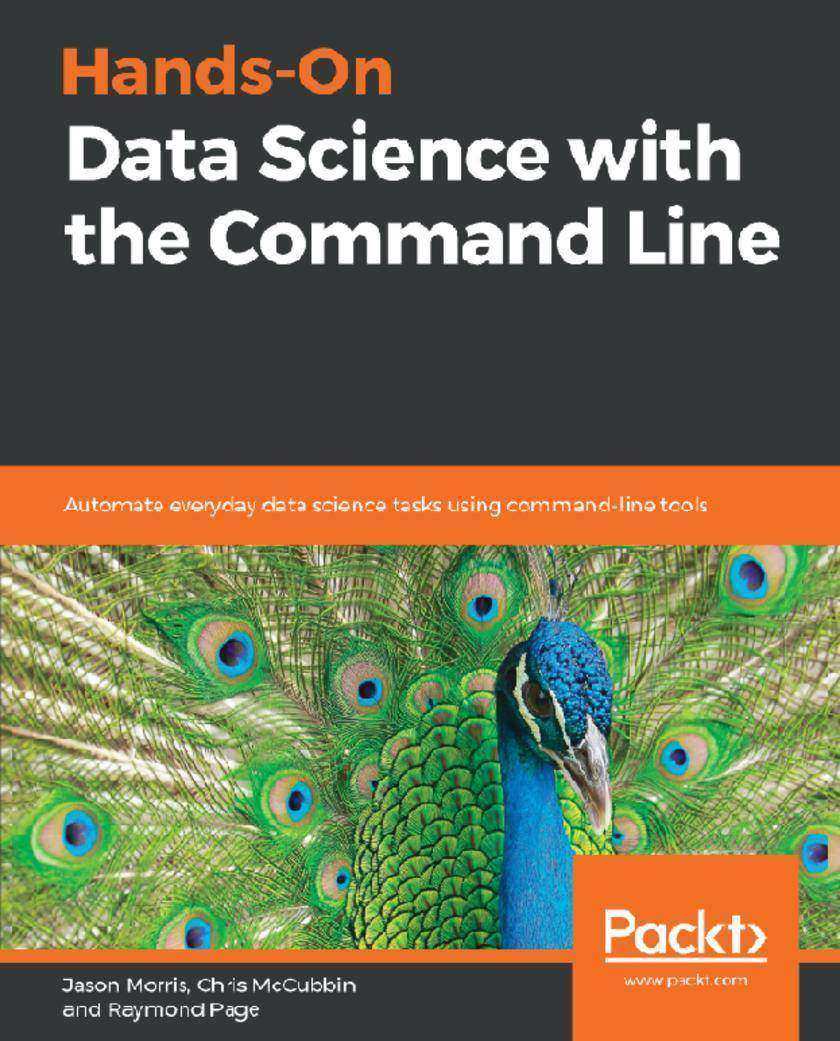
Hands-On Data Science with the Command Line
¥54.49
Big data processing and analytics at speed and scale using command line tools. Key Features * Perform string processing, numerical computations, and more using CLI tools * Understand the essential components of data science development workflow * Automate data pipeline scripts and visualization with the command line Book Description The Command Line has been in existence on UNIX-based OSes in the form of Bash shell for over 3 decades. However, very little is known to developers as to how command-line tools can be OSEMN (pronounced as awesome and standing for Obtaining, Scrubbing, Exploring, Modeling, and iNterpreting data) for carrying out simple-to-advanced data science tasks at speed. This book will start with the requisite concepts and installation steps for carrying out data science tasks using the command line. You will learn to create a data pipeline to solve the problem of working with small-to medium-sized files on a single machine. You will understand the power of the command line, learn how to edit files using a text-based and an. You will not only learn how to automate jobs and scripts, but also learn how to visualize data using the command line. By the end of this book, you will learn how to speed up the process and perform automated tasks using command-line tools. What you will learn * Understand how to set up the command line for data science * Use AWK programming language commands to search quickly in large datasets. * Work with files and APIs using the command line * Share and collect data with CLI tools * Perform visualization with commands and functions * Uncover machine-level programming practices with a modern approach to data science Who this book is for This book is for data scientists and data analysts with little to no knowledge of the command line but has an understanding of data science. Perform everyday data science tasks using the power of command line tools.
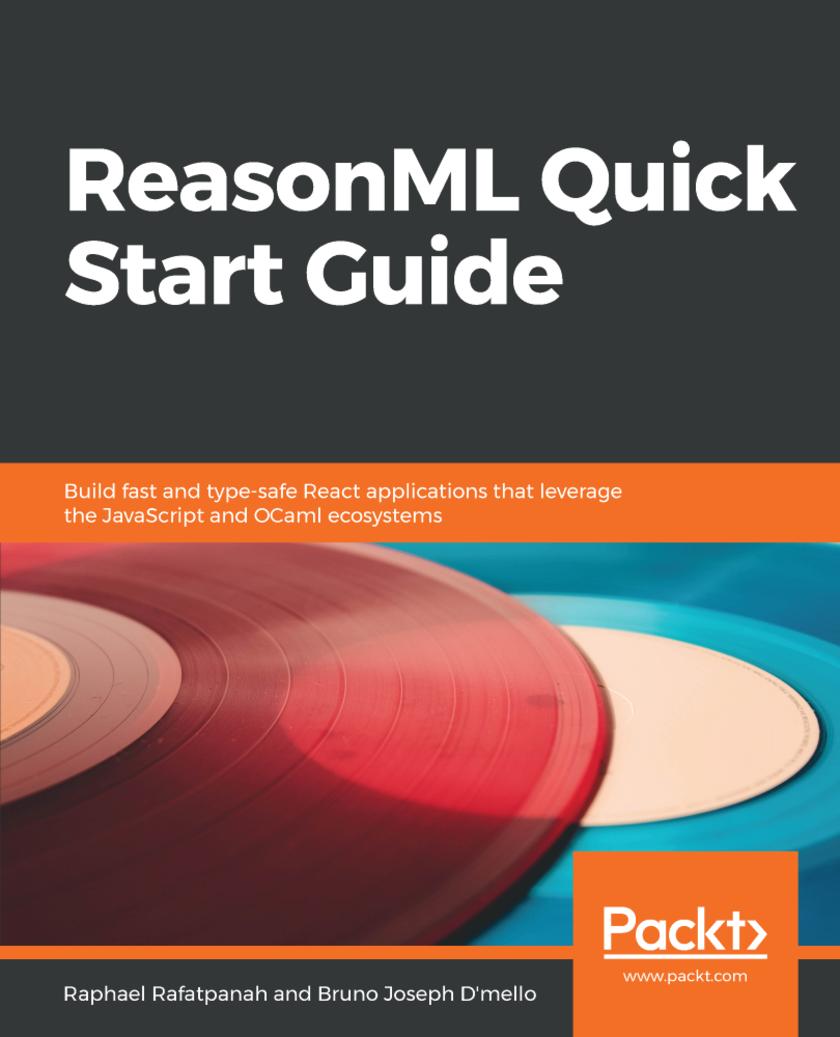
ReasonML Quick Start Guide
¥54.49
A hands on approach to learning ReasonML from the perspective of a web developer. Key Features * Hands on learning by building a real world app shell that includes client-side routing and more. * Understand Reason’s ecosystem including BuckleScript and various npm workflows. * Learn how Reason differs from TypeScript and Flow, and how to use it to make refactoring less stressful. Book Description ReasonML, also known as Reason, is a new syntax and toolchain for OCaml that was created by Facebook and is meant to be approachable for web developers. Although OCaml has several resources, most of them are from the perspective of systems development. This book, alternatively, explores Reason from the perspective of web development. You'll learn how to use Reason to build safer, simpler React applications and why you would want to do so. Reason supports immutability by default, which works quite well in the context of React. In learning Reason, you will also learn about its ecosystem – BuckleScript, JavaScript interoperability, and various npm workflows. We learn by building a real-world app shell, including a client-side router with page transitions, that we can customize for any Reason project. You'll learn how to leverage OCaml's excellent type system to enforce guarantees about business logic, as well as preventing runtime type errors.You'll also see how the type system can help offload concerns that we once had to keep in our heads. We'll explore using CSS-in-Reason, how to use external JSON in Reason, and how to unit-test critical business logic. By the end of the book, you'll understand why Reason is exploding in popularity and will have a solid foundation on which to continue your journey with Reason. What you will learn * Learn why Reason is exploding in popularity and why it's the future of React * Become familiar with Reason's syntax and semantics * Learn about Reason's ecosystem: BuckleScript and JavaScript interoperability * Learn how to build React applications with Reason * Learn how to use Reason's type system as a tool to provide amazing guarantees * Gain a solid foundation on which to continue your journey Who this book is for The target audience of this book is web developers who are somewhat familiar with ReactJS and who want to learn why ReasonML is the future of ReactJS.
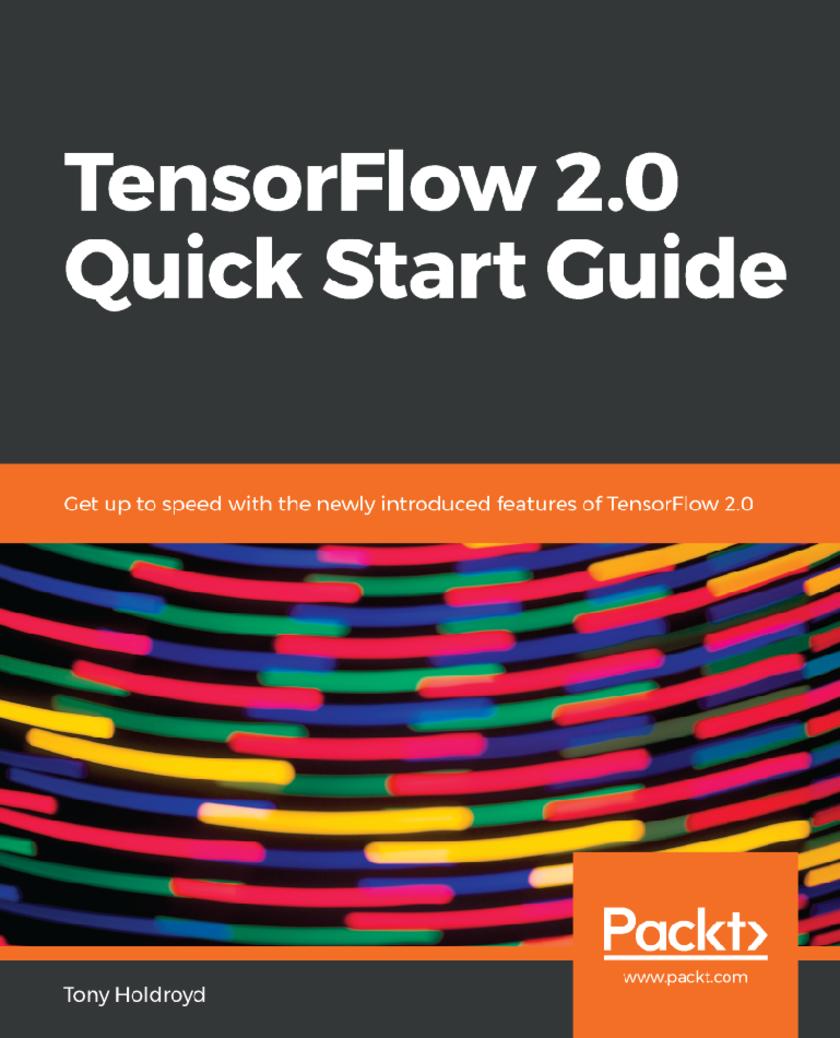
TensorFlow 2.0 Quick Start Guide
¥54.49
Perform supervised and unsupervised machine learning and learn advanced techniques such as training neural networks. Key Features * Train your own models for effective prediction, using high-level Keras API * Perform supervised and unsupervised machine learning and learn advanced techniques such as training neural networks * Get acquainted with some new practices introduced in TensorFlow 2.0 Alpha Book Description TensorFlow is one of the most popular machine learning frameworks in Python. With this book, you will improve your knowledge of some of the latest TensorFlow features and will be able to perform supervised and unsupervised machine learning and also train neural networks. After giving you an overview of what's new in TensorFlow 2.0 Alpha, the book moves on to setting up your machine learning environment using the TensorFlow library. You will perform popular supervised machine learning tasks using techniques such as linear regression, logistic regression, and clustering. You will get familiar with unsupervised learning for autoencoder applications. The book will also show you how to train effective neural networks using straightforward examples in a variety of different domains. By the end of the book, you will have been exposed to a large variety of machine learning and neural network TensorFlow techniques. What you will learn * Use tf.Keras for fast prototyping, building, and training deep learning neural network models * Easily convert your TensorFlow 1.12 applications to TensorFlow 2.0-compatible files * Use TensorFlow to tackle traditional supervised and unsupervised machine learning applications * Understand image recognition techniques using TensorFlow * Perform neural style transfer for image hybridization using a neural network * Code a recurrent neural network in TensorFlow to perform text-style generation Who this book is for Data scientists, machine learning developers, and deep learning enthusiasts looking to quickly get started with TensorFlow 2 will find this book useful. Some Python programming experience with version 3.6 or later, along with a familiarity with Jupyter notebooks will be an added advantage. Exposure to machine learning and neural network techniques would also be helpful.
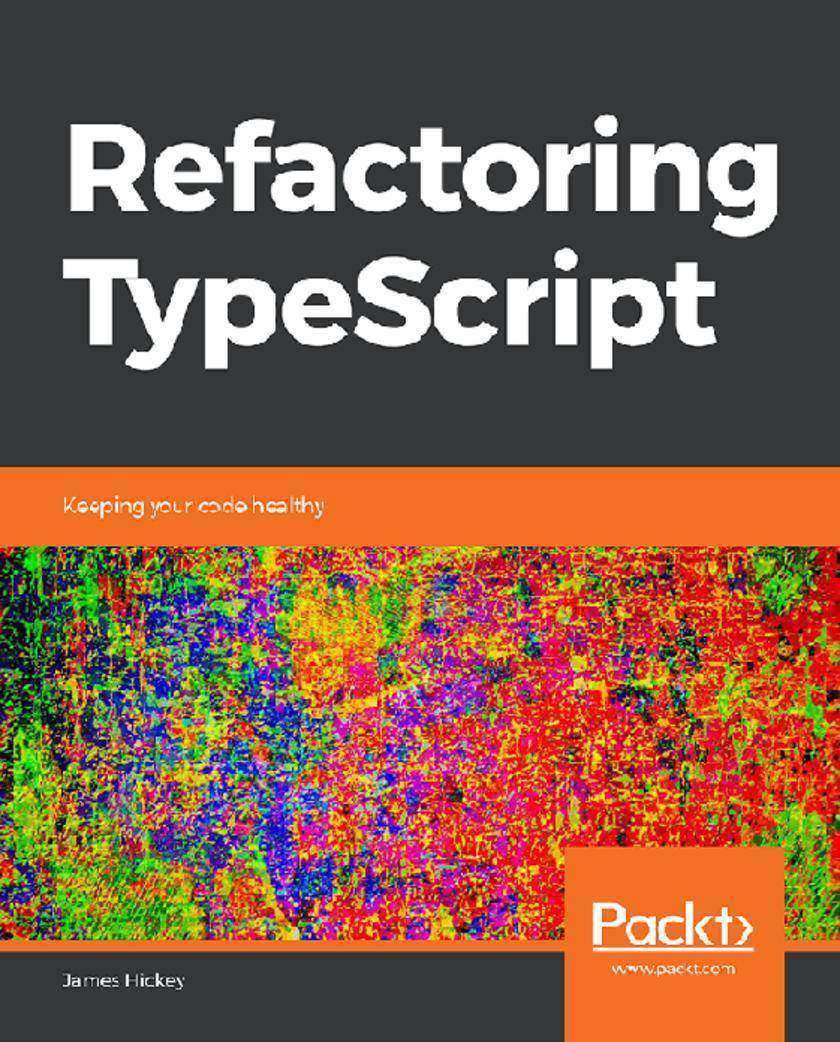
Refactoring TypeScript
¥54.49
Discover various techniques to develop maintainable code and keep it in shape. Key Features * Learn all about refactoring - why it is important and how to do it * Discover easy ways to refactor code with examples * Explore techniques that can be applied to most other programming languages Book Description Refactoring improves your code without changing its behavior. With refactoring, the best approach is to apply small targeted changes to a codebase. Instead of doing a huge sweeping change to your code, refactoring is better as a long-term and continuous enterprise. Refactoring TypeScript explains how to spot bugs and remove them from your code. You’ll start by seeing how wordy conditionals, methods, and null checks make code unhealthy and unstable. Whether it is identifying messy nested conditionals or removing unnecessary methods, this book will show various techniques to avoid these pitfalls and write code that is easier to understand, maintain, and test. By the end of the book, you’ll have learned some of the main causes of unhealthy code, tips to identify them and techniques to address them. What you will learn * Spot and fix common code smells to create code that is easier to read and understand * Discover ways to identify long methods and refactor them * Create objects that keep your code flexible, maintainable, and testable * Apply the Single Responsibility Principle to develop less-coupled code * Discover how to combine different refactoring techniques * Learn ways to solve the issues caused by overusing primitives Who this book is for This book is designed for programmers who are looking to explore various refactoring techniques to develop healthy and maintainable code. Some experience in JavaScript and TypeScript can help you easily grasp the concepts explained in this book.
Getting Started with Terraform - Second Edition
¥54.49
Build, Manage and Improve your infrastructure effortlessly. About This Book ? An up-to-date and comprehensive resource on Terraform that lets you quickly and efficiently launch your infrastructure ? Learn how to implement your infrastructure as code and make secure, effective changes to your infrastructure ? Learn to build multi-cloud fault-tolerant systems and simplify the management and orchestration of even the largest scale and most complex cloud infrastructures Who This Book Is For This book is for developers and operators who already have some exposure to working with infrastructure but want to improve their workflow and introduce infrastructure as a code practice. Knowledge of essential Amazon Web Services components (EC2, VPC, IAM) would help contextualize the examples provided. Basic understanding of Jenkins and Shell *s will be helpful for the chapters on the production usage of Terraform. What You Will Learn ? Understand what Infrastructure as Code (IaC) means and why it matters ? Install, configure, and deploy Terraform ? Take full control of your infrastructure in the form of code ? Manage complete infrastructure, starting with a single server and scaling beyond any limits ? Discover a great set of production-ready practices to manage infrastructure ? Set up CI/CD pipelines to test and deliver Terraform stacks ? Construct templates to simplify more complex provisioning tasks In Detail Terraform is a tool used to efficiently build, configure, and improve the production infrastructure. It can manage the existing infrastructure as well as create custom in-house solutions. This book shows you when and how to implement infrastructure as a code practices with Terraform. It covers everything necessary to set up the complete management of infrastructure with Terraform, starting with the basics of using providers and resources. It is a comprehensive guide that begins with very small infrastructure templates and takes you all the way to managing complex systems, all using concrete examples that evolve over the course of the book. The book ends with the complete workflow of managing a production infrastructure as code—this is achieved with the help of version control and continuous integration. The readers will also learn how to combine multiple providers in a single template and manage different code bases with many complex modules. It focuses on how to set up continuous integration for the infrastructure code. The readers will be able to use Terraform to build, change, and combine infrastructure safely and efficiently. Style and approach This book will help and guide you to implement Terraform in your infrastructure. The readers will start by working on very small infrastructure templates and then slowly move on to manage complex systems, all by using concrete examples that will evolve during the course of the book.
Switching to Angular - Third Edition
¥54.49
Switching to Angular, Third Edition is the go-to book to align and get started with the Angular JavaScript framework. Angular contributor and international speaker Minko Gechev will help you square up and start building Angular apps and provide you an insight to the Google’s vision for the framework. About This Book ? Get up to date with Google’s vision for Angular ? Align with Angular version 5 and beyond from any direction with confidence ? Start using TypeScript to supercharge your Angular applications ? Understand the new framework from AngularJS perspective using your prior experience ? Use Angular to quickly build fast and scalable enterprise applications Who This Book Is For This book is for software developers who want to align with a modern version of Angular that’s aligned with Google’s vision of Angular version 5 and beyond, using stable APIs that they can depend on today and in the future. Also for anyone assessing changes to Angular and squaring up for a strategic migration to Angular v5, and for AngularJS developers who want to transfer their mindset to modern Angular version 5 and beyond. What You Will Learn ? Align with Google’s vision for Angular version 5 and beyond ? Confidently move forwards with a long-term understanding of Angular ? Use stable APIs in Angular to build future-proof, blazingly fast, enterprise applications ? Work with TypeScript to supercharge your Angular applications ? Understand the core concepts of Angular, aligned with the vision from Google ? Be ready with Angular from any direction - whether you’re building new new apps with the Angular and ASP.NET stack or upgrading from AngularJS with ngUpgrade In Detail Align your work to stable APIs of Angular, version 5 and beyond, with Angular expert Minko Gechev. Angular is the modern Google framework for you to build high-performing, SEO-friendly, and robust web applications. Switching to Angular, Third Edition shows you how you can align your current and future development with Google’s long term vision for Angular. Gechev shares his expert knowledge and community involvement to give you the clarity you need to confidently switch into Angular and stable APIs. Minko Gechev helps you square up to Angular with an overview of the framework, and understand the long term building blocks of Google’s web framework. Gechev then gives you the lowdown on TypeScript, with a crash-course so you can take advantage of Angular in its native, statically-typed environment. You’ll next move on to see how you can line up with Angular dependency injection, plus how Angular router and forms, and Angular pipes, are designed to work for your projects today and in the future. You'll be squared up and aligned with the vision and techniques of the one Angular, and be ready to start building quick and efficient Angular applications. You’ll know how to take advantage of the latest Angular features, and the core, stable APIs that you can depend on. You’ll be ready to confidently plan your future with the Angular framework. Style and approach In this book, Minko Gechev continues his direct style of sharing knowledge about Angular that he's developed across more than 40 international presentations to Angular developers. First, Minko explains Google's vision of Angular to you, and then you dive into a clear tutorial to work with Angular that's aligned with Google's vision of Angular.
Building Smart Drones with ESP8266 and Arduino
¥54.49
Leverage the WiFi chip to build exciting Quadcopters About This Book ? Learn to create a fully functional Drone with Arduino and ESP8266 and their modified versions of hardware. ? Enhance your drone's functionalities by implementing smart features. ? A project-based guide that will get you developing next-level drones to help you monitor a particular area with mobile-like devices. Who This Book Is For If you are a programmer or a DIY enthusiast and keen to create a fully functional drone with Arduino and ESP8266, then this book is for you. Basic skills in electronics and programming would be beneficial. This book is not for the beginners as it includes lots of ideas not detailed how you can do that. If you are a beginner, then you might get lost here. The prerequisites of the book include a good knowledge of Arduino, electronics, programming in C or C++ and lots of interest in creating things out of nothing. What You Will Learn ? Includes a number of projects that utilize different ESP8266 and Arduino capabilities, while interfacing with external hardware ? Covers electrical engineering and programming concepts, interfacing with the World through analog and digital sensors, communicating with a computer and other devices, and internet connectivity ? Control and fly your quadcopter, taking into account weather conditions ? Build a drone that can follow the user wherever he/she goes ? Build a mission-control drone and learn how to use it effectively ? Maintain your vehicle as much as possible and repair it whenever required In Detail With the use of drones, DIY projects have taken off. Programmers are rapidly moving from traditional application programming to developing exciting multi-utility projects. This book will teach you to build industry-level drones with Arduino and ESP8266 and their modified versions of hardware. With this book, you will explore techniques for leveraging the tiny WiFi chip to enhance your drone and control it over a mobile phone. This book will start with teaching you how to solve problems while building your own WiFi controlled Arduino based drone. You will also learn how to build a Quadcopter and a mission critical drone. Moving on you will learn how to build a prototype drone that will be given a mission to complete which it will do it itself. You will also learn to build various exciting projects such as gliding and racing drones. By the end of this book you will learn how to maintain and troubleshoot your drone. By the end of this book, you will have learned to build drones using ESP8266 and Arduino and leverage their functionalities to the fullest. Style and approach This is an easy-to-follow guide with illustrations and technical de*ions to help you assemble your vehicle.
RESTful Web API Design with Node.js 10
¥54.49
Design and implement scalable and maintainable RESTful solutions with Node.js 10 About This Book ? Create rich and scalable RESTful API solutions from scratch ? Explore the new features of Node.js 10, Express 4.0, and MongoDB ? Integrate MongoDB in your Node.js application to store and secure your data Who This Book Is For If you are a web developer keen to enrich your development skills to create server-side RESTful applications based on the Node.js platform, this book is for you. Some knowledge of REST would be an added advantage, but is definitely not a necessity. What You Will Learn ? Install, develop, and test your own Node.js user modules ? Understand the differences between HTTP and RESTful applications ? Use self-descriptive URLs and set accurate HTTP status codes ? Eliminate third-party dependencies in your tests with mocking ? Implement automation tests for a REST-enabled endpoint with Mocha ? Secure your services with NoSQL database integration within Node.js applications ? Integrate a simple frontend using JavaScript libraries available on a CDN server In Detail When building RESTful services, it is really important to choose the right framework. Node.js, with its asynchronous, event-driven architecture, is exactly the right choice for building RESTful APIs. This third edition of RESTful Web API Design with Node.js 10 will teach you to create scalable and rich RESTful applications based on the Node.js platform. You will be introduced to the latest NPM package handler and understand how to use it to customize your RESTful development process. You will begin by understanding the key principle that makes an HTTP application a RESTful-enabled application. After writing a simple HTTP request handler, you will create and test Node.js modules using automated tests and mock objects; explore using the NoSQL database, MongoDB, to store data; and get to grips with using self-descriptive URLs. You’ll learn to set accurate HTTP status codes along with understanding how to keep your applications backward-compatible. Also, while implementing a full-fledged RESTful service, you will use Swagger to document the API and implement automation tests for a REST-enabled endpoint with Mocha. Lastly, you will explore some authentication techniques to secure your application. Style and approach Step-by-step practical guide to building RESTful applications
Building Smart LEGO MINDSTORMS EV3 Robots
¥54.49
Build and program smart robots with the EV3. About This Book ? Efficiently build smart robots with the LEGO MINDSTORMS EV3 ? Discover building techniques and programming concepts that are used by engineers to prototype robots in the real world ? This project-based guide will teach you how to build exciting projects such as the objecta-tracking tank, ultimate all-terrain vehicle, remote control race car, or even a GPS-navigating autonomous vehicle Who This Book Is For This book is for hobbyists, robotic engineers, and programmers who understand the basics of the EV3 programming language and are familiar with building with LEGO Technic and want to try some advanced projects. If you want to learn some new engineering techniques and take your experience with the EV3 to the next level, then this book is for you. What You Will Learn ? Understand the characteristics that make a robot smart ? Grasp proportional beacon following and use proximity sensors to track an object ? Discover how mechanisms such as rack-and-pinion and the worm gear work ? Program a custom GUI to make a robot more user friendly ? Make a fun and quirky interactive robot that has its own personality ? Get to know the principles of remote control and programming car-style steering ? Understand some of the mechanisms that enable a car to drive ? Navigate to a destination with a GPS receiver In Detail Smart robots are an ever-increasing part of our daily lives. With LEGO MINDSTORMS EV3, you can now prototype your very own small-scale smart robot that uses specialized programming and hardware to complete a mission. EV3 is a robotics platform for enthusiasts of all ages and experience levels that makes prototyping robots accessible to all. This book will walk you through six different projects that range from intermediate to advanced level. The projects will show you building and programming techniques that are used by engineers in the real world, which will help you build your own smart robot. You'll see how to make the most of the EV3 robotics platform and build some awesome smart robots. The book starts by introducing some real-world examples of smart robots. Then, we'll walk you through six different projects and explain the features that allow these robots to make intelligent decisions. The book will guide you as you build your own object-tracking tank, a box-climbing robot, an interactive robotic shark, a quirky bipedal robot, a speedy remote control race car, and a GPS-navigating robot. By the end of this book, you'll have the skills necessary to build and program your own smart robots with EV3. Style and approach This book will introduce you to the world of smart robots, then guide you through six different projects that can be completed with the LEGO MINDSTORMS EV3. The projects range from intermediate to advanced difficulty. The book will enable you to learn by example, walking you through the building and programming for each project and teaching you about the engineering concepts that allow each smart robot to complete its mission.


