


 购物车
购物车 个人中心
个人中心
Hyperledger Cookbook
¥62.12
Explore the entire Hyperledger blockchain family, including frameworks such as Fabric, Sawtooth, Indy, Burrow, and Iroha; and tools such as Composer, Explorer, and Caliper. Key Features * Plan, design, and create a full-fledged private decentralized application using Hyperledger services * Master the ins and outs of the Hyperledger network using real-world examples * Packed with problem-solution-based recipes to tackle pain areas in the blockchain development cycle Book Description Hyperledger is an open-source project and creates private blockchain applications for a range of domains. This book will be your desk reference as you explore common and not-so-common challenges faced while building blockchain networks using Hyperledger services. We'll work through all Hyperledger platform modules to understand their services and features and build end-to-end blockchain applications using various frameworks and tools supported by Hyperledger. This book's independent, recipe-based approach (packed with real-world examples) will familiarize you with the blockchain development cycle. From modeling a business network to integrating with various tools, you will cover it all. We'll cover common and not-so-common challenges faced in the blockchain life cycle. Later, we'll delve into how we can interact with the Hyperledger Fabric blockchain, covering all the principles you need to master, such as chaincode, smart contracts, and much more. We'll also address the scalability and security issues currently faced in blockchain development. By the end of this book, you will be able to implement each recipe to plan, design, and create a full-fledged, private, decentralized application to meet organizational needs. What you will learn * Create the most popular permissioned blockchain network with Fabric and Composer * Build permissioned and permission-less blockchains using Sawtooth * Utilize built-in Iroha asset/account management with role-based permissions * Implement and run Ethereum smart contracts with Burrow * Get to grips with security and scalability in Hyperledger * Explore and view blockchain data using Hyperledger Explorer * Produce reports containing performance indicators and benchmarks using Caliper Who this book is for This book is for blockchain developers who want to understand how they can apply Hyperledger services in their day-to-day projects. This book uses a recipe-based approach to help you use Hyperledger to build powerful, decentralized autonomous applications. We assume the reader has a basic knowledge of the Blockchain technology and cryptography concepts
Hands-On Full Stack Development with Spring Boot 2 and React
¥62.12
A comprehensive guide to building full stack applications covering frontend and server-side programming, data management, and web security Key Features * Unleash the power of React Hooks to build interactive and complex user interfaces * Build scalable full stack applications designed to meet demands of modern users * Understand how the Axios library simplifies CRUD operations Book Description React Hooks have changed the way React components are coded. They enable you to write components in a more intuitive way without using classes, which makes your code easier to read and maintain. Building on from the previous edition, this book is updated with React Hooks and the latest changes introduced in create-react-app and Spring Boot 2.1. This book starts with a brief introduction to Spring Boot. You’ll understand how to use dependency injection and work with the data access layer of Spring using Hibernate as the ORM tool. You’ll then learn how to build your own RESTful API endpoints for web applications. As you advance, the book introduces you to other Spring components, such as Spring Security to help you secure the backend. Moving on, you’ll explore React and its app development environment and components for building your frontend. Finally, you’ll create a Docker container for your application by implementing the best practices that underpin professional full stack web development. By the end of this book, you’ll be equipped with all the knowledge you need to build modern full stack applications with Spring Boot for the backend and React for the frontend. What you will learn * Create a RESTful web service with Spring Boot * Grasp the fundamentals of dependency injection and how to use it for backend development * Discover techniques for securing the backend using Spring Security * Understand how to use React for frontend programming * Benefit from the Heroku cloud server by deploying your application to it * Delve into the techniques for creating unit tests using JUnit * Explore the Material UI component library to make more user-friendly user interfaces Who this book is for If you are a Java developer familiar with Spring, but are new to building full stack applications, this is the book for you.
Hands-On Q-Learning with Python
¥62.12
Leverage the power of reward-based training for your deep learning models with Python Key Features * Understand Q-learning algorithms to train neural networks using Markov Decision Process (MDP) * Study practical deep reinforcement learning using Q-Networks * Explore state-based unsupervised learning for machine learning models Book Description Q-learning is a machine learning algorithm used to solve optimization problems in artificial intelligence (AI). It is one of the most popular fields of study among AI researchers. This book starts off by introducing you to reinforcement learning and Q-learning, in addition to helping you get familiar with OpenAI Gym as well as libraries such as Keras and TensorFlow. A few chapters into the book, you will gain insights into modelfree Q-learning and use deep Q-networks and double deep Q-networks to solve complex problems. This book will guide you in exploring use cases such as self-driving vehicles and OpenAI Gym’s CartPole problem. You will also learn how to tune and optimize Q-networks and their hyperparameters. As you progress, you will understand the reinforcement learning approach to solving real-world problems. You will also explore how to use Q-learning and related algorithms in real-world applications such as scientific research. Toward the end, you’ll gain a sense of what’s in store for reinforcement learning. By the end of this book, you will be equipped with the skills you need to solve reinforcement learning problems using Q-learning algorithms with OpenAI Gym, Keras, and TensorFlow. What you will learn * Explore the fundamentals of reinforcement learning and the state-action-reward process * Understand Markov decision processes * Get well versed with libraries such as Keras, and TensorFlow * Create and deploy model-free learning and deep Q-learning agents with TensorFlow, Keras, and OpenAI Gym * Choose and optimize a Q-Network’s learning parameters and fine-tune its performance * Discover real-world applications and use cases of Q-learning Who this book is for If you are a machine learning developer, engineer, or professional who wants to delve into the deep learning approach for a complex environment, then this is the book for you. Proficiency in Python programming and basic understanding of decision-making in reinforcement learning is assumed.
Artificial Vision and Language Processing for Robotics
¥62.12
Create end-to-end systems that can power robots with artificial vision and deep learning techniques Key Features * Study ROS, the main development framework for robotics, in detail * Learn all about convolutional neural networks, recurrent neural networks, and robotics * Create a chatbot to interact with the robot Book Description Artificial Vision and Language Processing for Robotics begins by discussing the theory behind robots. You'll compare different methods used to work with robots and explore computer vision, its algorithms, and limits. You'll then learn how to control the robot with natural language processing commands. You'll study Word2Vec and GloVe embedding techniques, non-numeric data, recurrent neural network (RNNs), and their advanced models. You'll create a simple Word2Vec model with Keras, as well as build a convolutional neural network (CNN) and improve it with data augmentation and transfer learning. You'll study the ROS and build a conversational agent to manage your robot. You'll also integrate your agent with the ROS and convert an image to text and text to speech. You'll learn to build an object recognition system using a video. By the end of this book, you'll have the skills you need to build a functional application that can integrate with a ROS to extract useful information about your environment. What you will learn * Explore the ROS and build a basic robotic system * Understand the architecture of neural networks * Identify conversation intents with NLP techniques * Learn and use the embedding with Word2Vec and GloVe * Build a basic CNN and improve it using generative models * Use deep learning to implement artificial intelligence(AI)and object recognition * Develop a simple object recognition system using CNNs * Integrate AI with ROS to enable your robot to recognize objects Who this book is for Artificial Vision and Language Processing for Robotics is for robotics engineers who want to learn how to integrate computer vision and deep learning techniques to create complete robotic systems. It will prove beneficial to you if you have working knowledge of Python and a background in deep learning. Knowledge of the ROS is a plus.
AWS Certified Advanced Networking - Specialty Exam Guide
¥62.12
Develop technical skills and expertise to automate AWS networking tasks Key Features * A fast paced guide that will help you pass the exam with confidence * Learn advanced skill sets to build effective AWS networking solutions * Enhance your AWS skills with practice exercises and mock tests Book Description Amazon has recently come up a with specialty certifications which validates a particular user's expertise that he/she would want to build a career in. Since the Cloud market now demands of AWS networking skills this becomes the most wanted certification to upheld ones industry portfolio. This book would be your ideal companion to getting skilled with complex and creative networking solutions. Cloud practitioners or associate-level certified individuals interested in validating advanced skills in networking can opt for this practical guide. This book will include topics that will help you design and implement AWS and hybrid IT network architectures along with some network automation tasks. You will also delve deep into topics that will help you design and maintain network architecture for all AWS services. Like most of our certification guides this book will also follow a unique approach of testing your learning with chapter-level practice exercises and certification-based mock tests. The exam mock tests will help you gauge whether you are ready to take the certification exam or not. This book will also be an advanced guide for networking professionals to enhance their networking skills and get certified. By the end of this book, you will be all equipped with AWS networking concepts and techniques and will have mastered core architectural best practices. What you will learn * Formulate solution plans and provide guidance on AWS architecture best practices * Design and deploy scalable, highly available, and fault-tolerant systems on AWS * Identify the tools required to replicate an on-premises network in AWS * Analyze the access and egress of data to and from AWS * Select the appropriate AWS service based on data, compute, database, or security requirements * Estimate AWS costs and identify cost control mechanisms Who this book is for If you are a system administrator, or a network engineer interested in getting certified with an advanced Cloud networking certification then this book is for you. Prior experience in Cloud administration and networking would be necessary.
Hands-On Neural Networks
¥62.12
Design and create neural networks with deep learning and artificial intelligence principles using OpenAI Gym, TensorFlow, and Keras Key Features * Explore neural network architecture and understand how it functions * Learn algorithms to solve common problems using back propagation and perceptrons * Understand how to apply neural networks to applications with the help of useful illustrations Book Description Neural networks play a very important role in deep learning and artificial intelligence (AI), with applications in a wide variety of domains, right from medical diagnosis, to financial forecasting, and even machine diagnostics. Hands-On Neural Networks is designed to guide you through learning about neural networks in a practical way. The book will get you started by giving you a brief introduction to perceptron networks. You will then gain insights into machine learning and also understand what the future of AI could look like. Next, you will study how embeddings can be used to process textual data and the role of long short-term memory networks (LSTMs) in helping you solve common natural language processing (NLP) problems. The later chapters will demonstrate how you can implement advanced concepts including transfer learning, generative adversarial networks (GANs), autoencoders, and reinforcement learning. Finally, you can look forward to further content on the latest advancements in the field of neural networks. By the end of this book, you will have the skills you need to build, train, and optimize your own neural network model that can be used to provide predictable solutions. What you will learn * Learn how to train a network by using backpropagation * Discover how to load and transform images for use in neural networks * Study how neural networks can be applied to a varied set of applications * Solve common challenges faced in neural network development * Understand the transfer learning concept to solve tasks using Keras and Visual Geometry Group (VGG) network * Get up to speed with advanced and complex deep learning concepts like LSTMs and NLP * Explore innovative algorithms like GANs and deep reinforcement learning Who this book is for If you are interested in artificial intelligence and deep learning and want to further your skills, then this intermediate-level book is for you. Some knowledge of statistics will help you get the most out of this book.
Hands-On Computer Vision with TensorFlow 2
¥62.12
A practical guide to building high performance systems for object detection, segmentation, video processing, smartphone applications, and more. This book is based on the alpha version of TensorFlow 2. Key Features * Discover how to build, train, and serve your own deep neural networks with TensorFlow 2 and Keras * Apply modern solutions to a wide range of applications such as object detection and video analysis * Learn how to run your models on mobile devices and webpages and improve their performance Book Description Computer vision solutions are becoming increasingly common, making their way in fields such as health, automobile, social media, and robotics. This book will help you explore TensorFlow 2, the brand new version of Google's open source framework for machine learning. You will understand how to benefit from using convolutional neural networks (CNNs) for visual tasks. Hands-On Computer Vision with TensorFlow 2 starts with the fundamentals of computer vision and deep learning, teaching you how to build a neural network from scratch. You will discover the features that have made TensorFlow the most widely used AI library, along with its intuitive Keras interface, and move on to building, training, and deploying CNNs efficiently. Complete with concrete code examples, the book demonstrates how to classify images with modern solutions, such as Inception and ResNet, and extract specific content using You Only Look Once (YOLO), Mask R-CNN, and U-Net. You will also build Generative Adversarial Networks (GANs) and Variational Auto-Encoders (VAEs) to create and edit images, and LSTMs to analyze videos. In the process, you will acquire advanced insights into transfer learning, data augmentation, domain adaptation, and mobile and web deployment, among other key concepts. By the end of the book, you will have both the theoretical understanding and practical skills to solve advanced computer vision problems with TensorFlow 2.0. What you will learn * Create your own neural networks from scratch * Classify images with modern architectures including Inception and ResNet * Detect and segment objects in images with YOLO, Mask R-CNN, and U-Net * Tackle problems in developing self-driving cars and facial emotion recognition systems * Boost your application’s performance with transfer learning, GANs, and domain adaptation * Use recurrent neural networks for video analysis * Optimize and deploy your networks on mobile devices and in the browser Who this book is for If you’re new to deep learning and have some background in Python programming and image processing, like reading/writing image files and editing pixels, this book is for you. Even if you’re an expert curious about the new TensorFlow 2 features, you’ll find this book useful. While some theoretical explanations require knowledge in algebra and calculus, the book covers concrete examples for learners focused on practical applications such as visual recognition for self-driving cars and smartphone apps.
Mastering PostGIS
¥62.12
Write efficient GIS applications using PostGIS - from data creation to data consumption About This Book ? Learn how you can use PostGIS for spatial data analysis and manipulation ? Optimize your queries and build custom functionalities for your GIS application ? A comprehensive guide with hands-on examples to help you master PostGIS with ease Who This Book Is For If you are a GIS developer or analyst who wants to master PostGIS to build efficient, scalable GIS applications, this book is for you. If you want to conduct advanced analysis of spatial data, this book will also help you. The book assumes that you have a working installation of PostGIS in place, and have working experience with PostgreSQL. What You Will Learn ? Refresh your knowledge of the PostGIS concepts and spatial databases ? Solve spatial problems with the use of SQL in real-world scenarios ? Practical walkthroughs of application development examples using Postgis, GeoServer and OpenLayers. ? Extract, transform and load your spatial data ? Expose data directly or through web services. ? Consume your data in both desktop and web clients In Detail PostGIS is open source extension onf PostgreSQL object-relational database system that allows GIS objects to be stored and allows querying for information and location services. The aim of this book is to help you master the functionalities offered by PostGIS- from data creation, analysis and output, to ETL and live edits. The book begins with an overview of the key concepts related to spatial database systems and how it applies to Spatial RMDS. You will learn to load different formats into your Postgres instance, investigate the spatial nature of your raster data, and finally export it using built-in functionalities or 3th party tools for backup or representational purposes. Through the course of this book, you will be presented with many examples on how to interact with the database using JavaScript and Node.js. Sample web-based applications interacting with backend PostGIS will also be presented throughout the book, so you can get comfortable with the modern ways of consuming and modifying your spatial data. Style and approach This book is a comprehensive guide covering all the concepts you need to master PostGIS. Packed with hands-on examples, tips and tricks, even the most advanced concepts are explained in a very easy-to-follow manner. Every chapter in the book does not only focus on how each task is performed, but also why.
Data-Centric Applications with Vaadin 8
¥63.21
This book teaches you everything you need to know to create stunning Vaadin applications for all your web development needs. Deep dive into advanced Vaadin concepts while creating your very own sample Vaadin application. About This Book ? A one-stop book to enhance your working knowledge with Vaadin. ? Explore and implement the architecture of Vaadin applications. ? Delve into advanced topics such as data binding, authentication and authorization to improvise your application’s performance. Who This Book Is For If you area Software developer with previous experience with Vaadin and would like to gain more comprehensive and advanced skills in Vaadin web development, then this book is for you. What You Will Learn ? Modularize your Vaadin applications with Maven ? Create high quality custom components ? Implement robust and secure authentication and authorization mechanisms ? Connect to SQL databases efficiently ? Design robust CRUD (Create, Read, Update, Delete) views ? Generate stunning reports ? Improve resource consumption by using lazy loading In Detail Vaadin is an open-source Java framework used to build modern user interfaces. Vaadin 8 simplifies application development and improves user experience. The book begins with an overview of the architecture of Vaadin applications and the way you can organize your code in modules.Then it moves to the more advanced topics about advanced topics such as internationalization, authentication, authorization, and database connectivity. The book also teaches you how to implement CRUD views, how to generate printable reports, and how to manage data with lazy loading. By the end of this book you will be able to architect, implement, and deploy stunning Vaadin applications, and have the knowledge to master web development with Vaadin. Style and approach This book follows a hands-on approach and takes the readers through practical examples of how to create and deploy Vaadin applications. This book teaches the readers about the Vaadin architecture. It then moves on to the more advanced topics about advanced topics such as internationalization, authentication, authorization, and database connectivity. This step by step guide equips the readers with all they need to know to use Vaadin for web development.
Enterprise Agility
¥63.21
Enterprise Agility is practical framework for enhancing Agility and equipping your company with the tools to survive. About This Book ? Prepare your company to navigate the rapidly-moving business world ? Enhance Agility in every component of your organization ? Build a framework that meets the unique requirements of your enterprise Who This Book Is For Enterprise Agility is a tool for anyone with the motivation to influence outcomes in an enterprise, who aspires to improve Agility. Readers from the following backgrounds will benefit: chief executive officer, chief information officer, people/human resource director, information technology director, head of change program, head of transformation, and Agile coach/consultant. What You Will Learn ? Drive agility-oriented change across the enterprise ? Understand why agility matters (more than ever) to modern enterprises ? Adopt and influence an Agile mindset in your teams and in your organization ? Understand the concept of a CAS and how to model enterprise and leadership behaviors on CAS characteristics to enhance enterprise agility ? Understand and convey the differences between Agile and true enterprise agility ? Create an enterprise-specific action plan to enhance agility ? Become a champion for enterprise agility ? Recognize the advantages and challenges of distributed teams, and how Agile ways of working can remedy the rough spots ? Enable and motivate your IT partners to adopt Agile ways of working In Detail The biggest challenge enterprises face today is dealing with fast-paced change in all spheres of business. Enterprise Agility shows how an enterprise can address this challenge head on and thrive in the dynamic environment. Avoiding the mechanistic construction of existing enterprises that focus on predictability and certainty, Enterprise Agility delivers practical advice for responding and adapting to the scale and accelerating pace of disruptive change in the business environment. Agility is a fundamental shift in thinking about how enterprises work to effectively deal with disruptive changes in the business environment. The core belief underlying agility is that enterprises are open and living systems. These living systems, also known as complex adaptive systems (CAS), are ideally suited to deal with change very effectively. Agility is to enterprises what health is to humans. There are some foundational principles that can be broadly applied, but the definition of healthy is very specific to each individual. Enterprise Agility takes a similar approach with regard to agility: it suggests foundational practices to improve the overall health of the body—culture, mindset, and leadership—and the health of its various organs: people, process, governance, structure, technology, and customers. The book also suggests a practical framework to create a plan to enhance agility. Style and approach Enterprise Agility is a step-by-step guide to facing change and uncertainty head-on. The books provides practical ways to apply Agile methodologies and boost Agility throughout a business.
Learn Red – Fundamentals of Red
¥63.21
Discover how to use the next-generation language Red for full-stack development, from systems coding over user-interfaces to blockchain programming About This Book ? Explore the latest features of Red to build scalable, fast, and secure applications ? Learn graphical programming and build highly sophisticated reactive applications ? Get familiar with the specific concepts and techniques of Red development, like working with series, viewing code as data, and using dialects. Who This Book Is For This book is for software developers and architects who want to learn Red because of its conciseness, flexibility, and expressiveness, and more specifically for its possibilities in GUI apps and blockchain / smart contracts programming. Some knowledge of the basic concepts and experience of any programming language is assumed. What You Will Learn ? Set up your Red environment to achieve the highest productivity ? Get grounded in Red, gaining experience and insight through many examples and exercises ? Build simple, compact, and portable applications ? Analyze streams of data through Parse ? Compose GUI applications with View and Draw ? Get prepared for smart contract blockchain programming in Red In Detail A key problem of software development today is software bloat, where huge toolchains and development environments are needed in software coding and deployment. Red significantly reduces this bloat by offering a minimalist but complete toolchain. This is the first introductory book about it, and it will get you up and running with Red as quickly as possible. This book shows you how to write effective functions, reduce code redundancies, and improve code reuse. It will be helpful for new programmers who are starting out with Red to explore its wide and ever-growing package ecosystem and also for experienced developers who want to add Red to their skill set. The book presents the fundamentals of programming in Red and in-depth informative examples using a step-by-step approach. You will be taken through concepts and examples such as doing simple metaprogramming, functions, collections, GUI applications, and more. By the end of the book, you will be fully equipped to start your own projects in Red. Style and approach This book will gently guide you step by step into the fascinating programming universe of the Red language, offering real-world examples and practical exercises to sharpen your insight.
Hands-On MQTT Programming with Python
¥63.21
Explore the features included in the latest versions of MQTT for IoT and M2M communications and use them with modern Python 3. About This Book ? Make your connected devices less prone to attackers by understanding security mechanisms ? Take advantage of MQTT features for IoT and Machine-to-Machine communications ? The only book that covers MQTT with a single language, Python Who This Book Is For This book is for developers who want to learn about the MQTT protocol for their IoT projects. Prior knowledge of working with IoT and Python will be helpful. What You Will Learn ? Learn how MQTT and its lightweight messaging system work ? Understand the MQTT puzzle: clients, servers (formerly known as brokers), and connections ? Explore the features included in the latest versions of MQTT for IoT and M2M communications ? Publish and receive MQTT messages with Python ? Learn the difference between blocking and threaded network loops ? Take advantage of the last will and testament feature ? Work with cloud-based MQTT interfaces in Python In Detail MQTT is a lightweight messaging protocol for small sensors and mobile devices. This book explores the features of the latest versions of MQTT for IoT and M2M communications, how to use them with Python 3, and allow you to interact with sensors and actuators using Python. The book begins with the specific vocabulary of MQTT and its working modes, followed by installing a Mosquitto MQTT broker. You will use different utilities and diagrams to understand the most important concepts related to MQTT. You will learn to?make all the necessary configuration to work with digital certificates for encrypting all data sent between the MQTT clients and the server. You will also work with the different Quality of Service levels and later analyze and compare their overheads. You will write Python 3.x code to control a vehicle with MQTT messages delivered through encrypted connections (TLS 1.2), and learn how leverage your knowledge of the MQTT protocol to build a solution based on requirements. Towards the end, you will write Python code to use the PubNub cloud-based real-time MQTT provider to monitor a surfing competition. In the end, you will have a solution that was built from scratch by analyzing the requirements and then write Python code that will run on water-proof IoT boards connected to multiple sensors in surfboards. Style and approach This book shows you what MQTT is, and how to install and secure an MQTT server. You will write Python 3 code to control a vehicle with MQTT messages, test and improve, then monitor a surfing competition with cloud-based real-time MQTT providers.
Hands-On Internet of Things with Blynk
¥63.21
Connect things to create amazing IoT applications in minutes About This Book ? Use Blynk cloud and Blynk server to connect devices ? Build IoT applications on Android and iOS platforms ? A practical guide that will show how to connect devices using Blynk and Raspberry Pi 3 Who This Book Is For This book is targeted at any stakeholder working in the IoT sector who wants to understand how Blynk works and build exciting IoT projects. Prior understanding of Raspberry Pi, C/C++, and electronics is a must. What You Will Learn ? Build devices using Raspberry Pi and various sensors and actuators ? Use Blynk cloud to connect and control devices through the Blynk app ? Connect devices to Blynk cloud and server through Ethernet and Wi-Fi ? Make applications using Blynk apps (App Builder) on Android and iOS platforms ? Run Blynk personal server on the Windows, MAC, and Raspberry Pi platforms In Detail Blynk, known as the most user-friendly IoT platform, provides a way to build mobile applications in minutes. With the Blynk drag-n-drop mobile app builder, anyone can build amazing IoT applications with minimal resources and effort, on hardware ranging from prototyping platforms such as Arduino and Raspberry Pi 3 to industrial-grade ESP8266, Intel, Sierra Wireless, Particle, Texas Instruments, and a few others. This book uses Raspberry Pi as the main hardware platform and C/C++ to write sketches to build projects. The first part of this book shows how to set up a development environment with various hardware combinations and required software. Then you will build your first IoT application with Blynk using various hardware combinations and connectivity types such as Ethernet and Wi-Fi. Then you'll use and configure various widgets (control, display, notification, interface, time input, and some advanced widgets) with Blynk App Builder to build applications. Towards the end, you will learn how to connect with and use built-in sensors on Android and iOS mobile devices. Finally you will learn how to build a robot that can be controlled with a Blynk app through the Blynk cloud and personal server. By the end of this book, you will have hands-on experience building IoT applications using Blynk. Style and approach A step-by-step guide that will help you build simple yet exciting project in no time.
Hands-On Data Science with Anaconda
¥63.21
Develop, deploy, and streamline your data science projects with the most popular end-to-end platform, Anaconda About This Book ? Use Anaconda to find solutions for clustering, classification, and linear regression ? Analyze your data efficiently with the most powerful data science stack ? Use the Anaconda cloud to store, share, and discover projects and libraries Who This Book Is For Hands-On Data Science with Anaconda is for you if you are a developer who is looking for the best tools in the market to perform data science. It’s also ideal for data analysts and data science professionals who want to improve the efficiency of their data science applications by using the best libraries in multiple languages. Basic programming knowledge with R or Python and introductory knowledge of linear algebra is expected. What You Will Learn ? Perform cleaning, sorting, classification, clustering, regression, and dataset modeling using Anaconda ? Use the package manager conda and discover, install, and use functionally efficient and scalable packages ? Get comfortable with heterogeneous data exploration using multiple languages within a project ? Perform distributed computing and use Anaconda Accelerate to optimize computational powers ? Discover and share packages, notebooks, and environments, and use shared project drives on Anaconda Cloud ? Tackle advanced data prediction problems In Detail Anaconda is an open source platform that brings together the best tools for data science professionals with more than 100 popular packages supporting Python, Scala, and R languages. Hands-On Data Science with Anaconda gets you started with Anaconda and demonstrates how you can use it to perform data science operations in the real world. The book begins with setting up the environment for Anaconda platform in order to make it accessible for tools and frameworks such as Jupyter, pandas, matplotlib, Python, R, Julia, and more. You’ll walk through package manager Conda, through which you can automatically manage all packages including cross-language dependencies, and work across Linux, macOS, and Windows. You’ll explore all the essentials of data science and linear algebra to perform data science tasks using packages such as SciPy, contrastive, scikit-learn, Rattle, and Rmixmod. Once you’re accustomed to all this, you’ll start with operations in data science such as cleaning, sorting, and data classification. You’ll move on to learning how to perform tasks such as clustering, regression, prediction, and building machine learning models and optimizing them. In addition to this, you’ll learn how to visualize data using the packages available for Julia, Python, and R. Style and approach This book is your step-by-step guide full of use cases, examples and illustrations to get you well-versed with the concepts of Anaconda.
Solidity Programming Essentials
¥63.21
Learn the most powerful and primary programming language for writing smart contracts and find out how to write, deploy, and test smart contracts in Ethereum. About This Book ? Get you up and running with Solidity Programming language ? Build Ethereum Smart Contracts with Solidity as your scripting language ? Learn to test and deploy the smart contract to your private Blockchain Who This Book Is For This book is for anyone who would like to get started with Solidity Programming for developing an Ethereum smart contract. No prior knowledge of EVM is required. What You Will Learn ? Learn the basics and foundational concepts of Solidity and Ethereum ? Explore the Solidity language and its uniqueness in depth ? Create new accounts and submit transactions to blockchain ? Get to know the complete language in detail to write smart contracts ? Learn about major tools to develop and deploy smart contracts ? Write defensive code using exception handling and error checking ? Understand Truffle basics and the debugging process In Detail Solidity is a contract-oriented language whose syntax is highly influenced by JavaScript, and is designed to compile code for the Ethereum Virtual Machine. Solidity Programming Essentials will be your guide to understanding Solidity programming to build smart contracts for Ethereum and blockchain from ground-up. We begin with a brief run-through of blockchain, Ethereum, and their most important concepts or components. You will learn how to install all the necessary tools to write, test, and debug Solidity contracts on Ethereum. Then, you will explore the layout of a Solidity source file and work with the different data types. The next set of recipes will help you work with operators, control structures, and data structures while building your smart contracts. We take you through function calls, return types, function modifers, and recipes in object-oriented programming with Solidity. Learn all you can on event logging and exception handling, as well as testing and debugging smart contracts. By the end of this book, you will be able to write, deploy, and test smart contracts in Ethereum. This book will bring forth the essence of writing contracts using Solidity and also help you develop Solidity skills in no time. Style and approach Solidity is a high-level programming language best understood using examples. After covering basic concepts of Ethereum and Solidity, programming constructs will be explained with help of examples. As chapters progress, deployment, usage and testing of contacts will form major aspect of the book. Troubleshooting and unit testing is an important exercise and skill to master this language will also be covered in this book.
OpenStack Trove Essentials
¥63.21
Build your own cloud based Database as a Service using OpenStack Trove About This Book Familiarize yourself with the concept of Database as a Service and make your existing system scalable and efficient with OpenStack Trove Minimize the administrative tasks and complexities of managing your cloud infrastructure This is a fast-paced guide to datastore management on the OpenStack platform using OpenStack Trove Who This Book Is For If you are a DBA / system administrator / architect, or a student who wants to build a Database as a Service based on OpenStack, this book is for you. You should have a basic knowledge of OpenStack components, RDBMS/NoSQL, IaaS, and cloud computing. What You Will Learn Get to grips with the basics of OpenStack and the prerequisites to install Trove Understand the expectations of DBaaS and how Trove can help you achieve them Set up a basic installation of DevStack (Development Stack) in a virtual box Install Trove and utilize its configuration groups to manage and tune databases Use Image builder to create guest images for Trove Utilize Trove to provision your first database instance Back up and restore your databases with the help of Trove In Detail OpenStack has become an extremely popular solution to build public and private clouds with. Database as a Service (DBaaS) enables the delivery of more agile database services at lower costs. Some other benefits of DBaaS are secure database deployments and compliance to standards and best practices. Trove is a DBaaS built on OpenStack and is becoming more popular by the day. Since Trove is one of the most recent projects of OpenStack, DBAs and system administrators can find it difficult to set up and run a DBaaS using OpenStack Trove. This book helps DBAs make that step. We start by introducing you to the concepts of DBaaS and how is it implemented using OpenStack Trove. Following this, we look at implementing OpenStack and deploying Trove. Moving on, you will learn to create guest images to be used with Trove. We then look at how to provision databases in self-service mode, and how to perform administration tasks such as backup and recovery, and fine-tuning databases. At the end of the book, we will examine some advanced features of Trove such as replication. Style and approach This fast-paced, step-by-step guide introduces you to DBaaS, OpenStack Trove, and its components, leading you through building your own Cloud-based DBaaS. Using the DevStack deployment method, you will spend less time on installing OpenStack so you can devote more time to learning how to provision and manage databases in a DBaaS environment.
Flask By Example
¥63.21
Unleash the full potential of the Flask web framework by creating simple yet powerful web applications About This Book The most up-to-date book on Flask on the market Create your own world-class applications and master the art of Flask by unravelling its enigma through this journey This step-by-step tutorial is packed with examples on blending different technologies with Flask to get you up and running Who This Book Is For Have you looked at PHP and hated the clunky bloated syntaxOr looked at .Net and wished it was more open and flexibleMaybe you’ve tried your hand at GUI libraries in Python and found them hard to useIf your answer to any one of these questions is a yes, then this is just the book for you. It is also intended for people who know the basics of Python and want to learn how to use it to build powerful solutions with a web front-end. What You Will Learn Build three web applications from the ground up using the powerful Python micro framework, Flask. Dynamically display data to your viewers, based on their requests Store user and static data in SQL and NoSQL databases and use this data to power your web applications Create a good user experience by combining HTML, CSS, and JavaScript Harness the convenience of freely available APIs, including OpenWeatherMap, Open Exchange Rates, and bitly Extend your applications to build advanced functionality, such as a user account control system using Flask-Login Learn about web application security and defend against common attacks, such as SQL injection and XSS In Detail This book will take you on a journey from learning about web development using Flask to building fully functional web applications. In the first major project, we develop a dynamic Headlines application that displays the latest news headlines along with up-to-date currency and weather information. In project two, we build a Crime Map application that is backed by a MySQL database, allowing users to submit information on and the location of crimes in order to plot danger zones and other crime trends within an area. In the final project, we combine Flask with more modern technologies, such as Twitter's Bootstrap and the NoSQL database MongoDB, to create a Waiter Caller application that allows restaurant patrons to easily call a waiter to their table. This pragmatic tutorial will keep you engaged as you learn the crux of Flask by working on challenging real-world applications. Style and approach This book will provide you with rich, practical experience of Flask. Every technology, that is employed along with Flask is comprehensively introduced, while the book focusses on developing web applications. Pointers to educational material are always given if you want to gain in-depth knowledge of the various technologies used.
OpenStack Cloud Security
¥63.21
If you are an OpenStack administrator or developer, or wish to build solutions to protect your OpenStack environment, then this book is for you. Experience of Linux administration and familiarity with different OpenStack components is assumed.
JavaScript Regular Expressions
¥63.21
This book is ideal for JavaScript developers and programmers who work with any type of user entry data and want sharpen their skills to become experts.
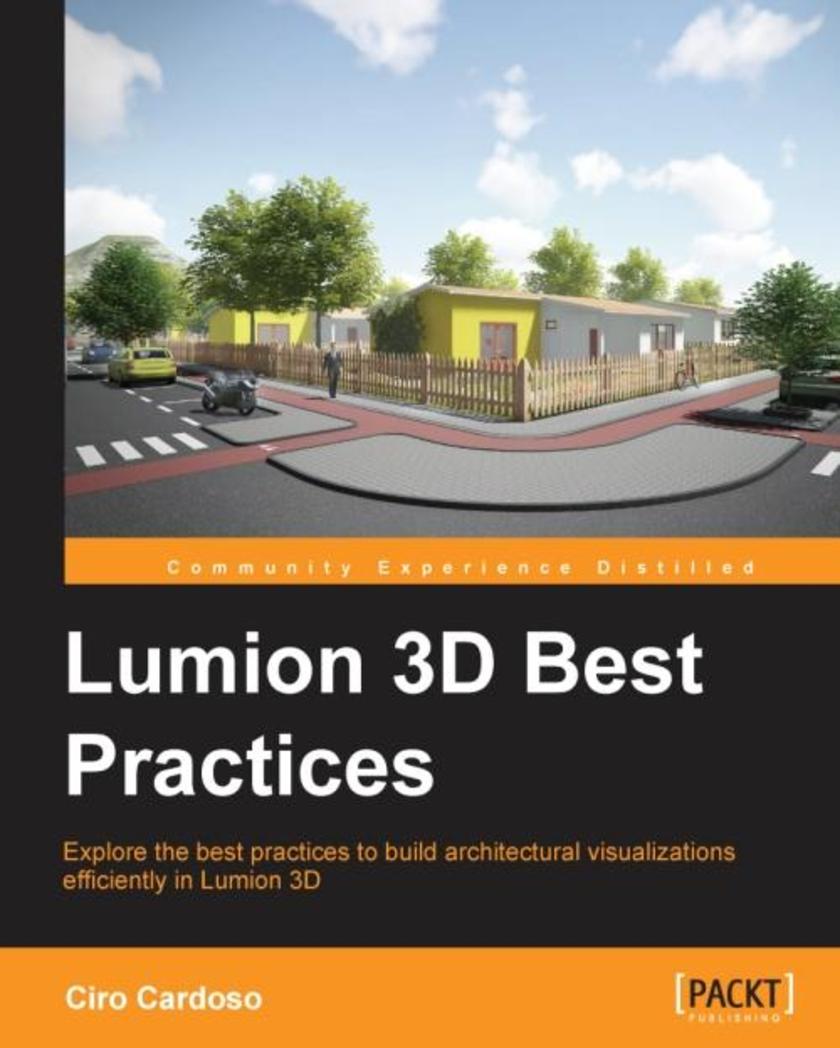
Lumion 3D Best Practices
¥63.21
This book is designed for advanced Lumion users who wish to apply these techniques to their own projects. The reader should be familiar with modeling knowledge and have at least a basic knowledge of a graphics editing program, such as Photoshop or Gimp.
Optimizing Hadoop for MapReduce
¥63.21
This book is an examplebased tutorial that deals with Optimizing Hadoop for MapReduce job performance. If you are a Hadoop administrator, developer, MapReduce user, or beginner, this book is the best choice available if you wish to optimize your clusters and applications. Having prior knowledge of creating MapReduce applications is not necessary, but will help you better understand the concepts and snippets of MapReduce class template code.


