


 购物车
购物车 个人中心
个人中心
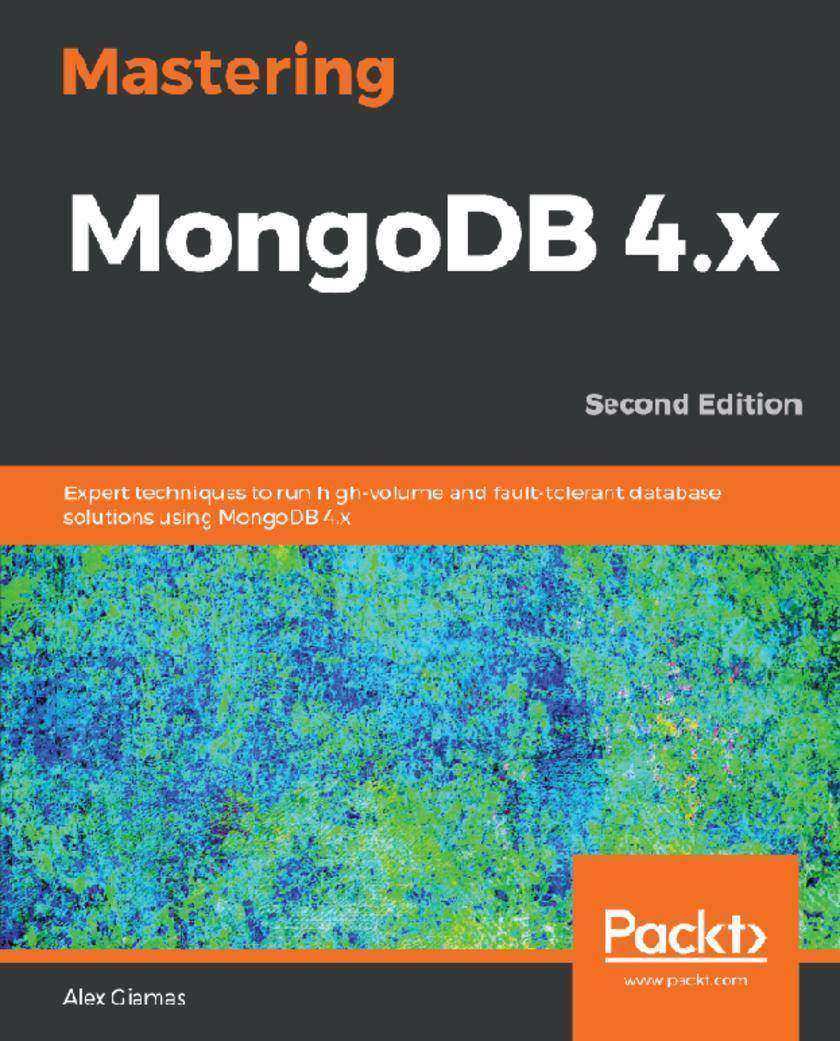
Mastering MongoDB 4.x
¥63.21
Leverage the power of MongoDB 4.x to build and administer fault-tolerant database applications Key Features * Master the new features and capabilities of MongoDB 4.x * Implement advanced data modeling, querying, and administration techniques in MongoDB * Includes rich case-studies and best practices followed by expert MongoDB developers Book Description MongoDB is the best platform for working with non-relational data and is considered to be the smartest tool for organizing data in line with business needs. The recently released MongoDB 4.x supports ACID transactions and makes the technology an asset for enterprises across the IT and fintech sectors. This book provides expertise in advanced and niche areas of managing databases (such as modeling and querying databases) along with various administration techniques in MongoDB, thereby helping you become a successful MongoDB expert. The book helps you understand how the newly added capabilities function with the help of some interesting examples and large datasets. You will dive deeper into niche areas such as high-performance configurations, optimizing SQL statements, configuring large-scale sharded clusters, and many more. You will also master best practices in overcoming database failover, and master recovery and backup procedures for database security. By the end of the book, you will have gained a practical understanding of administering database applications both on premises and on the cloud; you will also be able to scale database applications across all servers. What you will learn * Perform advanced querying techniques such as indexing and expressions * Configure, monitor, and maintain a highly scalable MongoDB environment * Master replication and data sharding to optimize read/write performance * Administer MongoDB-based applications on premises or on the cloud * Integrate MongoDB with big data sources to process huge amounts of data * Deploy MongoDB on Kubernetes containers * Use MongoDB in IoT, mobile, and serverless environments Who this book is for This book is ideal for MongoDB developers and database administrators who wish to become successful MongoDB experts and build scalable and fault-tolerant applications using MongoDB. It will also be useful for database professionals who wish to become certified MongoDB professionals. Some understanding of MongoDB and basic database concepts is required to get the most out of this book.

Blockchain for Decision Makers
¥63.21
Understand how blockchain works and explore a variety of strategies to implement it in your organization effectively Key Features * Become familiar with business challenges faced by companies when using blockchain * Discover how companies implement blockchain to monetize and secure their data * Study real-world examples to understand blockchain and its use in organizations Book Description In addition to cryptocurrencies, blockchain-based apps are being developed in different industries such as banking, supply chain, and healthcare to achieve digital transformation and enhance user experience. Blockchain is not only about Bitcoin or cryptocurrencies, but also about different technologies such as peer-to-peer networks, consensus mechanisms, and cryptography. These technologies together help sustain trustless environments in which digital value can be transferred between individuals without intermediaries. This book will help you understand the basics of blockchain such as consensus protocols, decentralized applications, and tokenization. You'll focus on how blockchain is used today in different industries and the technological challenges faced while implementing a blockchain strategy. The book also enables you, as a decision maker, to understand blockchain from a technical perspective and evaluate its applicability in your business. Finally, you'll get to grips with blockchain frameworks such as Hyperledger and Quorum and their usability. By the end of this book, you'll have learned about the current use cases of blockchain and be able to implement a blockchain strategy on your own. What you will learn * Become well-versed with how blockchain works * Understand the difference between blockchain and Bitcoin * Learn how blockchain is being used in different industry verticals such as finance and retail * Delve into the technological and organizational challenges of implementing blockchain * Explore the possibilities that blockchain can unlock for decision makers * Choose a blockchain framework best suited for your projects from options such as Ethereum and Hyperledger Fabric Who this book is for This book is for CXOs, business professionals, organization leaders, decision makers, technology enthusiasts, and managers who wish to understand how blockchain is implemented in different organizations, its impact, and how it can be customized according to business needs. Prior experience with blockchain is not required.

Advanced JavaScript
¥63.21
Gain a deeper understanding of JavaScript and apply it to build small applications in backend, frontend, and mobile frameworks. Key Features * Explore the new ES6 syntax, the event loop, and asynchronous programming * Learn the test-driven development approach when building apps * Master advanced JavaScript concepts to enhance your web developments skill Book Description If you are looking for a programming language to develop flexible and efficient applications, JavaScript is an obvious choice. Advanced JavaScript is a hands-on guide that takes you through JavaScript and its many features, one step at a time. You'll begin by learning how to use the new JavaScript syntax in ES6, and then work through the many other features that modern JavaScript has to offer. As you progress through the chapters, you’ll use asynchronous programming with callbacks and promises, handle browser events, and perform Document Object Model (DOM) manipulation. You'll also explore various methods of testing JavaScript projects. In the concluding chapters, you'll discover functional programming and learn to use it to build your apps. With this book as your guide, you'll also be able to develop APIs using Node.js and Express, create front-ends using React/Redux, and build mobile apps using React/Expo. By the end of Advanced JavaScript, you will have explored the features and benefits of JavaScript to build small applications. What you will learn * Examine major features in ES6 and implement those features to build applications * Create promise and callback handlers to work with asynchronous processes * Develop asynchronous flows using Promise chaining and async/await syntax * Manipulate the DOM with JavaScript * Handle JavaScript browser events * Explore Test Driven Development and build code tests with JavaScript code testing frameworks. * List the benefits and drawbacks of functional programming compared to other styles * Construct applications with the Node.js backend framework and the React frontend framework Who this book is for This book is designed to target anyone who wants to write JavaScript in a professional environment. We expect the audience to have used JavaScript in some capacity and be familiar with the basic syntax. This book would be good for a tech enthusiast wondering when to use generators or how to use Promises and Callbacks effectively, or a novice developer who wants to deepen their knowledge on JavaScript and understand TDD.
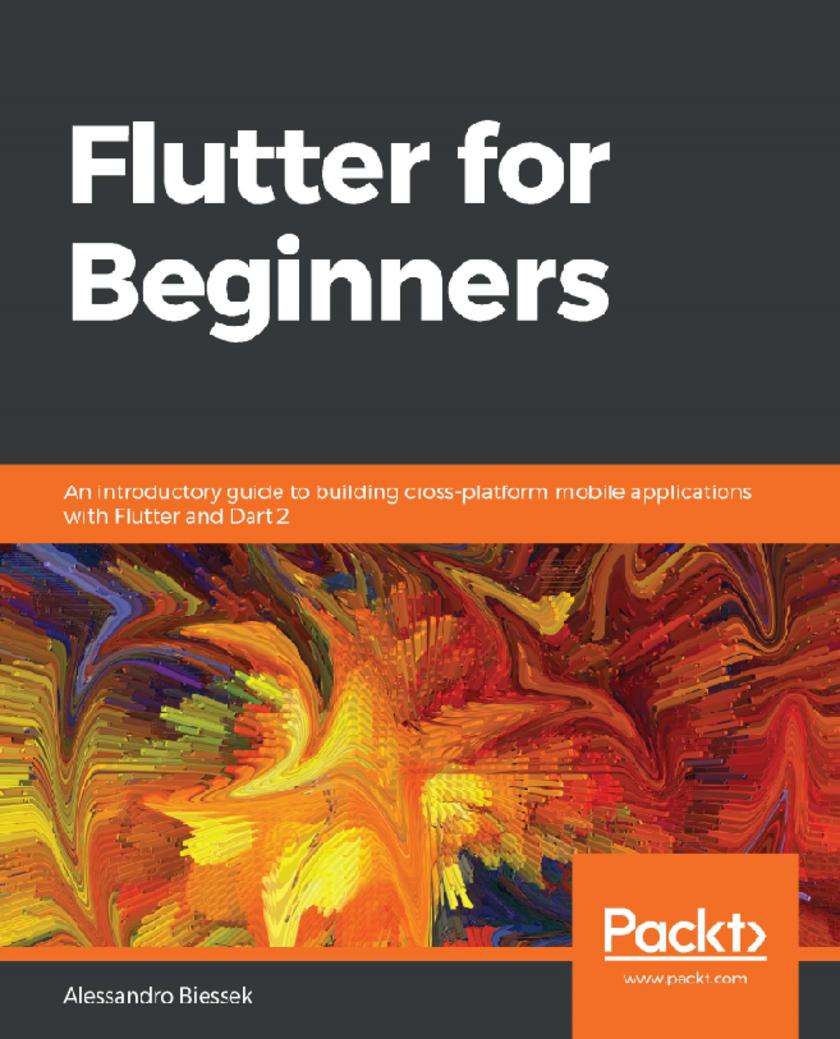
Flutter for Beginners
¥63.21
A step-by-step guide to learning Flutter and Dart 2 for creating Android and iOS mobile applications Key Features * Get up to speed with the basics of Dart programming and delve into Flutter development * Understand native SDK and third-party libraries for building Android and iOS applications using Flutter * Package and deploy your Flutter apps to achieve native-like performance Book Description Google Flutter is a cross-platform mobile platform that makes it easier to write secure and high-performance native apps for iOS and Android. This book begins by introducing you to the Flutter framework and basics of Dart. You’ll learn to set up the development environment to get started with your Flutter project. The book will guide you through designing the user interface and user input functions for your app. As you progress, you’ll explore the navigator widget to manage your app routes and understand how to add transitions between screens. You’ll then get to grips with developing your own plugin and discover how to structure good plugin code. The book will help you display a map from the Flutter app, add markers and interactions to it, and use the Google Places API. You’ll build on your knowledge by not only adding tests to create a bug-free app, but also preparing it for deployment on Apple's App Store and Google Play. In later chapters, you’ll learn to improve the user experience with advanced features such as map integrations, platform-specific code with native programming languages, and personalized animation options for designing intuitive UIs. By the end of this book, you’ll be well-versed with Dart programming and have the skills to develop your own mobile apps or build a career as a Dart and Flutter app developer. What you will learn * Understand the fundamentals of the Dart programming language * Explore the core concepts of the Flutter UI and how it compiles for multiple platforms * Develop Flutter plugins and widgets and understand how to structure good plugin code * Style your apps with widgets and learn the difference between stateful and stateless widgets * Add animation to your UI using Flutter's AnimatedBuilder component * Integrate your native code into your Flutter codebase for native app performance Who this book is for This book is for developers looking to learn Google's revolutionary framework, Flutter from scratch. No knowledge of Flutter or Dart is required. However, basic programming language knowledge will be helpful.

Performance Testing with JMeter 3 - Third Edition
¥63.21
A practical guide to help you undertand the ability of Apache jMeter to load and performance test various server types in a more efficient way. About This Book ? Use jMeter to create and run tests to improve the performance of your webpages and applications ? Learn to build a test plan for your websites and analyze the results ? Unleash the power of various features and changes introduced in Apache jMeter 3.0 Who This Book Is For This book is for software professionals who want to understand and improve the performance of their applications with Apache jMeter. What You Will Learn ? See why performance testing is necessary and learn how to set up JMeter ? Record and test with JMeter ? Handle various form inputs in JMeter and parse results during testing ? Manage user sessions in web applications in the context of a JMeter test ? Monitor JMeter results in real time ? Perform distributed testing with JMeter ? Get acquainted with helpful tips and best practices for working with JMeter In Detail JMeter is a Java application designed to load and test performance for web application. JMeter extends to improve the functioning of various other static and dynamic resources. This book is a great starting point to learn about JMeter. It covers the new features introduced with JMeter 3 and enables you to dive deep into the new techniques needed for measuring your website performance. The book starts with the basics of performance testing and guides you through recording your first test scenario, before diving deeper into JMeter. You will also learn how to configure JMeter and browsers to help record test plans. Moving on, you will learn how to capture form submission in JMeter, dive into managing sessions with JMeter and see how to leverage some of the components provided by JMeter to handle web application HTTP sessions. You will also learn how JMeter can help monitor tests in real-time. Further, you will go in depth into distributed testing and see how to leverage the capabilities of JMeter to accomplish this. You will get acquainted with some tips and best practices with regard to performance testing. By the end of the book, you will have learned how to take full advantage of the real power behind Apache JMeter. Style and approach The book is a practical guide starting with introducing the readers to the importance of automated testing. It will then be a beginner’s journey from getting introduced to Apache jMeter to an in-detail discussion of more advanced features and possibilities with it.

Apache Mesos Cookbook
¥63.21
Over 50 recipes on the core features of Apache Mesos and running big data frameworks in Mesos About This Book ? Learn to install and configure Mesos to suit the needs of your organization ? Follow step-by-step instructions to deploy application frameworks on top of Mesos, saving you many hours of research and trial and error ? Use this practical guide packed with powerful recipes to implement Mesos and easily integrate it with other application frameworks Who This Book Is For This book is for system administrators, engineers, and big data programmers. Basic experience with big data technologies such as Hadoop or Spark would be useful but is not essential. A working knowledge of Apache Mesos is expected. What You Will Learn ? Set up Mesos on different operating systems ? Use the Marathon and Chronos frameworks to manage multiple applications ? Work with Mesos and Docker ? Integrate Mesos with Spark and other big data frameworks ? Use networking features in Mesos for effective communication between containers ? Configure Mesos for high availability using Zookeeper ? Secure your Mesos clusters with SASL and Authorization ACLs ? Solve everyday problems and discover the best practices In Detail Apache Mesos is open source cluster sharing and management software. Deploying and managing scalable applications in large-scale clustered environments can be difficult, but Apache Mesos makes it easier with efficient resource isolation and sharing across application frameworks. The goal of this book is to guide you through the practical implementation of the Mesos core along with a number of Mesos supported frameworks. You will begin by installing Mesos and then learn how to configure clusters and maintain them. You will also see how to deploy a cluster in a production environment with high availability using Zookeeper. Next, you will get to grips with using Mesos, Marathon, and Docker to build and deploy a PaaS. You will see how to schedule jobs with Chronos. We’ll demonstrate how to integrate Mesos with big data frameworks such as Spark, Hadoop, and Storm. Practical solutions backed with clear examples will also show you how to deploy elastic big data jobs. You will find out how to deploy a scalable continuous integration and delivery system on Mesos with Jenkins. Finally, you will configure and deploy a highly scalable distributed search engine with ElasticSearch. Throughout the course of this book, you will get to know tips and tricks along with best practices to follow when working with Mesos. Style and approach This step-by-step guide is packed with powerful recipes on using Apache Mesos and shows its integration with containers and big data frameworks.

Full Stack Web Development with Raspberry Pi 3
¥63.21
Discover how to build full stack web applications with the Raspberry Pi 3 About This Book ? Leverage JavaScript, HTML5, and Cloud APIs to create visual representations and interactive web pages. ? Learn to install and use a Node.js-based web framework to develop Raspberry Pi 3-powered web applications. ? A step-by-step guide that will cover from setting up a embedded system to developing embedded, device-powered interactive web applications. Who This Book Is For This book is aimed at hobbyist, enthusiasts, and developers eager to develop embedded device-powered web applications. Prior programming experience with JavaScript, HTML5, and Node.JS will be beneficial. What You Will Learn ? Get up and running with your Raspberry Pi ? Go full stack! Learn about the end-to-end development process for web applications, right from the OS up to the actual HTML web interface ? Discover that JavaScript is one of the fastest growing languages today, and is the only language that can be used both on a browser and server. This book will empower you to develop in a complete JavaScript stack ? See that the IoT is everywhere!Connect your application to the outside world. Make use of sensors in your Raspberry Pi to give your application an edge, and unleash the full power of the Internet of Things ? Build a rich UI with beautiful charts and data visualizations that can run on any browser ? Make your software data-driven. Learn how to utilize SQLite to collect and analyze data from multiple systems In Detail Modern web technology and portable computing together have enabled huge advances in the Internet of Things (IoT) space,as well as in areas such as machine learning and big data. The Raspberry Pi is a very popular portable computer for running full stack web applications. This book will empower you to master this rapidly evolving technology to develop complex web applications and interfaces. This book starts by familiarizing you with the various components that make up the web development stack and that will integrate into your Raspberry Pi-powered web applications. It also introduces the Raspberry Pi computer and teach you how to get up and running with a brand new one. Next, this book introduces you to the different kinds of sensor you’ll use to make your applications; using these skills, you will be able to create full stack web applications and make them available to users via a web interface. Later, this book will also teach you how to build interactive web applications using JavaScript and HTML5 for the visual representation of sensor data. Finally, this book will teach you how to use a SQLite database to store and retrieve sensor data from multiple Raspberry Pi computers. By the end of this book you will be able to create complex full stack web applications on the Raspberry Pi 3 and will have improved your application’s performance and usability. Style and approach Step-by-step instructions on developing a full stack web application and deploying it to the Cloud.

Hands-On Deep Learning with TensorFlow
¥63.21
This book is your guide to exploring the possibilities in the field of deep learning, making use of Google's TensorFlow. You will learn about convolutional neural networks, and logistic regression while training models for deep learning to gain key insights into your data. About This Book ? Explore various possibilities with deep learning and gain amazing insights from data using Google’s brainchild-- TensorFlow ? Want to learn what more can be done with deep learning? Explore various neural networks with the help of this comprehensive guide ? Rich in concepts, advanced guide on deep learning that will give you background to innovate in your environment Who This Book Is For If you are a data scientist who performs machine learning on a regular basis, are familiar with deep neural networks, and now want to gain expertise in working with convoluted neural networks, then this book is for you. Some familiarity with C++ or Python is assumed. What You Will Learn ? Set up your computing environment and install TensorFlow ? Build simple TensorFlow graphs for everyday computations ? Apply logistic regression for classification with TensorFlow ? Design and train a multilayer neural network with TensorFlow ? Intuitively understand convolutional neural networks for image recognition ? Bootstrap a neural network from simple to more accurate models ? See how to use TensorFlow with other types of networks ? Program networks with SciKit-Flow, a high-level interface to TensorFlow In Detail Dan Van Boxel’s Deep Learning with TensorFlow is based on Dan’s best-selling TensorFlow video course. With deep learning going mainstream, making sense of data and getting accurate results using deep networks is possible. Dan Van Boxel will be your guide to exploring the possibilities with deep learning; he will enable you to understand data like never before. With the efficiency and simplicity of TensorFlow, you will be able to process your data and gain insights that will change how you look at data. With Dan’s guidance, you will dig deeper into the hidden layers of abstraction using raw data. Dan then shows you various complex algorithms for deep learning and various examples that use these deep neural networks. You will also learn how to train your machine to craft new features to make sense of deeper layers of data. In this book, Dan shares his knowledge across topics such as logistic regression, convolutional neural networks, recurrent neural networks, training deep networks, and high level interfaces. With the help of novel practical examples, you will become an ace at advanced multilayer networks, image recognition, and beyond. Style and Approach This book is your go-to guide to becoming a deep learning expert in your organization. Dan helps you evaluate common and not-so-common deep neural networks with the help of insightful examples that you can relate to, and show how they can be exploited in the real world with complex raw data.

Emotional Intelligence for IT Professionals
¥63.21
Learn the techniques used by the most successful IT people in the world. About This Book ? Get real-life case studies for different IT roles, developers, testers, analysts, project managers, DBAs ? Identify with your IT scenarios and take the right decision to move up in your career ? Improve your EQ and face any difficult scenario confidently and effectively Who This Book Is For This book is for professionals across the IT domain who work as developers, administrators, architects, administrators system analysts, and so on, who want to create a better working environment around them by improving their own emotional intelligence. This book assumes that you are a beginner to emotional intelligence and will help you understand the basic concepts before helping you with real life scenarios. What You Will Learn ? Improve your observation skills to understand people better ? Know how to identify what motivates you and those around you ? Develop strategies for working more effectively with others ? Increase your capacity to influence people and improve your communication skills ? Understand how to successfully complete tasks through other people ? Discover how to control the emotional content of your decision-making In Detail This book will help you discover your emotional quotient (EQ) through practices and techniques that are used by the most successful IT people in the world. It will make you familiar with the core skills of Emotional Intelligence, such as understanding the role that emotions play in life, especially in the workplace. You will learn to identify the factors that make your behavior consistent, not just to other employees, but to yourself. This includes recognizing, harnessing, predicting, fostering, valuing, soothing, increasing, decreasing, managing, shifting, influencing or turning around emotions and integrating accurate emotional information into decision-making, reasoning, problem solving, etc., because, emotions run business in a way that spreadsheets and logic cannot. When a deadline lurks, you’ll know the steps you need to take to keep calm and composed. You’ll find out how to meet the deadline, and not get bogged down by stress. We’ll explain these factors and techniques through real-life examples faced by IT employees and you’ll learn using the choices that they made. This book will give you a detailed analysis of the events and behavioral pattern of the employees during that time. This will help you improve your own EQ to the extent that you don’t just survive, but thrive in a competitive IT industry. Style and approach You will be taken through real-life events faced by IT employees in different scenarios. These real-world cases are analyzed along with the response of the employees, which will help you to develop your own emotion intelligence quotient and face any difficult scenario confidently and effectively.
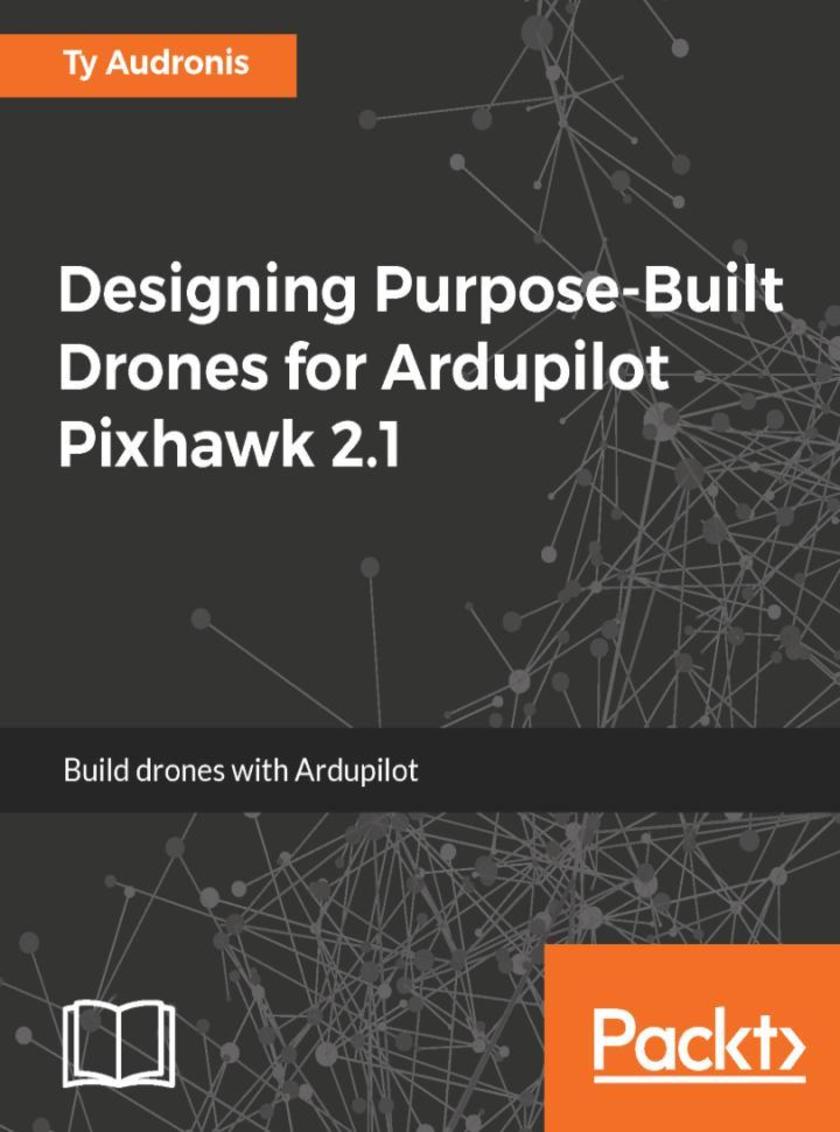
Designing Purpose-Built Drones for Ardupilot Pixhawk 2.1
¥63.21
Design and build land, air, and sea drones using Ardupilot with Pixhawk 2.1 About This Book ? Explore the best practices used by the top industry professionals that will not only help you build drones in time, but also build effective solutions to cater to. ? Navigate through the complexities of Ardupilot to put together a complete functional UAV and assemble your drone ? Learn through practical examples that help you build robust UAV flight and ground control components Who This Book Is For The primary audience for this book is anyone (enthusiasts and hobbyists) who dream of building their own drones. It will also help those who are trying to build UAVs for commercial purposes. Some prior experience with microcontrollers and electronics would be useful. What You Will Learn ? Kitbash "dumb" objects into smart ones ? Program Pixhawk for your drones ? Fabricate your own parts out of different materials ? Integrate Pixhawk into different types of drones ? Build and understand the significant difference between land, sea, and air drones ? Adapt old Pixhawk sensors to the new Pixhawk 2.1 plugs ? Become familiar with procedures for testing your new drones In Detail The Ardupilot platform is an application ecosystem that encompasses various OS projects for drone programming, flight control, and advanced functionalities.The Ardupilot platform supports many Comms and APIs, such as DroneKit, ROS, and MAVLink. It unites OS drone projects to provide a common codebase. With the help of this book, you will have the satisfaction of building a drone from scratch and exploring its many recreational uses (aerial photography, playing, aerial surveillance, and so on). This book helps individuals and communities build powerful UAVs for both personal and commercial purposes. You will learn to unleash the Ardupilot technology for building, monitoring, and controlling your drones.This is a step-by-step guide covering practical examples and instructions for assembling a drone, building ground control unit using microcontrollers, QgroundControl, and MissionPlanner. You can further build robotic applications on your drone utilizing critical software libraries and tools from the ROS framework. With the help of DroneKit and MAVLink (for reliable communication), you can customize applications via cloud and mobile to interact with your UAV. Style and approach Step-by-step instructions to help assemble your first drone with the Ardupilot platform.

Deep Learning Essentials
¥63.21
Get to grips with the essentials of deep learning by leveraging the power of Python About This Book ? Your one-stop solution to get started with the essentials of deep learning and neural network modeling ? Train different kinds of neural networks to tackle various problems in Natural Language Processing, computer vision, speech recognition, and more ? Covers popular Python libraries such as Tensorflow, Keras, and more, along with tips on training, deploying and optimizing your deep learning models in the best possible manner Who This Book Is For Aspiring data scientists and machine learning experts who have limited or no exposure to deep learning will find this book to be very useful. If you are looking for a resource that gets you up and running with the fundamentals of deep learning and neural networks, this book is for you. As the models in the book are trained using the popular Python-based libraries such as Tensorflow and Keras, it would be useful to have sound programming knowledge of Python. What You Will Learn ? Get to grips with the core concepts of deep learning and neural networks ? Set up deep learning library such as TensorFlow ? Fine-tune your deep learning models for NLP and Computer Vision applications ? Unify different information sources, such as images, text, and speech through deep learning ? Optimize and fine-tune your deep learning models for better performance ? Train a deep reinforcement learning model that plays a game better than humans ? Learn how to make your models get the best out of your GPU or CPU In Detail Deep Learning a trending topic in the field of Artificial Intelligence today and can be considered to be an advanced form of machine learning, which is quite tricky to master. This book will help you take your first steps in training efficient deep learning models and applying them in various practical scenarios. You will model, train, and deploy different kinds of neural networks such as Convolutional Neural Network, Recurrent Neural Network, and will see some of their applications in real-world domains including computer vision, natural language processing, speech recognition, and so on. You will build practical projects such as chatbots, implement reinforcement learning to build smart games, and develop expert systems for image captioning and processing. Popular Python library such as TensorFlow is used in this book to build the models. This book also covers solutions for different problems you might come across while training models, such as noisy datasets, small datasets, and more. This book does not assume any prior knowledge of deep learning. By the end of this book, you will have a firm understanding of the basics of deep learning and neural network modeling, along with their practical applications. Style and approach This step-by-step guide is filled with real-world practical examples and use cases to solve various deep learning problems.

Practical Computer Vision
¥63.21
A practical guide designed to get you from basics to current state of art in computer vision systems. About This Book ? Master the different tasks associated with Computer Vision and develop your own Computer Vision applications with ease ? Leverage the power of Python, Tensorflow, Keras, and OpenCV to perform image processing, object detection, feature detection and more ? With real-world datasets and fully functional code, this book is your one-stop guide to understanding Computer Vision Who This Book Is For This book is for machine learning practitioners and deep learning enthusiasts who want to understand and implement various tasks associated with Computer Vision and image processing in the most practical manner possible. Some programming experience would be beneficial while knowing Python would be an added bonus. What You Will Learn ? Learn the basics of image manipulation with OpenCV ? Implement and visualize image filters such as smoothing, dilation, histogram equalization, and more ? Set up various libraries and platforms, such as OpenCV, Keras, and Tensorflow, in order to start using computer vision, along with appropriate datasets for each chapter, such as MSCOCO, MOT, and Fashion-MNIST ? Understand image transformation and downsampling with practical implementations. ? Explore neural networks for computer vision and convolutional neural networks using Keras ? Understand working on deep-learning-based object detection such as Faster-R-CNN, SSD, and more ? Explore deep-learning-based object tracking in action ? Understand Visual SLAM techniques such as ORB-SLAM In Detail In this book, you will find several recently proposed methods in various domains of computer vision. You will start by setting up the proper Python environment to work on practical applications. This includes setting up libraries such as OpenCV, TensorFlow, and Keras using Anaconda. Using these libraries, you'll start to understand the concepts of image transformation and filtering. You will find a detailed explanation of feature detectors such as FAST and ORB; you'll use them to find similar-looking objects. With an introduction to convolutional neural nets, you will learn how to build a deep neural net using Keras and how to use it to classify the Fashion-MNIST dataset. With regard to object detection, you will learn the implementation of a simple face detector as well as the workings of complex deep-learning-based object detectors such as Faster R-CNN and SSD using TensorFlow. You'll get started with semantic segmentation using FCN models and track objects with Deep SORT. Not only this, you will also use Visual SLAM techniques such as ORB-SLAM on a standard dataset. By the end of this book, you will have a firm understanding of the different computer vision techniques and how to apply them in your applications. Style and approach Step-by-step guide filled with real-world, practical examples for understanding and applying various Computer Vision techniques

R Deep Learning Projects
¥63.21
5 real-world projects to help you master deep learning concepts About This Book ? Master the different deep learning paradigms and build real-world projects related to text generation, sentiment analysis, fraud detection, and more ? Get to grips with R's impressive range of Deep Learning libraries and frameworks such as deepnet, MXNetR, Tensorflow, H2O, Keras, and text2vec ? Practical projects that show you how to implement different neural networks with helpful tips, tricks, and best practices Who This Book Is For Machine learning professionals and data scientists looking to master deep learning by implementing practical projects in R will find this book a useful resource. A knowledge of R programming and the basic concepts of deep learning is required to get the best out of this book. What You Will Learn ? Instrument Deep Learning models with packages such as deepnet, MXNetR, Tensorflow, H2O, Keras, and text2vec ? Apply neural networks to perform handwritten digit recognition using MXNet ? Get the knack of CNN models, Neural Network API, Keras, and TensorFlow for traffic sign classification ? Implement credit card fraud detection with Autoencoders ? Master reconstructing images using variational autoencoders ? Wade through sentiment analysis from movie reviews ? Run from past to future and vice versa with bidirectional Long Short-Term Memory (LSTM) networks ? Understand the applications of Autoencoder Neural Networks in clustering and dimensionality reduction In Detail R is a popular programming language used by statisticians and mathematicians for statistical analysis, and is popularly used for deep learning. Deep Learning, as we all know, is one of the trending topics today, and is finding practical applications in a lot of domains. This book demonstrates end-to-end implementations of five real-world projects on popular topics in deep learning such as handwritten digit recognition, traffic light detection, fraud detection, text generation, and sentiment analysis. You'll learn how to train effective neural networks in R—including convolutional neural networks, recurrent neural networks, and LSTMs—and apply them in practical scenarios. The book also highlights how neural networks can be trained using GPU capabilities. You will use popular R libraries and packages—such as MXNetR, H2O, deepnet, and more—to implement the projects. By the end of this book, you will have a better understanding of deep learning concepts and techniques and how to use them in a practical setting. Style and approach This book's unique, learn-as-you-do approach ensures the reader builds on his understanding of deep learning progressively with each project. This book is designed in such a way that implementing each project will empower you with a unique skillset and enable you to implement the next project more confidently.

Ethereum Smart Contract Development
¥63.21
Become an Ethereum Blockchain developer using a blend of concepts and hands-on implementations About This Book ? Understand the Ethereum Ecosystem and its differences from its rich cousin Bitcoin ? Explore the Solidity programming language and smart contract optimizations ? Get a developer’s perspective of Blockchain-as-a-technology with exposure to common challenges faced while building decentralized applications Who This Book Is For If you want to know the ins and outs of the Ethereum network and build your own decentralized applications, then this book is what you need! This book is for anyone who is interested in blockchain and wants to become an Ethereum developer. It’s ideal for existing Ethereum developers who want to develop Ethereum using smart contracts. Basic knowledge of cryptography is expected but is not mandatory. What You Will Learn ? Know how to build your own smart contracts and cryptocurrencies ? Understand the Solidity language ? Find out about data types, control structure, functions, inheritance, mathematical operations, and much more ? See the various types of forks and discover how they are related to Ethereum ? Get to know the various concepts of web3.js and its APIs so you can build client-side apps ? Build a DAO from scratch and acquire basic knowledge of DApps on Ethercast ? Be guided through the project so you can optimize EVM for smart contracts ? Build your own decentralized applications (DApps) by taking a practical approach In Detail Ethereum is a public, blockchain-based distributed computing platform featuring smart contract functionality. This book is your one-stop guide to blockchain and Ethereum smart contract development. We start by introducing you to the basics of blockchain. You'll learn about hash functions, Merkle trees, forking, mining, and much more. Then you'll learn about Ethereum and smart contracts, and we'll cover Ethereum virtual machine (EVM) in detail. Next, you'll get acquainted with DApps and DAOs and see how they work. We'll also delve into the mechanisms of advanced smart contracts, taking a practical approach. You'll also learn how to develop your own cryptocurrency from scratch in order to understand the business behind ICO. Further on, you'll get to know the key concepts of the Solidity programming language, enabling you to build decentralized blockchain-based applications. We'll also look at enterprise use cases, where you'll build a decentralized microblogging site. At the end of this book, we discuss blockchain-as-a-service, the dark web marketplace, and various advanced topics so you can get well versed with the blockchain principles and ecosystem. Style and approach This comprehensive guide takes a practical approach by showing you how to implement Blockchain in different Enterprise use cases. You’ll quickly brush up on the basics of the blockchain database, then learn the advanced intricacies of smart contract development.
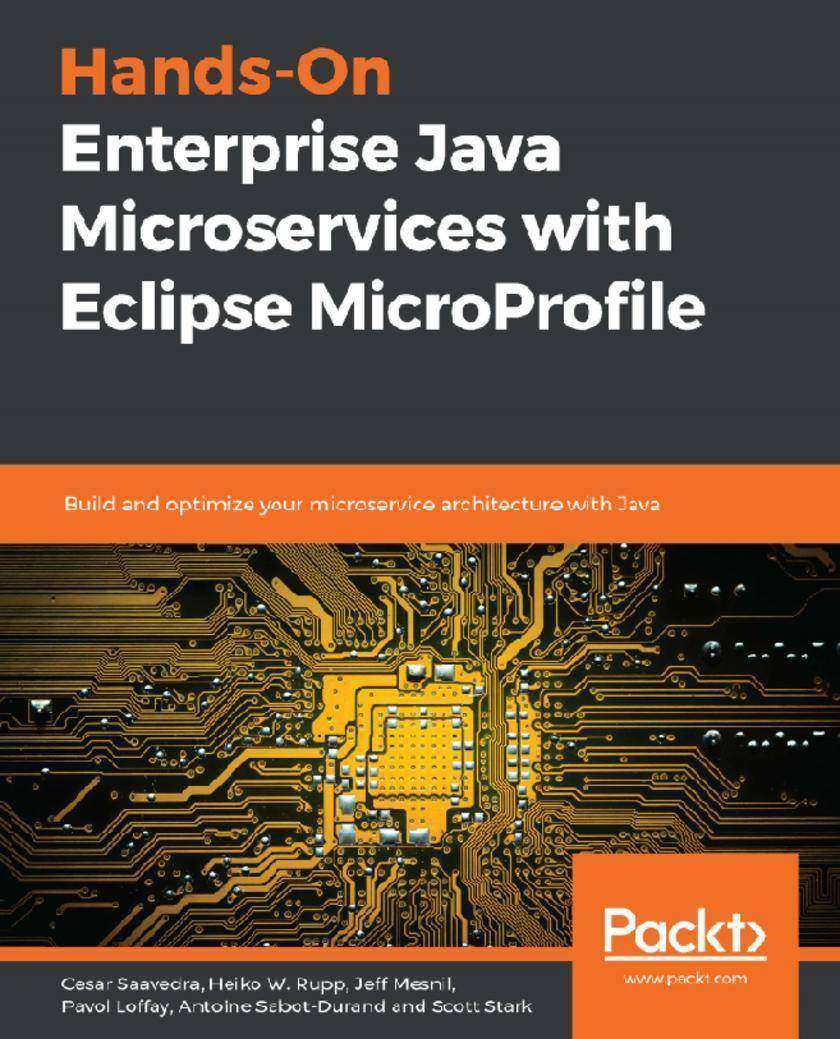
Hands-On Enterprise Java Microservices with Eclipse MicroProfile
¥63.21
An effective guide to designing, building, and deploying enterprise Java microservices with Eclipse MicroProfile Key Features * Create cloud-native microservices with ease using this detailed guide * Avoid vendor lock-in when implementing microservices using Eclipse MicroProfile * Discover why MicroProfile is a great specification for building microservices in multi-cloud environments Book Description Eclipse MicroProfile has gained momentum in the industry as a multi-vendor, interoperable, community-driven specification. It is a major disruptor that allows organizations with large investments in enterprise Java to move to microservices without spending a lot on retraining their workforce. This book is based on MicroProfile 2.2, however, it will guide you in running your applications in MicroProfile 3.0. You'll start by understanding why microservices are important in the digital economy and how MicroProfile addresses the need for enterprise Java microservices. You'll learn about the subprojects that make up a MicroProfile, its value proposition to organizations and developers, and its processes and governance. As you advance, the book takes you through the capabilities and code examples of MicroProfile’s subprojects - Config, Fault Tolerance, Health Check, JWT Propagation, Metrics, and OpenTracing. Finally, you’ll be guided in developing a conference application using Eclipse MicroProfile, and explore possible scenarios of what’s next in MicroProfile with Jakarta EE. By the end of this book, you'll have gained a clear understanding of Eclipse MicroProfile and its role in enterprise Java microservices. What you will learn * Understand why microservices are important in the digital economy * Analyze how MicroProfile addresses the need for enterprise Java microservices * Test and secure your applications with Eclipse MicroProfile * Get to grips with various MicroProfile capabilities such as OpenAPI and Typesafe REST Client * Explore reactive programming with MicroProfile Stream and Messaging candidate APIs * Discover and implement coding best practices using MicroProfile Who this book is for If you’re a Java developer who wants to create enterprise microservices, this book is for you. Familiarity with Java EE and the concept of microservices will help you get the most out of this book.
Learn Python by Building Data Science Applications
¥63.21
Understand the constructs of the Python programming language and use them to build data science projects Key Features * Learn the basics of developing applications with Python and deploy your first data application * Take your first steps in Python programming by understanding and using data structures, variables, and loops * Delve into Jupyter, NumPy, Pandas, SciPy, and sklearn to explore the data science ecosystem in Python Book Description Python is the most widely used programming language for building data science applications. Complete with step-by-step instructions, this book contains easy-to-follow tutorials to help you learn Python and develop real-world data science projects. The “secret sauce” of the book is its curated list of topics and solutions, put together using a range of real-world projects, covering initial data collection, data analysis, and production. This Python book starts by taking you through the basics of programming, right from variables and data types to classes and functions. You’ll learn how to write idiomatic code and test and debug it, and discover how you can create packages or use the range of built-in ones. You’ll also be introduced to the extensive ecosystem of Python data science packages, including NumPy, Pandas, scikit-learn, Altair, and Datashader. Furthermore, you’ll be able to perform data analysis, train models, and interpret and communicate the results. Finally, you’ll get to grips with structuring and scheduling scripts using Luigi and sharing your machine learning models with the world as a microservice. By the end of the book, you’ll have learned not only how to implement Python in data science projects, but also how to maintain and design them to meet high programming standards. What you will learn * Code in Python using Jupyter and VS Code * Explore the basics of coding – loops, variables, functions, and classes * Deploy continuous integration with Git, Bash, and DVC * Get to grips with Pandas, NumPy, and scikit-learn * Perform data visualization with Matplotlib, Altair, and Datashader * Create a package out of your code using poetry and test it with PyTest * Make your machine learning model accessible to anyone with the web API Who this book is for If you want to learn Python or data science in a fun and engaging way, this book is for you. You’ll also find this book useful if you’re a high school student, researcher, analyst, or anyone with little or no coding experience with an interest in the subject and courage to learn, fail, and learn from failing. A basic understanding of how computers work will be useful.
Learn Ethereum
¥63.21
Explore the blockchain-based decentralized platform and understand how Ethereum works with Dapps examples Key Features * Explore the Ethereum ecosystem and understand the latest research on the platform * Build decentralized apps (Dapps) using smart contracts and Ethereum with the help of practical examples * Learn to make your decentralized applications fast and highly secure Book Description Ethereum is a blockchain-based, decentralized computing platform that allows running smart contracts. This book provides a basic overview of how Ethereum works, its ecosystem, mining process, and the consensus mechanism. It also demonstrates a step-by-step approach for building decentralized applications. This book begins with the very basics of Blockchain technology. Then it dives deep into the Ethereum architecture, framework and tools in its ecosystem. It also provides you an overview of ongoing research on Ethereum, for example, Layer 1 and 2 scaling solution, Stablecoin, ICO/STO/IEO, etc. Next, it explains Solidity language in detail, and provides step-by-step instructions for designing, developing, testing, deploying, and monitoring decentralized applications. In addition, you’ll learn how to use Truffle, Remix, Infura, Metamask, and many other Ethereum technologies. It’ll also help you develop your own cryptocurrency by creating ERC20, and ERC721 smart contracts from scratch. Finally, we explain private blockchains, and you learn how to interact with smart contracts through wallets. What you will learn * Understand the concepts of blockchain and cryptocurrency * Master Ethereum development tools such as Truffle, Remix IDE and Infura * Delve into smart contract development * Develop DApps frontend using Node.js, React.js, and Web3js API * Learn Etherscan and other tools to secure and monitor smart contracts * Develop and debug smart contracts by working with Remix * Apply Truffle suite to compile, migrate, and unit test smart contracts * Explore smart contracts such as ERC20 token and decentralized digital market Who this book is for This book is for all developers and architects who want to explore Ethereum blockchain fundamentals and get started with building real-world decentralized applications. Knowledge of an object-oriented programming language such as JavaScript will be useful but not mandatory.
Julia High Performance
¥63.21
Design and develop high performing programs with Julia About This Book Learn to code high reliability and high performance programs Stand out from the crowd by developing code that runs faster than your peers’ codes This book is intended for developers who are interested in high performance technical programming. Who This Book Is For This book is for beginner and intermediate Julia programmers who are interested in high performance technical computing. You will have a basic familiarity with Julia syntax, and have written some small programs in the language. What You Will Learn Discover the secrets behind Julia’s speed Get a sense of the possibilities and limitations of Julia’s performance Analyze the performance of Julia programs Measure the time and memory taken by Julia programs Create fast machine code using Julia’s type information Define and call functions without compromising Julia’s performance Understand number types in Julia Use Julia arrays to write high performance code Get an overview of Julia’s distributed computing capabilities In Detail Julia is a high performance, high-level dynamic language designed to address the requirements of high-level numerical and scientific computing. Julia brings solutions to the complexities faced by developers while developing elegant and high performing code. Julia High Performance will take you on a journey to understand the performance characteristics of your Julia programs, and enables you to utilize the promise of near C levels of performance in Julia. You will learn to analyze and measure the performance of Julia code, understand how to avoid bottlenecks, and design your program for the highest possible performance. In this book, you will also see how Julia uses type information to achieve its performance goals, and how to use multuple dispatch to help the compiler to emit high performance machine code. Numbers and their arrays are obviously the key structures in scientific computing – you will see how Julia’s design makes them fast. The last chapter will give you a taste of Julia’s distributed computing capabilities. Style and approach This is a hands-on manual that will give you good explanations about the important concepts related to Julia programming.
Getting Started with React
¥63.21
A light but powerful way to build dynamic real-time applications using ReactJS About This Book Learn how to develop powerful JavaScript applications using ReactJS Integrate a React-based app with an external API (Facebook login) while using React components, with the Facebook developer app Implement the Reactive paradigm to build stateless and asynchronous apps with React Who This Book Is For This book is for any front-end web or mobile-app developer who wants to learn ReactJS. Knowledge of basic JavaScript will give you a good head start with the book. What You Will Learn Understand the ReactJS basics through an overview Install and create your first React component Refactor the ReactJS component using JSX Integrate your React application with the Facebook login and Graph API, then fetch data from your liked pages in Facebook and display them in a browser Handle UI elements events with React, respond to users input, and create stateful components Use some core lifecycle events for integration and find out about ES6 syntaxes in the React world Understand the FLUX architecture and create an application using FLUX with React Make a component more reusable with mixins and validation helpers and structure your components properly Explore techniques to test your ReactJS code Deploy your code using webpack and Gulp In Detail ReactJS, popularly known as the V (view) of the MVC architecture, was developed by the Facebook and Instagram developers. It follows a unidirectional data flow, virtual DOM, and DOM difference that are generously leveraged in order to increase the performance of the UI. Getting Started with React will help you implement the Reactive paradigm to build stateless and asynchronous apps with React. We will begin with an overview of ReactJS and its evolution over the years, followed by building a simple React component. We will then build the same react component with JSX syntax to demystify its usage. You will see how to configure the Facebook Graph API, get your likes list, and render it using React. Following this, we will break the UI into components and you’ll learn how to establish communication between them and respond to users input/events in order to have the UI reflect their state. You’ll also get to grips with the ES6 syntaxes. Moving ahead, we will delve into the FLUX and its architecture, which is used to build client-side web applications and complements React’s composable view components by utilizing a unidirectional data flow. Towards the end, you’ll find out how to make your components reusable, and test and deploy them into a production environment. Finally, we’ll briefly touch on other topics such as React on the server side, Redux and some advanced concepts. Style and approach The book follows a step-by-step, practical, tutorial approach with examples that explain the key concepts of ReactJS. Each topic is sequentially explained and contextually placed to give sufficient details of ReactJS.
Yocto for Raspberry Pi
¥63.21
Create unique and amazing projects by using the powerful combination of Yocto and Raspberry Pi About This Book Set up and configure the Yocto Project efficiently with Raspberry Pi Deploy multimedia applications from existing Yocto/OE layers An easy-to-follow guide to utilize your custom recipes on your Raspberry Pi Who This Book Is For If you are a student or a developer of embedded software, embedded Linux engineer or embedded systems in competence with Raspberry Pi and want to discover the Yocto Project, then this book is for you. Experience with Yocto is not needed. What You Will Learn Explore the basic concept of Yocto's build system and how it is organized in order to use it efficiently with Raspberry Pi Generate your first image with Yocto for the Raspberry Pi Understand how to customize your Linux kernel within the Yocto Project Customize your image in order to integrate your own applications Write your own recipes for your graphical applications Integrate a custom layer for the Raspberry Pi In Detail The Yocto Project is a Linux Foundation workgroup, which produces tools (SDK) and processes (configuration, compilation, installation) that will enable the creation of Linux distributions for embedded software, independent of the architecture of embedded software (Raspberry Pi, i.MX6, and so on). It is a powerful build system that allows you to master your personal or professional development. This book presents you with the configuration of the Yocto Framework for the Raspberry Pi, allowing you to create amazing and innovative projects using the Yocto/OpenEmbedded eco-system. It starts with the basic introduction of Yocto's build system, and takes you through the setup and deployment steps for Yocto. It then helps you to develop an understanding of Bitbake (the task scheduler), and learn how to create a basic recipe through a GPIO application example. You can then explore the different types of Yocto recipe elements (LICENSE, FILES, SRC_URI, and so on). Next, you will learn how to customize existing recipes in Yocto/OE layers and add layers to your custom environment (qt5 for example). Style and approach A step by step guide covering the fundamentals to create amazing new projects with Raspberry Pi and Yocto.
iOS Application Development with OpenCV 3
¥63.21
Create four mobile apps and explore the world through photography and computer vision About This Book Efficiently harness iOS and OpenCV to capture and process high-quality images at high speed Develop photographic apps and augmented reality apps quickly and easily Detect, recognize, and morph faces and objects Who This Book Is For If you want to do computational photography and computer vision on Apple’s mobile devices, then this book is for you. No previous experience with app development or OpenCV is required. However, basic knowledge of C++ or Objective-C is recommended. What You Will Learn Use Xcode and Interface Builder to develop iOS apps Obtain OpenCV's standard modules and build extra modules from source Control all the parameters of the iOS device's camera Capture, save, and share photos and videos Analyze colors, shapes, and textures in ordinary and specialized photographs Blend and compare images to create special photographic effects and augmented reality tools Detect faces and morph facial features Classify coins and other objects In Detail iOS Application Development with OpenCV 3 enables you to turn your smartphone camera into an advanced tool for photography and computer vision. Using the highly optimized OpenCV library, you will process high-resolution images in real time. You will locate and classify objects, and create models of their geometry. As you develop photo and augmented reality apps, you will gain a general understanding of iOS frameworks and developer tools, plus a deeper understanding of the camera and image APIs. After completing the book's four projects, you will be a well-rounded iOS developer with valuable experience in OpenCV. Style and approach The book is practical, creative, and precise. It shows you the steps to create and customize five projects that solve important problems for beginners in mobile app development and computer vision. Complete source code and numerous visual aids are included in each chapter. Experimentation is an important part of the book. You will use computer vision to explore the real world, and then you will refine the projects based on your findings.


