


 购物车
购物车 个人中心
个人中心
Windows Server 2016 Administration Cookbook
¥54.49
This book contains more than 65 recipes that will equip you with what you need to know to work with Windows 2016 Server. This book will help you learn how to administrate your Windows Server for optimal performance. About This Book ? A focussed guide to help you with the core functionalities of Windows Server 2016 ? Explore tasks that will help you build a datacenter from scratch using Windows Server 2016 ? Step-by-step instructions for common Windows Server administration duties Who This Book Is For This book is for system administrators or IT professionals who want the skills to manage and maintain the core infrastructure of a Windows Server 2016 environment.? Prior experience in Windows Server 2012 R2 environments will be helpful. What You Will Learn ? Become skilled in the navigation of Windows Server 2016, and explore the technologies and options that it provides ? Build the infrastructure required for a successful Windows Server network ? Move away from those open-source web server platforms and start migrating your websites to Server 2016's Internet Information Services today ? Provide a centralized point for users to access applications and data by confguring Remote Desktop Services ? Compose optimal Group Policies In Detail Windows Server 2016 is an operating system designed to run on servers. It supports enterprise-level data storage, communications, management, and applications. This book contains specially selected, detailed help on core, essential administrative tasks of Windows Server 2016. This book starts by helping you to navigate the interface of Windows Server 2016, and quickly shifts gears to implementing roles that are necessarily in any Microsoft-centric datacenter. This book will also help you leverage the web services platform built into Windows Server 2016, available to anyone who runs this latest and greatest Server operating system. Further, you will also learn to compose optimal Group Policies and monitor system performance and IP address management. This book will be a handy quick-reference guide for any Windows Server administrator, providing easy to read, step-by-step instructions for many common administrative tasks that will be part of any Server Administrator’s job description as they administer their Windows Server 2016 powered servers. The material in the book has been selected from the content of Packt's Windows Server 2016 Cookbook by Jordan Krause to provide a specific focus on key Windows Server administration tasks. Style and approach This book contains recipes that have been specially selected to help with the core, essential administrative tasks of Windows Server 2016.
Python for Offensive PenTest
¥54.49
Your one-stop guide to using Python, creating your own hacking tools, and making the most out of resources available for this programming language About This Book ? Comprehensive information on building a web application penetration testing framework using Python ? Master web application penetration testing using the multi-paradigm programming language Python ? Detect vulnerabilities in a system or application by writing your own Python scripts Who This Book Is For This book is for ethical hackers; penetration testers; students preparing for OSCP, OSCE, GPEN, GXPN, and CEH; information security professionals; cybersecurity consultants; system and network security administrators; and programmers who are keen on learning all about penetration testing. What You Will Learn ? Code your own reverse shell (TCP and HTTP) ? Create your own anonymous shell by interacting with Twitter, Google Forms, and SourceForge ? Replicate Metasploit features and build an advanced shell ? Hack passwords using multiple techniques (API hooking, keyloggers, and clipboard hijacking) ? Exfiltrate data from your target ? Add encryption (AES, RSA, and XOR) to your shell to learn how cryptography is being abused by malware ? Discover privilege escalation on Windows with practical examples ? Countermeasures against most attacks In Detail Python is an easy-to-learn and cross-platform programming language that has unlimited third-party libraries. Plenty of open source hacking tools are written in Python, which can be easily integrated within your script. This book is packed with step-by-step instructions and working examples to make you a skilled penetration tester. It is divided into clear bite-sized chunks, so you can learn at your own pace and focus on the areas of most interest to you. This book will teach you how to code a reverse shell and build an anonymous shell. You will also learn how to hack passwords and perform a privilege escalation on Windows with practical examples. You will set up your own virtual hacking environment in VirtualBox, which will help you run multiple operating systems for your testing environment. By the end of this book, you will have learned how to code your own scripts and mastered ethical hacking from scratch. Style and approach This book follows a practical approach that takes a gradual learning curve, building up your knowledge about ethical hacking, right from scratch. The focus is less on theory and more on practical examples through a step-by-step approach.
CCENT/CCNA: ICND1 100-105 Certification Guide
¥54.49
Become familiar with ICND1 (100-105) exam objectives, and learn how to get ready for the exam About This Book ? A step by step guide that will build you skills from basic concepts to completely understanding network communication ? Comprehensive coverage to help you implement the knowledge you've gained in real-world scenarios ? Take practice questions and mock tests to check how prepared you are for the CCENT exam Who This Book Is For If you are a Network Administrator, Network Technician, Networking professional, or would simply like to prepare for your CCENT certification, then this book is for you. Some basic understanding of networks and how they work would be helpful. Sufficient information will be provided to those new to this field. What You Will Learn ? Get to grips with the computer network concepts ? Understand computer network components and learn to create a computer network ? Understand switching and learn how to configure a switch ? Understand routing and learn how to configure a router ? Understand network services and the maintenance process ? Learn how to troubleshoot networking issues ? Become familiar with, and learn how to prepare for, the ICND1 100-105 exam In Detail CCENT is the entry-level certification for those looking to venture into the networking world. This guide will help you stay up-to date with your networking skills. This book starts with the basics and will take you through everything essential to pass the certification exam. It extensively covers IPv4 and IPv6 addressing, IP data networks, switching and routing, network security, and much more—all in some detail. This guide will provide real-world examples with a bunch of hands-on labs to give you immense expertise in important networking tasks, with a practical approach. Each chapter consists of practice questions to help you take up a challenge from what you have procured. This book ends with mock tests with several examples to help you confidently pass the certification. This Certification Guide consists of everything you need to know in order to pass the ICND 1 100-105 Exam, thus obtaining a CCENT certification. However, practicing with real switches and routers or a switch or router simulator will help you succeed. Style and approach This book is for everyone! It will help beginners who are taking their first steps into the world of computer networks. At the same time, this book can be used by intermediate and advanced network administrators to recap computer network concepts. It will be a handy certification guide for anyone who is studying and preparing to take the Interconnecting Cisco Networking Devices Part 1 (100-105) exam, thus obtaining CCENT certification, which will be a handy professional asset.
Hands-On Cryptography with Python
¥54.49
Learn to evaluate and compare data encryption methods and attack cryptographic systems About This Book ? Explore popular and important cryptographic methods ? Compare cryptographic modes and understand their limitations ? Learn to perform attacks on cryptographic systems Who This Book Is For Hands-On Cryptography with Python is for security professionals who want to learn to encrypt and evaluate data, and compare different encryption methods. What You Will Learn ? Protect data with encryption and hashing ? Explore and compare various encryption methods ? Encrypt data using the Caesar Cipher technique ? Make hashes and crack them ? Learn how to use three NIST-recommended systems: AES, SHA, and RSA ? Understand common errors in encryption and exploit them In Detail Cryptography is essential for protecting sensitive information, but it is often performed inadequately or incorrectly. Hands-On Cryptography with Python starts by showing you how to encrypt and evaluate your data. The book will then walk you through various data encryption methods,such as obfuscation, hashing, and strong encryption, and will show how you can attack cryptographic systems. You will learn how to create hashes, crack them, and will understand why they are so different from each other. In the concluding chapters, you will use three NIST-recommended systems: the Advanced Encryption Standard (AES), the Secure Hash Algorithm (SHA), and the Rivest-Shamir-Adleman (RSA). By the end of this book, you will be able to deal with common errors in encryption. Style and approach A practical guide that will help the readers to encrypt their data with ease
Lean Product Management
¥54.49
A guide to product management exploring the best practices: identifying the impact-driven product, planning for success, setting up and measuring time-bound metrics, and developing a lean product roadmap. About This Book ? Identifying Impact-Driven Products ? Investing in Key Business Outcomes ? Value mapping to maintain a lean product backlog ? Utilizing time-bound product metrics ? Eliminating process waste Who This Book Is For If you are leading a team that is building a new product, then this book is for you. The book is targeted at product managers, functional leads in enterprises, business sponsors venturing into new product offerings, product development teams, and start-up founders. What You Will Learn ? How do you execute ideas that matter? ? How can you define the right success metrics? ? How can you plan for product success? ? How do you capture qualitative and quantitative insights about the product? ? How do you know whether your product aligns to desired business goals? ? What processes are slowing you down? In Detail Lean Product Management is about finding the smartest way to build an Impact Driven Product that can deliver value to customers and meet business outcomes when operating under internal and external constraints. Author, Mangalam Nandakumar, is a product management expert, with over 17 years of experience in the field. Businesses today are competing to innovate. Cost is no longer the constraint, execution is. It is essential for any business to harness whatever competitive advantage they can, and it is absolutely vital to deliver the best customer experience possible. The opportunities for creating impact are there, but product managers have to improvise on their strategy every day in order to capitalize on them. This is the Agile battleground, where you need to stay Lean and be able to respond to abstract feedback from an ever shifting market. This is where Lean Product Management will help you thrive. Lean Product Management is an essential guide for product managers, and to anyone embarking on a new product development. Mangalam Nandakumar will help you to align your product strategy with business outcomes and customer impact. She introduces the concept of investing in Key Business Outcomes as part of the product strategy in order to provide an objective metric about which product idea and strategy to pursue. You will learn how to create impactful end-to-end product experiences by engaging stakeholders and reacting to external feedback. Style and approach The first few chapters of Lean Product Management address how to arrive at a product road map. It guides you through the process of getting stakeholder buy-in, prioritizing Key Business Outcomes and identifying the Impact-Driven Product, and arriving at a Cost-Impact matrix through value mapping. The next few chapters address how to define time-bound success metrics. It guides you through the process of creating an end-to-end product experience, capturing qualitative and quantitative insights to track product performance and alignment to short and long term product strategy. The last set of chapters of the book address process bottlenecks that hold teams back from building products right and how to eliminate process waste.
MERN Quick Start Guide
¥54.49
Build web applications with MongoDB, ExpressJS, React, and Node About This Book ? Build applications with the MERN stack ? Work with each component of the MERN stack ? Become confident with MERN and ready for more! Who This Book Is For The book is for JavaScript developers who want to get stated with the MERN Stack. What You Will Learn ? Get started with the MERN stack ? Install Node.js and configure MongoDB ? Build RESTful APIs with Express.js and Mongoose ? Build real-time applications with Socket.IO ? Manage synchronous and asynchronous data flows with Redux ? Build web applications with React In Detail The MERN stack is a collection of great tools—MongoDB, Express.js, React, and Node—that provide a strong base for a developer to build easily maintainable web applications. With each of them a JavaScript or JavaScript-based technology, having a shared programming language means it takes less time to develop web applications. This book focuses on providing key tasks that can help you get started, learn, understand, and build full-stack web applications. It walks you through the process of installing all the requirements and project setup to build client-side React web applications, managing synchronous and asynchronous data flows with Redux, and building real-time web applications with Socket.IO, RESTful APIs, and other concepts. This book gives you practical and clear hands-on experience so you can begin building a full-stack MERN web application. Quick Start Guides are focused, shorter titles that provide a faster paced introduction to a technology. They are for people who don't need all the detail at this point in their learning curve. The presentation has been streamlined to concentrate on the things you really need to know. Style and approach This guide shows you how to use your JavaScript knowledge to build web applications that use the MERN stack in both client-side and in server-side environments.
Mastering Xamarin.Forms - Second Edition
¥54.49
Create high-quality multi-platform native apps with Xamarin.Forms About This Book ? Packed with real-world scenarios and solutions to help you build professional-grade mobile apps with Xamarin.Forms ? Build an effective mobile app architecture with the Xamarin.Forms toolkit ? Find out how, when, and why you should use architectural patterns and get best practices with Xamarin.Forms Who This Book Is For This book is intended for C# developers who are familiar with the Xamarin platform and the Xamarin.Forms toolkit. If you have already started working with Xamarin.Forms and want to take your app to the next level with higher quality, maintainability, testability, and flexibility, then this book is for you. What You Will Learn ? Implement the Model-View-View-Model (MVVM) pattern and data-binding in Xamarin.Forms mobile apps ? Extend the Xamarin.Forms navigation API with a custom ViewModel-centric navigation service ? Leverage the inversion of control and dependency injection patterns in Xamarin.Forms mobile apps ? Work with online and offline data in Xamarin.Forms mobile apps ? Test business logic in Xamarin.Forms mobile apps ? Use platform-specific APIs to build rich custom user interfaces in Xamarin.Forms mobile apps ? Explore how to improve mobile app quality using Visual Studio AppCenter In Detail Discover how to extend and build upon the components of the Xamarin.Forms toolkit to develop an effective, robust mobile app architecture. Starting with an app built with the basics of the Xamarin.Forms toolkit, you'll go step by step through several advanced topics to create a solution architecture rich with the benefits of good design patterns and best practices. You'll start by introducing a core separation between the app's user interface and its business logic by applying the MVVM pattern and data-binding. Then you focus on building out a layer of plugin-like services that handle platform-specific utilities such as navigation and geo-location, and on how to loosely use these services in the app with inversion of control and dependency injection. Next you connect the app to a live web-based API and set up offline synchronization. Then, you delve into testing the app logic through unit tests. Finally, you set up Visual Studio App Center for monitoring usage and bugs to gain a proactive edge on app quality. Style and approach This easy-to-follow, code-rich guide will walk you through building a real-world Xamarin.Forms mobile app from start to finish. Each chapter builds on the app by applying new advanced capabilities, design patterns, and best practices. Packed with real-world scenarios, this step-by-step guide will help you quickly build professional-grade apps with Xamarin.Forms.
C++ Fundamentals
¥54.49
Write high-level abstractions while retaining full control of the hardware, performances, and maintainability. Key Features * Transform your ideas into modern C++ code, with both C++11 and C++17 * Explore best practices for creating high-performance solutions * Understand C++ basics and work with concrete real-world examples Book Description C++ Fundamentals begins by introducing you to the C++ syntax. You will study the semantics of variables along with their advantages and trade-offs, and see how they can be best used to write safe and efficient code. With the help of this book, you’ll be able to compile fully working C++ programs and understand how variables, references, and pointers can be used to manipulate the state of the program. Then you'll explore functions and classes — the features that C++ offers to organize a program — and use them to solve more complex problems such as functions and classes. You’ll also understand common pitfalls and modern best practices, especially the ones that diverge from the C++98 guideline. As you advance through the chapters, you’ll study the advantages of generic programming and write your own templates to make generic algorithms that work with any type. This C++ book will guide you in fully exploiting standard containers and understanding how to pick the appropriate container for each problem. You will even work with a variety of memory management tools in C++. By the end of this book, you will not only be able to write efficient code, but also be equipped to improve the readability, performance, and maintainability of your programs using standard algorithms. What you will learn * Work with the C++ compilation model and syntaxes * Apply best practices for writing functions and classes * Write safe, generic, and efficient code with templates * Explore the containers that C++ standard offers * Discover the new paradigms introduced with C++11, C++14, and C++17 * Get to grips with the core language features of C++ * Abstract complex problems using object-oriented programming in C++ Who this book is for If you’re a developer looking to learn a new powerful language or are familiar with C++ but want to update your knowledge with modern paradigms of C++11, C++14, and C++17, this book is for you. To easily understand the concepts in the book, you must be familiar with the basics of programming.
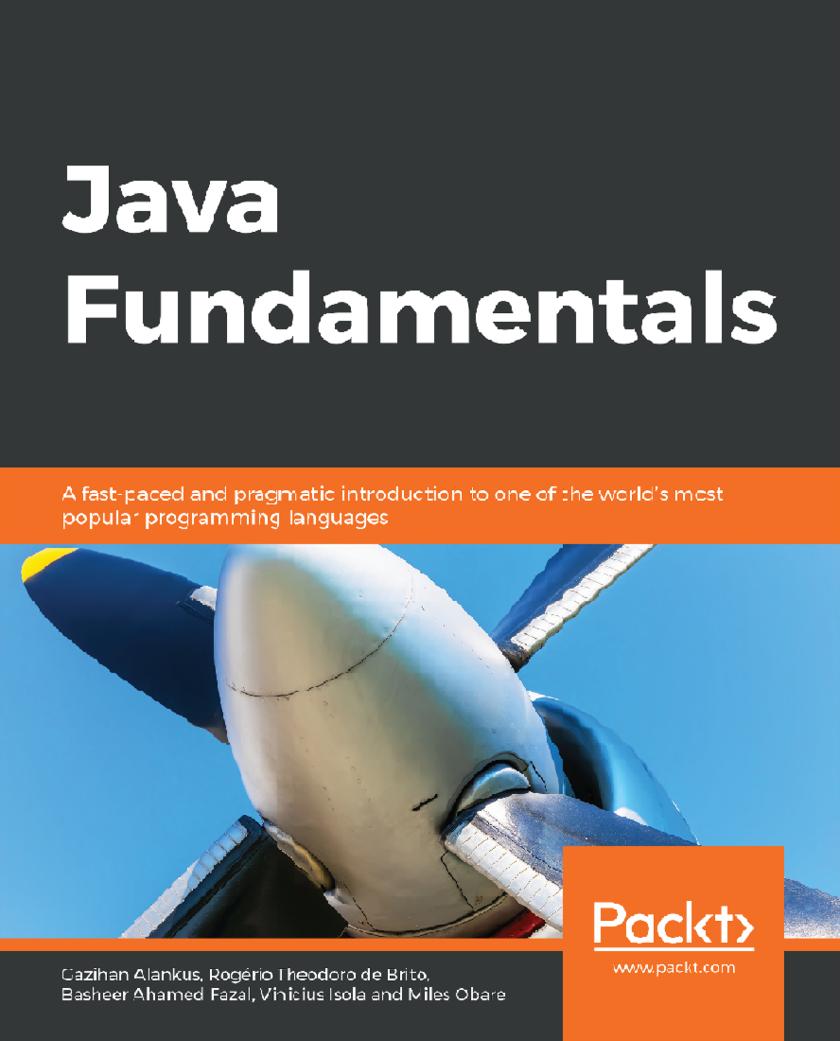
Java Fundamentals
¥54.49
Enhance your career options with this well-crafted object-oriented programming language that enjoys the support of an enormous ecosystem of tools and libraries Key Features * Get introduced to Java, its features, and its ecosystem * Understand how Java uses object-oriented programming * Become an expert Java exception handler Book Description Since its inception, Java has stormed the programming world. Its features and functionalities provide developers with the tools needed to write robust cross-platform applications. Java Fundamentals introduces you to these tools and functionalities that will enable you to create Java programs. The book begins with an introduction to the language, its philosophy, and evolution over time, until the latest release. You'll learn how the javac/java tools work and what Java packages are - the way a Java program is usually organized. Once you are comfortable with this, you'll be introduced to advanced concepts of the language, such as control flow keywords. You'll explore object-oriented programming and the part it plays in making Java what it is. In the concluding chapters, you'll get to grips with classes, typecasting, and interfaces, and understand the use of data structures, arrays, strings, handling exceptions, and creating generics. By the end of this book, you will have learned to write programs, automate tasks, and follow advanced courses on algorithms and data structures or explore more advanced Java courses. What you will learn * Create and run Java programs * Use data types, data structures, and control flow in your code * Implement best practices while creating objects * Work with constructors and inheritance * Understand advanced data structures to organize and store data * Employ generics for stronger check-types during compilation * Learn to handle exceptions in your code Who this book is for Java Fundamentals is designed for tech enthusiasts who are familiar with some programming languages and want a quick introduction to the most important principles of Java.
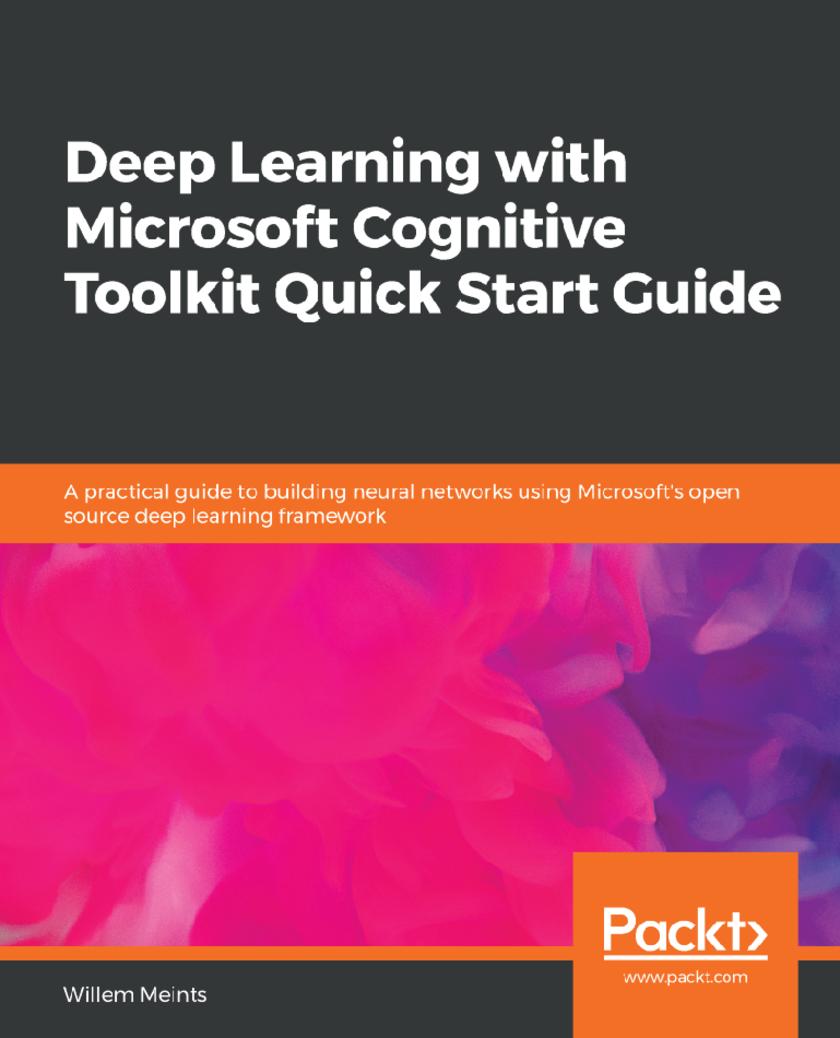
Deep Learning with Microsoft Cognitive Toolkit Quick Start Guide
¥54.49
Learn how to train popular deep learning architectures such as autoencoders, convolutional and recurrent neural networks while discovering how you can use deep learning models in your software applications with Microsoft Cognitive Toolkit Key Features * Understand the fundamentals of Microsoft Cognitive Toolkit and set up the development environment * Train different types of neural networks using Cognitive Toolkit and deploy it to production * Evaluate the performance of your models and improve your deep learning skills Book Description Cognitive Toolkit is a very popular and recently open sourced deep learning toolkit by Microsoft. Cognitive Toolkit is used to train fast and effective deep learning models. This book will be a quick introduction to using Cognitive Toolkit and will teach you how to train and validate different types of neural networks, such as convolutional and recurrent neural networks. This book will help you understand the basics of deep learning. You will learn how to use Microsoft Cognitive Toolkit to build deep learning models and discover what makes this framework unique so that you know when to use it. This book will be a quick, no-nonsense introduction to the library and will teach you how to train different types of neural networks, such as convolutional neural networks, recurrent neural networks, autoencoders, and more, using Cognitive Toolkit. Then we will look at two scenarios in which deep learning can be used to enhance human capabilities. The book will also demonstrate how to evaluate your models' performance to ensure it trains and runs smoothly and gives you the most accurate results. Finally, you will get a short overview of how Cognitive Toolkit fits in to a DevOps environment What you will learn * Set up your deep learning environment for the Cognitive Toolkit on Windows and Linux * Pre-process and feed your data into neural networks * Use neural networks to make effcient predictions and recommendations * Train and deploy effcient neural networks such as CNN and RNN * Detect problems in your neural network using TensorBoard * Integrate Cognitive Toolkit with Azure ML Services for effective deep learning Who this book is for Data Scientists, Machine learning developers, AI developers who wish to train and deploy effective deep learning models using Microsoft CNTK will find this book to be useful. Readers need to have experience in Python or similar object-oriented language like C# or Java.
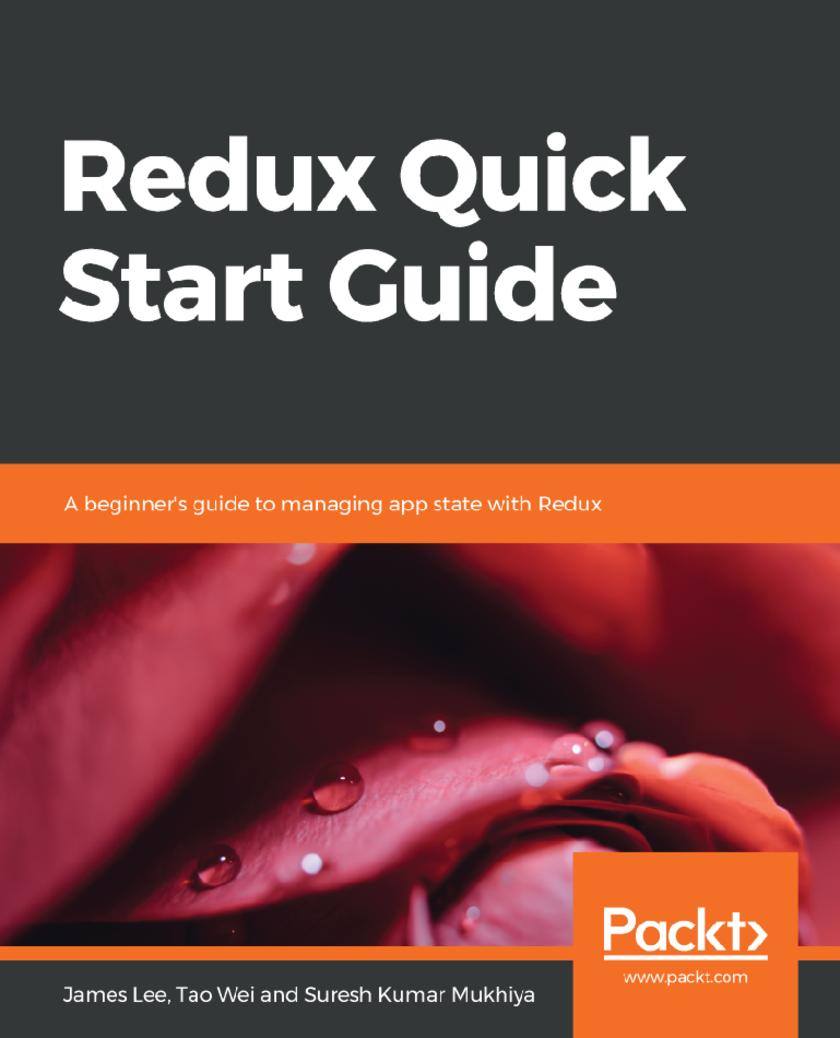
Redux Quick Start Guide
¥54.49
Integrate Redux with React and other front-end JavaScript frameworks efficiently and manage application states effectively Key Features * Get better at building web applications with state management using Redux * Learn the fundamentals of Redux to structure your app more efficiently * This guide will teach you develop complex apps that would be easier to maintain Book Description Starting with a detailed overview of Redux, we will follow the test-driven development (TDD) approach to develop single-page applications. We will set up JEST for testing and use JEST to test React, Redux, Redux-Sage, Reducers, and other components. We will then add important middleware and set up immutableJS in our application. We will use common data structures such as Map, List, Set, and OrderedList from the immutableJS framework. We will then add user interfaces using ReactJS, Redux-Form, and Ant Design. We will explore the use of react-router-dom and its functions. We will create a list of routes that we will need in order to create our application, and explore routing on the server site and create the required routes for our application. We will then debug our application and integrate Redux Dev tools. We will then set up our API server and create the API required for our application. We will dive into a modern approach to structuring our server site components in terms of Model, Controller, Helper functions, and utilities functions. We will explore the use of NodeJS with Express to build the REST API components. Finally, we will venture into the possibilities of extending the application for further research, including deployment and optimization. What you will learn * Follow the test-driven development (TDD) approach to develop a single-page application * Add important middleware, such as Redux store middleware, redux-saga middleware, and language middleware, to your application * Understand how to use immutableJS in your application * Build interactive components using ReactJS * Configure react-router-redux and explore the differences between react-router-dom and react-router-redux * Use Redux Dev tools to debug your application * Set up our API server and create the API required for our application Who this book is for This book is meant for JavaScript developers interesting in learning state management and building easy to maintain web applications.

Learn Chart.js
¥54.49
Design interactive graphics and visuals for your data-driven applications using the popular open-source Chart.js data visualization library. Key Features * Harness the power of JavaScript, HTML, and CSS to create interactive visualizations * Display quantitative information efficiently in the form of attractive charts by using Chart.js * A practical guide for creating data-driven applications using open-source JavaScript library Book Description Chart.js is a free, open-source data visualization library, maintained by an active community of developers in GitHub, where it rates as the second most popular data visualization library. If you want to quickly create responsive Web-based data visualizations for the Web, Chart.js is a great choice. This book guides the reader through dozens of practical examples, complete with code you can run and modify as you wish. It is a practical hands-on introduction to Chart.js. If you have basic knowledge of HTML, CSS and JavaScript you can learn to create beautiful interactive Web Canvas-based visualizations for your data using Chart.js. This book will help you set up Chart.js in a Web page and show how to create each one of the eight Chart.js chart types. You will also learn how to configure most properties that override Chart’s default styles and behaviors. Practical applications of Chart.js are exemplified using real data files obtained from public data portals. You will learn how to load, parse, filter and select the data you wish to display from those files. You will also learn how to create visualizations that reveal patterns in the data. This book is based on Chart.js version 2.7.3 and ES2015 JavaScript. By the end of the book, you will be able to create beautiful, efficient and interactive data visualizations for the Web using Chart.js. What you will learn * Learn how to create interactive and responsive data visualizations using Chart.js * Learn how to create Canvas-based graphics without Canvas programming * Create composite charts and configure animated data updates and transitions * Efficiently display quantitative information using bar and line charts, scatterplots, and pie charts * Learn how to load, parse, and filter external files in JSON and CSV formats * Understand the benefits of using a data visualization framework Who this book is for The ideal target audience of this book includes web developers and designers, data journalists, data scientists and artists who wish to create interactive data visualizations for the Web. Basic knowledge of HTML, CSS, and JavaScript is required. No Canvas knowledge is necessary.
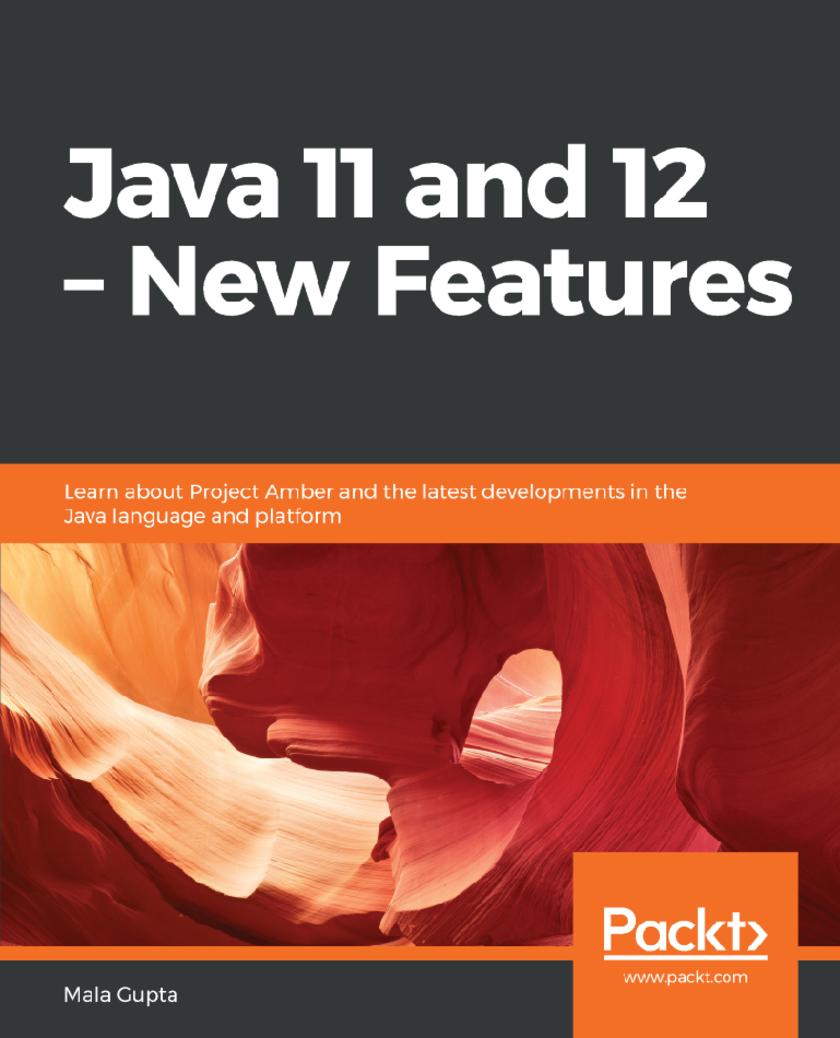
Java 11 and 12 – New Features
¥54.49
Enhance your development skills with Java’s state-of-the-art features and projects to make your applications leaner and faster Key Features * Overcome the challenges involved in migrating to new versions of Java * Discover how Oracle has bridged the gap between Java and native code * Make the best use of new Java features and libraries in your applications Book Description With its new six-monthly release cadence, Java is moving forward faster. In addition to planned version releases, a lot of work is currently being undertaken on various Java projects at Oracle. In order to make best use of the new features in their applications and libraries, you must be well-versed with the most recent advancements. Java 11 and 12 – New Features will take you through the latest developments in Java, right from variable type inference and simplified multithreading through to performance improvements, which are covered in depth to help you make your applications more efficient. This book explains the relevance and applicability of Java's new features, and answers your questions on whether to invest in migrating to new Java versions and when to migrate. You'll also get to grips with platform features, such as AppCDS and new garbage collectors, to tune and optimize your application—from reduced launch time and latency to improved performance and throughput. By the end of this book, you will be equipped with a thorough understanding of the new features of Java 11, 12, and Project Amber, and possess the skills to apply them with a view to improving your application's performance. What you will learn * Study type interference and how to work with the var type * Understand Class-Data Sharing, its benefits, and limitations * Discover platform options to reduce your application’s launch time * Improve application performance by switching garbage collectors * Get up to date with the new Java release cadence * Define and assess decision criteria for migrating to a new version of Java Who this book is for If you’re an executive or solutions architect responsible for technology selection or Java migration decisions, this Java book is for you. You’ll also benefit from this book if you’re a computer science enthusiast curious to learn about the latest and upcoming Java features. This book will help you migrate your solutions from Java 8 or older to the latest Java release.
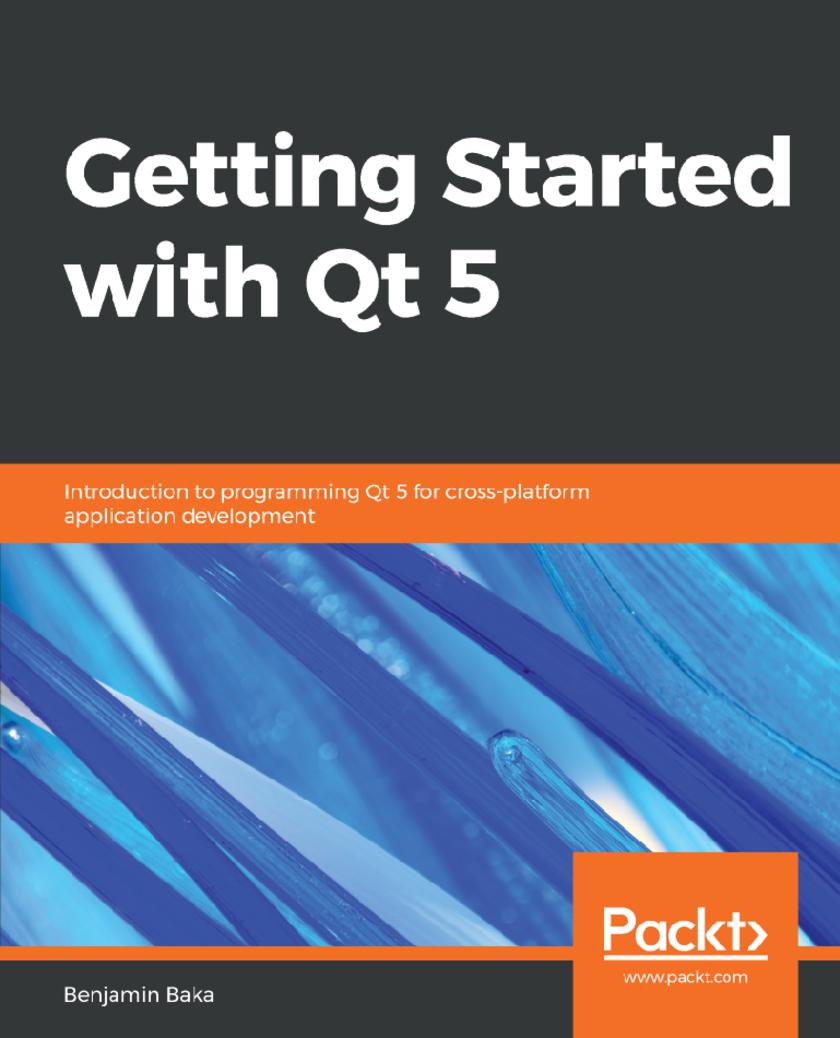
Getting Started with Qt 5
¥54.49
Begin writing graphical user interface(GUI) applications for building human machine interfaces with a clear understanding of key concepts of the Qt framework Key Features * Learn how to write, assemble, and build Qt application from the command line * Understand key concepts like Signals and Slots in Qt * Best practices and effective techniques for designing graphical user interfaces using Qt 5 Book Description Qt is a cross-platform application framework and widget toolkit that is used to create GUI applications that can run on different hardware and operating systems. The main aim of this book is to introduce Qt to the reader. Through the use of simple examples, we will walk you through building blocks without focusing too much on theory. Qt is a popular tool that can be used for building a variety of applications, such as web browsers, media players such as VLC, and Adobe Photoshop. Following Qt installation and setup, the book dives straight into helping you create your first application. You will be introduced to Widgets, Qt's interface building block, and the many varieties that are available for creating GUIs. Next, Qt's core concept of signals and slots are well illustrated with sufficient examples. The book further teaches you how to create custom widgets, signals and slots, and how to communicate useful information via dialog boxes. To cap everything off, you will be taken through writing applications that can connect to databases in order to persist data. By the end of the book, you should be well equipped to start creating your own Qt applications and confident enough to pick up more advanced Qt techniques and materials to hone your skills. What you will learn * Set up and configure your machine to begin developing Qt applications * Discover different widgets and layouts for constructing UIs * Understand the key concept of signals and slots * Understand how signals and slots help animate a GUI * Explore how to create customized widgets along with signals and slots * Understand how to subclass and create a custom windows application * Understand how to write applications that can talk to databases. Who this book is for Anyone trying to start development of graphical user interface application will find this book useful. One does not need prior exposure to other toolkits to understand this book. In order to learn from this book you should have basic knowledge of C++ and a good grasp of Object Oriented Programming. Familiarity with GNU/Linux will be very useful though it's not a mandatory skill.
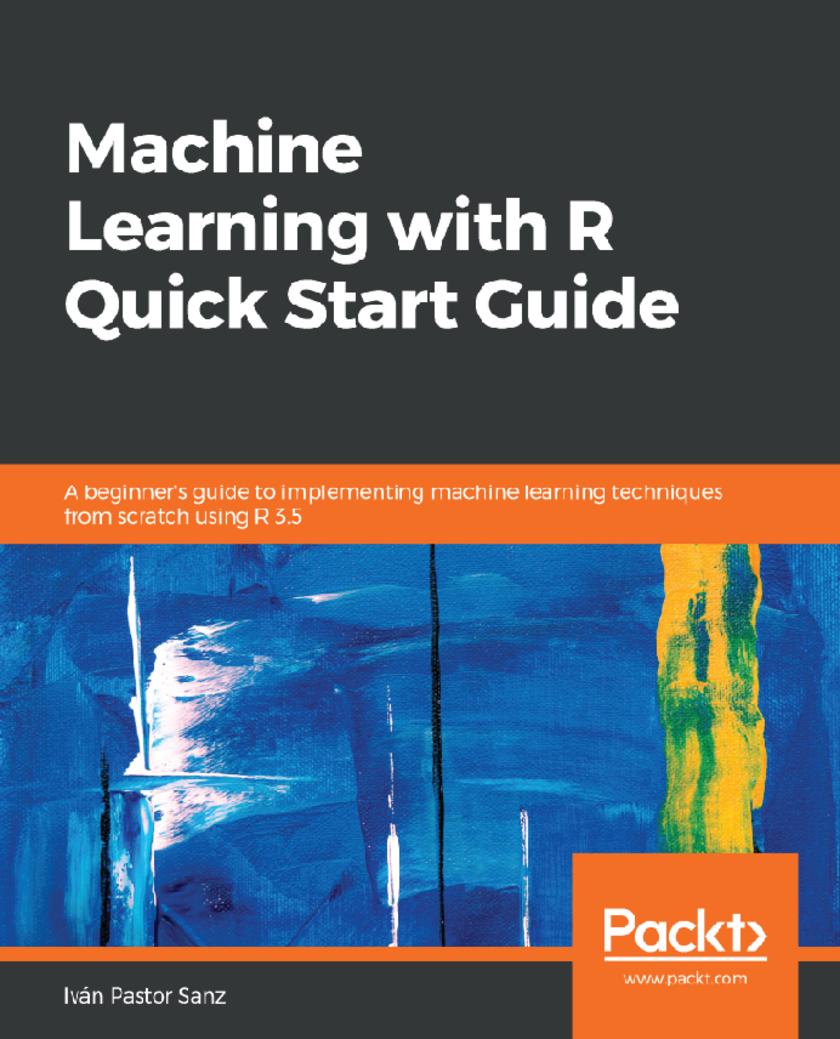
Machine Learning with R Quick Start Guide
¥54.49
Learn how to use R to apply powerful machine learning methods and gain insight into real-world applications using clustering, logistic regressions, random forests, support vector machine, and more. Key Features * Use R 3.5 to implement real-world examples in machine learning * Implement key machine learning algorithms to understand the working mechanism of smart models * Create end-to-end machine learning pipelines using modern libraries from the R ecosystem Book Description Machine Learning with R Quick Start Guide takes you on a data-driven journey that starts with the very basics of R and machine learning. It gradually builds upon core concepts so you can handle the varied complexities of data and understand each stage of the machine learning pipeline. From data collection to implementing Natural Language Processing (NLP), this book covers it all. You will implement key machine learning algorithms to understand how they are used to build smart models. You will cover tasks such as clustering, logistic regressions, random forests, support vector machines, and more. Furthermore, you will also look at more advanced aspects such as training neural networks and topic modeling. By the end of the book, you will be able to apply the concepts of machine learning, deal with data-related problems, and solve them using the powerful yet simple language that is R. What you will learn * Introduce yourself to the basics of machine learning with R 3.5 * Get to grips with R techniques for cleaning and preparing your data for analysis and visualize your results * Learn to build predictive models with the help of various machine learning techniques * Use R to visualize data spread across multiple dimensions and extract useful features * Use interactive data analysis with R to get insights into data * Implement supervised and unsupervised learning, and NLP using R libraries Who this book is for This book is for graduate students, aspiring data scientists, and data analysts who wish to enter the field of machine learning and are looking to implement machine learning techniques and methodologies from scratch using R 3.5. A working knowledge of the R programming language is expected.
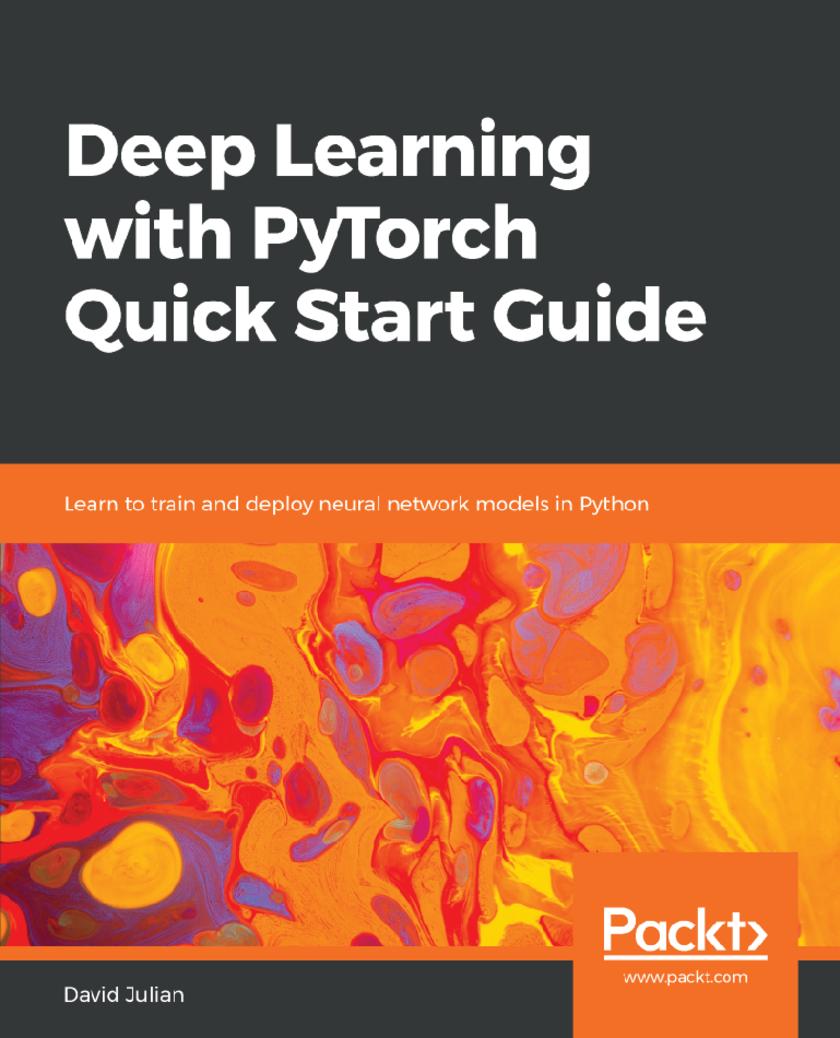
Deep Learning with PyTorch Quick Start Guide
¥54.49
Introduction to deep learning and PyTorch by building a convolutional neural network and recurrent neural network for real-world use cases such as image classification, transfer learning, and natural language processing. Key Features *Clear and concise explanations *Gives important insights into deep learning models *Practical demonstration of key concepts Book Description PyTorch is extremely powerful and yet easy to learn. It provides advanced features, such as supporting multiprocessor, distributed, and parallel computation. This book is an excellent entry point for those wanting to explore deep learning with PyTorch to harness its power. This book will introduce you to the PyTorch deep learning library and teach you how to train deep learning models without any hassle. We will set up the deep learning environment using PyTorch, and then train and deploy different types of deep learning models, such as CNN, RNN, and autoencoders. You will learn how to optimize models by tuning hyperparameters and how to use PyTorch in multiprocessor and distributed environments. We will discuss long short-term memory network (LSTMs) and build a language model to predict text. By the end of this book, you will be familiar with PyTorch's capabilities and be able to utilize the library to train your neural networks with relative ease. What you will learn *Set up the deep learning environment using the PyTorch library *Learn to build a deep learning model for image classification *Use a convolutional neural network for transfer learning *Understand to use PyTorch for natural language processing *Use a recurrent neural network to classify text *Understand how to optimize PyTorch in multiprocessor and distributed environments *Train, optimize, and deploy your neural networks for maximum accuracy and performance *Learn to deploy production-ready models Who this book is for Developers and Data Scientist familiar with Machine Learning but new to deep learning, or existing practitioners of deep learning who would like to use PyTorch to train their deep learning models will find this book to be useful. Having knowledge of Python programming will be an added advantage, while previous exposure to PyTorch is not needed.
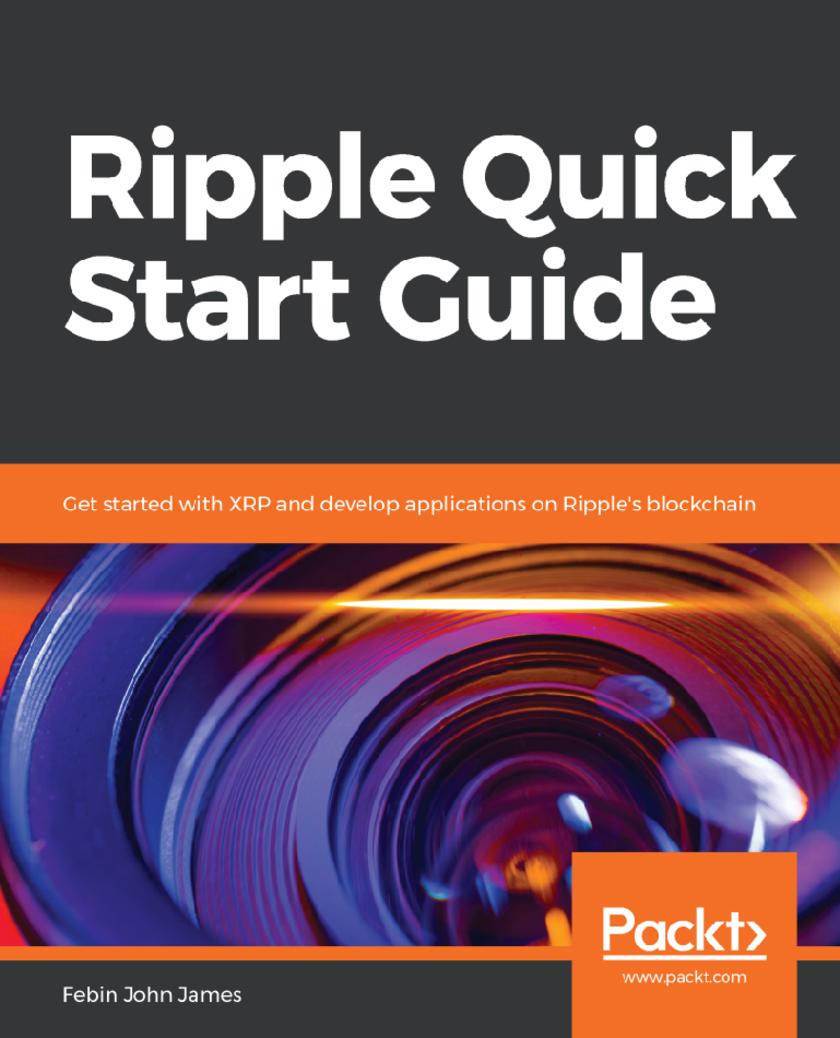
Ripple Quick Start Guide
¥54.49
Learn to work with XRP and build applications on Ripple's blockchain Key Features *Learn to use Ripple’s decentralized system for transfering digital assets globally *A simpilfied and shortened learning curve to understand the Ripple innovation and Blockchain *Takes a hands-on approach to work with XRP – Ripple’s native currency Book Description This book starts by giving you an understanding of the basics of blockchain and the Ripple protocol. You will then get some hands-on experience of working with XRP. You will learn how to set up a Ripple wallet and see how seamlessly you can transfer money abroad. You will learn about different types of wallets through which you can store and transact XRP, along with the security precautions you need to take to keep your money safe. Since Ripple is currency agnostic, it can enable the transfer of value in USD, EUR, and any other currency. You can even transfer digital assets using Ripple. You will see how you can pay an international merchant with their own native currency and how Ripple can exchange it on the ?y. Once you understand the applications of Ripple, you will learn how to create a conditionally-held escrow using the Ripple API, and how to send and cash checks. Finally, you will also understand the common misconceptions people have about Ripple and discover the potential risks you must consider before making investment decisions. By the end of this book, you will have a solid foundation for working with Ripple's blockchain. Using it, you will be able to solve problems caused by traditional systems in your respective industry. What you will learn *Understand the fundamentals of blockchain and Ripple *Learn how to choose a Ripple wallet *Set up a Ripple wallet to send and receive XRP *Learn how to protect your XRP *Understand the applications of Ripple *Learn how to work with the Ripple API *Learn how to build applications on check and escrow features of Ripple Who this book is for This book is for anyone interested in getting their hands on Ripple technology and learn where it can be used to gain competitive advantages in their respective fields. For most parts of the book, you need not have any pre-requisite knowledge. However, you need to have basic background of JavaScript to write an escrow.
Hands-On Test Management with Jira
¥54.49
Learn best practices for testing with Jira and model industry workflows that can be used during the software development lifecycle Key Features * Integrate Jira with test management tools such as Zephyr, Test Management, and SynapseRT * Understand test case management, traceability, and test execution with reports * Implement continuous integration using Jira, Jenkins, and automated testing tools Book Description Hands-On Test Management with Jira begins by introducing you to the basic concepts of Jira and takes you through real-world software testing processes followed by various organizations. As you progress through the chapters, the book explores and compares the three most popular Jira plugins—Zephyr, Test Management, and synapseRT. With this book, you’ll gain a practical understanding of test management processes using Jira. You’ll learn how to create and manage projects, create Jira tickets to manage customer requirements, and track Jira tickets. You’ll also understand how to develop test plans, test cases, and test suites, and create defects and requirement traceability matrices, as well as generating reports in Jira. Toward the end, you’ll understand how Jira can help the SQA teams to use the DevOps pipeline for automating execution and managing test cases. You’ll get to grips with configuring Jira with Jenkins to execute automated test cases in Selenium. By the end of this book, you’ll have gained a clear understanding of how to model and implement test management processes using Jira. What you will learn * Understand QMS to effectively implement quality systems in your organization * Explore a business-driven structured approach to Test Management using TMap NEXT * Implement different aspects of test planning, test strategy, and test execution * Organize and manage Agile projects in Scrum and Kanban * Uncover Jira plugins available in the Atlassian Marketplace for testing and project management * Configure a DevOps pipeline for continuous integration using Jira with Jenkins Who this book is for If you’re a quality assurance professional, software project manager, or test manager interested in learning test management best practices in your team or organization, this book is for you. Prior knowledge of test management and Jenkins will be beneficial in understanding the concepts covered in this book.
Wearable-Tech Projects with the Raspberry Pi Zero
¥54.49
Leverage the cheapest and smallest computer to build exciting wearable-tech projects. About This Book ? A practical and imaginative guide that exposes you to amazing wearable-tech projects ? Create our own heart-rate monitor device and cool projects such as a Tweet-activated LED T-shirt ? A practical guide packed with real-world, useful wearable-tech projects Who This Book Is For Everyone. While some prior knowledge of Python programming and use of the terminal on the Raspberry Pi would be advantageous, they are by no means necessary. Each chapter clearly sets the steps to be taken on your wearable-tech adventure. The first chapter assumes no prior knowledge to get your Pi Zero and you, up and running. The complexity of the electronic devices used, progress incrementally as you work through the chapters; there are clear steps to follow and pictures to help you at every turn along the way. What You Will Learn ? Make use of your Raspberry Pi Zero to create wearable-tech projects ? Interface with electronic devices and use Python to control them; incorporate these into real-world, practical, wearable-tech projects ? Add LED devices to clothing and connect them to your Pi Zero ? Change how LEDs react based upon your movement or messages sent through Twitter ? Create a pedometer and heart rate monitor ? Create your own GPS tracker In Detail With Wearable-Tech Projects with the Raspberry Pi Zero, you will begin with learning how to install the required software for your upcoming projects. You will also learn how to control electronic devices with the GPIOZero Python library. Next, you will be creating some stylish wearable-tech projects such as a motion-reactive LED cap and a Tweet-activated LED T-shirt. Toward the end of the book, you will be creating some useful health and fitness wearable-tech projects; these will help you monitor your heart rate, track your movements with GPS, and count your footsteps with your own pedometer. By the end of the book, you will have created a range of wearable-tech projects and learned enough about your Raspberry Pi Zero that you should be able to adapt these projects further or come up with your own creations! Style and approach This book showcases interesting and cool projects that use the Raspberry Pi Zero in wearable-tech. This book is for readers who are looking to progress to the next level of integrating hardware into their projects. Upon completion of each project, you will have a functional device that can be worn either to enhance your style or to provide you with practical data.
Understanding Software
¥54.49
Software legend Max Kanat-Alexander shows you how to succeed as a developer by embracing simplicity, with forty-three essays that will help you really understand the software you work with. About This Book ? Read and enjoy the superlative writing and insights of the legendary Max Kanat-Alexander ? Learn and reflect with Max on how to bring simplicity to your software design principles ? Discover the secrets of rockstar programmers and how to also just suck less as a programmer Who This Book Is For Understanding Software is for every programmer, or anyone who works with programmers. If life is feeling more complex than it should be, and you need to touch base with some clear thinking again, this book is for you. If you need some inspiration and a reminder of how to approach your work as a programmer by embracing some simplicity in your work again, this book is for you. If you’re one of Max’s followers already, this book is a collection of Max’s thoughts selected and curated for you to enjoy and reflect on. If you’re new to Max’s work, and ready to connect with the power of simplicity again, this book is for you! What You Will Learn ? See how to bring simplicity and success to your programming world ? Clues to complexity - and how to build excellent software ? Simplicity and software design ? Principles for programmers ? The secrets of rockstar programmers ? Max’s views and interpretation of the Software industry ? Why Programmers suck and how to suck less as a programmer ? Software design in two sentences ? What is a bug? Go deep into debugging In Detail In Understanding Software, Max Kanat-Alexander, Technical Lead for Code Health at Google, shows you how to bring simplicity back to computer programming. Max explains to you why programmers suck, and how to suck less as a programmer. There’s just too much complex stuff in the world. Complex stuff can’t be used, and it breaks too easily. Complexity is stupid. Simplicity is smart. Understanding Software covers many areas of programming, from how to write simple code to profound insights into programming, and then how to suck less at what you do! You'll discover the problems with software complexity, the root of its causes, and how to use simplicity to create great software. You'll examine debugging like you've never done before, and how to get a handle on being happy while working in teams. Max brings a selection of carefully crafted essays, thoughts, and advice about working and succeeding in the software industry, from his legendary blog Code Simplicity. Max has crafted forty-three essays which have the power to help you avoid complexity and embrace simplicity, so you can be a happier and more successful developer. Max's technical knowledge, insight, and kindness, has earned him code guru status, and his ideas will inspire you and help refresh your approach to the challenges of being a developer. Style and approach Understanding Software is a new selection of carefully chosen and crafted essays from Max Kanat-Alexander's legendary blog call Code Simplicity. Max’s writing and thoughts are great to sit and read cover to cover, or if you prefer you can drop in and see what you discover new every single time!
Keyshot 3D Rendering
¥54.49
The book includes a series of step-by-step illustrated tutorials supported by a detailed explanation for each aspect of the 3D rendering procedure. Some of the procedures or steps may be omitted if they have been previously explained in an exercise or chapter. "Keyshot 3D Rendering" is ideal for beginners and professionals who are involved with product development, entertainment, and industrial design. It is recommended for readers who already have some level of experience with 3D modelling, texturing, and rendering applications.


