


 购物车
购物车 个人中心
个人中心
Using CiviCRM - Second Edition
¥107.90
Develop and implement a fully-functional, systematic CRM plan with CiviCRM About This Book Develop an integrated online system that manages contacts, donations, event registrations, memberships, bulk e-mail, campaigns, case management, and other functions such as activity tracking, grant distribution, and reporting. Plan a constituency relationship management strategy with ladders of engagement that will improve how your organization realizes its mission. Use case studies and step-by-step examples to put the raw concepts into real-life terminology and build your solutions. Who This Book Is For The book is primarily for administrators tasked with implementing, configuring, maintaining, and updating CiviCRM, and staff users who are looking to better understand the tools available in order to become power users. CiviCRM is software that may be used by advocacy groups, non-profit, and non-governmental organizations, elected officials, professional and trade associations, government entities, political campaigns and parties, and other similar organizations, and this book will prove useful to all such users. What You Will Learn Install and configure your CiviCRM Analyze your current workflows and processes to translate them effectively into the CiviCRM model Build an integrated system to solicit, retain, and manage your donors and members through robust management and reporting tools for administrators Raise more money with CiviCRM with effective solicitation campaigns Market events effectively and track registrations and payments Improve communications with constituents using targeted broadcast e-mail campaigns Track ongoing communications with constituents including from Outlook and Gmail using activities and case management tools Take advantage of the many CiviCRM tools to generate both simple and complex event structures and manage registrants through every phase of the project In Detail CiviCRM provides a powerful toolbox of resources to help organizations manage relationships with constituents. It is free, open source, web-based, and geared specifically to meet the constituent relationship management needs of the not-for-profit sector. Beginning with broader questions about how your organization is structured, which existing workflows are critical to your operations, and the overarching purpose of a centralized CRM, the book proceeds step by step through configuring CiviCRM, understanding the choices when setting up the system, importing data, and exploring the breadth of tools available throughout the system. You will see how to best use this software to handle event registrations, accept and track contributions, manage paid and free memberships and sub*ions, segment contacts, send bulk e-mails with open and click-through tracking, manage outreach campaigns, and set up case management workflows that match your organization’s roles and rules. With specific emphasis on helping implementers ask the right questions, consider key principals when setting up the system, and understand usage through case studies and examples, the book comprehensively reviews the functionality of CiviCRM and the opportunities it provides. With this book, you can help your organization better achieve its mission as a charity, industry association, professional society, political advocacy group, community group, government agency, or other similar organization and position yourself to become a power user who efficiently and effectively navigates the system. Style and approach This guide is packed with step-by-step tutorials and real-life examples interspersed with practical advice and best practices on how to use CiviCRM strategically. You will be able to quickly grasp and implement the basic elements of CiviCRM before moving on to more advanced tools.
JIRA Development Cookbook - Third Edition
¥107.90
Your one-stop resource for mastering extensions and customizations in JIRA 7+ About This Book Explore the new features of JIRA 7 and best practices for agile development and integration with development tools Customize the look and feel of your JIRA UI to match your specific user needs Create seamless reports that make sense of your data through easy-to-use techniques Who This Book Is For If you are a JIRA developer or administrator, or a project manager who wants to fully exploit the exciting capabilities of JIRA, then this is the perfect book for you. What You Will Learn Create and deploy your own JIRA plugins Manipulate workflows to transform JIRA into a user-friendly system Create custom reports that show statistics for particular people, projects, versions, or other fields within issues Simplify reporting by writing your own JIRA gadgets, which can be added into a user's dashboard Master database handling by extending and retrieving custom field details from the database Deal with custom fields on an issue and program custom field option In Detail JIRA provides issue and project tracking for software development teams to improve code quality and the speed of development. With the new version of JIRA, you can create your own JIRA plugins and customize the look and feel of your JIRA UI easier than ever. JIRA Development Cookbook , Third Edition, is a one-stop resource to master extensions and customizations in JIRA. This book starts with recipes about simplifying the plugin development process followed by recipes dedicated to the plugin framework. Then, you will move on to writing custom field plugins to create new field types or custom searchers. You will also learn how to program and customize workflows to transform JIRA into a user-friendly system. With so much data spanning different projects, issues, and so on, we will cover how to work on reports and gadgets to get customized data according to our needs. At the end of the book, you will learn how to customize JIRA by adding new tabs, menus, and web items; communicate with JIRA via the REST APIs; and work with the JIRA database. Style and approach The most unique aspect of this book is its approach. This book is recipe-based, with real-world examples, that will empower you to implement agile processes and explore the exciting capabilities of Jira.
Getting Started with Microsoft System Center Operations Manager
¥107.90
A beginner's guide to help you design, deploy and administer your System Center Operations Manager 2016 and 2012 R2 environments About This Book Discover how to monitor complex IT environments with System Center Operations Manager using tips, tricks and best practice recommendations from industry experts. Learn how to create eye-catching dashboards and reports to help deliver a tangible return on investment back to your organization. Optimize, troubleshoot and perform disaster recovery in Operations Manager using step by step examples based on real-world scenarios. Who This Book Is For The target audience for this book is the IT Pro or System Administrator who wants to deploy and use System Center Operations Manager but has no previous knowledge of the product. As a ‘Getting Started’ book, our primary objective is to equip you with the knowledge you need to feel comfortable when working with common monitoring scenarios in OpsMgr. With this in mind, deep-diving into less-common OpsMgr features such as Audit Collection Services (ACS), Agentless Exception Monitoring (AEM) and Application Performance Monitoring (APM) has been intentionally omitted. What You Will Learn Install a new System Center 2016 Operations Manager Management Group Design and provision custom views to relevant support teams. Understand how to deploy agents Work with management packs Monitor network devices Model your IT services with distributed applications Create dashboards and custom visualizations Tune, optimize, maintain and troubleshoot System Center Operations Manager In Detail Most modern IT environments comprise a heterogeneous mixture of servers, network devices, virtual hypervisors, storage solutions, cross-platform operating systems and applications. All this complexity brings a requirement to deliver a centralized monitoring and reporting solution that can help IT administrators quickly identify where the problems are and how best to resolve them. Using System Center Operations Manager (OpsMgr), administrators get a full monitoring overview of the IT services they have responsibility for across the organization - along with some useful management capabilities to help them remediate any issues they've been alerted to. This book begins with an introduction to OpsMgr and its core concepts and then walks you through designing and deploying the various roles. After a chapter on exploring the consoles, you will learn how to deploy agents, work with management packs, configure network monitoring and model your IT services using distributed applications. There’s a chapter dedicated to alert tuning and another that demonstrates how to visualize your IT using dashboards. The final chapters in the book discuss how to create alert sub*ions, manage reports, backup and recover OpsMgr, perform maintenance and troubleshoot common problems. Style and approach A beginner’s guide that focuses on providing the practical skills required to effectively deploy and administer OpsMgr with walkthrough examples and tips on all the key concepts.
Mastering Identity and Access Management with Microsoft Azure
¥107.90
Start empowering users and protecting corporate data, while managing Identities and Access with Microsoft Azure in different environments About This Book Deep dive into the Microsoft Identity and Access Management as a Service (IDaaS) solution Design, implement and manage simple and complex hybrid identity and access management environments Learn to apply solution architectures directly to your business needs and understand how to identify and manage business drivers during transitions Who This Book Is For This book is for business decision makers, IT consultants, and system and security engineers who wish to plan, design, and implement Identity and Access Management solutions with Microsoft Azure. What You Will Learn Apply technical de*ions and solution architectures directly to your business needs and deployments Identify and manage business drivers and architecture changes to transition between different scenarios Understand and configure all relevant Identity and Access Management key features and concepts Implement simple and complex directory integration, authentication, and authorization scenarios Get to know about modern identity management, authentication, and authorization protocols and standards Implement and configure a modern information protection solution Integrate and configure future improvements in authentication and authorization functionality of Windows 10 and Windows Server 2016 In Detail Microsoft Azure and its Identity and Access Management is at the heart of Microsoft’s Software as a Service, including Office 365, Dynamics CRM, and Enterprise Mobility Management. It is an essential tool to master in order to effectively work with the Microsoft Cloud. Through practical, project based learning this book will impart that mastery. Beginning with the basics of features and licenses, this book quickly moves on to the user and group lifecycle required to design roles and administrative units for role-based access control (RBAC). Learn to design Azure AD to be an identity provider and provide flexible and secure access to SaaS applications. Get to grips with how to configure and manage users, groups, roles, and administrative units to provide a user- and group-based application and self-service access including the audit functionality. Next find out how to take advantage of managing common identities with the Microsoft Identity Manager 2016 and build cloud identities with the Azure AD Connect utility. Construct blueprints with different authentication scenarios including multi-factor authentication. Discover how to configure and manage the identity synchronization and federation environment along with multi -factor authentication, conditional access, and information protection scenarios to apply the required security functionality. Finally, get recommendations for planning and implementing a future-oriented and sustainable identity and access management strategy. Style and approach A practical, project-based learning experience explained through hands-on examples.
Windows Server 2016 Hyper-V Cookbook - Second Edition
¥107.90
Save time and resources by getting to know the best practices and intelligence from industry experts About This Book This book helps you gain a fresh perspective through a recipe-based approach on the new Microsoft Server 2016 Hyper-V Over 80 recipes to help you master the administrative tasks of Hyper-V and get to grips with advanced solutions and techniques for virtualization These hands-on advanced recipes will help you deploy, maintain, and upgrade Hyper-V virtual machines Who This Book Is For This book is for Hyper-V administrators who are looking to take advantage of all exciting new features that Microsoft Server 2016 Hyper-V has to offer. What You Will Learn Install and manage Hyper-V in Full, Server Core, and Nano Server Get to know how to migrate and upgrade physical and virtual machines Configure disks, network, memory, security, and auditing settings for virtual machines Take a deep dive into high availability and disaster recovery Save time and money by getting to grips with PowerShell automation Understand the new features around network and nested virtualization, distributed storage QoS, Hyper-V Replica, and much more Gain a full view of your virtual machines and host servers through monitoring, reporting, and troubleshooting tips In Detail Hyper-V is a Windows-based, very cost-effective virtualization solution with easy-to-use and well-known administrative consoles. With this book on your side you will master the worlds of Hyper-V deployment, migration, and management by learning tips, tricks, and best practices, especially when it comes to advanced-level tasks. You will learn how to quickly deploy and automate multiple VMs, and support Hyper-V clusters through different installation methods. You will learn the concepts efficiently with the help of up-to-date real-world examples and improve the scalability and efficiency of large-scale VM deployments with Nano Server. By the end of this book, you will be an ace Windows Server 2016 Hyper-V with the skills needed to administer and manage it effectively and survive in the brave new world of mobile-first, cloud-first. Further, take advantage of bonus appendix explaining Hyper-V and backup architecture and the difference between versions. Style and approach This advanced-level book provides step-by-step recipes on real-world examples so you can get practical, hands-on experience of the subjects.
Mastering vRealize Operations Manager
¥100.27
If you are an administrator of a virtual environment and have used vROps before but want to gain a professional understanding by implementing complex tasks easily with it, then this book is for you.
Extending Microsoft Dynamics NAV 2016 Cookbook
¥99.18
Make the most of your NAV deployment by extending and customizing it with a variety of expert tools About This Book Extend Dynamics in a cost-effective manner by using tools that are ready at your disposal Solve common business problems with the valuable features and flexibility of Dynamics NAV Follow practical and easy-to-grasp examples, illustrations, and coding to make the most out of Dynamics NAV in your organisation Who This Book Is For This book is for Dynamics NAV developers and administrators who have a good knowledge level and understanding of Dynamics NAV application development and administration. What You Will Learn Develop a module in Dynamics NAV using C/AL Build relationships with COM technologies Develop and integrate COM with Dynamics NAV 2016 Call the framework members from C/AL Develop an event in the .NET framework and see how to subscribe to it using C/AL Automate the deployment into Dynamics NAV Develop Windows Client Control add-Ins Deploy your resource automatically from Visual Studio Install and Configure Windows Client Control add-Ins Integrate Dynamics NAV with Sharepoint In Detail Microsoft Dynamics NAV is an enterprise resource planning (ERP) software suite for organizations. The system offers specialized functionality for manufacturing, distribution, government, retail, and other industries. Its integrated development environment enables customizations with minimal disruption to business processes. The book starts explaining the new features of Dynamics NAV along with how to create and modify a simple module. Moving on, you will learn the importance of thinking beyond the boundaries of C/AL development and the possibilities opened by with it. Next, you will get to know how COM can be used to extend the functionalities of Dynamics NAV. You’ll find out how to extend the Dynamics NAV 2016 version using .NET interoperability and will see the steps required to subscribe to .NET events in order to extend Dynamics NAV. Finally, you’ll see the cmdlets available to manage extension packages. By the end of the book, you will have the knowledge needed to become more efficient in selecting the extending methods, developing and deploying them to the Dynamics NAV, and practicing the best practices. Style and approach The book follows a practical recipe-based approach focusing on real-world scenarios and giving you all the information you need to build a strong Dynamics NAV implementation.
Implementing Oracle Integration Cloud Service
¥99.18
Understand everything you need to know about Oracle’s Integration Cloud Service and how to utilize it optimally for your business About This Book The only guide to Integration Cloud Service in the market Focused on practical action to deliver business value A professional’s guide to an expensive product, providing comprehensive training, and showing how to extract real business value from the product Who This Book Is For This book is ideal for any IT professional working with ICS, any Oracle application or cloud solution developer or analyst who wants to work with ICS to deliver business value. What You Will Learn Use ICS to integrate different systems together without needing to be a developer Gain understanding of what a number of technologies and standards provide – without needing to understand the fine details of those standards and technologies Understand the use of connectors that Oracle provide from technology based connections such as file and database connections to SaaS solutions ranging from Salesforce to Twitter Enrich data and extend SaaS integration to route to different instances Utilize a number of tools to help develop and check that your integrations work before connecting to live systems Introduce and explain integration concepts so that the integrations created are maintainable and sustainable for the longer term Provide details on how to keep up to date with the features that Oracle and partners provide in the future Get special connections developed to work with ICS In Detail Businesses are built on data, and applications that access that data. In modern businesses the same cloud-based data stores and applications might be accessed by hundreds of different applications from thousands of different devices via APIs. To make this happen, APIs must be wired together i.e. integrated. Oracle Integration Cloud Service provides a complete method for integrating enterprise applications in the cloud. Integration Cloud Service (ICS) provides a cloud hosted means to integrate systems together using a graphical means to define and represent integrations. This book will be a comprehensive, hands-on guide to building successful, high-availability integrations on ICS. This book sets out to demonstrate how ICS can be used to effectively implement integrations that work both in the cloud and on premise. It starts with a fast, practical introduction to what ICS can do for your business and then shows how ICS allows you to develop integrations not only quickly but in a way that means they are maintainable and extensible. Gradually it moves into more advanced integrations, showing how to achieve sophisticated results with ICS and work with external applications. Finally the book shows you how to monitor cloud apps and go beyond ICS to build even more powerful integrated applications. By the end of the book, you will the knowledge on how to use ICS to solve your own integration needs and harness the technologies in a maintainable and sustainable manner. Style and approach This book will take a pragmatic approach and will be a business-focused guide to delivering business value with ICS.
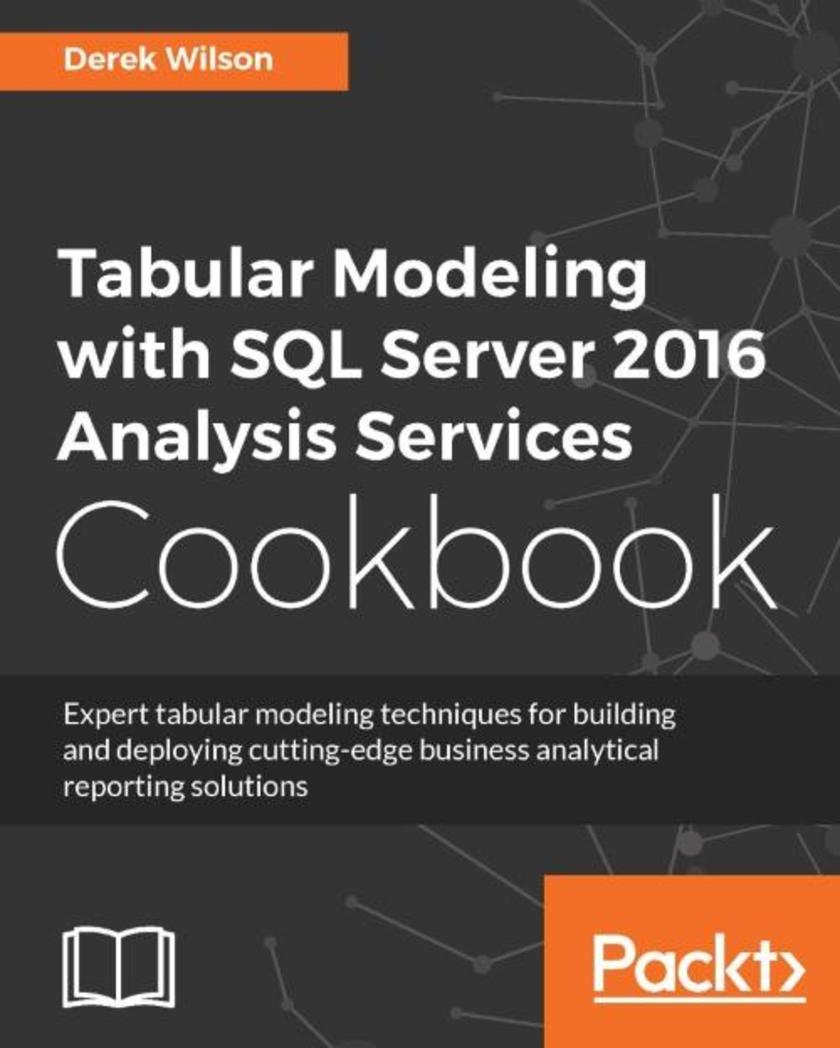
Tabular Modeling with SQL Server 2016 Analysis Services Cookbook
¥99.18
Expert tabular modeling techniques for building and deploying cutting-edge business analytical reporting solutions About This Book Build and deploy Tabular Model projects from relational data sources Leverage DAX and create high-performing calculated fields and measures Create ad-hoc reports based on a Tabular Model solution Useful tips to monitor and optimize your tabular solutions Who This Book Is For This book is for SQL BI professionals and Architects who want to exploit the full power of the new Tabular models in Analysis Services. Some knowledge of previous versions of Analysis services would be helpful but is not essential. What You Will Learn Learn all about Tabular services mode and how it speeds up development Build solutions using sample datasets Explore built-in actions and transitions in SSAS 2016 Implement row-column, and role-based security in a Tabular Data model Realize the benefits of in-memory and DirectQuery deployment modes Get up to date with the new features added to SQL Server 2016 Analysis Services Optimize Data Models and Relationships Usage In Detail SQL Server Analysis Service (SSAS) has been widely used across multiple businesses to build smart online analytical reporting solutions. It includes two different types of modeling for analysis services: Tabular and Multi Dimensional. This book covers Tabular modeling, which uses tables and relationships with a fast in-memory engine to provide state of the art compression algorithms and query performance. The book begins by quickly taking you through the concepts required to model tabular data and set up the necessary tools and services. As you learn to create tabular models using tools such as Excel and Power View, you’ll be shown various strategies to deploy your model on the server and choose a query mode (In-memory or DirectQuery) that best suits your reporting needs. You’ll also learn how to implement key and newly introduced DAX functions to create calculated columns and measures for your model data. Last but not least, you’ll be shown techniques that will help you administer and secure your BI implementation along with some widely used tips and tricks to optimize your reporting solution. By the end of this book, you’ll have gained hands-on experience with the powerful new features that have been added to Tabular models in SSAS 2016 and you’ll be able to improve user satisfaction with faster reports and analytical queries. Style and approach This book takes a practical, recipe-based approach where each recipe lists the steps to address or implement a solution. You will be provided with several approaches to creating a business intelligence semantic model using analysis services.
Scala Design Patterns
¥99.18
Write efficient, clean, and reusable code with ScalaAbout This BookUnleash the power of Scala and apply it in the real worldIncrease your efficiency by leveraging the power of Creational, Structural, Behavioural, and Functional design patternsBuild object oriented and functional applications quickly and effectivelyWho This Book Is ForIf you want to increase your understanding of Scala and apply it to real-life application development, then this book is for you. We’ve also designed the book to be used as a quick reference guide while creating applications. Previous Scala programming knowledge is expected.What You Will LearnImmerse yourself in industry-standard design patterns—structural, creational, and behavioral—to create extraordinary applicationsFeel the power of traits and their application in ScalaImplement abstract and self types and build clean design patternsBuild complex entity relationships using structural design patternsCreate applications faster by applying functional design patternsIn DetailScala has become increasingly popular in many different IT sectors. The language is exceptionally feature-rich which helps developers write less code and get faster results. Design patterns make developer’s lives easier by helping them write great software that is easy to maintain, runs efficiently and is valuable to the company or people concerned.You will learn about the various features of Scala and be able to apply well-known, industry-proven design patterns in your work. The book starts off by focusing on some of the most interesting features of Scala while using practical real-world examples. We will also cover the popular "Gang of Four" design patterns and show you how to incorporate functional patterns effectively. By the end of this book, you will have enough knowledge and understanding to quickly assess problems and come up with elegant solutions.Style and approachThe design patterns in the book will be explained using real-world, step-by-step examples. For each design pattern, there will be hints about when to use it and when to look for something more suitable. This book can also be used as a practical guide, showing you how to leverage design patterns effectively.
Implementing Microsoft Dynamics NAV - Third Edition
¥99.18
Explore the capabilities of Dynamics NAV 2016 and discover all you need to implement it About This Book Learn the key roles of your Dynamics NAV partner and the roles within your customer’s organization Create configuration packages and perform data migration on your own Find out how to troubleshoot your problems effectively with your Dynamics NAV partner Who This Book Is For This book is for Dynamics NAV partners and end users who want to know everything about Dynamics NAV implementations. It is aimed at those who want to be project managers or get involved with Dynamics NAV, but do not have the expertise to write code themselves. What You Will Learn Study the roles within a Dynamics NAV partner and within a customer’s company Create reusable data migration packages Work with the debugger to pinpoint error messages Get to grips with the key tables used in data reporting and analysis Successfully upgrade your installation to the latest version Manage and expand your existing installation with additional functionalities Explore the free third-party add-ons that can leverage your existing installation In Detail Microsoft Dynamics NAV 2016 is an Enterprise Resource Planning (ERP) application used in all kinds of organizations around the world. It provides a great variety of functionality out-of-the-box in different topics such as accounting, sales, purchase processing, logistics, or manufacturing. It also allows companies to grow the application by customizing the solution to meet specific requirements. This book is a hands-on tutorial on working with a real Dynamics NAV implementation. You will learn about the team from your Microsoft Dynamics NAV partner as well as the team within the customer’s company. This book provides an insight into the different tools available to migrate data from the client’s legacy system into Microsoft Dynamics NAV. If you are already live with Microsoft Dynamics NAV, this books talks about upgrades and what to expect from them. We’ll also show you how to implement additional or expanding functionalities within your existing Microsoft Dynamics NAV installation, perform data analysis, debug error messages, and implement free third-party add-ons to your existing installation. This book will empower you with all the skills and knowledge you need for a successful implementation. Style and approach This book is step-by-step guide to implementing Dynamics NAV from start to finish.
Mastering Python for Data Science
¥99.18
If you are a Python developer who wants to master the world of data science, then this book is for you. Some knowledge of data science is assumed.
Bioinformatics with Python Cookbook
¥99.18
If you have intermediate-level knowledge of Python and are well aware of the main research and vocabulary in your bioinformatics topic of interest, this book will help you develop your knowledge further.
ElasticSearch Cookbook
¥99.18
Written in an engaging, easy-to-follow style, the recipes will help you to extend the capabilities of ElasticSearch to manage your data effectively.If you are a developer who implements ElasticSearch in your web applications, manage data, or have decided to start using ElasticSearch, this book is ideal for you. This book assumes that you’ve got working knowledge of JSON and Java
Business Intelligence with MicroStrategy Cookbook
¥99.18
Written in a cookbook style, this book will teach you through the use of recipes with examples and illustrations. Each recipe contains step-by-step instructions about everything necessary to execute a particular task.This book is intended for both BI and database developers who want to expand their knowledge of MicroStrategy. It is also useful for advanced data analysts who are evaluating different technologies. You do not need to be an SQL master to read this book, yet knowledge of some concepts like foreign keys and many-to-many relationships is assumed. Some knowledge of basic concepts such as dimensional modeling (fact tables, dimensions) will also help your comprehension of this book. No previous MicroStrategy knowledge is needed.
Oracle Warehouse Builder 11g: Getting Started
¥99.18
This easy-to-understand tutorial covers Oracle Warehouse Builder from the ground up, and taps into the author's wide experience as a software and database engineer. Written in a relaxed style with step-by-step explanations, lots of screenshots are provided throughout the book. There are numerous tips and helpful hints throughout that are not found in the original documentation. By following this book, you can use Oracle Warehouse Builder in the best possible way and maximize your learning potential. This book is a good starting point for database engineers, administrators, and architects who are responsible for data warehouse projects and need to design them and load data into them. If you are someone who wants to learn Oracle Warehouse Builder and expand your knowledge of the tool and data warehousing, this is an ideal book for you. No prior data warehouse or database experience is presumed with all new database and data warehouse technical terms and concepts explained in clear easy-to-understand language.
Unity 5.x Cookbook
¥99.18
Over 100 recipes exploring the new and exciting features of Unity 5 to spice up your Unity skillsetAbout This BookBuilt on the solid foundation of the popular Unity 4.x Cookbook, the recipes in this edition have been completely updated for Unity 5Features recipes for both 2D and 3D gamesProvides you with techniques for the new features of Unity 5, including the new UI system, 2D game development, new Standard Shaders, and the new Audio Mixer Who This Book Is For From beginners to advanced users, from artists to coders, this book is for you and everyone in your team! Programmers can explore multimedia features, and multimedia developers can try their hand at *ing. Basic knowledge and understanding of the Unity platform, game design principles, and programming knowledge in C# is essential.What You Will LearnImmerse players with great audio, utilizing Unity 5's audio features including the new Audio Mixer, ambient sound with Reverb Zones, dynamic soundtracks with Snapshots, and balanced audio via DuckingCreate better materials with Unity’s new, physically-based, Standard ShaderMeasure and control time, including pausing the game, displaying clocks and countdown timers, and even implementing “bullet time” effectsImprove ambiance through the use of lights and effects such as reflection and light probesCreate stylish user interfaces with the new UI system, including power-bars, clock displays, and an extensible inventory systemSave and load text and media assets from local or remote sources, publish your game via Unity Cloud, and communicate with websites and their databases to create online scoreboardsDiscover advanced techniques, including the publisher-subscriber and state patterns, performance bottleneck identification, and methods to maximize game performance and frame ratesControl 2D and 3D character movement, and use NavMeshAgents to write NPC and enemy behaviors such as seek, flee, flock, and waypoint path following In Detail Unity 5 is a flexible and intuitive multiplatform game engine that is becoming the industry’s de facto standard. Learn to craft your own 2D and 3D computer games by working through core concepts such as animation, audio, shaders, GUI, lights, cameras, and *ing to create your own games with Unity 5. Completely re-written to cover the new features of Unity 5, this book is a great resource for all Unity game developers, from those who have recently started using Unity right up to Unity professionals. The first half of the book focuses on core concepts of 2D game design while the second half focuses on developing 3D game development skills. In the first half, you will discover the new GUI system, the new Audio Mixer, external files, and animating 2D characters in 2D game development. As you progress further, you will familiarize yourself with the new Standard Shaders, the Mecanim system, Cameras, and the new Lighting features to hone your skills towards building 3D games to perfection. Finally, you will learn non-player character control and explore Unity 5's extra features to enhance your 3D game development skills.Style and approach Each chapter first introduces the topic area and explains how the techniques covered can enhance your games. Every recipe provides step-by-step instructions, followed by an explanation of how it all works, and useful additional refinements or alternative approaches. Every required resource and C# * (fully commented) is available to download, enabling you to follow each recipe yourself.
Microsoft Exchange 2013 High Availability
¥99.18
This book is a handson practical guide that provides the reader with a number of clear scenarios and examples, making it easier to understand and apply the new concepts. Each chapter can be used as a reference, or it can be read from beginning to end, allowing consultants/administrators to build a solid and highly available Exchange 2013 environment. If you are a messaging professional who wants to learn to design a highly available Exchange 2013 environment, this book is for you. Although not a definite requirement, practical experience with Exchange 2010 is expected, without being a subject matter expert.
VMware vSphere 5.x Datacenter Design Cookbook
¥99.18
A practical guide packed with stepbystep recipes to design a virtual datacenter using VMware 5.x This book is a guide for anyone interested in designing virtualized datacenters using VMware vSphere 5.x and the supporting components. Current administrators of VMware vSphere environments will find this book useful when interested in becoming a vSphere Architect or are interested in learning more about the virtual datacenter design process. Knowledge of vSphere installation, configuration, and administration is a prerequisite.
Direct3D Rendering Cookbook
¥99.18
This is a practical cookbook that dives into the various methods of programming graphics with a focus on games. It is a perfect package of all the innovative and uptodate 3D rendering techniques supported by numerous illustrations, strong sample code, and concise explanations. Direct3D Rendering Cookbook is for C# .NET developers who want to learn the advanced rendering techniques made possible with DirectX 11.2. It is expected that the reader has at least a cursory knowledge of graphics programming, and although some knowledge of Direct3D 10+ is helpful, it is not necessary. An understanding of vector and matrix algebra is required.
Oracle SOA Suite Performance Tuning Cookbook
¥99.18
This is a Cookbook with interesting, hands-on recipes, giving detailed de*ions and lots of practical walkthroughs for boosting the performance of your Oracle SOA Suite.This book is for Oracle SOA Suite 11g administrators, developers, and architects who want to understand how they can maximise the performance of their SOA Suite infrastructure. The recipes contain easy to follow step-by-step instructions and include many helpful and practical tips. It is suitable for anyone with basic operating system and application server administration experience.


