


 购物车
购物车 个人中心
个人中心
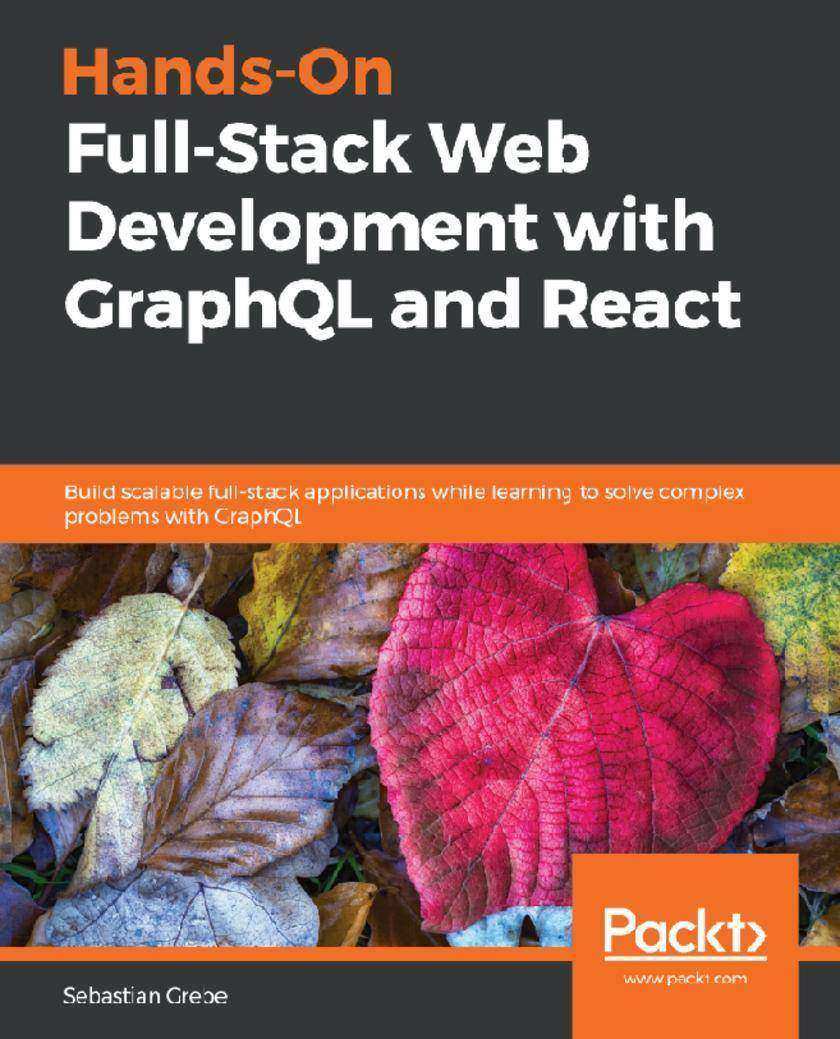
Hands-On Full-Stack Web Development with GraphQL and React
¥81.74
Unearth the power of GraphQL, React, Apollo, Node, and Express to build a scalable, production ready application Key Features * Build full stack applications with modern APIs using GraphQL and Apollo * Integrate Apollo into React and build frontend components using GraphQL * Implement a self-updating notification pop-up with a unique GraphQL feature called Subscriptions Book Description React, one of the most widely used JavaScript frameworks, allows developers to build fast and scalable front end applications for any use case. GraphQL is the modern way of querying an API. It represents an alternative to REST and is the next evolution in web development. Combining these two revolutionary technologies will give you a future-proof and scalable stack you can start building your business around. This book will guide you in implementing applications by using React, Apollo, Node.js and SQL. We'll focus on solving complex problems with GraphQL, such as abstracting multi-table database architectures and handling image uploads. Our client, and server will be powered by Apollo. Finally we will go ahead and build a complete Graphbook. While building the app, we'll cover the tricky parts of connecting React to the back end, and maintaining and synchronizing state. We'll learn all about querying data and authenticating users. We'll write test cases to verify the front end and back end functionality for our application and cover deployment. By the end of the book, you will be proficient in using GraphQL and React for your full-stack development requirements. What you will learn * Resolve data from multi-table database and system architectures * Build a GraphQL API by implementing models and schemas with Apollo and Sequelize * Set up an Apollo Client and build front end components using React * Use Mocha to test your full-stack application * Write complex React components and share data across them * Deploy your application using Docker Who this book is for The book is for web developers who want to enhance their skills and build complete full stack applications using industry standards. Familiarity with JavaScript, React, and GraphQL is expected to get the most from this book.
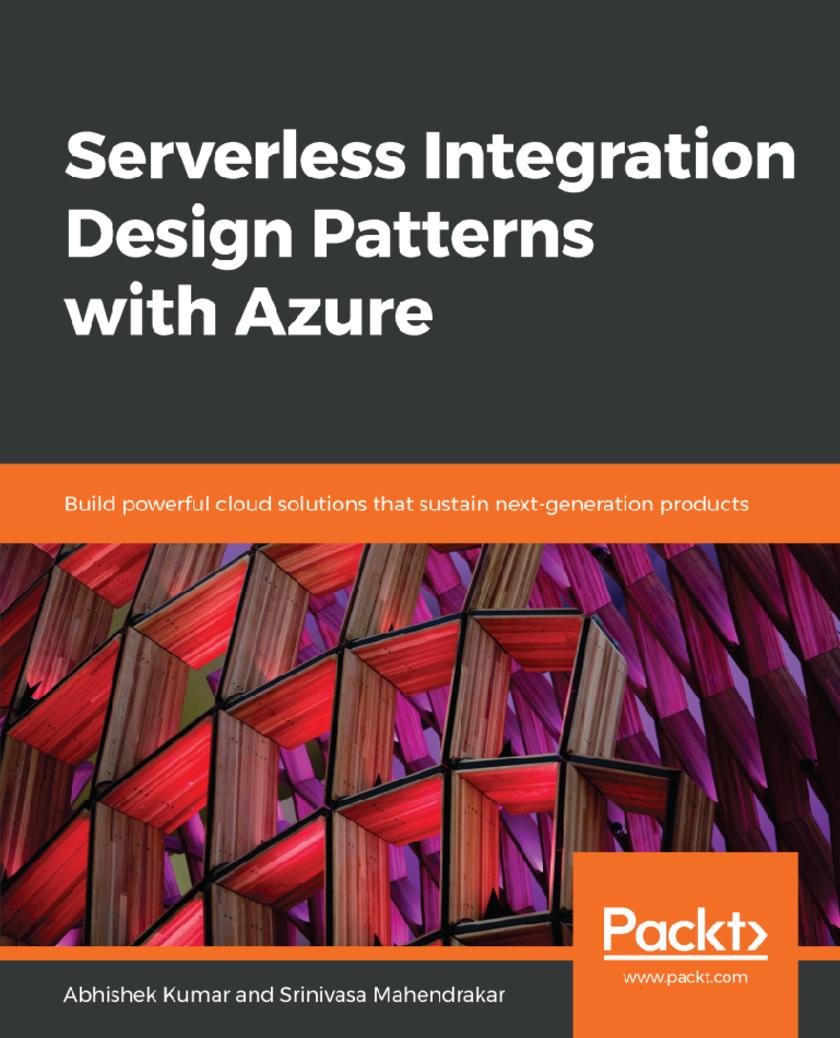
Serverless Integration Design Patterns with Azure
¥81.74
A practical guide that helps you progress to using modern integration methods and leverage new cloud capability models Key Features * Design critical hybrid integration solutions for your organization * Gain in-depth knowledge of how to build cloud-native integration solutions * Leverage cognitive services to build smart cloud solutions Book Description With more enterprises adapting cloud-based and API-based solutions, application integration has become more relevant and significant than ever before. Parallelly, Serverless Integration has gained popularity, as it helps agile organizations to build integration solutions quickly without having to worry about infrastructure costs. With Microsoft Azure’s serverless offerings, such as Logic Apps, Azure Functions, API Management, Azure Event Grid and Service Bus, organizations can build powerful, secure, and scalable integration solutions with ease. The primary objective of this book is to help you to understand various serverless offerings included within Azure Integration Services, taking you through the basics and industry practices and patterns. This book starts by explaining the concepts of services such as Azure Functions, Logic Apps, and Service Bus with hands-on examples and use cases. After getting to grips with the basics, you will be introduced to API Management and building B2B solutions using Logic Apps Enterprise Integration Pack. This book will help readers to understand building hybrid integration solutions and touches upon Microsoft Cognitive Services and leveraging them in modern integration solutions. Industry practices and patterns are brought to light at appropriate opportunities while explaining various concepts. What you will learn * Learn about the design principles of Microsoft Azure Serverless Integration * Get insights into Azure Functions, Logic Apps, Azure Event Grid and Service Bus * Secure and manage your integration endpoints using Azure API Management * Build advanced B2B solutions using Logic Apps, Enterprise Integration Pack * Monitor integration solutions using tools available on the market * Discover design patterns for hybrid integration Who this book is for Serverless Integration Design Patterns with Azure is for you if you are a solution architect or integration professional aiming to build complex cloud solutions for your organization. Developers looking to build next-level hybrid or cloud solutions will also find this book useful. Prior programming knowledge is necessary.
C++ Data Structures and Algorithms
¥81.74
Learn how to build efficient, secure and robust code in C++ by using data structures and algorithms - the building blocks of C++ About This Book ? Use data structures such as arrays, stacks, trees, lists, and graphs with real-world examples ? Learn the functional and reactive implementations of the traditional data structures ? Explore illustrations to present data structures and algorithms, as well as their analysis, in a clear, visual manner Who This Book Is For This book is for developers who would like to learn the Data Structures and Algorithms in C++. Basic C++ programming knowledge is expected. What You Will Learn ? Know how to use arrays and lists to get better results in complex scenarios ? Build enhanced applications by using hashtables, dictionaries, and sets ? Implement searching algorithms such as linear search, binary search, jump search, exponential search, and more ? Have a positive impact on the efficiency of applications with tree traversal ? Explore the design used in sorting algorithms like Heap sort, Quick sort, Merge sort and Radix sort ? Implement various common algorithms in string data types ? Find out how to design an algorithm for a specific task using the common algorithm paradigms In Detail C++ is a general-purpose programming language which has evolved over the years and is used to develop software for many different sectors. This book will be your companion as it takes you through implementing classic data structures and algorithms to help you get up and running as a confident C++ programmer. We begin with an introduction to C++ data structures and algorithms while also covering essential language constructs. Next, we will see how to store data using linked lists, arrays, stacks, and queues. Then, we will learn how to implement different sorting algorithms, such as quick sort and heap sort. Along with these, we will dive into searching algorithms such as linear search, binary search and more. Our next mission will be to attain high performance by implementing algorithms to string datatypes and implementing hash structures in algorithm design. We'll also analyze Brute Force algorithms, Greedy algorithms, and more. By the end of the book, you'll know how to build components that are easy to understand, debug, and use in different applications. Style and approach Readers will be taken through an indispensable list of data structures and algorithms so they can confidently begin coding in C++.
React 16 Tooling
¥81.74
React 16 Tooling covers the most important tools, utilities, and libraries that every React developer needs to know - in detail. About This Book ? Each chapter presents meta-development solutions to help React developers ? The tools used are presented in a practical, solution-oriented approach with no fluff ? The chapters are arranged in a logical order that mirrors a typical React development workflow, but you are free to tweak the approaches discussed to fit your own unique style Who This Book Is For This book is for React developers of any skill level who want to make their lives easier. It helps to have some familiarity with React, but if you are an experienced web developer looking at React, then this book will show you how to build a resilient toolset around you before you begin. What You Will Learn ? Bootstrap a React application using create-react-app ? Isolate React component development using Storybook ? Write effective unit tests for your React components using Jest ? Ensure that your component code is to standard using ESLint ? Use browser extensions and built-in component instrumentation to debug React applications ? Enable type safety in React components with Flowtype ? Deploy React applications inside a Docker container as part of a larger application stack In Detail React 16 Tooling covers the most important tools, utilities, and libraries that every React developer needs to know - in detail. As React has grown, the amazing toolset around it has also grown, adding features and enhancing the development workflow. Each of these essential tools is presented in a practical manner and in a logical order mirroring the development workflow. These tools will make your development life simpler and happier, enabling you to create better and more performant apps. Adam starts with a hand-picked selection of the best tools for the React 16 ecosystem. For starters, there's the create-react-app utility that's officially supported by the React team. Not only does this tool bootstrap your React project for you, it also provides a consistent and stable framework to build upon. The premise is that when you don't have to think about meta development work, more focus goes into the product itself. Other React tools follow this same approach to automating and improving your development life. Jest makes unit testing quicker. Flow makes catching errors easier. Docker containers make deployment in a stack simpler. Storybook makes developing components straightforward. ESLint makes writing standardized code faster. The React DevTools plugin makes debugging a cinch. React 16 Tooling clears away the barriers so you can focus on developing the good parts. In this book, we'll look at each of these powerful tools in detail, showing you how to build the perfect React ecosystem to develop your apps within. Style and approach This book covers React tools that help developers with the most relevant challenges they face today. Each chapter begins by defining the challenge faced by developers and why the tool is required, then shows how to fix the problem using React tooling.
Ionic Cookbook
¥81.74
Solve all your Ionic-related issues through dedicated recipes that will help you get the best out of Ionic. Working with Ionic components to find out the best way to share data between them effectively. About This Book ? Leverage Ionic 3.9 and its exciting new features to create cutting-edge, real-time apps ? Work through simple recipes to address your problems directly and solve them effectively ? Get examples at each step to guide you on your learning curve with Angular Who This Book Is For This book targets JavaScript developers. No previous knowledge of Ionic is necessary, but prior knowledge of web development techniques would be useful. What You Will Learn ? Help readers to jump-start Ionic apps ? Explore essential features of Ionic with examples ? Learn how to use native device functionalities ? Make the best use of the REST API to handle back-end services ? Work with Cordova to support native functionalities on both iOS and Android. ? Master advanced topics in app development such as deep linking and lazy loading In Detail Ionic is the preferred choice for JavaScript developers to develop real-time hybrid applications. This book will get you started with Ionic 3.9 and help you create Angular 5 components that interact with templates. You will work with Ionic components and find out how to share data efficiently between them. You'll discover how to make the best use of the REST API to handle back-end services and then move on to animating your application to make it look pretty. You then learn to add in a local push notification in order to test the app. Then you'll work with Cordova to support native functionalities on both iOS and Android. From there, you'll get to grips with using the default themes for each platform and customizing your own. We then take you through the advanced Ionic features like lazy loading, deep linking, localizing ionic apps etc. Finally, you'll see how best to deploy your app to different platforms. This book will solve all your Ionic-related issues through dedicated recipes that will help you get the best out of Ionic. Style and approach The book's recipe-based approach will help you get the best out of Ionic 3.9
Kubernetes for Developers
¥81.74
A developer's field-guide to designing scalable services using Kubernetes About This Book ? Develop and run your software using containers within a Kubernetes environment ? Get hands-on experience of using Kubernetes with DevOps concepts such as continuous integration, benchmark testing, monitoring, and so on ? Pragmatic example-based approach showing how to use Kubernetes in the development process Who This Book Is For If you are a full-stack or back-end software developers interested, curious, or being asked to test as well as run the code you're creating, you can leverage Kubernetes to make that process simpler and consistent regardless of where you deploy. If you're looking for developer focused examples in NodeJS and Python for how to build, test, deploy, and run your code with Kubernetes, this is perfect for you. What You Will Learn ? Build your software into containers ? Deploy and debug software running in containers within Kubernetes ? Declare and add configuration through Kubernetes ? Define how your application fits together, using internal and external services ? Add feedback to your code to help Kubernetes manage your services ? Monitor and measure your services through integration testing and in production deployments In Detail Kubernetes is documented and typically approached from the perspective of someone running software that has already been built. Kubernetes may also be used to enhance the development process, enabling more consistent testing and analysis of code to help developers verify not only its correctness, but also its efficiency. This book introduces key Kubernetes concepts, coupled with examples of how to deploy and use them with a bit of Node.js and Python example code, so that you can quickly replicate and use that knowledge. You will begin by setting up Kubernetes to help you develop and package your code. We walk you through the setup and installation process before working with Kubernetes in the development environment. We then delve into concepts such as automating your build process, autonomic computing, debugging, and integration testing. This book covers all the concepts required for a developer to work with Kubernetes. By the end of this book, you will be in a position to use Kubernetes in development ecosystems. Style and approach This book will cover examples using NodeJS and Python that walk you through building containers, defining your deployments, deploying, debugging, testing, and generally interacting with your code running on Kubernetes. The examples are focused on common development needs, and include pragmatic advice and the explanations behind that advice.
Hands-On Cybersecurity with Blockchain
¥81.74
Develop blockchain application with step-by-step instructions, working example and helpful recommendations About This Book ? Understanding the blockchain technology from the cybersecurity perspective ? Developing cyber security solutions with Ethereum blockchain technology ? Understanding real-world deployment of blockchain based applications Who This Book Is For The book is targeted towards security professionals, or any stakeholder dealing with cybersecurity who wants to understand the next-level of securing infrastructure using Blockchain. Basic understanding of Blockchain can be an added advantage. What You Will Learn ? Understand the cyberthreat landscape ? Learn about Ethereum and Hyperledger Blockchain ? Program Blockchain solutions ? Build Blockchain-based apps for 2FA, and DDoS protection ? Develop Blockchain-based PKI solutions and apps for storing DNS entries ? Challenges and the future of cybersecurity and Blockchain In Detail Blockchain technology is being welcomed as one of the most revolutionary and impactful innovations of today. Blockchain technology was first identified in the world’s most popular digital currency, Bitcoin, but has now changed the outlook of several organizations and empowered them to use it even for storage and transfer of value. This book will start by introducing you to the common cyberthreat landscape and common attacks such as malware, phishing, insider threats, and DDoS. The next set of chapters will help you to understand the workings of Blockchain technology, Ethereum and Hyperledger architecture and how they fit into the cybersecurity ecosystem. These chapters will also help you to write your first distributed application on Ethereum Blockchain and the Hyperledger Fabric framework. Later, you will learn about the security triad and its adaptation with Blockchain. The last set of chapters will take you through the core concepts of cybersecurity, such as DDoS protection, PKI-based identity, 2FA, and DNS security. You will learn how Blockchain plays a crucial role in transforming cybersecurity solutions. Toward the end of the book, you will also encounter some real-world deployment examples of Blockchain in security cases, and also understand the short-term challenges and future of cybersecurity with Blockchain. Style and approach This book will follow a practical approach to help understand blockchain technology to transform cybersecurity solutions
Mastering Firebase for Android Development
¥81.74
Develop a fully functional dynamic Android application using the latest features of Firebase About This Book ? Explore all the latest tools in Firebase—Firebase Firestore, ML-Kit, and Firebase Predictions ? Master Firebase cloud messaging, remote configuration, and work with a real-time database ? Make your app a global success with the help of Google Analytics and AdMob Who This Book Is For Mastering Firebase for Android Development is for individualslooking to extend their skills with Firebase and build faster, scalable, and real-time mobile applications. Basic understanding of Android programming is necessary. In all, this in-depth guide is an accessible pathway to mastering Firebase. What You Will Learn ? Learn about Firebase push notifications and write backend functionalities ? Identify the root cause of an application crash and diagnose and fix bugs ? Store different Multipurpose Internet MailExtension(MIME) type files ? Explore web hosting and connect the Firebase functions to the host website ? Send push notifications and understand the deep integration of analytics tools and cohorts ? Market and monetize your application using Firebase Adwords and Admob ? Build a secure authentication framework while enhancing the sign-in and on-boarding experience for end users In Detail Firebase offers a wide spectrum of tools and services to help you develop high-quality apps in a short period of time. It also allows you to build web and mobile apps quickly without managing the infrastructure.Mastering Firebase for Android Development takes you through the complete toolchain of Firebase,including the latest tools announced in Google IO 2018 such as Firebase ML-Kit, FireStore, and Firebase Predictions. The book begins by teaching you to configure your development environment with Firebase and set up a different structure for a Firebase real-time database. As you make your way through the chapters, you’ll establish the authentication feature in Android and explore email and phone authentication for managing the on-boarding of users. You’ll be taken through topics on Firebase crash reporting, Firebase functions, Firebase Cloud, Firebase Hosting, and Cloud Messaging for push notifications and explore other key areas in depth. In the concluding chapters, you will learn to use Firebase Test Lab to test your application before using Firebase Performance Monitoring to trace performance setbacks. By the end of the book, you will be well equipped with the Firebase ecosystem, which will help you find solutions to your common application development challenges. Style and approach A step by step guide taking you through the different features of Firebase
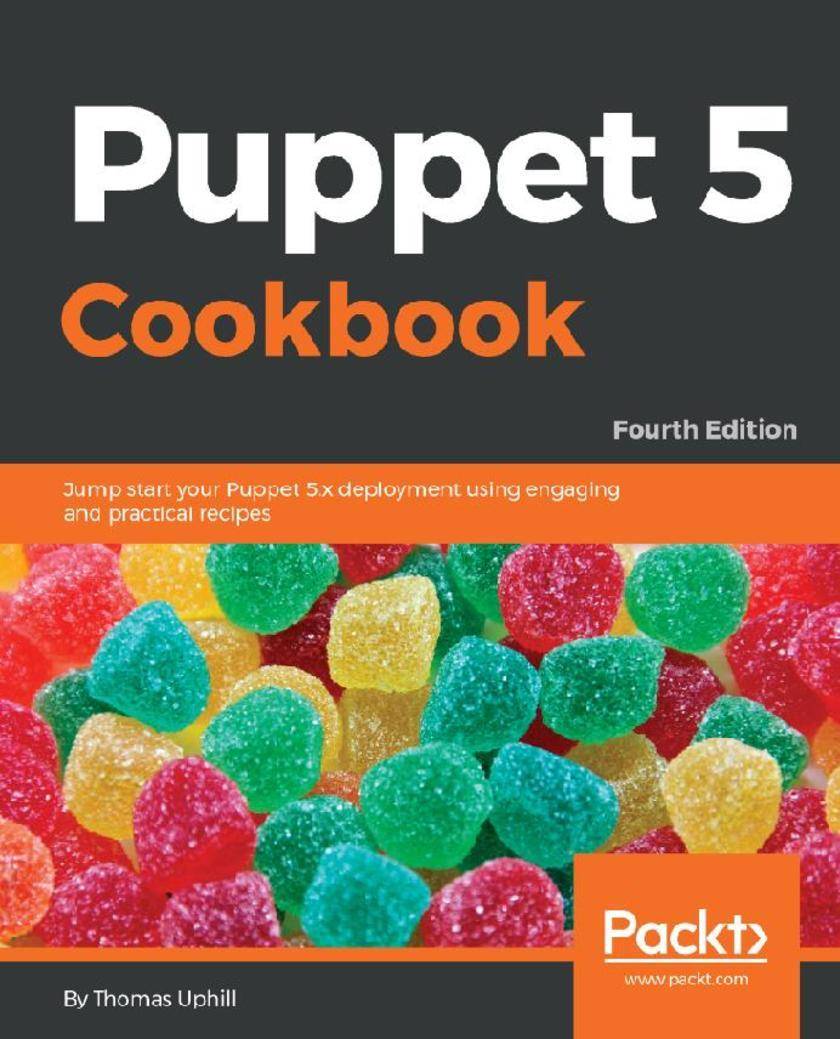
Puppet 5 Cookbook
¥81.74
Write custom plugins for Puppet, including facts, providers, and functions About This Book ? Grasp recipes that work with centralized and decentralized deployments ? Explore language differences and enhancements anticipated in Puppet version 5.x ? Gain expert understanding of Puppet's latest and most advanced features Who This Book Is For Puppet 5 Cookbook is for anyone who builds and administers servers, especially in a web operations context. You’ll need some experience of Linux systems administration, including familiarity with the command line, filesystem, and text editing. No prior programming experience is required. What You Will Learn ? Discover the latest and most advanced features of Puppet ? Bootstrap your Puppet installation using powerful tools like Rake ? Master techniques to deal with centralized and decentralized Puppet deployments ? Use exported resources and forge modules to set up Puppet modules ? Create efficient manifests to streamline your deployments ? Automate Puppet master deployment using Git hooks and PuppetDB ? Make Puppet reliable, performant, and scalable In Detail Puppet is a configuration management system that automates all your IT configurations, giving you control of managing each node.Puppet 5 Cookbook will take you through Puppet's latest and most advanced features, including Docker containers, Hiera, and AWS Cloud Orchestration. Updated with the latest advancements and best practices, this book delves into various aspects of writing good Puppet code, which includes using Puppet community style, checking your manifests with puppet-lint, and learning community best practices with an emphasis on real-world implementation. You will learn to set up, install, and create your first manifests with Puppet version control, and also understand various sysadmin tasks, including managing config files, using Augeas, and generating files from snippets and templates. As the book progresses, you’ll explore virtual resources and use Puppet's resource scheduling and auditing features. In the concluding chapters, you’ll walk through managing applications and writing your own resource types, providers, and external node classifiers. By the end of this book, you will have learned to report, log, and debug your system. Style and approach A recipe-based guide filled with quick step-by-step instructions that are immediately applicable
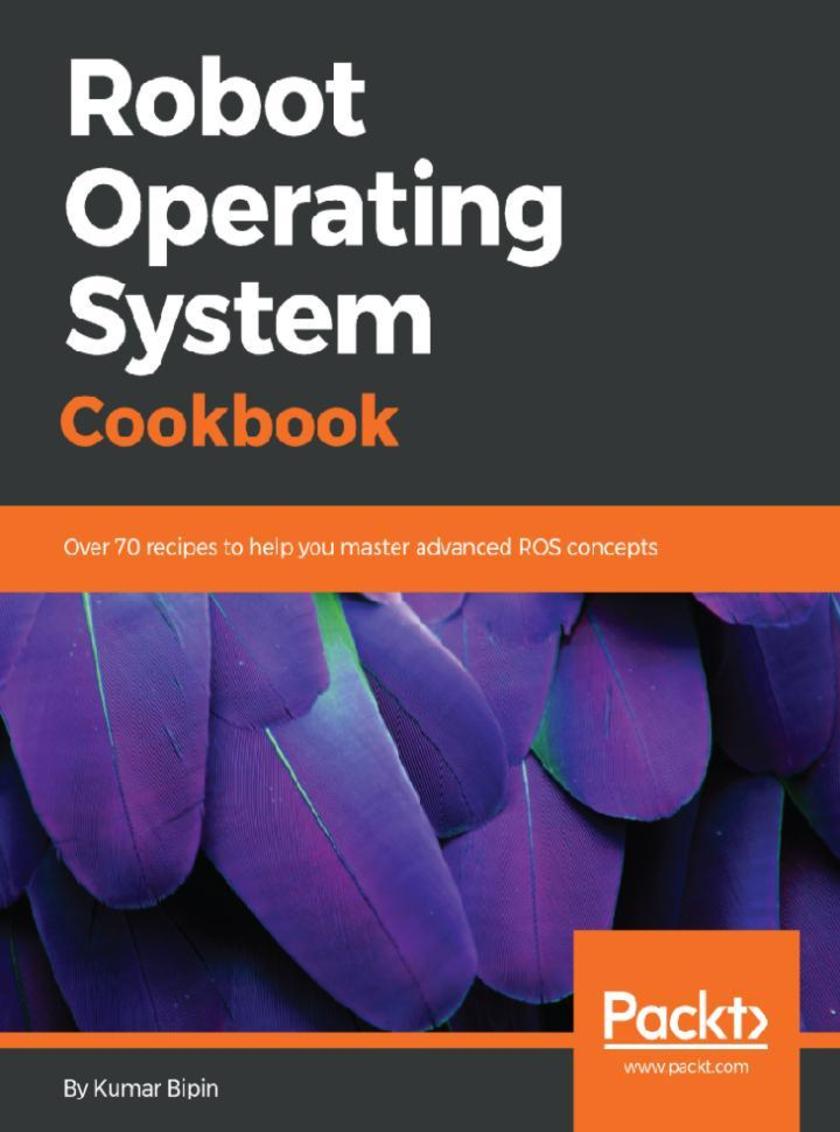
Robot Operating System Cookbook
¥81.74
Leverage the power of ROS to build exciting collaborative robots. About This Book ? Delve into an open source, meta-operating system for your robot ? Get acquainted with tools and libraries for building and running code on multiple platforms ? Use Gazebo to model your robot and create a virtual environment Who This Book Is For If you’re a researcher or engineer with an interest in the problems, solutions, and future research issues that you may encounter in the development of robotic applications, this book is for you. Basic knowledge of C++ and Python programming with the GNU/Linux environment is strongly recommended to assist with understanding the key concepts covered in the book. What You Will Learn ? Explore advanced concepts, such as ROS pluginlib, nodelets, and actionlib ? Work with ROS visualization, profiling, and debugging tools ? Gain experience in robot modeling and simulation using Gazebo ? Understand the ROS Navigation Stack for mobile robots ? Configure a MoveIt! package for a manipulator robot ? Develop an autonomous navigation framework for MAV using ORB SLAM and MoveIt ? Integrate sensors, actuators, and robots into the ROS ecosystem ? Get acquainted with the ROS-Industrial package with hardware support, capabilities, and applications In Detail This book will leverage the power of ROS with an introduction to its core and advanced concepts through exciting recipes. You will get acquainted with the use of different synchronous and asynchronous communication methods, including messages, services, and actions. You will learn how to use the various debugging and visualization tools used in development and how to interface sensors and actuators with the ROS framework. Firstly, you will get to grips with ROS simulation frameworks, such as Gazebo and RotorS for modeling and simulating any physical robot and virtual environment. You will also cover mobile robotics, micro-aerial vehicles, and robotic arms, which are the leading branches of robotic applications. Robot Operating System Cookbook will also guide you in the development of an autonomous navigation framework for both mobile robots and micro-aerial vehicles. Finally, you will explore ROS-Industrial, an open source project that extends the advanced capabilities of ROS software to manufacturing industries. Style and approach The goal of this book is to provide an integrated overview of the concepts and techniques. ROS is not an operating system in the traditional sense of process management and scheduling; rather, it provides a structured communications layer above the host operating systems of a heterogeneous compute cluster.
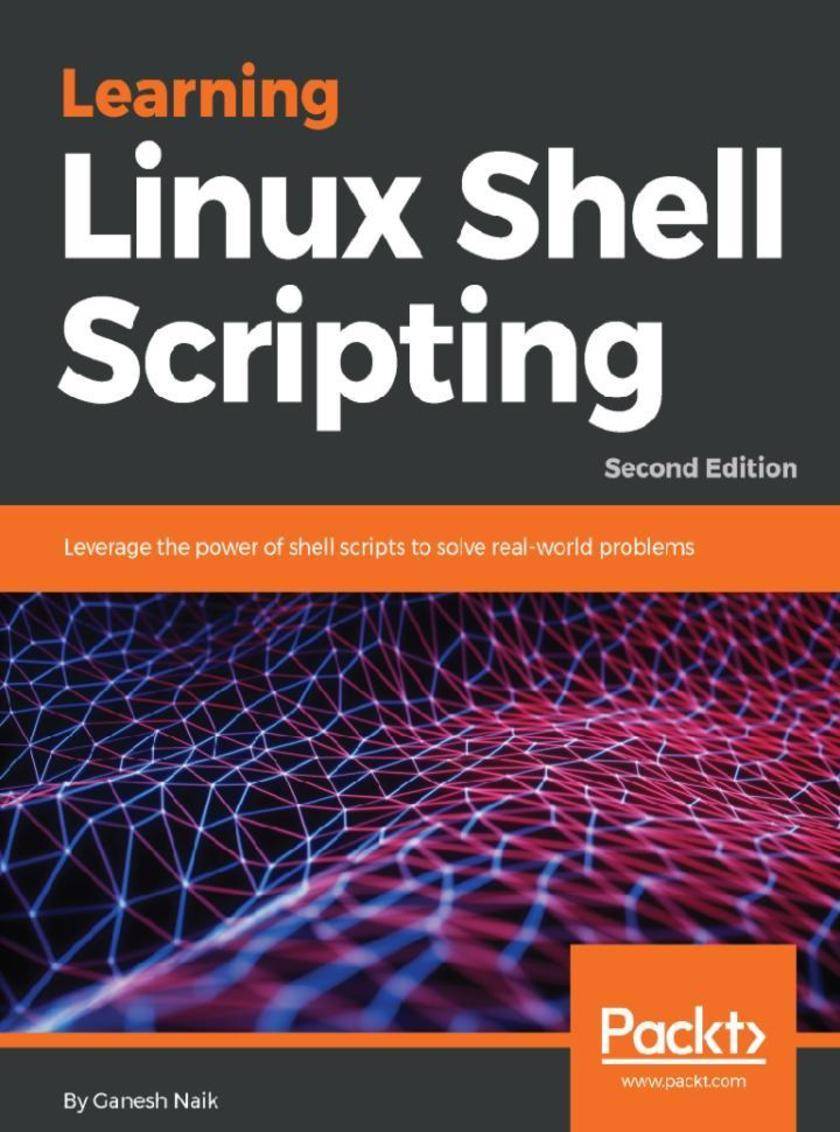
Learning Linux Shell Scripting
¥81.74
Break through the practice of writing tedious code with shell scripts About This Book ? Learn to impeccably build shell scripts and develop advanced applications ? Create smart solutions by writing and debugging scripts ? A step-by-step tutorial to automate routine tasks by developing scripts Who This Book Is For Learning Linux Shell Scripting is ideal for those who are proficient at working with Linux and want to learn about shell scripting to improve their efficiency and practical skills. What You Will Learn ? Familiarize yourself with the various text filtering tools available in Linux ? Understand expressions and variables and how to use them practically ? Automate decision-making and save a lot of time and effort of revisiting code ? Get to grips with advanced functionality such as using traps, dialogs to develop screens & Database administration such as MySQL or Oracle ? Start up a system and customize a Linux system ? Taking backup of local or remote data or important files. ? Use existing other language scripts such as Python, Perl & Ruby in Shell Scripts In Detail Linux is the most powerful and universally adopted OS. Shell is a program that gives the user direct interaction with the operating system. Scripts are collections of commands that are stored in a file. The shell reads this file and acts on commands as if they were typed on the keyboard. Learning Linux Shell Scripting covers Bash, GNU Bourne Again Shell, preparing you to work in the exciting world of Linux shell scripting. CentOS is a popular rpm-based stable and secured Linux distribution. Therefore, we have used CentOS distribution instead of Ubuntu distribution. Linux Shell Scripting is independent of Linux distributions, but we have covered both types of distros. We start with an introduction to the Shell environment and basic commands used. Next, we explore process management in Linux OS, real-world essentials such as debugging and perform Shell arithmetic fluently. You'll then take a step ahead and learn new and advanced topics in Shell scripting, such as decision making, starting up a system, and customizing a Linux environment. You will also learn about grep, stream editor, and AWK, which are very powerful text filters and editors. Finally, you'll get to grips with taking backup, using other language scripts in Shell Scripts as well as automating database administration tasks for MySQL and Oracle. By the end of this book, you will be able to confidently use your own shell scripts in the real world. Style and approach This practical book will go from the very basics of shell scripting to complex, customized automation. The idea behind this book is to be as practical as possible and give you the look and feel of what real-world scripting is like.
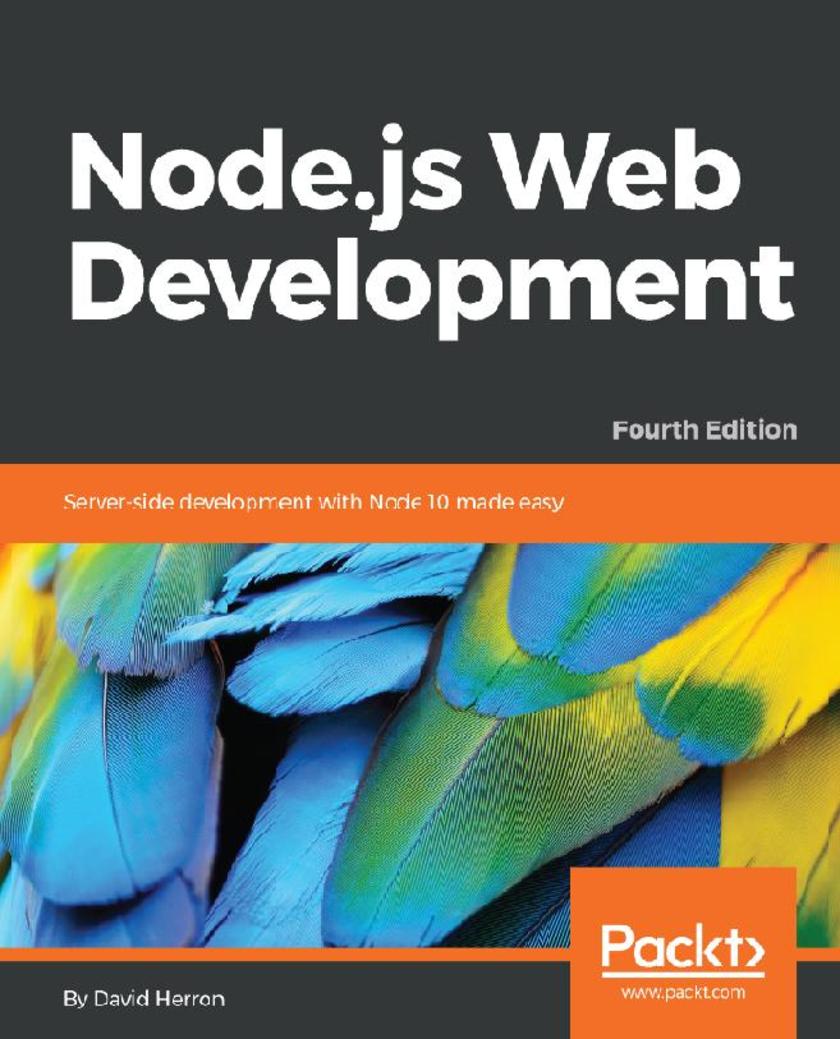
Node.js Web Development
¥81.74
Create real-time applications using Node.js 10, Docker, MySQL, MongoDB, and Socket.IO with this practical guide and go beyond the developer's laptop to cover live deployment, including HTTPS and hardened security. About This Book ? Learn server-side JavaScript coding through the most up-to-date book on Node.js ? Explore the latest JavaScript features, and EcmaScript modules ? Walk through different stages of developing robust applications using Node.js 10 Who This Book Is For This book is for anybody looking for an alternative to the "P" languages (Perl, PHP, and Python), or anyone looking for a new paradigm of server-side application development. You should have at least a rudimentary understanding of JavaScript and web application development. What You Will Learn ? Install and use Node.js 10 for both development and deployment ? Use the Express 4.16 application framework ? Work with REST service development using the Restify framework ? Use data storage engines such as MySQL, SQLITE3, and MongoDB ? Use User authentication methods with OAuth2 ? Perform Real-time communication with the front-end using Socket.IO ? Implement Docker microservices in development, testing and deployment ? Perform unit testing with Mocha 5.x, and functional testing with Puppeteer 1.1.x ? Work with HTTPS using Let’s Encrypt, and application security with Helmet In Detail Node.js is a server-side JavaScript platform using an event-driven, non-blocking I/O model allowing users to build fast and scalable data-intensive applications running in real time. This book gives you an excellent starting point, bringing you straight to the heart of developing web applications with Node.js. You will progress from a rudimentary knowledge of JavaScript and server-side development to being able to create, maintain, deploy and test your own Node.js application.You will understand the importance of transitioning to functions that return Promise objects, and the difference between fs, fs/promises and fs-extra. With this book you'll learn how to use the HTTP Server and Client objects, data storage with both SQL and MongoDB databases, real-time applications with Socket.IO, mobile-first theming with Bootstrap, microservice deployment with Docker, authenticating against third-party services using OAuth, and use some well known tools to beef up security of Express 4.16 applications. Style and approach Benefit from an easy, step-by-step approach that really works.
TypeScript Microservices
¥81.74
Build robust microservice-based applications that are distributed, fault tolerant, and always available About This Book ? Learn to build message-driven services for effective communication ? Design microservices API using Reactive programming design patterns ? Deploy, scale and monitor microservices for consistent high performance Who This Book Is For This book is for JavaScript developers seeking to utilize their Node.js and Typescript skills to build microservices and move away from the monolithic architecture. Prior knowledge of TypeScript and Node.js is assumed. What You Will Learn ? Get acquainted with the fundamentals behind microservices. ? Explore the behavioral changes needed for moving from monolithic to microservices. ? Dive into reactive programming, Typescript and Node.js to learn its fundamentals in microservices ? Understand and design a service gateway and service registry for your microservices. ? Maintain the state of microservice and handle dependencies. ? Perfect your microservice with unit testing and Integration testing ? Develop a microservice, secure it, deploy it, and then scale it In Detail In the last few years or so, microservices have achieved the rock star status and right now are one of the most tangible solutions in enterprises to make quick, effective, and scalable applications. The apparent rise of Typescript and long evolution from ES5 to ES6 has seen lots of big companies move to ES6 stack. If you want to learn how to leverage the power of microservices to build robust architecture using reactive programming and Typescript in Node.js, then this book is for you. Typescript Microservices is an end-to-end guide that shows you the implementation of microservices from scratch; right from starting the project to hardening and securing your services. We will begin with a brief introduction to microservices before learning to break your monolith applications into microservices. From here, you will learn reactive programming patterns and how to build APIs for microservices. The next set of topics will take you through the microservice architecture with TypeScript and communication between services. Further, you will learn to test and deploy your TypeScript microservices using the latest tools and implement continuous integration. Finally, you will learn to secure and harden your microservice. By the end of the book, you will be able to build production-ready, scalable, and maintainable microservices using Node.js and Typescript. Style and approach This book will be a step by step easy to follow guide with focused examples for building microservices with Typescript.
Django Design Patterns and Best Practices
¥81.74
Build maintainable websites with elegant Django design patterns and modern best practices About This Book ? Explore aspects of Django from Models and Views to testing and deployment ? Understand the nuances of web development such as browser attack and data design ? Walk through various asynchronous tools such as Celery and Channels Who This Book Is For This book is for you whether you’re new to Django or just want to learn its best practices. You do not have to be an expert in Django or Python. No prior knowledge of patterns is expected for reading this book but it would be helpful. What You Will Learn ? Make use of common design patterns to help you write better code ? Implement best practices and idioms in this rapidly evolving framework ? Deal with legacy code and debugging ? Use asynchronous tools such as Celery, Channels, and asyncio ? Use patterns while designing API interfaces with the Django REST Framework ? Reduce the maintenance burden with well-tested, cleaner code ? Host, deploy, and secure your Django projects In Detail Building secure and maintainable web applications requires comprehensive knowledge. The second edition of this book not only sheds light on Django, but also encapsulates years of experience in the form of design patterns and best practices. Rather than sticking to GoF design patterns, the book looks at higher-level patterns. Using the latest version of Django and Python, you’ll learn about Channels and asyncio while building a solid conceptual background. The book compares design choices to help you make everyday decisions faster in a rapidly changing environment. You’ll first learn about various architectural patterns, many of which are used to build Django. You’ll start with building a fun superhero project by gathering the requirements, creating mockups, and setting up the project. Through project-guided examples, you’ll explore the Model, View, templates, workflows, and code reusability techniques. In addition to this, you’ll learn practical Python coding techniques in Django that’ll enable you to tackle problems related to complex topics such as legacy coding, data modeling, and code reusability. You’ll discover API design principles and best practices, and understand the need for asynchronous workflows. During this journey, you’ll study popular Python code testing techniques in Django, various web security threats and their countermeasures, and the monitoring and performance of your application. Style and approach This comprehensive project-driven guide will enhance your skill set by taking you through the well-known design patterns and industry-standard best practices in Django web development.
Hands-On Functional Programming in Rust
¥81.74
Explore the support Rust offers for creating functional applications in Rust. Learn about various design patterns, implementing concurrency, metaprogramming, and so on in the process About This Book ? Learn generics, organization, and design patterns in functional programming ? Modularize your applications and make them highly reusable and testable using functional design patterns ? Get familiar with complex concepts such as metaprogramming, concurrency, and immutability Who This Book Is For This book is for Rust developers who are comfortable with the language and now want to improve their coding abilities by learning advanced functional techniques to enhance their skillset and create robust and testable apps. What You Will Learn ? How Rust supports the use of basic functional programming principles ? Use functional programming to handle concurrency with elegance ? Read and interpret complex type signatures for types and functions ? Implement powerful abstractions using meta programming in Rust ? Create quality code formulaically using Rust's functional design patterns ? Master Rust's complex ownership mechanisms particularly for mutability In Detail Functional programming allows developers to divide programs into smaller, reusable components that ease the creation, testing, and maintenance of software as a whole. Combined with the power of Rust, you can develop robust and scalable applications that fulfill modern day software requirements. This book will help you discover all the Rust features that can be used to build software in a functional way. We begin with a brief comparison of the functional and object-oriented approach to different problems and patterns. We then quickly look at the patterns of control flow, data the abstractions of these unique to functional programming. The next part covers how to create functional apps in Rust; mutability and ownership, which are exclusive to Rust, are also discussed. Pure functions are examined next and you'll master closures, their various types, and currying. We also look at implementing concurrency through functional design principles and metaprogramming using macros. Finally, we look at best practices for debugging and optimization. By the end of the book, you will be familiar with the functional approach of programming and will be able to use these techniques on a daily basis. Style and approach Step-by-step guide covering advanced concepts and building functional applications in Rust
Mapping with ArcGIS Pro
¥81.74
Implementing the ArcGIS Pro technique to design accurate, user friendly maps and making appropriate cartographic decisions About This Book ? Build visually stunning and useful maps; ? Understand the cartographic workflows and the decisions you must take before creating the map; ? Learn to create appropriate map elements and layout designs ? Use the ArcGIS Online's Smart Mapping technique to create clear webmaps Who This Book Is For If you are a GIS analyst or a Map designer who would like to create and design a map with ArcGIS Pro then this book is for you. A basic GIS knowledge is assumed. What You Will Learn ? Using ArcGIS Pro to create visually stunning maps and make confident cartographic decisions ? Leverage precise layout grids that will organize and guide the placement of map elements ? Make appropriate decisions about color and symbols ? Critically evaluate and choose the perfect projection for your data ? Create clear webmaps that focus the reader’s attention using ArcGIS Online’s Smart Mapping capabilities In Detail ArcGIS Pro is a geographic information system for working with maps and geographic information. This book will help you create visually stunning maps that increase the legibility of the stories being mapped and introduce visual and design concepts into a traditionally scientific, data-driven process. The book begins by outlining the steps of gathering data from authoritative sources and lays out the workflow of creating a great map. Once the plan is in place you will learn how to organize the Contents Pane in ArcGIS Pro and identify the steps involved in streamlining the production process. Then you will learn Cartographic Design techniques using ArcGIS Pro's feature set to organize the page structure and create a custom set of color swatches. You will be then exposed to the techniques required to ensure your data is clear and legible no matter the size or scale of your map. The later chapters will help you understand the various projection systems, trade-offs between them, and the proper applications of them to make sure your maps are accurate and visually appealing. Finally, you will be introduced to the ArcGIS Online ecosystem and how ArcGIS Pro can utilize it within the application. You will learn Smart Mapping, a new feature of ArcGIS Online that will help you to make maps that are visually stunning and useful. By the end of this book, you will feel more confident in making appropriate cartographic decisions. Style and approach The book takes a pragmatic approach, showing various methods to create visually stunning maps.
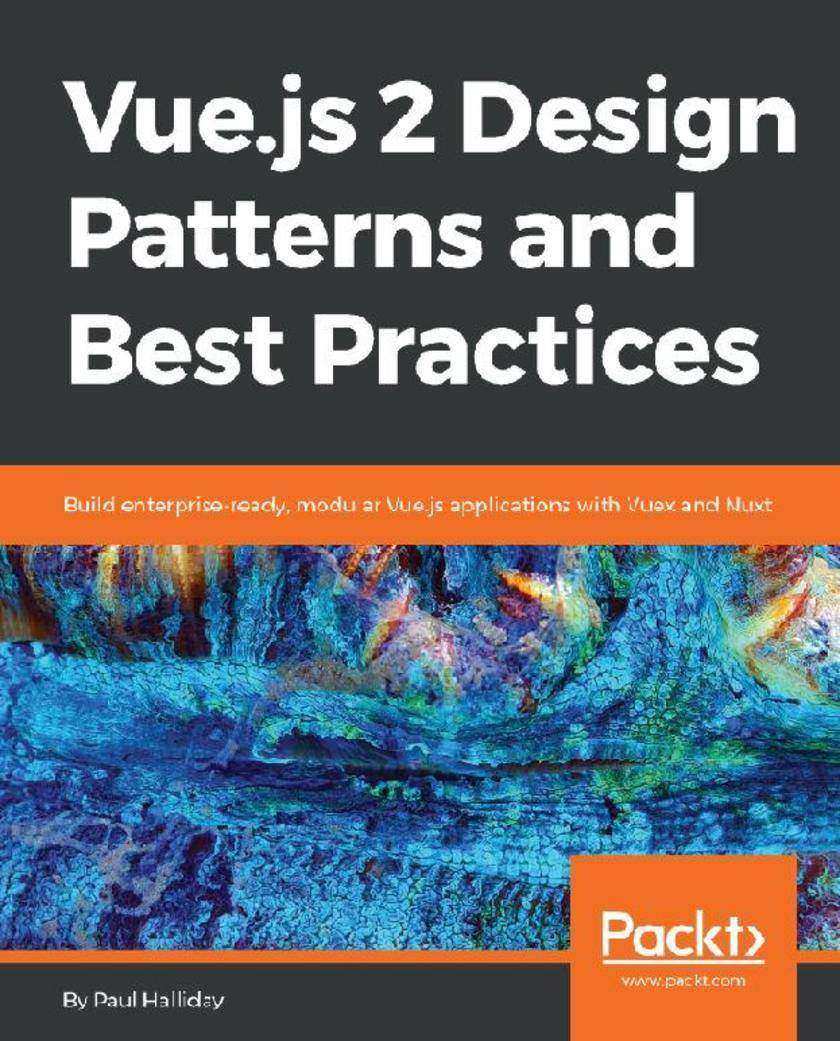
Vue.js 2 Design Patterns and Best Practices
¥81.74
Become an expert Vue developer by understanding the design patterns and component architecture of Vue.js to write clean and maintainable code. About This Book ? Craft highly modular applications by exploring the design patterns and component architecture of Vue.js ? Enforce a Flux-like application architecture in your Vue.js applications with Vuex ? Easy-to-follow examples that can be used to create reusable code and extensible designs Who This Book Is For This book targets Vue Developers who care about framework design principles and utilize commonly found design patterns in developing web applications. What You Will Learn ? Understand the theory and patterns of Vue.js ? Build scalable and modular Vue.js applications ? Take advantage of Vuex for reactive state management. ? Create Single Page Applications with vue-router. ? Use Nuxt for FAST server side rendered Vue applications. ? Convert your application to a Progressive Web App (PWA) and add ServiceWorkers, offline support, and more ? Build your app with Vue.js by following up with best practices and explore the common anti-patterns to avoid In Detail The book starts by comparing Vue.js with other frameworks and setting up the development environment for your application, and gradually move on to writing and styling clean, maintainable, and reusable components that can be used across your application. Further on, you'll look at common UI patterns, Vue form submission, and various modifiers such as lazy binding, number typecasting, and string trimming to create better UIs. You will also explore best practices for integrating HTTP into Vue.js applications to create an application with dynamic data. Routing is a vitally important part of any SPA, so you will focus on the Vue router and explore routing a user between multiple pages. Next, you'll also explore state management with Vuex, write testable code for your application, and create performant, server-side rendered applications with Nuxt. Towards the end, we'll look at common antipatterns to avoid, to save you from a lot of trial and error and development headaches. By the end of this book, you'll be well on your way to becoming an expert Vue developer who can leverage design patterns to efficiently architect the design of your application and write clean and maintainable code. Style and approach This easy-to-follow practical guide will help you develop efficient Vue.js apps by following best practices and using common design patterns.
Getting Started with Unity 2018 - Third Edition
¥81.74
Learn how to use Unity 2018 by creating your very own 3D game while developing your essential skills About This Book ? Learn to create immersive 3D games and Virtual Reality experiences with Unity 2018 ? Build custom scripts to make your game characters interactive ? Explore and implement AritificiaI Intelligence techniques to bring your game to life Who This Book Is For If you are an aspiring game developer interested in learning Unity 2018 and becoming familiar with its core features, then this book is for you. No prior knowledge of Unity is required. What You Will Learn ? Set up your Unity development environment and navigate its tools ? Import and use custom assets and asset packages to add characters to your game ? Build a 3D game world with a custom terrain, water, sky, mountains, and trees ? Animate game characters, using animation controllers, and scripting ? Apply audio and particle effects to the game ? Create intuitive game menus and interface elements ? Customize your game with sound effects, shadows, lighting effects, and rendering options ? Debug code and provide smooth error handling In Detail The Unity game engine has revolutionized the gaming industry with its complete set of intuitive tools and rapid workflows, which can be used to create interactive 3D content. With Unity, you can scaffold your way from the basics and make make stunning interactive games. This book will guide you through the entire process of creating a 3D game, from downloading the Unity game engine to publishing your game. It not only gives you a strong foundation, but puts you on the path to game development. Beginning with an overview of the Unity engine and its interface, you will walk through the process of creating a game environment and learn how to use built-in assets, as well as assets created with third-party 3D modeling tools such as Blender. Moving on, you will create custom scripts to control non-player character behaviors and gameplay. You will master exciting concepts such as Heads-Up-Displays, mini-maps, game navigation, sound effects, and lighting effects. Next, you’ll learn how to create your first VR experience, right from setting up the project to image effects. You'll be familiarized with all the tools that Unity has to offer to create your own immersive VR experiences. Each section is a stepping stone toward the completion of the final game. By the end of the book, you'll have learned advanced topics such as cross-platform considerations which enable your games to run on multiple platforms. Style and approach A step-by-step guide giving you the perfect start to developing 3D games with Unity 2018
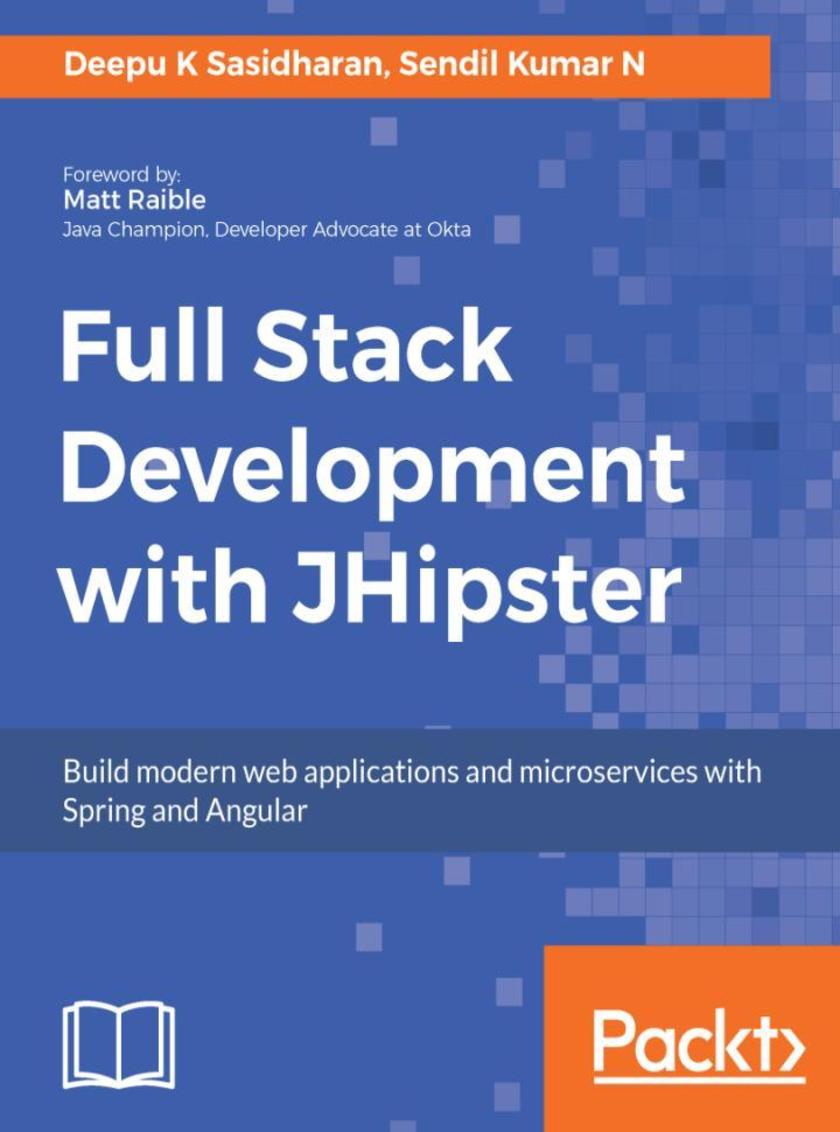
Full Stack Development with JHipster
¥81.74
Discover the world of Full Stack Development with real-world examples. About This Book ? Leverage the full power of the JHipster platform to build complex web applications ? Create microservices from scratch and convert JHipster monolith apps into microservices ? Build and deploy applications locally, in Docker and on various cloud platforms. Who This Book Is For This book will appeal to developers who would like to build modern web applications quickly. A basic knowledge of the Spring ecosystem would be an added advantage. What You Will Learn ? Build business logic by creating and developing entity models us the JHipster Domain Language ? Customize web applications with Angular, Bootstrap and Spring ? Tests and Continuous Integration with Jenkins ? Utilize the JHipster microservice stack, which includes Netflix Eureka, Spring Cloud config, HashiCorp Consul, and so on. ? Understand advanced microservice concepts such as API rout, load balancing, rate limit, circuit break, centralized configuration server, JWT authentication, and more ? Run microservices locally using Docker and Kubernetes (in production) In Detail JHipster is a development platform to generate, develop, and deploy Spring Boot and Angular/React applications and Spring microservices. It provides you with a variety of tools that will help you quickly build modern web applications. This book will be your guide to building full stack applications with Spring and Angular using the JHipster tool set. You will begin by understanding what JHipster is and the various tools and technologies associated with it. You will learn the essentials of a full stack developer before getting hands-on and building a monolithic web application with JHipster. From here you will learn the JHipster Domain Language with entity modeling and entity creation using JDL and JDL studio. Moving on, you will be introduced to client side technologies such as Angular and Bootstrap and will delve into technologies such as Spring Security, Spring MVC, and Spring Data. You will learn to build and package apps for production with various deployment options such as Heroku and more. During the course of the book, you will be introduced to microservice server-side technologies and how to break your monolithic application with a database of your choice. Next, the book takes you through cloud deployment with microservices on Docker and Kubernetes. Going forward, you will learn to build your client side with React and master JHipster best practices. By the end of the book, you will be able to leverage the power of the best tools available to build modern web applications. Style and approach This comprehensive guide builds a complex production-ready Spring Boot + Angular web application using JHipster platform
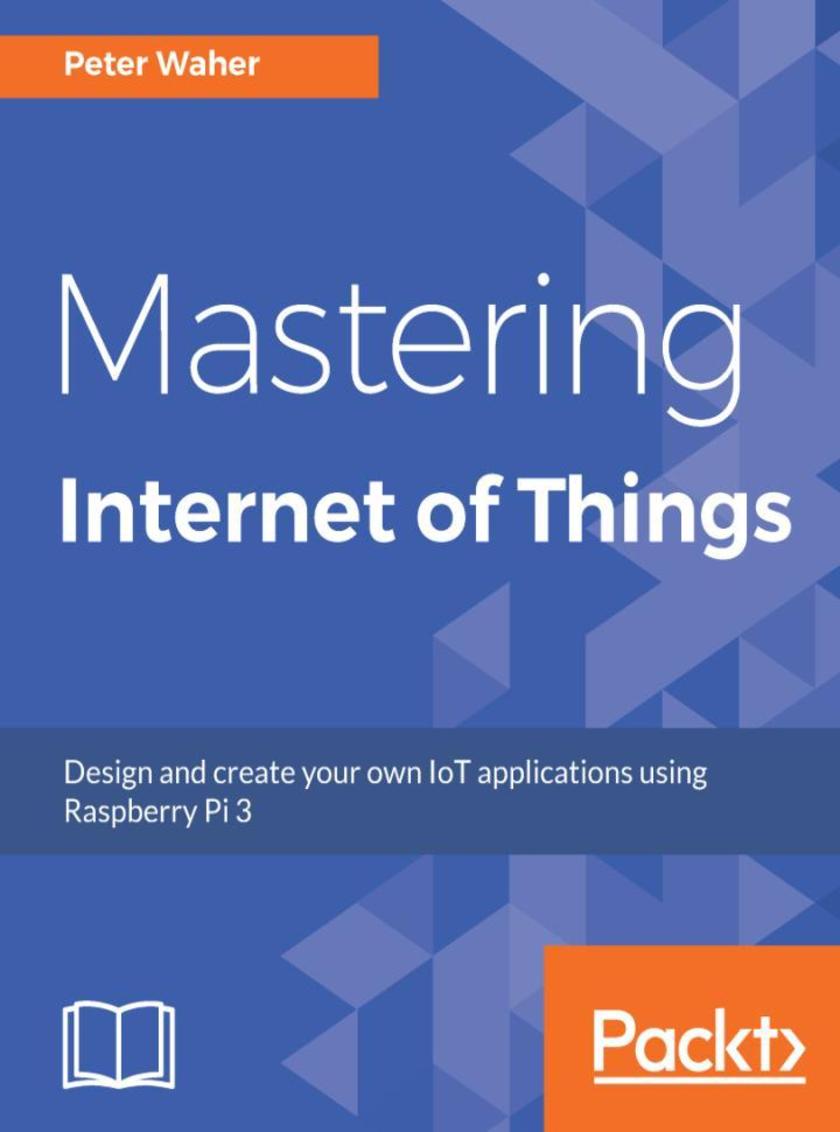
Mastering Internet of Things
¥81.74
Augment your IoT skills with the help of engaging and enlightening tutorials designed for Raspberry Pi 3 About This Book ? Design and implement state-of-the-art solutions for the Internet of Things ? Build complex projects using motions detectors, controllers, sensors, and Raspberry Pi 3 ? A hands-on guide that provides interoperable solutions for sensors, actuators, and controllers Who This Book Is For If you're a developer or electronic engineer and are curious about the Internet of Things, this is the book for you. With only a rudimentary understanding of electronics and Raspberry Pi 3, and some programming experience using managed code, such as C# or Java, you will be taught to develop state-of-the-art solutions for the Internet of Things. What You Will Learn ? Create your own project, run and debug it ? Master different communication patterns using the MQTT, HTTP, CoAP, LWM2M and XMPP protocols ? Build trust-based as hoc networks for open, secure and interoperable communication ? Explore the IoT Service Platform ? Manage the entire product life cycle of devices ? Understand and set up the security and privacy features required for your system ? Master interoperability, and how it is solved in the realms of HTTP,CoAP, LWM2M and XMPP In Detail The Internet of Things (IoT) is the fastest growing technology market. Industries are embracing IoT technologies to improve operational expenses, product life, and people's well-being. Mastering Internet of Things starts by presenting IoT fundamentals and the smart city. You will learn the important technologies and protocols that are used for the Internet of Things, their features, corresponding security implications, and practical examples on how to use them. This book focuses on creating applications and services for the Internet of Things. Further, you will learn to create applications and services for the Internet of Things. You will be discover various interesting projects and understand how to publish sensor data, control devices, and react to asynchronous events using the XMPP protocol. The book also introduces chat, to interact with your devices. You will learn how to automate your tasks by using Internet of Things Service Platforms as the base for an application. You will understand the subject of privacy, requirements they should be familiar with, and how to avoid violating any of the important new regulations being introduced. At the end of the book, you will have mastered creating open, interoperable and secure networks of things, protecting the privacy and integrity of your users and their information. Style and approach This mastering-level guide will immerse you in the advanced functionalities of IoT, along with extending them, and finishes up with security and privacy techniques.
Rust High Performance
¥81.74
Find bottlenecks, identify the proper algorithm to use, optimize performance, and create really efficient Rust applications About This Book ? Understand common performance pitfalls and improve the performance of your applications. ? Get to grips with parallel programming and multithreading with Rust. ? Learn metaprogramming in Rust. Who This Book Is For This book is for Rust developers keen to improve the speed of their code or simply to take their skills to the next level. What You Will Learn ? Master tips and tricks to make your code faster. ? Learn how to identify bottlenecks in your Rust applications ? Discover how to profile your Rust software. ? Understand the type system to create compile-time optimizations. ? Master the borrow checker . ? Learn metaprogramming in Rust to avoid boilerplate code. ? Discover multithreading and work stealing in Rust. ? Understand asynchronous programming in Rust. In Detail At times, it is difficult to get the best performance out of Rust. This book teaches you to optimize the speed of your Rust code to the level of languages such as C/C++. You'll understand and fix common pitfalls, learn how to improve your productivity by using metaprogramming, and speed up your code by concurrently executing parts of it safely and easily. You will master the features of the language which will make you stand out and use them to really improve the efficiency of your algorithms The book begins with a gentle introduction to help you identify bottlenecks when programming in Rust. We highlight common performance pitfalls, along with strategies to detect and resolve these issues early. We move on to mastering Rust's type system, which will enable us to create impressive optimizations in both performance and safety at compile time. You will then learn how to effectively manage memory in Rust, mastering the borrow checker. We move on to measuring performance and you will see how this affects the way you write code. Moving ahead, you will perform metaprogramming in Rust to boost the performance of your code and your productivity. You will finally learn parallel programming in Rust, which enables efficient and faster execution by using multithreading and asynchronous programming. Style and approach You'll embark on a learning journey that will teach about you deep-core concepts in the Rust language. Learning those concepts—such as understanding the borrow checker—will make you competent to write more efficient Rust code. To learn those core concepts, you'll perform practical work and see for yourself how specific patterns improve the performance of your code.


