


 购物车
购物车 个人中心
个人中心
ArchiCAD 19 – The Definitive Guide
¥107.90
This book is for architects, architectural technicians, and construction professionals who are familiar with 2D CAD programs such as AutoCAD Lite, or have some exposure to a 3D BIM package such as Revit. No experience with ArchiCAD is required. If you want to learn the skills needed for architectural drawing production in the real world, then this book is for you.
Mastering Clojure Data Analysis
¥107.90
This book consists of a practical, exampleoriented approach that aims to help you learn how to use Clojure for data analysis quickly and efficiently. This book is great for those who have experience with Clojure and need to use it to perform data analysis. This book will also be hugely beneficial for readers with basic experience in data analysis and statistics.
Microsoft Dynamics CRM 2011 Applications (MB2-868) Certification Guide
¥107.90
This Certification guide will follow a step-by-step approach to instruct the reader what they need to know to be able to become certified with Microsoft Dynamics CRM 2011. If you will implement Microsoft Dynamics CRM 2011, this book is for you. You should have a working knowledge of Microsoft Windows, Microsoft Internet Explorer, and Microsoft Office.
OCA Oracle Database 11g Administration I Certification Guide
¥107.90
Developed as a practical book, "Oracle Database 11g Administration I Certification Guide" will show you all you need to know to effectively excel at being an Oracle DBA, for both examinations and the real world. This book is for anyone who needs the essential skills to become an Oracle DBA, pass the Oracle Database Administration I exam, and use those skills in the real world to manage secure, high performance, and highly available Oracle databases.
Oracle SOA Suite 11g Administrator's Handbook
¥107.90
The book explains core concepts while providing real world implementation specifics, detailing the administration-related activities with Oracle SOA Suite 11g with a step-by-step approach using real-world examples. The authors demonstrate the use of WLST *s that administrators can reuse and extend to perform most administration tasks such as deployments, tuning, migration, and installation. If you are an Oracle SOA Suite administrator, WebLogic Server administrator, Database administrator, or developer that needs to administer and secure your Oracle SOA Suite services and applications, then this book is for you. Basic knowledge of Oracle SOA Suite Administration is beneficial, but not necessary.
Microsoft SQL Server 2012 Performance Tuning Cookbook
¥107.90
This book has individual recipes and you can read it from cover to cover or dip into any recipe and get solution to a specific issue. Every recipe is based on a */procedure explained with step-by-step instructions and screenshots. Concepts are illustrated for better understanding of why one solution performs better than another. SQL Server 2012 Performance Tuning Cookbook is aimed at SQL Server Database Developers, DBAs, and Database Architects who are working in any capacity to achieve optimal performance. However, basic knowledge of SQL Server is expected, but professionals who want to get hands-on with performance tuning and have not worked on tuning the SQL Server for performance will find this book helpful.

Getting Started with Citrix XenApp 6.5
¥107.90
This book has a tutorial style with step-by-step instructions and adequate screenshots for carrying out each task. If you are a system administrator or consultant who wants to implement and administer Citrix XenApp 6.5 farms, then this book is for you. This book will help both new and experienced XenApp professionals to deliver virtualized applications.

Getting Started with Oracle Data Integrator 11g: A Hands-On Tutorial
¥107.90
Getting Started with Oracle Data Integrator 11g: A Hands-On Tutorial is a practical tutorial bursting with tips, illustrations and real-world best practices to get you on your way with ODI. If you are a software/ETL developer or database administrator who is new to Oracle Data Integrator but want to get hands-on with the product quickly, then Getting Started with Oracle Data Integrator 11g: A Hands-On Tutorial is for you. You should have some experience with databases, SQL and ETL technologies.
Oracle E-Business Suite R12 Core Development and Extension Cookbook
¥107.90
This is a practical, hands-on book providing in depth tutorials on each topic. It is full of step by step examples of the key points for each subject to give a core understanding. The examples are designed to be worked through, and start right from scratch. Each topic will cover the development, configuration and testing of working examples. The book provides clear illustrations and tips each step of the way. It also comes with fully tested, complete, working code - if ever you get stuck. Each chapter introduces the topic and what you need to do to get ready to start the exercises. It will tell you what tools you need to use and when to use them. This book is written for individuals who want to learn how to develop extensions in Oracle E-Business suite. If you are involved in development or supporting an e-business suite implementation you should find this book very useful. The book is detailed so minimal technical expertise is required. It is suitable for beginners who have little experience or developers who may want to use the book to brush up on their skills.
Microsoft Silverlight 5 and Windows Azure Enterprise Integration
¥107.90
This book is a step-by-step tutorial that shows you how to obtain the necessary toolset to create and run Silverlight Enterprise Applications on Azure. The book also covers techniques, practical tips, hints, and tricks for Silverlight interactions with Azure. Each topic is written in an easy-to-read style, with a detailed explanation given and then practical step-by-step exercises with a strong emphasis on real-world relevance. If you are an application developer who wants to build and run Silverlight Enterprise applications using Azure storage, WCF Services, and ASP providers, then this book is for you. You should have a working knowledge of Silverlight and Expression Blend. However, knowledge of Azure is not required since the book covers how to integrate the two technologies in detail.
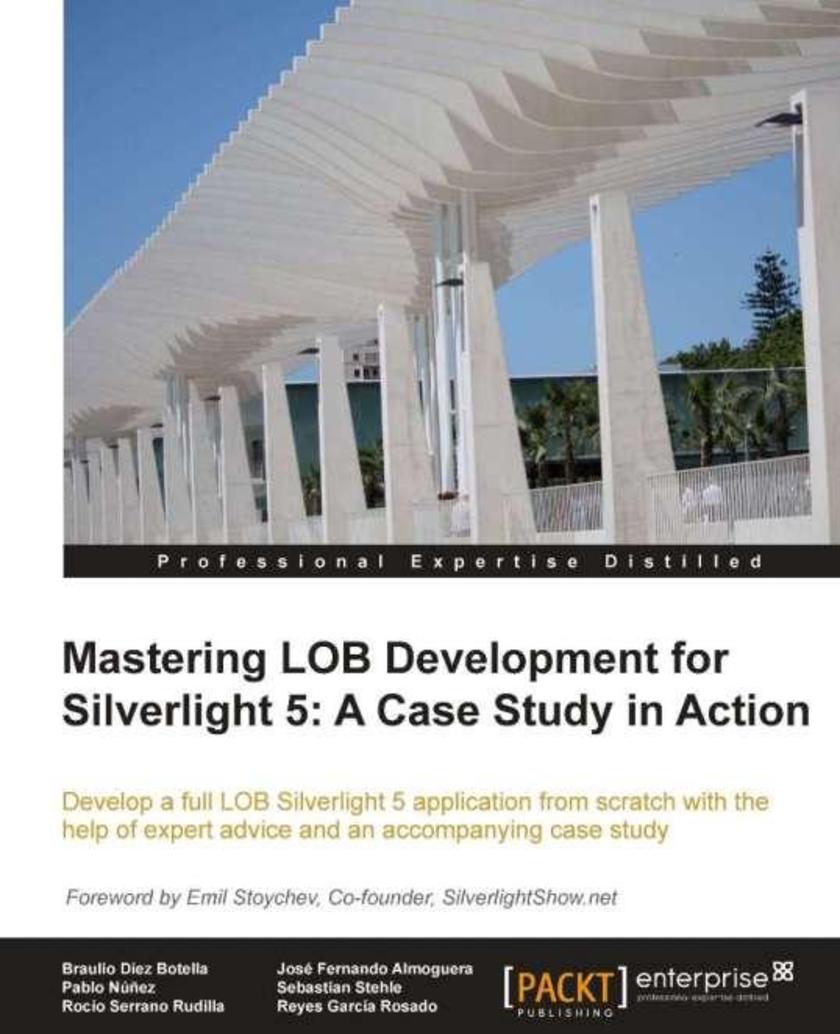
Mastering LOB Development for Silverlight 5: A Case Study in Action
¥107.90
This highly practical, expert level tutorial teaches you to build a Line of Business application with the aid of a case study which gradually builds throughout the book. It also includes a jumpstart chapter for developers coming from other technologies. If you already have a firm grasp of Silverlight development and are keen to advance your specialist knowledge of Line of Business (LOB) application development, then Expert Line of Business Application Development for Silverlight 5: Quick Start Guide is for you. If you are a developer with experience of other technologies, you may also find this book useful.
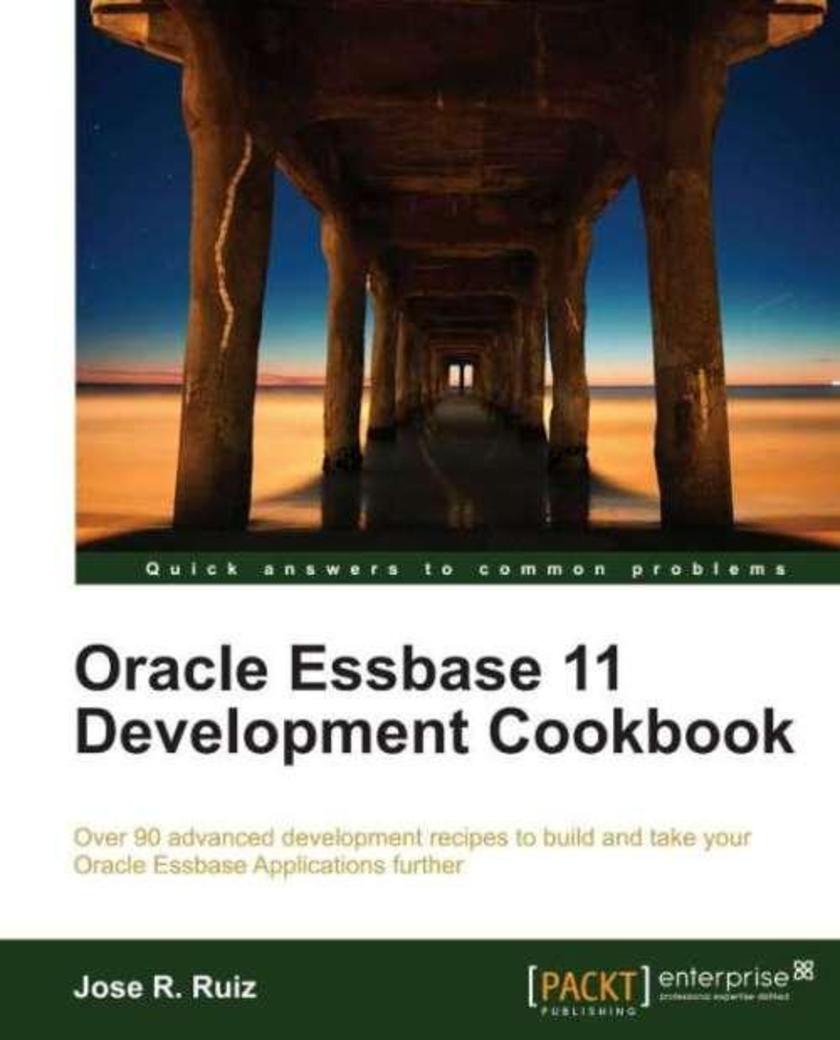
Oracle Essbase 11 Development Cookbook
¥107.90
This cookbook is full of immediately useable recipes showing you the advanced development techniques when building Essbase Applications and how to take these applications further. This cookbook offers practical, task-based, and immediately usable recipes covering a wide range of advanced development techniques to build Essbase Applications and take them further. In addition to its cookbook style, which ensures the solutions are presented in a clear step-by-step manner, its explanations go into great detail, which makes it good learning material for everyone who has experience in Essbase and wants to improve. The book is designed in such a way that you can either read it chapter by chapter or refer to recipes that you want in no particular order. If you are an experienced Essbase developer, Essbase Database Designer or Database Administrator, then this book is for you. This book assumes that you have good knowledge of Oracle Essbase.
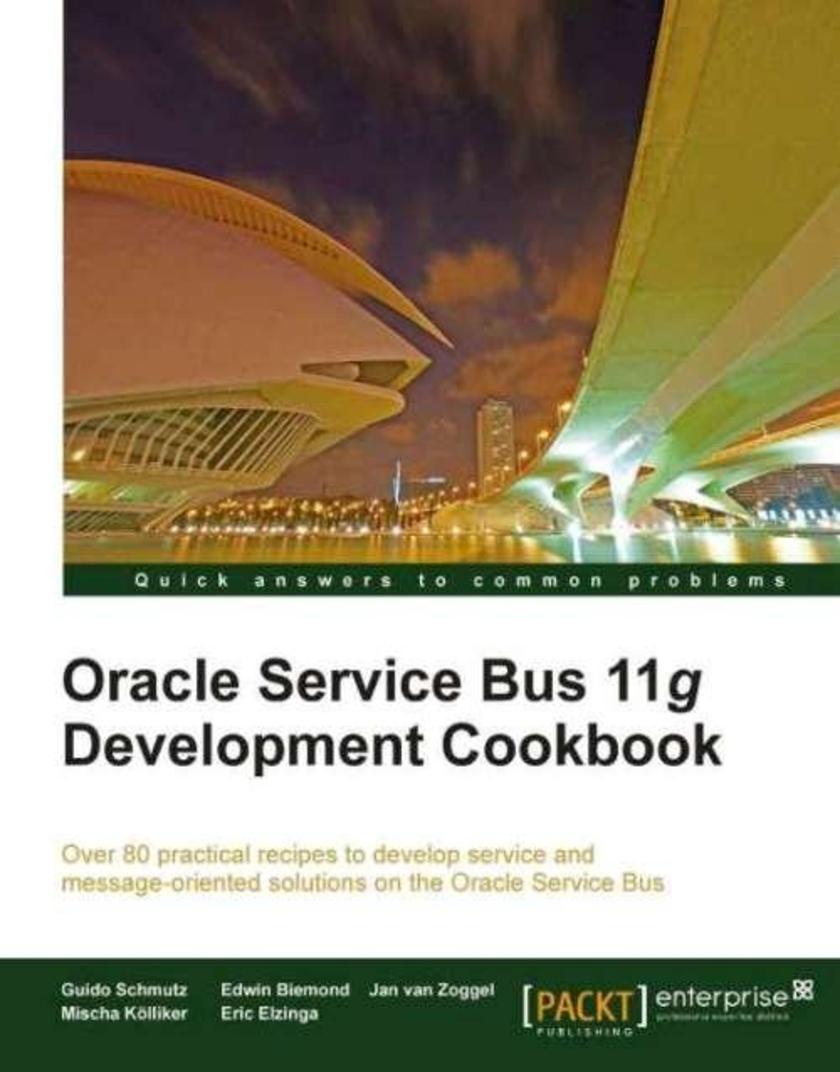
Oracle Service Bus 11g Development Cookbook
¥107.90
This cookbook is full of immediately useable recipes showing you how to develop service and message-oriented (integration) applications on the Oracle Service Bus. In addition to its cookbook style, which ensures the solutions are presented in a clear step-by-step manner, the explanations go into great detail, which makes it good learning material for everyone who has experience in OSB and wants to improve. Most of the recipes are designed in such a way that each recipe is presented as a separate, standalone entity and reading of prior recipes is not required. The finished solution of each recipe is also made available electronically. If you are an intermediate SOA developer who is using Oracle Service Bus to develop service and message-orientated applications on the Oracle Service Bus, then this book is for you. This book assumes that you have a working knowledge of fundamental SOA concepts and Oracle Service Bus.
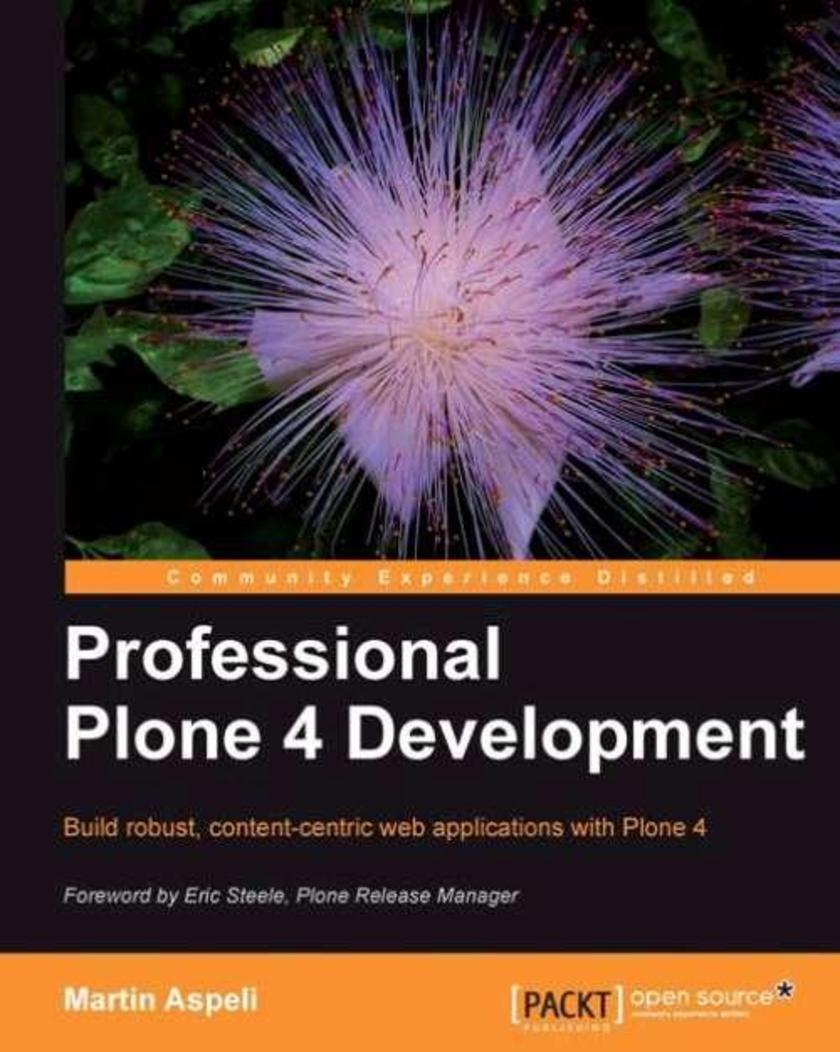
Professional Plone 4 Development
¥107.90
Professional Plone 4 Development is written in a clear conversational easy-to-understand style. This book cuts short the preamble and gets straight to the point - building robust, content-rich web applications with Plone 4. Detailed real world examples are provided for each chapter. This book assumes that the reader is familiar with Plone from the point of view of an administrator or power user, has a basic understanding of web application development, and is comfortable with the Python programming language.
Microsoft BizTalk 2010: Line of Business Systems Integration
¥107.90
This book focuses on Microsoft BizTalk 2010; however, most of the concepts and explanations will apply to BizTalk 2006 R2 and BizTalk 2009. If you are an experienced BizTalk developer who wants to integrate BizTalk with Line of Business systems using practical scenarios, then this book is for you. A solid understanding of BizTalk at an intermediate level is required. This book assumes developers are comfortable creating schemas, maps, orchestrations, ports and messages in Visual Studio and configuring applications in the BizTalk Administration Console. However, experience in integrating with Line of Business systems is not necessarily required.
Microsoft Dynamics NAV 2015 Professional Reporting
¥107.90
Discover tips and trick for Dynamics NAV report building About This Book Create and customize reports in Dynamics NAV 2015 using RDLC, Word, Power BI, and Reporting Services Work with different elements in the toolbox such as tablix, which can be used as a List, Table, or Matrix and understand the differences between them and when to use which This book is a pragmatic guide with clear instructions and real-world examples to teach you about the reporting capabilities of Dynamics NAV 2015 Who This Book Is For If you are a consultant, developer, customer, user, or just interested in the reporting capabilities of Dynamics NAV, then this book is for you. Basic knowledge of Dynamics NAV will be helpful. What You Will Learn Understand why reports are designed in a specific way and then apply this knowledge to your advantage Develop document reports using different techniques Apply filtering and sorting, and create groups Use RDLC to visualize information Visualize information, KPIs, and trends using expressions, Gauges, Charts, Data bars, Indicators, and Spark lines Create and optimize your dataset for RDLC and for Word layouts Use Power BI with Dynamics NAV to bring your data to life Build Reporting Services reports on top of Dynamics NAV In Detail Microsoft Dynamics NAV is a multi-lingual, multi-currency business management solution that organizations use to manage their accounts, supply chain, sales, payroll, and HR. It is an ERP tool for organizations that is fast to implement, easy to configure, and simple to use. It is widely used because simplicity is a part of its development, product design, usability, and implementation. This book will help you to master, analyze, and deliver the most challenging reporting requirements in Dynamics NAV 2015. The book starts by explaining report development and it's different phases such as data model, layout, and testing you go through. It introduces you to RDLC and the different controls in the toolbox, such as the Tablix, in its many forms. You will learn to use expressions to make your layout dynamic and to overcome typical problems. Moving on, the book will teach you to visualize data and be able to understand and read a report as it is intended. You will also learn to use Microsoft Word to create a layout for a report. With Power BI and Power Pivot, Power View, and Power Map, you will learn how easy and powerful it is to bring your data to life, so you can spot trends and perform in depth analysis of your business. Reporting Services is also explained as another way that you can apply the knowledge you have about RDLC to build RDL layouts outside of Dynamics NAV. By the end, you will create different types of charts so you can visualize key performance indicators inside the Dynamics NAV application. Style and approach This book is an essential guide in to understanding what is involved in creating reports in Dynamics NAV and its reporting capabilities.
VMware vSphere 6.x Datacenter Design Cookbook - Second Edition
¥107.90
Over 75 practical recipes to confidently design an efficient virtual datacenter with VMware vSphere 6.x About This Book Get the first book on the market that helps you design a virtualized data center with VMware vSphere 6 Achieve enhanced compute, storage, network, and management capabilities for your virtual data center Exciting and practical recipes help you to design a virtual data easily by leveraging the features of VMware vSphere 6 Who This Book Is For If you are an administrator or consultant interested in designing virtualized datacenter environments using VMware vSphere 6.x or previous versions of vSphere and the supporting components, this book is for you. It will help both new and experienced architects deliver professional VMware vSphere virtual datacenter designs. What You Will Learn Identify key factors related to a vSphere design and apply them to every step of the design process Mitigate security risks and meet compliance requirements in a vSphere design. Create a vSphere conceptual design by identifying technical and business requirements Determine the type of database to use based on the deployment size. Design for performance, availability, recoverability, manageability, and security Map the logical resource design into the physical vSphere design Create professional vSphere design documentation to ensure a successful implementation of the vSphere design Leverage the latest vSphere 6.x features to ensure manageability, performance, availability, and security in a virtual datacenter design In Detail VMware is the industry leader in data center virtualization. The vSphere 6.x suite of products provides a robust and resilient platform to virtualize server and application workloads. With the release of 6.x a whole range of new features has come along such as ESXi Security enhancements, fault tolerance, high availability enhancements, and virtual volumes, thus simplifying the secure management of resources, the availability of applications, and performance enhancements of workloads deployed in the virtualized datacenter. This book provides recipes to create a virtual datacenter design using the features of vSphere 6.x by guiding you through the process of identifying the design factors and applying them to the logical and physical design process. You’ll follow steps that walk you through the design process from beginning to end, right from the discovery process to creating the conceptual design; calculating the resource requirements of the logical storage, compute, and network design; mapping the logical requirements to a physical design; security design; and finally creating the design documentation. The recipes in this book provide guidance on making design decisions to ensure the successful creation, and ultimately the successful implementation, of a VMware vSphere 6.x virtual data center design. Style and Approach The book follows a recipe-based approach that consists of practical recipes to effectively design a virtual data center.
Microsoft Identity Manager 2016 Handbook
¥107.90
A complete handbook on Microsoft Identity Manager 2016 – from design considerations to operational best practices About This Book Get to grips with the basics of identity management and get acquainted with the MIM components and functionalities Discover the newly-introduced product features and how they can help your organization A step-by-step guide to enhance your foundational skills in using Microsoft Identity Manager from those who have taught and supported large and small enterprise customers Who This Book Is For If you are an architect or a developer who wants to deploy, manage, and operate Microsoft Identity Manager 2016, then this book is for you. This book will also help the technical decision makers who want to improve their knowledge of Microsoft Identity Manager 2016. A basic understanding of Microsoft-based infrastructure using Active Directory is expected. Identity management beginners and experts alike will be able to apply the examples and scenarios to solve real-world customer problems. What You Will Learn Install MIM components Find out about the MIM synchronization, its configuration settings, and advantages Get to grips with the MIM service capabilities and develop custom activities Use the MIM Portal to provision and manage an account Mitigate access escalation and lateral movement risks using privileged access management Configure client certificate management and its detailed permission model Troubleshoot MIM components by enabling logging and reviewing logs Back up and restore the MIM 2015 configuration Discover more about periodic purging and the coding best practices In Detail Microsoft Identity Manager 2016 is Microsoft’s solution to identity management. When fully installed, the product utilizes SQL, SharePoint, IIS, web services, the .NET Framework, and SCSM to name a few, allowing it to be customized to meet nearly every business requirement. The book is divided into 15 chapters and begins with an overview of the product, what it does, and what it does not do. To better understand the concepts in MIM, we introduce a fictitious company and their problems and goals, then build an identity solutions to fit those goals. Over the course of this book, we cover topics such as MIM installation and configuration, user and group management options, self-service solutions, role-based access control, reducing security threats, and finally operational troubleshooting and best practices. By the end of this book, you will have gained the necessary skills to deploy, manage and operate Microsoft Identity Manager 2016 to meet your business requirements and solve real-world customer problems. Style and approach The concepts in the book are explained and illustrated with the help of screenshots as much as possible. We strive for readability and provide you with step-by-step instructions on the installation, configuration, and operation of the product. Throughout the book, you will be provided on-the-field knowledge that you won’t get from whitepapers and help files.
Mastering Business Intelligence with MicroStrategy
¥107.90
Build world-class enterprise Business Intelligence solutions with MicroStrategy 10 About This Book Fix the gap between BI tools and implementation/integration processes with big data and predictive analytics using this comprehensive guide to MicroStrategy 10 Highly practical, example-rich guide that lets you implement business intelligence with MicroStrategy 10 in your organization Create the best user experience with BI dashboards using MicroStrategy using this up-to-date, comprehensive guide Who This Book Is For This book is intended for BI, DWH, ETL developers, BI/DWH/Analytics managers, analysts, and business users who already have MicroStrategy in their organization and want to take it to the next level in order to increase performance and improve user experience. In addition, it helps the reader to migrate from MicroStrategy 9 to MicroStrategy 10 and to start using the new capabilities. What You Will Learn Explore various visualization techniques for presenting analyzed data Customize MicroStrategy in order to meet your business requirements Develop and design mobile dashboards Use the advanced techniques such as designing reports, documents and interactive dashboards for building dashboards Understand the concepts of data discovery and Desktop capabilities Explore the best practices for Microstrategy system administration Find and fix issues based on connections, environment or documents Integrate third party ESRI map tools with MicroStrategy to create geo based reports In Detail Business intelligence is becoming more important by the day, with cloud offerings and mobile devices gaining wider acceptance and achieving better market penetration. MicroStrategy Reporting Suite is an absolute leader in the BI market and offers rich capabilities from basic data visualizations to predictive analytics. It lets you various delivery methods such as the Web, desktops, and mobiles. Using real-world BI scenarios, this book helps you to implement Business Analytics solutions in big e-commerce companies. It kicks off with MicroStrategy 10 features and then covers schema design models and techniques. Building upon your existing knowledge, the book will teach you advanced techniques for building documents and dashboards. It further teaches various graphical techniques for presenting data for analysis using maps, graphs, and advanced charts. Although MicroStrategy has rich functionality, the book will show how to customize it in order to meet your business requirements. You will also become familiar with the native analytical functions that will help you to maximize the impact of BI solutions with powerful predictive analytics. Furthermore, the book will focus on MicroStrategy Mobile Analytics along with data discovery and desktop capabilities such as connecting various data sources and building interactive dashboards. The book will also uncover best practices, troubleshooting techniques for MicroStrategy system administration, and also security and authentication techniques. Lastly, you will learn to use Hadoop for MicroStrategy reporting. By the end of the book, you will become proficient in evaluating any BI software in order to choose the best one that meets all business requirements. Style and approach This book will be focusing on providing extensive guide to plan how to design and develop complex BI architecture for real world scenario, using Microstrategy 10, best practices and collected experience working with BI, predictive analytics, and Microstrategy and big data.
Implementing Microsoft Dynamics 365 for Finance and Operations
¥107.90
Harness the power of Dynamics 365 Operations and discover all you need to implement it About This Book ? Master all the necessary tools and resources to evaluate Dynamics 365 for Operations, implement it, and proactively maintain it. ? Troubleshoot your problems effectively with your Dynamics 365 partner ? Learn about architecture, deployment choices, integration, configuration and data migration, development, testing, reporting and BI, support, upgrading, and more. Who This Book Is For This book is for technology leaders, project managers solution architects, and consultants who are planning to implement, are in the process of implementing, or are currently upgrading to Dynamics 365 for Operations. This book will help you effectively learn and implement Dynamics 365 for Operations. What You Will Learn ? Learn about Microsoft Dynamics 365, it's offerings, plans and details of Finance and Operations, Enterprise edition ? Understand the methodology and the tool, architecture, and deployment options ? Effectively plan and manage configurations and data migration, functional design, and technical design ? Understand integration frameworks, development concepts, best practices, and recommendations while developing new solutions ? Learn how to leverage intelligence and analytics through Power BI, machine learning, IOT, and Cortana intelligence ? Master testing, training, going live, upgrading, and how to get support during and after the implementation In Detail Microsoft Dynamics 365 for Finance and Operations, Enterprise edition, is a modern, cloud-first, mobile-first, ERP solution suitable for medium and large enterprise customers. This book will guide you through the entire life cycle of a implementation, helping you avoid common pitfalls while increasing your efficiency and effectiveness at every stage of the project. Starting with the foundations, the book introduces the Microsoft Dynamics 365 offerings, plans, and products. You will be taken through the various methodologies, architectures, and deployments so you can select, implement, and maintain Microsoft Dynamics 365 for Finance and Operations, Enterprise edition. You will delve in-depth into the various phases of implementation: project management, analysis, configuration, data migration, design, development, using Power BI, machine learning, Cortana analytics for intelligence, testing, training, and finally deployment, support cycles, and upgrading. This book focuses on providing you with information about the product and the various concepts and tools, along with real-life examples from the field and guidance that will empower you to execute and implement Dynamics 365 for Finance and Operations, Enterprise edition. Style and approach This book is a step-by-step guide focusing on implementing Dynamics 365 Operations solutions for your organization.
Scala for Machine Learning - Second Edition
¥107.90
Leverage Scala and Machine Learning to study and construct systems that can learn from data About This Book ? Explore a broad variety of data processing, machine learning, and genetic algorithms through diagrams, mathematical formulation, and updated source code in Scala ? Take your expertise in Scala programming to the next level by creating and customizing AI applications ? Experiment with different techniques and evaluate their benefits and limitations using real-world applications in a tutorial style Who This Book Is For If you’re a data scientist or a data analyst with a fundamental knowledge of Scala who wants to learn and implement various Machine learning techniques, this book is for you. All you need is a good understanding of the Scala programming language, a basic knowledge of statistics, a keen interest in Big Data processing, and this book! What You Will Learn ? Build dynamic workflows for scientific computing ? Leverage open source libraries to extract patterns from time series ? Write your own classification, clustering, or evolutionary algorithm ? Perform relative performance tuning and evaluation of Spark ? Master probabilistic models for sequential data ? Experiment with advanced techniques such as regularization and kernelization ? Dive into neural networks and some deep learning architecture ? Apply some basic multiarm-bandit algorithms ? Solve big data problems with Scala parallel collections, Akka actors, and Apache Spark clusters ? Apply key learning strategies to a technical analysis of financial markets In Detail The discovery of information through data clustering and classification is becoming a key differentiator for competitive organizations. Machine learning applications are everywhere, from self-driving cars, engineering design, logistics, manufacturing, and trading strategies, to detection of genetic anomalies. The book is your one stop guide that introduces you to the functional capabilities of the Scala programming language that are critical to the creation of machine learning algorithms such as dependency injection and implicits. You start by learning data preprocessing and filtering techniques. Following this, you'll move on to unsupervised learning techniques such as clustering and dimension reduction, followed by probabilistic graphical models such as Na?ve Bayes, hidden Markov models and Monte Carlo inference. Further, it covers the discriminative algorithms such as linear, logistic regression with regularization, kernelization, support vector machines, neural networks, and deep learning. You’ll move on to evolutionary computing, multibandit algorithms, and reinforcement learning. Finally, the book includes a comprehensive overview of parallel computing in Scala and Akka followed by a de*ion of Apache Spark and its ML library. With updated codes based on the latest version of Scala and comprehensive examples, this book will ensure that you have more than just a solid fundamental knowledge in machine learning with Scala. Style and approach This book is designed as a tutorial with hands-on exercises using technical analysis of financial markets and corporate data. The approach of each chapter is such that it allows you to understand key concepts easily.


